
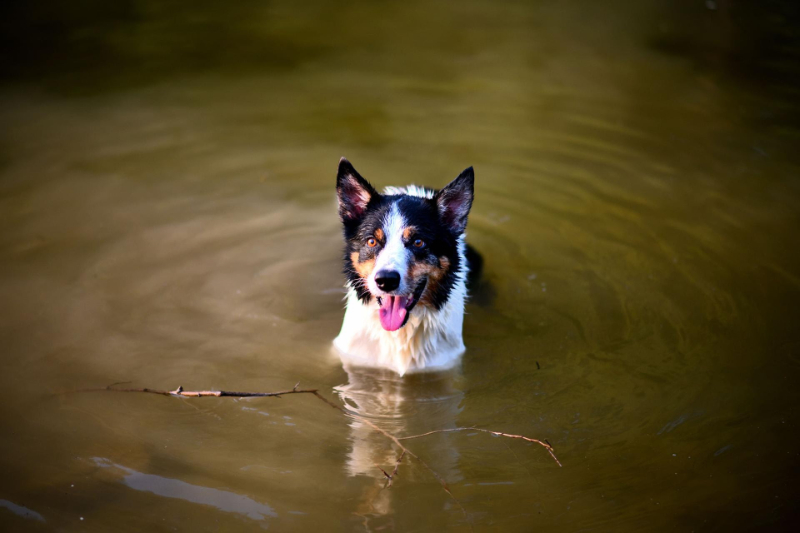
In this week’s installment of APCC’s cyanobacteria info series, we want to highlight a form of cyanobacteria that can be especially hard to recognize: benthic cyanobacteria.
“Benthic” simply means associated with the bottom of a body of water. Many ponds and rivers have algae mats growing along the bottom, and cyanobacteria can be part of these mats, sometimes at very high concentrations. These cyanobacteria can look very different from the cyanobacteria we commonly see suspended in the water column during a pelagic bloom.
Benthic mats can take many forms. They may be slimy or leathery patches attached to rocks, logs, or aquatic plants, or dark green, brown, black, or reddish mats. They can be thin and patchy or thick and rubbery. Some form fuzzy or jelly-like blobs, sometimes with bubbles trapped underneath, while others form gelatinous colonies that look a little like grapes or marbles underwater. They may be mixed with other algae, plants, sediment, and organic material, and some can even appear brown on top and green underneath.
You can’t tell whether a mat contains cyanobacteria just by looking at it; we need to look at a sample under a microscope to confirm whether cyanobacteria are present.
The situation becomes concerning when pieces of these mats break loose and float to the surface or wash up along the shoreline. Wildlife may feed on them, and dogs may be particularly interested in picking them up, playing with them, or eating them. Because cyanobacteria can be highly concentrated within a mat, ingesting a piece could potentially expose an animal to concentrated cyanobacteria and cyanotoxins.
A recent dog death in the Boston area has brought more attention to this issue in Massachusetts. While the cause of death has not been confirmed, the circumstances have raised the possibility of benthic cyanobacteria.
Benthic cyanobacteria present a challenge for risk assessment. Our routine monitoring is designed primarily to identify pelagic blooms, where cyanobacteria are suspended in the water. Benthic mats can remain on the bottom and may not be captured by routine water sampling. If larger amounts of benthic material are floating near our sampling area, we can detect and flag those conditions, but smaller amounts or material elsewhere in the pond may not be captured by our routine monitoring or may not represent conditions that warrant flagging the pond.
Monitoring programs and public health agencies across the country are continuing to learn more about benthic cyanobacteria and how best to recognize and assess them. For now, the best thing we can do is help you know what to look for. Pay attention not only to what is happening in the water, but also along the shoreline and around rocks, logs, and aquatic plants. If you see algae-like mats or chunks, especially if you have a dog, keep your pet away from them and do not let them eat them.
Please see the photos below for examples of what benthic mats and loose pieces can look like. The Lake Champlain Basin Program also has additional information and some great photographs showing the wide range of ways these mats can appear.
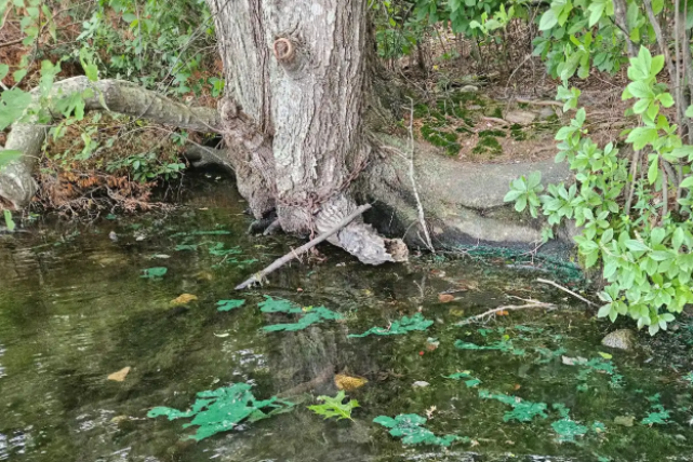
Above: Floating green globs, Planktothrix
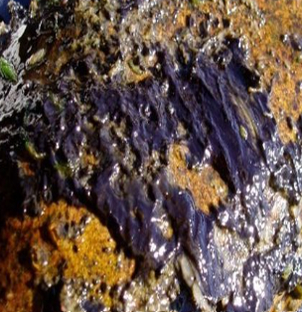
Above: Oscillatoria
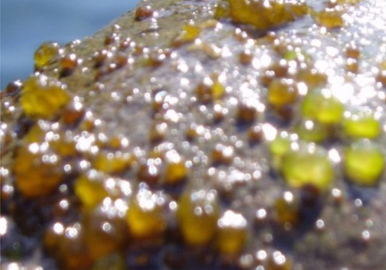
Above: Nostoc