
In The News
- Home
- /
- News & Events
- /
- In The News
WBUR: The race to save a Cape Cod salt marsh from sea-level rise
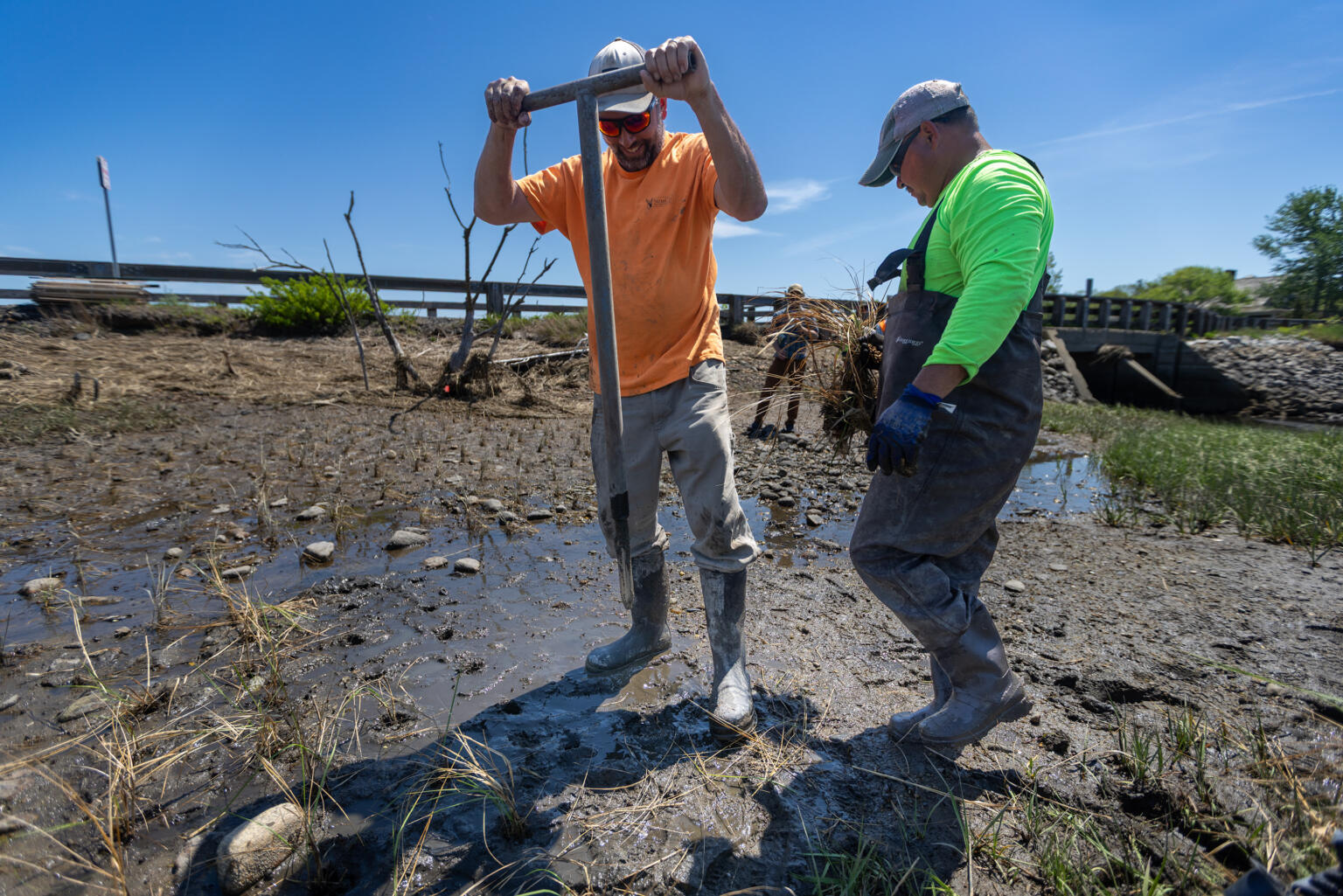
Nick Dillon plunges the holes for Tony Tejada to place each plug of smooth cordgrass at the Sesuit Creek in Dennis. (Jesse Costa/WBUR)
wbur | By Barbara Moran
Nicholas Dillon picked up a 3-foot metal spike and jammed it into the mud at his feet. He ground it around to widen a hole, then another worker placed a small tuft of grass into the muddy divot.
One plant down, several thousand to go.
Dillon, a foreman with SumCo Eco-Contracting, is part of a massive effort to restore Sesuit Creek Marsh in Dennis before it drowns in tidal surges and heavy rainfall that are increasing with climate change. Workers and volunteers planted 90,000 plugs of smooth cordgrass in May and June, hoping to jump start the wetland’s recovery.
It’s one of the biggest such plantings in state history. Dillon called the work “monotonous,” but also satisfying.
CAI: APCC Report highlights need to protect Cape Cod surface waters
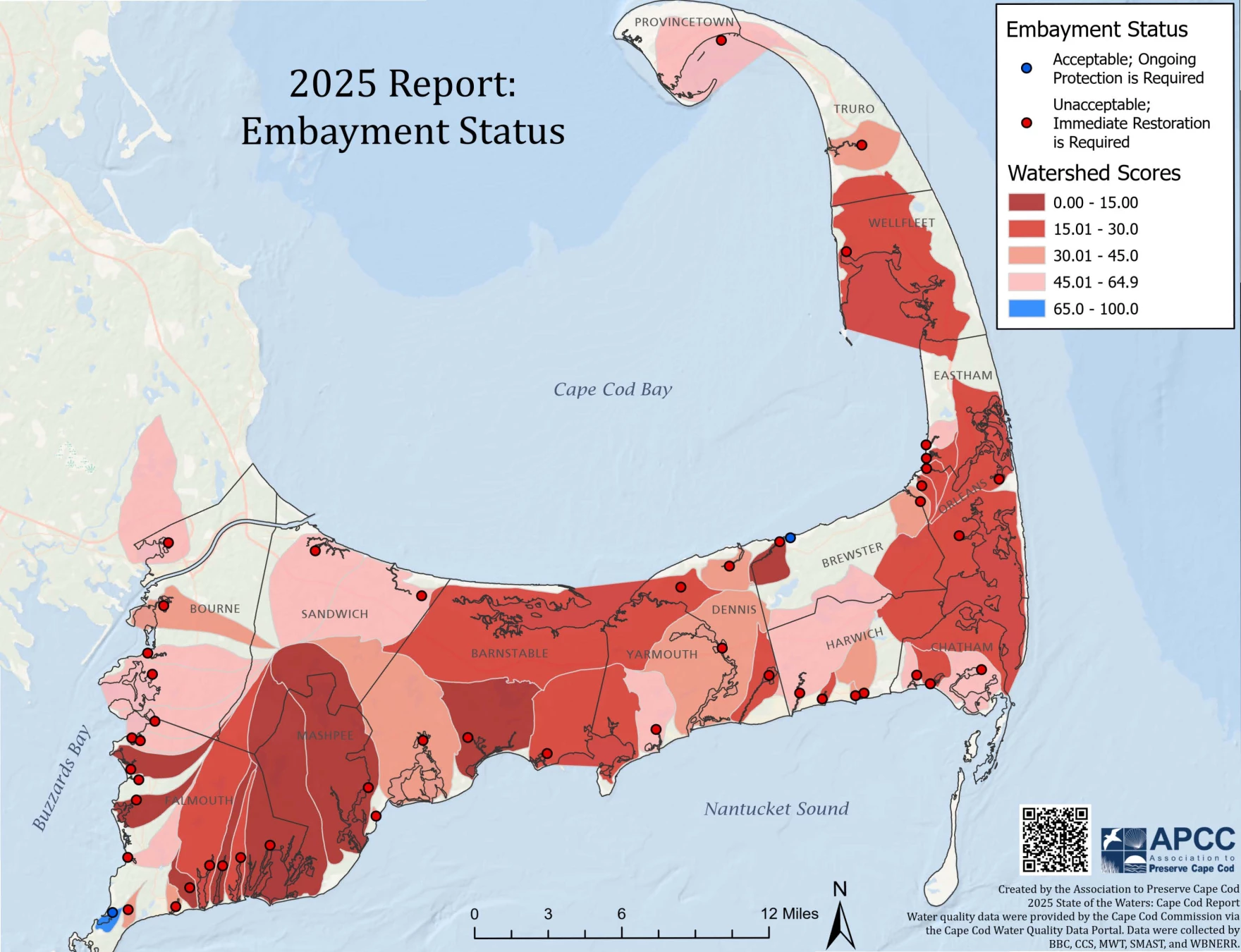
This map, one of many in the 2025 report, depicts watershed scores as well as embayment statuses.
CAI | By Amy Kolb Noyes
The Association to Preserve Cape Cod has released its annual State of the Waters: Cape Cod report. The report gives a pass/fail grade to coastal embayments and ponds, and rates drinking water supplies on the Cape.
The environmental nonprofit rated most public drinking water supplies “excellent” while two, Wellfleet and Buzzards Bay, were listed as “good.” About half the Cape’s public drinking water sources contain PFAS, although below the level the state considers a problem.
APCC Executive Director Andrew Gottlieb said surface water conditions are not as good.

CAI: Appeals officer rules against Pilgrim Nuclear in radioactive water discharge case
Photo Credit: Sarah Mizes-Tan / CAI
The reactor room at Pilgrim Nuclear Power Station. Image from 2019.
CAI | By Jennette Barnes
A state appeals officer has issued a recommendation against the owner of the Pilgrim Nuclear Power Station — a critical decision awaited for more than a year.
The nuclear plant owner was appealing a decision by the state Department of Environmental Protection denying the company permission to discharge radioactive water into Cape Cod Bay.
The finding against the company, Holtec International, marks a victory for community opponents who participated in the case, including the Association to Preserve Cape Cod.
The group’s executive director, Andrew Gottlieb, says what transpired in the appeal is crucial, because it could influence the outcome of a likely lawsuit by the Pilgrim owner.

CapeCod.com: Harwich Conservation Trust Opens New Hinckleys Pond Preserve
Photo Credit: Harwich Conservation Trust
CapeCod.com | By Jim McCabe
The Harwich Conservation Trust is announcing the completed restoration of the Hinckleys Pond and Herring River Headwaters Preserve.
The nearly two-million-dollar project included the rewilding of thirty acres of retired cranberry bogs into thriving wetland habitat. The HCT says the funding was made possible by generous donors and a mix of federal, state, town and local organizations.
Cape Cod Chronicle | By William F. Galvin
The Harwich Conservation Trust has opened its second eco-restoration preserve in a year. The Hinckleys Pond–Herring River Preserve encompasses two former cranberry bogs on the east and west side of Hinckleys Pond.
The collaborative effort will increase biodiversity, restore freshwater wetland habitat, and improve water quality as well as enhance opportunities for people to enjoy the trails, views and wildlife, according to Harwich Conservation Trust (HCT) Executive Director Michael Lach.
Cape Cod Times | By Merrily Cassidy
This vista of the Hinckleys Pond — Herring River Headwaters Preserve in Harwich will change over the years as the once retired cranberry bogs have been rewilded, returning to a more wetland environment. The preserve, located off Route 124 and Headwaters Drive in Harwich, has undergone a months-long eco-restoration. Instead of selling the property to developers, the Jenkins family sold the property to the Harwich Conservation Trust in 2021. The restoration project also created a mile-long All Persons Trail around the retired bogs and an overlook at Hinckleys Pond.
Local River Herring Numbers Decline
Photo Credit: Association to Preserve Cape Cod
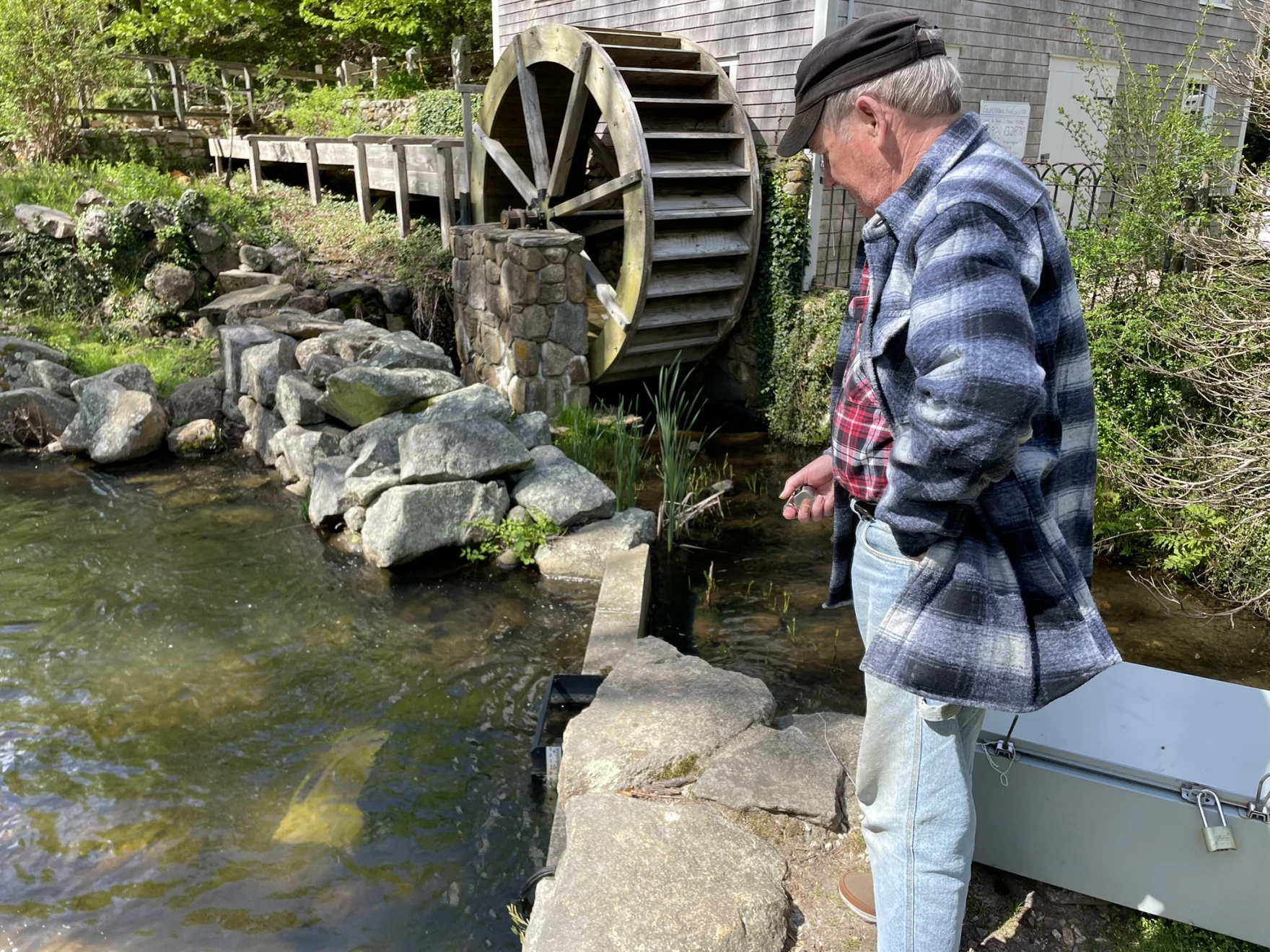
The Association to Preserve Cape Cod (APCC) has released its 2025 river herring run results, which show that most monitored runs across the region experienced below-average returns this past spring—underscoring the continued importance of restoration efforts.
CAI | By Amy Kolb Noyes
Twenty years ago, Massachusetts banned harvesting river herring in an attempt to protect alewife and blueback herring.
Last year the Atlantic States Marine Fisheries Commission released a stock assessment that determined herring populations are stable throughout the coast, including Massachusetts.
Cape Cod Times: Wondering about that scum on a Cape Cod pond? Check this website and watch for these signs
Photo Credit: Cape Cod Times/Steve Heaslip
Cape Cod Times | By George Kostinas
As summer approaches, thoughts of carefree days at a swimming hole or fishing pond come to mind.
However, due to climate change and other environmental conditions, those summer activities may be curtailed.
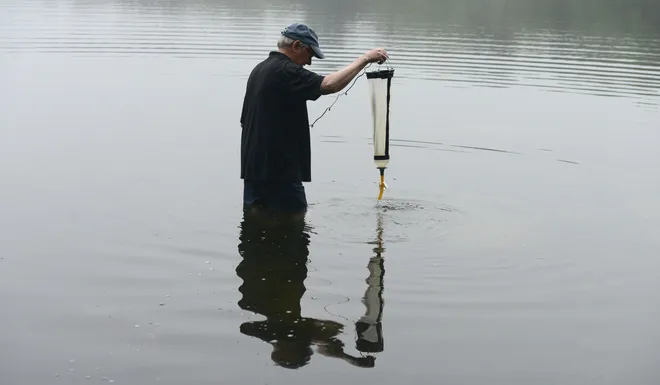
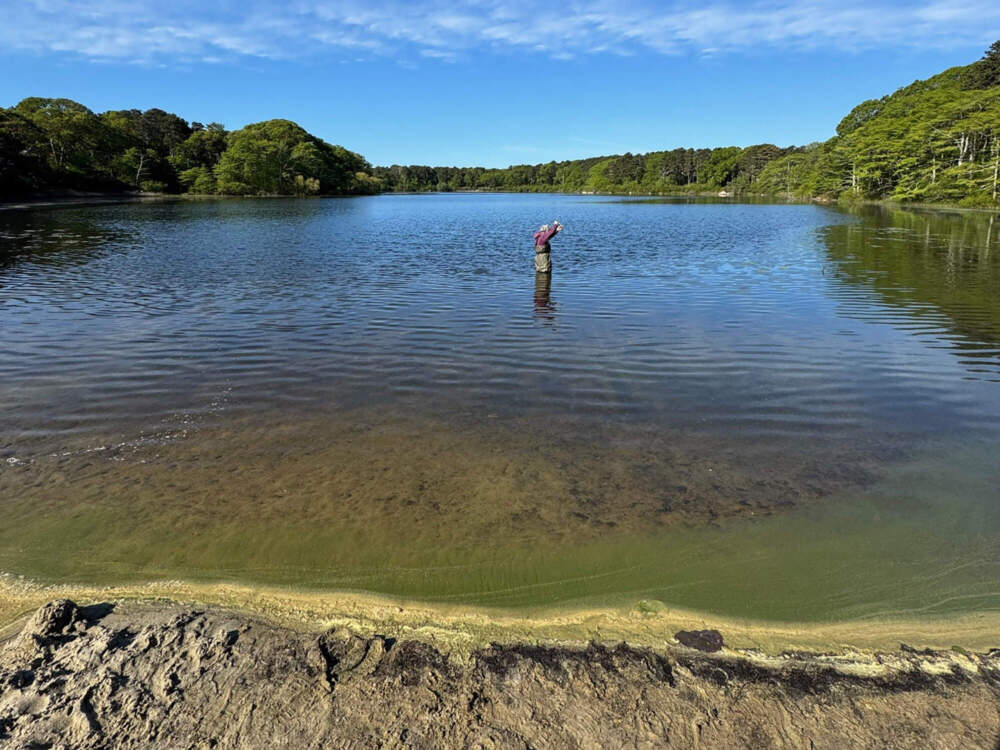
On Cape Cod, for at least the last seven years, a number of the freshwater ponds have reached levels of cyanobacteria, or blue-green algae, that can be harmful to humans and animals.
WBUR: Early toxic algal blooms affecting more Cape Cod ponds this year
Photo Credit: Eric Schwam/Brewster Ponds Coalition
Blueberry Pond in Brewster
WBUR | By Barbara Moran
Toxic algae has bloomed in more Cape Cod ponds than usual at this time of year, triggering advisories in Barnstable, Brewster and Orleans.
Algae has been spotted in Bearse and Hamblin Ponds in Barnstable; Schoolhouse, Blueberry, and Seymore Ponds in Brewster; and Bakers Pond and Pilgrim Lake in Orleans. The Association to Preserve Cape Cod said it will continue to update its cyanobacteria map as conditions improve or deteriorate.

WCAI: Five months after closed-door meeting on Cape Cod machine gun range, discussion revealed
Photo Credit: Eve Zuckoff
A guardsman waits to fire on the Sierra Range at Camp Edwards on Joint Base Cape Cod. It is a 300 meter automated rifle qualification range where soldiers are tested on rifle marksmanship.
WCAI | By Eve Zuckoff
Last October, the Massachusetts Army National Guard, the Environmental Protection Agency, the National Academies of Science, and a range of independent subject-matter experts met to review the environmental impacts of the Guard’s controversial proposal for a machine gun range on Joint Base Cape Cod.
That day-long meeting was held behind closed doors. Afterward, no post-mortem report or any public statement was issued, nor would participants answer questions about what was discussed.
Mass. National Guard to pay $26K to opponents of machine gun range
Photo Credit: Elodie Reed/Vermont Public
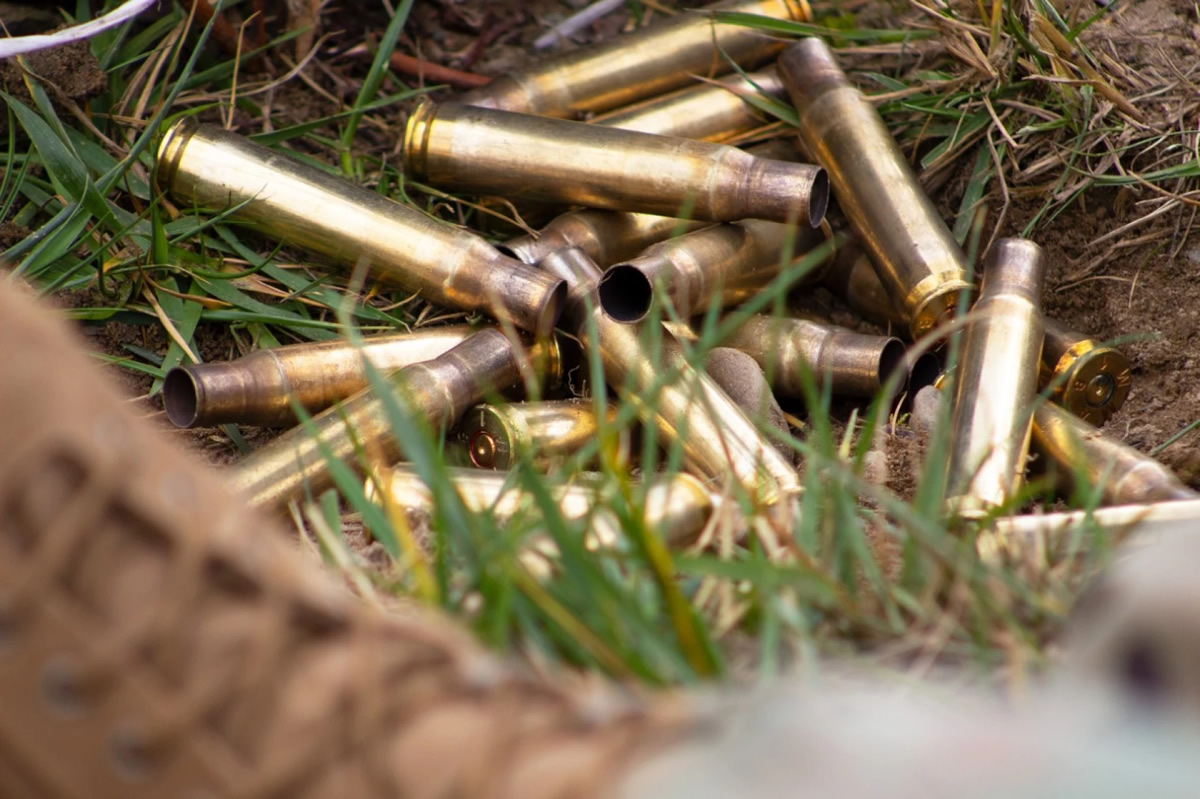
The Massachusetts Army National Guard has agreed to pay the Association to Preserve Cape Cod (APCC) more than $26,000. The payment will settle a public records battle between the Guard and the environmental group over a failed plan to build a machine gun range at Joint Base Cape Cod.
APCC’s legal team pursued the settlement after arguing that the Guard did not comply with requests for public records relating to the range. Guard officials were forced to turn over the records after being taken to court.
WBUR: ‘Never in our wildest dreams’: Mass. environmental projects stall amid federal funding confusion
Photo Credit: Robin Lubbuck/WBUR
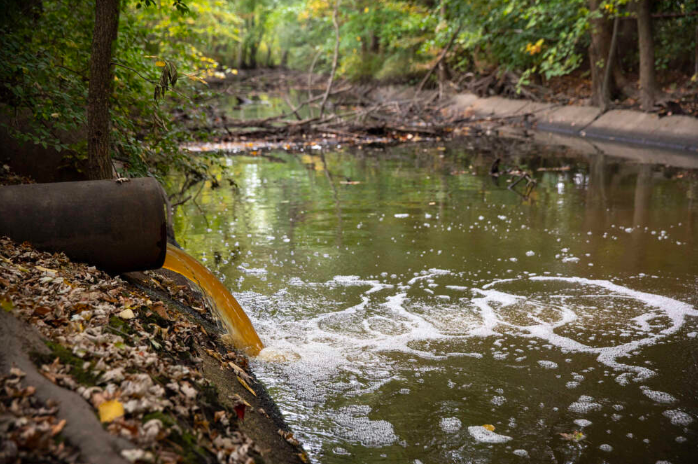
A wetland restoration project in Harwich was supposed to begin this month; now it’s on hold. Also stalled: the rehab of a community garden in Chelsea, and a report for the Environmental Protection Agency about the effects of exposure to multiple environmental toxins on Chelsea residents.
These projects are just some of the many casualties of the on-again-off-again freeze on federal funding stemming from President Trump’s executive actions.

Looking for older news?
We created an “In The News” archive page with APCC news mentions prior to 2019.