

APCC’s 6th annual State of the Waters: Cape Cod report is now live and, as usual, our findings reveal a lot about the work remaining to become better stewards of our water resources. At the highest level, the story remains the same: Excess nutrients from septic waste, stormwater and fertilizers are degrading our fresh and salt surface waters. These problems have been, to some degree at least, known for some time. Our surface waters have been exhibiting signs of decline for decades. It is only recently that we have finally begun really paying attention and developing the data that provides insight into the scope of the decline and the path toward restoration.
The results are these: persistently terrible water quality in 90 percent of our embayments, more than half our ponds (for which we have water quality data) are exhibiting signs of decline, and only our drinking water is of high quality.
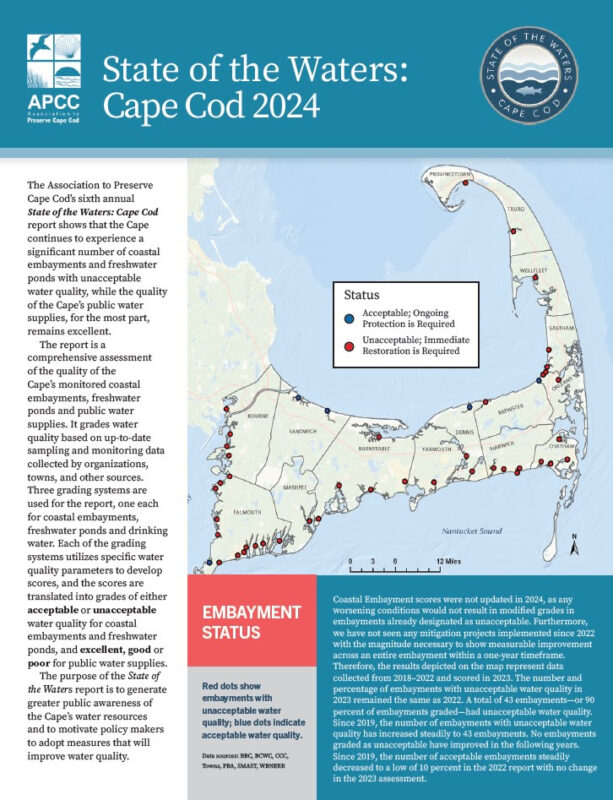 Stepping back, a few messages jump out. The first may be counterintuitive. The Cape has figured out how to move forward restoring its estuaries. The financing tools that make town investments in collection and advanced treatment affordable are wildly effective in motivating town voters to move forward with these necessary projects. The last few years have seen previously reluctant towns experience overwhelming voter support for major wastewater treatment projects. The path here is clear and the challenge is maintaining momentum so that new project phases are added every few years to expand these core projects. As projects come online and reduce nutrient loading to the groundwater, the downgradient estuaries will begin to recover. It will take a while for future State of the Waters updates to reflect improvement, but it will come.
The picture is less encouraging and the hill to climb is much steeper for ponds. It is clear our ponds are suffering. We are with ponds where we were as a region 20 years ago with estuaries. By the eye test, we know that ponds are degraded, but we do not yet have all the data needed to advance the political will needed to make the changes in wastewater management and land use to reverse the pond health decline our reports are documenting. No town on the Cape has a comprehensive plan to address the needs of their freshwater ponds and some towns still embrace the fantastical notion that they have no freshwater pond problem at all.
The challenge here for all of us concerned with freshwater quality is to aggressively elevate the commitment to freshwater pond restoration to the level that is now the norm for our estuaries. Residents must demand that their town officials expand and rethink their nutrient management plans to expressly include improvement of freshwaters as a goal.
APCC will continue to press for the resources to continue the Barnstable County funded Freshwater Initiative that will run out of money at the end of 2025. This critical program must be continued in the future. The ongoing use of ponds as the destination for untreated stormwater must stop. APCC is working with many towns and partners on improving stormwater management, but more needs to be done. APCC will be at the forefront, driving progress here in 2025 and beyond.
The ongoing and needless use of pesticides, fertilizers and herbicides is damaging our ponds, and this is one example of the power of individual action. Forget the quickly ignored New Year resolutions to lose weight or to spend less time on useless social media and commit yourself to eliminating the use of fertilizers and other chemicals on your yard. We have lots of useful tips on how to manage your property more in harmony with nature (Guidelines for Cape-friendly Landscapes; fact sheets). APCC will continue to emphasize better land use decisions, but our success depends on your actions. So, let’s go!
Our water quality directly reflects the priorities we set and how we behave. Your precious waters are screaming at us all that we need to do a better job. What are we waiting for?