
Hinckleys Pond Herring River Headwaters Eco-Restoration
- Home
- /
- Our Work
- /
- Science
- /
- Ecosystem Restoration Program
- /
- Hinckleys Pond Herring River Headwaters Eco-Restoration
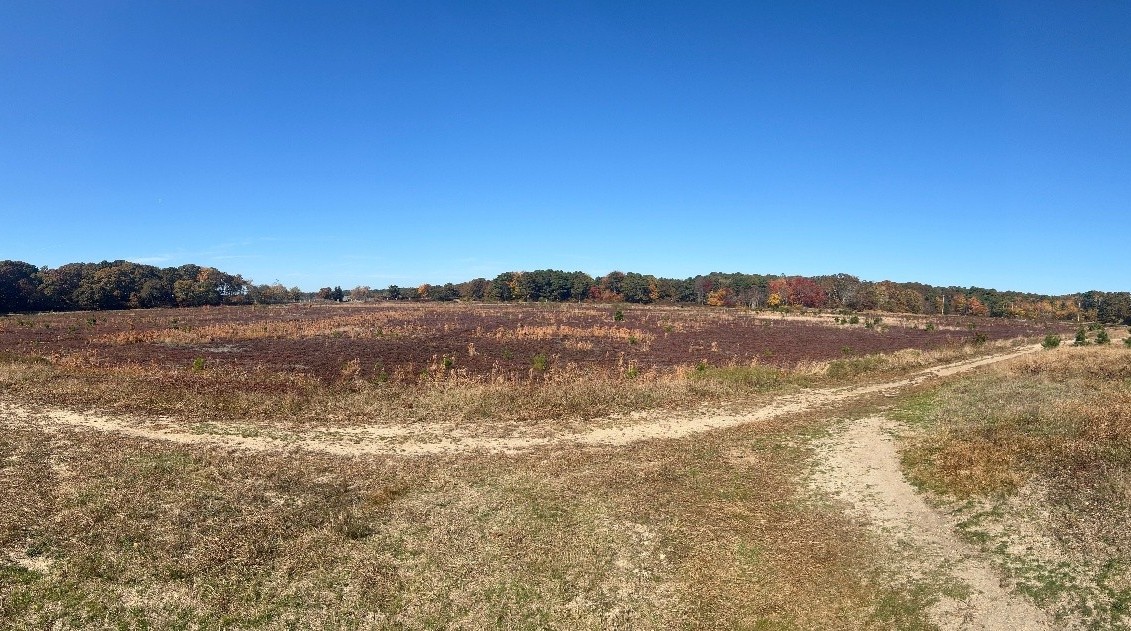
Hinckleys Pond Herring River Headwaters Eco-Restoration
Harwich, MA
The Hinckleys Pond project includes two retired cranberry bogs. The 11-acre Warner Bog (west) and 19-acre Jenkins Bog (east) bookend Hinckleys Pond at the headwaters of the Herring River estuary and are immediately downstream of river herring spawning habitat in Long Pond and Seymour Pond. The goal of this project is to restore 30± acres of retired bogs to natural wetlands and restore 500 feet of pond shoreline on Hinckleys Pond to achieve the following outcomes: restoration of freshwater wetland habitat with native plants to benefit wildlife, improved recreational opportunities including an all persons accessible trail, and improvement to water quality in Hinckleys Pond and the Herring River to benefit river herring and other aquatic species.
Additional Resources
- Project brochure PDF
- Harwich Conservation Trust’s project website
- Pre-Restoration Vegetation Monitoring Report PDF
Hinckleys Pond Herring River Headwaters Eco-Restoration: Pre-Restoration Vegetation Monitoring Report - Year 1 Post-Restoration Vegetation Monitoring Report PDF
Hinckleys Pond Herring River Headwaters Eco-Restoration: Year 1 Post-Restoration Vegetation and Water Level Monitoring Report - Monitoring Data ZIP
Supporting monitoring data and GIS files
Project Funding
The project has received financial support from multiple sources. The Brown family has been a financial supporter throughout all phases of the project. The Harwich Conservation Trust (HCT) has secured funding from various grants, including the 2021 South East New England Program (SNEP) Watershed Grant for data collection, design, and permitting; the 2023 National Estuary Program Coastal Watershed Grant, funded in part by the U.S. Environmental Protection Agency under cooperative agreement 83967501 with Restore America’s Estuaries; and the 2024 Massachusetts Department of Conservation and Recreation MassTrails Grant to support the construction of an all-persons accessible trail. Additionally, the Association to Preserve Cape Cod has contributed funds received from private foundations and a federal grant (award NA24NMFX463C0065-T1-01) from the NOAA Restoration Center, U.S. Department of Commerce.
Partners
Harwich Conservation Trust
Association to Preserve Cape Cod
Brown Family
Inter-Fluve
NOAA Restoration Center
Restore America’s Estuaries
Massachusetts Department of Conservation and Recreation