Scargo Lake Stormwater
- Home
- /
- Our Work
- /
- Science
- /
- Stormwater Management
- /
- Scargo Lake Stormwater

Scargo Lake is a treasured natural resource in the town of Dennis, Massachusetts. Popular for swimming, boating, and fishing, the lake also plays a vital ecological role—providing freshwater spawning habitat for river herring that migrate from Cape Cod Bay up Sesuit Creek to Scargo Lake.
Like many freshwater ponds on Cape Cod, Scargo Lake faces increasing threats from nutrient pollution, primarily caused by stormwater runoff. Roadways, parking lots, and other developed areas near the lake contribute to this problem, including two public access points where stormwater previously flowed untreated into the lake. This runoff carries sediment, nitrogen, phosphorus, and bacteria—pollutants that degrade water quality and disrupt sensitive aquatic habitats.
The town of Dennis identified the Scargo Town Landing (off Route 6A) and Scargo Lake Beach (off Dr. Lord’s Road) as high-priority locations for stormwater upgrades due to persistent water quality concerns. Since 2001, phosphorus levels have remained elevated, and nitrogen concentrations have been steadily rising. In addition, APCC’s cyanobacteria monitoring documented a significant bloom in July 2019, followed by smaller blooms in 2021 and 2022—further highlighting the need for action.
In 2025, construction was completed at both sites to install green infrastructure designed to capture and treat stormwater before it enters the lake. These improvements reduce pollutant loads, enhance habitat, and help protect the lake’s water quality while preserving public access and the natural beauty of Scargo Lake.
Addressing Runoff Across Cape Cod
The two Scargo Lake sites were selected for stormwater infrastructure improvements through the Cape Cod Boat Ramp Stormwater Project, led by APCC’s Ecosystem Restoration Program. Identified as high priorities by the town of Dennis, these locations now feature significantly improved stormwater treatment systems that help protect water quality, enhance recreational access, and support vital aquatic habitat for river herring and other species.
As part of the project, each phase of stormwater design—developed by the Horsley Witten Group—was carefully reviewed by APCC and town of Dennis staff. This collaborative process ensured the final designs would treat the maximum volume of stormwater feasible, while also considering project cost, long-term maintenance needs, and environmental benefits.
The Scargo Lake landings are the first sites completed under the Cape Cod Boat Ramp Stormwater Project, setting the stage for similar efforts to protect freshwater resources and coastal ecosystems across the region.




Construction
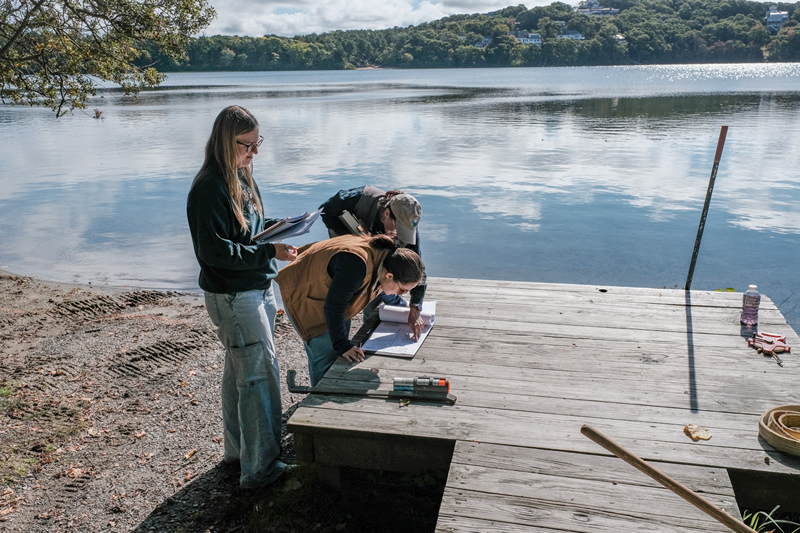
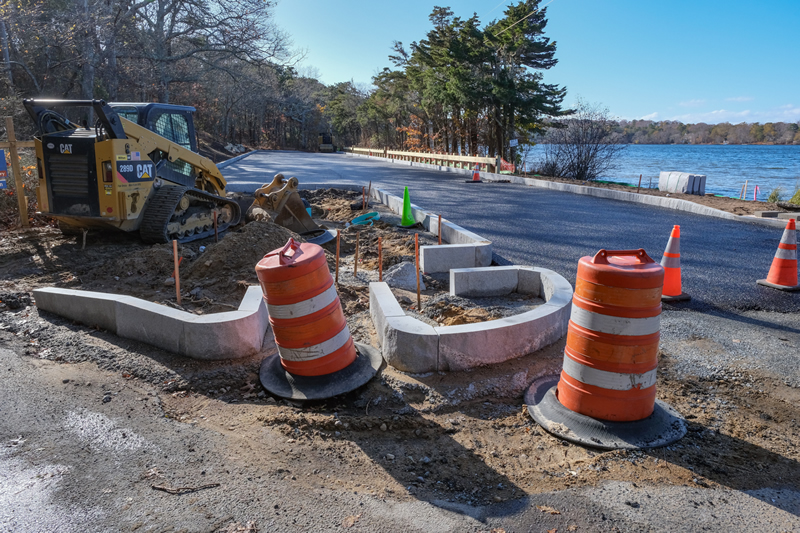
In October 2024, construction began on stormwater improvements at Scargo Lake Beach and Scargo Town Landing to reduce runoff pollution and protect lake water quality.
At Scargo Lake Beach, upgrades included a porous pavement parking lot, gravel infiltration trench, and bioretention area (engineered rain garden) to capture and treat stormwater. This site was prioritized to complete paving before winter.
Work then moved to Scargo Town Landing, where crews installed underground infiltration chambers, a bioretention area near the shoreline to capture runoff from the steep slope, and an articulated concrete mat at the boat ramp to prevent erosion and improve access.
Landscaping and native plantings, essential to the performance of the bioretention systems, were completed in spring 2025—marking the final phase of construction and enhancing both function and appearance of the sites.
Stormwater Treatment in Action
At Scargo Lake Beach, porous pavement allows stormwater to soak directly into the ground. During heavier rain events, excess runoff flows into an underground drainage system and is further filtered by a gravel trench before reaching the lake.
At Scargo Town Landing, stormwater is managed within a steep, narrow site using multiple trench drains that direct flow into large underground infiltration chambers—sized to handle a 25-year storm event. Both sites also feature bioretention systems engineered to capture and treat the first inch of runoff, which typically carries the highest concentration of pollutants.
Thanks to these improvements, stormwater entering Scargo Lake is now treated to remove excess nitrogen, phosphorus, sediment, and bacteria—helping to protect water quality and aquatic habitat. With routine maintenance, these systems will provide long-term, sustainable stormwater management for years to come.
Project Funding
Funding for this work has been provided by a U.S. Environmental Protection Agency Southeast New England Program Watershed Grant in partnership with Restore America’s Estuaries, two Massachusetts Office of Coastal Zone Management Coastal Habitat and Water Quality Grants, private foundation funding, the town of Dennis, and the MassBays National Estuary Partnership.
Partners