Association to Preserve Cape Cod |
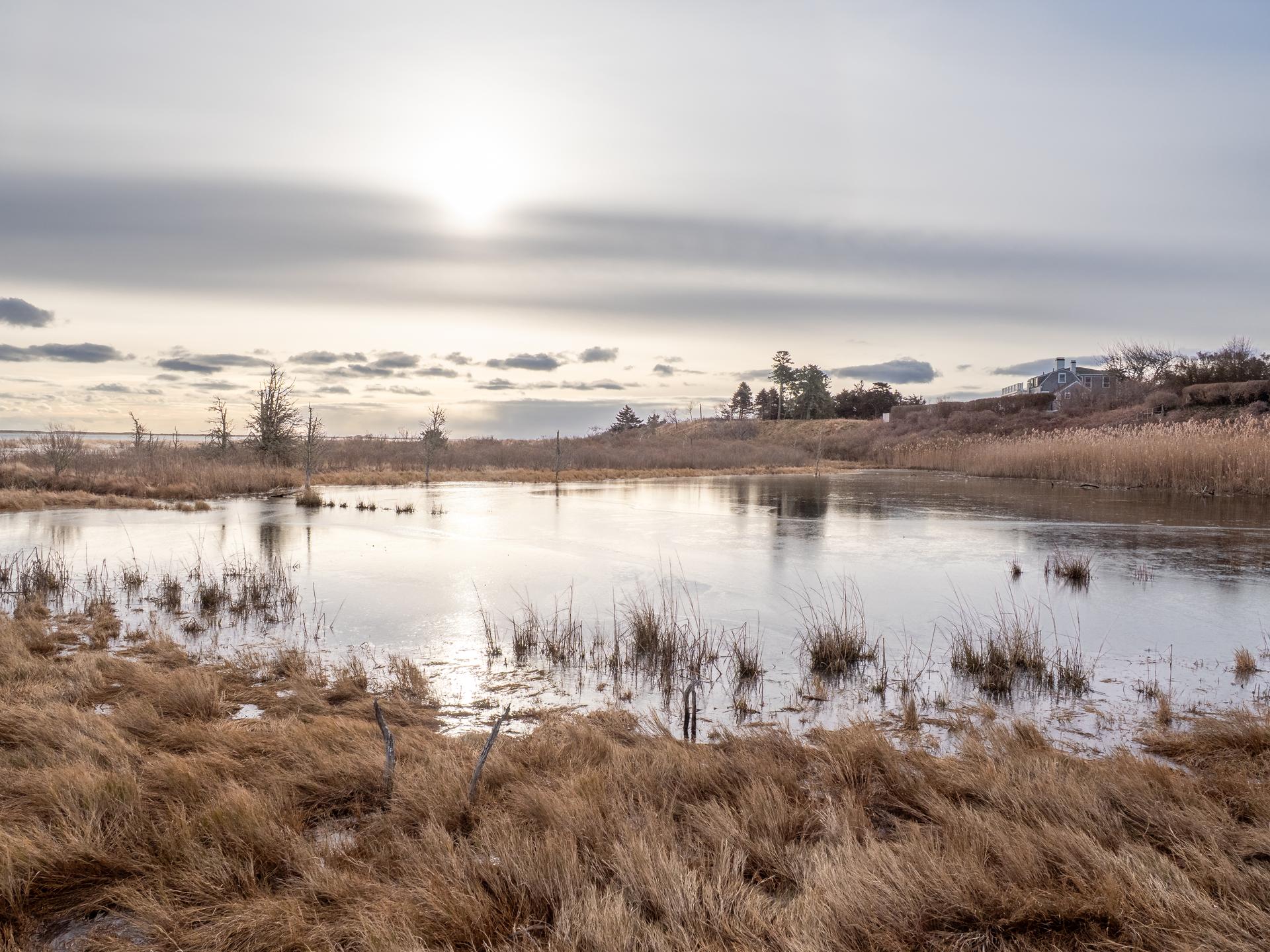
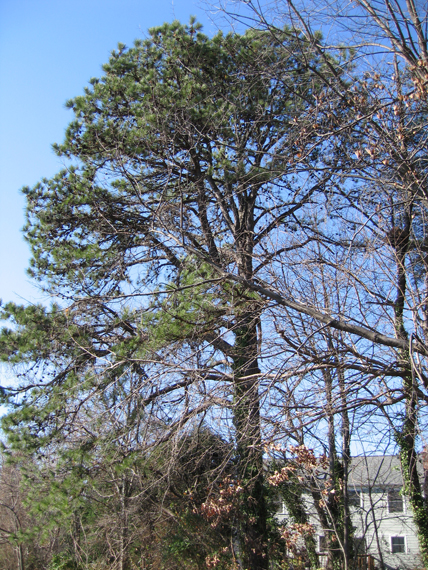
Above: North Chatham. Photo by Sue Machie |
|
|
Ecosystem Restoration Program |
Salt Marsh Monitoring Spotlight: Volunteer Aleksey Morozov |
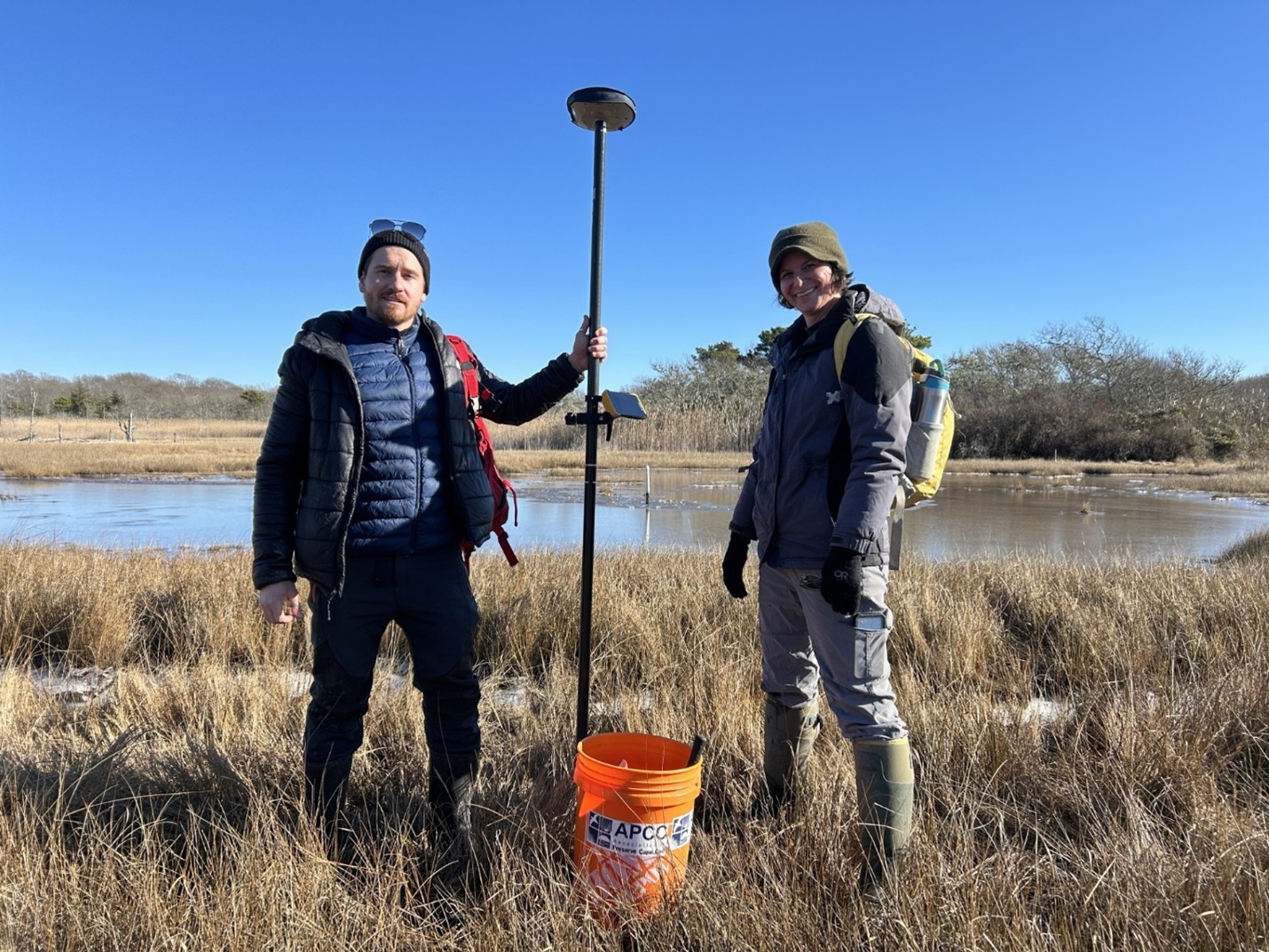
Above: APCC volunteer, Aleksey Morozov, and APCC lead ecologist and science advisor, Jordan Mora, pose for a picture at Weir Creek after deploying a water level sensor in one of the pools under observation. |
A lot of work goes into ecosystem restoration and APCC volunteers provide critical support to many facets of APCC’s projects. From ensuring data integrity, to collecting drone imagery and monitoring herring runs, Aleksey Morozov’s expertise and keen scientific mind have been instrumental in the Ecosystem Restoration Program’s (ERP) ongoing work. After obtaining his master's degree in microbiology from Binghamton University, Aleksey moved to Massachusetts for a position at the TickReport laboratory in Amherst, followed by a position at the Marine Biological Laboratory in Falmouth. He has called Cape Cod home ever since and started volunteering with APCC at the end of 2023. “I enjoy variety,” writes Aleksey, “and APCC and ERP have delivered that in terms of the projects that I have been able to partake in.”
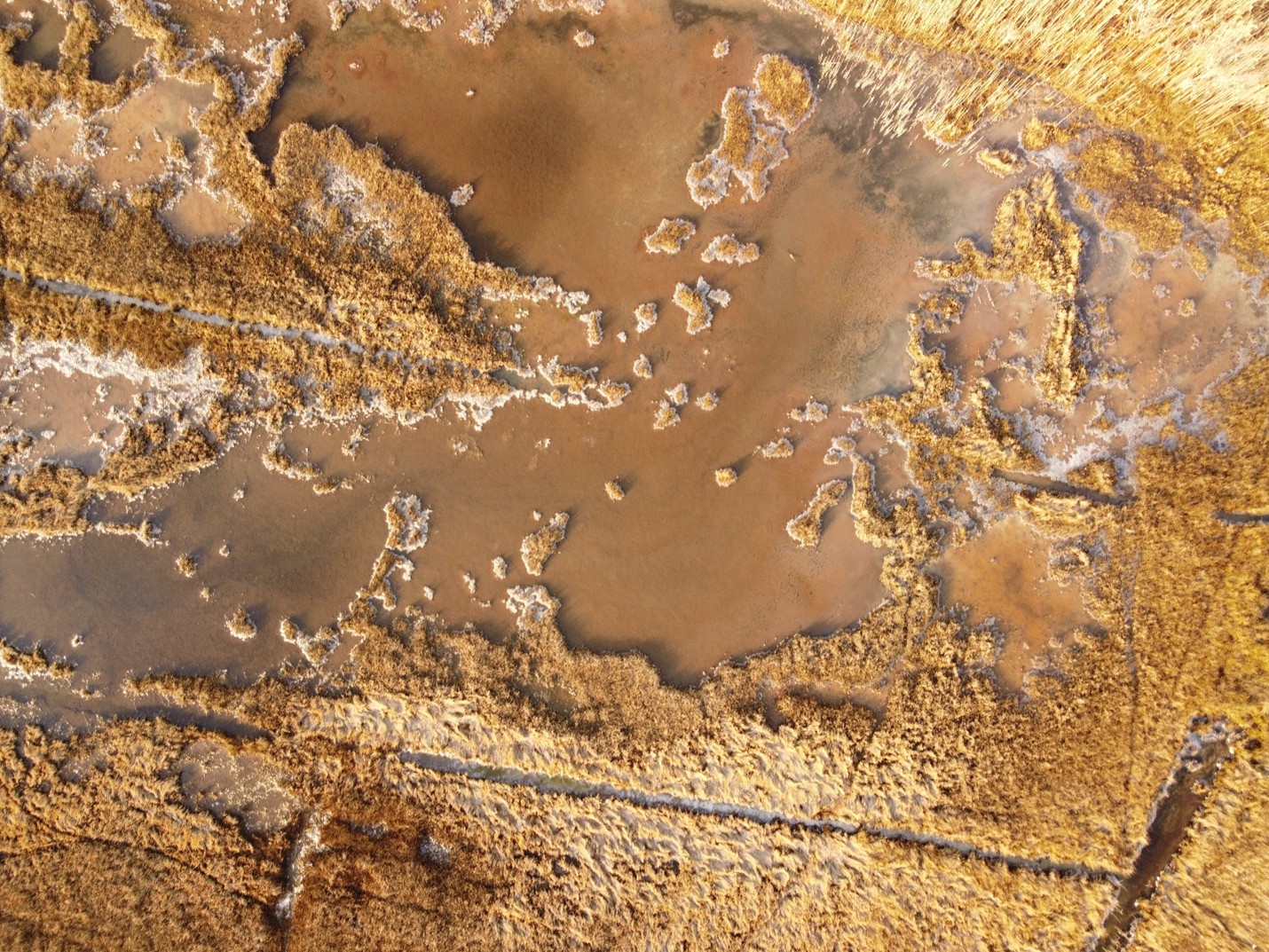
Aleksey has carried out quality assurance checks on numerous datasets, including salt marsh vegetation observations and data used in the State of the Waters reports, and served as a herring run monitor. Recently, he joined APCC staff at Weir Creek on a chilly December day to collect high-resolution aerial images of the marsh surface and deploy water level sensors to study tidal flow in the marsh. As Aleksey notes, this work “is critical for analyzing drainage dynamics and providing the accurate, technical baseline information required for effective long-term restoration.”
In addition to a technical expertise, invaluable to APCC’s data-driven work, Aleksey’s professional background in microbiology has given him “a deep appreciation for complex systems and the invisible processes that support life,” appreciation has grown to encompass Cape Cod’s natural environments. “I no longer just see a marsh; I see a vital, complicated ecosystem that requires active, data-driven stewardship.”
“APCC’s work provides the data that local communities need to make informed decisions and invest in restoration projects that secure a more resilient future for the Cape’s economy and way of life,” he writes. APCC is incredibly lucky to have volunteers like Aleksey who are willing to dedicate their personal time and resources to aiding—and championing—our work.
The Ecosystem Restoration Program team thanks Aleksey for his hard work, expert attention to detail, and readiness to get in the marsh! |
Above: An example of the drone imagery Aleksey collected at Weir Creek during December 2025. These images help APCC staff track changes in pool drainage before and after restoration work. |
Chase Garden Creek Salt Marsh Restoration |
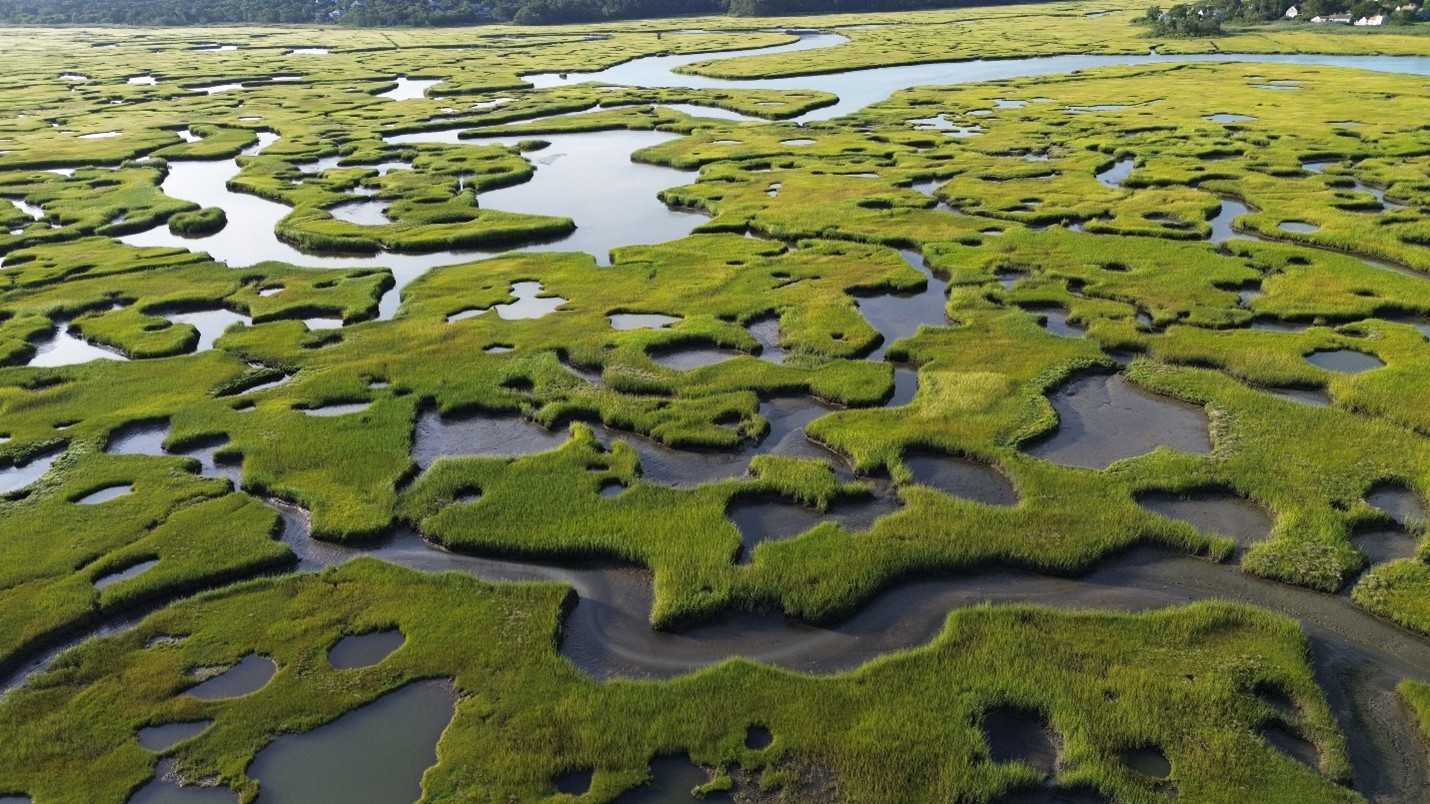
Above: Aerial view of Chase Garden Creek salt marsh. Photo by Dave Fryxell |
New England salt marshes are under pressure from many directions—centuries of altered land use, increased nutrient inputs, reduced sediment supply, and accelerating sea-level rise. Together, these stressors can drive elevation loss, erosion, and the gradual collapse of wetland habitat. Without intervention, many marshes will continue to degrade, with real consequences for the plants and wildlife that rely on them—and for the people and coastal communities they help protect.
The Chase Garden Creek salt marsh is one of these vulnerable systems. Spanning Dennis and Yarmouth on the north side of Cape Cod, the marsh extends inland from an inlet connected to Cape Cod Bay. In 2023, APCC began monitoring Chase Garden Creek with support from the Lavori Sterling Foundation, prompted by concerning changes observed in the marsh in recent years. That support has grown to include funding from the MassBays National Estuary Partnership and other private foundation grants and APCC is leveraging these resources to apply for funding for design, permitting and eventual implementation.
Informed by three years of monitoring and data collection, APCC is working with local and regional partners to identify practical, science-informed pathways for restoration. That includes exploring innovative approaches—such as ditch remediation and runnels—that have been successfully used at other New England salt marshes to improve hydrology and habitat conditions.
To learn more, join us today, Wednesday, January 14th, at 1:00 p.m. Our seating is full, but you can still sign up to watch the presentation via Zoom and learn more about Chase Garden Creek and APCC’s approach to salt marsh restoration. |
|
|
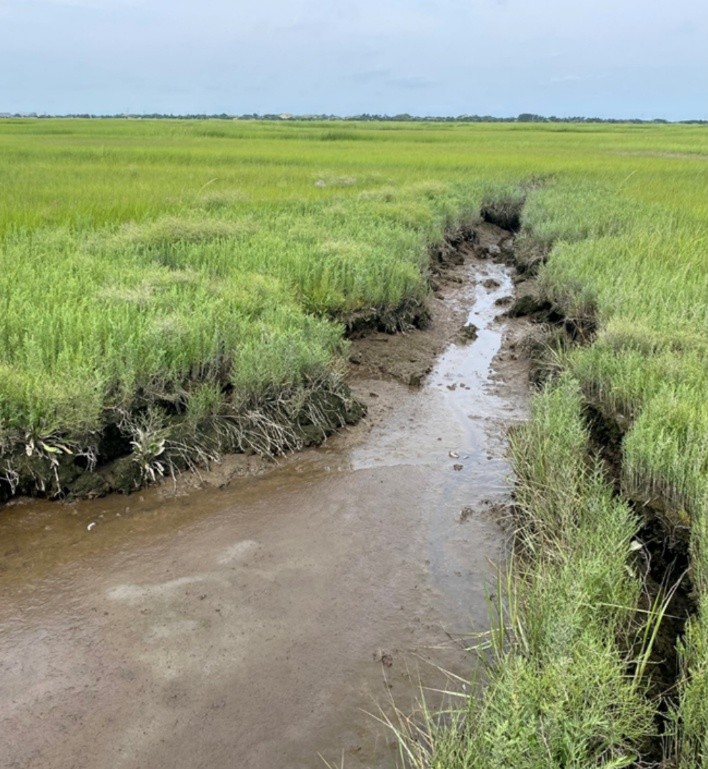
Above: A channel bisecting the marsh platform at Chase Garden Creek. |
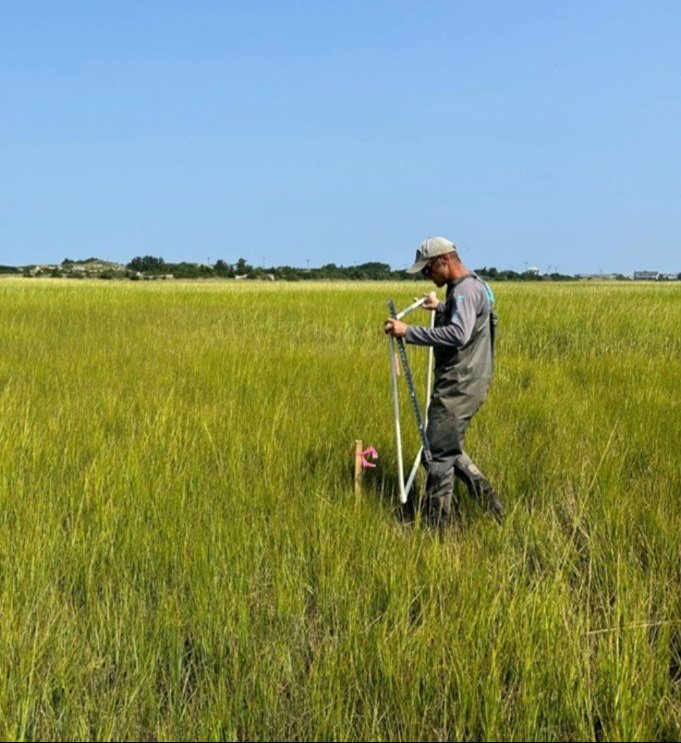
| Above: Rory Edwards, a 2024 APCC ecosystem restoration intern, records vegetation observations at a Chase Garden Creek salt marsh monitoring station. |
|
|
Believe it or not folks, we are in a Level 2 - Significant Drought! |
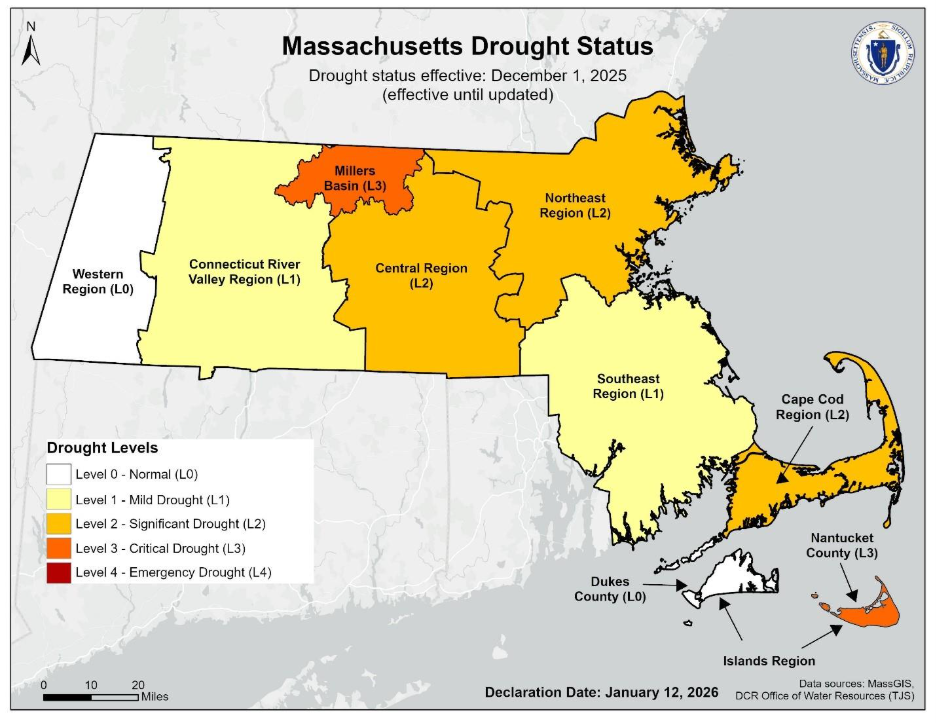
On January 12, 2026, Energy and Environmental Affairs (EEA) Secretary Rebecca Tepper declared the Central and Northeast Regions have worsened to a Level 2–Significant Drought. Conditions also declined in nearly all other regions, moving the Southeast Region to a Level–1 Mild Drought and the Millers River Basin to a Level 3-Critical Drought. In the Islands Region, Dukes County has returned to Normal Conditions, and Nantucket County has moved to a Level 3–Critical Drought. Conditions remain unchanged in the Western, Connecticut River Valley, and Cape Cod Regions.
During December, Massachusetts received rainfall ranging from 3 to 4 inches, but the month ended with totals at 1-2 inches below normal. However, when looking back over the past 3 to 6 months, precipitation deficits persist.
The current drought, which began in 2024, has had significant impacts on the natural environment, including the drying of streams in nearly all regions, lower water levels in lakes and ponds, resulting in exposed banks, and impeding fish passage out to the ocean. Although local water supplies are currently stable, as the drought persists and winter recharge is reduced, it is prudent for all to be very conservative and save water whenever possible.
For Regions in Level 2 – Significant Drought (That's Cape Cod!) Residents and Businesses: - Minimize overall water use;
- Follow local water use restrictions;
-
Fix indoor leaks, such as from toilets, faucets, and showers, which result in more than 60 percent of indoor use; and,
- For larger buildings and businesses, conduct water audits to identify areas of leaks and potential water conservation opportunities.
Immediate Steps for Communities/Municipalities: - Limit or prohibit washing of hard surfaces (sidewalks, patios, driveways, siding); personal vehicle or boat washing; and,
-
Establish water-use reduction targets for all water users, identify top water users and conduct targeted outreach to help curb their use.
Short- and Medium-Term Steps for Communities/Municipalities: - Establish a year-round water conservation program that includes public education and communication, taking advantage of the states library of outreach materials;
-
Provide timely information to local residents and businesses;
- Implement or establish drought surcharge or seasonal water rates;
- Check emergency inter-connections for water supply; and,
-
Develop or refine your local drought management plan using guidance outlined in the state Drought Management Plan.
For more information on water conservation, click here. |
|
|
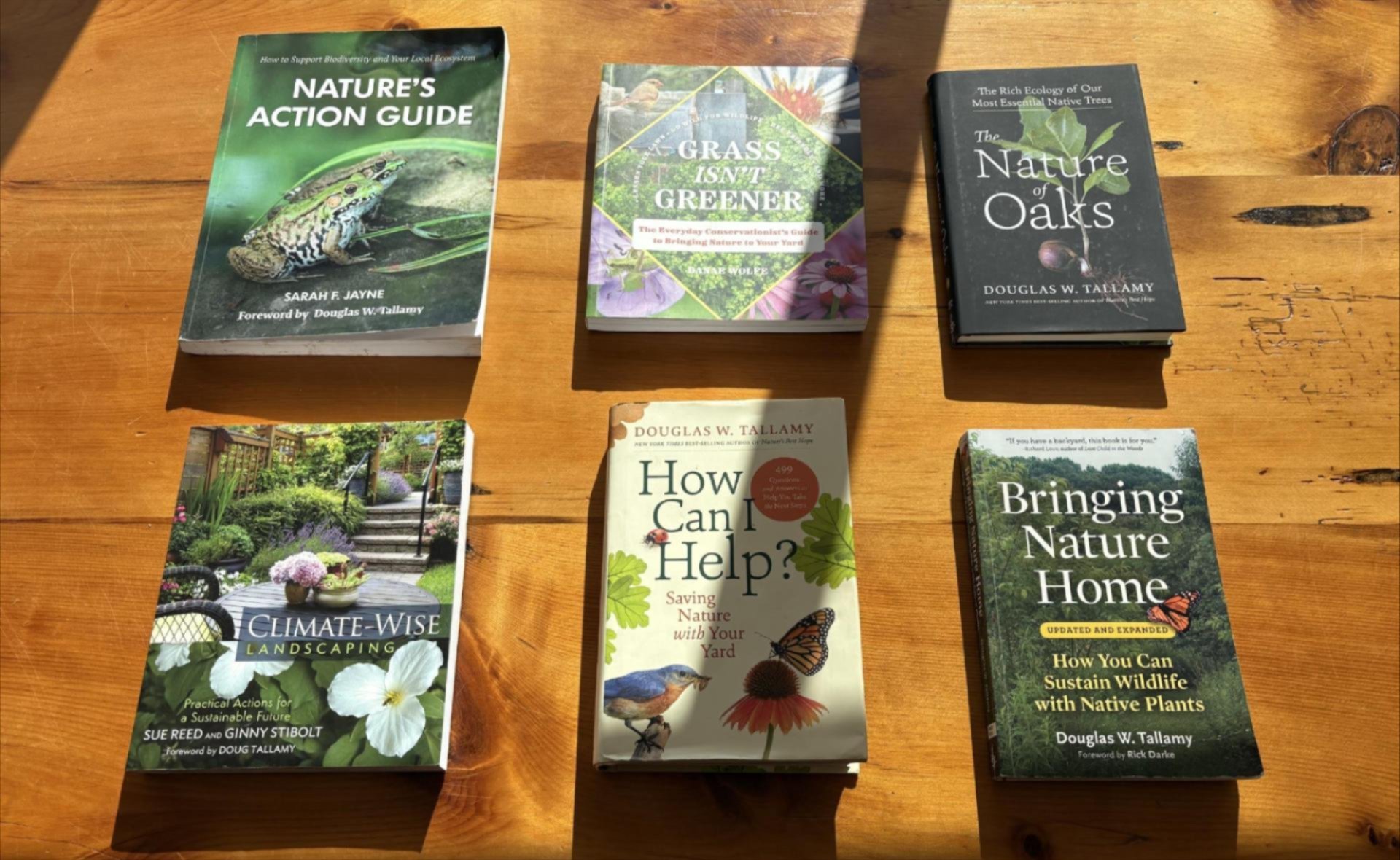
We haven't met a conservation-related book we didn't like—here is the tip of the iceberg! From the desk of Erin Camire, APCC ecolandscape program coordinator...
Below are a few of my favorite books focused on what you can do to foster an ecological landscape. From the larger questions of why should we protect nature, to the hands-in-the-soil tips and tricks of how to make an ecolandscape your reality, check these titles out at your local library or bookstore! |
Nature's Action Guide by Sarah Jayne
There is no book I reference more frequently when writing our summer consultation reports. This is about as concrete of a step by step guide as you can get, walking through invasive plant removal, selecting native species, managing wildlife habitat, shrinking lawn, and much more. Chock-full of helpful tips, links to books and websites, and step by step guides for how to transform your landscape into a wildlife paradise. Grass Isn't Greener by Danae Wolfe
This is a new one for me, but it was a must have the second I saw it! The book is excellently laid out, covering not only the basics of ecological landscaping, but also how to see yourself and your broader community as a part of the natural world, and how to be a scientist right in your own back yard. The Nature of Oaks by Douglas W. Tallamy
Cape Cod is the land of many oaks, and with this book Doug Tallamy illustrates just how lucky we are to be surrounded by this beautiful keystone species. Going month by month, Tallamy catalogues and discusses the insects and other wildlife, which depend on his oaks trees throughout the year. If you're looking to learn about just how important oak trees are to our ecosystems, this is the book for you. Climate-Wise Landscaping by Sue Reed and Ginny Stibolt
As the title suggests, this ecological landscaping guide is specifically designed around a climate-aware lens. With a beautifully concise opening on the nature of climate change, Sue Reed and Ginny Stibolt then break down the many ways your landscape can hold water, store carbon, and support complex ecosystems. This is a must-read for anyone interested in creating a climate resilient landscape. How Can I Help? by Douglas W. Tallamy
The culmination of Doug Tallamy's many years writing, educating, and researching the natural world can be found in this book. Over the course of his career, Tallamy has probably answered hundreds, if not thousands of questions relating to the "why" of naturalistic landscaping, and how lucky we are that he's now taken 499 of those questions and answered them in this book for all of us to review. If Nature's Action Guide is my most referenced book, How Can I Help comes in as a close second. Ecology, evolution, native plants, invasive species, conservation, and supporting wildlife at home are just a few of the topics covered, and each section contains brilliant tidbits about the natural world and the interconnections of plants, insects, birds, mammals, and of course, humans.
Bringing Nature Home by Douglas W. Tallamy
This could be considered the book that started a movement. This is the overarching "why?" of the ecological landscape movement, as Tallamy dives into the landscapes we've overlooked in a time of conservation in the face of climate change, our own backyards. Through this book, Tallamy clearly and cleanly shows us that changing the world and providing a home for the many creatures that inhabit our landscapes starts with your own backyard.
|
|
|
| Genetic Considerations in Plant Production
with Matt Garrambone of Beechwood Environmental Thursday, January 15th
1:00 p.m. — 3:00 p.m. Virtual Only |
|
|
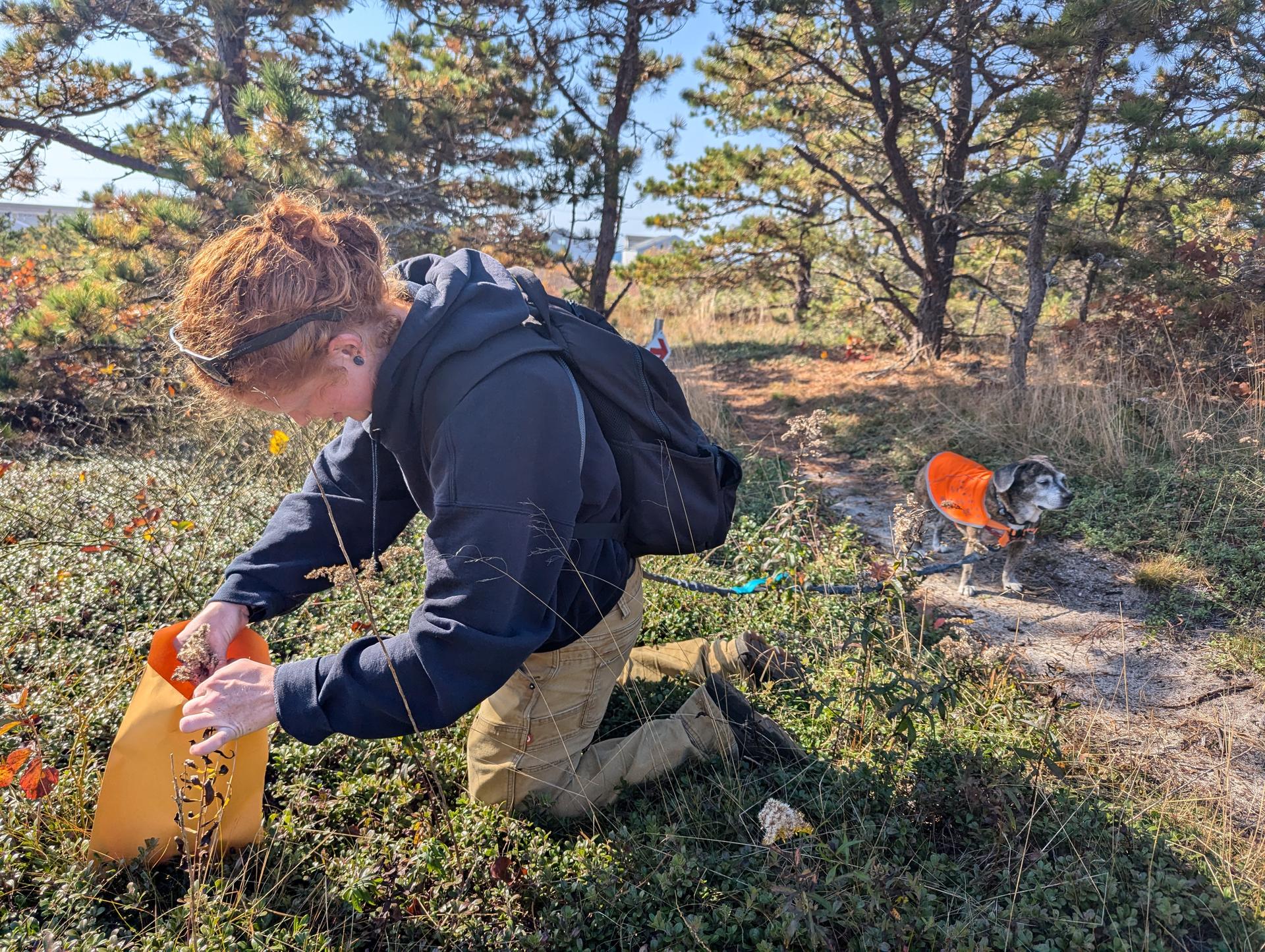
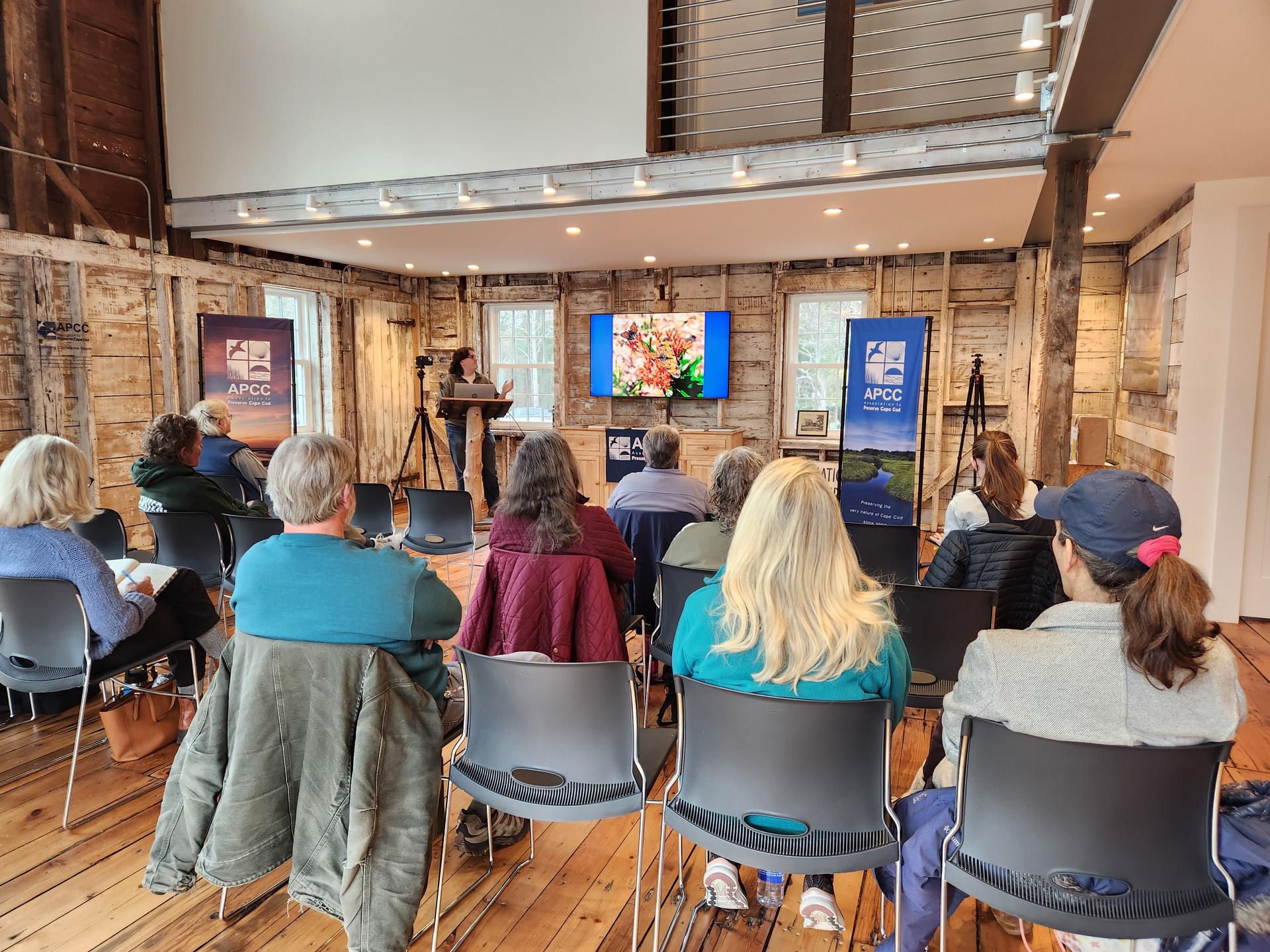
APCC’s Cape Cod Native Plant Growers' Cooperative presents Matthew Garrambone of Beechwood Environmental for a discussion on the importance of genetic diversity in plant populations, the benefits of growing from seed, and an overview of genetic considerations in nursery production. |
This talk is offered as part of the Cape Cod Native Plant Growers’ Cooperative Program to provide information to prospective growers. The program is made possible by funding from the Cape Cod and Islands License Plate Grant program and the Kelley Foundation. |
Landscaping for Wildlife: the Birds and the Bees and Beyond Thursday, January 22, 2026
10:00 a.m. – 11:30 a.m. Virtual only - In person is full
Mark Faherty, science coordinator for Mass Audubon's Wellfleet Bay Sanctuary, will talk about the birds and the bees and his experiences gardening for wildlife both at home and at the sanctuary, where he oversaw a complete redo of the pollinator garden and other outdoor spaces, adding hundreds of native trees and shrubs. He’ll cover the most important cultivated and wild plants to focus on to benefit birds, butterflies, bees and other wildlife, as well as what plants work or don’t work here on Cape Cod, land of hungry rabbits and annual droughts.
|
Virtual Panel Discussion for Prospective Native Plant Growers for Market
Friday, January 23, 2026
10:00 a.m. – 12:00 p.m. via Zoom |
Join us for a virtual panel discussion featuring experts in native plant propagation for the marketplace: Alexis Doshas, Native Plant Trust Nasami Farm nursery manager, Jasmin Callahan, founder of Dragonfly Natives, and Mark Brownlee, founder of ArcheWild and Douglas Mainhart, ArcheWild nursery manager. The panelists will give an introduction to their operations, showcasing their model of growing native plants for sale. Come prepared for a robust discussion where you can ask questions and get some practical advice based on our panelists’ experience in growing natives for sale. This talk is offered as part of the Cape Cod Native Plant Growers’ Cooperative Program to provide information to prospective growers. The program is made possible by funding from the Cape Cod and Islands License Plate Grant program and the Kelley Foundation. |
Native Plant Propagation for Professionals |
Thursday, January 29, 2026
1:00 p.m. – 3:00 p.m. Hybrid Presentation
Native Plant Trust’s Nursery Technician Peri Bergquist will give an overview of the plant production at Nasami Farm Nursery. They specialize in growing plugs of native plants from seeds of known ecotype. Topics will include common germination requirements, winter sowing, seedling biology, propagation methods, tips for specific species, propagation timeline, and troubleshooting common problems. Participants will leave with a list of common species, their germination codes and growing tips.
This talk is offered as part of the Cape Cod Native Plant Growers’ Cooperative Program to provide information to prospective growers. The program is made possible by funding from the Cape Cod and Islands License Plate Grant program and the Kelley Foundation. |
|
|
| Growing Native Seeds and Plants
with the Rhode Island Wild Plant Society Friday, January 30th 10 a.m. to 12 p.m. Hybrid Event
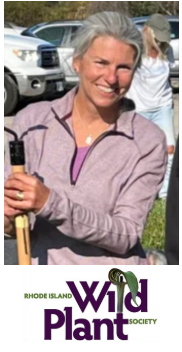
Sue Theriault has been a propagator with the Rhode Island Wild Plant Society since 2018 and is currently the RIWPS vice president. She is the leader of the society's ecotypic seed program known as ReSeeding Rhode Island, which was initiated in 2022 to create a local, sustainable source of native seeds in RI. In her talk, Sue will focus on how RIWPS grows plants for its spring and fall sales, sharing both successes and mistakes, and how ecotypic seed is produced for you to access and grow yourself.
|
|
|
If you are a farmer or someone who wants to grow native plants to sell, or you just want to be updated on the program's development, please submit the interest form that appears on our webpage. We will be sending periodic email notices of workshops and meetings.
Funding for the project is provided by Barnstable County and its Economic Development Council License Plate Grant Program through the Cape Cod Commission and the Kelley Foundation. |
Four talks for prospective growers as part of the Cape Cod Native Plant Growers' Cooperative program have been presented thus far, with several scheduled in the upcoming weeks. These past workshops can be viewed here:
Registration for upcoming talks can be found on our events page.
|
Upcoming Events Hosted by Others |
A Cape-wide Conservation Event Calendar |
The Compact of Cape Cod Conservation Trusts (“the Compact”) and its nonprofit members launched a new regional calendar of events. The Conservation Calendar includes programs across Cape Cod hosted by these groups. The goal of the calendar is to encourage visitors and residents to take part in nature and environmental events. You can always find the link to the calendar on APCC's website under News & Events.
|
|
|
A Cape Cod Native Plant-selector
~ to help you choose the perfect native plants for your garden. |
|
|
Email kandres@apcc.org and we'll send you a CapeCodNativePlants.org decal. |
| |
|
|
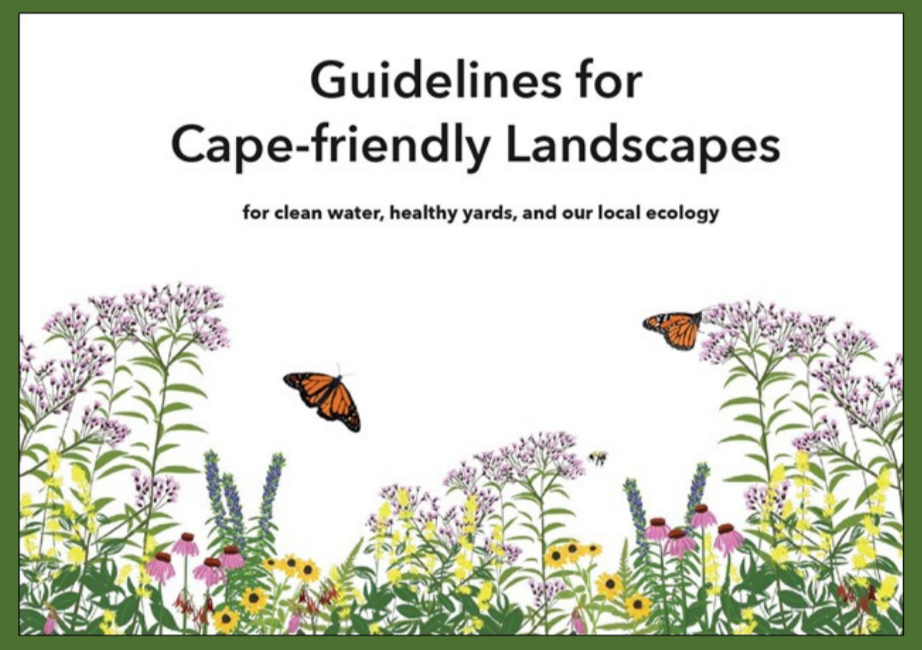
The Guidelines gives homeowners steps they can take in the design and maintenance of their properties that will support pollinators and birds, manage stormwater, conserve water, and protect the Cape's water quality. This 40-page booklet is beautifully illustrated by Marcy Ford with content that is easily digestible and supported by numerous resources for additional learning.
| |
|
We are grateful for the several retail shops that are partnering with us to make this publication more widely available: Brewster Book Store, Birdwatchers General Store, Crocker Nurseries, Wellfleet Audubon Wildlife Sanctuary, Cape Abilities Farm, Cape Cod Museum of Natural History, the Cape Cod Lavender Farm, Heritage Museums and Gardens, Titcomb's Bookshop, Sea Howl Bookshop, Soares Flower Garden Nursery, and Eight Cousins Bookshop.
If you are a retailer and would like to sell this publication at your store, please contact us. |
|
|
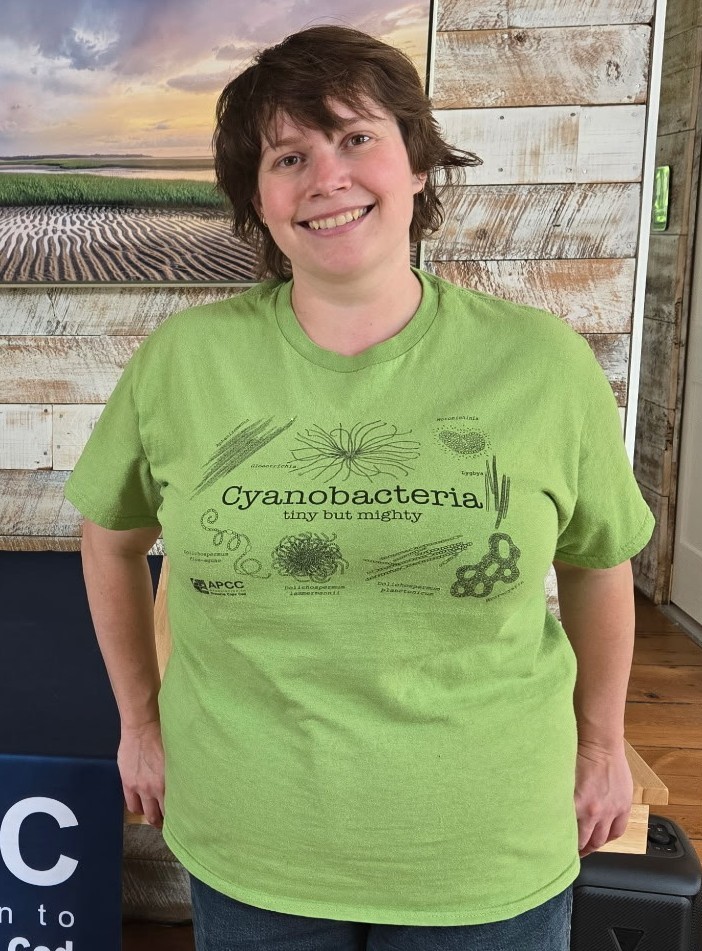
| Cyanobacteria ~ tiny but mighty
color kiwi $30 includes USPS shipping |
|
|
APCC caps
$25 -includes USPS deliver in the U.S. |
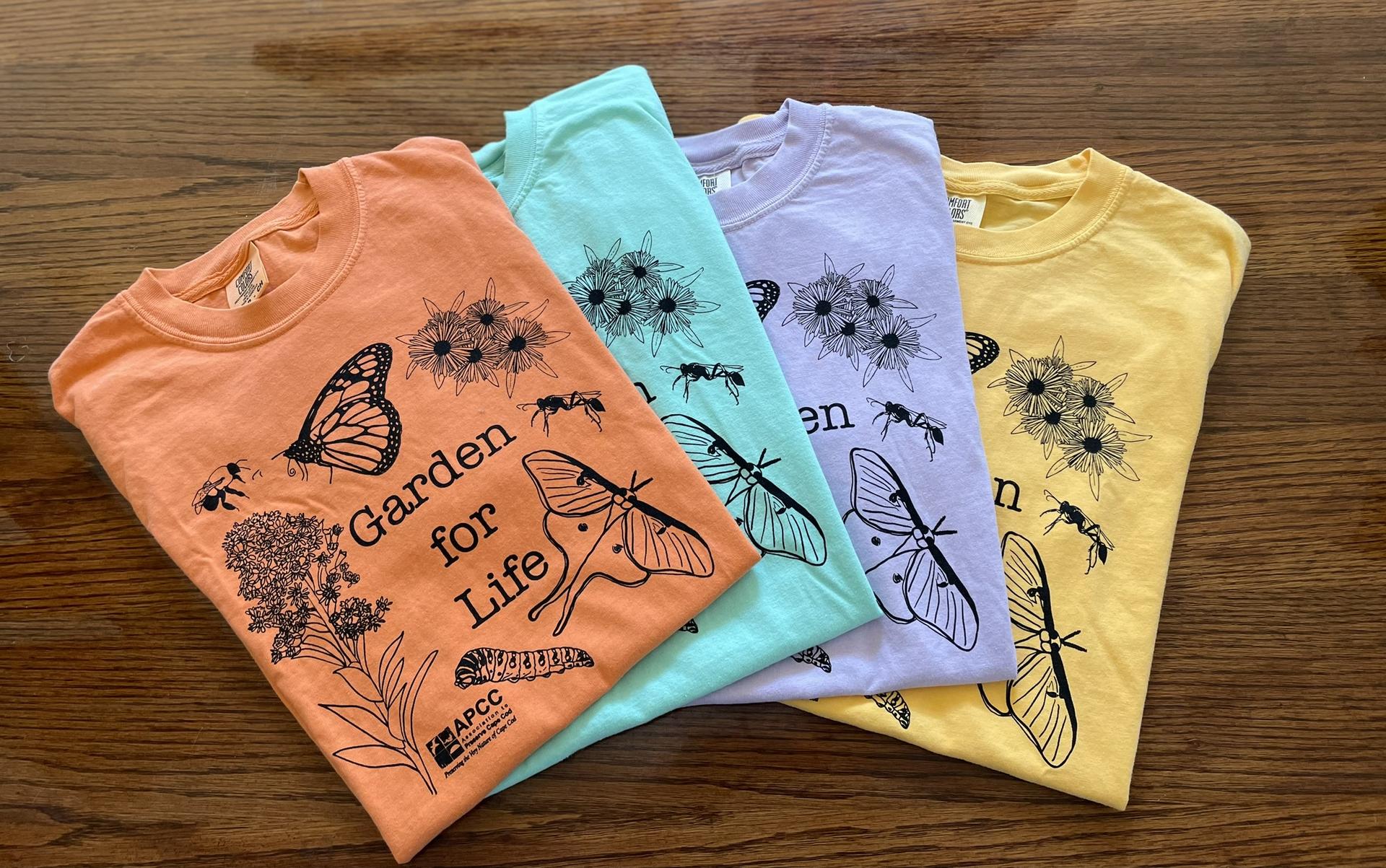
| Garden for Life T's $30 -includes USPS delivery in U.S. |
|
|
|
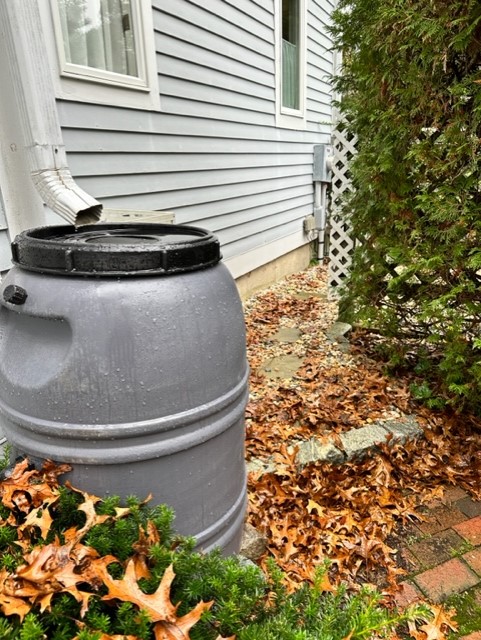
Rain Barrels for Cape Cod
Order online from Upcycle Products $122 each includes shipping to your door APCC receives a portion of the proceeds.
These are 55 gallon, repurposed food barrels. For more information, click here. |
|
|
| APCC eNewsletters.
Our weekly newsletters are archived on our website and easily shared.
You can find past newsletters and share with your friends. Encourage others to sign up for future enewsletters HERE.
|
|
|
Are you thinking of going solar? We hope so!
In partnership with E2 SOLAR in Dennis, APCC receives $500 for every solar installation when APCC is named as referral. |
|
|
|
Thank you to the homeowners who just contracted to install solar panels through E2 Solar. May the sun always shine for you! |
|
|
Expressions Gallery, 578 Main Street, Chatham
CLICK HERE |
Expressions Gallery donates 20 percent of its profits to APCC's work. |
|
|
Thank you to our business sponsors! |
|
|
APCC is rated four stars by Charity Navigator,
2025 Platinum by Candid (formerly Guidestar), and 2024 Top-Rated by GreatNonprofits. |
|
|
Our Contact Information
*{{Organization Name}}*
*{{Organization Address}}*
*{{Organization Phone}}*
*{{Organization Website}}*
*{{Unsubscribe}}* |
| |
|
|