Association to Preserve Cape Cod |
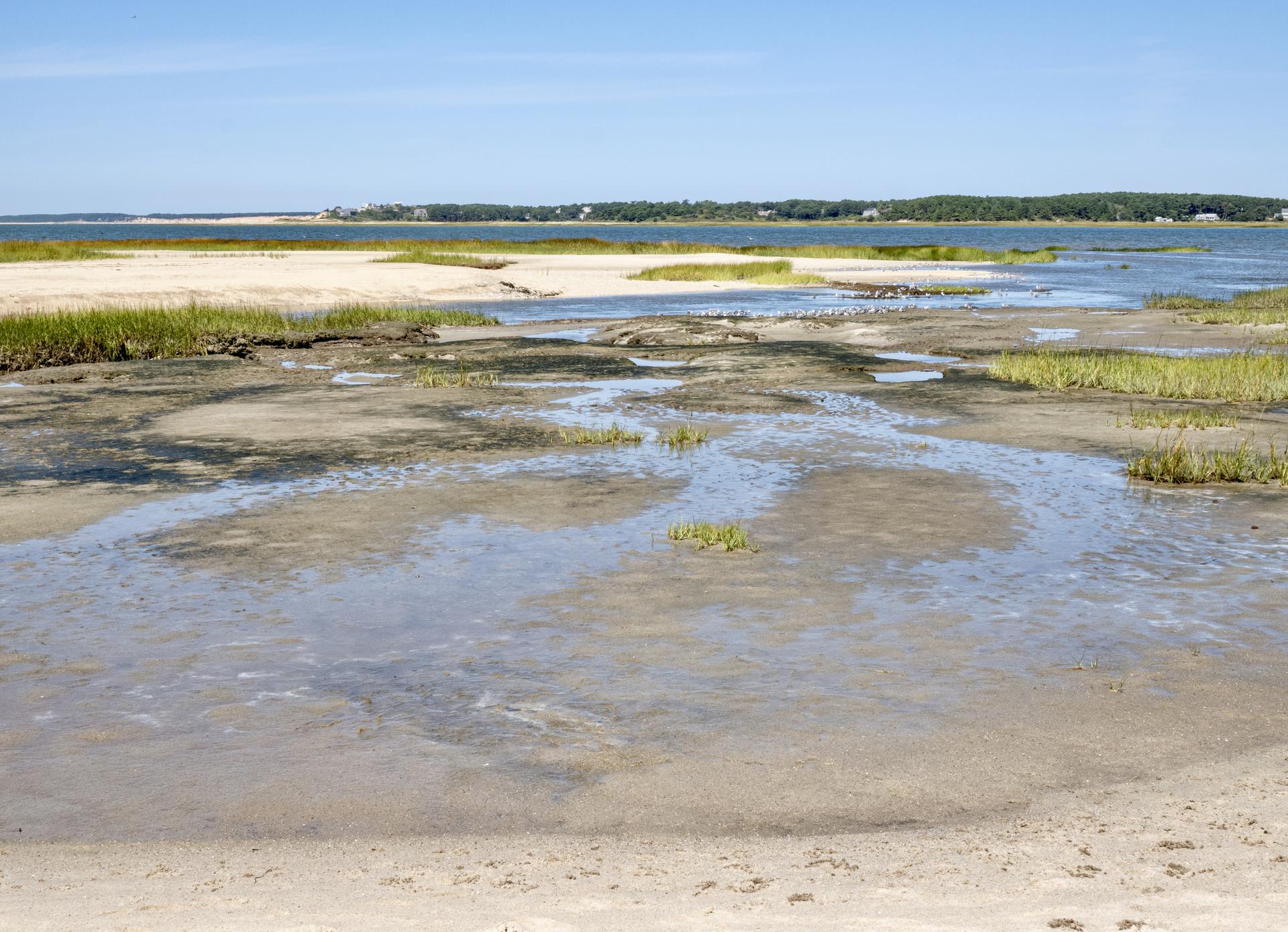
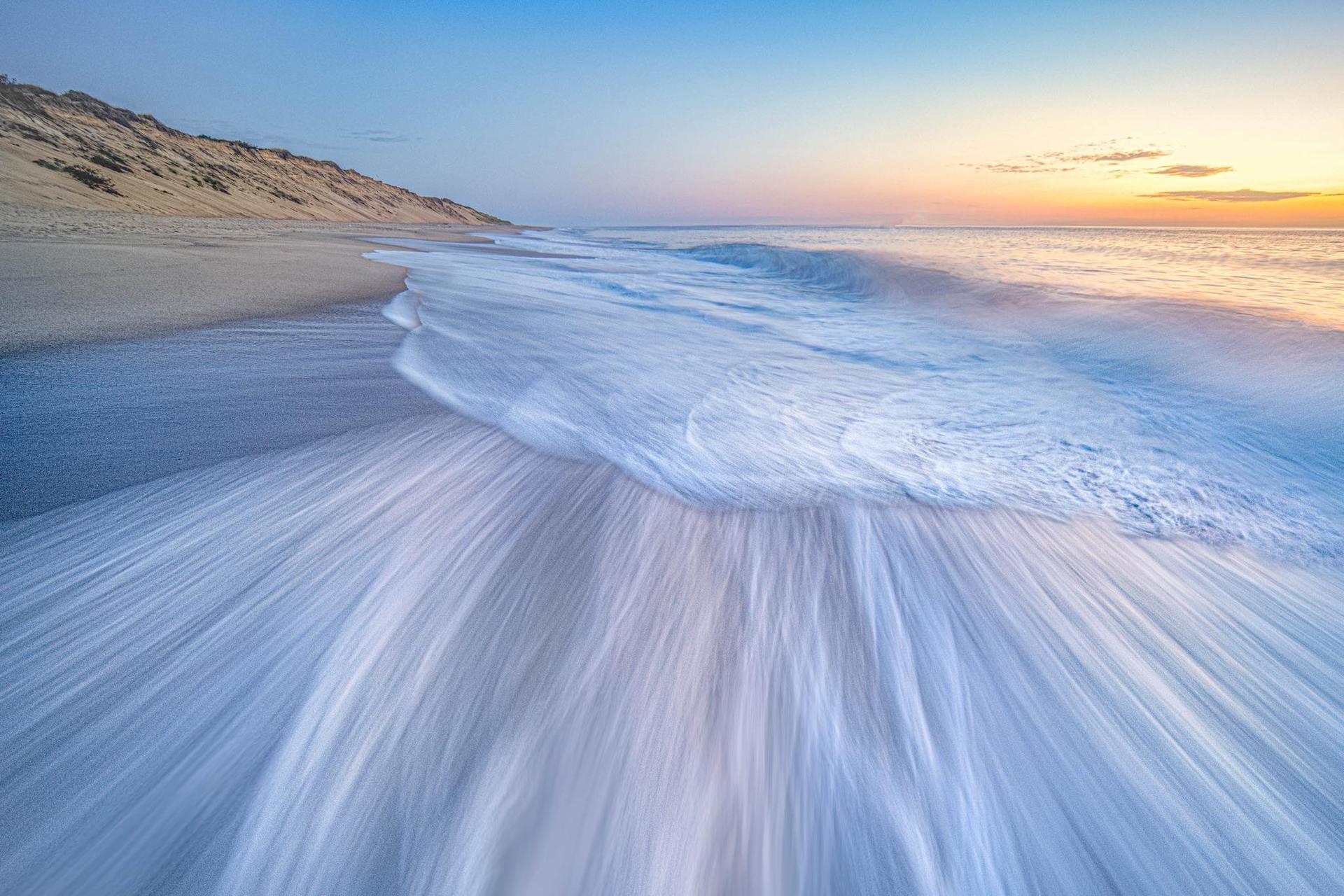
Above: Low tide at Mass Audubon Wellfleet Wildlife Sanctuary. Photo by Sue Machie |
|
|
| Shifting Sands
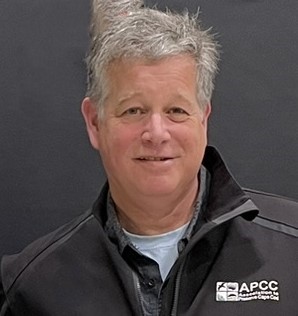
by Andrew Gottlieb, Executive Director |
Living on Cape Cod we are accustomed to life on shifting sands. It is hard to live on a sandbar amidst both rising tides and the relentless pounding of the surf and to not at least be aware of the transience of everything. Reconciling our minds with this reality requires, to continue the nautical metaphors, seeking safe harbor or mooring in things that give us comfort and stability. |
|
|
For some that stability comes from an association with a place, others find it in family, religion, science, civic groups, and friend groups. The list goes on, is often overlapping, but I think we all share some desire for an ordered belief system that helps us process the noise. The speed of change in today’s world has become chaotic to me, and there is value in recognizing and acknowledging that at this moment in time things feel different—very different.
While an advocacy organization, APCC has always, and proudly, anchored itself by pursuing policies that reflected our best understanding of how the natural world functions. While science continues to expand and improve our understanding of complex natural systems, we have remained open to adjusting our advocacy based on the best science, wherever it leads. This approach has been predicated on an inherent and often unspoken belief that the process of scientific discovery, as practiced in this country, yielded quality and actionable results. Science doesn’t settle everything; there is always a need and ability to know more.
The application of informed learning in policy and regulation has always been imperfect, but there was no doubt that science was expanding our knowledge base and improving the quality of life for humanity—until now.
Little is changing faster than this country’s relationship with, and application of, science. The changes run the gamut from what research will be funded, who will be funded, what research is important, what information gathering will be continued and what will be terminated, and how information will be processed, released, and applied. The changes we are undergoing now are rapid, poorly understood, and have huge ramifications for environmental protection, medical science, and all of society. It does feel as though some of the foundations relied upon to make sense of the disorder are no longer built on bedrock, but rapidly shifting sands. It feels scary because it is.
This all has given me a headache. Now, what to take for it…? |
Please Help Us Put Protection of Nature on the Ballot!
APCC and a coalition of over 50 organizations (Nature for Massachusetts Coalition) are pursuing a "Protect Water and Nature Initiative" as a question on the November 2026 ballot. The effort would set aside revenue from the existing state sales tax on sporting goods to dedicate $100 million every year for protecting and conserving water and nature—without raising taxes.
We need to collect over 100,000 signatures between September and this November to get the initiative on next year's ballot.
If you would like to help us get the needed signatures, CLICK HERE for more information and to volunteer.
It’s time to invest in our future. Clean water, healthy forests, more trails and parks,
and access to the outdoors and nature for everyone. ~~~~~~~~~~~~~~~~~~~~~~~~~
At the same time we are collecting signatures, there is also a legislative effort: An Act Providing Nature for All. Here is the link to Bill S.2571.
|
|
|
APCC Joins Call to Protect Atlantic and River Herring
APCC has joined a coalition of conservation groups, anglers, and commercial fishermen in urging the New England Fishery Management Council (NEFMC) to protect Atlantic herring, river herring, and shad. (Read the letter here.) These small forage fish are the foundation of our coastal ecosystems, supporting species like striped bass, tuna, seabirds, and marine mammals, as well as recreational and commercial fisheries. Atlantic herring are at historic lows, and river herring populations remain severely depleted.
The Council has paused Amendment 10, which is critical to rebuilding herring and protecting river herring and shad. Meanwhile, the Atlantic Herring Plan Development Team has proposed rolling back key safeguards—such as monitoring and observer coverage—measures developed over years of science-based Council work. These rollbacks would delay rebuilding and further threaten these essential species.
APCC urges the Council to reject these rollbacks and prioritize completion of Amendment 10. You can help by submitting public comments to the NEFMC ahead of upcoming meetings (Sept. 23–25 and Dec. 2–4) in support of strong, science-based protections for Atlantic and river herring.
Every voice counts in ensuring a sustainable future for these fisheries and the communities that depend on them. |
APCC Ecosystem Restoration Program |
Above: April Wobst (second from left) joins a panel at the One Cape Summit to share APCC’s stormwater work. |
Ramps are for Boats, Not Runoff – Improving Water Quality through Stormwater Management at Public Boat Ramps April Wobst, APCC restoration program manager and MassBays regional coordinator for Cape Cod, shared updates on our regional stormwater management project at the Cape Cod Commission’s One Cape Summit this week. April joined a panel of presenters in a breakout session on “Practical Strategies to Improve Pond Water Quality.”
April summarized APCC’s public boat ramp stormwater management project to address nutrient and bacteria contamination through installation of green stormwater practices—highlighting the recently constructed sites on Scargo Lake in Dennis. These are the first two sites constructed under this regional project and include installation of porous pavement, underground infiltration chambers and planted bioretention areas to capture, infiltrate, and remove pollutants from stormwater runoff before it enters the lake.
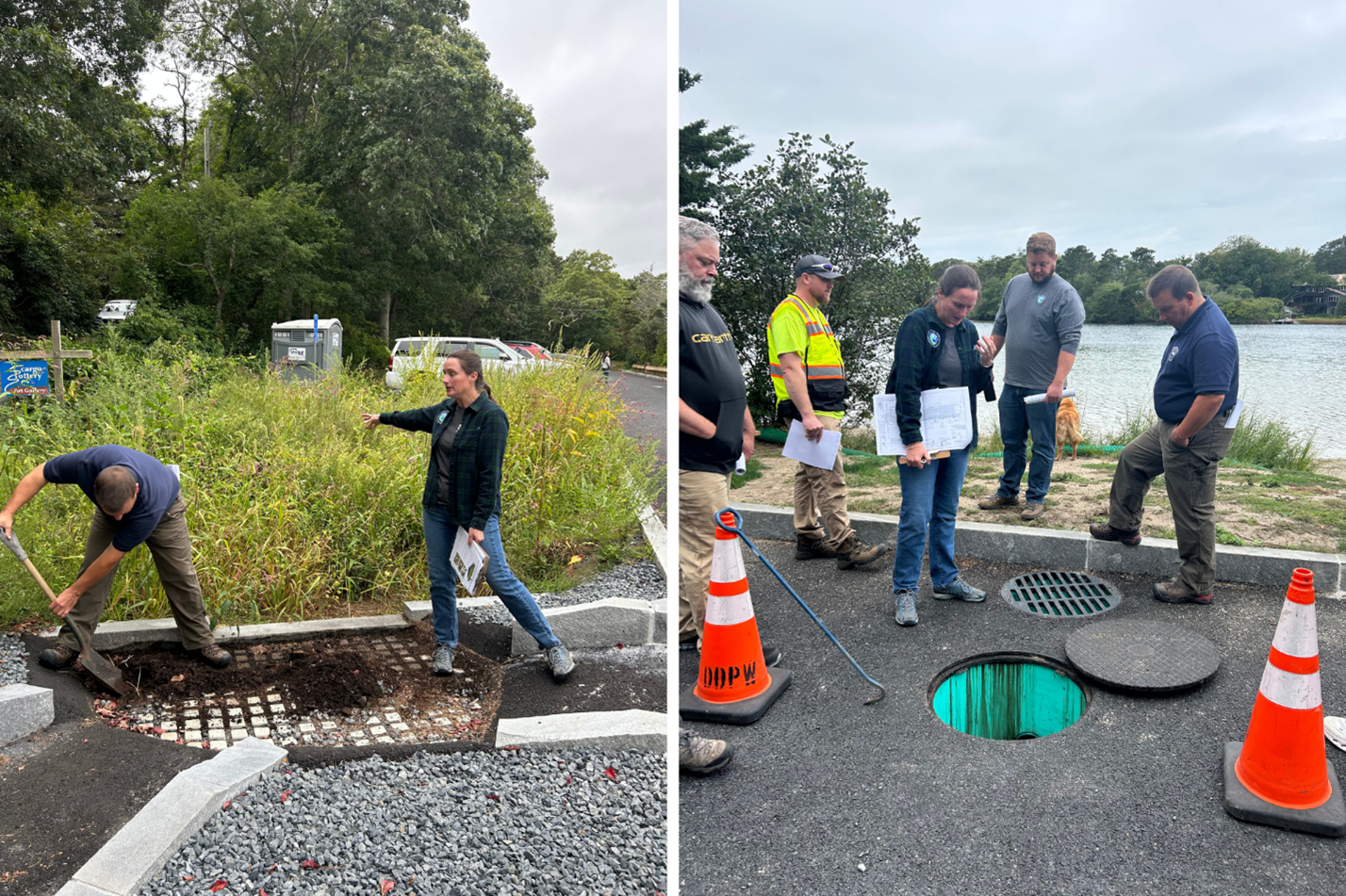
This presentation followed an on-site maintenance training held earlier this month for the town of Dennis staff. Led by stormwater engineering consultants from the Horsley Witten Group, the team reviewed the final operation and maintenance plan, which outlines the type and frequency of care required for these green infrastructure practices. The discussion covered practical topics, such as managing weeds, determining when and how much to cut back vegetation (e.g., knee height in spring to support overwintering pollinators), and locating underground structures for inspection and cleanout. The team also addressed common questions—like where to place snow—an important consideration for preventing damage to plantings and avoiding sediment buildup that could clog the system’s ability to infiltrate.
|
Above: Staff from the Horsley Witten Group and the town of Dennis participate in an on-site training on operation and maintenance of green infrastructure practices, covering vegetation management and inspection of underground structures. |
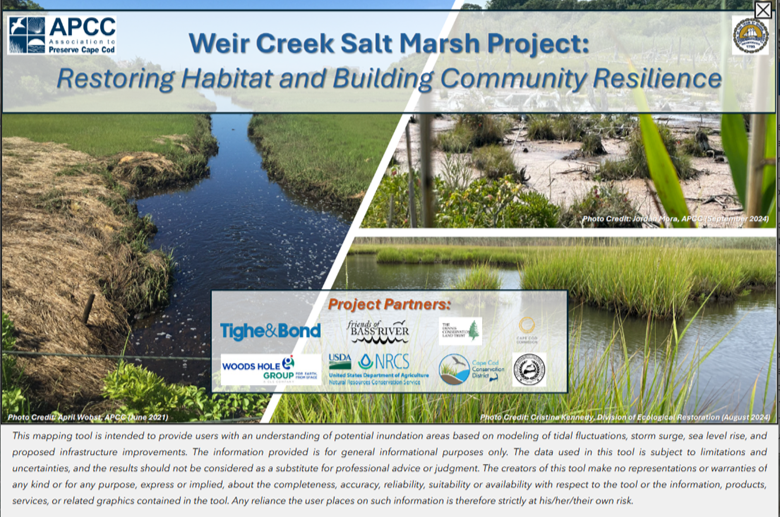
Above: APCC releases the Weir Creek Tidal Viewer to provide surrounding residents with maps of predicted tidal flow under current and proposed conditions related to the Weir Creek Restoration Project. |
Weir Creek Tidal Viewer Reveal!
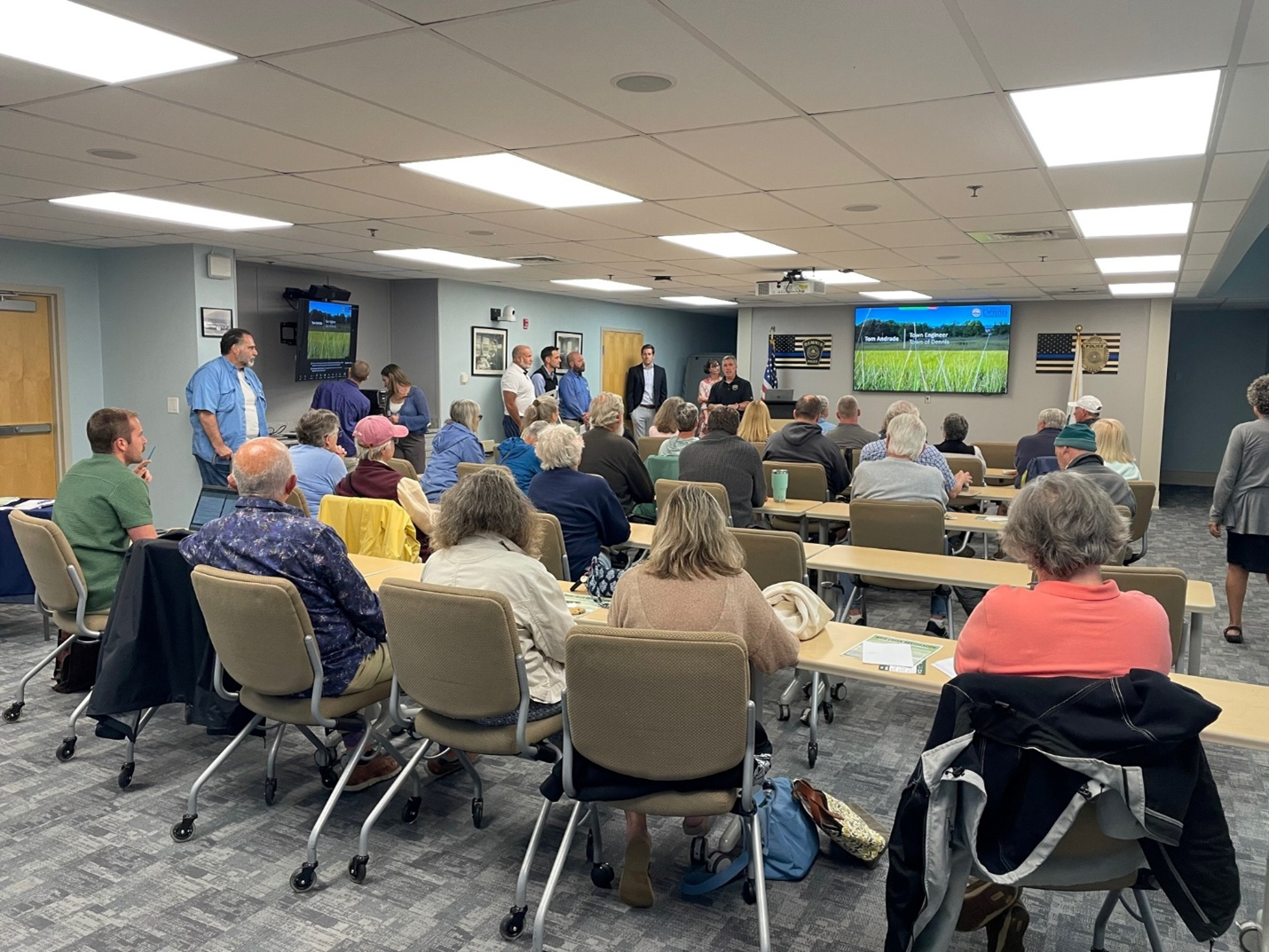
APCC and partners unveiled the new Weir Creek Tidal Viewer during the project’s third public meeting on August 20, 2025. The Viewer, hosted in a StoryMap application, provides background on the project and its partners, the benefits of restoring natural tidal flow, a guided tour of marsh features—including those contributing to habitat impairment—and step-by-step instructions for using the tool.
In addition to launching the Tidal Viewer, the meeting featured presentations on how a restored salt marsh will help protect the surrounding coastal community, the overall scope and timeline of the proposed restoration, and findings from pre-restoration monitoring. A recording of the meeting and presentation slides are available on the Weir Creek Restoration Project website, where you can also sign up to receive regular project updates.
This project is funded by the National Fish and Wildlife Foundation’s National Coastal Resilience Fund, the NOAA Restoration Center under U.S. Department of Commerce award NA24NMFX463C0065-T1-01, the Southeast New England Program (SNEP) Watershed Implementation Grants funded by the U.S. Environmental Protection Agency in collaboration with Restore America’s Estuaries, the USDA Natural Resources Conservation Service in collaboration with the Cape Cod Conservation District, and a private foundation.
|
Above: Tom Andrade, Dennis town rngineer, addresses attendees at the Weir Creek public meeting, August 20th, 2025. Photo credit: David Fryxell, Dennis Conservation Land Trust. |
Reckoning with Water
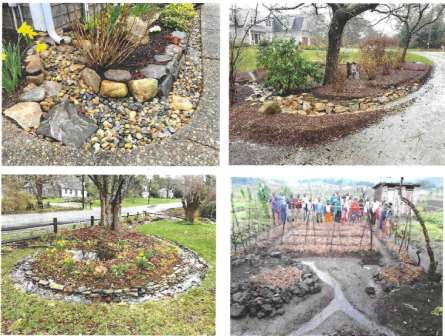
As part of the Hinckleys Pond - Herring River Headwaters Eco-Restoration Project, major stormwater improvements were made to combat erosion and protect water quality. Years of rainfall runoff had carved into the steep bank near Hinckleys Pond, sending sediment into the water. To address this, SumCo Eco-Contracting installed a rock-lined swale to safely channel stormwater downhill, preventing it from washing over paths and eroding soil. The steep slope was further stabilized with a native seed mix and annual rye, covered by biodegradable fabric to give vegetation time to establish, while straw wattles provide temporary runoff control. Together, these stormwater measures are designed to slow, redirect, and absorb rainfall, reducing erosion and protecting the pond’s health while enhancing access and habitat in the restored landscape. Read more at the Harwich Conservation Trust.
|
|
|
APCC's Pond Programs
<º/,}}}}}}}=<{ <º/,}}}}}}}=<{ |
|
|
Cyanotoxins
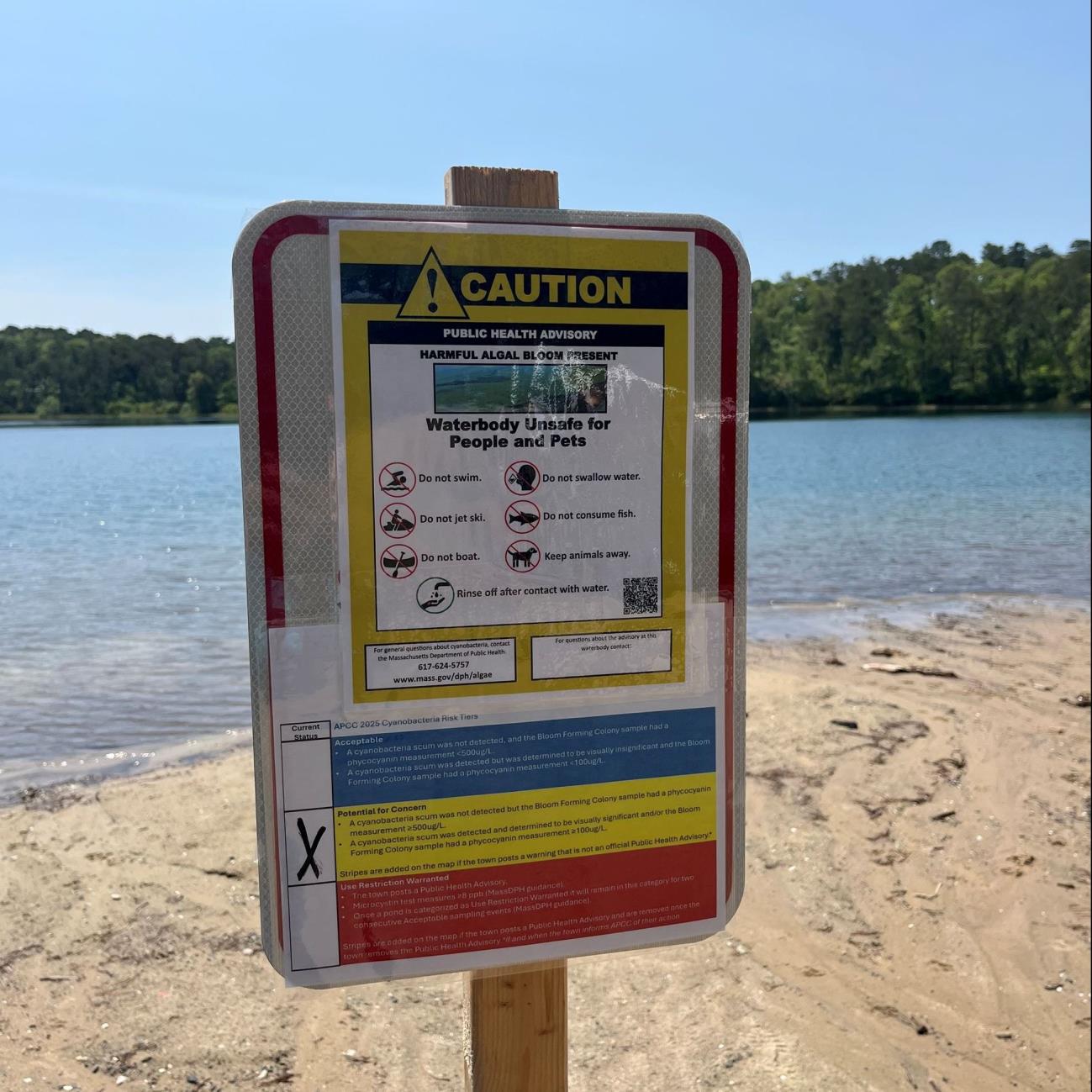
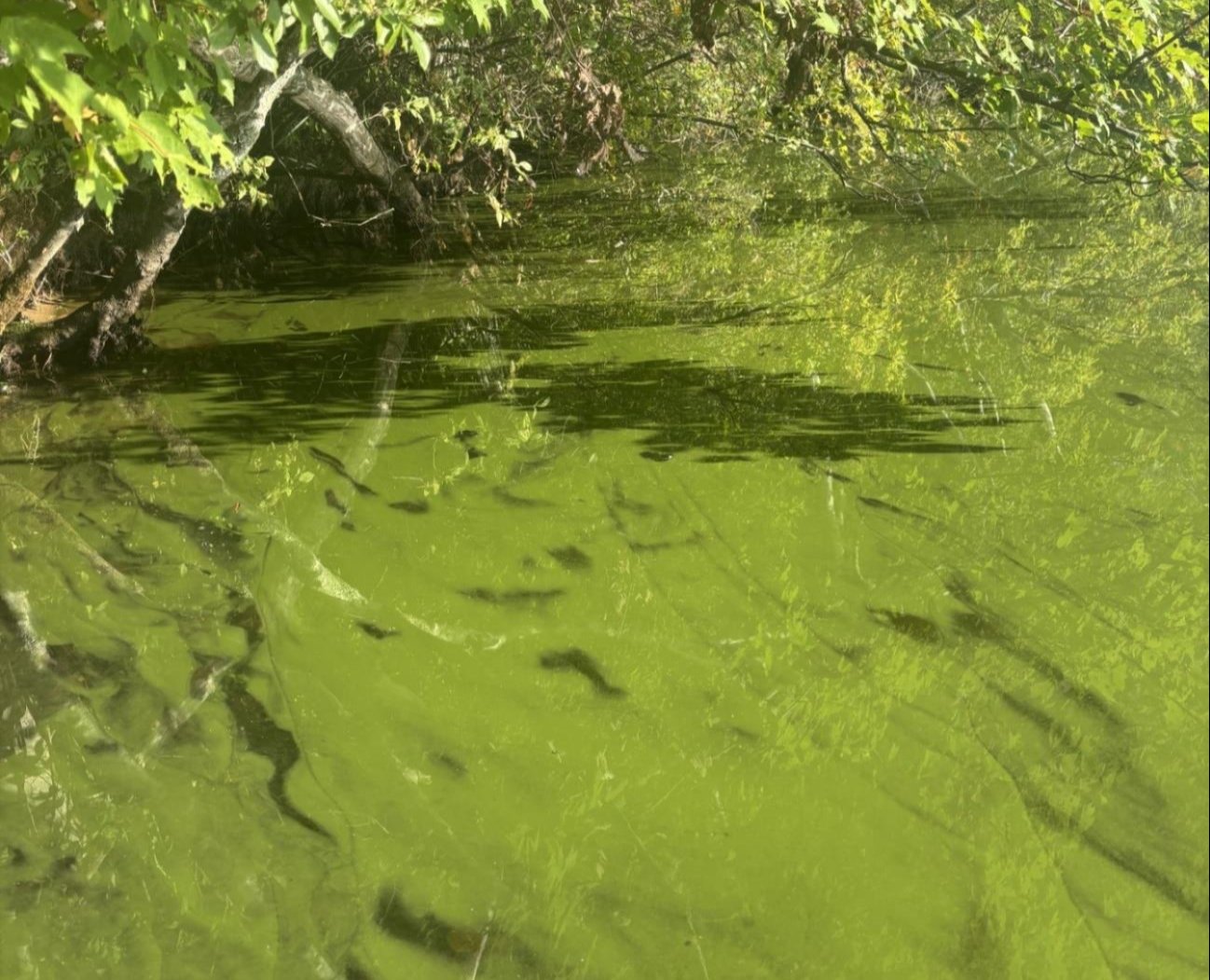
As many people know, cyanobacteria can be dangerous to the health of humans, pets, and wildlife—especially for young children and dogs who are unaware of the dangers of ingesting lake water. These toxins have caused illness and even death. More specifically, there are three main categories of cyanotoxins: hepatotoxins, neurotoxins, and dermatoxins. While the results of these three types of cyanotoxins can all range in severity, hepatotoxins and neurotoxins are the most common and can cause mild to life-threatening symptoms in people and animals.
Hepatotoxins are toxins that target the liver. These toxins can cause vomiting, nausea, weakness, exhaustion, and liver damage. This toxin can be built up in the bloodstream after being ingested or even inhaled in very large amounts. The most common hepatotoxin is microcystin, which we test for as part of APCC's cyanobacteria monitoring program. This toxin is generally the most prevalent and heavily researched freshwater cyanotoxin. It is released from cyanobacteria cells during cell lysis, or when the cells die, making it common after a planktonic cyanobacterial bloom has gone away. This toxin can be found in various types of cyanobacteria, but we have found that it is most abundant in bodies of water where Microcystis is the dominant cyanobacterial genus present. In the state of Massachusetts, a public health warning is advised if a body of water is found to have 8 parts per billion (8ppb) or >8µg/L of microcystin.
Neurotoxins are toxins that target the nervous system. These toxins can cause headaches, nausea, muscle weakness, and, in extremely high amounts, paralysis. This toxin also reaches the bloodstream primarily through ingestion; however, it can also build up in the body after inhalation.
The most common neurotoxin that we see in cyanobacteria is called Anatoxin-a. This toxin, along with microcystin, is attributed to most of the animal deaths associated with cyanobacteria. It is also known to work extremely fast, possibly causing sickness or death in a matter of minutes. This toxin is also found in many cyanobacteria genera, but we most commonly see it when the dominant genus in a pond is Dolichospermum. In the state of Massachusetts, a public health warning is advised if a body of water is found to have >60µg/L (60 ppb) of Anatoxin-a.
Dermatoxins are toxins that affect the skin. They most commonly cause eczema, rash, blisters, and other allergic reactions. Conjunctivitis or eye irritation can also occur. The effects of these toxins are usually less severe than those of hepatotoxins and neurotoxins. However, it is still important to rinse off yourself, children, or pets after swimming in freshwater, especially if there is a bloom present.
Cyanobacteria cells produce toxins at many different points during the cells' life cycle, so there may be no bloom present even though cyanotoxins are present in the water. This is why it is always good to follow posted signage, our cyanobacteria monitoring map, and to use caution when utilizing freshwater ponds and lakes.
|
|
|
Cape Cod Pond Watchers Bio-survey Program ~ a training video on how to use the Survey123 app to log your observations in pondside! |
| |
|
APCC's Cyanobacteria Monitoring Program |
|
|
|
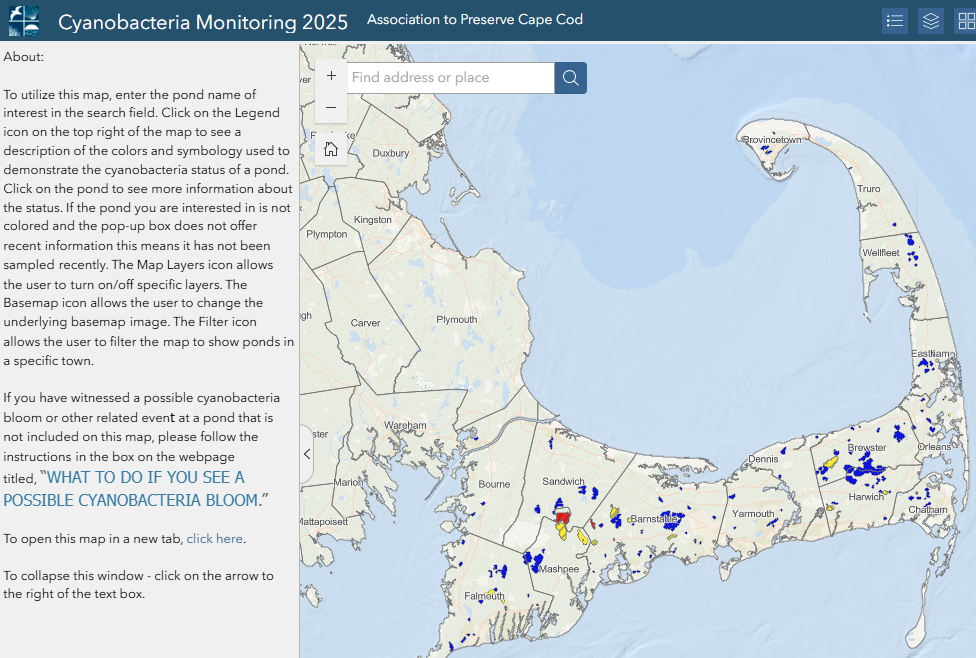
Check on the status of your favorite pond on our interactive map. If you see what appears to be a bloom, take a picture, note the day, location, and time and notify the local health department, and email to cyano@apcc.org.
Sign up for cyanobacteria email alerts.
Please note: The cyanobacteria alert is only sent out when a concern is first identified at a pond. All updates following this initial notice are shared on APCC’s interactive map. |
|
|
APCC Upcoming Events and Workshops |
|
|
| APCC presents
Nibbling on Native Plants in Your Back Yard and Beyond
Wednesday, October 8, 2025 10:00 a.m. - 12:00 p.m.
In person at the Koppel Center at APCC headquarters and virtual |
|
|
This event is hybrid and Russ's presentation will be recorded.
Seating is limited. Virtual attendance is unlimited. The event is free.
For more information and to register, CLICK HERE. |
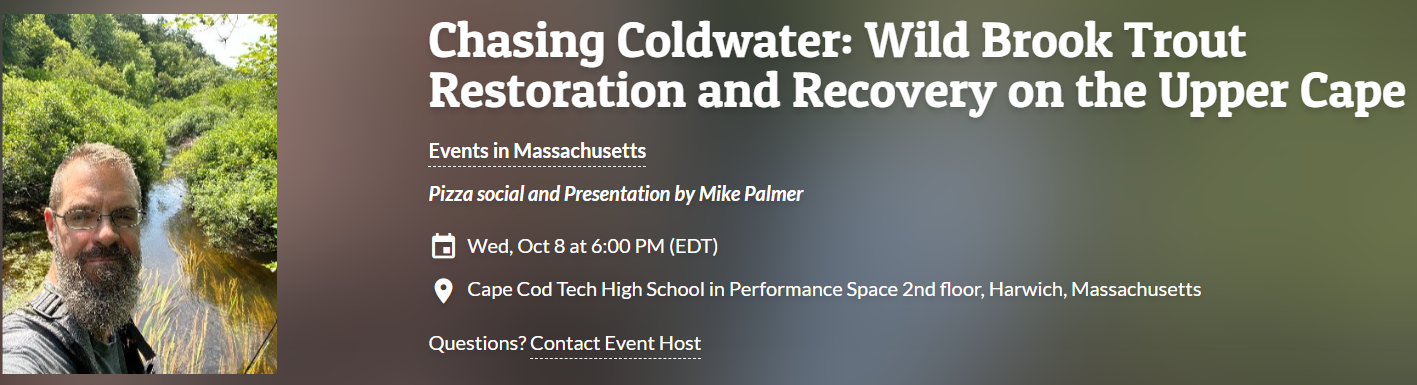
Wednesday, October 8th at 6 p.m. at the Cape Cod Tech High School in Performance Space, 2nd floor, Harwich, this presentation will explore recent analyses of brook trout biology on the Quashnet River, share findings from post-restoration recovery monitoring on the Childs River, and highlight ongoing restoration efforts on Red Brook, the Quashnet, and the Mashpee River. Together, these case studies illustrate how collaborative, science-driven projects are advancing coldwater habitat restoration across the Upper Cape.
The speaker is Mike Palmer is a restoration ecologist with the Association to Preserve Cape Cod (APCC), where he leads freshwater restoration projects—including fish passage improvements, retired cranberry bog restoration, and river restoration—while also coordinating the organization’s volunteer river herring monitoring program. |
|
|
|
Join the Brewster Ponds Association and Regenerative Agroecologist Peter Jensen from Terra Firma Permagardens for an enlightening talk, “Zen and The Art of Watercycle Maintenance: An Agroecological Educational Journey, Bringing a Global Approach to Solving Cape Cod's Ecological Challenges.”
This informative talk will be held on Thursday, October 2nd, from 4:30 - 6:00 p.m. at the Brewster Ladies Library.
This free event is open to the public; please register. |
|
|
A Cape-wide Conservation Event Calendar |
The Compact of Cape Cod Conservation Trusts (“the Compact”) and its nonprofit members launched a new regional calendar of events. The Conservation Calendar includes programs across Cape Cod hosted by these groups. The goal of the calendar is to encourage visitors and residents to take part in nature and environmental events. You can always find the link to the calendar on APCC's website under News & Events.
|
If you are a farmer or someone who wants to grow native plants to sell, or just want to be updated on the program's development, please submit an interest form that appears on our webpage. We will be sending periodic email notices of workshops and meetings.
Funding for the project is provided by Barnstable County and its Economic Development Council License Plate Grant Program through the Cape Cod Commission. |
|
|
A Cape Cod Native Plant-selector
~ to help you choose the perfect native plants for your garden. |
|
|
Email kandres@apcc.org and we'll send you a CapeCodNativePlants.org decal. |
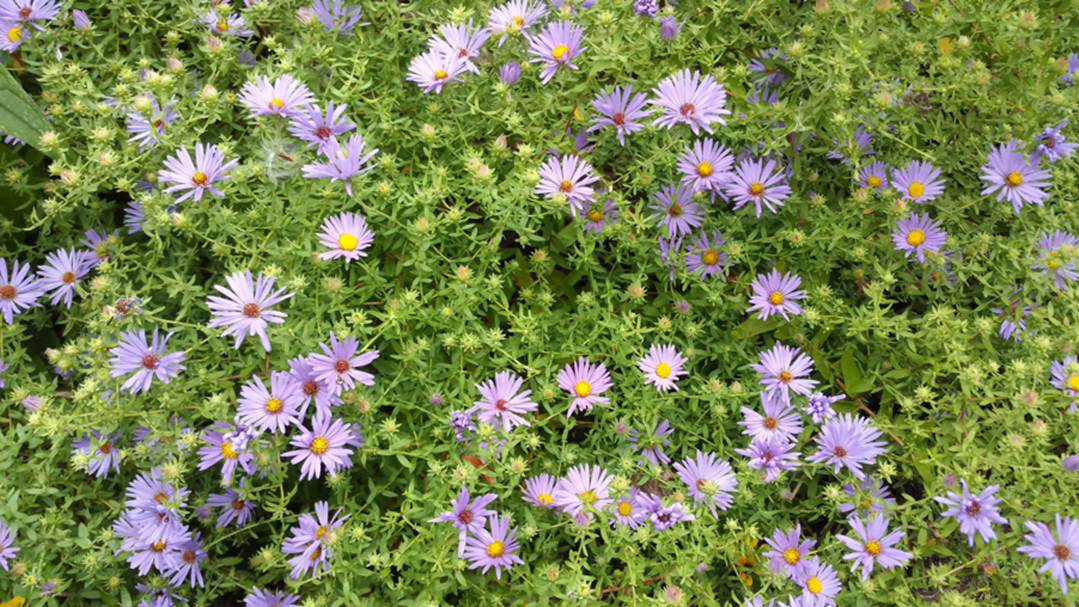
| Aromatic Aster
Symphyotrichum oblongifolium |
|
|
|
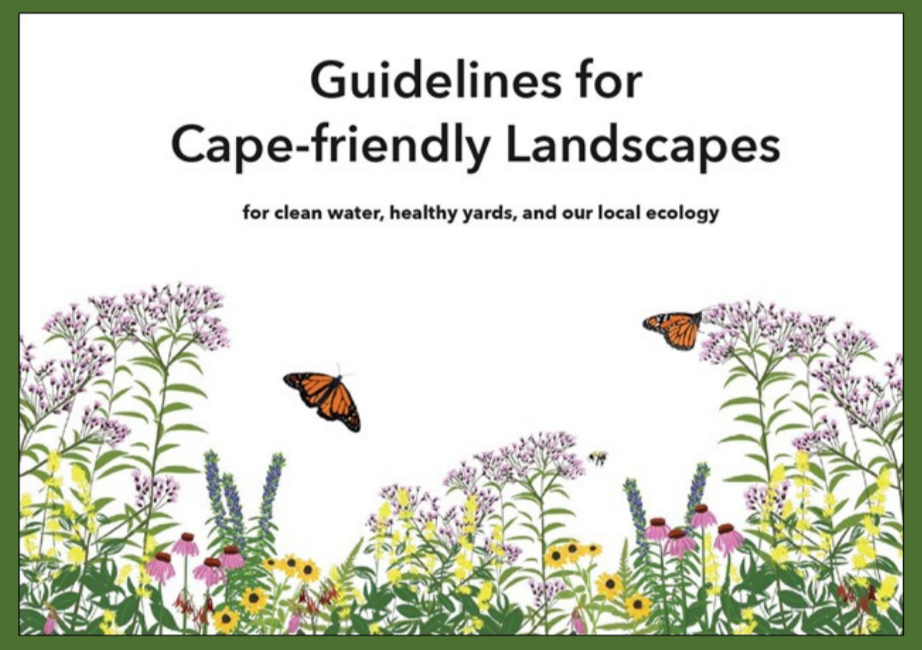
The Guidelines gives homeowners steps they can take in the design and maintenance of their properties that will support pollinators and birds, manage stormwater, conserve water, and protect the Cape's water quality. This 40-page booklet is beautifully illustrated by Marcy Ford with content that is easily digestible and supported by numerous resources for additional learning.
|
|
|
We are grateful for the several retail shops that are partnering with us to make this publication more widely available: Brewster Book Store, Birdwatchers General Store, Crocker Nurseries, Wellfleet Audubon Wildlife Sanctuary, Cape Abilities Farm, Cape Cod Museum of Natural History, the Cape Cod Lavender Farm, Heritage Museums and Gardens, Titcomb's Bookshop, Sea Howl Bookshop, Soares Flower Garden Nursery, and Eight Cousins Bookshop.
If you are a retailer and would like to sell this publication at your store, please contact us. |
|
|
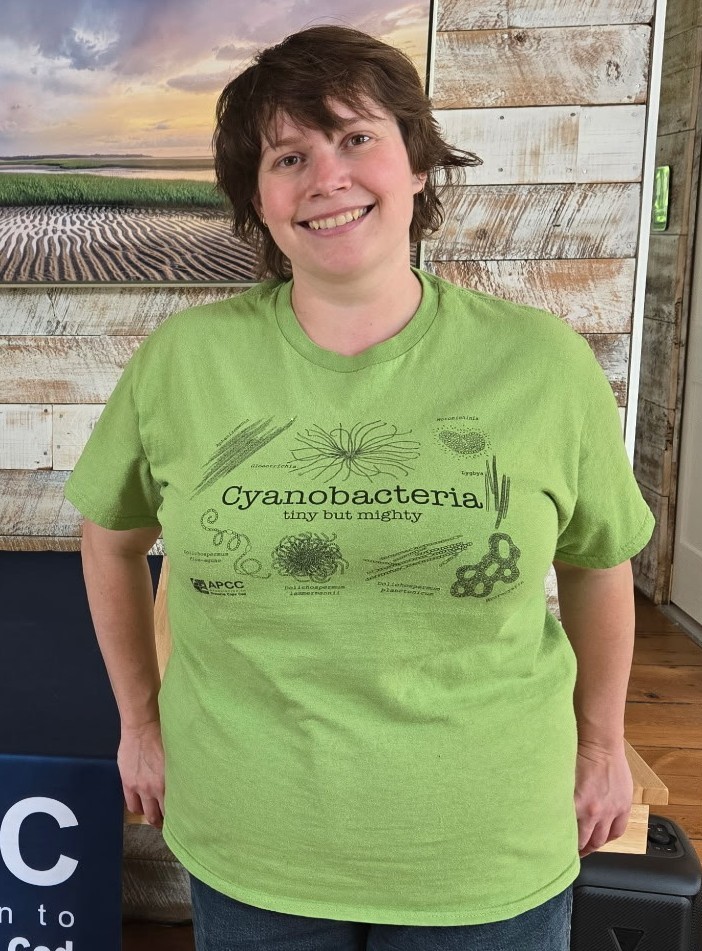
| Cyanobacteria ~ tiny but mighty
color kiwi $30 includes USPS shipping |
|
|
APCC caps
$25 -includes USPS deliver in the U.S. |
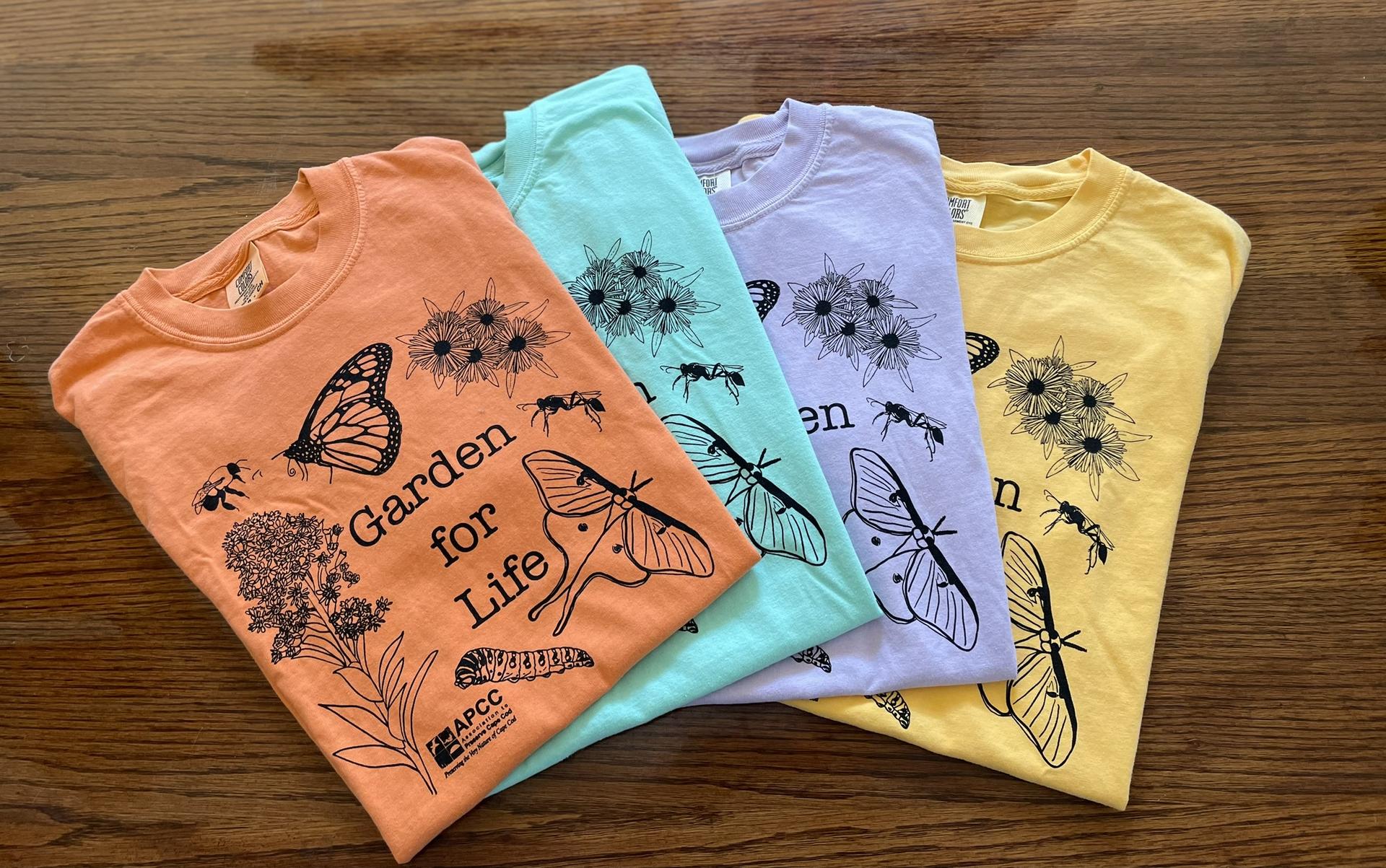
| Garden for Life T's $30 -includes USPS delivery in U.S. |
|
|
|
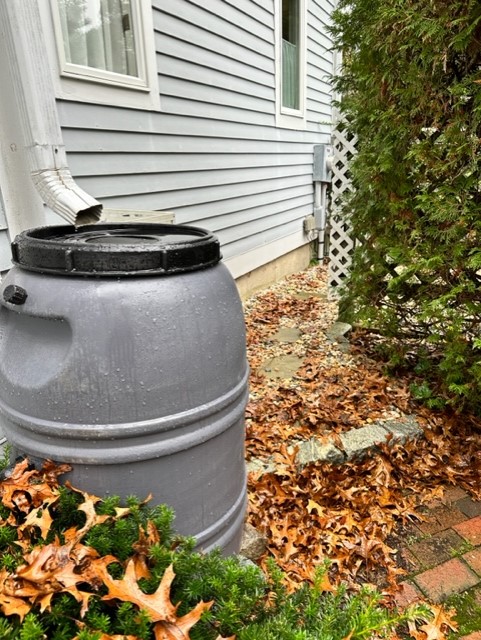
Rain Barrels for Cape Cod
Order online from Upcycle Products $122 each includes shipping to your door APCC receives a portion of the proceeds.
These are 55 gallon, repurposed food barrels. For more information, click here. |
|
|
| APCC eNewsletters.
Our weekly newsletters are archived on our website and easily shared.
You can find past newsletters and share with your friends. Encourage others to sign up for future enewsletters HERE.
|
|
|
Are you thinking of going solar? We hope so!
In partnership with E2 SOLAR in Dennis, APCC receives $500 for every solar installation when APCC is named as referral. |
|
|
|
Thank you to the homeowners who just contracted to install solar panels through E2 Solar. May the sun always shine for you! |
|
|
Expressions Gallery, 578 Main Street, Chatham
CLICK HERE |
Expressions Gallery donates 20 percent of its profits to APCC's work. |
|
|
Thank you to our business sponsors! |
|
|
APCC is rated four stars by Charity Navigator,
2024 Platinum by Candid (formerly Guidestar), and 2024 Top-Rated by GreatNonprofits. |
|
|
Our Contact Information
*{{Organization Name}}*
*{{Organization Address}}*
*{{Organization Phone}}*
*{{Organization Website}}*
*{{Unsubscribe}}* |
| |
|
|