Association to Preserve Cape Cod |
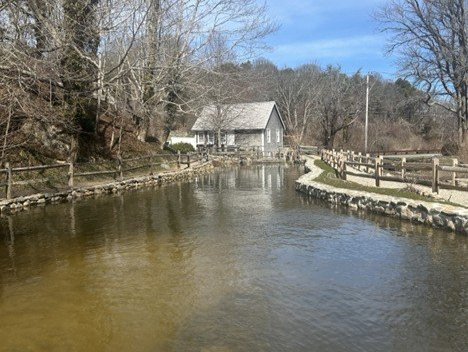
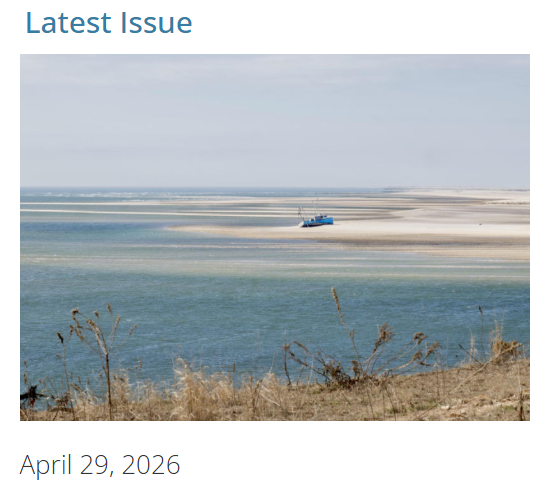
Above: Dennis. Photo by Sue Machie. |
|
|
|
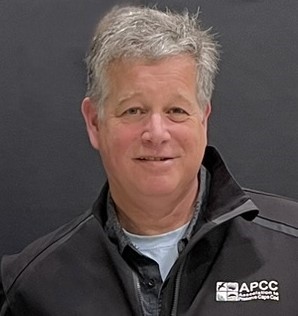
| Spare the Spray by Andrew Gottlieb, APCC Executive Director |
I spent some time the other day watching a pair of birds taking turns feeding their chicks. Back and forth they went bringing soft caterpillars to drop in hungry mouths making more than 150 feeding trips a day for a few weeks before their hungry chicks fledge from the nests. Watching it was a lesson in parenting instincts, but it was also a lesson to the rest of us. |
|
|
|
Raising baby birds relies on an ample supply of soft and easily digested caterpillars. Some estimates indicate that black-capped chickadees, the state bird of Massachusetts, require 6,000-9,000 caterpillars to raise their young. That is a caterpillar every three minutes every day for two to three weeks. That’s a lot of caterpillars required in small space.
Maybe this interests you, but you might be wondering about the punch line. Well, here is it. How you view caterpillars is subjective. Caterpillars need to eat plants to survive, and we have a whole yard care industry with a financial incentive to convince you that the caterpillars who munch on leaves in your yard are a pest that must be exterminated. For a fee they will spray to kill them with the promise of leaving you a picturesque yard free of "pests."
That’s great is you are a fan of silent movies. The yard with the perfect leaves is also a yard with fewer songbirds bringing life and beauty to your day because the spray killed the nearby food sources and forced mommy and daddy bird to fly farther to find food. Distance equals time and, with hungry mouths to feed, time kills. Killing off the food source of fledgling birds means a world with fewer birds.
Before signing on for spraying service this year or buying spray from the local store, ask yourself what you want, a silent yard with perfect leaves or a yard full of life with maybe a few holes in your leaves. Lay off the spraying, let the birds live and go outside and enjoy what you allowed to flourish in your yard. |
|
|
|
APCC Welcomes New Staff Member, Haley O'Neil, Advocacy Coordinator |
|
|
APCC is happy to welcome Haley O'Neil as our new advocacy coordinator. She will oversee the implementation of The Cape We Shape campaign, including mobilizing Team SOS volunteers, coordinating town and regional partnerships, and raising public awareness about the Cape’s most urgent land protection priorities.
Haley comes to APCC with experience coordinating volunteers, organizing sustainability campaigns, and engaging with town meeting. She previously led CARE for the Cape and Islands’ Use Less Plastic coalition, helping restaurants and other hospitality businesses adopt more sustainable practices. She is currently a volunteer with the Surfrider Foundation as a coordinator in the Ocean Friendly Restaurants program. Haley has spent her summers on Cape Cod and became a year-round resident six years ago. She has enjoyed getting involved and connected to the local community through volunteer work. She has a bachelors degree of science in marine biology and sustainable aquaculture from Unity Environmental University.
|
|
|
|
Ecosystem Restoration Program |
Above: An overhead view of Sesuit Creek salt marsh with SumCo crews planting Spartina alterniflora plugs in one of the bare areas. Photo credit: Gerry Beetham. |
Large-Scale Restoration Planting Underway
at Sesuit Creek Salt Marsh
Restoration planting has begun at Sesuit Creek salt marsh in Dennis with the delivery and mobilization of thousands of plugs of the native salt marsh grass Spartina alterniflora (smooth cordgrass). In the following weeks, over 90,000 plants will be installed across four bare patches covering 1.8 acres of unvegetated salt marsh.
Sesuit Creek salt marsh was tidally restored by the town of Dennis in 2008. A two-foot culvert or “pipe” running under Bridge Street was replaced with two 10-foot by 12-foot box culverts. The project successfully restored tidal flow and water chemistry in the upstream marsh west of Bridge Street and led to a reduction in large areas of freshwater vegetation including the invasive variety of Phragmites australis (common reed). However, the bare areas previously dominated by freshwater vegetation remained slow to revegetate.
The current restoration planting builds on a pilot planting implemented by APCC in 2018, where APCC staff planted 300 individual Spartina plugs in small plots throughout the bare areas of the marsh. Subsequent monitoring observed promising success, leading APCC to initiate this large-scale planting of priority bare patches.
APCC contracted Woods Hole Group to support planning, design, permitting, and construction oversight, and SumCo Eco-Landscaping for implementation. APCC worked with the Dennis Conservation Land Trust (DCLT), local landowners and the conservation commission to receive approval for planting in the marsh on these privately owned parcels.
With the support of the DCLT, the team has been able to use space at their headquarters to stage and prepare the plugs for planting. The plugs were delivered to Sesuit Creek on Wednesday, May 6th, and crews immediately went to work, unloading trays and preparing to move the plants into the marsh. SumCo crews will plant the Spartina plugs in several, persistently bare areas identified as optimal for restoration planting in Woods Hole Group’s planting plan.
Planting native vegetation in these prioritized bare areas will help stabilize the sediment. The roots and rhizomes that grow from the Spartina plugs will create dense peat that can boost elevation and help the marsh withstand sea level rise. The tall grass stems will also help to capture sediment washed into the marsh during the tides, an essential process that supports robust, stable salt marsh growth.
APCC, project funders, and partners, including the Woods Hole Group, the town of Dennis, Massachusetts Division of Ecological Restoration, the Cape Cod Conservation District, MassBays National Estuary Partnership, and the Dennis Conservation Land Trust, are excited to see the planting progress already underway. Improvements documented at Sesuit Creek over the next three years of monitoring will help inform adaptive management in similar salt marsh restoration projects in the region.
|
Above: SumCo crews planting Spartina alterniflora plugs in one of the bare areas identified in the Woods Hole Group planting plan. Photo credit: Gerry Beetham. |
Above: A migrating herring at Stony Brook in Brewster. Photo by Gerald Beetham. |
Spring Migration Success at Stony Brook Herring Run
This spring, herring are once again running strong at the Stony Brook Herring Run. Thanks to the dedication of more than 50 volunteer monitors, more than 20,000 cumulative herring have already been counted migrating upstream into Mill Pond to spawn.
Each spring, river herring return from the ocean to the freshwater streams and ponds where they were born, making their way upstream to reproduce. Volunteer monitors at the Stony Brook Herring Run play an important role in tracking these annual migrations, helping collect valuable data that supports long-term conservation, restoration, and management efforts.
This year’s strong showing comes as the town of Brewster has completed major improvements at the Stony Brook Mill Site, including reconstruction of the failing retaining wall at the Stony Brook headrace pond and improvements to the fish passage structure. The project included the redesign of fishway weirs that had been identified as less than optimal for migrating herring, with the broader goals of improving fish passage, preserving the historic character of the Mill Site, and protecting an important community resource. The Mill Site and herring run reopened to the public this spring following this significant investment in the site.
While the 2026 herring count at Stony Brook is up compared to last year, it is too soon to know how much of that increase may be related to the recent restoration work. Many herring runs across Cape Cod are also seeing stronger returns this season, suggesting that broader regional conditions may be contributing to the increase. Continued monitoring over the next several years will be important for understanding how the Stony Brook improvements may influence fish passage and long-term run performance.
Throughout the season, volunteers gathered at the run to count fish passing through the fish passage, documenting the timing and strength of the migration. Their efforts not only contribute to scientific understanding of local herring populations, but also help connect the community to the importance of healthy streams, ponds, and coastal ecosystems. |
Request for Proposals Solicitation #: RFP-26-ERP-001
The Association to Preserve Cape Cod is seeking bid proposals from qualified businesses with expertise in salt marsh ecology and restoration for a platform rehabilitation project at Chase Garden Creek Marsh (Yarmouth/Dennis, MA). The goal is to halt subsidence and enhance ecosystem resiliency against future sea level rise using techniques that will support effective tidal regimes for robust plant growth and greater carbon storage. Click here for more information.
|
Despite temporary relief from snowmelt in March, recent rainfall has not been enough to make up for the longer-term precipitation and groundwater deficits that have built up over the past two years. While conditions may appear improved in the short term, key indicators such as groundwater take longer to recover and continue to reflect these deficits.
Although recent precipitation and snowmelt have led to some localized improvements, the overall system remains below normal. The current drought, which began in 2024, continues to affect the natural environment like streamflow, vernal pools and ponds and dependent species, fish migrations and declining groundwater. Meaningful replenishment of the Cape's aquifer occurs October through March when plants and trees are dormant and water usage is typically lower.
While local water supplies are currently stable, the persistence of drought conditions, combined with the start of growing season and increased water demand, makes continued conservation even more important. (Source: Mass.gov) We expect that drought conditions will only get worse during the summer months. Please check with your town on water conservation measures, which may be voluntary or mandatory.
For Regions in Level 1 – Mild Drought Residents and Businesses (that's us, folks!): - Minimize overall water use
-
Consider installing a rain barrel to collect rainwater for lawn and garden watering
-
For any upcoming outdoor water use, limit watering to one day a week (only from 5:00 p.m. – 9:00 a.m.), or less frequently if required by your water supplier/town
- For larger buildings and businesses, conduct water audits to identify areas of leaks and potential water conservation opportunities.
|
|
| |
Herring and...wait for it... |
Exploring the ponds never fails to be an adventure. On a quest to find the herring that are roaming many of the Cape’s ponds, we found them in Gull Pond in Wellfleet, as well as a snake swimming on the water's surface. The sighting was short and, lacking snake expertise, we weren’t sure who crossed our path. However, due to its slim, whip-like body build, smooth, almost glossy black color and fast movement on the surface of the water, we suspect it was a Northern black racer rather than a Northern water snake.
The Northern black racer is commonly found around Cape Cod’s kettle ponds. While it’s main habitat is on dry land, it is a strong swimmer and might enter the water to escape predators, such as coyotes or foxes, or to hunt amphibians, or to simply get to the other side and cross the waterway. The snake in the video was spotted in a sluiceway between two ponds, so likely it was crossing the water to get to dry land.
Black racers began emerging from their underground dens in April, where they spent the winter in brumation to survive the Cape’s cold temperatures. At this time of the year, they can often be seen basking in the sun to raise their body temperature, hunting and mating. Males locate females by following their scent trails. Females lay between 10 to 30 leathery eggs in June or July, usually in hidden, damp spots such as rotting logs, leaf litter or abandoned rodent burrows.
The eggs hatch in late August or September, so keep an eye out for the well-camouflaged newborn racers. Unlike the sleek black adults, young racers are gray, brown and reddish in color and measure only about a foot long. Despite their small size, these little snakes are ferocious hunters, feeding on crickets, grasshoppers and small frogs to store fat and grow strong enough to survive their first winter. As adults, black racers may reach a length of up to five feet and their prey includes most anything: small rodents, amphibians, bird eggs, and insects. The presence of snakes is a good indicator of an intact local food web. Happy exploring to all you pond-goers! |
DID YOU KNOW? There are no poisonous native snakes on Cape Cod. Read more here. |
Cyanobacteria Monitoring Program—the interns begin their arrival! |
|
|
|
| Hailey Fink, 2026 Cyanobacteria Intern |
Hi, my name is Hailey Fink. I am a rising junior at UMass Amherst studying environmental science and natural resource conservation. As a resident of Barnstable, I appreciate that ponds are a very special part of the Cape's charm. I am excited to take a look at Cape Cod's ponds under a microscope and explore its diverse sites. |
|
|
|
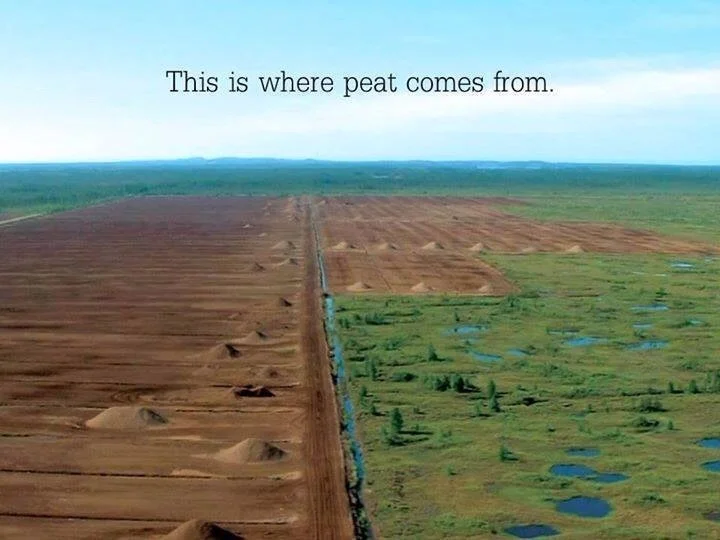
Above: image from https://www.indefenseofplants.com/blog/2015/5/4/the-truth-about-peat |
Peatlands occupy only around three percent of the land on Earth, and yet they are a reserve for one third of the world’s carbon. This is nearly double the amount stored in the world’s forests. In addition to carbon storage, peatlands play a crucial role in holding and filtering water, and provide habitat for a rare assortment of plant and animal species.
These rare ecosystems face many challenges: About 12 percent of peatlands have been drained to make way for agricultural and forestry uses, with the peat itself harvested for potting mixes or fuel. In 2023, the United States harvested 360,000 metric tons of peat, and imported 1.1 million metric tons, primarily for horticultural purposes.
It is clear that our use of and demand for peat potting mixes actively contributes to the loss of this significant habitat. Peatlands cannot simply be restored, as these ecosystems take hundreds, if not thousands of years to recover from peat harvesting. These degraded peatlands become carbon sources, contributing around four percent annually to human-caused emissions. It is critical to understand that a key part in conserving peatlands is to reduce our reliance on peat in potting mixes.
In engineered potting soils that are peat-free, some include coconut coir—fibers from coconut husks, some use rice husks, and some use upcycled paper fibers. You’ll find these products at your local nursery, and if not, ask for them. But always read the bag ingredients to make certain you are getting what you want. Some brand names include Dr. Bush Coco Loco, Organic Mechanics Soil, and PittMoss. And instead of peat pots, use “cow pots”—made of—you guessed it, cow manure.
Incidentally, APCC's annual native plant sale has used peat-free potting soil every year for six years. We happen to purchase Fox Farm's Bush Doctor Coco Loco Potting Mix from Agway. Read the label of whatever potting soil you choose to purchase. And remember to avoid the peat-pots, too—there are other options. |
It's that time of year when we start accepting appointments for our Ecolandscape Consultation Program.
If you want to make your yard friendlier to pollinators and wildlife, learn more about native plants and controlling invasive species, and how to conserve water and protect the Cape’s water quality, we can help. Fill out the form and Erin Camire, our ecolandscape program coordinator, will contact you via email to set up a day and time for the consultation at your residential property in any Cape town from Bourne to Provincetown. The team will meet with you for an hour and a half, answer your questions, and send you a summary report. The fee is $350.
Read more here about the program and click on the "Get Started" button to schedule a consultation! |
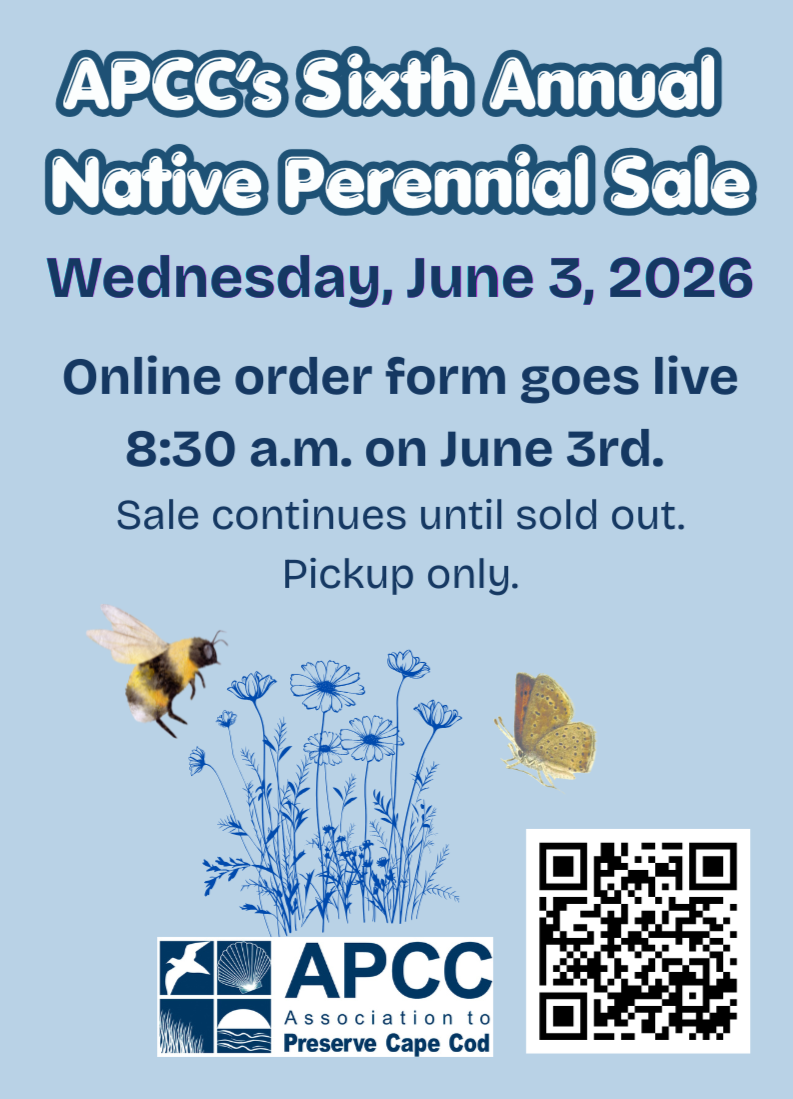
You've been asking when, so mark your calendar! |
|
|
|
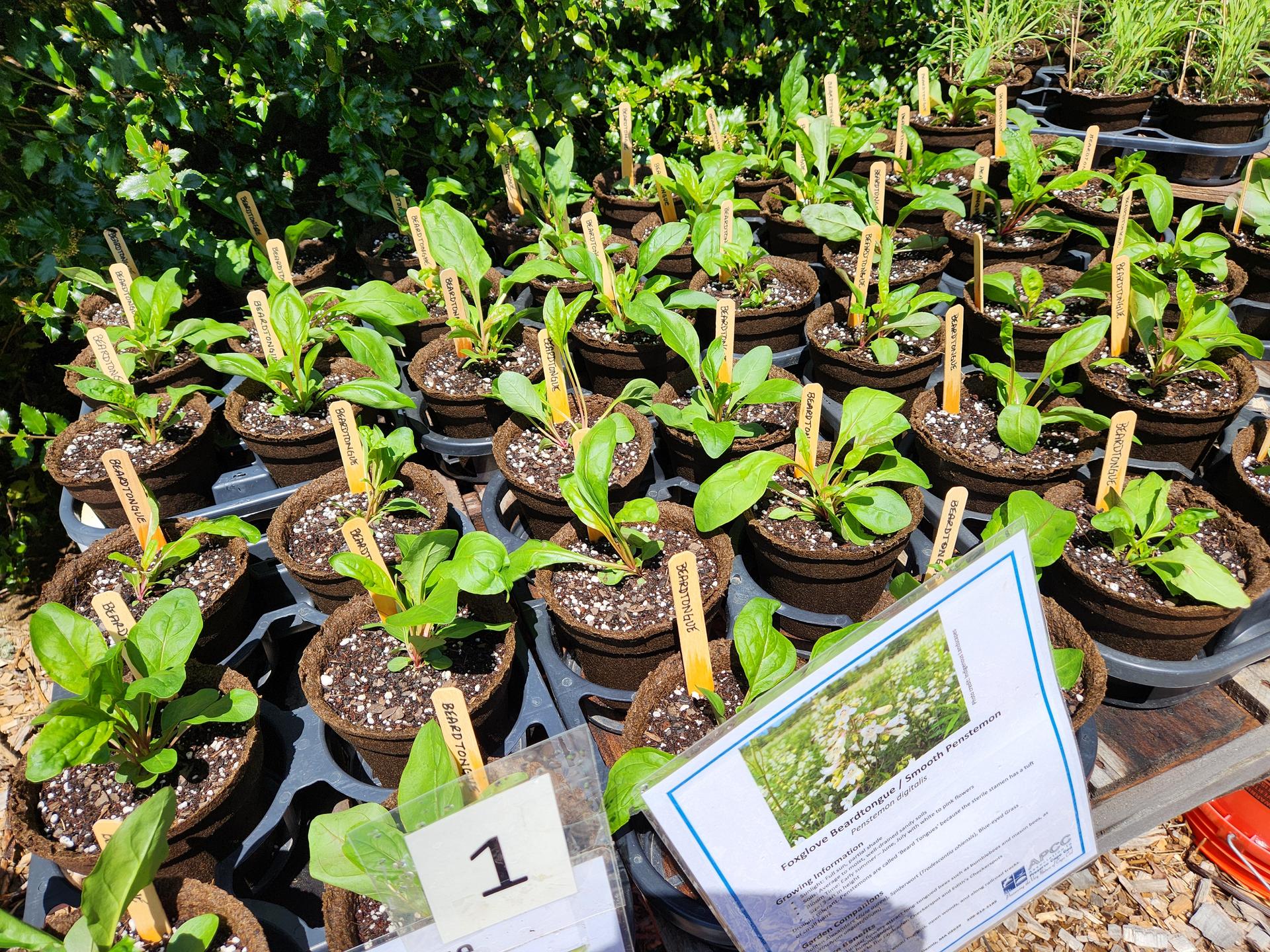
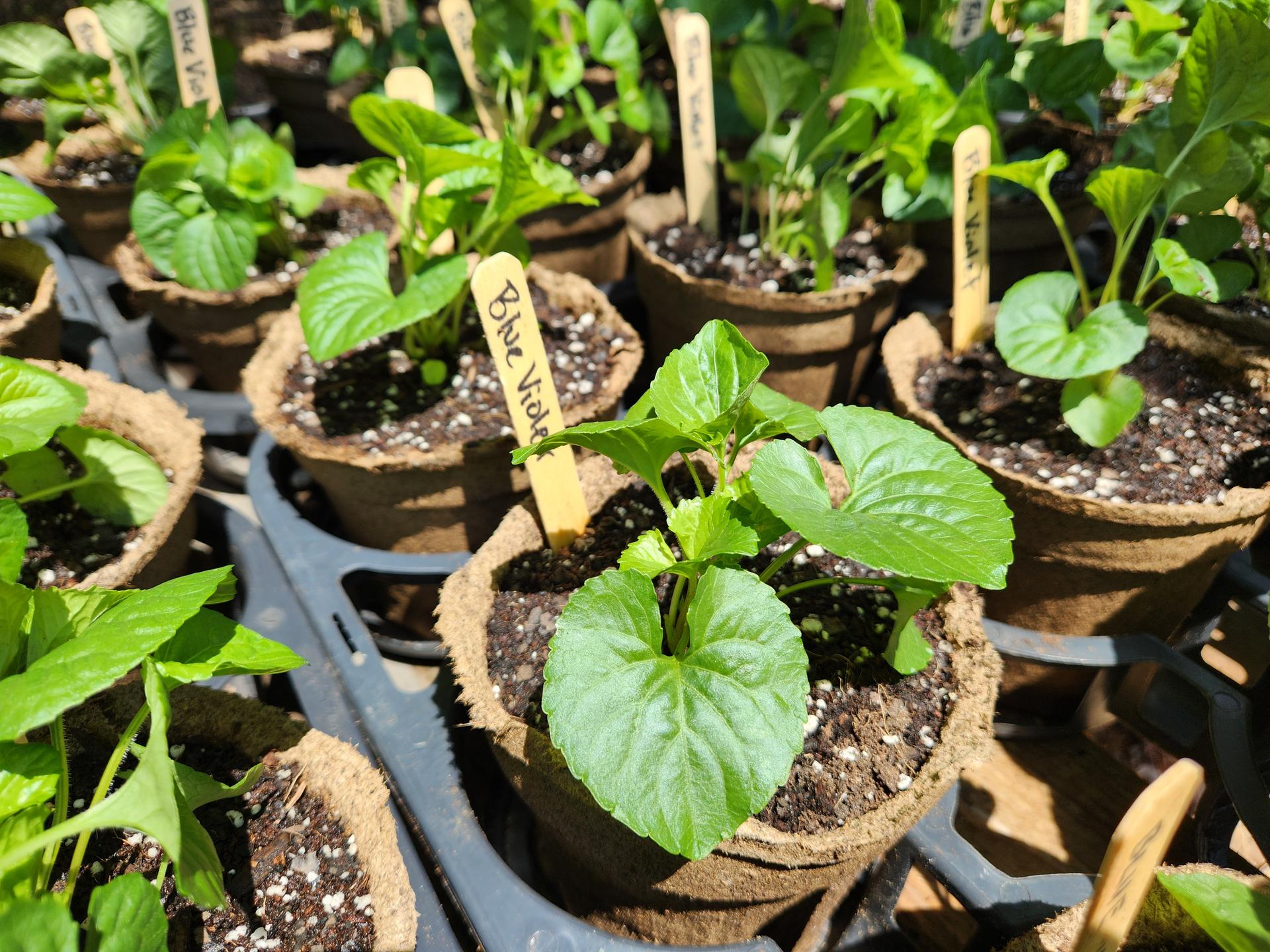
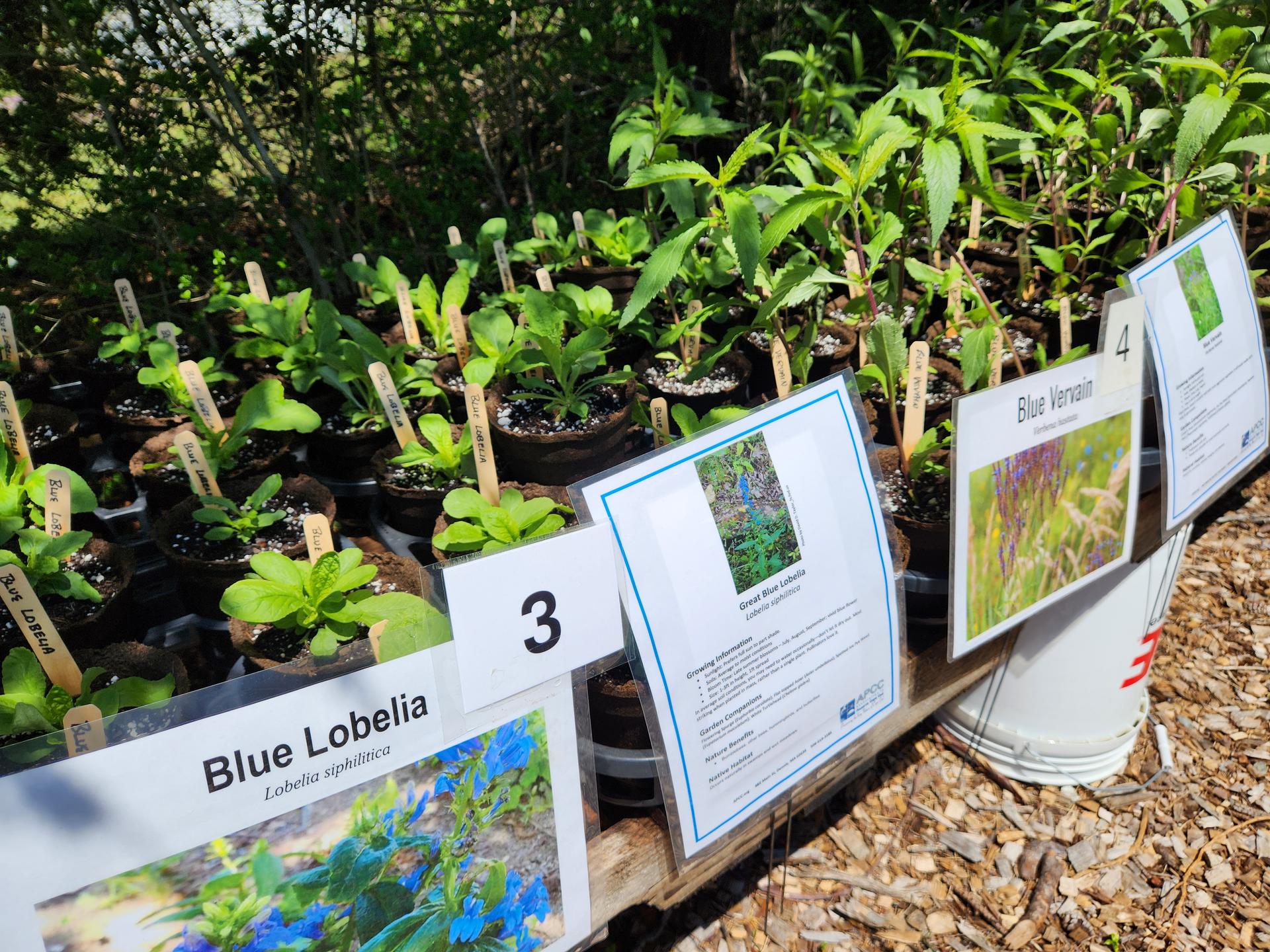
The plant sale webpage has a list of what we will have—over 30 species. You've got a few weeks to plan your purchase!
Please note, our plant sale is a bit different than most: Online orders only. Pickup by appointment at APCC’s headquarters, 482 Main St, Dennis, June 3-5. Sale goes live Wednesday, June 3rd at 8:30 a.m. Click here for more information.
|
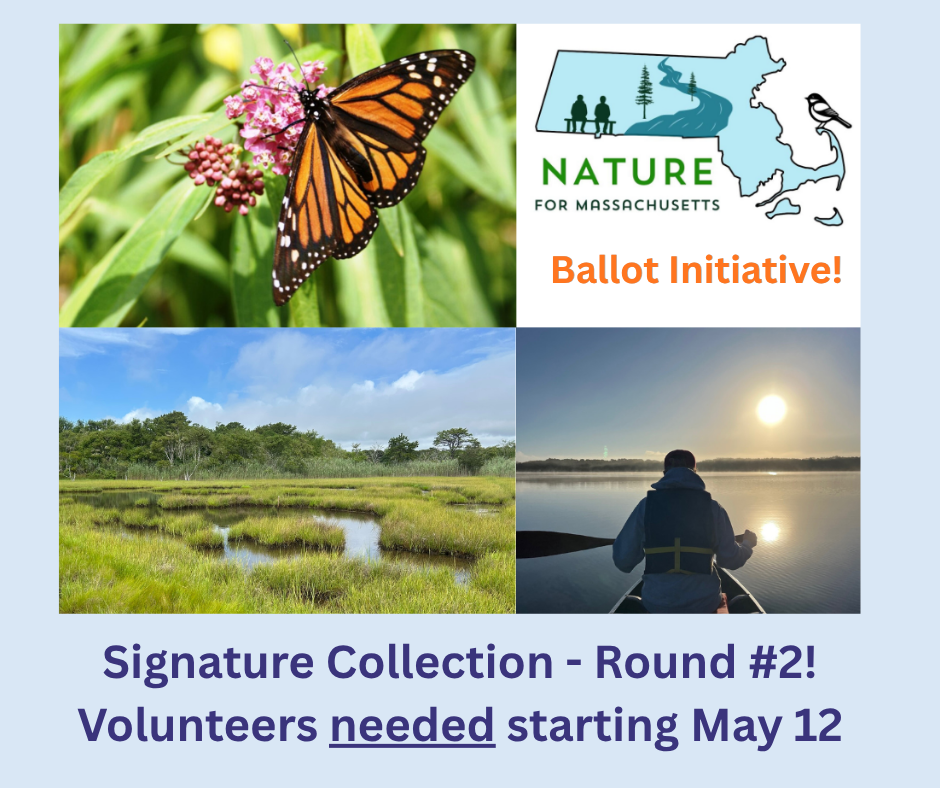
As a member of the Nature for Mass coalition, APCC is once again helping to collect signatures to put the Protect Water and Nature initiative on the ballot. If you would like to help us collect a second round of signatures in your town you can sign up to volunteer. Volunteer to collect signatures in your town–sign up here!
Nature for Massachusetts is a large and diverse coalition that seeks to create a dedicated, annual revenue stream to conserve water, land, urban greenspace, outdoor recreation access, and wildlife in Massachusetts.
The coalition is urging the State Legislature to pass the Nature for All bill (H.901/S.2571) to help address the threats our environment faces. But if lawmakers don’t act, the coalition is ready to bring this issue directly to voters through a 2026 ballot question. That’s why we’re collecting signatures to put the Protect Water and Nature initiative on the ballot, and we need your help this spring to get past the final hurdle.
To put this question in front of voters on the 2026 ballot, advocates need to collect over 100,000 signatures over two rounds of signature collection. We have already submitted over 90,000 certified signatures to the Secretary of State last fall. (Thank you, volunteers!) This spring, we need to collect 21,000 additional signatures. The timeline is much more condensed this time, which means our ramp will be much shorter than before - and we need all hands-on deck to get past this final hurdle. Ballots will be available for pick up starting May 12.
Email Dee at volunteer@apcc.org for more information.
Volunteer to collect signatures in your town – sign up here! |
The Cape We Shape Rally Wednesday, June 17th
8:45 a.m. - 12:30 p.m. in Harwich REGISTER HERE
Learn more about The Cape We Shape campaign and sign up to be part of Team SOS to engage in efforts to permanently protect the last undeveloped acres that have been identified as priority natural resource areas. As part of Team SOS, look for regular emails most Mondays to learn of news, next steps, and how you can help.
Come pick up campaign signs, flags, handouts, stickers at APCC's office in Dennis: email TeamSOS@apcc.org to arrange day and time.
We now have Team SOS t-shirts and The Cape We Shape caps available for purchase ($25 with pickup). |
Sign up to Volunteer with Team SOS here. Team SOS volunteers help distribute educational materials and work on town teams to support The Cape We Shape campaign efforts.
|
|
|
|
|
Harwich Ponds Coalition Annual Meeting on Saturday, June 6 at 10 a.m.
at the Harwich Community Center |
|
|
|
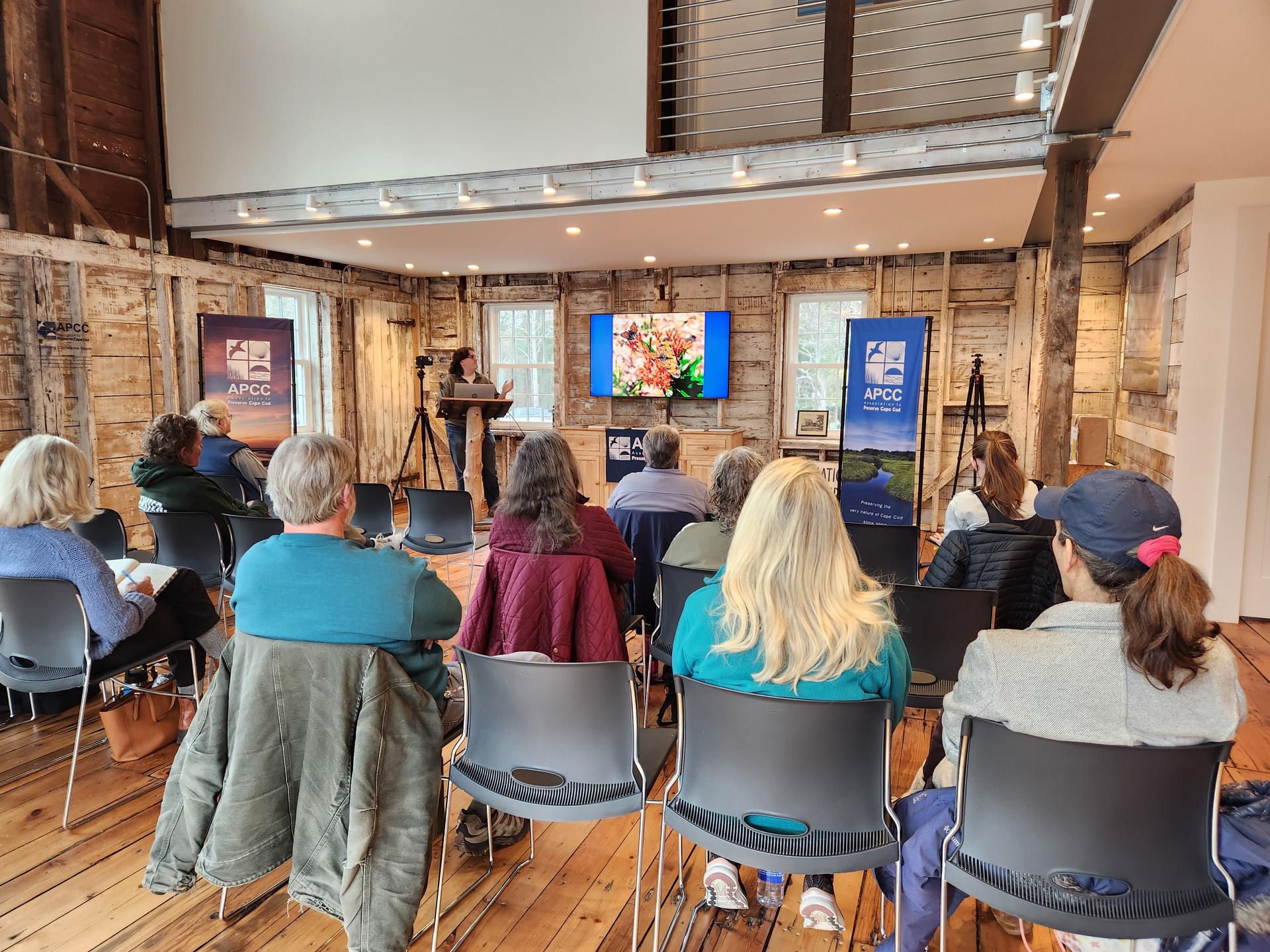
Please come join us to hear an update on the work we are doing to protect our ponds in Harwich! Guest speakers include: Brian Baumgaertel from MASSTC to share some of the innovative work his organization is doing; Marie Chieppo from CFS Regenerative Design on ecological design for Cape friendly landscapes; and Michael Lach to share the latest HCT update on the great conservation and ecological restoration efforts in Harwich. |
A Cape-wide Conservation Event Calendar |
The Compact of Cape Cod Conservation Trusts (“the Compact”) and its nonprofit members launched a new regional calendar of events. The Conservation Calendar includes programs across Cape Cod hosted by these groups. The goal of the calendar is to encourage visitors and residents to take part in nature and environmental events. You can always find the link to the calendar on APCC's website under News & Events.
|
If you are a farmer or someone who wants to grow native plants to sell, or you just want to be updated on the program's development, please submit the interest form that appears on our webpage. We will be sending periodic email notices of workshops and meetings.
Funding for the project is provided by Barnstable County and its Economic Development Council License Plate Grant Program through the Cape Cod Commission, the Kelley Foundation and private donors. |
Ten talks for prospective growers as part of the Cape Cod Native Plant Growers' Cooperative program have been presented thus far, with more scheduled in the upcoming weeks. These past workshops can be viewed here: |
A Cape Cod Native Plant-selector ~ to help you choose the perfect native plants for your garden. |
|
|
|
Email kandres@apcc.org and we'll send you a CapeCodNativePlants.org decal. |
|
|
Wild Strawberry Fragaria virginiana |
|
|
|
The purpose of CapeCodNativePlants.org is to help native plant enthusiasts select the right plant for the right place. While not all native plants presented here are indigenous to Cape Cod, they are suitable native species for Cape gardens and managed landscapes.
Why Native Plants? Many native plants are drought tolerant, salt tolerant, and thrive in the “thin” soils found on Cape Cod. Native plants are as attractive as any plant, and are reflective of the Cape’s natural beauty. By planting native species appropriate for Cape Cod, you can conserve water, avoid pesticide and fertilizer use, and support pollinators and birds.
|
|
|
|
|
The Guidelines gives homeowners steps they can take in the design and maintenance of their properties that will support pollinators and birds, manage stormwater, conserve water, and protect the Cape's water quality. This 40-page booklet is beautifully illustrated by Marcy Ford with content that is easily digestible and supported by numerous resources for additional learning.
|
|
|
|
We are grateful for the several retail shops that are partnering with us to make this publication more widely available: Brewster Book Store, Birdwatchers General Store, Crocker Nurseries, Wellfleet Audubon Wildlife Sanctuary, Cape Abilities Farm, Cape Cod Museum of Natural History, the Cape Cod Lavender Farm, Heritage Museums and Gardens, Titcomb's Bookshop, Sea Howl Bookshop, Soares Flower Garden Nursery, Hyannis Country Garden, Orleans Whole Food Store, and Eight Cousins Bookshop.
If you are a retailer and would like to sell this publication at your store, please contact us. |
|
|
|
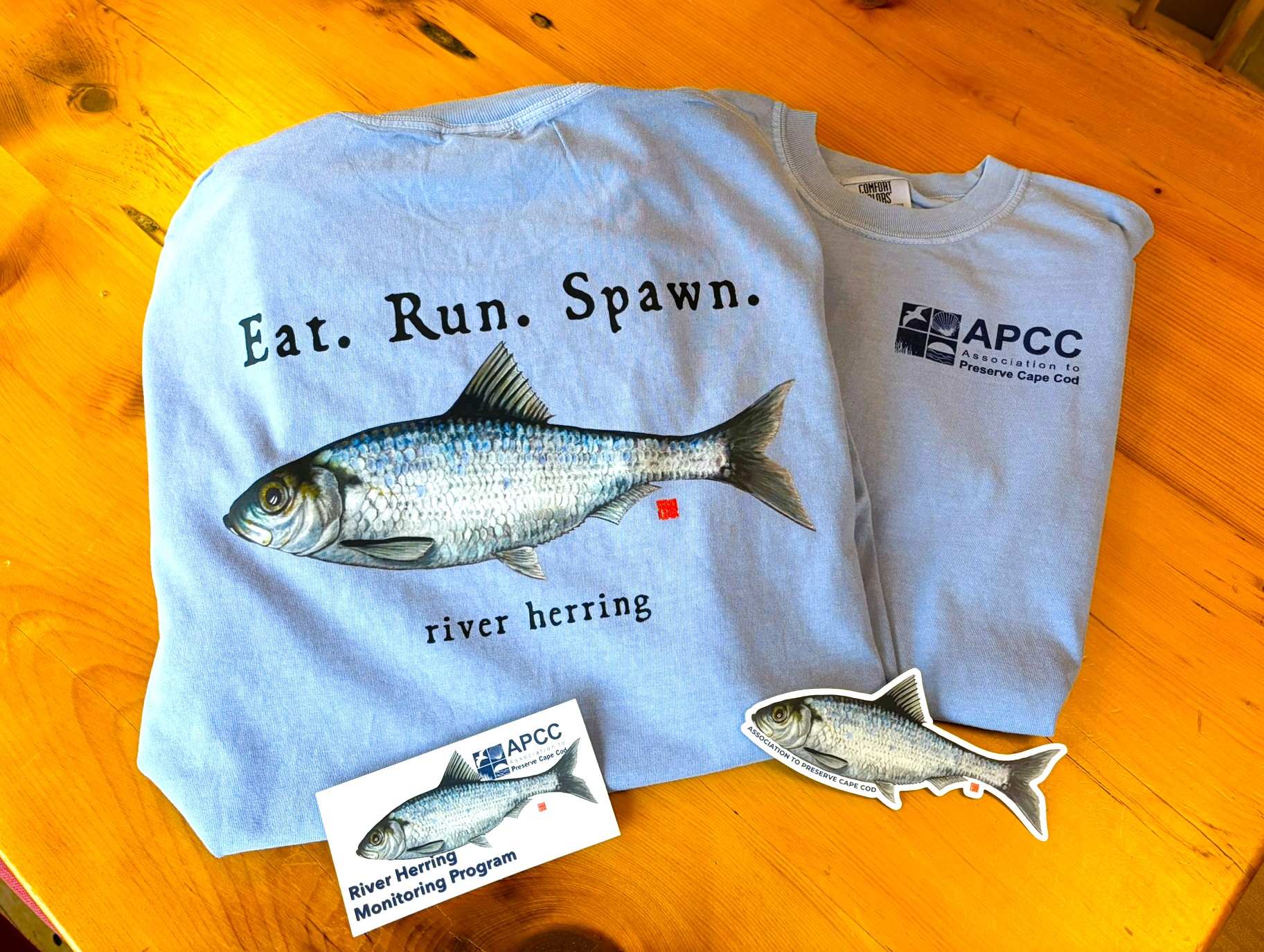
New Offering - Celebrate the Run! Herring T's
color denim blue $30 - includes USPS delivery in the U.S. |
|
|
|
Team SOS T-shirts $30 - includes USPS delivery in the U.S. |
|
| The Cape We Shape $30 - includes USPS delivery in the U.S. |
|
|
|
APCC caps $25 -includes USPS delivery in the U.S. |
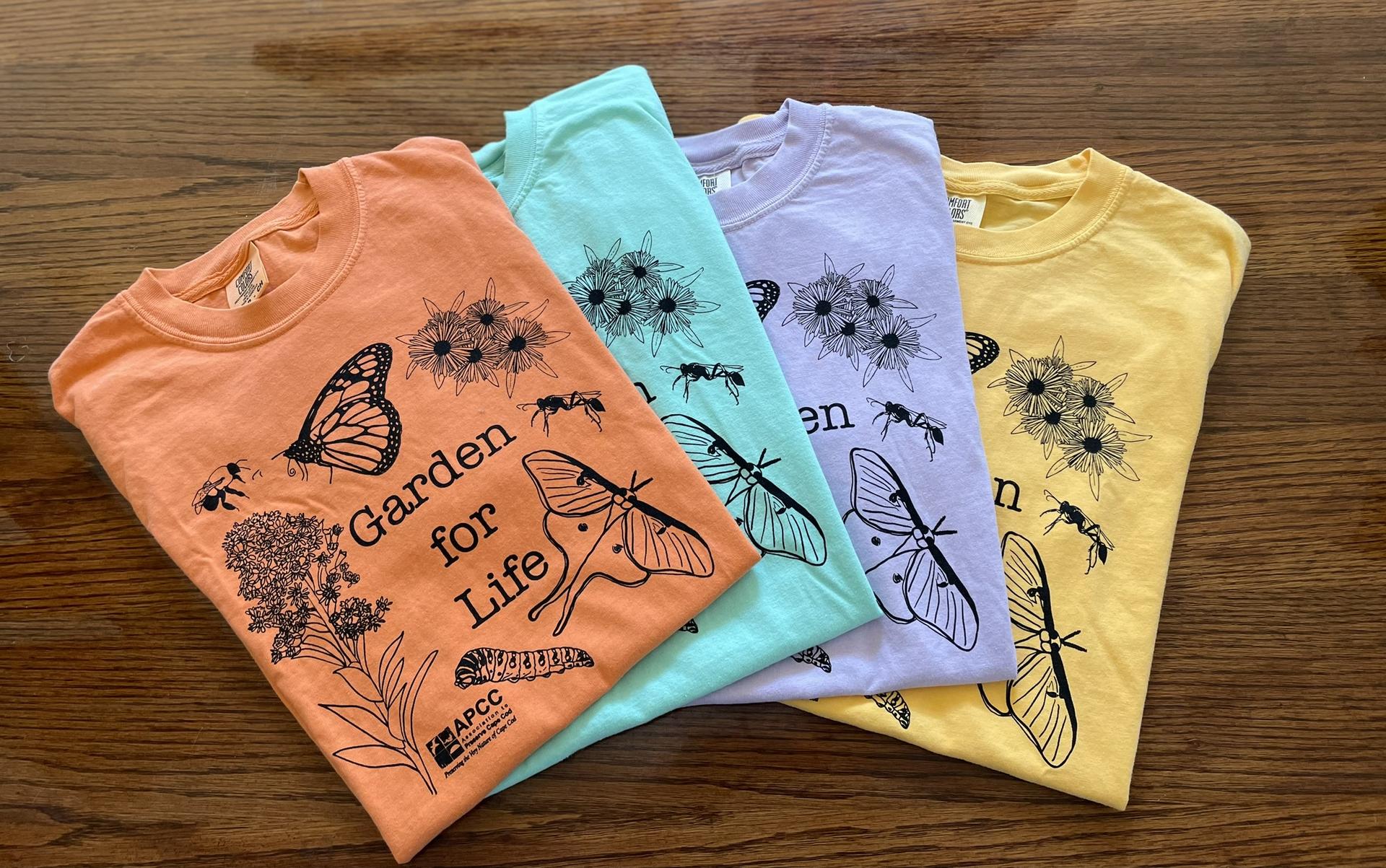
Garden for Life T's $30 -includes USPS delivery in U.S. |
|
|
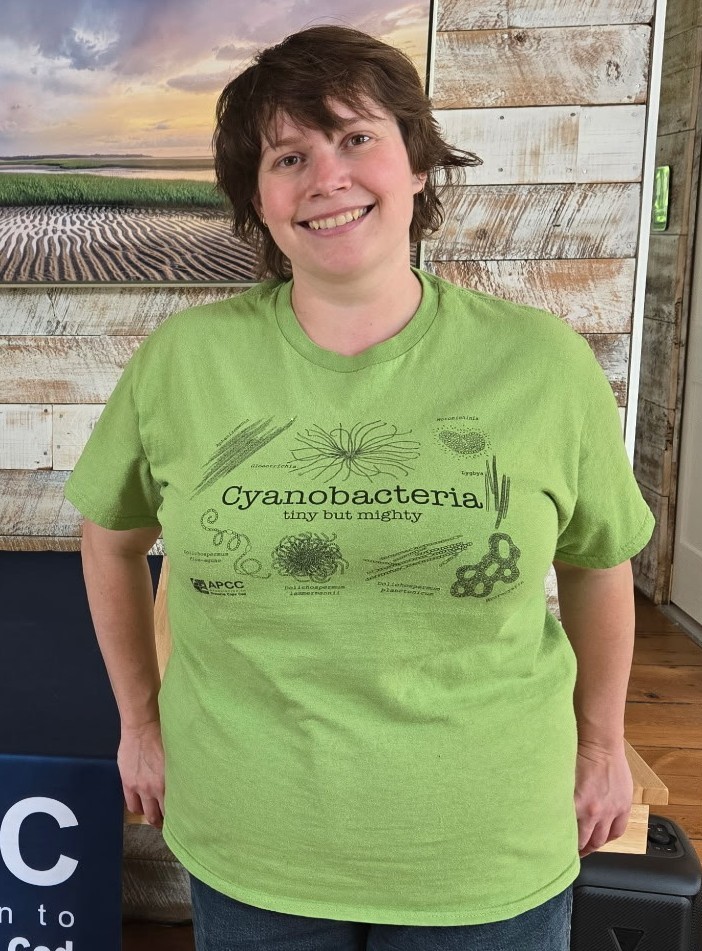
Cyanobacteria ~ tiny but mighty color kiwi $30 -includes USPS delivery in the U.S. |
|
|
|
|
APCC eNewsletters Our weekly newsletters are archived on our website and easily shared.
You can find past newsletters and share with your friends. Encourage others to sign up for future enewsletters HERE.
|
|
|
|
Are you thinking of going solar? We hope so! In partnership with E2 SOLAR in Dennis, APCC receives $500 for every solar installation when APCC is named as referral. |
|
|
|
| Thank you to the homeowners who just contracted to install solar panels through E2 Solar. May the sun always shine for you! |
|
|
|
Expressions Gallery, 578 Main Street, Chatham
CLICK HERE |
Expressions Gallery donates 20 percent of its profits to APCC's work. |
|
|
|
Thank you to our business sponsors! |
|
|
|
APCC is rated four stars by Charity Navigator,
2026 Platinum by Candid (formerly Guidestar). |
|
|
|
Our Contact Information
*{{Organization Name}}*
*{{Organization Address}}*
*{{Organization Phone}}*
*{{Organization Website}}*
*{{Unsubscribe}}* |
|
| |
|
|