Association to Preserve Cape Cod |
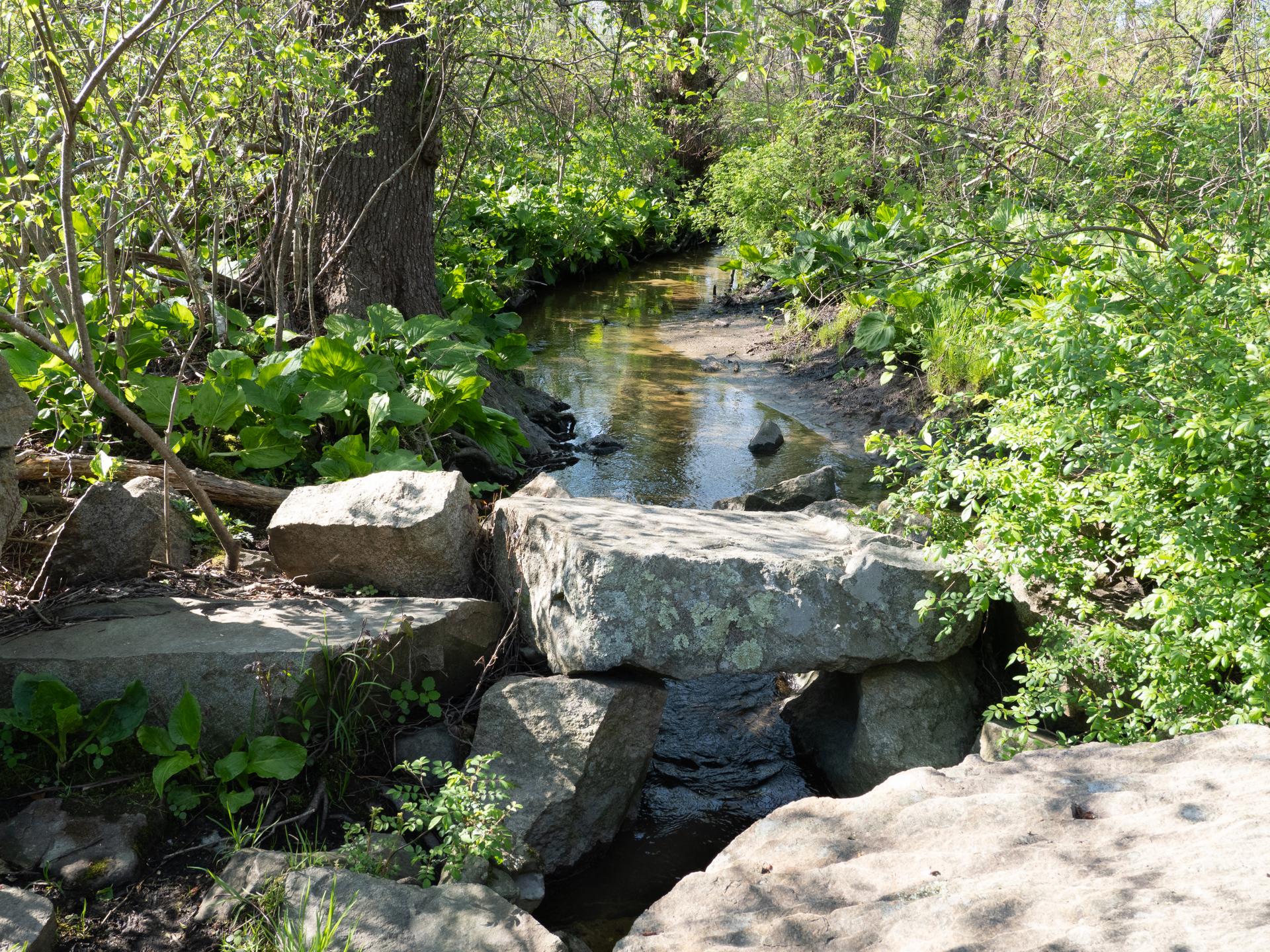
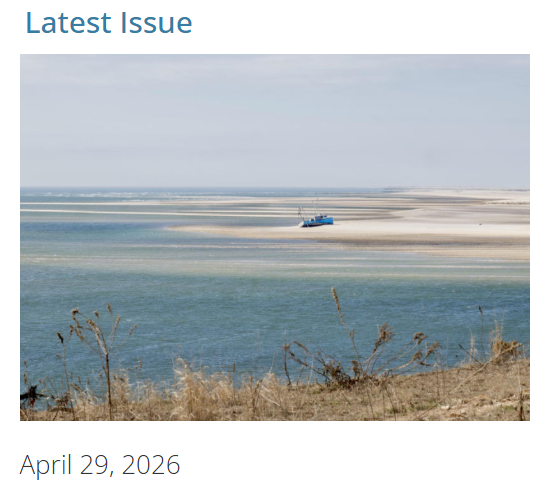
Above: Bound Brook, Dennis. Photo by Sue Machie. |
|
|
|
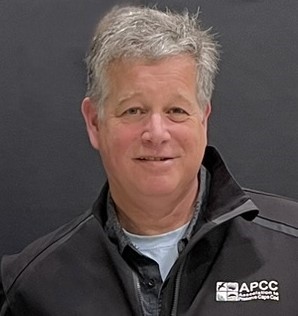
| What the Numbers Mean by Andrew Gottlieb, APCC Executive Director |
Local elections are a good opportunity to assess what is important to the 10-12 percent of people who show up to vote in most local elections. The majority of registered voters defer decision making to the voting few. For better or worse, the voting minority speaks for the broader community and, once again, put their electoral muscle behind improving water quality and protecting critical natural lands for future generations to enjoy.
|
|
|
|
The cases of Brewster and Mashpee both illustrate overwhelming voter support of environmental initiatives. The voters in these towns have left a trail of breadcrumbs to be followed on the road to future successes.
Led by the bold action of the Brewster Conservation Trust’s to file of a citizen’s petition, Brewster voters made a definitive statement that certain lands simply deserve protection. By seizing the initiative, BCT gave voters the opportunity to make a declaration about protecting sensitive lands that they might not otherwise have been given. One lesson here is that conservation-minded people will be rewarded by the voters for taking the initiative. A second, and this is the important part, is that conservation-minded voters have real political muscle—if they choose to use it. Muscle must be exercised to become stronger; if it is, the dynamics of local politics around conservation will change for the better.
In Mashpee, voters were presented with five ballot questions that asked people to approve tax increases. Two of the ballot questions were property tax overrides to fund general government operations. The other three were temporary debt exclusions to fund discreet capital projects: air conditioning for a school, air conditioning for the senior center, and the design of a wastewater treatment facility and sewering in the Waquoit Bay watershed. All passed.
One can stop at the headline that all the ballot initiatives passed, but there is a far more significant story imbedded in the actual results. While the voters generally approved of the spending, there was a broad disparity in the results for each question. Almost 70 percent of voters approved of the water quality project. No other question approached that 70 percent approval mark and one received only 52 percent of the vote, enough to pass but not by much. The point here is that voters clearly expressed what they valued most. The most broadly supported project was the one that improved and restored water quality.
Elected officials and town staff need to pay attention to and respect where their voters stand by continuing to prioritize progress on water quality and land conservation. The results of this local election season are not complete yet, but the message around the environment goes beyond these two case studies. The environmental vote has earned a seat at the table and takes a back seat to no other public policy issue on the municipal stage. Notice has been sent.
|
Request for Proposals Solicitation #: RFP-26-ERP-001
The Association to Preserve Cape Cod is seeking bid proposals from qualified businesses with expertise in salt marsh ecology and restoration for a platform rehabilitation project at Chase Garden Creek Marsh (Yarmouth/Dennis, MA). The goal is to halt subsidence and enhance ecosystem resiliency against future sea level rise using techniques that will support effective tidal regimes for robust plant growth and greater carbon storage. Click here for more information.
|
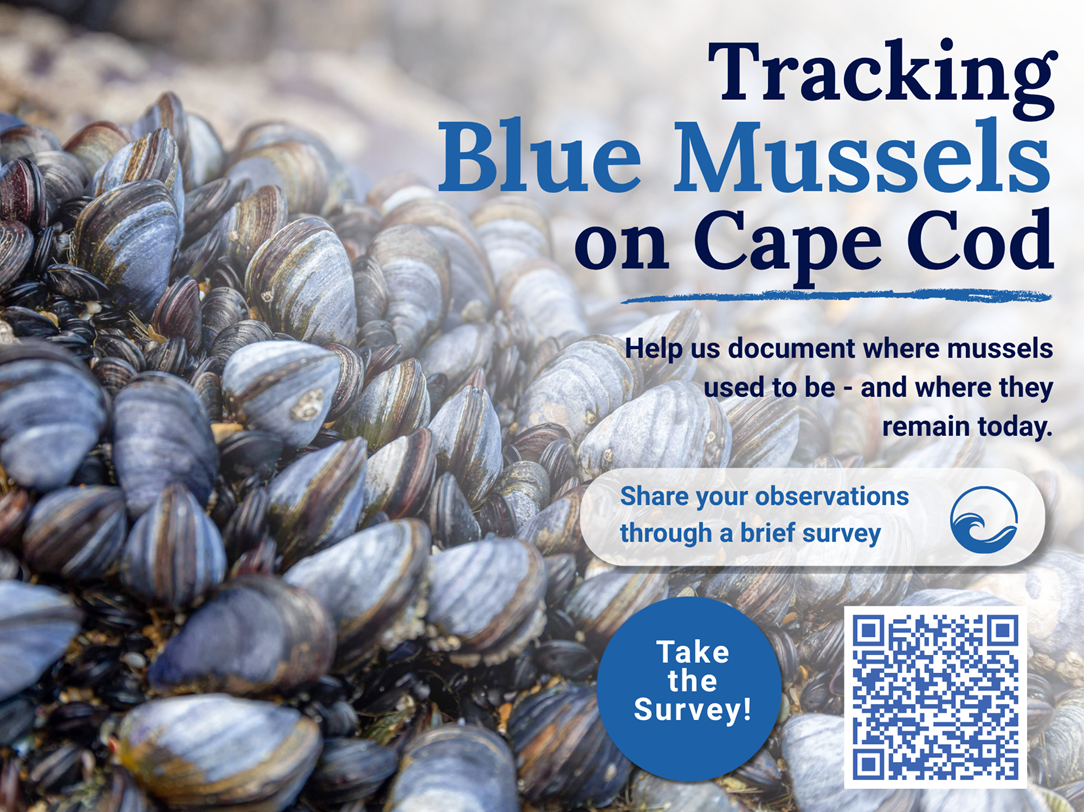
Help Us Track Cape Cod’s Blue Mussel Story For decades, blue mussels were one of the most familiar sights on New England’s rocky shores. They formed dense beds along intertidal shorelines, jetties, pilings, and other hard surfaces, creating habitat for small marine life and providing food for fish, birds, and other coastal species.
However, across the region, scientists have documented major declines in wild blue mussel populations over the past several decades. In some places where mussel beds were once thick and widespread, they are now sparse or nearly absent. Blue mussels are considered a foundation species because they help shape the intertidal community around them. Mussel beds provide shelter for small marine animals, serve as an important food source, and help filter coastal waters. When mussels disappear, the shoreline community changes with them.
The causes of these declines are complex. Warming air and water temperatures, predation from invasive European green crabs, pollution, storm impacts, and other changing coastal conditions may all play a role. One of the biggest challenges to tracking the decline is understanding where mussels were historically abundant, where they remain today, and where people have noticed changes over time.
To help fill those gaps, the five regions of the MassBays National Estuary Partnership are working together to track blue mussel abundance across Massachusetts. As the MassBays Regional Coordinator for Cape Cod, APCC is gathering both current observations and anecdotal information about blue mussels in our region. We are asking residents, shellfishermen, municipal staff, beach walkers, boaters, fishermen, naturalists, and anyone with knowledge of local shorelines to share what they have seen.
Have you noticed blue mussels in your area? Do you remember places where mussels used to be more common? Have you seen changes along a favorite beach, harbor, jetty, rocky shoreline, or dock?
Please consider taking a brief survey to help us better understand Cape Cod’s blue mussel history and current distribution.
Take the survey!
Your observations can help provide important local context and guide future monitoring, research, and restoration efforts across Cape Cod and Massachusetts. |
|
|
|
Celebrating Coastal Resilience in Yarmouth
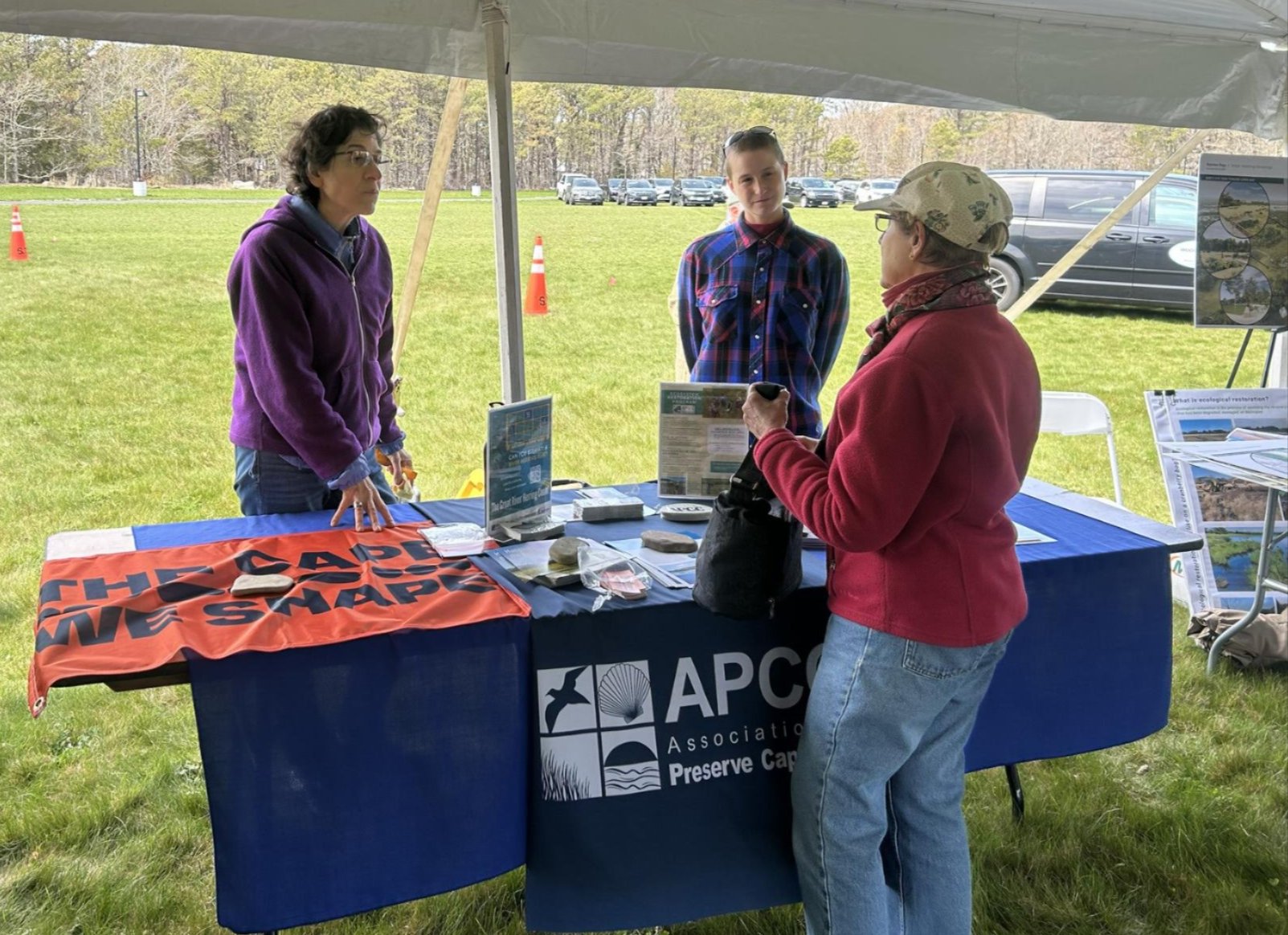
On May 2nd, the town of Yarmouth celebrated the grand opening of Parker’s River Landing with the Coastal Resiliency Fair that brought together residents, environmental organizations, and community partners to highlight ongoing efforts to protect Yarmouth’s coastline and waterways.
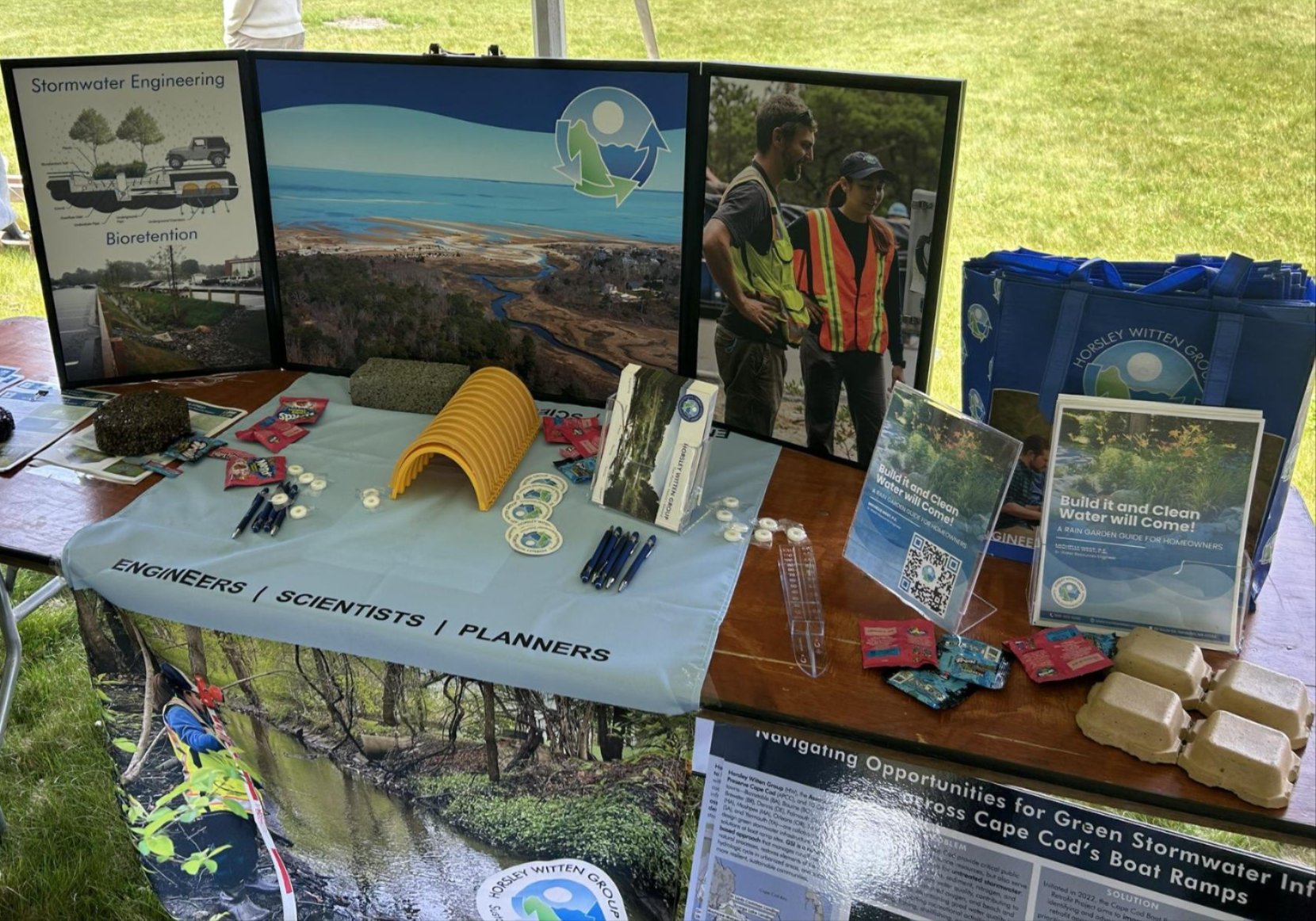
Representatives from APCC and Horsley Witten Group attended and together had a table at the event, sharing information on ongoing stormwater improvement projects across town as well as information about the neighboring Parkers River salt marsh restoration.
The team highlighted completed work at Yarmouth’s Curve Hill Road and Standish Way, where stormwater improvements were designed and installed to reduce pollution entering local waterways, improve drainage, and strengthen resilience to future storms.
APCC and Horsley Witten Group also shared information on upcoming projects at Grove Street, Wings Grove Beach, and Old Main Street. These projects will use green stormwater infrastructure and low-impact design to help reduce pollutants such as nitrogen, phosphorus, bacteria, and sediment before runoff reaches local waters.
At Wings Grove Beach on Long Pond, proposed improvements soulc reduce nutrient pollution linked to harmful cyanobacteria blooms and beach closures while addressing erosion and improving climate resilience. Along Old Main Street, planned tree trenches and bioretention areas will help capture and treat runoff before it reaches Bass River, while also improving the streetscape and reducing roadway heat.
Together with Yarmouth’s ongoing wastewater and sewer infrastructure investments along with restoration efforts including salt marsh and stormwater improvement plans create a more comprehensive approach to protecting water quality and strengthening community resilience. |
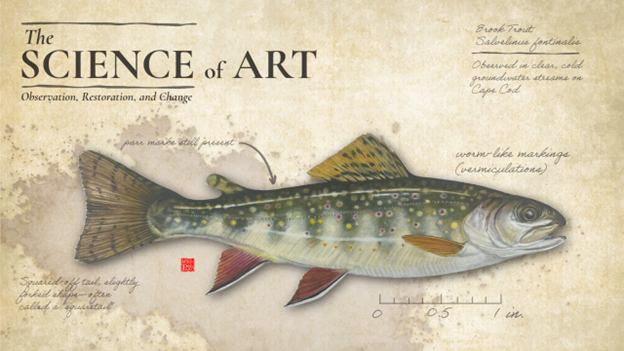
The Science of Art: Observation, Restoration, and Change
by Mike Palmer, APCC Restoration Ecologist |
Cape Cod's coastal systems are always telling us something.
A stream running lower than expected. River herring arriving later than in years past. Fish holding below a barrier instead of moving upstream. A shell worn smooth by time, tide, and sand. A familiar pattern shifting just enough to make me stop and look again.
The question is whether we are paying enough attention to notice.
That was the central idea behind a talk I gave at the recent Big Blue Conference in Falmouth. I spoke about how drawing, science, and restoration all begin in the same place: with careful observation. The talk drew from my background in environmental science as well as Waquoit Bay Fish Company, the art and writing project I started as another way to stay close to the fish, shells, shorelines, and waters that have shaped my life.
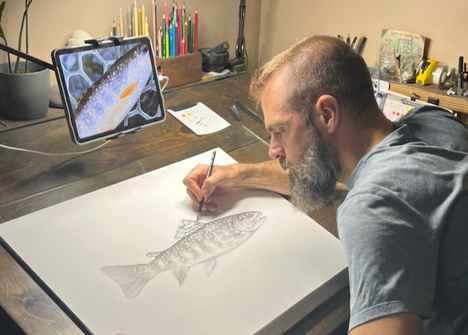
For me, drawing is not just about creating an image. It is a way of paying attention. A fish, a shell may seem familiar at first. But the longer I look, the more the familiar outline gives way to smaller details—the parr marks on a young brook trout, the worn edge of a quahog shell, the slight variation in shape or color that was easy to miss at first.
That kind of looking has shaped my work as a scientist, too. Before joining APCC as a restoration ecologist, I spent nearly 20 years as a fisheries biologist with NOAA in Woods Hole. Today, as part of APCC's Ecosystem Restoration Program, I work on river and habitat restoration projects across Cape Cod. In both art and science, the lesson is much the same: What we notice shapes what we understand, and what we understand shapes how we respond.
Drawing slows me down. I begin with an idea of what something looks like. A fish is a fish. A shell is a shell. But if I stay with it long enough, that confidence starts to loosen. The object becomes less generic and more specific.
Not just a trout, but this trout.
Not just a shell, but this shell, with its own wear, markings, and history.
That shift matters even beyond the sketchbook. |
Above: The author working on a brook trout drawing in his home studio. |
In restoration and monitoring, important signals are often subtle. River herring are a good example. Those signals of change may show up as a delay in run timing, a change in water level, fish gathering below a barrier, or a run behaving differently than it did the year before. They are easy to miss if we only look at the final number. But often, those small changes are where the story begins.
Careful observation helps us see the change sooner.
For me, that way of looking closely is central to restoration work. Whether monitoring river herring, assessing fish passage, tracking water levels and temperature, or watching how restored habitats respond over time, the details matter. They help me understand not only what a system looks like now, but what it has been through and what it may need next.
I have never really seen art and science as separate. Both start the same way—with looking. Not glancing, not confirming what you already think you know, but staying with something long enough for it to become more complicated. A fish in the hand. A river after rain. A line of herring stalled below a ladder. At first, you see the obvious thing. Then, if you keep looking, you begin to see the problem.
On Cape Cod, those details matter. Fisheries, the Cape's natural beauty, tourism, and community life are all tied to the health of our coastal systems. The blue economy depends not only on the resources around us, but on our ability to recognize when those systems are beginning to change.
That is the value of close observation. It helps us catch the small shifts before they become obvious problems—and gives us a better chance to respond while there is still time. |
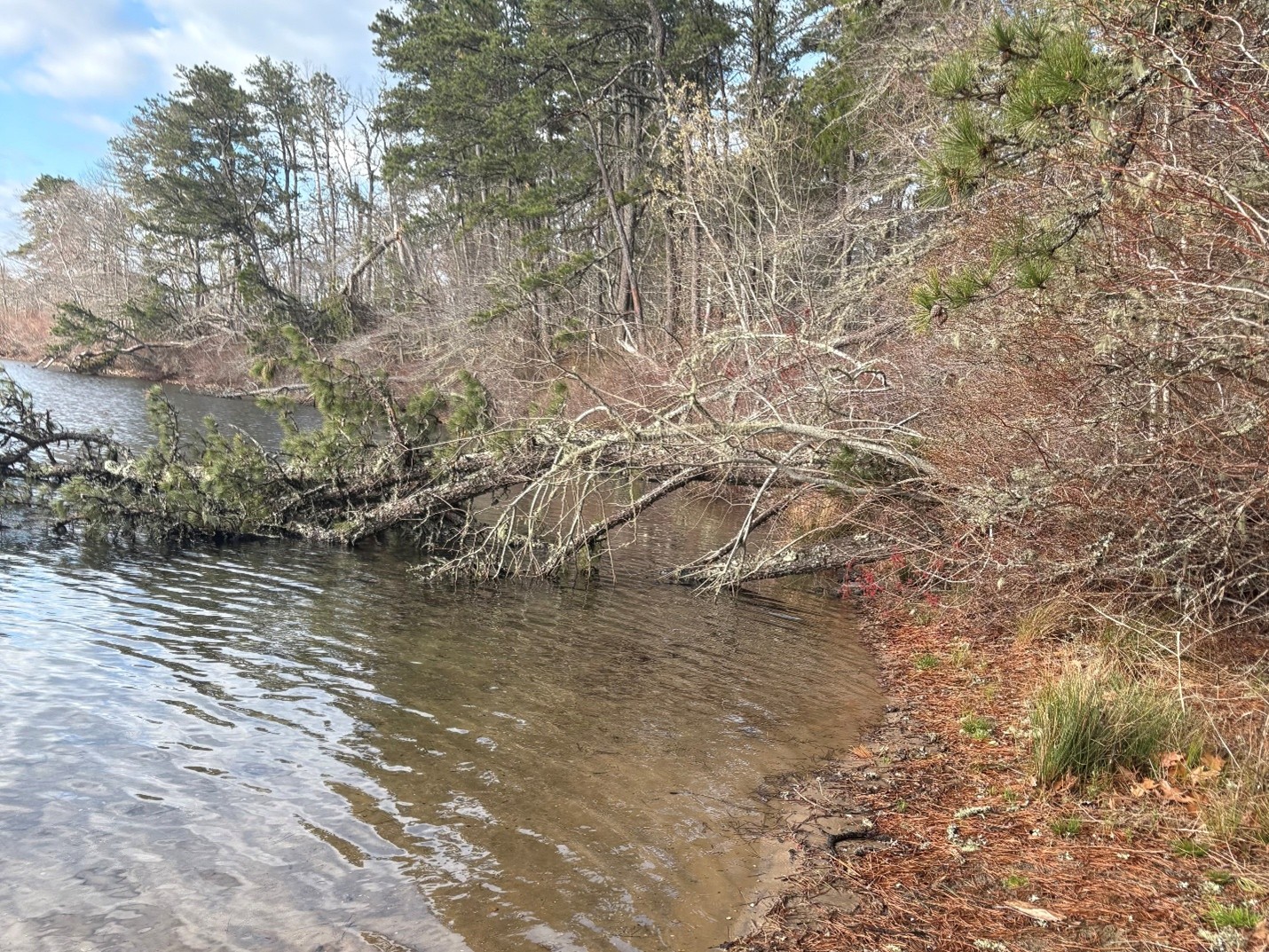
Above: Pitch pine, Pinus rigida, Hawksnest Pond, Harwich |
Fallen Trees: Mess or Habitat |
After this year’s winter storms, Cape Cod is anything but short on fallen trees. During the first month of pond monitoring, one of the most noticeable observations was the sheer number of trees downed along the edges of ponds and the access points. While a fallen tree at the water’s edge is never an uncommon sight, this year there appear to be many more.
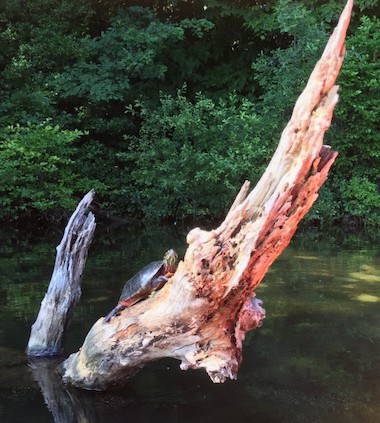
It might seem like a fallen tree has little impact on a pond and just looks messy, but the opposite is true. Much like a whale fall in the open ocean, a tree fall creates new habitats, supports nutrient cycling, and enhances biodiversity. Submerged wood provides shelter and structure for fish and other aquatic species. A fallen tree can provide a place for turtles to sun themselves, or for birds to perch. In some cases, waterlogged wood can even be preserved well enough to help scientists date past environmental events through tree ring analysis.
At first glance, a fallen tree along a pond’s edge may not seem significant, but a closer look reveals just how intertwined it is in the pond’s story. |
Above: Sunning painted turtle. Photo by Lois Tanzer. |
Mammals on the Move in Cape Ponds |
Above: Although not in a Cape pond, the video shows the swimming behavior of a river otter. |
Otter, mink, or muskrat: where to begin? Many mammals make their homes across Cape Cod’s numerous ponds—but their slinking silhouettes share many similarities, which may leave you wondering what just crossed your path? Asking yourself the following questions may help with identification even during brief encounters.
What is the animal’s relative size? What shape is their tale and face? What behaviors do you notice?
The North American river otter, the largest member of the Mustelidae family found in Massachusetts, can grow to four feet and weigh up to 30 pounds. It swims with its body beneath the water, peaking above for air and observe. Otters move between ponds and coastal areas on Cape Cod seeking food and their movements are mostly at night.
American minks, akin to otters, prefer to stay close to wetland shores. They range in length from 1.5 – 2.5 feet, with a tail that is about one third of its total body length—a long and slender, dark colored body with short legs. Minks eat fish, frogs, crustaceans, muskrats, and small mammals. Learn more here.
|
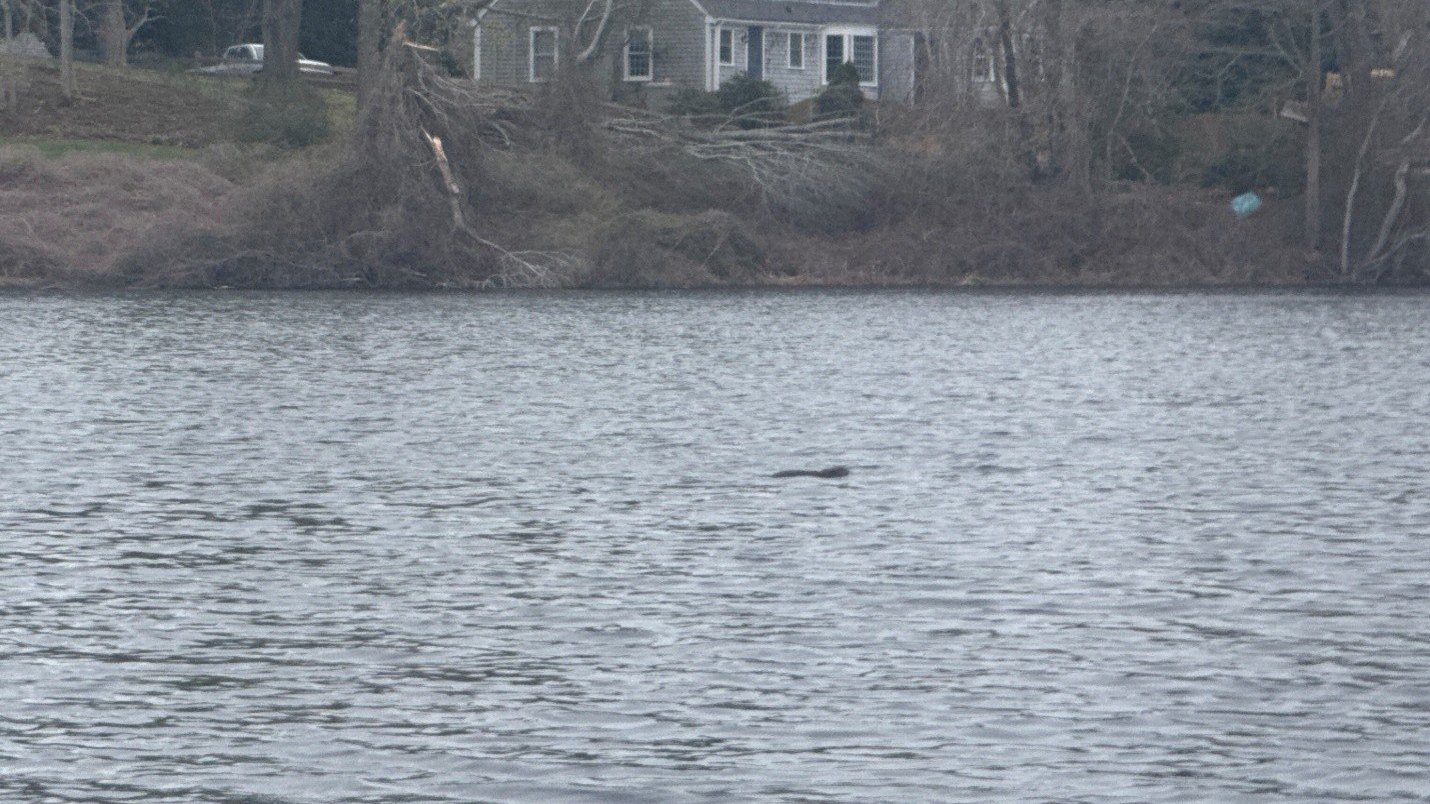
Above: Muskrat (?) in Shawmee Lake, Sandwich |
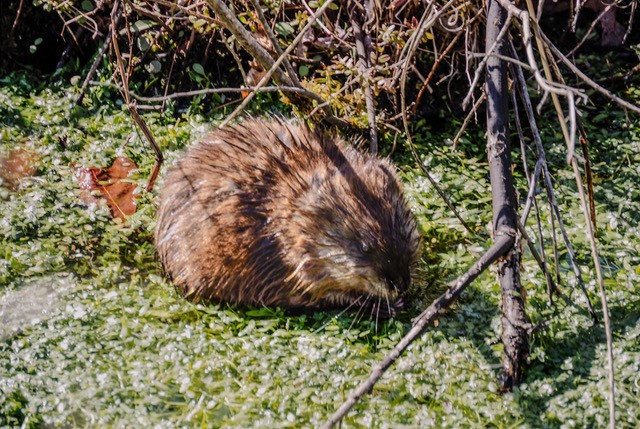
Last week, APCC volunteer Emma Acri noticed what is thought to be a muskrat at Shawme Lake in Sandwich swimming slowly with its body visible at the surface—a special encounter with one of our pond resident mammals. Muskrats, members of the order Rodentia, more closely resemble small beavers and move slower through the water than otters. Muskrats primarily feed on aquatic and terrestrial vegetation, but will also consume freshwater mussels, snails, crayfish, frogs, and insects.
Sadly, muskrat populations have been precipitously declining range-wide for more than a decade. "Potential impacts are habitat and wetland degradation, changing hydrology, invasive species (phragmites, knotweed) in wetland habitats, increases in avian and terrestrial predator populations, disease, and water quality and contamination. Increased frequencies of drought associated with climate change could result in a decrease in habitat quantity and suitability for muskrat as wetland areas may dry out more consistently." Massachusetts Division of Fisheries & Wildlife
|
Above: Muskrat, Ondatra zibethicus. Photo by Sue Machie. |
APCC at the Rhode Island Wild Plant Society's Plant Sale
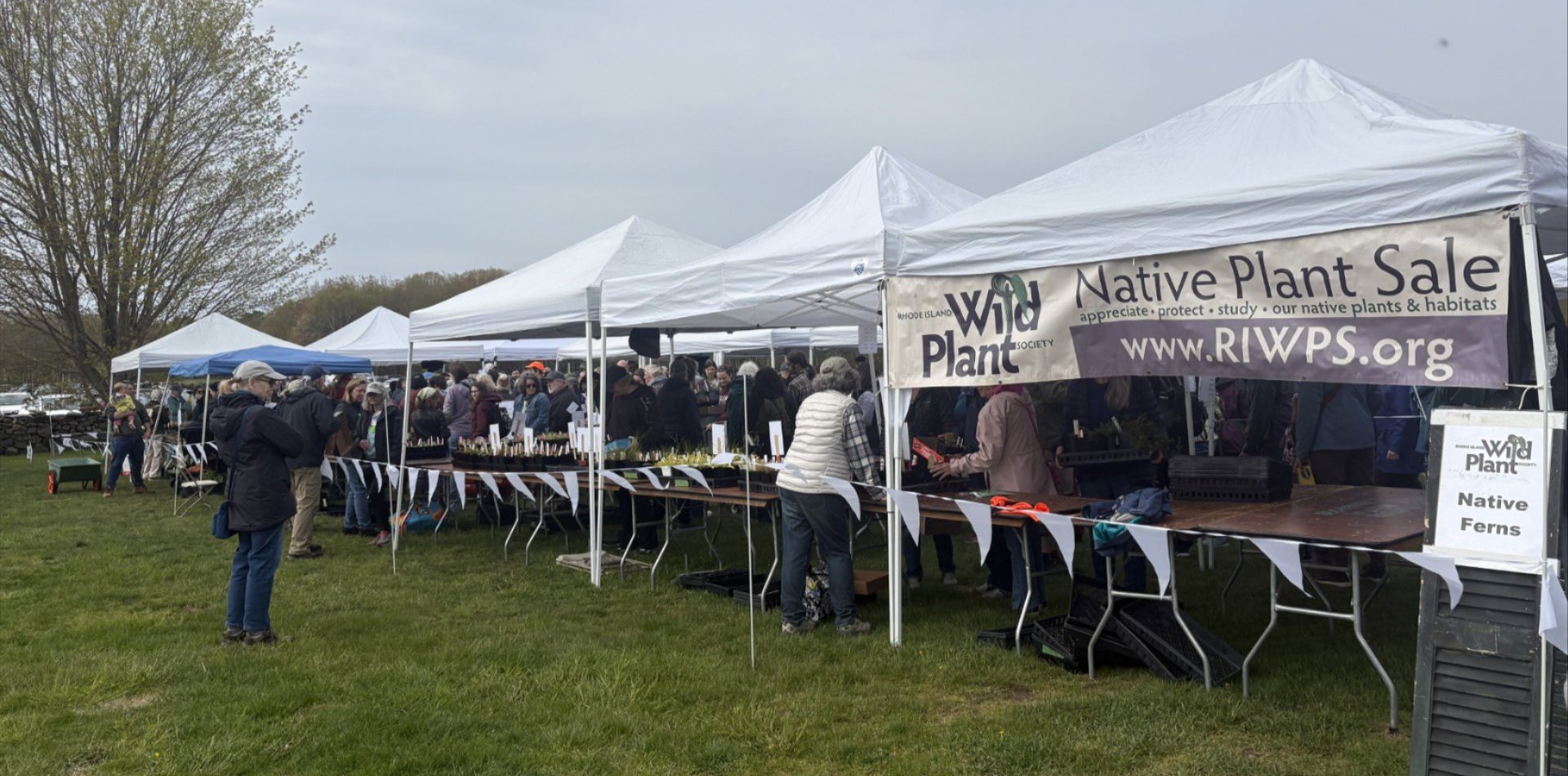
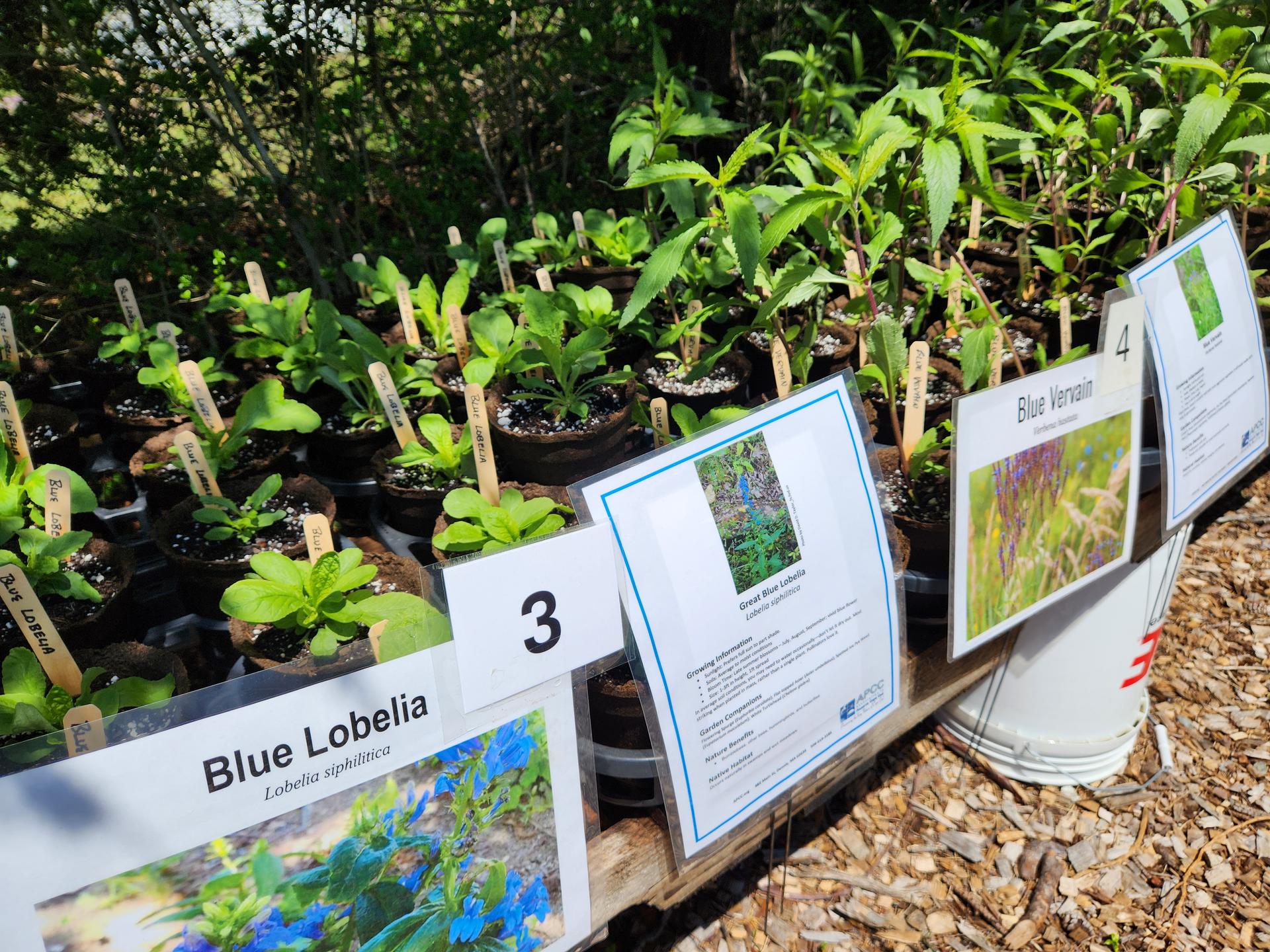
by Erin Camire, APCC Ecolandscape Program Coordinator This past Saturday, the Rhode Island Wild Plant Society (RIWPS) held their annual spring plant sale and after seeing their plant list, I knew I had to make the trek!
I was delighted to arrive and see a long line of folks excited to get their hands on a beautiful assortment of seed-grown plants. As I waited in line, I listened to everyone around me discuss their future gardens plans and what plants they hoped were still available when they got to the front of the line. It was exciting to hear so much love for native plants.
The enthusiasm is due to the incredible educational work of RIWPS and numerous other organizations (including APCC) that have created demand for native plants. For me, this plant sale only further confirmed that any interested farmers and entrepreneurs who would like to take part in our Cape Cod Native Plant Growers’ Cooperative program will have a large and ever-growing audience of native plant enthusiasts who are eager to get their hands on a variety of native species.
We offer congratulations to RIWPS for a highly successful plant sale, and if you missed out on this event, please take a look at their educational resources and upcoming events on their website.
Additionally, back in January we were fortunate enough to host Sue Theriault, the vice president of RIWPS, as a speaker for our Growers’ Cooperative program. If you’d like to learn more about the great work happening in Rhode Island and some tips for growing your own native plants from seed, the recording of Sue's presentation can be found here.
|
|
|
|
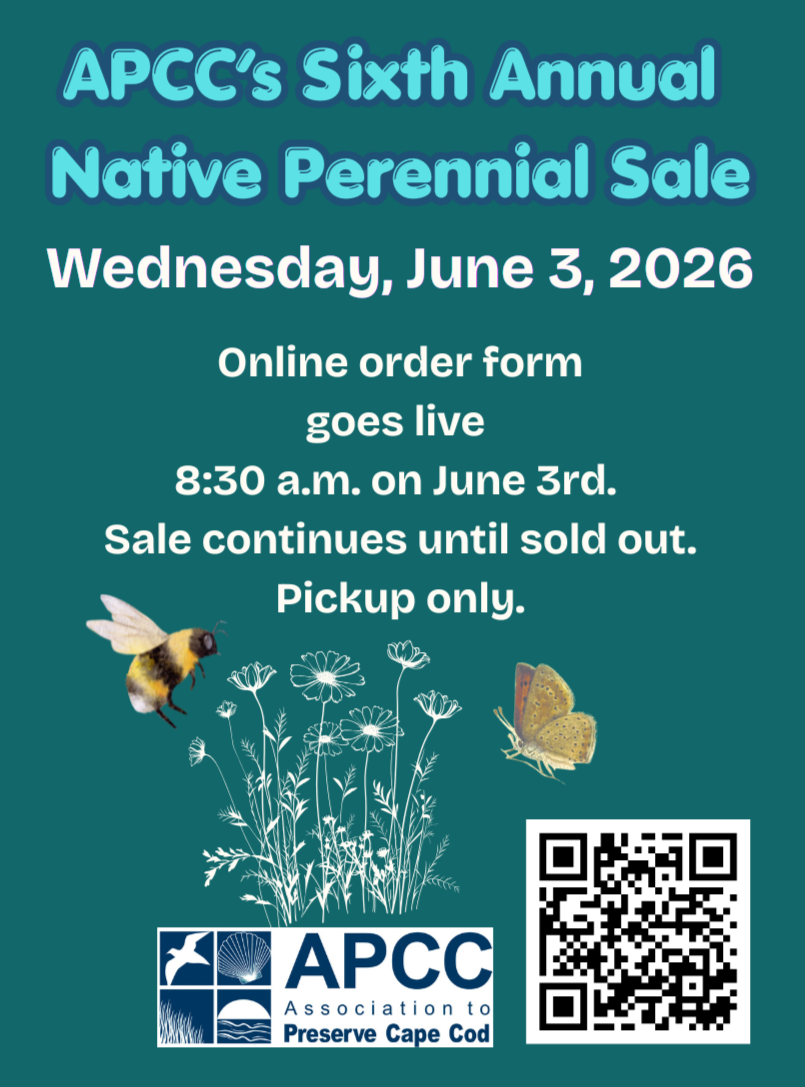
You've been asking when, so mark your calendar! |
|
|
|
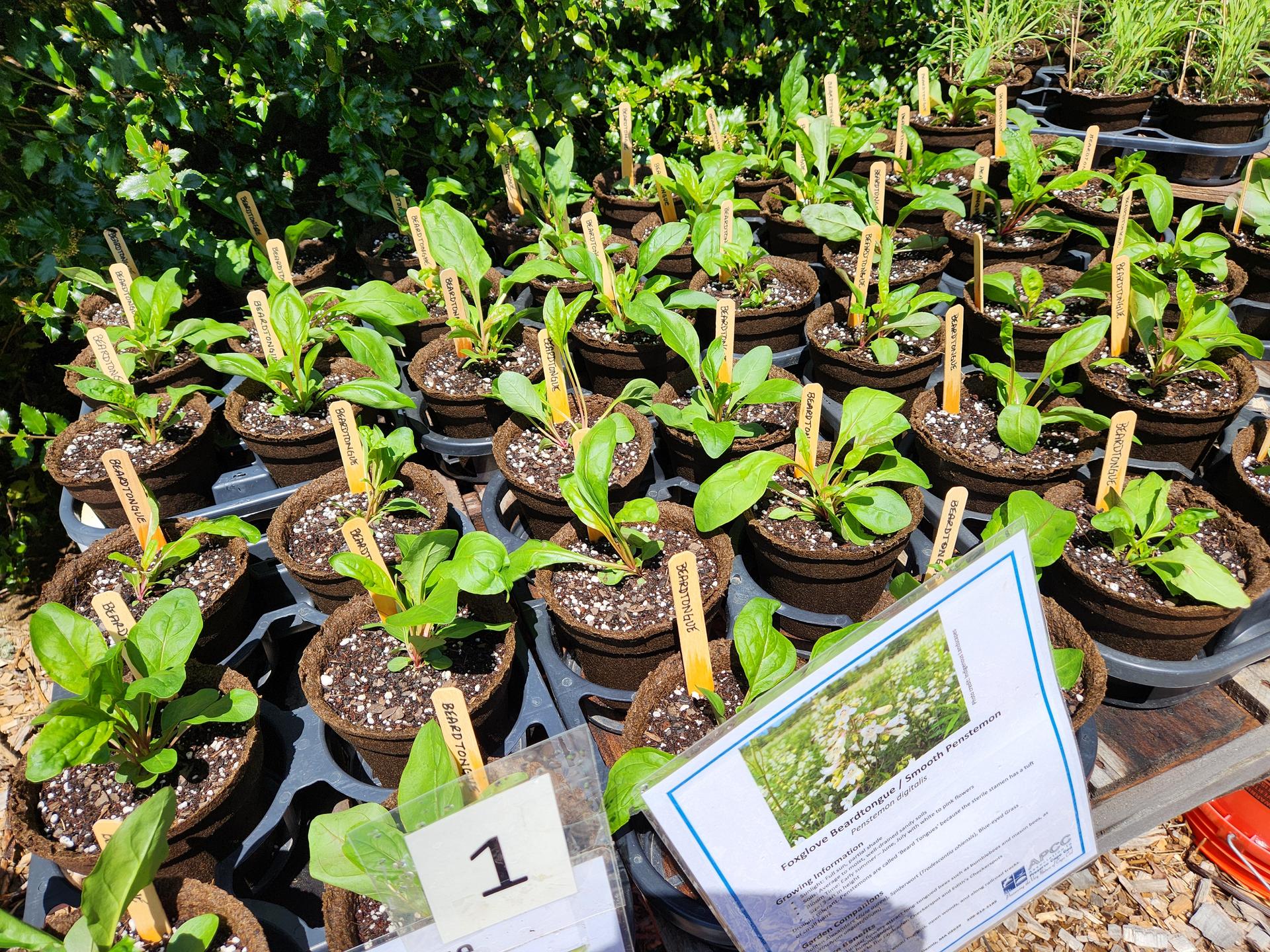
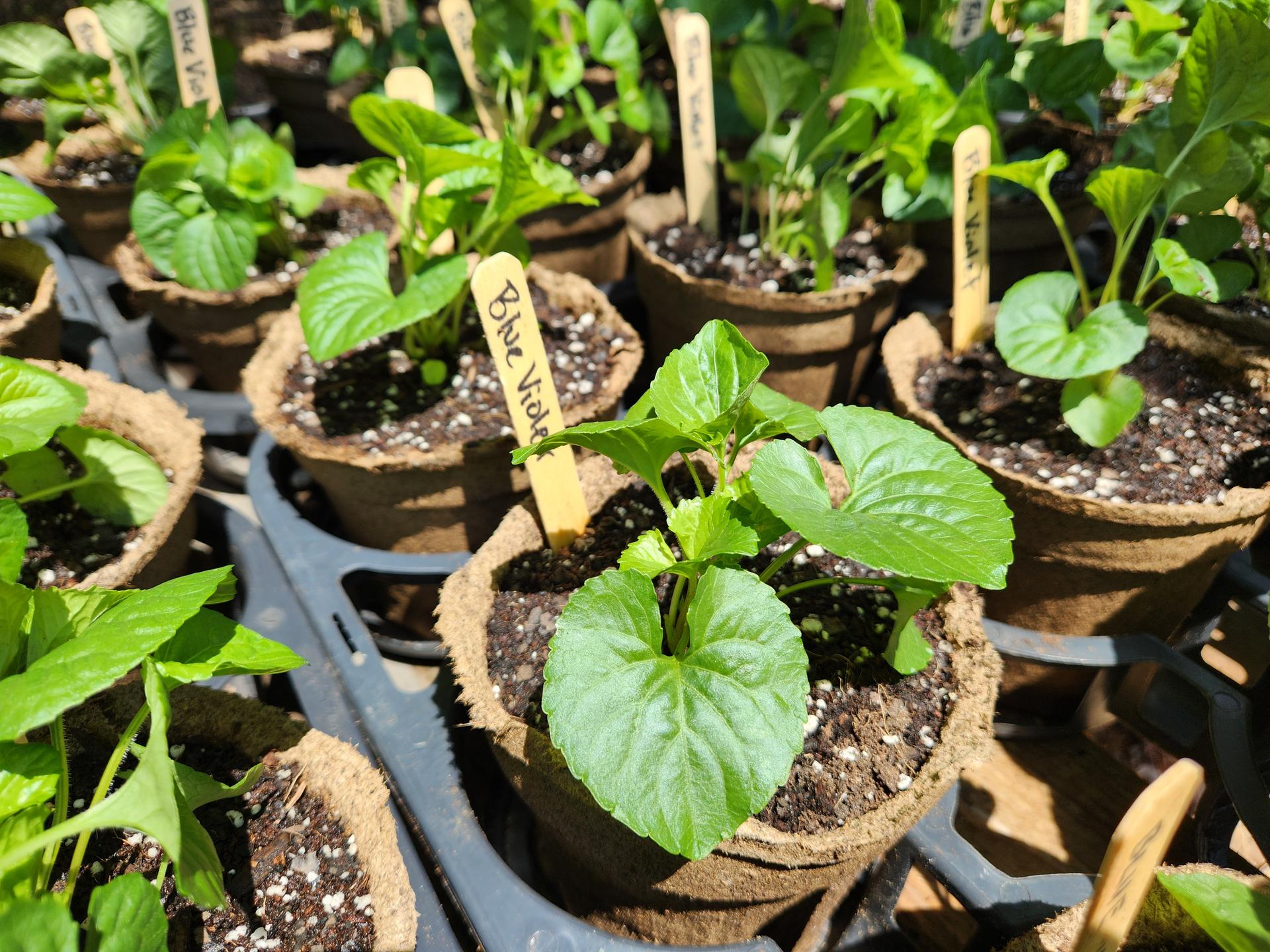
The plant sale webpage has a list of what we will have—over 30 species. You've got a few weeks to plan your purchase!
Please note, our plant sale is a bit different than most: Online orders only. Pickup by appointment at APCC’s headquarters, 482 Main St, Dennis, June 3-5. Sale goes live Wednesday, June 3rd at 8:30 a.m. Click here for more information.
|
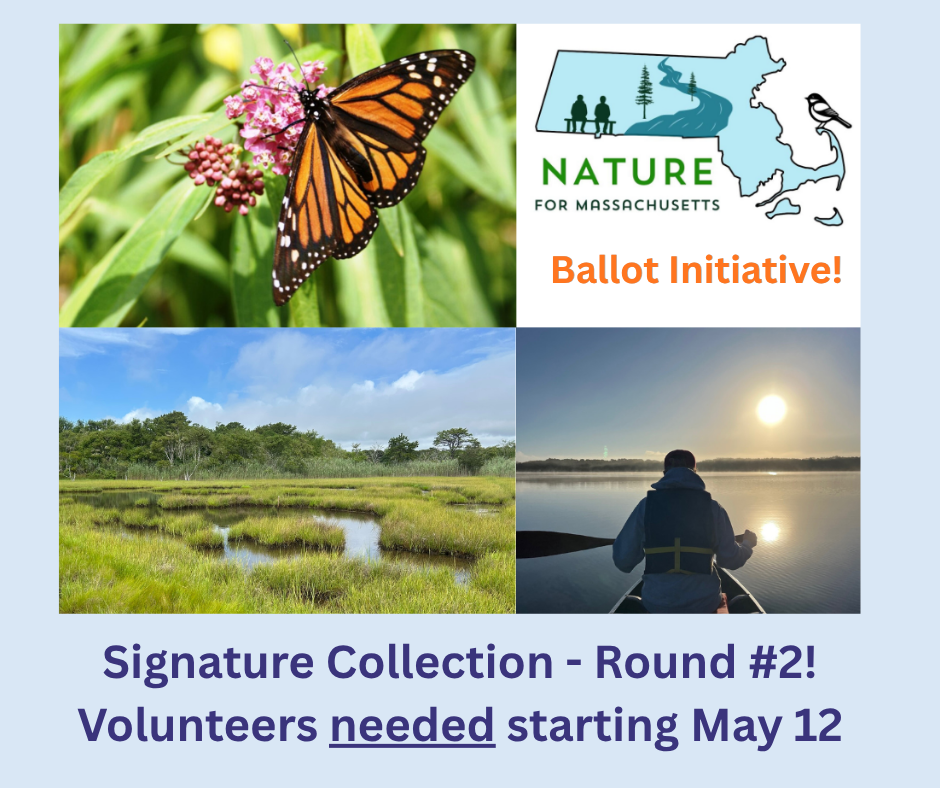
As a member of the Nature for Mass coalition, APCC is once again helping to collect signatures to put the Protect Water and Nature initiative on the ballot. If you would like to help us collect a second round of signatures in your town you can sign up to volunteer. Volunteer to collect signatures in your town–sign up here!
Nature for Massachusetts is a large and diverse coalition that seeks to create a dedicated, annual revenue stream to conserve water, land, urban greenspace, outdoor recreation access, and wildlife in Massachusetts.
The coalition is urging the State Legislature to pass the Nature for All bill (H.901/S.2571) to help address the threats our environment faces. But if lawmakers don’t act, the coalition is ready to bring this issue directly to voters through a 2026 ballot question. That’s why we’re collecting signatures to put the Protect Water and Nature initiative on the ballot, and we need your help this spring to get past the final hurdle.
To put this question in front of voters on the 2026 ballot, advocates need to collect over 100,000 signatures over two rounds of signature collection. We have already submitted over 90,000 certified signatures to the Secretary of State last fall. (Thank you, volunteers!) This spring, we need to collect 21,000 additional signatures. The timeline is much more condensed this time, which means our ramp will be much shorter than before - and we need all hands-on deck to get past this final hurdle. Ballots will be available for pick up starting May 12.
Email Dee at volunteer@apcc.org for more information.
Volunteer to collect signatures in your town – sign up here! |
Learn more about The Cape We Shape campaign and sign up to be part of Team SOS to engage in efforts to permanently protect the last undeveloped acres that have been identified as priority natural resource areas.
As part of Team SOS, look for regular emails most Mondays to learn of news,
next steps, and how you can help. If you are NOT getting our Monday update emails, please let us know and we will ensure you do. Come pick up campaign signs, flags, handouts, stickers at APCC's office in Dennis: email TeamSOS@apcc.org to arrange day and time.
We now have Team SOS t-shirts available for purchase ($25 with pickup). |
Sign up to Volunteer with Team SOS here.
Team SOS volunteers help distribute educational materials and work on town teams to support The Cape We Shape campaign efforts. |
|
|
|
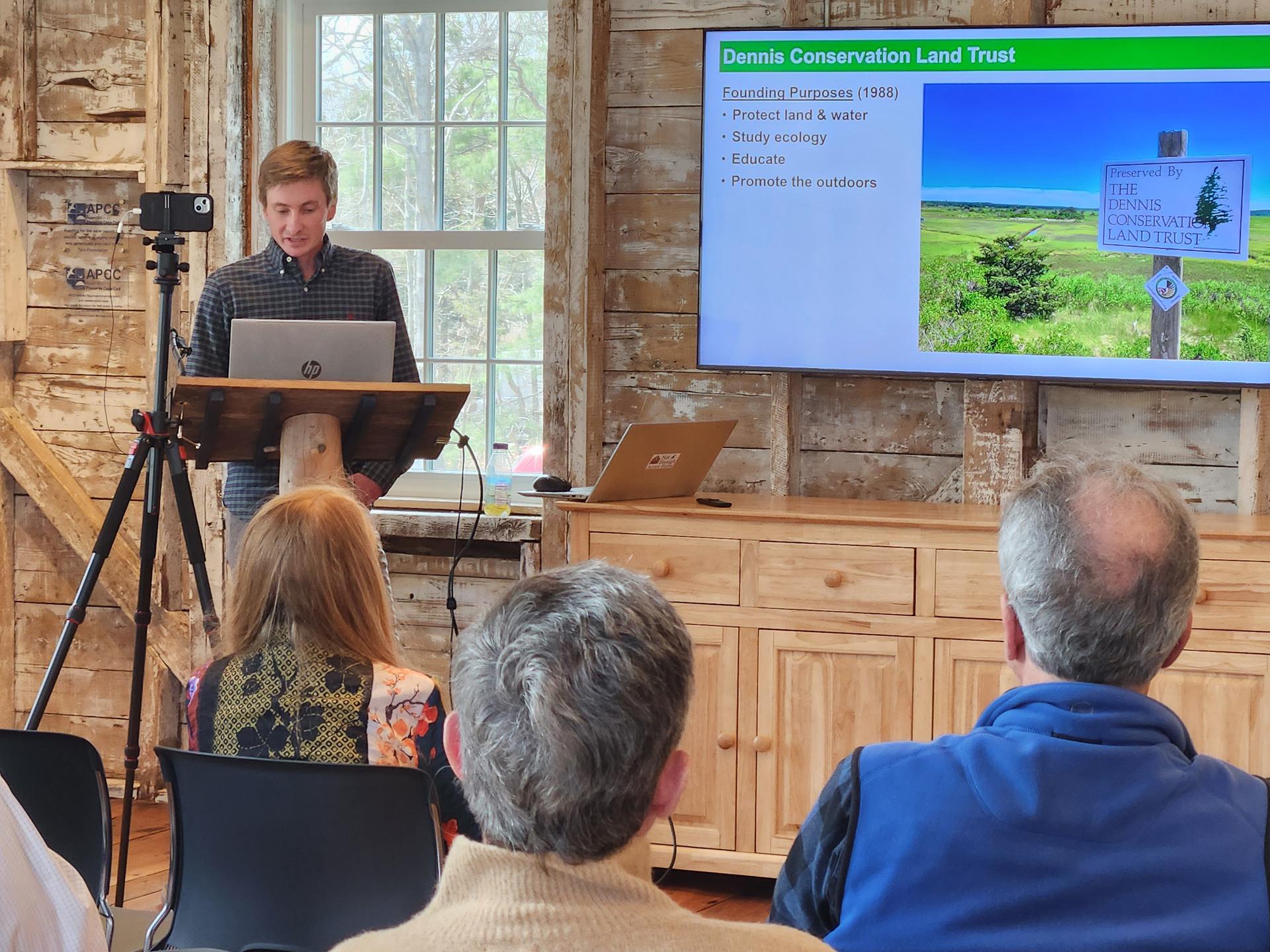
Above: Dave Fryxell, Ph.D., executive director of Dennis Conservation Land Trust |
|
|
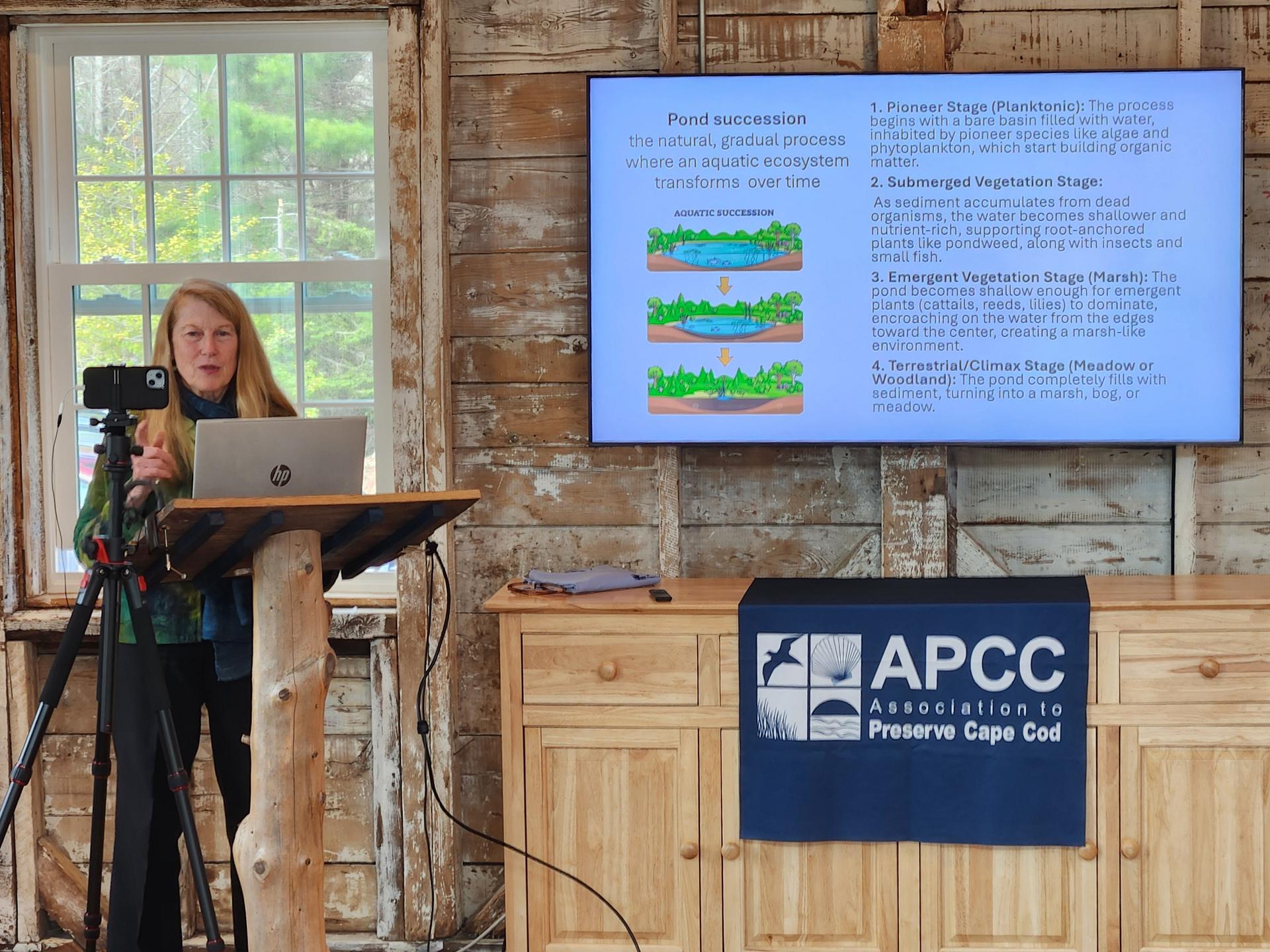
Above: Julie Hambrook, Ph.D., APCC's Pond & Cyanobacteria Pond manager |
|
|
|
A Cape-wide Conservation Event Calendar |
The Compact of Cape Cod Conservation Trusts (“the Compact”) and its nonprofit members launched a new regional calendar of events. The Conservation Calendar includes programs across Cape Cod hosted by these groups. The goal of the calendar is to encourage visitors and residents to take part in nature and environmental events. You can always find the link to the calendar on APCC's website under News & Events.
|
If you are a farmer or someone who wants to grow native plants to sell, or you just want to be updated on the program's development, please submit the interest form that appears on our webpage. We will be sending periodic email notices of workshops and meetings.
Funding for the project is provided by Barnstable County and its Economic Development Council License Plate Grant Program through the Cape Cod Commission, the Kelley Foundation and private donors. |
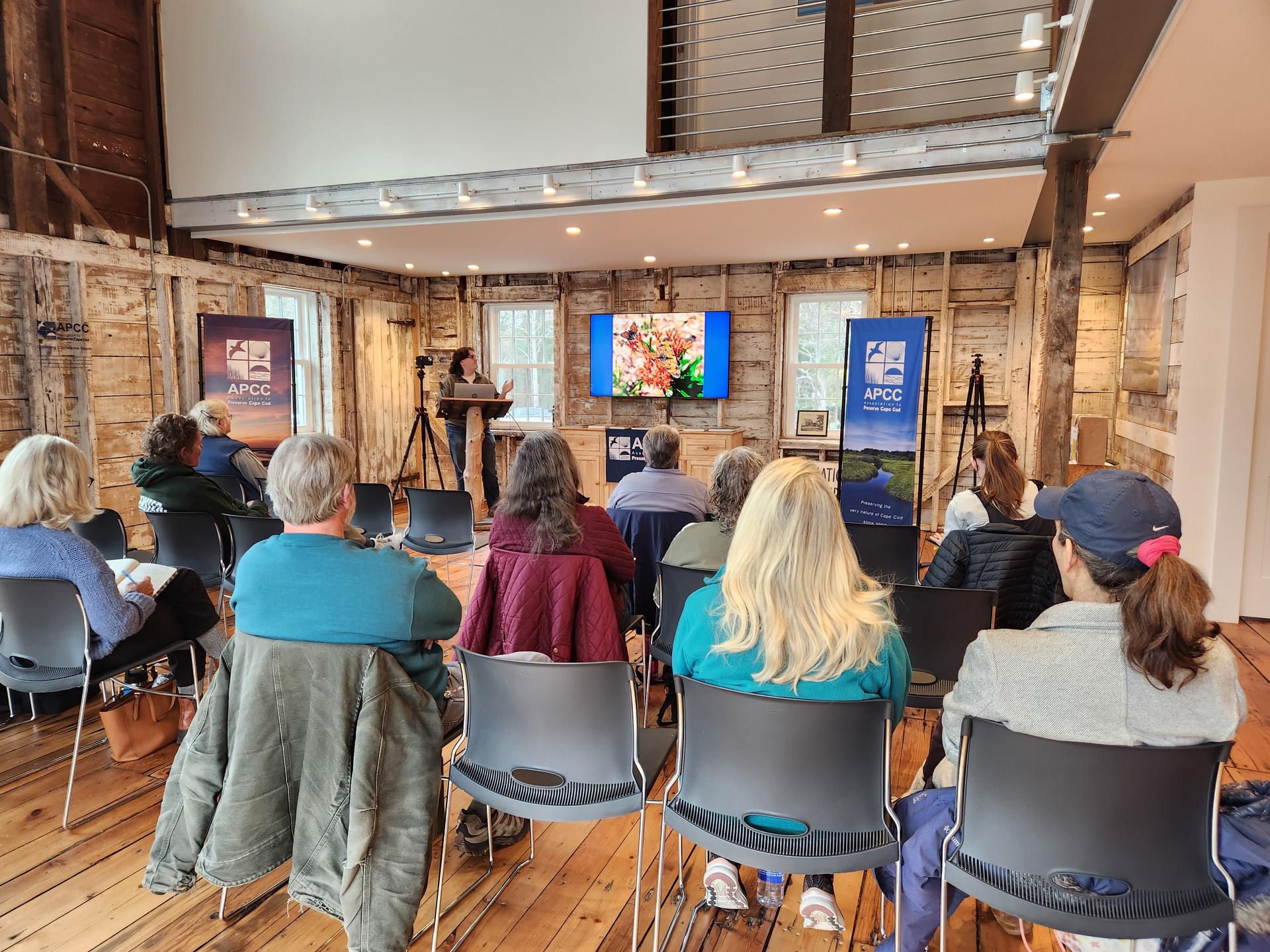
Ten talks for prospective growers as part of the Cape Cod Native Plant Growers' Cooperative program have been presented thus far, with more scheduled in the upcoming weeks. These past workshops can be viewed here: |
A Cape Cod Native Plant-selector ~ to help you choose the perfect native plants for your garden. |
|
|
|
Email kandres@apcc.org and we'll send you a CapeCodNativePlants.org decal. |
|
|
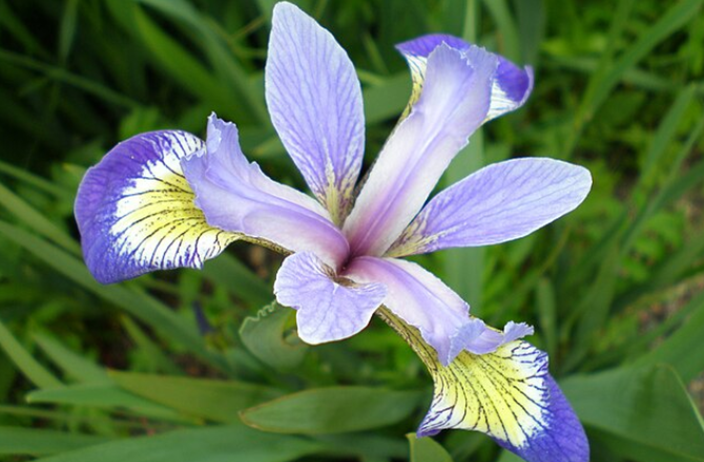
Photo credit: Jefficus / Wikimedia Commons / Public Domain |
Blue Flag Iris Iris versicolor |
|
|
|
The purpose of CapeCodNativePlants.org is to help native plant enthusiasts select the right plant for the right place. While not all native plants presented here are indigenous to Cape Cod, they are suitable native species for Cape gardens and managed landscapes.
Why Native Plants? Many native plants are drought tolerant, salt tolerant, and thrive in the “thin” soils found on Cape Cod. Native plants are as attractive as any plant, and are reflective of the Cape’s natural beauty. By planting native species appropriate for Cape Cod, you can conserve water, avoid pesticide and fertilizer use, and support pollinators and birds.
|
|
|
|
|
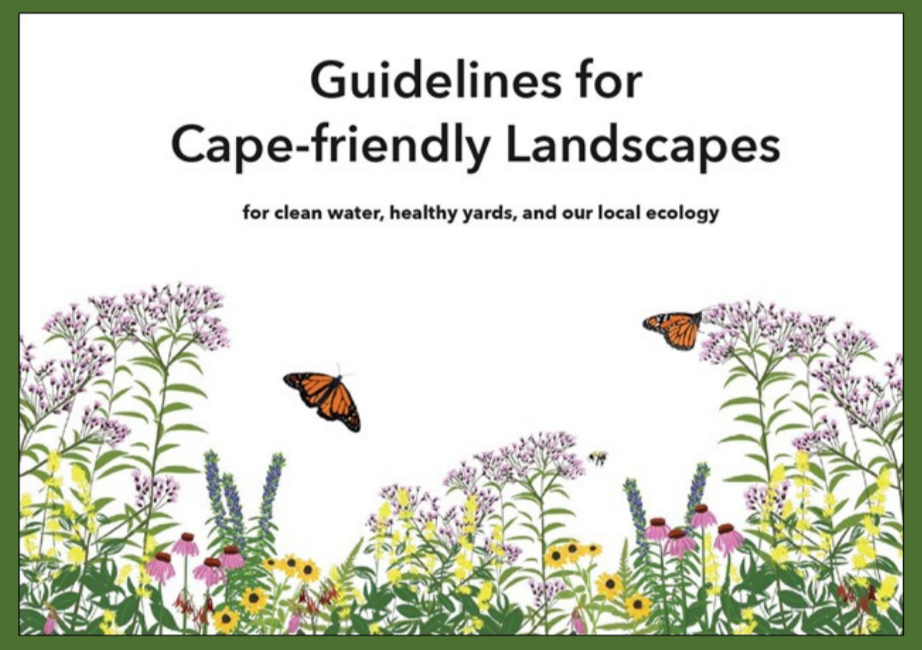
The Guidelines gives homeowners steps they can take in the design and maintenance of their properties that will support pollinators and birds, manage stormwater, conserve water, and protect the Cape's water quality. This 40-page booklet is beautifully illustrated by Marcy Ford with content that is easily digestible and supported by numerous resources for additional learning.
|
|
|
|
We are grateful for the several retail shops that are partnering with us to make this publication more widely available: Brewster Book Store, Birdwatchers General Store, Crocker Nurseries, Wellfleet Audubon Wildlife Sanctuary, Cape Abilities Farm, Cape Cod Museum of Natural History, the Cape Cod Lavender Farm, Heritage Museums and Gardens, Titcomb's Bookshop, Sea Howl Bookshop, Soares Flower Garden Nursery, Hyannis Country Garden, Orleans Whole Food Store, and Eight Cousins Bookshop.
If you are a retailer and would like to sell this publication at your store, please contact us. |
|
|
|
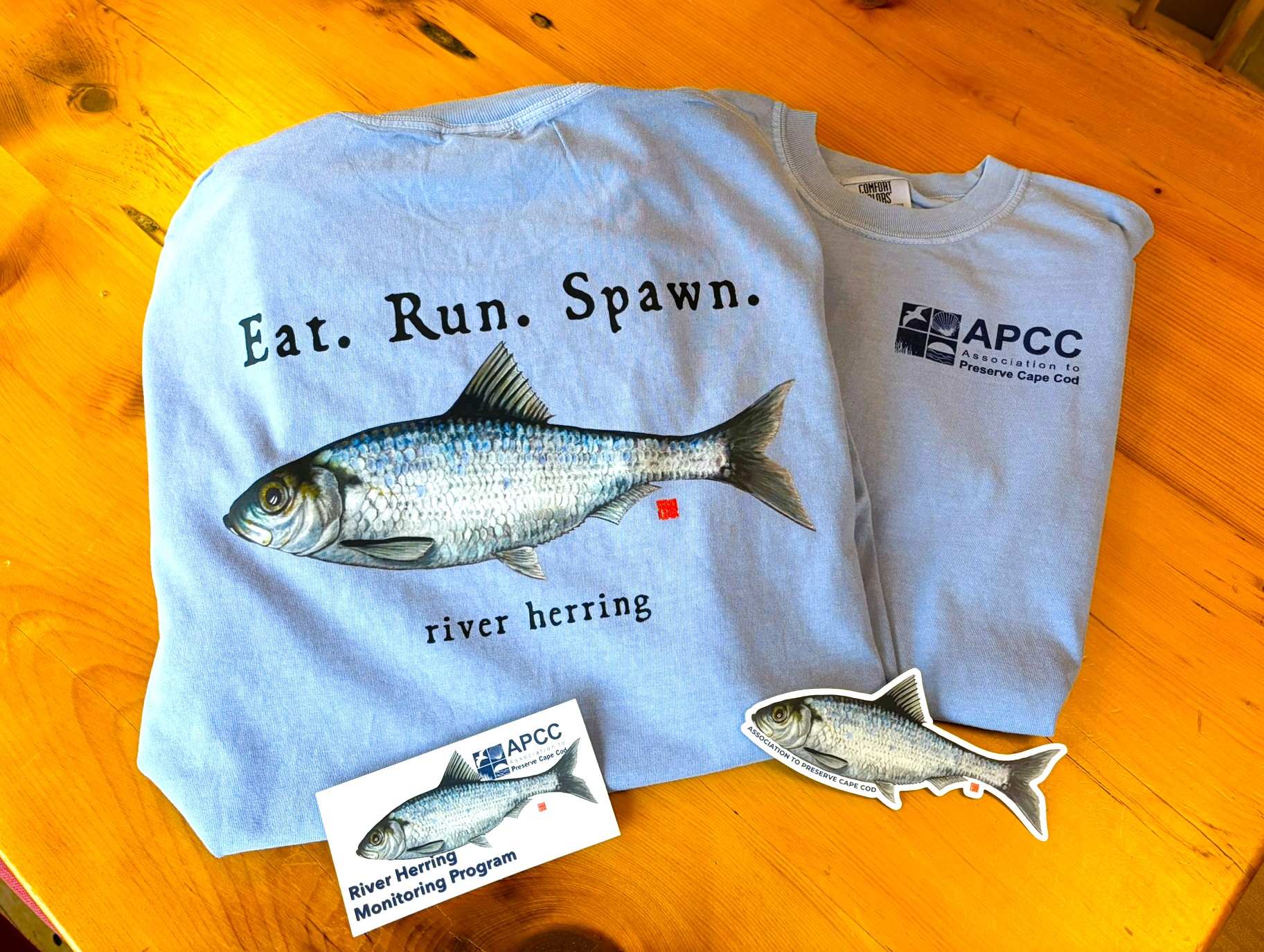
New Offering - Celebrate the Run! Herring T's
color denim blue $30 - includes USPS delivery in the U.S. |
Team SOS $30 - includes USPS delivery in the U.S. |
|
|
|
APCC caps $25
-includes USPS delivery in the U.S. |
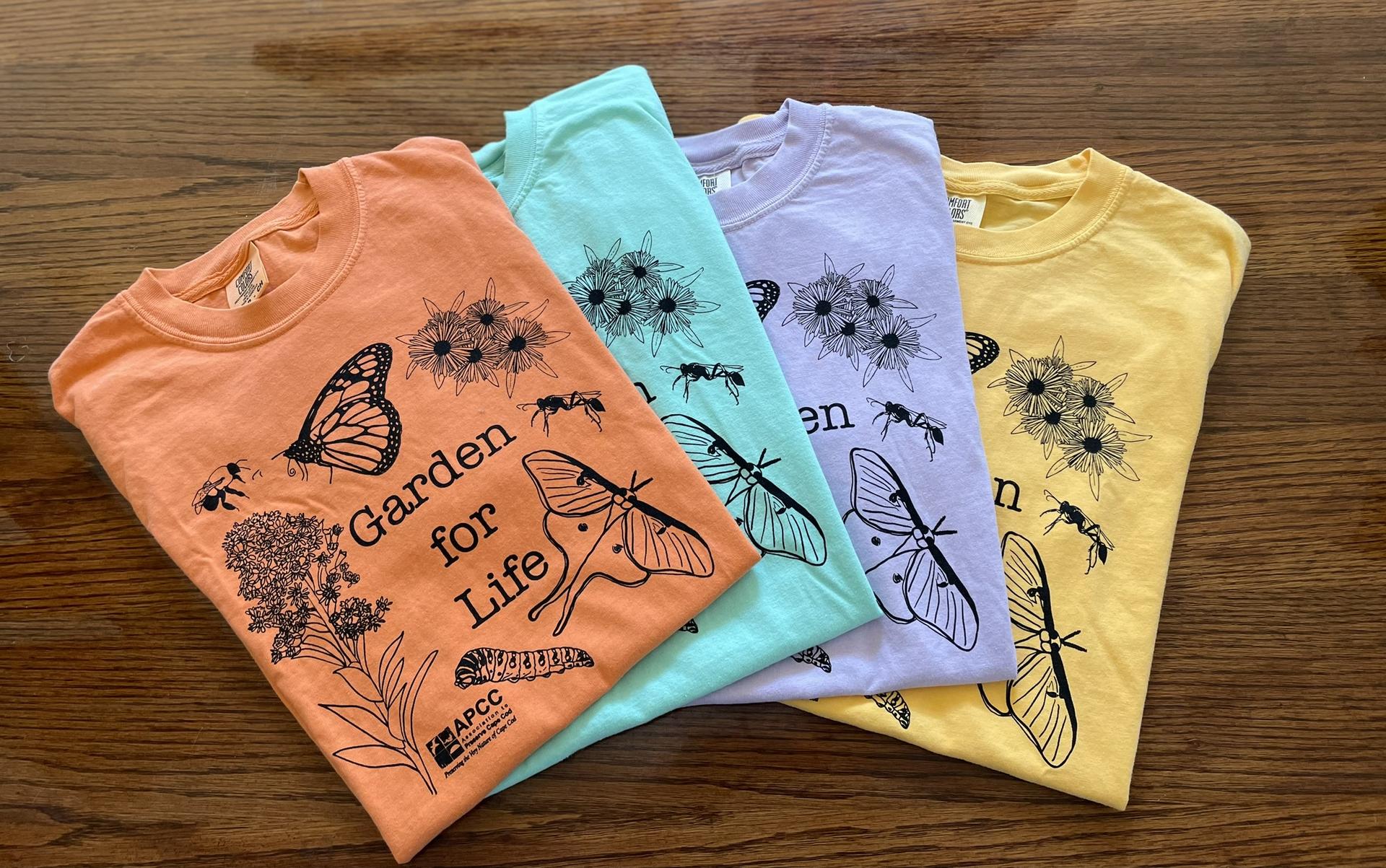
Garden for Life T's $30 -includes USPS delivery in U.S. |
|
|
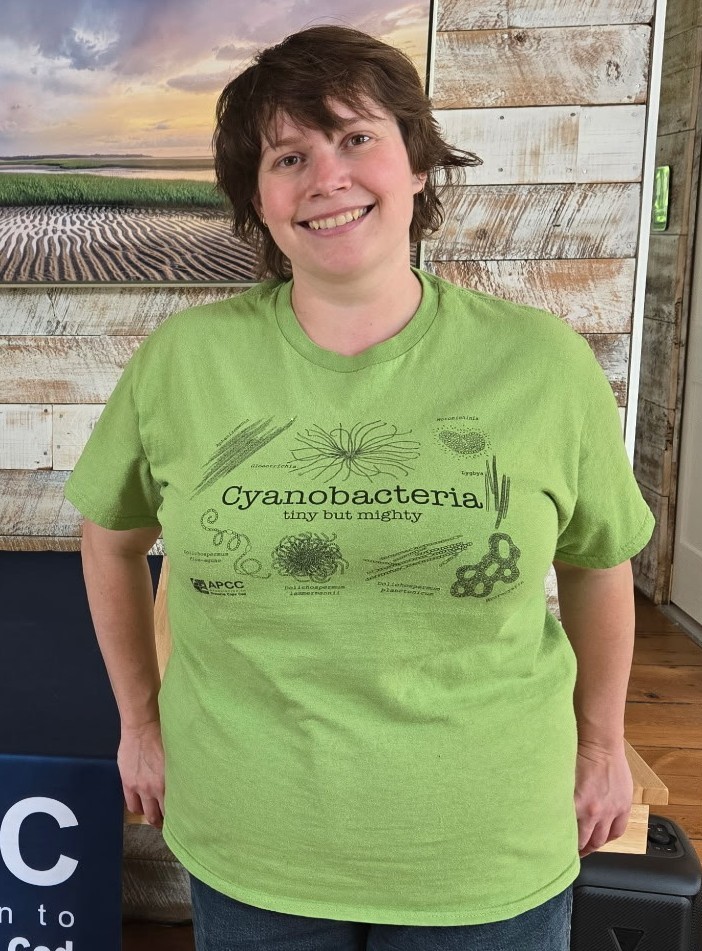
Cyanobacteria ~ tiny but mighty color kiwi $30 -includes USPS delivery in the U.S. |
|
|
|
|
APCC eNewsletters Our weekly newsletters are archived on our website and easily shared.
You can find past newsletters and share with your friends. Encourage others to sign up for future enewsletters HERE.
|
|
|
|
Are you thinking of going solar? We hope so! In partnership with E2 SOLAR in Dennis, APCC receives $500 for every solar installation when APCC is named as referral. |
|
|
|
| Thank you to the homeowners who just contracted to install solar panels through E2 Solar. May the sun always shine for you! |
|
|
|
Expressions Gallery, 578 Main Street, Chatham
CLICK HERE |
Expressions Gallery donates 20 percent of its profits to APCC's work. |
|
|
|
Thank you to our business sponsors! |
|
|
|
APCC is rated four stars by Charity Navigator,
2026 Platinum by Candid (formerly Guidestar). |
|
|
|
Our Contact Information
*{{Organization Name}}*
*{{Organization Address}}*
*{{Organization Phone}}*
*{{Organization Website}}*
*{{Unsubscribe}}* |
|
| |
|
|