Association to Preserve Cape Cod |
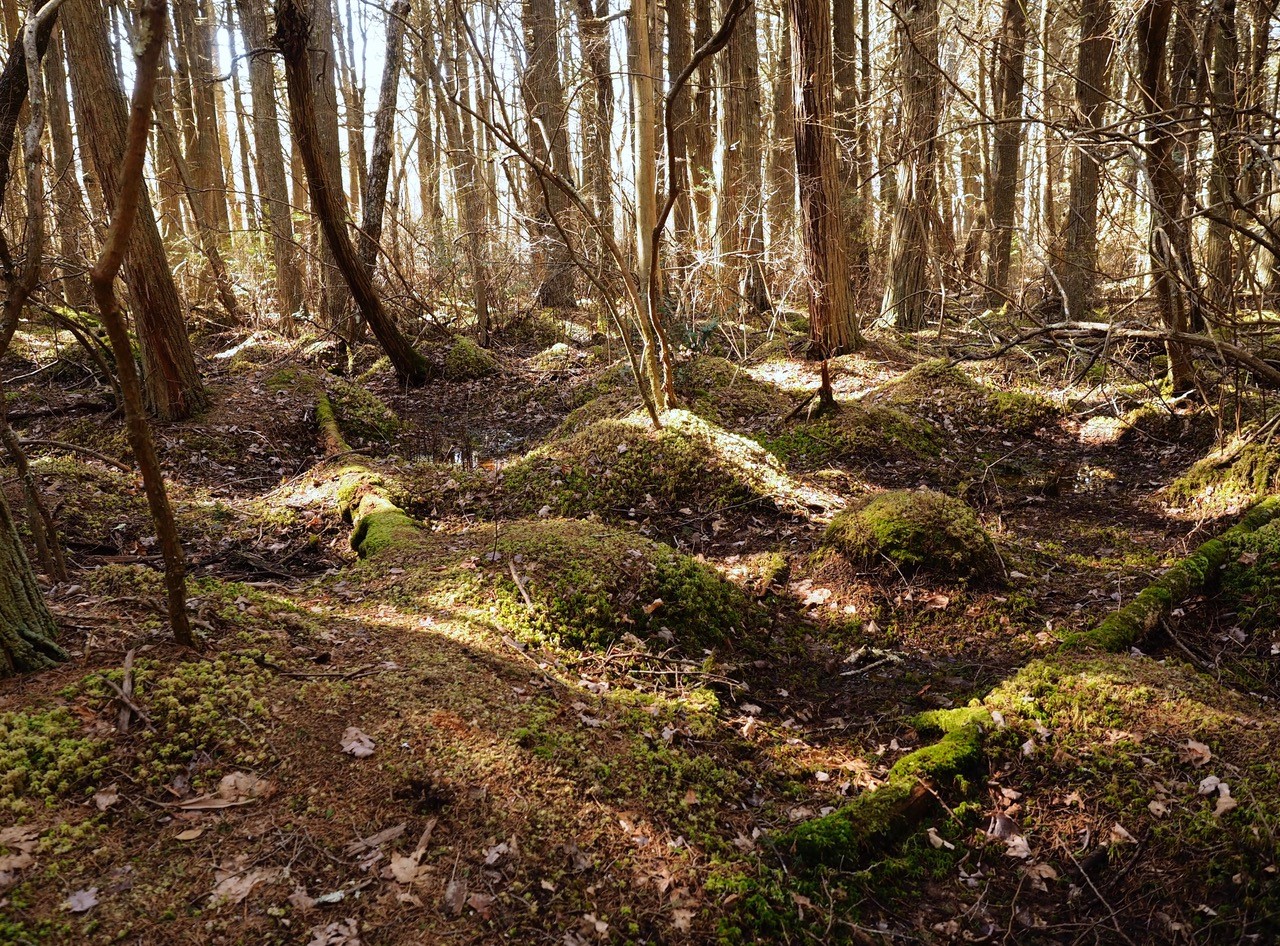
Above: Atlantic white cedar swamp, Wellfleet. Photo by Sue Machie | |
|
| Will You or Won't You
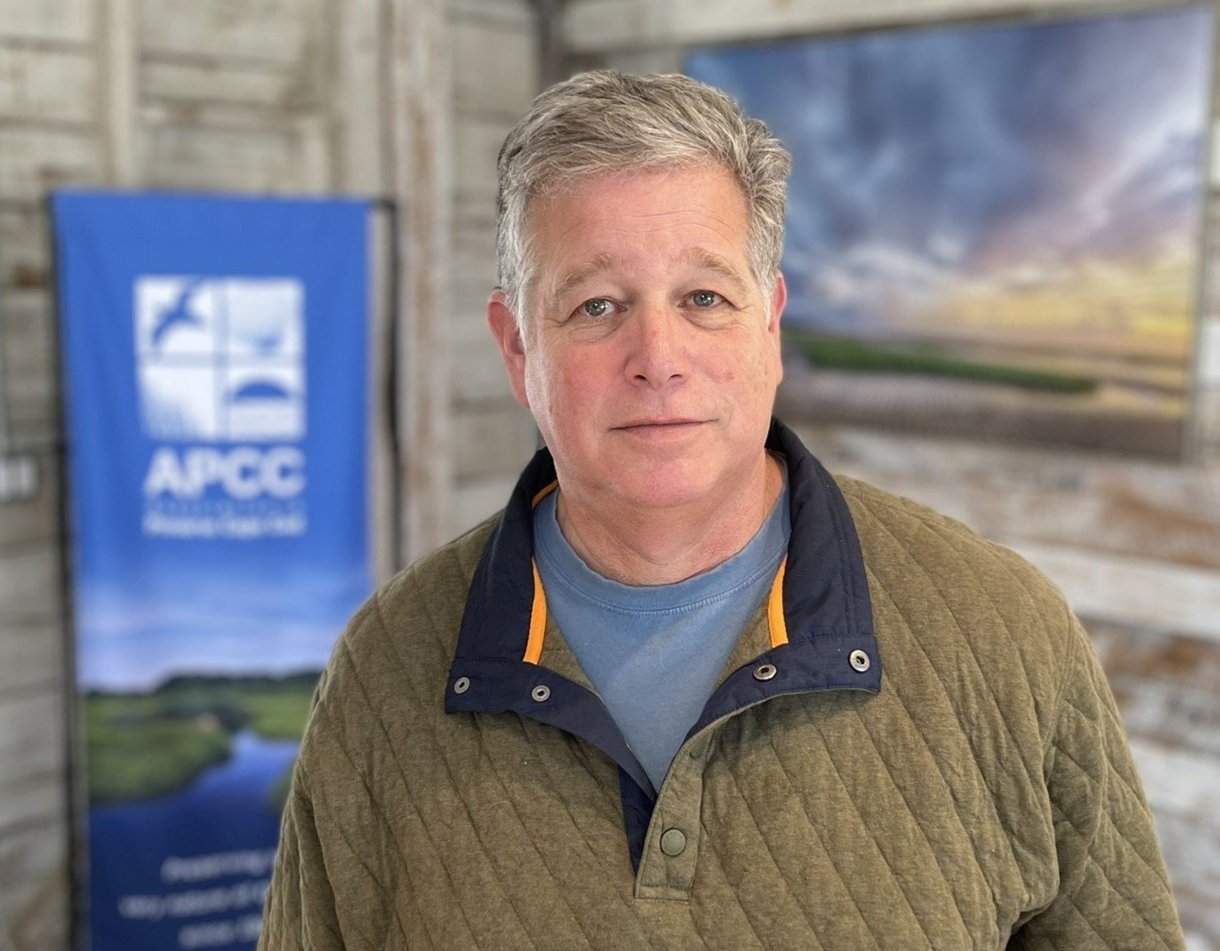
by Andrew Gottlieb, Executive Director |
|
|
This was written on a flight to see friends, family, and a concert (frequent readers can probably guess the show). High above the ground I find myself grateful for all the people who made systems, ones I don’t think about much and probably wouldn’t understand if I did, work to make this trip safe. We all take for granted much of what we experience daily, from travel to the delivery of goods, the availability of food, and just having the lights on. It all results from people doing the things needed to make systems work.
Someone thinks about the details that keep society moving and it is because of the accumulation of those someones that we live the life that we do. The delivery of public services, especially environmental protection, is an example of something most of us value—who doesn’t want clean air, clean water, and unpolluted lands?—but about which few of us pay attention to until there is a problem.
Nothing good happens by accident, and that is especially true for environmental protection. It takes thought, time, effort and conviction to purchase and protect land, to devise and fund proper wastewater management, to protect current and future water supplies and to restore damaged and degraded waterways and wetlands. If we want a better world, it requires that each of us do more to make the system of environmental protection and restoration work better than it does now.
None of what we all hope to achieve in protecting additional priority lands from development or improving degraded water quality will happen because the system runs on auto pilot and will do it for us. In fact, the opposite is true; neglect and complacency lead to the rise and dominance of systems designed and implemented by those who prioritize private gain over public good. The choice is, as it always has been, ours to commit to the hard work of protecting an environment that benefits us all. The alternative is stepping aside and letting it all go away. This isn’t new, it just feels a whole lot more pressing in today’s world. If you are reading this, the good people charged with landing this plane made the aviation system work for me. Now it’s time to get back to collectively doing the good work needed to protect Cape Cod. |
Ecosystem Restoration Program |
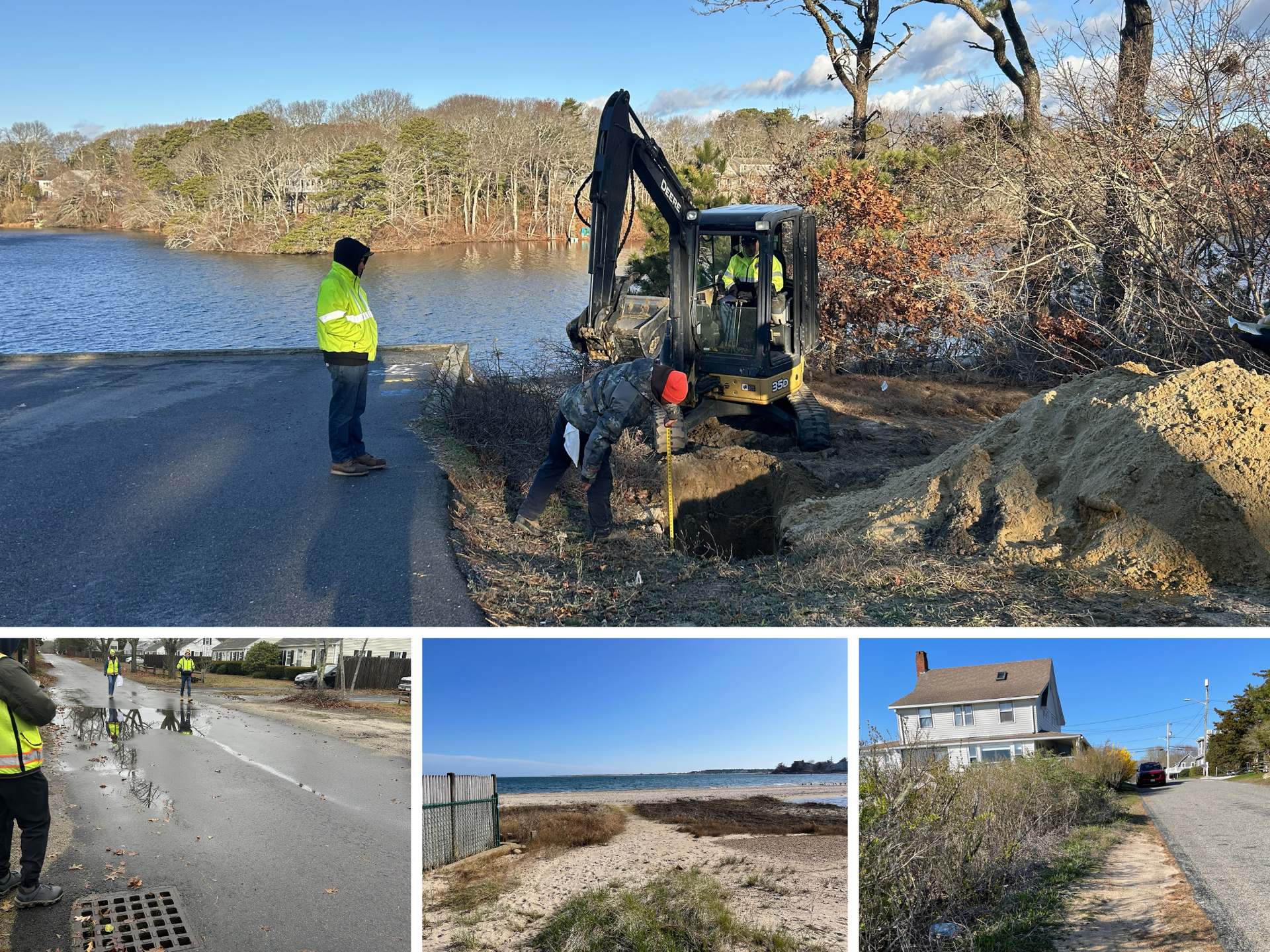
Above: Fieldwork in action (counter clockwise from top) - Wings Grove test pits, the Old Main Street site visit last December, Lewis Bay and Grove Street site conditions. Photo credit: Gerald Beetham |
Advancing Stormwater Solutions across Yarmouth
The town of Yarmouth, in partnership with APCC and the Horsley Witten Group, continues to build on its commitment to improving coastal water quality through a new phase of stormwater projects at Grove Street, Wings Grove Beach, and Old Main Street. These projects target priority areas identified through a 2023 assessment, focusing on locations where untreated runoff has a direct impact on coastal embayments and surface waters. By addressing these sources, the town aims to reduce harmful pollutants that degrade water quality, such as nitrogen, phosphorus, bacteria, and sediments.
Beyond improving water quality, these projects are designed to support healthier ecosystems and enhance recreational opportunities. Cleaner water helps restore habitat for shellfish, diadromous fish, and other wildlife, while also making local waters safer and more enjoyable for activities like swimming, fishing, and shellfishing.
Each site reflects a tailored approach using green stormwater infrastructure and low-impact design. At Grove Street, construction of a bioretention area at road end will directly reduce pollutant loading to Hyannis Inner Harbor and increase resilience to coastal flooding. At Wings Grove Beach on Long Pond, improvements to existing infrastructure along with a new bioretention system will help address nutrient inputs that contribute to harmful cyanobacteria blooms and beach closures while supporting clean water for the Parkers River herring run.
Along Old Main Street, recent sewer infrastructure improvements have created an opportunity to integrate green stormwater features into the streetscape. Proposed enhancements include tree trenches and bioretention areas that will capture and treat runoff before it reaches Bass River. These features will not only improve water quality but also help reduce roadway heat and enhance neighborhood aesthetics. As design and construction progress over the coming years, these efforts will continue to deliver measurable environmental benefits while supporting the health, resilience, and quality of life of the Yarmouth community. This work is funded by a MA Office of Coastal Zone Management Coastal Habitat and Water Quality Grant awarded to the town. |
Herring Monitoring Program |
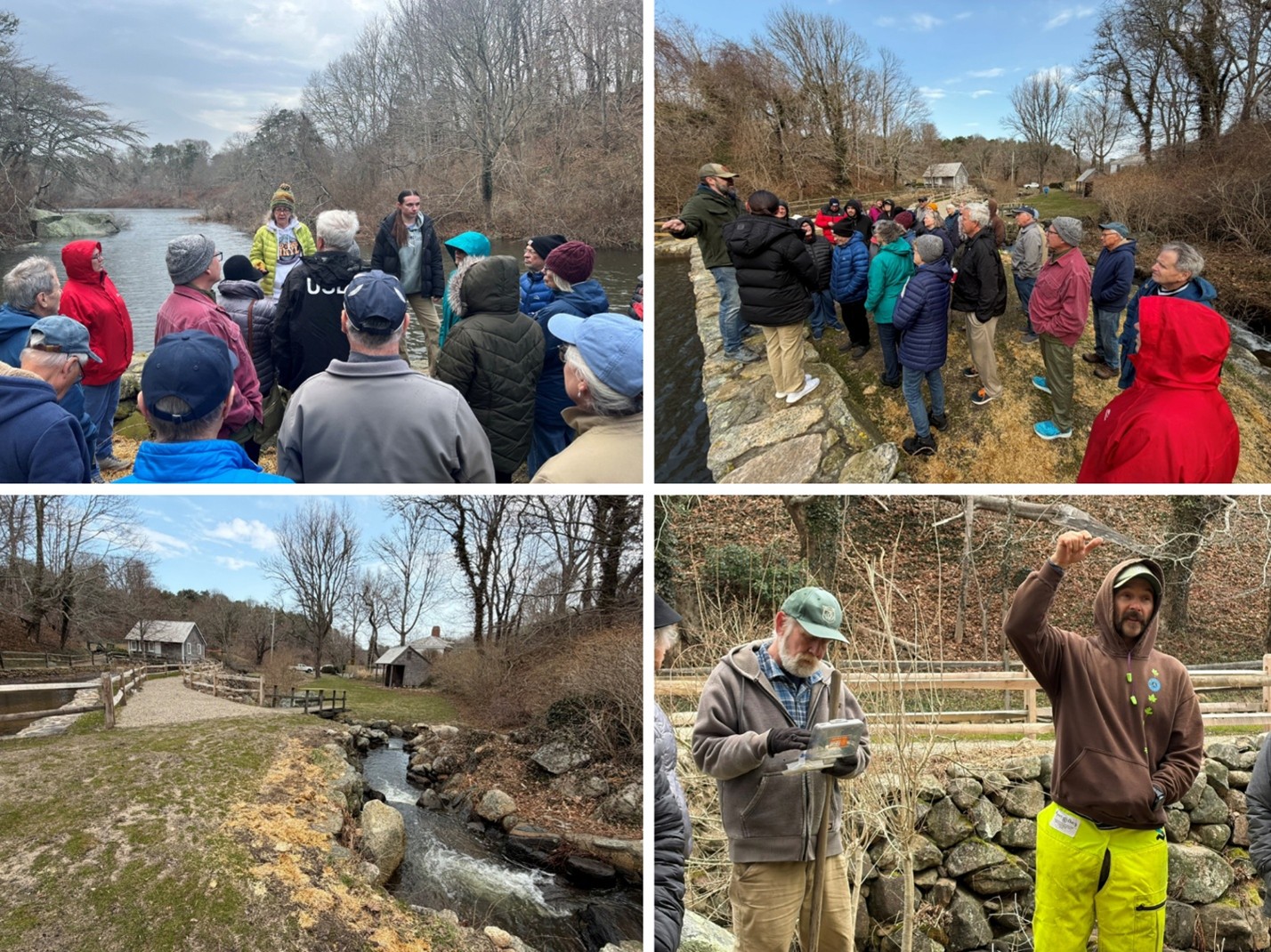
Above: Clockwise from top left - volunteers receive an overview of the river herring count process from Dee Marsh, APCC volunteer coordinator, and Hannah Brown, APCC Stony Brook river herring run coordinator; Mike Palmer, Cape Cod River Herring Monitoring Program manager, answers questions about sampling; Brewster Herring Warden Doug Erickson and Brewster Natural Resource Officer Ryan Burch; the restored Stony Brook river herring run.
|
Kicking Off the 2026 Herring Season at Stony Brook in Brewster
This past week, we gathered at the newly restored Stony Brook Grist Mill fishway in Brewster for our annual in-person river herring count training. The turnout was incredible! Hosted by APCC with support from the Town of Brewster, the event brought together returning volunteers, new recruits, and partners, all ready to take part in a true rite of spring and one of Cape Cod’s most important community science efforts.
The setting itself made the event especially meaningful. The Stony Brook Mill Site Retaining Wall and Fish Passage Project has transformed this historic location, improving fish passage while stabilizing critical infrastructure around the iconic grist mill. The project replaced aging and failing structures with a modernized fishway designed to better support migrating river herring and other aquatic species. By restoring connectivity between upstream spawning habitat and downstream coastal waters, the project represents a major investment in the long-term health of the Stony Brook system and the fish populations that depend on it.
Against this backdrop, volunteers received an overview of the counting protocol, learned how to identify river herring, and discussed the importance of consistent, high-quality data collection. These volunteer counts form the backbone of our understanding of herring runs across Cape Cod, informing management decisions, tracking trends over time, and helping to guide future restoration efforts.
We were especially excited to welcome support this year from AmeriCorps Cape Cod members, who are helping to fill critical gaps in our volunteer schedule at Stony Brook. Their involvement strengthens the program’s capacity and ensures more consistent coverage across monitoring sites during the peak of the run.
While April 1 marks the official start of the volunteer counting season, the fish aren’t waiting. River herring have already been observed across the Cape, including in Harwich, Mashpee, Brewster, Wellfleet, and Yarmouth. As water temperatures rise and conditions align, more fish will continue to arrive in the coming weeks, moving steadily from south to north along the Cape.
Early-season observations are already being entered into our online data system, and we are grateful to the volunteers who have been out there documenting these first signs of the run. These early data points help set the stage for the season ahead and offer an encouraging glimpse of what’s to come. Stay abreast of the progression of the migration using our River Herring Monitoring Dashboard.
There is still time to get involved. Whether you can commit to a regular shift or help fill in when needed, volunteers play a vital role in making this program successful. If you’re interested in joining the effort, you can sign up here. Stony Brook is a strong reminder of what makes this program work: dedicated volunteers, strong partnerships, and a shared commitment to restoring and protecting Cape Cod’s coastal ecosystems. |
Awakening Ponds
Pond life awakens in spring as rising water temperatures (55-65°F / 12-18°C) activate dormant plants, animals, and microorganisms. This period is marked by a surge in activity with amphibians returning to breed, insects emerging, and plants beginning to grow after the winter lull.
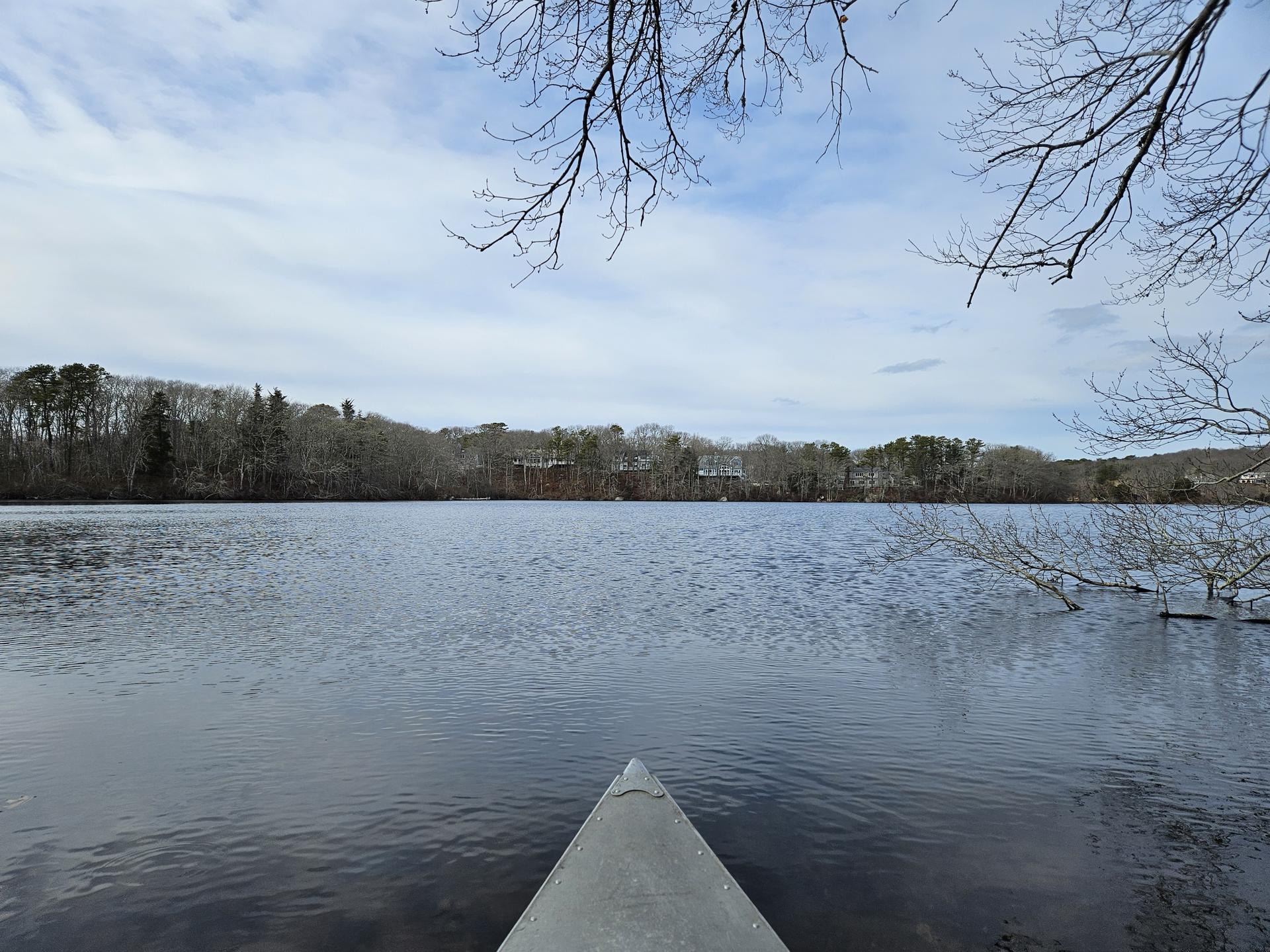
On Cape Cod, the ice has melted. Pond water temperatures are rising—averaging between six and seven degrees Centigrade or about 44 degrees Fahrenheit—so it’s a bit early for the surge, but some ponds have begun to warm at the surface and stratify. John's Pond in Mashpee has already stratified between four and five meters below the surface. With temperatures rising it’s time to begin watching for turtles awaking from brumation, their winter rest. What will be the first signs of spring you notice at your favorite pond? |
Feeding the Early Bugs: The Importance of Early Flowering Trees and Shrubs
As temperatures warm and the ground thaws, many of us have started to notice the first signs of life emerging from our soils. Flies, ants, bees, and other pollinators emerge from their winter homes, which could be in underground burrows, tucked within fallen leaves, or bored inside hollow stems. Wherever they may have camped out for the winter, it is now time to start the season anew. But this early emergence also asks the question, what exactly are these insects feeding on?
Our earliest spring flowers, such as wild columbine (Aquilegia canadensis), mayflower (Epigaea repens), and wild geranium (Geranium maculatum), are still weeks away from blooming. Many of the non-natives in bloom, such as daffodils, tulips, and crocuses, offer little to no benefit to our native pollinators.
Often overlooked, but crucial resources to our native pollinators, are the Cape's native early flowering trees and shrubs. They are the backbone of the woodland ecosystem, which our early pollinators rely on for their first meal of the season. Providing pollinators with a wealth of early season opportunities sets them up for success for the rest of the season, as they gather food and prepare nesting sites for their next generation.
The following plants offer tremendous benefits to our early rising pollinators and nicely fill the early blooming gap that many of our landscapes face.
Red maple (Acer rubra) is first on our list as a vital early resource for pollinators. While many trees rely on the wind for pollination, red maples also employ insects to help out—which is exactly what our early pollinators need. Red maples begin to bloom in late March/early April, far before many of our spring wildflowers. These trees are tolerant of the Cape’s soils, but do generally prefer an average to moist soil, and full sun to part shade.
Tupelo or Black Gum (Nyssa sylvatica), another early flowering tree and known for its fall color across the Cape, has non-showy green flowers that provide pollinators sustenance throughout April and May. This tree likes wetter areas in the wild, but is a good slow-growing tree for the landscape that can handle full sun to part shade.
Spicebush (Lindera benzoin) is an early blooming shrub and also a critical host plant for the spicebush swallowtail butterfly. It does best in moist, shady areas, but handles sun and sandy soils just fine once established.
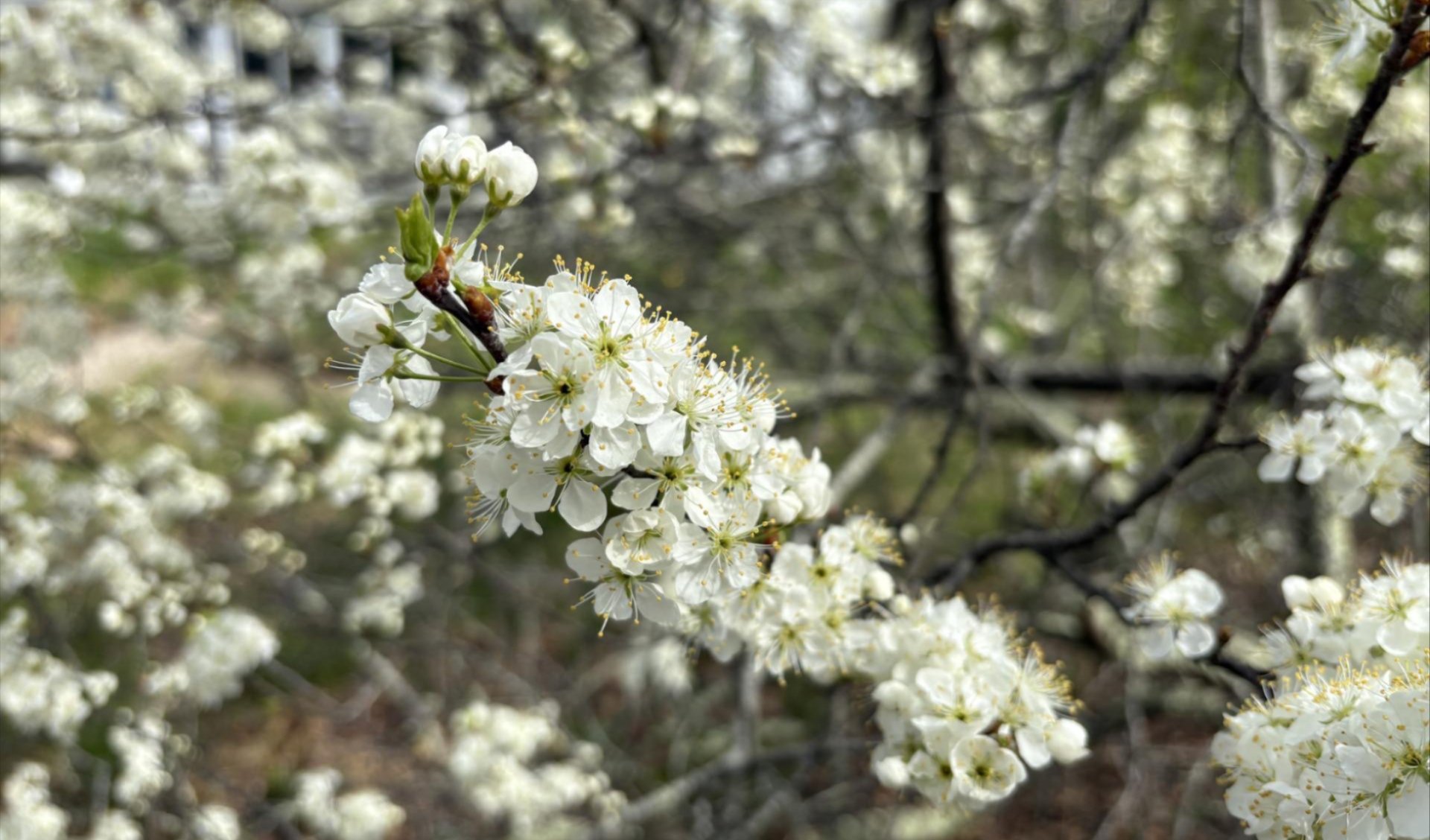
Serviceberry/Juneberry/Shadbush (Amelanchier canadensis) offers a showcase of white flowers in April and May and heralds the return of the herring as they move upstream to spawn. It is the white you see in our woodland edges. The delicious berries appear around June, hence the common name Juneberry, and birds quickly devour them. This shrub/small tree thrives in the poor sandy soils of the Cape and is happy in full sun or partial shade.
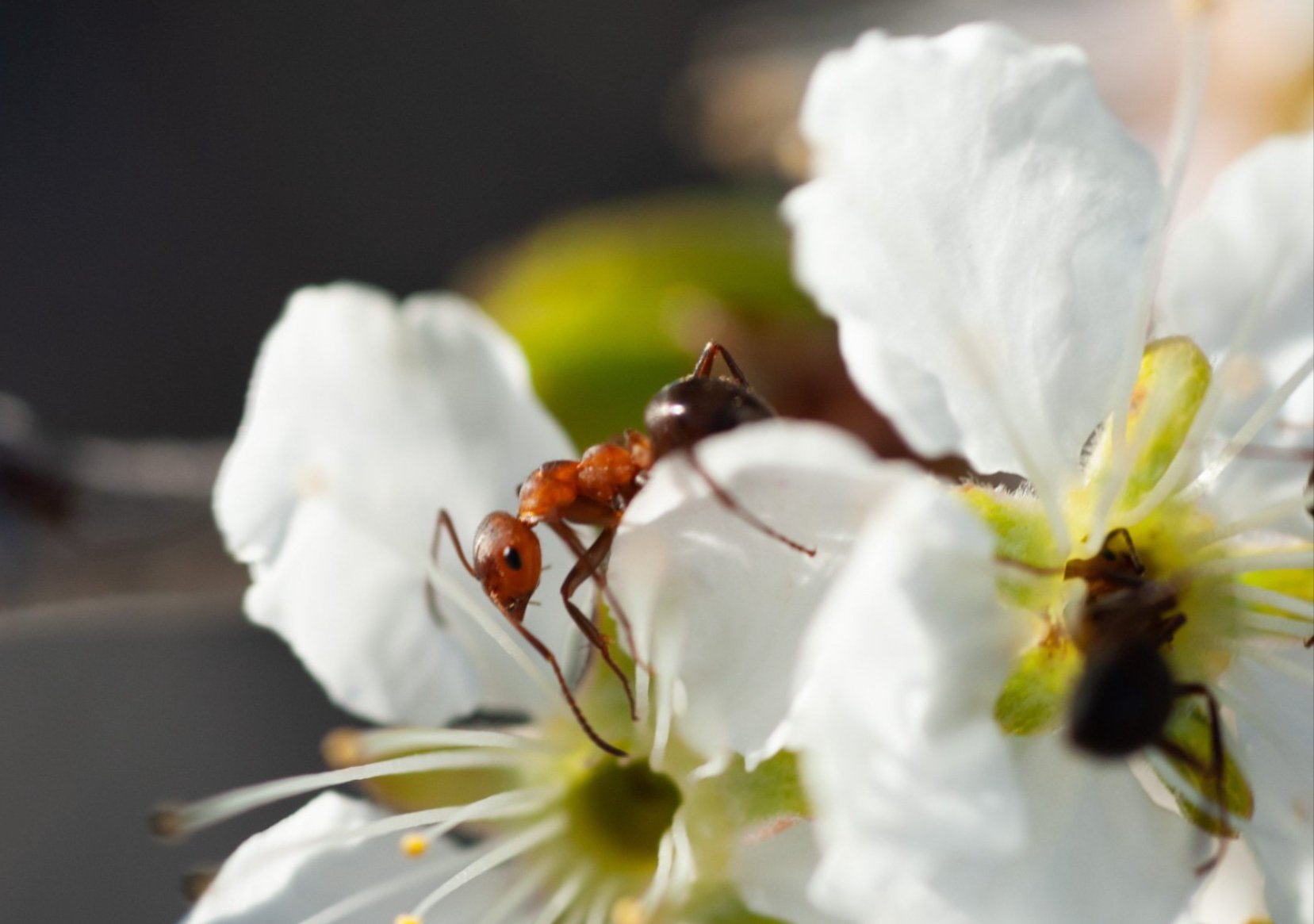
Beach plum (Prunus maritima)—the quintessential Cape Cod shrub! Similar to serviceberries, beach plums are often regarded for their tasty fruit, but their white flowers bring life to the dunes in April and May. Salt spray and drought tolerant, they should be planted in full sun and not crowded. Bayberry is its favorite partner. If you see ants on your beach plum, they are not pests, they are enjoying the nectar and offering an important pollination service!
Flowering dogwood (Benthamidia florida - formerly Cornus florida), is often seen as a purely aesthetic small tree, but its showy flowers provide valuable early nectar benefits later in May. The fascinating feature of these flowers is that the large showy “petals” are actually modified leaf structures, guiding insects into the dozens of tiny flowers found in the center of this fake flower structure.
|
Above: Wood ant on beach plum |
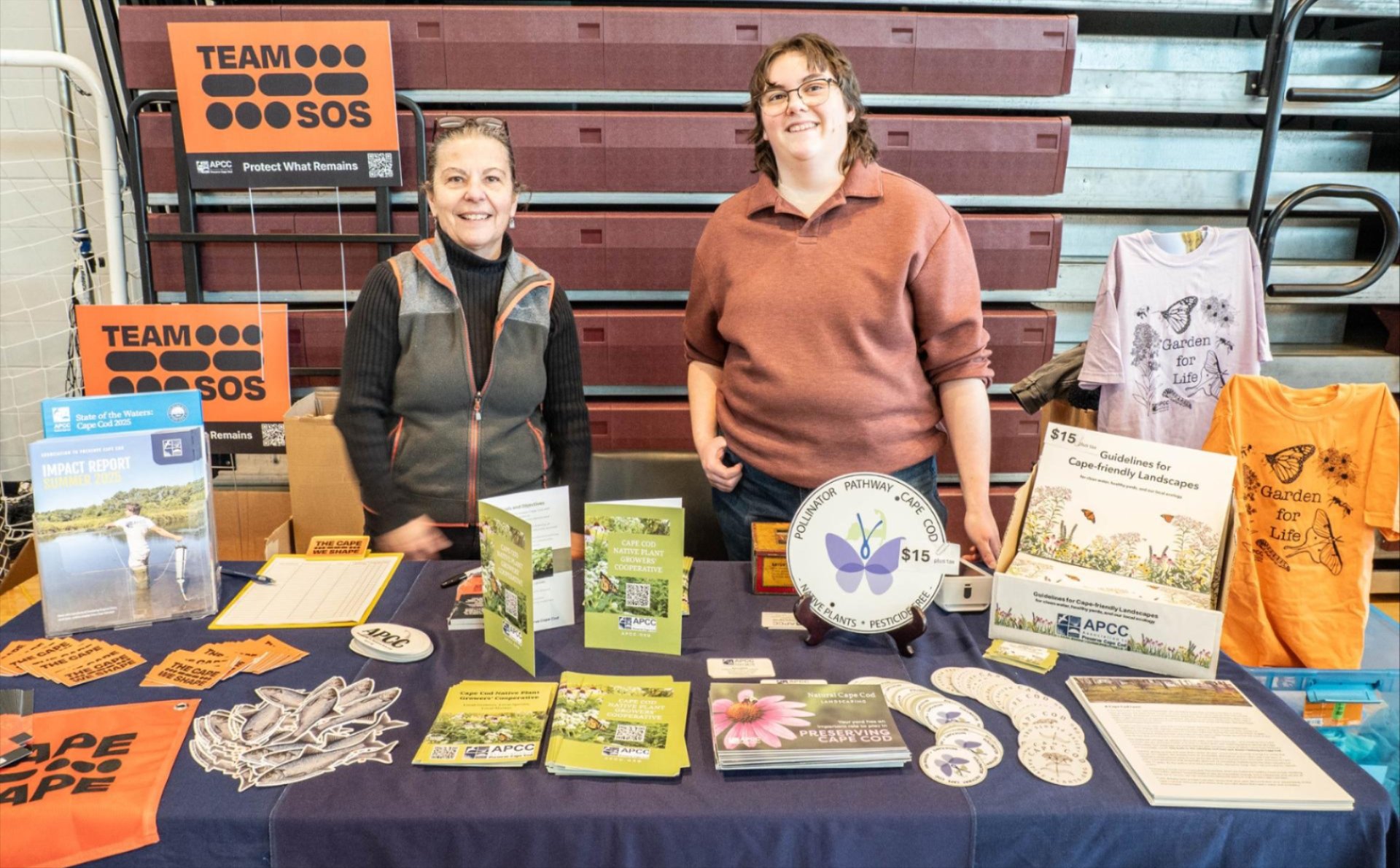
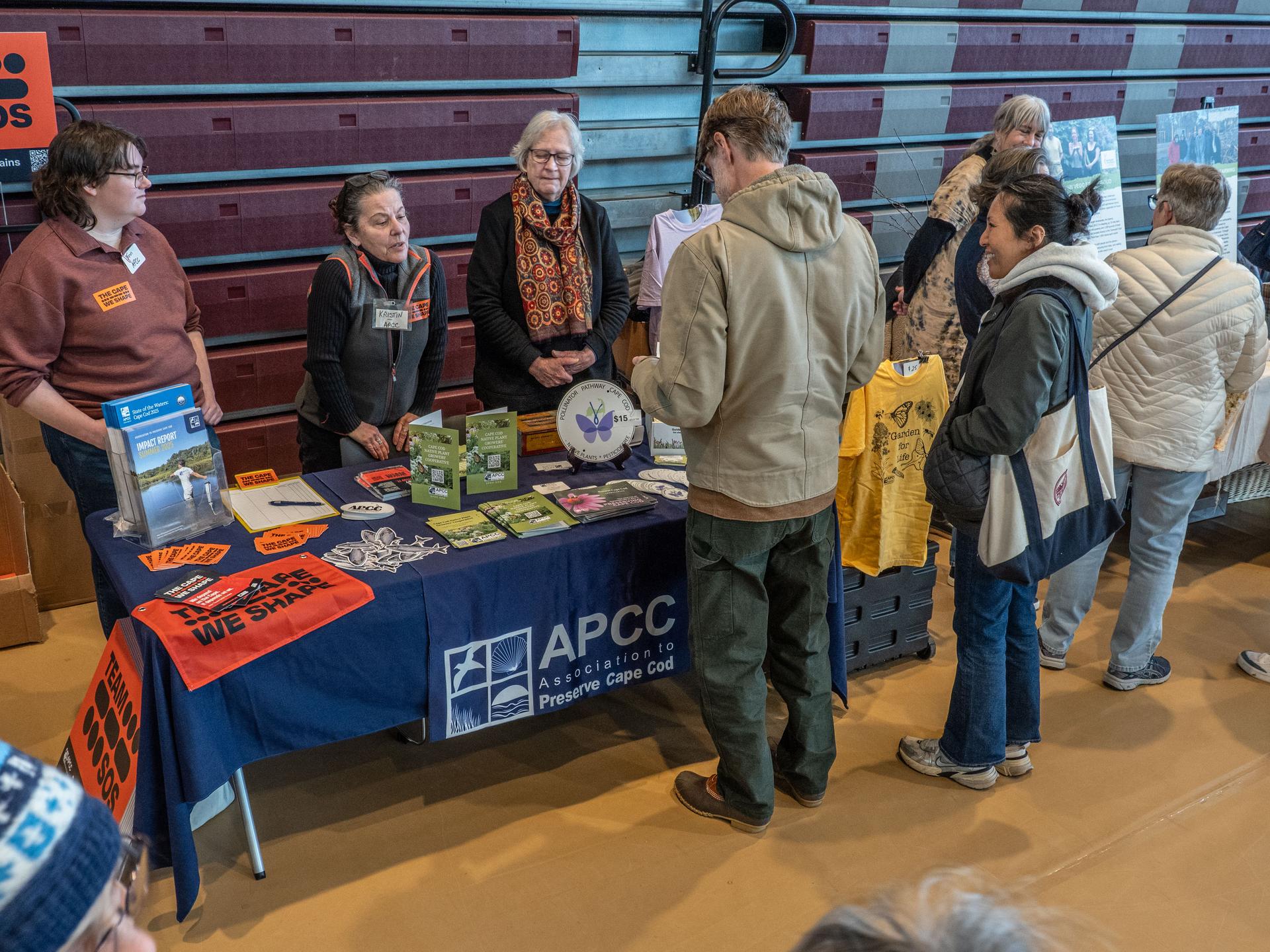
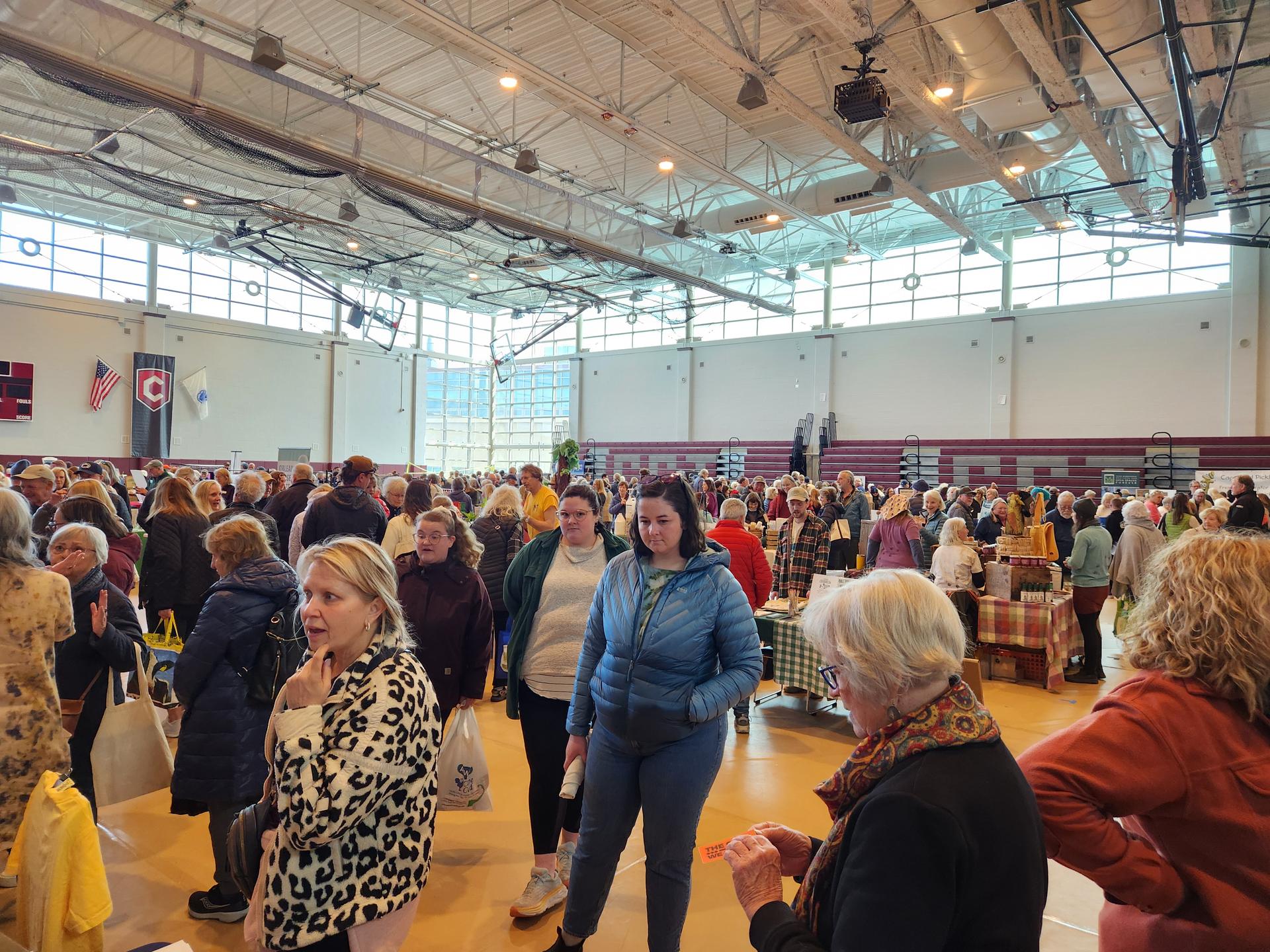
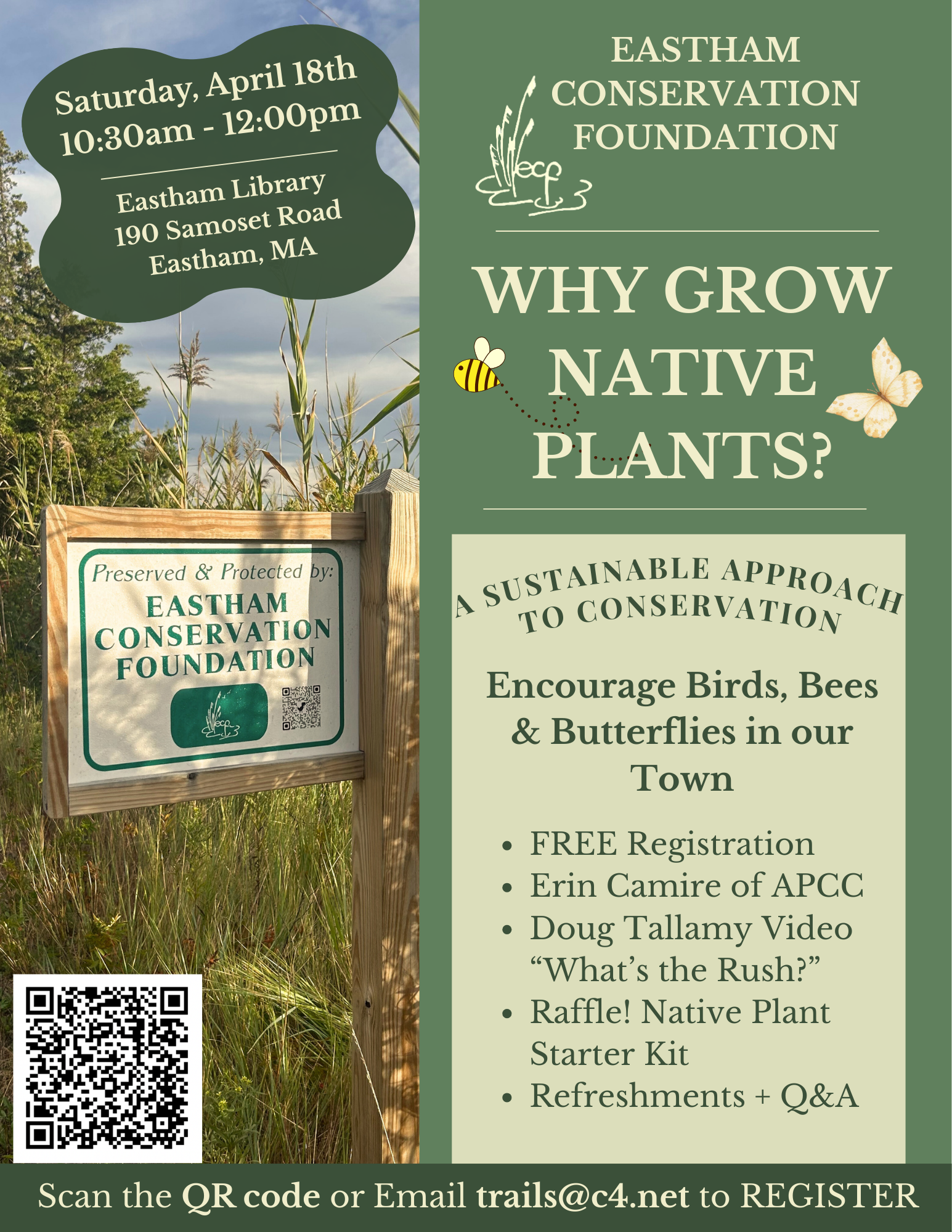
Last Saturday, APCC Education Director Kristin Andres and Ecolandscape Program Coordinator Erin Camire attended the "Meet Your Local Farmer" event at Cape Cod Regional Tech School in Harwich, hosted by Harwich Conservation Trust and Orleans Farmers' Market. Over 1,100 people attended—a wonderful community event! |
|
|
Learn more about The Cape We Shape campaign and sign up to be part of Team SOS to engage in efforts to permanently protect the last undeveloped acres that have been identified as priority natural resource areas.
As part of Team SOS, look for regular emails most Mondays to learn of news,
next steps, and how you can help. If you are NOT getting our Monday update emails, please let us know and we will ensure you do. Come pick up campaign signs, flags, handouts, stickers at APCC's office in Dennis: email TeamSOS@apcc.org to arrange day and time. We now have Team SOS t-shirts available for purchase at APCC's office. |
Attention Runners: Run the 2026 Falmouth Road Race for APCC |
|
|
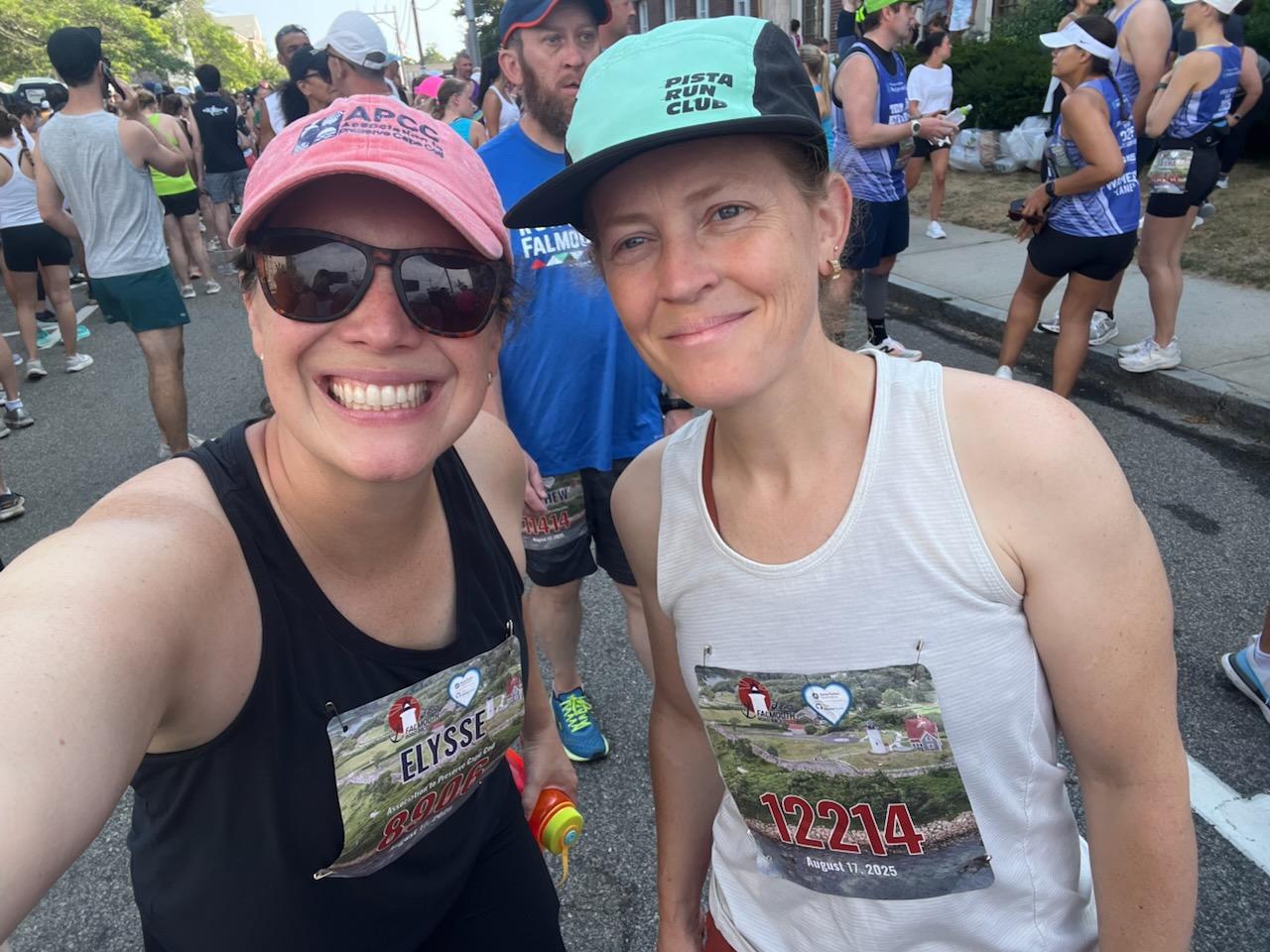
Above: Elysse Magnotto-Cleary, APCC president, and her friend Mary ran for APCC in 2025. |
|
APCC is thrilled to be a part of the "Numbers for Nonprofits" program for the 2026 Asics Falmouth Road Race, and we are currently accepting applications for this year's team. Team members will receive a guaranteed race entry, fundraising tips and tools, a fundraising web page, and support throughout the process. If you're interested in amplifying APCC's work in a fun and unique way,
please apply here.
Questions? Please reach out to runforapcc@gmail.com |
|
|
JOIN US! APCC VOLUNTEER KICKOFF SESSIONS
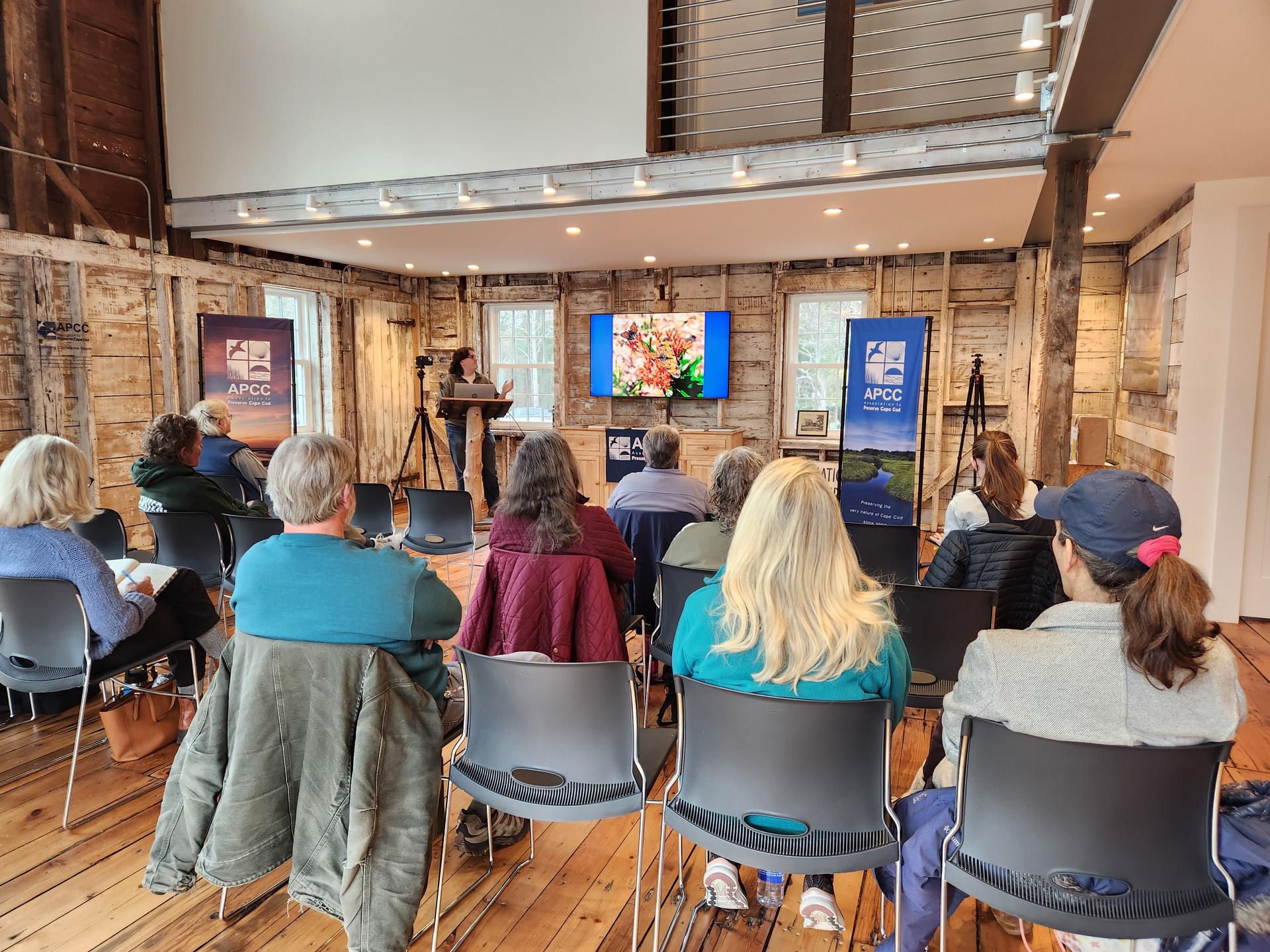
New and returning volunteers are invited to join us in person or on Zoom to learn about our 2026 volunteer program.
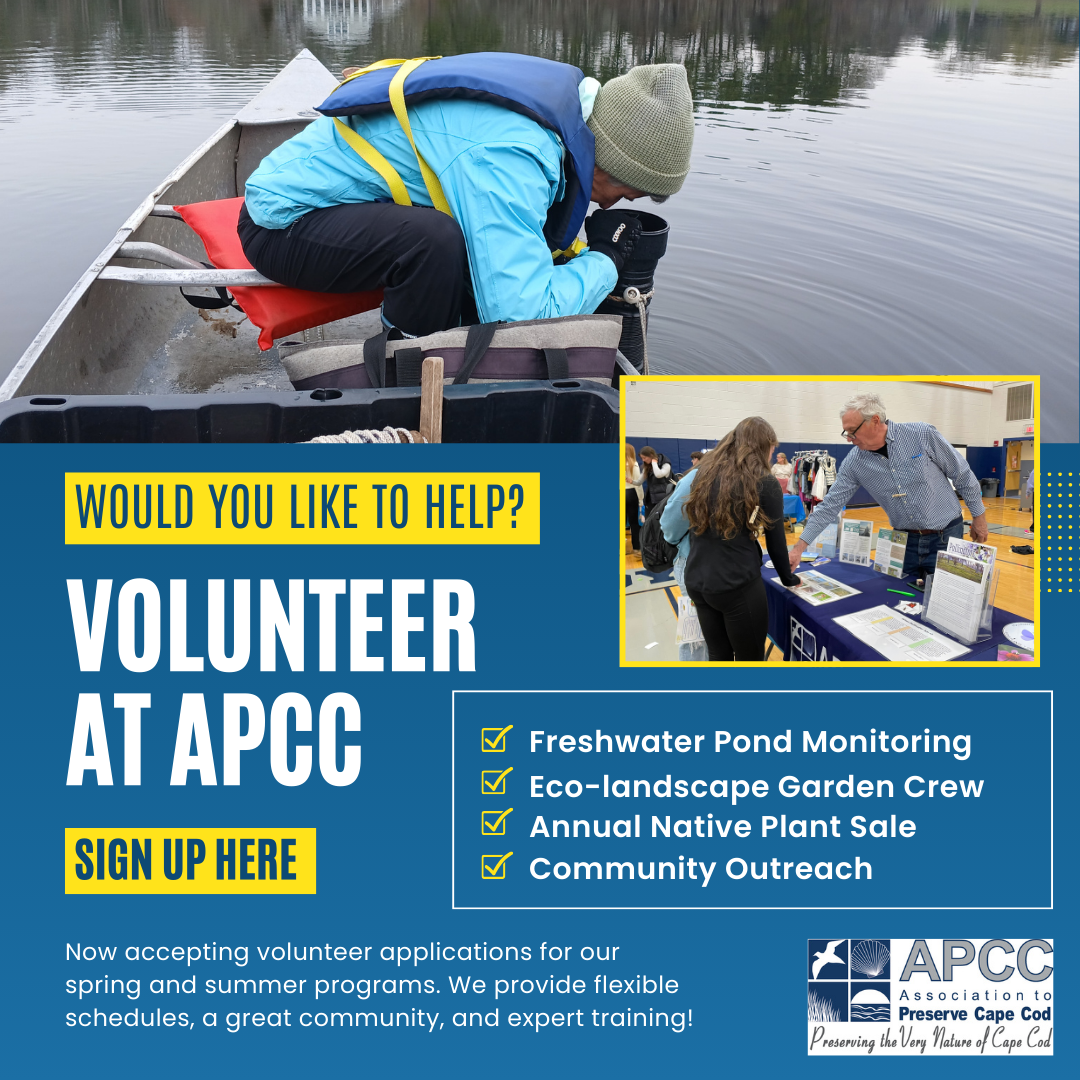
Opportunities for volunteers include our annual native plant sale, river herring monitoring, pond monitoring, eco-landscape garden crew work days, ecosystem restoration, outreach event support, and The Cape We Shape campaign support!
SIGN UP TO VOLUNTEER & SAVE THE DATES:
1st Annual Volunteer Open House! - Friday, April 3 from 1:00 p.m. to 3:00 p.m.
New and experienced volunteers are invited to meet APCC staff and learn more about what volunteers can do! APCC program staff tables will include the Cape Cod Regional Pond Monitoring Program, River Herring Monitoring, Ecolandscape Garden Crew and Annual Native Plant Sale, Ecosystem Restoration Program, Education and Outreach, and The Cape We Shape. Register to attend in-person here.
Annual Native Plant Sale Info Session - Monday, April 6 at 5:30 p.m.
New and existing volunteers are invited to kickoff APCC's annual native plant sale. Native Plant sale volunteers help with creating plant labels, repotting, and setting up and running our annual native plant sale. We will provide an overview of this year's event and how volunteers can sign up to help. Zoom registration here.
|
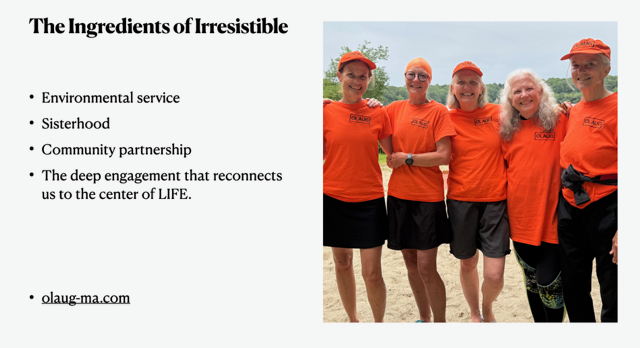
What Makes Helping the Planet Irresistible? with Susan Baur, founder of Old Ladies Against Underwater Garbage Friday, April 17, 2026 1:00- 2:30 p.m. At APCC's headquarters in the Koppel Center in Dennis and online via Zoom. Certain acts of environmental service break through into public awareness for a variety of reasons—the unusualness of the service itself, the unusualness of those performing it, or the unanticipated flood of emotions the action releases.
Susan will share with us what she knows about what makes diving for beer cans, golf balls, fishing lures, spent fireworks, and the occasional toilet or motorcycle—irresistible! |
|
|
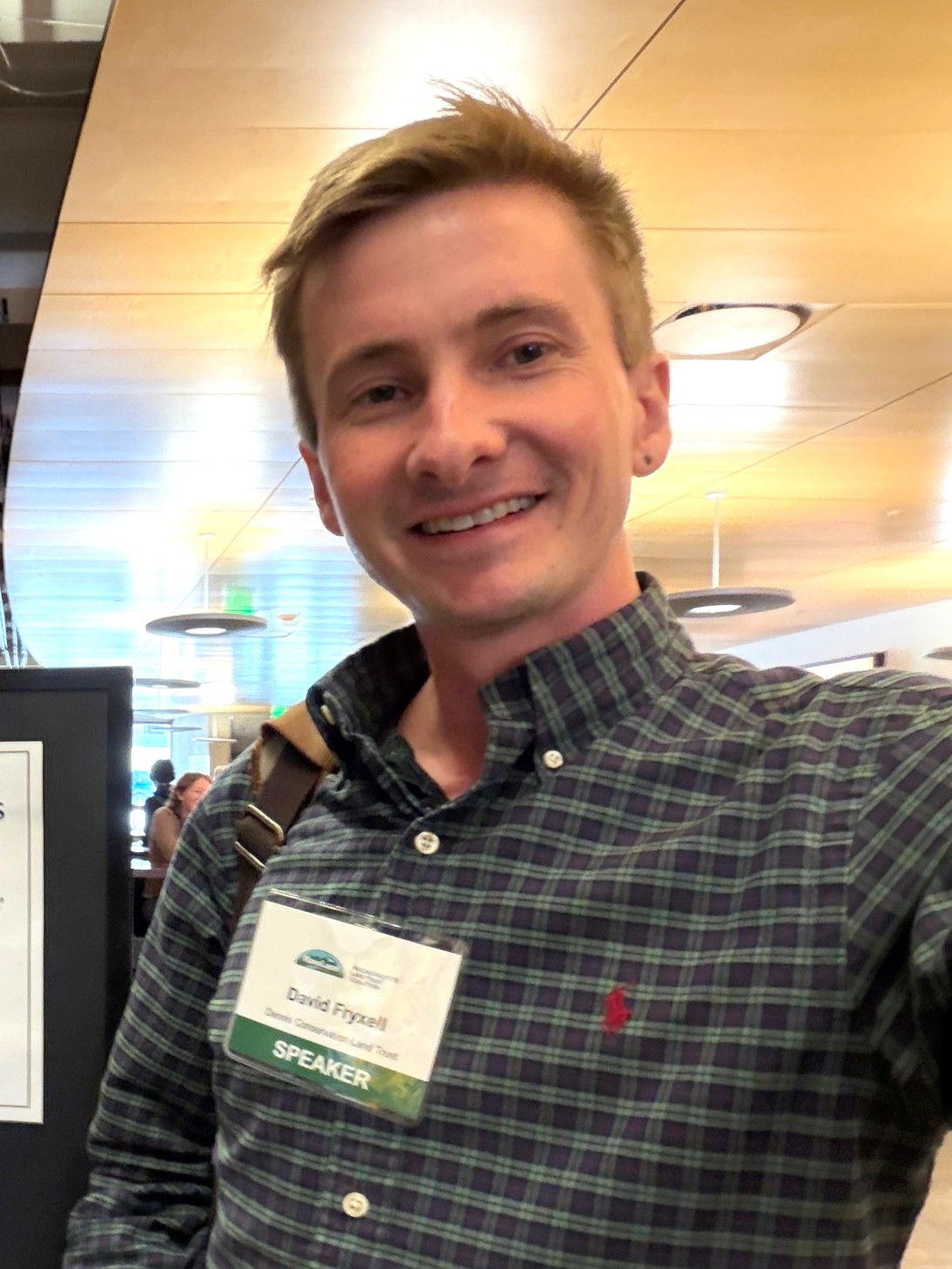
| Pond Ecology Matters: Biodiversity and Its Role in Pond Health with Dave Fryxell, Ph.D., Dennis Conservation Land Trust Executive Director |
Friday, May 1st 1:00 - 2:30 p.m.
At APCC's headquarters in the Koppel Center in Dennis and online via Zoom.
In this talk, Dave will explore how the plants, animals, and microscopic life within ponds shape their health, resilience, and function. Drawing on classic studies and compelling real-world, local examples, he will share stories that reveal how ponds both support and depend on the rich web of life they contain. Read more...
|
|
|
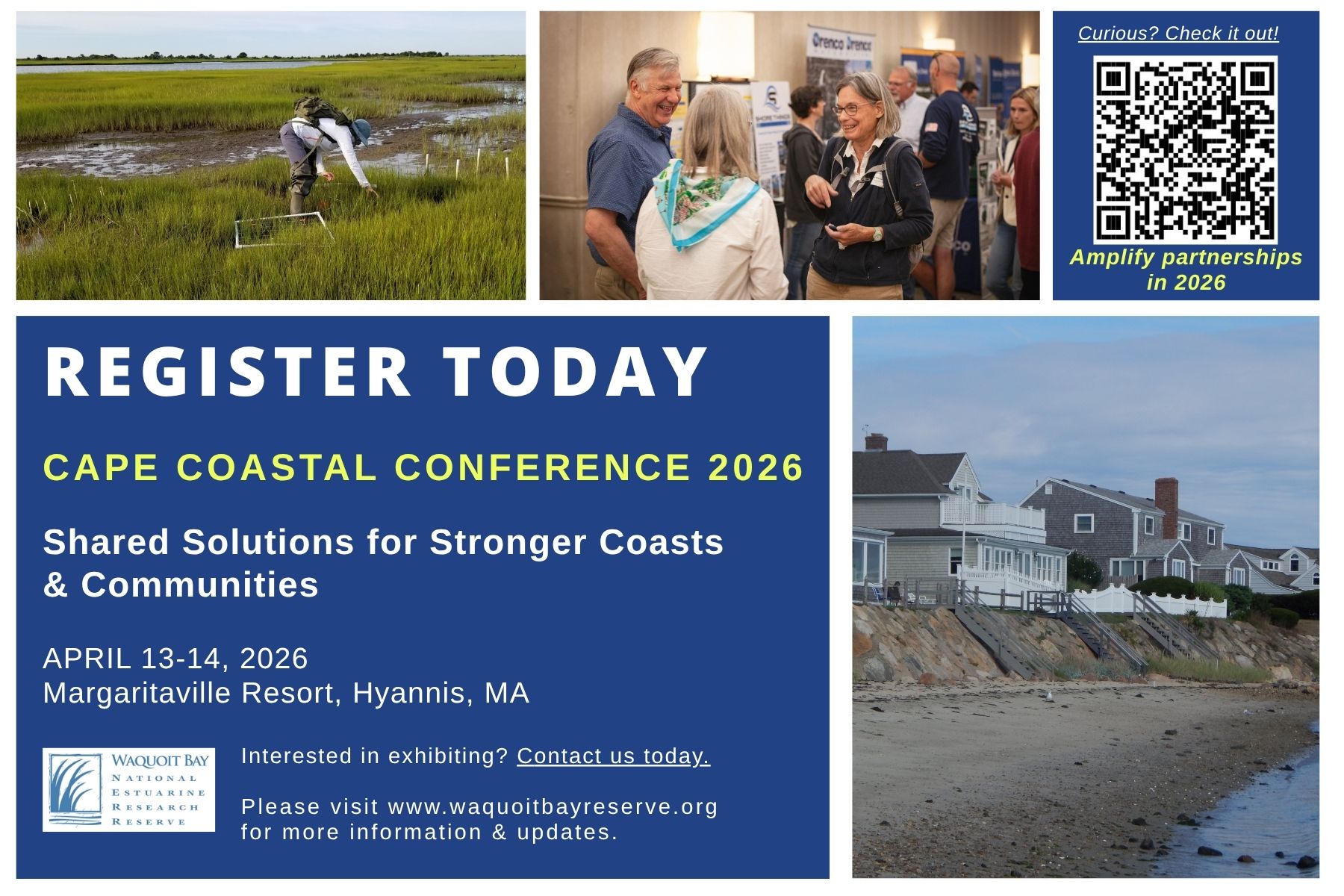
Coastal Conference Registration closes April 7th |
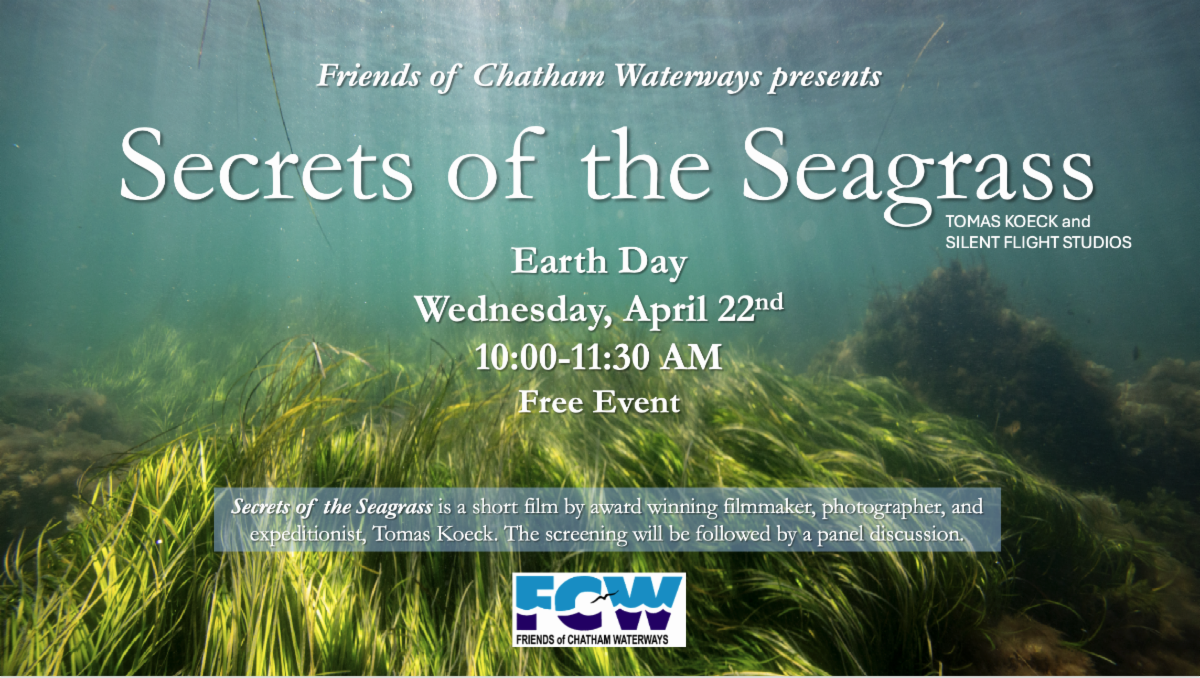
Celebrate Earth Day at the Chatham Orpheum theater where Friends of Chatham Waterwasy is hosting the showing of “Secrets of the Seagrass.” A discussion will follow with a notable panel, including the filmmaker, Tomas Koeck, Chatham’s director of natural resources, Greg Berman, and the director of both Seagrass Net and the Center for Coastal Studies’ Benthic Ecology Program, Dr. Agnes Mittermayr. |
A Cape-wide Conservation Event Calendar |
The Compact of Cape Cod Conservation Trusts (“the Compact”) and its nonprofit members launched a new regional calendar of events. The Conservation Calendar includes programs across Cape Cod hosted by these groups. The goal of the calendar is to encourage visitors and residents to take part in nature and environmental events. You can always find the link to the calendar on APCC's website under News & Events.
|
If you are a farmer or someone who wants to grow native plants to sell, or you just want to be updated on the program's development, please submit the interest form that appears on our webpage. We will be sending periodic email notices of workshops and meetings.
Funding for the project is provided by Barnstable County and its Economic Development Council License Plate Grant Program through the Cape Cod Commission, the Kelley Foundation and private donors. |
Ten talks for prospective growers as part of the Cape Cod Native Plant Growers' Cooperative program have been presented thus far, with more scheduled in the upcoming weeks. These past workshops can be viewed here: |
A Cape Cod Native Plant-selector ~ to help you choose the perfect native plants for your garden. |
|
|
Email kandres@apcc.org and we'll send you a CapeCodNativePlants.org decal. |
| |
|
The purpose of this site, CapeCodNativePlants.org is to help native plant enthusiasts select the right plant for the right place. While not all native plants presented here are indigenous to Cape Cod, they are suitable native species for Cape gardens and managed landscapes.
Why Native Plants? Many native plants are drought tolerant, salt tolerant, and thrive in the “thin” soils found on Cape Cod. Native plants are as attractive as any plant, and are reflective of the Cape’s natural beauty. By planting native species appropriate for Cape Cod, you can conserve water, avoid pesticide and fertilizer use, and support pollinators and birds.
|
|
|
|
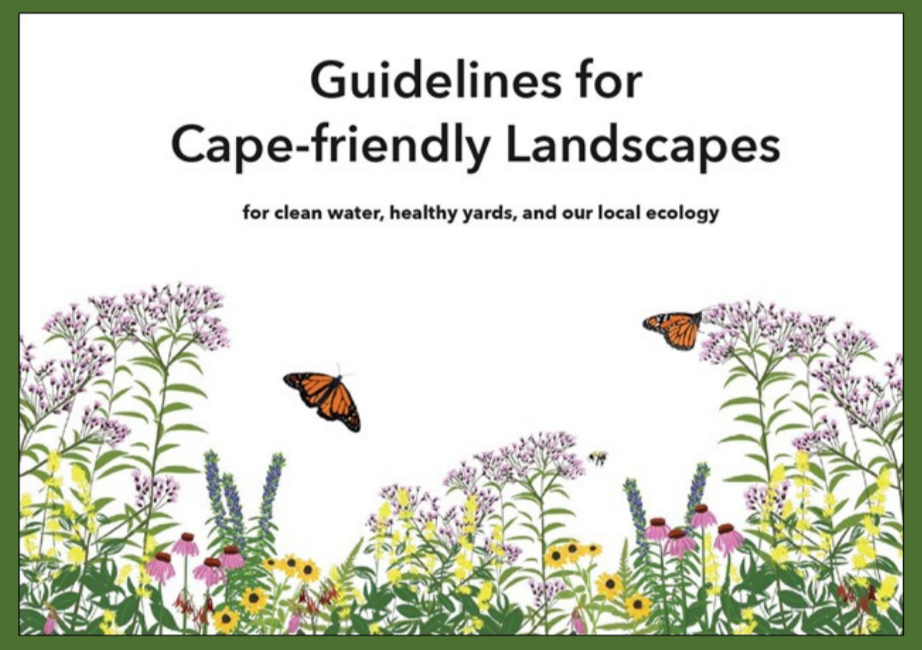
The Guidelines gives homeowners steps they can take in the design and maintenance of their properties that will support pollinators and birds, manage stormwater, conserve water, and protect the Cape's water quality. This 40-page booklet is beautifully illustrated by Marcy Ford with content that is easily digestible and supported by numerous resources for additional learning.
|
|
|
We are grateful for the several retail shops that are partnering with us to make this publication more widely available: Brewster Book Store, Birdwatchers General Store, Crocker Nurseries, Wellfleet Audubon Wildlife Sanctuary, Cape Abilities Farm, Cape Cod Museum of Natural History, the Cape Cod Lavender Farm, Heritage Museums and Gardens, Titcomb's Bookshop, Sea Howl Bookshop, Soares Flower Garden Nursery, and Eight Cousins Bookshop.
If you are a retailer and would like to sell this publication at your store, please contact us. |
|
|
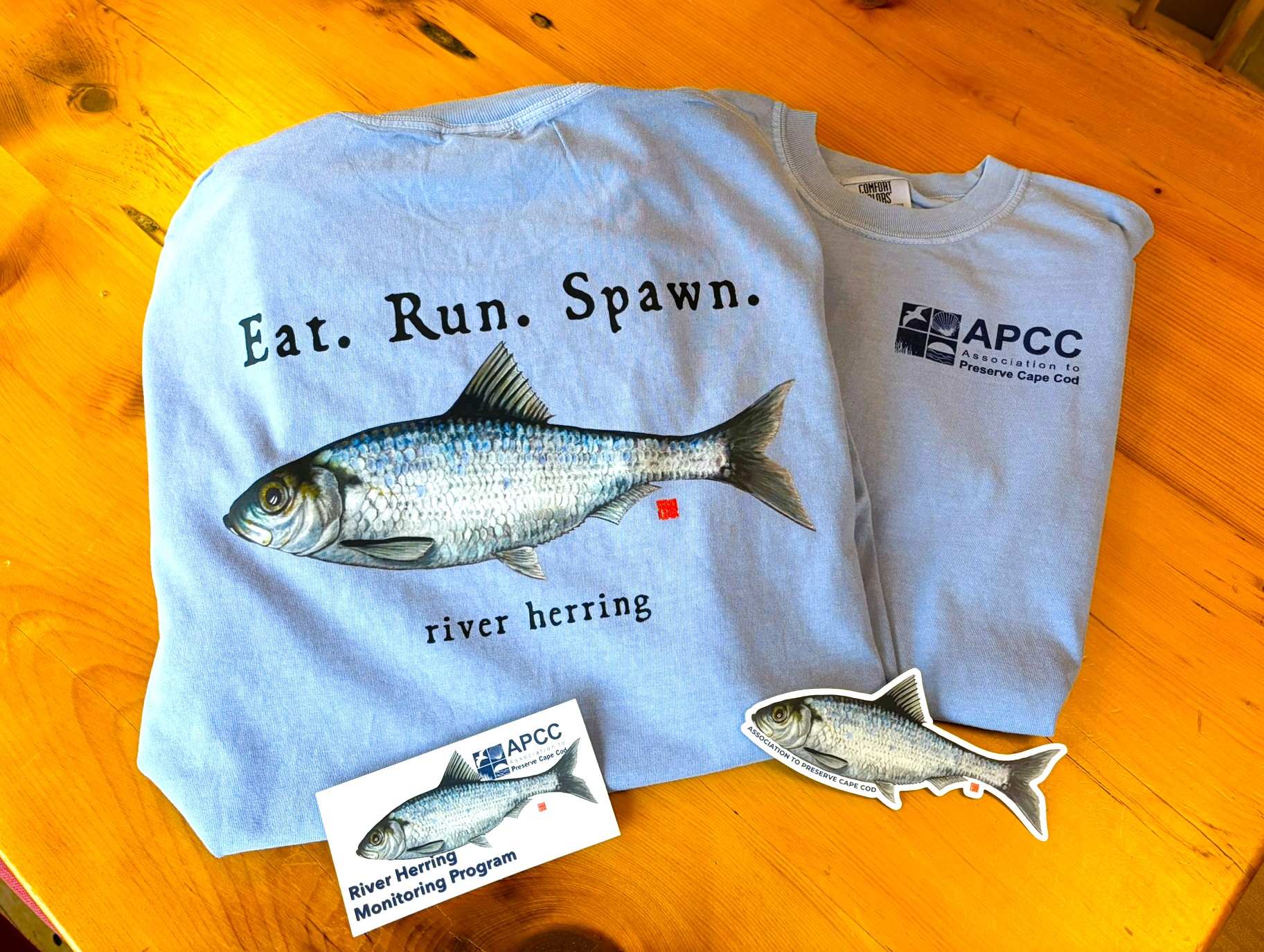
New Offering - Celebrate the Run! Herring T's color denim blue $30 - includes USPS delivery in the U.S. |
|
|
APCC caps $25
-includes USPS delivery in the U.S. |
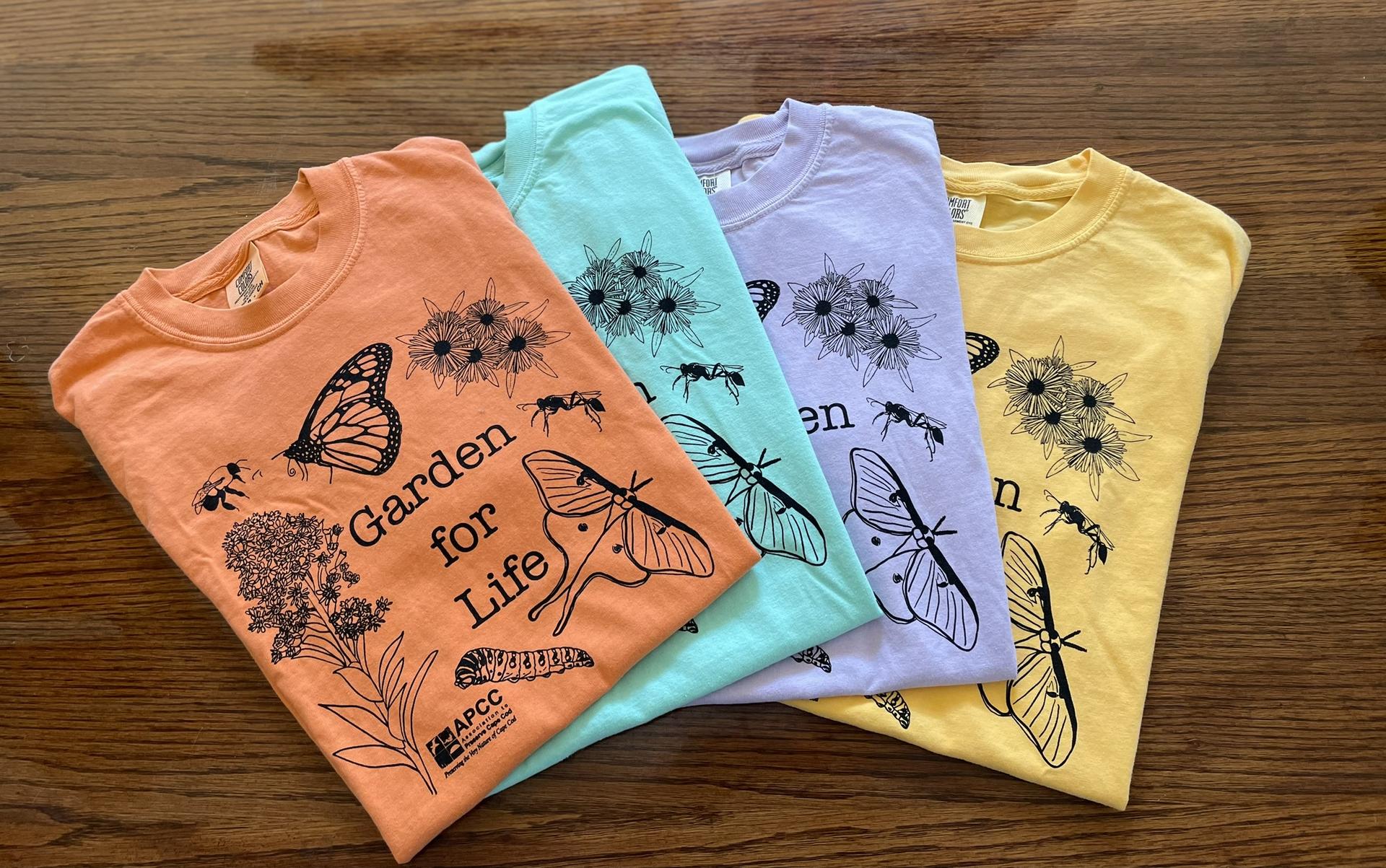
Garden for Life T's $30 -includes USPS delivery in U.S. |
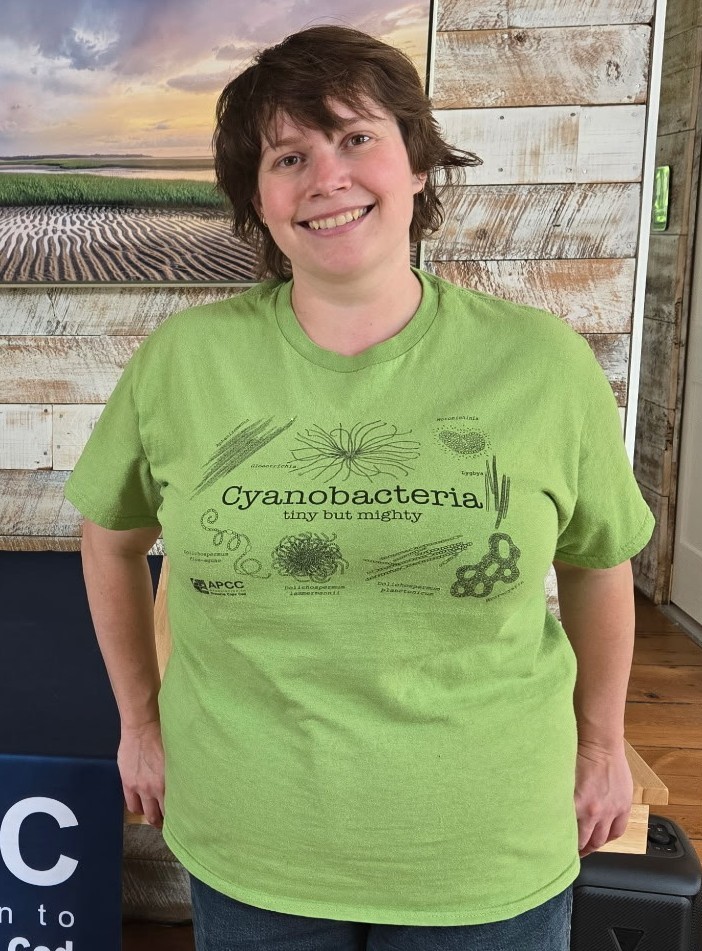
| Cyanobacteria ~ tiny but mighty color kiwi $30
-includes USPS delivery in the U.S. |
|
|
|
APCC eNewsletters. Our weekly newsletters are archived on our website and easily shared.
You can find past newsletters and share with your friends. Encourage others to sign up for future enewsletters HERE.
|
|
|
Are you thinking of going solar? We hope so!
In partnership with E2 SOLAR in Dennis, APCC receives $500 for every solar installation when APCC is named as referral. |
|
|
|
Thank you to the homeowners who just contracted to install solar panels through E2 Solar. May the sun always shine for you! |
|
|
Expressions Gallery, 578 Main Street, Chatham
CLICK HERE |
Expressions Gallery donates 20 percent of its profits to APCC's work. |
|
|
Thank you to our business sponsors! |
|
|
APCC is rated four stars by Charity Navigator, 2025 Platinum by Candid (formerly Guidestar), and 2024 Top-Rated by GreatNonprofits. |
|
|
Our Contact Information
*{{Organization Name}}*
*{{Organization Address}}*
*{{Organization Phone}}*
*{{Organization Website}}*
*{{Unsubscribe}}* |
| |
|
|