Association to Preserve Cape Cod |
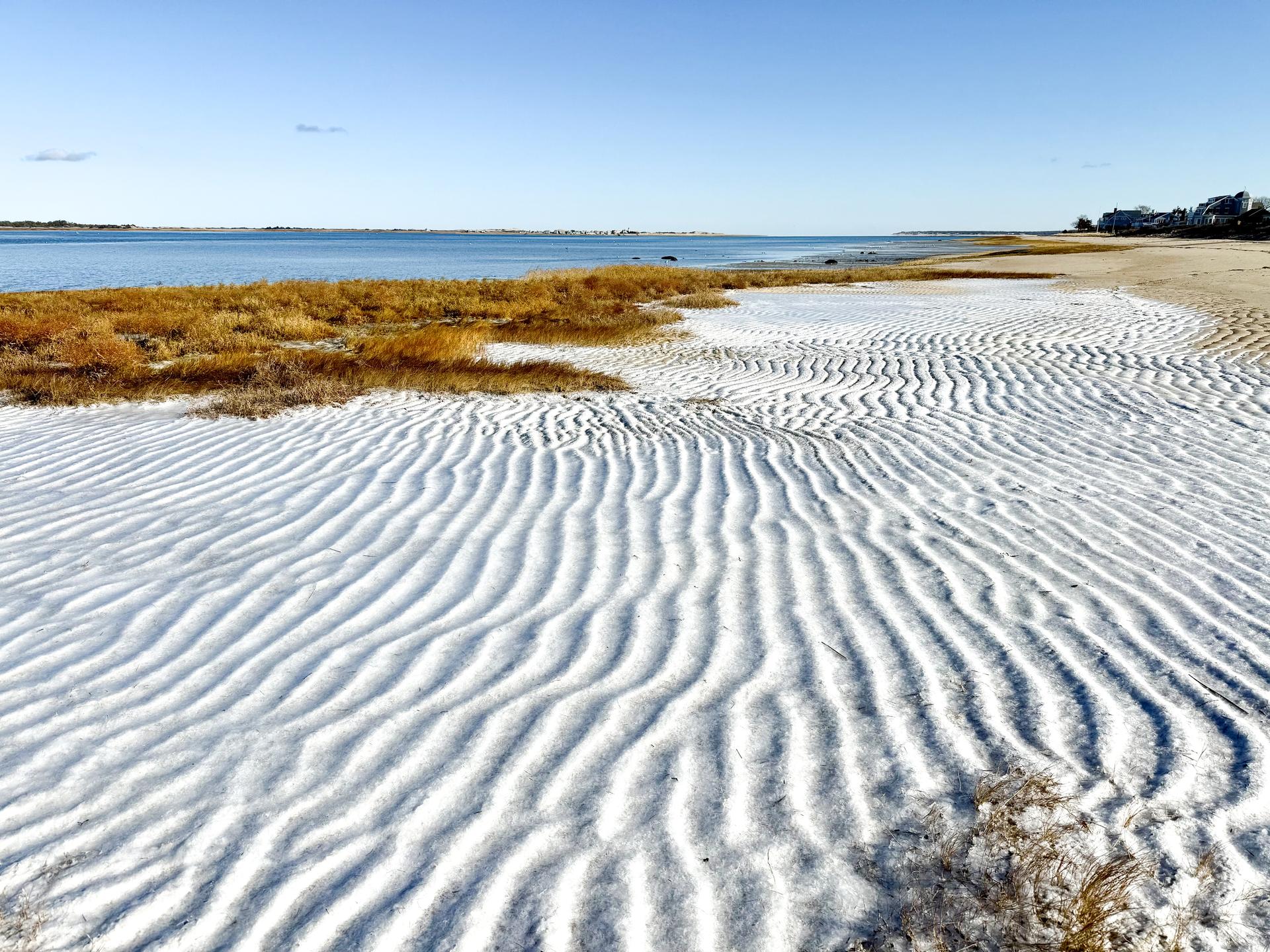
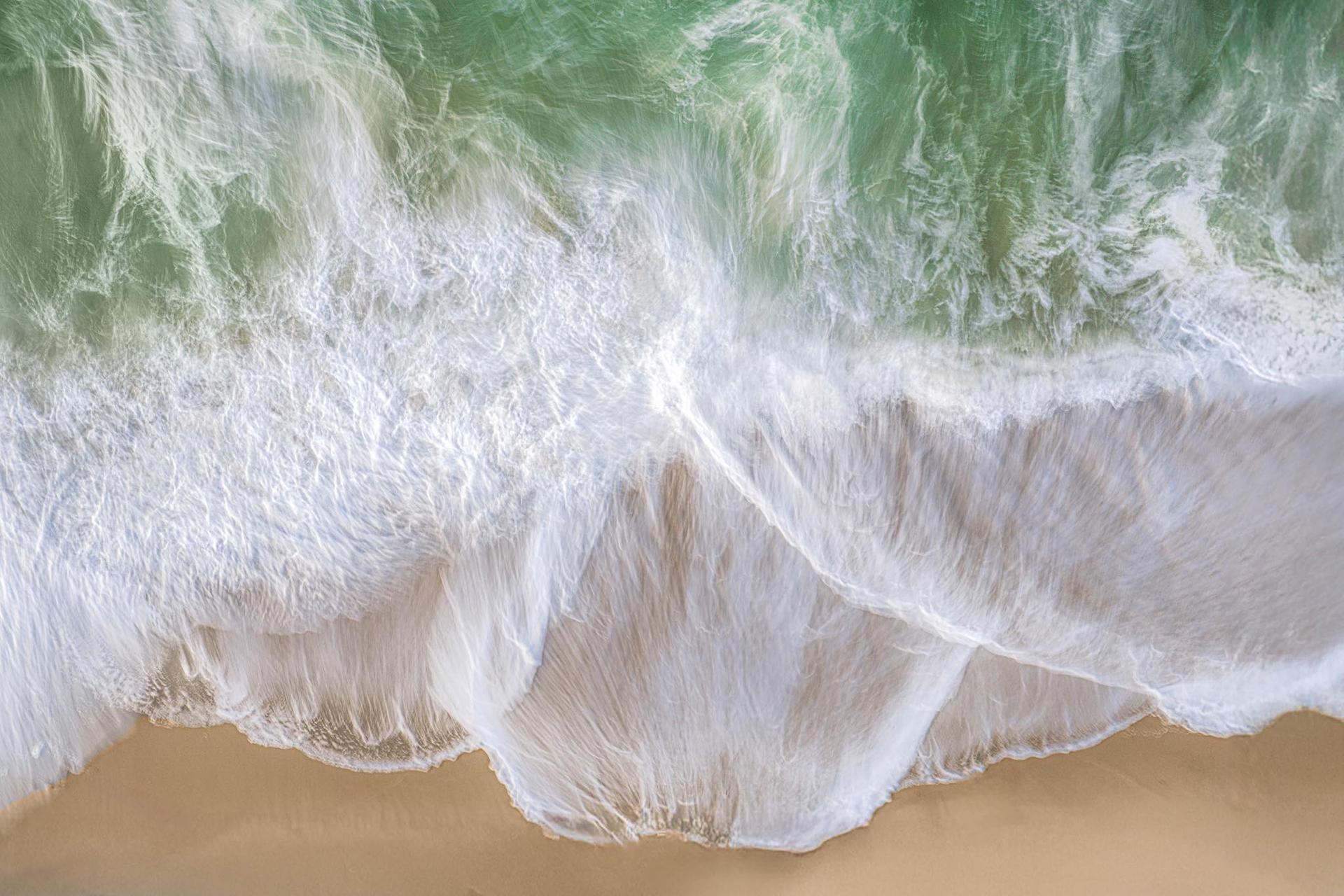
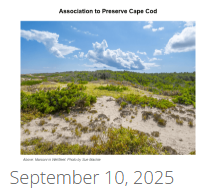
Above: Millway Beach, Barnstable. Photo by Sue Machie |
|
|
| Turn the Page
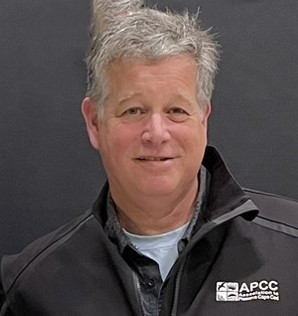
by Andrew Gottlieb, Executive Director |
Cape Cod gives an awful lot to each of us. The Cape provides us a place to live, a place to vacation, a place to yearn for when we are elsewhere and a place where family memories are forged through generations. What does it ask in return? If it could speak for itself, this special place would ask us to treat it with a little more care. |
|
|
Because the land cannot speak for itself, we at APCC try to speak for it. We spend our days working on behalf of the habitat, waters and resources that make the Cape what it is. We try our best to do our share to protect, defend and restore this place. We, in turn, rely on you to become informed, to get involved, and yes, to support us financially.
As we end 2025 and prepare for 2026, I can say with confidence, and more than a small amount of pride, that collectively we made things better for Cape Cod. There is more land protected, more water of better quality, more acres of degraded wetlands restored and more native landscapes thriving than had APCC not been here. And yet there is so much more to do, and to do it we rely on you and your continued activism and involvement.
Let me close the year by thanking you for what you have done to improve the environment of Cape Cod. I end the year asking you for your financial support as well as a commitment to build on the success we have shared to do more in 2026. That’s our plan here at APCC. Onward! |
|
|
This will be the last newsletter of 2025. We will resume in January after the holidays. Wishing you all a warm holiday season with family and friends, and all the best for a hopeful 2026.
~ APCC staff |
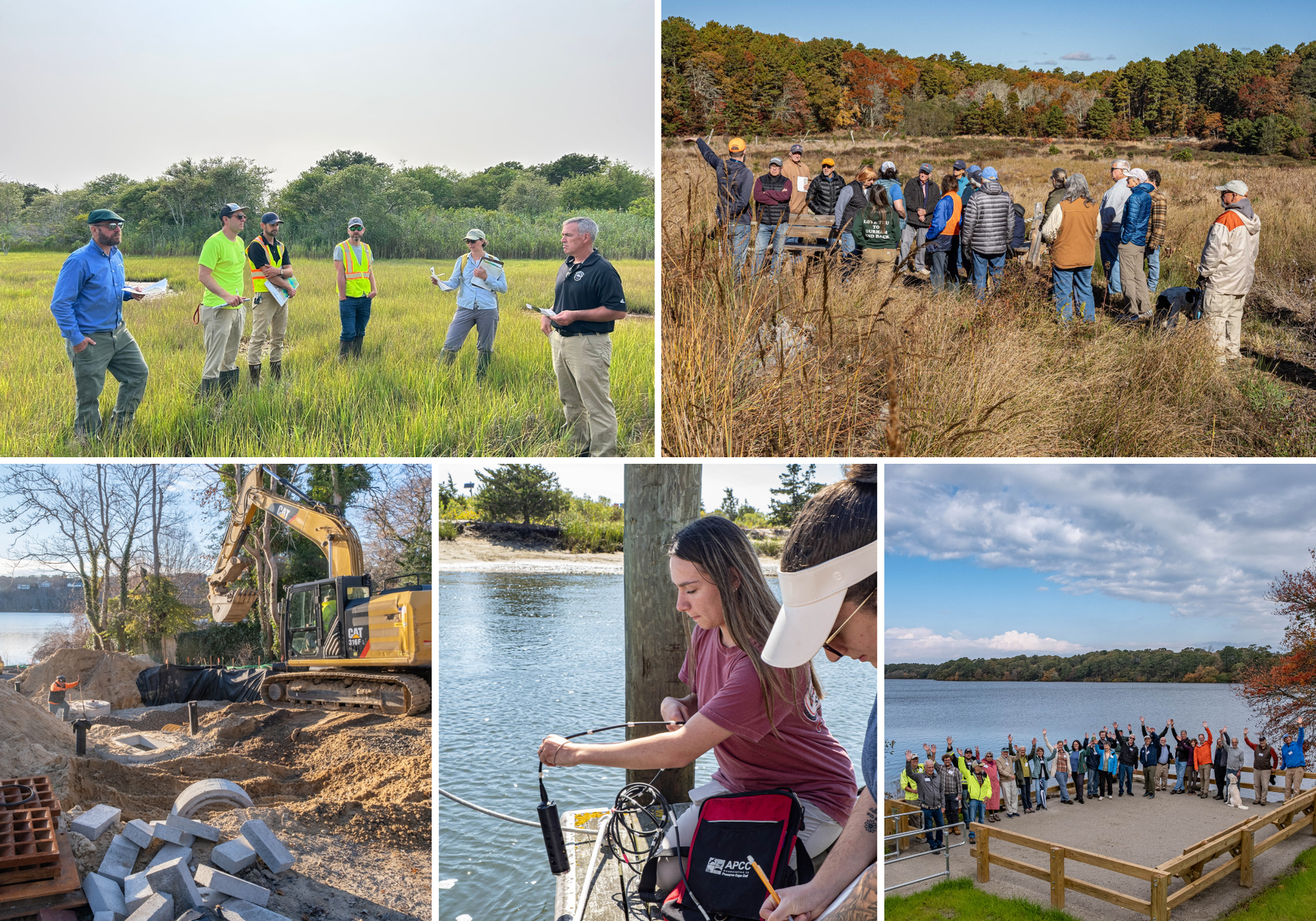
Above: Field highlights from 2025 (clockwise from top left): Weir Creek site visit; Childs River site walk; the Hinckleys Pond ribbon-cutting celebration; Hannah Brown conducting water quality sampling; and Scargo Lake stormwater project under construction. Photo credits: G. Beetham. |
Ecosystem Restoration Program 2025 Achievements As we near the end of the year, we wanted to reflect on the impact and achievements of the Ecosystem Restoration Program. In 2025 our restoration program, in collaboration with local, state and regional partners, had the following impact: - Program growth: Expanded to five APCC staff with the addition of Hannah Brown as restoration coordinator supporting stormwater, field work and community engagement.
-
Funding: Secured an additional $2.12 million for stormwater and habitat restoration over the next three years.
- Stormwater: Constructed four new green infrastructure stormwater practices to improve water quality, including two along Scargo Lake in Dennis and two in Yarmouth.
-
Bog and river restoration: Supported construction at the Hinckleys Pond Herring River eco-restoration project, progressed several river and bog restoration projects on the upper Cape through design, and completed the three-year post-construction Childs River report, documenting early restoration outcomes.
-
Salt marsh restoration: Completed monitoring and assessment at four salt marshes to inform ongoing design and upcoming permitting.
-
River herring monitoring and data: Developed a new river herring dashboard to improve data access, support in-season tracking, and strengthen coordination with partners across the Cape.
Together, these achievements reflect a program that’s growing in capacity and sharpening its impact—pairing on-the-ground implementation with the monitoring, tools, capacity, and expertise needed to deliver lasting results. With a stronger team, new funding secured, and major watershed-scale projects advancing from assessment to implementation, we’re building a more coordinated, Cape-wide restoration strategy that restores habitat, improves water quality, and supports resilient ecosystems and communities.
This year’s progress sets a clear foundation for 2026 as we move key projects into permitting and construction and continue translating science and community priorities into projects that protect the Cape’s environment for the long term. |
APCC Pond Programs ~ Year in Review |
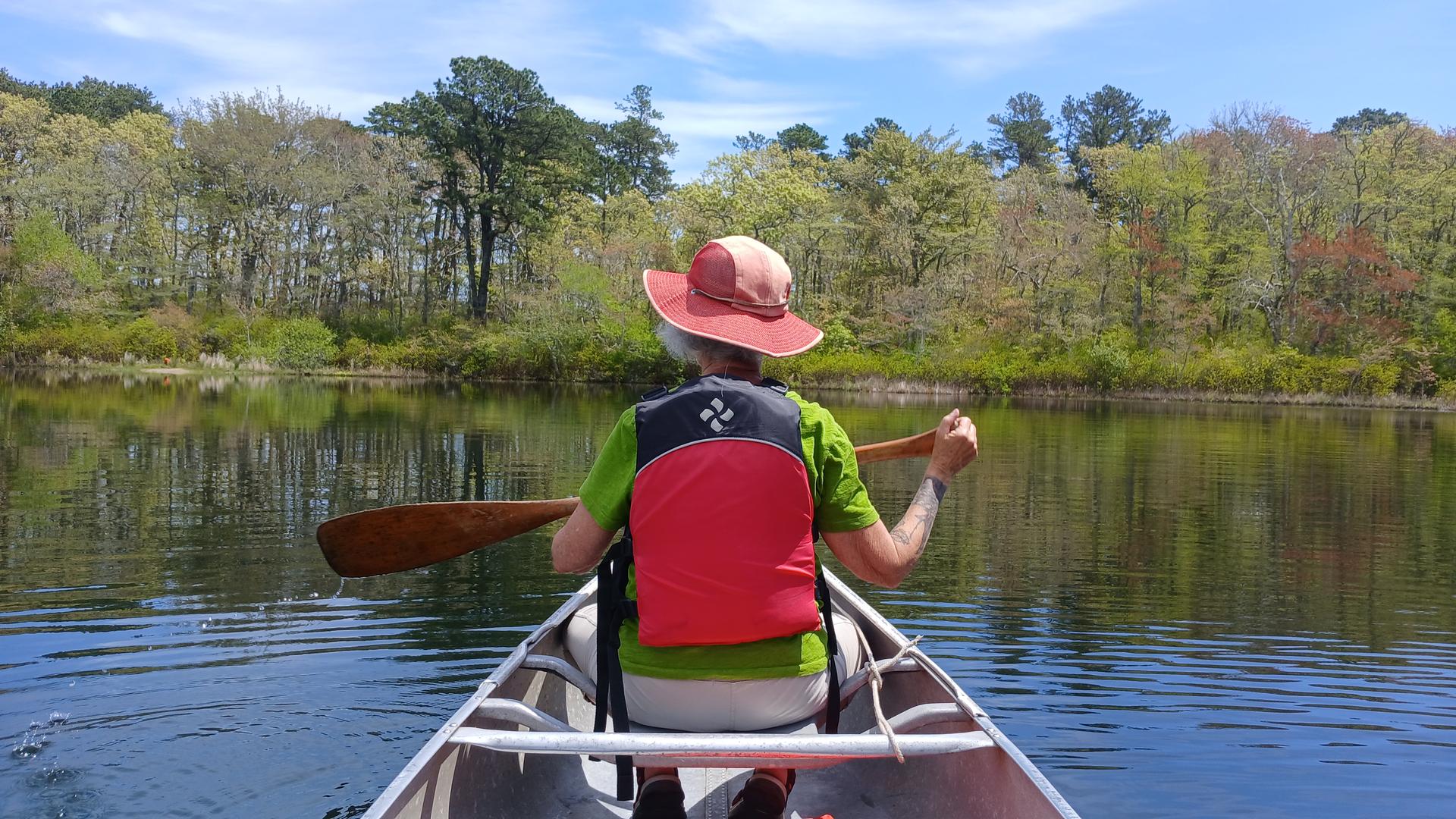
Above: APCC volunteer, Lynne Ready |
APCC's freshwater team had a productive and collaborative year across all of our monitoring and community science programs and projects. Thank you to our partners, volunteers, interns, and supporters for helping protect Cape Cod’s freshwater resources.
Cyanobacteria Monitoring Program
This season we monitored about 140 ponds at approximately 160 sites with the hands-on help of our dedicated partners, including the Barnstable Pond Coalition, Brewster Ponds Coalition, Falmouth Water Stewards, Friends of Chatham Waterways, Friends of Peters Pond, Friends of Wellfleet Ponds, the Orleans Pond Coalition, and staff from the town of Barnstable and Barnstable County.
We experienced a high-biomass cyanobacteria year (meaning more cyanobacteria growth than in the past few years), and look forward to deeper analysis once our 24 annual end-of-season reports are complete. This year we also expanded toxin testing and collected anatoxin data alongside microcystin data, and we’re excited to explore these results and what they may tell us about local cyanobacteria bloom dynamics.
This year it was possible to provide preliminary data analysis of the occurrence and distribution of cyanobacteria blooms on Cape Cod between 2022 and 2024. These analyses were presented in March at the Cape Cod Natural History Conference by APCC Freshwater Science Coordinator Sophia Feuerhake. Statistical tests showed a significant relationship between the cyanobacteria bloom forming colonies with precipitation, but did not show strong relationships with drought or temperature.
Our five incredible interns were an essential part of the team, and an additional intern supported a special July project comparing shoreline versus mid-pond samples for a SNEP satellite project, which APCC is part of in collaboration with the Cape Cod Commission and the University of Minnesota.
Regional Pond Monitoring Program
Our two freshwater technicians monitored 50 ponds from April–October, plus 22 ponds in March and 19 ponds in November to capture seasonal transitions. This was made possible with support from about 50 volunteers who joined us in the field.
Data review is currently underway, and all data will be shared with the Cape Cod Commission for publication in its Freshwater Data Portal.
Cape Cod Pond Watchers Bio-survey Program
The bio-survey program continued to grow this year with the launch of a Survey123 digital datasheet, allowing community members to submit their pond plants and wildlife observations directly to APCC using their phone or computer. We look forward to offering in-person training next year—until then, check out the training video on our website or reach out to us to get involved. We look forward to capturing observations around the ponds throughout the seasons!
Veterinary & Wildlife Cyanobacteria Survey
In partnership with the Woods Hole Oceanographic Institution (WHOI), we surveyed veterinarians and wildlife professionals about cyanobacteria awareness. Respondents expressed strong interest in more educational materials, and together with WHOI we designed new brochures and posters that will be printed and distributed across the Cape in the coming year. This achievement was spearheaded by our wonderful summer intern, Caroline Berney. Thank you, Caroline!
Looking Ahead
We already have promising work on the horizon. One project we’re particularly excited about is a planned collaboration with wildlife rehabilitation organizations to explore potential links between unexplained wildlife deaths and cyanobacteria bloom occurrences.
Thank you for being part of this work—together we are improving knowledge and stewardship of Cape Cod’s freshwater ecosystems. |
|
|
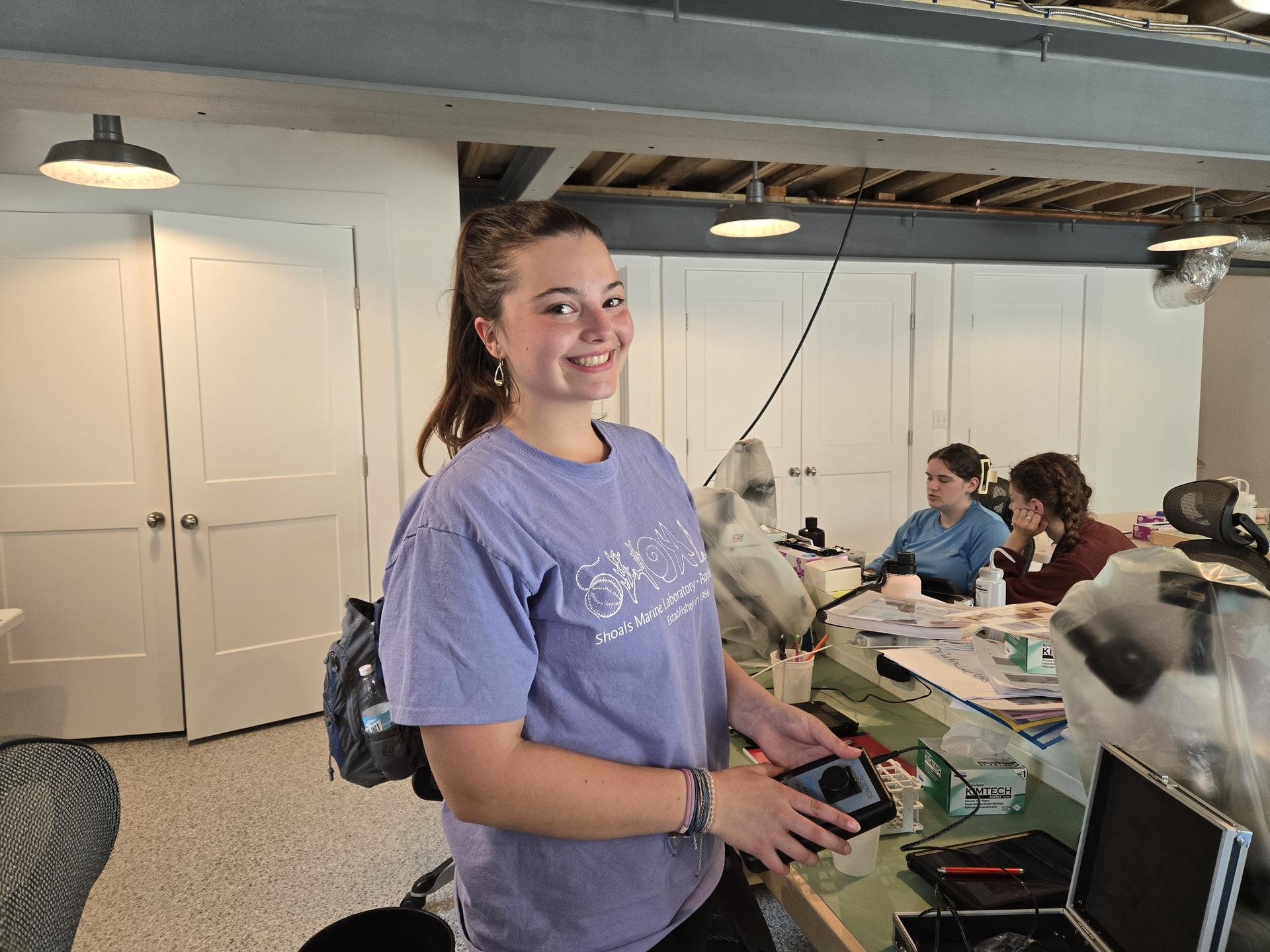
Above: Cyanobacteria Monitoring Program intern, Emma Acri |
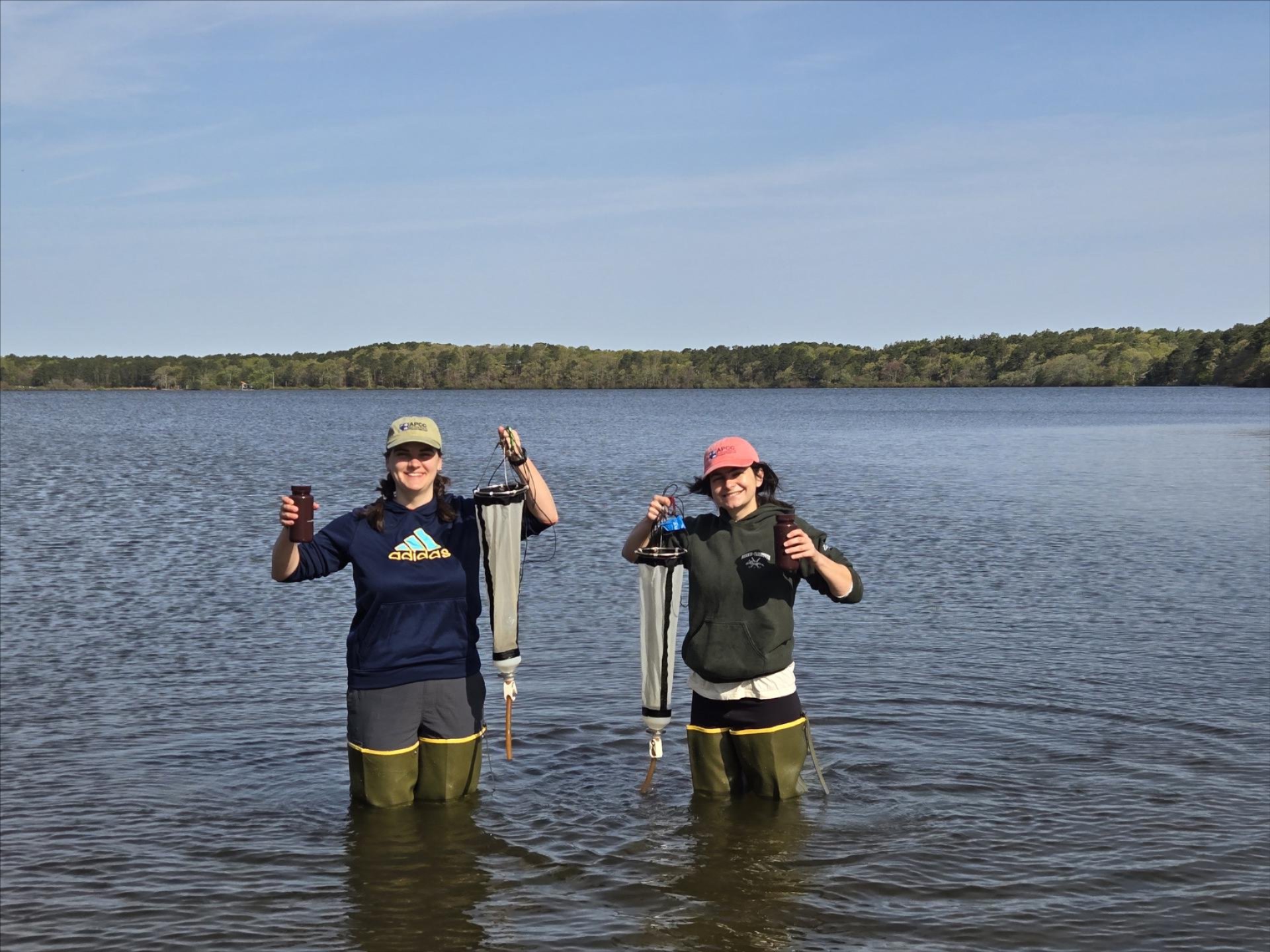
| Above: Cyanobacteria Monitoring Program interns, Tina Hennig and Nora Bowie |
|
|
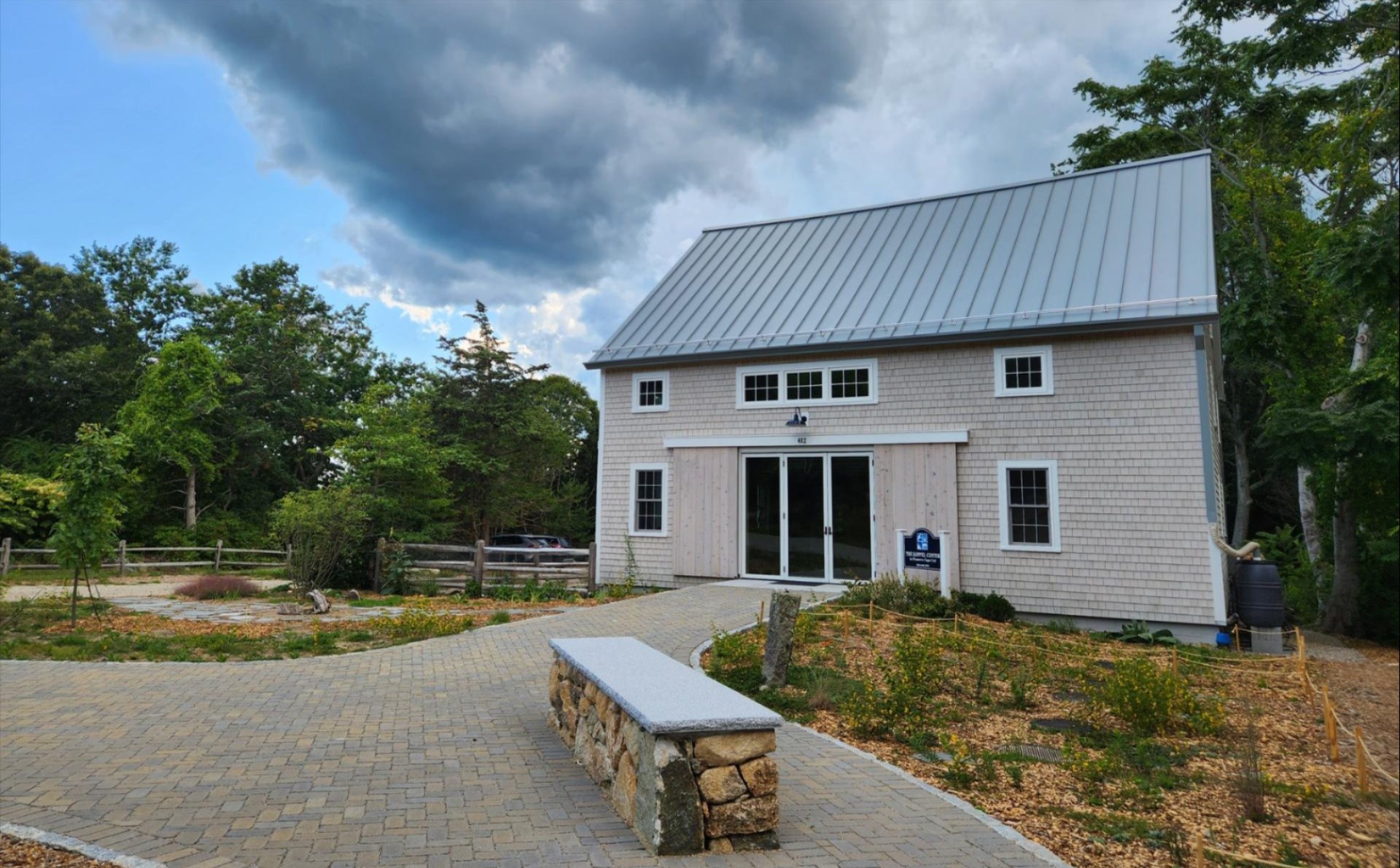
Above: The Koppel Center at APCC's headquarters in Dennis.
|
Education and Outreach in 2025 |
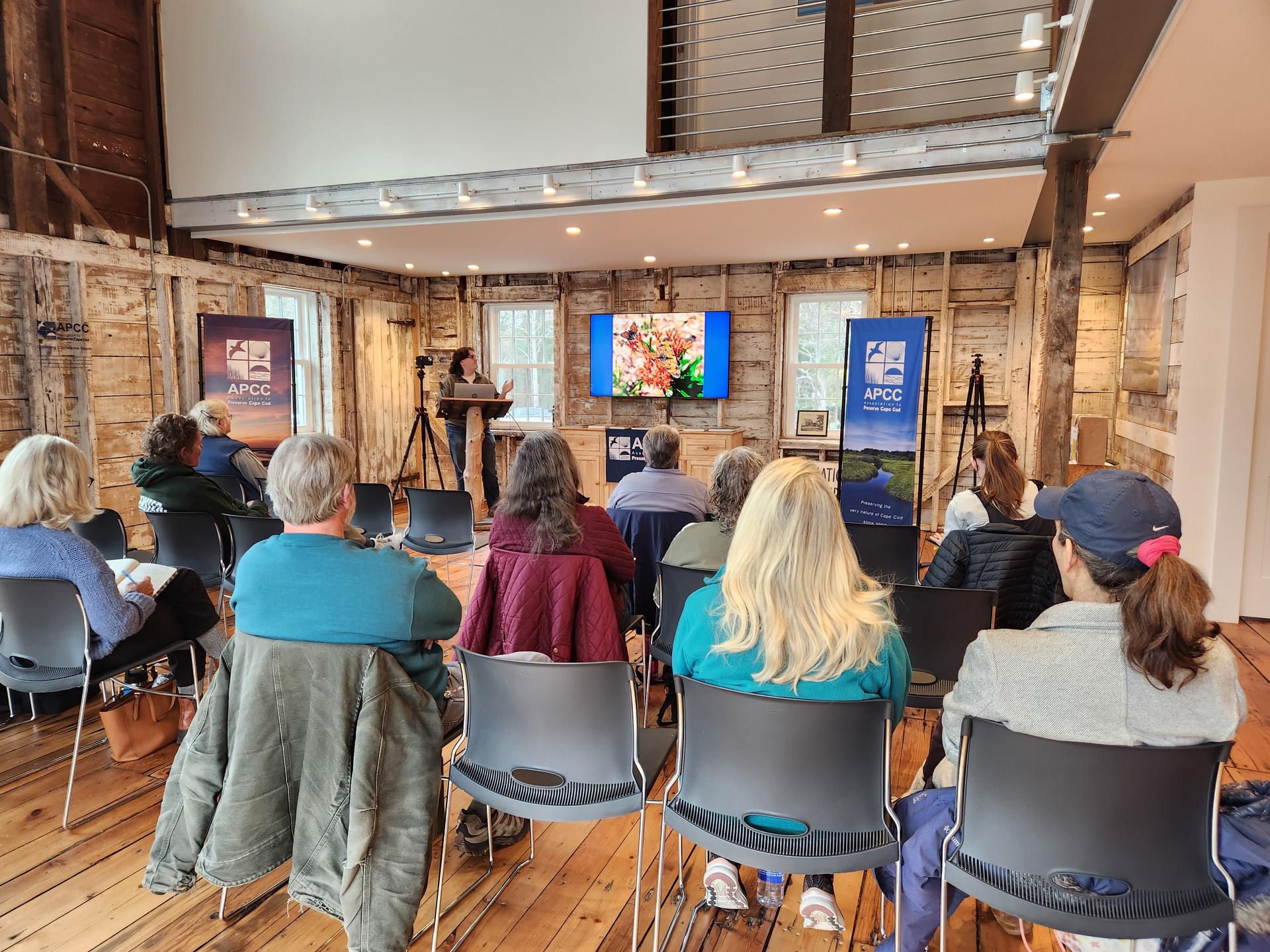
The Koppel Center. Although it's been several months since the renovation was completed, we remain excited about the Koppel Center for the opportunities this beautiful old barn offers us: office space, workspace, meetings, a place to gather for educational talks and workshops, and social events. |
This past year, we held several workshops and events, from a presentation about pond mussels and pond weed identification trainings to talks about foraging for native plants. And we have so much more planned for the new year! |
|
|
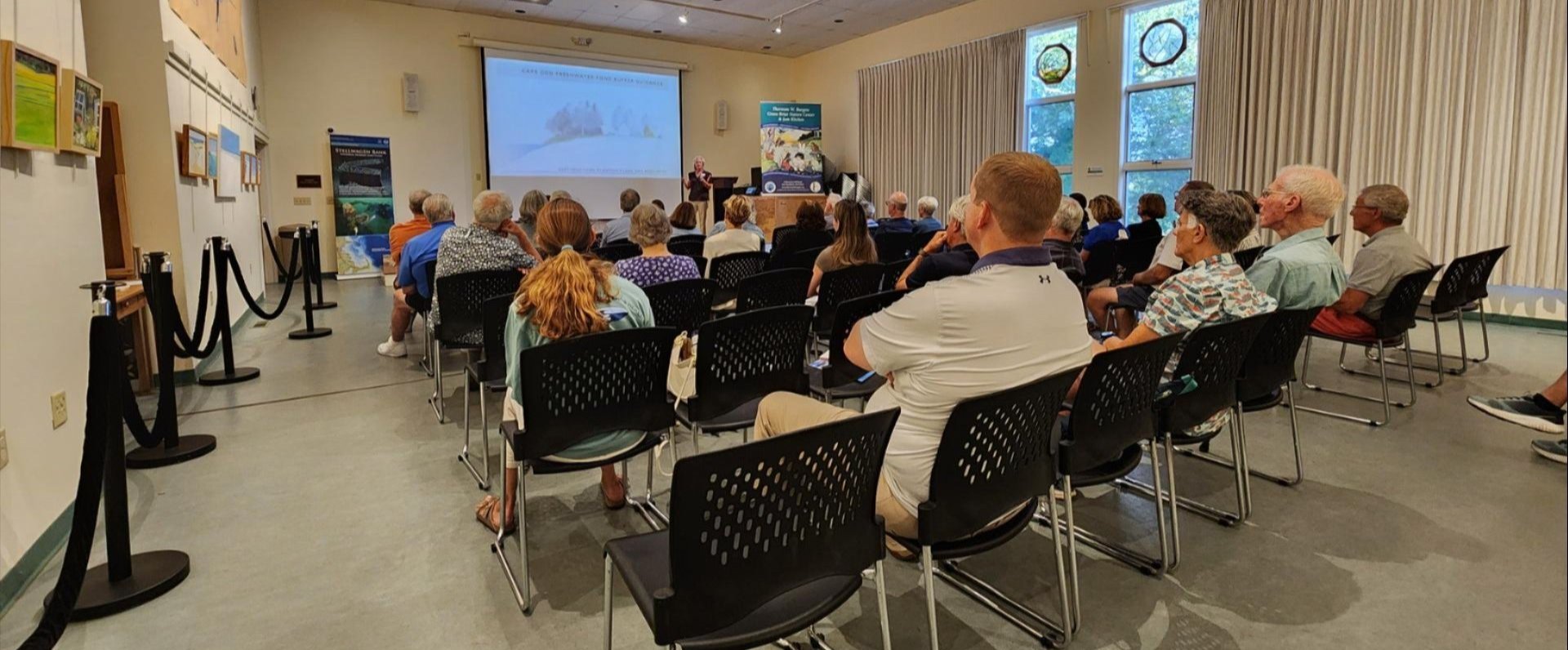
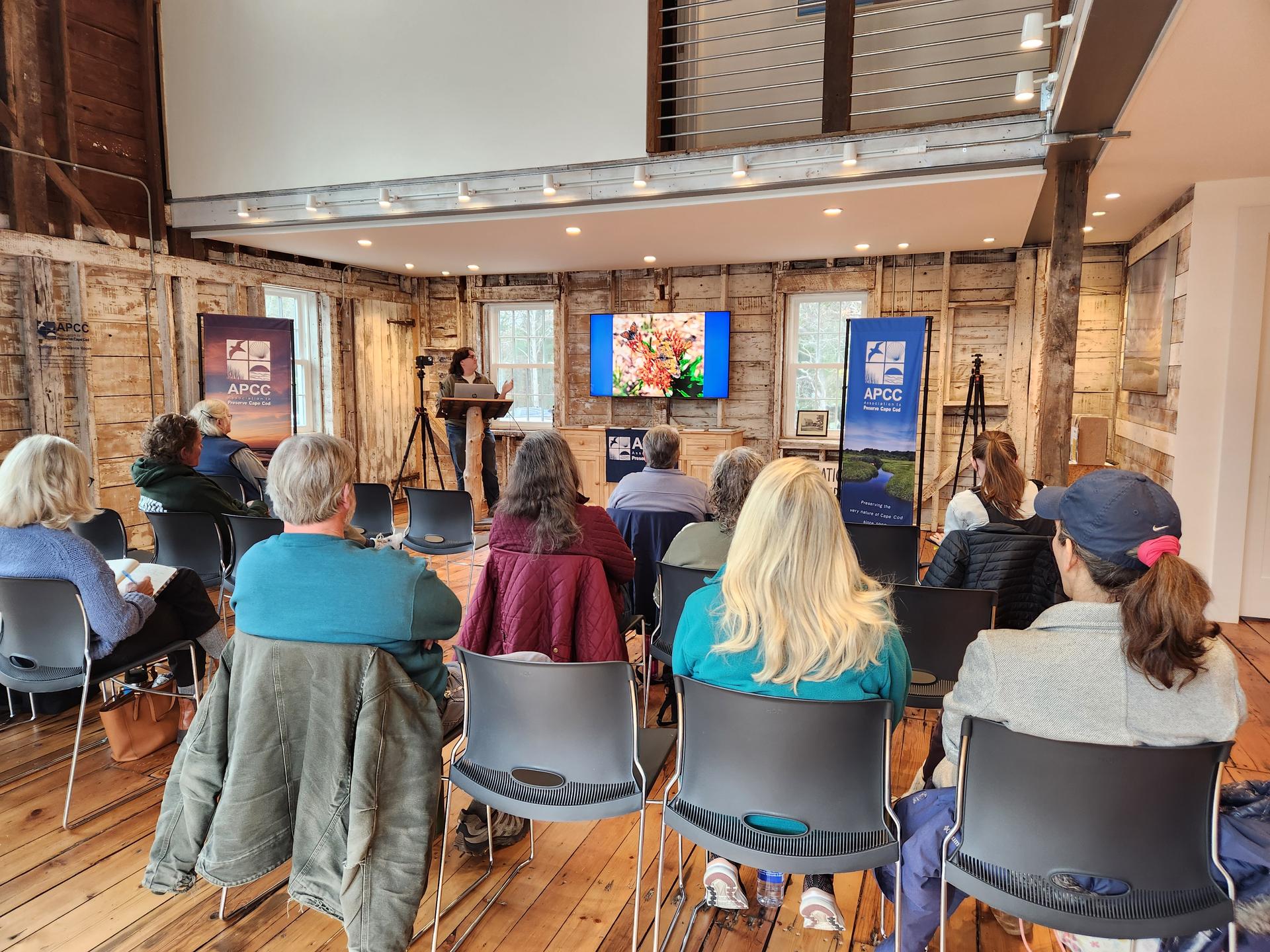
Above: Educational workshops in the Koppel Center |
|
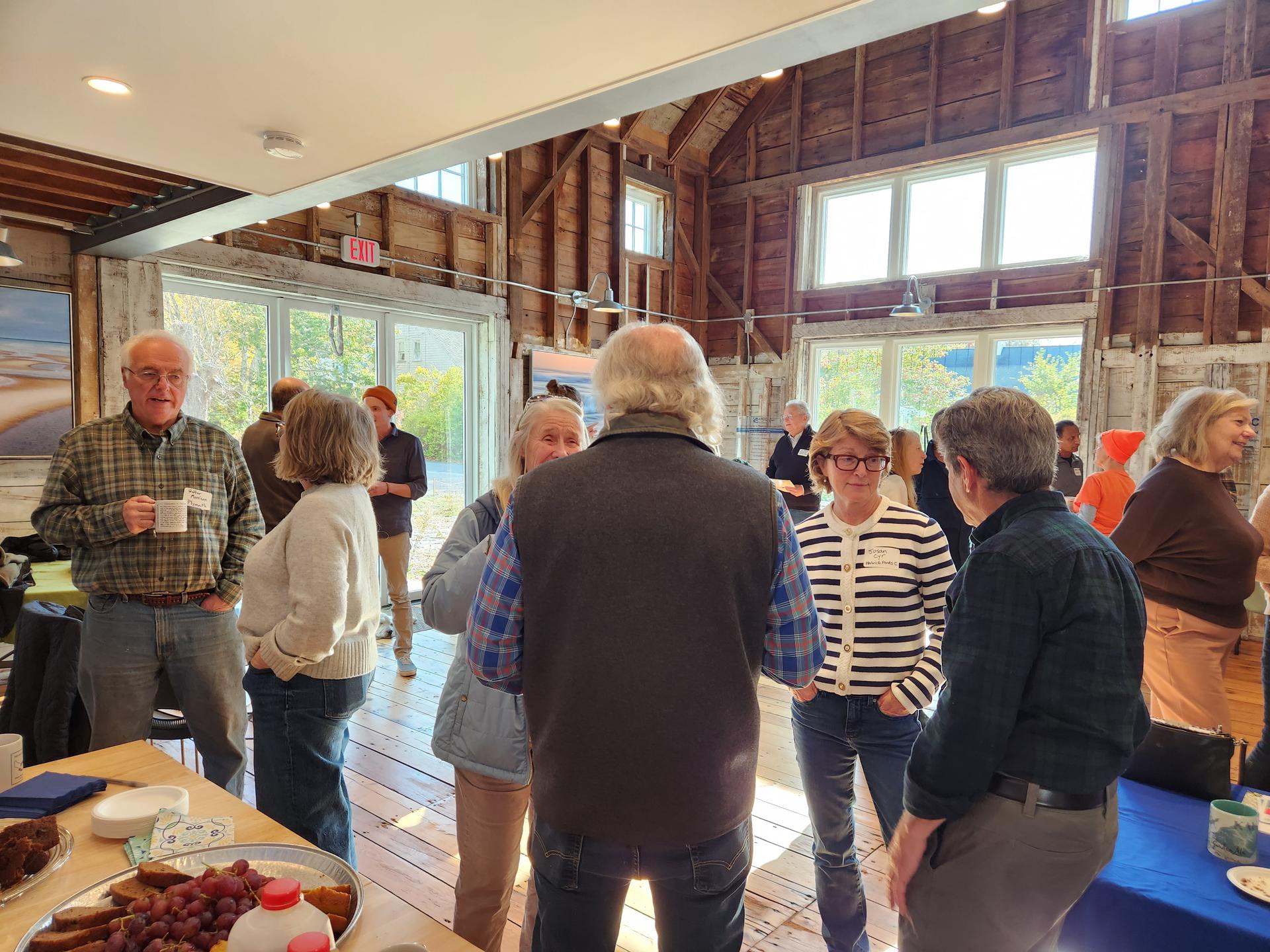
Above: Cape Cod Ponds Network social event in the Koppel Center |
|
|
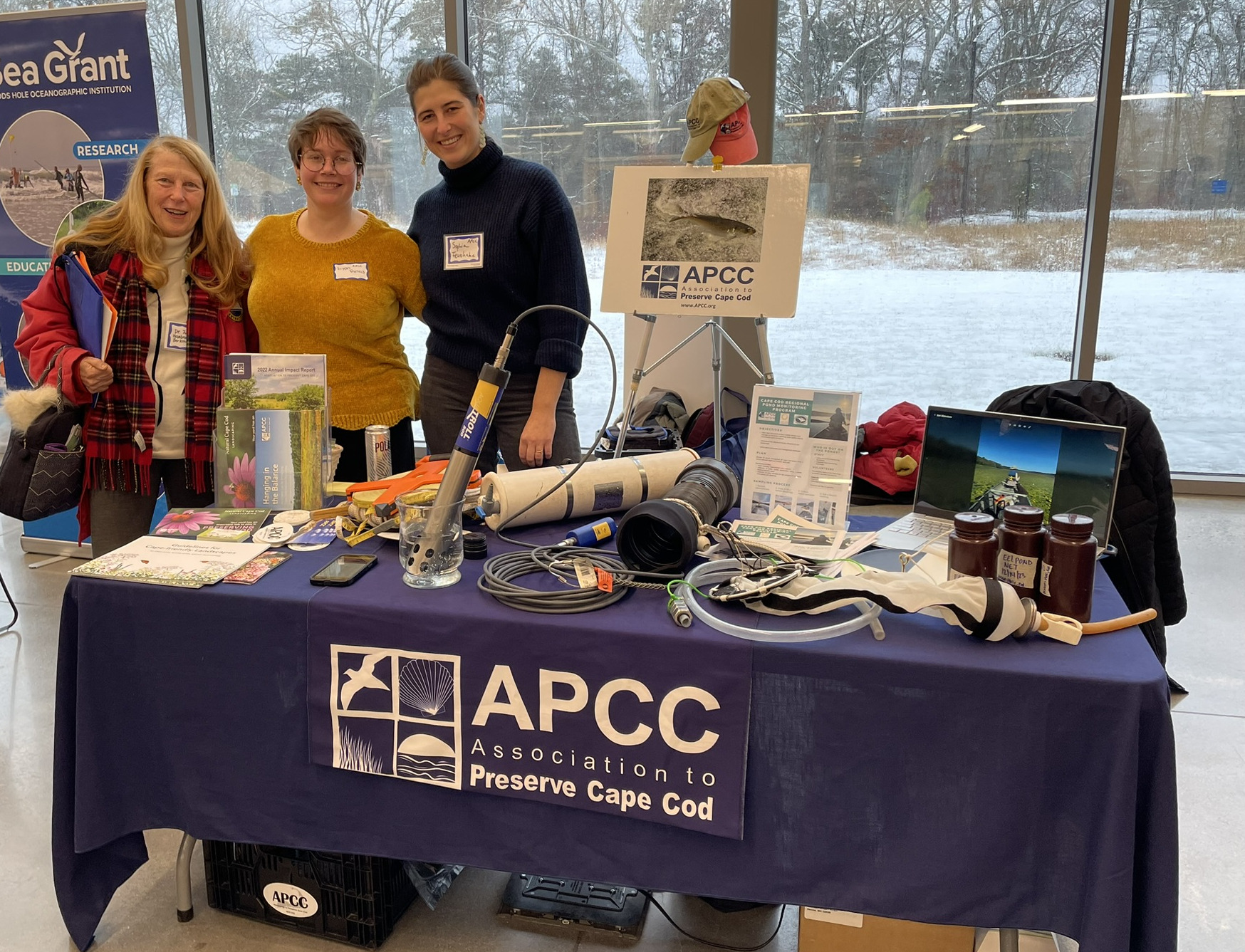
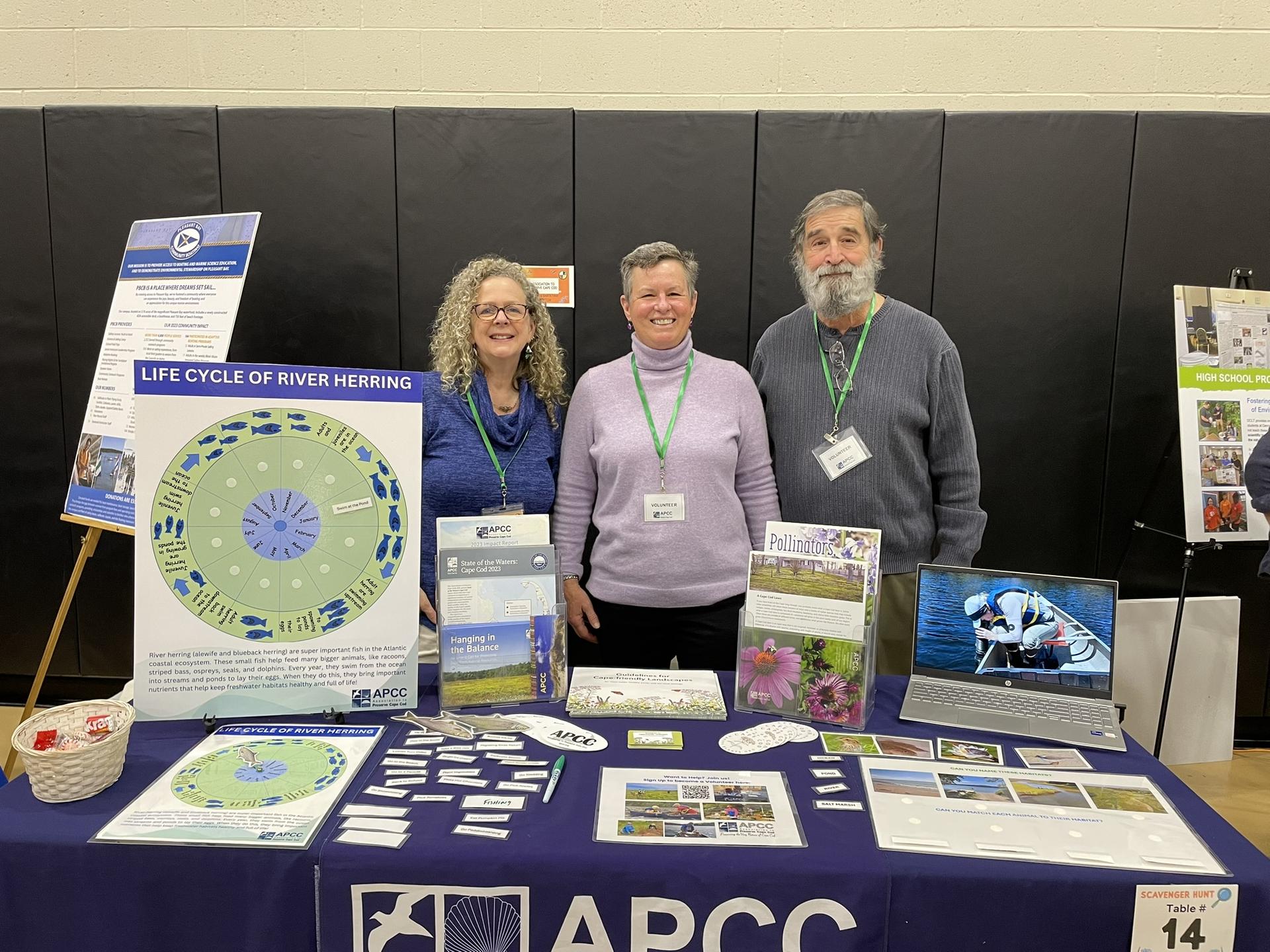
Public Engagement. Staff and volunteers helped APCC to participate in numerous public engagement events across the Cape through table events. APCC staff gave several talks to civic groups. |
|
|
Cape Cod Ponds Network. APCC coordinates the Cape Cod Ponds Network—a communications network between pond groups of all sizes that was initially started in partnership with the Cape Cod Commission. |
Above: Cape Cod Ponds Network meeting, August 2025, at the Cape Cod Museum of Natural History with presentations from APCC pond program staff and Cape Cod Commission staff. |
|
|
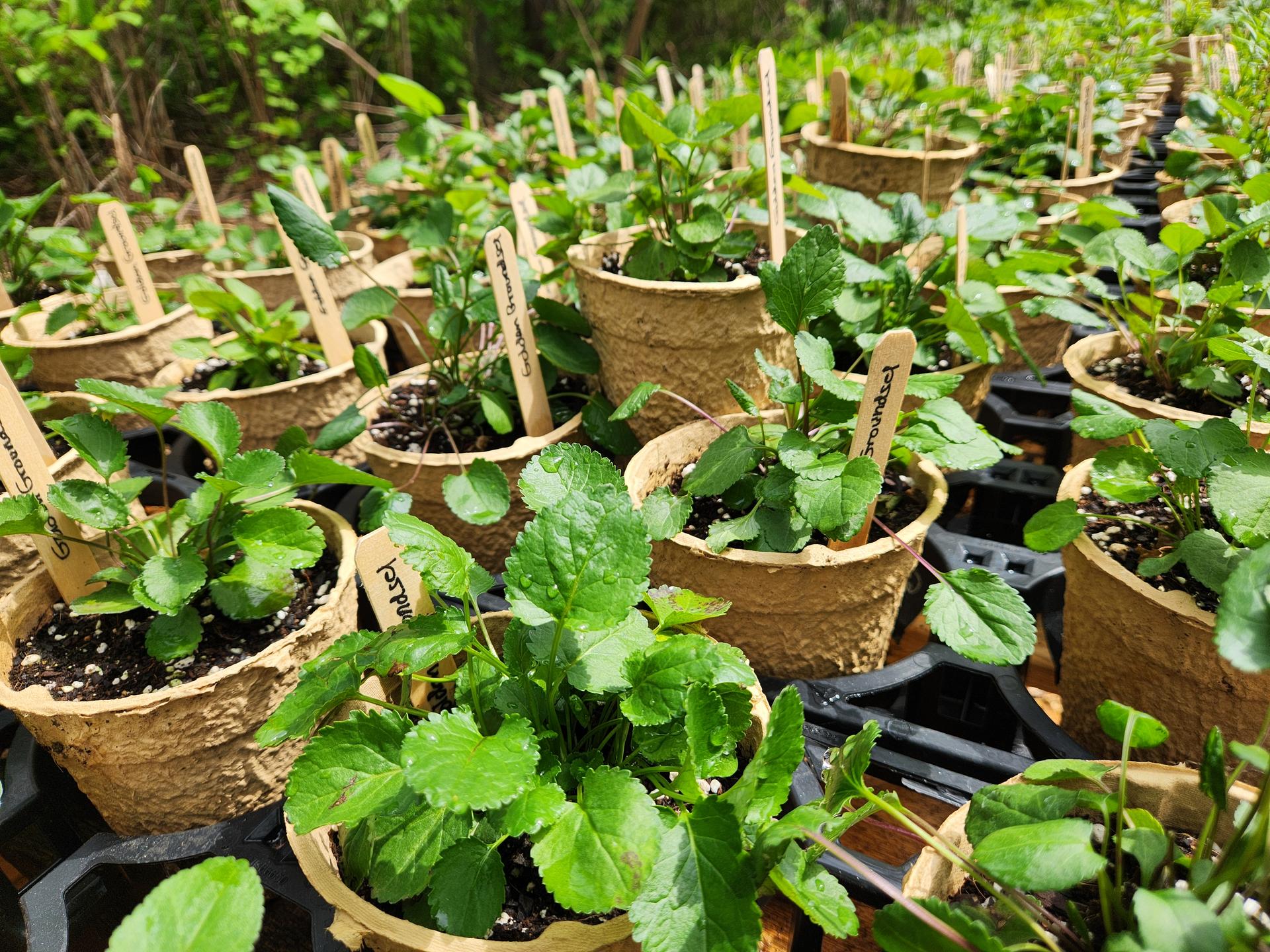
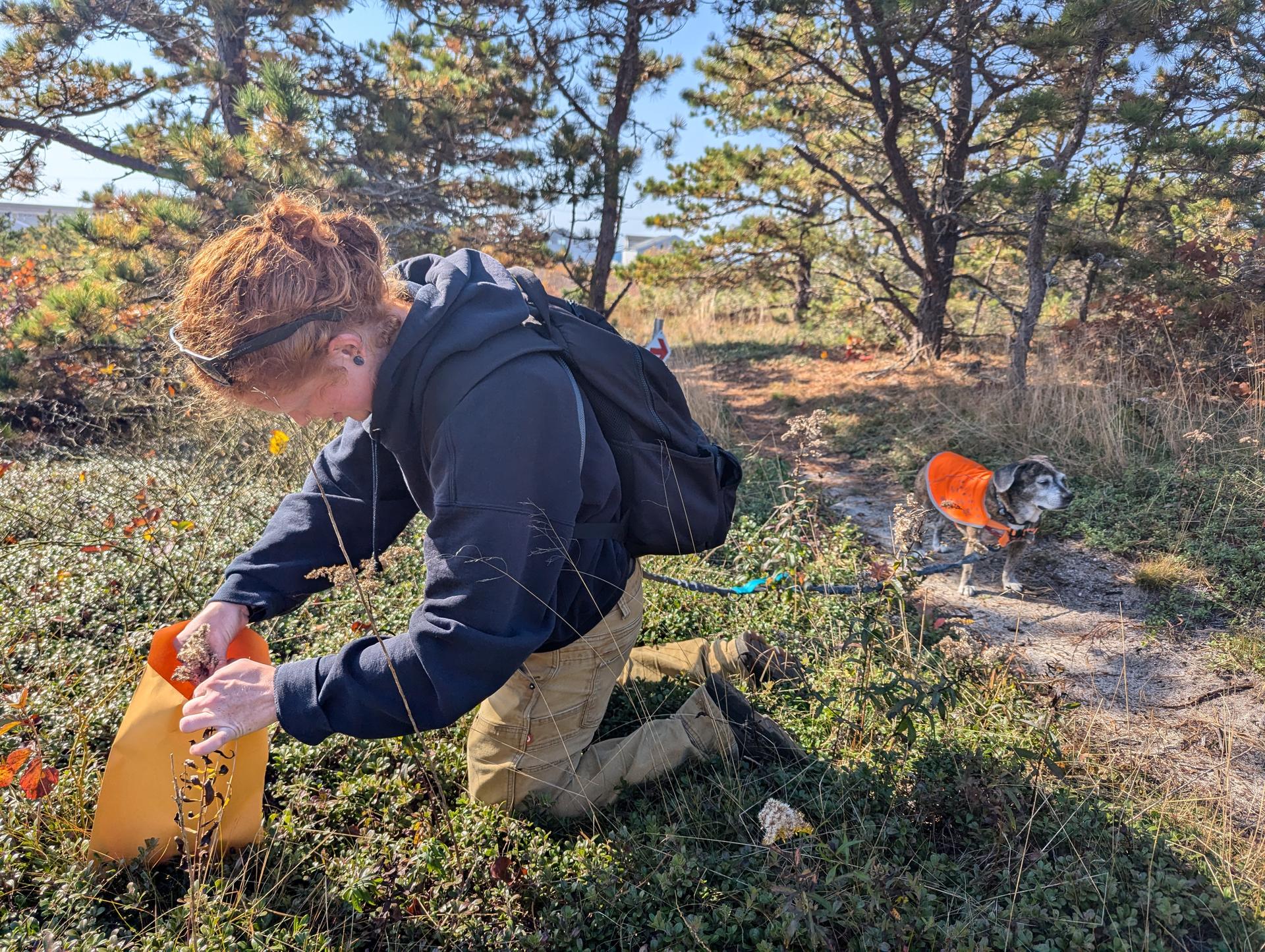
Growers' Cooperative. Thanks to an initial grant from Barnstable County and its Economic Development Council License Plate Grant Program through the Cape Cod Commission, we were able to kick off the Cape Cod Native Plant Growers' Cooperative. The program aims to engage and train Cape farmers and others to grow native plants to meet the Cape's demand for native plants grown locally, and to do so with green growing standards that include growing from ethically sourced seed to maintain genetic diversity using best ecological horticultural practices (e.g.) peat-free potting soil, reduction of plastic use, pesticide-free. The goal is to see our program farmers bring locally grown native perennials to market in 2027.
|
Video Interviews. Intern interviews help us gauge the value of the summer experience offered at APCC—what do you think? Here are some of those interviews below. |
|
|
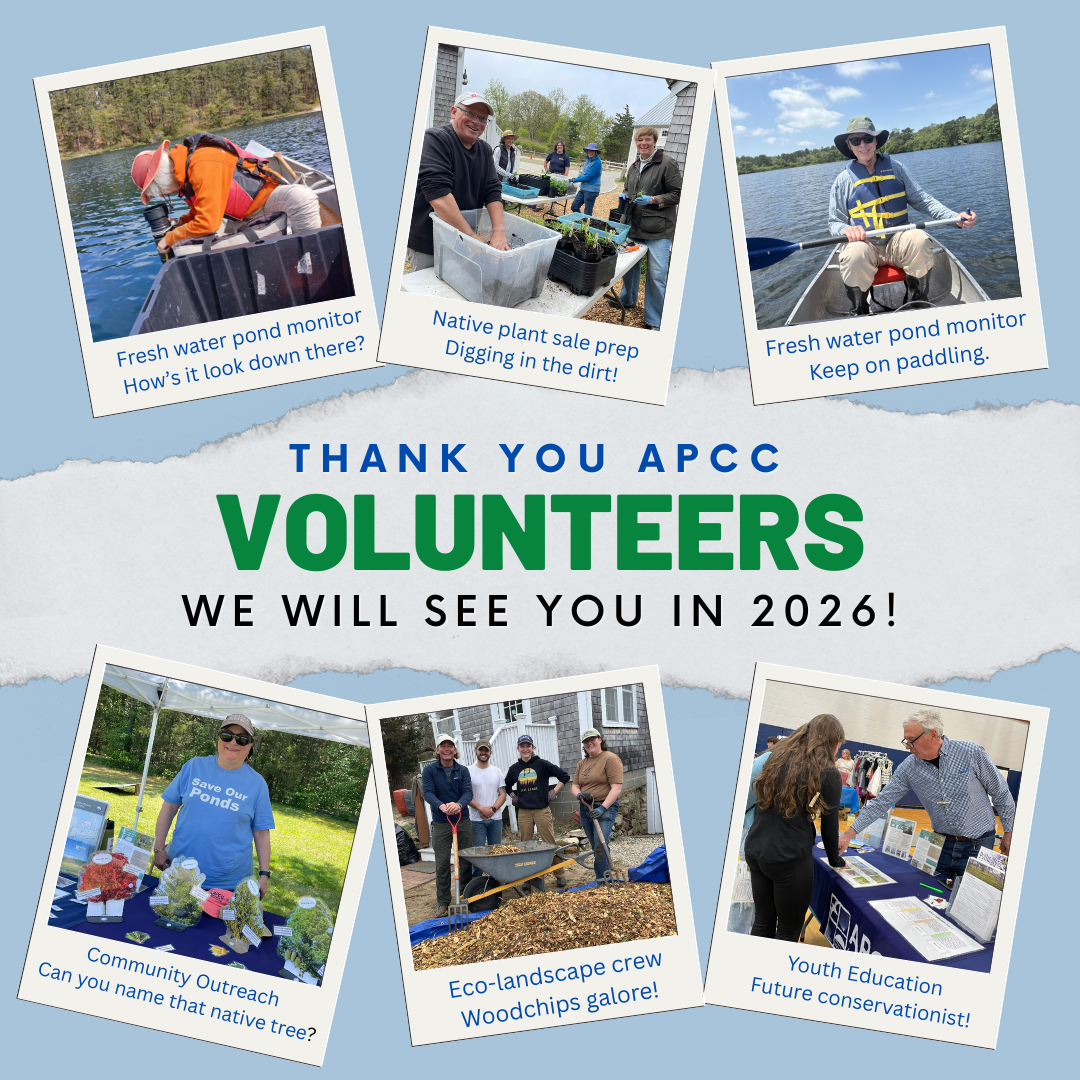
To all the dedicated APCC volunteers who helped us make a difference in 2025, THANK YOU.
This past year, APCC engaged over 300 volunteers who recorded over 870 volunteer hours. Volunteers helped support APCC’s freshwater science and eco-systems restoration programs, as well as several of our outreach and education efforts. Volunteers contributed hundreds of hours in activities ranging from distributing educational materials, to producing our annual native plant sale, staffing outreach tables, helping to restore the landscape around the Koppel Center, and collecting signatures for the Nature for Massachusetts ballot initiative (hurrah!).
And to our volunteers, behind the scenes, taking photos and writing articles, stuffing fundraising envelopes, and researching scientific data—we hope you all know how much we appreciate your work and your commitment to helping us preserve Cape Cod. We would also like to, once again, acknowledge Sue Machie, APCC 2025 Volunteer of the Year, for lending her creative talents and photographs to our weekly newsletter. Thank you!
We can’t wait to see you next year! Until then, please sign up and join us at the APCC Koppel Center for one of our educational talks or workshops. See what’s coming up on APCC event’s page here. |
|
|
|
Expressions Gallery is offering a $250 gift certificate toward a custom aluminum print from the gallery to donors who gift APCC $1,000 or more before December 31, 2025. |
|
|
| Genetic Considerations in Plant Production
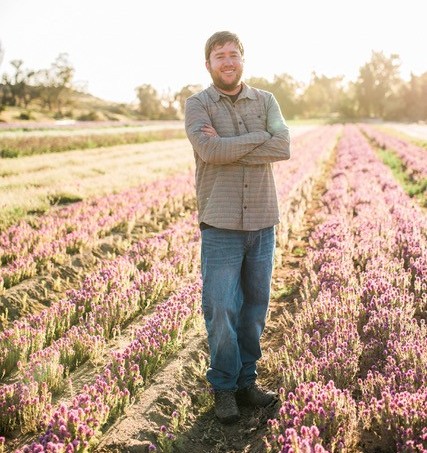
with Matt Garambone of Beechwood Environmental Thursday, January 15th
1:00 p.m. — 3:00 p.m. Hybrid Presentation |
|
|
APCC’s Cape Cod Native Plant Growers' Cooperative presents Matthew Garrambone of Beechwood Environmental for a discussion on the importance of genetic diversity in plant populations, the benefits of growing from seed, and an overview of genetic considerations in nursery production. |
This talk is offered as part of the Cape Cod Native Plant Growers’ Cooperative Program to provide information to prospective growers. The program is made possible by funding from the Cape Cod and Islands License Plate Grant program and the Kelley Foundation. |
Landscaping for Wildlife: the Birds and the Bees and Beyond Thursday, January 22, 2026
10:00 a.m. – 11:30 a.m. Hybrid Presentation
Mark Faherty, science coordinator for Mass Audubon's Wellfleet Bay Sanctuary, will talk about the birds and the bees and his experiences gardening for wildlife both at home and at the sanctuary, where he oversaw a complete redo of the pollinator garden and other outdoor spaces, adding hundreds of native trees and shrubs. He’ll cover the most important cultivated and wild plants to focus on to benefit birds, butterflies, bees and other wildlife, as well as what plants work or don’t work here on Cape Cod, land of hungry rabbits and annual droughts.
|
Native Plant Propagation for Professionals |
Thursday, January 29, 2026
1:00 p.m. – 3:00 p.m. Hybrid Presentation
Native Plant Trust’s Nursery Technician Peri Bergquist will give an overview of the plant production at Nasami Farm Nursery. They specialize in growing plugs of native plants from seeds of known ecotype. Topics will include common germination requirements, winter sowing, seedling biology, propagation methods, tips for specific species, propagation timeline, and troubleshooting common problems. Participants will leave with a list of common species, their germination codes and growing tips.
This talk is offered as part of the Cape Cod Native Plant Growers’ Cooperative Program to provide information to prospective growers. The program is made possible by funding from the Cape Cod and Islands License Plate Grant program and the Kelley Foundation. |
|
|
A Cape-wide Conservation Event Calendar |
The Compact of Cape Cod Conservation Trusts (“the Compact”) and its nonprofit members launched a new regional calendar of events. The Conservation Calendar includes programs across Cape Cod hosted by these groups. The goal of the calendar is to encourage visitors and residents to take part in nature and environmental events. You can always find the link to the calendar on APCC's website under News & Events.
|
If you are a farmer or someone who wants to grow native plants to sell, or just want to be updated on the program's development, please submit an interest form that appears on our webpage. We will be sending periodic email notices of workshops and meetings.
Funding for the project is provided by Barnstable County and its Economic Development Council License Plate Grant Program through the Cape Cod Commission and the Kelley Foundation. |
Four talks for prospective growers as part of the Cape Cod Native Plant Growers' Cooperative program have been presented thus far, with several scheduled in the upcoming weeks. These past workshops can be viewed here:
Registration for upcoming talks can be found on our events page.
|
|
|
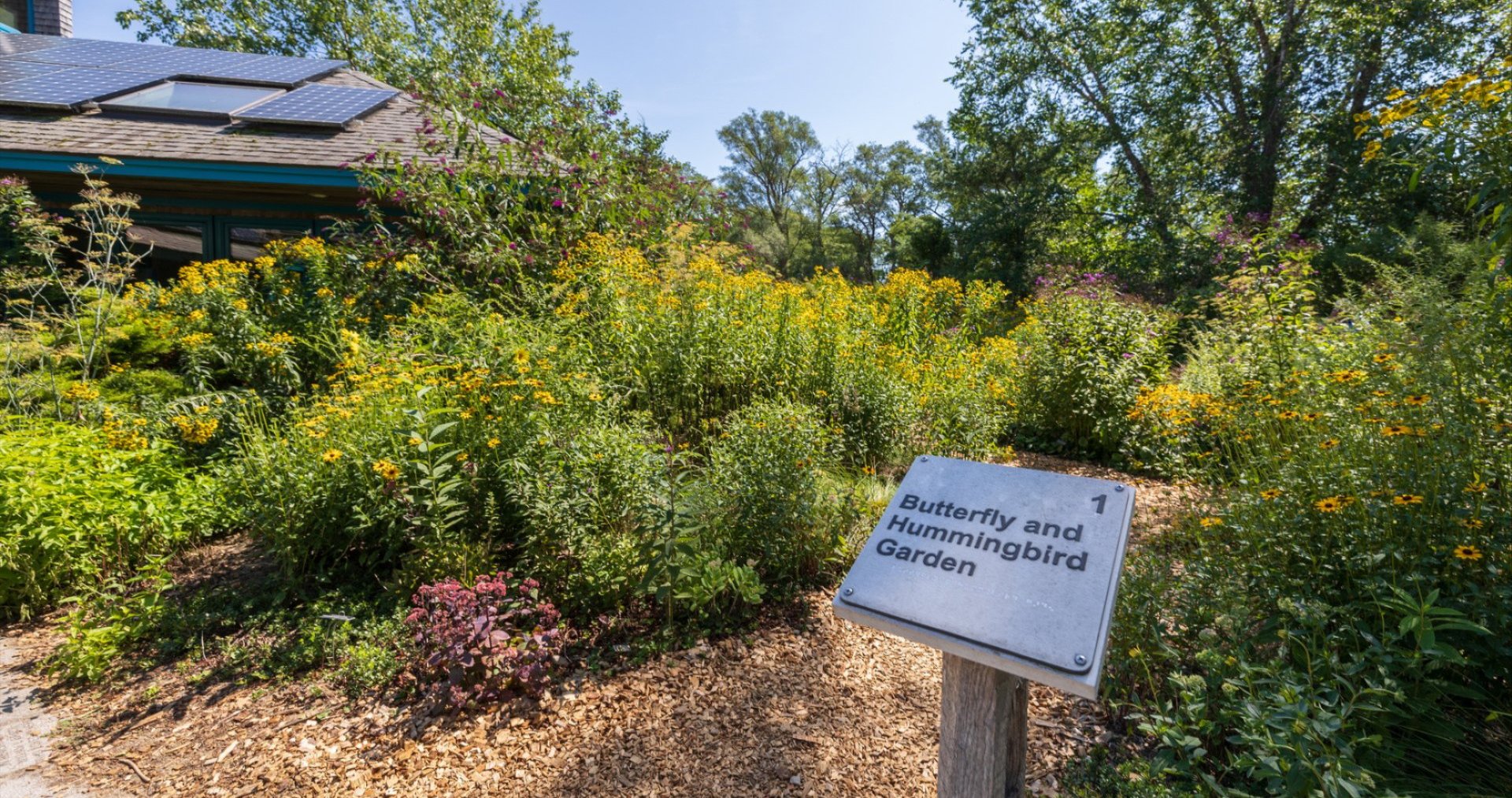
A Cape Cod Native Plant-selector
~ to help you choose the perfect native plants for your garden. |
|
|
Email kandres@apcc.org and we'll send you a CapeCodNativePlants.org decal. |
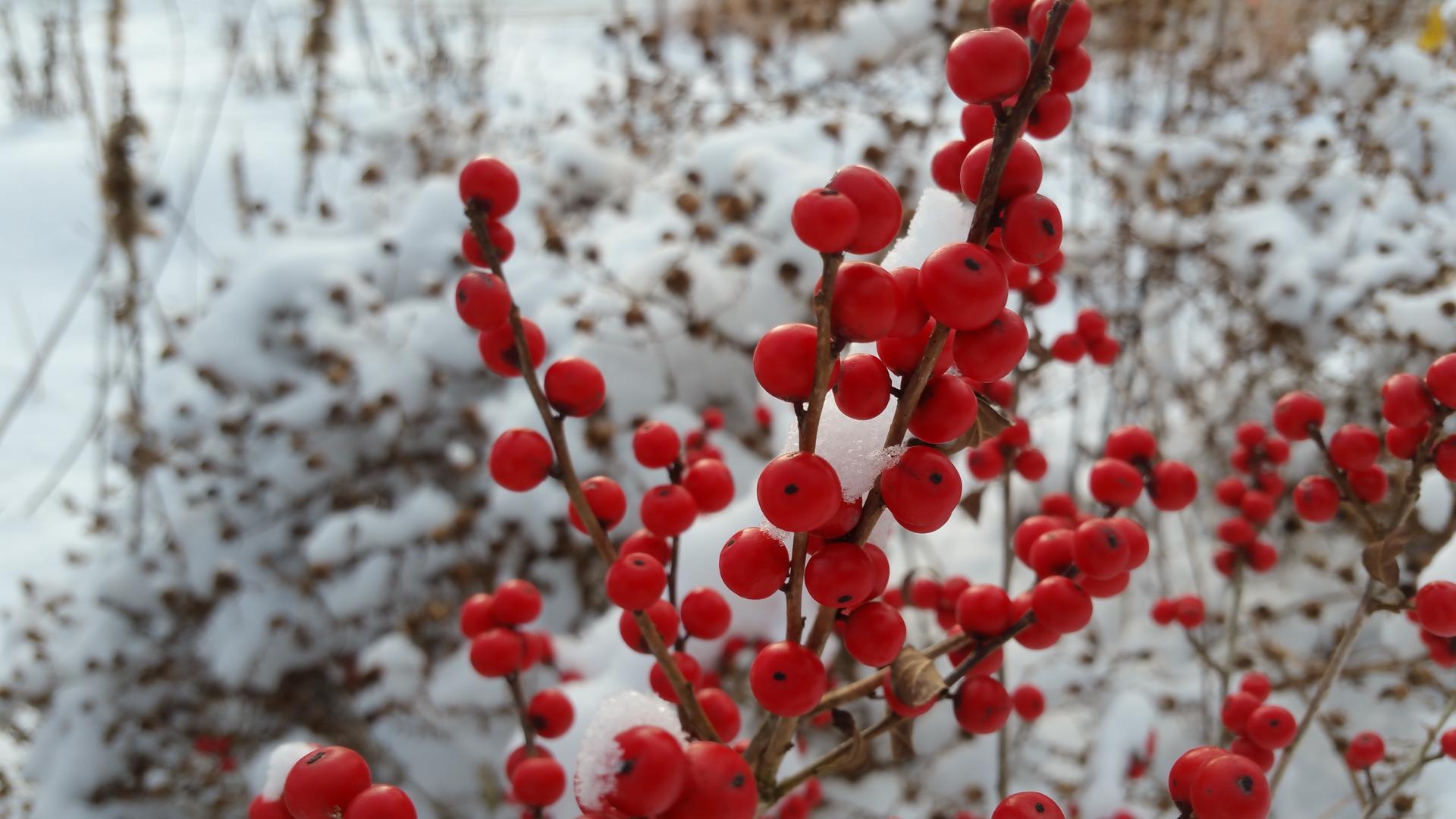
| Winterberry Ilex verticillata |
|
|
|
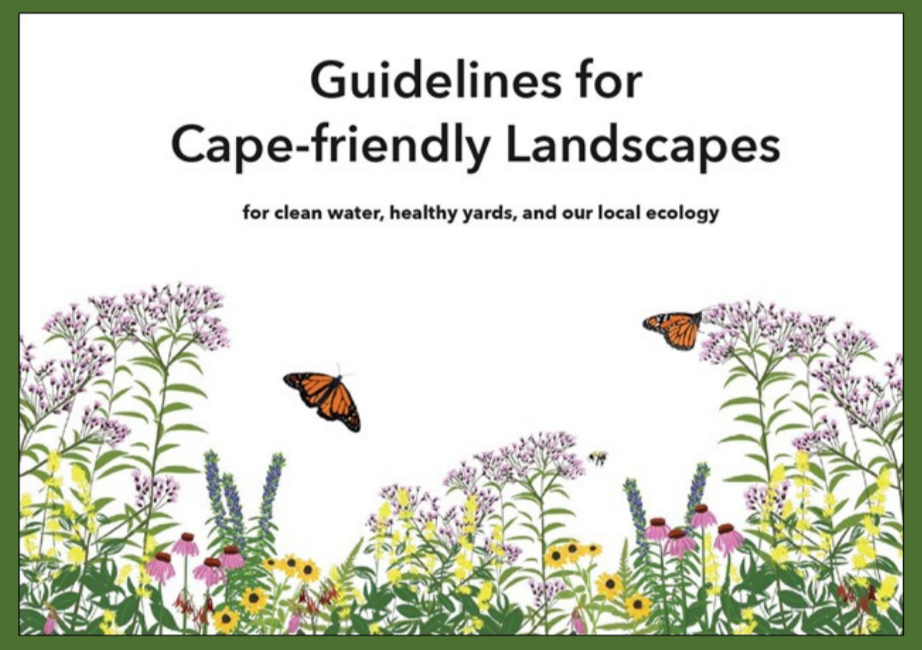
The Guidelines gives homeowners steps they can take in the design and maintenance of their properties that will support pollinators and birds, manage stormwater, conserve water, and protect the Cape's water quality. This 40-page booklet is beautifully illustrated by Marcy Ford with content that is easily digestible and supported by numerous resources for additional learning.
| |
|
We are grateful for the several retail shops that are partnering with us to make this publication more widely available: Brewster Book Store, Birdwatchers General Store, Crocker Nurseries, Wellfleet Audubon Wildlife Sanctuary, Cape Abilities Farm, Cape Cod Museum of Natural History, the Cape Cod Lavender Farm, Heritage Museums and Gardens, Titcomb's Bookshop, Sea Howl Bookshop, Soares Flower Garden Nursery, and Eight Cousins Bookshop.
If you are a retailer and would like to sell this publication at your store, please contact us. |
|
|
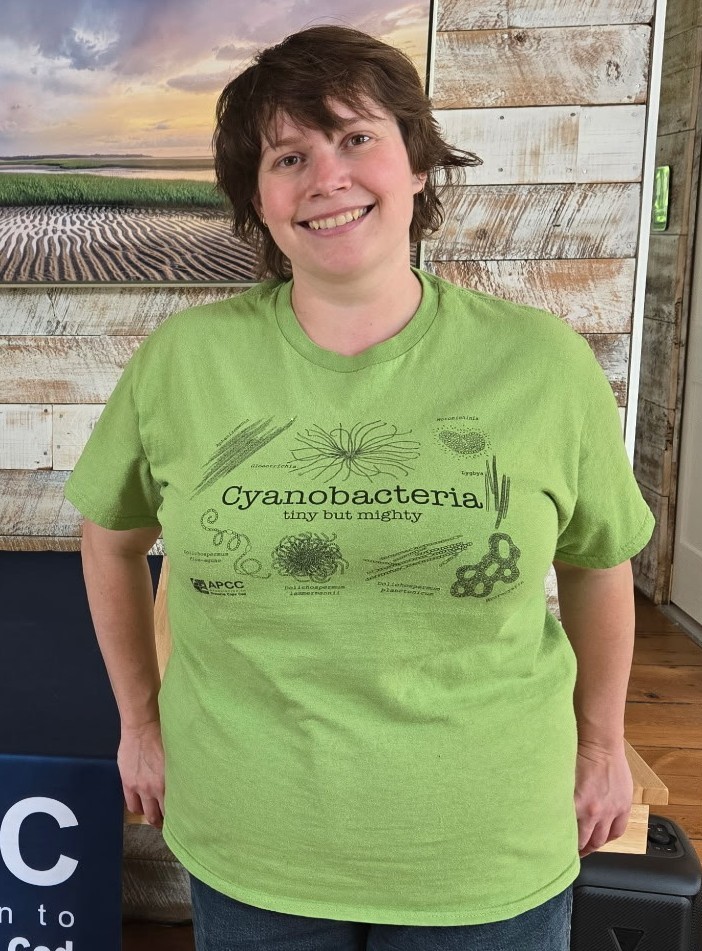
| Cyanobacteria ~ tiny but mighty
color kiwi $30 includes USPS shipping |
|
|
APCC caps
$25 -includes USPS deliver in the U.S. |
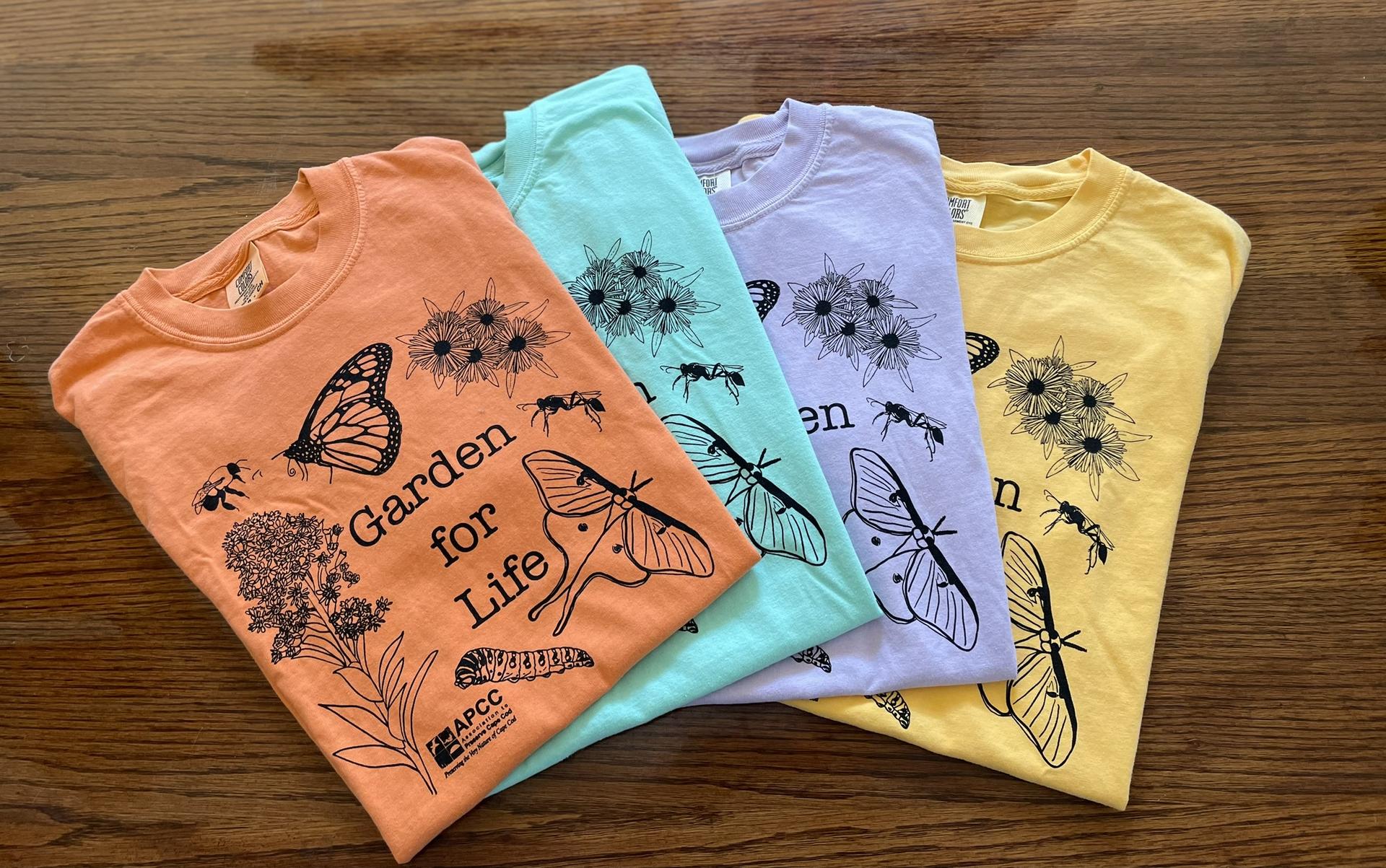
| Garden for Life T's $30 -includes USPS delivery in U.S. |
|
|
|
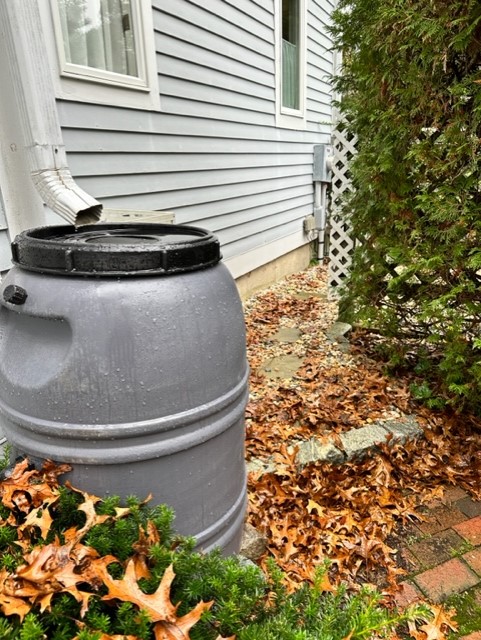
Rain Barrels for Cape Cod
Order online from Upcycle Products $122 each includes shipping to your door APCC receives a portion of the proceeds.
These are 55 gallon, repurposed food barrels. For more information, click here. |
|
|
| APCC eNewsletters.
Our weekly newsletters are archived on our website and easily shared.
You can find past newsletters and share with your friends. Encourage others to sign up for future enewsletters HERE.
|
|
|
Are you thinking of going solar? We hope so!
In partnership with E2 SOLAR in Dennis, APCC receives $500 for every solar installation when APCC is named as referral. |
|
|
|
Thank you to the homeowners who just contracted to install solar panels through E2 Solar. May the sun always shine for you! |
|
|
Expressions Gallery, 578 Main Street, Chatham
CLICK HERE |
Expressions Gallery donates 20 percent of its profits to APCC's work. |
|
|
Thank you to our business sponsors! |
|
|
APCC is rated four stars by Charity Navigator,
2025 Platinum by Candid (formerly Guidestar), and 2024 Top-Rated by GreatNonprofits. |
|
|
Our Contact Information
*{{Organization Name}}*
*{{Organization Address}}*
*{{Organization Phone}}*
*{{Organization Website}}*
*{{Unsubscribe}}* |
| |
|
|