Association to Preserve Cape Cod |
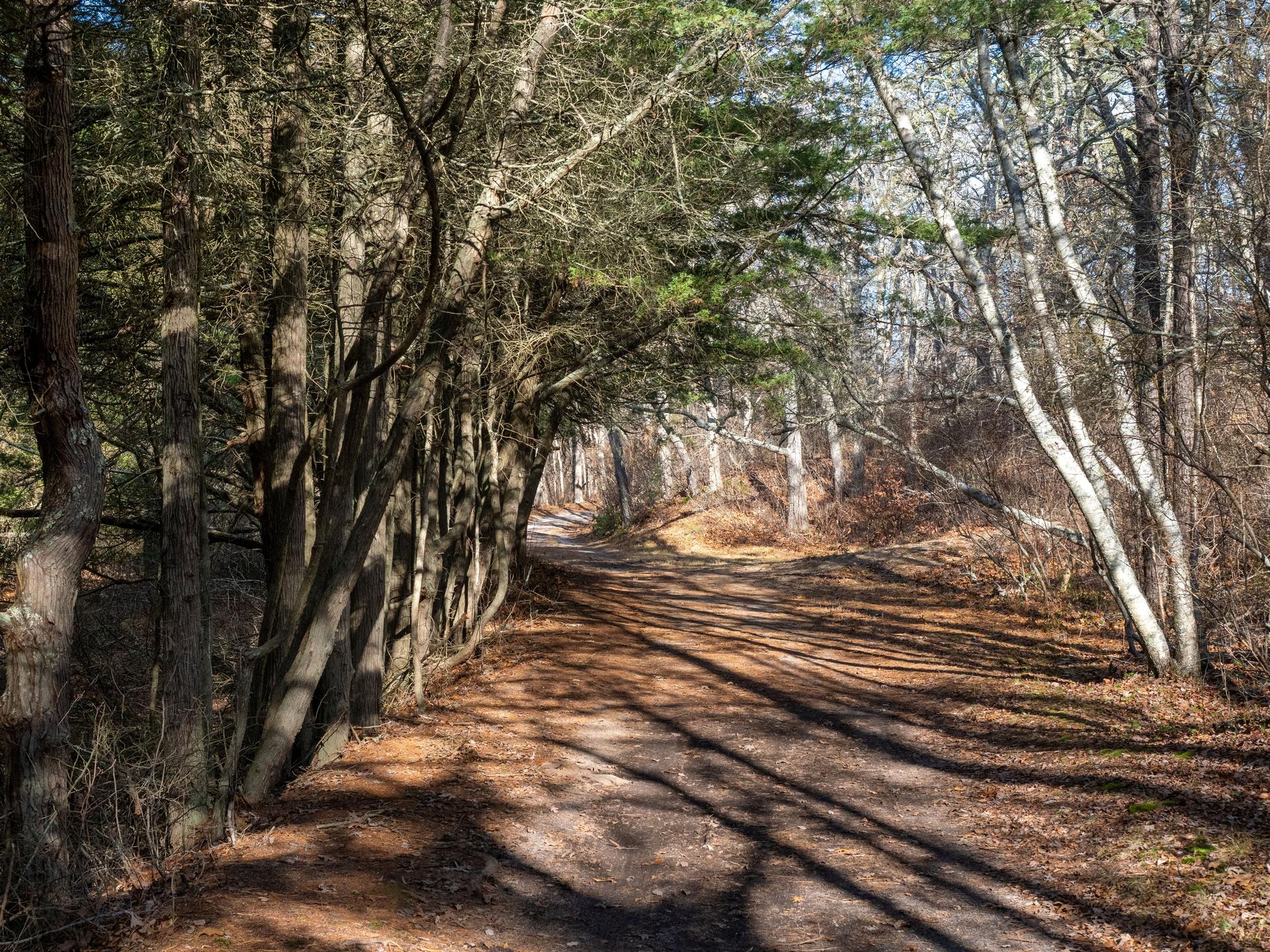
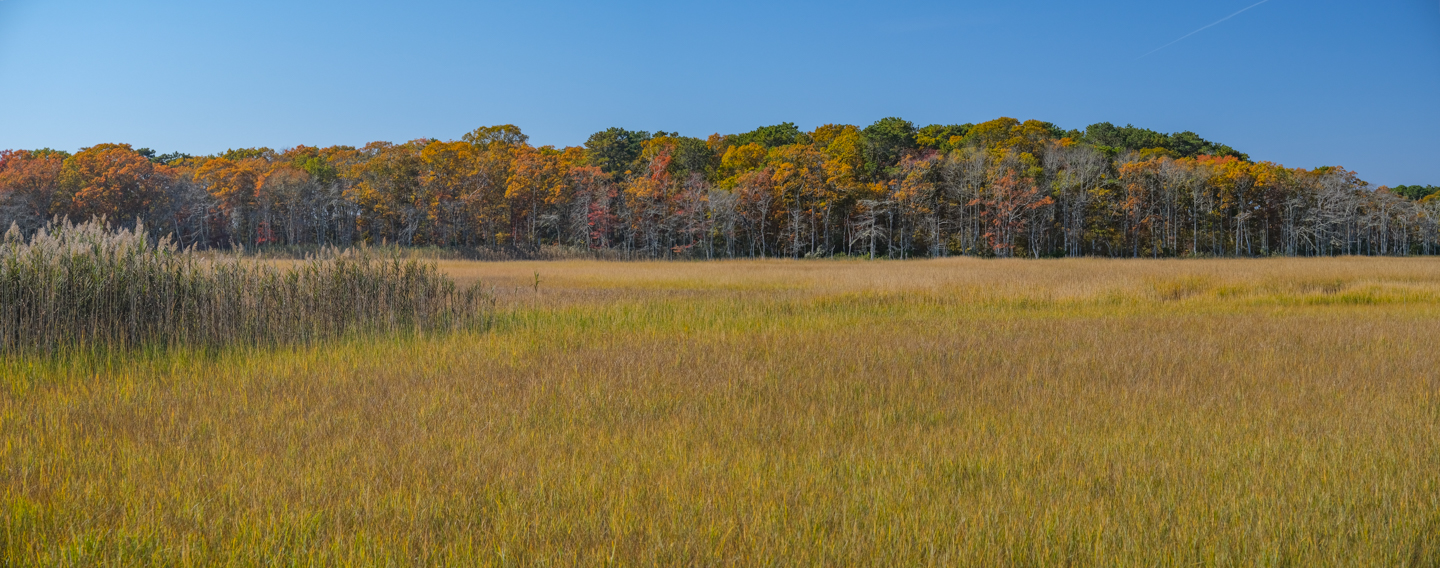
Above: Photo by Sue Machie |
|
|
| Land Protection & Water Quality
by Andrew Gottlieb, Executive Director |
Today's release of the seventh annual State of the Waters report is an opportunity to focus on one of the highest priority issues for most Cape Codders. What is happening with our water reflects the land use and waste disposal choices made over the decades. |
|
|
As has been the story since we started with this reporting, the condition of our surface waters is intolerable. Driven by intense development and alteration of sensitive land near bays and ponds, and exacerbated by reliance on septic systems and poor stormwater management within their watersheds, the decline of water quality is as obvious as it is distressing. Just read the report or see the interactive map on CapeCodWaters.org—the conclusions are obvious.
Existing development is a fact on the ground that we must mitigate through improved wastewater treatment, better management of stormwater, and restoration of wetland resources. All three of these areas have been, and remain, focus areas for APCC, and where we are seeing great progress across the region.
In addition to how mitigation and restoration help reverse the decline in surface water quality, our future is largely dependent on how well we manage and protect the 14 percent of the Cape’s land area that is not yet developed and not protected either. Eighty percent of that 14 percent, some 60,000 acres, is identified by the state as critical lands to be protected to ensure the long-term ecological well-being of Cape Cod. Simply put, if we allow the remaining open space to be developed in the same manner the Cape has been developed historically, future State of the Waters reports will be testaments to our failure.
With the advent of the new year, you can expect APCC to continue to hammer away on water quality improvement, but you can also expect a far greater emphasis on increasing land protection and preservation. With most towns moving forward on measures to reduce nutrient loading from existing development, the water quality game will be won or lost by the decisions we make about the land not yet protected. Sitting by and hoping for the best is not enough. APCC will be very active on land protection in the years ahead so that we can produce future reports documenting improved water quality and know that we all rose to the occasion. |
|
|
APCC Releases Seventh Annual State of the Waters Report: Cape Cod |
|
|
|
APCC has released its seventh annual State of the Waters: Cape Cod report, offering an updated look at water quality across coastal embayments, freshwater ponds, and public drinking water supplies. The findings show a familiar contrast: Drinking water remains largely excellent, while many coastal and pond ecosystems continue to face serious, long-standing water quality challenges driven largely by nutrient pollution from wastewater and land use. |
|
|
For coastal embayments, 94 percent of monitored waterbodies (48 of 51) received an unacceptable status. The report notes that septic systems remain the primary source of excess nutrients in embayment watersheds, and while towns are increasingly approving and advancing modern wastewater projects, measurable improvements in embayment health have not yet shown up in the data.
For freshwater ponds, 27 percent (43 of 158) were graded unacceptable. After seven years of evaluation, APCC has observed that in any given year roughly one third of graded ponds fall into the unacceptable category, with variability in which ponds cross that threshold from year to year. The report also highlights that only about 13 percent of the Cape’s ponds are monitored enough to receive a full assessment, underscoring the need for expanded and sustained monitoring.
Nineteen out of the Cape’s 21 public drinking water suppliers met all existing state and federal drinking water quality standards and were graded as “excellent.” Two of the public water supplies received a grade of “good” due to the detection of total coliform bacteria, and in both instances the public water suppliers followed up the detection with appropriate response measures. However, per- and polyfluoroalkyl substances, also known as PFAS, were detected in nearly half of the public drinking water supplies across the Cape.
APCC’s Action Plan outlines steps for homeowners, businesses, towns, and agencies to reduce nutrient inputs and accelerate wastewater and pond restoration efforts. In 2025, APCC also launched the State of the Waters Data Viewer, an online tool that lets users explore grades and underlying data for individual coastal embayments and ponds.
|
APCC Ecosystem Restoration Program |
|
|
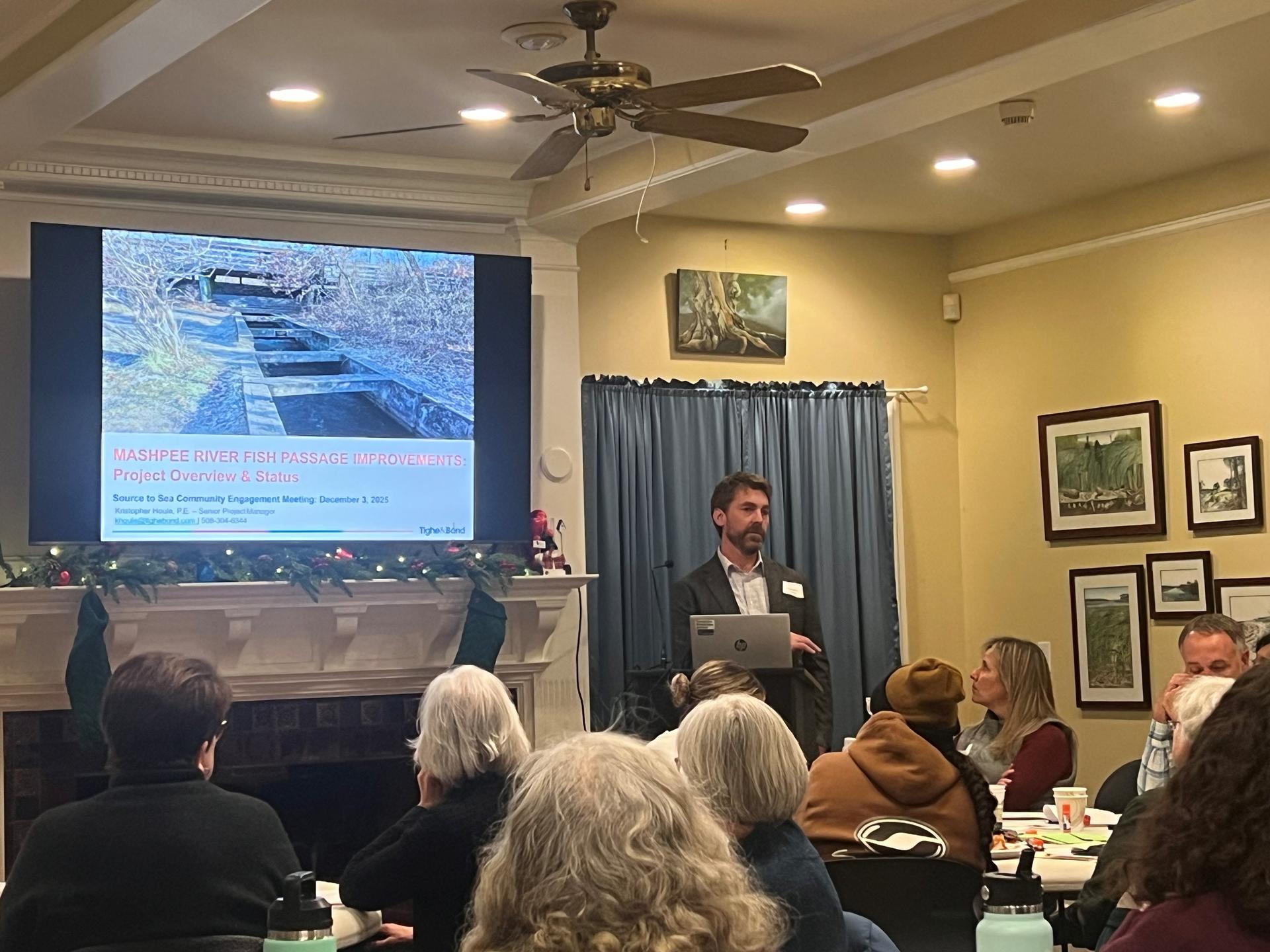
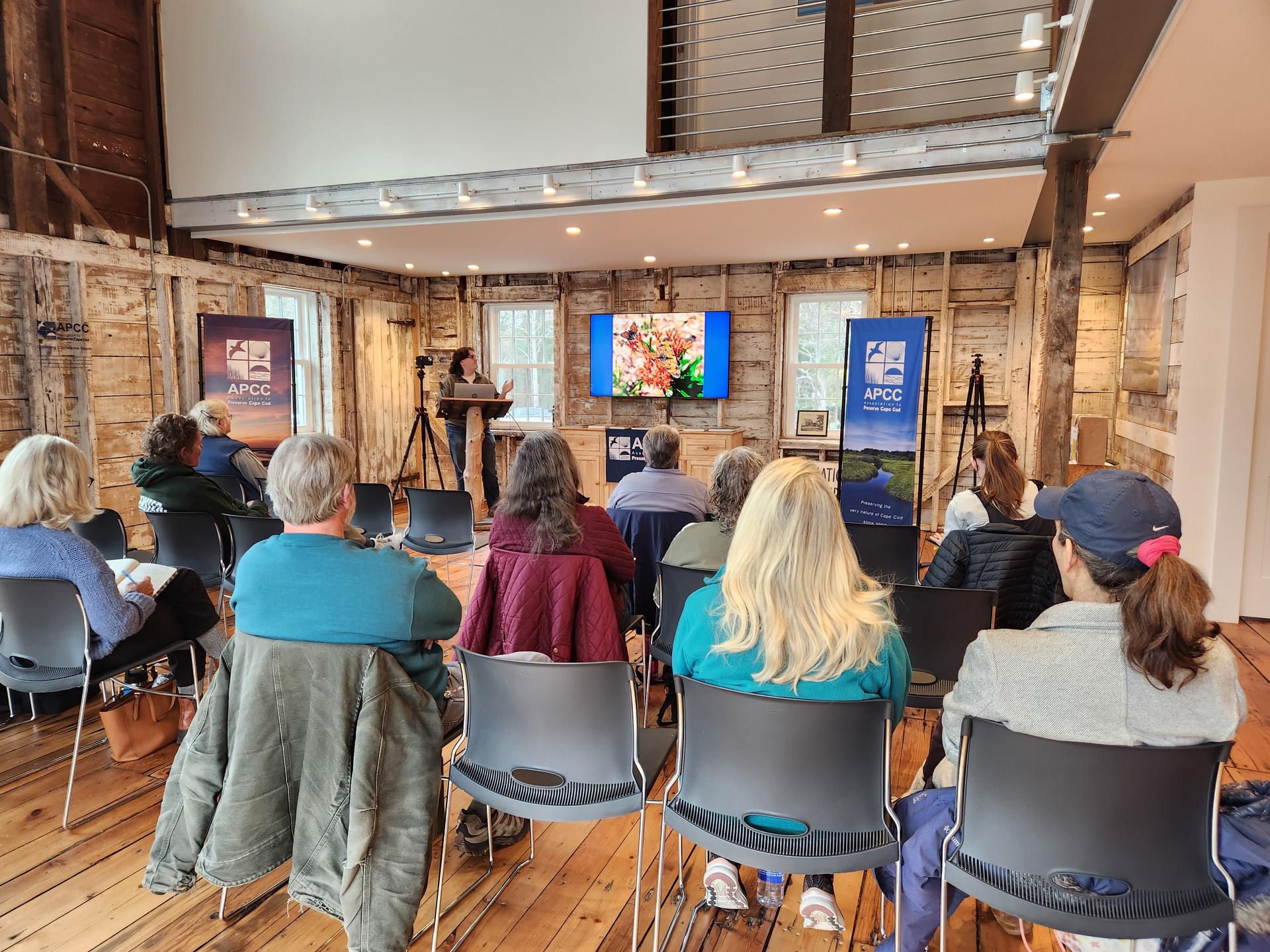
Above: Kris Houle, senior project manager with Tighe & Bond, presents at the recent Mashpee River restoration community meeting. |
Community Weighs in on Mashpee River
Fish Passage Design at Route 130
Last week, community members, Mashpee Wampanoag Tribal representatives, and project partners gathered at the Waquoit Bay National Estuarine Research Reserve for the second community meeting on the Mashpee River restoration. The focus of the evening was the Route 130 dam and fish ladder at Mill Pond, including preliminary 30 percent designs for dam removal and improved fish passage, and a deeper conversation about Mill Pond’s cultural, ecological, and community roles.
The town of Mashpee and its partners presented a nature-based design concept that would remove the aging dam under Route 130—rated a significant hazard by the state—restore a continuous river channel and install a wider stream crossing that meets modern standards. The design funded by USDA Natural Resources Conservation Service in partnership with the Cape Cod Conservation District aims to improve fish passage and river function by reconnecting upstream and downstream habitats, adding in-stream features to enhance habitat complexity, and improving sediment movement to address long-standing buildup in the system. By simplifying structures and relying more on natural processes, the concept also seeks to reduce long-term operational and maintenance needs.
Discussion and questions centered on the future of Mill Pond, future access and safety at Route 130, how the restored river would function without the impoundment, management of water temperature and shade, protection of cultural resources, and how long the Tribe and broader community will have meaningful opportunities to shape the project.
Project partners stressed that the 30 percent design stage is precisely when public input can most strongly influence the outcome, with another but more limited opportunity at 60 percent design. Feedback from this meeting and future engagements will guide refinements to river alignment, habitat features, access for harvest and recreation, and interpretive elements, so that the final design reflects both the shared goals of the project team and the community.
APCC and the project team extend their sincere thanks to everyone who participated. The evening underscored that restoring fish passage and addressing aging infrastructure must go hand in hand with honoring cultural connections, community history, and the Mashpee River’s future as a living, thriving river for generations to come. |
Salt Marsh Ditch Maintenance at Oyster Pond, West Falmouth |
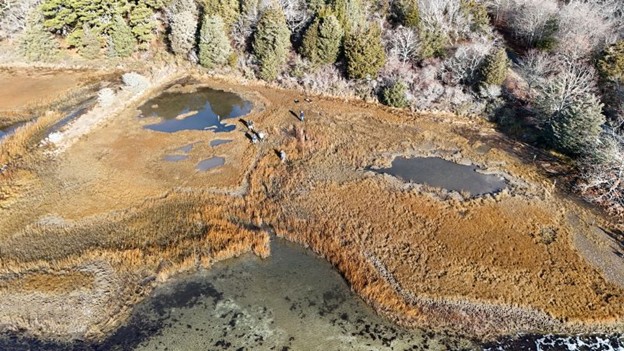
Above: Drone imagery of Cape Cod Mosquito Control Project working at Oyster Pond. The goal is to improve drainage in the pool near the top left of the image. |
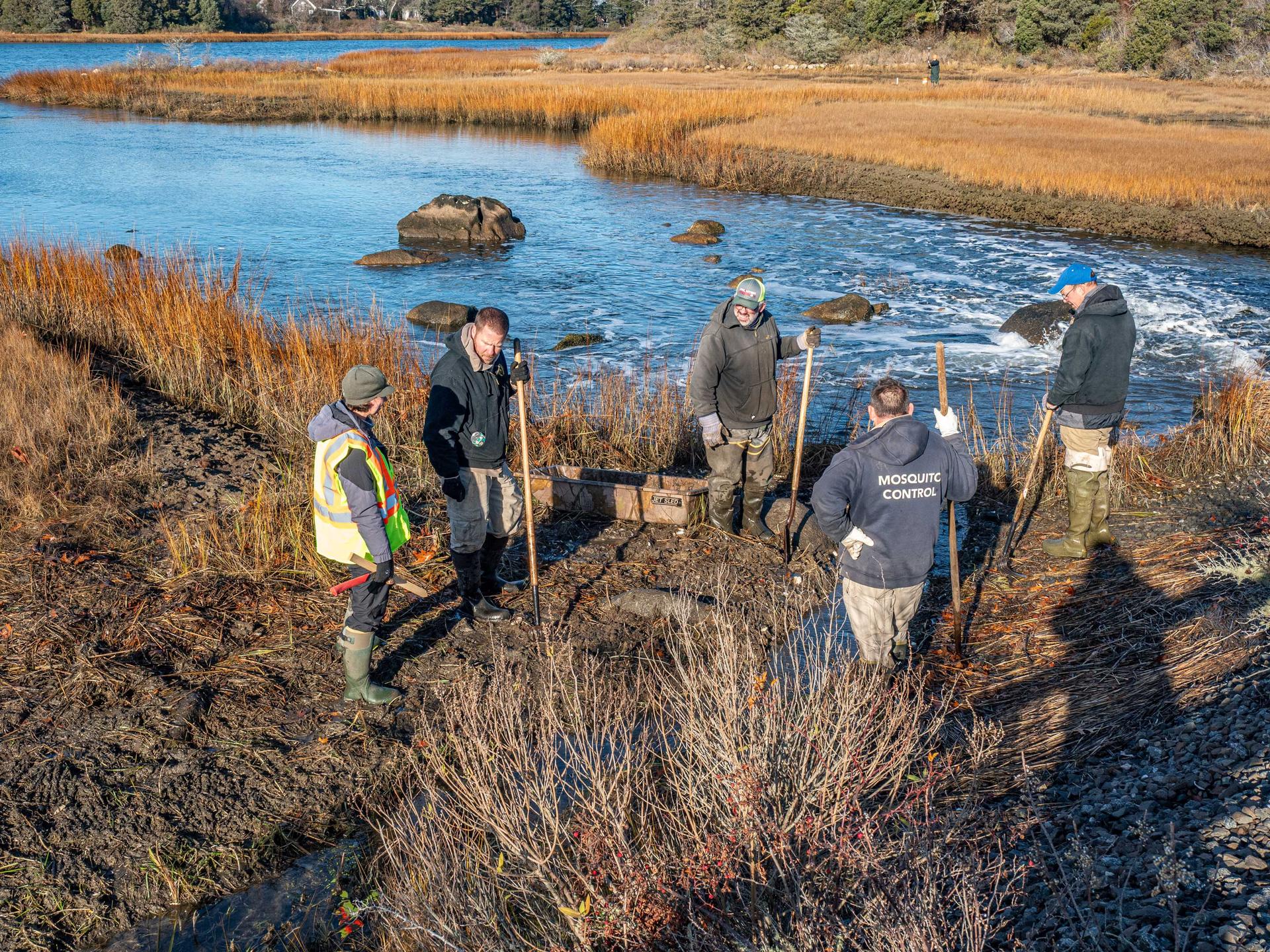
APCC collaborated with the Cape Cod Mosquito Control Project to clear two pre-existing ditches in a section of Oyster Pond salt marsh in West Falmouth to improve drainage of the marsh and restore vegetation to these areas. This work represents an exciting step forward in the salt marsh restoration process and an opportunity for an ongoing partnership with CCMCP.
The CCMCP began in 1928 under the Massachusetts Department of Agriculture’s State Reclamation and Mosquito Control Board and is the first organized mosquito control project in Massachusetts. CCMCP manages the mosquito population below a nuisance level by using targeted, best management practices, including water management strategies to mitigate mosquito breeding in standing water. Through the CCMCP's existing general permit, we can improve drainage to benefit salt marsh health and address CCMCP's mandate to reduce mosquito breeding habitat to protect public health.
While some pools on the marsh surface are natural features, too much standing water can lead to vegetation loss and subsidence. Sea level rise will result in higher high tides and more frequent flooding, exacerbating the negative impacts of standing water. Maintaining pre-existing ditches now means improving salt marsh drainage before subsidence advances and rehabilitating natural ecosystem processes.
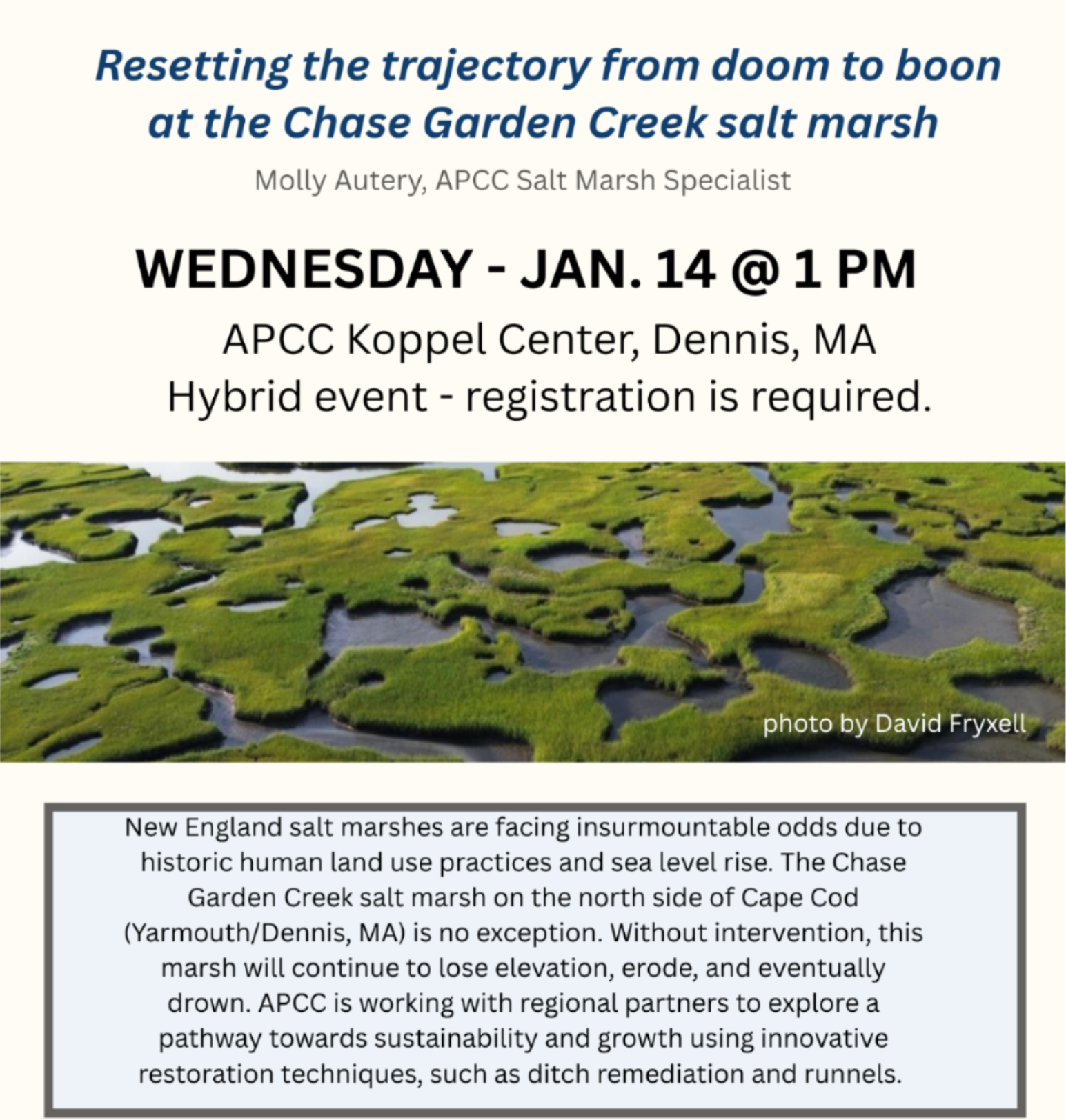
APCC and CCMCP identified two ditches at Oyster Pond for maintenance this December, with the goal of facilitating better drainage in two pools on the marsh surface. By improving drainage during low tide, APCC and CCMCP aim to reduce the negative impacts of standing water on the marsh surface and encourage healthier, more robust vegetation growth in unvegetated, bare areas. Ditch maintenance with CCMCP is part of a larger effort to restore the integrity of the salt marsh platform before replacing the undersized culvert under the Shining Sea Bikeway.
Planning, design and permitting are funded by a NOAA Restoration Center Transformational Habitat Grant awarded to APCC. |
Above: Jordan Mora, APCC lead ecologist and science advisor, discusses ditch maintenance at Oyster Pond with Cape Cod Mosquito Control Project staff. Photo by Gerald Beetham. |
Pond Species Spotlight: Freshwater Mussels |
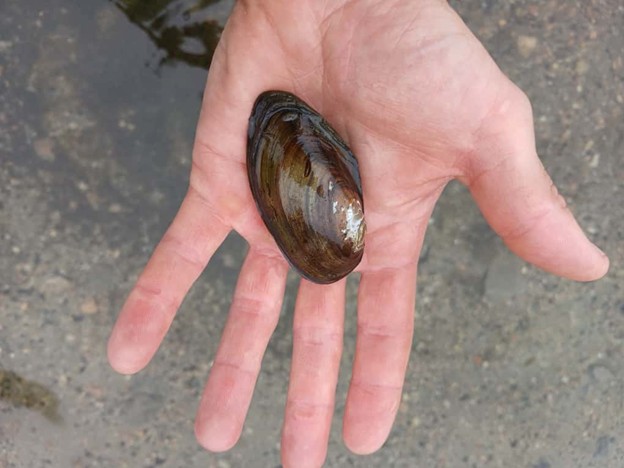
Have you seen mussel shells along the shore or observed trails in the sand or the shell pointing upward from the sediment so they can filter the water for food?
There are 12 freshwater mussel species in Massachusetts and half are species at risk protected under the Massachusetts Endangered Species Act. Mussels are highly susceptible to habitat degradation due to their limited mobility, filter-feeding, and dependence on fish. They are among our most imperiled freshwater species groups. There are four key species found in Cape Cod ponds: eastern elliptio (Elliptio complanata), alewife floater (Anodonta implicata), eastern pondmussel (Ligumia nasuta), tidewater mucket (Leptodea hyalina)—the latter two are species at risk.
Like their saltwater cousins, freshwater mussels eat plankton and other small items by filtering water that passes over them. They remove debris, such as silt, algae, and bacteria, and can sequester chemicals and heavy metals if present, making the water cleaner for everyone. One mussel can filter up to 18 gallons of water in a single day. That's a lot of cleaning!
In winter in Massachusetts, freshwater mussels burrow deeper into the sediment for warmth and protection, slowing down their filter-feeding but remaining alive. Brooding females hold onto their larval glochidia until the warmer spring/summer water temperatures trigger their release to find host fish like trout or bass for the next stage of their life cycle.
So, if you're looking for mussels in winter in Massachusetts, you'll likely find just the buried shells, as they're dormant and hidden, waiting for spring to continue their remarkable life cycle. To learn more about freshwater mussels in Massachusetts, visit the MassWildlife website. |
|
|
Every fall, many of us decorate our stoops with a colorful variety of gourds and pumpkins, but have you ever thought about who’s pollinating these plants? When a plant forms fruit, that means that pollination has been successful, and the production of seeds, and a rich, nutrient-dense surrounding begins to form for animals like humans to eat, to tempt us to spread their seeds further.
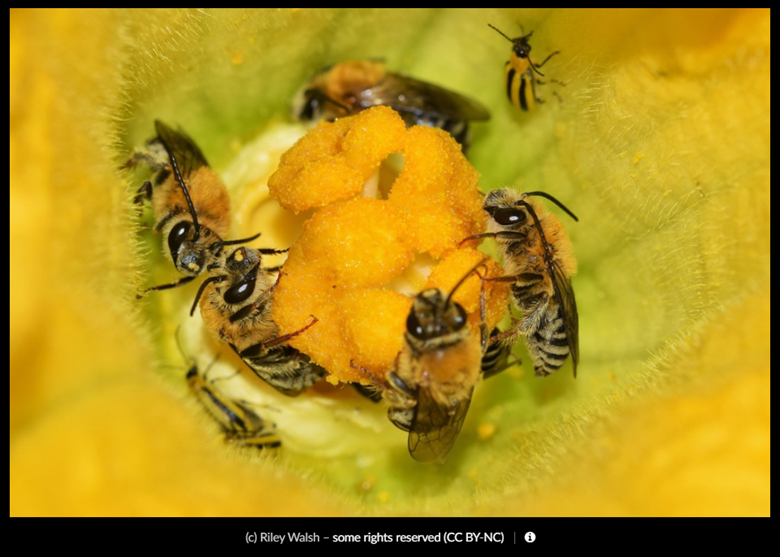
While you might assume this agricultural crop is pollinated by European honeybees, we actually have someone else to thank for our favorite fall meals or colorful décor. Meet Peponapis pruinose, a species of squash bee. This solitary native bee is the only member of its genus in the Eastern U.S., following the plants as humans moved them across the landscape. This species specializes on the pollination of members of the Cucurbitaceae family, which includes squash, pumpkins, zucchini, watermelon, cucumbers, and some species of gourds.
While honeybees and other generalist bee species fly later in the day, P. pruinose is the early bird that gets the worm, as females will fly at dawn, perfectly timing their arrival with the morning bloom of these squash flowers. Meanwhile, the male bees of this species still have them beat, as they treat squash flowers like it’s a black Friday sale! They’ve been camped out in these squash flowers overnight, waiting for a female to arrive in the morning.
The pollen-carrying scopa (hairs) on their legs are adapted to be especially effective in carrying the large grains of squash pollen. After pollinating and hopefully finding a male tucked inside a flower, females will burrow a tunnel with multiple chambers branching off and in each she will lay an egg, provisioning it will pollen. She closes the tunnel and dies. When the larvae hatch, they will feed on the pollen collected from squash plants over the winter and develop into adult bees that, come early summer, will emerge as the next generation of squash bees.
Protecting this important pollination service means taking a look at how we are growing our plants. Next time you’re ready to carve a pumpkin or bake some butternut squash, support the local organic farmer with your purchase.
If you grow squash in your own garden, be cognizant of the needs these little bees have—a pesticide-free habitat and a patch of undisturbed soil where generations of squash bees can live their lives. And keep your eyes peeled for these charismatic little bees, snuggled up in the flowers, as this specialist species is the success behind your fall harvest! |
|
|
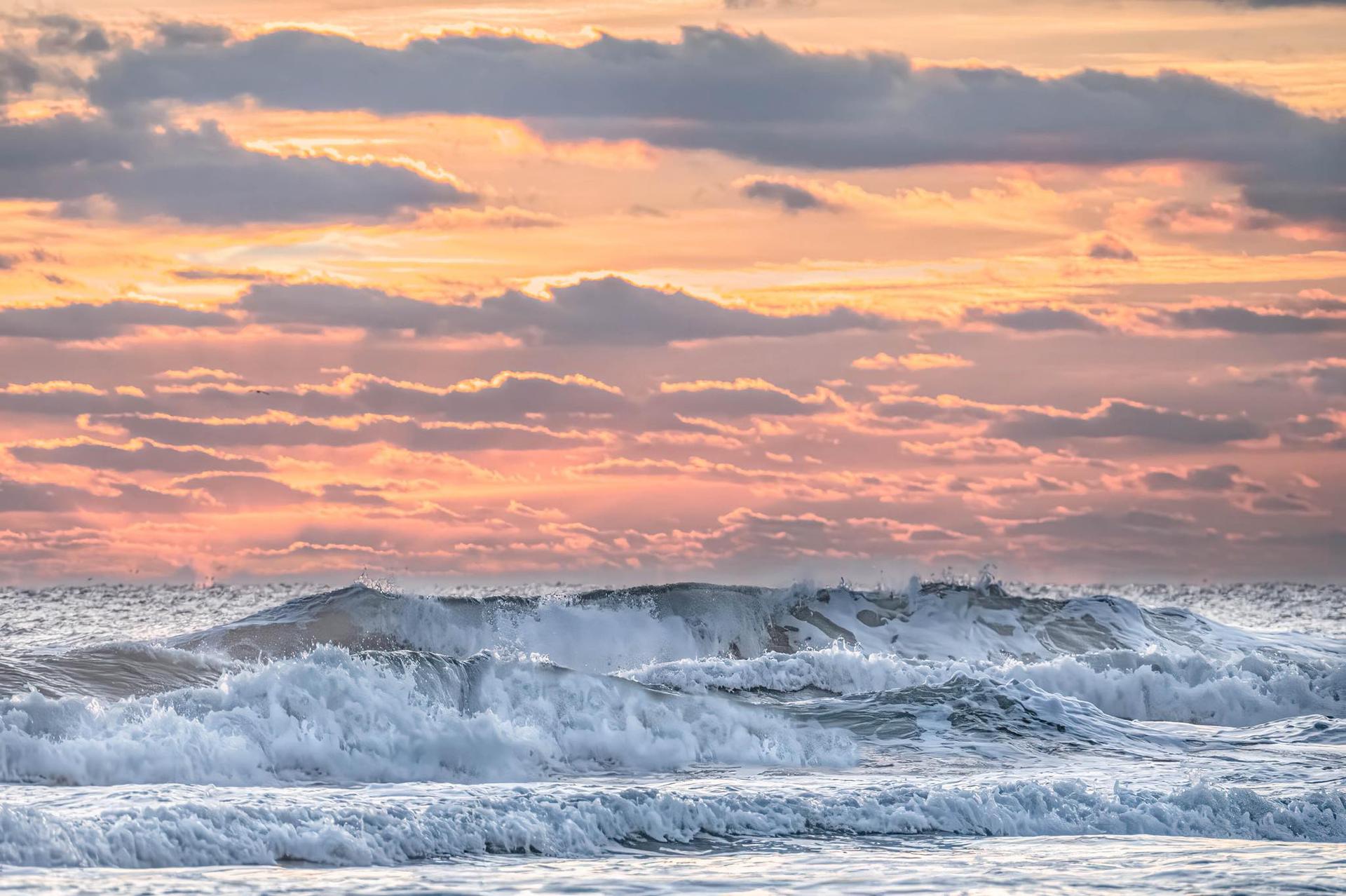
| Expressions Gallery is offering a $250 gift certificate toward a custom aluminum print from the gallery to donors who gift APCC $1,000 or more before December 31, 2025. |
|
|
|
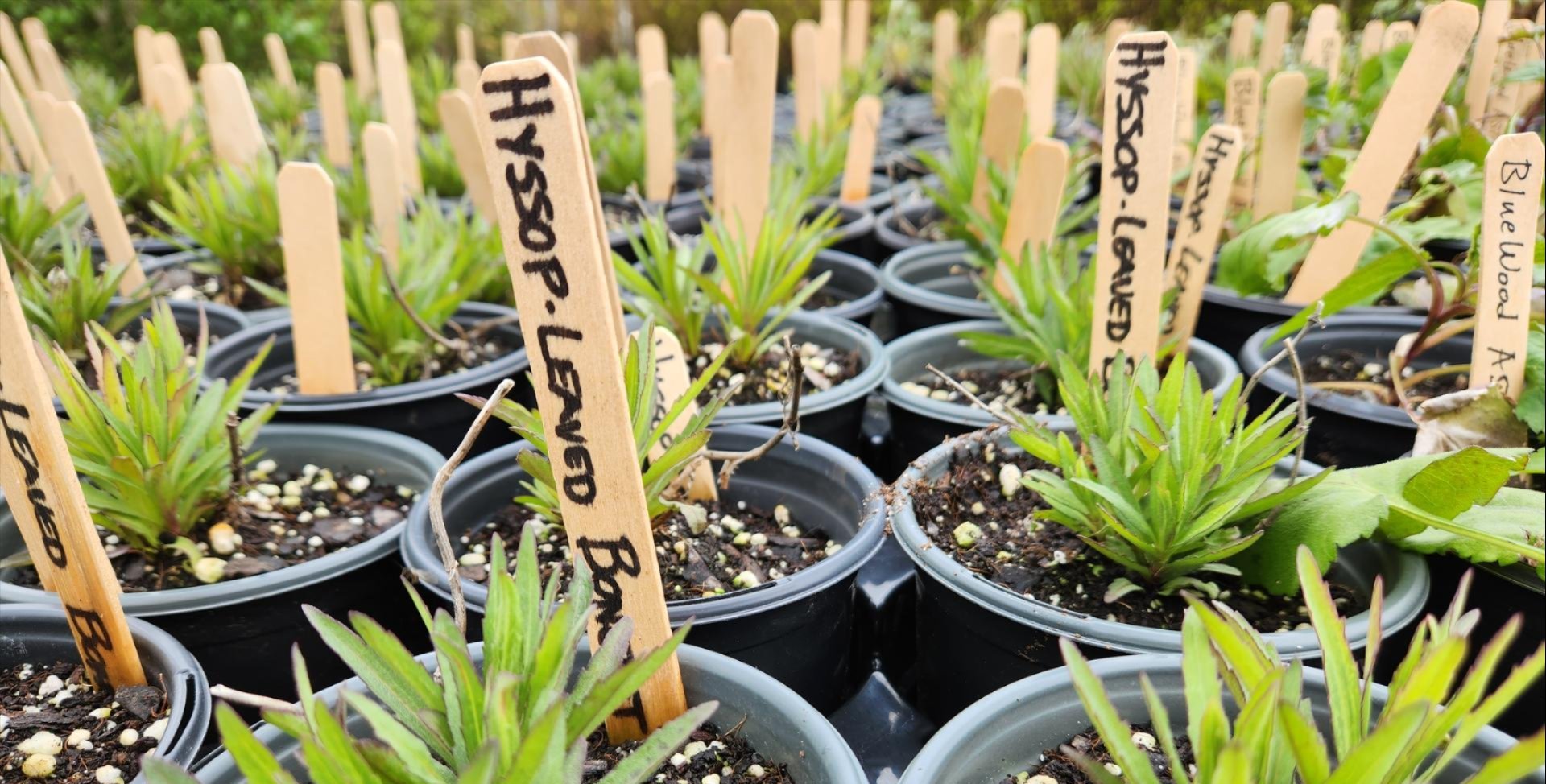
Propagating Native Plants: Navigating Restoration Demand
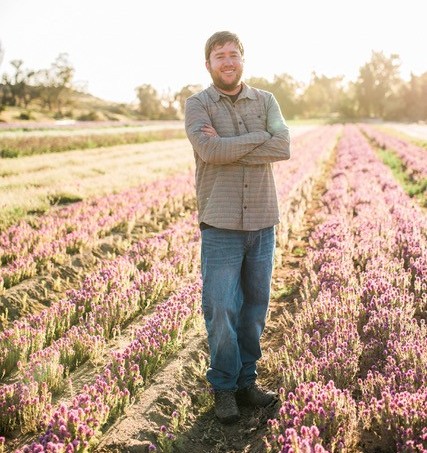
with Wilkinson Ecological Design Nursery Manager Dustin Johnson Friday, December 12, 2025
1:00 p.m. — 2:30 p.m. Hybrid Presentation
|
|
|
Wilkinson Ecological is known throughout New England as a leading ecological restoration firm that provides both design and land management of complex ecological restoration and bioengineering projects that protect local habitat and enhance land value.
As the nursery manager, Dustin will share his years of experience in his role with the company in propagating native plants used in ecological restoration projects. |
|
|
| Growing Native Plants for Sale
with Russ Norton, Cape Cod Cooperative Extension Horticulture & Agriculture Educator Tuesday, December 16th 10:00 a.m. — 12:00 p.m. Hybrid Presentation |
|
|
Russ Norton will lead the workshop, which will be geared to those interested in growing native plants on a larger scale and exploring production for sale. In his presentation, Russ will provide an overview of growing native plants from sowing to sale, with a focus on the technical aspects of native plant production. Hands-on activities will follow this in-depth presentation, so get ready to play in the soil! |
This talk is offered as part of the Cape Cod Native Plant Growers’ Cooperative Program to provide information to prospective growers. The program is made possible by funding from the Cape Cod and Islands License Plate Grant program and the Kelley Foundation. |
|
|
|
Genetic Considerations in Plant Production with Matt Garambone of Beechwood Environmental
Thursday, January 15th 1:00 p.m. — 3:00 p.m. Hybrid Presentation |
|
|
APCC’s Cape Cod Native Plant Growers' Cooperative presents Matthew Garrambone of Beechwood Environmental for a discussion on the importance of genetic diversity in plant populations, the benefits of growing from seed, and an overview of genetic considerations in nursery production. |
This talk is offered as part of the Cape Cod Native Plant Growers’ Cooperative Program to provide information to prospective growers. The program is made possible by funding from the Cape Cod and Islands License Plate Grant program and the Kelley Foundation. |
|
|
A Cape-wide Conservation Event Calendar |
The Compact of Cape Cod Conservation Trusts (“the Compact”) and its nonprofit members launched a new regional calendar of events. The Conservation Calendar includes programs across Cape Cod hosted by these groups. The goal of the calendar is to encourage visitors and residents to take part in nature and environmental events. You can always find the link to the calendar on APCC's website under News & Events.
|
If you are a farmer or someone who wants to grow native plants to sell, or just want to be updated on the program's development, please submit an interest form that appears on our webpage. We will be sending periodic email notices of workshops and meetings.
Funding for the project is provided by Barnstable County and its Economic Development Council License Plate Grant Program through the Cape Cod Commission and the Kelley Foundation. |
Four talks for prospective growers as part of the Cape Cod Native Plant Growers' Cooperative program have been presented thus far, with several scheduled in the upcoming weeks. These past workshops can be viewed here:
Registration for upcoming talks can be found on our events page.
|
|
|
A Cape Cod Native Plant-selector
~ to help you choose the perfect native plants for your garden. |
|
|
Email kandres@apcc.org and we'll send you a CapeCodNativePlants.org decal. |
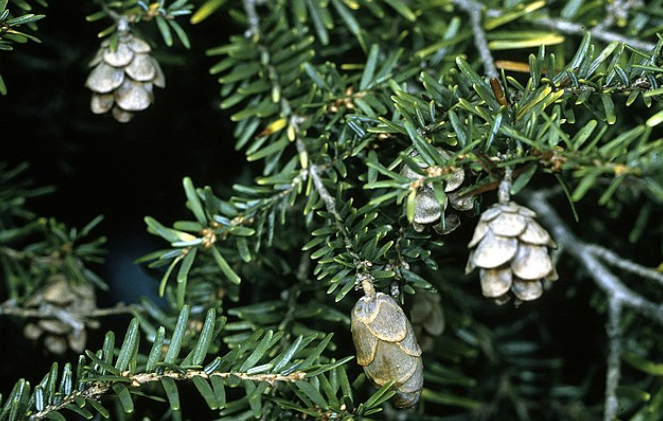
| Photo credit: Tintazul / Wikimedia Commons / Public Domain |
Eastern Hemlock Tsuga canadensis |
|
|
|
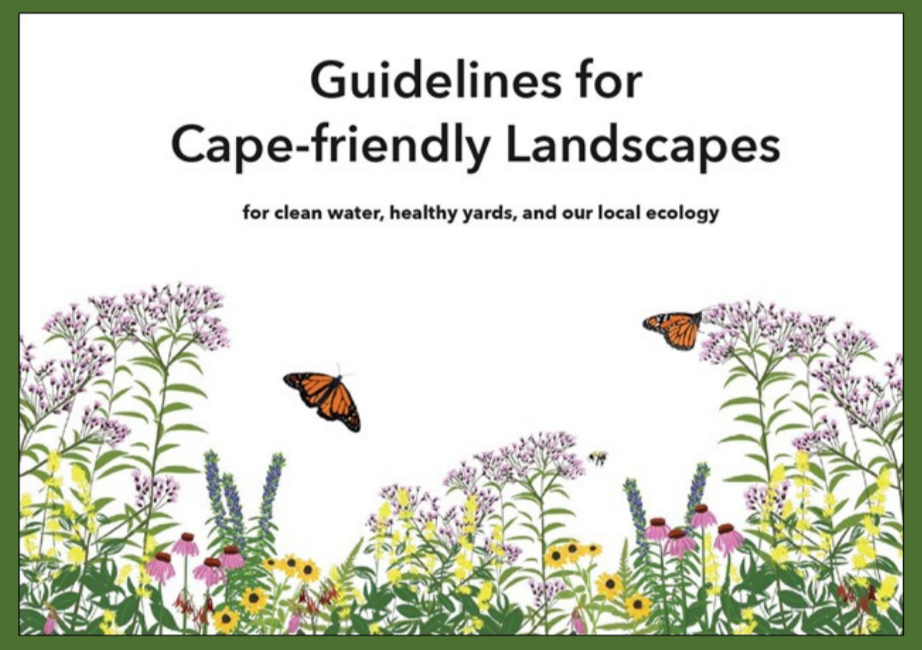
The Guidelines gives homeowners steps they can take in the design and maintenance of their properties that will support pollinators and birds, manage stormwater, conserve water, and protect the Cape's water quality. This 40-page booklet is beautifully illustrated by Marcy Ford with content that is easily digestible and supported by numerous resources for additional learning.
|
|
|
We are grateful for the several retail shops that are partnering with us to make this publication more widely available: Brewster Book Store, Birdwatchers General Store, Crocker Nurseries, Wellfleet Audubon Wildlife Sanctuary, Cape Abilities Farm, Cape Cod Museum of Natural History, the Cape Cod Lavender Farm, Heritage Museums and Gardens, Titcomb's Bookshop, Sea Howl Bookshop, Soares Flower Garden Nursery, and Eight Cousins Bookshop.
If you are a retailer and would like to sell this publication at your store, please contact us. |
|
|
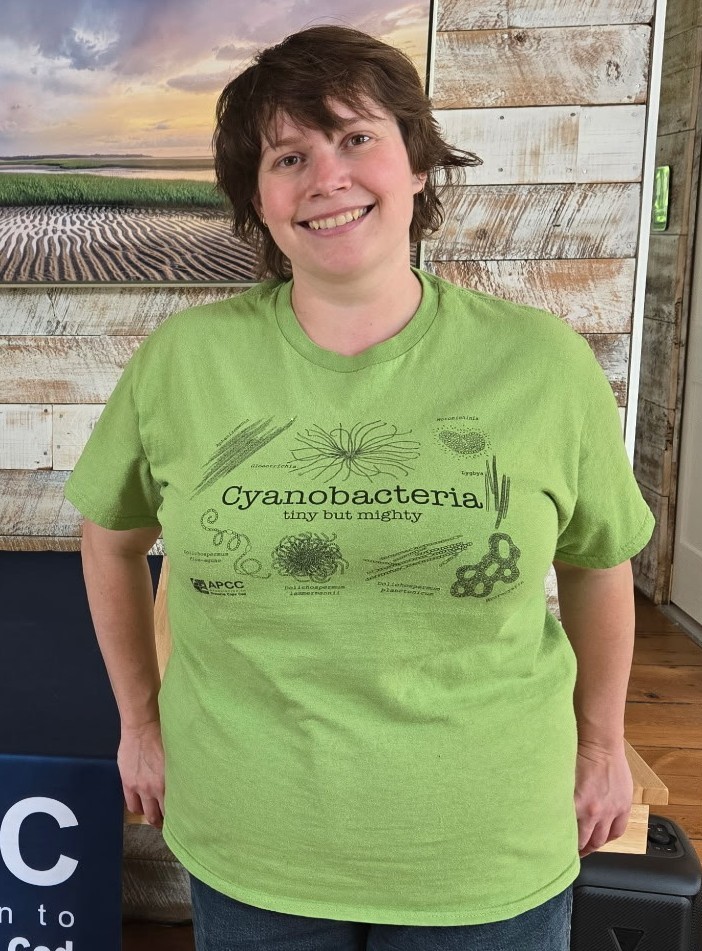
| Cyanobacteria ~ tiny but mighty
color kiwi $30 includes USPS shipping |
|
|
APCC caps
$25 -includes USPS deliver in the U.S. |
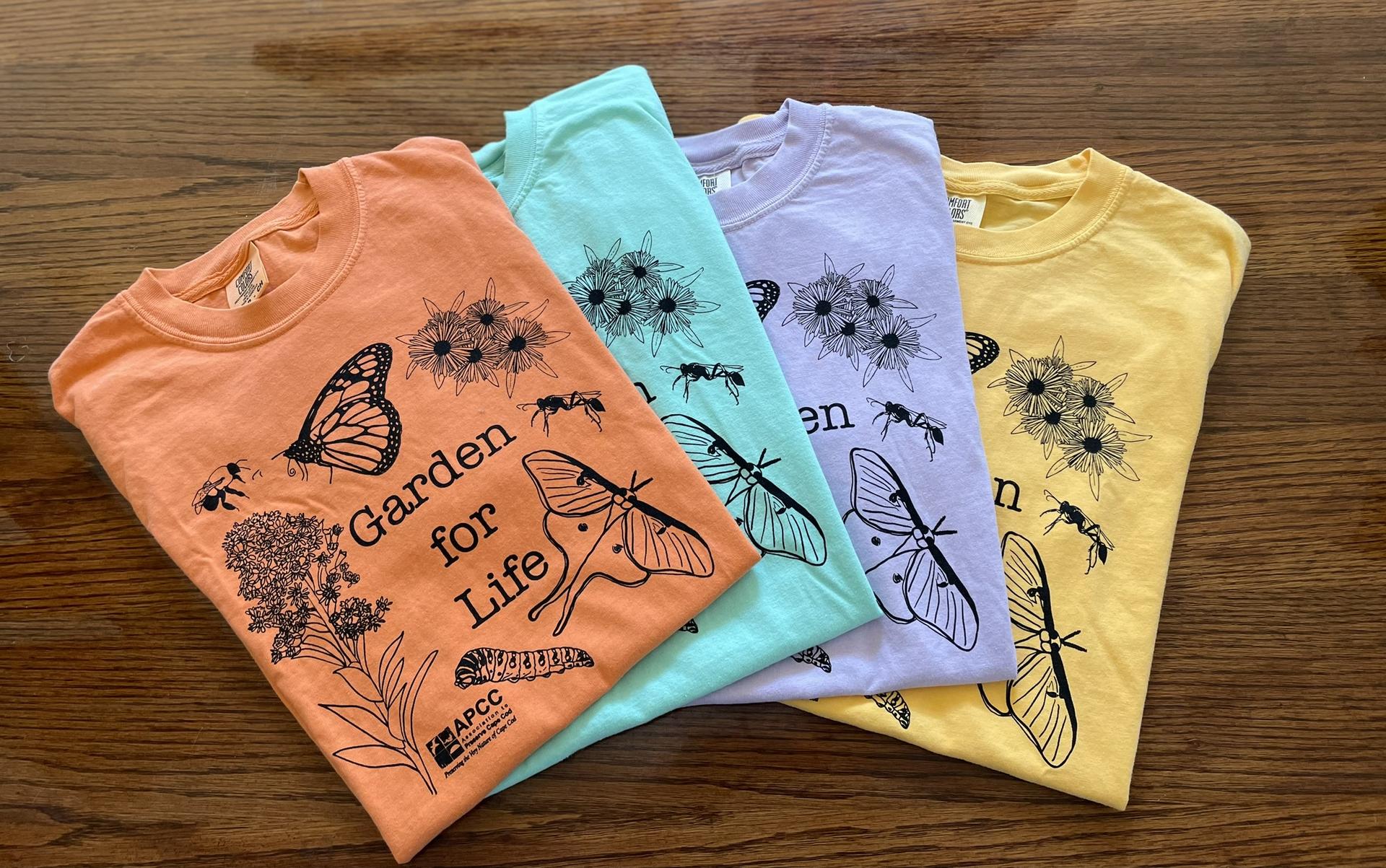
| Garden for Life T's $30 -includes USPS delivery in U.S. |
|
|
|
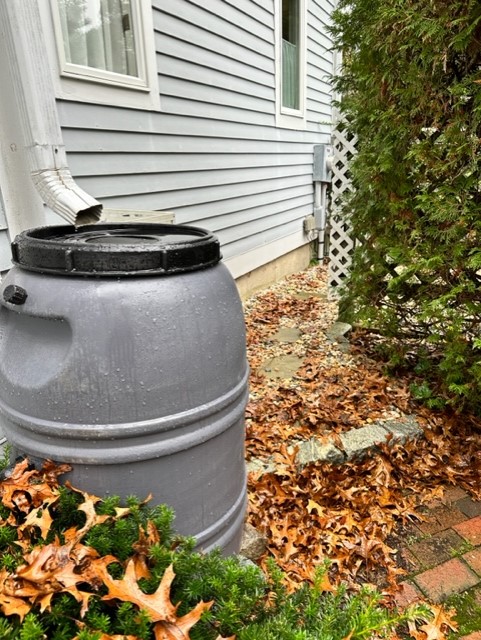
Rain Barrels for Cape Cod
Order online from Upcycle Products $122 each includes shipping to your door APCC receives a portion of the proceeds.
These are 55 gallon, repurposed food barrels. For more information, click here. |
|
|
| APCC eNewsletters.
Our weekly newsletters are archived on our website and easily shared.
You can find past newsletters and share with your friends. Encourage others to sign up for future enewsletters HERE.
|
|
|
Are you thinking of going solar? We hope so!
In partnership with E2 SOLAR in Dennis, APCC receives $500 for every solar installation when APCC is named as referral. |
|
|
|
Thank you to the homeowners who just contracted to install solar panels through E2 Solar. May the sun always shine for you! |
|
|
Expressions Gallery, 578 Main Street, Chatham
CLICK HERE |
Expressions Gallery donates 20 percent of its profits to APCC's work. |
|
|
Thank you to our business sponsors! |
|
|
APCC is rated four stars by Charity Navigator,
2025 Platinum by Candid (formerly Guidestar), and 2024 Top-Rated by GreatNonprofits. |
|
|
Our Contact Information
*{{Organization Name}}*
*{{Organization Address}}*
*{{Organization Phone}}*
*{{Organization Website}}*
*{{Unsubscribe}}* |
| |
|
|