Association to Preserve Cape Cod |
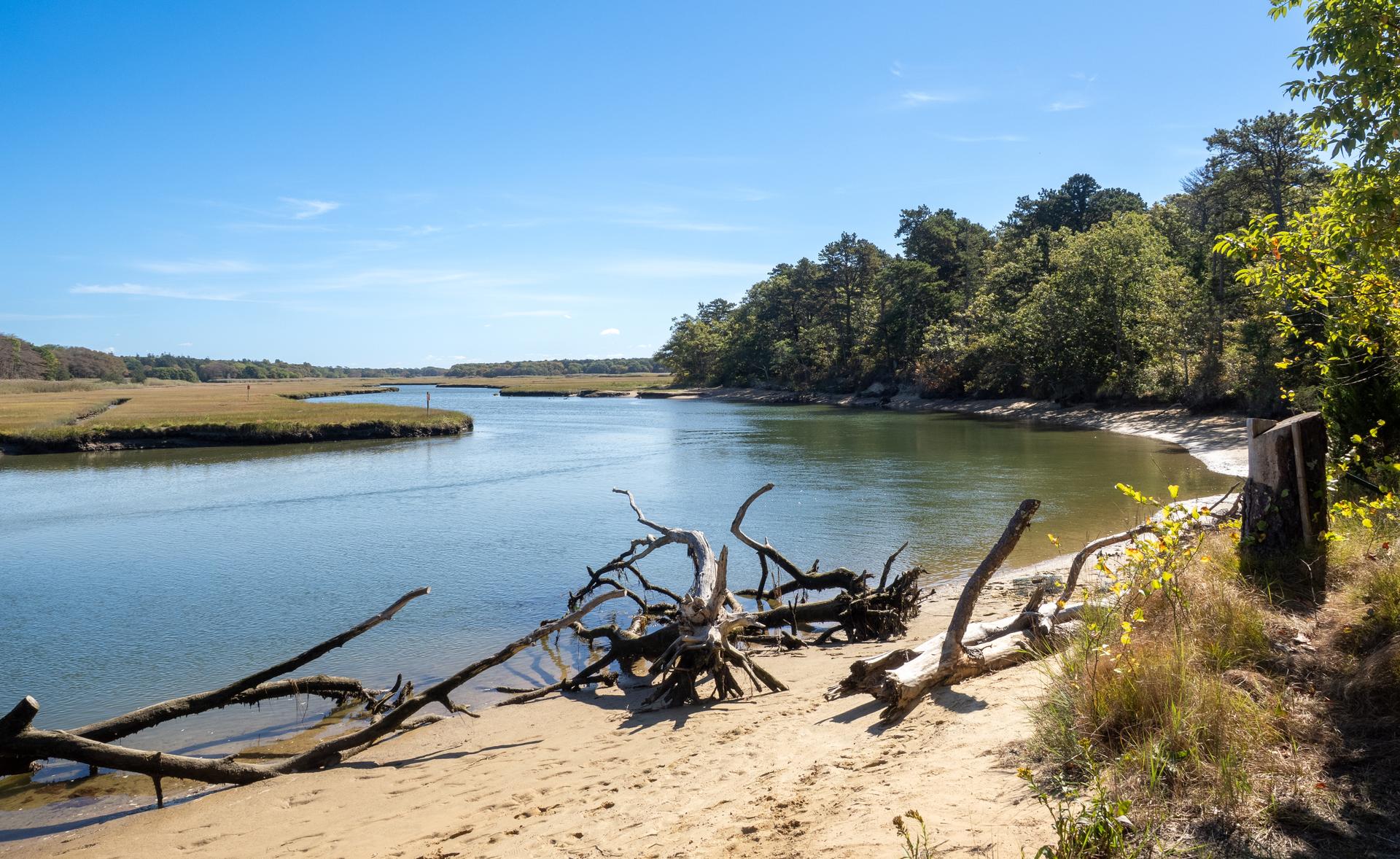
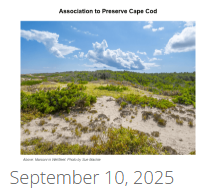
Above: Scorton Creek. Photo by Sue Machie |
|
|
APCC Ecosystem Restoration Program |
Above: Constructed wetland at Curve Hill Road. Photo credit: Gerald Beetham |
Stormwater by the Numbers – Yarmouth
This October, APCC and the town of Yarmouth—working with Horsley Witten Group and the Cape Cod Conservation District—completed two green-infrastructure stormwater projects that are already delivering measurable water-quality benefits. Every storm now means fewer nutrients, less bacteria, and far less sediment reaching local streams and coastal habitats.
At Curve Hill Road, a constructed wetland and water quality unit treat runoff from a 13-acre drainage area that includes portions of Great Western Road. The system is designed to treat over 15,000 cubic feet of runoff from a 1-inch storm, removing approximately 32 percent of nitrogen, 53 percent of phosphorus, 65 percent of bacteria, and 80 percent of sediment from stormwater. That equates to an estimated 25 pounds of nitrogen, 6 pounds of phosphorus, 777 billion colonies of bacteria, and nearly 3,000 pounds of sediment removed each year. Wow!
At Standish Way, green stormwater infrastructure, including a water quality unit, infiltration trench, bioretention area, and porous pavement, treat runoff from nearly one acre of drainage area. The system filters and infiltrates more than 1,300 cubic feet of runoff during a 1-inch storm, removing approximately 100 percent of nitrogen, 98 percent of phosphorus, 100 percent of bacteria, and 85 percent of sediment. In total, this results in the annual reduction of about 7 pounds of nitrogen, 1 pound of phosphorus, 107 billion colonies of bacteria, and 278 pounds of sediment, while also eliminating 1,750 square feet of impervious pavement replaced with porous surfaces.
Together, these systems prevent an estimated 32 pounds of nitrogen, 7 pounds of phosphorus, 884 billion colonies of bacteria, and more than 3,200 pounds of sediment from entering Yarmouth’s waterways each year. That’s cleaner water, healthier habitats, and stronger coastal resilience—exactly what smart stormwater investments are designed to deliver. Partners & Funding
These projects were made possible with support from the Massachusetts Office of Coastal Zone Management’s Coastal Habitat and Water Quality Grants and the USDA Natural Resources Conservation Service, in partnership with APCC, the town of Yarmouth, Horsley Witten Group, and the Cape Cod Conservation District. Want to learn more about APCC’s stormwater work or see how green infrastructure could benefit your neighborhood? Visit our website! |
Above: Completed project at Standish Way. Photo credit: Gerald Beetham |
|
|
Above: Source to Sea community members recently visited the completed Childs River restoration project in Falmouth to explore restoration techniques and outcomes that could inform future river projects. |
It’s Not Too Late to Join the Source to Sea Community!
There’s still time to get involved in shaping the future of three of Cape Cod’s rivers—the Mashpee River, Quashnet River, and Red Brook.
APCC and our partners invite you to become a Source to Sea Community Member through the Waquoit Bay National Estuarine Research Reserve’s (WBNERR) new community engagement program.
As a community partner, you’ll have the chance to: - Join guided site tours this fall and winter to see restoration areas firsthand and learn about the rivers’ history and challenges.
-
Engage directly with technical project teams working on river and wetland restoration designs.
- Participate in community visioning meetings in early 2026 to help craft a shared vision for each river’s restoration—blending ecological, cultural, and community priorities.
-
Share your experiences and values to help guide future restoration actions and ensure local voices are at the heart of planning.
This is a great way to stay connected, meet others who care about Cape Cod’s rivers, and help shape their recovery from source to sea. Learn more and sign up here: waquoitbayreserve.org/coastal-training-programs/source-to-sea Together, we can restore the flow, habitat, and community connections that define these rivers. |
|
|
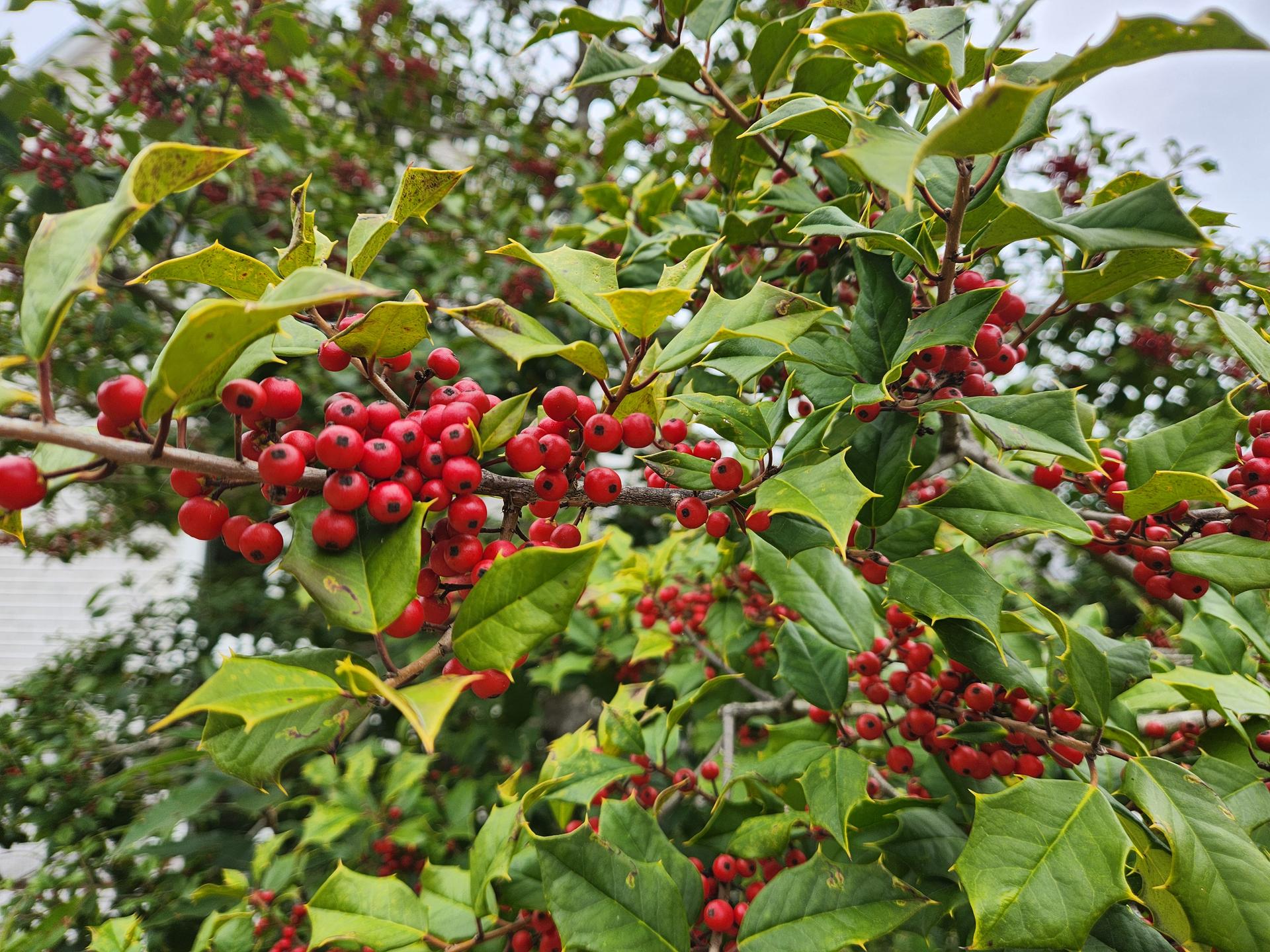
This is American holly, Ilex opaca, and it is looking glorious in our landscape right now! We are so glad that we saved these native holly trees from the disturbance caused by the construction of the much needed parking area to serve the Koppel Center. Hollies are dioecious, meaning staminate and pistillate flowers are found on different individuals. In this regard, we commonly make the reference that there are male and female plants—the male providing the pollen and the female bears the fruit. Two of the hollies are fruiting and one is not. Sometime this winter, the trees will be ravaged by robins and other frugivores—thrilled to find the berries for winter sustenance. We hope we are present to observe the feeding frenzy! |
|
|
APCC's Cyanobacteria Monitoring Program |
Above: (Left to right) Sully Gaffney, Emma Acri, Tina Hennig, Nora Bowie, Sophie Corsaro, and Caroline Berney |
APCC Cyanobacteria Monitoring Program Wraps Up for the Season |
As our 2025 Cyanobacteria Monitoring Program wraps up this week, we’d like to extend a huge thank you to our amazing interns that were with us this summer! And especially, we give kudos to the three that stayed through the fall—Sophia Corsaro, Tina Hennig, and Nora Bowie. The dedication and outstanding work of all the interns helped us complete another successful season of biweekly monitoring at roughly 140 ponds across Cape Cod.
We also want to thank our many partners—including towns, local pond groups, and volunteers—for their continued collaboration and support. Thursday marks our interns’ last day, and we wish them all the best in their next adventures!
Although our field monitoring winds down as temperatures drop, cyanobacteria can sometimes persist through the colder months, especially during mild winters. If you notice unusual pond conditions this fall or winter, we encourage you to notify your local health department and share your observations with us by emailing cyano@apcc.org—your eyes on the water help us better understand these dynamic ecosystems. We look forward to another great season next year!
|
Above: (Left to right) Nora Bowie, Sophie Corsaro, Tina Hennig, Emma Acri, Sully Gaffney, and Dr. Julie Hambrook Berkman |
|
|
Cape Cod Pond Watchers Bio-survey Program
~ a training video on how to use the Survey123 app to log your observations in pondside! |
| |
|
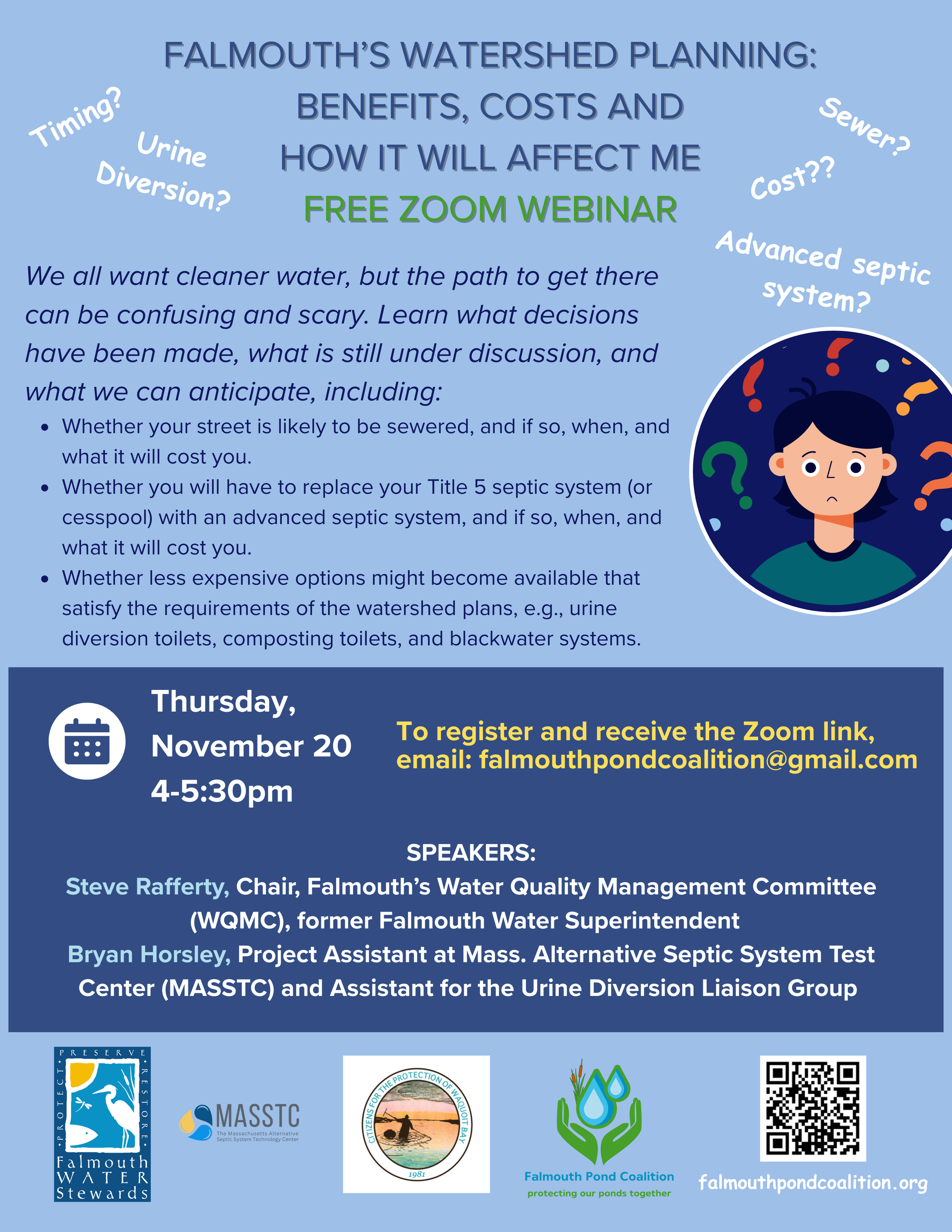
Cape Cod Ponds Network in-person meeting; registration required
Friday, November 7, 2025, 10:00 a.m. - 12:00 p.m. APCC headquarters, Koppel Center |
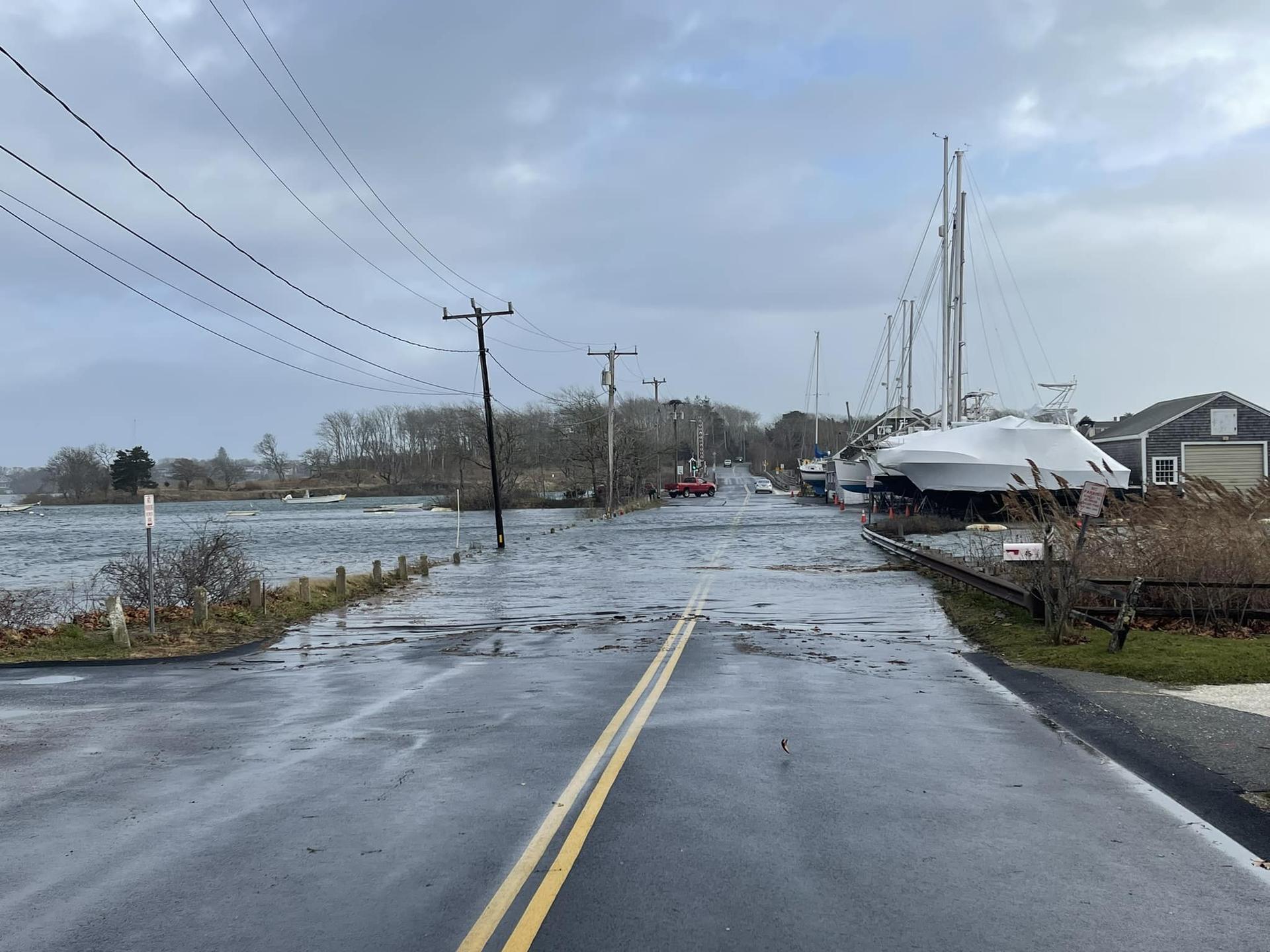
Above: Bridge Street, Chatham, December 23, 2022. Photo by R. Saul |
Help Document Coastal Flooding for November King Tides
Reports of flooding during extreme high tides around full and new moons help increase awareness of vulnerable areas in our communities and inform coastal management planning and projects. CZM encourages you to take photos of flooding during the highest tides this month and share them using the free MyCoast app or online platform. Anyone can use these tools to share photos and observations of coastal flooding, joining more than 600 MyCoast users who have provided valuable information.
To help out, check your local tide chart for peak times around the full moon on November 6-8 and submit photos using the King Tides tool or download the free MyCoast app onto your mobile device. (See this example photo from Commercial Wharf in Nantucket.) MyCoast: Massachusetts also has tools for reporting coastal storm damage and coastal erosion.
For more on this online portal for sharing and viewing photos of coastal impacts and shoreline adaptation, along with tips on staying safe when taking photos, see the CZM MyCoast: Massachusetts web page. |
|
|
A Cape-wide Conservation Event Calendar |
The Compact of Cape Cod Conservation Trusts (“the Compact”) and its nonprofit members launched a new regional calendar of events. The Conservation Calendar includes programs across Cape Cod hosted by these groups. The goal of the calendar is to encourage visitors and residents to take part in nature and environmental events. You can always find the link to the calendar on APCC's website under News & Events.
|
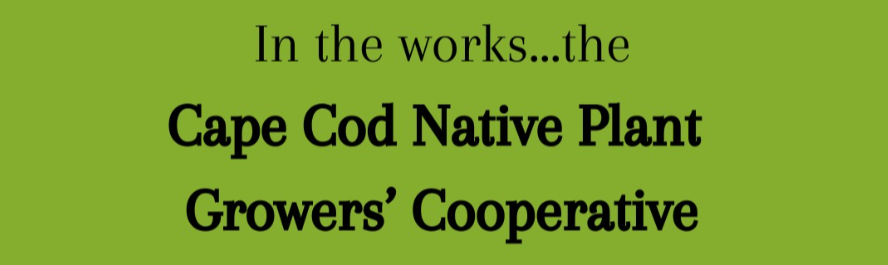
If you are a farmer or someone who wants to grow native plants to sell, or just want to be updated on the program's development, please submit an interest form that appears on our webpage. We will be sending periodic email notices of workshops and meetings.
Funding for the project is provided by Barnstable County and its Economic Development Council License Plate Grant Program through the Cape Cod Commission. |
|
|
A Cape Cod Native Plant-selector
~ to help you choose the perfect native plants for your garden. |
|
|
Email kandres@apcc.org and we'll send you a CapeCodNativePlants.org decal. |
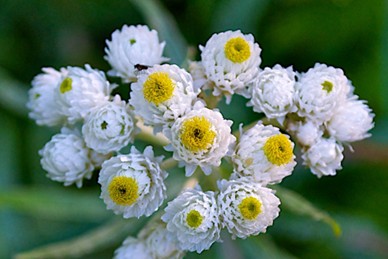
| Pearly Everlasting
Anaphalis margaritacea |
|
|
|
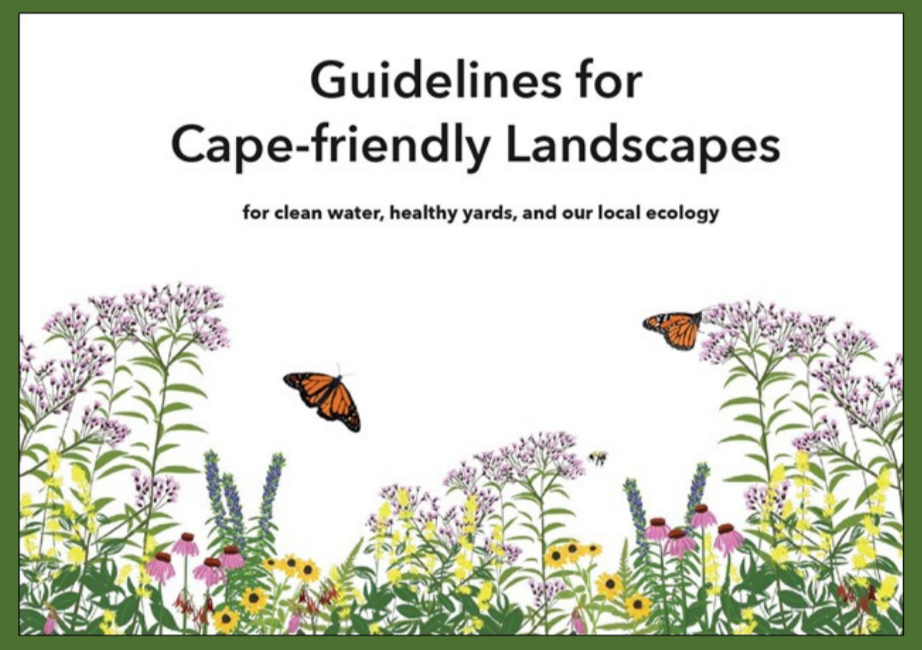
The Guidelines gives homeowners steps they can take in the design and maintenance of their properties that will support pollinators and birds, manage stormwater, conserve water, and protect the Cape's water quality. This 40-page booklet is beautifully illustrated by Marcy Ford with content that is easily digestible and supported by numerous resources for additional learning.
|
|
|
We are grateful for the several retail shops that are partnering with us to make this publication more widely available: Brewster Book Store, Birdwatchers General Store, Crocker Nurseries, Wellfleet Audubon Wildlife Sanctuary, Cape Abilities Farm, Cape Cod Museum of Natural History, the Cape Cod Lavender Farm, Heritage Museums and Gardens, Titcomb's Bookshop, Sea Howl Bookshop, Soares Flower Garden Nursery, and Eight Cousins Bookshop.
If you are a retailer and would like to sell this publication at your store, please contact us. |
|
|
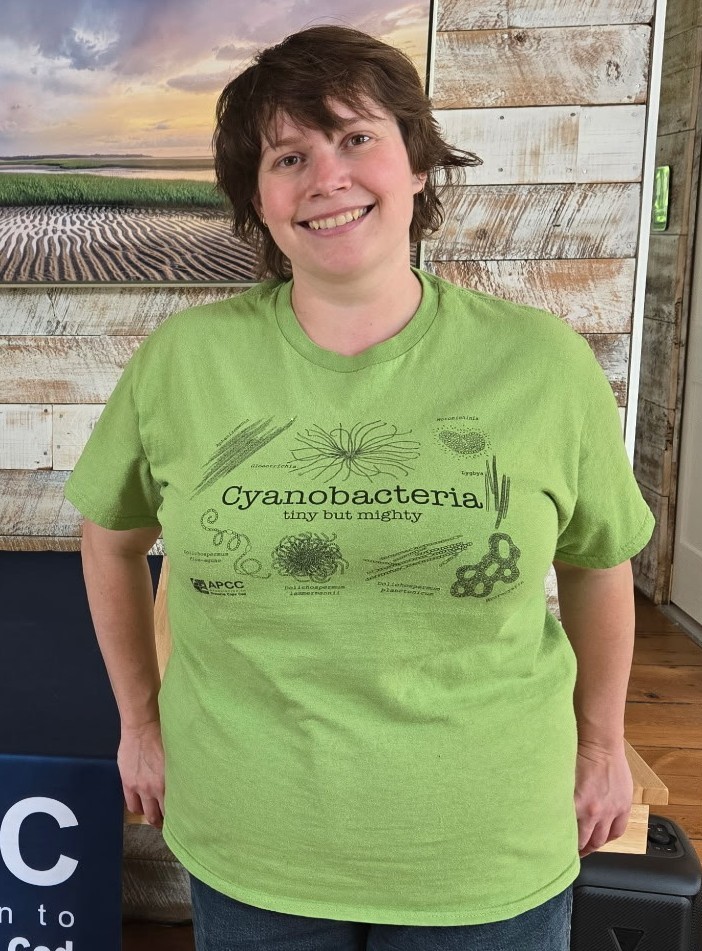
| Cyanobacteria ~ tiny but mighty
color kiwi $30 includes USPS shipping |
|
|
APCC caps
$25 -includes USPS deliver in the U.S. |
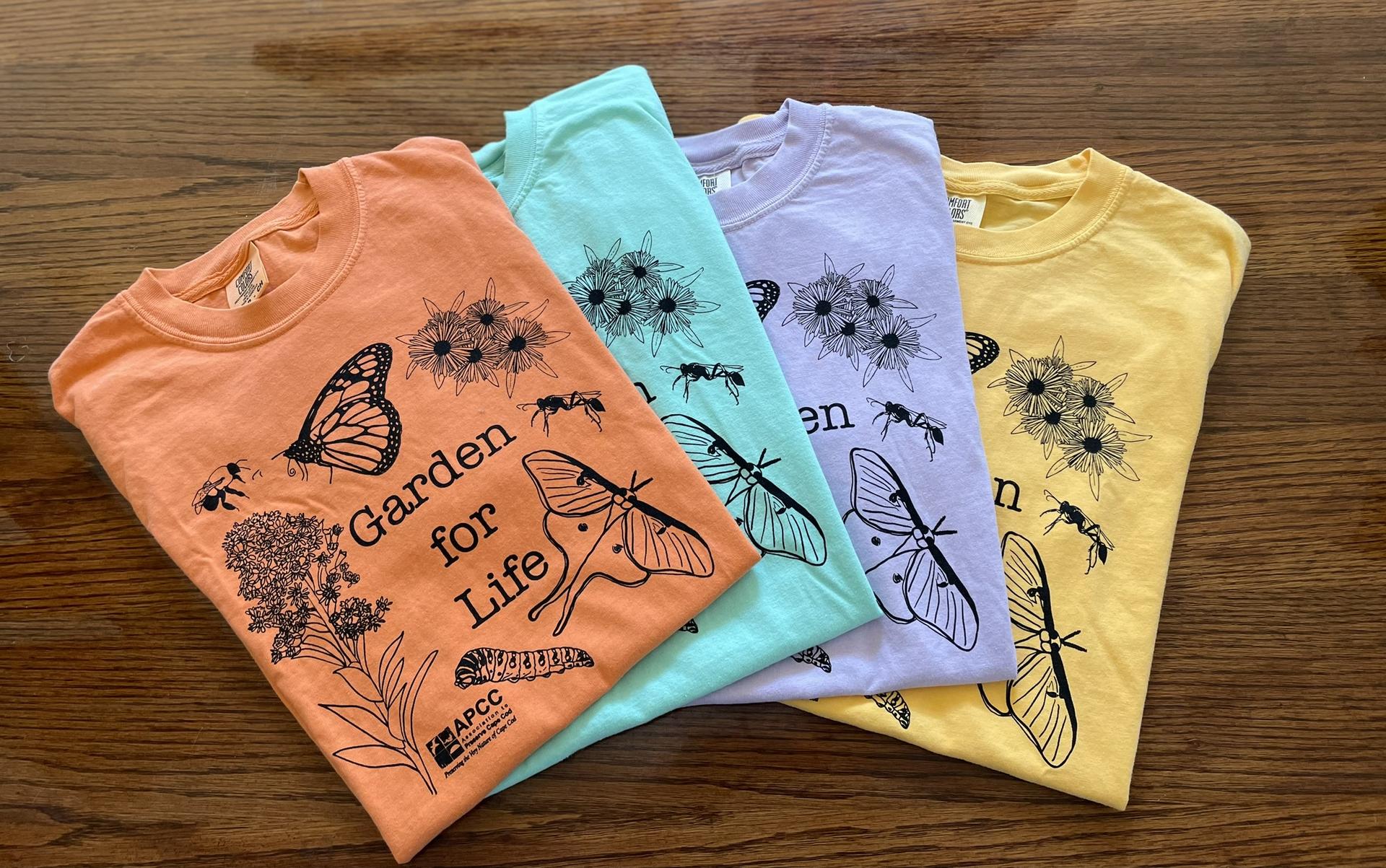
| Garden for Life T's $30 -includes USPS delivery in U.S. |
|
|
|
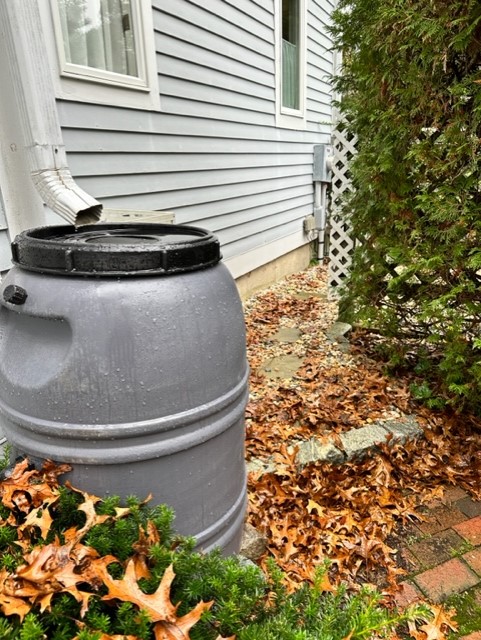
Rain Barrels for Cape Cod
Order online from Upcycle Products $122 each includes shipping to your door APCC receives a portion of the proceeds.
These are 55 gallon, repurposed food barrels. For more information, click here. |
|
|
| APCC eNewsletters.
Our weekly newsletters are archived on our website and easily shared.
You can find past newsletters and share with your friends. Encourage others to sign up for future enewsletters HERE.
|
|
|
Are you thinking of going solar? We hope so!
In partnership with E2 SOLAR in Dennis, APCC receives $500 for every solar installation when APCC is named as referral. |
|
|
|
Thank you to the homeowners who just contracted to install solar panels through E2 Solar. May the sun always shine for you! |
|
|
Expressions Gallery, 578 Main Street, Chatham
CLICK HERE |
Expressions Gallery donates 20 percent of its profits to APCC's work. |
|
|
Thank you to our business sponsors! |
|
|
APCC is rated four stars by Charity Navigator,
2025 Platinum by Candid (formerly Guidestar), and 2024 Top-Rated by GreatNonprofits. |
|
|
Our Contact Information
*{{Organization Name}}*
*{{Organization Address}}*
*{{Organization Phone}}*
*{{Organization Website}}*
*{{Unsubscribe}}* |
| |
|
|