Association to Preserve Cape Cod |
|
|
| Join the Party by Andrew Gottlieb, Executive Director |
My sister told me she loves our newsletter but that my column, the one you are reading right now, can be a bit depressing. She got my attention with that one. I’ll admit I tend to look at a situation and focus more on what remains to be done than celebrating what has been achieved. While that helps me plow forward to address ongoing challenges, I can see that how it might get old, at least on occasion. |
|
|
That leads me to the APCC Annual Meeting on Sunday, August 25, at noon at the Dennis Inn. Our Annual Meeting is one time each year that people concerned with the preservation of Cape Cod can get together and bathe in the energy of all we have collectively accomplished on behalf of this special place we all love so deeply. I encourage you to attend (register here) to hear what all the dire messages and calls to action have produced for the environment. There is a method to the madness, and yes, there is a lot to worry about, but there is more to revel in.
The celebration will not be as robust without your presence, so please join us and get energized about what your support for APCC has helped achieve and to imagine what is possible. |
APCC's Annual Meeting Join us!
Sunday, August 25th 12:00 p.m. Under the tent at the Dennis Inn
26 Scarsdale Rd, Dennis 02638
Registration here. |
|
|
Take Action to protect the Upper Cape Water Supply Reserve |
If you've already written the governor, thank you! |
|
|
The Massachusetts National Guard, acting through the Massachusetts Military Division, is once again seeking bids to construct a multipurpose machine gun range (MPMGR) on top of the Upper Cape Water Supply Reserve.
Please write Governor Healey today
and demand that she direct her staff to cancel this bid solicitation.
Please use the state's contact form to send the governor a message (see the link to the state's website below). Here's a sample message you can copy and paste into the comments box on the state form:
Dear Gov. Healey,
I am writing to urge you to use your authority in putting a stop to the multipurpose machine gun range proposed for the Upper Cape Water Supply Reserve. I am very concerned about the Massachusetts National Guard’s recent transparent efforts to prevent existing project funds from expiring on September 30 by opening up another bidding process and securing a construction contract. A construction contract signed before October 1 would enable the Guard to continue to try to force the MPMGR on Cape Cod residents who are justifiably concerned that the project threatens the Upper Cape’s only source of drinking water.
This action by the Guard to advance contracting of the project is a further breach of the public trust and the commitment by your administration—which was agreed to by the Guard—that the project would not move forward until the U.S. Environmental Protection Agency has completed its work on the Sole Source Aquifer study and the state’s Environmental Management Commission has reviewed the project. Please use your authority as governor to order the bidding process to stop and to put a halt to this ill-conceived project. Thank you.
Link to state's website: https://www.mass.gov/info-details/email-the-governors-office#email-the-governor-&-lt.-governor-using-this-form- We'd like to exceed 1,000 emails to Governor Healey, demanding that she ensure this project does not go forward. |
|
|
From APCC's Ecosystem Restoration Program |
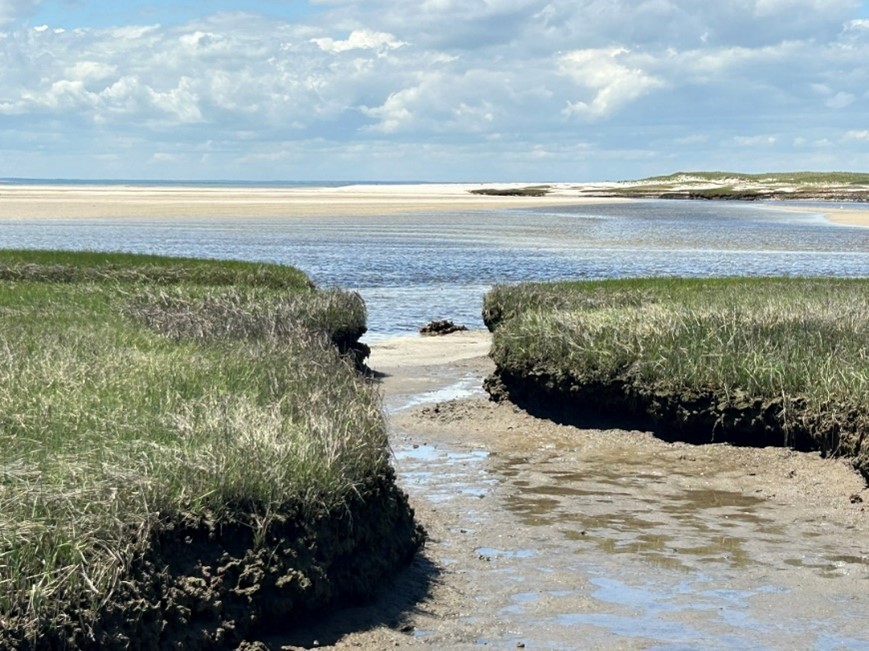
Above: Chase Garden Creek Marsh in Yarmouth, looking out at neighboring sand dunes and Cape Cod Bay. |
Salt Marshes and Sediment at Great Barnstable Marsh and Chase Garden Creek Marsh |
APCC and partners are working to collect data about sediment in salt marshes around the Cape to help us understand how marshes respond to tidal restoration and sea level rise. The vertical buildup of sediment over time helps a salt marsh maintain its elevation and keep pace with sea level rise, preventing marsh plants from drowning and dying. A healthy, stable marsh benefits coastal ecosystems and communities through the services it provides, like filtering pollutants, reducing flooding during storms, and creating habitat for birds and fish.
As sediment is deposited on the marsh surface, it accumulates through a process called sediment accretion. How much and how quickly sediment accretes depends on the balance between sediment coming in (deposition) and sediment going out (erosion). When deposition exceeds erosion, the salt marsh accretes more sediment and grows in elevation. When erosion exceeds deposition, the marsh loses elevation, leading to marsh dieback and the loss of important ecosystem services. For a marsh to successfully adapt to tidal restoration and sea level rise, it must maintain or grow its elevation. We measure sediment deposition and accretion using a variety of methods. The methods we use depend on our objectives.
|
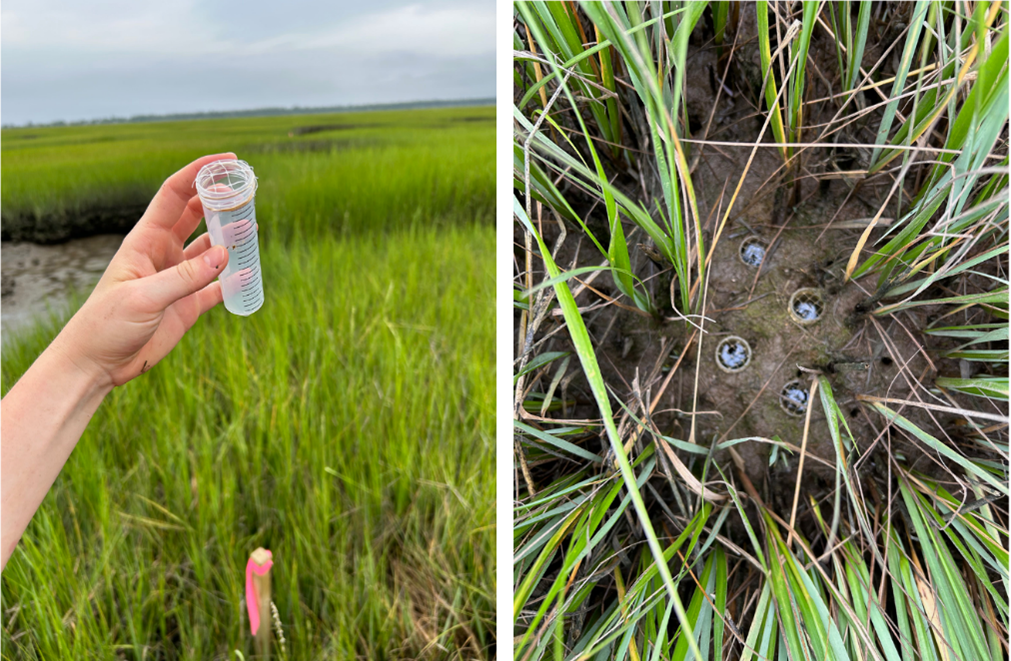
Above: Sediment trap collection and deployment at Chase Garden Creek. An example of a sediment trap ready to be deployed (left) and an example of sediment traps that have been pushed into the marsh. We group sediment traps together in case some get lost or broken. |
At Chase Garden Creek, where we are partnering with the Center for Coastal Studies, the goal is to evaluate the sediment supply from Cape Cod Bay. We want to know whether this sediment is enough to support the marsh. Sediment traps help us answer this question by measuring the amount of sediment deposited by the high tide throughout the marsh in one-month increments. A sediment trap is a container that captures sediment deposited on the marsh during high tides. Sediment traps are left in place for several weeks before being collected and the amount of sediment deposited in each tube measured. The result is a deposition rate that tells us how much sediment was deposited on the marsh over time.
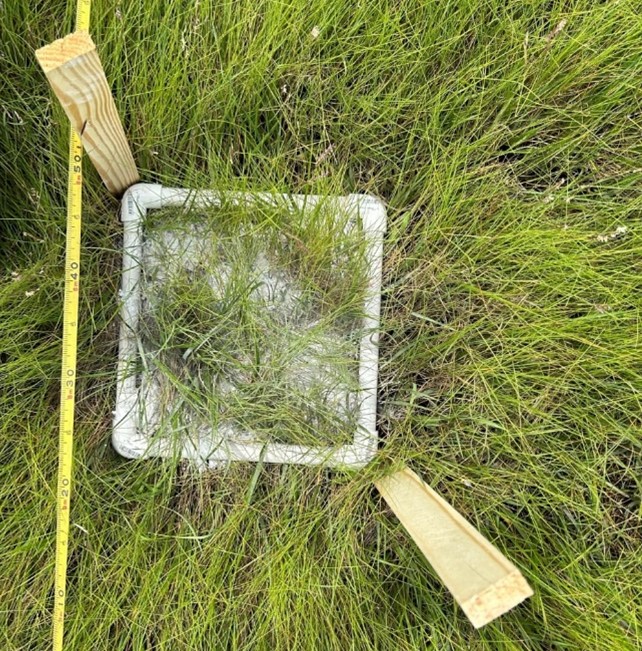
At Great Marsh in Barnstable, APCC is partnering with Mass Audubon to compare total sediment accretion in areas where restoration will take place. Marker horizons measure the combination of organic matter buildup and sediment deposition in multiple locations. At Great Marsh, feldspar powder was sprinkled in a plot on the marsh surface. Over time, sediment and organic matter from plants accumulate above this layer of feldspar. We can then return to sample the section of the marsh where the marker horizon had been applied in future years and measure the amount of material that has accumulated over one or more growing seasons. The result is a sediment accretion rate that tells us how much, and how quickly, the marsh surface is accreting, or gathering, minerals and organics.
The sediment data we collect tells us valuable information about our marshes, like how fast or slow the marsh is gaining elevation, if there is enough sediment to support marsh plants, and how marshes might respond to future sea level rise. APCC and partners hope to help our Cape Cod marshes thrive and continue to provide numerous benefits to our local communities and ecosystems. |
Above: At Great Marsh, a plot on the marsh surface is designated using a PVC quadrat. White feldspar powder is sprinkled on the marsh surface. This feldspar acts as a marker horizon for future measurements of sediment accretion. |
|
|
Dunkin has nothing on us: APCC runs on volunteers! |
|
|
APCC volunteers continue to make a difference as they help to support several APCC science programs and more. There are over 45 active freshwater pond testing volunteers who began working out on the ponds with our technicians in April and will continue to help with freshwater pond monitoring through October. Our freshwater pond volunteers commit to a five-hour shift where they join an APCC pond technician and assist in gathering data that helps us to learn about the general health of 50 ponds on the Cape. They record information such as depth, water temperature, salinity level, oxygen level and more. We could not run this highly successful program without this dedicated group of volunteers.
But not all volunteers need to climb into a canoe to make a difference! Have you noticed some of our educational pamphlets and reports at your local town offices, libraries, senior and recreational centers? APCC relies on a small-but-mighty group of energetic outreach volunteers to help us distribute our educational materials throughout the Cape. And some volunteers help at table events, such as the Mashpee Honor the Earth event and other environmental fairs. For many volunteers, it is a fun and informative way to learn about their surrounding towns.
We are fortunate, too, for a select group of volunteers who signed up to work behind the scenes as we wrap up our 2024 herring monitor season. As we begin to assemble herring counts from 15 towns collected between April and June, volunteers are helping to process the data. APCC plans to deliver the final Cape reports to the Massachusetts Department of Marine and Fisheries, so that it can be included in the state-wide 2024 herring reports.
In total we have about 79 active APCC volunteers who have worked a total of 1,110 hours so far this year, and we are still counting! Thank you, APCC volunteers! If you are interested in becoming an APCC volunteer, you can fill out an application here. |
|
|
Cyanobacteria Monitoring Team |
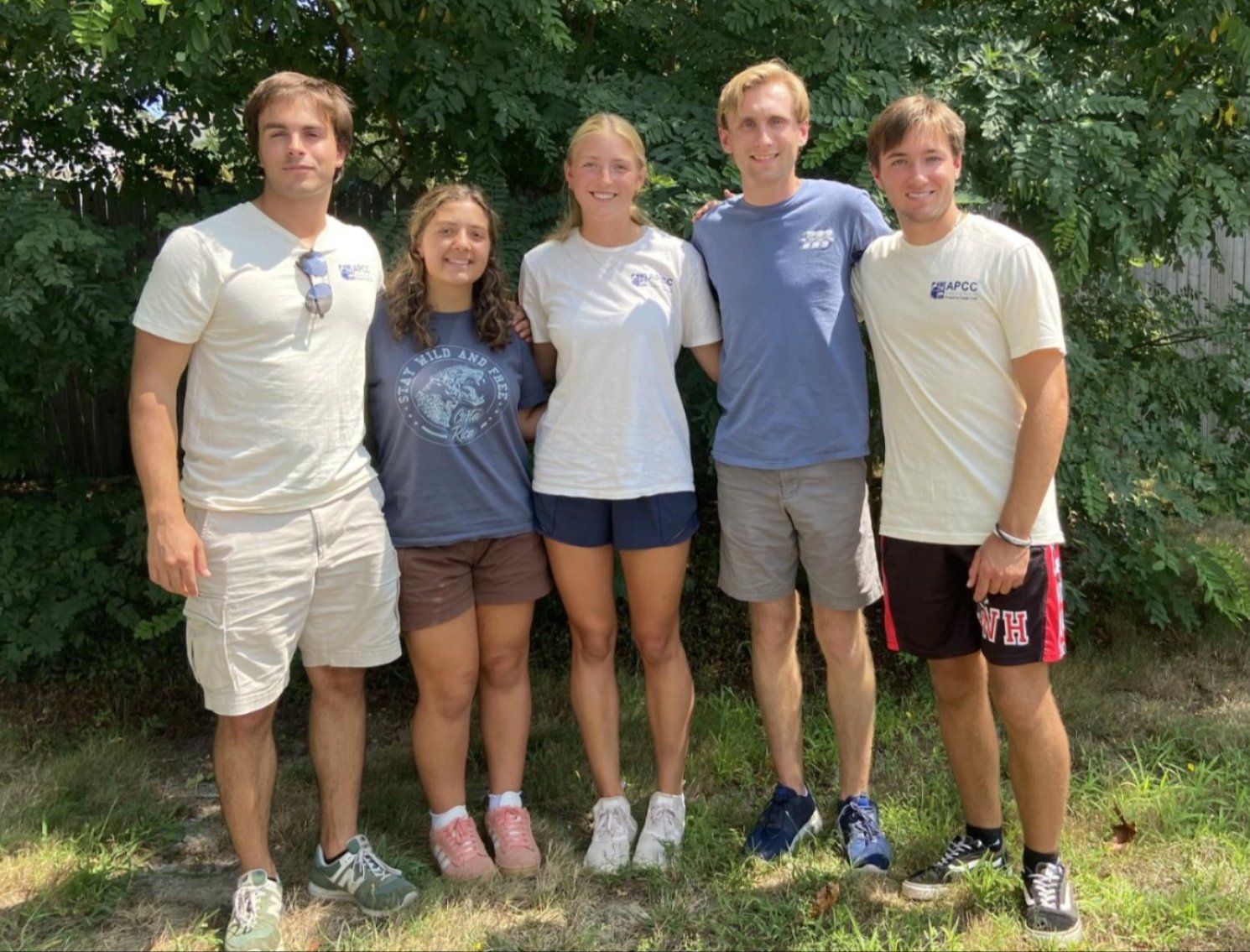
Above left to right: Jacob Scola, May Lopopolo, Dara Estes, Casey Proto, and James Marino |
As the summer season draws to a close, the cyano team will be saying GOOD LUCK to a few of our amazing interns as they go back to school. Dara Estes, James Marino, Casey Proto, and Jacob Scola—thank you for all the work you have done this season. Your dedication, enthusiasm and humor made this season go by smoothly, and way too quickly. We hope that your future is bright and keep in touch with APCC! May Lopopolo will be staying through the end of the cyanobacteria monitoring season, which will end on this year on Thursday, November 07, 2024. |
|
|
We still have a few appointments available through September.
Click here for more information. |
|
|
FRESHWATER POND SCIENCE 101
Free Zoom Webinar
THURSDAY, AUGUST 22, 4:00-5:30 p.m.
https://us02web.zoom.us/j/87160986875?pwd=znULqp5EnLwRe1d1p5ExbFli4BBhab.1 Protecting our freshwater ponds requires passion, commitment, and knowledge. We need at least a basic understanding of pond science if we’re going to effectively communicate with our pond neighbors and develop effective strategies for protecting our ponds. With that in mind, we hope you will participate in this free Zoom webinar.
The webinar will provide an introduction to Freshwater Pond Science, helping us understand the basic biological, chemical, and physical processes that govern these dynamic and critically important ecosystems. By understanding pond ecology, water quality, the biodiversity of aquatic life in our ponds, cyanobacteria, and the impacts of human activities, we will be more effective in protecting our ponds.
The webinar will: - explain the importance of freshwater ponds in the ecosystem
- cover the basic physical and chemical properties of freshwater ponds
-
identify key biological components of pond ecosystems, including plants, animals, and microorganisms
- describe the nutrient cycles (nitrogen and phosphorus)
- highlight human impacts on ponds, including pollution, invasive species, and conservation and restoration efforts.
The presentations will be followed by a generous amount of time for Q&A. The presenters are:
Julie Hambrook Berkman, Ph.D. - As the Association to Preserve Cape Cod’s pond and cyanobacteria program manager, Julie is responsible for coordinating and managing the Pond Monitoring Program and the Cyanobacteria Monitoring Program. In her role, she builds and maintains partnerships with municipalities, agencies, organizations, and volunteers, engaging with interested citizens and organizations who care about Cape Cod’s 890 ponds to preserve pond water quality for the benefit of all.
Liz Moran, Ph.D. - Liz is a planning and restoration specialist at Anchor QEA and an environmental scientist with a long career in lake and watershed management. She is also a member of the Cape Cod Commission team that is guiding the Freshwater Ponds Initiative. Liz has worked on multiple pond assessment and restoration projects across the Cape.
If you know you plan to attend please send a note to FPCwebinarsevents@gmail.com |
|
|
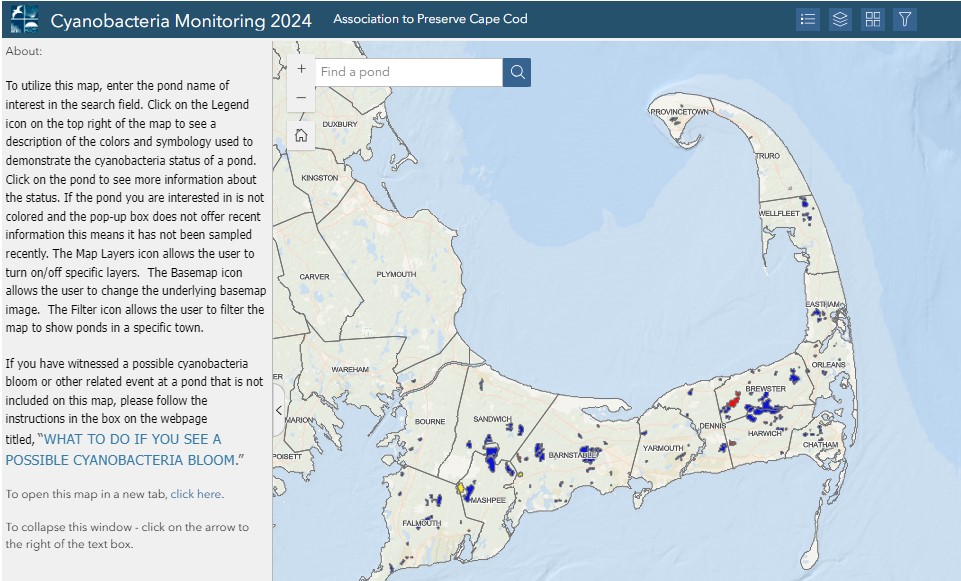
APCC's Cyanobacteria Monitoring Program |
|
|
Guidelines for Cape-friendly Landscapes - an APCC publication |
|
|
The Guidelines gives homeowners steps they can take in the design and maintenance of their properties that will support pollinators and birds, manage stormwater, conserve water, and protect the Cape's water quality. This 40-page booklet is beautifully illustrated by Marcy Ford with content that is easily digestible and supported by numerous resources for additional learning.
|
Thank you for this important book! Hopefully everyone of us with a yard will read it and put it to use! - Vicky Titcomb of Titcomb Bookshop |
We've enjoyed creating it and hope it will help you with ideas to help you steward your piece of Cape Cod and maybe foster an environmental ethic in the decisions we all make in our own managed landscapes. Get your copy here—and maybe one for a friend?
|
We are grateful for the several retail shops that are partnering with us to make this publication more widely available: Brewster Book Store, Birdwatchers General Store, Crocker Nurseries, Wellfleet Audubon Wildlife Sanctuary, Cape Abilities Farm, Cape Cod Museum of Natural History, the Cape Cod Lavender Farm, Heritage Museums and Gardens, Titcomb's Bookshop, Sea Howl Bookshop, Soares Flower Garden Nursery, and Eight Cousins Bookshop.
If you are a retailer and would like to sell this publication at your store, contact Kristin at kandres@apcc.org. |
|
|
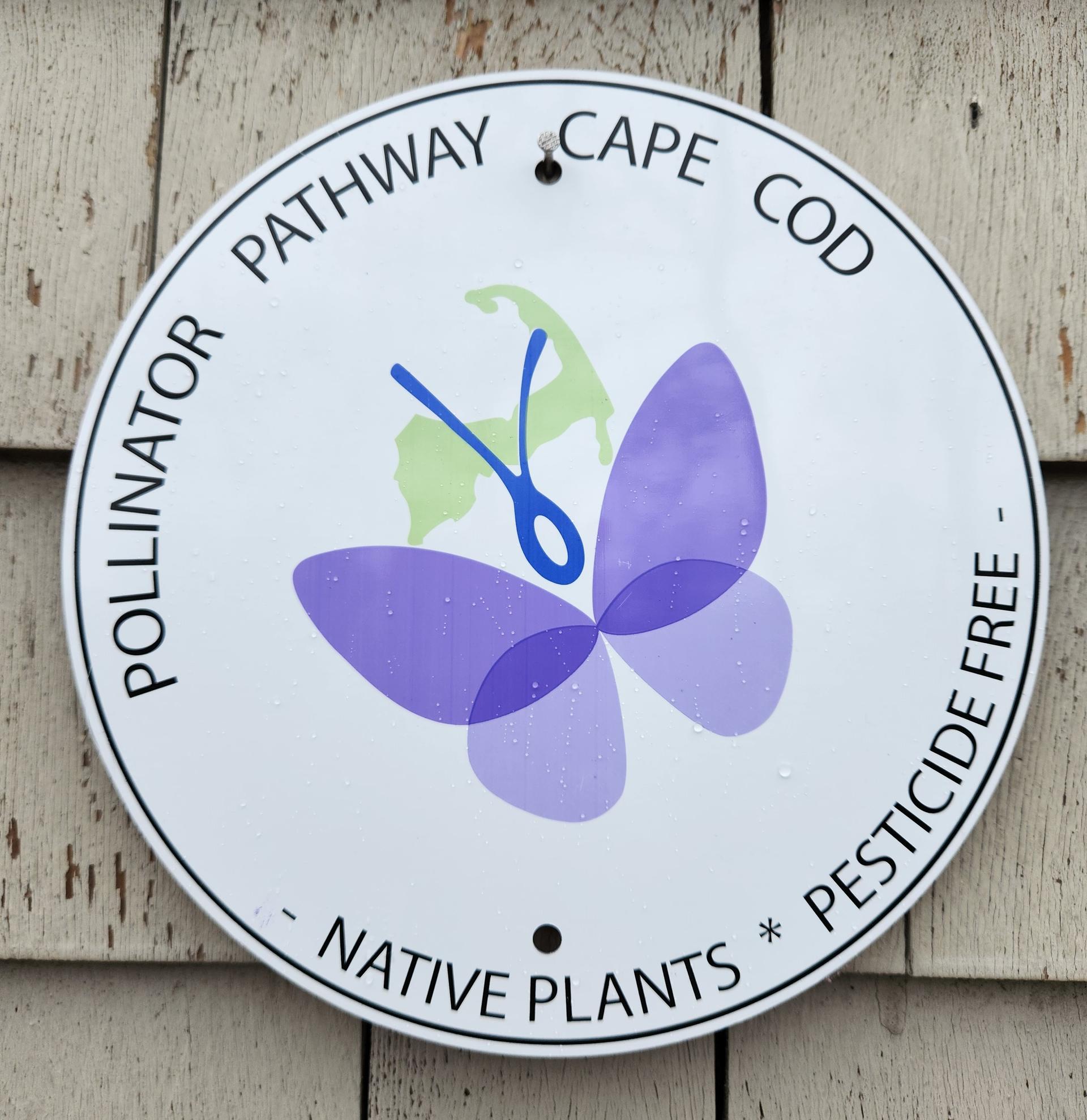
The Pollinator Pathway Cape Cod is a group of organizations promoting native plants and pollinator-friendly land care practices to create a boat load of safe oases for our native bees, butterflies and a whole host of other pollinators that are crucial to the health of our ecosystems.
Join us! It's easy. There are no fees. You just need to pledge to ADD native plants, SUBTRACT a little lawn, AVOID yard chemicals, especially pesticides, and LEAVE the leaves. And, help us spread the word. Please get on the map to show your support of pollinators on Cape Cod!
You can purchase now your 9-inch aluminum Pollinator Pathway Cape Cod sign at Hyannis Country Garden, Crocker Nurseries, Brewster Book Store, Orleans Conservation Trust, and
Cape Abilities Farm.
If you are a retailer, and you would like to sell the signs, you can order online here, or email pollinators@apcc.org. |
|
|
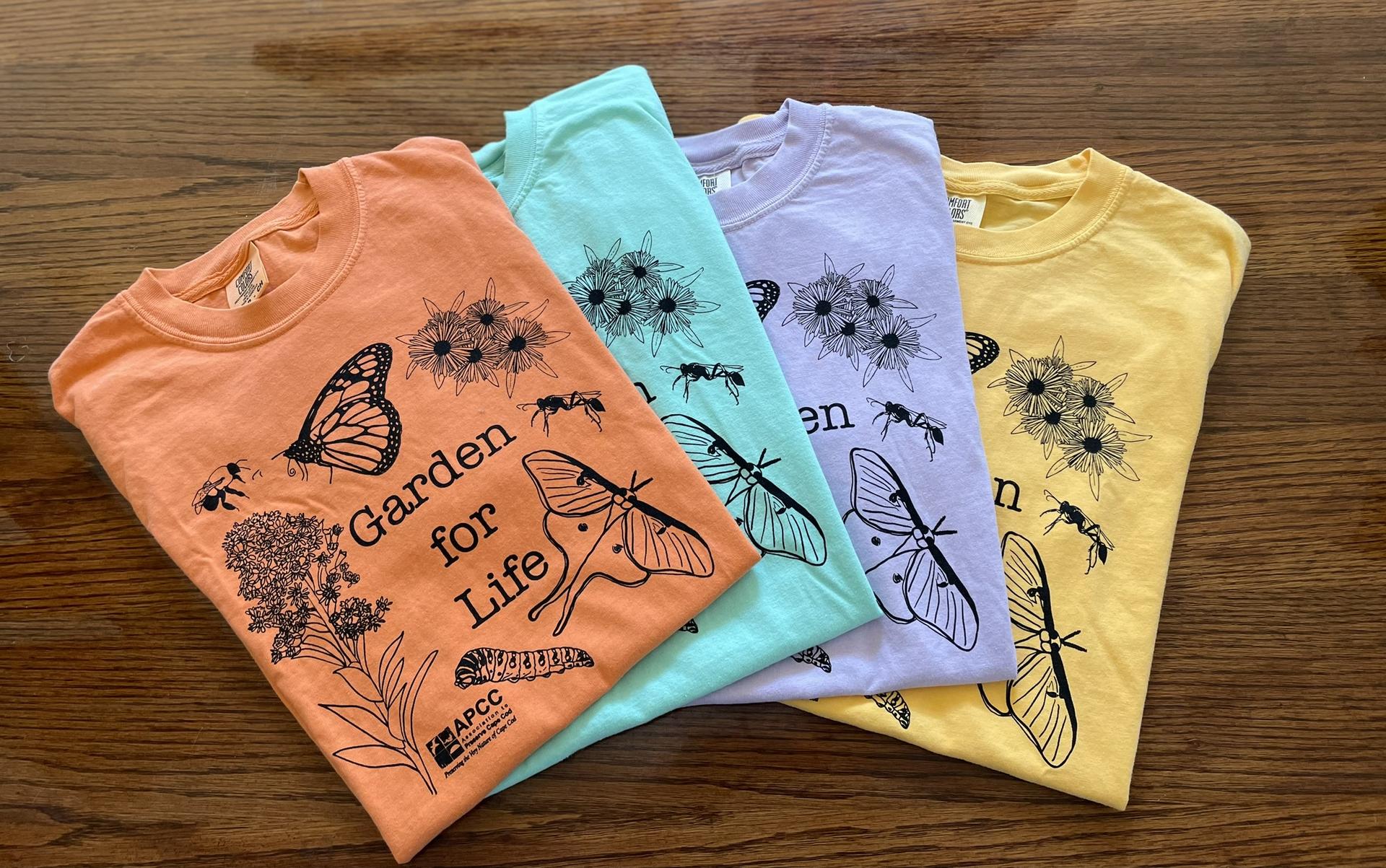
| Available for online purchase: APCC caps $25 includes shipping & handling +++++++++++++++++ Garden for Life T's $30 including shipping & handling Click here
for more information and to order. This is just one great way to show your support for APCC's work. |
|
|
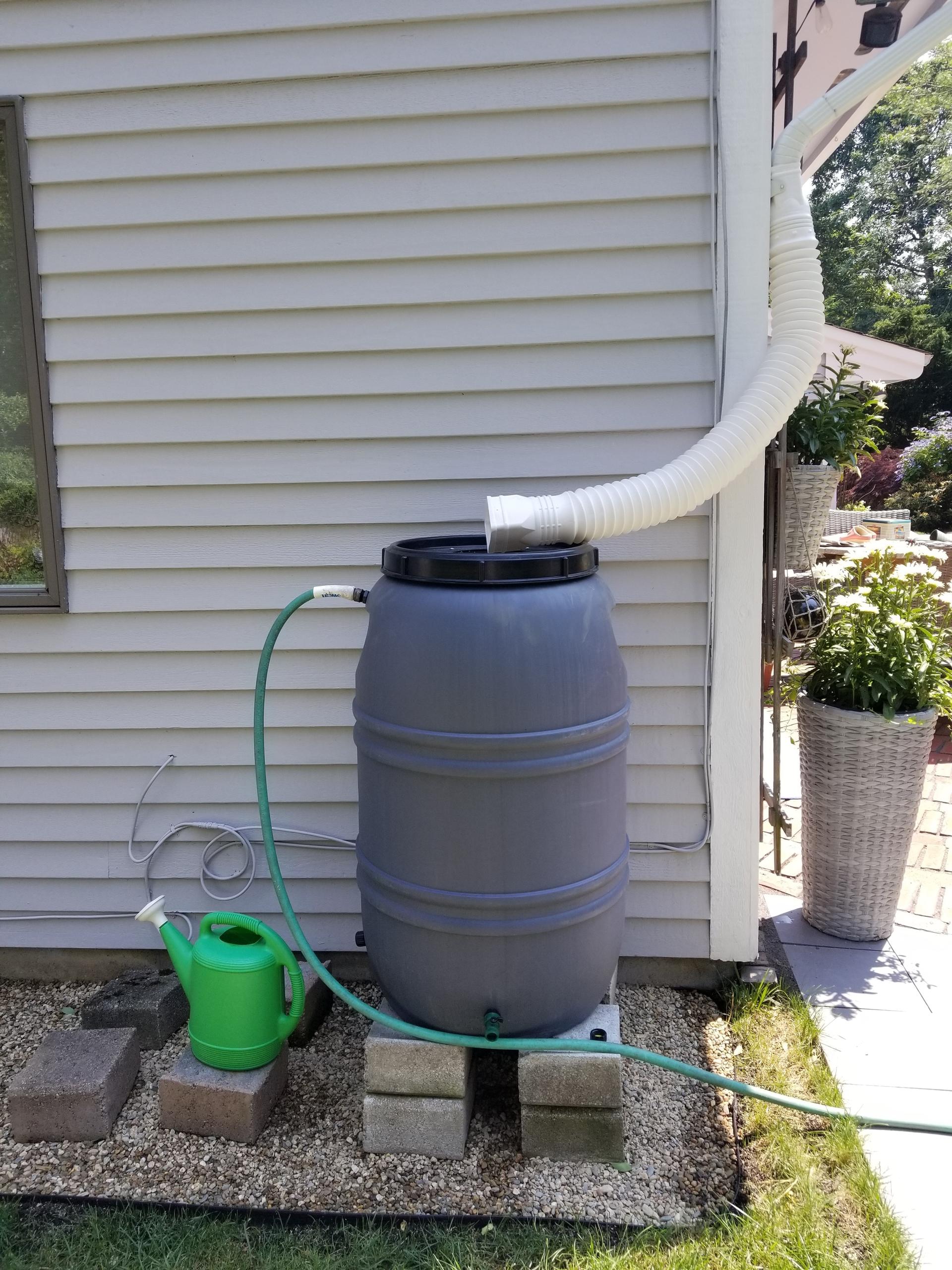
| Rain Barrels for Cape Cod Order online from Upcycle Products
$122 each includes FedEx shipping to your door
55 gallon, repurposed food barrels Keep a barrel out of a landfill, and capture some free rainwater.
APCC receives a portion of the proceeds. For more information, click here. |
|
|
A Cape Cod Native Plant-selector ~ to help you choose the perfect native plants for your garden. |
|
|
Email membership@apcc.org and we'll send you a CapeCodNativePlants.org decal. |
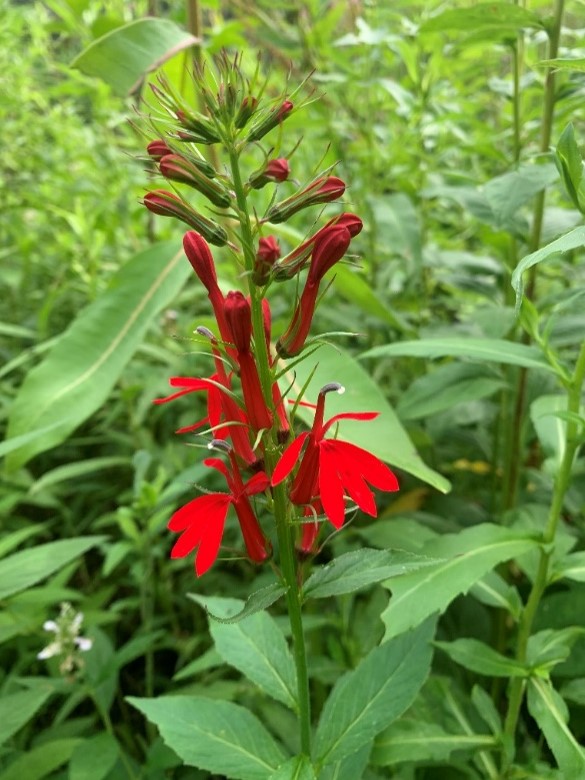
| Cardinal Flower Lobelia cardinalis |
|
|
| APCC eNewsletters.
Our weekly newsletters are archived on our website and easily shared.
You can find past newsletters and share with your friends. Encourage others to sign up for future enewsletters HERE.
|
|
|
Are you thinking of going solar? We hope so!
In partnership with E2 SOLAR in Dennis, APCC receives $500 for every solar installation when APCC is named as referral. |
|
|
|
Thank you to the homeowners who just contracted to install solar panels through E2 Solar. May the sun always shine for you! |
|
|
Expressions Gallery, 578 Main Street, Chatham
CLICK HERE |
Expressions Gallery donates 20 percent of its profits to APCC's work. |
|
|
Thank you to our business sponsors |
|
|
APCC is rated four stars by Charity Navigator and 2023 Platinum by Candid (formerly Guidestar). |
|
|
Our Contact Information
*{{Organization Name}}*
*{{Organization Address}}*
*{{Organization Phone}}*
*{{Organization Website}}*
*{{Unsubscribe}}* |
| |
|
|