Association to Preserve Cape Cod |
|
|
| End of an Era by Andrew Gottlieb, APCC Executive Director |
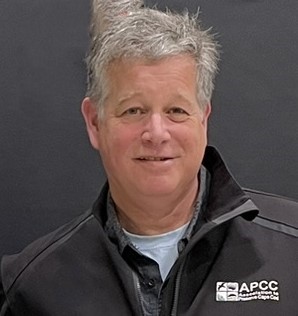
Dr. Jo Ann Muramoto begins her much deserved retirement on July 1. Jo Ann has guided and overseen science at APCC since 2006. Throughout that period, APCC expanded on our reputation for basing advocacy on sound science. Dr. Muramoto has been an essential contributor to the growth of APCC. Our effectiveness as an advocacy organization remains built in large part on the credible and diligent science that has reflected Jo Ann’s tenure at APCC. |
|
|
Jo Ann’s knowledge of local issues is encyclopedic. The depth of her connections to local, county, state and federal environmental players are unmatched and have led to countless partnerships that have extended APCC’s reach and effectiveness. Whether you think of herring monitoring, cyanobacteria monitoring, wetland restoration, State of the Waters, or countless local restoration and water quality projects, Jo Ann’s fingerprints are there. Jo Ann’s work has made Cape Cod a better place.
Jo Ann has always been generous with her time and has mentored many at APCC. APCC has a strong staff that Jo Ann has helped prepare to take on expanded roles when the inevitability of her future retirement became a reality. We will tell you more about our plans moving forward at a future date because our current focus is rightly celebrating all that Jo Ann has done for APCC and the environment of Cape Cod. As is often the case, we approach this send off with a mix of emotions. Mostly though, the entire staff wishes Jo Ann a long and happy retirement and sends her off with great appreciation and admiration for her contributions to our work. We also know where she lives, so… |
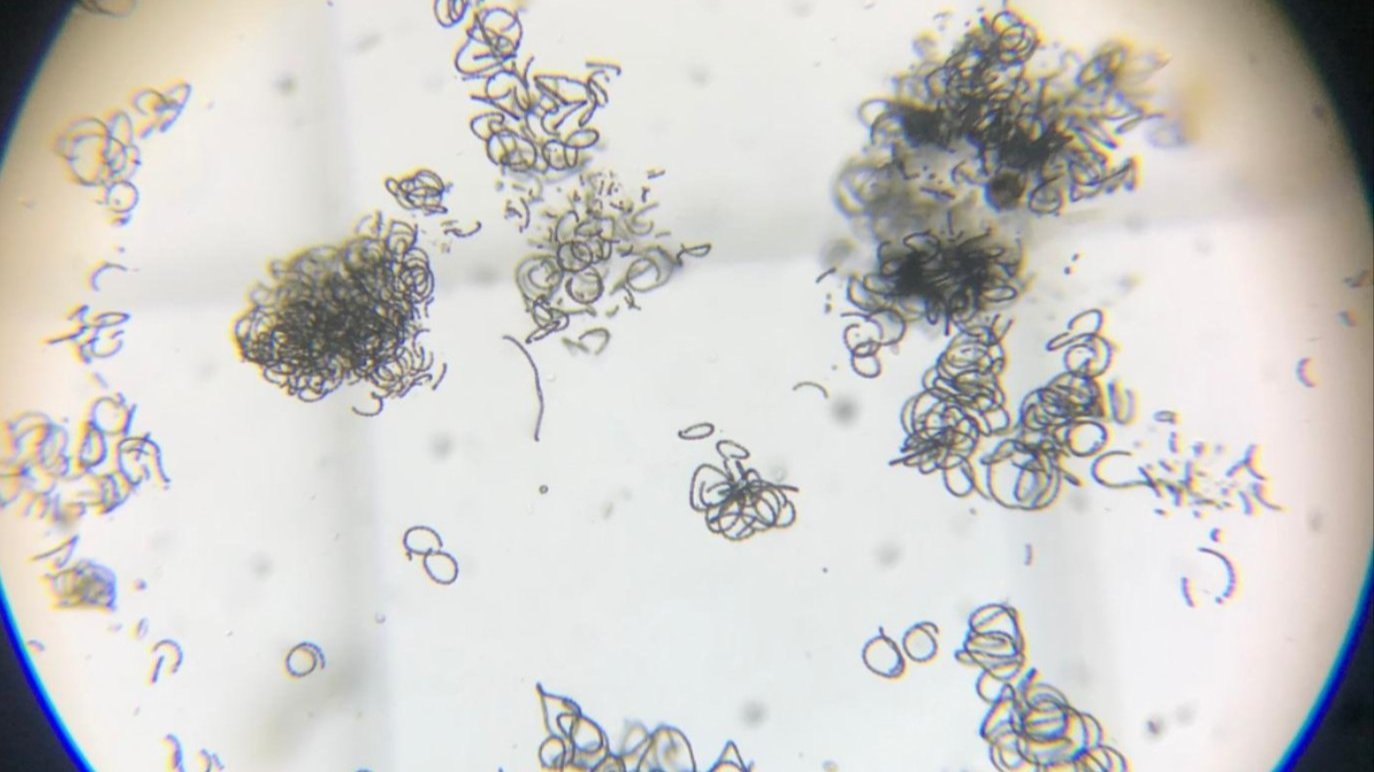
Anatoxin ~ a Pilot Study During our cyanobacteria monitoring season this year, APCC is conducting a pilot study to better understand the presence of anatoxin-a in the Cape's freshwater ponds.
Anatoxin-a is a neurotoxin produced by bloom-forming cyanobacteria of the genus Dolichospermum, frequently found in our ponds. As recognized by the EPA, the effects of anatoxin-a on human health can include skin tingling or burning, numbness, drowsiness, incoherent speech, salivation, and with a sufficient dose, respiratory paralysis leading to death (Health Effects from Cyanotoxins | US EPA). There is no federal or state guidance on anatoxin-a concentration thresholds for public health in recreational waters.
Due to these public health concerns, this pilot study is focused on learning about the presence of anatoxin-a in Cape Cod’s freshwater ponds. We have partnered with the Barnstable County Laboratory and five towns (Falmouth, Mashpee, Barnstable, Eastham and Wellfleet). Depending on the results of this preliminary study, we will consider expanding the anatoxin-a sampling to include all Cape Cod towns that are interested in learning about anatoxin-a presence in their ponds in the future.
For this pilot study, when APCC determines that a pond has a Dolichospermum dominant cyanobacteria bloom of sufficient density that indicates a cause for concern, APCC staff will be collecting and sending water samples to be analyzed by the Barnstable County Laboratory. All participants in this pilot study have agreed to the protocols used to govern when sampling will occur and how the data will be handled and communicated to the public (APCC Anatoxin-a Pilot Study 2024 PDF).
Due to the exploratory nature of this study, the samples will be analyzed by the Barnstable County Lab on a monthly basis and the pond will be marked as yellow "Potential for Concern" on the APCC map. The results will not be otherwise used to restrict access to ponds, unless such a restriction is determined necessary by the town’s health agent. Should a health agent decide to issue a restriction or advisory, APCC’s map will reflect the town’s determination for its duration.
APCC hopes that the data and results will be used to inform public health decisions in the future and keep our community safe. The summary of the pilot results will be shared with the participating towns and made public by APCC after the conclusion of the sampling season. |
Thank you to herring count volunteers for a successful count season! |
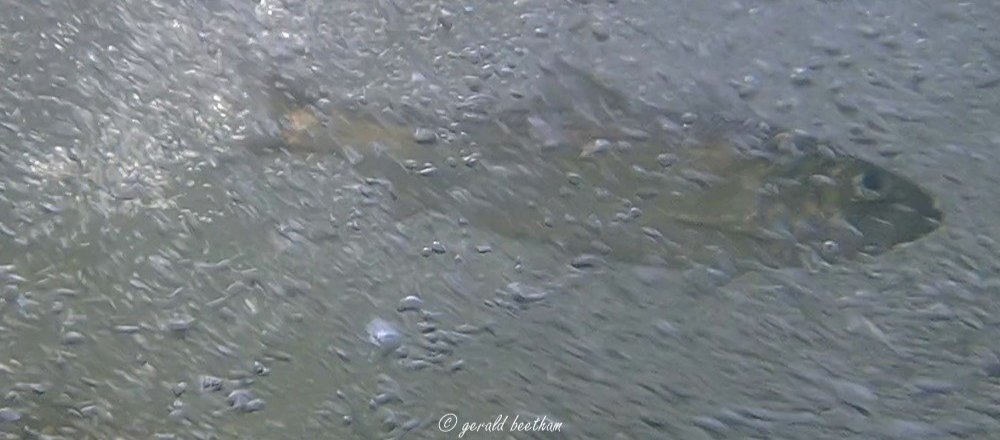
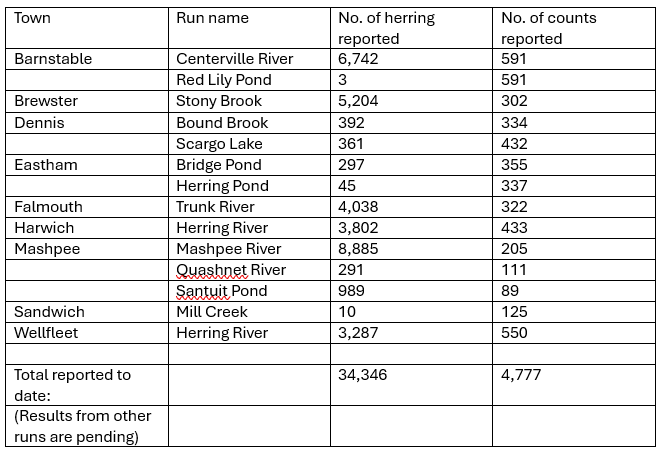
Thank you to all the volunteer herring monitors who counted herring this spring! We had a great turnout of volunteers who counted herring along more than 15 herring runs on Cape Cod. As of June 20, 2024, the approximate total number of volunteer herring counts reported at different runs were as follows: |
Note: These reported counts were counts which volunteers entered into APCC’s herring count data entry system as of 6/20/24 and have not been reviewed for quality assurance. They are preliminary data not to be used for final counts.
Next steps: APCC will review the count data for quality assurance (QA) and will then send the QAed counts to the Massachusetts Division of Marine Fisheries (DMF) to calculate the estimated run size for each run. DMF calculates the estimated run size using a method described by DMF for citizen monitoring groups. The estimated run size is the official estimate used by DMF, but APCC also tracks the total number counted and other statistics and posts the results in a summary on our herring monitoring webpage. Check back later this year for the estimated run sizes for Cape Cod! The results will also be reported at the River Herring Network’s annual meeting in the fall and in our eNewsletter.
Finally, as I am retiring as of June 30, 2024, I wish to thank each and every volunteer and count coordinator who has helped to make this program a success! Cape Cod herring volunteer groups account for over half of the herring runs monitored by volunteers in Massachusetts, and your counts enable DMF, herring wardens, and federal fisheries managers to gain a better estimate of herring populations. This information is in turn critically important for better protection and management of river herring, which are still suffering from low numbers. So, thank you again everyone for helping to protect the river herring!
- Jo Ann Muramoto, Ph.D. |
APCC's Ecosystem Restoration Program |
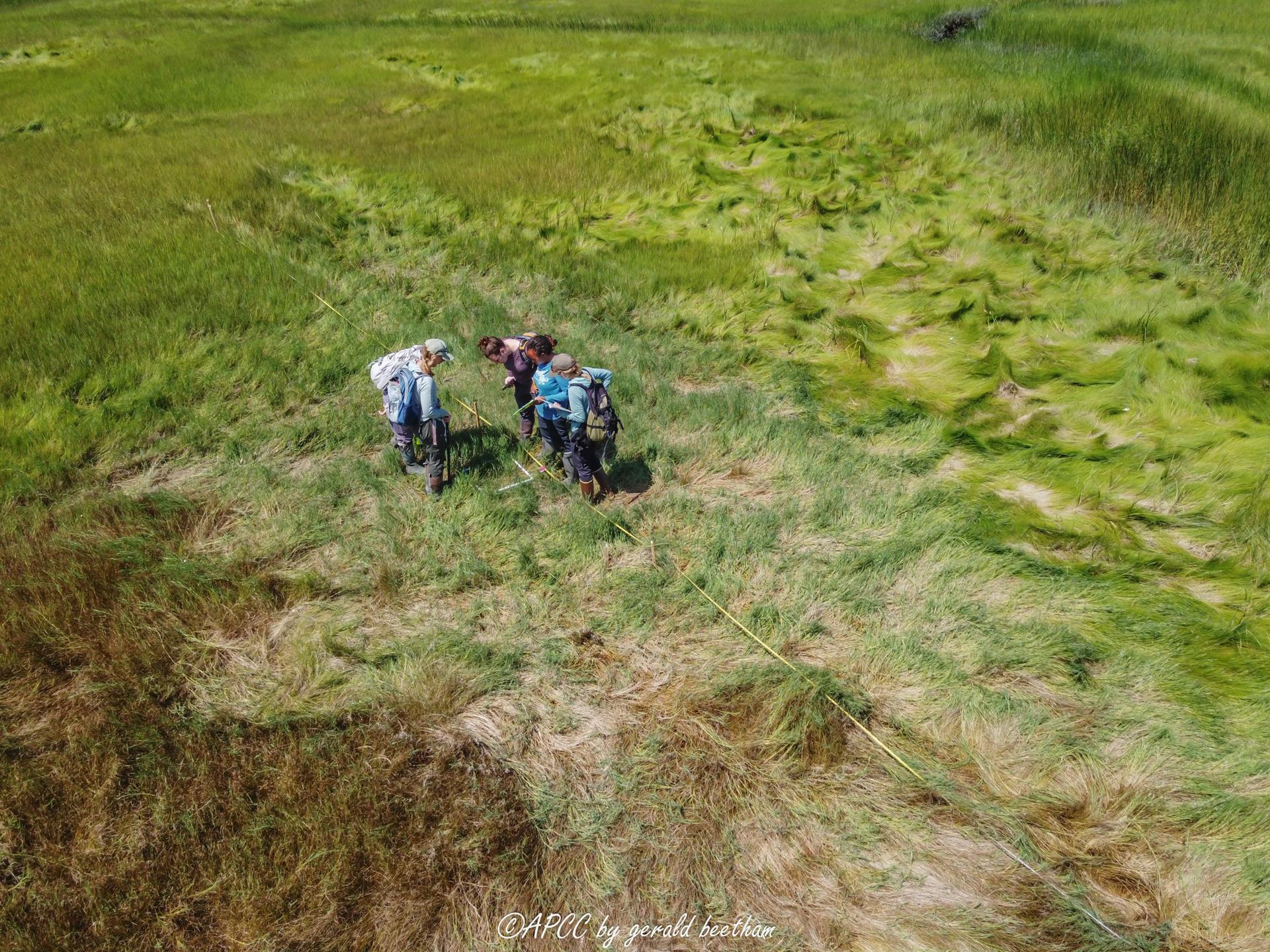
Above: Staff from APCC, NOAA, and Mass Audubon completing vegetation surveys at Barnstable Great Marsh in advance of runneling and ditch remediation. APCC monitoring supported by the Department of Fish and Game In-Lieu Fee Program. |
|
|
Salt marshes are vital and prevalent ecosystems on Cape Cod. They provide essential habitat for a variety of species, they are an important buffer between inland areas and the open seas, and they store carbon from the atmosphere. However, human development has threatened the health and stability of these marshes. How do we ensure the survival and recovery of salt marshes? Tidal Restrictions and traditional restoration
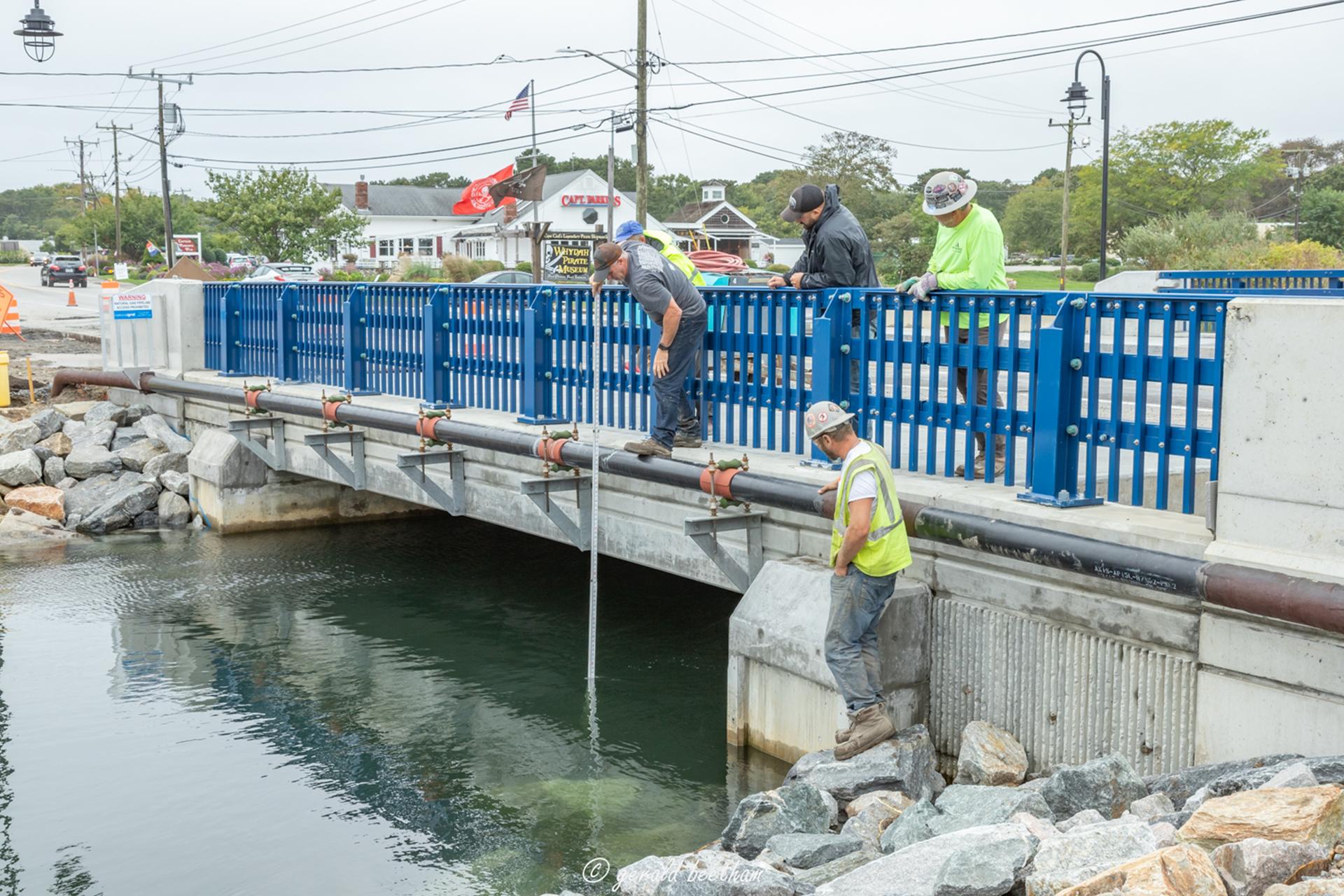
Traditional restoration efforts aim to replace undersized culverts with wider openings or bridges to restore the full tidal range to upstream salt marshes. APCC has helped towns to complete these projects at sites like Parker’s River in Yarmouth and Sesuit Creek in Dennis. For more information, visit APCC's website.
New research and techniques
While replacing culverts has been beneficial, research shows adaptive management and strategies such as runneling and ditch remediation may be additionally effective for long-term marsh stability. APCC is working with partners across the region to discuss best practices related to marsh assessment and monitoring for runneling and ditch remediation and applying those suggestions at Chase Garden Creek on the north side of Cape.
Additionally, APCC continues monitoring previously restored sites in order to evaluate further restoration needs, such as supplemental planting at Sesuit Creek. |
|
|
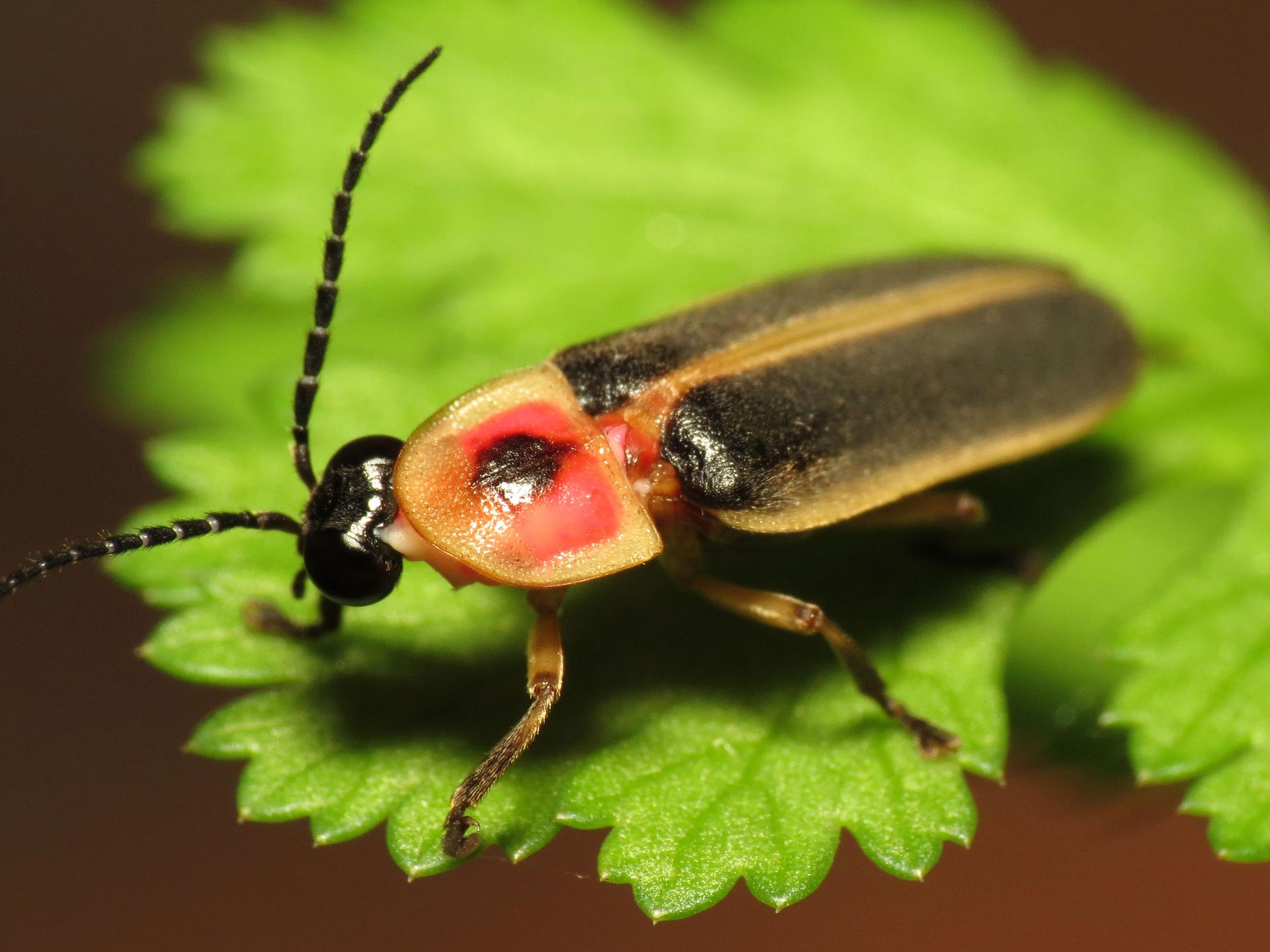
Katja Schulz from Washington, D. C., USA, CC BY 2.0 <https://creativecommons.org/licenses/by/2.0>, via Wikimedia Commons |
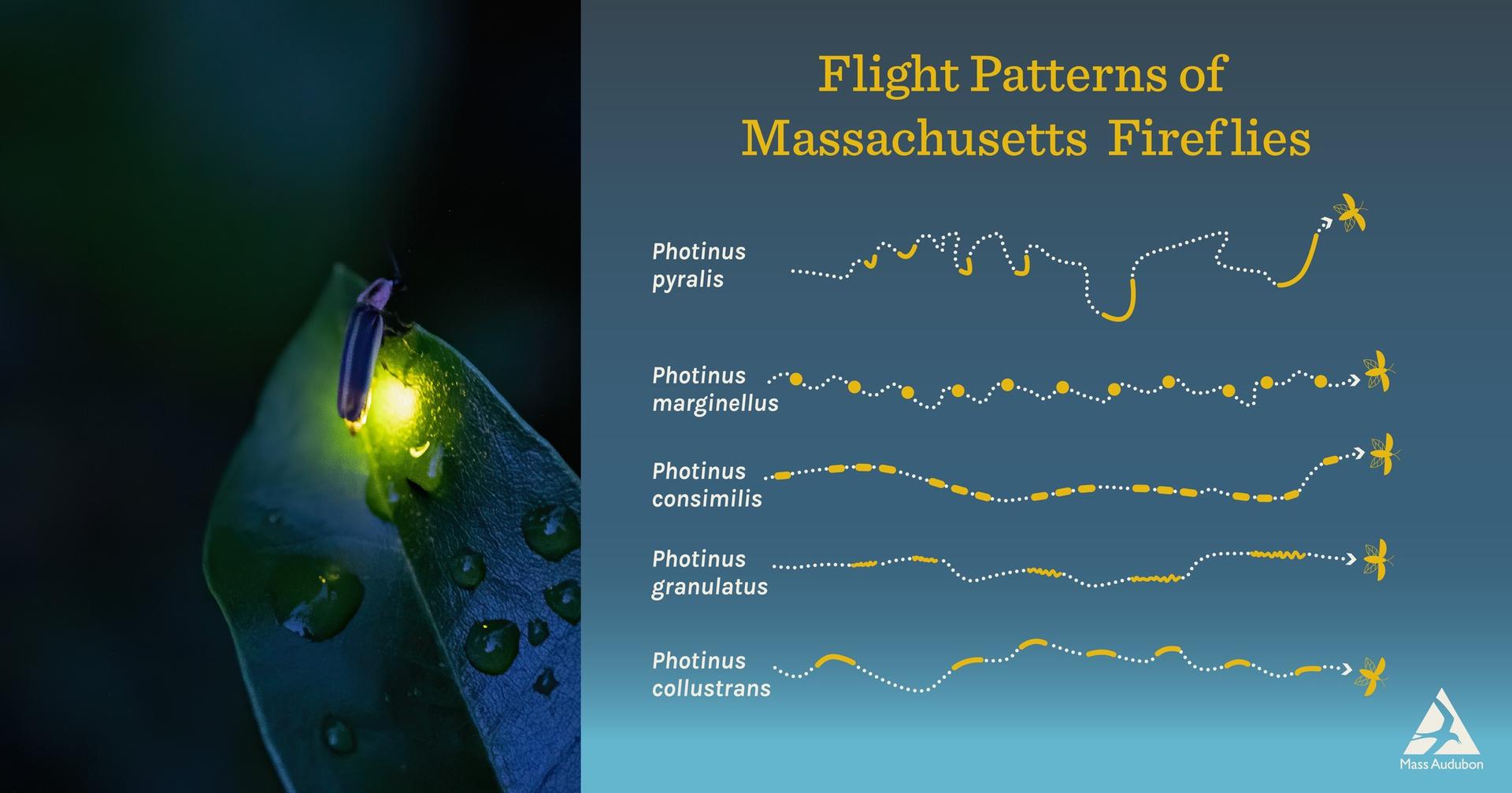
Lightning Bugs, aka Fireflies, —Are They in Your Yard?
It's that time of year, when the magical blinking lights of lightning bugs appear in Cape-friendly yards. Read more about their life cycle from Mass Audubon. These interesting insects need your support.
From the Xerces Society, the nation's leading invertebrate conservation organization:
Most firefly researchers agree that habitat loss and degradation, light pollution, pesticide use, and climate change are the leading threats to fireflies. Despite concerns about potential population declines, fireflies have received relatively little conservation attention. You can help.
Everyone can contribute to firefly conservation. For detailed recommendations, check out our conservation guidelines and other resources highlighted below. Here are some simple actions you can take today: - Provide habitat! Set aside a part of your yard or garden where things can get a little wild.
-
Avoid pesticide use, which can kill fireflies and their prey or degrade habitat.
- Turn off your outdoor lights at night, especially during the summer firefly season.
- Spread the word and let others know about fireflies and their needs.
|
|
|
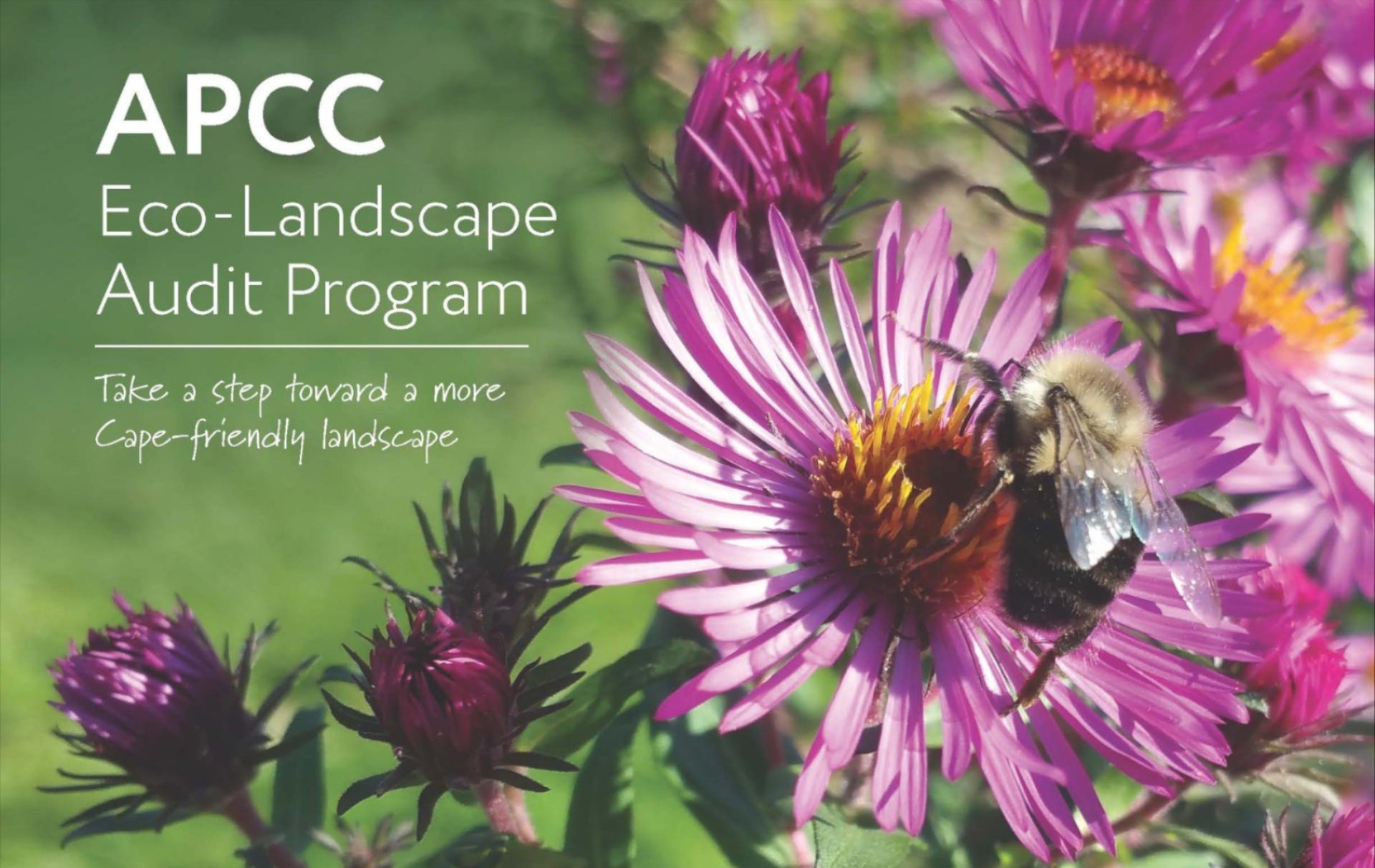
We are taking appointments now through August (first come, first serve). Click here for more information. 2024 testimonials: This is so fantastic!! You have provided so many great ideas and lots of detail, everything I need to be successful!! Thank you, thank you, thank you!! - Kathy W. Thank you for your ideas, suggestions, recommendations, and education. - Judith B.
Most excellent!! VERY well done, and SO much useful information. Definitely exceeded my expectations, which were pretty high! - Eli W.
APCC's Ecolandscape Audit Program is hands down, the best investment for the money that I have made in my yard EVER. What a comprehensive evaluation! It will leave you inspired to better your Cape Cod landscape in relation to water use, plant selection, and pollinator & animal habitat. Wonderful, wonderful! - Rick M. |
|
|
Floating Offshore Wind in the Gulf of Maine Thursday, June 27, 7:00 p.m. Virtual - pre-register here for meeting link
As the second installment in Sierra Club’s "Massachusetts is Ready for Offshore Wind” webcast series, this event will explore key opportunities and specific issues associated with the deployment of floating offshore wind turbines in the Gulf of Maine wind resource area. This area includes a research lease offered to the state of Maine plus zones east of Cape Cod designated for future commercial lease by the US Bureau of Ocean Energy Management (BOEM). The event will run from 7 to 8 p.m., with time for audience Q&A. Pre-registration is required here.
This webinar will feature Dr. Habib Dagher, a global thought leader in the development and deployment of floating offshore wind technology. In addition, Sierra Club will highlight current opportunities for offshore wind advocacy, relating both to the Gulf of Maine and to projects sited south of the Cape & Islands region. Dr. Habib Dagher, P.E. is the Bath Iron Works Professor of Structural Engineering at the University of Maine and the founding executive director of the university’s Advanced Structures & Composites Center (ASCC), a National Science Foundation funded research center and world leader in the development of low-cost, high-performance structural composites. For more information on Sierra Club's "Massachusetts is Ready for Offshore Wind” campaign, visit https://www.sierraclub.org/massachusetts/wind. |
|
|
APCC's Cyanobacteria Monitoring Program |
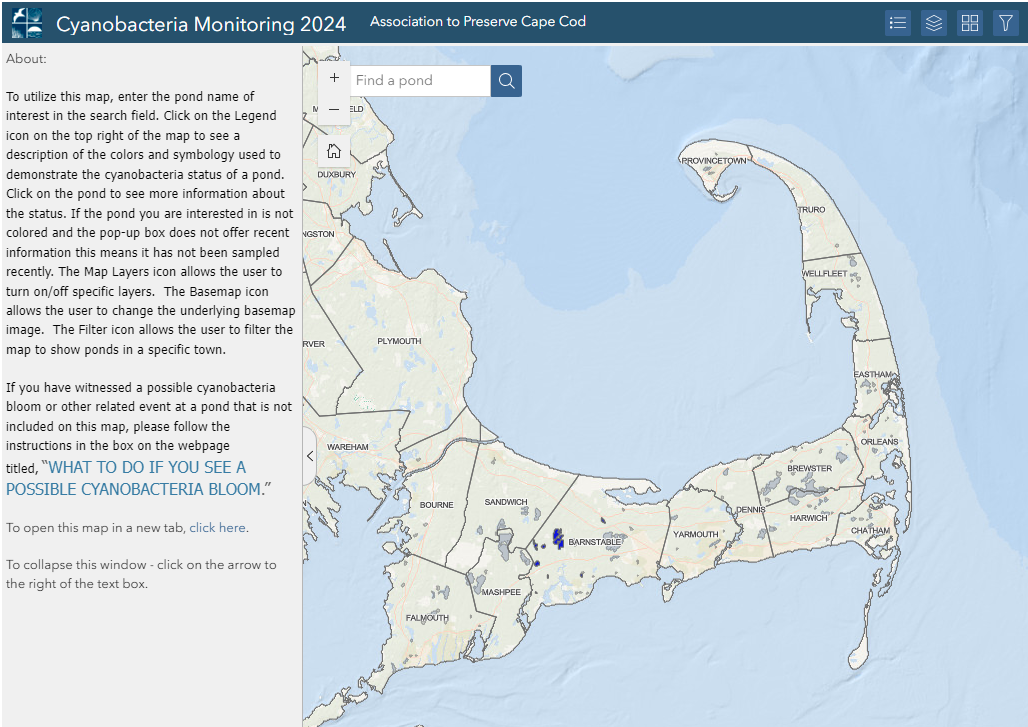
Our cyanobacteria monitoring map is live for 2024. The program begins in earnest this week and results are displayed on the interactive map. You can sign up for cyanobacteria bloom alerts here - and receive a notice when a bloom is detected.
| |
|
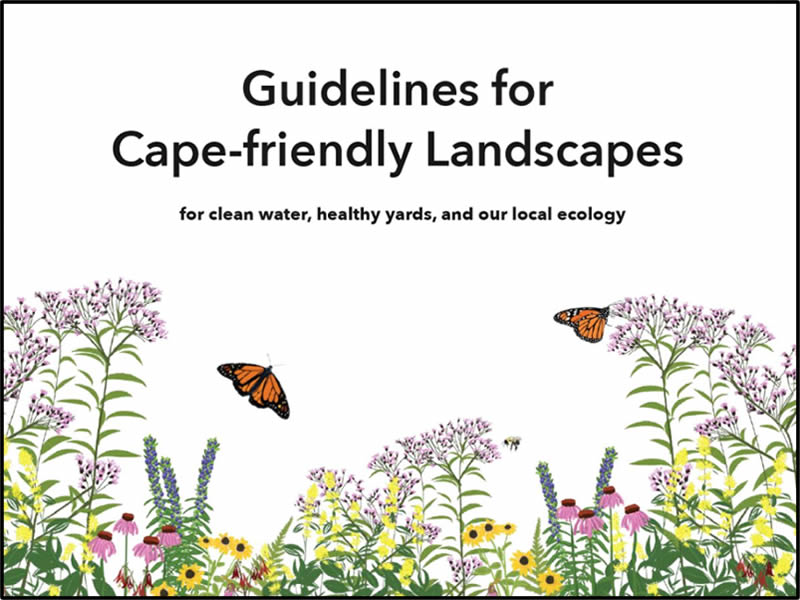
Guidelines for Cape-friendly Landscapes - an APCC publication |
|
|
The Guidelines gives homeowners steps they can take in the design and maintenance of their properties that will support pollinators and birds, manage stormwater, conserve water, and protect the Cape's water quality. This 40-page booklet is beautifully illustrated by Marcy Ford with content that is easily digestible and supported by numerous resources for additional learning.
|
Thank you for this important book! Hopefully everyone of us with a yard will read it and put it to use! - Vicky Titcomb of Titcomb Bookshop |
We've enjoyed creating it and hope it will help you with ideas to help you steward your piece of Cape Cod and maybe foster an environmental ethic in the decisions we all make in our own managed landscapes. Get your copy here—and maybe one for a friend?
|
We are grateful for the several retail shops that are partnering with us to make this publication more widely available: Brewster Book Store, Birdwatchers General Store, Crocker Nurseries, Wellfleet Audubon Wildlife Sanctuary, Cape Abilities Farm, Cape Cod Museum of Natural History, the Cape Cod Lavender Farm, Heritage Museums and Gardens, Titcomb's Bookshop, Sea Howl Bookshop, Soares Flower Garden Nursery, and Eight Cousins Bookshop.
If you are a retailer and would like to sell this publication at your store, contact Kristin at kandres@apcc.org. |
|
|
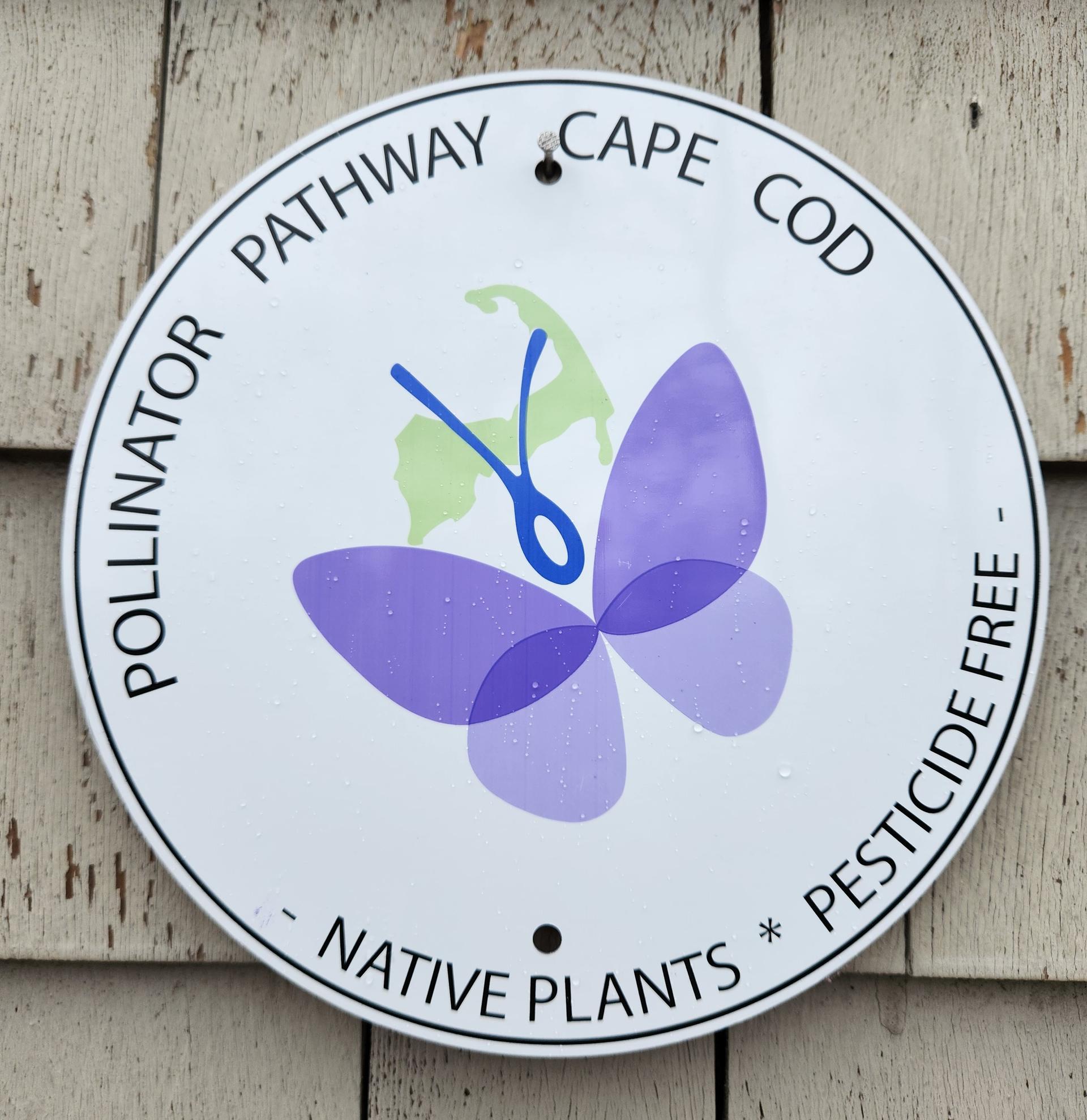
The Pollinator Pathway Cape Cod is a group of organizations promoting native plants and pollinator-friendly land care practices to create a boat load of safe oases for our native bees, butterflies and a whole host of other pollinators that are crucial to the health of our ecosystems.
Join us! It's easy. There are no fees. You just need to pledge to ADD native plants, SUBTRACT a little lawn, AVOID yard chemicals, especially pesticides, and LEAVE the leaves. And, help us spread the word. Please get on the map to show your support of pollinators on Cape Cod!
You can purchase now your 9-inch aluminum Pollinator Pathway Cape Cod sign at Hyannis Country Garden, Crocker Nurseries, Brewster Book Store, Orleans Conservation Trust, and
Cape Abilities Farm. If you are a retailer, and you would like to sell the signs, you can order online here, or email pollinators@apcc.org. |
|
|
| APCC Caps are available for purchase! $25 includes shipping & handling
Click here for more information and to order.
This is one great way to show your support for APCC's work. |
|
|
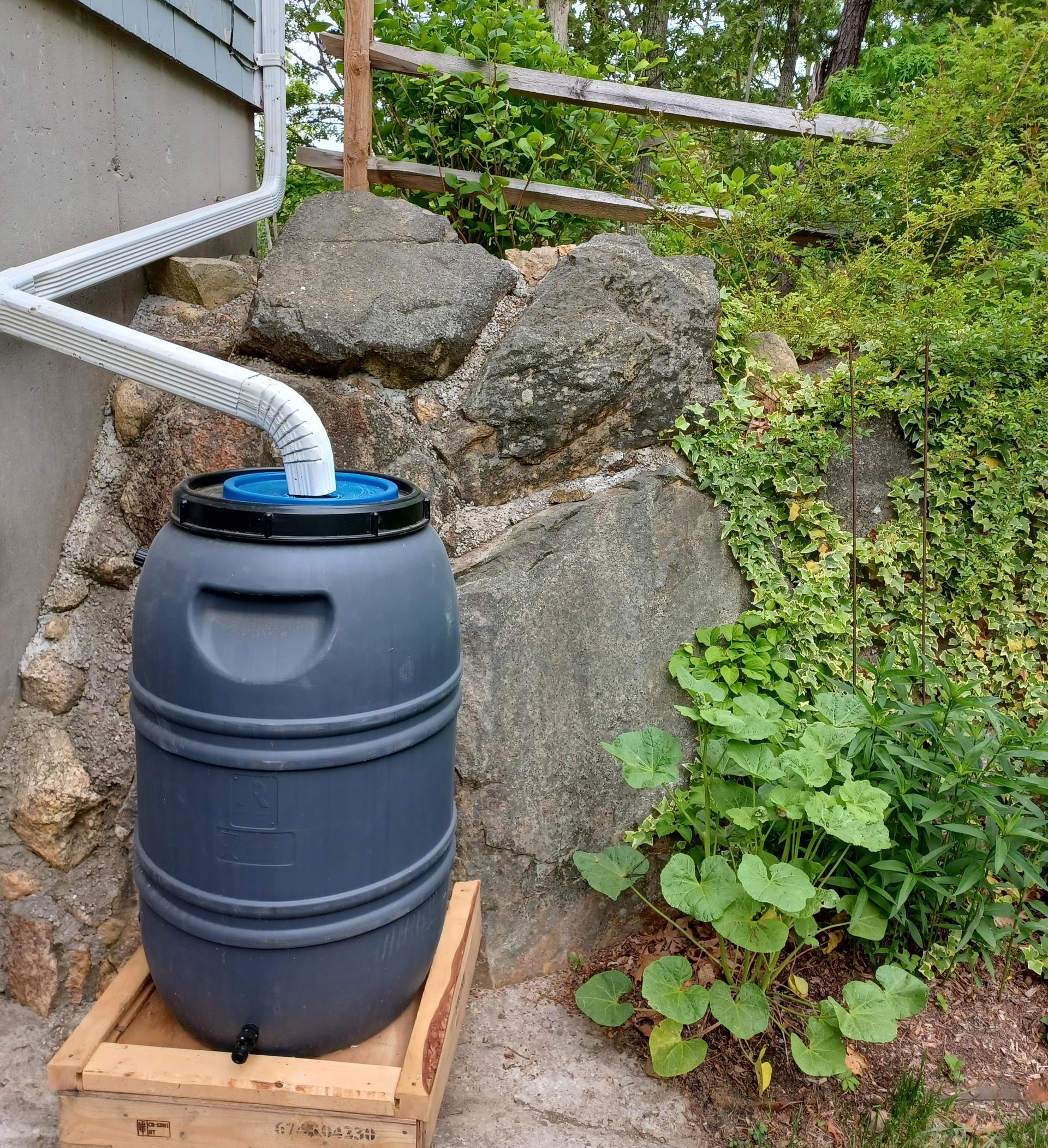
| Rain Barrels for Cape Cod
Order online from Upcycle Products $122 each
includes FedEx shipping to your door APCC receives a portion of the proceeds. For more information, click here. |
|
|
A Cape Cod Native Plant-selector ~ to help you choose the perfect native plants for your garden. |
|
|
Email membership@apcc.org and we'll send you a CapeCodNativePlants.org decal. |
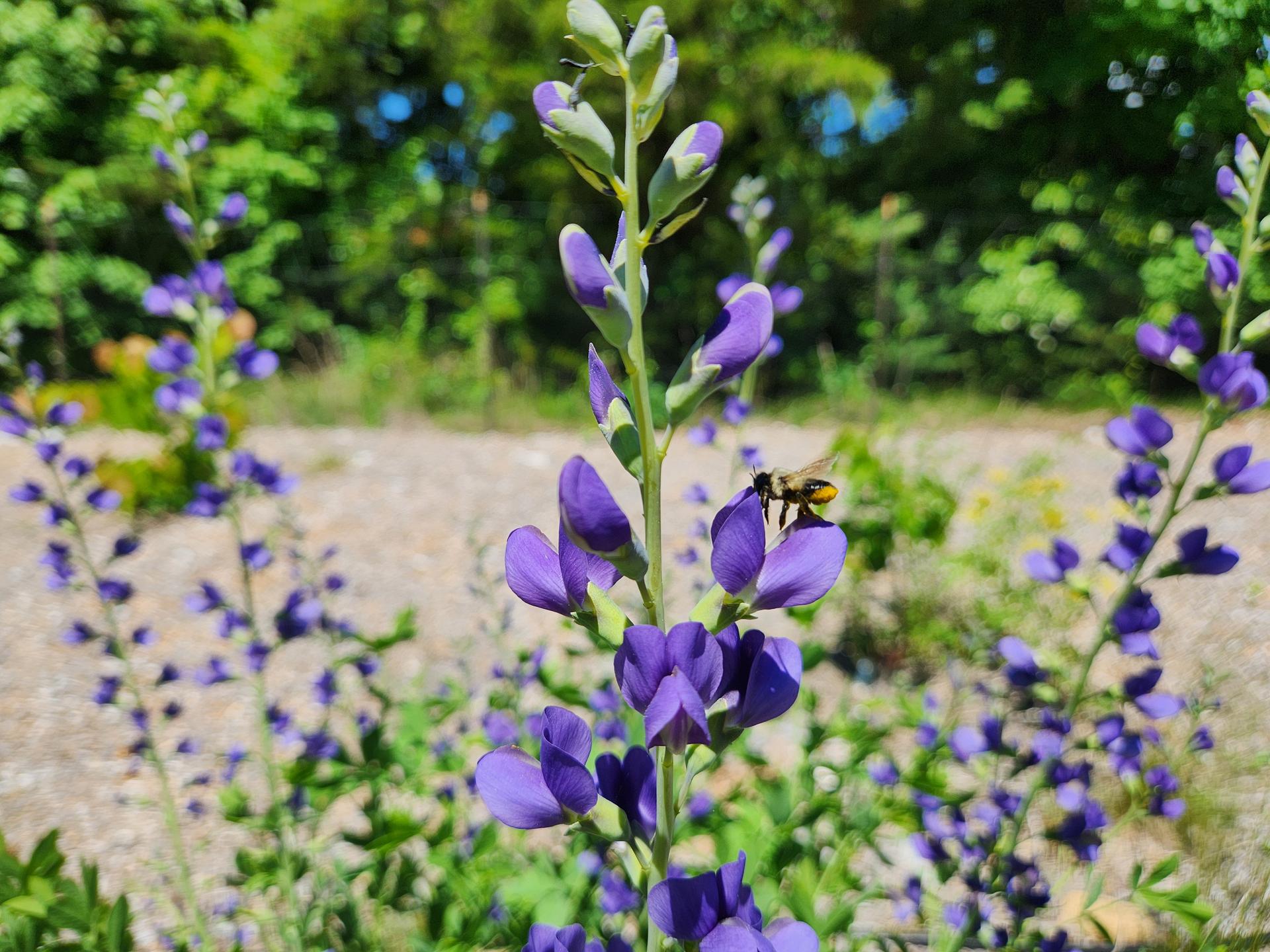
| Baptisia
Baptisia australis |
|
|
| APCC eNewsletters. Our weekly newsletters are archived on our website and easily shared.
You can find past newsletters and share with your friends to sign up for future enewsletters HERE. |
|
|
Are you thinking of going solar? We hope so!
In partnership with E2 SOLAR in Dennis, APCC receives $500 for every solar installation when APCC is named as referral. |
|
|
| Thank you to the homeowners who just contracted to install solar panels through E2 Solar. May the sun always shine for you! |
|
|
Expressions Gallery, 578 Main Street, Chatham
CLICK HERE |
Expressions Gallery donates 20 percent of its profits to APCC's work.
|
|
|
Thank you to our business sponsors |
|
|
APCC is rated four stars by Charity Navigator and 2023 Platinum by Candid (formerly Guidestar). |
|
|
Our Contact Information
*{{Organization Name}}*
*{{Organization Address}}*
*{{Organization Phone}}*
*{{Organization Website}}*
*{{Unsubscribe}}* |
| |
|
|