Association to Preserve Cape Cod |
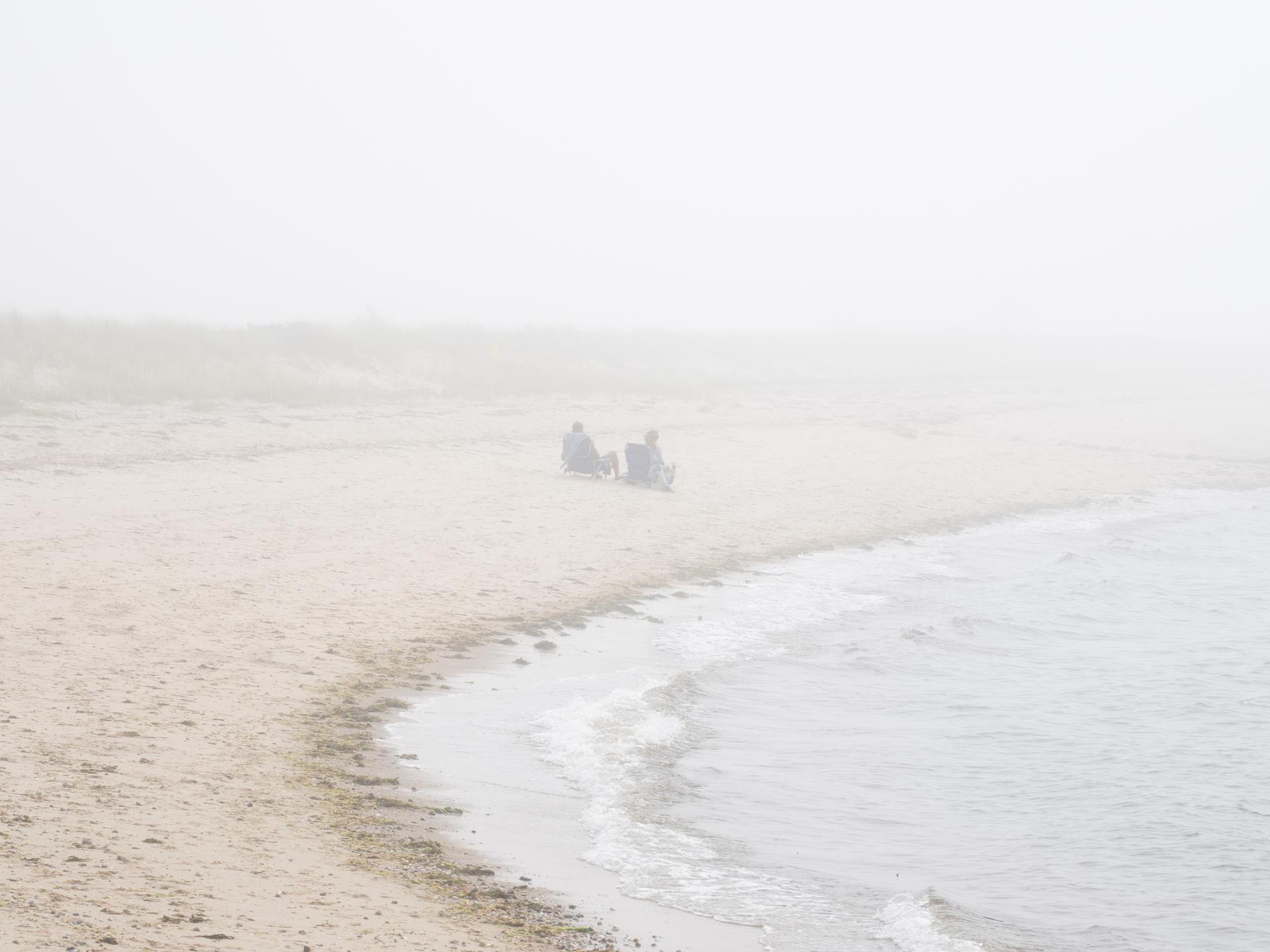
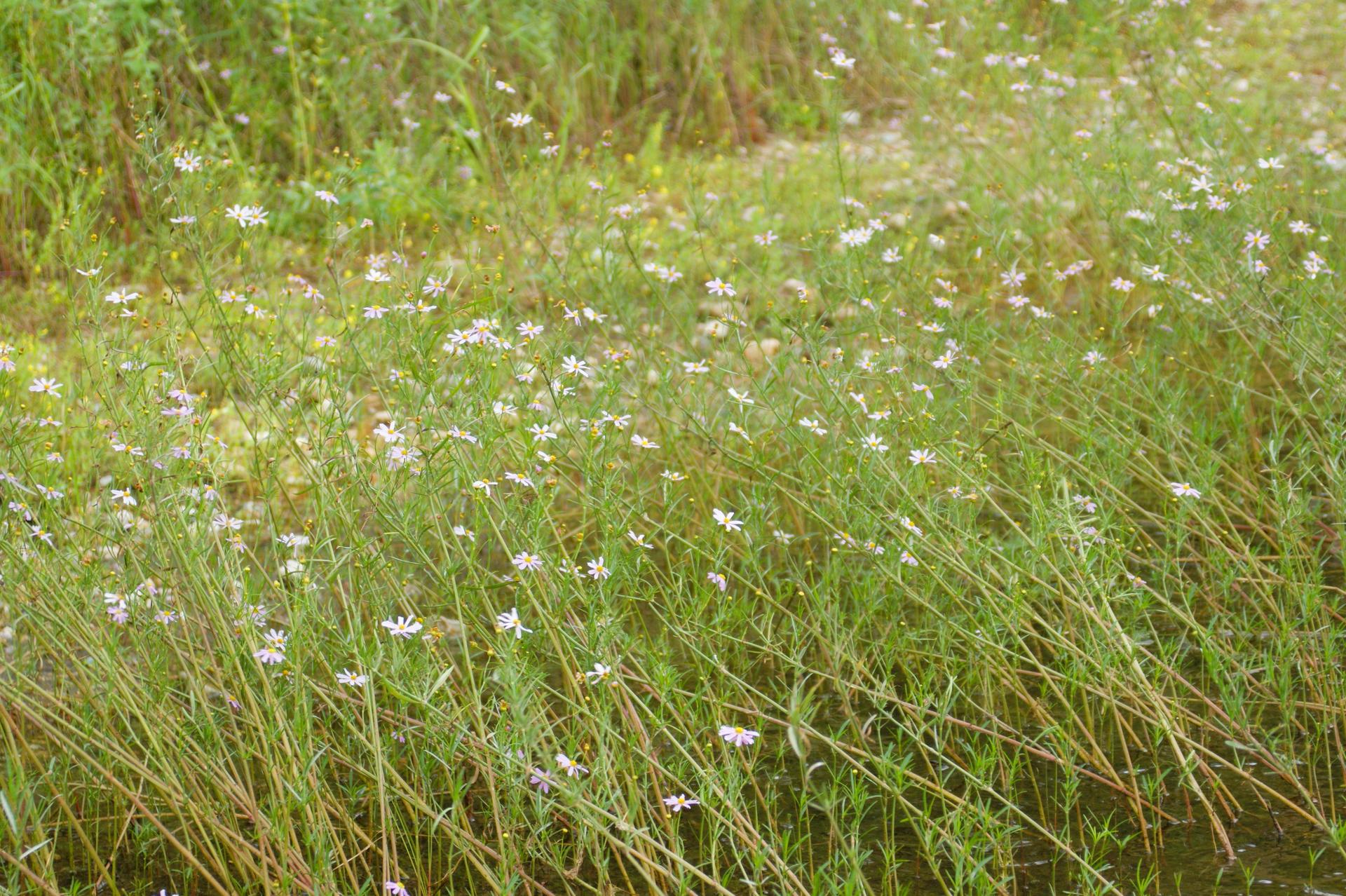
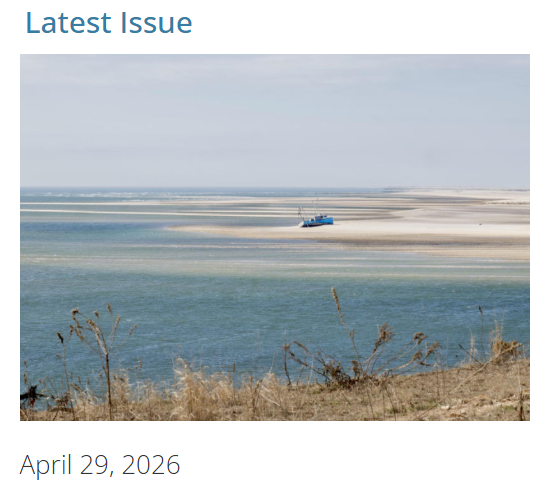
Above: "We're on vacation." Photo by Sue Machie. |
|
|
|
Ecosystem Restoration Program |
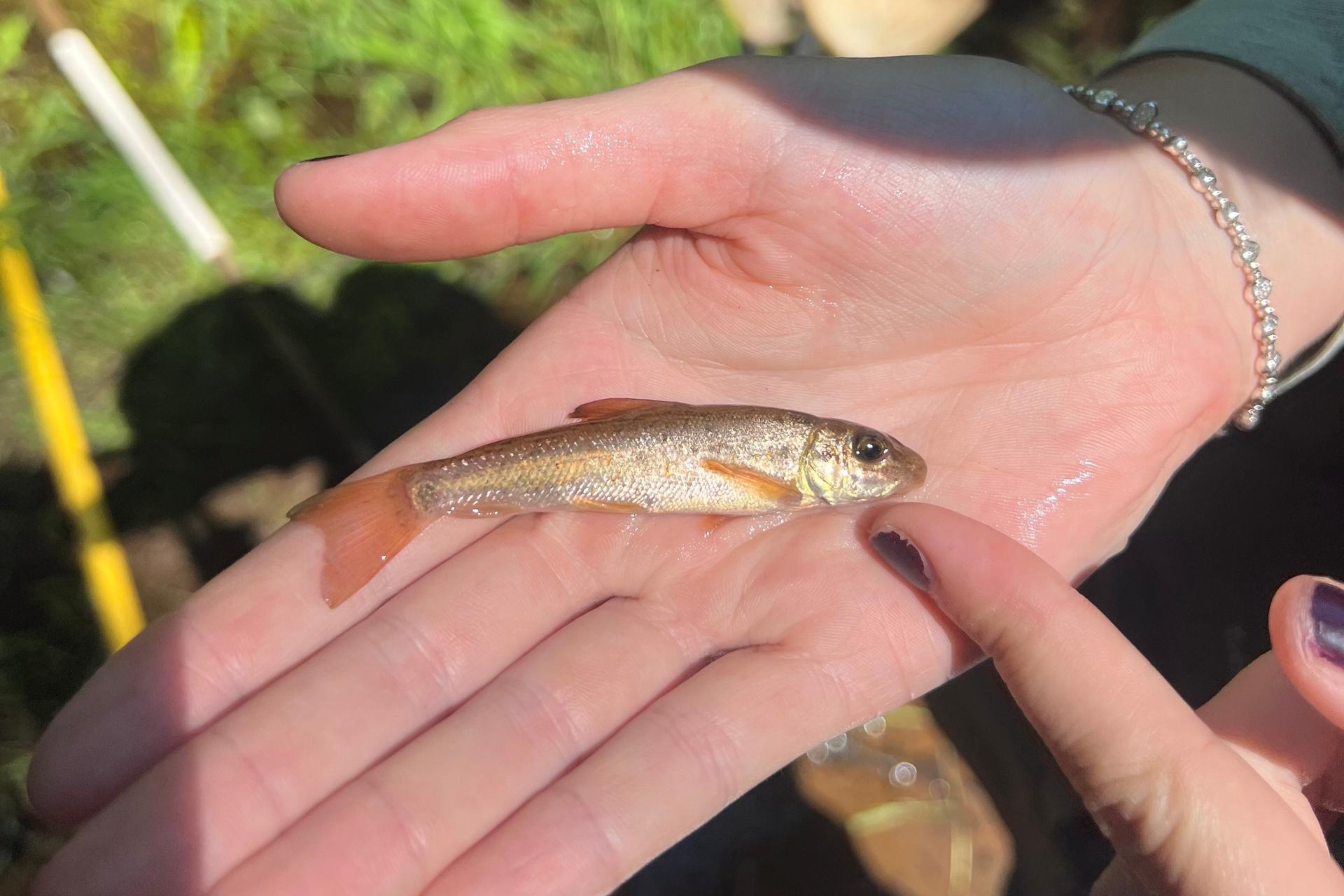
Above: Juvenile white sucker collected from a local Upper Cape river this summer. Young suckers use quiet river margins and shallow habitats as nursery areas before eventually moving back toward ponds and lakes. |
After the Stampede: A Native Fish’s Summer Story By August, Cape Cod’s rivers can seem quiet. The spring migrations have passed, the canopy is full, and the shallow edges often look still. But look closely, and the results of spring’s activity may still be moving beneath the surface. White suckers are one example. These native freshwater fish often go unnoticed, but they are an important part of our river and pond ecosystems. Each spring, adults move from ponds and lakes into rivers and streams to spawn, often gathering in shallow, gravelly areas where flowing water can pass over their eggs.
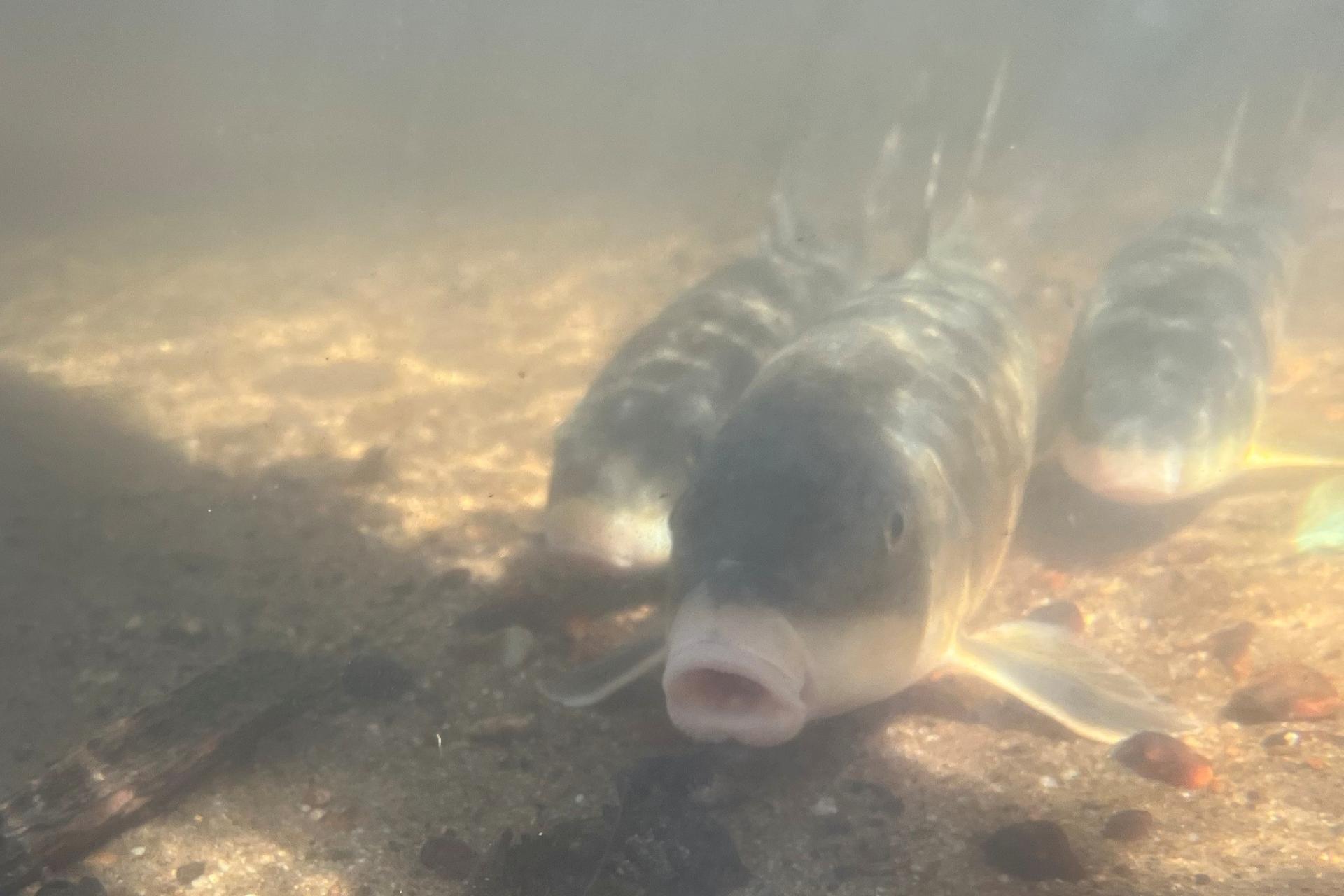
When encountered in numbers, they can be surprisingly dramatic. A calm stretch of river may suddenly erupt as bronze backs flash, tails churn, and fish scatter through the shallows. “School” may be the proper term, but in the moment, “stampede” can feel more accurate.
By summer, that spectacle has passed, but the next generation remains. Young white suckers can often be found along quiet river margins, shallow edges, and slower-moving areas where they feed and grow before eventually making their way back toward the ponds.
Their presence is a reminder that rivers are more than migration corridors. They are living habitats that support native fish at different life stages. For white suckers, the river provides spawning habitat in spring and nursery habitat in summer. For river herring, brook trout, American eel, and many other species, access to connected, healthy waterways are just as important.
That connection is central to APCC’s restoration work. Barriers, undersized crossings, poor water quality, and degraded stream channels can all disrupt the movements native fish need to complete their life cycles. Restoring rivers helps reopen those pathways and improve habitat from headwaters to ponds, wetlands, and estuaries.
White suckers may not be glamorous, and their name certainly does them no favors. But they are strong, adaptable native fish woven into the life of Cape Cod’s freshwater systems. Their spring “stampede” may be over by August, but its legacy can still be found in the river’s quiet edges—small, easily missed, and part of a much larger story of movement, habitat, and renewal. |
Above: Adult white suckers gathered in shallow river habitat during their spring spawning run. |
|
|
|
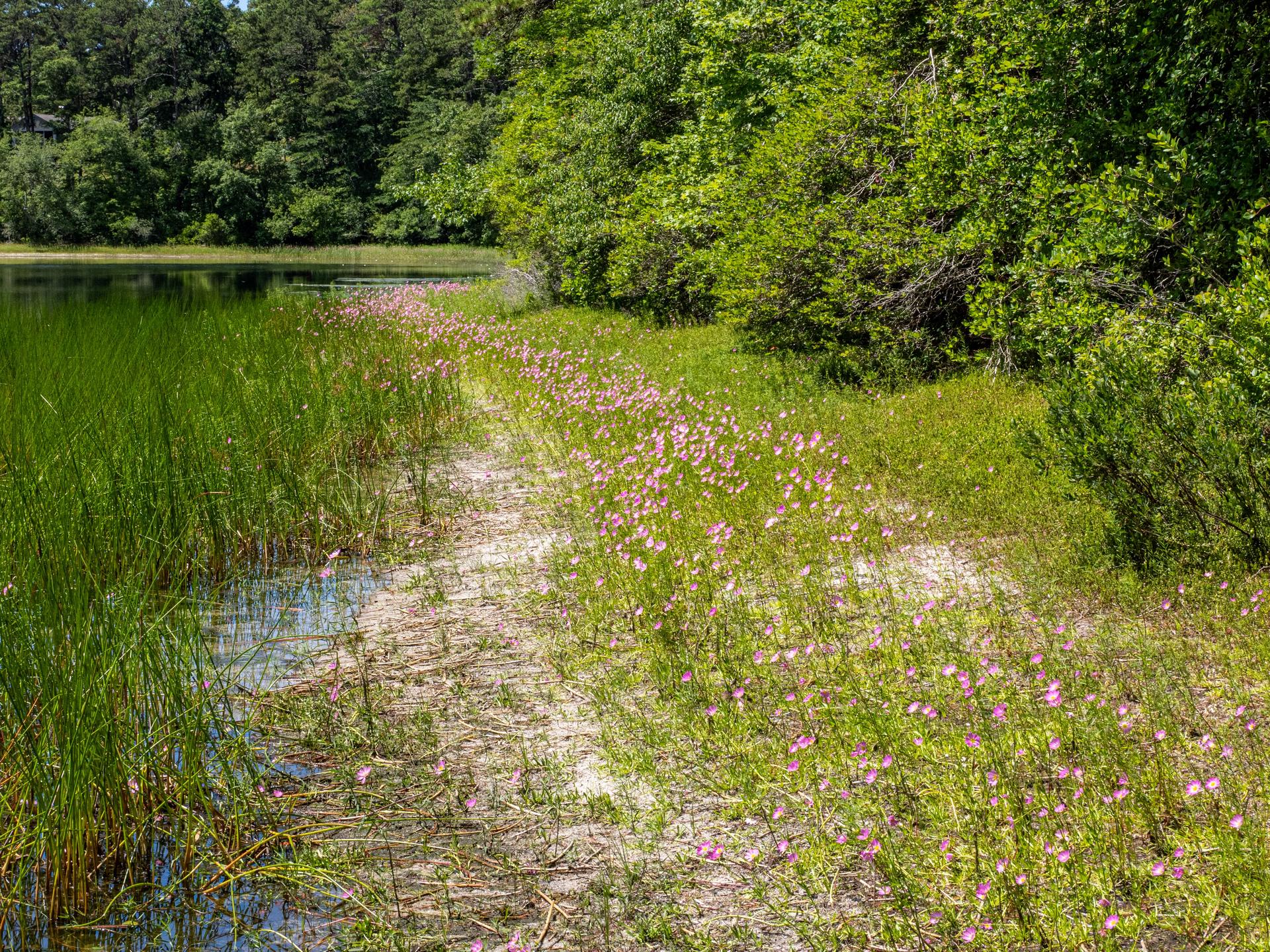
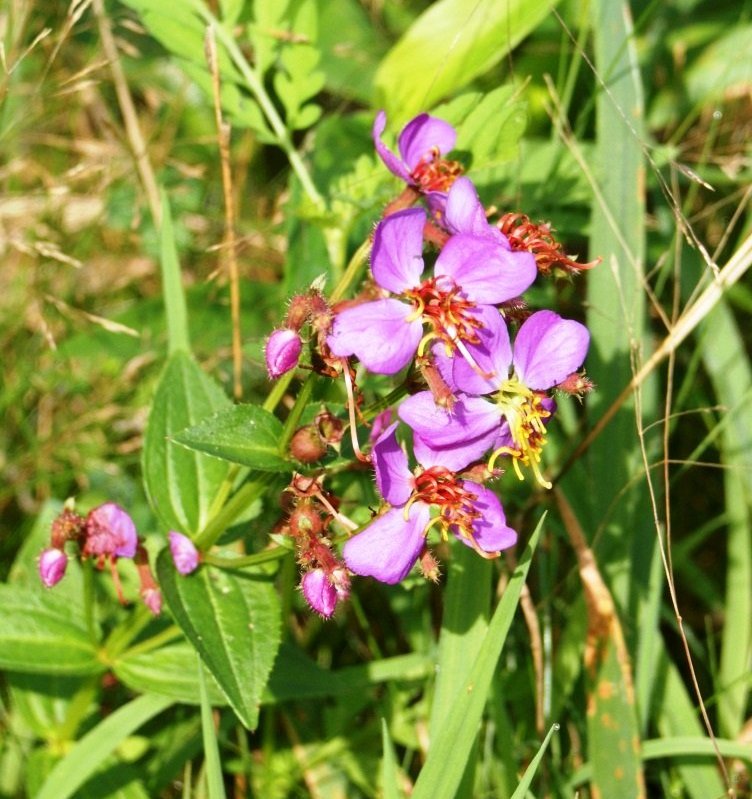
Above: Flowering Plymouth gentian, Sabatia kennedyana, on Bassett Pond, Yarmouth. Photo by Sue Machie. |
Ecologically Unique and Globally Rare Habitat
~ Cape Cod's Coastal Plain Ponds Coastal plain ponds are ecologically unique and a globally rare habitat—once again proving we live in a very special place in the world!
One of the most beautiful natural sights to see is when this pondshore plant community shows itself in all its glory in mid to late summer. Because our ponds are connected to groundwater, a low water year or drought results in a lowering of the water level, exposing the sandy shoreline and releasing the proliferation of the rare Plymouth gentian’s pink flowers around the periphery of the pond.
Plymouth gentian is commonly found growing with grass-leaved goldenrod, Euthamia caroliniana, pink tickseed, Coreopsis rosea, and golden pert, Gratiola aurea. There are also numerous kinds of rushes and sedges along with common boneset, Eupatorium perfoliatum, purple gerardia, Agalinis purpurea, the state-listed rare New England boneset, Eupatorium novae-angliae, and Maryland Meadow-beauty, Rhexia mariana. (The links for each of these species take you to the website of the Native Plant Trust GoBotany for information on each plant. Please note the associated maps showing the counties where these plants are found.)
Some of these plants will produce seeds and others will remain rooted, only to become submerged with the winter and spring precipitation where they will patiently persist in the sandy, gravelly substrate, dormant for a year and maybe more, until the next low water opportunity exposes the shoreline.
The zonation of the coastal plain pond plant community is often described as a bathtub ring—an observable gradation of plant species below the pitch pine-oak forest in the upland with often steeply sloped banks to a shrub border dominated by highbush blueberry, Vaccinium corymbosum, sweet pepperbush, Clethra alnifolia, and green briar, Smilax rotundifolia.
The next ring is the herbaceous plants and at a slightly lower elevation around the pond in the semi-permanently flooded zone, you may find one or more of the following: bayonet rush, Juncus militaris, spike-sedge, Eleocharis spp., and pipewort, Eriocaulon aquaticum. Some plants remain rooted in the saturated soils in deeper water include the yellow water-lily, Nuphar variegata, white water-lily, Nymphaea odorata, and Robbins' spike-sedge, Eleocharis robbinsii. Not every pond has every zone, and zones vary in width and species composition from year to year.
|
Above: Rose tickseed. Photo by Gerald Beetham. |
Cape Cod’s coastal plain ponds have been said to be the best examples of coastal plain pond communities in New England. Observing the remnants of these pondshores in flower is memorable—and could be fleeting as development pressure and human alteration and use threaten the vitality of this fragile special habitat. Introduction of invasive species and heavy human use, such as ATVs, horses, and creation or enhancement of beaches, severely impact plant growth and can result in total decimation of this fragile, irreplaceable ecosystem. It’s been documented that even a few walking trips trampling these areas can create a dead zone where none of these distinctive plants will grow.
Good water quality is important to preserve coastal plain pond habitat and therefore input from septic systems and lawn fertilizers serve to increase the nutrients in the pond, leading to eutrophication. The unnatural surplus of nutrients results in excessive growth of algae and encourages other pond vegetation to grow, which can crowd out the special coastal plain pond plants. If you visit a Cape Cod pond, there may be special plants present, so please tread lightly along the shoreline—and take a closer look! |
|
|
|
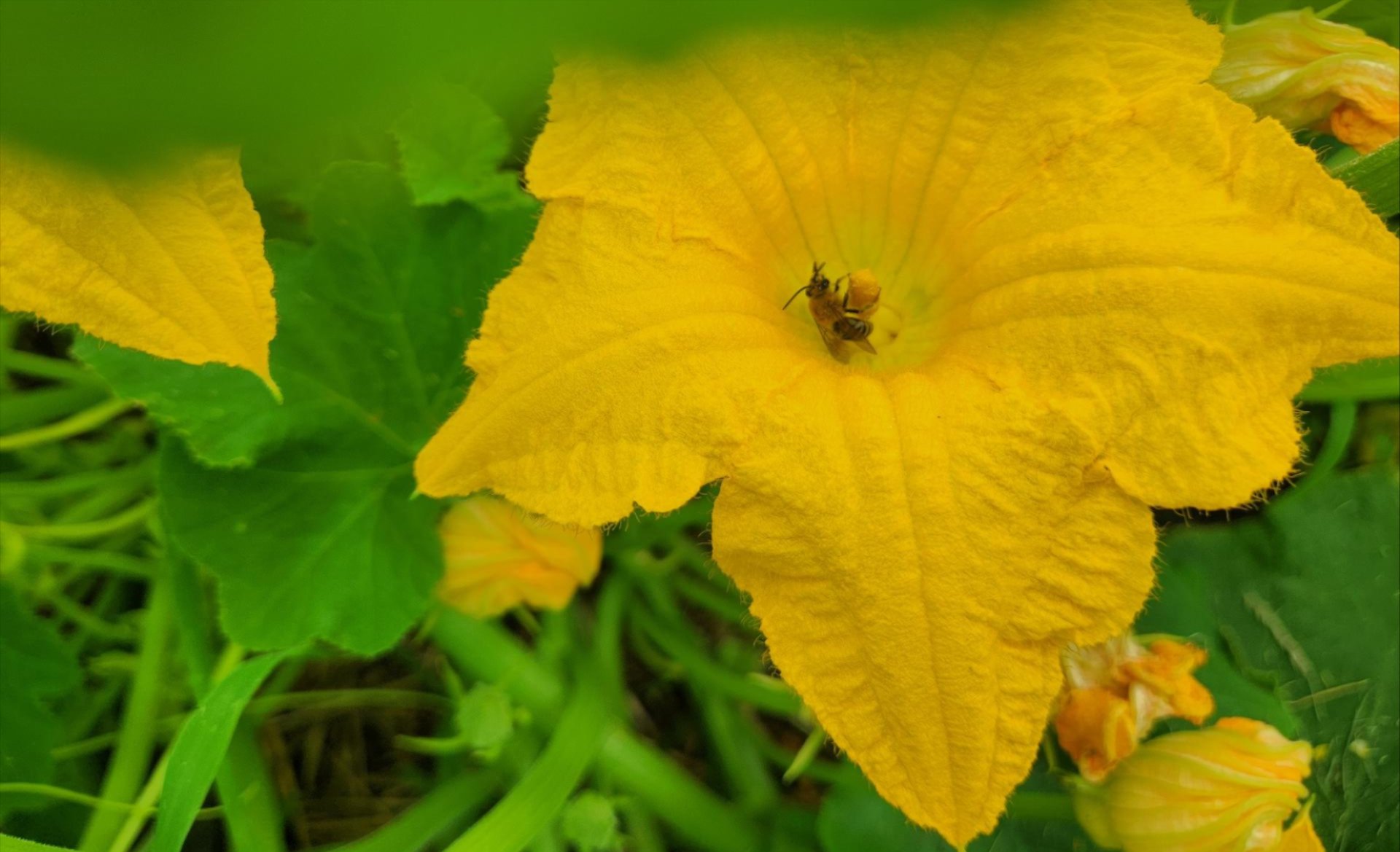
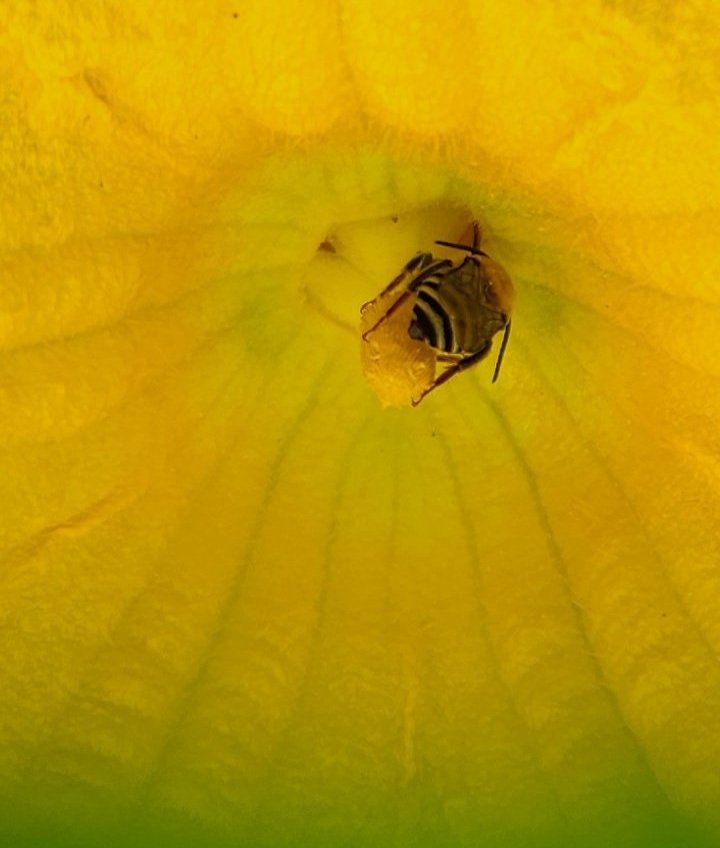
Above: Pruinose squash bee, Eucera pruinosa |
Squash Bees
Got squash? If so, you may very well have to thank a squash bee—one of the most important native bees in our food crops of summer squash, winter squash, and pumpkins. This native solitary bee is in one of two genera, Peponapis and Xenoglossa, but in New England we have just one: Eucera pruinosa (formerly Peponapis pruinosa).
However, this bee is not historically native to New England. Genetic analyses show that the presence of squash bees is due to the domestication of squash and its trade over thousands of years from its origin in the desert southwest via the Great Plains, thus enabling the squash bee to colonize New England—the bees followed the squash. (Source.)
Females forage at the flowers of squashes, pumpkins and gourds, their sole pollen hosts—that is, they feed their offspring exclusively with squash pollen—no other pollen will do. About the size of honeybees, female squash bees carry their pollen dry in a brush of hairs on their hind legs, called scopae. These squash bees are far more effective in pollinating squashes than honeybees and are responsible for pollinating an estimated two-thirds of all commercially grown squash in the U.S. |
|
|
|
|
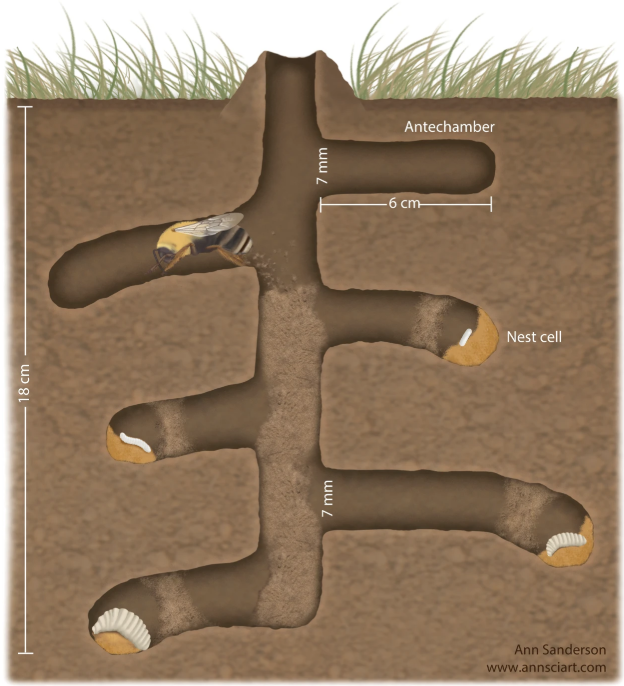
As with the vast majority of our wild bees, squash bees are solitary nesters, meaning the female digs her own nest in a patch of bare soil in close proximity to squash plants. It is a vertical tunnel with single chambers in which she lays an egg and provisions each with pollen and nectar and closes it off with soil. Sometimes several females will find an area conducive and there will be an aggregation of nests, but they are still all individual nest sites.
The nest is generally within just two feet below the soil surface. When the larvae emerge from the egg, they will feed on the pollen ball and develop into adult bees and emerge in spring. |
|
|
|
A regional survey of farms found that squash bee populations were three times greater on no-till farms compared to those tilled. (Source.) |
So, if you want to have success in your garden patch and grow some big pumpkins, or have a bountiful production of squash this year and next, leave some wild undisturbed areas close by, minimize tilling to no more than six inches deep to avoid disturbing the nests of next year's bees, and by all means, avoid pesticide use. |
Native Perennials for Sale at APCC |
We have some native perennials for sale at the office, grown from seed, pesticide-free, peat-free potting soil, plastic-free pots. If you'd like to come and peruse, just shoot us an email. The quart-size pots are $10 each. Species include: Foxglove Beardtongue, Penstemon digitalis
Culver's Root, Veronicastrum virginicum Common Blue Violet, Viola sororia White Yarrow, Achillea millefolium Sundrops, Oenothera fruticosa Slenderleaf Mountain Mint, Pynanthemum tenuifolium
New England Aster, Symphyotrichum novae-angliae White Wood Aster, Eurybia divaricata Spotted Bee Balm, Monarda punctata and more... |
|
|
|
Cape Cod Ponds Network Thursday, August 6th 6:00 - 8:00 p.m. |
|
|
|
|
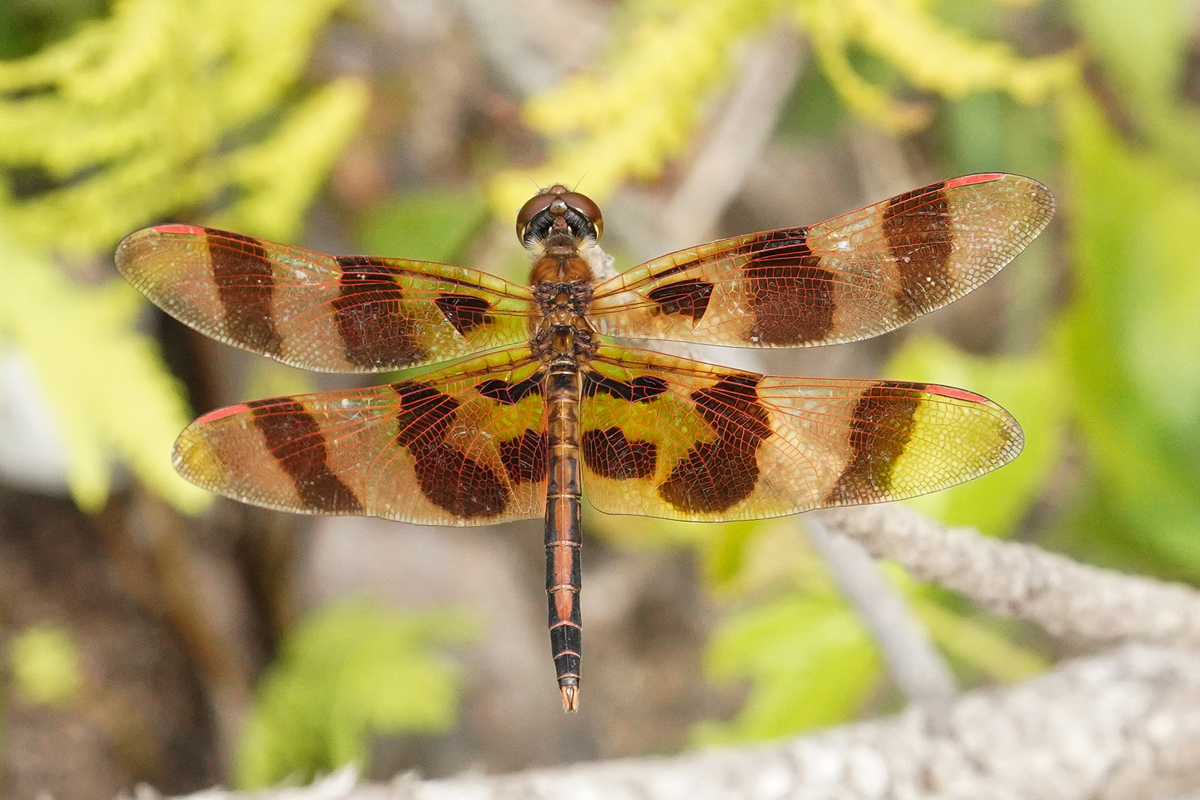
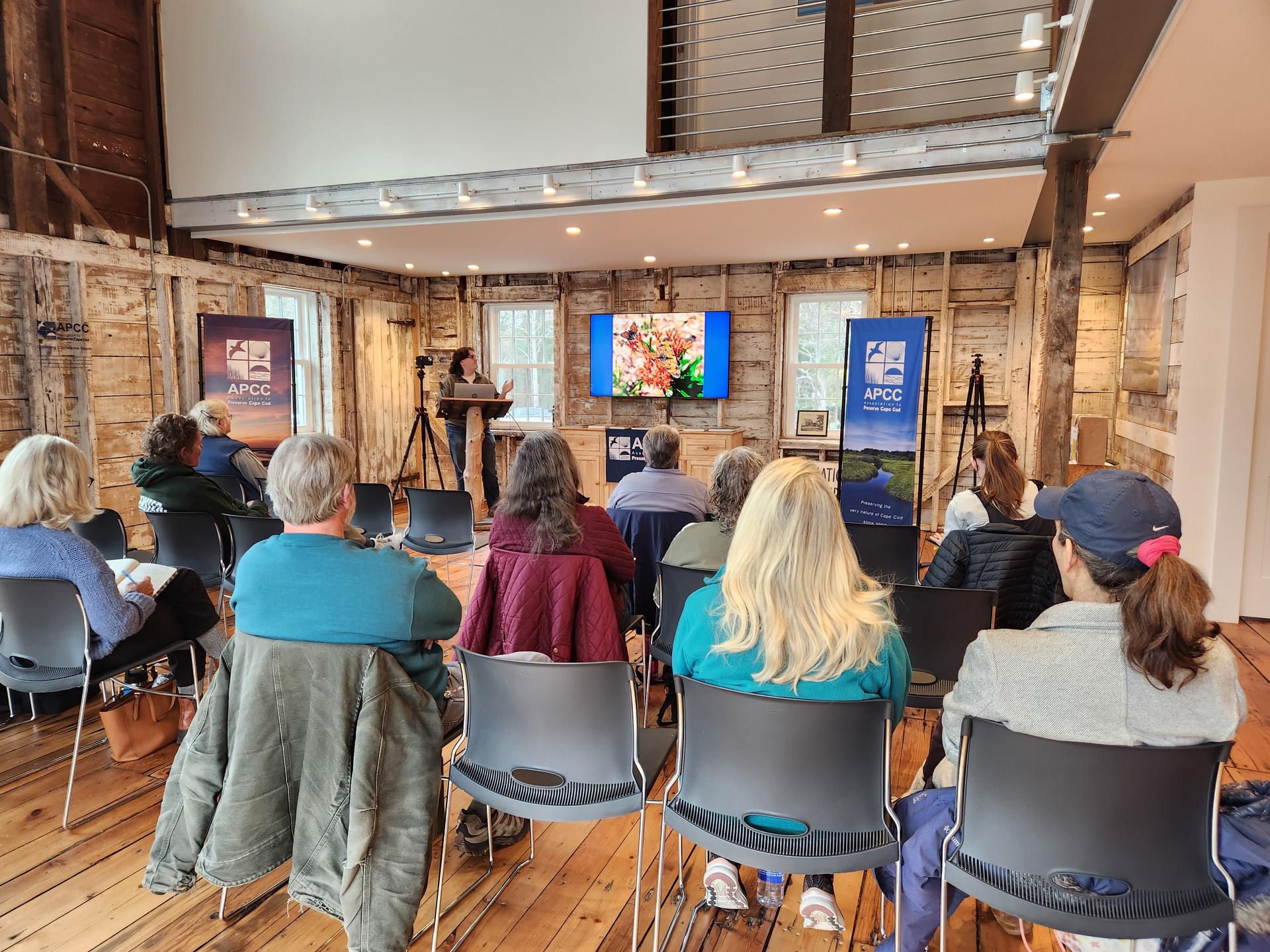
Join us for an in-person meeting of the Cape Cod Ponds Network at the Cape Cod Museum of Natural History in Brewster. Our featured speaker will be Blair Nikula:
An Introduction to Cape Cod Dragonflies & Damselflies |
|
|
|
Blair Nikula has been studying and photographing dragonflies and damselflies for over three decades. He co-authored the Stokes’ Beginner’s Guide to Dragonflies and Damselflies as well as A Field Guide to the Dragonflies and Damselflies of Massachusetts, and formerly co-edited Ode News, a newsletter about the odonates of southern New England. A native Cape Codder and life-long birder, he is a former regional editor for American Birds (now North American Birds), a past-president of the Cape Cod Bird Club, a former associate member of the Massachusetts Natural Heritage & Endangered Species Program Advisory Committee, and has often served on the Mass Avian Records Committee. He maintains two websites: capecodbirds.org and odenews.org.
|
If you've not yet signed up to be part of the Cape Cod Ponds Network, click the button below to stay informed. |
|
|
|
Sign up to Volunteer with Team SOS here. Team SOS volunteers help distribute educational materials and work on town teams to support The Cape We Shape campaign efforts.
|
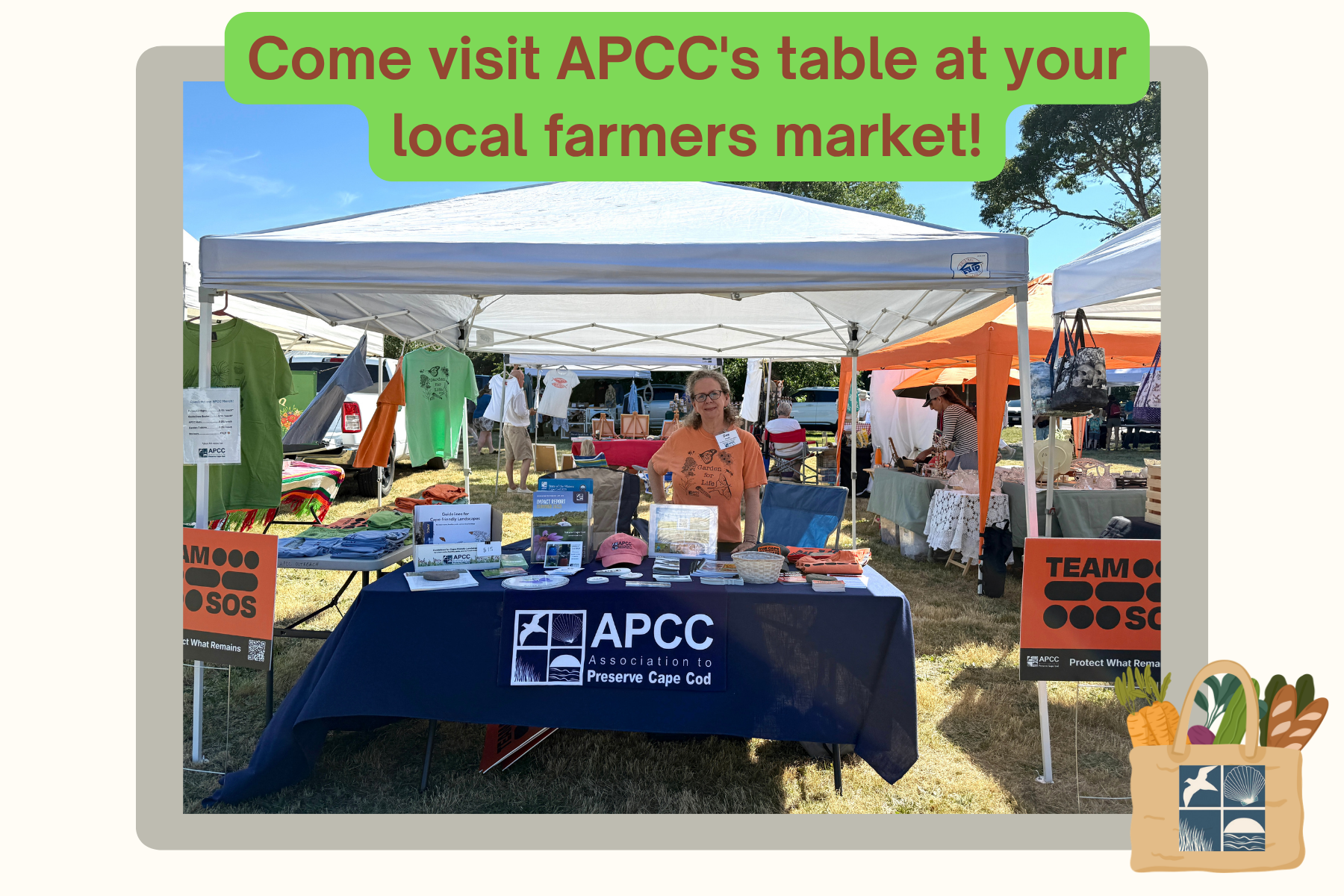
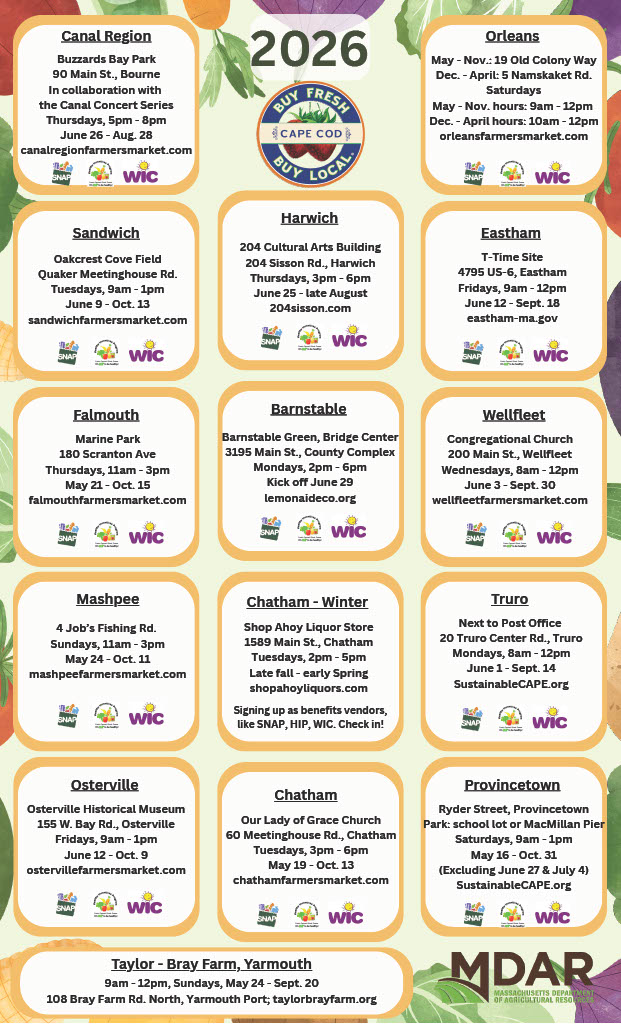
We are trying to be at as many farmers' markets as possible this season to talk about APCC programs, including The Cape We Shape. Below is a list of where and when you can support your local farmers. |
APCC is Partnering with Planetary Health Alliance
SAVE THE DATES Planetary Health Stories: A Community Arts & Storytelling Project Join us this fall for a two-part series that brings women together to share, through writing, poetry, art, and photography, what they are witnessing, grieving, and hoping for as climate change, biodiversity loss, pollution, and changes in food systems reshape the places they call home.
This project, led by Jennifer Rasmussen and Tatiana Camargo through the Planetary Health Alliance, gathers stories from communities around the world, showing how women and girls everywhere are feeling these changes, and how they're finding ways to grieve, cope, and create in response. The stories collected will become part of a collaborative book, which will serve as a reminder that personal memory and lived experience are just as powerful as science in helping us understand what's happening to our planet, and in connecting us to one another.
Part 1: Webinar
Thursday, September 10 | 5:30–6:30pm | Virtual
Facilitator Jennifer leads a one-hour orientation covering what planetary health means, the story behind this project, and what to expect at the in-person workshop, plus an introduction to the volunteer team.
Part 2: In-Person Workshop
Friday, September 18 | 10:00 am–12:00 pm | Koppel Center, APCC
A relaxed morning of open creative time: writing, drawing, painting, photography, fiber arts, or simply reflecting alongside natural objects you bring from home. Includes a grounding exercise, guided creative time with volunteer support, a written reflection, and a closing circle where participants can choose to share and reflect on their art. This series is open to all women – no artistic experience necessary. With permission, stories and artwork may be included (anonymously) in the Planetary Health Alliance collaborative book.
REGISTRATION COMING SOON |
APCC is proud to again participate in the Numbers for Nonprofits program for the Falmouth Road Race.
We have a team of five dedicated runners who are lacing up to support APCC’s work, and one of the team members is APCC Pond Technician May Lopopolo.
Help the team raise money to support APCC's work. CLICK HERE. |
|
|
|
|
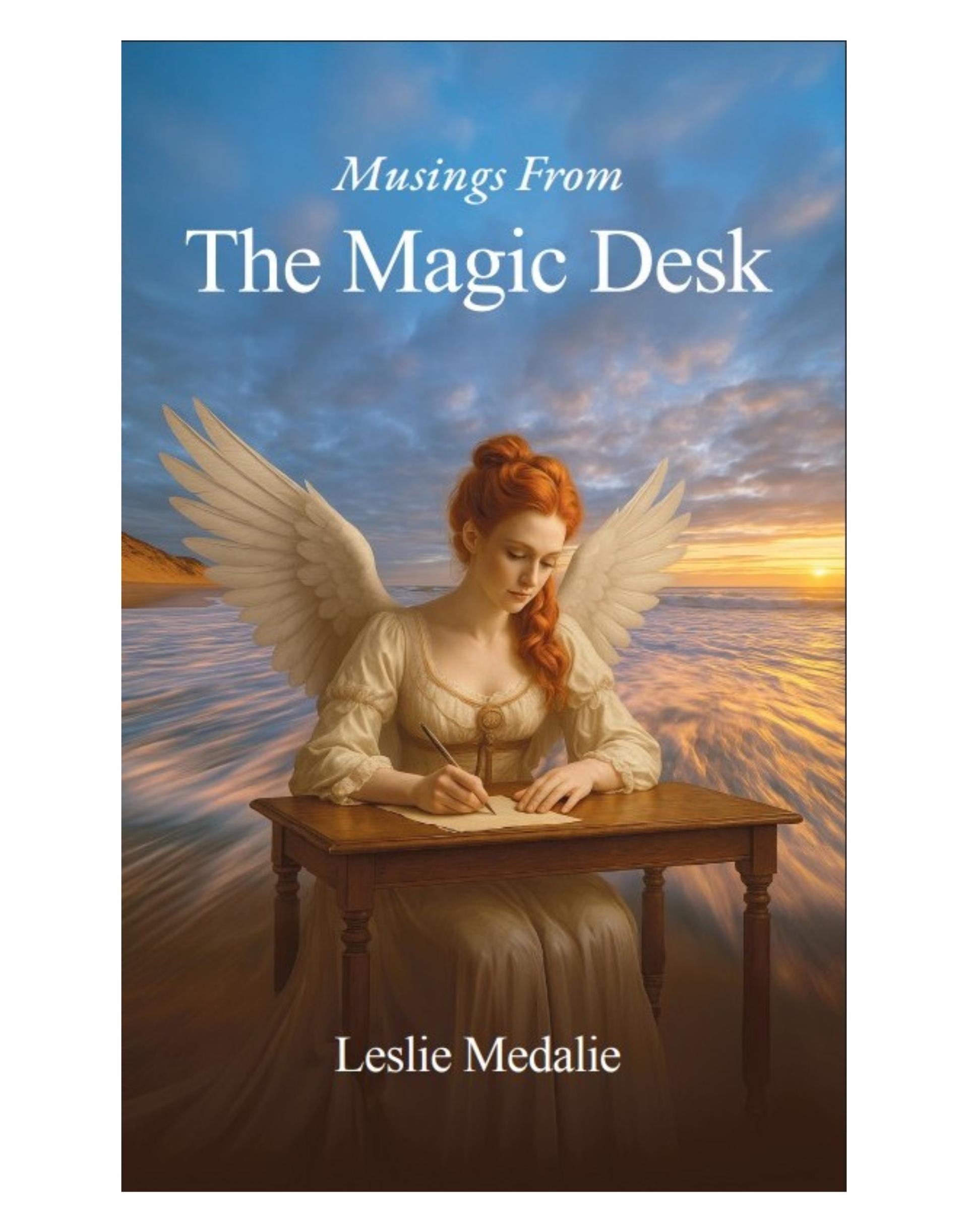
You’re invited to a Special Book signing of
Musings from the Magic Desk by Leslie Medalie
Thursday, August 6, 2:00- 4:00 p.m. at EXPRESSIONS Gallery, 578 Main Street, Chatham |
|
|
|
The book’s cover image features Enchanting Shores by Steven Koppel, owner of EXPRESSIONS. Special book pricing of $20 per paperback (cash or check only) with all proceeds benefiting APCC.
About Musings from the Magic Desk
Inspired by an heirloom family desk, Musings from the Magic Desk invites readers into an extraordinary journey spanning mid-19th century England during the tumultuous Crimean War, the rugged shores of Prince Edward Island, the bustling streets of Boston, and the serenity of Martha’s Vineyard. At its heart is Clara, a spirited young seamstress whose mysterious bond with a revered saint and a magical desk shapes her destiny. Woven with history, mysticism, and resilience, Clara’s story is a testament to the power of faith, courage, and the enduring magic of connection.
About Leslie Medalie
Leslie Medalie is the founder of Leary Public Relations, and a former adjunct professor at Emerson College. She is the past president of a private foundation and a trustee for a Boston-area hospital. Leslie and her husband reside outside of Boston with their two grown children nearby. Leslie asserts that writing—and laughter—are her secret ingredients for coping with life’s many twists and turns. |
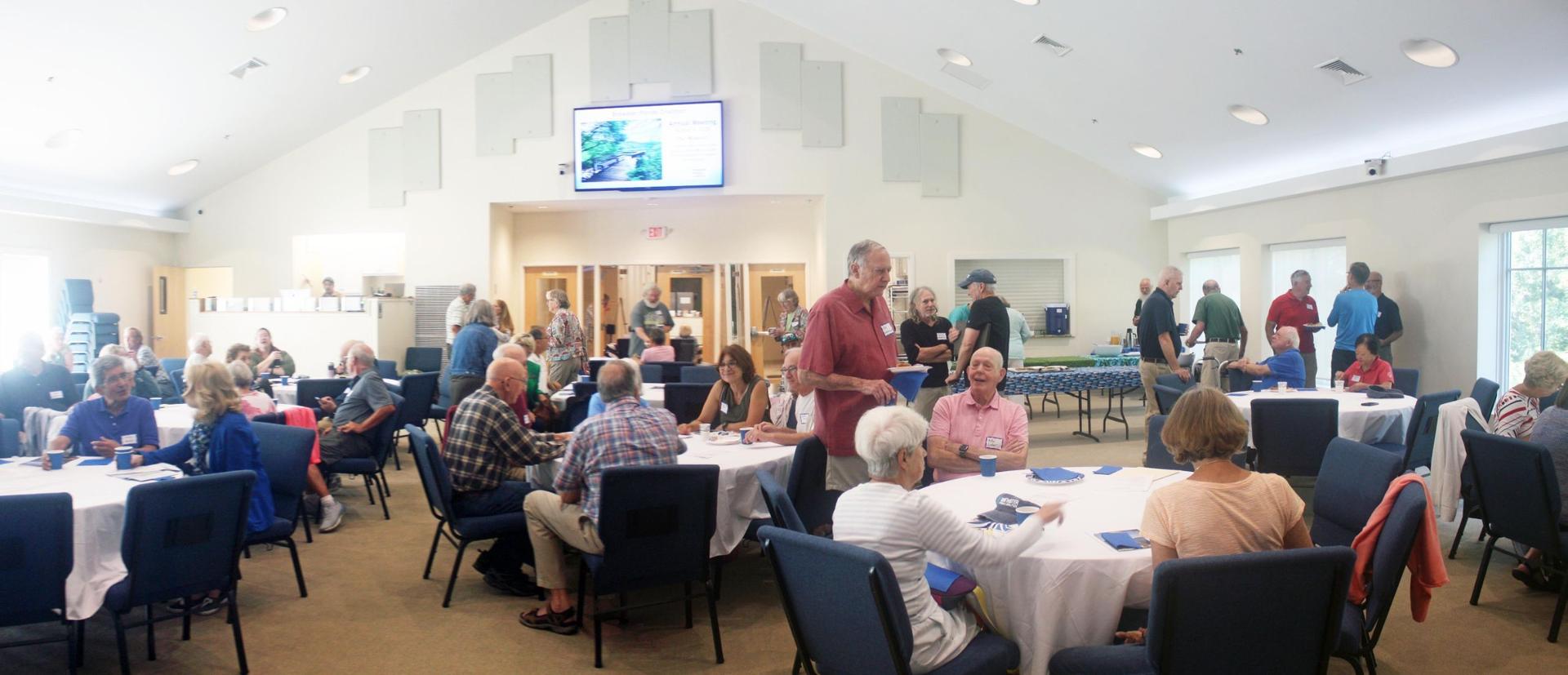
Brewster Ponds Coalition Annual Meeting Saturday, August 15
8:30 - 11:00 a.m.
A review and discussion of the town’s Water & Pond Management plans will follow breakfast and a short business meeting & award presentation. The meeting will be held at the Cape Cod Bible Alliance Church, 3600 Main Street, Brewster, and is free for BPC members; be sure to reserve your spot. For non-members, we are suggesting a $10 donation at the event. Check-in and breakfast begin at 8:30 a.m. and the meeting starts at 9:00 a.m.
Register at https://tinyurl.com/BPC-2026-Annual-Mtg-15Aug26. |
|
|
|
A Cape-wide Conservation Event Calendar |
The Compact of Cape Cod Conservation Trusts (“the Compact”) and its nonprofit members launched a new regional calendar of events. The Conservation Calendar includes programs across Cape Cod hosted by these groups. The goal of the calendar is to encourage visitors and residents to take part in nature and environmental events. You can always find the link to the calendar on APCC's website under News & Events.
|
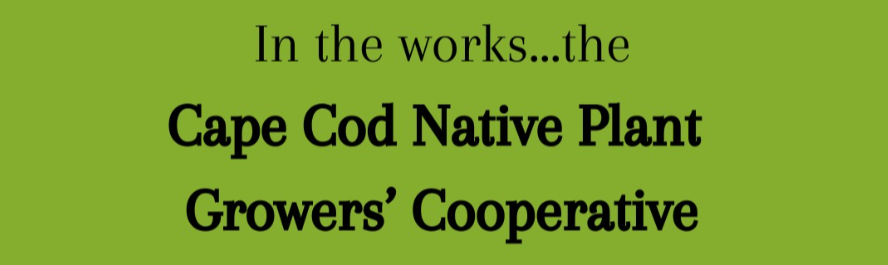
If you are a farmer or someone who wants to grow native plants to sell, or you just want to be updated on the program's development, please submit the interest form that appears on our webpage. We will be sending periodic email notices of workshops and meetings.
Funding for the project is provided by Barnstable County and its Economic Development Council License Plate Grant Program through the Cape Cod Commission, the Kelley Foundation and private donors. |
Ten talks for prospective growers as part of the Cape Cod Native Plant Growers' Cooperative program have been presented thus far, with more scheduled in the upcoming weeks. These past workshops can be viewed here: |
A Cape Cod Native Plant-selector ~ to help you choose the perfect native plants for your garden. |
|
|
|
Email kandres@apcc.org and we'll send you a CapeCodNativePlants.org decal. |
|
|
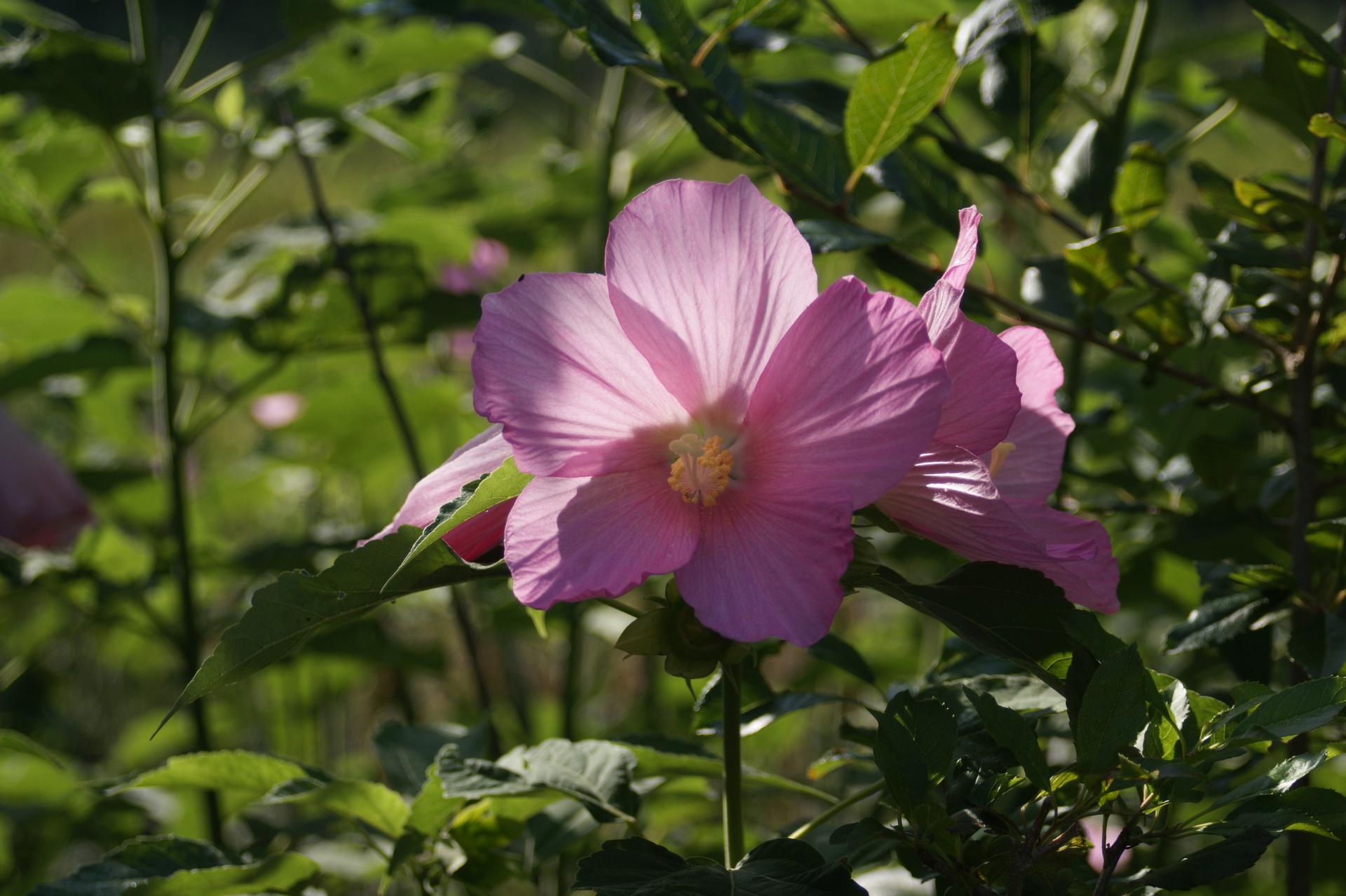
Rose Mallow Hibiscus moscheutos |
|
|
|
The purpose of CapeCodNativePlants.org is to help native plant enthusiasts select the right plant for the right place. While not all native plants presented here are indigenous to Cape Cod, they are suitable native species for Cape gardens and managed landscapes.
Why Native Plants? Many native plants are drought tolerant, salt tolerant, and thrive in the “thin” soils found on Cape Cod. Native plants are as attractive as any plant, and are reflective of the Cape’s natural beauty. By planting native species appropriate for Cape Cod, you can conserve water, avoid pesticide and fertilizer use, and support pollinators and birds.
|
|
|
|
|
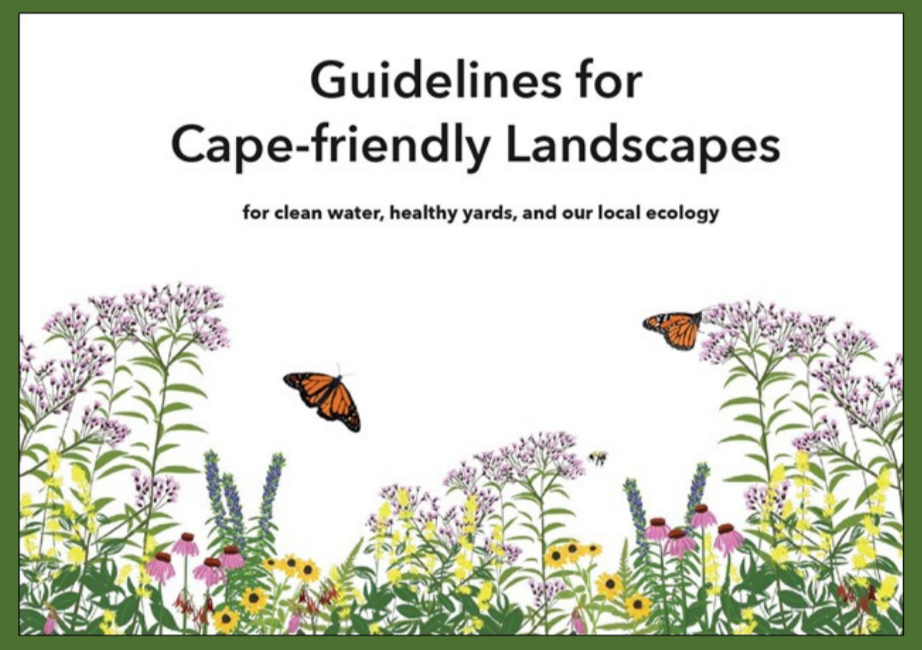
The Guidelines gives homeowners steps they can take in the design and maintenance of their properties that will support pollinators and birds, manage stormwater, conserve water, and protect the Cape's water quality. This 40-page booklet is beautifully illustrated by Marcy Ford with content that is easily digestible and supported by numerous resources for additional learning.
|
|
|
|
We are grateful for the several retail shops that are partnering with us to make this publication more widely available: Brewster Book Store, Birdwatchers General Store, Crocker Nurseries, Wellfleet Audubon Wildlife Sanctuary, Cape Abilities Farm, Cape Cod Museum of Natural History, the Cape Cod Lavender Farm, Heritage Museums and Gardens, Titcomb's Bookshop, Sea Howl Bookshop, Soares Flower Garden Nursery, Hyannis Country Garden, Orleans Whole Food Store, and Eight Cousins Bookshop.
Heard it makes a nice gift for a neighbor or for a housewarming or host(ess) gift!
If you are a retailer and would like to sell this publication at your store, please contact us. |
|
|
|
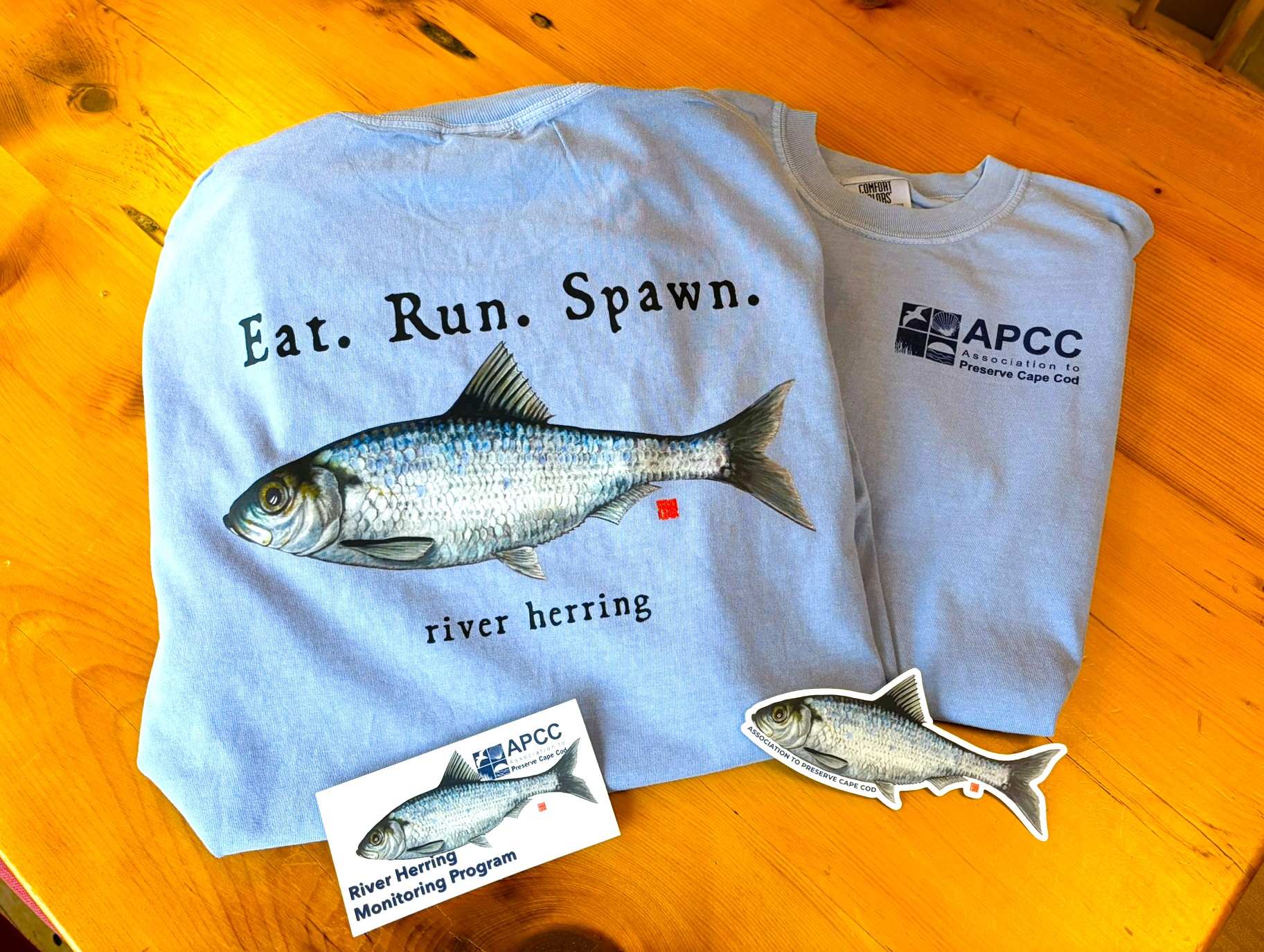
Celebrate the Run! Herring T's
color denim blue $30 - includes USPS delivery in the U.S. |
|
|
|
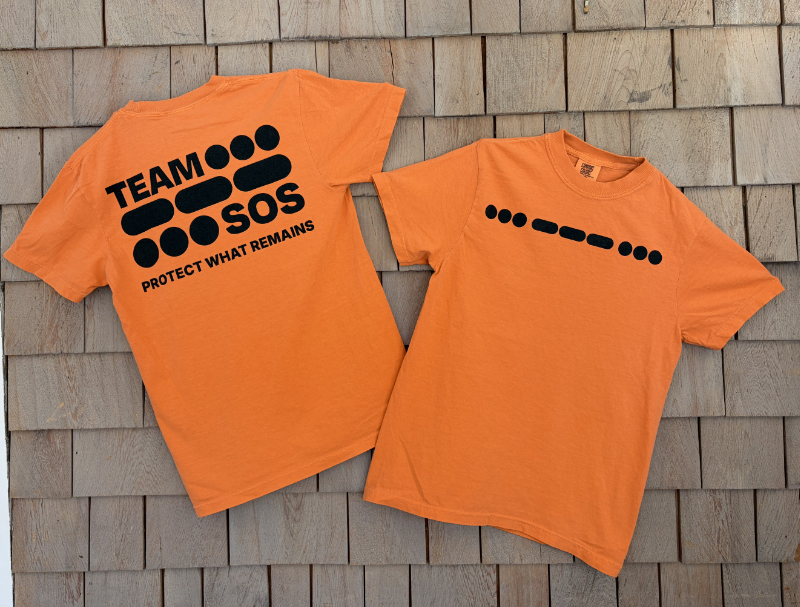
Team SOS T-shirts $30 - includes USPS delivery in the U.S. |
|
| The Cape We Shape $30 - includes USPS delivery in the U.S. |
|
|
|
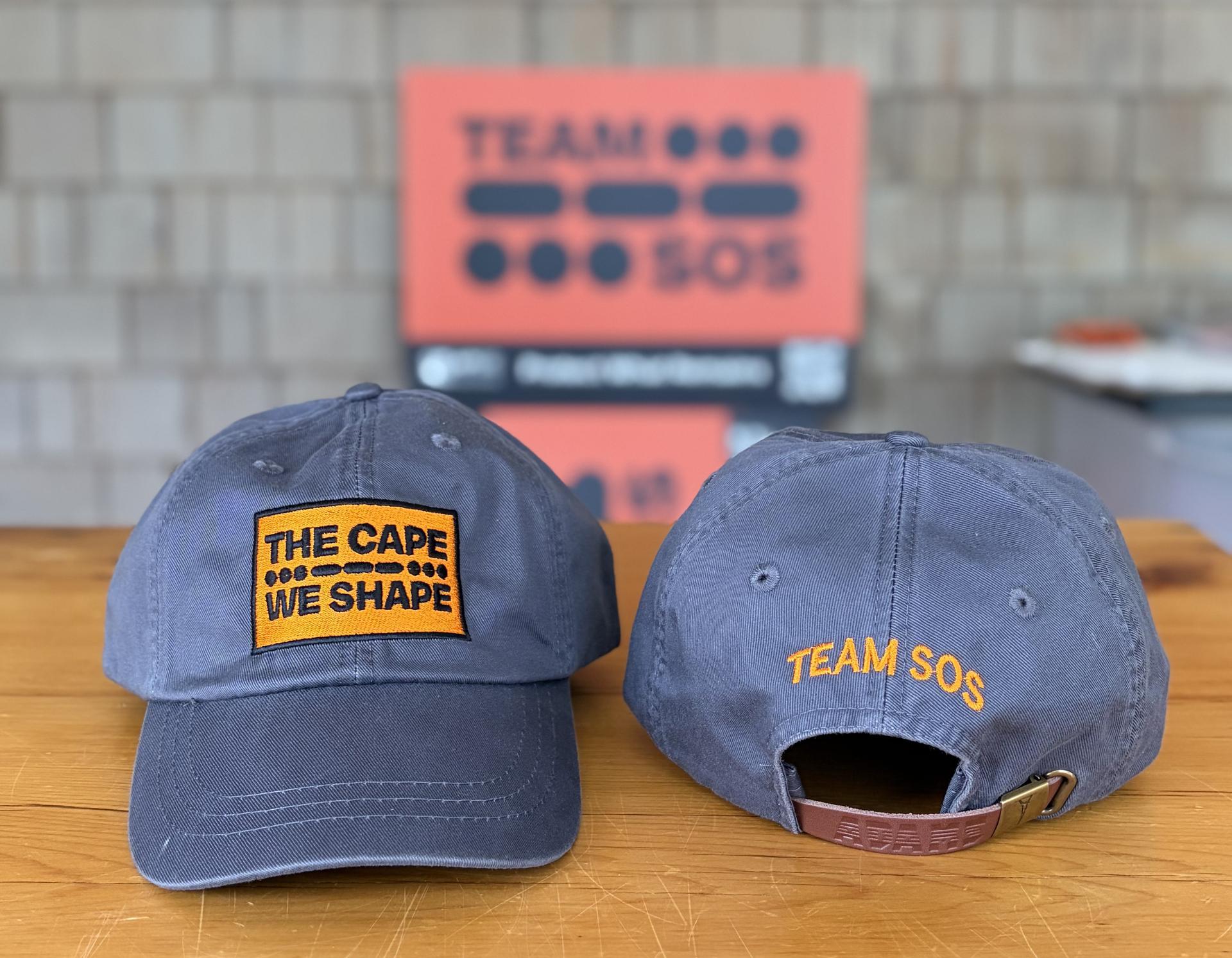
APCC caps $25 -includes USPS delivery in the U.S. |
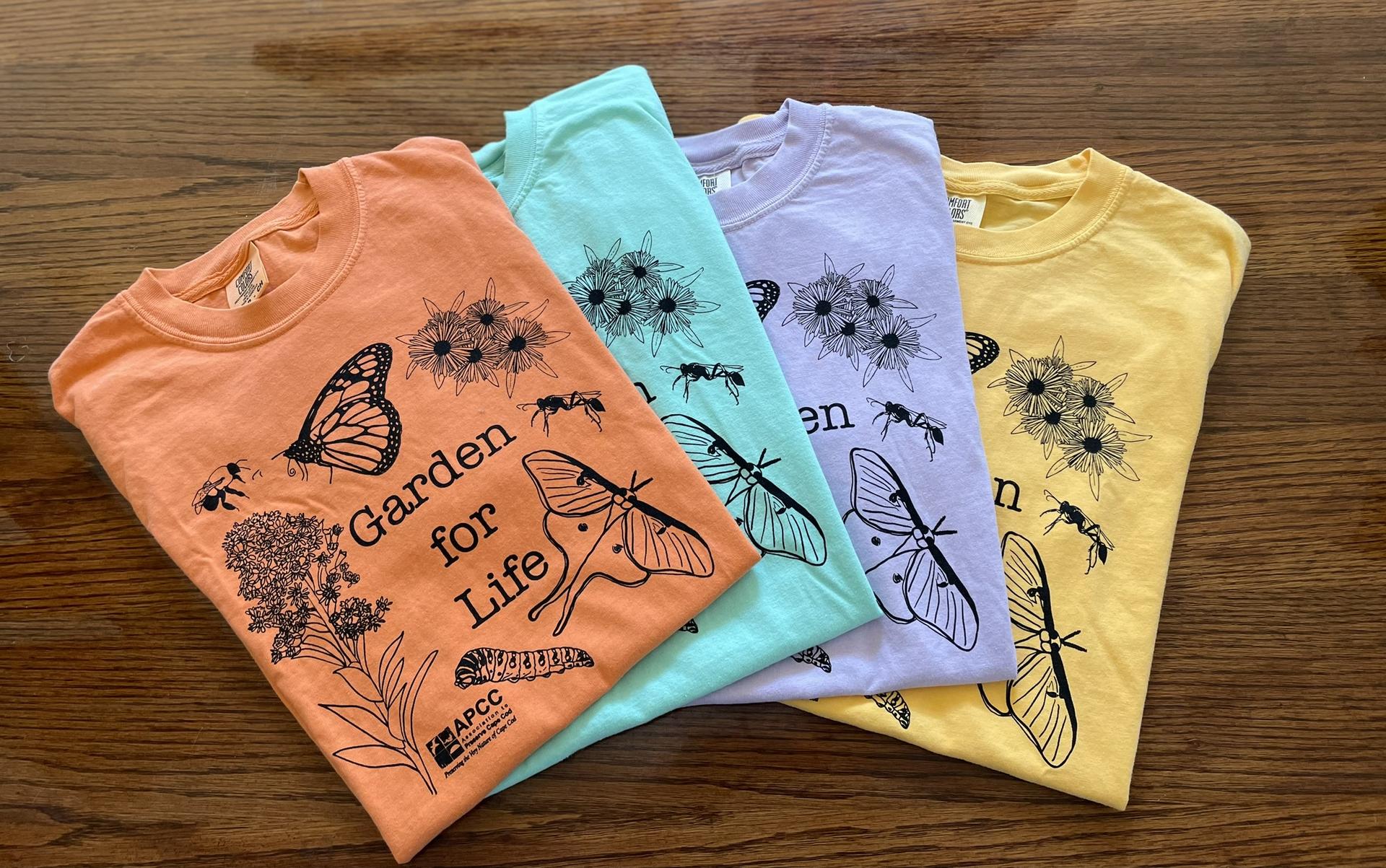
Garden for Life T's $30 -includes USPS delivery in U.S. |
|
|
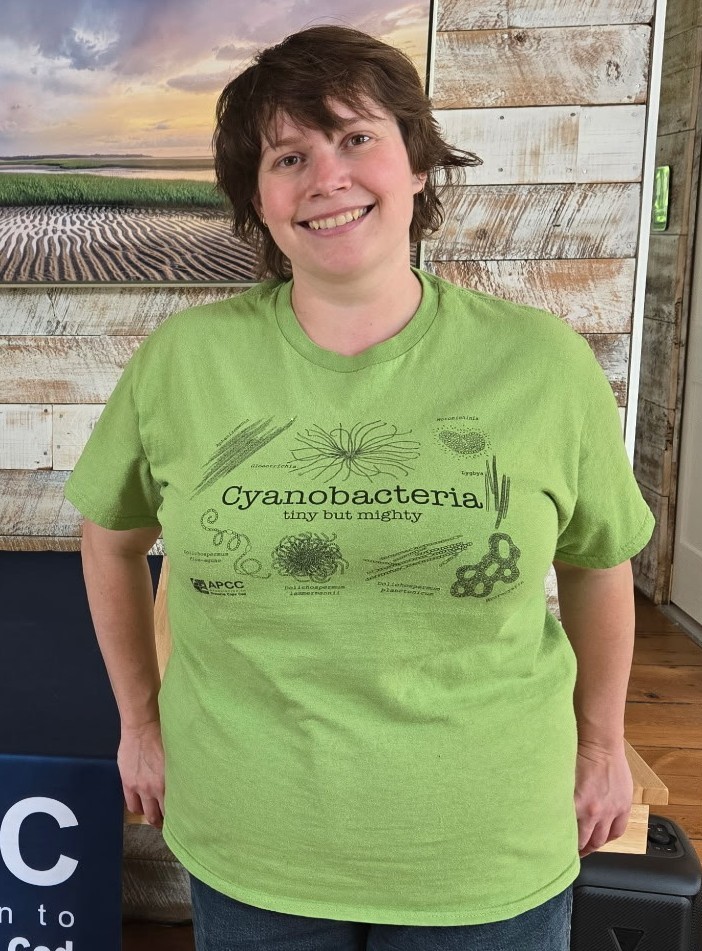
Cyanobacteria ~ tiny but mighty color kiwi $30 -includes USPS delivery in the U.S. |
|
|
|
| APCC eNewsletters
Our weekly newsletters are archived on our website and easily shared.
You can find past newsletters and share with your friends. Encourage others to sign up for future enewsletters HERE.
|
|
|
|
Are you thinking of going solar? We hope so! In partnership with E2 SOLAR in Dennis, APCC receives $500 for every solar installation when APCC is named as referral. |
|
|
|
| Thank you to the homeowners who just contracted to install solar panels through E2 Solar. May the sun always shine for you! |
|
|
|
Expressions Gallery, 578 Main Street, Chatham
CLICK HERE |
Expressions Gallery donates 20 percent of its profits to APCC's work. |
|
|
|
Thank you to our business sponsors! |
|
|
|
APCC is rated four stars by Charity Navigator,
2026 Platinum by Candid (formerly Guidestar). |
|
|
|
Our Contact Information
*{{Organization Name}}*
*{{Organization Address}}*
*{{Organization Phone}}*
*{{Organization Website}}*
*{{Unsubscribe}}* |
|
| |
|
|