Association to Preserve Cape Cod |
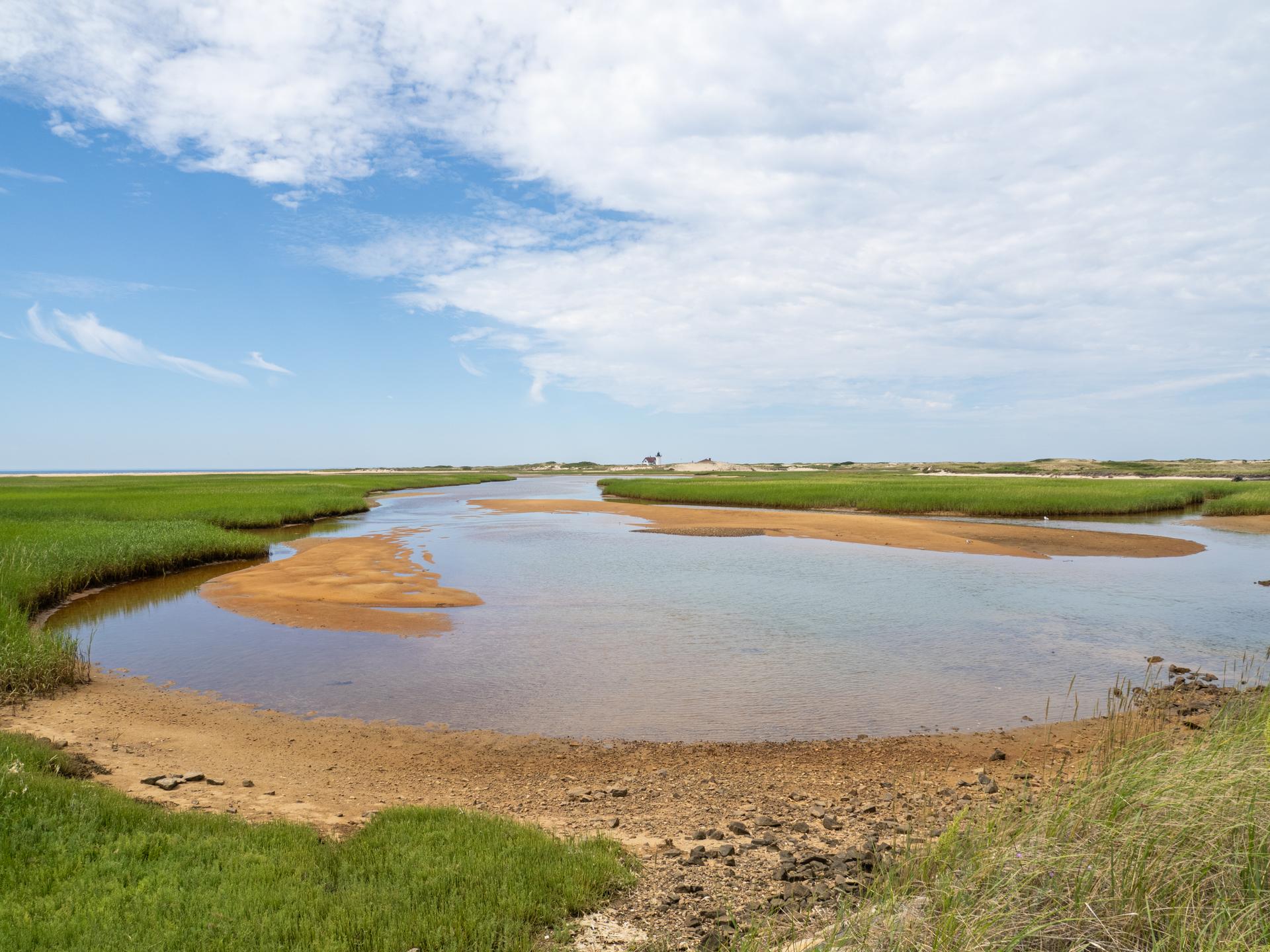
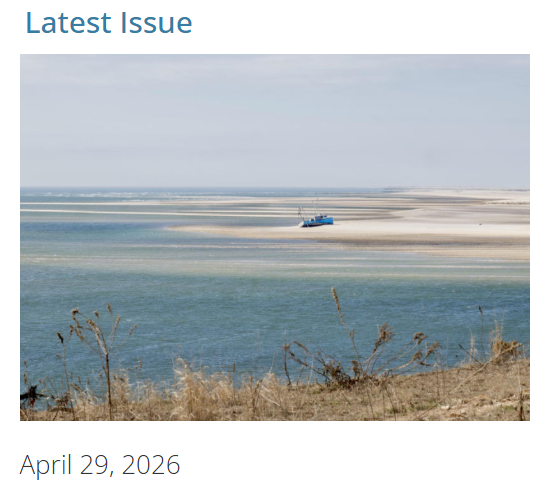
Above: Hatches Harbor, Provincetown. Photo by Sue Machie. |
|
|
|
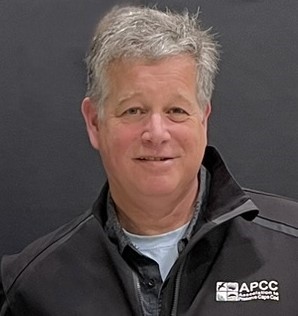
| by Andrew Gottlieb, APCC Executive Director |
A while ago I sought some help with back pain that I reasonably thought was a back problem. I stretched, iced, heated and otherwise babied my back to no great effect. Once in the care of someone knowledgeable, I came to learn that my back pain originated from a tightness in my hip. The solution was working on the source of the pain, not where I felt it. The point of this is that solving problems is contingent on a proper diagnosis of the origins of the problem. A misdiagnosis leads to solutions and strategies misaligned with the root causes of a problem.
|
|
|
|
This brings me to the ongoing discussion about exempting certain types of housing development from environmental review. Here in Massachusetts, some limitations to the applicability of environmental review have already been implemented, while others—designed to prevent or discourage local conservation and wastewater rules from exceeding state minimum standards—remain under consideration. Regardless of what ultimately becomes law in 2026, there is a clear momentum to inoculate housing development from the same rigorous and protective environmental standards applicable to all other major development projects.
The prevailing narrative behind this effort is that one of the major factors that impedes efforts to increase the stock of affordable housing is overly restrictive environmental reviews, including local bylaws and regulations specific to wetlands protection and septic management. With that (mis)diagnosis, the cure has been to chip away at environmental standards that protect the critical natural resources that sustain our quality of life and protect our air, land and water.
Like many urban legends, the presumption that environmental regulation is a root cause of the distorted housing market remains largely unchallenged. The danger is that, at least here on Cape Cod, the evidence is scant that the housing market is impeded by regulations that limit excess nutrient loading from further degrading our water resources, prevent untreated stormwater from exacerbating flooding and water quality concerns, and prevent the avoidable loss of sensitive lands that support our drinking water quality and critical habitats. The facts are that by directing development away from our most sensitive remaining lands, these environmental standards actually lower public costs needed to mitigate these environmental harms that come from poorly sited and implemented development.
Currently, we are all participants in an experiment that is attempting to solve the worthy issue of housing affordability based on a misdiagnosis of the root causes of the problem. There will be many outcomes from this experiment, but two are obvious because the solutions are misaligned with the causes of the problem. The first is that real environmental degradation will result from the limitation of the applicability of certain environmental standards. The second is that a shortage of affordable housing will persist.
We need to step back and challenge some presumed truths to come up with better answers that allow us to address real housing needs while retaining the environmental standards upon which our collective future relies. |
Ecosystem Restoration Program |
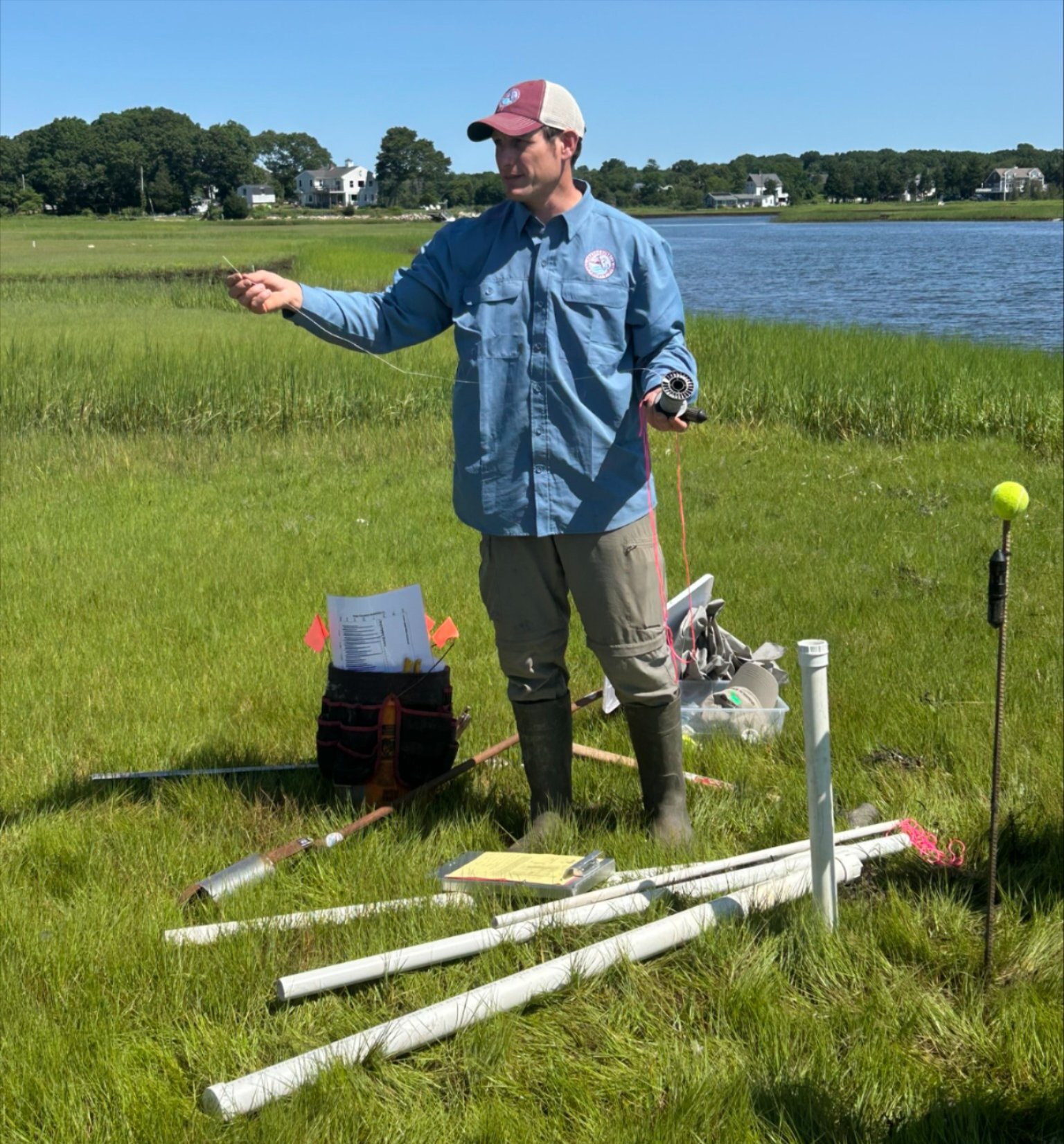
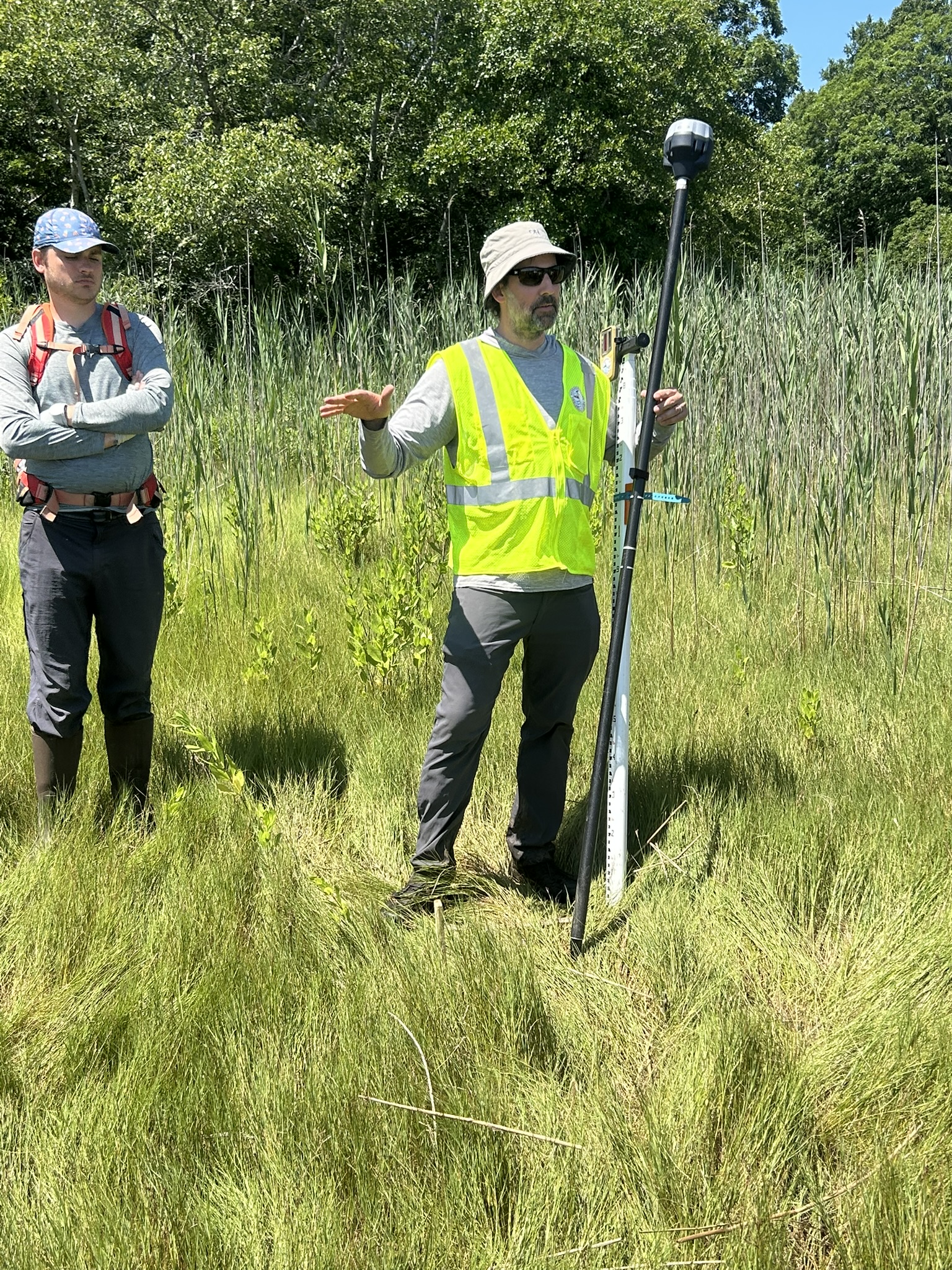
Above: Brian Yellen (UMass Amherst) deploys a groundwater well to measure sub-surface water levels in a salt marsh. |
APCC Participates in MassMarsh Training Event
Recently, staff from APCC’s Ecosystem Restoration Program participated in a salt marsh restoration training event at Little Bay Salt Marsh in Fairhaven, Massachusetts. The training was organized and hosted by MassMarsh, an initiative funded by the Massachusetts Department of Environmental Protection to support standardized, long-term salt marsh monitoring throughout Massachusetts.
MassMarsh leads from the University of Massachusetts and the University of New Hampshire demonstrated a range of monitoring methods, including vegetation quadrats, sensor deployments, and elevation surveys. These methods are detailed in a series of Standard Operating Procedures (SOPs) designed to provide a consistent approach to collecting, processing, and managing salt marsh monitoring data. Training participants practiced implementing the SOPs and provided feedback to the MassMarsh team, helping refine the protocols and highlighting the collaborative nature of this statewide effort.
|
|
|
|
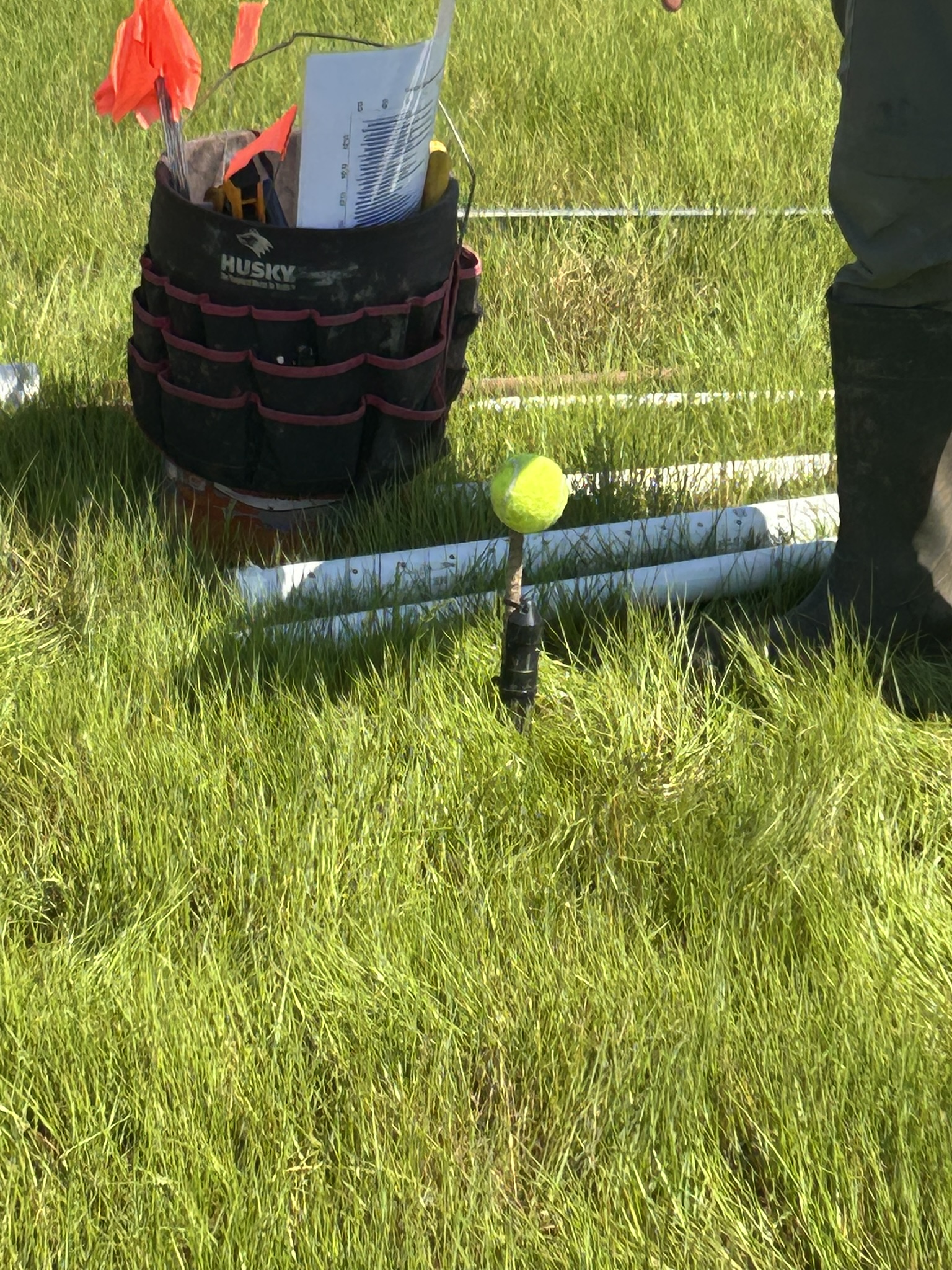
Above: Some of the equipment used to deploy a data logger, a device used to measure water levels in a salt marsh; Tim Cook (UMass Amherst) demonstrates how to use elevation survey equipment. |
APCC staff have experience and expertise in many of the monitoring methods demonstrated during the training and have also contributed to the development of the SOPs through participation on the MassMarsh Advisory Committee. APCC’s participation in the training was supported by funding from Mass Audubon through the Cape and Islands Restoration Action Team. By contributing to efforts such as MassMarsh, APCC is helping advance consistent, collaborative approaches to salt marsh monitoring and restoration across Cape Cod and Massachusetts. |
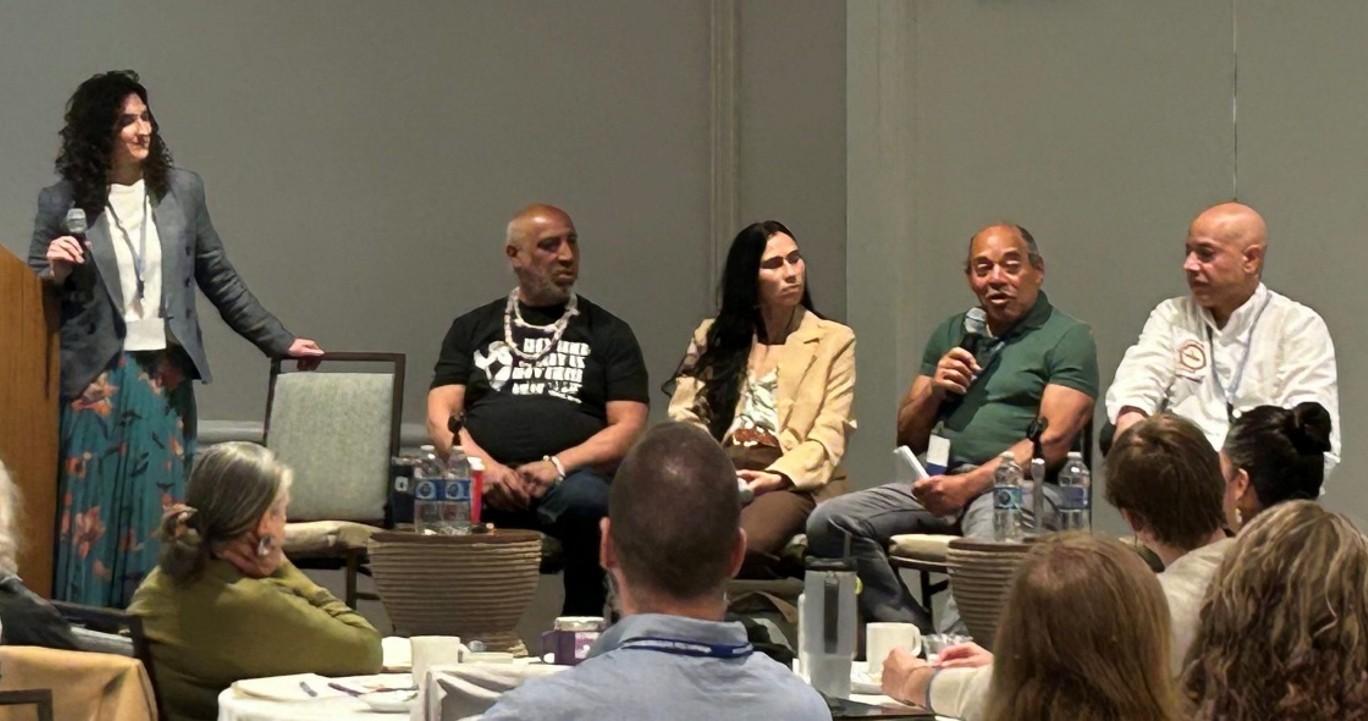
Above: Kristen Weir, Waquoit Bay Reserve, and Mashpee Wampanoag Tribal leaders, Chief Sagamore Vernon “Buddy” Pocknett, Chief Earl Mills, Jason Steiding, and Talia Landry during the opening keynote panel "Restoring Balance: Mashpee Wampanoag Vision for Land & Water" |
Relive the 2026 Cape Coastal Conference Recordings from the 2026 Cape Coastal Conference: Shared Solutions for Stronger Coasts & Communities are now available online.
Whether you attended the conference and want to revisit a favorite presentation or missed it and would like to experience the sessions for the first time, the full collection offers valuable information and practical perspectives on the challenges and opportunities facing Cape Cod’s coasts and communities.
APCC was represented throughout the conference program. APCC Restoration Program Manager April Wobst joined a plenary panel reflecting on the progress of ecological restoration on Cape Cod and the work required to move promising projects from planning to implementation. Restoration Ecologist Mike Palmer presented on the restoration of the former cranberry bogs along the Childs River and what several years of post-restoration monitoring are revealing about coldwater habitat and brook trout recovery.
These sessions highlight APCC’s growing role in advancing restoration through science, partnerships, long-term monitoring, and on-the-ground project implementation. Explore the conference recordings and resources at: https://waquoitbayreserve.org/2026-cape-coastal-conference |
|
|
|
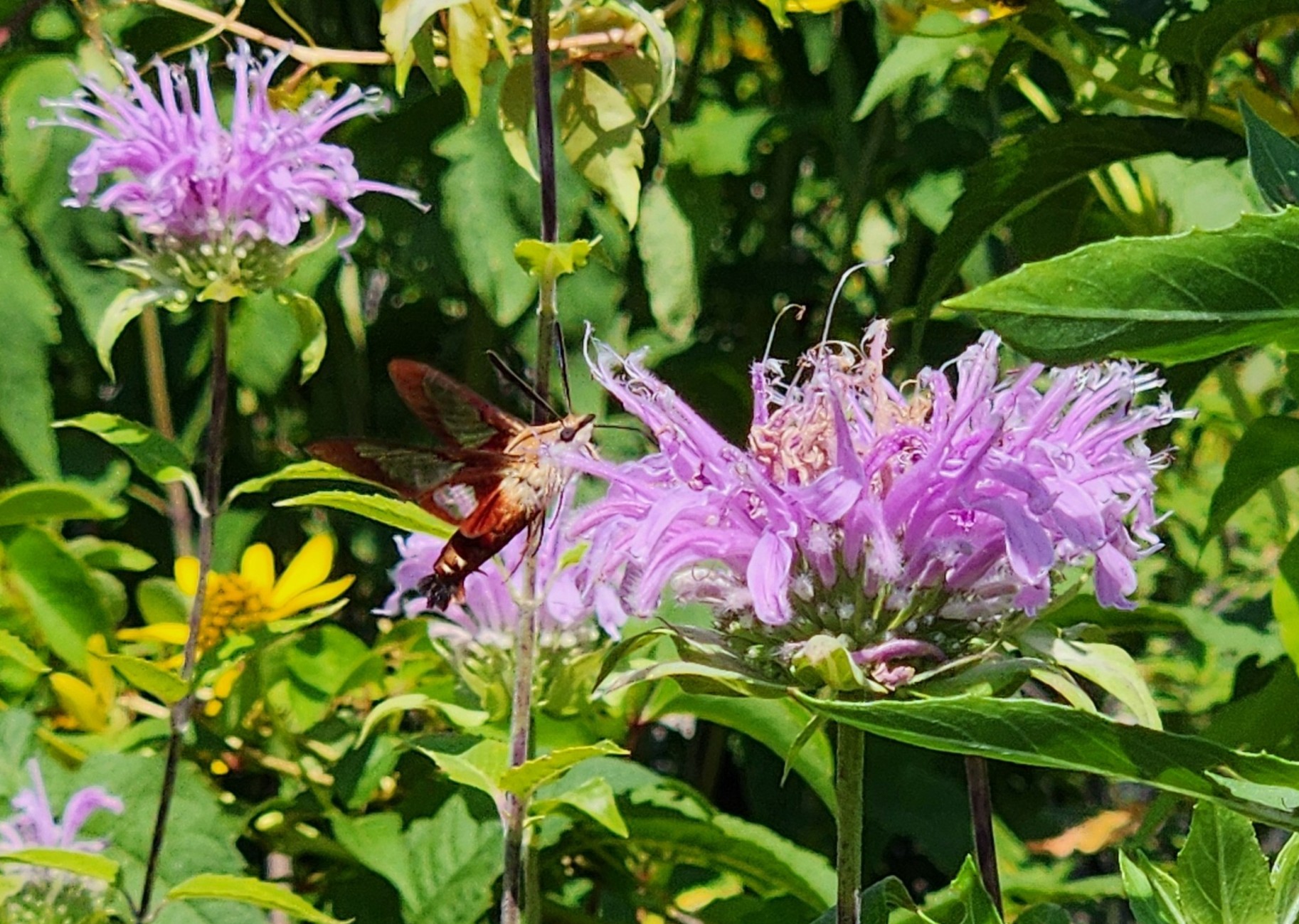
Above: Hummingbird moth, Hemaris thysbe, taking in nectar from wild bergamot, Monarda fistulosa |
Look what we saw this week: a hummingbird moth, aka clearwing moth. Clearwings are a type of sphinx moth that is active during the day.
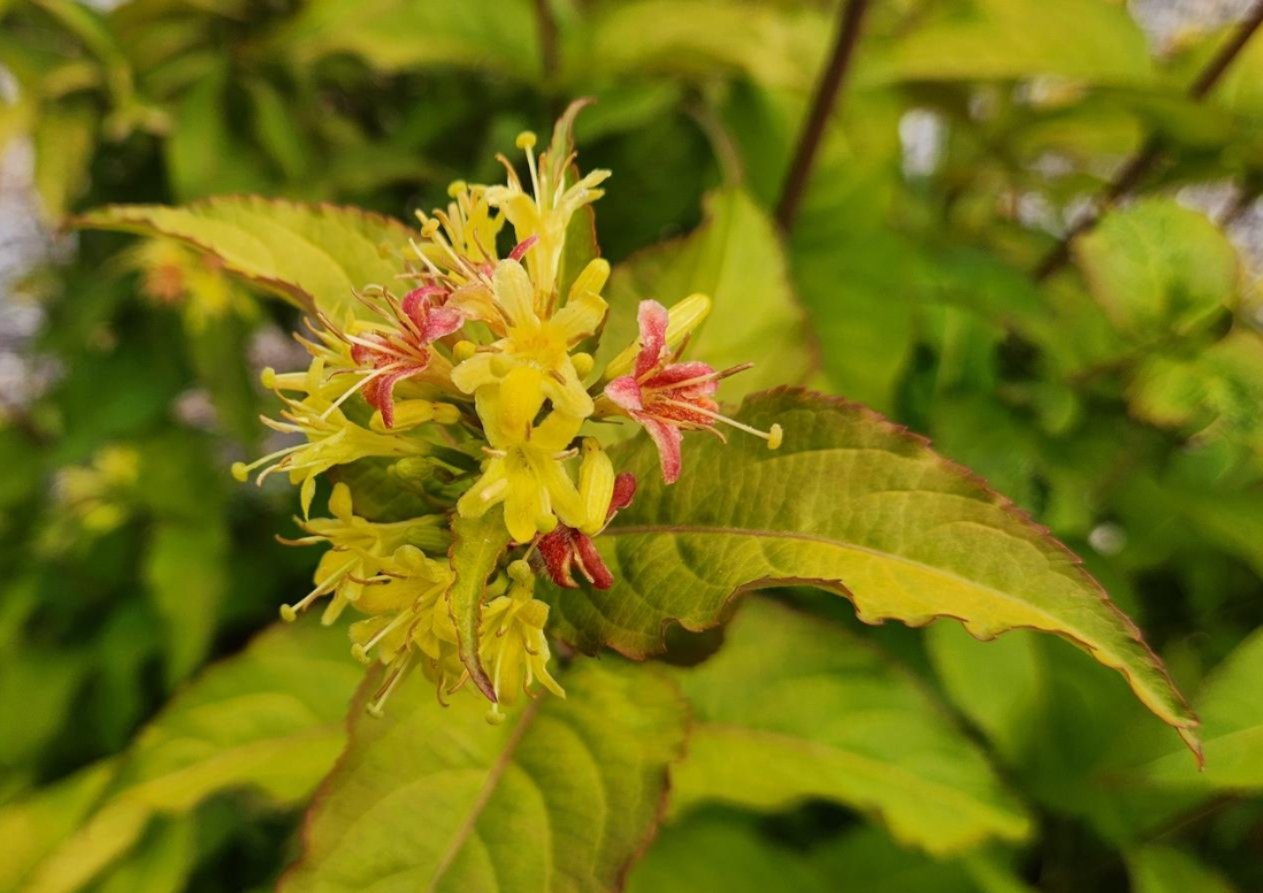
Their hosts plants are honeysuckle, hawthorn, viburnum, and black cherry—a reason to have these plants in your landscape. In APCC's landscape, we have planted the native shrub honeysuckle, Diervilla lonicera. (Honeysuckles found in the wild on Cape Cod are the non-native invasive Morowii honeysuckle, Lonicera morrowii, and Amur honeysuckle, Lonicera maackii.)
The mature caterpillars of clearwings are yellowish green with the spiky tail horn typical of most sphinx moth caterpillars. They pupate in a thin cocoon and overwinter in fallen leaves—a reason to leave the leaves in your garden and under their host plants. |
Above: Northern bush honeysuckle, Diervilla lonicera
|
Lookie What's New in the Landscape! |
|
|
|
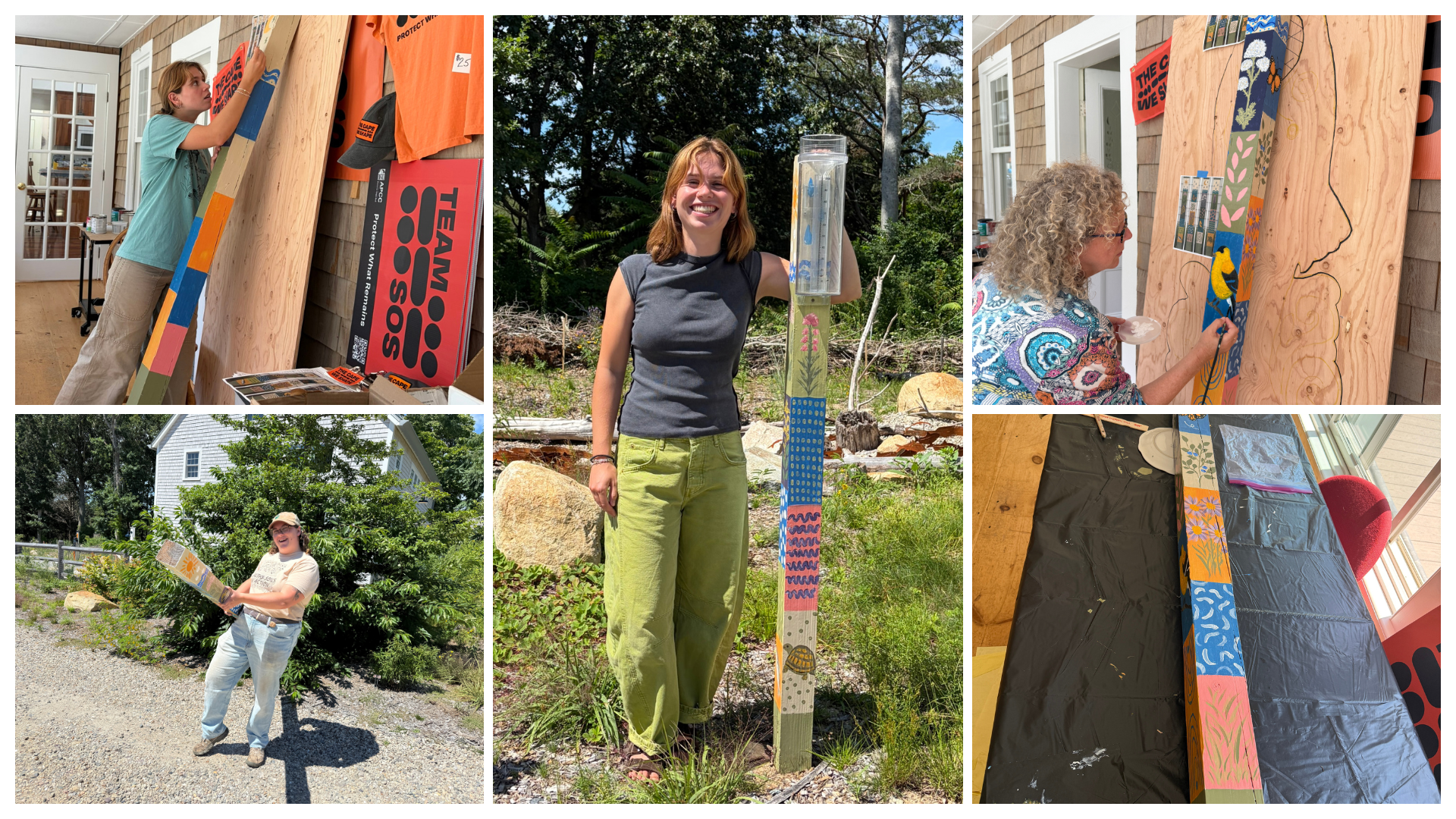
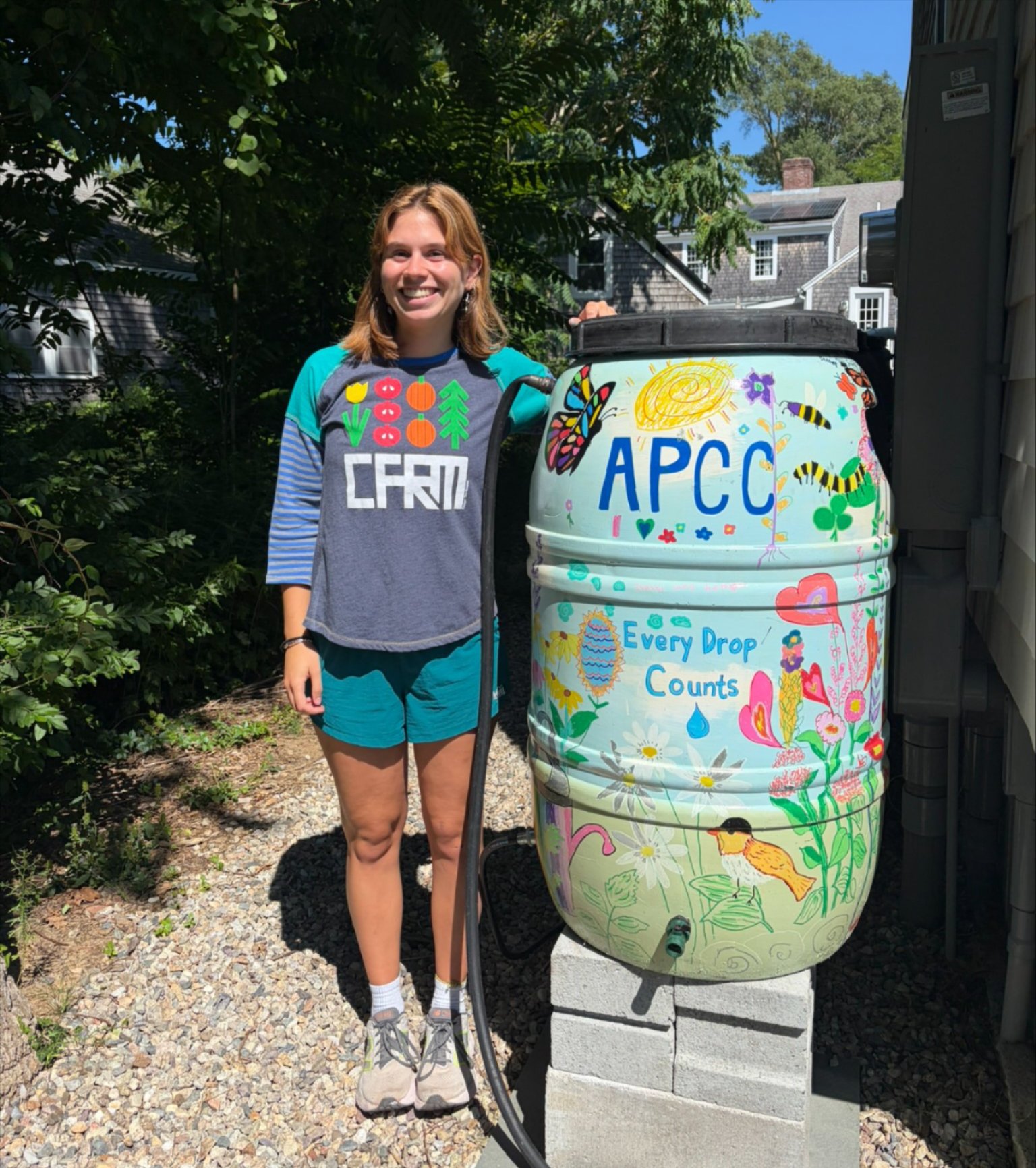
Next time you come to visit our APCC offices, be sure to check out the beautiful new post that holds a rain gauge, along with our newly installed painted rain barrel—both thanks to the work and creativity of APCC's 2026 communication intern, Michaela Ocko.
We wished Michaela a fond farewell this past week as she is back to complete her senior year at Colorado College. We will miss her! |
Above: APCC Communications Intern Michaela Ocko |
Native Perennials for Sale at APCC |
We have some native perennials for sale at the office, grown from seed, pesticide-free, peat-free potting soil, plastic-free pots. If you'd like to come and peruse, just shoot us an email. The quart-size pots are $10 each. Species include: Foxglove Beardtongue, Penstemon digitalis
Culver's Root, Veronicastrum virginicum Common Blue Violet, Viola sororia White Yarrow, Achillea millefolium Sundrops, Oenothera fruticosa Slenderleaf Mountain Mint, Pynanthemum tenuifolium
New England Aster, Symphyotrichum novae-angliae White Wood Aster, Eurybia divaricata and more... |
Freshwater Focus: Ditch Your Lawn For A Drought-Friendly Alternative By ANGELA TANNER
For the past 80 years, since the lawn mower became more affordable to the average homeowner, America has had a devoted love affair with lawns. We have admired and cultivated vast expanses of lush, green, perfectly groomed grass without so much as a stray leaf, flower or insect to blemish the bliss. Folks, I am here to tell you this is a one-sided, toxic love affair. Traditional turfgrass lawns consist of grass species from other regions that evolved with their own local conditions. These grasses cannot thrive here on Cape Cod without high levels of maintenance, including excessive irrigation and frequent use of chemical fertilizers and pesticides, which drain our resources and pollute our freshwater ponds and aquifers. Read the article here.
|
|
|
|
Volunteer Spotlight ~ Neill Bogan |
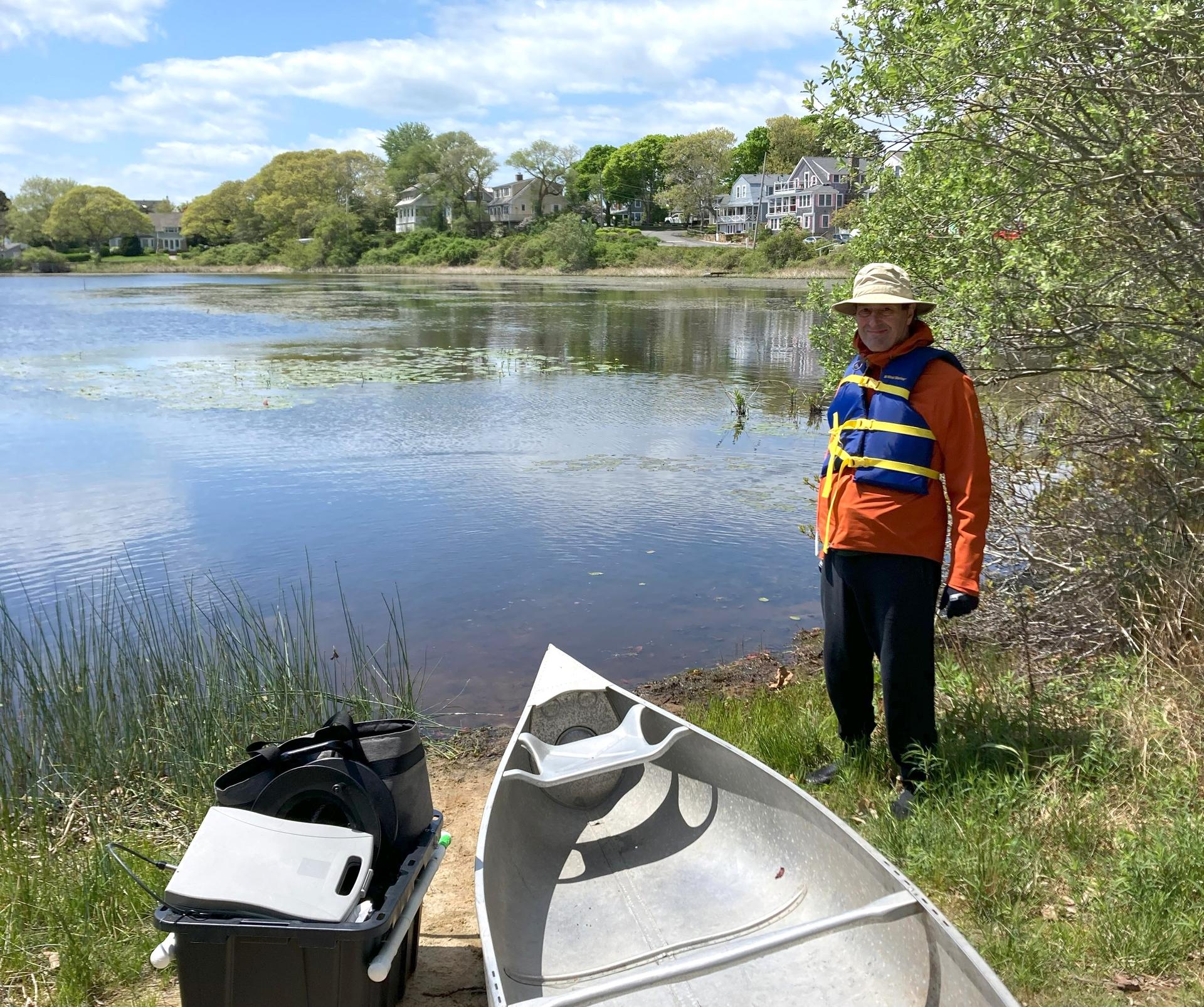
Neill Bogan is a fourth-season APCC volunteer who assists the pond water monitoring program. Originally from Atlanta, Neill moved to Mashpee with his wife in 2020.
After decades of volunteering around social and political issues, Neill wanted to become more involved in environmental work. Neill discovered APCC’s volunteer program through the herring count program in Mashpee, but later fell in love with the pond water-quality program. Out on the water, Neill helps technicians collect and record water data across Mashpee, Sandwich, Falmouth, Bourne, and Yarmouth. He appreciates that the role allows him to participate despite his walking disability.
“I love to paddle. It's really a pleasure to be out in a canoe on a nice quiet morning."
As a volunteer, Neill expressed appreciation for the in-depth explanations that APCC staff provide about the purpose of the testing and how the data will be used in the future. This training of sorts helps volunteers understand the science behind pond monitoring and the importance of advocating for Cape Cod’s environment. “[APCC staff] see the role of the volunteer as [someone] much more than just an extra pair of hands.”
In addition to his appreciation for the process, he also noted his newfound knowledge regarding the interactions among oxygen, nitrogen, phosphorus and other elements in pond water as well as why APCC collects such detailed information during every session.
Neill has also been inspired by the technicians’ dedication to protecting the Cape. “I’ve learned how motivated they are to do something that they see as really important. Honestly, it’s moving.” Neill believes that Cape Cod can serve as an example to other communities and states how a natural environment can be restored and cared for.
“I hope that we don’t finish ruining the water, but that we rescue it.” |
|
|
|
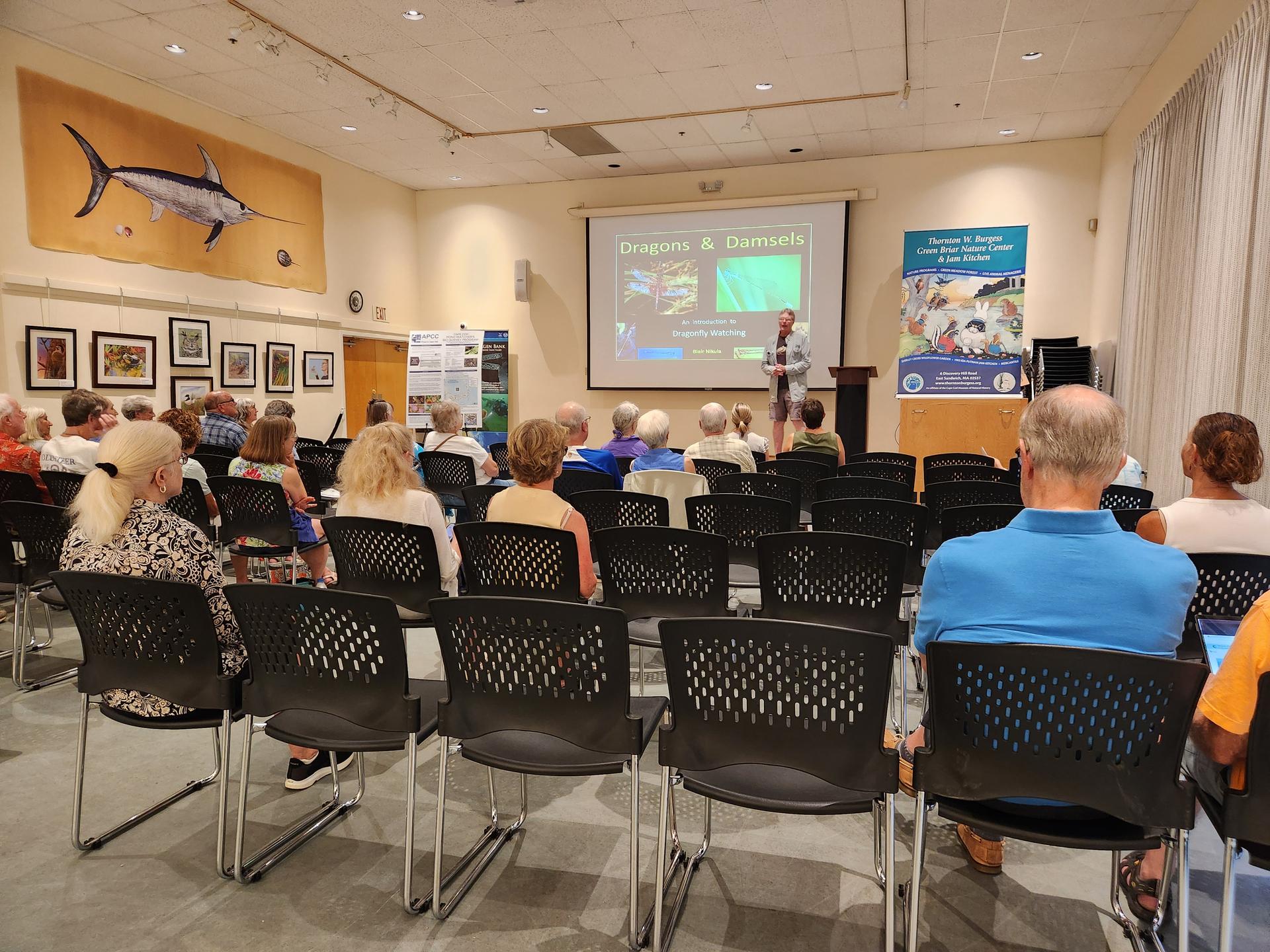
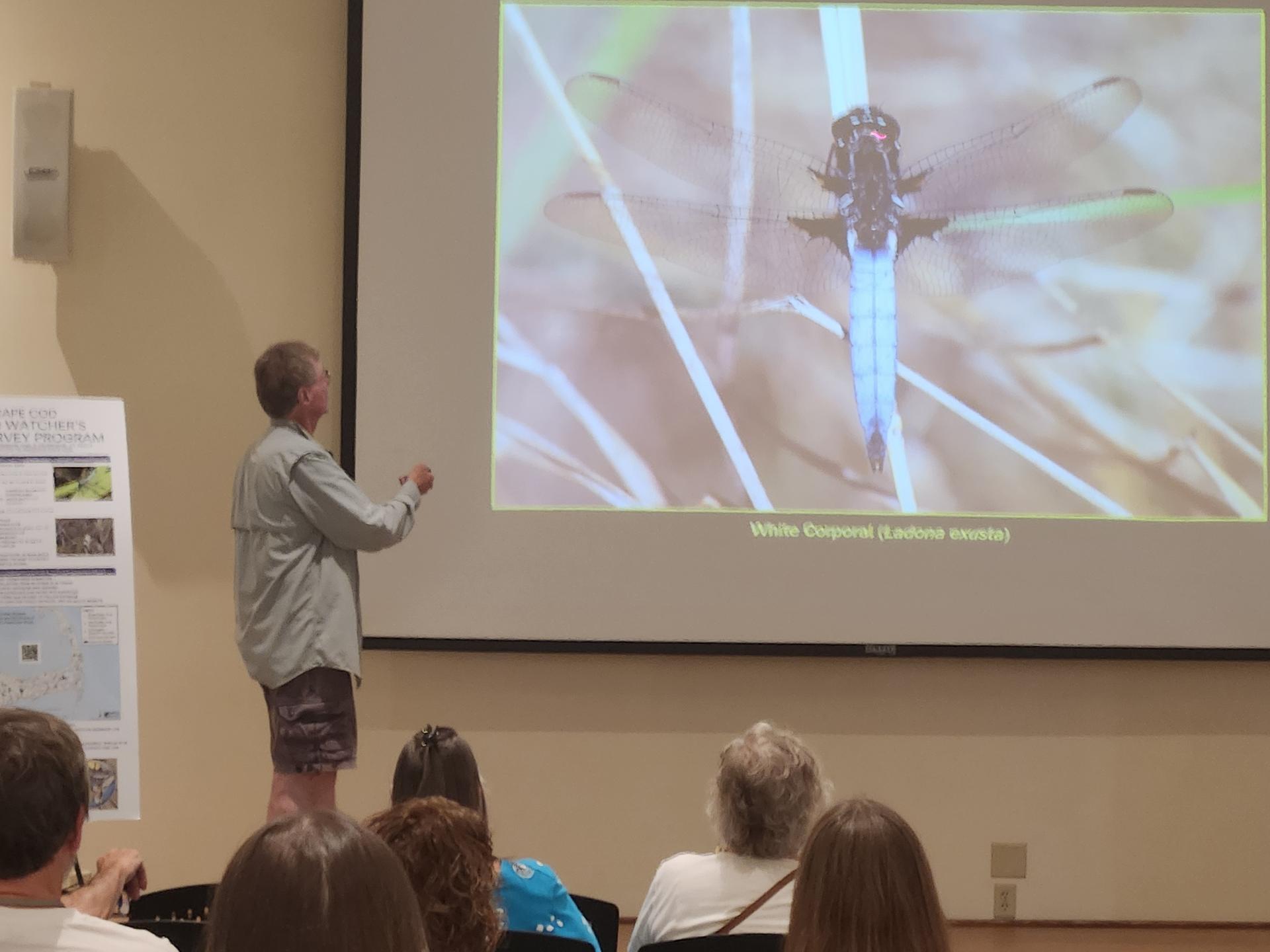
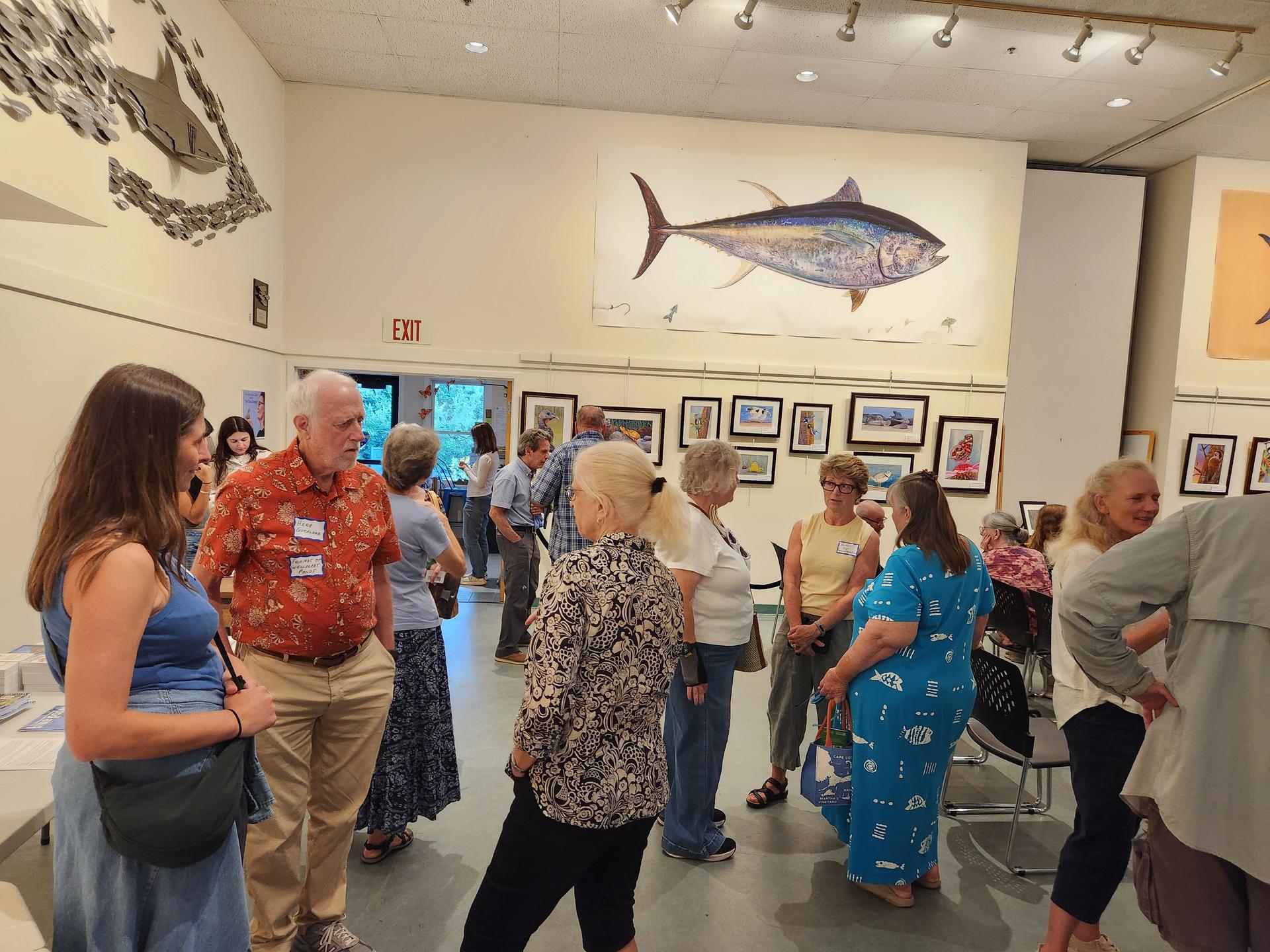
Thank you to Blair Nikula for being our featured speaker at the meeting of the Cape Cod Ponds Network last week and telling us all about the various dragonflies and damselflies that are found on Cape Cod. We also extend our deep appreciation to the Cape Cod Museum of Natural History for the use of the venue! Lots of good things are happening around the Cape thanks to the organized efforts of various pond associations and pond groups. Below is an article about just one of them! |
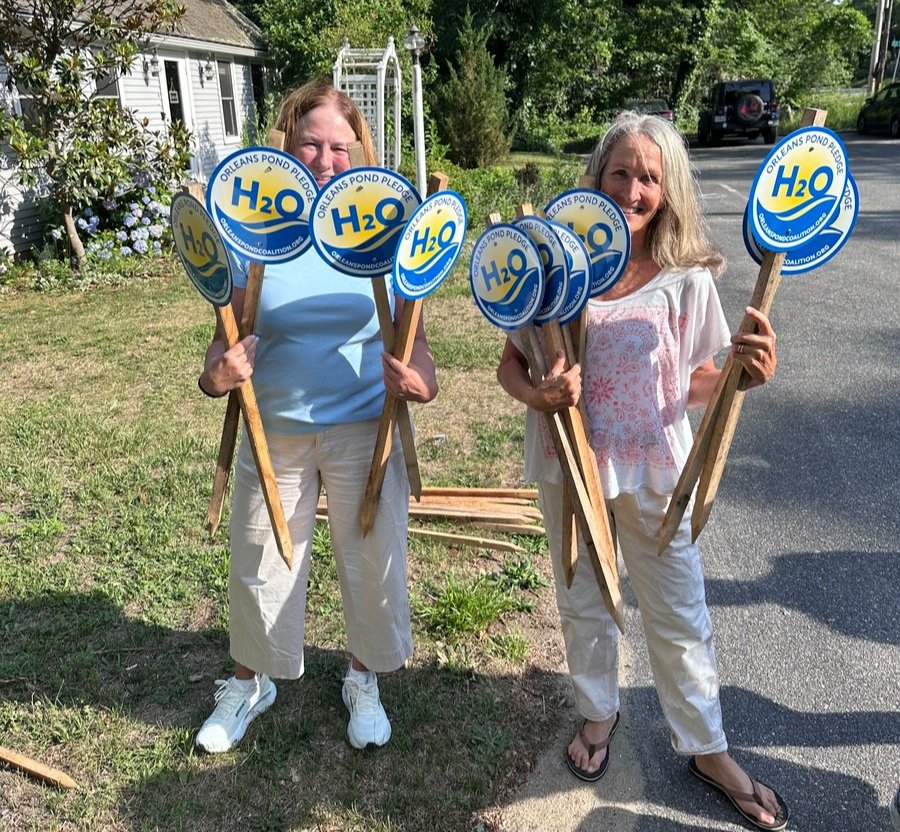
Above: Orleans Pond Coalition volunteers hold signs that the nonprofit distributes to homeowners as part of its pond pledge. ORLEANS POND COALITION PHOTO |
If you've not yet signed up to be part of the Cape Cod Ponds Network, click the button below to stay informed. |
|
|
|
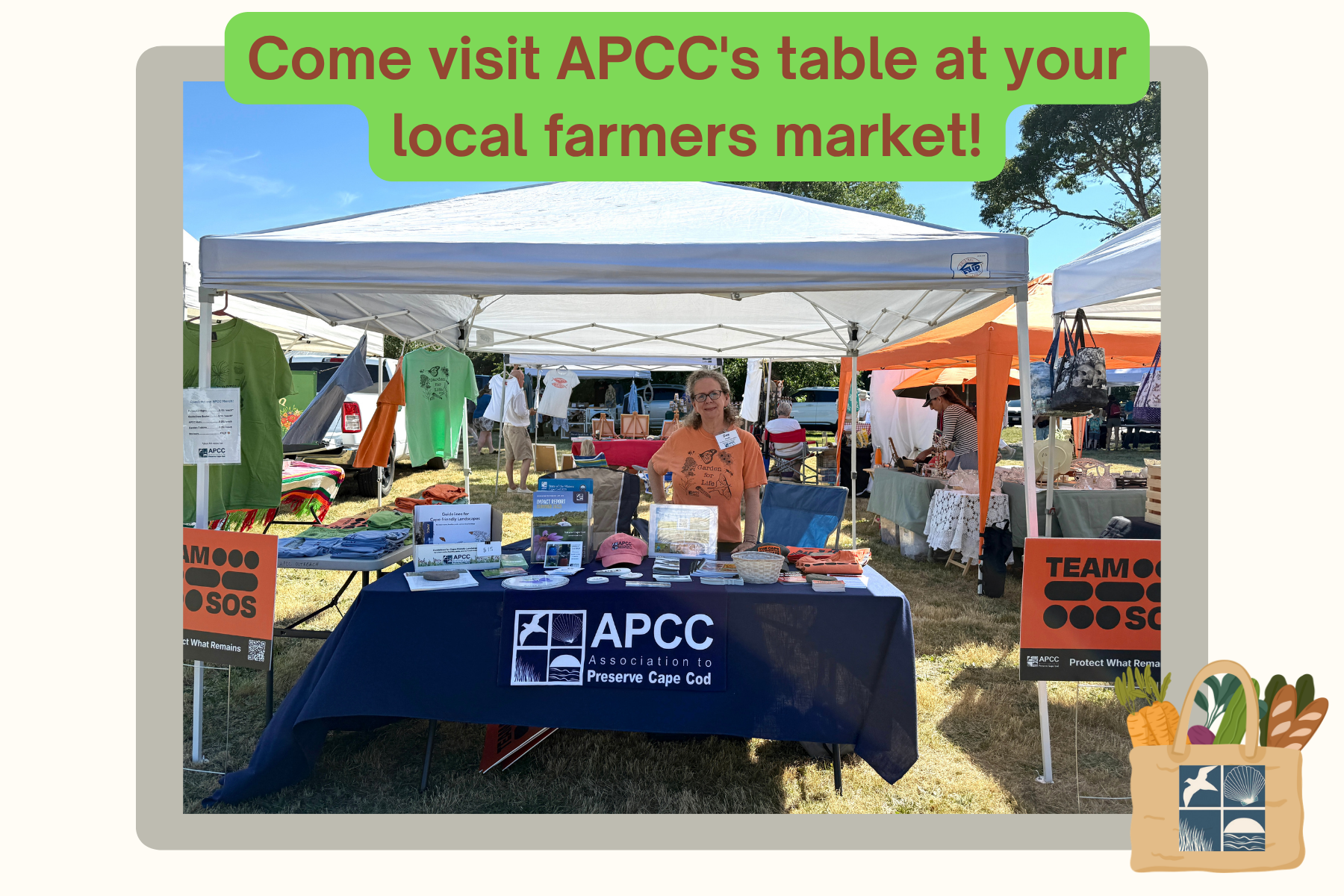
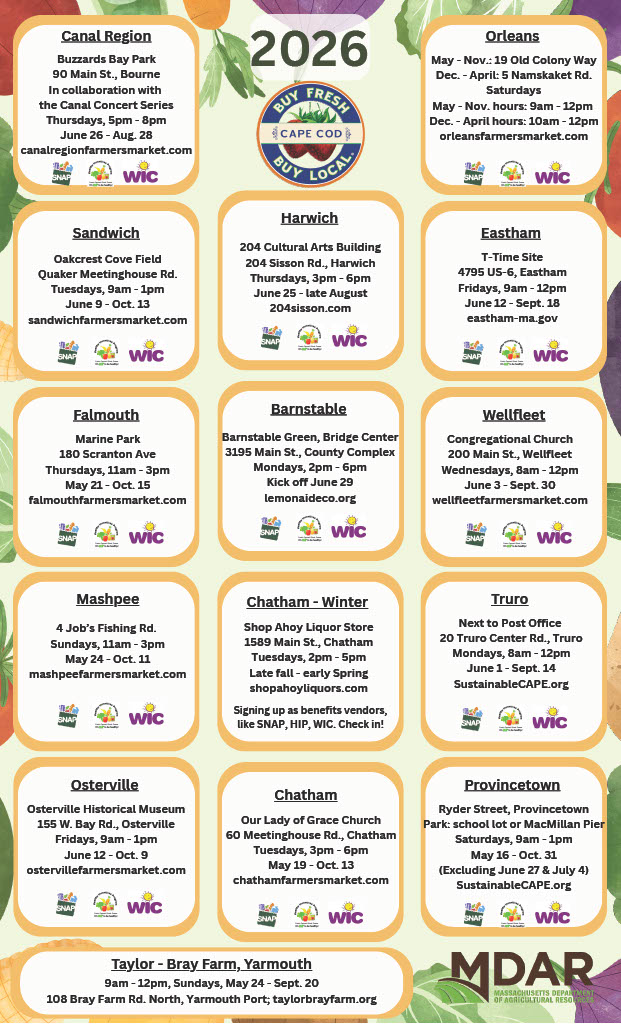
We are trying to be at as many farmers' markets as possible this season to talk about APCC programs, including The Cape We Shape. Below is a list of where and when you can support your local farmers. |
APCC is Partnering with Planetary Health Alliance SAVE THE DATES
Planetary Health Stories: A Community Arts & Storytelling Project
Join us this fall for a two-part series that brings women together to share, through writing, poetry, art, and photography, what they are witnessing, grieving, and hoping for as climate change, biodiversity loss, pollution, and changes in food systems reshape the places they call home.
This project, led by Jennifer Rasmussen and Tatiana Camargo through the Planetary Health Alliance, gathers stories from communities around the world, showing how women and girls everywhere are feeling these changes, and how they're finding ways to grieve, cope, and create in response. The stories collected will become part of a collaborative book, which will serve as a reminder that personal memory and lived experience are just as powerful as science in helping us understand what's happening to our planet, and in connecting us to one another.
Part 1: Webinar
Thursday, September 10 | 5:30–6:30pm | Virtual
Facilitator Jennifer leads a one-hour orientation covering what planetary health means, the story behind this project, and what to expect at the in-person workshop, plus an introduction to the volunteer team.
Part 2: In-Person Workshop
Friday, September 18 | 10:00 am–12:00 pm | Koppel Center, APCC
A relaxed morning of open creative time: writing, drawing, painting, photography, fiber arts, or simply reflecting alongside natural objects you bring from home. Includes a grounding exercise, guided creative time with volunteer support, a written reflection, and a closing circle where participants can choose to share and reflect on their art. This series is open to all women – no artistic experience necessary. With permission, stories and artwork may be included (anonymously) in the Planetary Health Alliance collaborative book. |
APCC is proud to again participate in the Numbers for Nonprofits program for the Falmouth Road Race.
We have a team of five dedicated runners who are lacing up to support APCC’s work, and one of the team members is APCC Pond Technician May Lopopolo.
Help the team raise money to support APCC's work. CLICK HERE. |
|
|
|
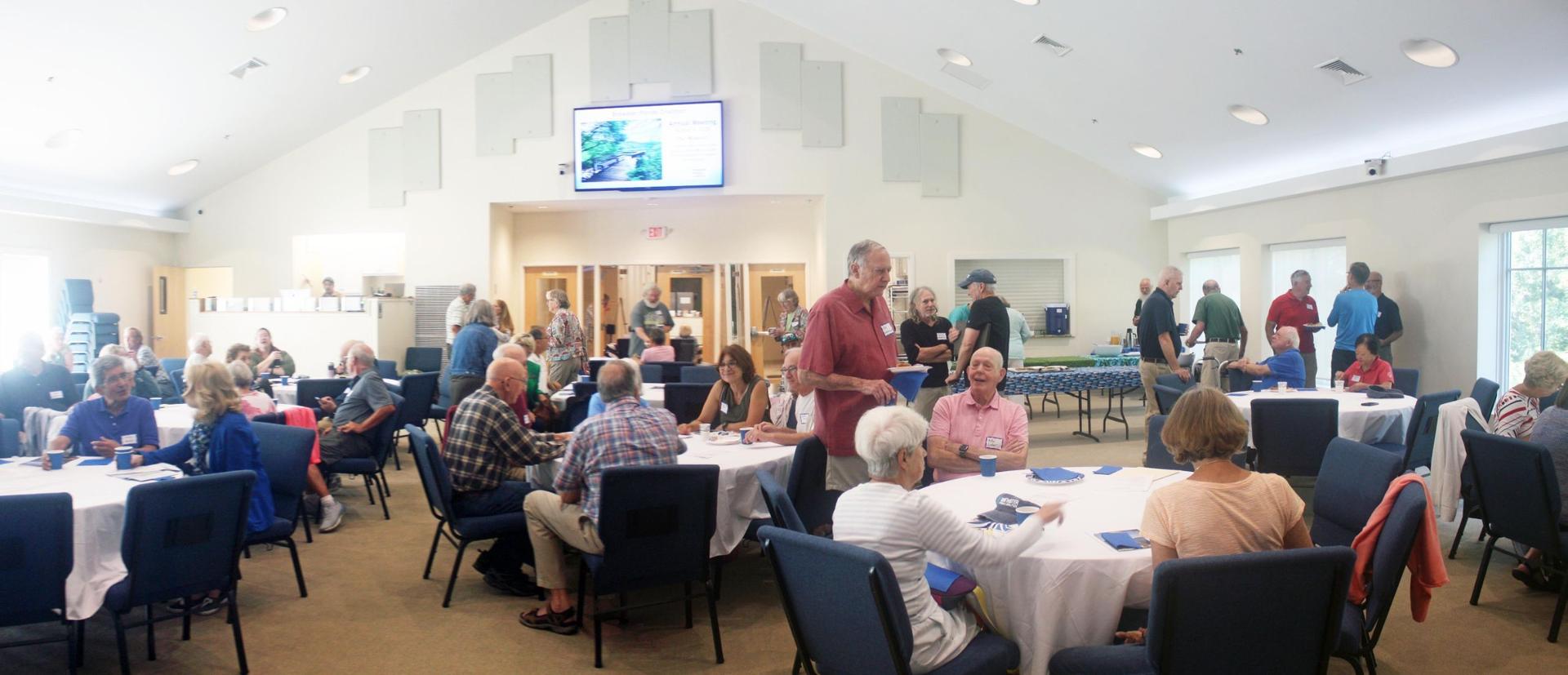
Brewster Ponds Coalition Annual Meeting
Saturday, August 15 8:30 - 11:00 a.m.
A review and discussion of the town’s Water & Pond Management plans will follow breakfast and a short business meeting & award presentation. The meeting will be held at the Cape Cod Bible Alliance Church, 3600 Main Street, Brewster, and is free for BPC members; be sure to reserve your spot. For non-members, we are suggesting a $10 donation at the event. Check-in and breakfast begin at 8:30 a.m. and the meeting starts at 9:00 a.m.
Register |
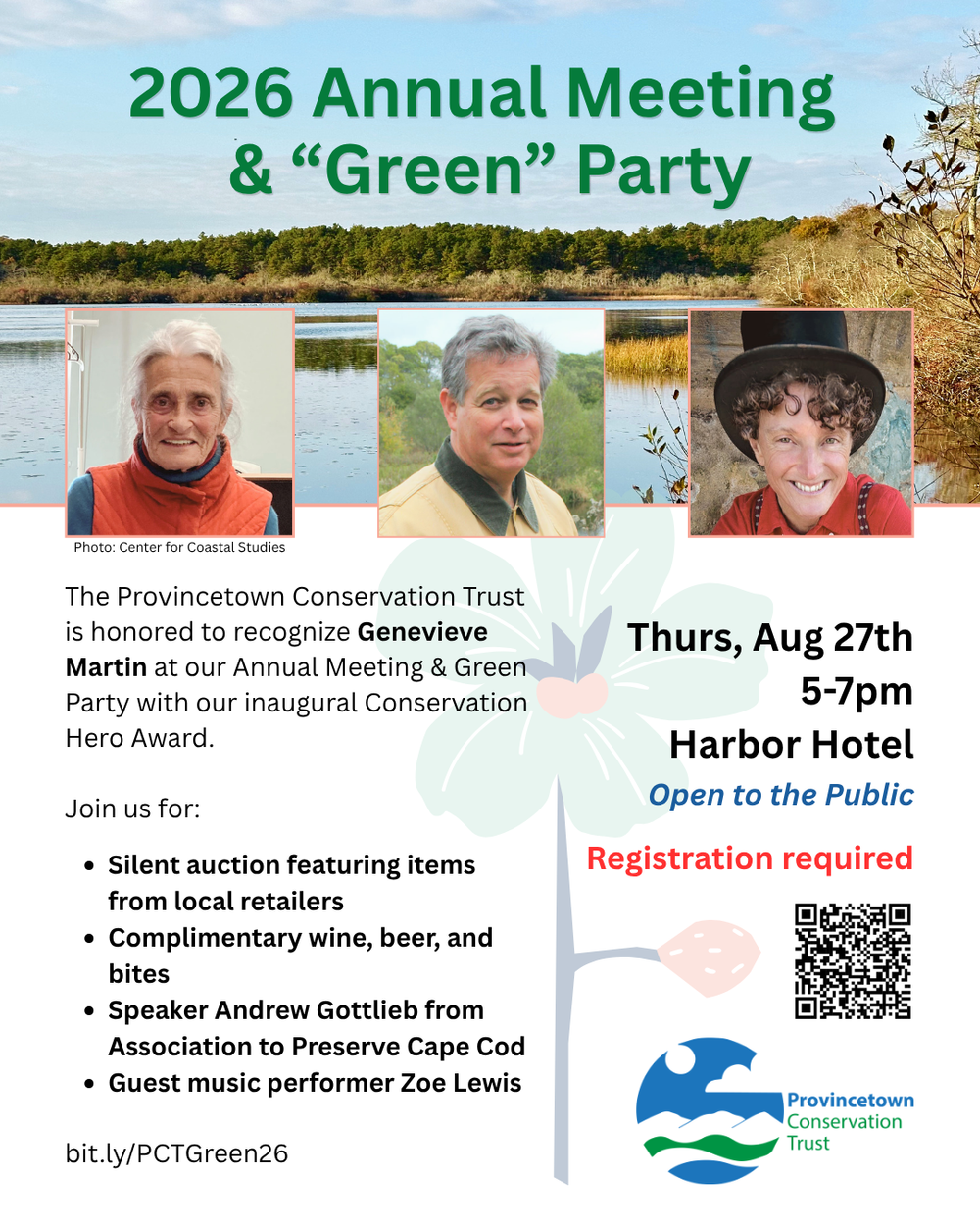
Provincetown Conservation Trust Annual Meeting |
|
|
|
A Cape-wide Conservation Event Calendar |
The Compact of Cape Cod Conservation Trusts (“the Compact”) and its nonprofit members launched a new regional calendar of events. The Conservation Calendar includes programs across Cape Cod hosted by these groups. The goal of the calendar is to encourage visitors and residents to take part in nature and environmental events. You can always find the link to the calendar on APCC's website under News & Events.
|
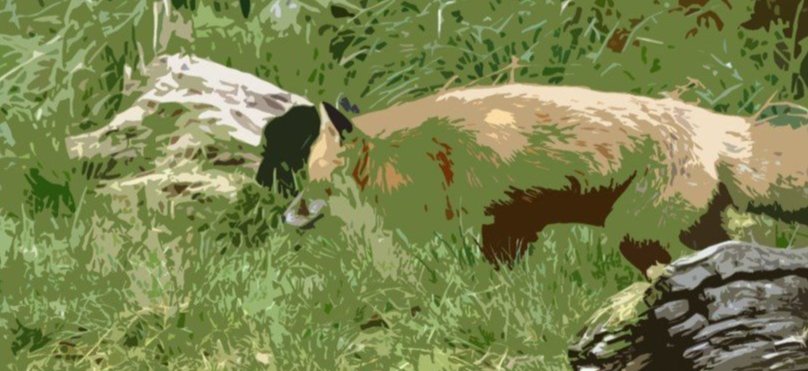
"Foxtrot"
By Andrew Schwarzer
The rustle, unexpected as rustling usually is,
rushed towards me,
wrestled my stooping away from closing the garden gate,
and ended my bustling, with “what is this?”
I stood. I glanced. To quickly see,
out from overhedged tunnel, a hurried, but not late
commuter, someone socked and shoeless,
a rusty blonde barracuda snapping a snack,
out of bed, and headed back.
He focused on his path like a cable car,
took a left and followed the underpass expressway,
a fence to his left, and I say, he,
for he, was the man full of job and duty.
Feed his family. Appease a vixen, expressly.
His mission not complete, but guaranteed,
his jaw-grabbed rabbit-filled maw,
I saw, and excused his rudeness need,
neither stopping to talk, with fable to share,
nor interrupting a quick walk, with eye-to-eye stare. |
If you are a farmer or someone who wants to grow native plants to sell, or you just want to be updated on the program's development, please submit the interest form that appears on our webpage. We will be sending periodic email notices of workshops and meetings.
Funding for the project is provided by Barnstable County and its Economic Development Council License Plate Grant Program through the Cape Cod Commission, the Kelley Foundation and private donors. |
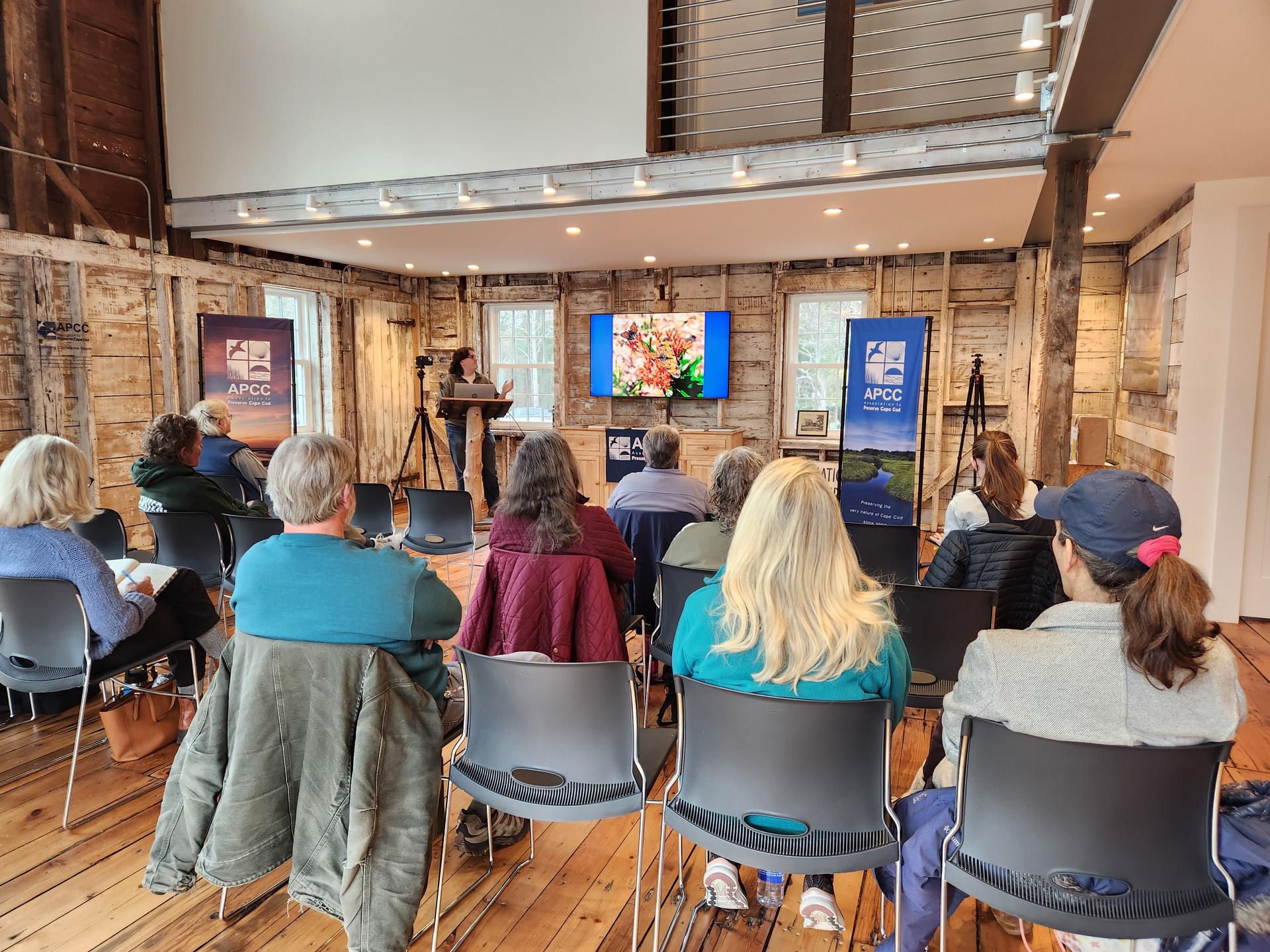
Ten talks for prospective growers as part of the Cape Cod Native Plant Growers' Cooperative program have been presented thus far, with more scheduled in the upcoming weeks. These past workshops can be viewed here: |
A Cape Cod Native Plant-selector ~ to help you choose the perfect native plants for your garden. |
|
|
|
Email kandres@apcc.org and we'll send you a CapeCodNativePlants.org decal. |
|
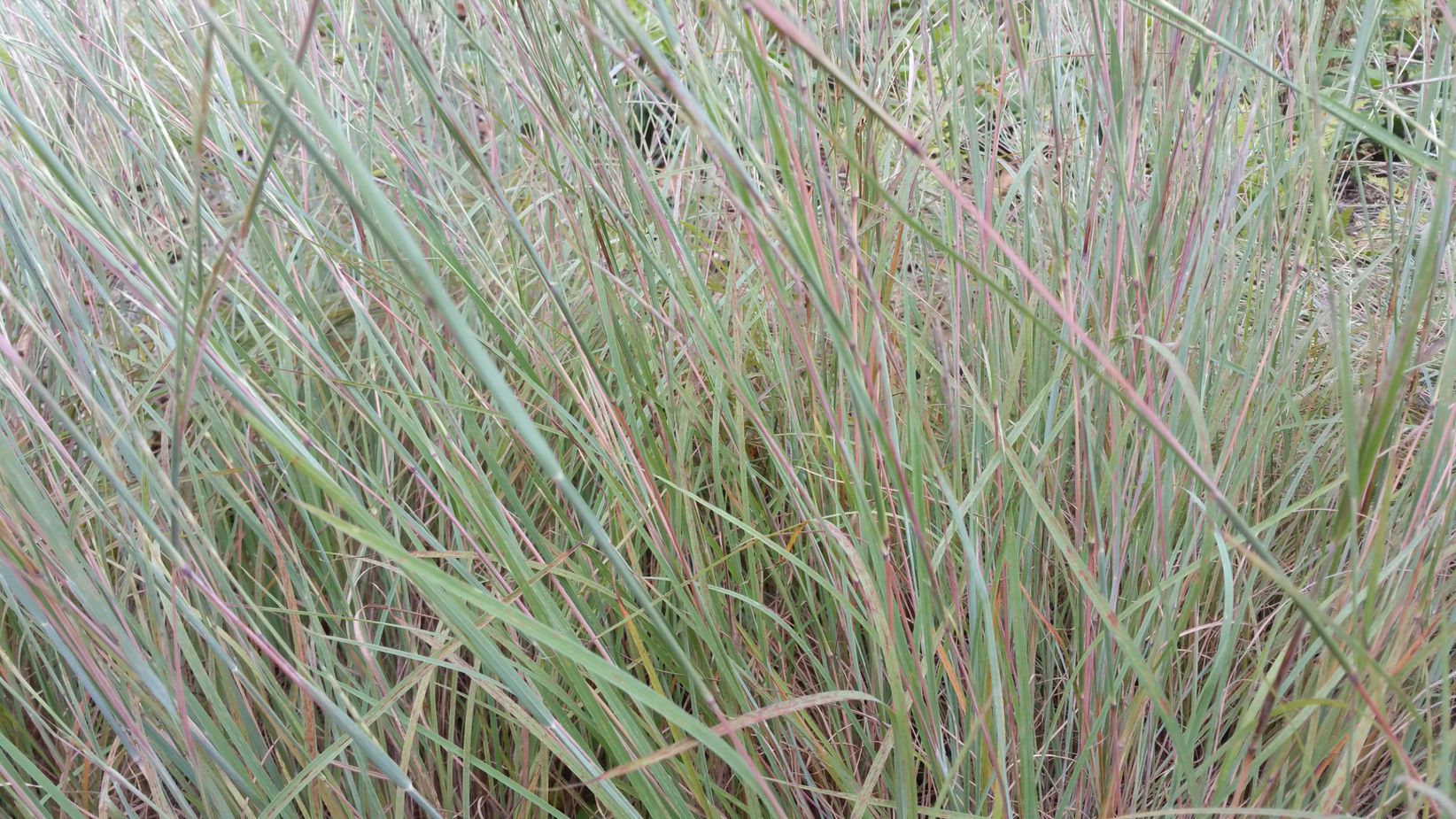
| Little Bluestem Schizachyrium scoparium |
|
|
|
The purpose of CapeCodNativePlants.org is to help native plant enthusiasts select the right plant for the right place. While not all native plants presented here are indigenous to Cape Cod, they are suitable native species for Cape gardens and managed landscapes.
Why Native Plants? Many native plants are drought tolerant, salt tolerant, and thrive in the “thin” soils found on Cape Cod. Native plants are as attractive as any plant, and are reflective of the Cape’s natural beauty. By planting native species appropriate for Cape Cod, you can conserve water, avoid pesticide and fertilizer use, and support pollinators and birds.
|
|
|
|
|
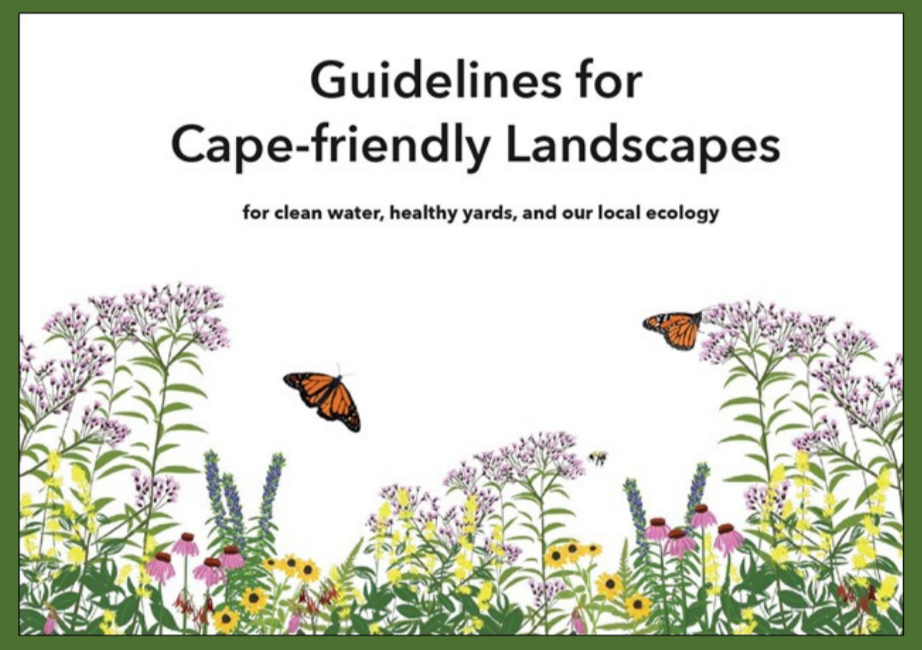
The Guidelines gives homeowners steps they can take in the design and maintenance of their properties that will support pollinators and birds, manage stormwater, conserve water, and protect the Cape's water quality. This 40-page booklet is beautifully illustrated by Marcy Ford with content that is easily digestible and supported by numerous resources for additional learning.
| |
|
|
We are grateful for the several retail shops that are partnering with us to make this publication more widely available: Brewster Book Store, Birdwatchers General Store, Crocker Nurseries, Wellfleet Audubon Wildlife Sanctuary, Cape Abilities Farm, Cape Cod Museum of Natural History, the Cape Cod Lavender Farm, Heritage Museums and Gardens, Titcomb's Bookshop, Sea Howl Bookshop, Soares Flower Garden Nursery, Hyannis Country Garden, Orleans Whole Food Store, and Eight Cousins Bookshop.
Heard it makes a nice gift for a neighbor or for a housewarming or host(ess) gift!
If you are a retailer and would like to sell this publication at your store, please contact us. |
|
|
|
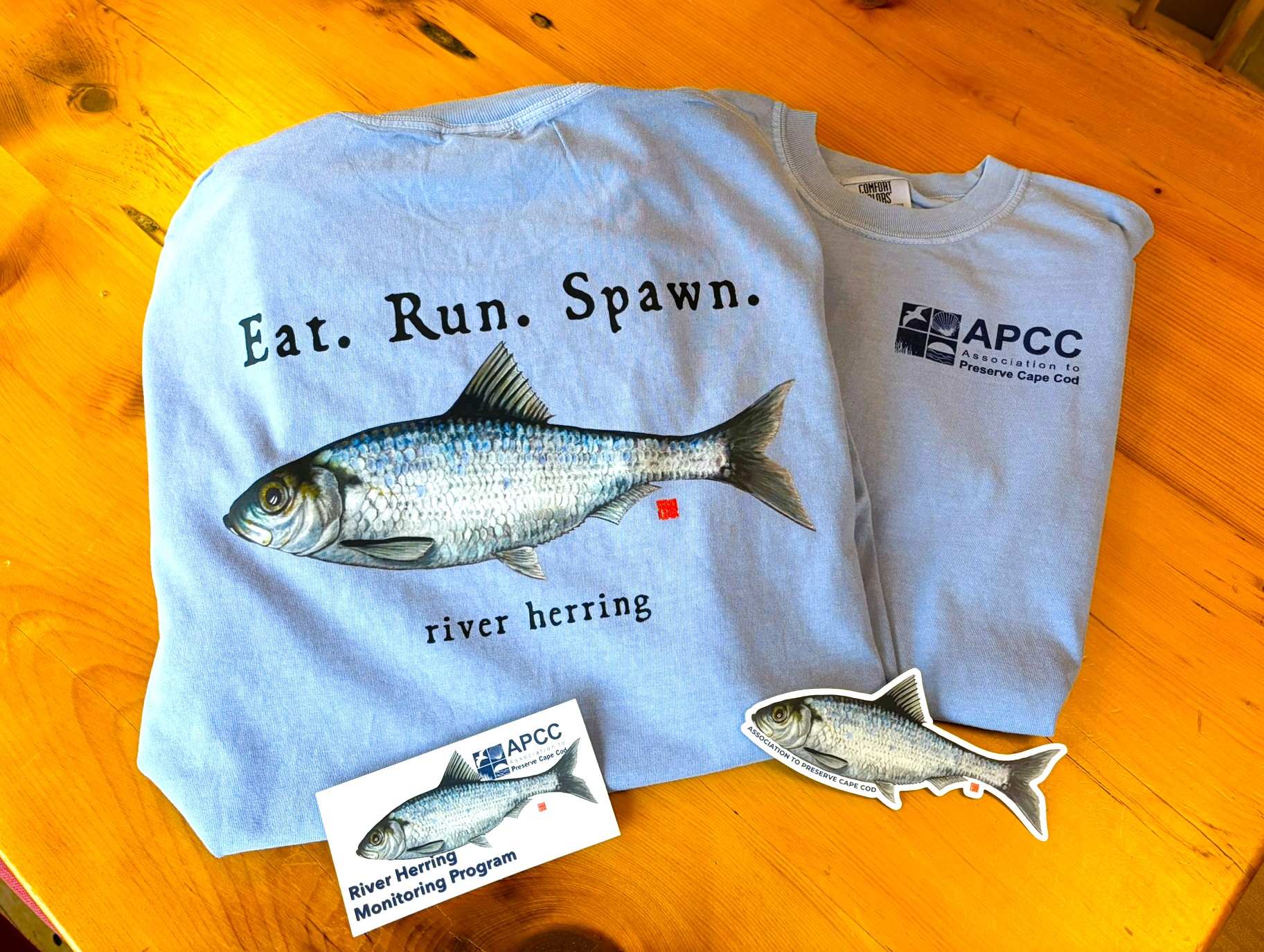
Celebrate the Run!
Herring T's color denim blue $30 - includes USPS delivery in the U.S. |
|
|
|
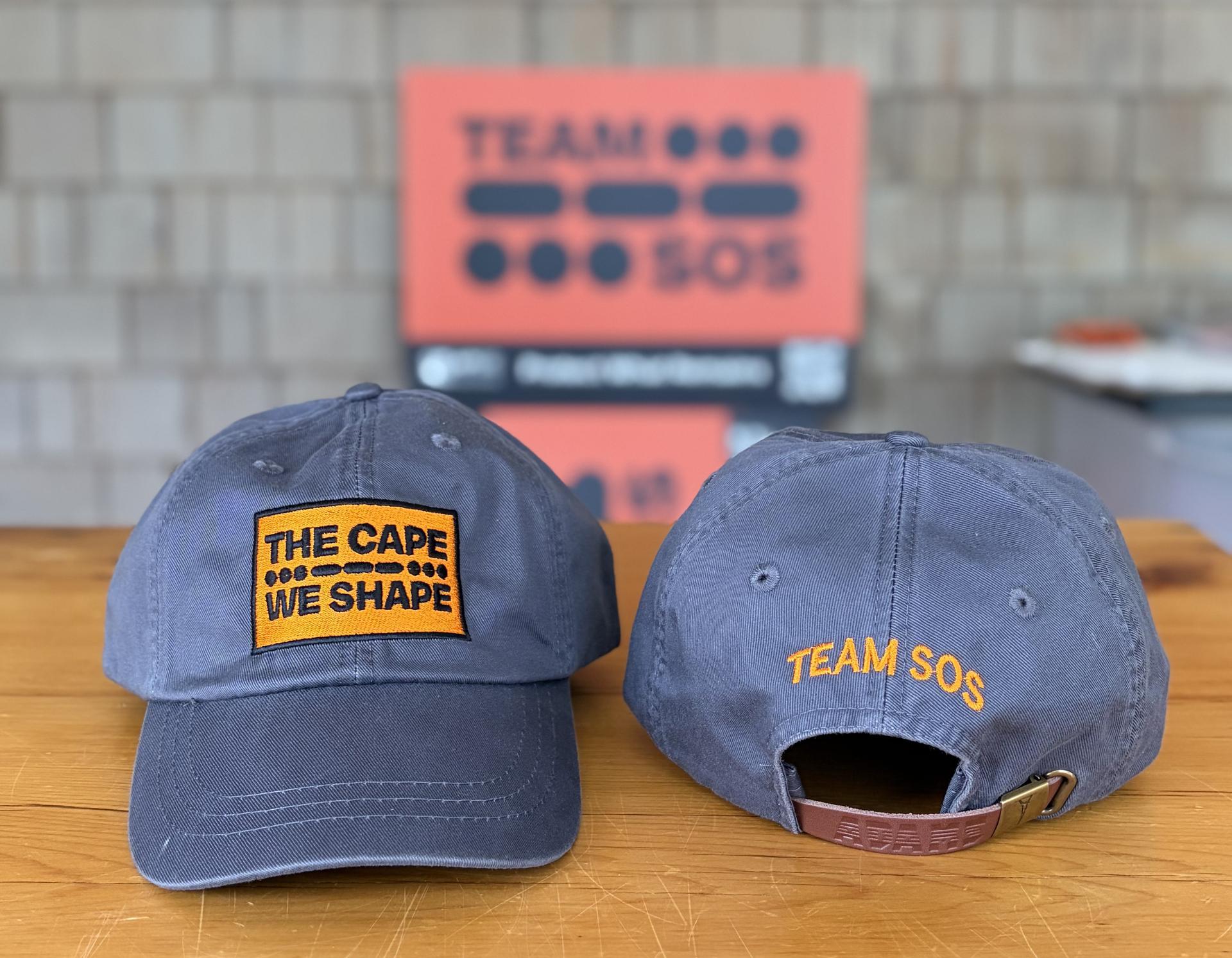
Team SOS T-shirts
$30 - includes USPS delivery in the U.S. |
|
|
The Cape We Shape
$30 - includes USPS delivery in the U.S. |
|
|
|
APCC caps $25 -includes USPS delivery in the U.S. |
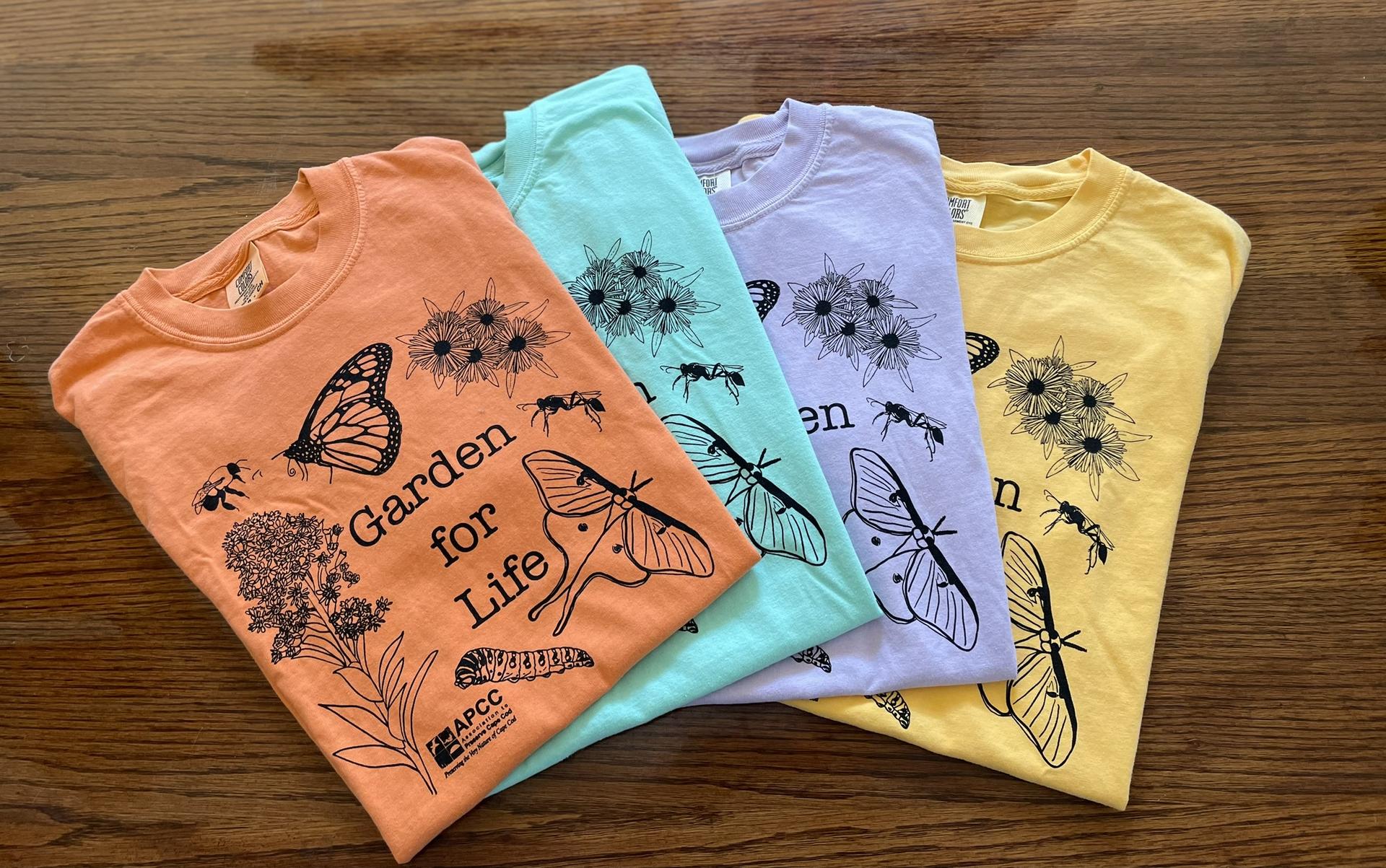
Garden for Life T's $30 -includes USPS delivery in U.S. |
|
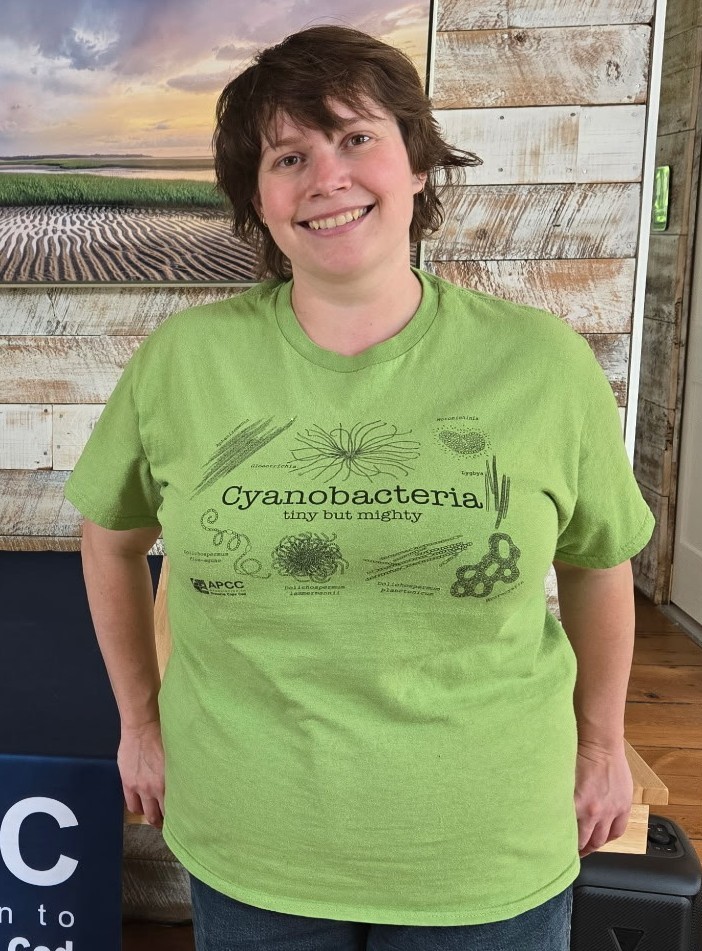
| Cyanobacteria ~ tiny but mighty color kiwi
$30 -includes USPS delivery in the U.S. |
|
|
|
|
APCC eNewsletters
Our weekly newsletters are archived on our website and easily shared.
You can find past newsletters and share with your friends. Encourage others to sign up for future enewsletters HERE.
| |
|
|
Are you thinking of going solar? We hope so!
In partnership with E2 SOLAR in Dennis, APCC receives $500 for every solar installation when APCC is named as referral. |
|
|
|
|
Thank you to the homeowners who just contracted to install solar panels through E2 Solar. May the sun always shine for you! |
|
|
|
Expressions Gallery, 578 Main Street, Chatham
CLICK HERE |
Expressions Gallery donates 20 percent of its profits to APCC's work. |
|
|
|
Thank you to our business sponsors! |
|
|
|
APCC is rated four stars by Charity Navigator, 2026 Platinum by Candid (formerly Guidestar). |
|
|
|
Our Contact Information
*{{Organization Name}}*
*{{Organization Address}}*
*{{Organization Phone}}*
*{{Organization Website}}*
*{{Unsubscribe}}* |
|
| |
|
|