Association to Preserve Cape Cod |
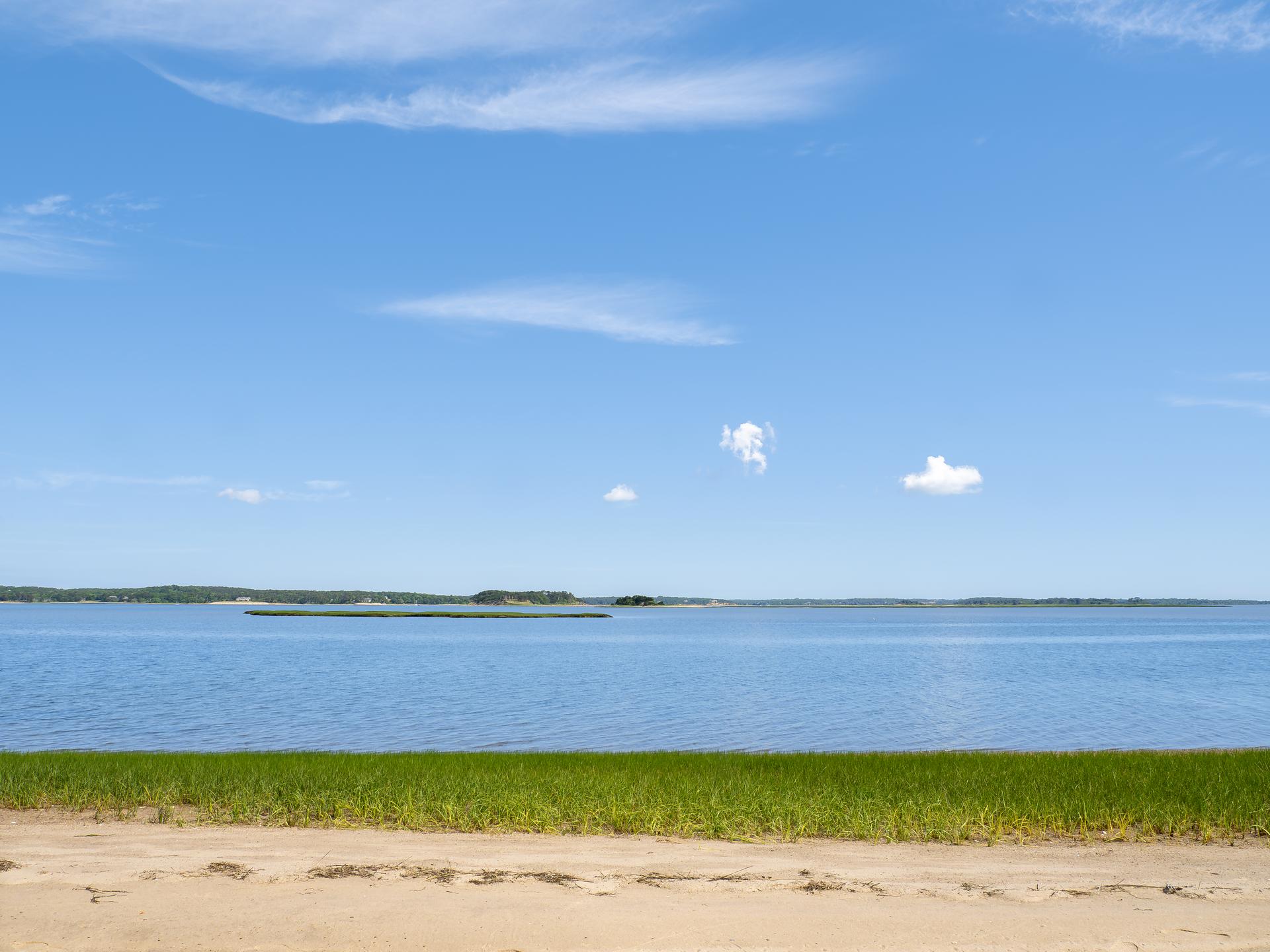
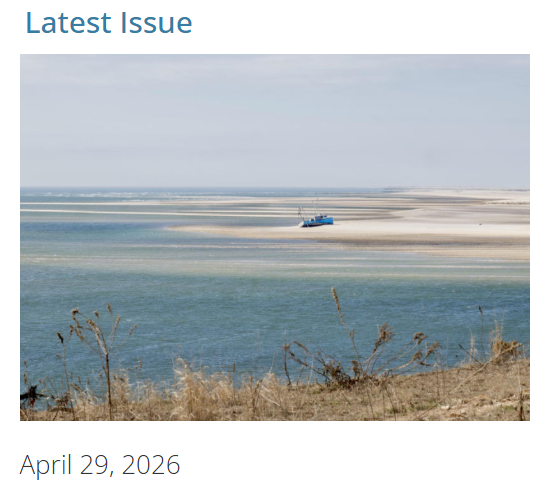
Above: Pleasant Bay from Strong Island, Chatham. Photo by Sue Machie. |
|
|
|
| Up is Down
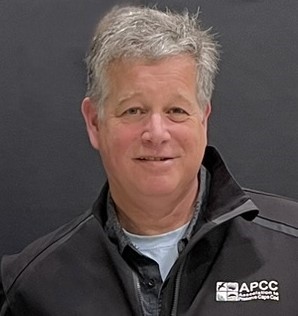
by Andrew Gottlieb, Executive Director |
If I were to come to your house and burn it down or bulldoze it to the ground, you might reasonably think that I had done you harm. Most people would apply a common sense standard that harm occurs when the place you live is destroyed. Until last week, that was the standard applied for 50 years under the Endangered Species Act—but no more. |
|
|
|
Regulatory changes just adopted by the Administration limit the definition of harming endangered species to actions that directly result in their death. The wholesale destruction of habitat upon which endangered species rely is no longer considered a harm and therefore no longer subject to review under the Act. Because Congress allows the Executive Branch to interpret statutory language through regulation, this fundamental change—and effective gutting of the Endangered Species Act—was implemented with no meaningful public input or without any case being made to the American public that this serves their interests.
The Endangered Species Act was a tremendous success in bringing some species, including our national symbol back from the brink of extinction, including our national symbol, the bald eagle. An essential part of protecting species is maintaining their habitat. The Act, as interpreted for 50 years by administrations of both parties, applied the notion that the logical use of the prohibition of harm to habitat was a central tenant essential to the survival of an endangered species.
The Endangered Species Act is still on the books, but don’t expect it to do much to prevent the extinction of currently endangered species, as well as ones that face future extinction, like us…. |
Ecosystem Restoration Program
|
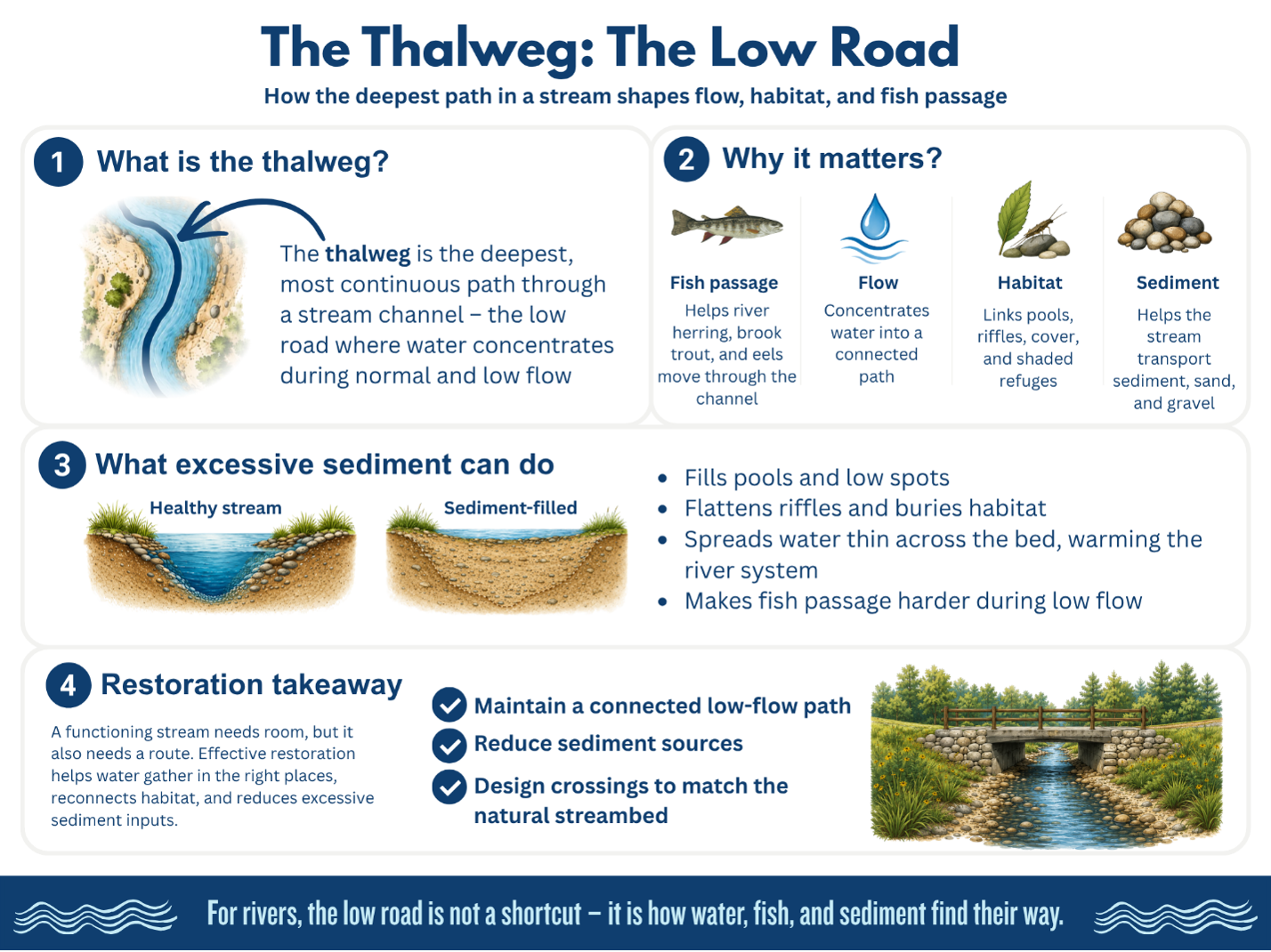
Running the Thalweg: The Low Road Every stream has a low road.
It is not always obvious from the bank, especially in a shallow or sandy stream, but water rarely moves evenly across the entire channel. Instead, it gathers and follows the deepest, most continuous path through the streambed. That path is called the thalweg. Think of it as the river’s preferred route: the place where flow concentrates during normal and low-water conditions, where pools connect to riffles, and where fish are most likely to find enough depth to keep moving upstream.
The thalweg matters because streams are not just wet ditches. They are living systems shaped by water, sediment, wood, plants, groundwater, and time. A healthy thalweg helps organize that system. It keeps water connected through the channel, provides a route for river herring, brook trout, eels, and other aquatic species, and helps maintain the sequence of pools, riffles, cover, and shaded refuges that make stream habitat work. Even during low flows, a well-formed thalweg can mean the difference between a connected stream and a series of isolated puddles.
Sediment is a natural part of every stream, but too much sediment in the wrong place can erase the low road. When excess sand, gravel, or fine material builds up in a channel, it can fill pools and low spots, flatten riffles, and spread water thinly across the streambed. Instead of a defined path with enough depth for fish to move, the stream can become broad, shallow, and uniform. Shallow water warms more quickly, especially in sunny or exposed reaches, which can reduce cold-water habitat and add stress for fish and other aquatic life.
Excessive sedimentation can also make fish passage harder. During low-flow periods, water that should be concentrated in a connected thalweg may instead sheet across the channel in a thin layer. For river herring, brook trout, eels, and other species moving through small streams, a few inches of depth can matter. Sediment can also bury the gravel, cobble, woody material, and small spaces that aquatic insects and young fish depend on, reducing habitat quality even when water is still present.
That is why stream restoration is not simply about making a channel look natural. It is about helping the stream function naturally. Good restoration gives a river room to move, but it also helps water gather in the right places. It reconnects habitat, reduces unnecessary sediment inputs, and replaces undersized or perched road crossings with structures that better match the natural streambed.
For Cape Cod’s groundwater-fed streams, this kind of detail matters. A connected low-flow path, cooler water, clean habitat, and properly designed crossings can make a real difference for fish passage and stream health. The thalweg may be the low road, but for rivers, fish, and sediment, it is often the most important road there is. |
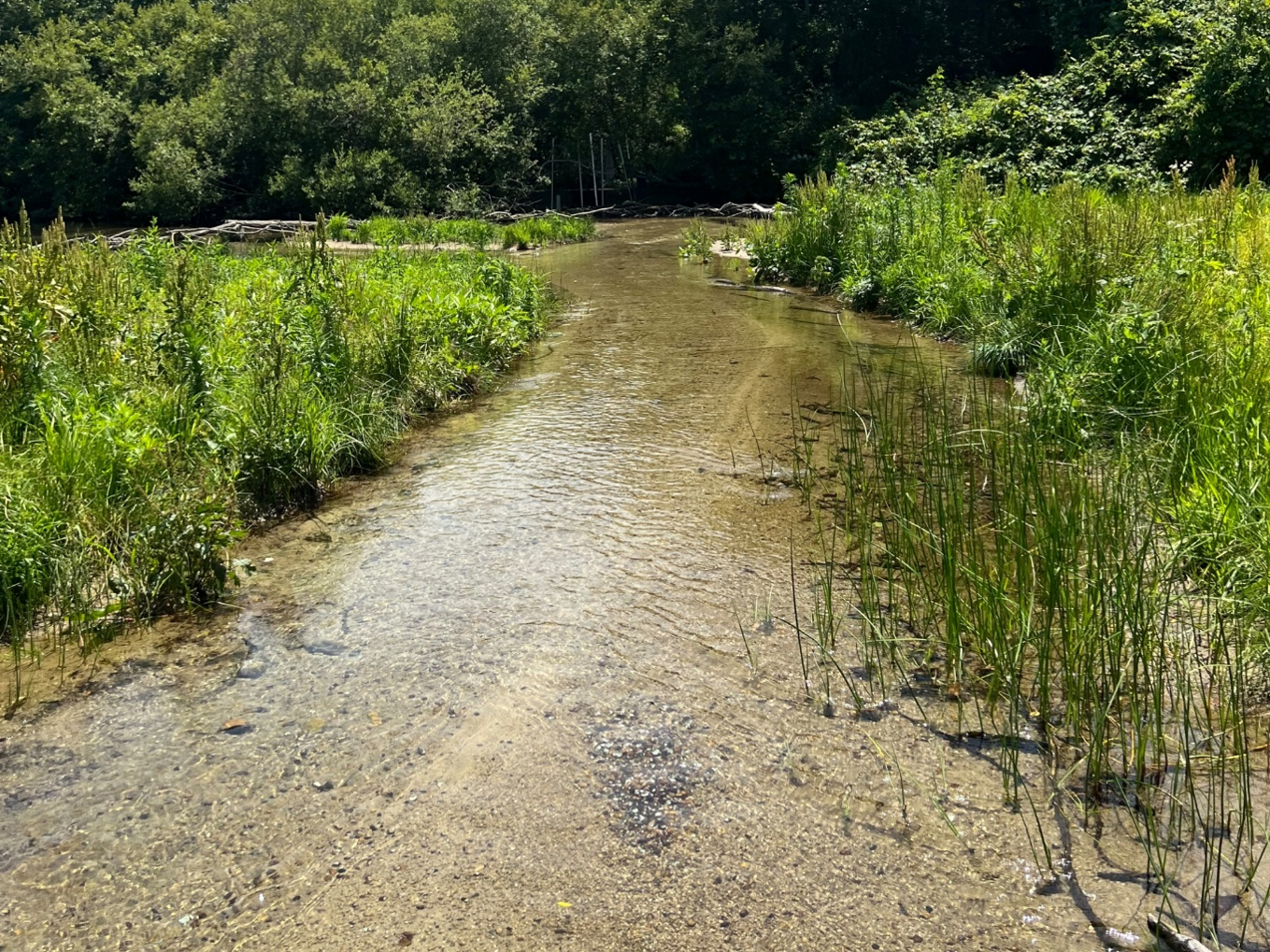
Above: Excessive sedimentation in the upper Mashpee River has flattened portions of the channel, leaving water spread shallowly across the streambed with little defined thalweg for fish passage during low flow. |
|
|
|
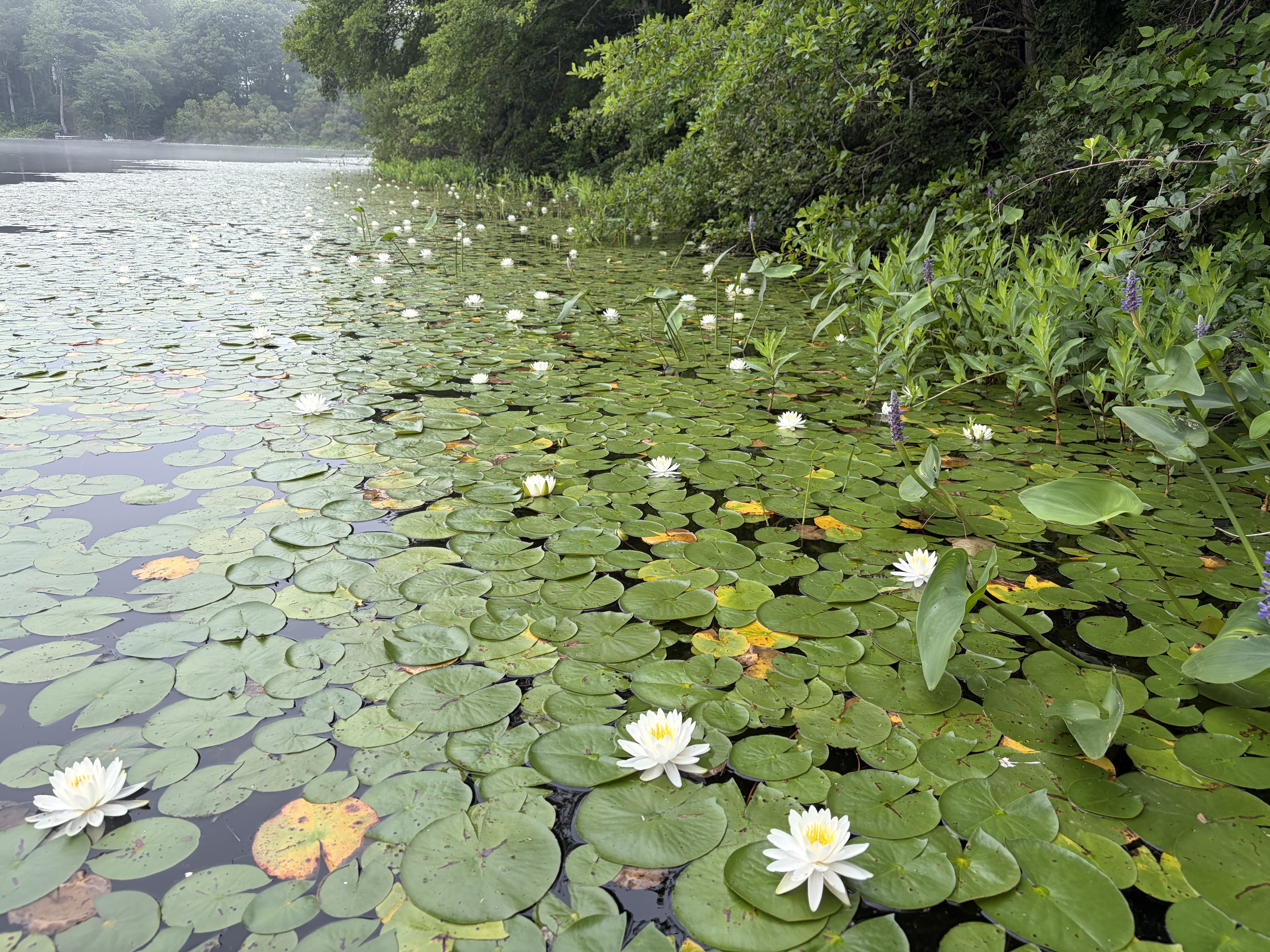
Above: Parker Pond in Osterville |
|
|
|
Water Lilies in Full Effect |
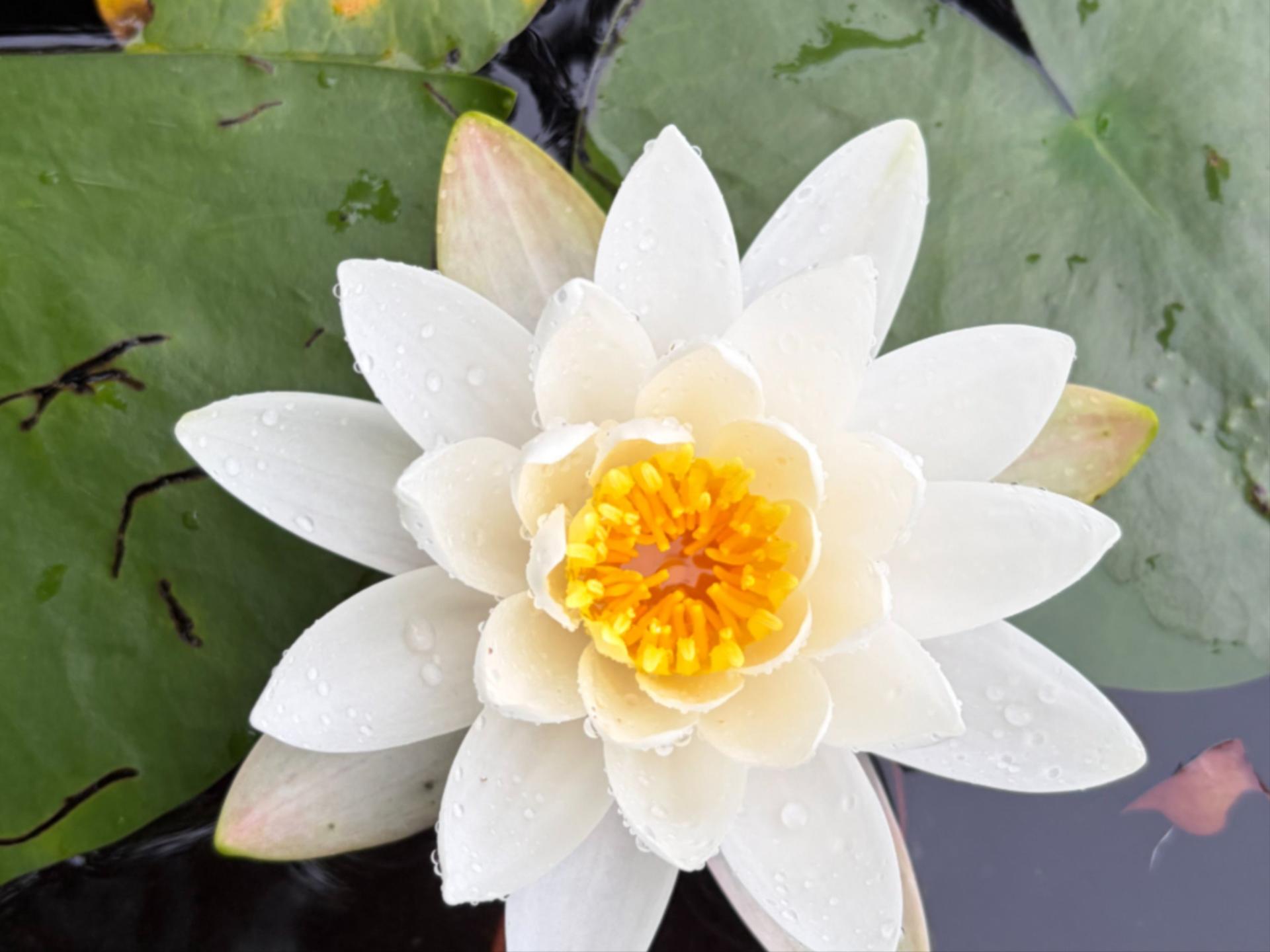
Peak bloom season for white water lilies on Cape Cod is July through August—which means now. Water lilies, Nymphaea odorata, are a cornerstone species in Cape Cod's pond ecosystems and thrive in the various kettle ponds of the Cape. They aren’t just pretty flowers; these plants are primary producers, and support diverse life in our ponds.
Lily pads provide much needed shade and moderate the water temperature on hot days. That drop in water temperature and shaded surface area helps to reduce algal growth. They also act as perfect resting and hunting grounds for damselflies and dragonflies. Furthermore, their deep roots and stems reaching up from the pond's bottom create much needed structure for frogs, turtles, and fish. If you are wondering about your best chance to see water lilies, note that individual flowers open about mid-morning and close in the later afternoon, repeating this cycle for about three to five days. You’ll be able to find them in shallow banks on most kettle ponds across Cape Cod.
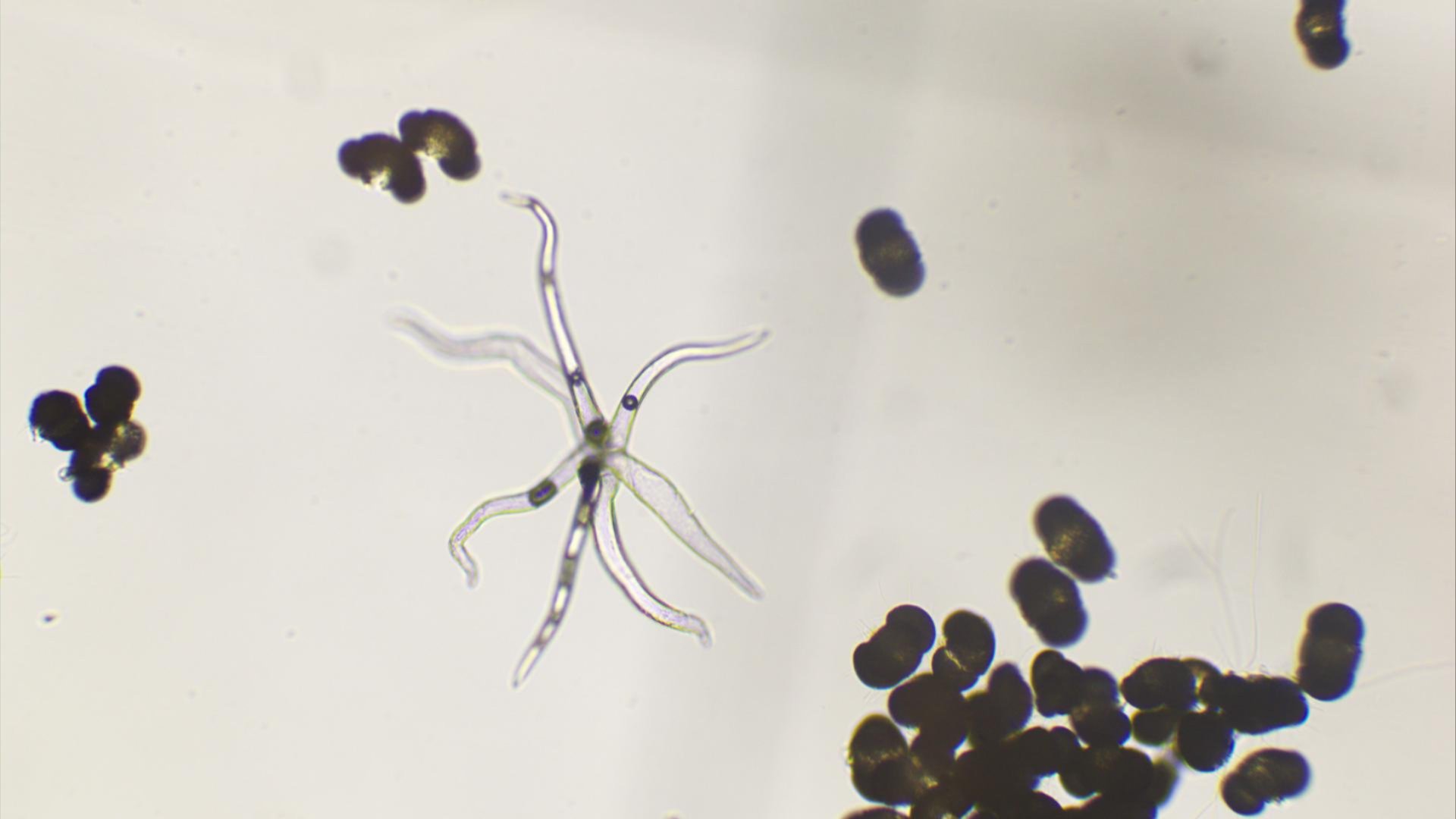
While doing microscopy of water samples for the cyanobacteria monitoring program, spider like structures are often observed. These are trichomes—little microscopic hairs found on most plants, and these are likely from the water lilies. The trichomes are not alive and do not contain any living material—they are simply outgrowths.
In lilies, the trichomes are called hydropotes, and they are found on the underside of the lily pad. Interestingly, these epidermal glands act as storage for heavy metals and can trap pollutants. Lilies do their fair share to keep our ponds healthy, so keep doing yours. |
Above: Trichome under the microscope |
Welcome to the Cyanobacteria Monitoring Program... |
|
|
|
|
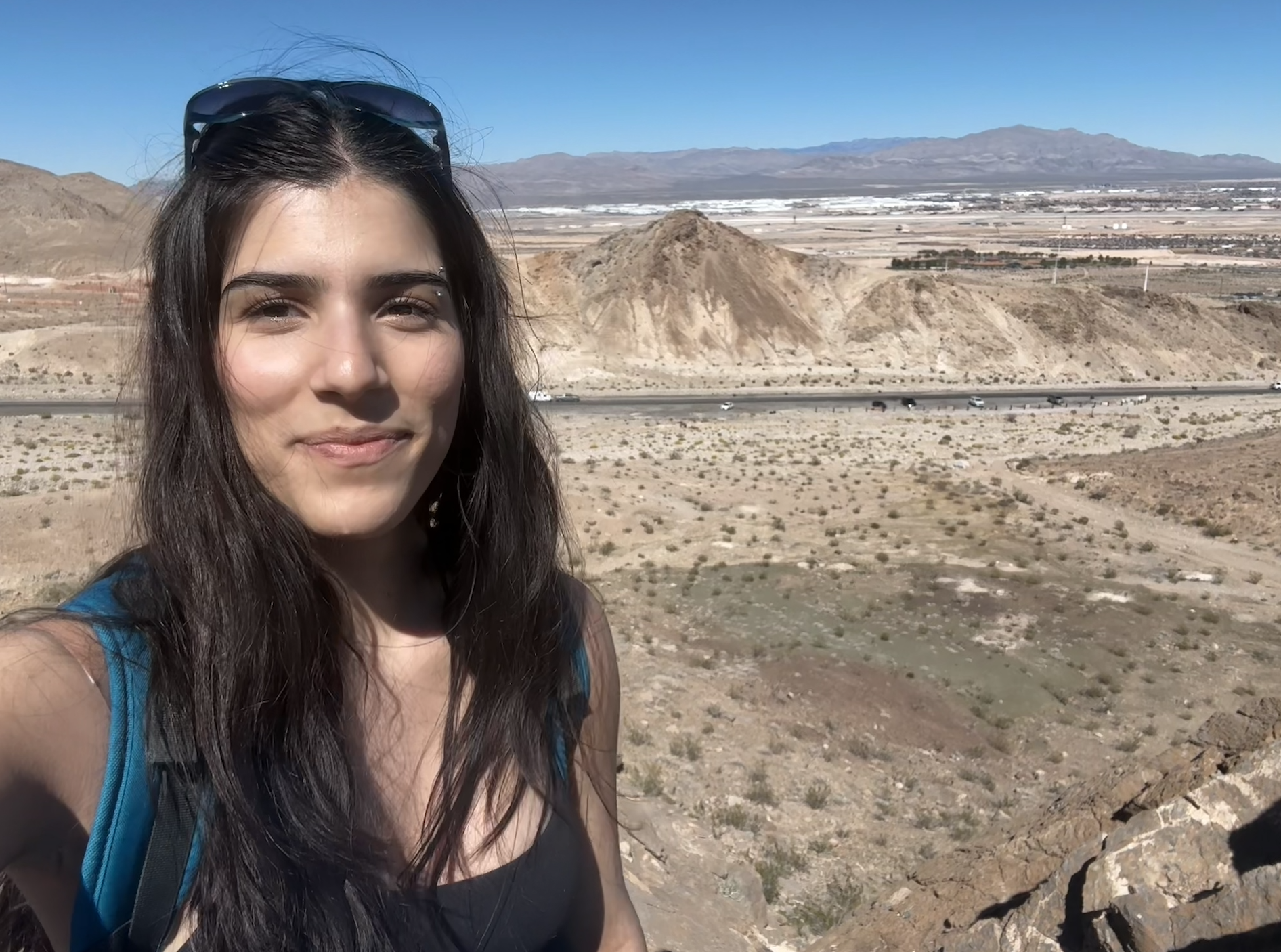
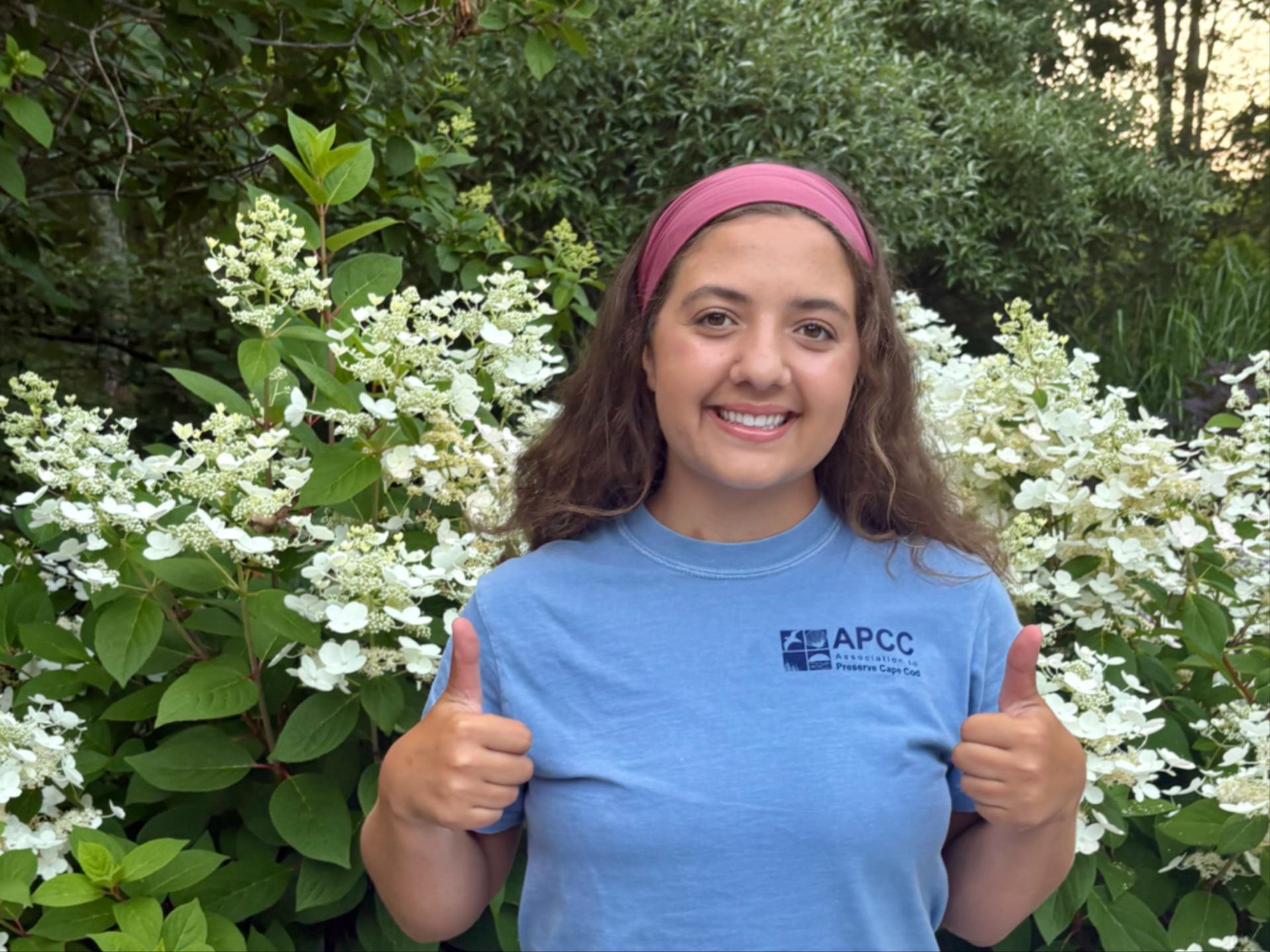
Margo Awad, Seasonal Intern
Hi, my name is Margo Awad! I am a rising senior at Wesleyan University studying environmental science, environmental engineering, and animal studies. My experience in aquatic field-based research at Wesleyan and volunteer work at my local pond in Arlington, MA, have shown me how much waterbodies mean to the communities that surround them. I am excited to learn more about Cape Cod’s ponds and the cyanobacteria that impact them.
|
|
|
|
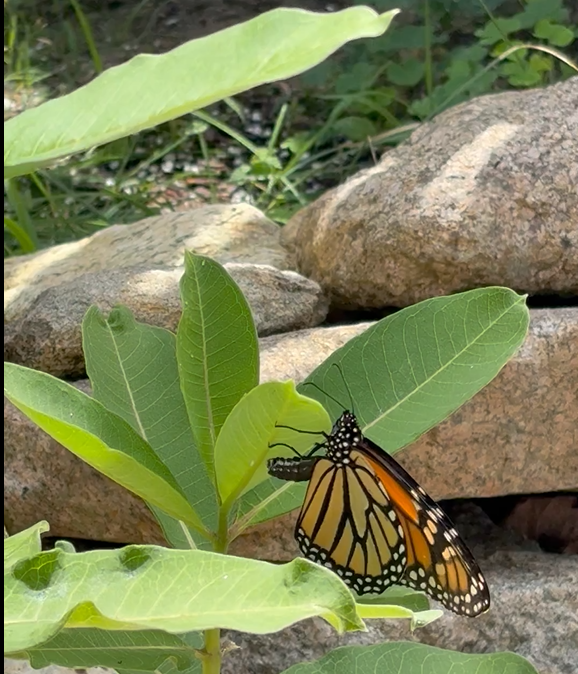
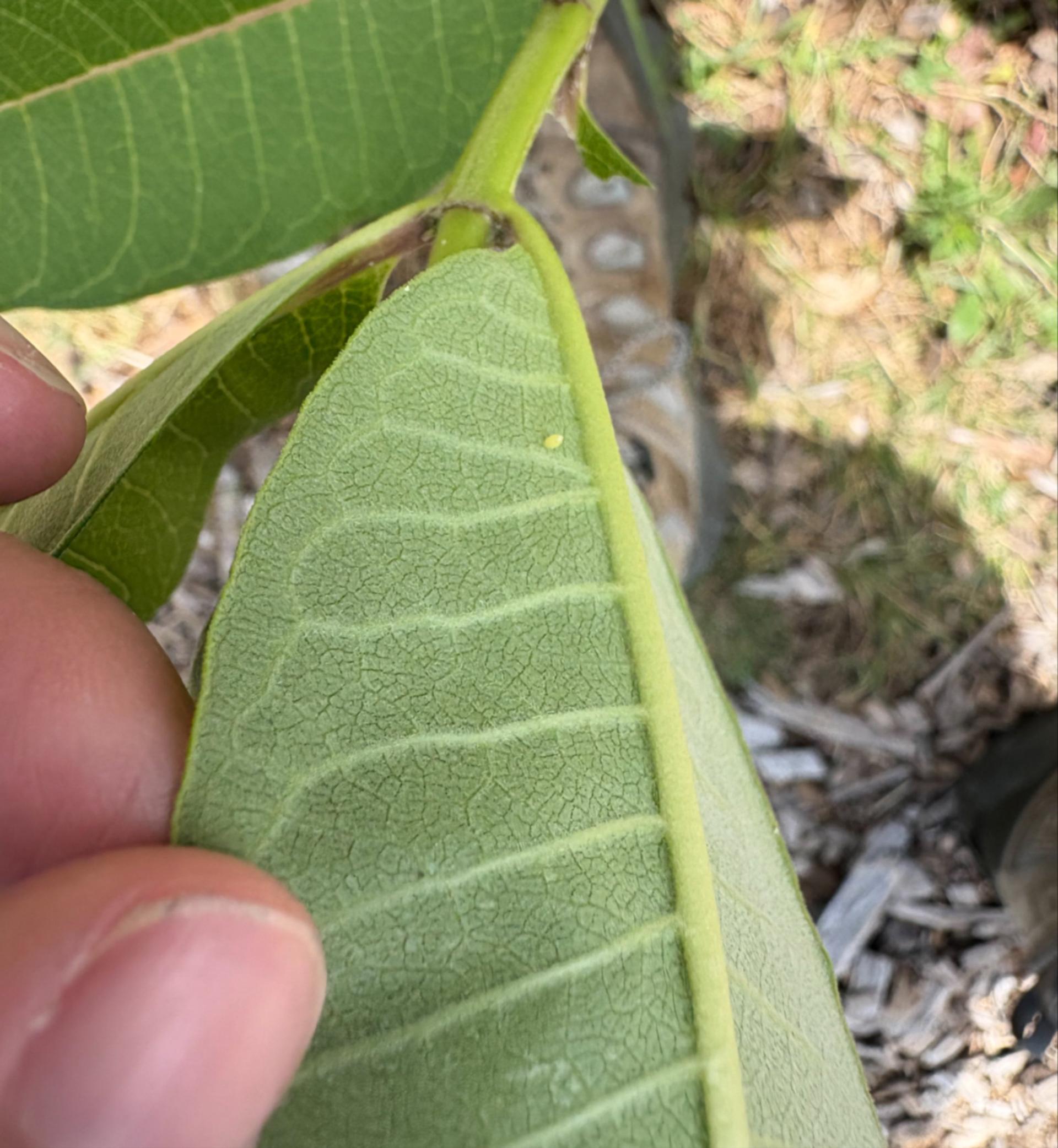
Above: A female monarch butterfly observed laying an egg on common milkweed on APCC's grounds. |
Monarch Butterflies Need Carpenter Bees |
You may know the carpenter bee—the biggest of our native wild bees—about the size of a Brazil nut, or if you haven’t seen a Brazil nut in a while—they are about an inch long. They are distinguished from bumble bees by their hairless, shiny, black abdomen.
You often become aware of carpenter bees in your surroundings because the female bee has found soft untreated wood in which to chew a perfectly round hole, about one to two inches in diameter. Inside, she has made a right hand turn and continued to chew a tunnel following the grain of the wood. In this tunnel, she will lay an egg, one at a time, provision it with pollen and nectar, close the cell off, and do it again, and again. When a carpenter bee does this to a shed or deck or facia board, we can see them as pests, but they are very important pollinators. We've seen them on spotted bee balm, ox-eye sunflowers, and milkweed.
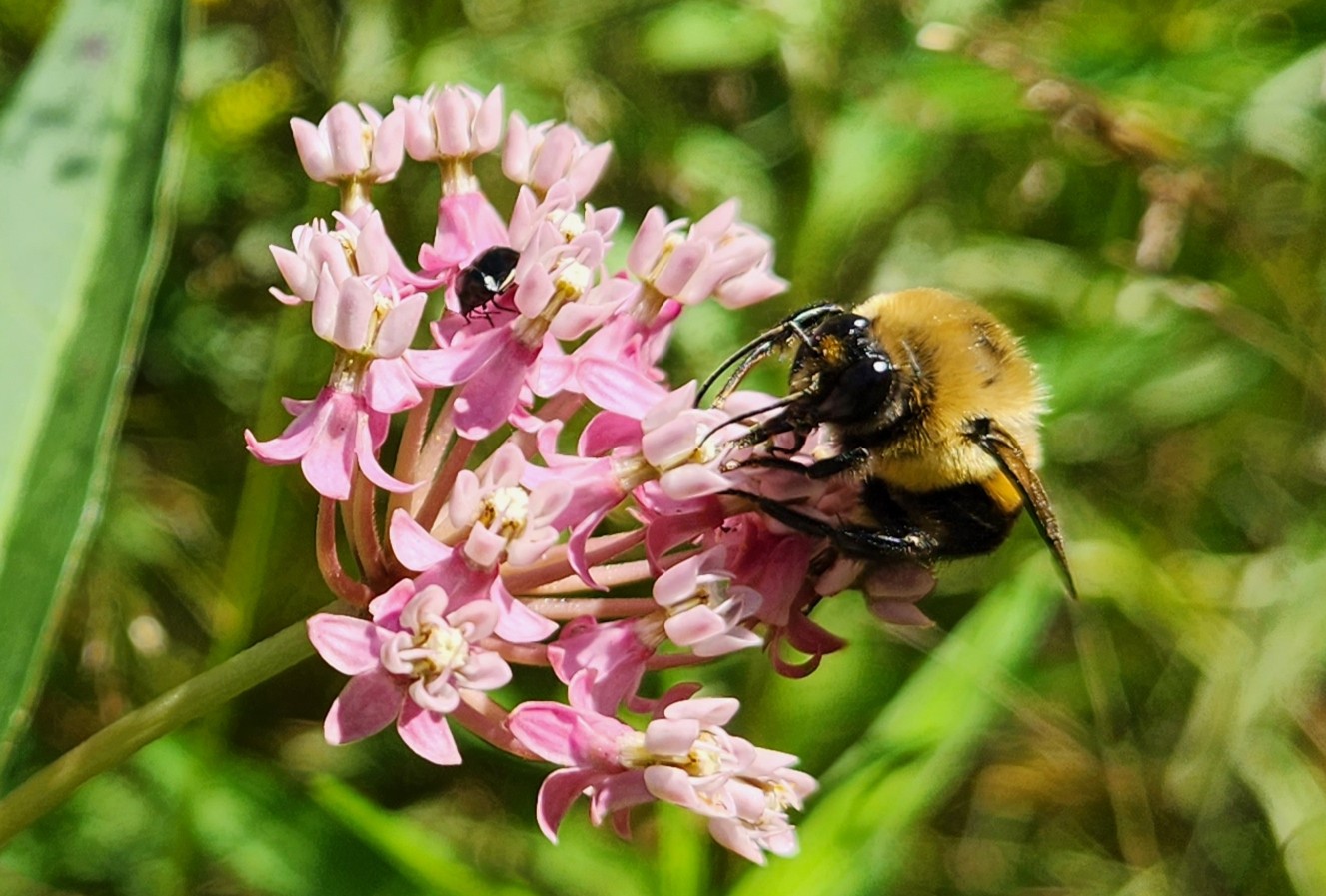
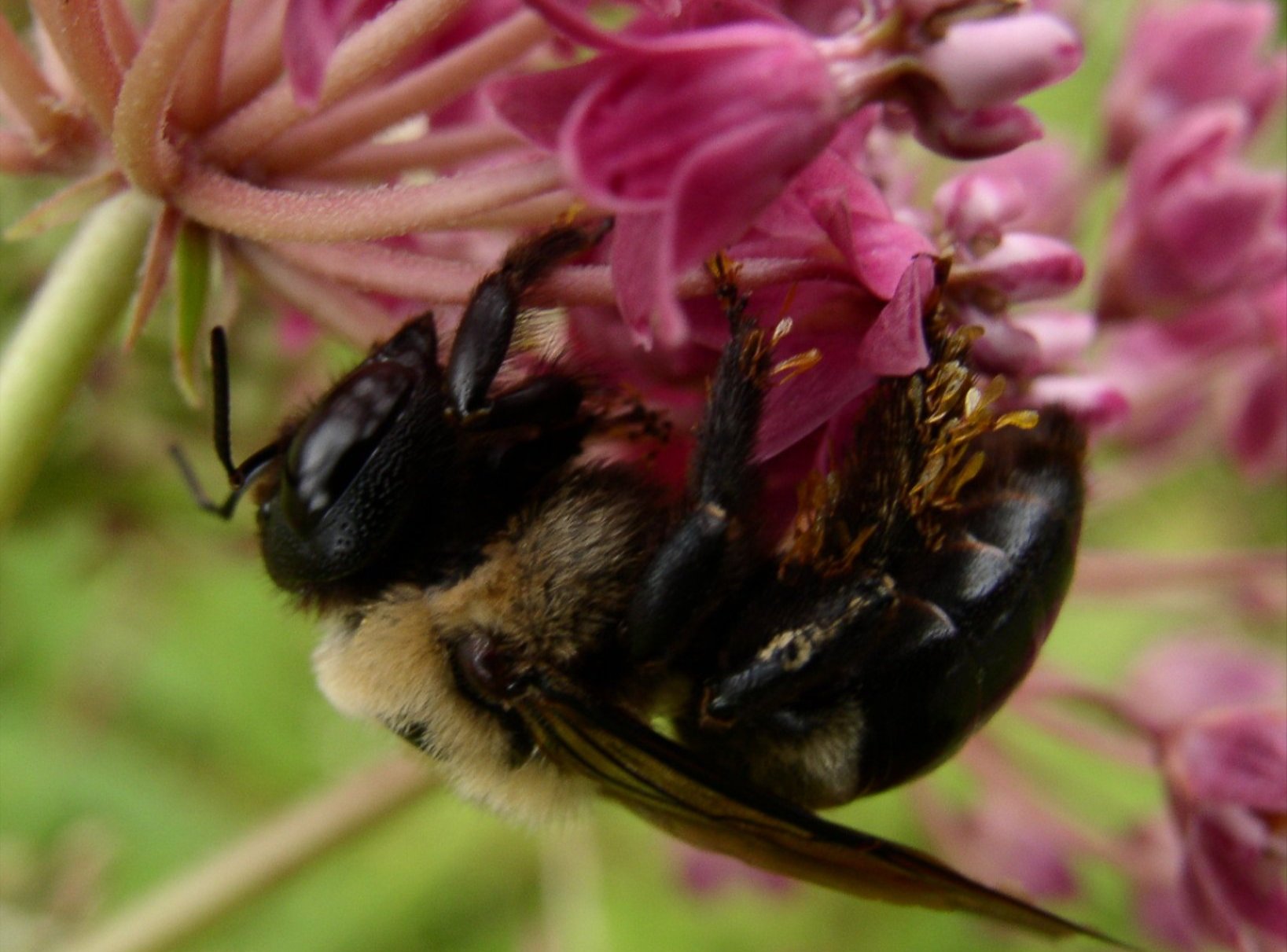
Milkweed is interesting because, unlike most flowers, the pollen of milkweed's pollen is sticky and in clusters called pollinia, which are designed to stick to an insect’s leg. They are held beneath a tiny slit between the anthers. When a nectar feeding insect’s leg slips into this opening and then pulls its leg out, the pollinia stick to it and then are transferred to the next milkweed flower. Some insects don’t have the strength to retrieve their leg and may end up leaving the leg behind or die stuck, but the carpenter bee is "strong like bull."
Since monarch butterflies are dependent on milkweed for their life cycle—no milkweed, no monarchs—that means monarchs need carpenter bees. If we want to see monarch butterflies, we need to accept the carpenter bee’s role in pollination.
So, what to do about carpenter bees if they have found your shed or deck or facia boards? Please don't reach for the pesticide can. You can fill the holes after the brood has emerged in late summer or early fall to keep them from overwintering in the tunnels. They don’t like the smell of citrus, so maybe apply citrus oil, or paint the wood, but please don't kill them. They've got important work to do. |
Above: Carpenter bee, Xylocopa virginica, carrying pollinia from milkweed flowers. Photo credit: Beatriz Moisset, CC BY-SA 4.0 via Wikimedia Commons |
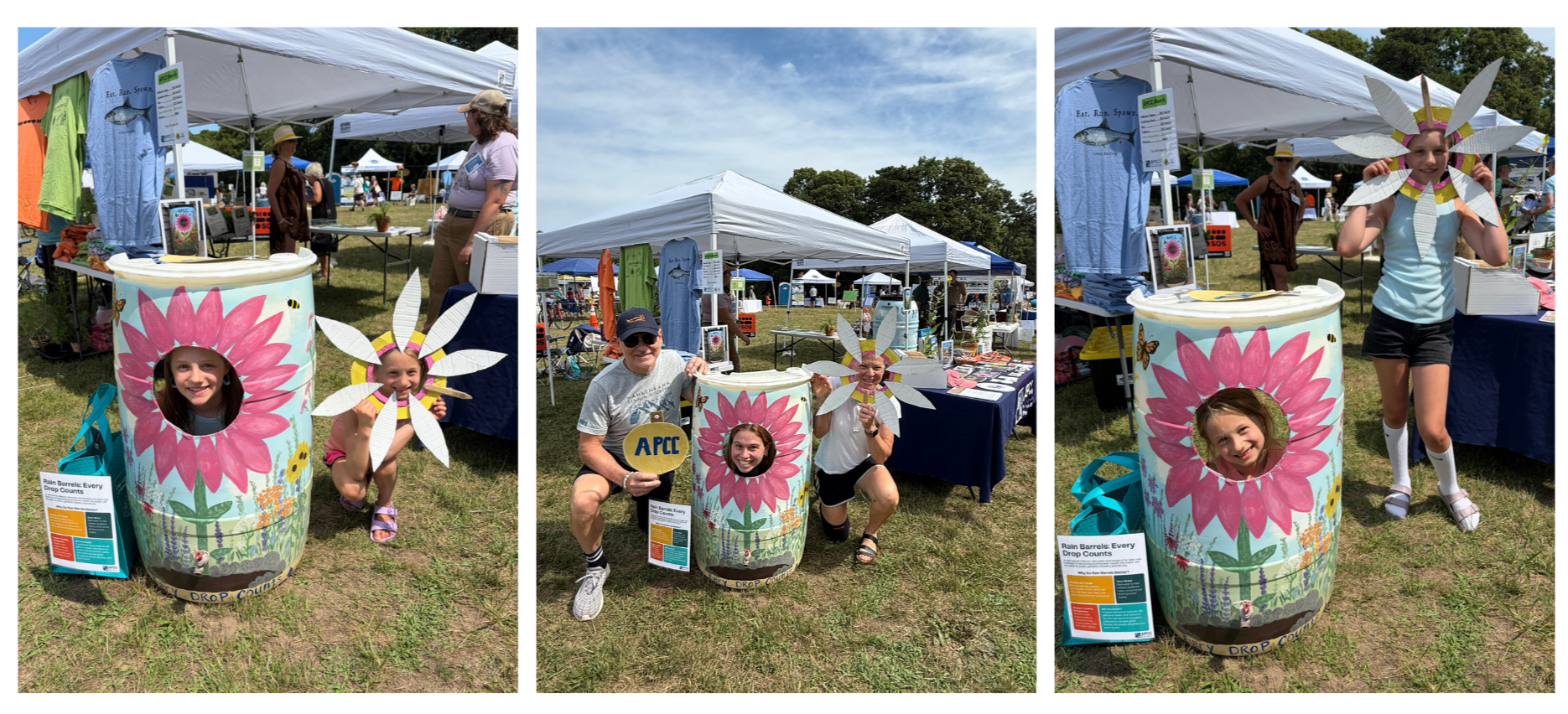
Above: APCC's photo booth in a rain barrel at Brewster Conservation Day, July 11, 2026 |
Brewster Conservation Day by Michaela Ocko, APCC communications intern |
Brewster Conservation Day (BCD) is a Cape-wide conservation event that takes place annually on the second Saturday in July. The event is full of joy, curiosity, and oysters, and is a great way to learn about conservation efforts on Cape Cod. This year’s theme was Conservation Begins at Home.
APCC was one of over 30 booths at the event. Each booth offered a unique way to learn about conservation, from educational displays and hands-on activities to temporary tattoos.
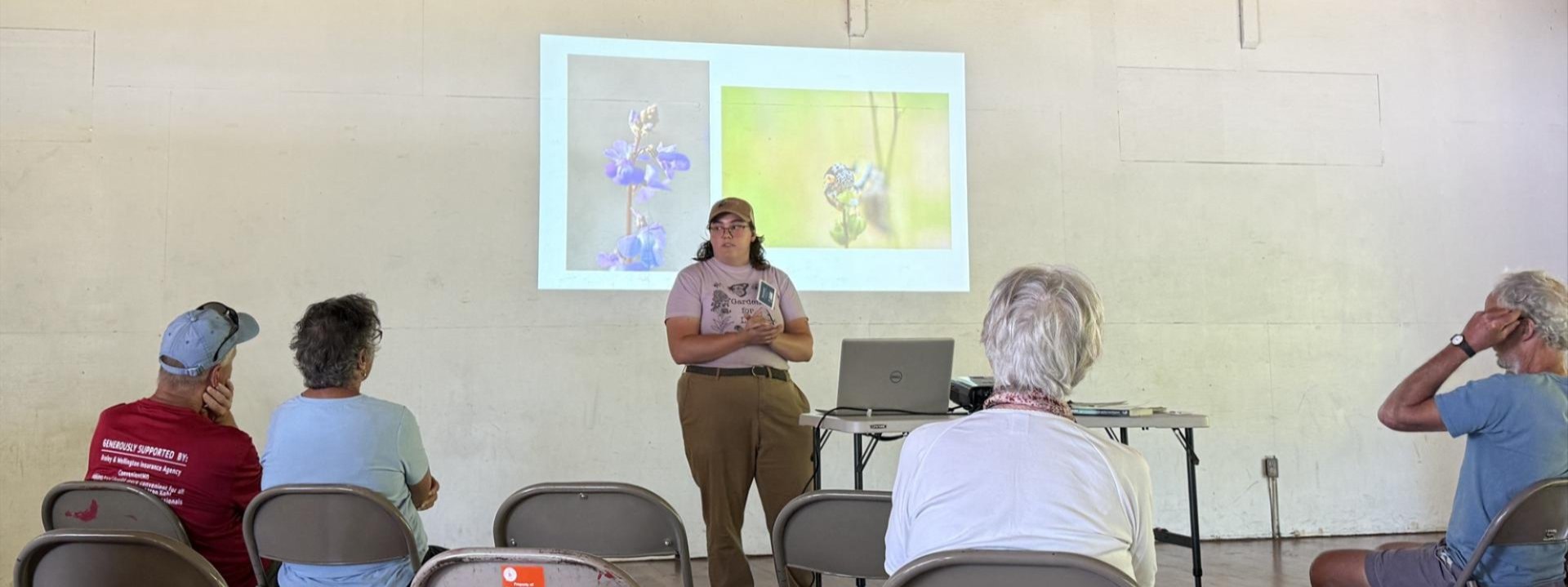
Attendees were also encouraged to listen to free presentations, one given by our very own Ecolandscape Program Coordinator Erin Camire. Erin’s talk, Every Garden Is A Home, highlighted simple yet critical steps that can be taken in our own gardens to create a safer and healthier environment for Cape Cod’s native species.
For our booth, we designed two rain barrels, one that we turned into a flower photo booth, and the other into a garden scene waiting to be colored in. Kids of all ages also enjoyed our board game focused on designing a Cape-friendly lawn, which included elements such as native plants, rain barrels, and a compost bin. These activities helped highlight small but effective changes that can be made at home, such as installing a rain barrel, creating a compost area, and planting a pollinator garden.
At the event, it was rewarding to watch children and adults alike interact with our creations while learning how simple actions at home can contribute to protecting Cape Cod’s environment. Children eagerly climbed into the rain barrel, posing with their faces framed by the flower design. I even convinced my parents to take a picture with me alongside it!
Brewster Conservation Day showed me just how important community events can be for environmental education and reinforced that protecting the Cape is truly a shared effort. |
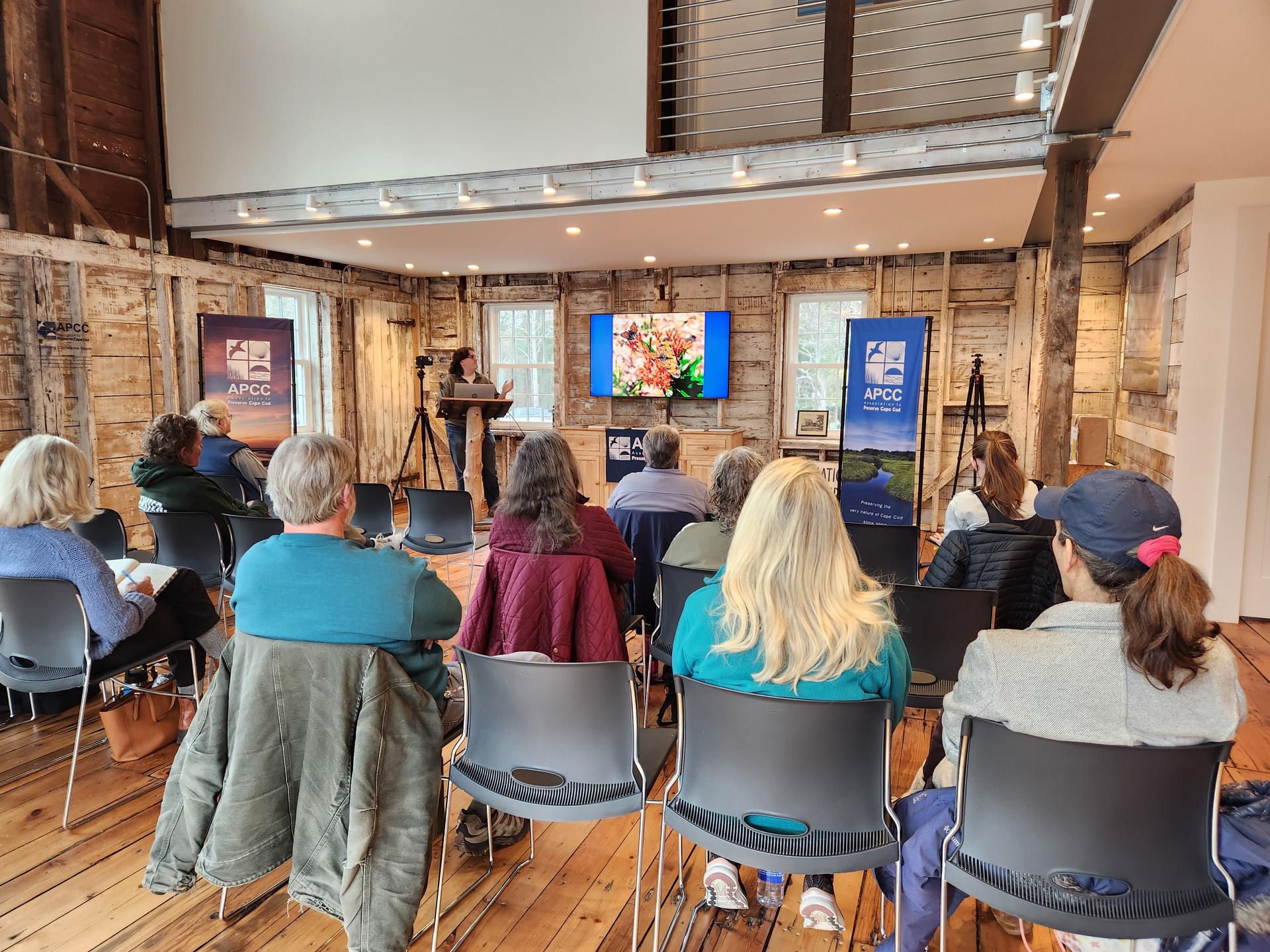
Above: Erin Camire, APCC ecolandscape program coordinator delivering a presentation at Brewster Conservation Day. |
|
|
|
|
APCC is proud to again participate in the Numbers for Nonprofits program for the Falmouth Road Race.
We have a team of five dedicated runners who are lacing up to support APCC’s work, and one of the team members is APCC Pond Technician May Lopopolo.
Help May and the team raise money to support APCC's work. CLICK HERE. |
|
|
|
Cape Cod Ponds Network Thursday, August 6th 6:00 - 8:00 p.m. |
|
|
|
|
Join us for an in-person meeting of the Cape Cod Ponds Network at the Cape Cod Museum of Natural History in Brewster. Our featured speaker will be Blair Nikula:
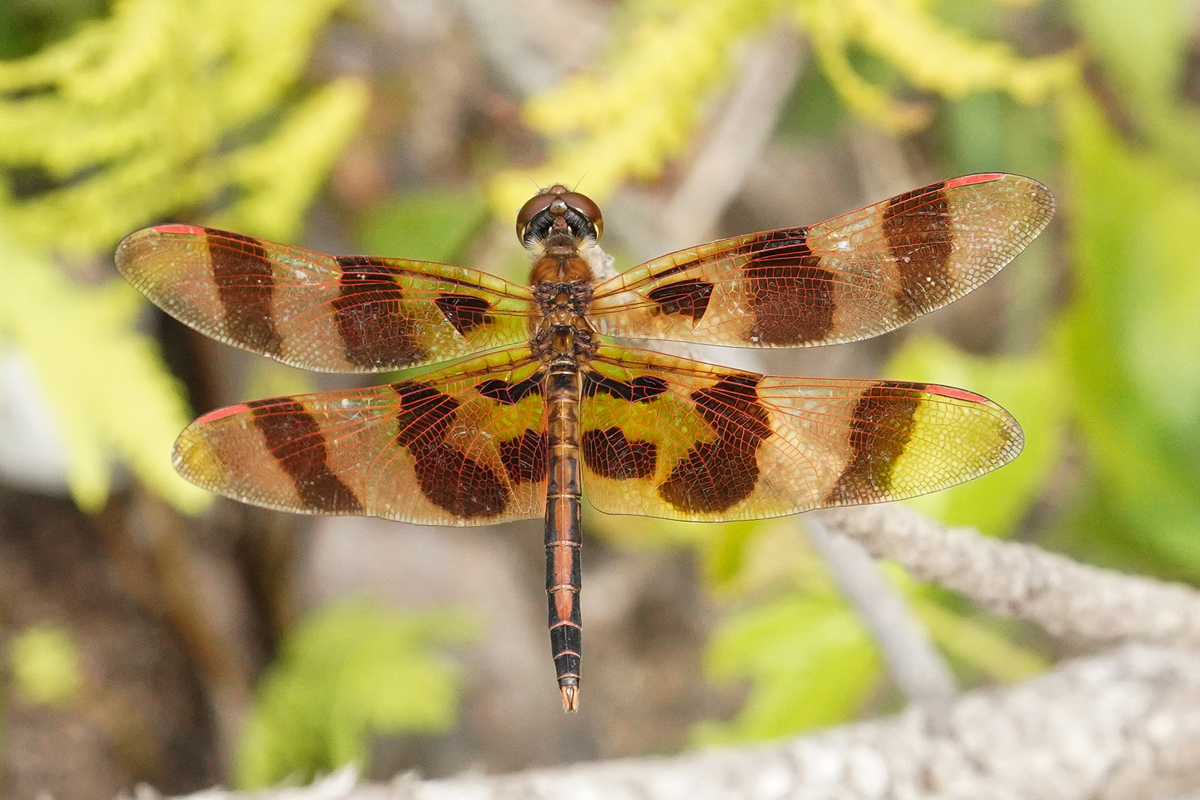
An Introduction to Cape Cod Dragonflies & Damselflies |
|
|
|
Blair Nikula has been studying and photographing dragonflies and damselflies for over three decades. He co-authored the Stokes’ Beginner’s Guide to Dragonflies and Damselflies as well as A Field Guide to the Dragonflies and Damselflies of Massachusetts, and formerly co-edited Ode News, a newsletter about the odonates of southern New England. A native Cape Codder and life-long birder, he is a former regional editor for American Birds (now North American Birds), a past-president of the Cape Cod Bird Club, a former associate member of the Massachusetts Natural Heritage & Endangered Species Program Advisory Committee, and has often served on the Mass Avian Records Committee. He maintains two websites: capecodbirds.org and odenews.org.
|
If you've not yet signed up to be part of the Cape Cod Ponds Network, click the button below to stay informed. |
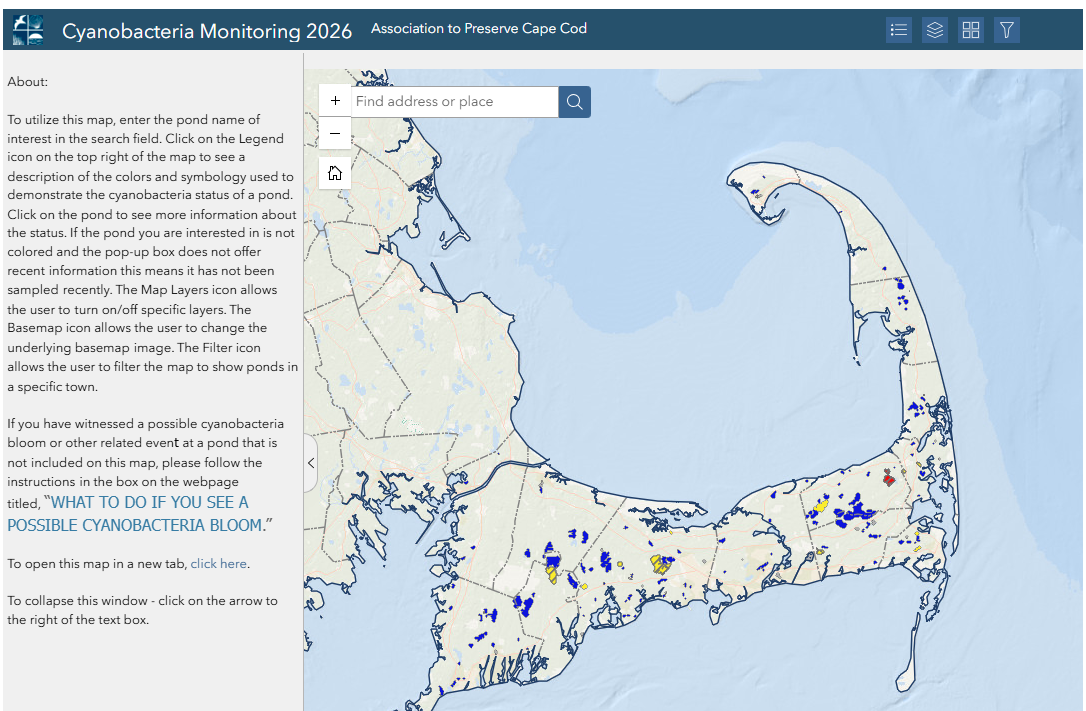
Cyanobacteria Monitoring Program 2026 |
If you notice pond water is scummy or discolored and may have a strong odor, avoid contact. If you see what you think might be a suspicious cyanobacteria bloom, notify your local health department and send a photo to cyano@apcc.org noting the location, day and time. If you wish to receive an email when we detect a cyanobacteria bloom, SIGN UP HERE.
Our interactive map will have our most up-to-date findings at APCC.org/cyano. |
|
|
|
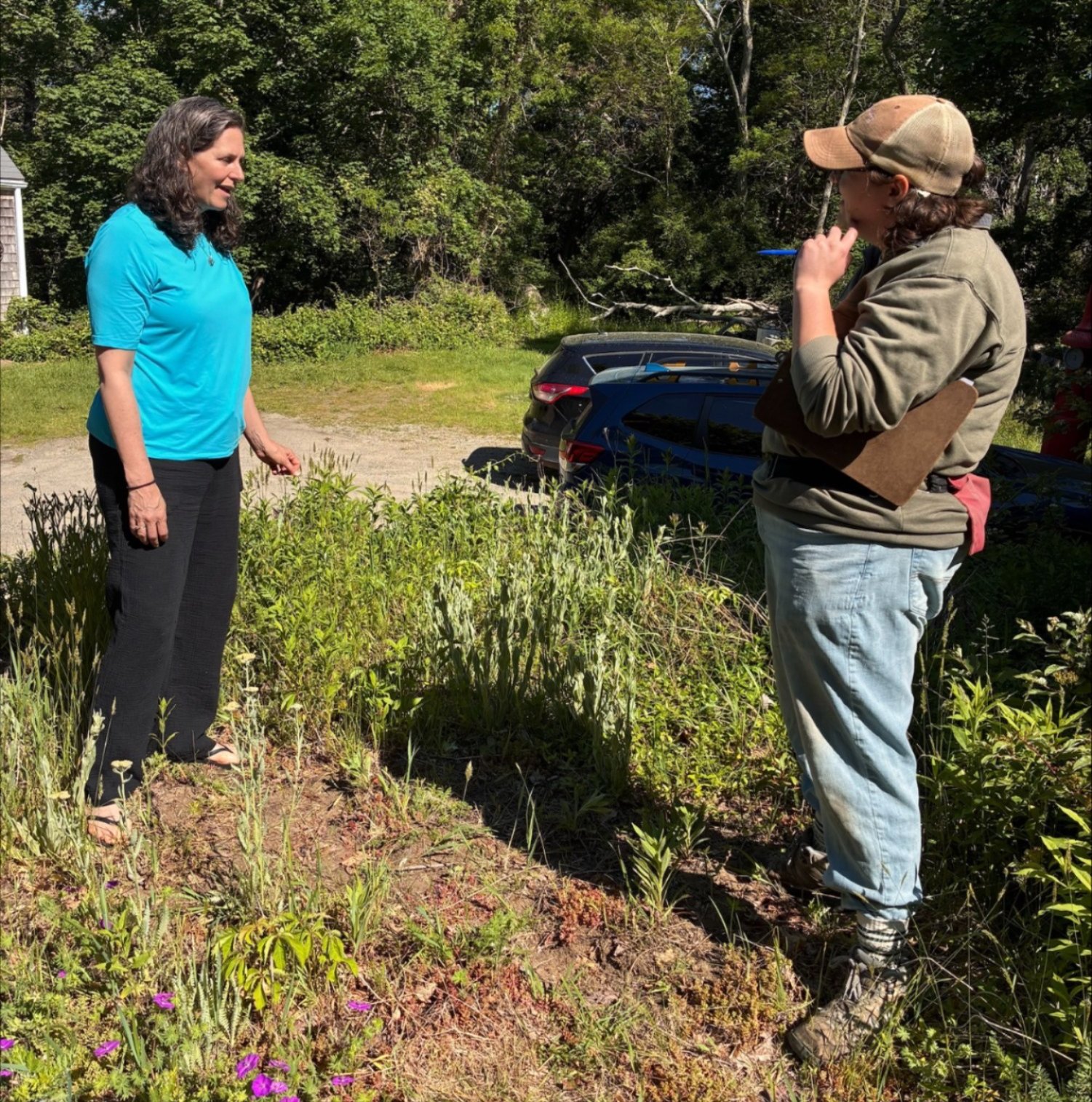
Above: Erin Camire, APCC ecolandscape program coordinator, meets with client. |
|
| |
|
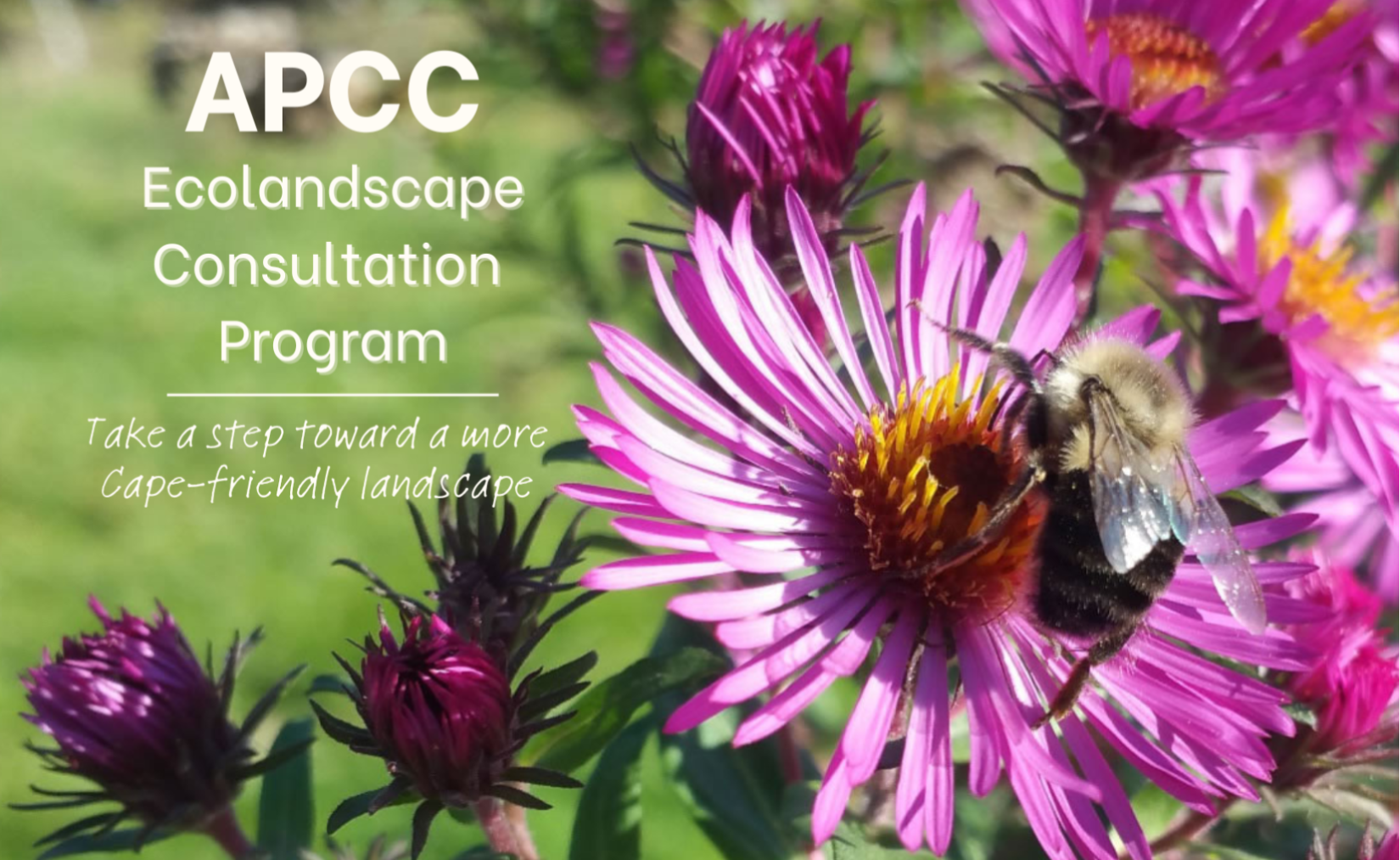
Ecolandscape Consultation Program Now booking appointments in August
If you want to make your yard friendlier to pollinators and wildlife, learn more about native plants and what will do well in your space. Learn about identifying and controlling invasive species and how to conserve water and protect the Cape’s water quality. We can help.
Fill out the form and Erin Camire, our ecolandscape program coordinator, will contact you via email to set up a day and time for the consultation at your residential property in any Cape town from Bourne to Provincetown.
The team will meet with you for an hour and a half, answer your questions, and send you a summary report. The fee is $350.
Read more here about the program and click on the "Get Started" button to schedule a consultation! |
Sign up to Volunteer with Team SOS here. Team SOS volunteers help distribute educational materials and work on town teams to support The Cape We Shape campaign efforts.
|
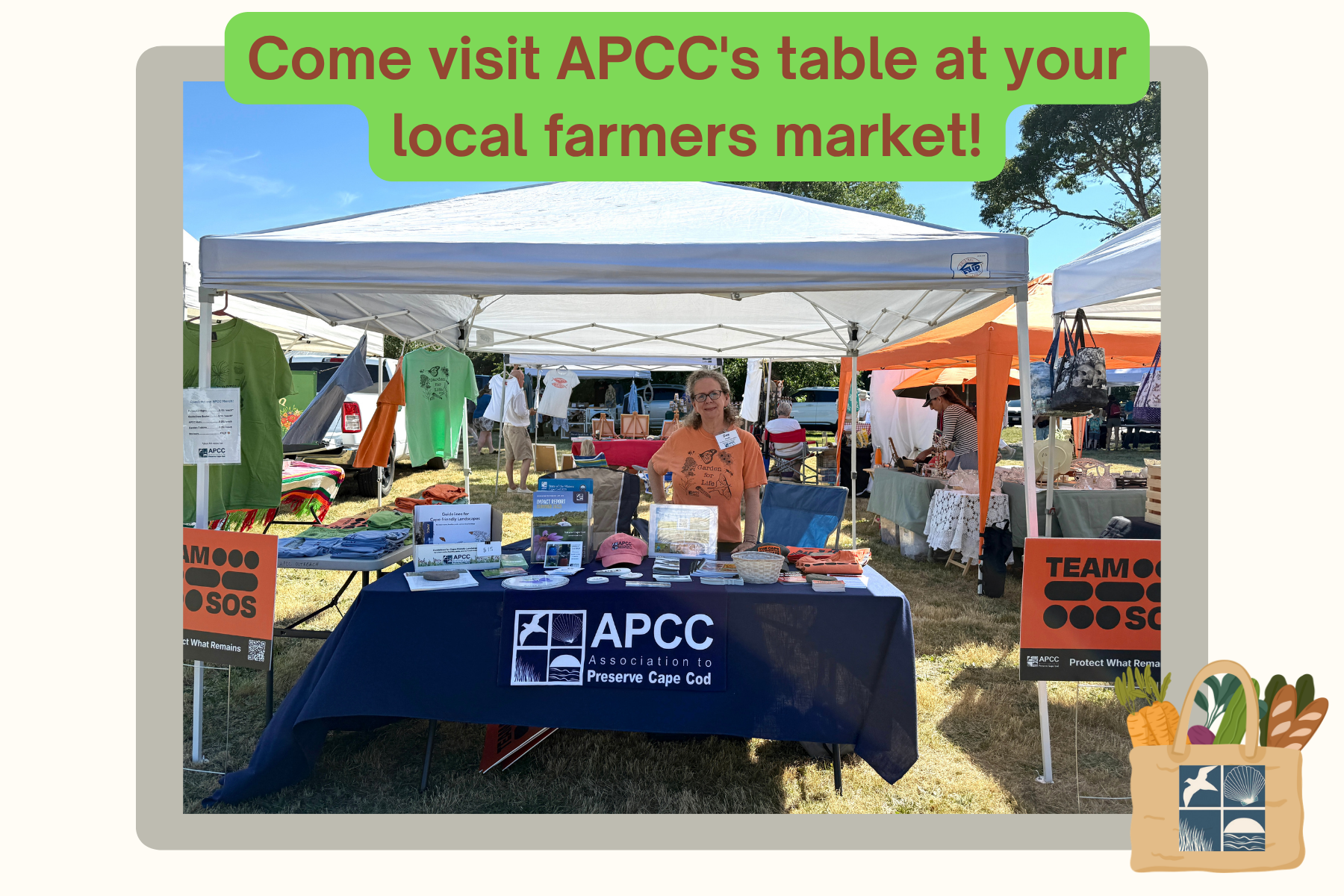
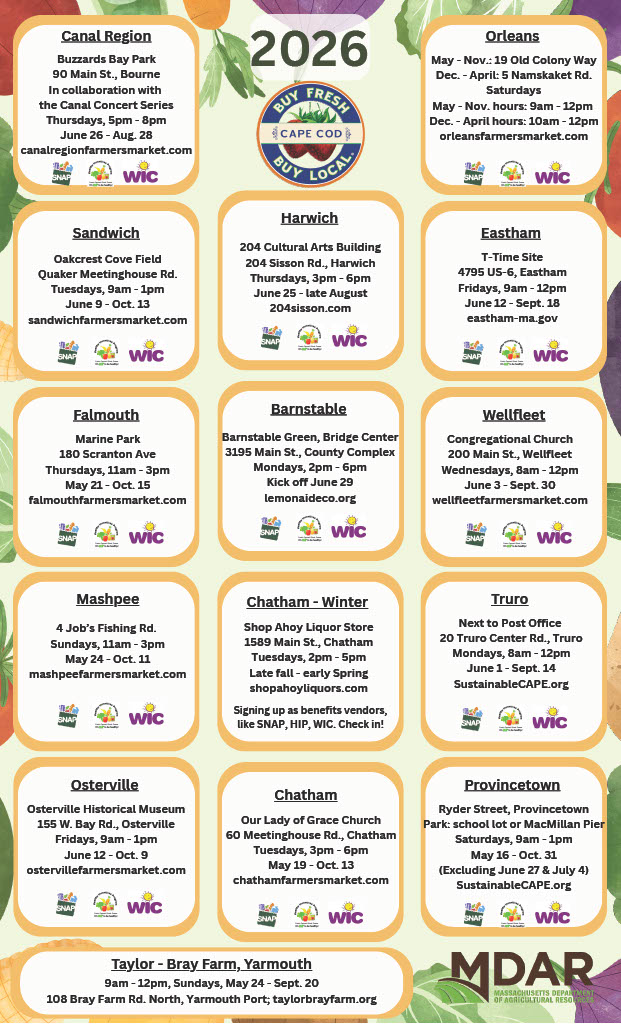
We are trying to be at as many farmers' markets as possible this season to talk about APCC programs, including The Cape We Shape. Below is a list of where and when you can support your local farmers. |
|
|
|
A Cape-wide Conservation Event Calendar |
The Compact of Cape Cod Conservation Trusts (“the Compact”) and its nonprofit members launched a new regional calendar of events. The Conservation Calendar includes programs across Cape Cod hosted by these groups. The goal of the calendar is to encourage visitors and residents to take part in nature and environmental events. You can always find the link to the calendar on APCC's website under News & Events.
|
If you are a farmer or someone who wants to grow native plants to sell, or you just want to be updated on the program's development, please submit the interest form that appears on our webpage. We will be sending periodic email notices of workshops and meetings.
Funding for the project is provided by Barnstable County and its Economic Development Council License Plate Grant Program through the Cape Cod Commission, the Kelley Foundation and private donors. |
Ten talks for prospective growers as part of the Cape Cod Native Plant Growers' Cooperative program have been presented thus far, with more scheduled in the upcoming weeks. These past workshops can be viewed here: |
A Cape Cod Native Plant-selector ~ to help you choose the perfect native plants for your garden. |
|
|
|
Email kandres@apcc.org and we'll send you a CapeCodNativePlants.org decal. |
|
|
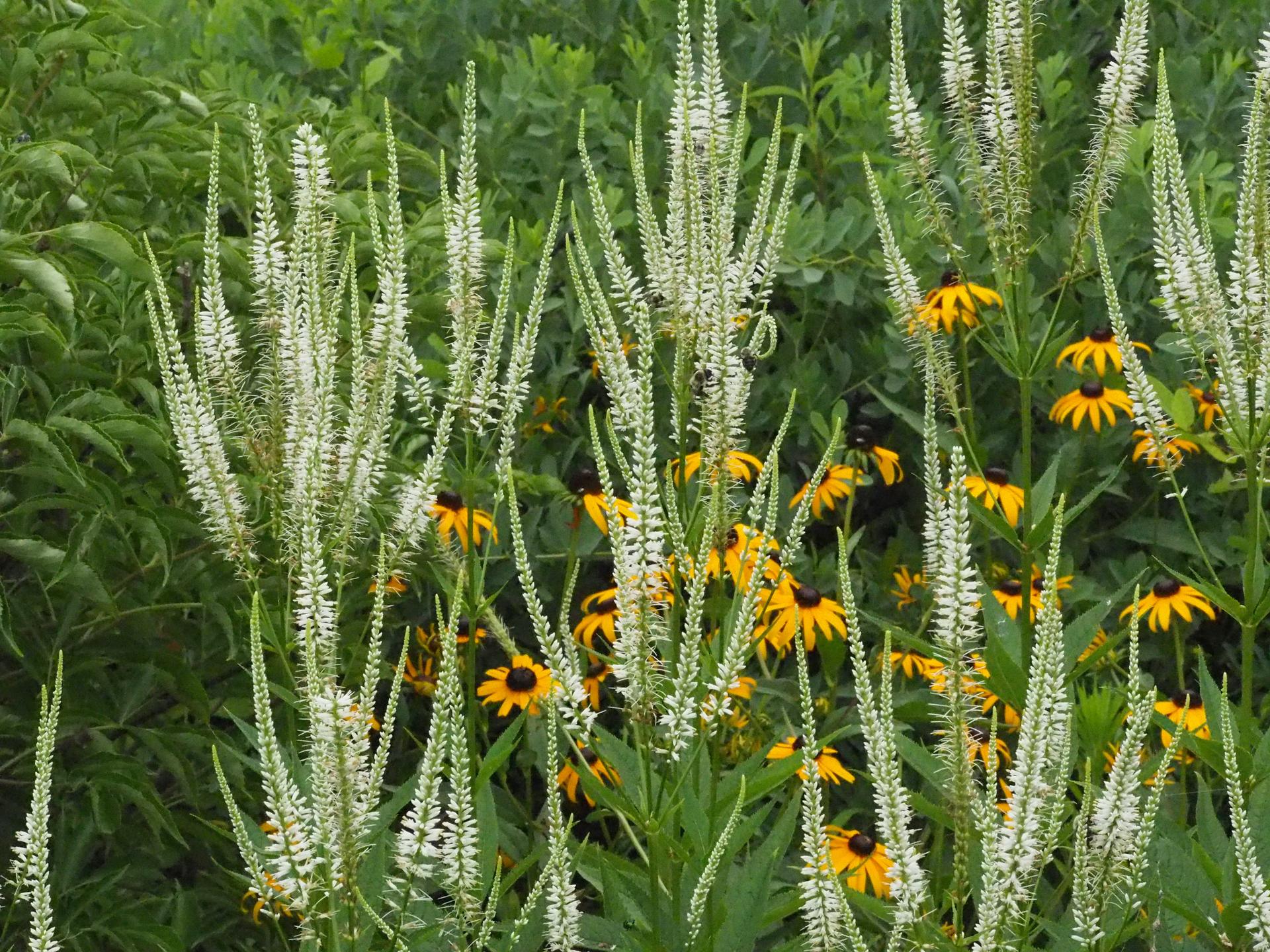
Culver's Root Veronicastrum virginicum |
|
|
|
The purpose of CapeCodNativePlants.org is to help native plant enthusiasts select the right plant for the right place. While not all native plants presented here are indigenous to Cape Cod, they are suitable native species for Cape gardens and managed landscapes.
Why Native Plants? Many native plants are drought tolerant, salt tolerant, and thrive in the “thin” soils found on Cape Cod. Native plants are as attractive as any plant, and are reflective of the Cape’s natural beauty. By planting native species appropriate for Cape Cod, you can conserve water, avoid pesticide and fertilizer use, and support pollinators and birds.
|
|
|
|
|
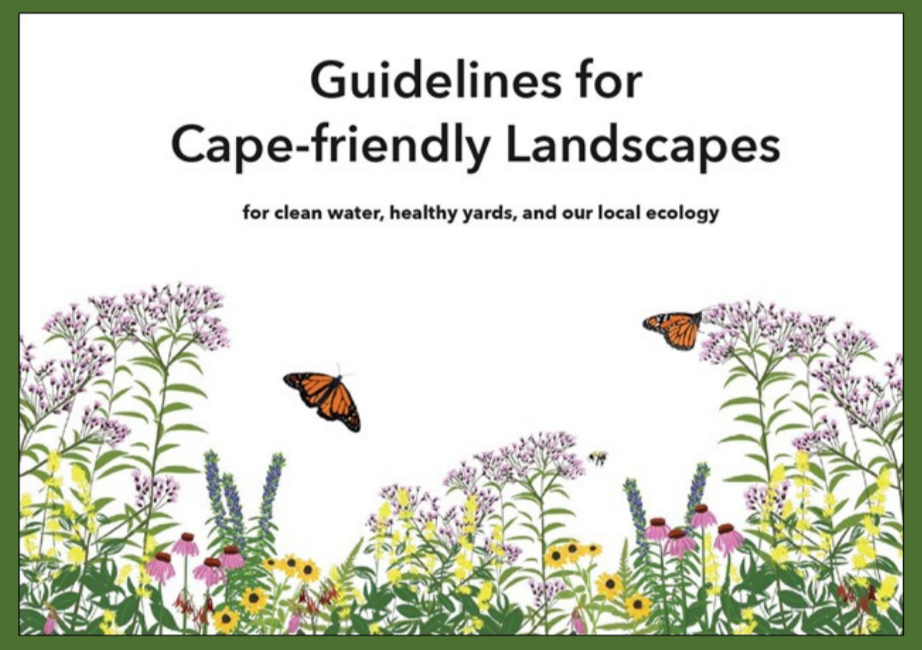
The Guidelines gives homeowners steps they can take in the design and maintenance of their properties that will support pollinators and birds, manage stormwater, conserve water, and protect the Cape's water quality. This 40-page booklet is beautifully illustrated by Marcy Ford with content that is easily digestible and supported by numerous resources for additional learning.
|
|
|
|
We are grateful for the several retail shops that are partnering with us to make this publication more widely available: Brewster Book Store, Birdwatchers General Store, Crocker Nurseries, Wellfleet Audubon Wildlife Sanctuary, Cape Abilities Farm, Cape Cod Museum of Natural History, the Cape Cod Lavender Farm, Heritage Museums and Gardens, Titcomb's Bookshop, Sea Howl Bookshop, Soares Flower Garden Nursery, Hyannis Country Garden, Orleans Whole Food Store, and Eight Cousins Bookshop.
Heard it makes a nice gift for a neighbor or for a housewarming or host(ess) gift!
If you are a retailer and would like to sell this publication at your store, please contact us. |
|
|
|
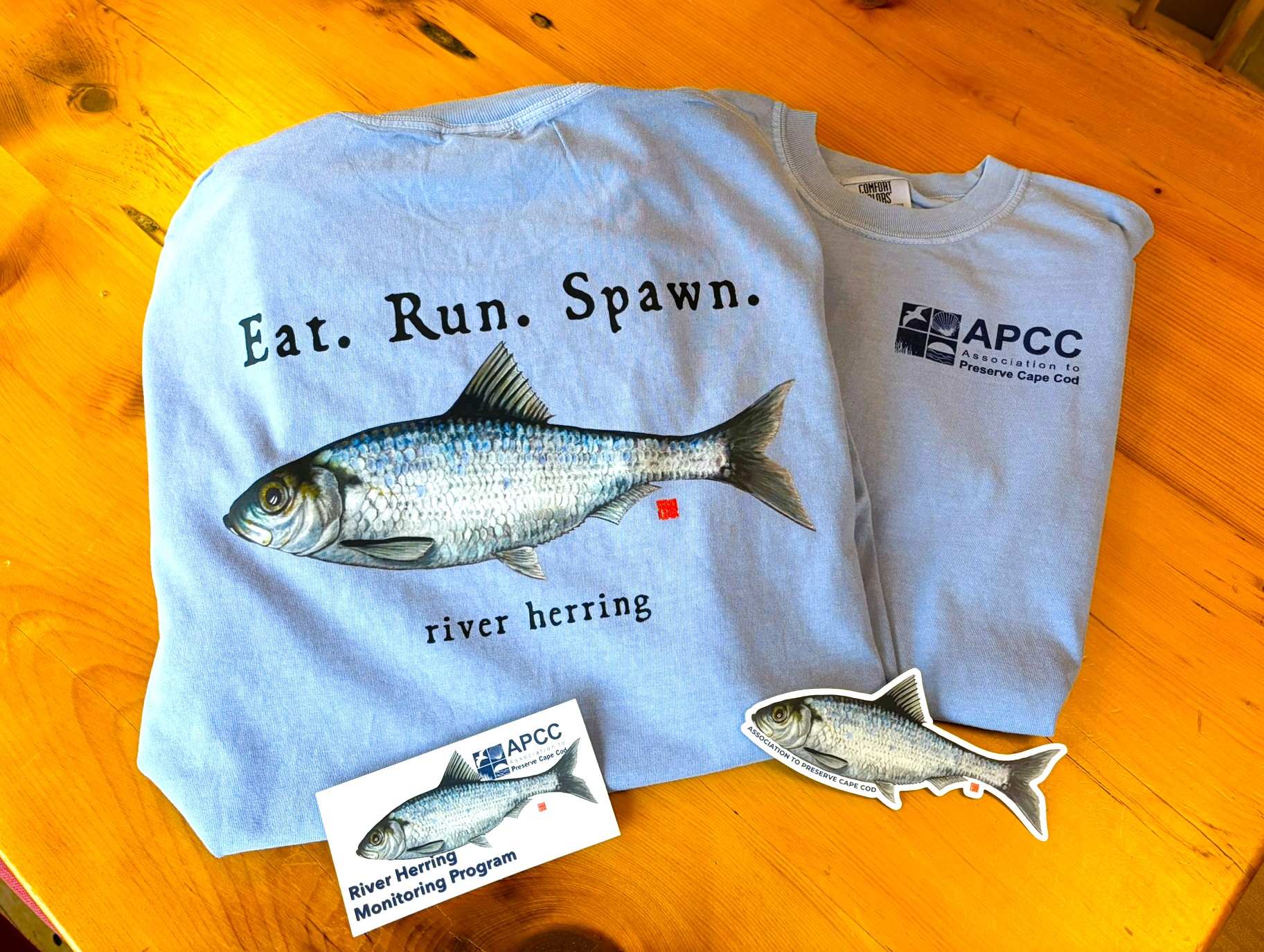
New Offering - Celebrate the Run! Herring T's
color denim blue $30 - includes USPS delivery in the U.S. |
|
|
|
Team SOS T-shirts $30 - includes USPS delivery in the U.S. |
|
| The Cape We Shape $30 - includes USPS delivery in the U.S. |
|
|
|
APCC caps $25 -includes USPS delivery in the U.S. |
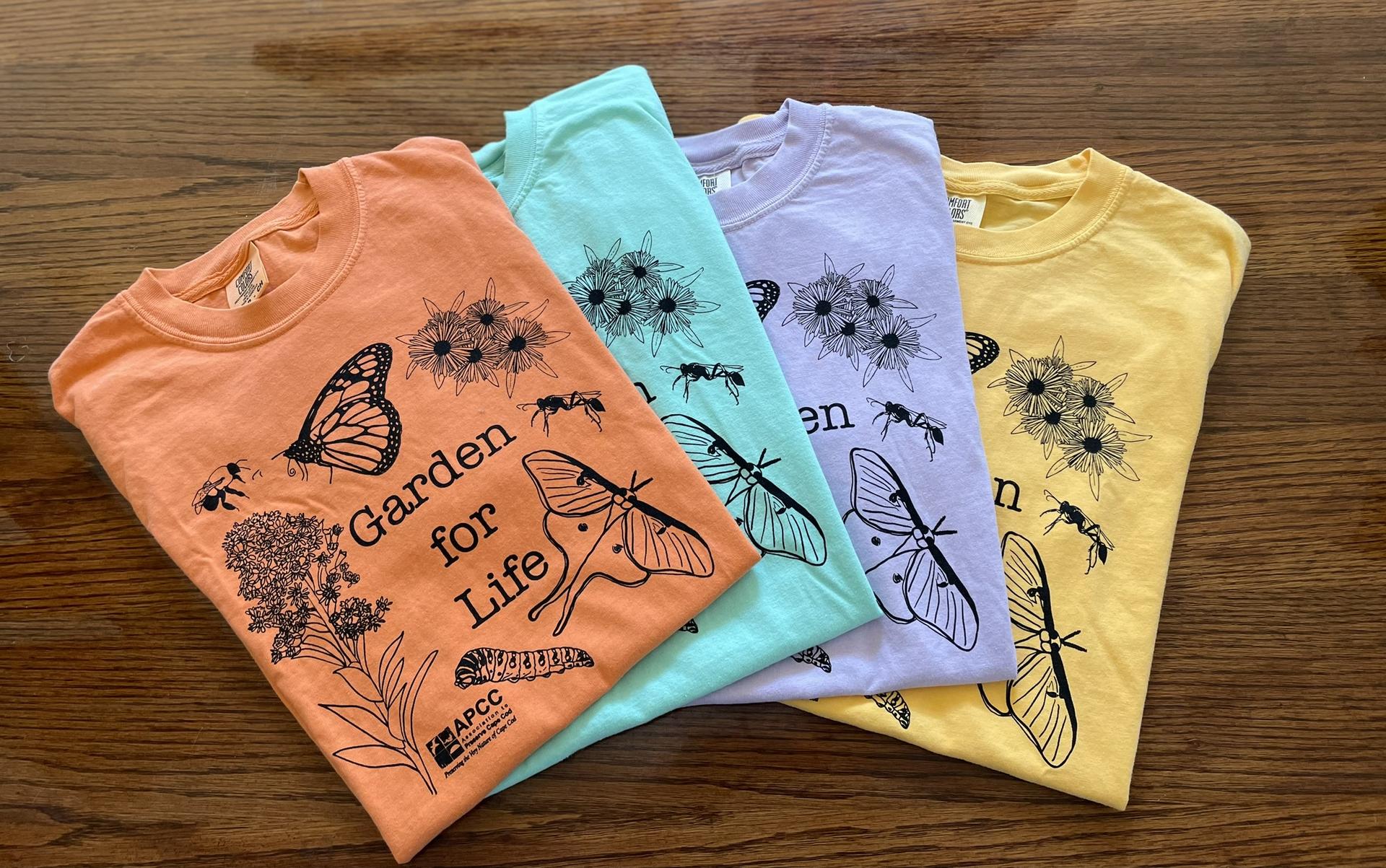
Garden for Life T's $30 -includes USPS delivery in U.S. |
|
|
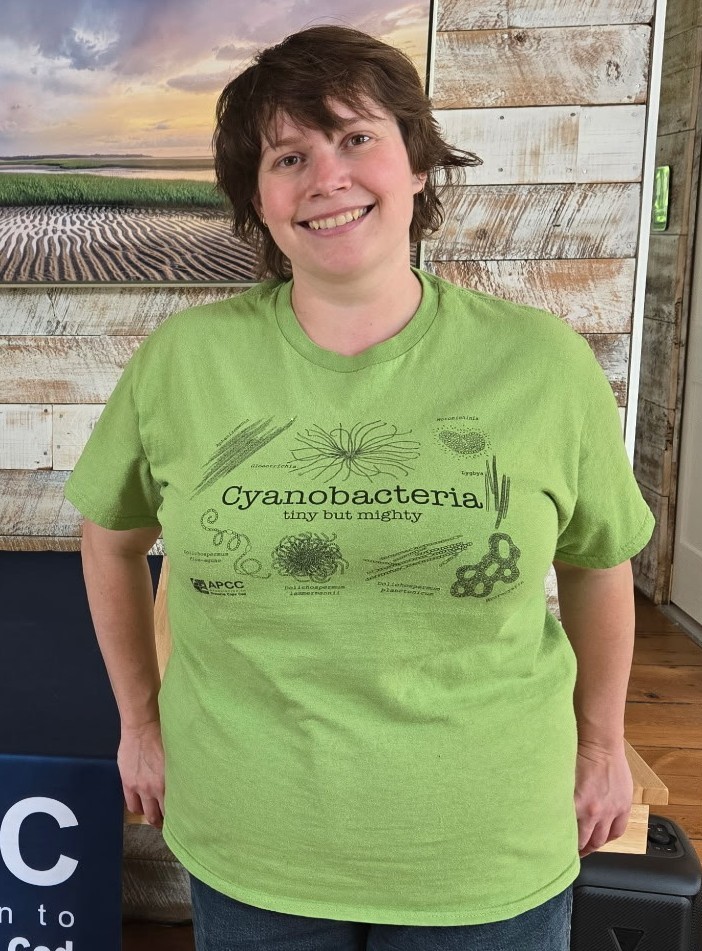
Cyanobacteria ~ tiny but mighty color kiwi $30 -includes USPS delivery in the U.S. |
|
|
|
| APCC eNewsletters
Our weekly newsletters are archived on our website and easily shared.
You can find past newsletters and share with your friends. Encourage others to sign up for future enewsletters HERE.
|
|
|
|
Are you thinking of going solar? We hope so! In partnership with E2 SOLAR in Dennis, APCC receives $500 for every solar installation when APCC is named as referral. |
|
|
|
| Thank you to the homeowners who just contracted to install solar panels through E2 Solar. May the sun always shine for you! |
|
|
|
Expressions Gallery, 578 Main Street, Chatham
CLICK HERE |
Expressions Gallery donates 20 percent of its profits to APCC's work. |
|
|
|
Thank you to our business sponsors! |
|
|
|
APCC is rated four stars by Charity Navigator,
2026 Platinum by Candid (formerly Guidestar). |
|
|
|
Our Contact Information
*{{Organization Name}}*
*{{Organization Address}}*
*{{Organization Phone}}*
*{{Organization Website}}*
*{{Unsubscribe}}* |
|
| |
|
|