Association to Preserve Cape Cod |
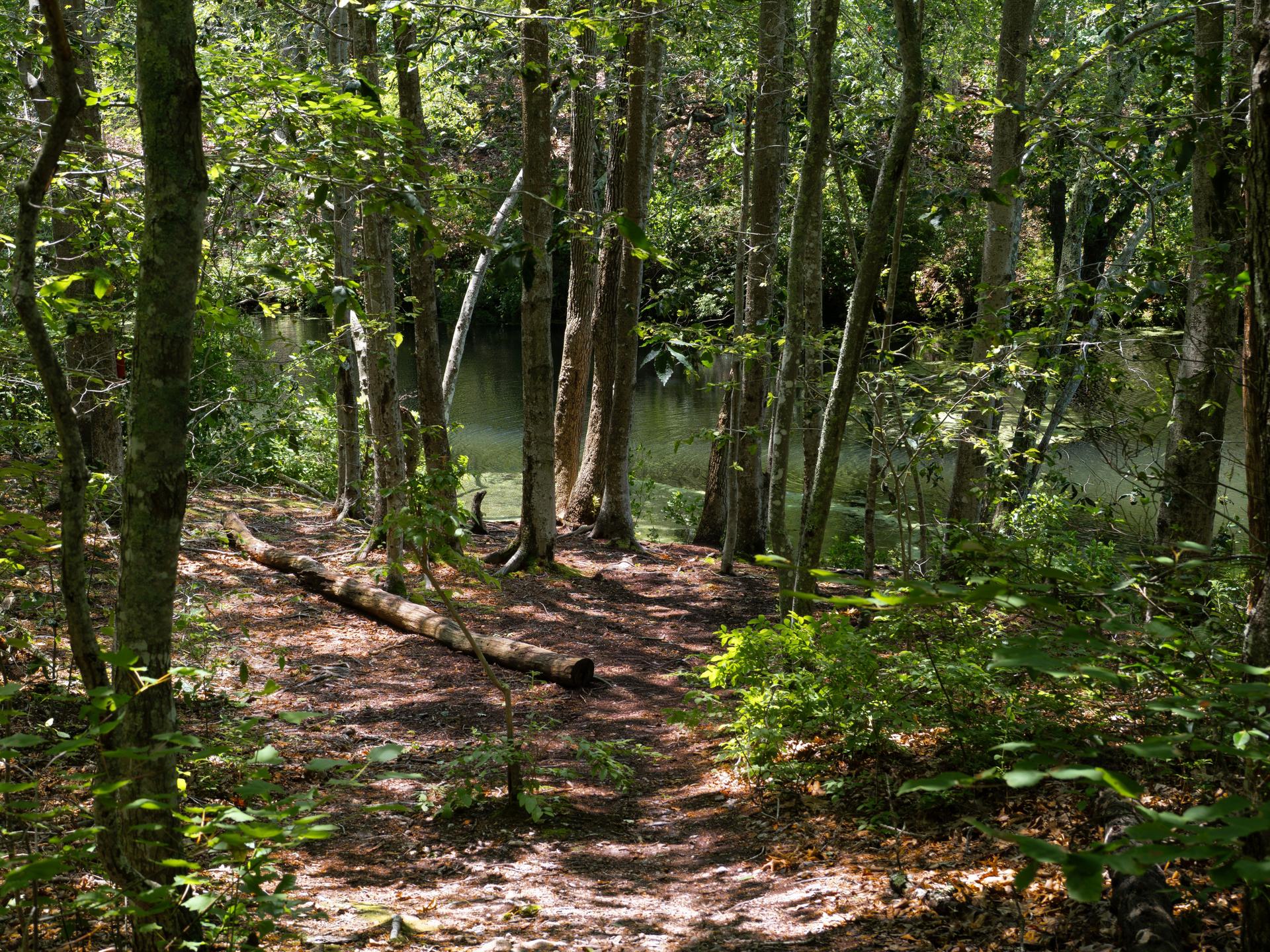
Above: Shawmee-Crowell State Forest, Sandwich. Photo by Sue Machie. |
|
|
|
| A Cautionary Tale by Andrew Gottlieb, Executive Director |
Simplicity has an allure. When faced with complex topics, a degree of uncertainty and nuance, many people want direct guidance on whether something is safe or dangerous, right or wrong, good or bad. In reality, few things lend themselves to clear lines of demarcation and require some research, thought and contemplation to understand. The degree of threat posed by the presence of cyanobacteria in our ponds is a prime example of the hazards of relying on a public information system that conveys that things are either wonderful or horrible.
|
|
|
|
The Massachusetts Department of Public Health (MDPH) has standards that it relies upon to advise local health agents seeking their advice. Those standards essentially have three triggers that warrant an alert about potentially toxic cyanobacteria blooms: a measured cell count of more that 70,000 cyanobacteria cells in a given sample, a measured toxin level that exceeds MDPH guidelines of 8 ug/l for microcystin and 60 ug/l for anatoxin, and/or a significant visible scum layer. Absent any of those standards being tripped, there is no basis for exercising caution in the MDPH framework; there is either a problem or there is not.
Easy, right? No, not really. Just ask the woman whose dog is suspected of dying from exposure to cyanobacteria in the Charles River a few weeks ago what she thinks. Not seeing the Charles River on the MDPH list of waters restricted by cyanobacteria levels, she allowed her dog to swim in the Charles west of the metropolitan Boston area. Due to a lack of routine monitoring and a warning system that is binary, this informed consumer of information did not have any indication that caution was warranted.
APCC’s system of routine monitoring of roughly 150 ponds, and our reporting of results using three tiers: Acceptable, Restriction Warranted and Potential for Concern, provides nuance missing in the statewide approach. Our intent behind having the additional category of Potential for Concern is based on our understanding that cyanobacteria populations are dynamic and that there are indicators that a surge in cyanobacteria density may result a full bloom—information the public should be given.
To be clear, our Potential for Concern category is not a public health advisory restricting access (those can only be issued by towns or MDPH); it is a flag that potential users of a pond may wish to exercise caution and use their judgement in deciding if using a pond is appropriate for them and their pets. APCC's website provides a lot of detailed information to help people make informed decisions about freshwater recreation. As much as many in the regulatory business want to be able to provide definitive guidance to the public on cyanobacteria conditions, the behavior of cyanobacteria and the current limitations on constant and real time monitoring remain obstacles yet to be overcome.
APCC’s practice has been, and will continue to be, to provide information that accounts for the uncertainty and nuance inherent in dealing with cyanobacteria to the public for use in individual decision making. We believe that our current approach strikes the right balance, reflecting local authority to make public health determinations (those official warnings are always on our map) while alerting people to use caution when conditions indicate that a bloom of concern could be on the horizon.
While no system is foolproof, I am guessing that the people with dogs in the Charles River area wish that a system like ours was more widely available. |
Ecosystem Restoration Program |
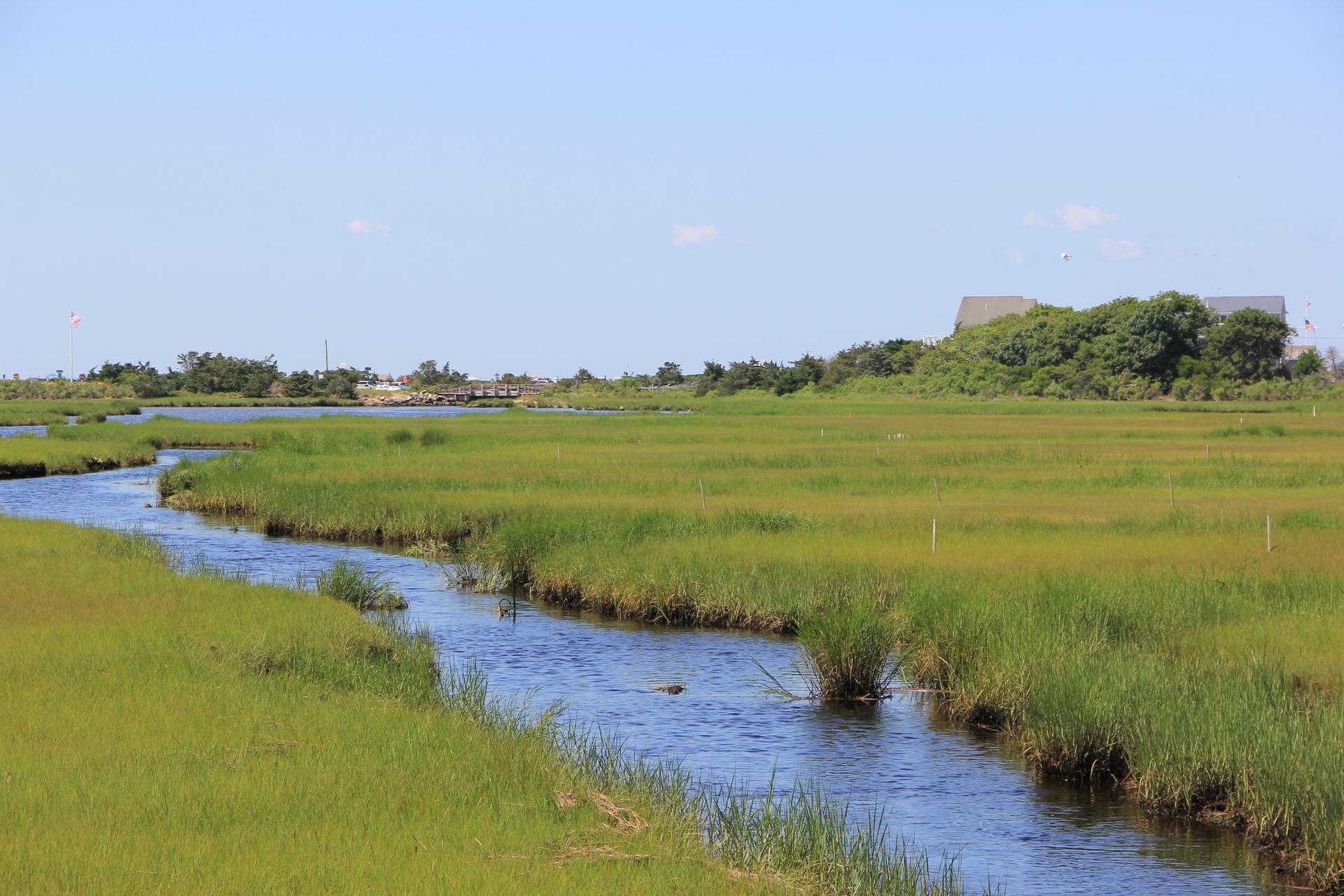
Above: View of Weir Creek salt marsh from Lower County Road, Dennis. |
APCC Leads Partners on Field Trip at Weir Creek Salt Marsh |
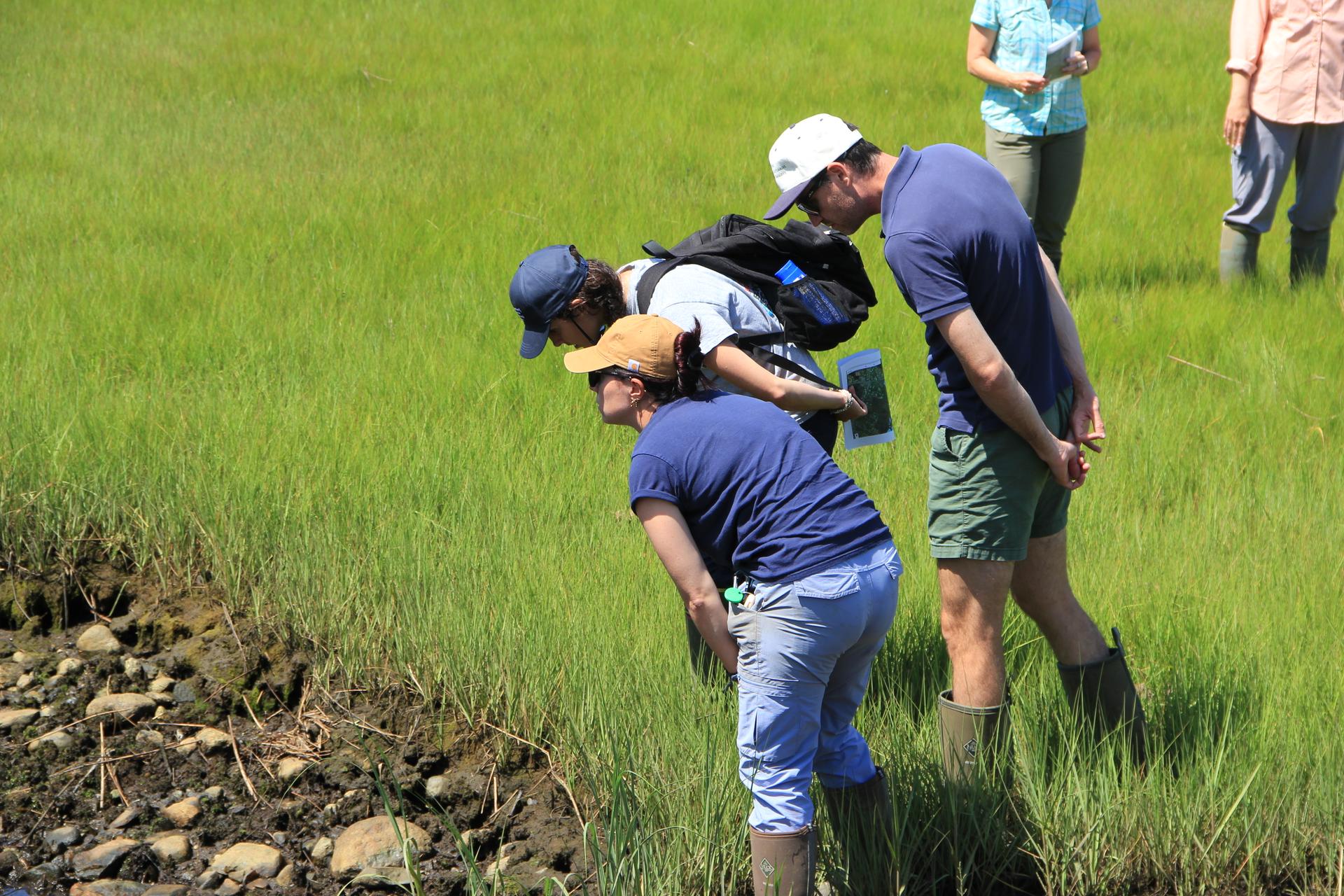
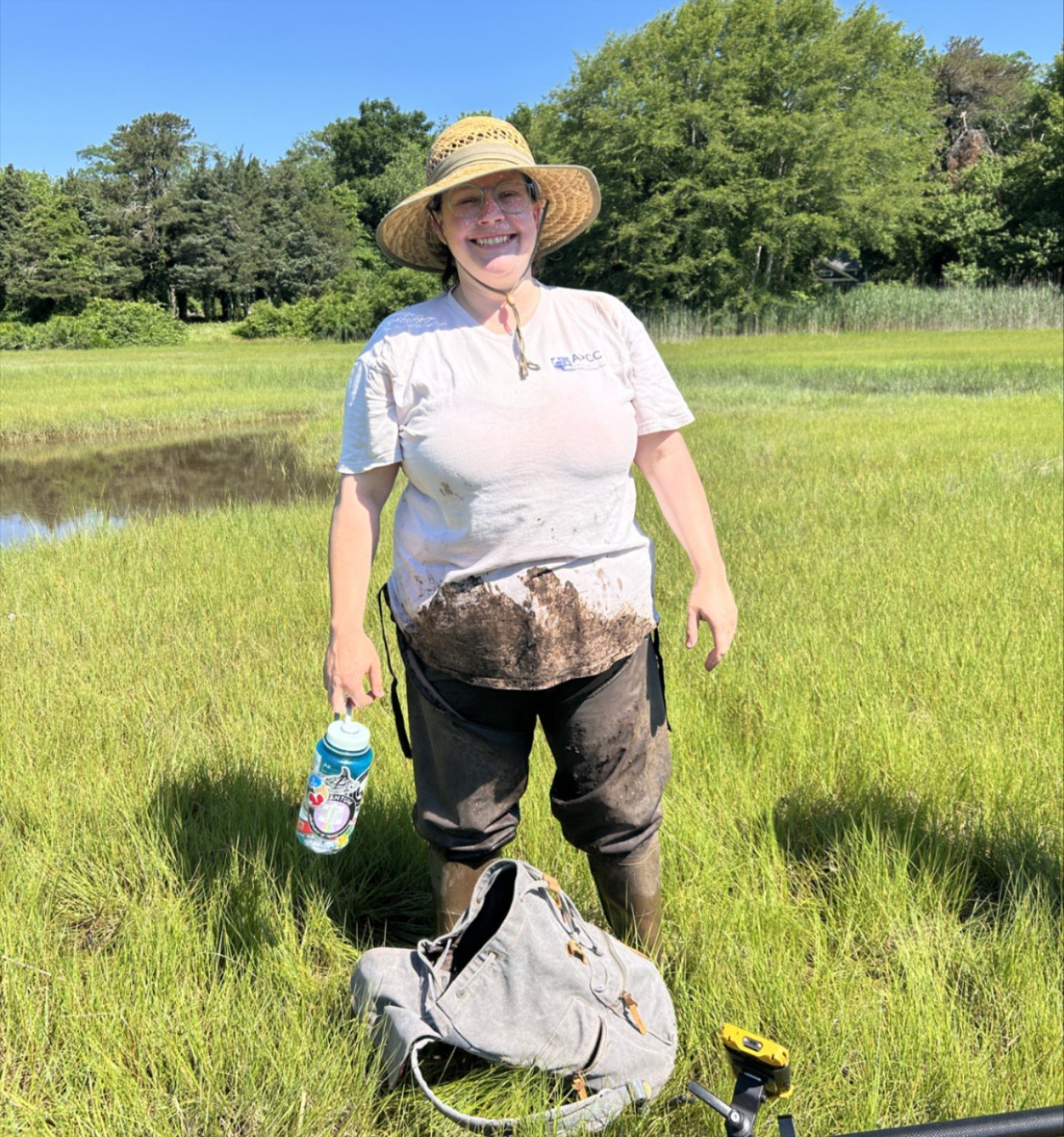
APCC staff recently led partners from the Cape and Islands Restoration Action Team (CIRATs) on a field trip at Weir Creek salt marsh in Dennis. Organized by Mass Audubon, CIRATs fosters collaboration and resource sharing among organizations working in salt marshes across Cape Cod, Nantucket, and Martha’s Vineyard. In lieu of holding a virtual meeting in July, CIRAT members joined APCC staff Jordan Mora, lead ecologist, Molly Autery, salt marsh specialist, and Ryan Weinsier, restoration intern, at Weir Creek for a tour of the ongoing restoration planning and monitoring effort.
The CIRATs visited the two existing culverts under Lower County Road and several monitoring locations where APCC collects data on marsh vegetation, hydrology, and sediment. Jordan and Molly described their experience with the permitting process, how APCC uses monitoring data to inform restoration design, and community outreach efforts. Staff also collected feedback on metrics for assessing restoration success and adaptive management.
|
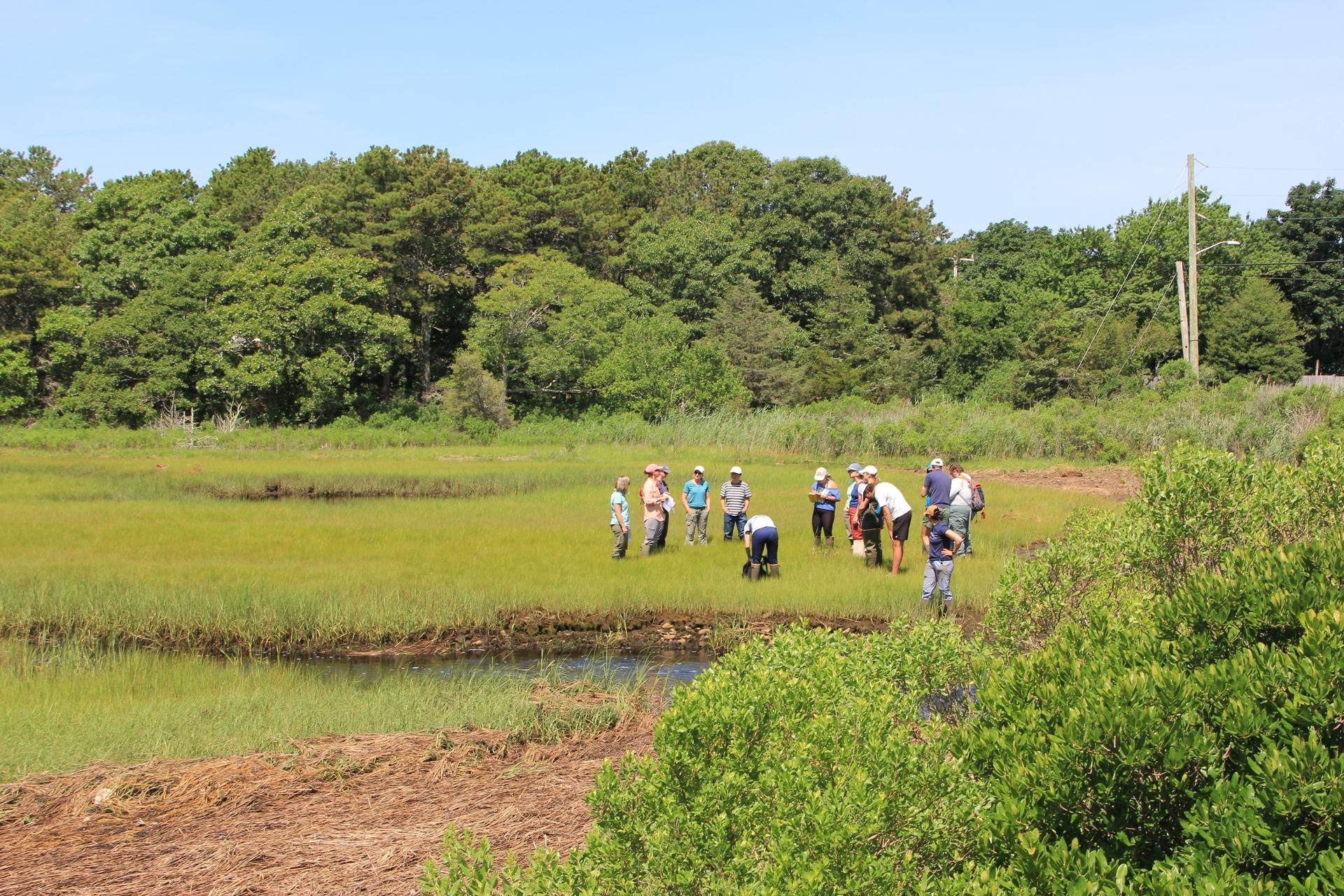
Above: The CIRATs in the marsh at Weir Creek; attendees observe the undersized culvert and vibrant salt marsh grasses while Jordan discusses monitoring and permitting progress. |
Groups like CIRATs bring together experts in salt marsh monitoring, permitting, and research, providing a valuable opportunity for APCC to learn from our peers about their restoration experiences. CIRATs and similar initiatives enhance ecosystem restoration and conservation efforts across Cape Cod and the region. The Weir Creek salt marsh restoration project is managed by APCC in collaboration with the town of Dennis, Tighe & Bond, Woods Hole Group, the USDA Natural Resources Conservation Service, the Cape Cod Conservation District, Friends of Bass River, the Cape Cod Mosquito Control Project, the Dennis Conservation Land Trust, and the Cape Cod Commission.
Funding for this project has been provided by the Cape Cod Conservation District, the National Fish and Wildlife Foundation National Coastal Resilience Fund, the Southeast New England Program Watershed Implementation Grants, the NOAA Restoration Center, U.S. Department of Commerce Transformational Habitat Restoration Grant, the town of Dennis, and a private foundation. |
|
|
|
Above: CIRATs members observe marsh areas along the creek edge. |
|
|
|
A Fond Fare Thee Well to Lynn Francis |
After four years with APCC, Lynn Francis is preparing for her next adventure: graduate school in the Netherlands.
Lynn, who has been APCC's Pond and Cyanobacteria Operations Manager, is traveling to Utrecht University to pursue the Earth Surface and Water Program. The program combines the study of natural water systems with human influence, much like the work she has completed at APCC.
Before joining APCC, Lynn explored several different careers, including chemistry and pharmacy, before rediscovering her interest in environmental science. She has now become an integral part of the cyanobacteria team at APCC. Along the way, she found more than just a career. “APCC definitely opened me up… allowed me to ask the questions, be able to think critically, be able to… find my people.”
One of the aspects of APCC that Lynn values most is the collaborative team environment. Staff from every department and level are encouraged to share ideas, ask questions, and learn from each other.
No individual can do all of the work, “you are part of the team.”
While she is excited for the opportunity to travel and study abroad, Cape Cod will always remain close to her heart. “This is where my home is,” said Lynn.
As she begins her next chapter abroad, APCC thanks Lynn for her dedication and contributions to her team and helping to protect Cape Cod’s natural resources. We wish her the best of luck in her graduate studies and look forward to all that she will accomplish! |
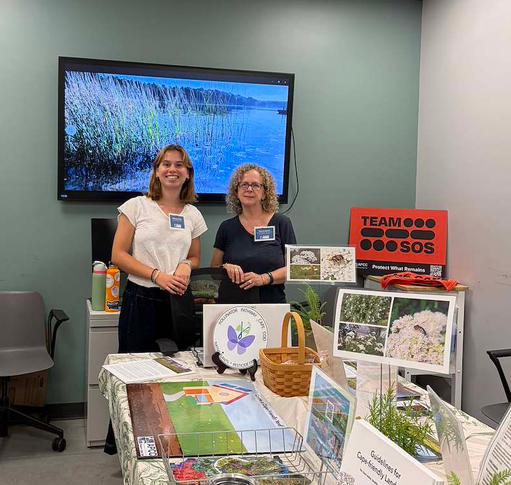
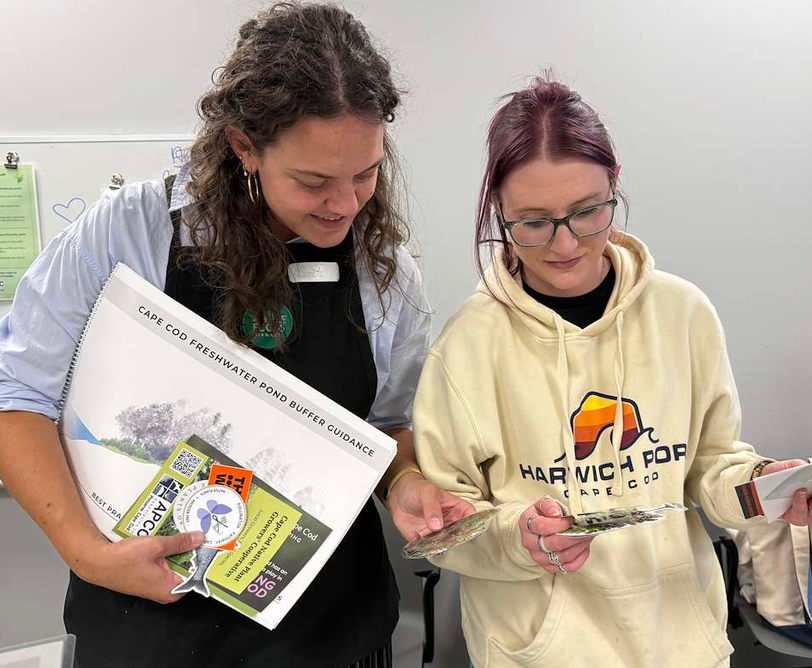
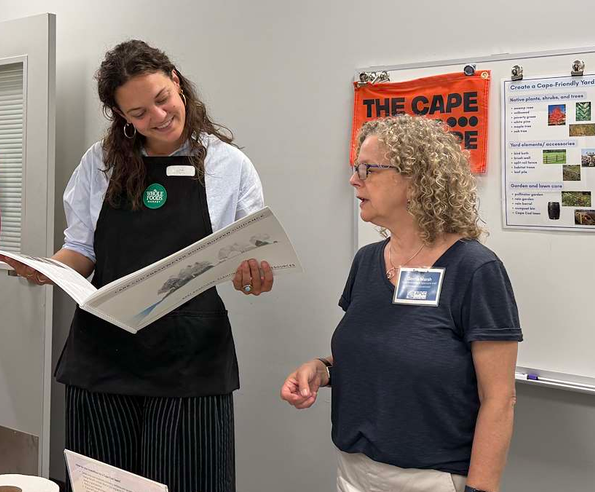
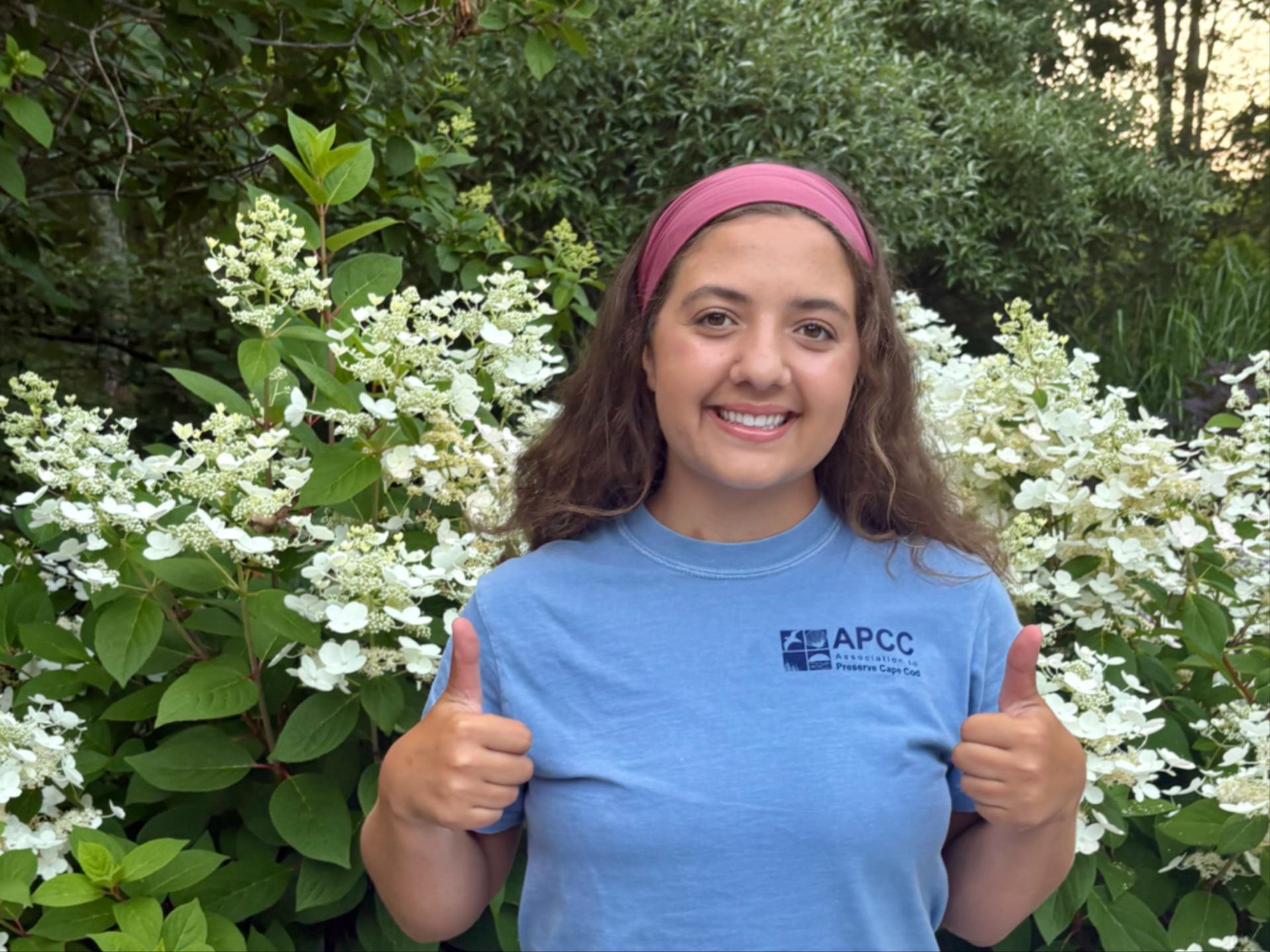
Above: Michaela Ocko, APCC communications intern, and Dee Marsh, APCC communications specialist and volunteer coordinator. |
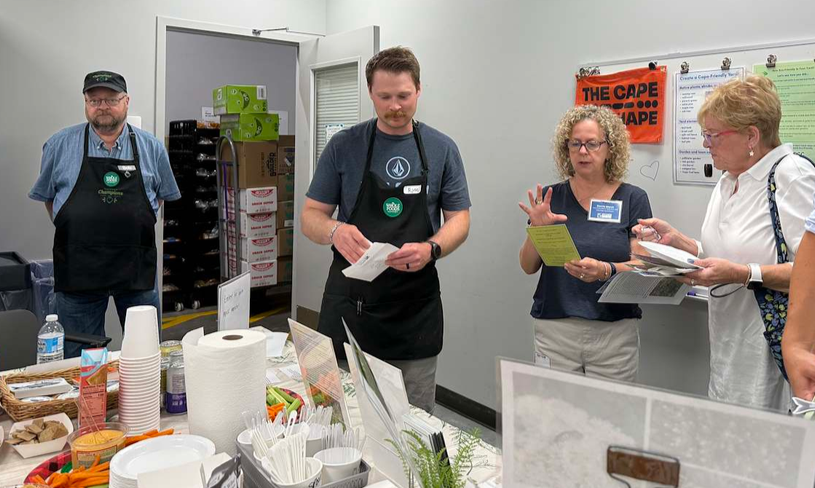
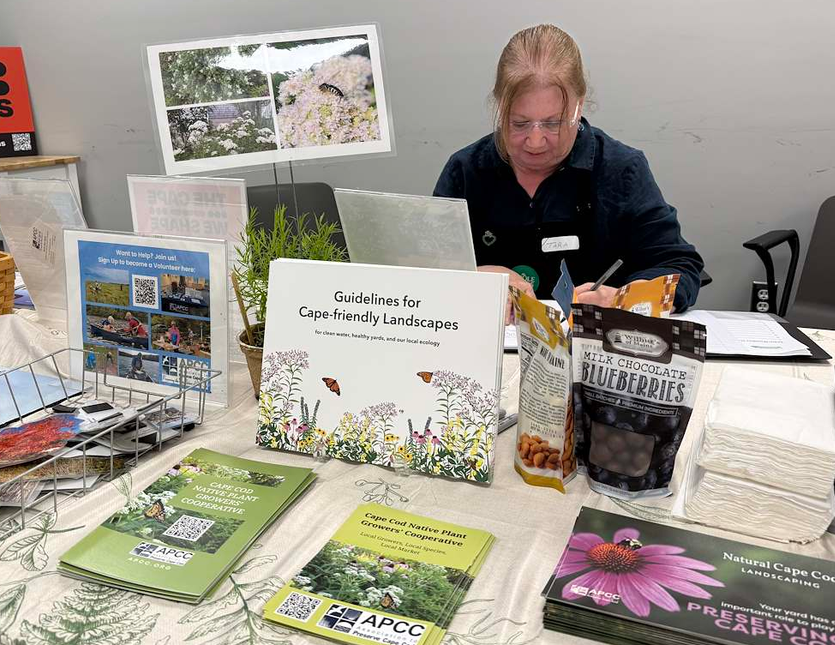
APCC was the recipient of the Q2 Store Giving Program, a program run by Whole Foods Market, which provides team members with an opportunity to direct Whole Foods Market funds to local organizations—and this quarter the Hyannis location voted for APCC!
APCC was invited to the Hyannis store to engage with its team members about APCC's programs, particularly the native plant initiative. Communications Specialist Dee Marsh and Communications Intern Michaela Ocko shared information about the value of native plants in our landscapes, as well as the many ways people can help to protect Cape Cod. |
|
|
|
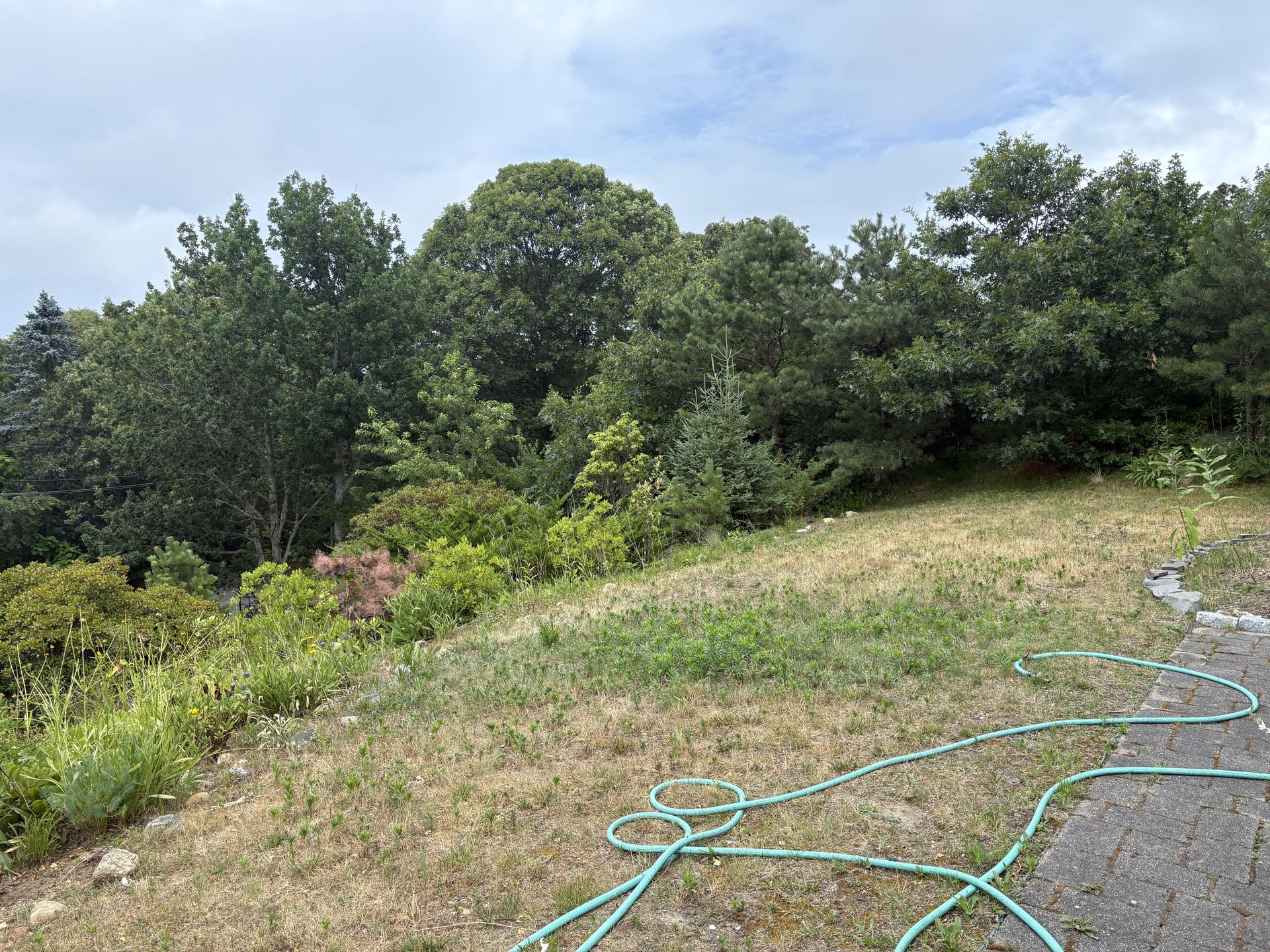
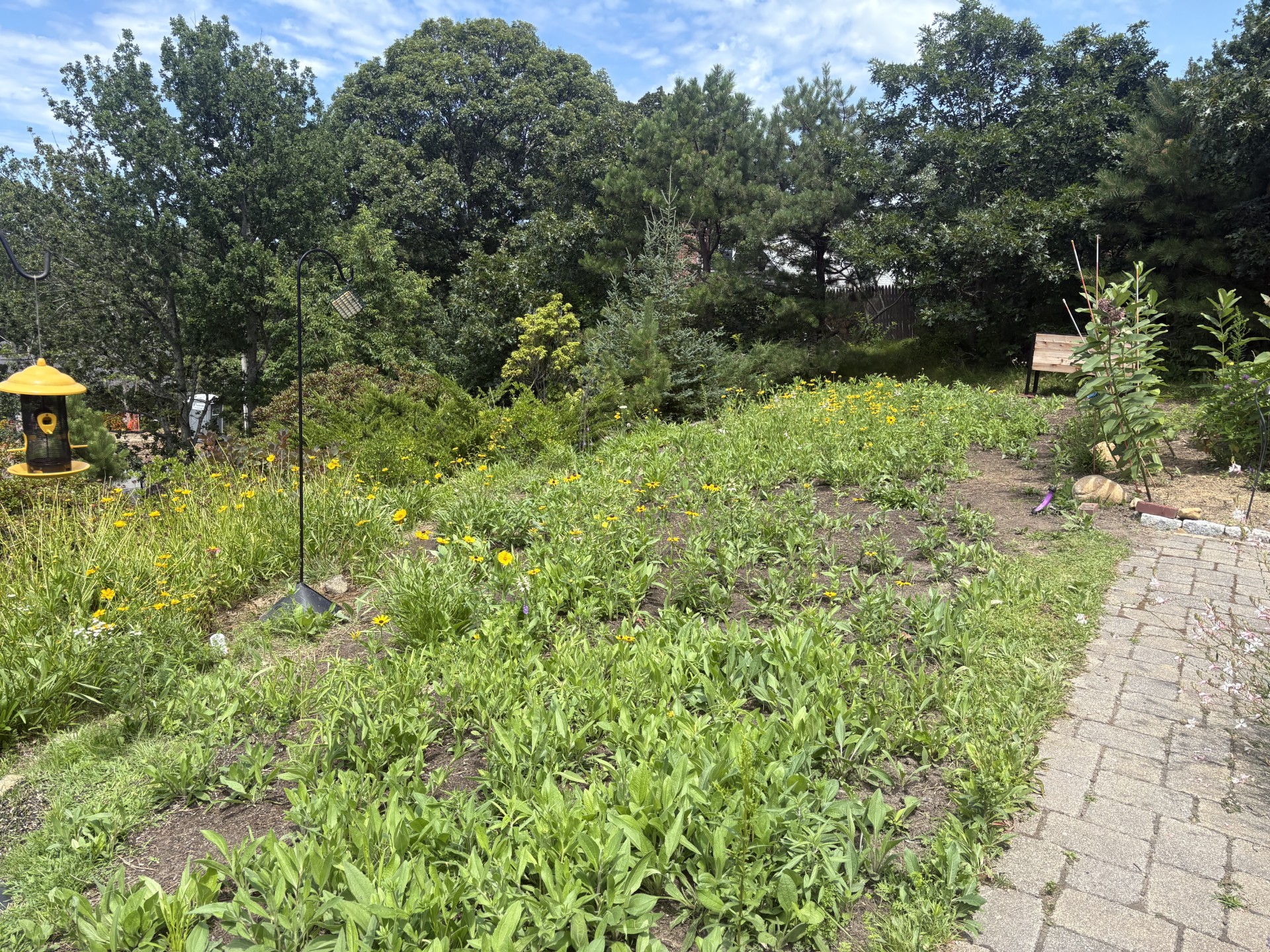
Above: "Before" - dry Cape Cod lawn area |
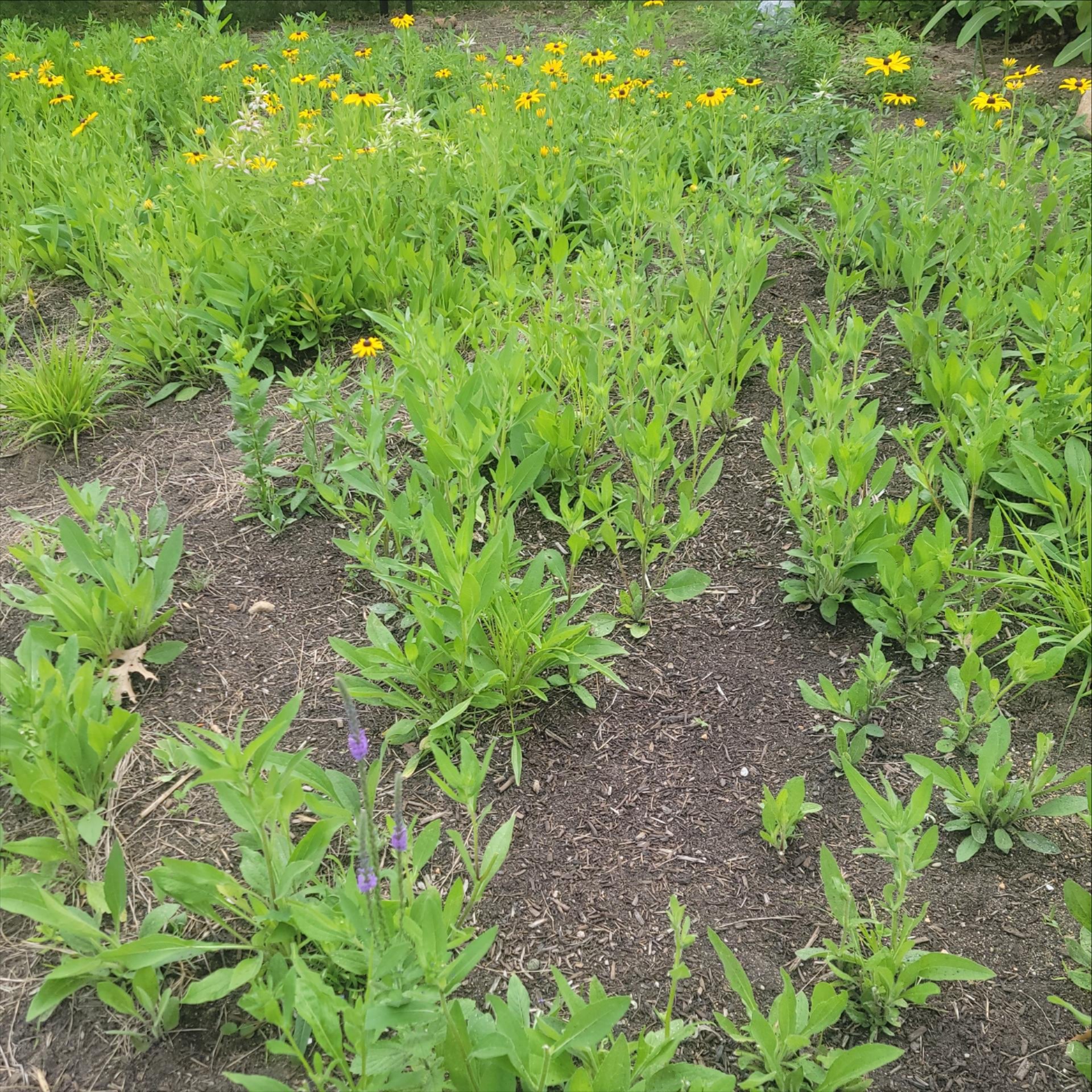
Above: "After" - meadow first growing season |
|
|
|
Above: Black-eyed Susan, Rudbeckia hirta |
|
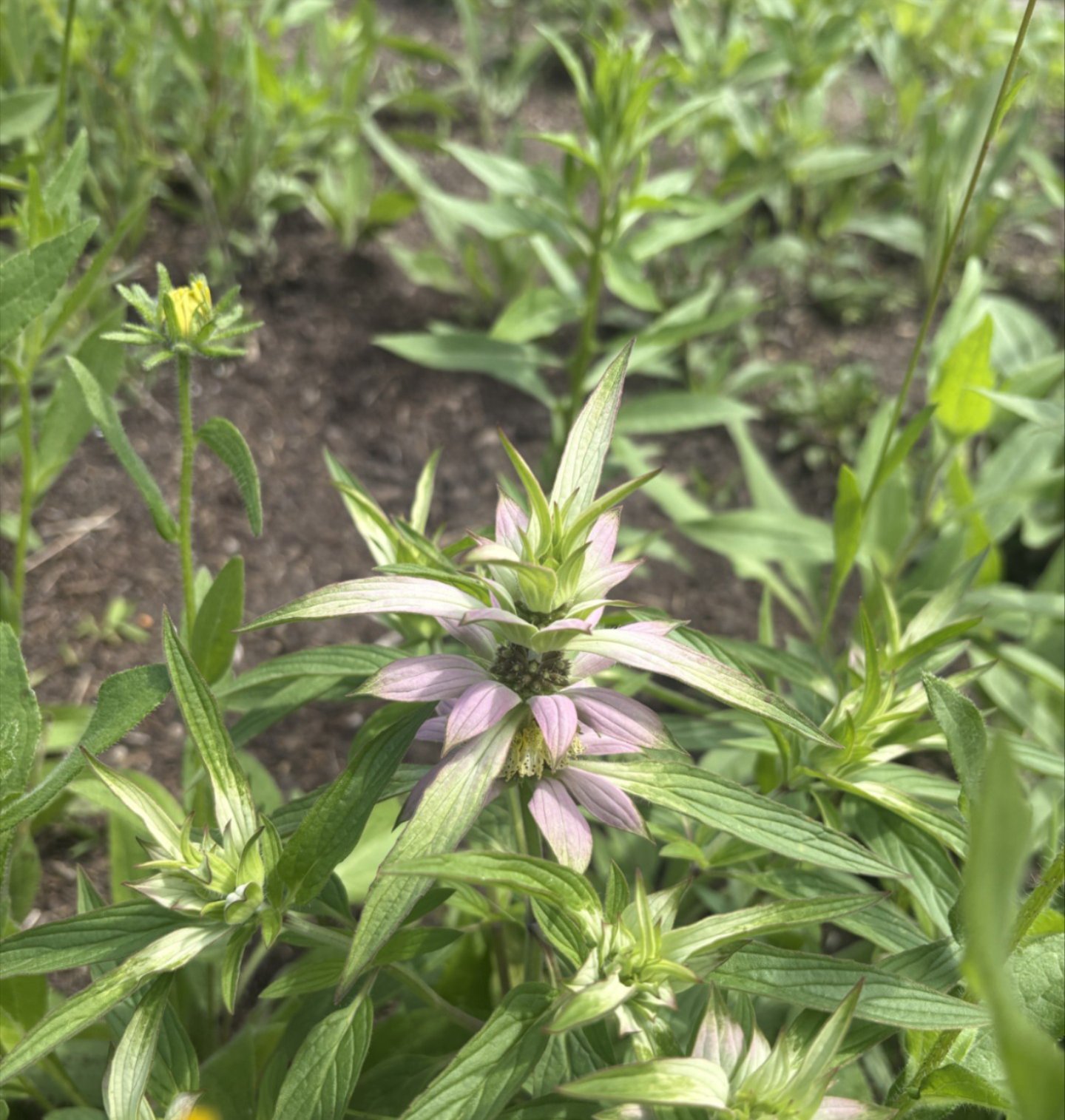
| Above: Spotted bee balm, Monarda punctata |
|
| |
Lawn to Meadow Conversions - A Beautiful Sleep
The typical rule with establishing a meadow from seed is that the first year it sleeps, the second year it creeps, and the third year it leaps. However, for Ed Maes, this lawn to meadow conversion has seen quite the transformation during this first year. What was once a dry Cape Cod lawn has become a sea of black-eyed Susan, spotted bee balm, yarrow, and much more—in one growing season.
Interested in learning how you can transform a part of your property into a thriving meadow ecosystem? Our Ecolandscape Consultation Program still has openings—we're booking appointments through August. In our site visit with you, we can advise on meadow management and much more.
Thank you again to Ed and his DIY effort to implement suggestions from our ecolandscape consultation with him last year. He's making great strides in creating an ecologically minded landscape—and we thank him for letting us share this before and after with all of you. We are excited to see how his meadow evolves in its second year! |
|
|
|
|
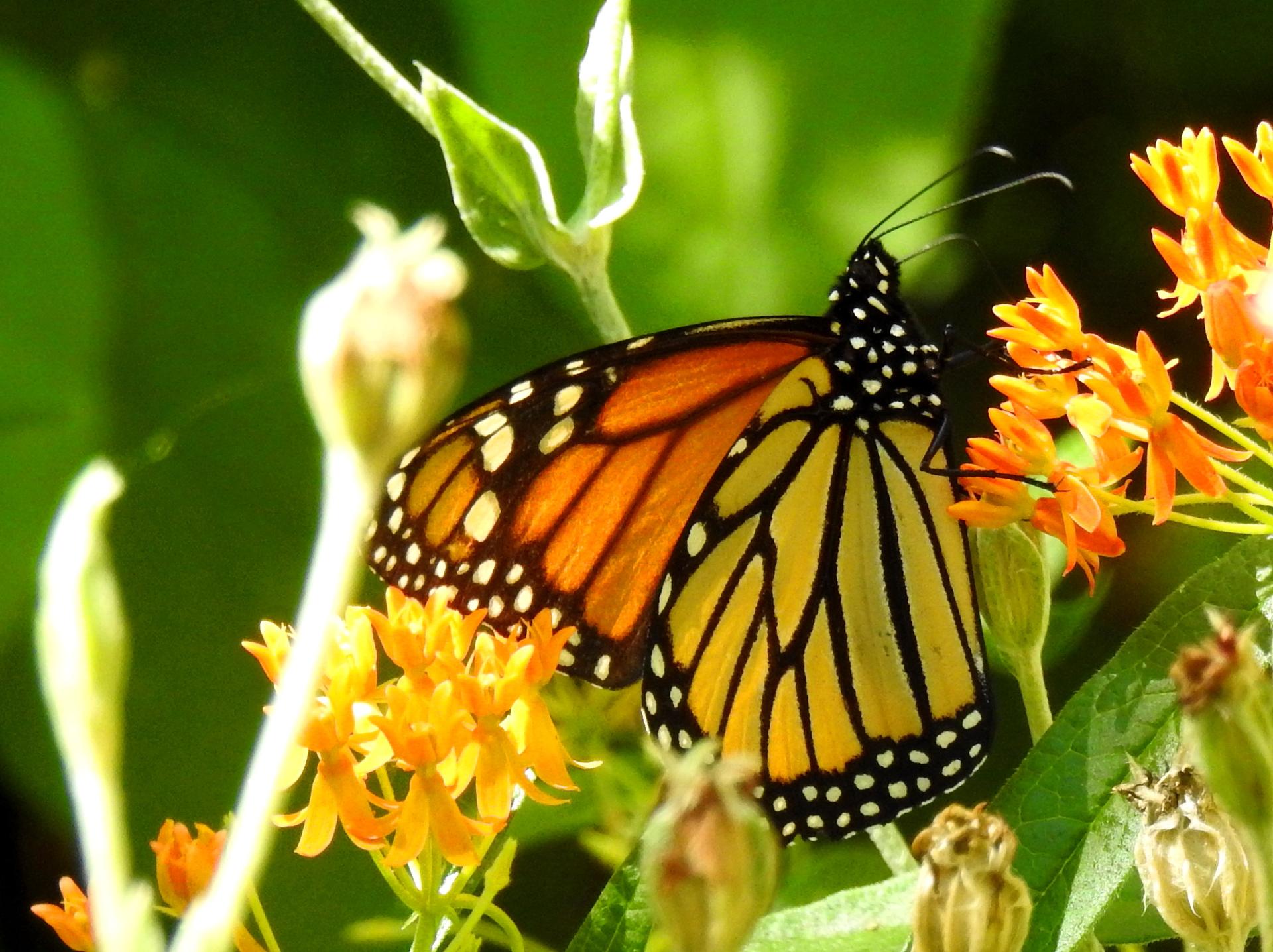
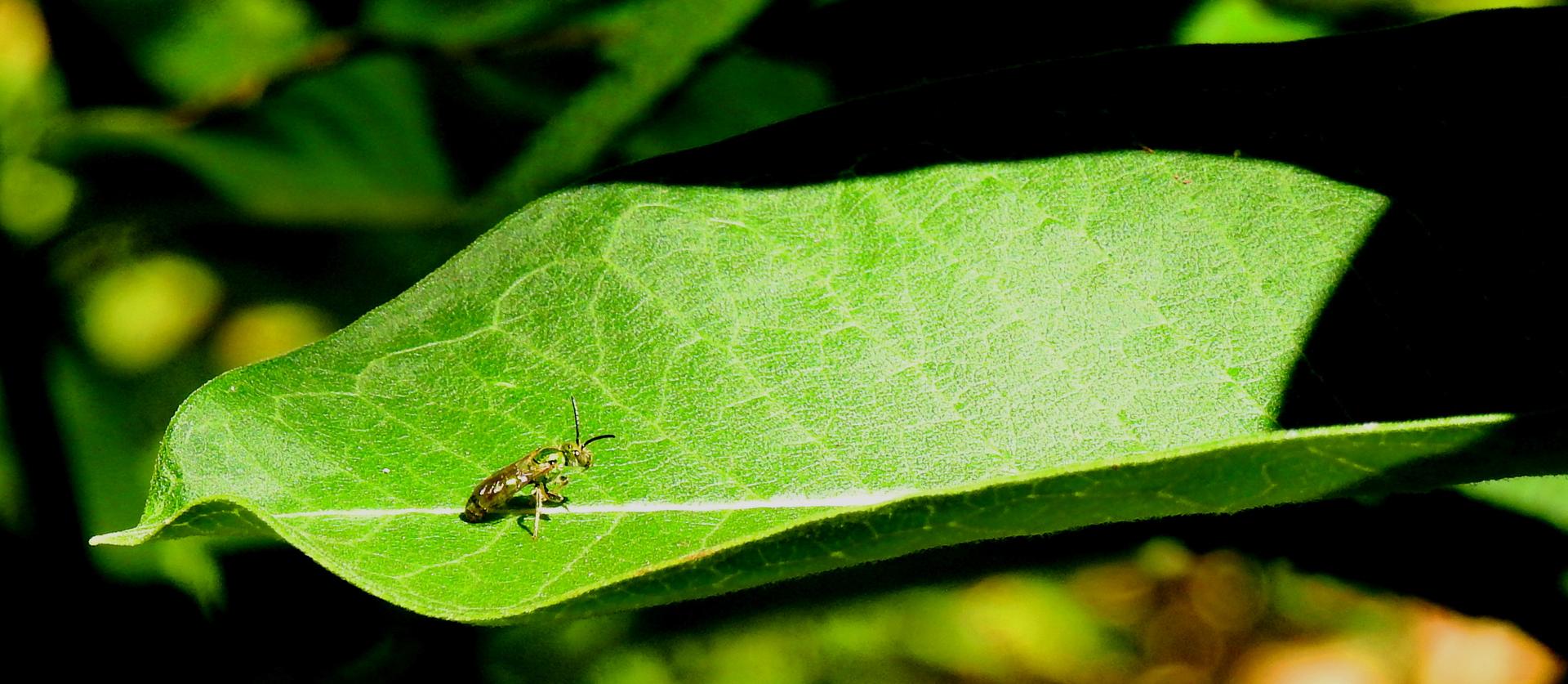
Anca Vlasopolos sent us these photos of life in her landscape: a monarch butterfly on butterfly milkweed and a green metallic bee on a leaf. The bee is likely a female sweat bee, Agapostemon virescens, which can be identified via the combination of a metallic green thorax and a black-and-white abdomen. |
|
|
|
Native Perennials for Sale at APCC |
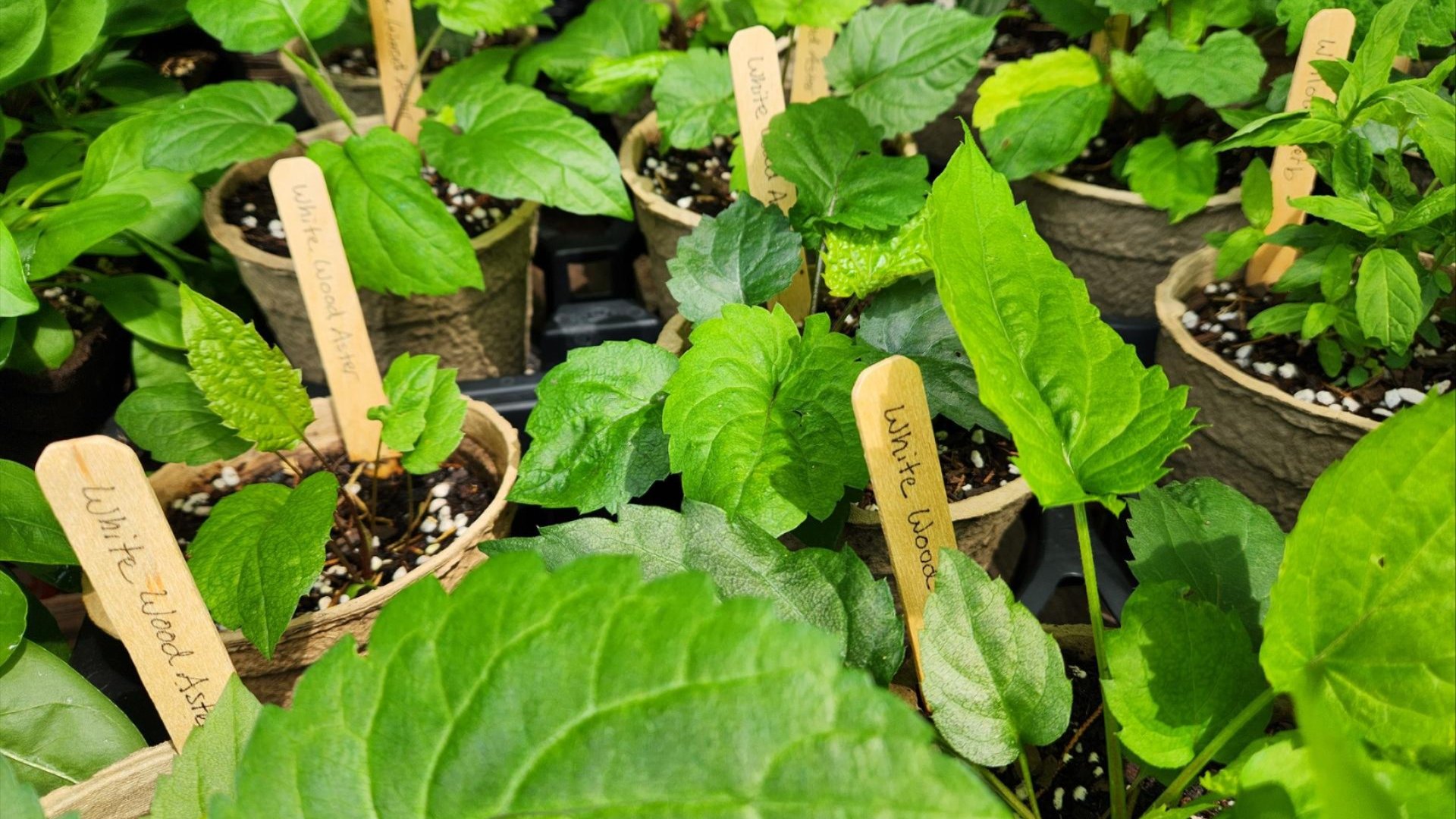
We have some native perennials for sale at the office, grown from seed, pesticide-free, peat-free potting soil, plastic-free pots. If you'd like to come and peruse, just shoot us an email. The quart-size pots are $10 each. Species include: Foxglove Beardtongue, Penstemon digitalis
Culver's Root, Veronicastrum virginicum Common Blue Violet, Viola sororia White Yarrow, Achillea millefolium Sundrops, Oenothera fruticosa Slenderleaf Mountain Mint, Pynanthemum tenuifolium
New England Aster, Symphyotrichum novae-angliae White Wood Aster, Eurybia divaricata Spotted Bee Balm, Monarda punctata and more... |
Bird on a Run
by Andrew Schwarzer
Another day in a dry room,
glancing out at a drenched gray gloom,
I saw, as raindrops filled my eye,
A fine raincoated running guy.
Pedestrian of puddles, practiced prine,
a bullet true to a ballistic line,
he flew on his feet, on a corrected course,
like an unhaltering two-legged horse.
Bombarded by brain-bashing bits,
mini grenades, buckets of dew, filling mud mitts,
the Trooper peddled past parcels of pain,
racing into the reservoir of rain.
His journey through, I began to detect,
he paused to peck, some delectable dreck,
then left the battlefield not too ungrazed,
and with his mettle, totally unfazed.
|
|
|
|
Cape Cod Ponds Network Thursday, August 6th 6:00 - 8:00 p.m. |
|
|
|
|
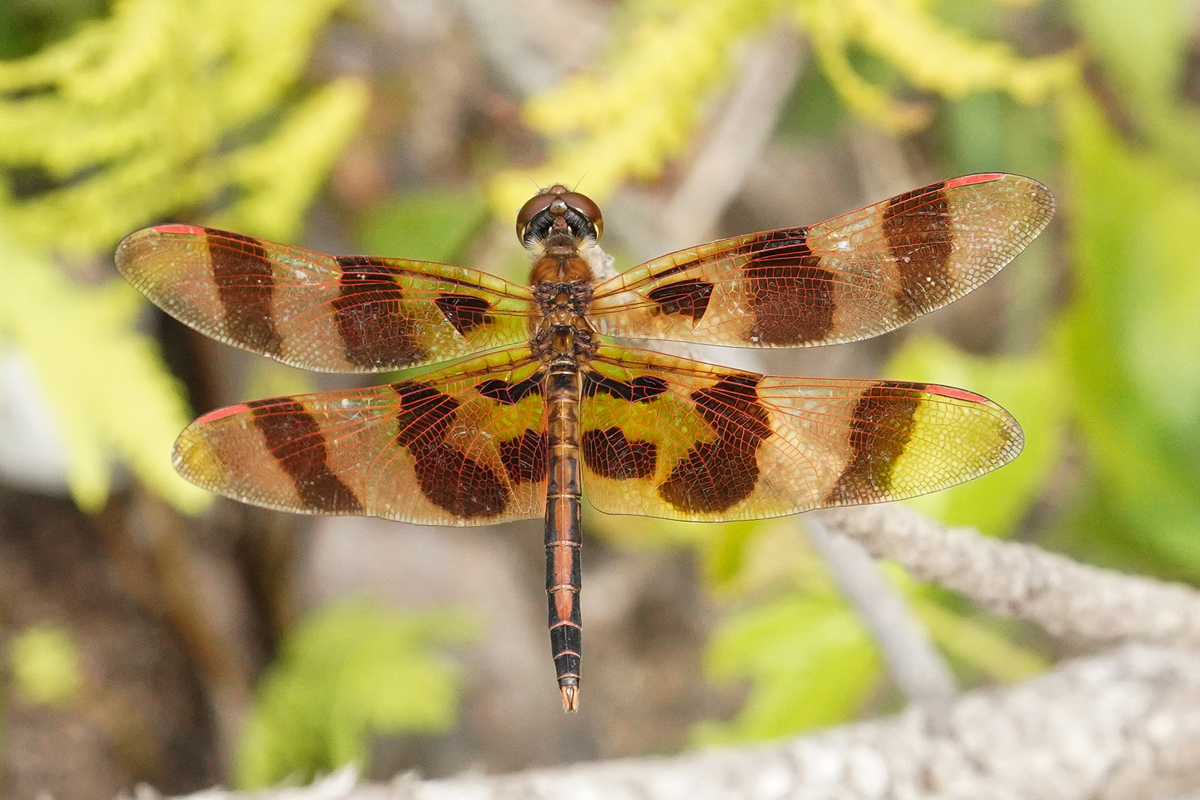
Join us for an in-person meeting of the Cape Cod Ponds Network at the Cape Cod Museum of Natural History in Brewster. Our featured speaker will be Blair Nikula:
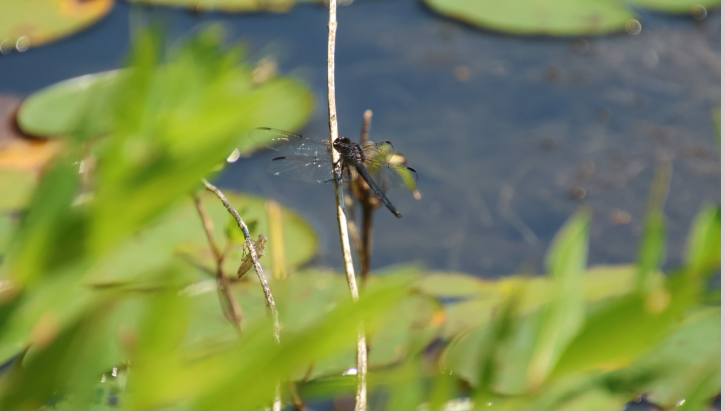
An Introduction to Cape Cod Dragonflies & Damselflies |
|
|
|
Blair Nikula has been studying and photographing dragonflies and damselflies for over three decades. He co-authored the Stokes’ Beginner’s Guide to Dragonflies and Damselflies as well as A Field Guide to the Dragonflies and Damselflies of Massachusetts, and formerly co-edited Ode News, a newsletter about the odonates of southern New England. A native Cape Codder and life-long birder, he is a former regional editor for American Birds (now North American Birds), a past-president of the Cape Cod Bird Club, a former associate member of the Massachusetts Natural Heritage & Endangered Species Program Advisory Committee, and has often served on the Mass Avian Records Committee. He maintains two websites: capecodbirds.org and odenews.org.
|
If you've not yet signed up to be part of the Cape Cod Ponds Network, click the button below to stay informed. |
Cyanobacteria Monitoring Program 2026 |
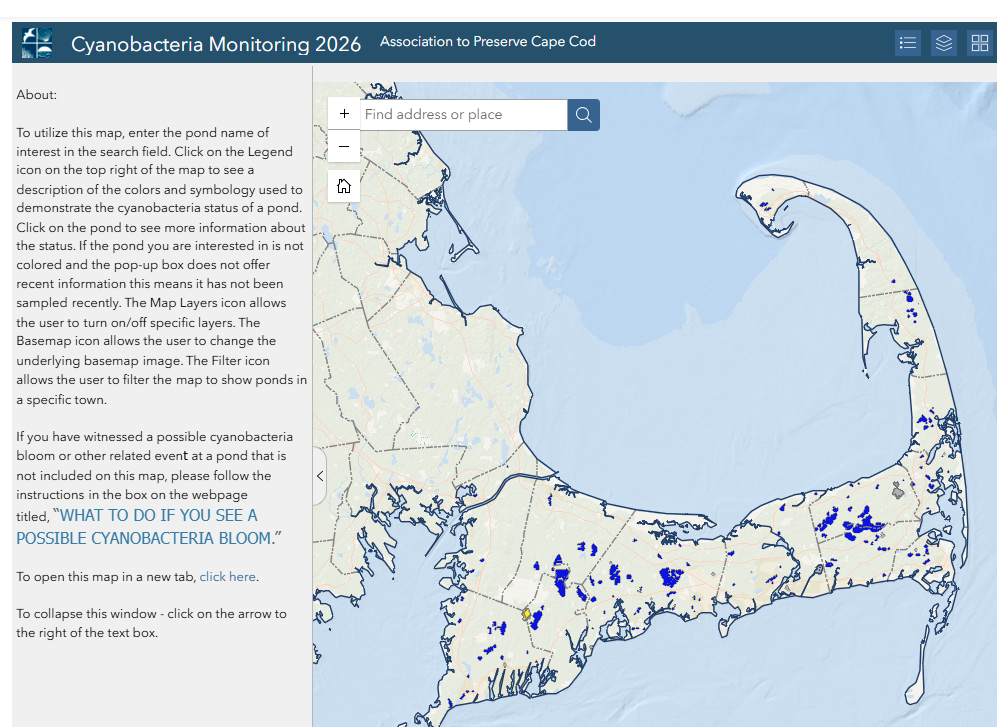
If you notice pond water is scummy or discolored and may have a strong odor, avoid contact. If you see what you think might be a suspicious cyanobacteria bloom, notify your local health department and send a photo to cyano@apcc.org noting the location, day and time. If you wish to receive an email when we detect a cyanobacteria bloom, SIGN UP HERE.
Our interactive map will have our most up-to-date findings at APCC.org/cyano. |
|
|
|
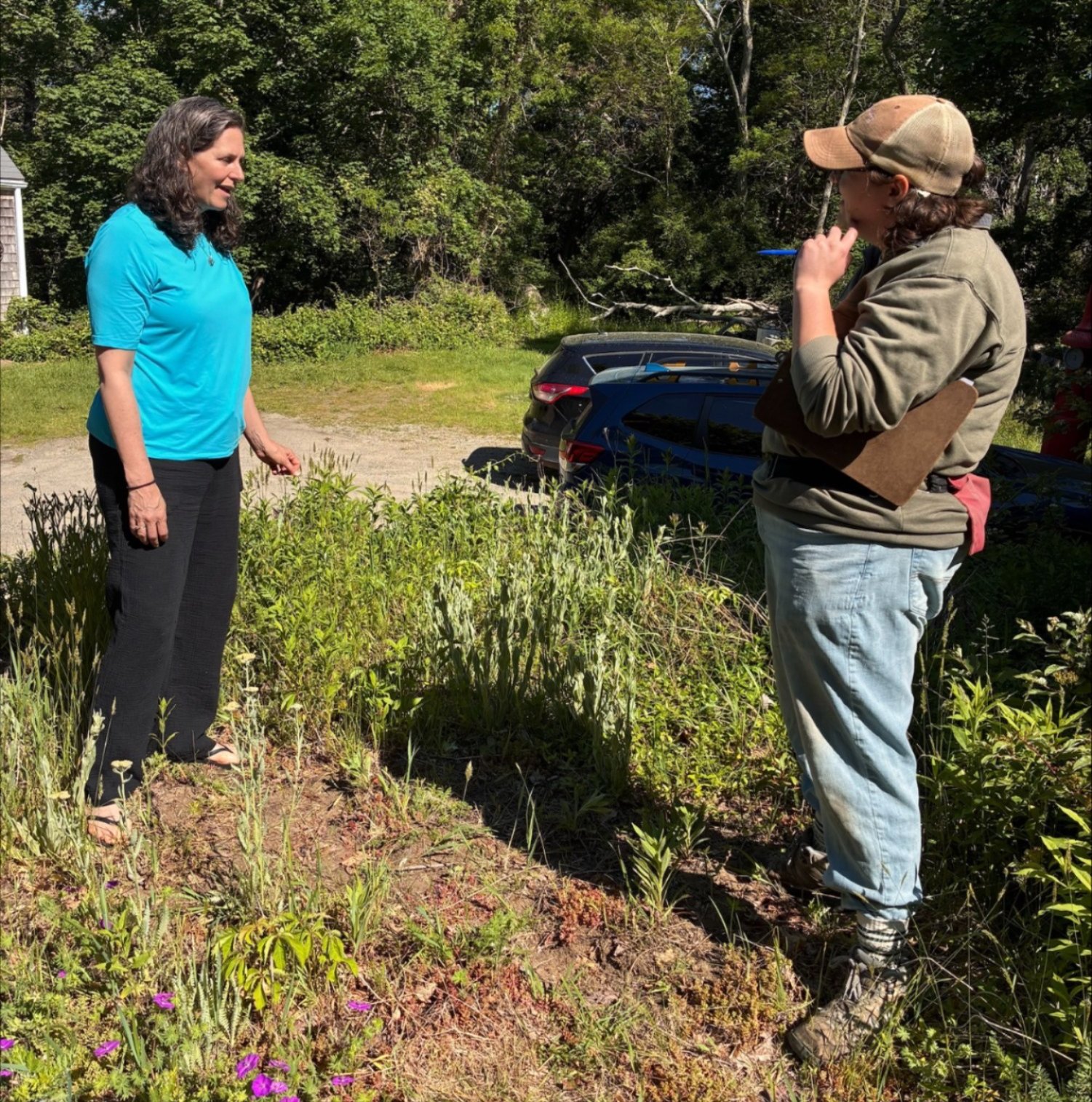
Above: Erin Camire, APCC ecolandscape program coordinator, meets with client. |
|
| |
|
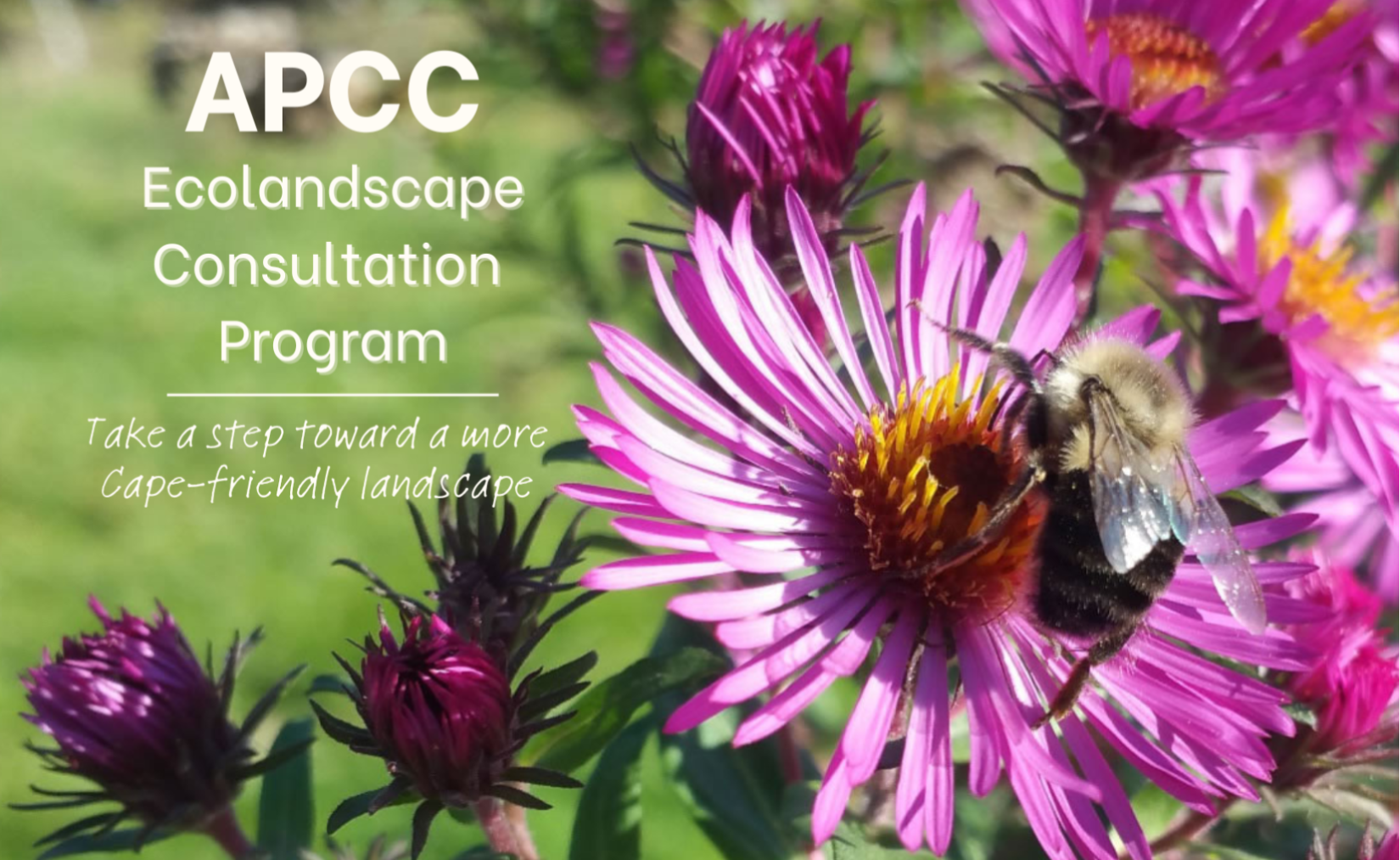
Ecolandscape Consultation Program Now booking appointments in August
If you want to make your yard friendlier to pollinators and wildlife, learn more about native plants and what will do well in your space. Learn about identifying and controlling invasive species and how to conserve water and protect the Cape’s water quality. We can help.
Fill out the form and Erin Camire, our ecolandscape program coordinator, will contact you via email to set up a day and time for the consultation at your residential property in any Cape town from Bourne to Provincetown.
The team will meet with you for an hour and a half, answer your questions, and send you a summary report. The fee is $350.
Read more here about the program and click on the "Get Started" button to schedule a consultation! |
Sign up to Volunteer with Team SOS here. Team SOS volunteers help distribute educational materials and work on town teams to support The Cape We Shape campaign efforts.
|
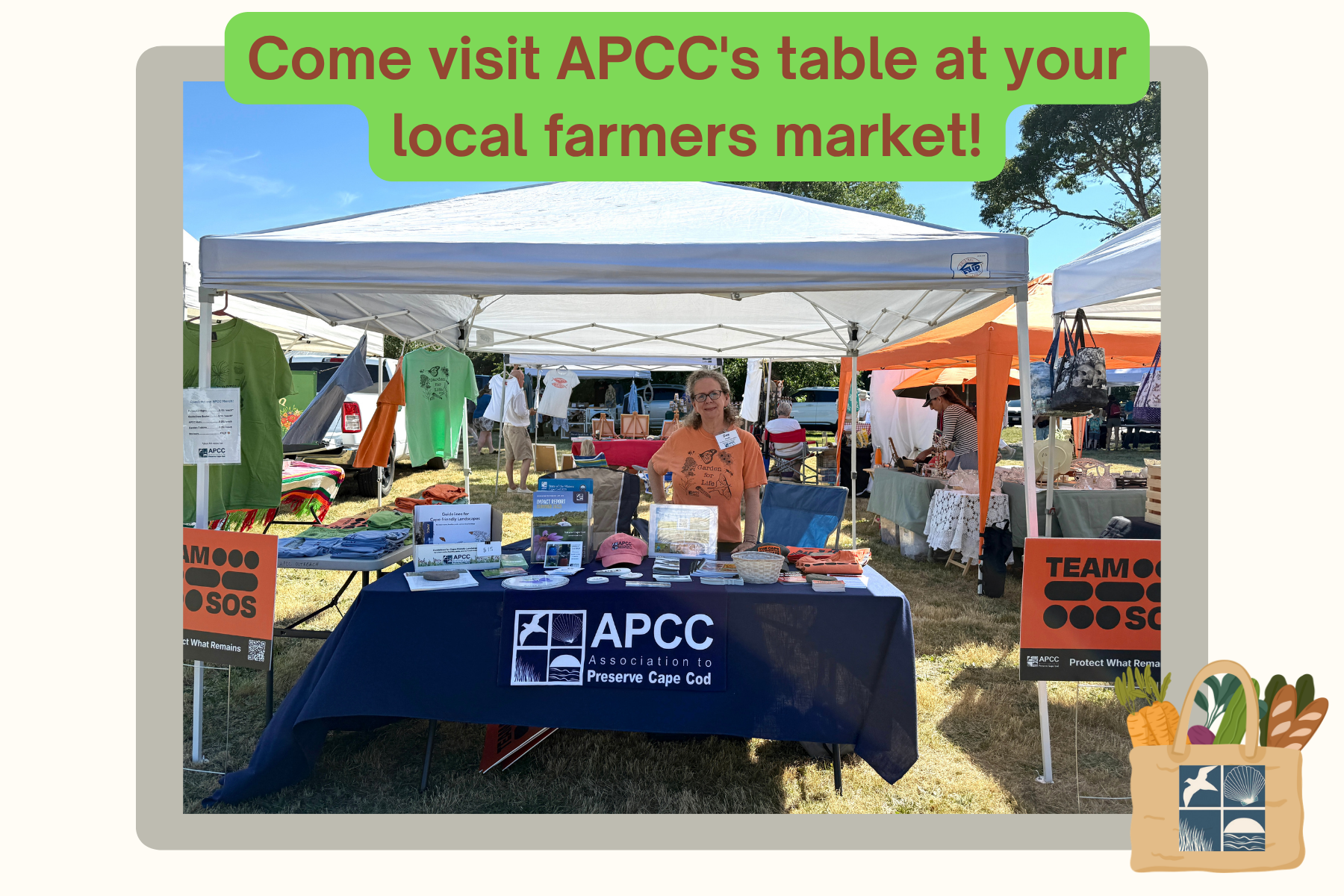
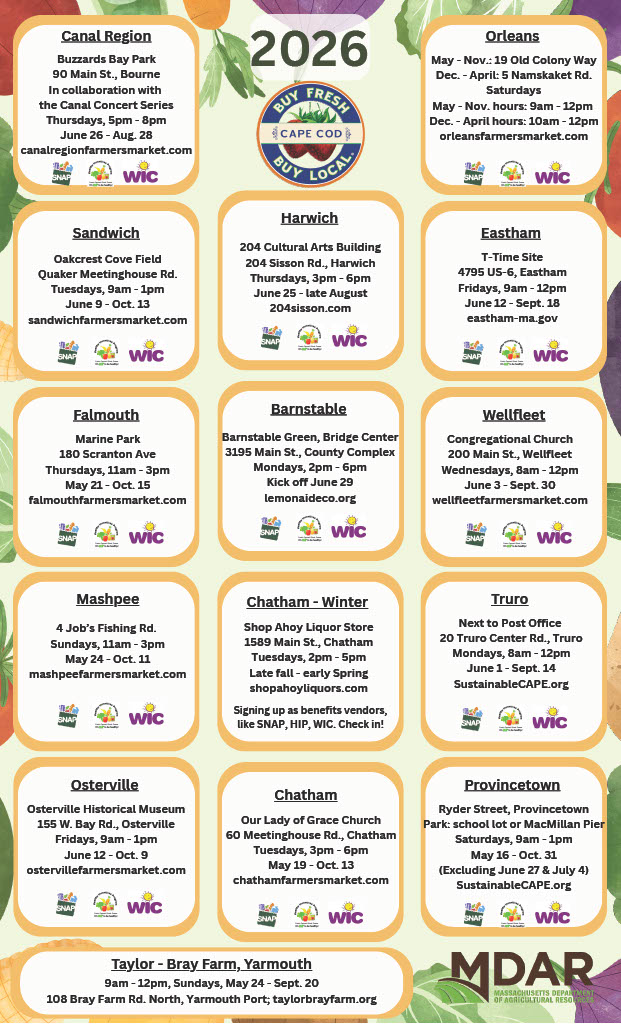
We are trying to be at as many farmers' markets as possible this season to talk about APCC programs, including The Cape We Shape. Below is a list of where and when you can support your local farmers. |
APCC is Partnering with Planetary Health Alliance
SAVE THE DATES Planetary Health Stories: A Community Arts & Storytelling Project Join us this fall for a two-part series that brings women together to share, through writing, poetry, art, and photography, what they are witnessing, grieving, and hoping for as climate change, biodiversity loss, pollution, and changes in food systems reshape the places they call home.
This project, led by Jennifer Rasmussen and Tatiana Camargo through the Planetary Health Alliance, gathers stories from communities around the world, showing how women and girls everywhere are feeling these changes, and how they're finding ways to grieve, cope, and create in response. The stories collected will become part of a collaborative book, which will serve as a reminder that personal memory and lived experience are just as powerful as science in helping us understand what's happening to our planet, and in connecting us to one another.
Part 1: Webinar
Thursday, September 10 | 5:30–6:30pm | Virtual
Facilitator Jennifer leads a one-hour orientation covering what planetary health means, the story behind this project, and what to expect at the in-person workshop, plus an introduction to the volunteer team.
Part 2: In-Person Workshop
Friday, September 18 | 10:00 am–12:00 pm | Koppel Center, APCC
A relaxed morning of open creative time: writing, drawing, painting, photography, fiber arts, or simply reflecting alongside natural objects you bring from home. Includes a grounding exercise, guided creative time with volunteer support, a written reflection, and a closing circle where participants can choose to share and reflect on their art. This series is open to all women – no artistic experience necessary. With permission, stories and artwork may be included (anonymously) in the Planetary Health Alliance collaborative book.
REGISTRATION COMING SOON |
|
|
|
|
APCC is proud to again participate in the Numbers for Nonprofits program for the Falmouth Road Race.
We have a team of five dedicated runners who are lacing up to support APCC’s work, and one of the team members is APCC Pond Technician May Lopopolo.
Help May and the team raise money to support APCC's work. CLICK HERE. |
|
|
|
| Brewster Ponds Coalition invites you to attend a colorful and informative program on
Wednesday, July 29 from 1:30-3:00 p.m. at the Brewster Ladies Library |
|
|
|
Local respected field naturalist and author, Peter Trull, and APCC pond programs manager, Julie Hambrook, PhD, will share information, photos, and anecdotes about the variety of life in Brewster’s ponds, including how to report your own observations to contribute to the understanding of the ecology of Cape Cod ponds. For details and to register with BPC, please visit https://tinyurl.com/BPC-Local-Flora-Fauna-29Jul26. |
|
|
|
|
You’re invited to a Special Book signing of
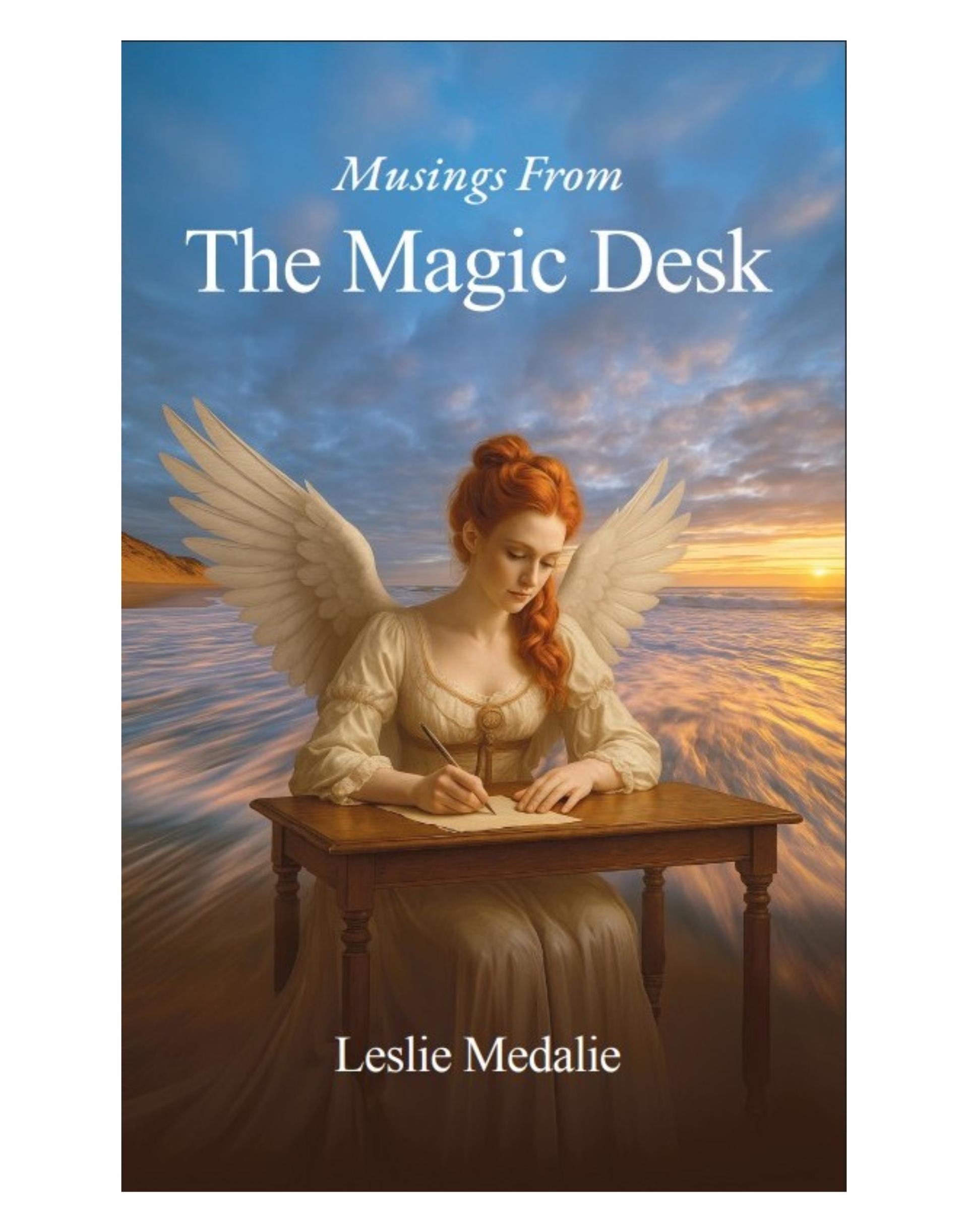
Musings from the Magic Desk by Leslie Medalie
Thursday, August 6 from 2:00- 4:00 p.m. at EXPRESSIONS Gallery, 578 Main Street, Chatham |
|
|
|
The book’s cover image features Enchanting Shores by Steven Koppel, owner of EXPRESSIONS. Special book pricing of $20 per paperback (cash or check only) with all proceeds benefiting APCC.
About Musings from the Magic Desk
Inspired by an heirloom family desk, Musings from the Magic Desk invites readers into an extraordinary journey spanning mid-19th century England during the tumultuous Crimean War, the rugged shores of Prince Edward Island, the bustling streets of Boston, and the serenity of Martha’s Vineyard. At its heart is Clara, a spirited young seamstress whose mysterious bond with a revered saint and a magical desk shapes her destiny. Woven with history, mysticism, and resilience, Clara’s story is a testament to the power of faith, courage, and the enduring magic of connection.
About Leslie Medalie
Leslie Medalie is the founder of Leary Public Relations, and a former adjunct professor at Emerson College. She is the past president of a private foundation and a trustee for a Boston-area hospital. Leslie and her husband reside outside of Boston with their two grown children nearby. Leslie asserts that writing—and laughter—are her secret ingredients for coping with life’s many twists and turns. |
A Cape-wide Conservation Event Calendar |
The Compact of Cape Cod Conservation Trusts (“the Compact”) and its nonprofit members launched a new regional calendar of events. The Conservation Calendar includes programs across Cape Cod hosted by these groups. The goal of the calendar is to encourage visitors and residents to take part in nature and environmental events. You can always find the link to the calendar on APCC's website under News & Events.
|
If you are a farmer or someone who wants to grow native plants to sell, or you just want to be updated on the program's development, please submit the interest form that appears on our webpage. We will be sending periodic email notices of workshops and meetings.
Funding for the project is provided by Barnstable County and its Economic Development Council License Plate Grant Program through the Cape Cod Commission, the Kelley Foundation and private donors. |
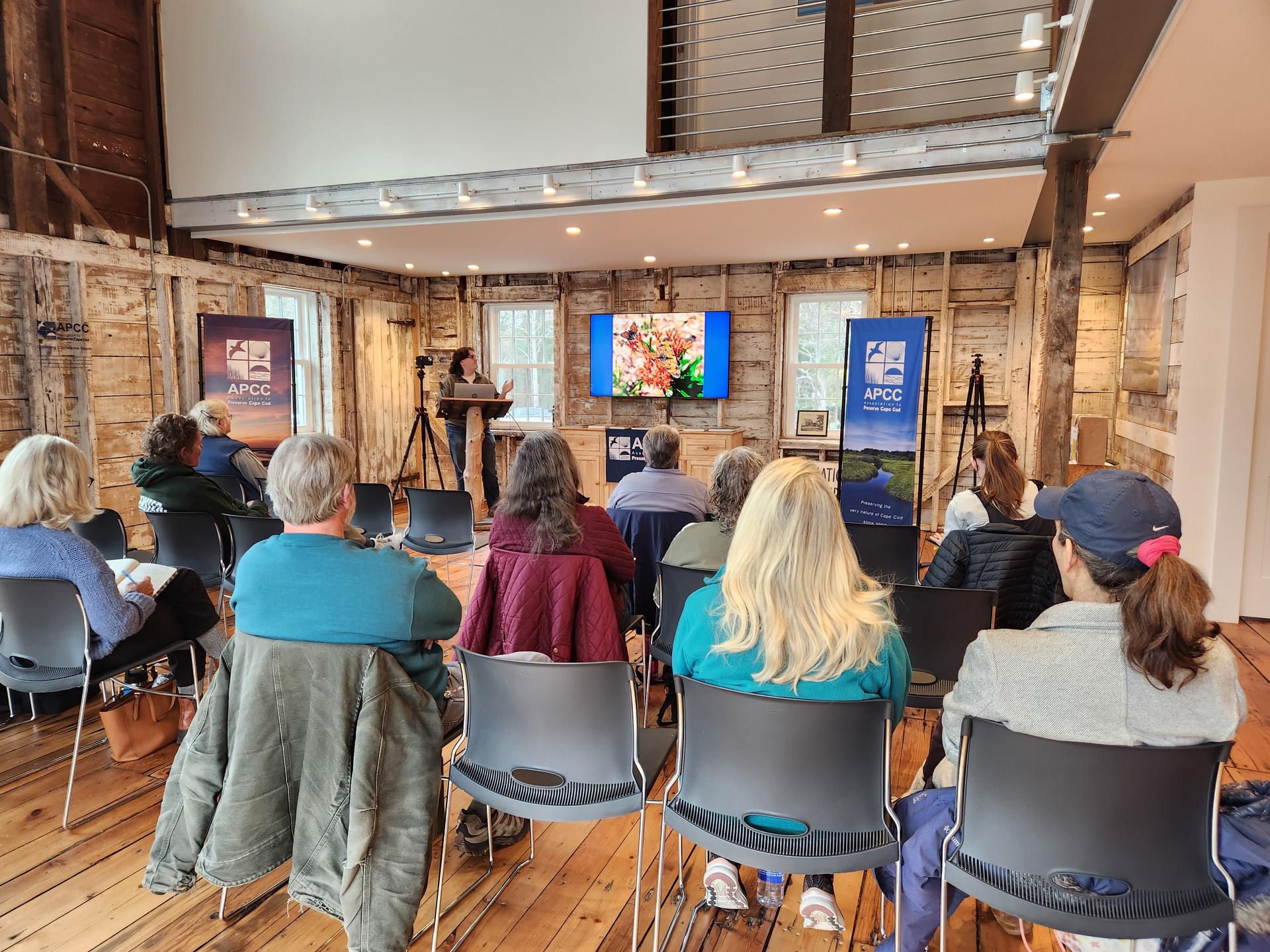
Ten talks for prospective growers as part of the Cape Cod Native Plant Growers' Cooperative program have been presented thus far, with more scheduled in the upcoming weeks. These past workshops can be viewed here: |
A Cape Cod Native Plant-selector ~ to help you choose the perfect native plants for your garden. |
|
|
|
Email kandres@apcc.org and we'll send you a CapeCodNativePlants.org decal. |
|
|
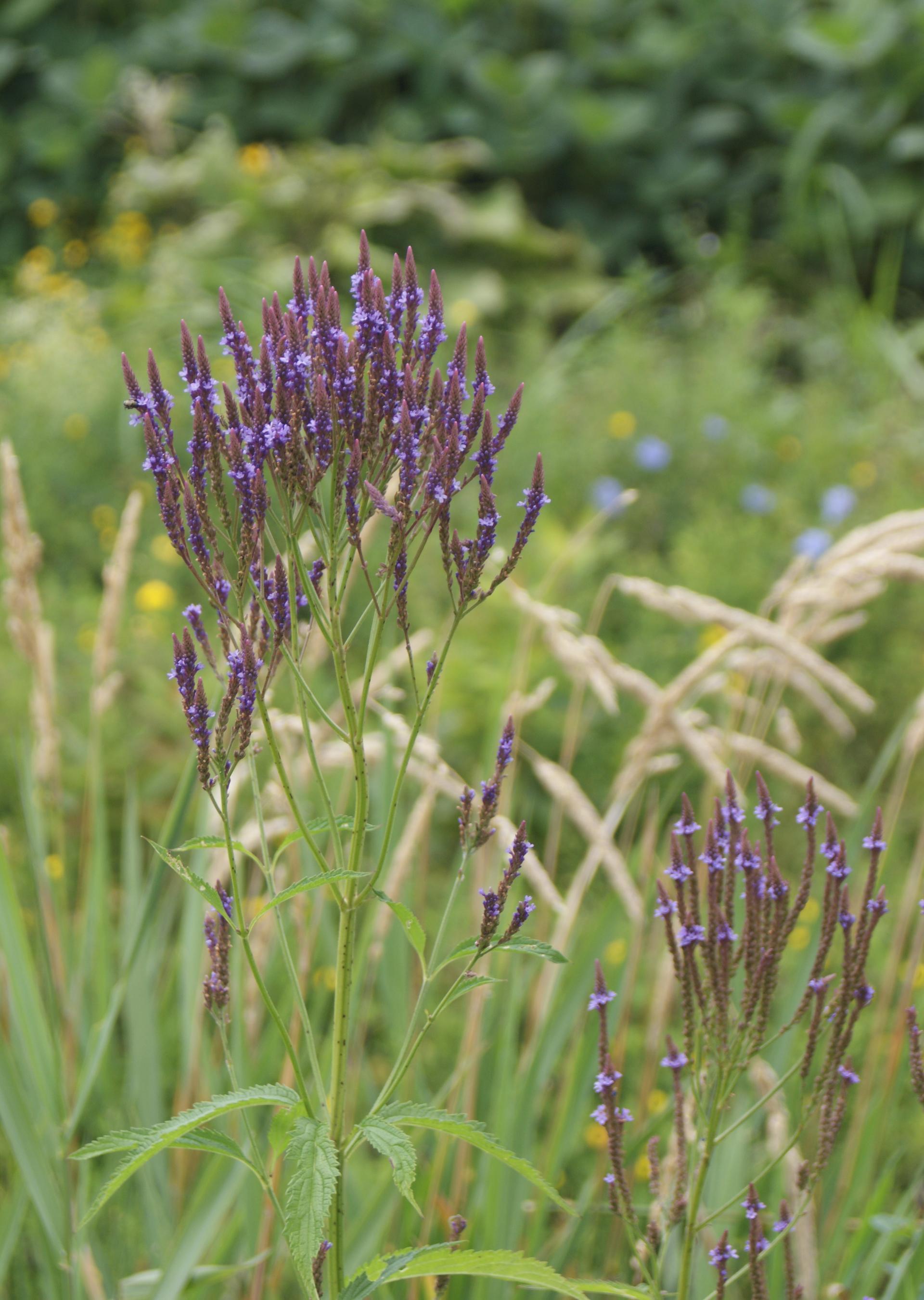
Blue Vervain Verbena hastata |
|
|
|
The purpose of CapeCodNativePlants.org is to help native plant enthusiasts select the right plant for the right place. While not all native plants presented here are indigenous to Cape Cod, they are suitable native species for Cape gardens and managed landscapes.
Why Native Plants? Many native plants are drought tolerant, salt tolerant, and thrive in the “thin” soils found on Cape Cod. Native plants are as attractive as any plant, and are reflective of the Cape’s natural beauty. By planting native species appropriate for Cape Cod, you can conserve water, avoid pesticide and fertilizer use, and support pollinators and birds.
|
|
|
|
|
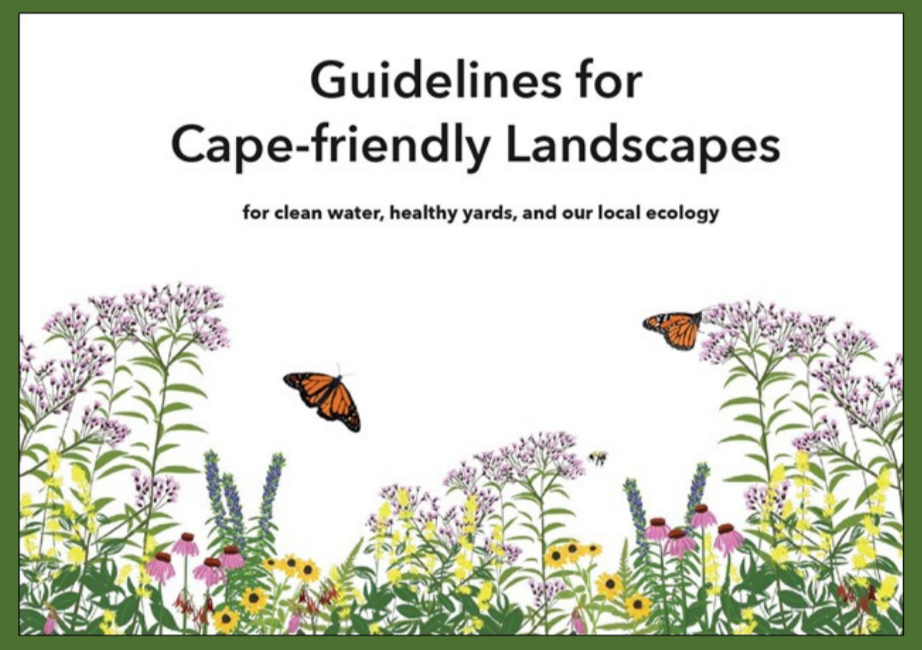
The Guidelines gives homeowners steps they can take in the design and maintenance of their properties that will support pollinators and birds, manage stormwater, conserve water, and protect the Cape's water quality. This 40-page booklet is beautifully illustrated by Marcy Ford with content that is easily digestible and supported by numerous resources for additional learning.
|
|
|
|
We are grateful for the several retail shops that are partnering with us to make this publication more widely available: Brewster Book Store, Birdwatchers General Store, Crocker Nurseries, Wellfleet Audubon Wildlife Sanctuary, Cape Abilities Farm, Cape Cod Museum of Natural History, the Cape Cod Lavender Farm, Heritage Museums and Gardens, Titcomb's Bookshop, Sea Howl Bookshop, Soares Flower Garden Nursery, Hyannis Country Garden, Orleans Whole Food Store, and Eight Cousins Bookshop.
Heard it makes a nice gift for a neighbor or for a housewarming or host(ess) gift!
If you are a retailer and would like to sell this publication at your store, please contact us. |
|
|
|
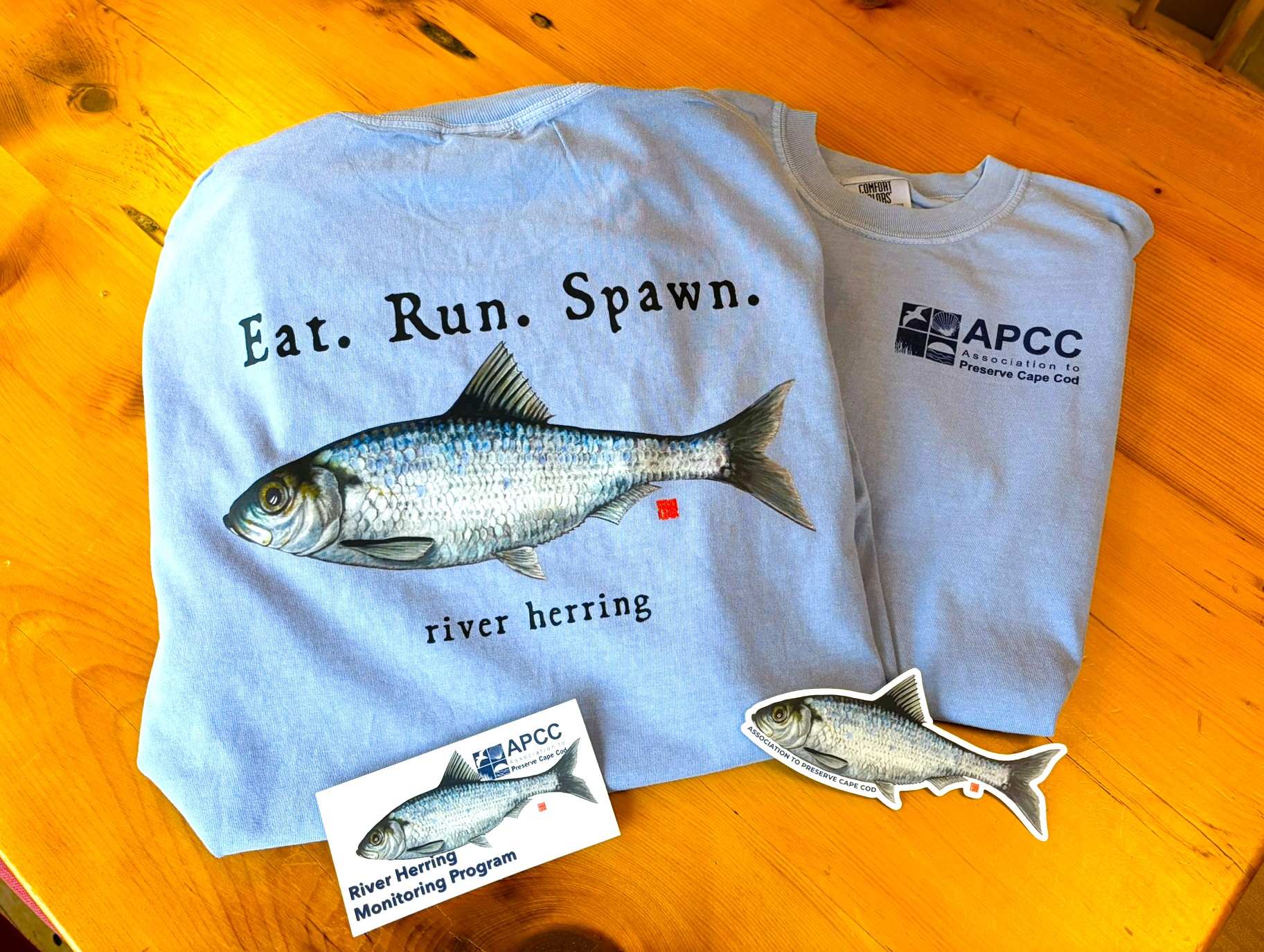
Celebrate the Run! Herring T's
color denim blue $30 - includes USPS delivery in the U.S. |
|
|
|
Team SOS T-shirts $30 - includes USPS delivery in the U.S. |
|
| The Cape We Shape $30 - includes USPS delivery in the U.S. |
|
|
|
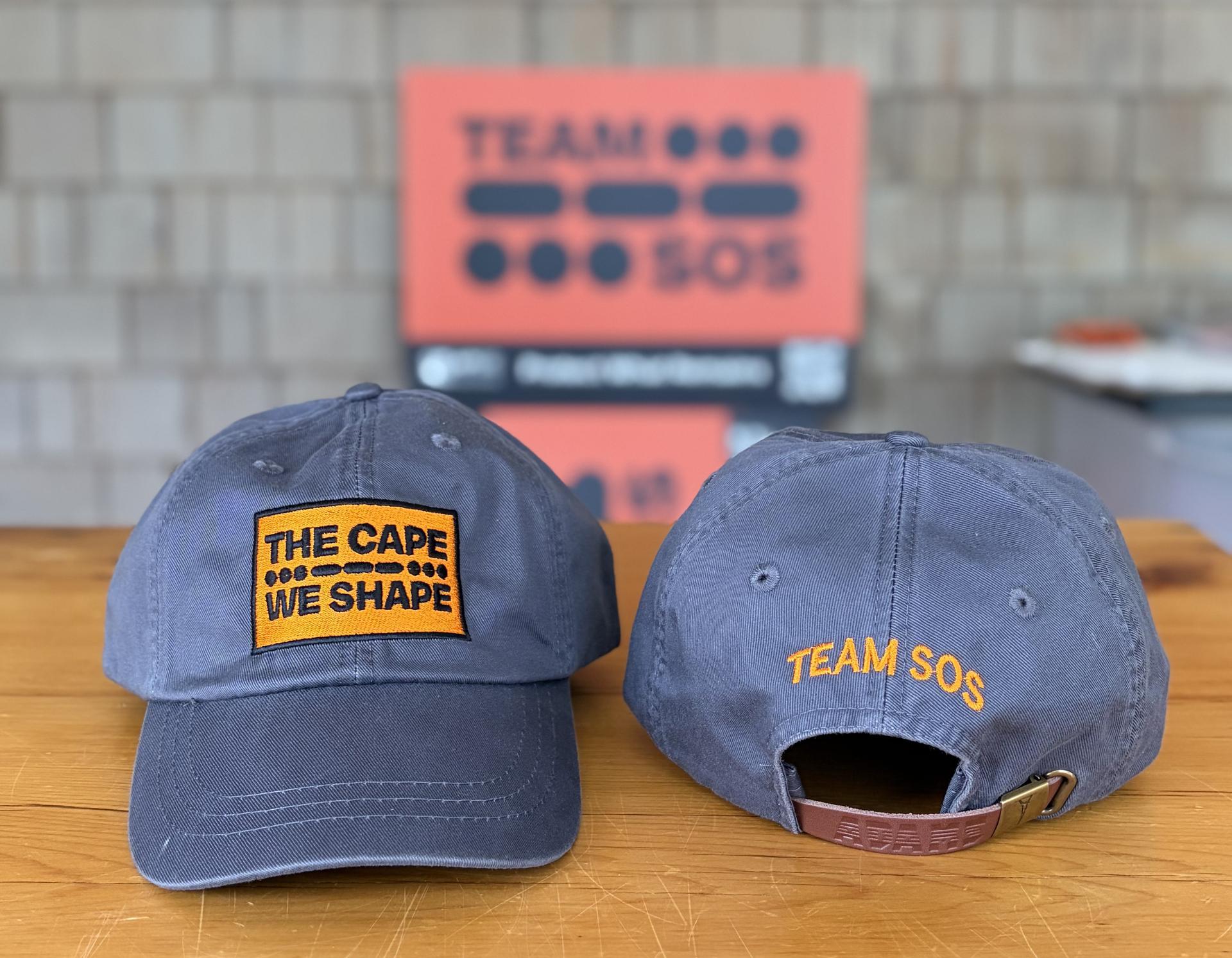
APCC caps $25 -includes USPS delivery in the U.S. |
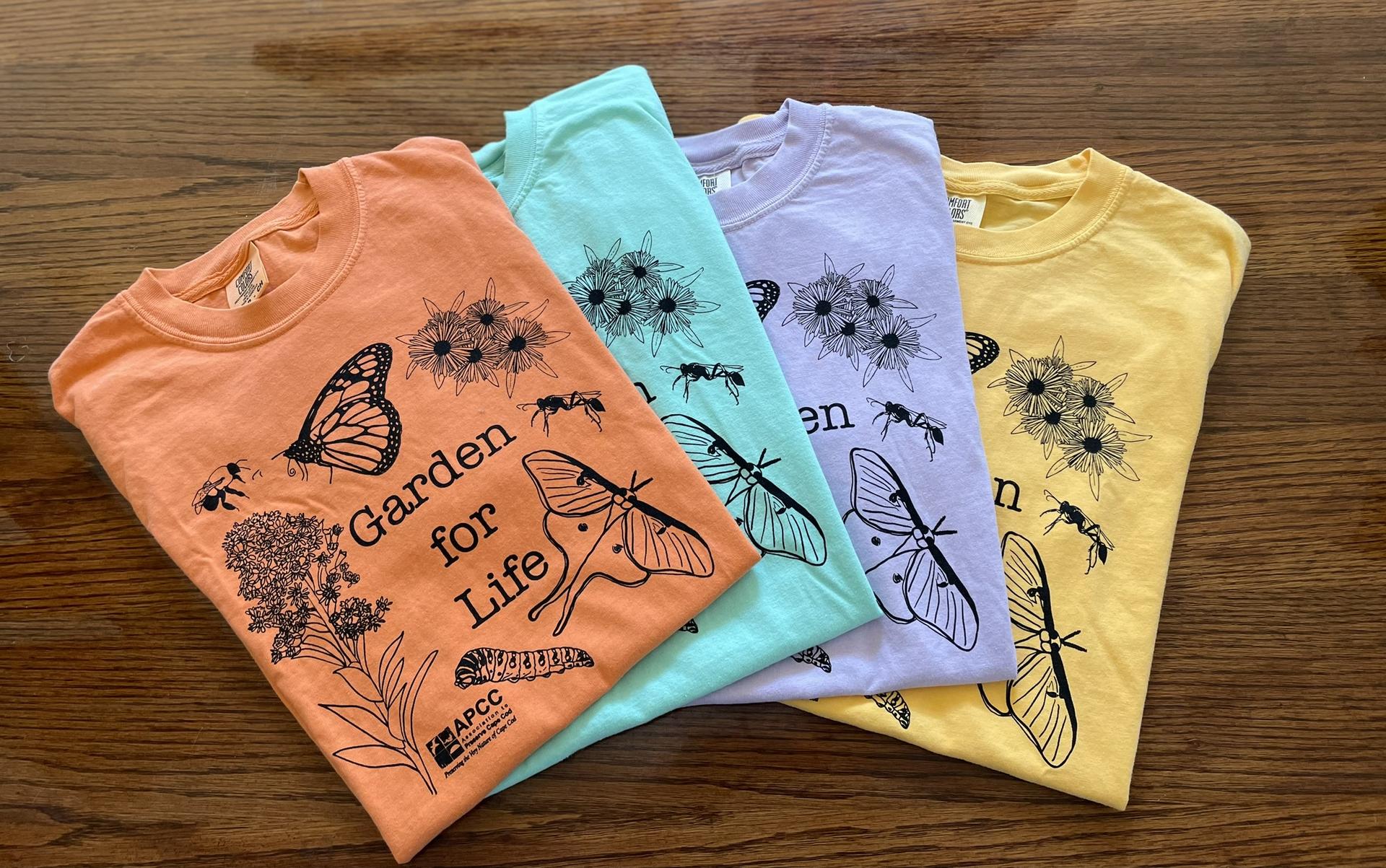
Garden for Life T's $30 -includes USPS delivery in U.S. |
|
|
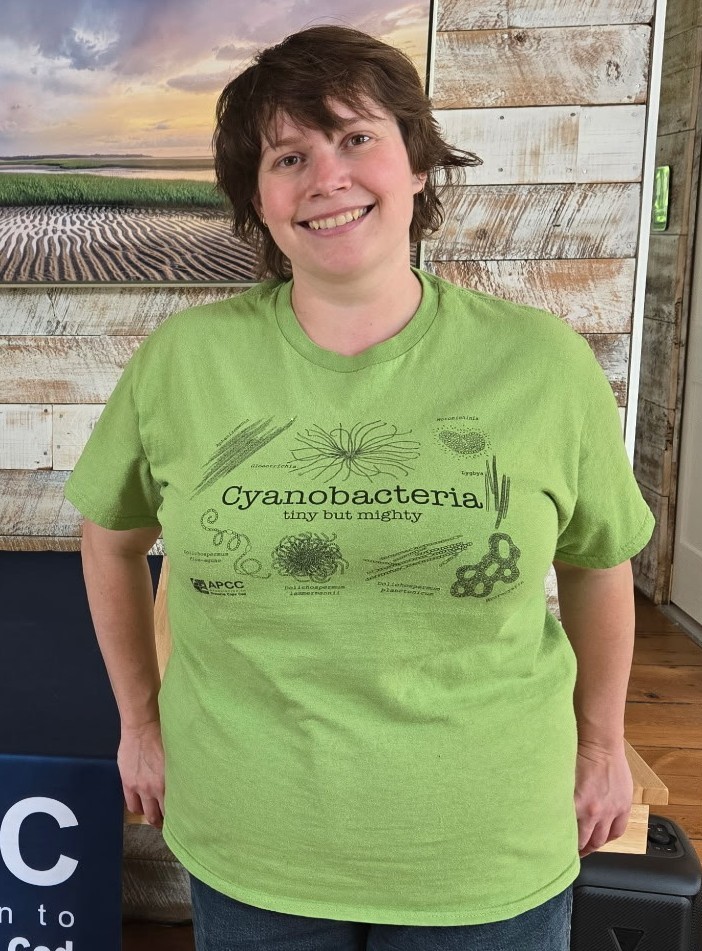
Cyanobacteria ~ tiny but mighty color kiwi $30 -includes USPS delivery in the U.S. |
|
|
|
| APCC eNewsletters
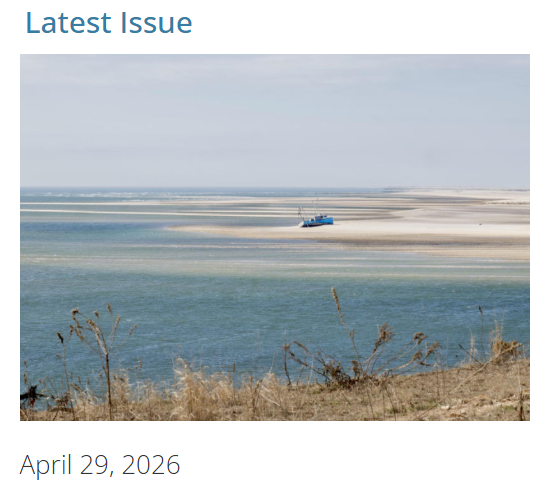
Our weekly newsletters are archived on our website and easily shared.
You can find past newsletters and share with your friends. Encourage others to sign up for future enewsletters HERE.
|
|
|
|
Are you thinking of going solar? We hope so! In partnership with E2 SOLAR in Dennis, APCC receives $500 for every solar installation when APCC is named as referral. |
|
|
|
| Thank you to the homeowners who just contracted to install solar panels through E2 Solar. May the sun always shine for you! |
|
|
|
Expressions Gallery, 578 Main Street, Chatham
CLICK HERE |
Expressions Gallery donates 20 percent of its profits to APCC's work. |
|
|
|
Thank you to our business sponsors! |
|
|
|
APCC is rated four stars by Charity Navigator,
2026 Platinum by Candid (formerly Guidestar). |
|
|
|
Our Contact Information
*{{Organization Name}}*
*{{Organization Address}}*
*{{Organization Phone}}*
*{{Organization Website}}*
*{{Unsubscribe}}* |
|
| |
|
|