Association to Preserve Cape Cod |
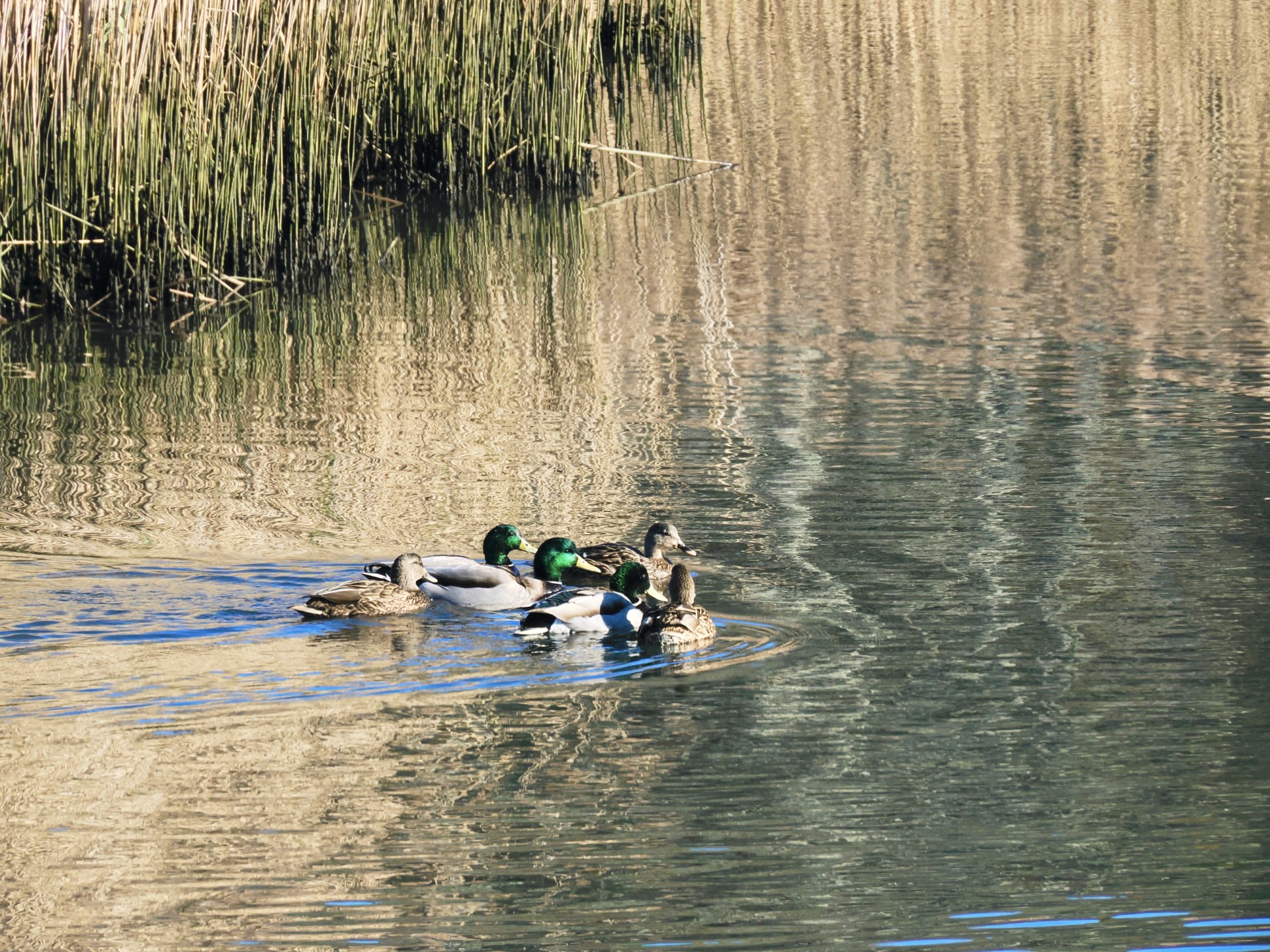
Above: Mallards. Photo by Sue Machie |
|
|
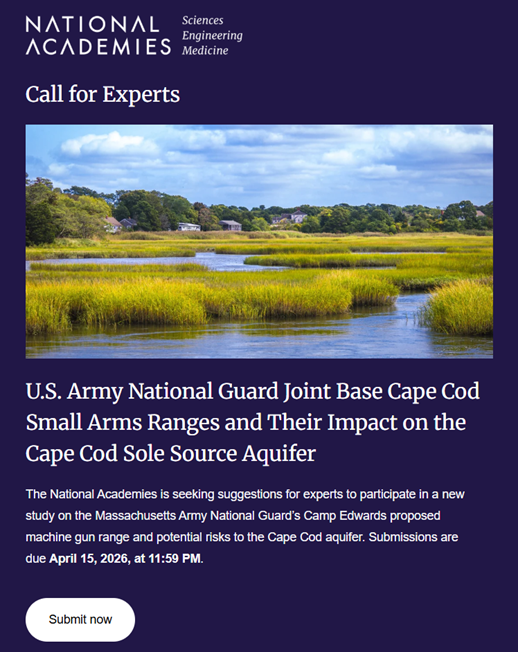
We know there are lots of people on the Cape with expertise relevant to this study and we want you to have the opportunity to serve on this important review panel or submit the name of someone you know who should be on it. Note submissions due April 15th. |
"The Massachusetts Army National Guard’s Camp Edwards sits atop the Cape Cod Aquifer, the primary drinking water source of the Upper Cape. Construction of a multipurpose machine gun range stalled in 2023 after an U.S. Environmental Protection Agency review identified potential risks to the aquifer.
"This study will review the current state of soil and groundwater contamination, assess monitoring plans and mitigation strategies for gun range contaminants, evaluate hydrologic and water quality models for contaminant fate and transport, and recommend updates to research, monitoring, and modeling activities to ensure small arms range training poses no significant risk to the underlying aquifer. "National Academies staff are looking to build a committee of volunteer experts in addition to collecting information for potential speakers, participants, and peer reviewers for any publications resulting from the activity. "Staff are looking for expertise in the following areas: - Subsurface hydrology (including monitoring and modeling)
- Geology and geochemistry
-
Subsurface environmental remediation
- Facilities construction and operation
- Army National Guard operations, planning, and programming
- Risk assessment
-
Exposure science
- Toxicology
- Epidemiology"
|
Ecosystem Restoration Program |
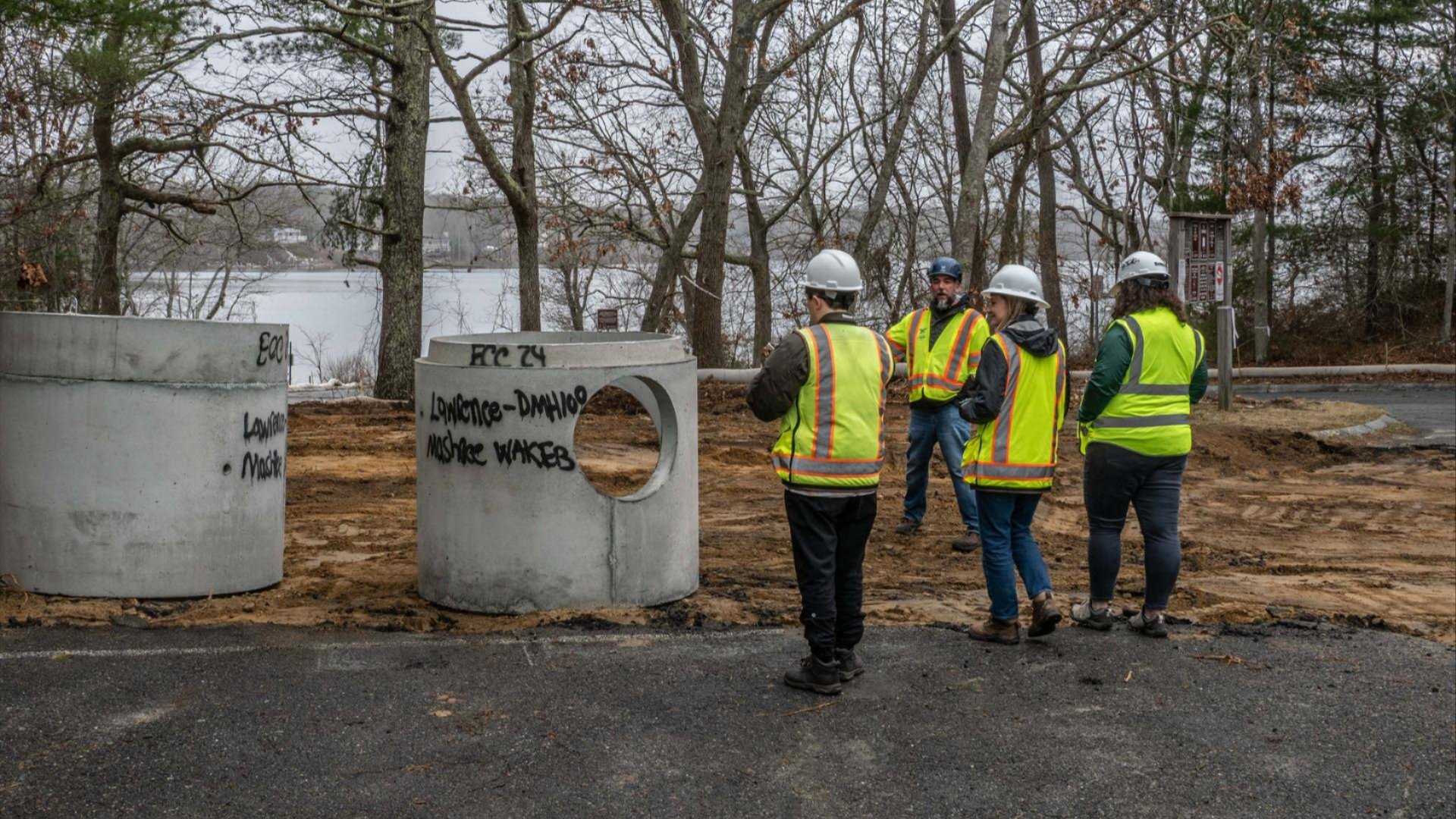
Above: The project team visits the Mashpee-Wakeby boat ramp to assess site conditions and review design elements in the field. |
New Green Stormwater Improvements Underway at Mashpee-Wakeby Boat Ramp
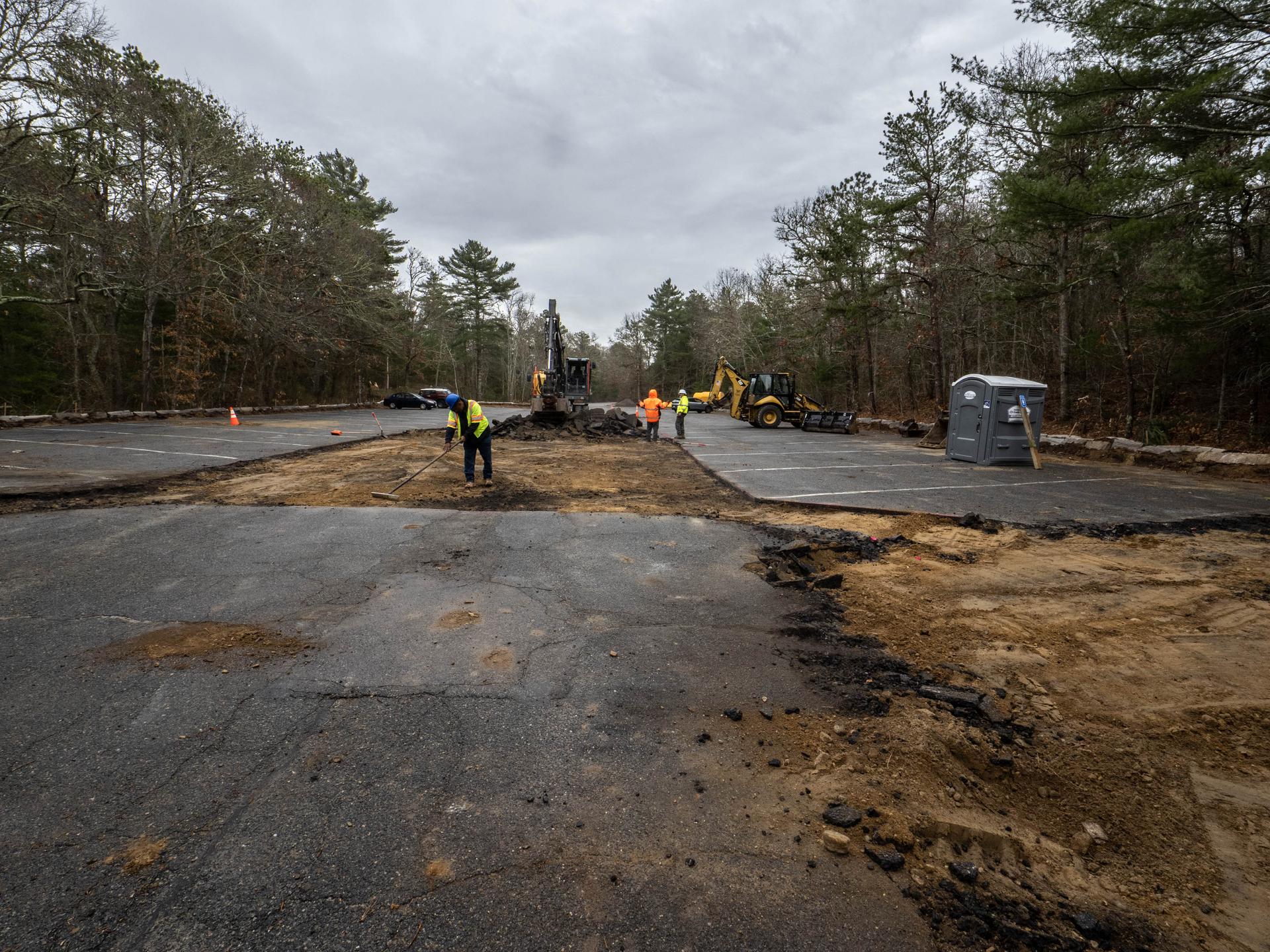
Construction is underway at the Mashpee-Wakeby boat ramp to install green infrastructure designed to improve stormwater management and protect local water resources. The project will reduce pollutants such as bacteria and nutrients in stormwater runoff, helping to improve water quality in Mashpee-Wakeby Pond, the Mashpee River, and Popponesset Bay downstream.
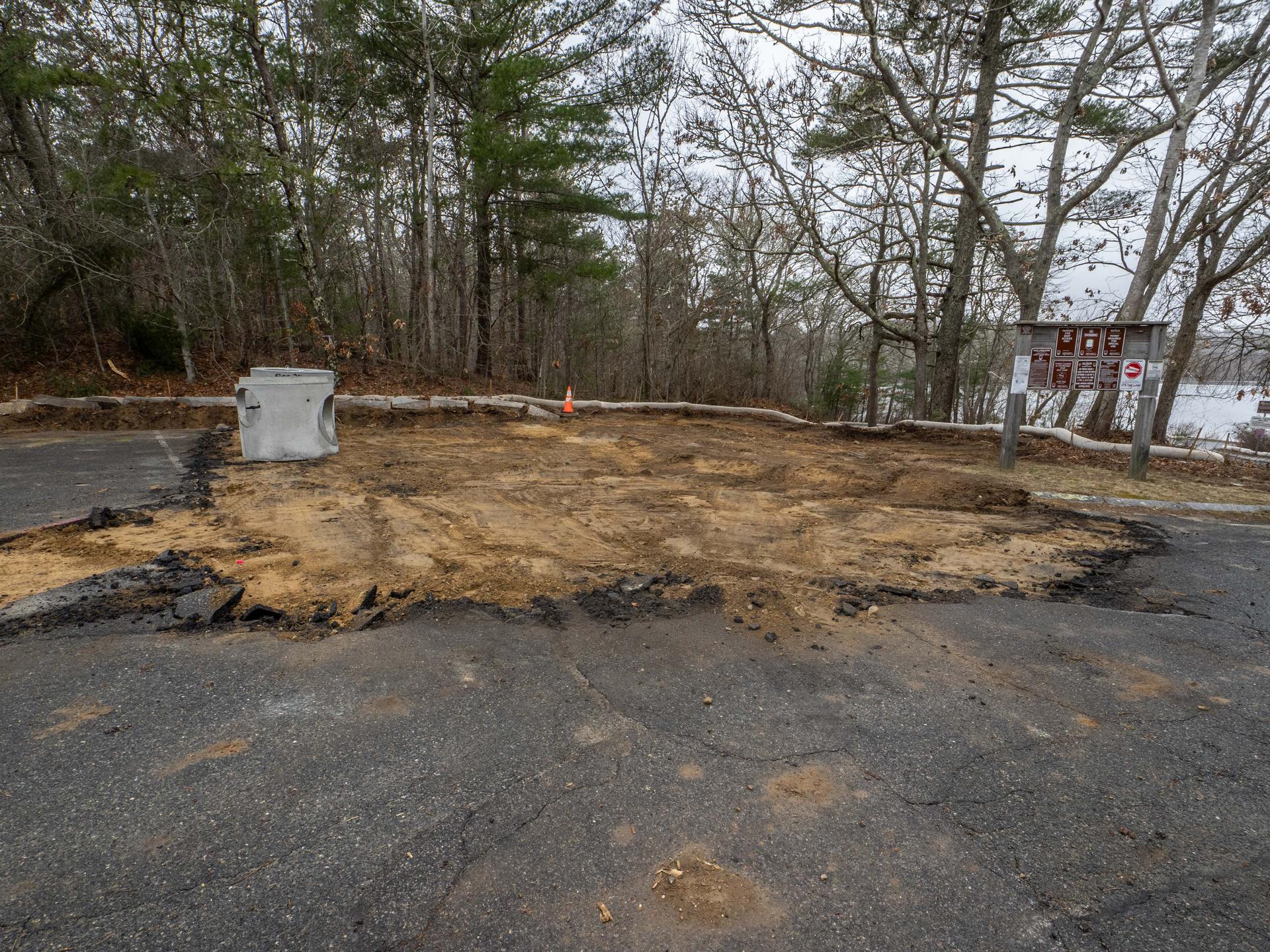
Runoff from the parking lot and access road will be captured and treated through a series of green stormwater practices, including bioretention areas that filter pollutants and underground infiltration chamber systems that allow water to soak into the ground. Together, these improvements will protect water quality while supporting healthier aquatic habitats and continued recreational use of the pond.
The project site includes a heavily used public boat ramp, parking area, and access drive, where aging pavement and lack of stormwater infrastructure have contributed to untreated runoff flowing directly into the pond. Planned upgrades include resurfacing the parking lot and the access road to better direct runoff, installing underground infiltration systems and bioretention areas that filter pollutants, and reducing impervious surfaces while maintaining the existing layout and access. Collectively, these improvements will significantly reduce pollutant loads entering the pond and river.
|
|
|
Above: Construction is underway, with crews installing green stormwater infrastructure to better manage runoff from the site. |
| Above: Ongoing construction activities will help improve water quality and support healthier conditions in Mashpee-Wakeby Pond and the Mashpee River. |
|
|
This site was identified as a priority through a 2021 Southeast New England Program (SNEP) grant, which evaluated boat ramp sites across Cape Cod for stormwater impacts. Since then, the project has advanced through design and planning with support from multiple funding sources, including Massachusetts Office of Coastal Zone Management (CZM) grants, Massachusetts Department of Fish and Game–Office of Fishing and Boating Access (OFBA), and private foundation funding secured by the Association to Preserve Cape Cod. The town of Mashpee has contracted Lawrence-Lynch Corp. to complete construction. This project represents an important step toward improving water quality and preserving the ecological health of Mashpee’s natural resources.
|
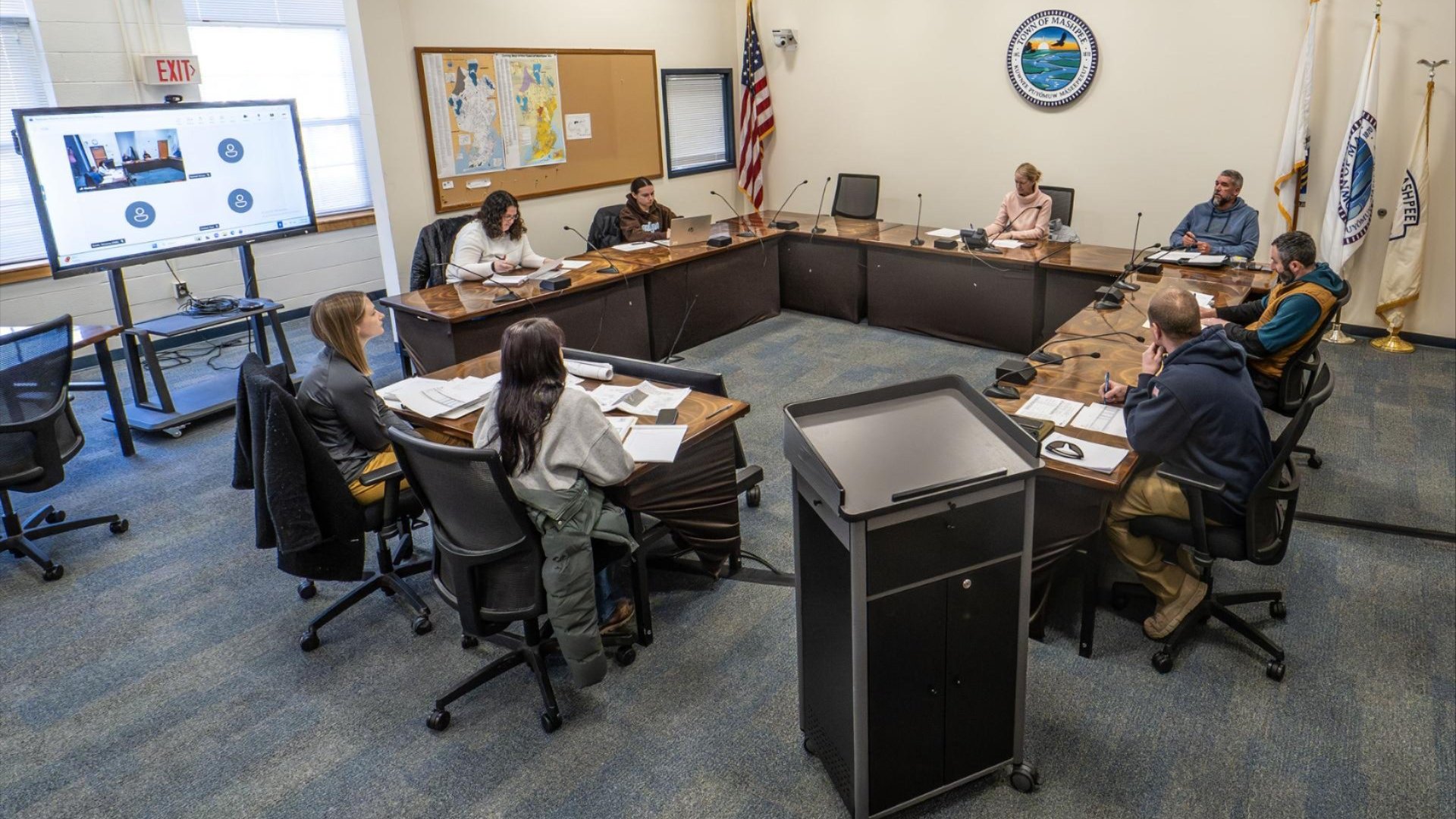
Above: Project partners meet at Mashpee Town Hall to discuss planning and coordination for the Mashpee-Wakeby stormwater improvement project. |
APCC Staff Participate in Salt Marsh Science Symposium |
Jordan Mora, APCC lead ecologist & science advisor, and Molly Autery, APCC salt marsh specialist, attended the 2026 Salt Marsh Science Symposium at the UMass Amherst Charles River Campus in Newton, MA. The symposium was hosted by the Salt Marsh Working Group, part of the Massachusetts Ecosystem Climate Adaptation Network (MASS ECAN), in partnership with the MassMarsh Program, which was established by the Massachusetts Department of Environmental Protection in 2024.
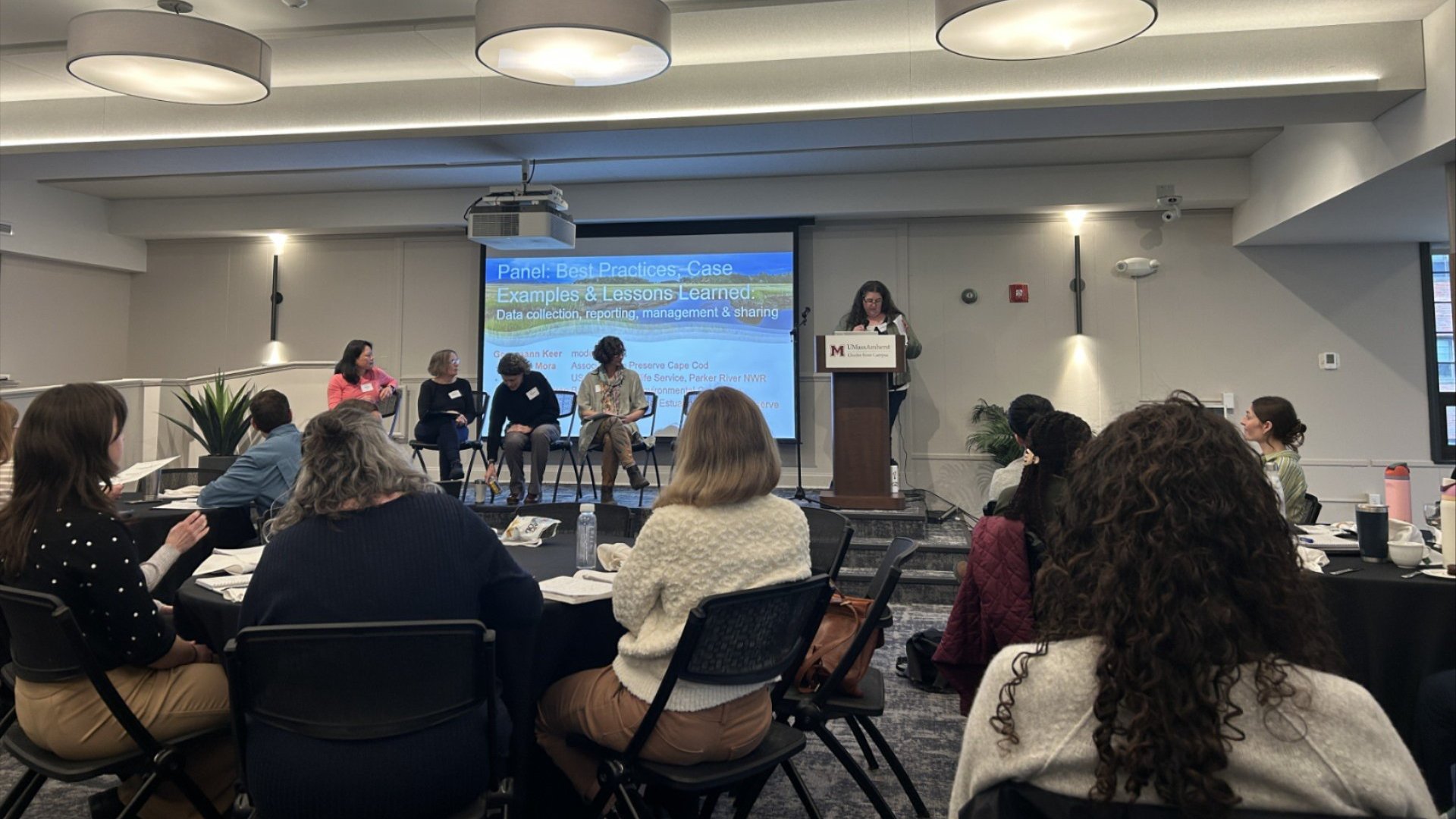
Jordan and Molly joined colleagues from across Massachusetts and the Northeast to discuss salt marsh monitoring, data collection, restoration planning, and permitting. Participants included scientists and practitioners from various nonprofit, state, and federal institutions. Attendees participated in interactive demonstrations of data collection tools and two panels addressing restoration challenges and strategies. Jordan participated in the event’s second panel and discussed her experiences with salt marsh data collection and management.
The Salt Marsh Science Symposium represents a collaborative effort to support salt marsh restoration, spearheaded by APCC staff and partners in the Salt Marsh Working Group and the MassMarsh Program. Opportunities like this provide a way to meet directly with partners, share resources, and collaboratively explore ways to improve the restoration process.
|
Above: Jordan Mora, APCC lead ecologist & science advisor, participates in a panel about data collection, reporting, management, and sharing at the Salt Marsh Science Symposium at the UMass Amherst Charles River Campus in Newton, MA. |
Herring Monitoring Program |
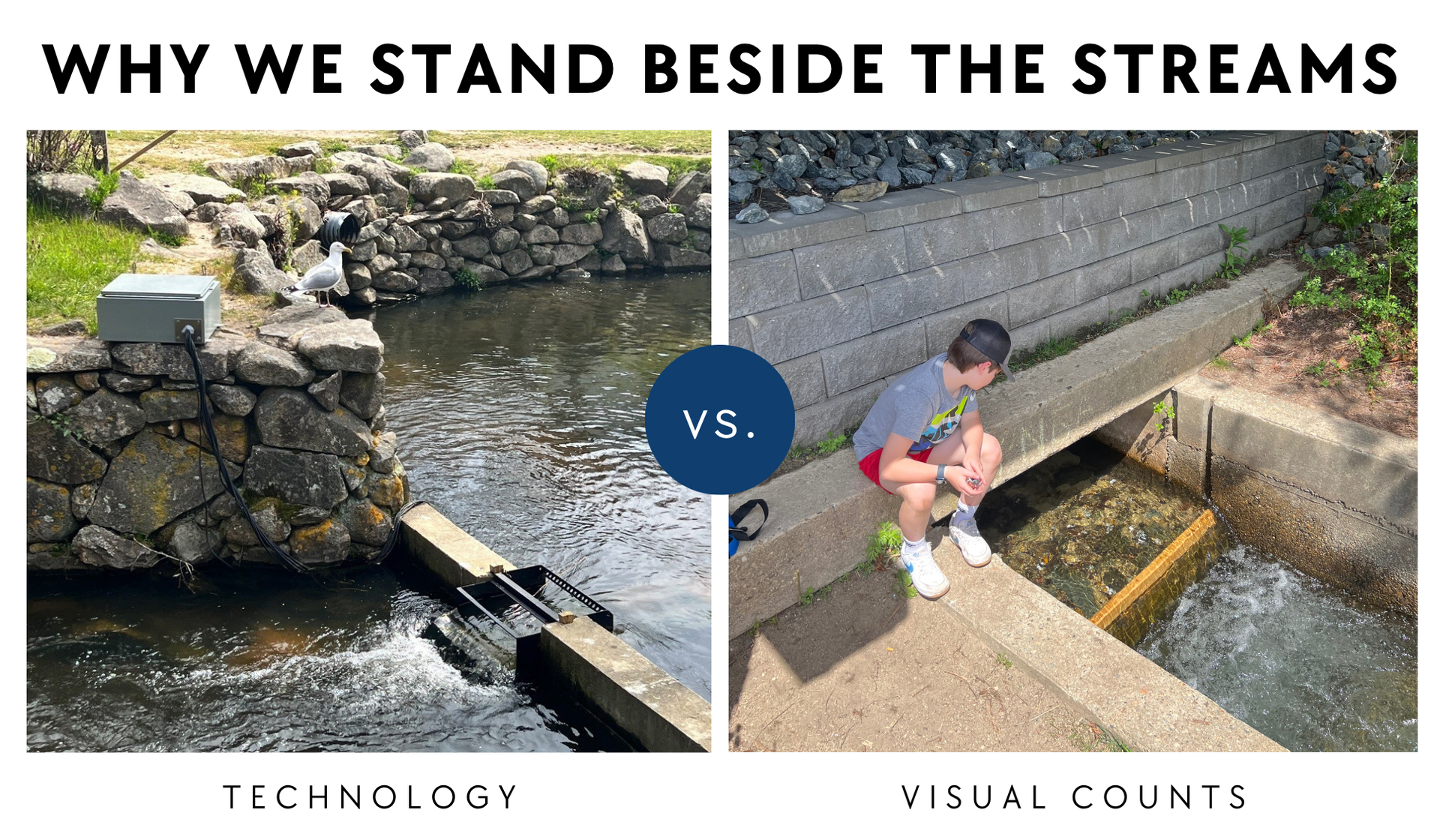
If you’ve spent time at Stony Brook in Brewster during river herring season, you’ve probably noticed the electronic fish counter near the run outside the Grist Mill. It’s a reminder that the concept of using technology to monitor fish passage isn’t new. For decades, people have looked for ways to automate fish counts. So why are volunteers still standing beside streams each spring, counting fish by hand? Because technology helps, but it hasn’t replaced the value of people on the ground.
Electronic fish counters were once seen as the future of fish monitoring, but in small, low-flow, highly variable systems like many on Cape Cod, they proved difficult to use reliably. Debris, turbulence, and shifting site conditions made dependable counts hard to achieve. Today’s camera systems are more flexible and can reveal things we might otherwise miss, especially nighttime movement or passage in low light. That matters. These tools are helping expand what we know about herring runs and will continue to play an important role. But these tools come with tradeoffs. Cameras are expensive to install and maintain, require power and protection, and generate large amounts of footage that still need review. Even with AI-assisted processing, they do not eliminate effort so much as shift it. That is why visual counts, done by people in 10-minute intervals, still matter. The method is not intended to capture every fish. It is intended to be consistent.
That consistency is what gives the long-term dataset its value. Counts collected today can be compared with counts from years ago because the method has remained largely unchanged.
And volunteers are doing more than counting fish. They are noticing water levels, blockages, predators, fish behavior, and other conditions that help explain what is happening at a site. That broader awareness still matters. There is also something else technology cannot replace: connection. When people show up to count herring, they build a relationship with the run. They see the migration unfold in real time. They begin to understand how closely these fish are tied to flow, habitat, water quality, and restoration. That experience builds not just data, but stewardship.
And that stewardship matters. Volunteers share what they see, bring their kids and grandchildren, talk to neighbors, and help build public understanding of why fish passage and river restoration are worth supporting.
As the 2026 river herring season gets underway, we are making one final call for volunteers. A short shift once a week can contribute to a long-term record that helps guide restoration, inform management, and track the health of these runs across Cape Cod. Whether you are new to the program or returning for another season, your participation matters.
The Cape Cod River Herring Monitoring Program work is funded by MassBays and carried out in collaboration with the Massachusetts Division of Marine Fisheries, alongside local partners and dedicated volunteer run coordinators. |
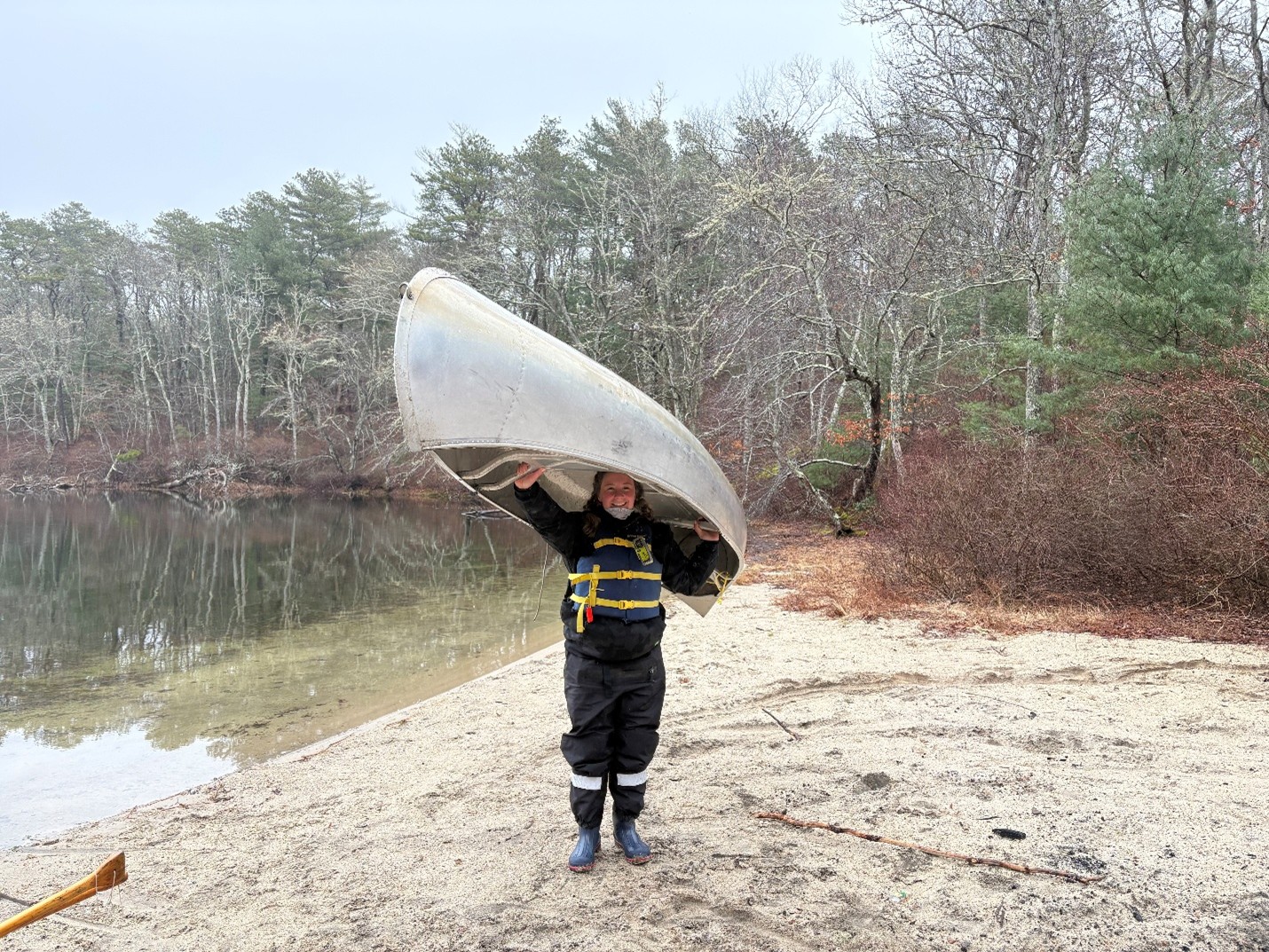
Above: APCC Pond Technician Jules Buccella at Moody Pond in Mashpee on April 3rd. |
We’re back out on the ponds—and we hope to see you there!
Along with the spring peepers having migrated from the woods to the pond shores and vernal pools for breeding season, APCC’s Cape Cod Regional Pond Monitoring team has also been making its way back to the water.
Over the winter, our program and the team grew. We are now monitoring 25 additional ponds each month, bringing our total up to 75. Since our wonderful pond technicians, JT and May, can’t be in multiple places at once, the pond team welcomed two new members: Jules and James. They’ve both already braved the icy March weather to learn the ropes of pond sampling, including the art of carrying the canoes overhead, and they are looking forward to meeting you out on the ponds. We truly couldn’t do this work without our incredible volunteers, and we hope you’ll join us out in the canoes this season.
To sign up to volunteer with APCC, please click here. If you have any questions about the program and volunteering, email volunteer@apcc.org. |
|
|
Learn more about The Cape We Shape campaign and sign up to be part of Team SOS to engage in efforts to permanently protect the last undeveloped acres that have been identified as priority natural resource areas.
As part of Team SOS, look for regular emails most Mondays to learn of news,
next steps, and how you can help. If you are NOT getting our Monday update emails, please let us know and we will ensure you do. Come pick up campaign signs, flags, handouts, stickers at APCC's office in Dennis: email TeamSOS@apcc.org to arrange day and time. We now have Team SOS t-shirts available for purchase at APCC's office. |
Attention Runners: Run the 2026 Falmouth Road Race for APCC |
|
|
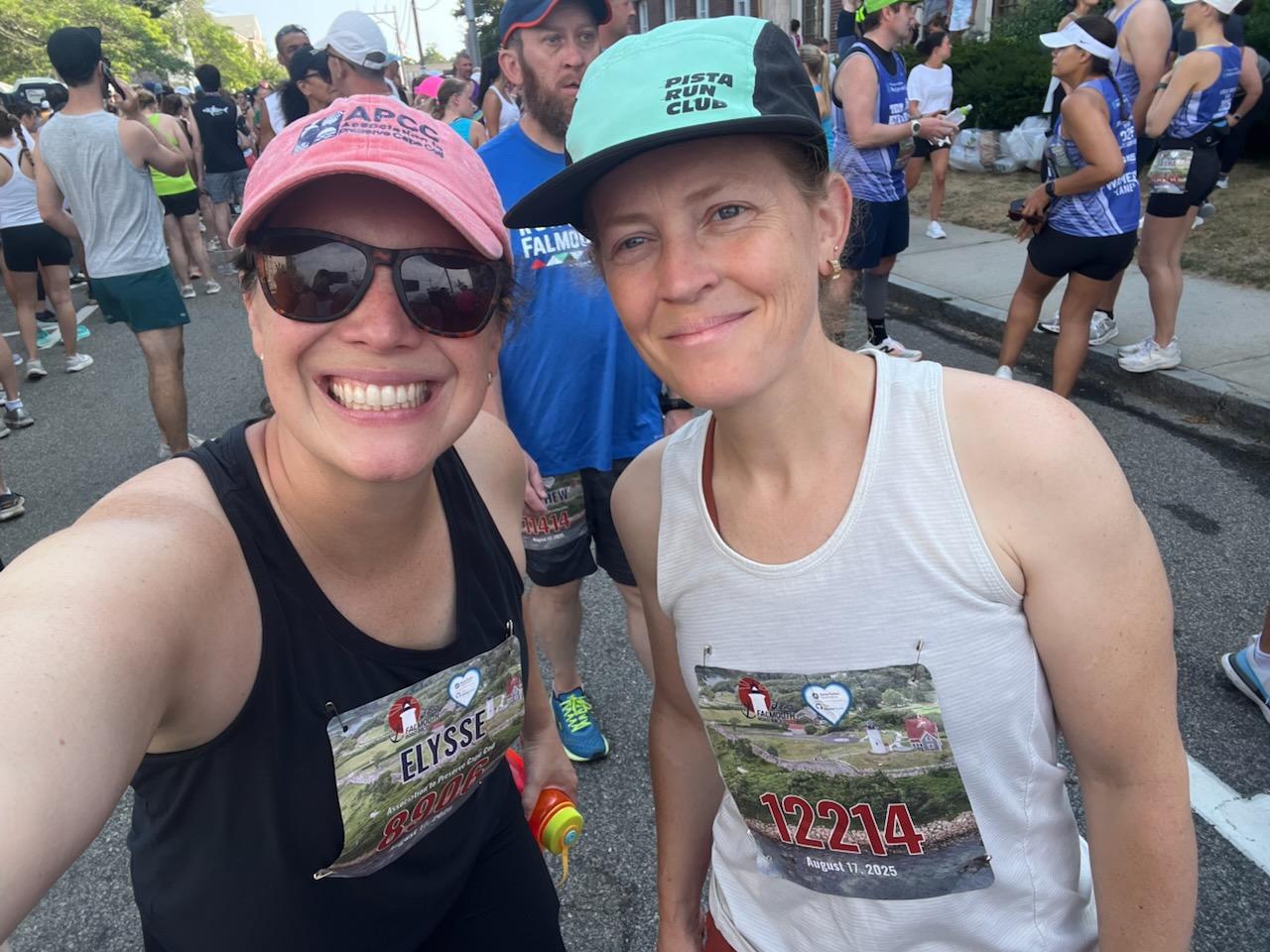
Above: Elysse Magnotto-Cleary, APCC president, and her friend Mary ran for APCC in 2025. |
|
APCC is thrilled to be a part of the "Numbers for Nonprofits" program for the 2026 Asics Falmouth Road Race, and we are currently accepting applications for this year's team. Team members will receive a guaranteed race entry, fundraising tips and tools, a fundraising web page, and support throughout the process. If you're interested in amplifying APCC's work in a fun and unique way,
please apply here.
Questions? Please reach out to runforapcc@gmail.com |
|
|
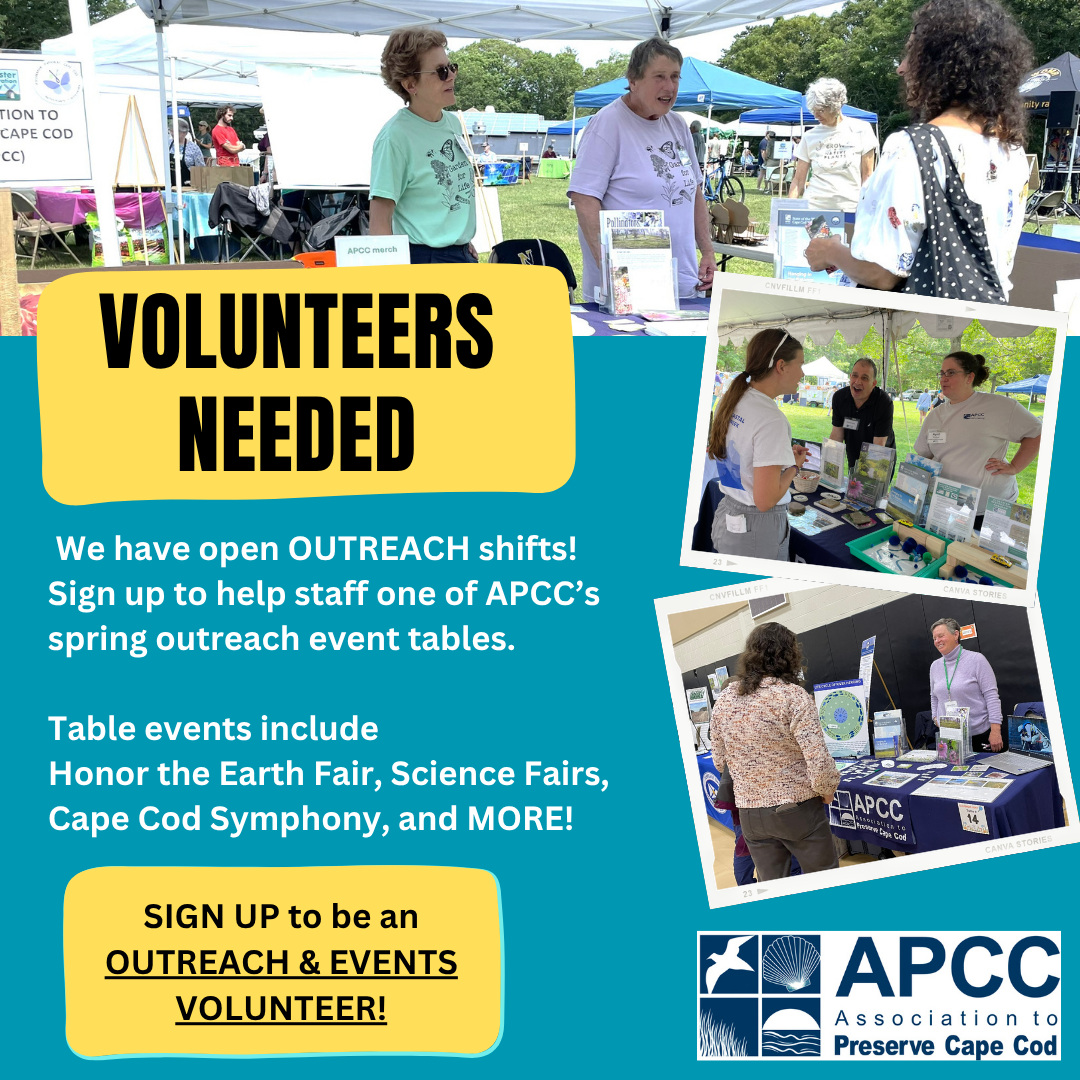
Volunteers are needed now! We are currently looking for volunteers to help with our spring event educational outreach tables. In many cases we are double booked and need an extra hand or two to help set up and staff our tables. This is a fun way to get involved and learn more about preservation and restoration projects happening all over the Cape. Come meet your neighbors and fellow conservationists!
APCC volunteer opportunities abound! There are so many ways you can participate as an APCC volunteer this spring. Sign up now to help join staff at one of our educational outreach tables, prepare for our annual native plant sale, get outside with the ecolandscape garden crew, or get involved with The Cape We Shape. |
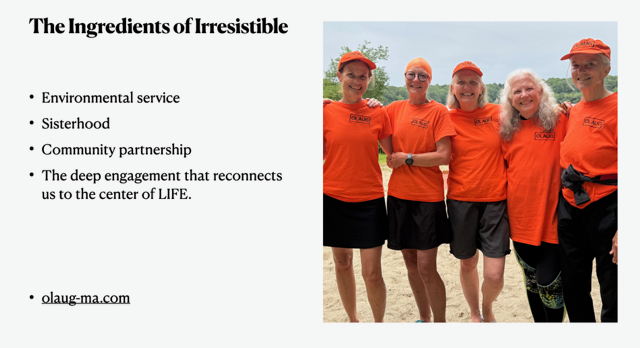
What Makes Helping the Planet Irresistible? with Susan Baur, founder of Old Ladies Against Underwater Garbage Friday, April 17, 2026 1:00- 2:30 p.m.
At APCC's headquarters in the Koppel Center in Dennis and online via Zoom.
Certain acts of environmental service break through into public awareness for a variety of reasons—the unusualness of the service itself, the unusualness of those performing it, or the unanticipated flood of emotions the action releases.
Susan will share with us what she knows about what makes diving for beer cans, golf balls, fishing lures, spent fireworks, and the occasional toilet or motorcycle—irresistible! |
|
|
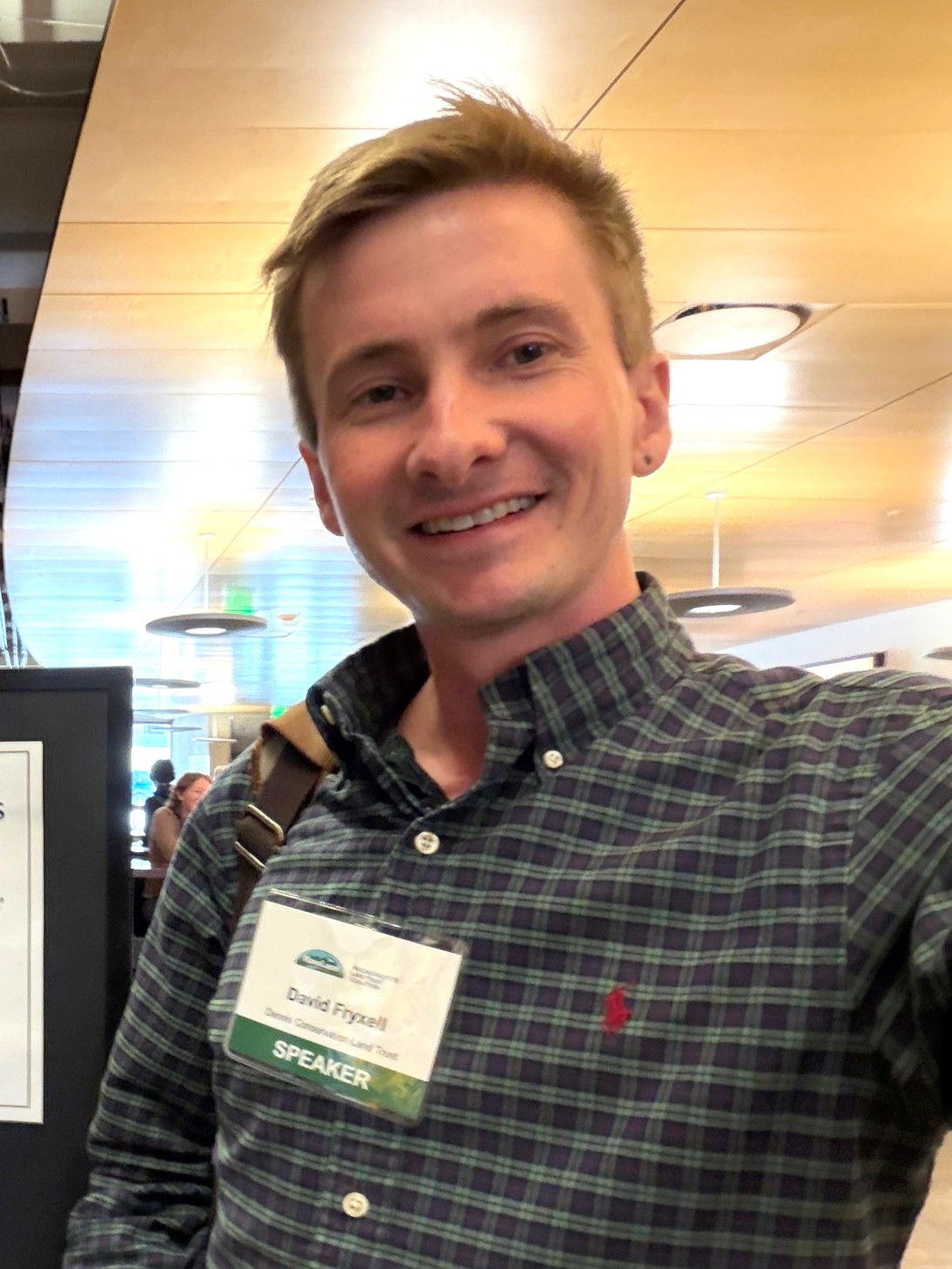
| Pond Ecology Matters: Biodiversity and Its Role in Pond Health with Dave Fryxell, Ph.D., Dennis Conservation Land Trust Executive Director |
Friday, May 1st 1:00 - 2:30 p.m.
At APCC's headquarters in the Koppel Center in Dennis and online via Zoom.
In this talk, Dave will explore how the plants, animals, and microscopic life within ponds shape their health, resilience, and function. Drawing on classic studies and compelling real-world, local examples, he will share stories that reveal how ponds both support and depend on the rich web of life they contain. Read more...
|
|
|
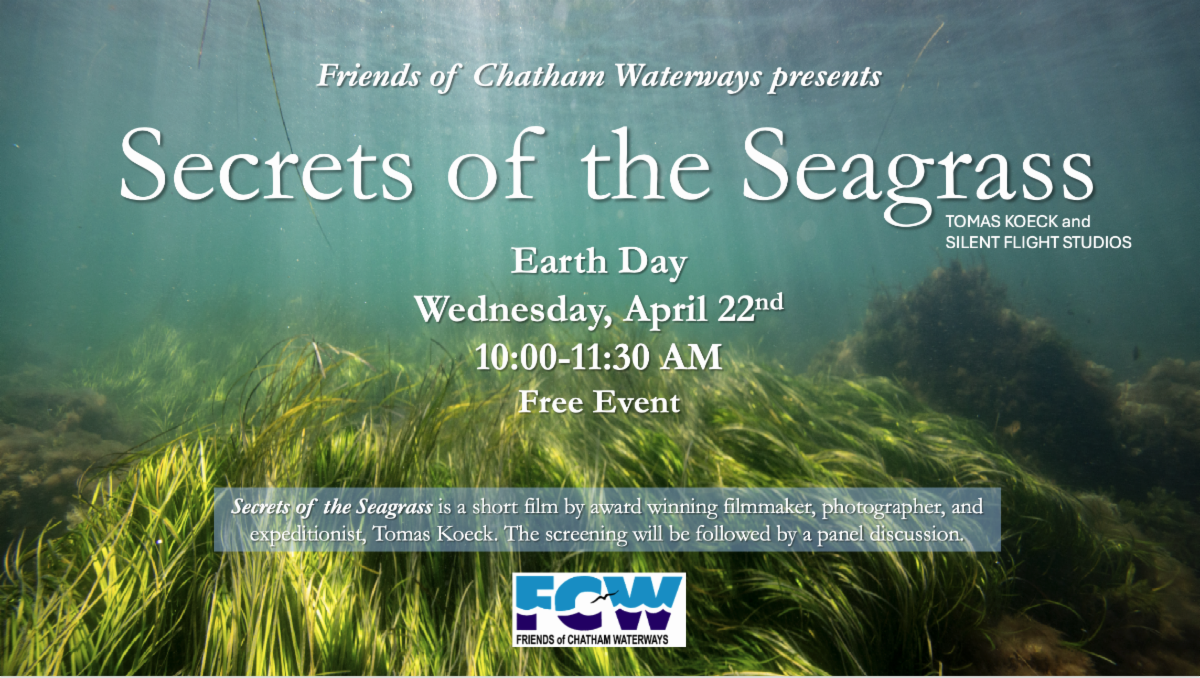
Celebrate Earth Day at the Chatham Orpheum theater where Friends of Chatham Waterwasy is hosting the showing of “Secrets of the Seagrass.” A discussion will follow with a notable panel, including the filmmaker, Tomas Koeck, Chatham’s director of natural resources, Greg Berman, and the director of both Seagrass Net and the Center for Coastal Studies’ Benthic Ecology Program, Dr. Agnes Mittermayr. |
A Cape-wide Conservation Event Calendar |
The Compact of Cape Cod Conservation Trusts (“the Compact”) and its nonprofit members launched a new regional calendar of events. The Conservation Calendar includes programs across Cape Cod hosted by these groups. The goal of the calendar is to encourage visitors and residents to take part in nature and environmental events. You can always find the link to the calendar on APCC's website under News & Events.
|
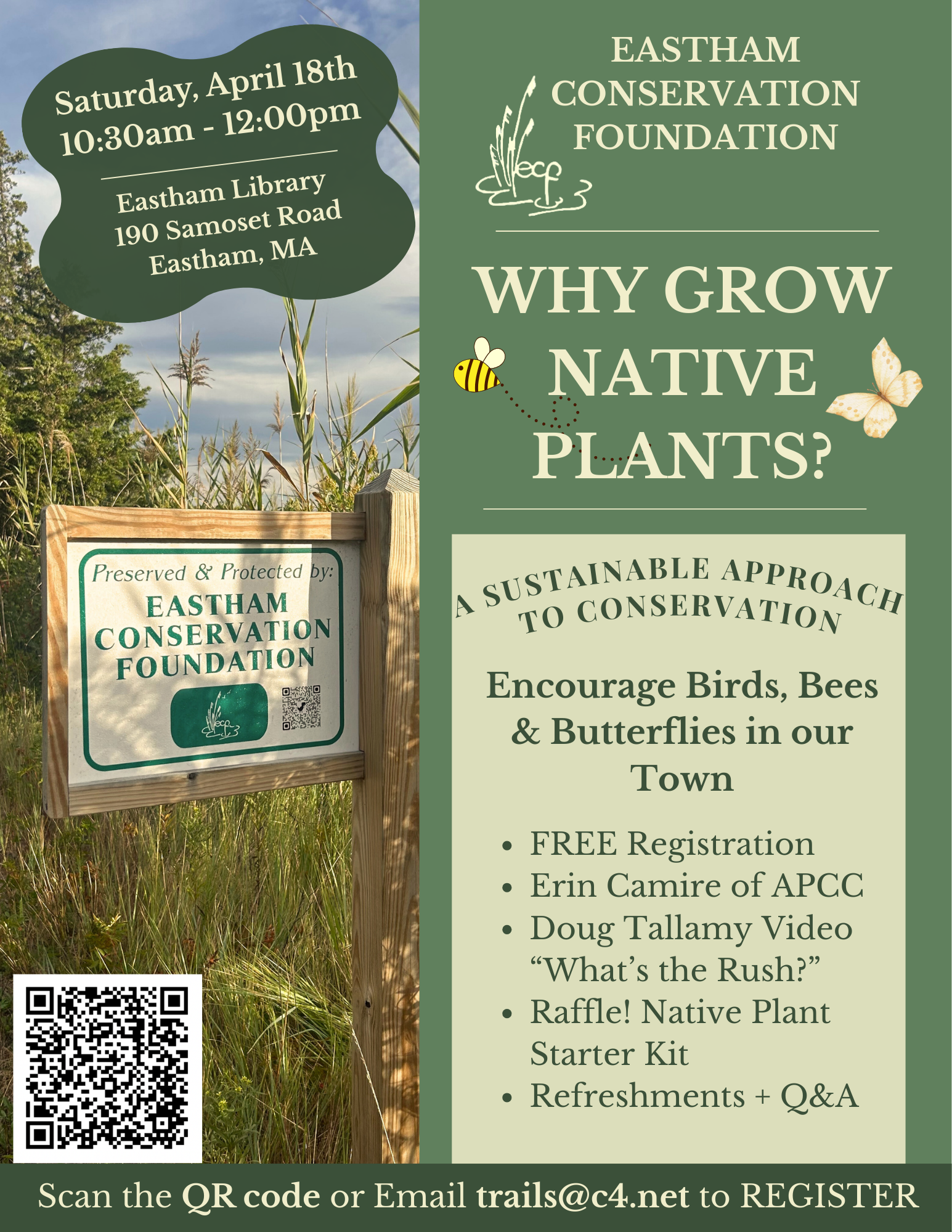
If you are a farmer or someone who wants to grow native plants to sell, or you just want to be updated on the program's development, please submit the interest form that appears on our webpage. We will be sending periodic email notices of workshops and meetings.
Funding for the project is provided by Barnstable County and its Economic Development Council License Plate Grant Program through the Cape Cod Commission, the Kelley Foundation and private donors. |
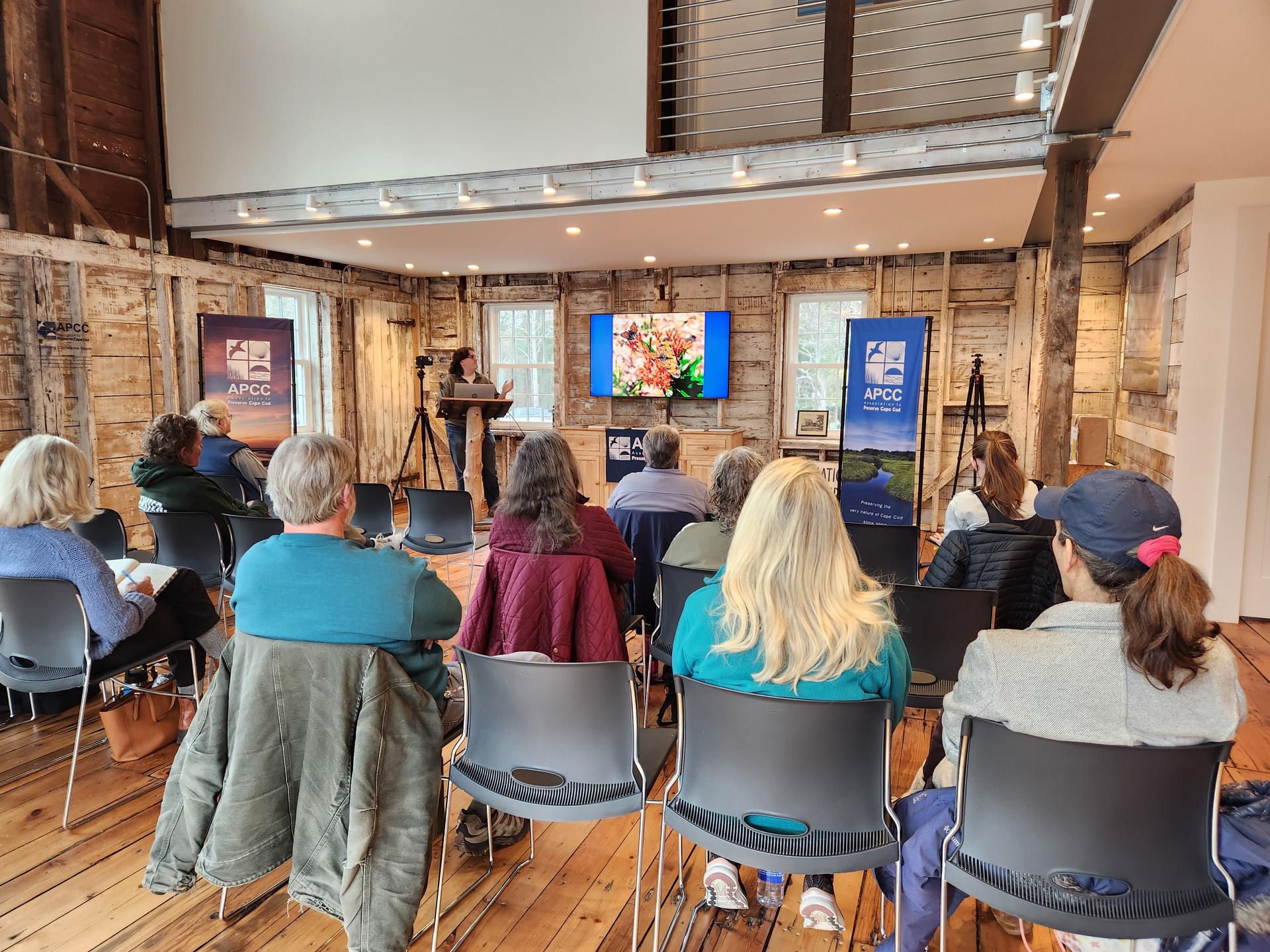
Ten talks for prospective growers as part of the Cape Cod Native Plant Growers' Cooperative program have been presented thus far, with more scheduled in the upcoming weeks. These past workshops can be viewed here: |
A Cape Cod Native Plant-selector ~ to help you choose the perfect native plants for your garden. |
|
|
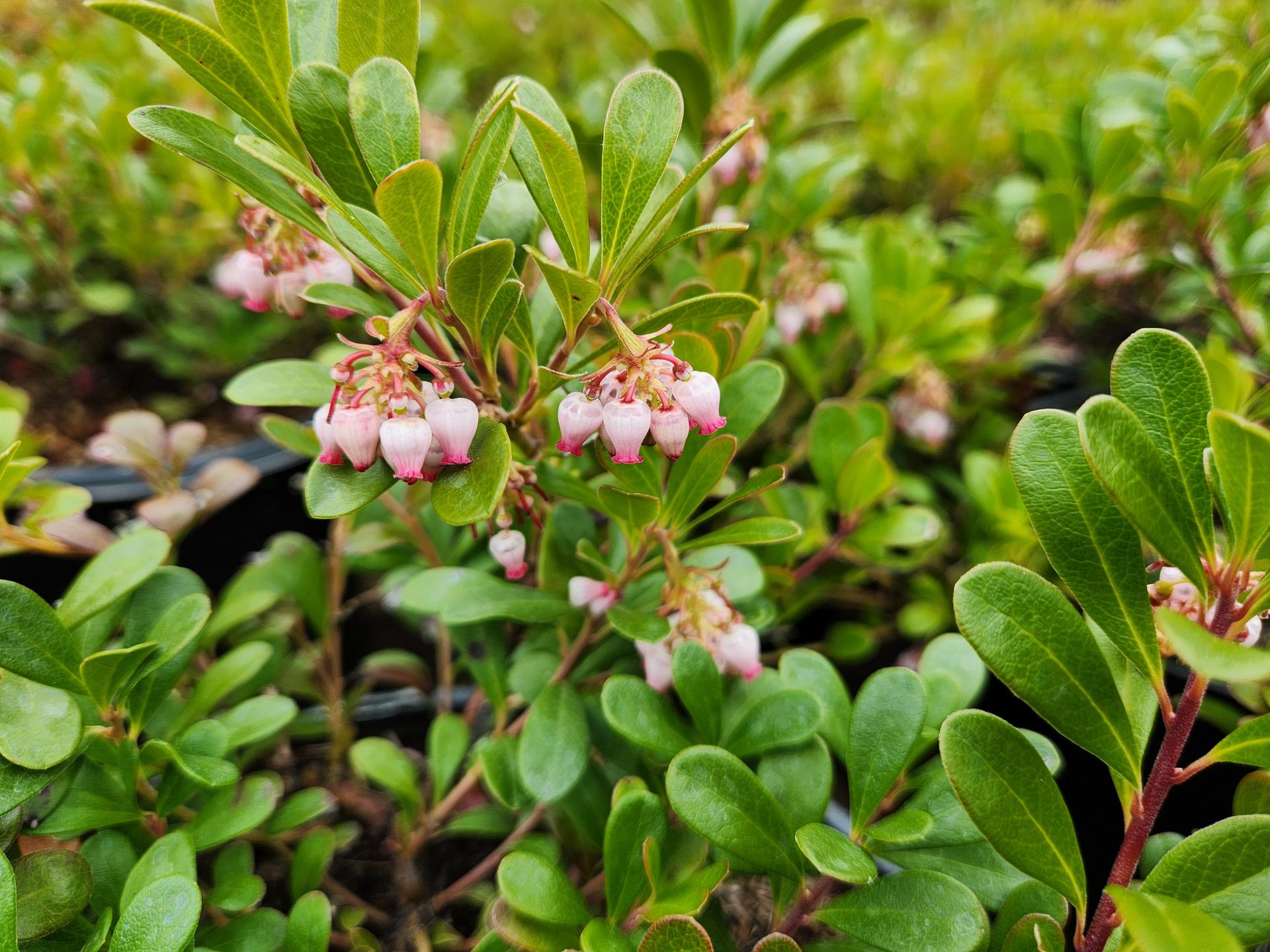
Email kandres@apcc.org and we'll send you a CapeCodNativePlants.org decal. | | Bearberry Arctostaphylos uva-ursi |
|
|
The purpose of this site, CapeCodNativePlants.org is to help native plant enthusiasts select the right plant for the right place. While not all native plants presented here are indigenous to Cape Cod, they are suitable native species for Cape gardens and managed landscapes.
Why Native Plants? Many native plants are drought tolerant, salt tolerant, and thrive in the “thin” soils found on Cape Cod. Native plants are as attractive as any plant, and are reflective of the Cape’s natural beauty. By planting native species appropriate for Cape Cod, you can conserve water, avoid pesticide and fertilizer use, and support pollinators and birds.
|
|
|
|
The Guidelines gives homeowners steps they can take in the design and maintenance of their properties that will support pollinators and birds, manage stormwater, conserve water, and protect the Cape's water quality. This 40-page booklet is beautifully illustrated by Marcy Ford with content that is easily digestible and supported by numerous resources for additional learning.
|
|
|
We are grateful for the several retail shops that are partnering with us to make this publication more widely available: Brewster Book Store, Birdwatchers General Store, Crocker Nurseries, Wellfleet Audubon Wildlife Sanctuary, Cape Abilities Farm, Cape Cod Museum of Natural History, the Cape Cod Lavender Farm, Heritage Museums and Gardens, Titcomb's Bookshop, Sea Howl Bookshop, Soares Flower Garden Nursery, and Eight Cousins Bookshop.
If you are a retailer and would like to sell this publication at your store, please contact us. |
|
|
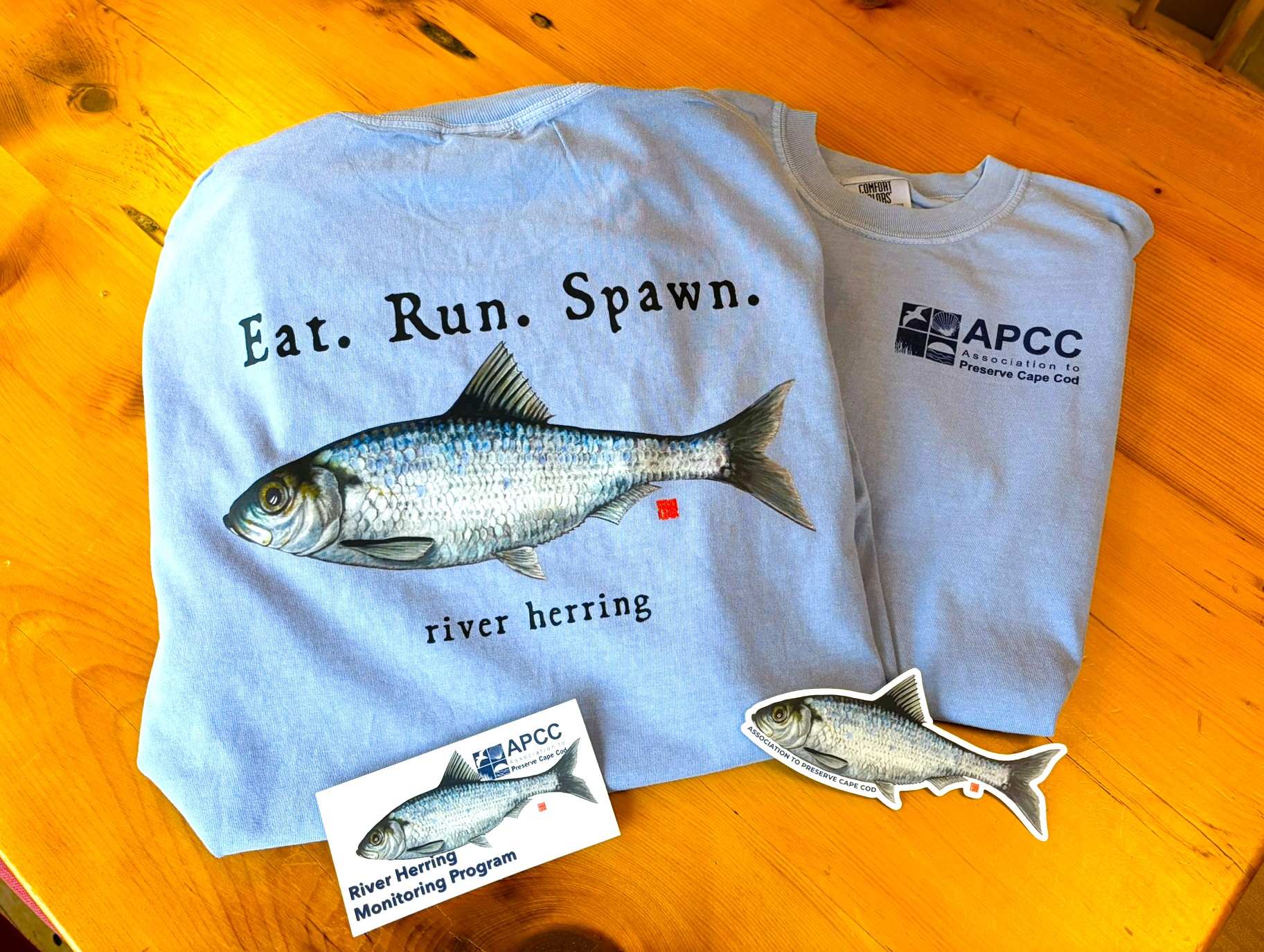
New Offering - Celebrate the Run! Herring T's color denim blue $30 - includes USPS delivery in the U.S. |
|
|
APCC caps
$25 -includes USPS delivery in the U.S. |
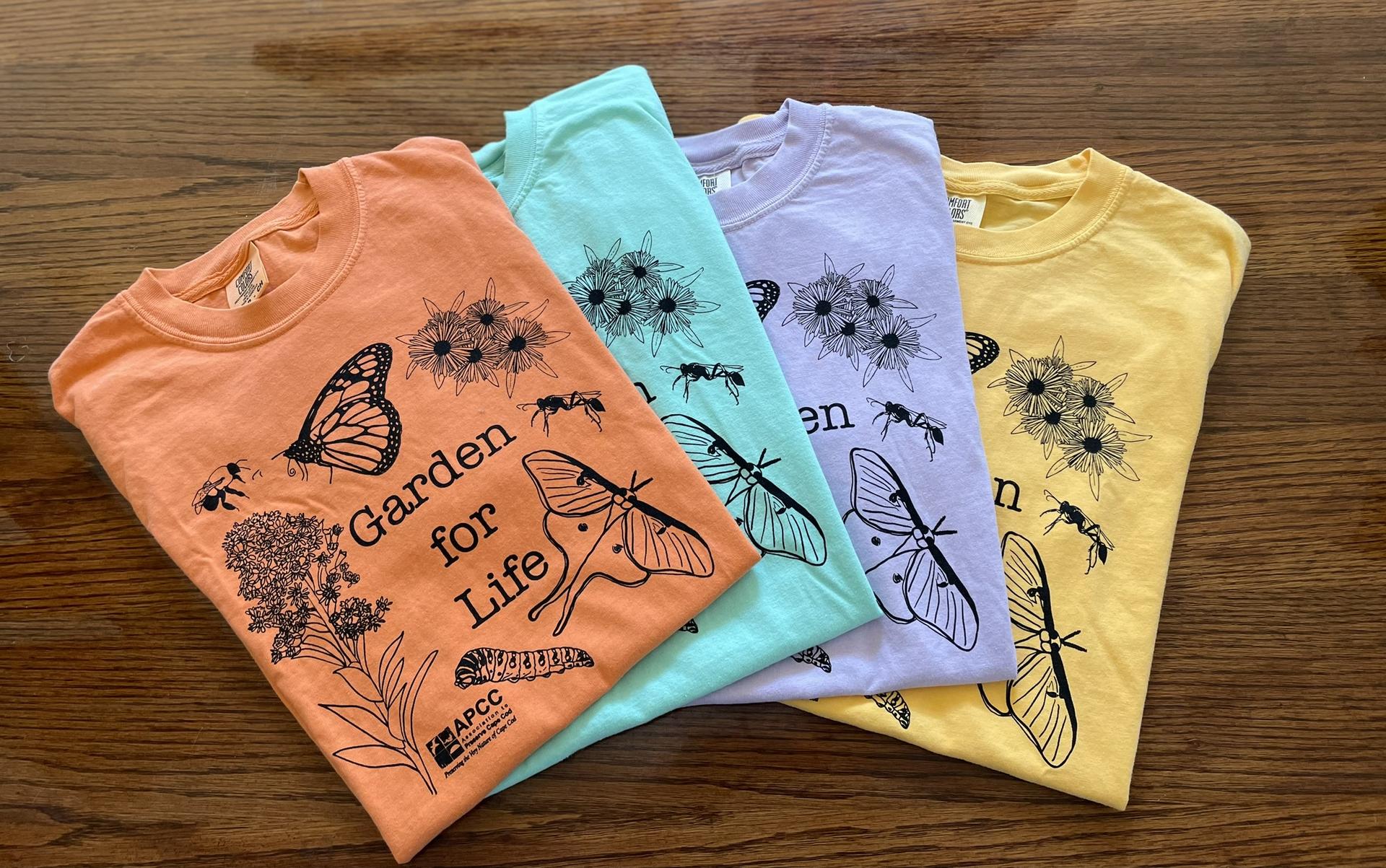
Garden for Life T's $30 -includes USPS delivery in U.S. |
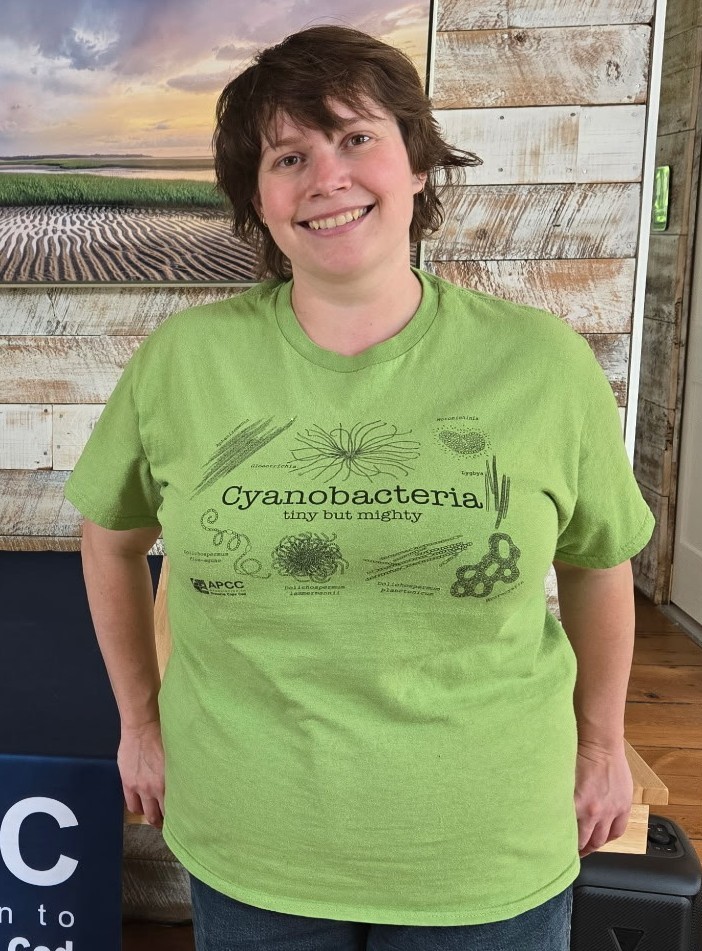
| Cyanobacteria ~ tiny but mighty color kiwi $30
-includes USPS delivery in the U.S. |
|
|
| APCC eNewsletters.
Our weekly newsletters are archived on our website and easily shared.
You can find past newsletters and share with your friends. Encourage others to sign up for future enewsletters HERE.
|
|
|
Are you thinking of going solar? We hope so!
In partnership with E2 SOLAR in Dennis, APCC receives $500 for every solar installation when APCC is named as referral. |
|
|
|
Thank you to the homeowners who just contracted to install solar panels through E2 Solar. May the sun always shine for you! |
|
|
Expressions Gallery, 578 Main Street, Chatham
CLICK HERE |
Expressions Gallery donates 20 percent of its profits to APCC's work. |
|
|
Thank you to our business sponsors! |
|
|
APCC is rated four stars by Charity Navigator, 2025 Platinum by Candid (formerly Guidestar), and 2024 Top-Rated by GreatNonprofits. |
|
|
Our Contact Information
*{{Organization Name}}*
*{{Organization Address}}*
*{{Organization Phone}}*
*{{Organization Website}}*
*{{Unsubscribe}}* |
| |
|
|