Association to Preserve Cape Cod |
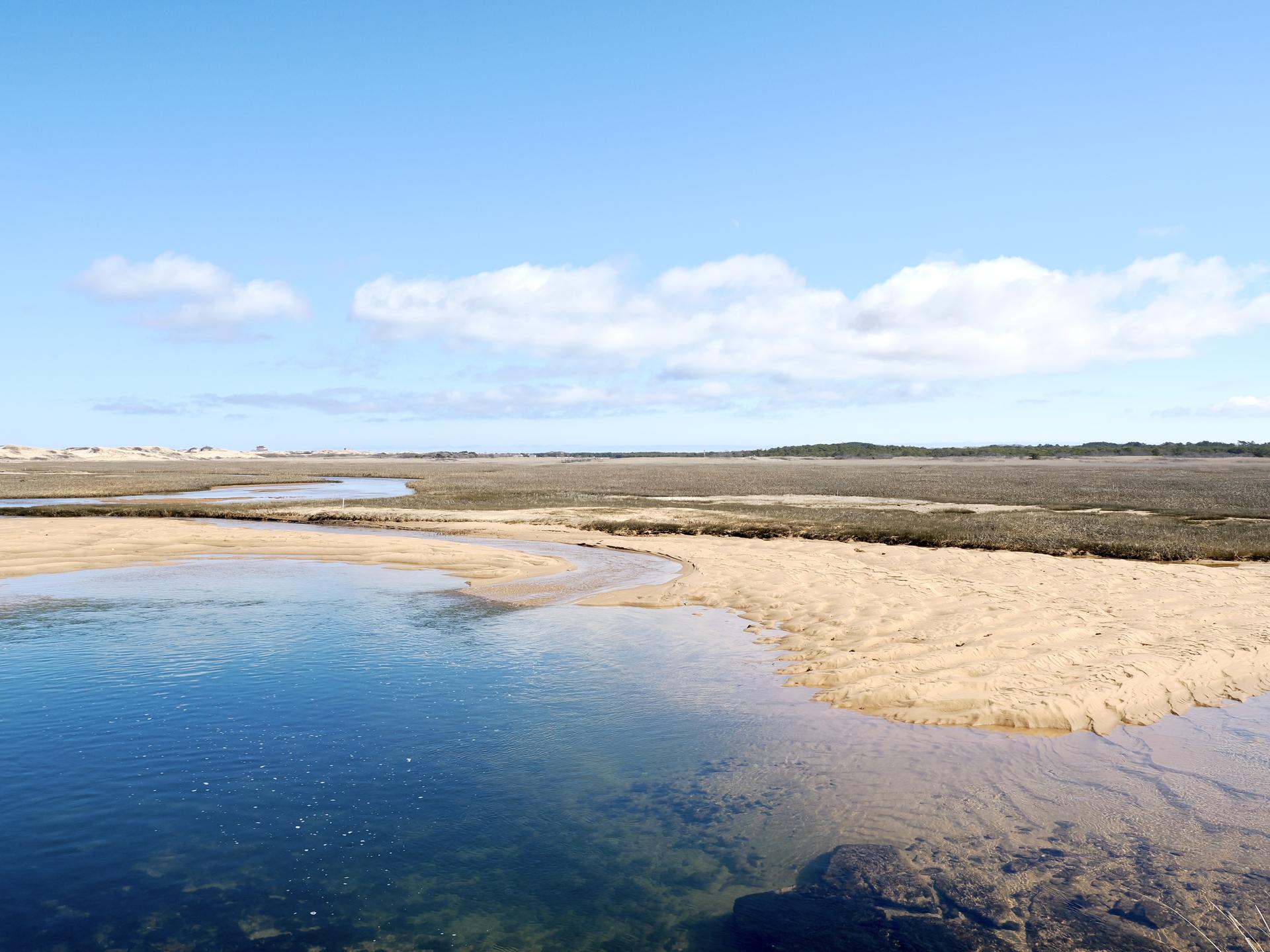
Above: photo by Sue Machie |
|
|
|
It Matters Who Pays
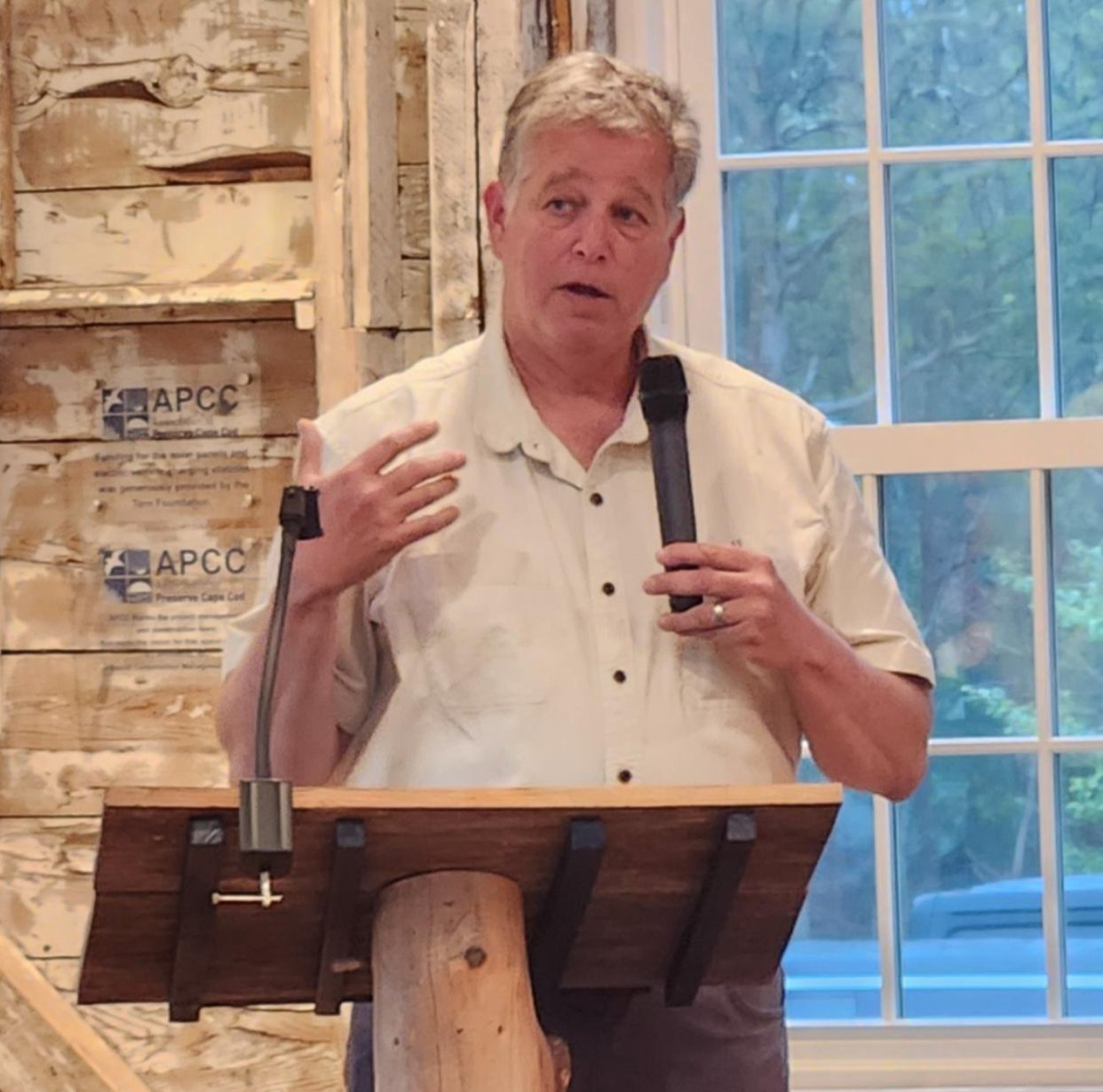
by Andrew Gottlieb, Executive Director |
Ninety percent of the Cape’s estuaries exhibit poor water quality resulting directly from excess nitrogen, mostly from septic wastewater disposal. Towns across the Cape are spending hundreds of millions of dollars on wastewater infrastructure with the goal of reducing nitrogen loading sufficiently to restore water quality. |
|
|
The studies that determined how much nitrogen needs to be removed were predicated on the assumption that new development could not add new nitrogen to the system. Doing otherwise, it was recognized, would reverse publicly funded nitrogen reductions and raise taxpayer mitigation costs.
Fair to assume then that the state would ensure that the permits it issues to new developments would require any new nitrogen associated with the development be offset with developer-funded reductions in existing nitrogen loads. That assumption is not only reasonable, it is also what the state’s own rules require. The state knows that permitting new nitrogen loads without enforceable and timely offsets will delay restoration, shift costs from the private to the public sector and increase taxpayer expense.
How then does one rationalize the state’s decision to issue a permit to a developer in Falmouth that authorizes increased nitrogen loading to the nitrogen-impaired Great Pond estuary, without defined and enforceable offsets?
The simple answer is that the groundwater discharge permit issued for the Easterly development neither makes sense nor does it reflect the proper and lawful execution of MassDEP’s obligations to protect the waters of the Commonwealth. Left to stand, the Easterly permit would set a precedent that threatens the value of the public’s current and planned investment to restore our damaged waters.
APCC is proud to have teamed up with the Coonamessett River Trust and numerous Falmouth residents to appeal the Easterly groundwater discharge permit to uphold the spirit and letter of the laws protecting the Cape’s precious waters. The reason APCC has joined this appeal has everything to do with protecting the premise that new nutrient loading to impaired watersheds, regardless of the use creating that load, must be offset by the permit holder. The type of development responsible for the new loading—be it agriculture, industry, retail, or housing—doesn’t matter; the principle our appeal defends is the legal requirement that new loads must be offset to no net increase.
This isn’t a fight about whether development is allowed. The fight here is about who pays to offset the cost of new nitrogen loading in places already experiencing poor water quality. Not only will upholding the law help timely restoration of degraded waters, it will also protect the public from having to bear the costs of private sector impacts on the environment. This is a fight worth fighting and APCC is fighting it on behalf of efforts everywhere to bring our waters back to their previous glory. |
Ecosystem Restoration Program |
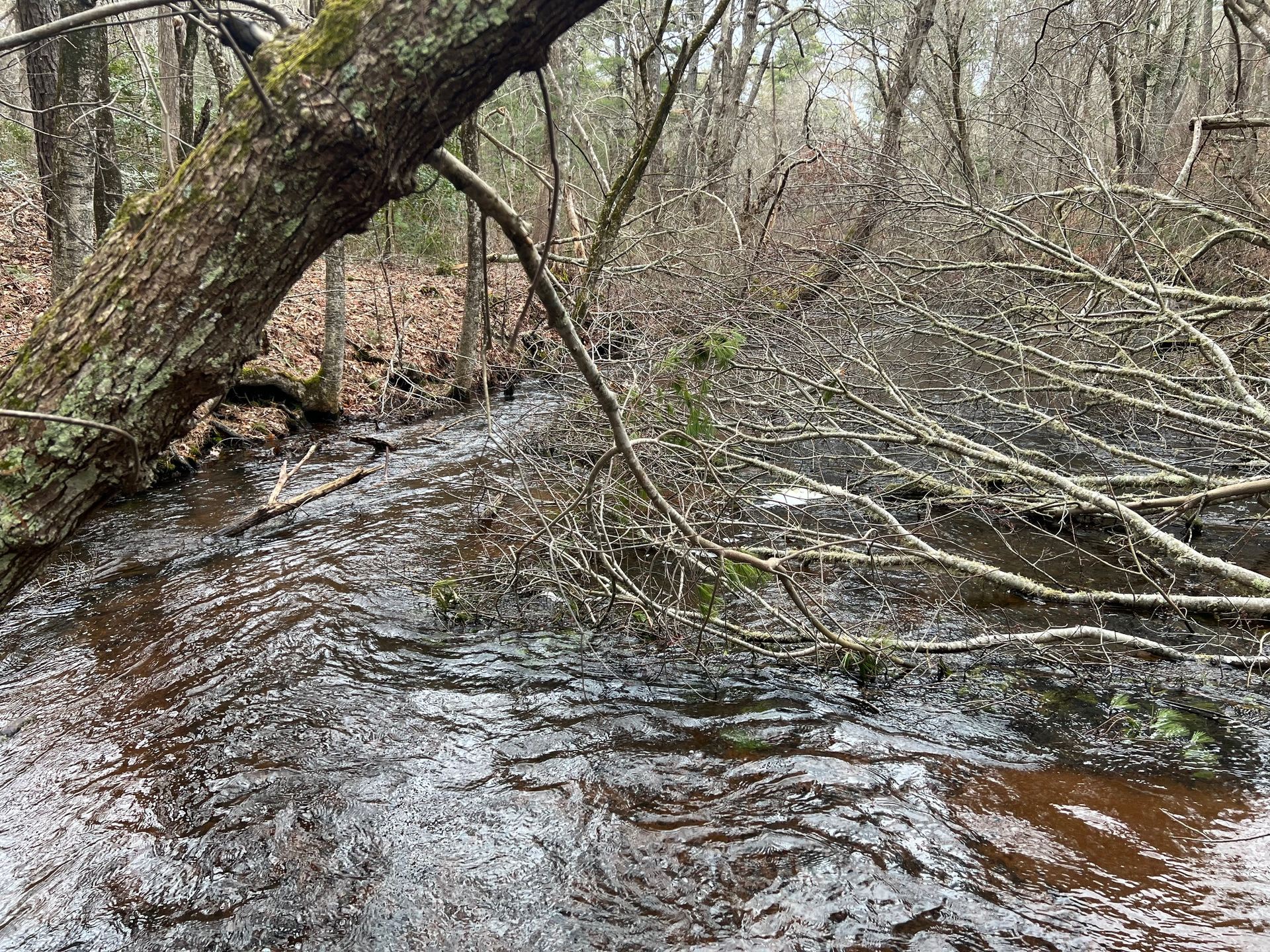
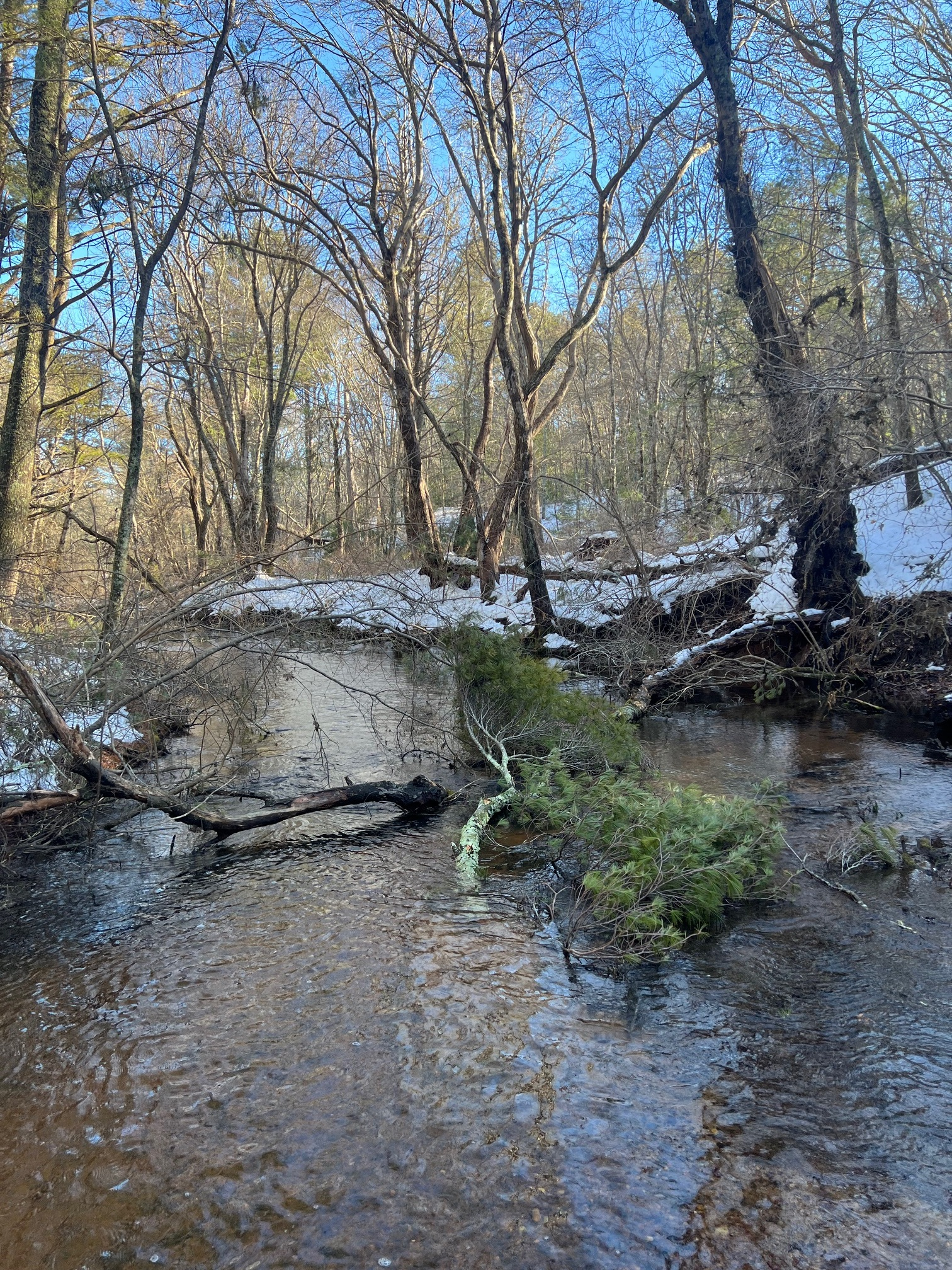
After the Storm, a River Rewilded In late February, the Blizzard of ’26 swept across Cape Cod with enough weight and wind to do more than blanket the landscape. Heavy, wet snow bent the woods low. Trees gave way. And along the Mashpee River, something shifted.
When the storm passed, the river did not look the same. It had been rearranged.
Along stretches where the channel once ran clean and familiar, water now twists around fallen trunks and exposed root wads. Flow that once moved uninterrupted is forced to turn, split, and fold back on itself. In places, it disappears beneath fresh tangles of limbs and reemerges in unexpected seams. Old holding areas have been altered—some filled, others fractured by large wood dropped squarely into the current.
At first glance, it can look like damage. But what the storm delivered is something else entirely. The wood now scattered through the Mashpee River is not debris in the way it is often described. It is structure. It is the beginning of something more complex.
Large wood fundamentally changes how a river works. Flow slows where it meets resistance, then accelerates where it is forced through narrower openings. Water scours deeper beneath submerged trunks and root masses, carving out new pools. Sediment settles in quieter margins, building bars and soft edges. Channels divide and reconnect. Pockets of stillness form behind wood, offering refuge from the force of the current. What appears chaotic is, in fact, the river organizing itself in a new way.
Below the surface, this matters. Fish moving through the Mashpee River—whether holding in cool groundwater-fed reaches or migrating between pond and bay—respond quickly to structure. They seek out places where energy can be conserved, where cover offers protection, and where food is delivered by the current with reduced risk. The tangled wood, the newly split channels, the darkened water beneath root wads—these are not obstacles. They are opportunity.
The river that existed before the storm—a familiar sequence of runs and pools—has been broken into something more complex: a mosaic of microhabitats layered across the channel. Some will be temporary. Others will deepen and persist. All are part of a system in motion.
Given time, the Mashpee River will continue to work this material. Flows will carve around lodged trees, deepening some areas while filling others. Organic matter will accumulate. Gravel will shift. The wood delivered by the storm will settle into place, becoming part of the river’s architecture. This is not disorder. It is process. |
The Mashpee River is often seen as steady and unchanging as it flows from Mashpee and Wakeby Ponds toward Popponesset Bay. But rivers like this are shaped by disturbance—by the ongoing interplay of water, sediment, and wood. Storms like the Blizzard of ’26 do not interrupt that process. They define it. In the coming weeks, spring cleanup efforts will focus on maintaining fish passage, particularly for migrating river herring. Some obstructions will be cleared where needed. But much of what the storm left behind will remain, continuing to shape the river in ways that benefit the broader ecosystem.
What remains is a river that feels rougher, less predictable, and more alive.
The Mashpee River has been rewritten—its familiar patterns broken open and set in motion again. And for the life moving through it, that renewed complexity may be exactly what it needs. |
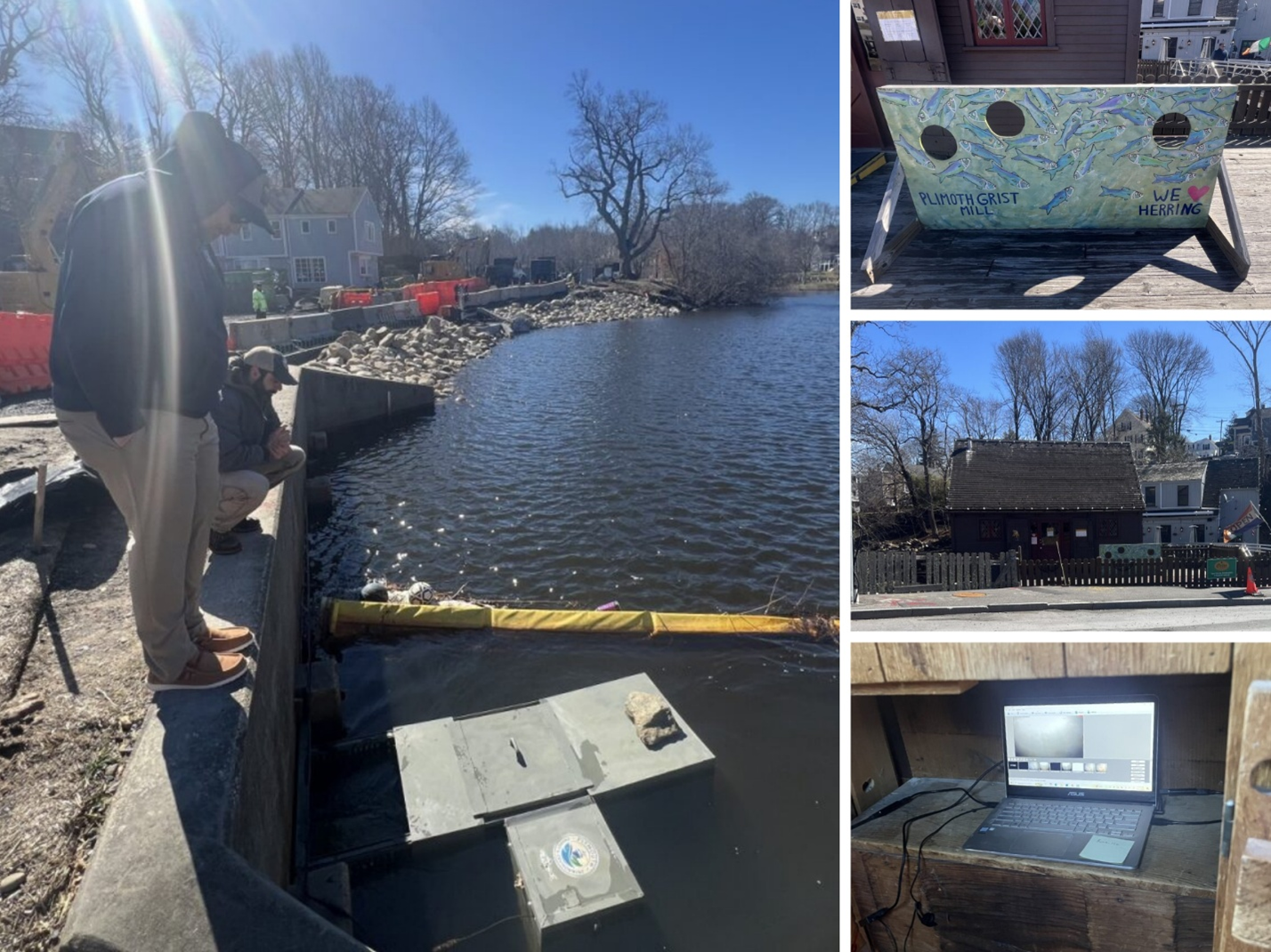
Above, clockwise from left: Dan Kent, town of Mashpee, with Nathan Cristofori, town of Plymouth, viewing the river herring camera counting system at Town Brook; a river herring photo cutout outside the historic Grist Mill at Town Brook; the Grist Mill itself, where the camera system’s computer equipment is housed; and, the computer used to capture and store video imagery from the run. |
Learning from Plymouth’s River Herring Camera System |
Volunteer counts are the backbone of river herring monitoring programs across Cape Cod. Every spring, dedicated volunteers stand beside streams, tallying fish as they swim upstream toward the ponds where they were born.
But across much of the Cape, it remains difficult to recruit enough volunteers to fully sample the runs. Even where daytime coverage is strong, there are still gaps—and an important question remains unanswered: how many river herring are moving under the cover of darkness?
These are exactly the kinds of questions camera monitoring systems may help answer. In fact, camera systems have already been deployed at two Cape Cod runs: the Coonamessett River and the Santuit River.
Last week, APCC and Town of Mashpee staff traveled to Plymouth to meet with Town of Plymouth staff and tour their river herring camera counting system at the Town Brook herring run. The group gathered near the historic Grist Mill, where the run passes through one of southeastern Massachusetts’ most recognizable landmarks. Just across Spring Lane sits the enclosure housing the camera system, while the supporting computer equipment is located inside the mill itself.
For those involved in river herring restoration and monitoring on Cape Cod, the visit was more than a tour of an interesting piece of technology. It was a chance to see firsthand a system that may help shape future monitoring efforts on the Mashpee River and beyond.
APCC and its partners have been exploring the possibility of deploying a similar camera-based monitoring system at the Mashpee River herring run. Volunteer visual counts remain essential, providing invaluable information about the timing and strength of each year’s migration. Camera systems could complement those efforts by expanding coverage, improving consistency, and creating a permanent visual record of fish moving through the run.
Seeing the Plymouth installation made clear just how much thought goes into building a camera system that works reliably in the field. The visit also underscored an important lesson: effective monitoring is not something to tack on after the fact. It needs to be considered as part of restoration design from the beginning.
As Plymouth moves forward with its ongoing $17 million Town Brook/Jenney Pond Dam restoration project, staff are looking closely at how fish ladder design can be adapted to better support camera monitoring. That kind of foresight matters. A successful system depends on more than mounting a camera above the water—it depends on creating conditions that allow fish to move cleanly through view while keeping the equipment protected, accessible, and dependable throughout the migration season.
In practice, that means getting many details right. Fish must be funneled through the frame in a consistent and visible way. Lighting must be controlled so fish can be detected in both bright daylight and dim conditions. Water turbulence has to be minimized to avoid obscuring the image. Power and data connections need to be routed securely, and the equipment itself must be protected from weather, debris, and fluctuating water levels. Just as importantly, the system has to remain accessible for maintenance and troubleshooting during the busiest weeks of the spring run.
At Town Brook, those challenges have been addressed in a site-specific way. The counting box is positioned along the run itself, while the computers and other supporting electronics are housed inside the Grist Mill. That arrangement reflects the particular constraints and opportunities of the site, and it was especially valuable to hear directly from the people who built and now operate the system. Their experience offered insight not just into how the system functions on paper, but into the practical realities that only emerge after a full season in the field.
At the same time, the visit reinforced a simple truth: volunteer counts remain the foundation of river herring monitoring. Camera systems may strengthen and extend those efforts, but they do not replace the importance of people on the streambank.
River herring monitoring season begins April 1, and volunteers are still needed across Cape Cod. By participating in the count, community members help build the long-term record of river herring runs that guides restoration efforts across the region—one fish at a time. |
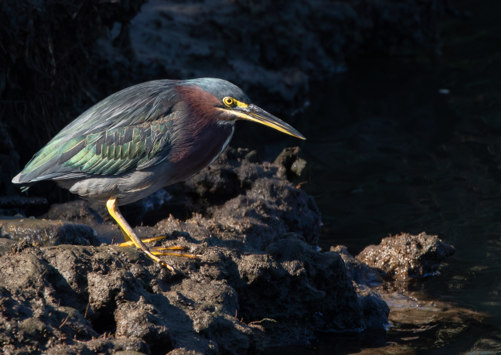
Above: Green Heron at Sesuit Creek, Dennis, MA. Photo credit: Gerald Beetham. |
Salt Marshes at Work: Habitat for the Green Heron A variety of birds make Cape Cod their home throughout the year, inhabiting the Cape’s inland woods and ponds, coasts and shorelines. Casual passersby and passionate bird enthusiasts alike will often stop and watch as a bird takes flight, perches on a tree branch, or hunts prey in a shallow creek.
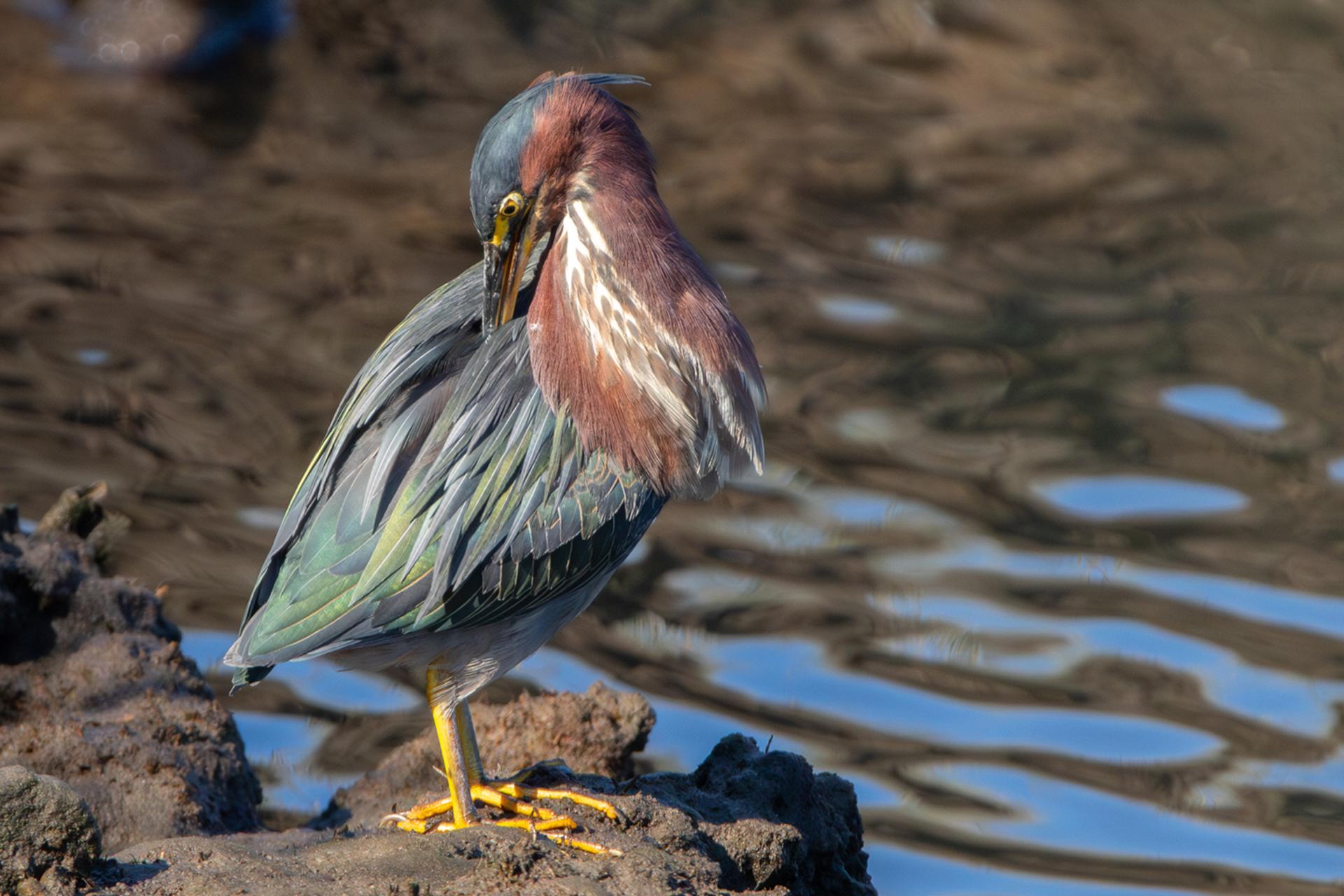
Ecosystem Restoration Program staff frequently observe birds while working in the salt marsh. One such bird, captured by APCC volunteer Gerald Beetham, is the green heron (Butorides virescens). A small bird with green, iridescent plumage and orange-yellow legs, the green heron lives near small bodies of water or densely vegetated areas, like lakes, ponds, swamps, streams, and salt marshes. Green herons are migratory birds and arrive in Massachusetts around late April, with breeding common in the eastern part of the state.
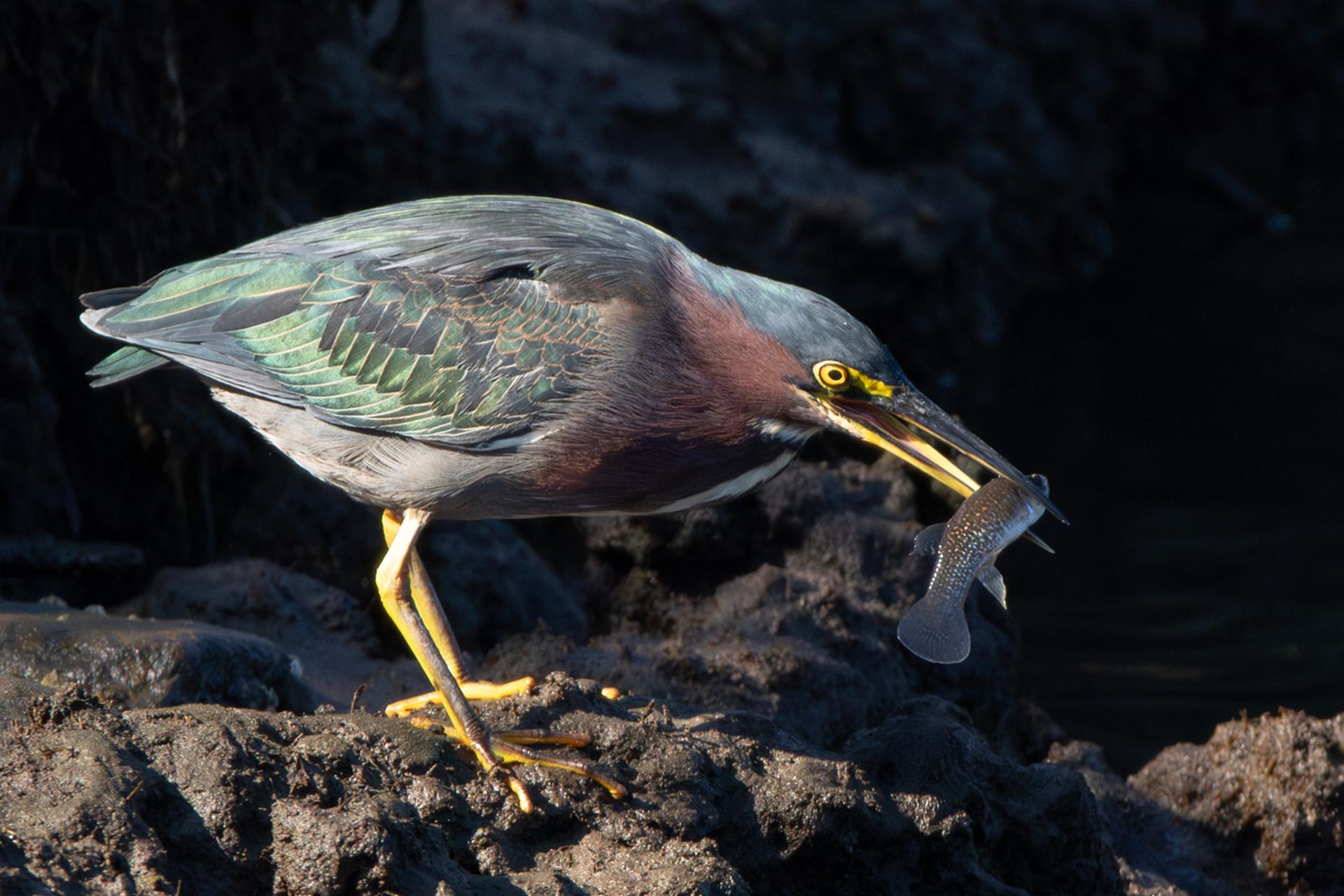
Salt marshes provide numerous benefits collectively referred to as “ecosystem services” for the ways in which the marsh ecosystem supports local communities. One such benefit is the habitat that healthy marshes create for birds like the green heron. A robust, resilient salt marsh provides a place for birds to safely nest and helps to sustain a steady source of nutrient-rich fish, bugs, and crustaceans.
You can learn more about the green heron in the Audubon Field Guide. |
Above: Green Heron perches on a mud patch at Sesuit Creek, Dennis, MA. Photo credit: Gerald Beetham. |
Above: Green Heron catches a fish at Sesuit Creek, Dennis, MA. Photo credit: Gerald Beetham. |
|
|
Learn more about The Cape We Shape campaign and sign up to be part of Team SOS to engage in efforts to permanently protect the last undeveloped acres that have been identified as priority natural resource areas.
As part of Team SOS, look for regular emails most Mondays to learn of news,
next steps, and how you can help. Come pick up campaign signs, flags, handouts, stickers at APCC's office in Dennis: email TeamSOS@apcc.org to arrange day and time. Thanks! |
Attention Runners:
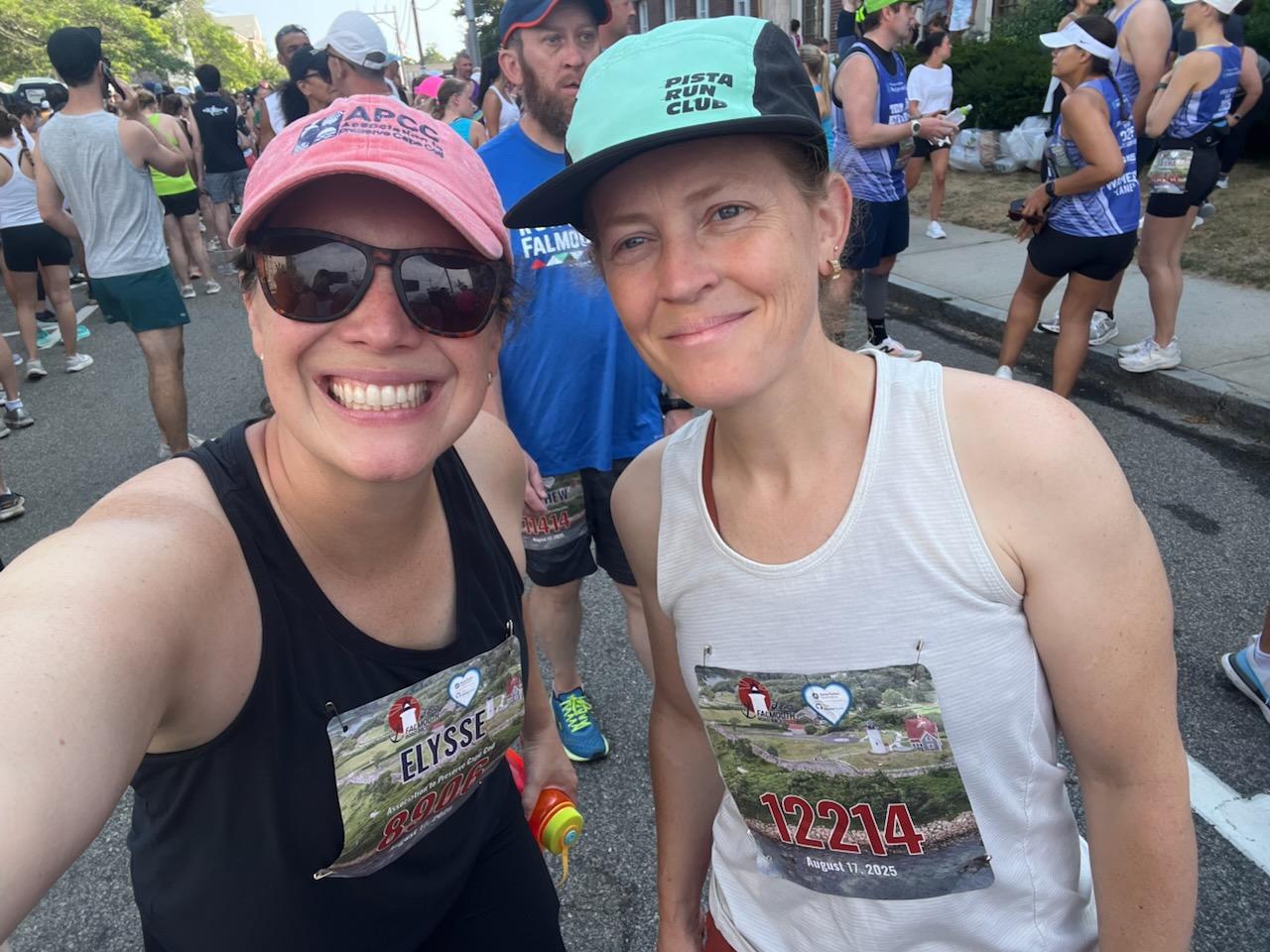
Run the 2026 Falmouth Road Race for APCC |
|
|
Above: Elysse Magnotto-Cleary, APCC president, and her friend Mary ran for APCC in 2025. |
|
APCC is thrilled to be a part of the "Numbers for Nonprofits" program for the 2026 Asics Falmouth Road Race, and we are currently accepting applications for this year's team. Team members will receive a guaranteed race entry, fundraising tips and tools, a fundraising web page, and support throughout the process. If you're interested in amplifying APCC's work in a fun and unique way,
please apply here.
Questions? Please reach out to runforapcc@gmail.com |
|
|
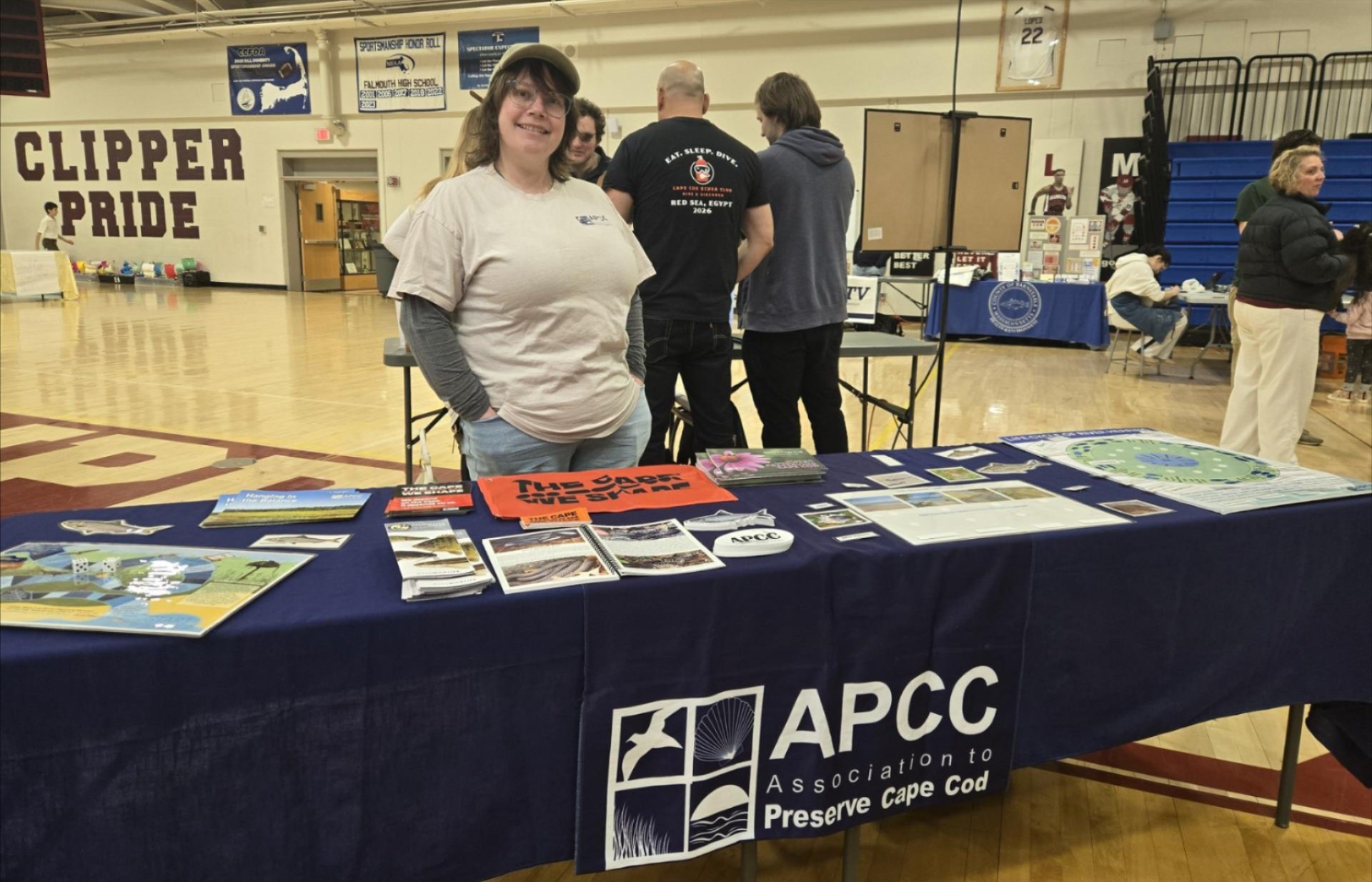
Above: Lynn Francis, APCC Pond and Cyanobacteria Operations Manager |
APCC attended the 48th Annual STEAM Fair for the Falmouth Public Schools last Saturday, as an exhibitor. The Falmouth Public Schools STEAM Fair is a celebration of all things science, technology, engineering, arts, and mathematics. A variety of student projects were on display, with age groups ranging from 4th grade all the way to high school. The largest portion of projects came from the 7th and 8th grades. There was also an array of exhibits and contests, including face painting and a live animal show. It was a great time for all!
|
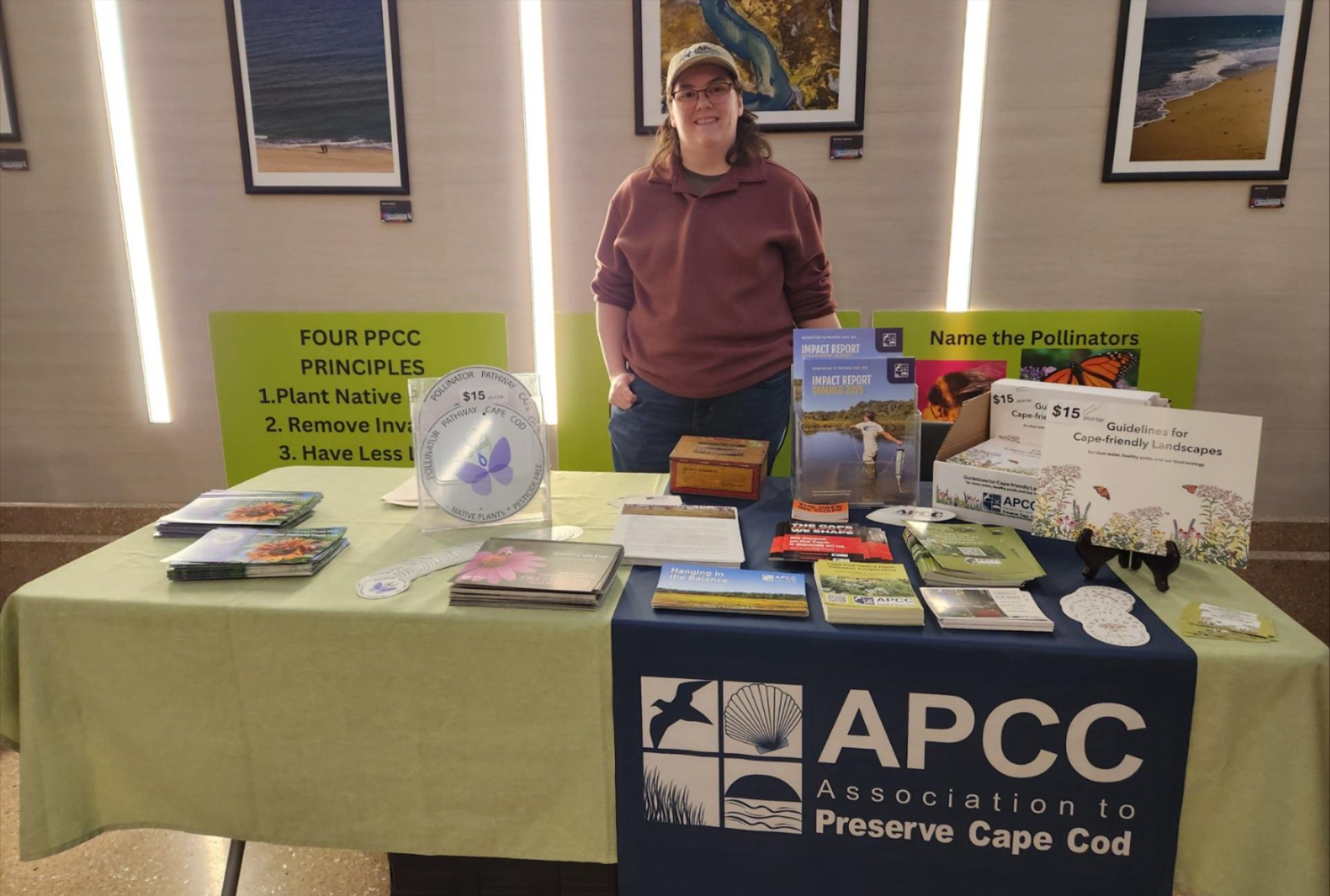
Above: APCC Ecolandscape Program Coordinator Erin Camire |
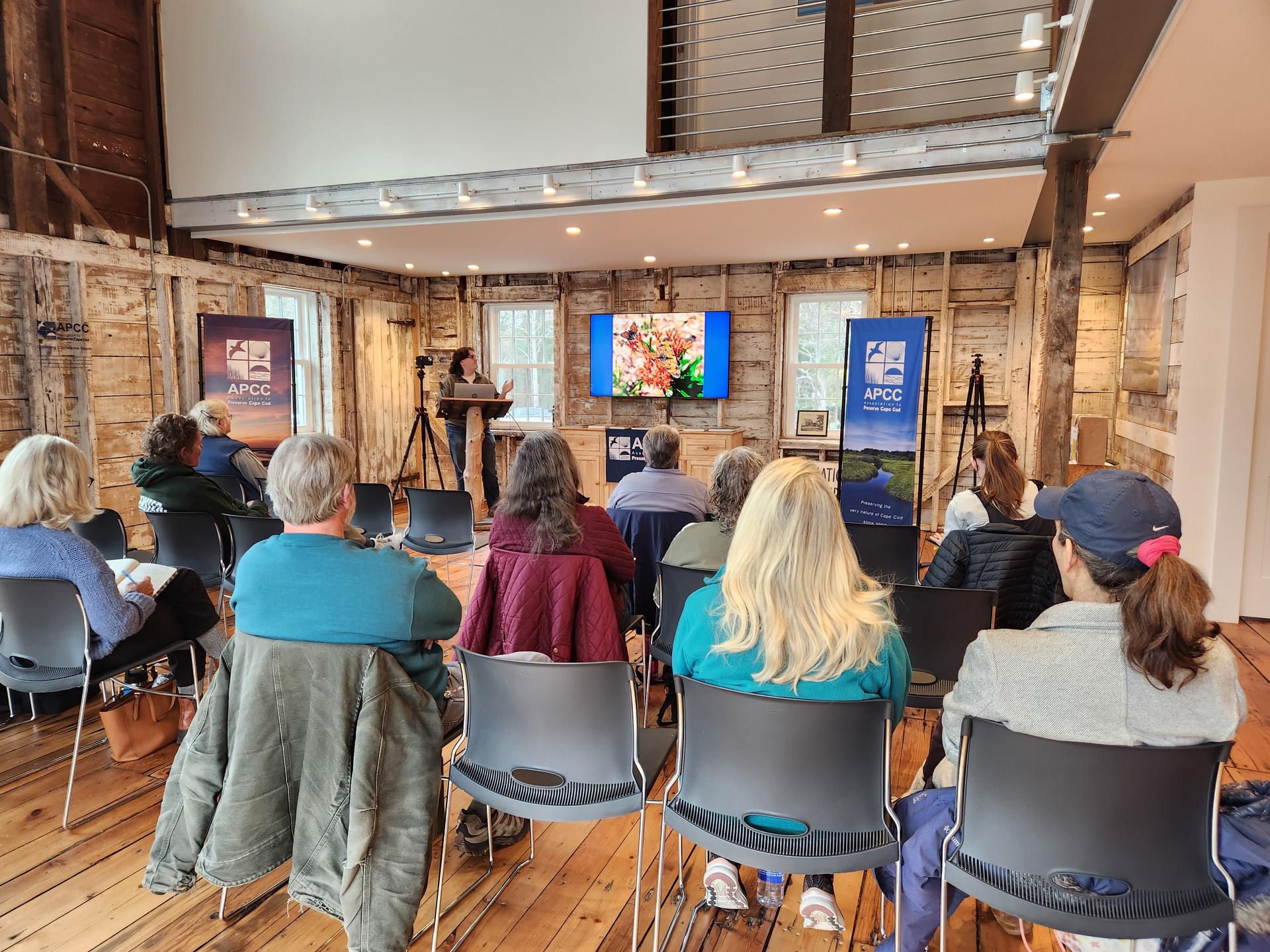
Last Saturday, APCC Education Director Kristin Andres and Ecolandscape Program Coordinator Erin Camire attended the Master Gardeners annual symposium at Cape Cod Regional Tech School in Harwich. |
|
|
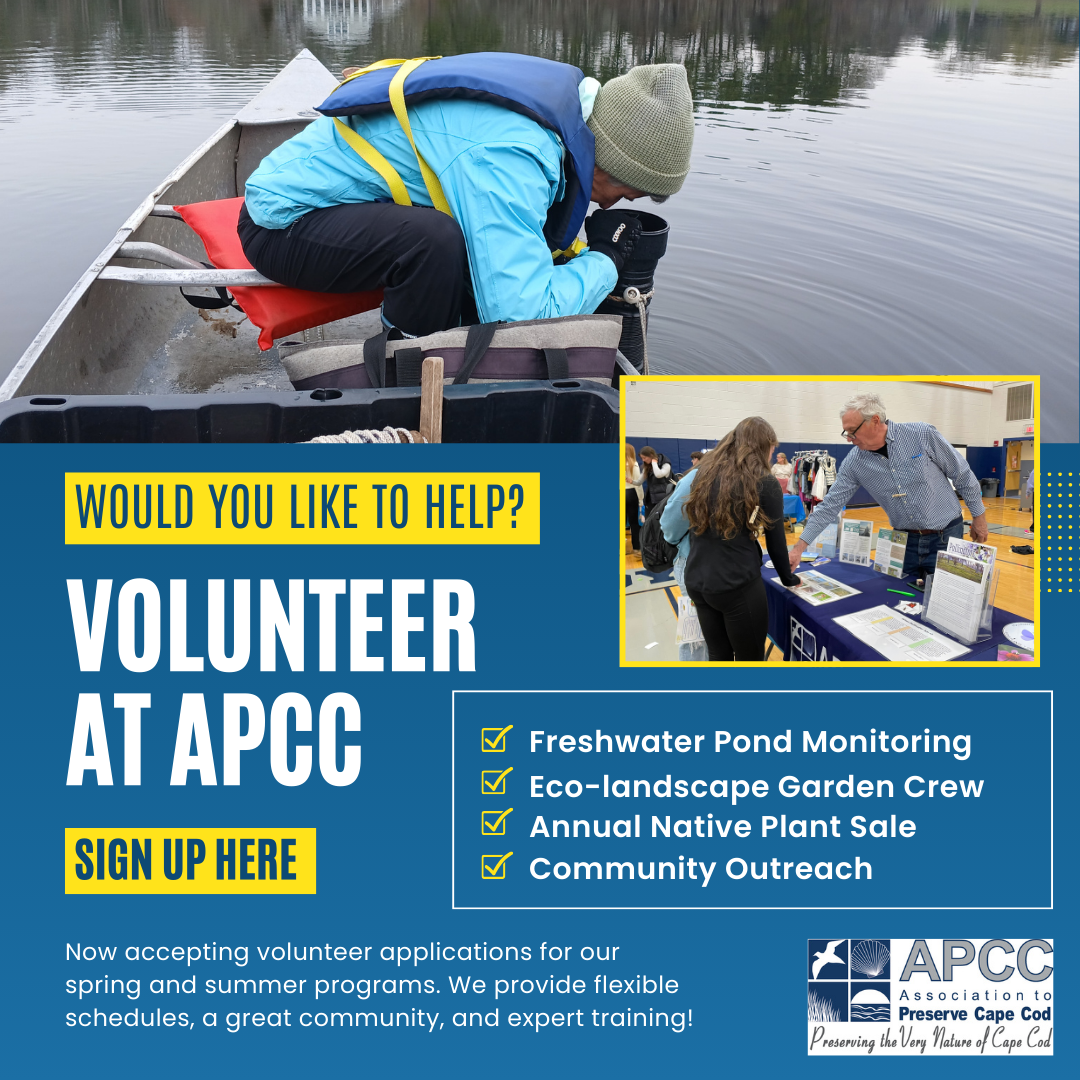
JOIN US! APCC VOLUNTEER KICKOFF SESSIONS
New and returning volunteers are invited to join us in person or on zoom to learn about our 2026 volunteer program.
Opportunities for volunteers include our annual native plant sale, pond and river herring monitoring, eco-landscape garden crew work days, ecosystem restoration, outreach event support, and The Cape We Shape campaign support!
SIGN UP TO VOLUNTEER & SAVE THE DATES: 2026 Volunteer Info Session - March 31 at 1:00 p.m.
This is a hybrid program that will provide a brief overview of APCC's volunteer program, our 2026 opportunities, and instructions on how to sign up for shifts. Registration for Zoom attendance is still open. Zoom registration here.
1st Annual Volunteer Open House! - April 3 from 1:00 p.m. to 3:00 p.m.
New and experienced volunteers are invited to meet APCC staff and learn more about what volunteers can do! APCC program staff tables will include the Cape Cod Regional Pond Monitoring Program, River Herring Monitoring, Ecolandscape Garden Crew and Annual Native Plant Sale, Ecosystem Restoration Program, Education and Outreach, and The Cape We Shape. Register to attend in-person here.
Annual Native Plant Sale Info Session - Monday, April 6 at 5:30 p.m.
New and existing volunteers are invited to kickoff APCC's annual native plant sale. Native Plant sale volunteers help with creating plant labels, repotting, and setting up and running our annual native plant sale. We will provide an overview of this year's event and how volunteers can sign up to help. Zoom registration here.
|
If you are a farmer or someone who wants to grow native plants to sell, or you just want to be updated on the program's development, please submit the interest form that appears on our webpage. We will be sending periodic email notices of workshops and meetings.
Funding for the project is provided by Barnstable County and its Economic Development Council License Plate Grant Program through the Cape Cod Commission, the Kelley Foundation and private donors. |
Nine talks for prospective growers as part of the Cape Cod Native Plant Growers' Cooperative program have been presented thus far, with more scheduled in the upcoming weeks. These past workshops can be viewed here:
Registration for upcoming talks can be found on our events page.
|
|
|
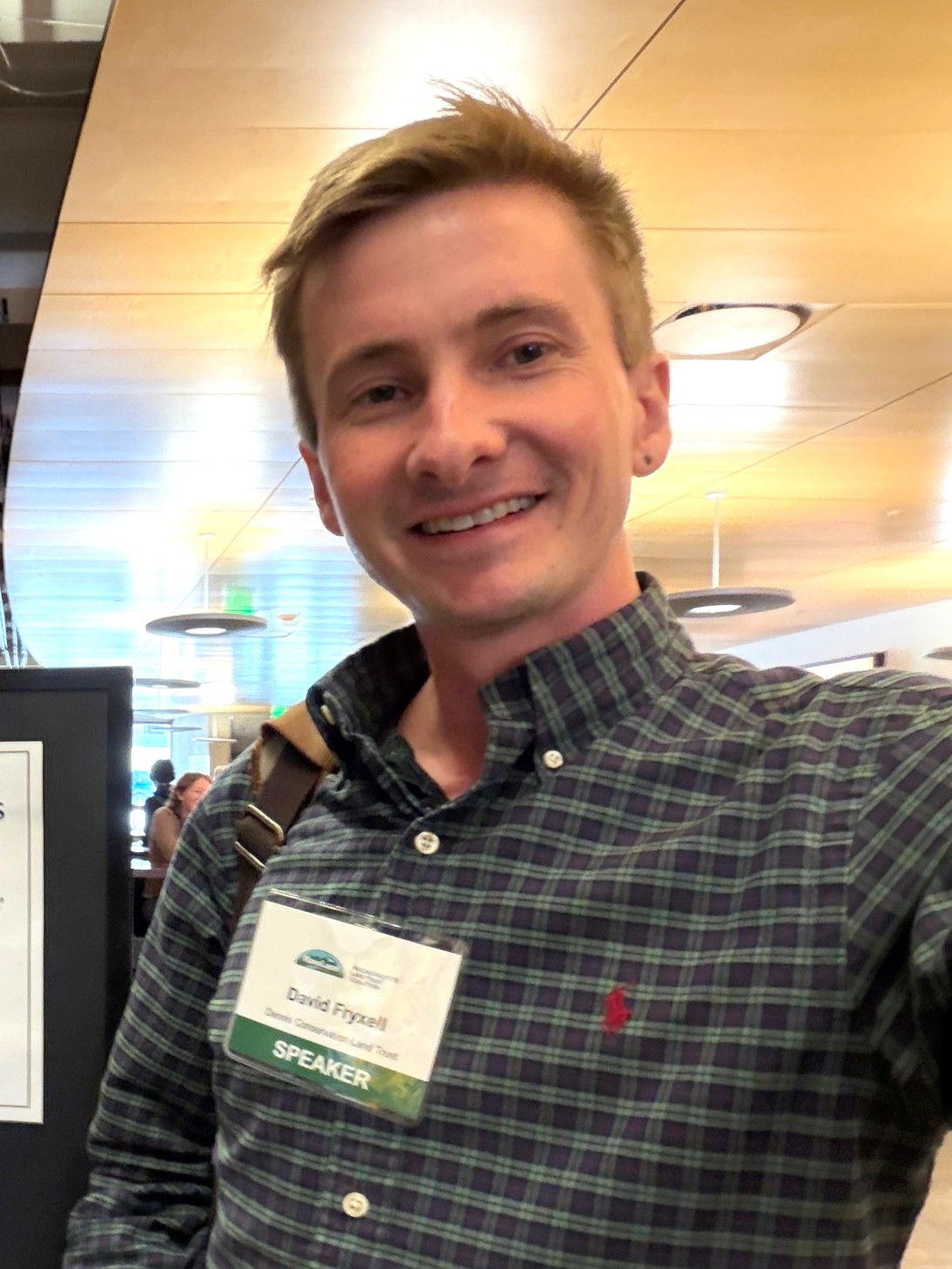
| Pond Ecology Matters: Biodiversity and Its Role in Pond Health with Dave Fryxell, Ph.D., Dennis Conservation Land Trust Executive Director |
Friday, May 1st 1:00 - 2:30 p.m.
At APCC's headquarters in the Koppel Center in Dennis and online via Zoom.
In this talk, Dave will explore how the plants, animals, and microscopic life within ponds shape their health, resilience, and function. Drawing on classic studies and compelling real-world, local examples, he will share stories that reveal how ponds both support and depend on the rich web of life they contain. Read more...
|
|
|
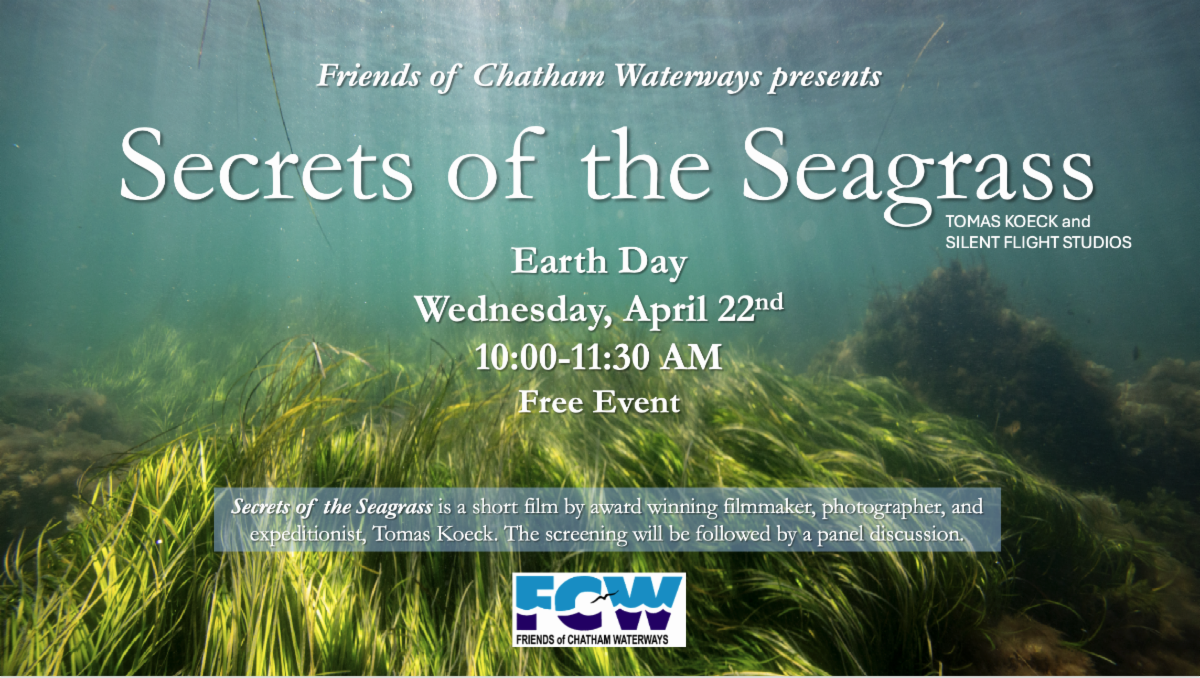
Celebrate Earth Day at the Chatham Orpheum theater where Friends of Chatham Waterwasy is hosting the showing of “Secrets of the Seagrass.” A discussion will follow with a notable panel, including the filmmaker, Tomas Koeck, Chatham’s director of natural resources, Greg Berman, and the director of both Seagrass Net and the Center for Coastal Studies’ Benthic Ecology Program, Dr. Agnes Mittermayr. |
A Cape-wide Conservation Event Calendar |
The Compact of Cape Cod Conservation Trusts (“the Compact”) and its nonprofit members launched a new regional calendar of events. The Conservation Calendar includes programs across Cape Cod hosted by these groups. The goal of the calendar is to encourage visitors and residents to take part in nature and environmental events. You can always find the link to the calendar on APCC's website under News & Events.
|
A Cape Cod Native Plant-selector ~ to help you choose the perfect native plants for your garden. |
|
|
Email kandres@apcc.org and we'll send you a CapeCodNativePlants.org decal. |
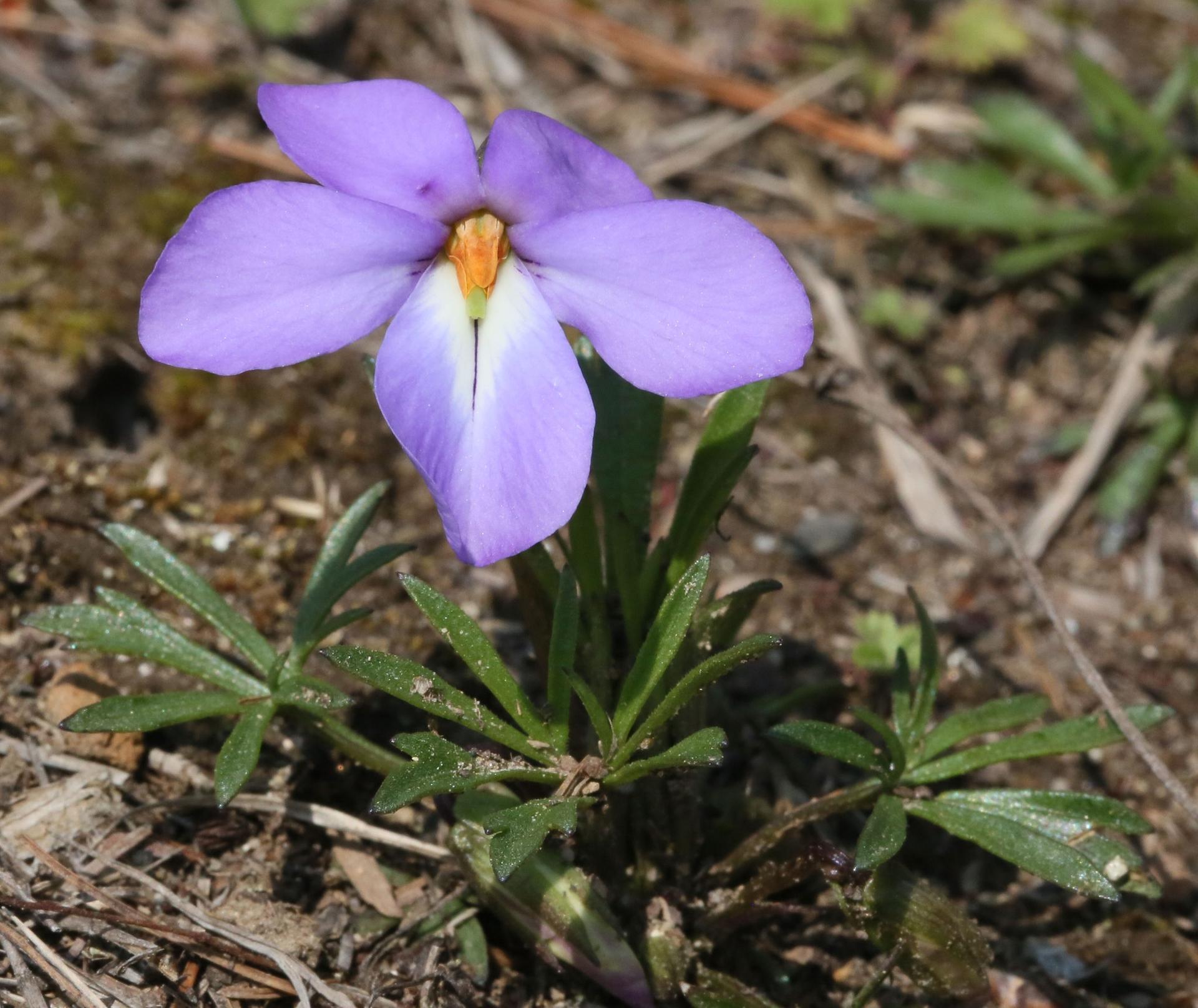
| Above: photo credit Robert Gessing |
Bird's Foot Violet Viola pedata |
|
|
The purpose of this site, CapeCodNativePlants.org is to help native plant enthusiasts select the right plant for the right place. While not all native plants presented here are indigenous to Cape Cod, they are suitable native species for Cape gardens and managed landscapes.
Why Native Plants? Many native plants are drought tolerant, salt tolerant, and thrive in the “thin” soils found on Cape Cod. Native plants are as attractive as any plant, and are reflective of the Cape’s natural beauty. By planting native species appropriate for Cape Cod, you can conserve water, avoid pesticide and fertilizer use, and support pollinators and birds.
|
|
|
|
The Guidelines gives homeowners steps they can take in the design and maintenance of their properties that will support pollinators and birds, manage stormwater, conserve water, and protect the Cape's water quality. This 40-page booklet is beautifully illustrated by Marcy Ford with content that is easily digestible and supported by numerous resources for additional learning.
|
|
|
We are grateful for the several retail shops that are partnering with us to make this publication more widely available: Brewster Book Store, Birdwatchers General Store, Crocker Nurseries, Wellfleet Audubon Wildlife Sanctuary, Cape Abilities Farm, Cape Cod Museum of Natural History, the Cape Cod Lavender Farm, Heritage Museums and Gardens, Titcomb's Bookshop, Sea Howl Bookshop, Soares Flower Garden Nursery, and Eight Cousins Bookshop.
If you are a retailer and would like to sell this publication at your store, please contact us. |
|
|
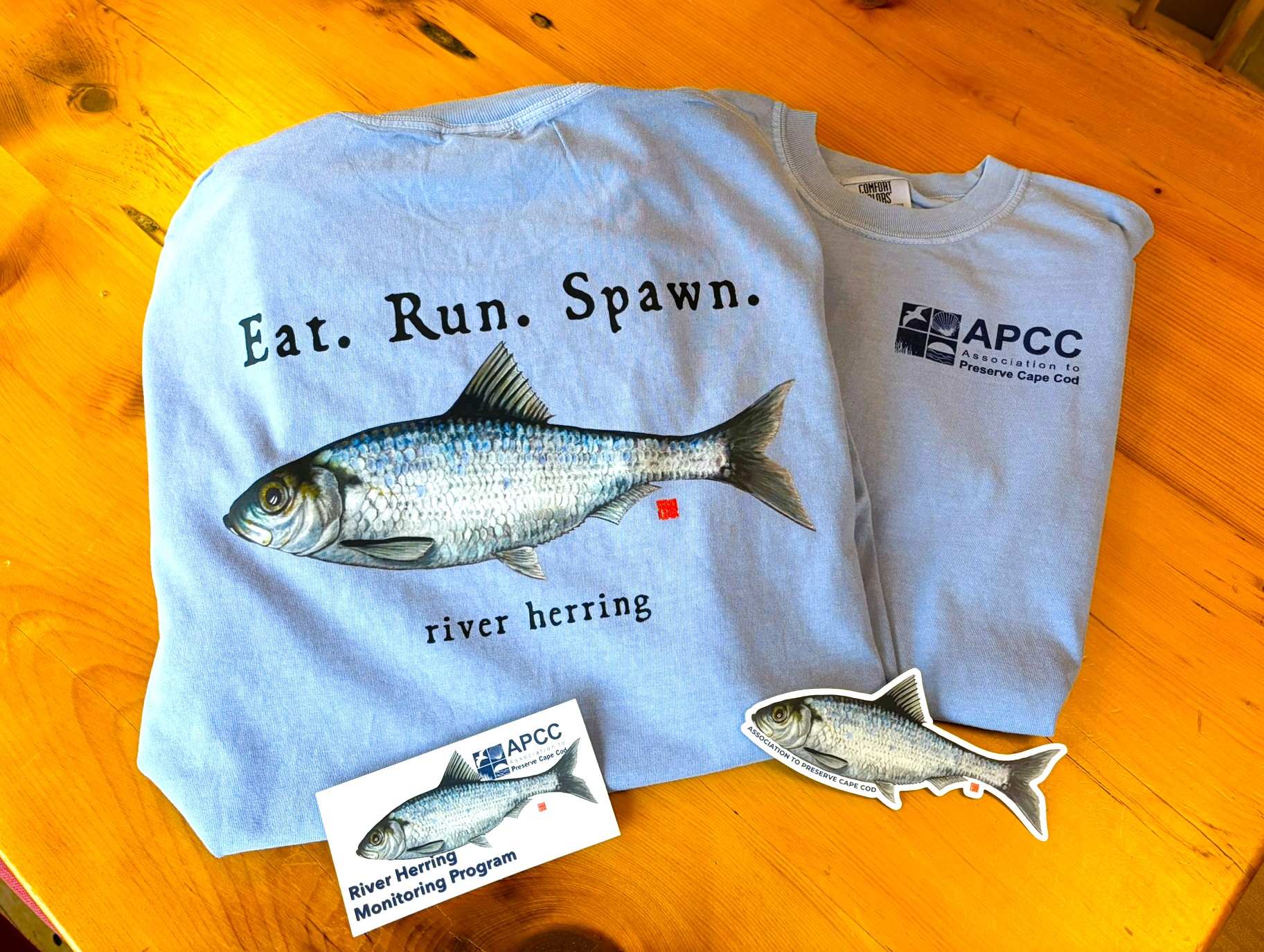
New Offering - Celebrate the Run! Herring T's color denim blue $30 - includes USPS delivery in the U.S. |
|
|
APCC caps $25
-includes USPS deliver in the U.S. |
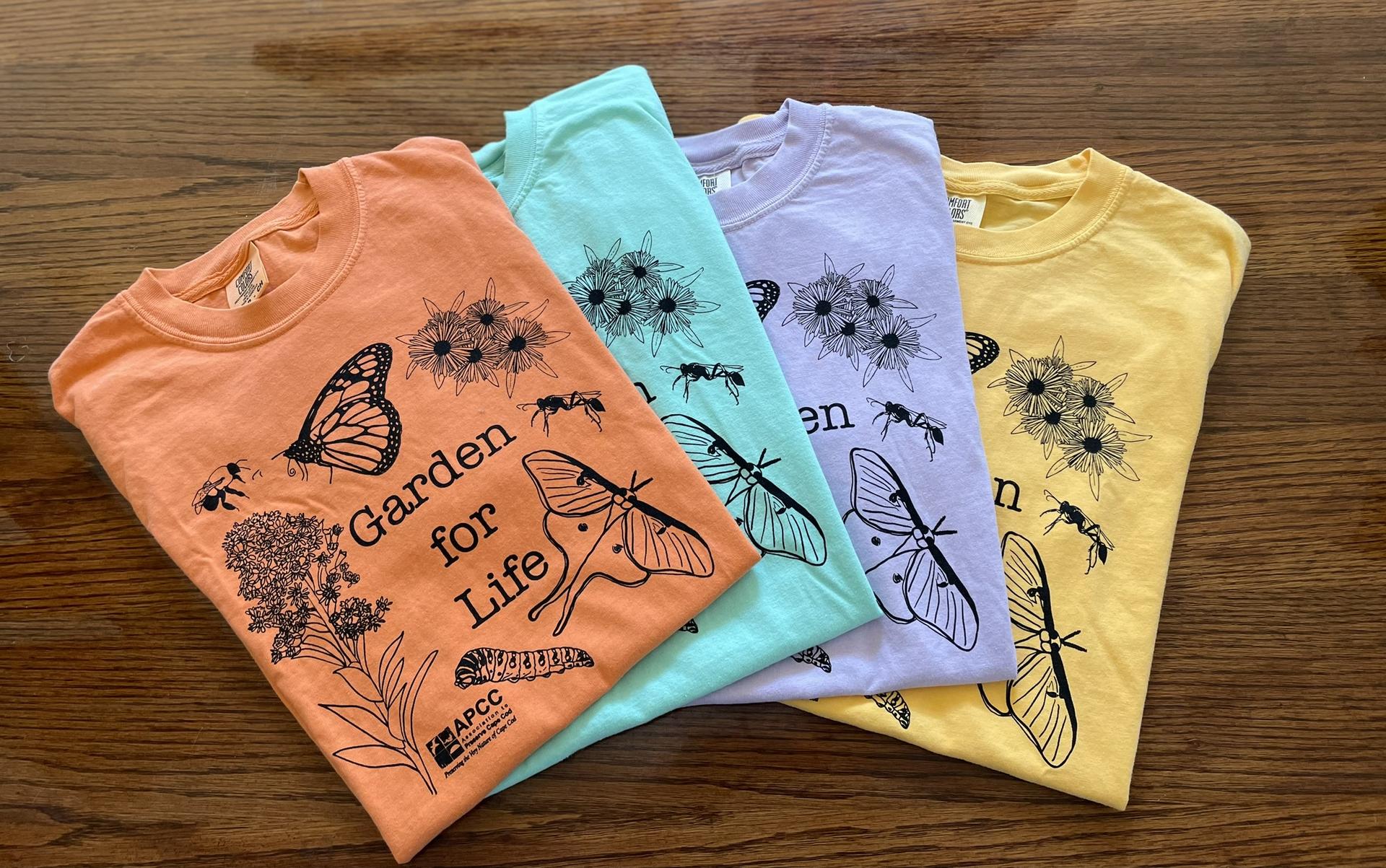
Garden for Life T's $30 -includes USPS delivery in U.S. |
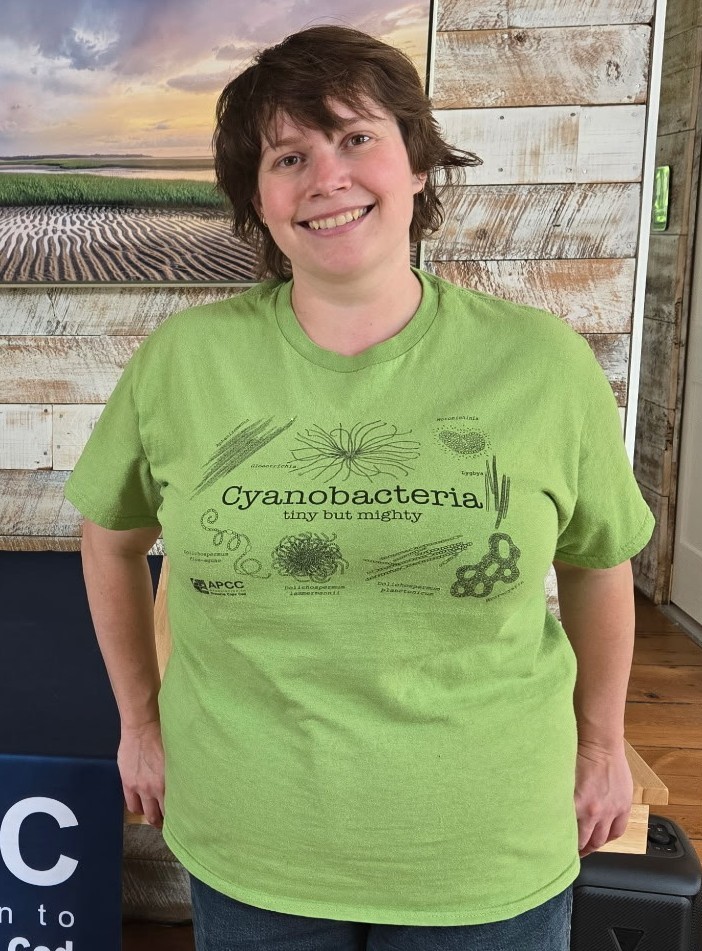
| Cyanobacteria ~ tiny but mighty color kiwi $30
-includes USPS delivery in the U.S. |
|
|
|
APCC eNewsletters. Our weekly newsletters are archived on our website and easily shared.
You can find past newsletters and share with your friends. Encourage others to sign up for future enewsletters HERE.
|
|
|
Are you thinking of going solar? We hope so!
In partnership with E2 SOLAR in Dennis, APCC receives $500 for every solar installation when APCC is named as referral. |
|
|
|
Thank you to the homeowners who just contracted to install solar panels through E2 Solar. May the sun always shine for you! |
|
|
Expressions Gallery, 578 Main Street, Chatham
CLICK HERE |
Expressions Gallery donates 20 percent of its profits to APCC's work. |
|
|
Thank you to our business sponsors! |
|
|
APCC is rated four stars by Charity Navigator, 2025 Platinum by Candid (formerly Guidestar), and 2024 Top-Rated by GreatNonprofits. |
|
|
Our Contact Information
*{{Organization Name}}*
*{{Organization Address}}*
*{{Organization Phone}}*
*{{Organization Website}}*
*{{Unsubscribe}}* |
| |
|
|