Association to Preserve Cape Cod |
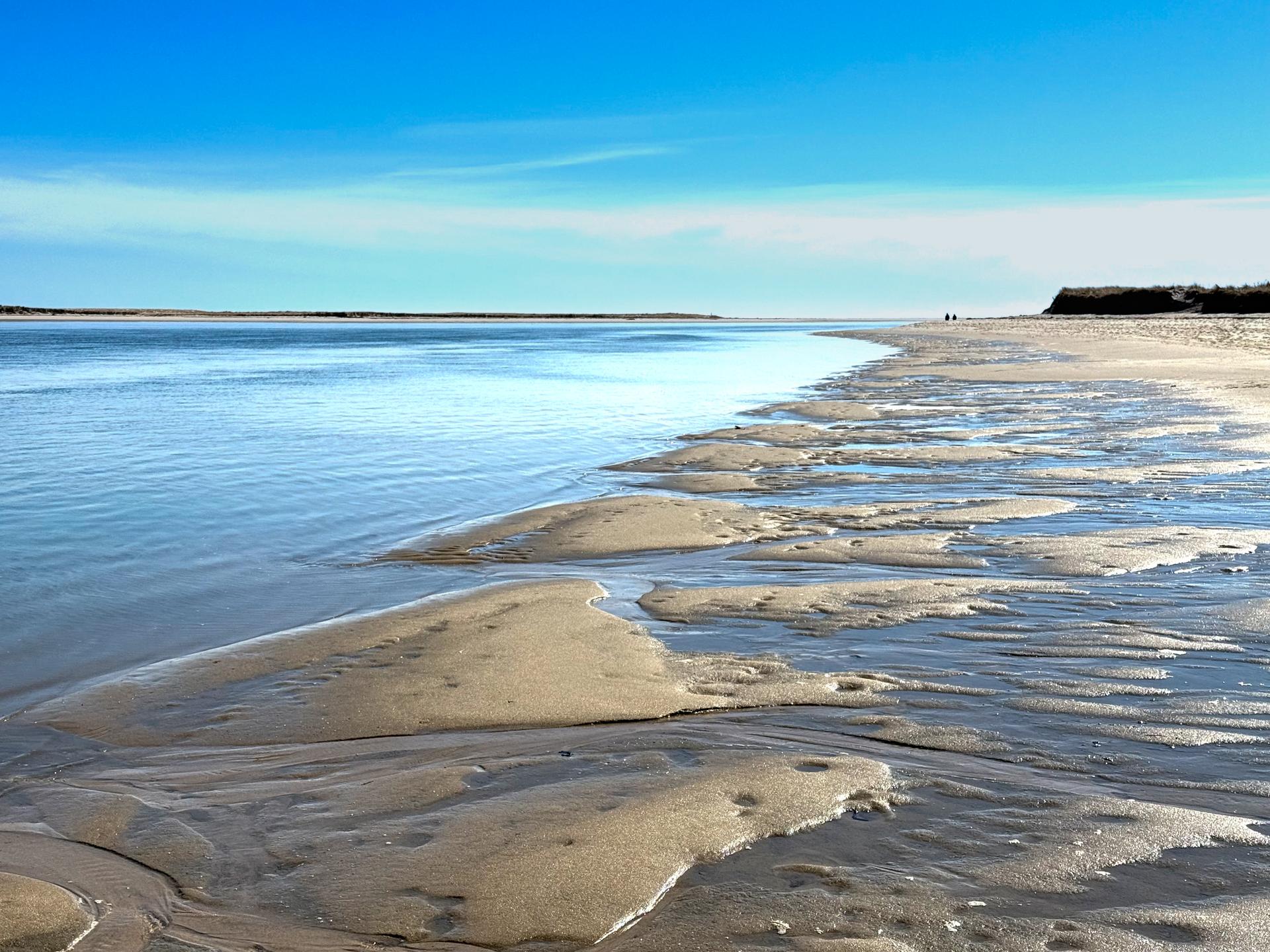
Above: photo by Sue Machie |
|
|
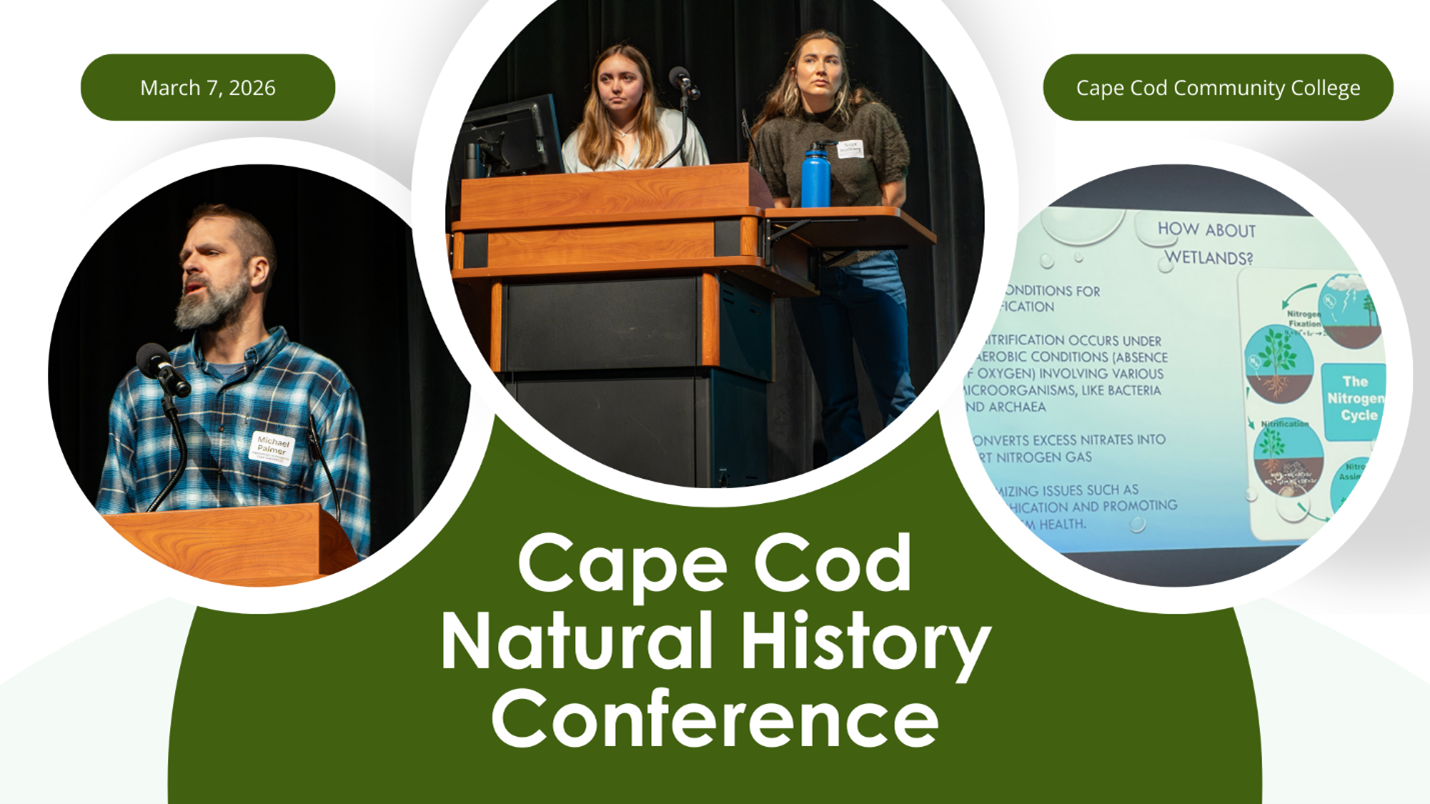
APCC at the Cape Cod Natural History Conference |
Above: Photos by Gerald Beetham (left and center). |
|
|
Science, Restoration, and Signs of Spring
at the Cape Cod Natural History Conference
Cape Cod in early March can feel suspended between seasons. The light is a little softer, the air still carries winter’s chill, and the landscape hasn't yet given itself to spring. That was the backdrop last Saturday as scientists, conservation practitioners, students, and volunteers gathered at Cape Cod Community College for the 29th annual Cape Cod Natural History Conference—a day-long exchange of ideas, data, and optimism about the future of the Cape’s natural systems.
Organized by Mass Audubon’s Wellfleet Bay Wildlife Sanctuary, the conference brought together presentations on freshwater ponds, fisheries, coastal habitats, butterflies, and ecological restoration from across Cape Cod and the Islands. A strong theme throughout the day was restoration, especially the growing effort to revitalize landscapes altered by past land use. Several talks focused on retired cranberry bog restoration, an issue of increasing relevance across Cape Cod.
Presenters described projects that are reconnecting streams, restoring wetlands, improving water quality, and creating healthier habitat for fish and wildlife. Talks on the Cold Brook Eco-Restoration project in Harwich and the Marstons Mills River bog restoration highlighted how former agricultural landscapes can be transformed back into functioning ecosystems.
The conference also included an update on the Cape Cod Water Resources Restoration Project and its efforts to bring additional funding, capacity, and support to restoration projects across the region, often in collaboration with APCC.
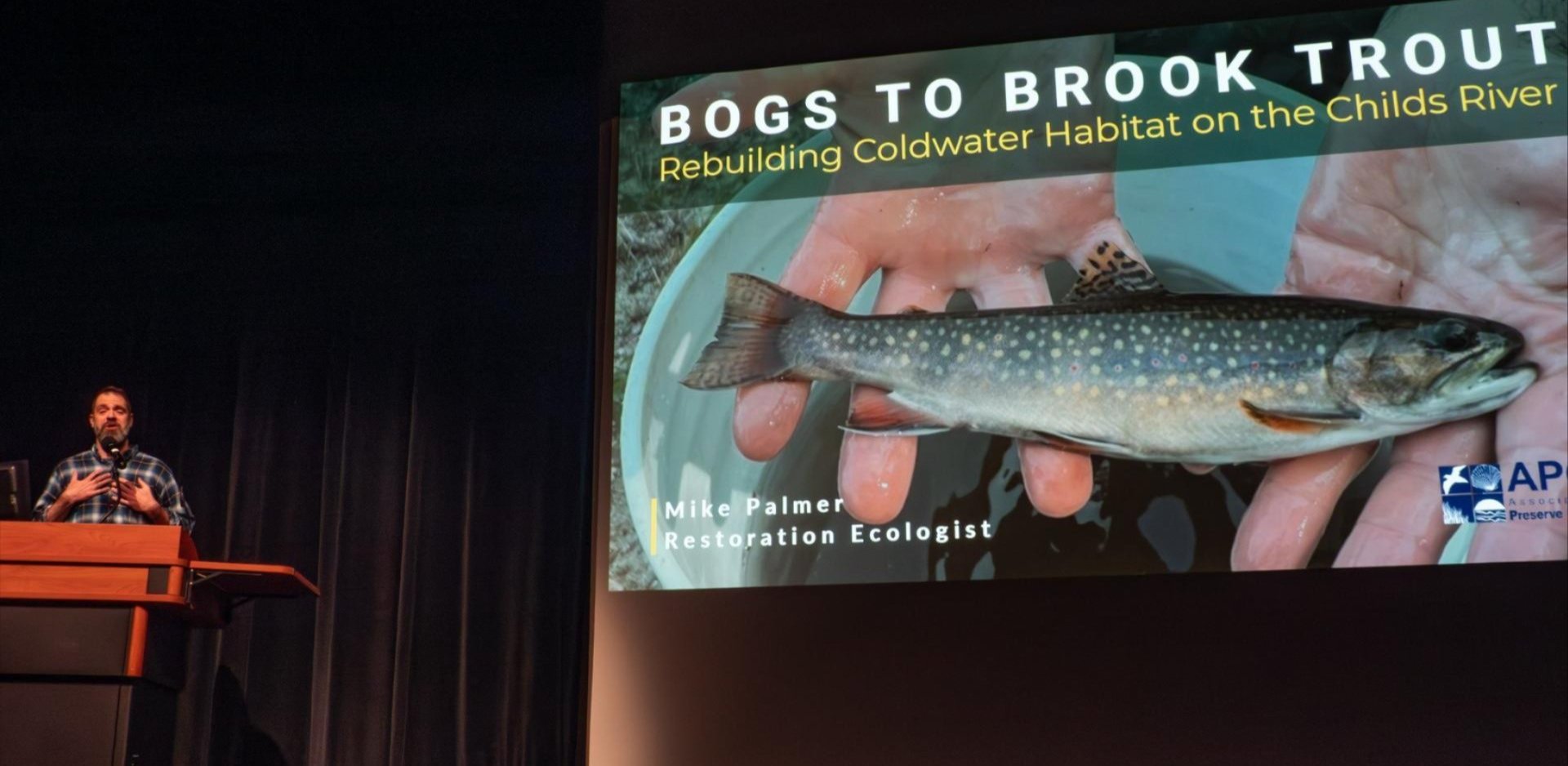
APCC’s work on the Childs River fit squarely within this broader restoration theme. APCC Restoration Ecologist Mike Palmer presented a summary of post-restoration monitoring results from the Childs River project in East Falmouth and Mashpee, where a former cranberry bog system was restored in 2021 to reconnect stream habitat and improve cold water conditions for native fish. The presentation served as a synopsis of the fish and water temperature findings included in APCC’s recently released three-year monitoring report on the project.
|
Above: APCC Restoration Ecologist Mike Palmer |
If restoration was one major theme of the day, long-term monitoring was another. A presentation on freshwater ponds in the Cape Cod National Seashore by Caitlin Sughrue and Sage Hellberg (former APCC pond monitoring technician) explored decades of data showing rising temperatures, declining water clarity, and increasing cyanobacteria blooms—evidence of how climate and atmospheric change are already reshaping local ecosystems. APCC was also pleased to see that Sophia Feuerhake (APCC freshwater science coordinator) was among the collaborators on that work, reflecting the many partnerships that help advance environmental science across the region.
The program also highlighted how technology and collaboration are expanding the tools available to scientists. One talk introduced the audience to the underwater soundscape of Cape Cod fishes, revealing that many species—from alewives and trout to cod and oyster toadfish—produce distinctive sounds that can help researchers better understand fish presence and behavior. Another presentation described a cooperative research project with commercial fishermen on Nantucket Shoals, using underwater imagery and seafloor mapping to better understand benthic habitat.
What stood out most across the day was not just the range of subjects, but the shared sense of purpose behind them. Whether focused on ponds, streams, butterflies, wetlands, or coastal waters, the work reflected a common belief: Careful science, long-term monitoring, and collaborative restoration can make a real difference on Cape Cod. On a gray late-winter day, that felt like its own kind of seasonal turning. |
Citizen Science at the Water’s Edge: A Spring Tradition for All Ages
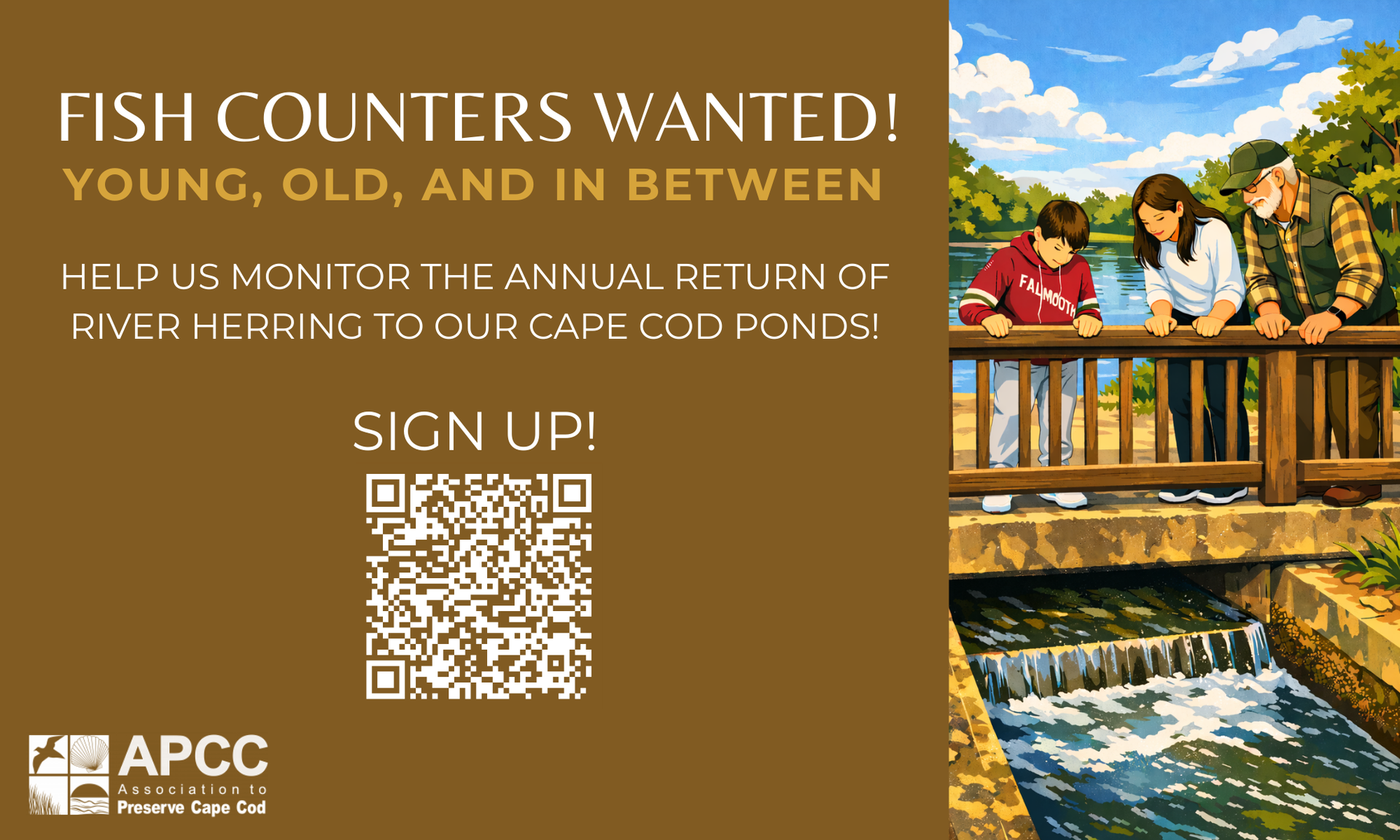
Spring is almost here, and we’re recruiting volunteers of all ages to help count river herring during their annual spawning migration. It’s a simple and meaningful way to get outside, spend time at the water, and take part in a long-running community science effort on Cape Cod. It can also be a great opportunity to bring a child or grandchild along and introduce them to the seasonal rhythms of our local waters—while showing them how everyday observations can contribute to real science.
River herring—alewife (Alosa pseudoharengus) and blueback herring (A. aestivalis)—are small fish with an outsized role in the Atlantic coastal ecosystem. They feed a wide range of predators and carry ocean nutrients into freshwater ponds and streams, helping strengthen the ecosystems they pass through. Their spring return also holds deep cultural and local significance here on Cape Cod.
That’s where you come in. A short, consistent set of volunteer observations can turn a moment at the water’s edge into data that matters. Volunteers help track run strength over time, support fisheries management decisions, and document where fish passage or habitat restoration is needed—and whether restoration is working.
Counting is simple. During the season (typically early April through mid-June, depending on the run), volunteers complete quick 10-minute visual counts at a designated site and submit results through the Association to Preserve Cape Cod’s web-based data entry system. You can contribute whenever you’re available, as often as a few times per week, as long as you’re comfortable walking on uneven terrain and spotting fish in moving water.
Whether you’re a longtime volunteer, a parent looking for a hands-on outdoor activity, or a grandparent hoping to share something meaningful with the next generation, this is a wonderful way to get involved.
If you’d like to join for spring 2026, please sign up here.
Once you sign up, we’ll follow up and connect you with a local coordinator. Trainings are taking place this month (March), so now is a great time to get involved. |
|
|
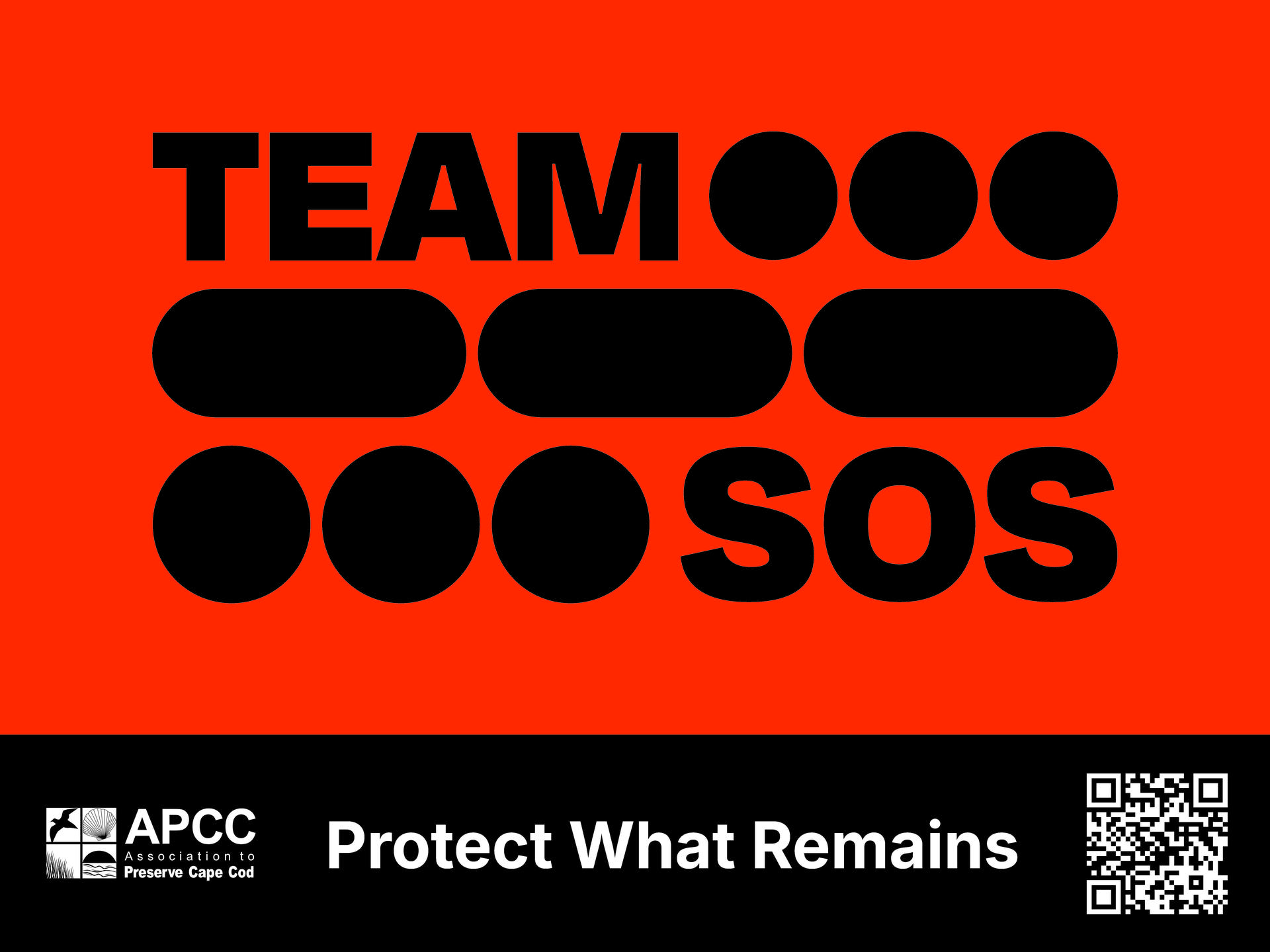
| This effort aims to preserve the last acres of Cape Cod that have been identified as priority natural resource areas that are needed for the protection of our drinking water, critical habitats, and coastal resilience. Show Your Support
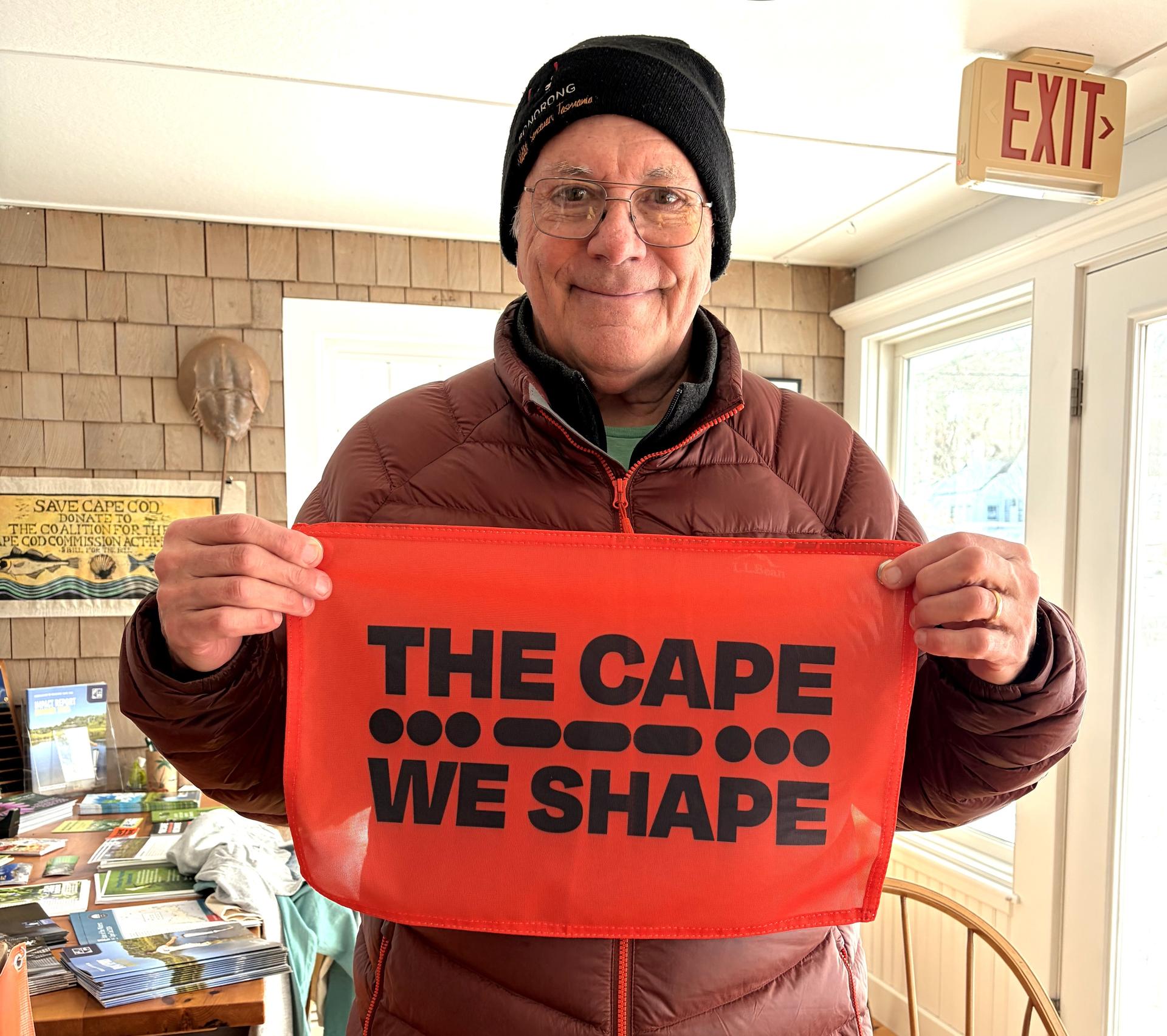
Email us at TeamSOS@apcc.org to arrange to pick up your flag and/or yard sign at APCC's headquarters in Dennis. |
|
|
SAVE THE DATE:
Tuesday, March 24th at 5:30 p.m.
If you've signed up, you'll receive an email with the Zoom link closer to the date.
If you haven't yet signed up, go to The Cape We Shape to learn the campaign's background and to get involved. |
| |
|
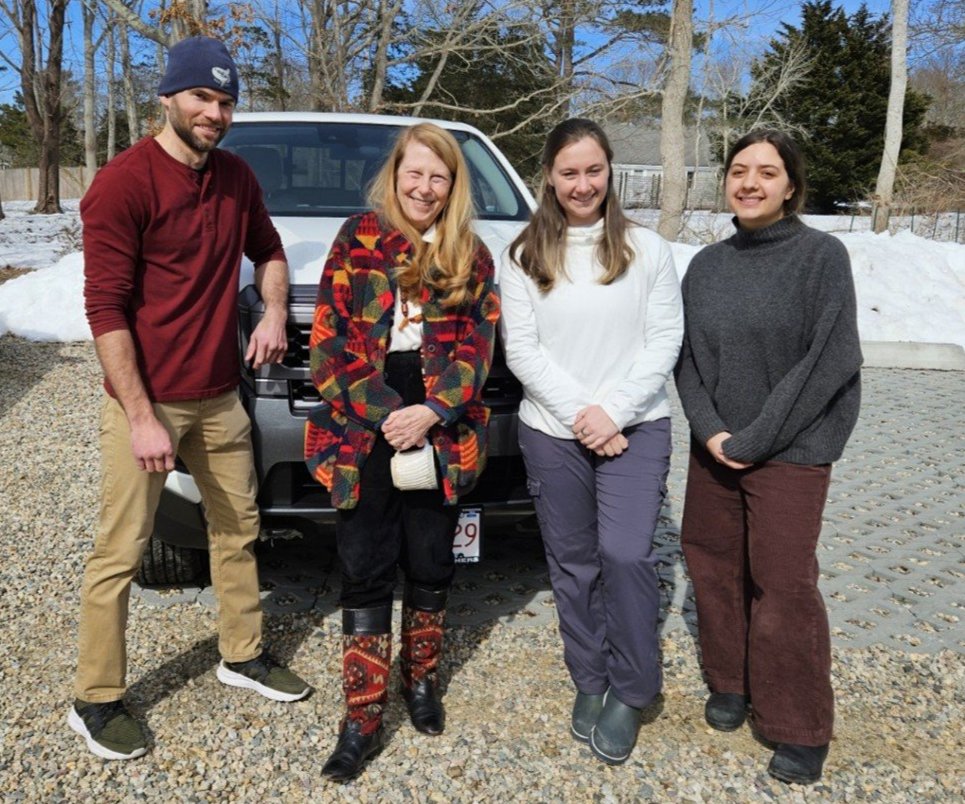
Above: Left to right, JT Percy, senior pond monitoring technician, Julie Hambrook Berkman, PhD, pond programs manager, Jules Buccella, pond monitoring technician, and May Lopopolo, pond monitoring technician |
Cape Cod Regional Pond Program Expanded
Launched in 2023 by the Cape Cod Commission and the Association to Preserve Cape Cod, the Regional Pond Monitoring Program monitors a representative sample of ponds to provide insight into water quality and how it is influenced by pond size, land use, and watershed characteristics.
This year, the number of monitored ponds has expanded from 50 to 75. Alongside physical and chemical measurements, the program now includes enhanced monitoring of zooplankton. Read more here.
With the program expanding to include 25 additional ponds, APCC recently hired Jules Buccella as pond technician to lead the third sampling team.
Due to winter conditions and the recent blizzard, the team has been scouting all 75 ponds to see that paths are clear of fallen trees and to determine when there is open water. Although warm weather and rain over the weekend cleared much of the snow, the ponds themselves remain frozen. The teams are hopeful that with sunny days and warmer temperatures on the horizon, the sampling season scheduled to begin this month can commence.
|
|
|
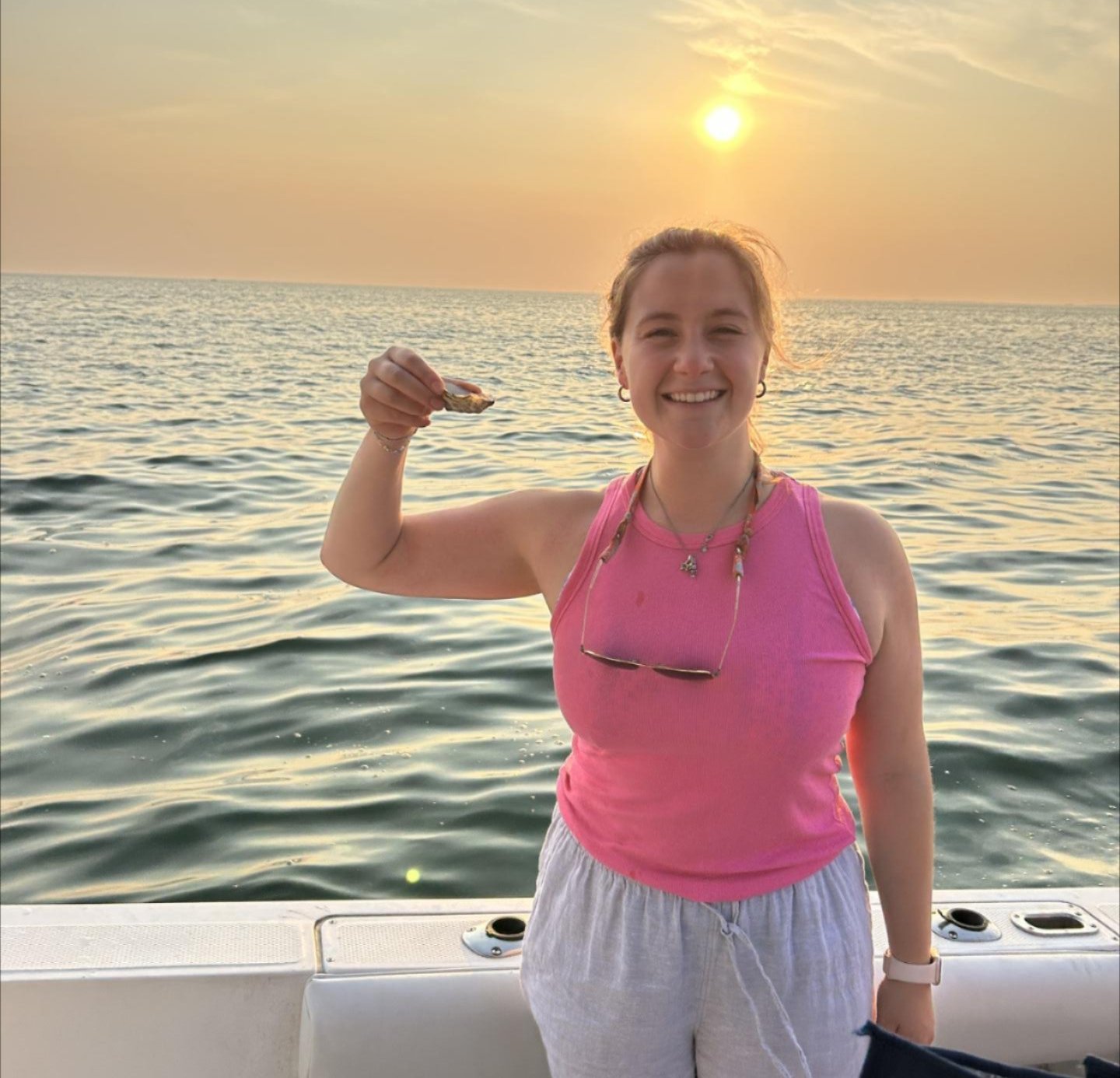
| Jules Buccella
Hi! My name is Jules Buccella. I graduated from UNC Wilmington in 2023 with a degree in marine biology. I am originally from Franklin, MA, but have lived in Brewster for the past two and a half years. During that time, I've truly enjoyed getting to know and appreciate everything the Cape has to offer. For this upcoming pond monitoring season, I am especially excited to connect with members of the community. I love being outdoors and meeting new people. I am thrilled to be a part of the Cape Cod Regional Pond Monitoring team! |
|
|
Disturbance & What to Do with Dead Wood by Erin Camire, APCC Ecological Landscape Program Coordinator
The Cape just endured a massive blizzard, with high winds and wet, heavy snowfall. With this event, many of us now need to turn to our landscapes to clean up the fallen tree limbs that may scatter our backyards. But as we do this, I would like to center our focus on the ecological perspective of disturbance, and how this storm has provided a beautiful opportunity for many creatures in our environment.
Ecosystems are in constant flux, and the death of a tree is often a beautiful step in the process of ushering in new life. In forested ecosystems, disturbances such as heavy storms knock down trees, opening gaps in the canopy. These gaps become incredible pockets of diversity. With a hole in the canopy, sunlight warms the forest floor, inviting understory plants, shrubs, and even the next generation of trees to sprout and fill these gaps.
Not only that, but the dead wood created by these disturbance events are a critical piece of a healthy, functioning ecosystem. The structure they create by leaning against other trees or by being oddly propped on the ground creates nooks and crannies for animals to shelter in, many of whom will carve out nests within the dead trunks themselves.
In particular, standing dead trees, also known as snags, are very important to our cavity-nesting birds for nest sites. Woodpeckers create new hollows every season, so the ones they leave behind can then be inhabited by a number of species who will happily take advantage of a move-in-ready home! Additionally, dead wood hosts a massive variety of fungi, bacteria and insects. In fact, some trees provide more insects when dead than they did when they were alive!
The Cape has just seen an incredible and powerful disturbance event, creating a lot of downed trees across our landscapes, and I hope this article can bring just a bit of excitement to this predicament. If you have dead wood that needs cleaning up after the storm, don't have it hauled away—keep them on your property where they can retain their nature value.
Don't put dead wood in a chipper. Thousands of species of fungi, bacteria, insects, birds, and mammals are adapted to assist with the natural decay of woody material. Putting these logs straight into the chipper robs these organisms of food and habitat critical for their survival. Instead, simply chop the dead wood into sections you can carry, and create a brush pile in back area or corner of your property.
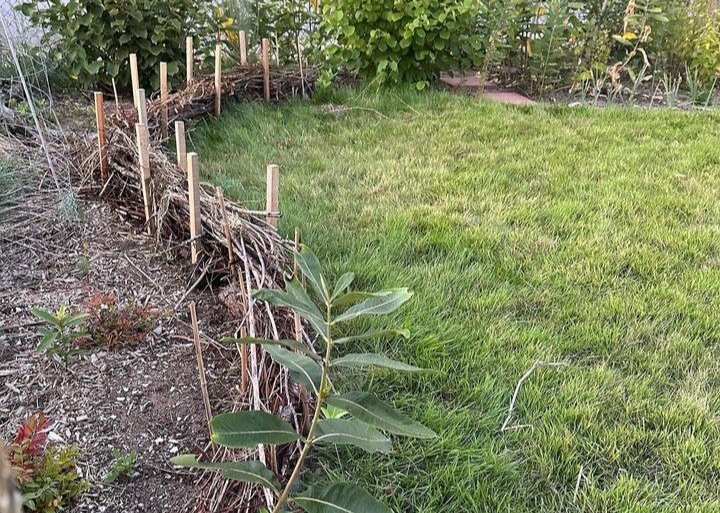
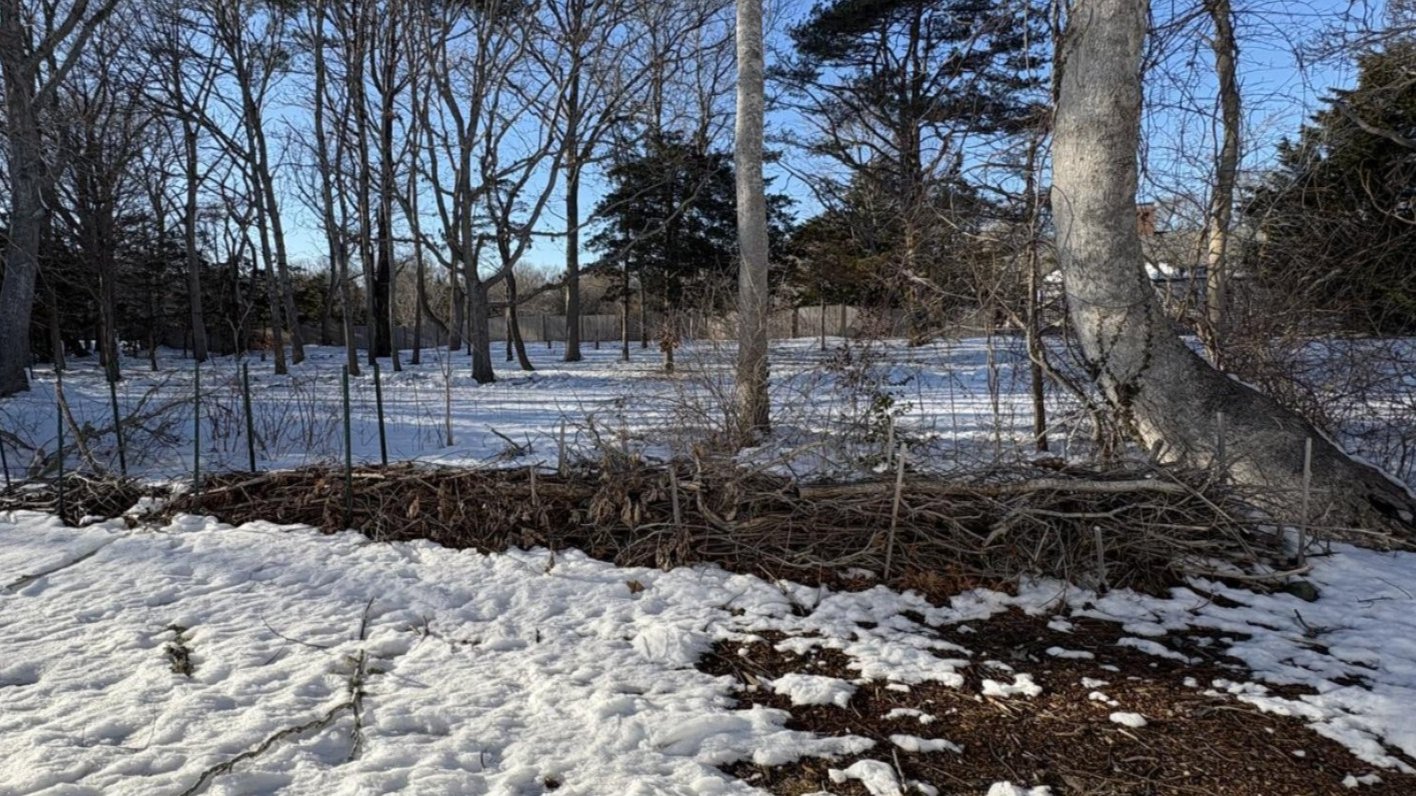
Brush piles provide numerous benefits. Wood-eating fungi, bacteria, and insects will have plenty to eat, birds will be drawn in by not only the insects but also to look for nesting materials, and the structure of these piles creates incredible habitat for passing mammals to duck into such as rabbits and squirrels. You say that you don’t like the look of a brush pile? Don’t worry, because you can also build brush walls. We’ve now installed two of these structures at our office landscape in Dennis, and it has been a great way to not only create a clear line between our property and our neighbors but also provides all of the same ecological benefits as a brush pile.
To create a brush wall, simply hammer in two rows of posts spaced about two feet apart, (these can be wooden stakes, rebar, metal stakes). Continue a line of posts down wherever you’d like your brush wall to go and then simply lay the woody debris in between the posts horizontally. Suddenly you have a wonderful wall of brush defining a garden edge or property line where it can slowly decay. You can add more at anytime and alleviate the need to remove biomass from your property.
While the falling of dead limbs and even whole trees can be a frightening and dangerous part of living in a wooded ecosystem, it is also a fundamental part of the natural balance of our surrounding environments on which so many creatures of the Cape have come to depend on. Saving dead wood and putting in a little extra effort to create such minimalistic structures, such as brush walls or piles for wildlife, can help in supporting local food webs and resilience of our ecosystems. |
Above: A brush wall at APCC's headquarters. |
Books We Love ~ find at your local library or independent bookstore |
|
|
|
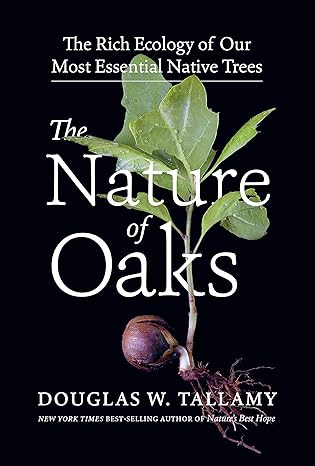
The Nature of Oaks by Douglas W. Tallamy provides the reader with a greater appreciation of this group of trees. The multitude of values of oaks and their relationships with insects and other wildlife is nothing short of remarkable.
We may take oaks for granted here on Cape Cod where they are commonly found. But don't let the impression of their numbers numb you to their worth. After imbibing these eye-opening nature factoids served up by Tallamy, you'll never look at an oak quite the same way. |
|
|
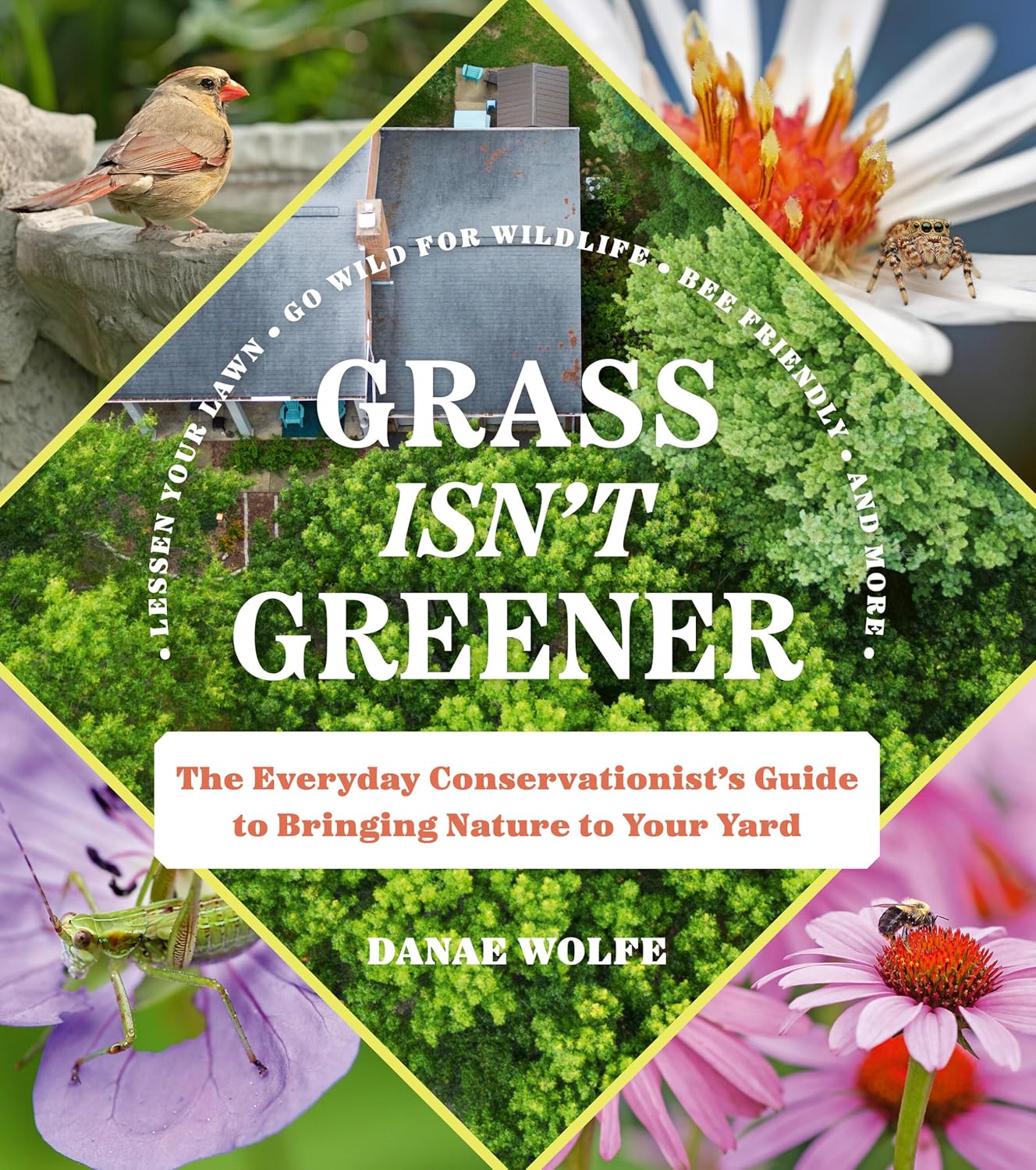
| Grass Isn't Greener by Danae Wolfe is a resource for anyone looking for little ways to make a big difference—and to have fun doing it. Even small changes in what you do in your yard or garden can create positive impact for nature. |
|
|
|
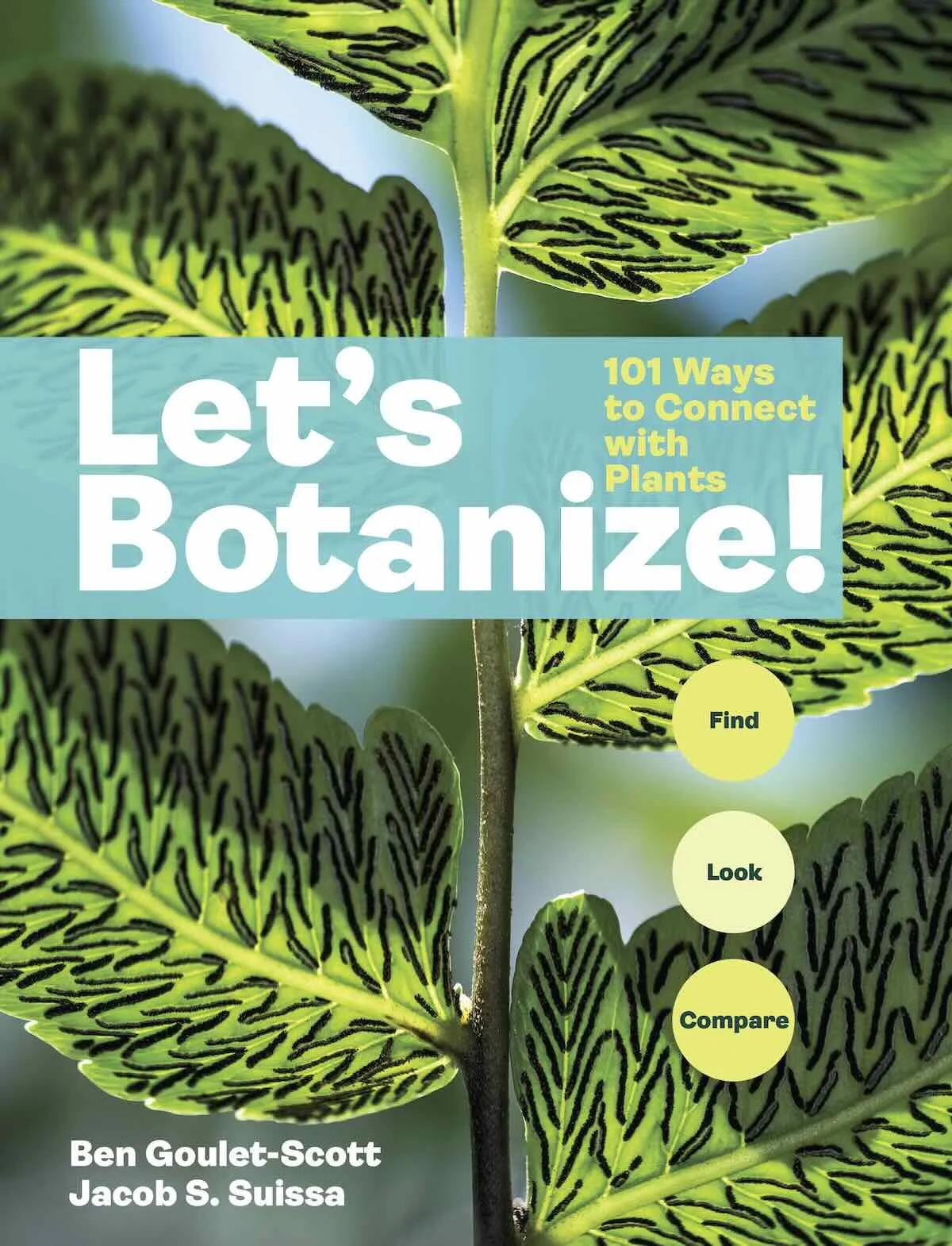
Let's Botanize! is a new book by Ben Goulet-Scott and Jacob S. Suissa is all about taking a closer look at plants—and we're all in! Hear (or read the transcript) the interview with the authors by Margaret Roach of A Way to Garden here. |
|
|
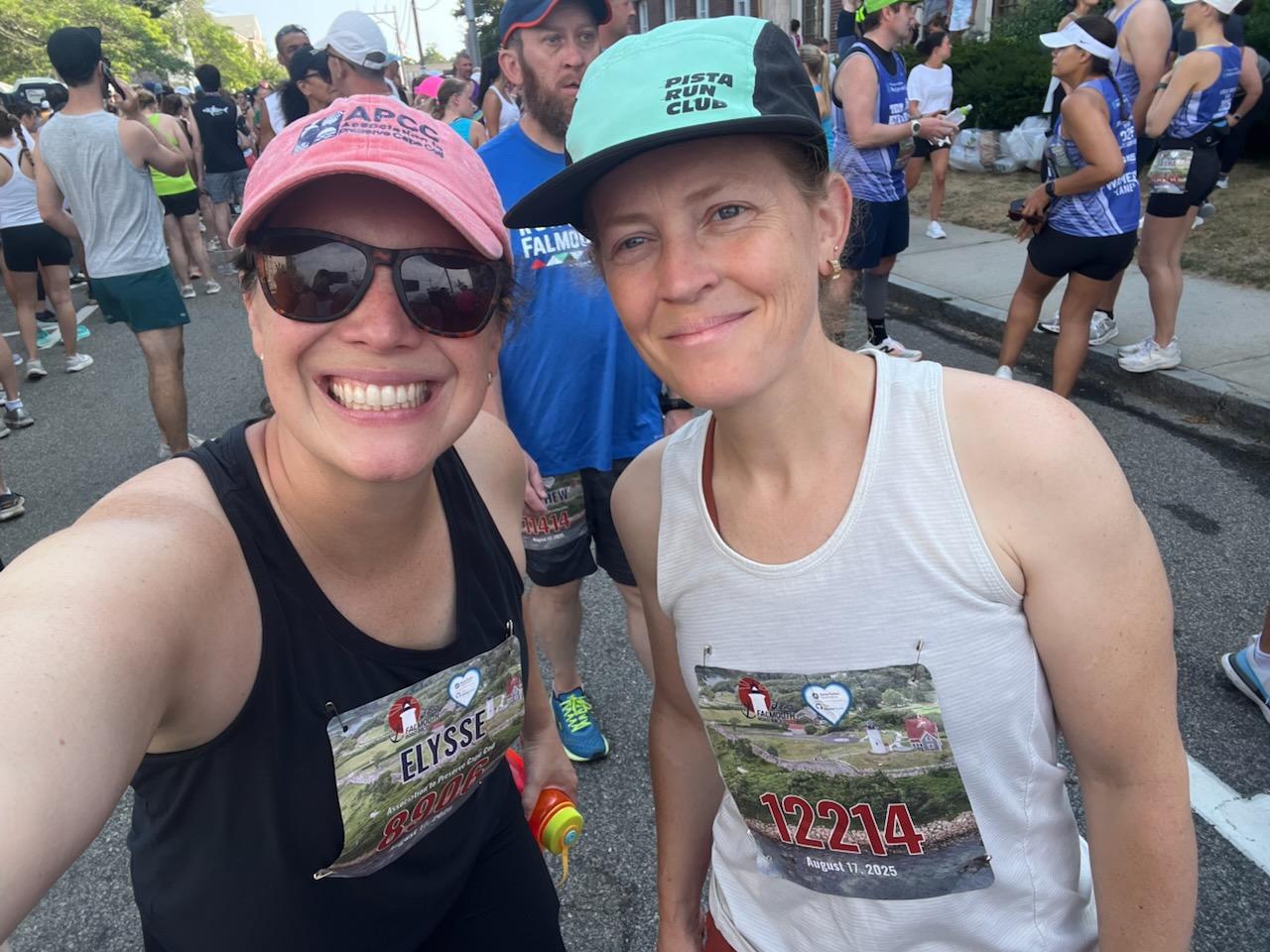
Above: Elysse Magnotto-Cleary, APCC president, and her friend Mary ran for APCC in 2025. |
Attention Runners: Run the 2026 Falmouth Road Race for APCC
APCC is thrilled to be a part of the "Numbers for Nonprofits" program for the 2026 Asics Falmouth Road Race, and we are currently accepting applications for this year's team. Team members will receive a guaranteed race entry, fundraising tips and tools, a fundraising web page, and support throughout the process. If you're interested in amplifying APCC's work in a fun and unique way,
please apply here.
Questions? Please reach out to runforapcc@gmail.com |
JOIN US! APCC VOLUNTEER KICKOFF SESSIONS
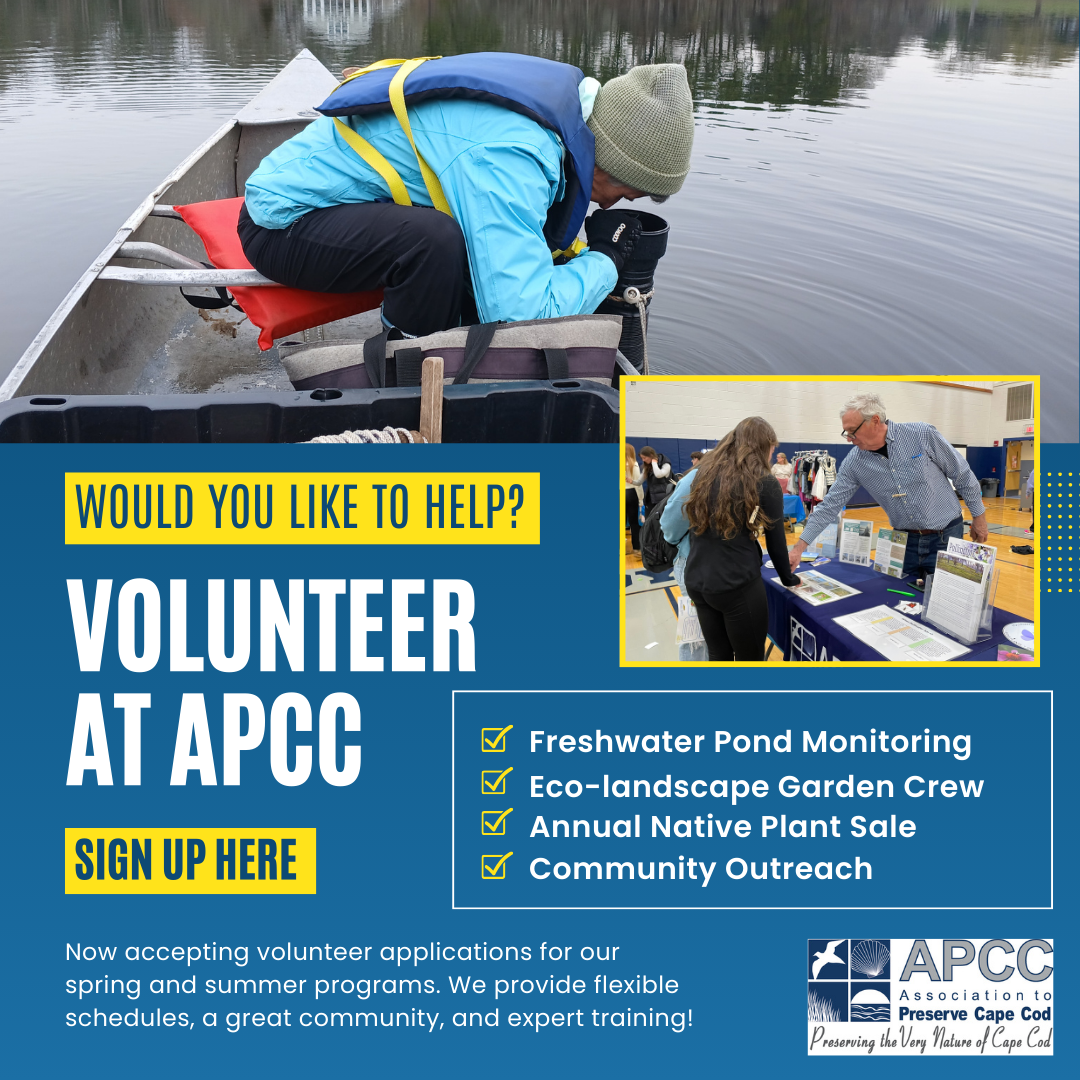
New and returning volunteers are invited to join us in person or on zoom to learn about our 2026 volunteer program.
Opportunities for volunteers include our annual native plant sale, pond and river herring monitoring, eco-landscape garden crew work days, ecosystem restoration, outreach event support, and The Cape We Shape campaign support!
SIGN UP TO VOLUNTEER & SAVE THESE DATES
March 18 at 5:30 p.m. - ZOOM Volunteer Orientation. Save the date! Zoom link will be sent prior to event.
March 31 at 1:00 p.m. - IN-PERSON Volunteer Orientation. Register here. Space is limited! |
If you are a farmer or someone who wants to grow native plants to sell, or you just want to be updated on the program's development, please submit the interest form that appears on our webpage. We will be sending periodic email notices of workshops and meetings.
Funding for the project is provided by Barnstable County and its Economic Development Council License Plate Grant Program through the Cape Cod Commission, the Kelley Foundation and private donors. |
Nine talks for prospective growers as part of the Cape Cod Native Plant Growers' Cooperative program have been presented thus far, with more scheduled in the upcoming weeks. These past workshops can be viewed here:
Registration for upcoming talks can be found on our events page.
|
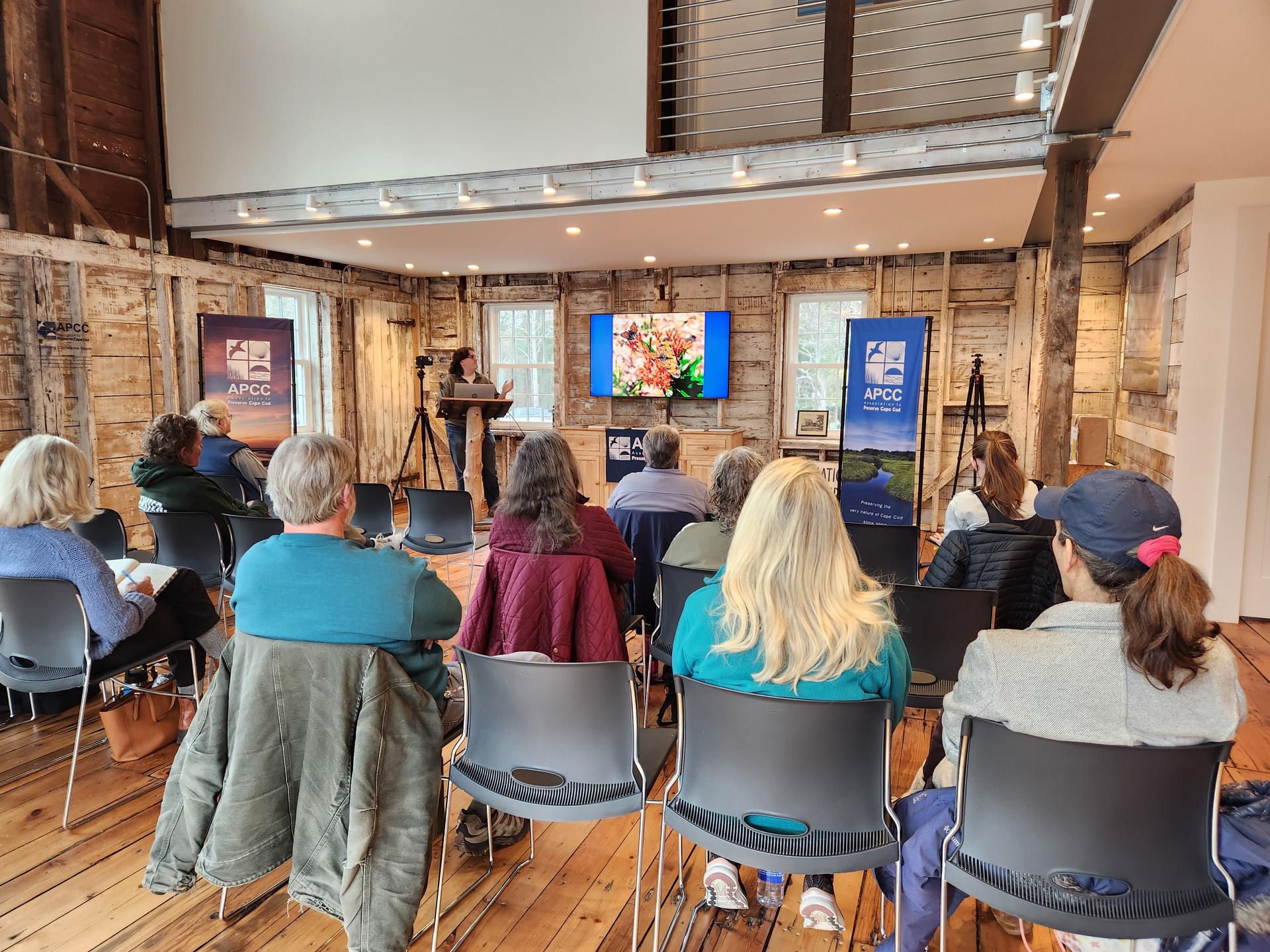
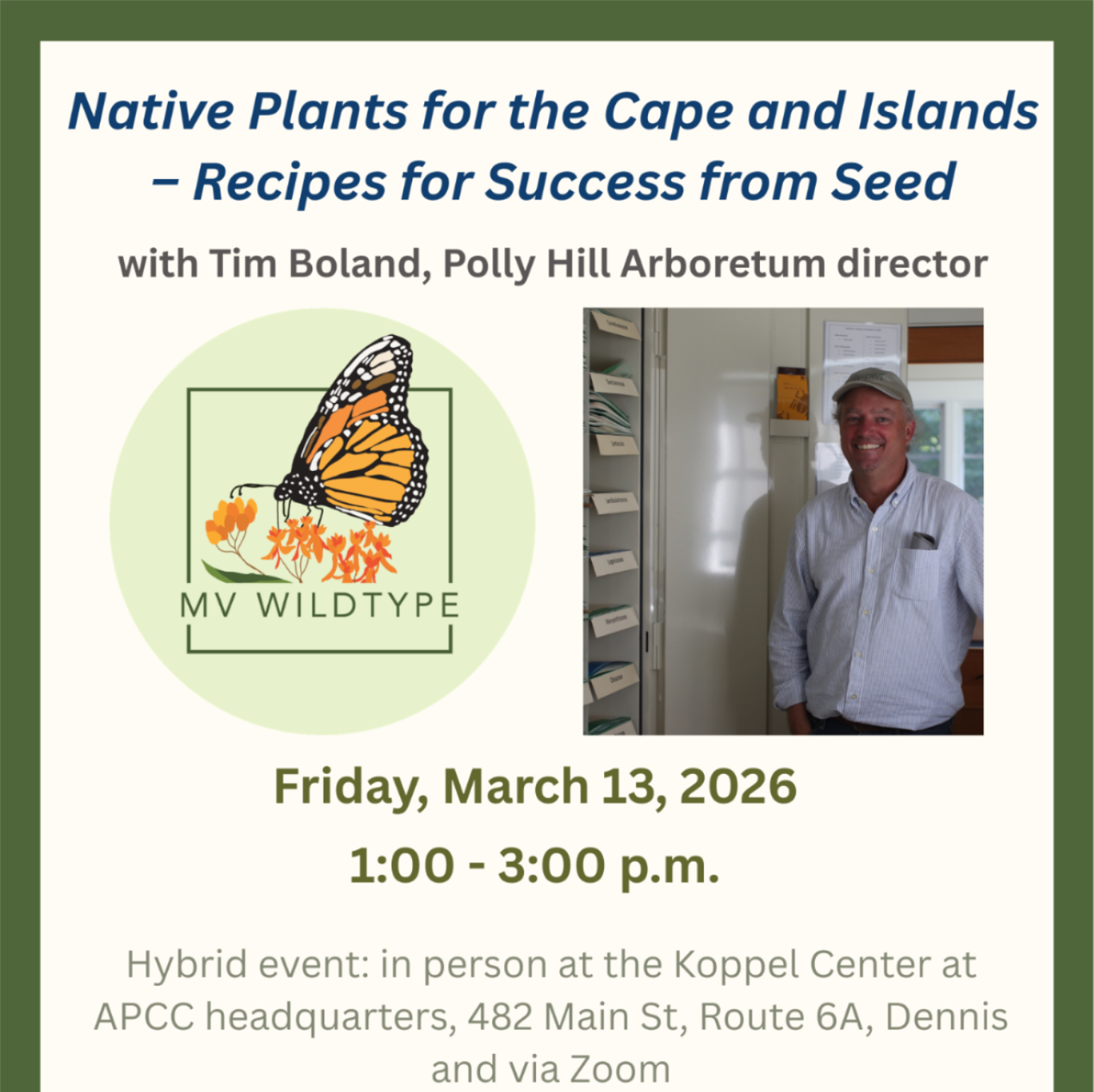
Join APCC as we welcome Polly Hill Arboretum (PHA) Director Tim Boland as he shares cultivation tips and protocols for raising twenty of the most popular native plants from seed. |
The above talk is offered as part of the Cape Cod Native Plant Growers’ Cooperative Program to provide information to prospective growers. The program is made possible by funding from the Cape Cod and Islands License Plate Grant program, the Kelley Foundation, and other funders. |
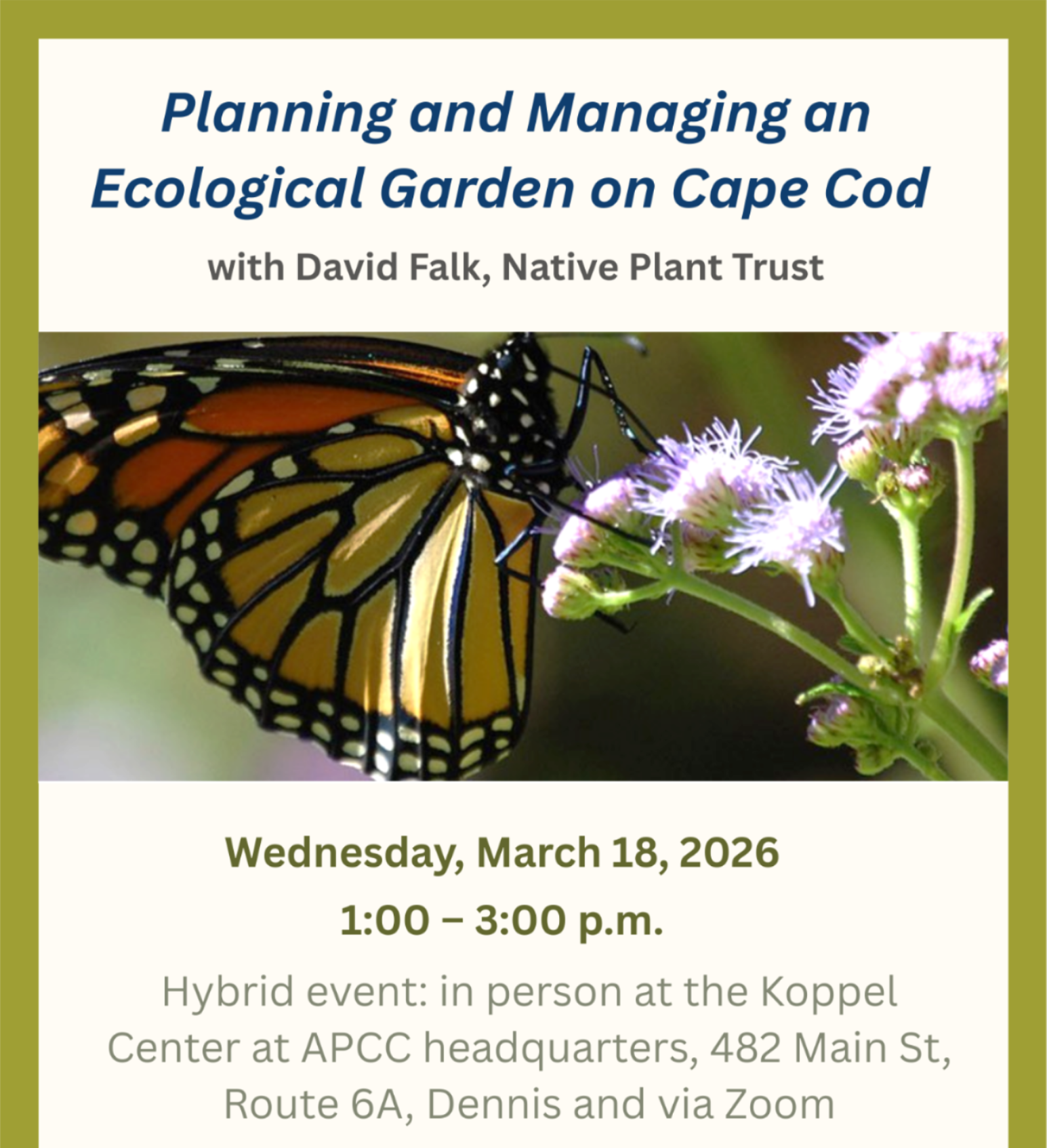
If you want to transform your backyard into a wildlife paradise, but don’t know how to get started, then this talk is for you. Join APCC in welcoming David Falk, senior horticulturalist at Native Plant Trust’s Garden in the Woods, for a discussion on creating an ecologically minded landscape, specifically catered to the conditions of Cape Cod, and how to steward your landscape into the future. |
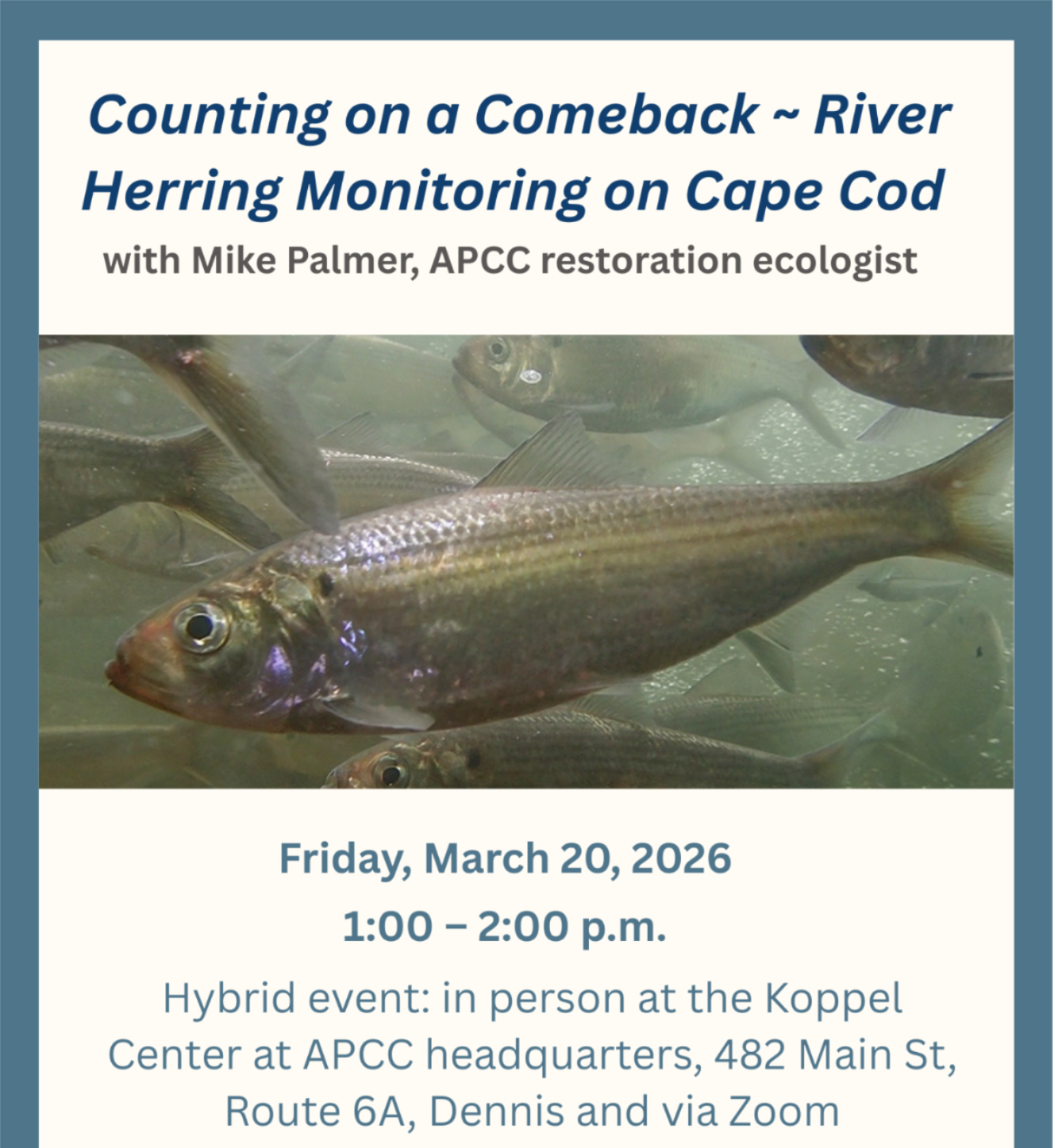
Be part of Cape Cod’s spring comeback. In this talk, Mike Palmer, APCC restoration ecologist, offers an up-to-date look at river herring science—what we’re learning about population trends, habitat needs, and the role of pond and stream conditions in recovery. |
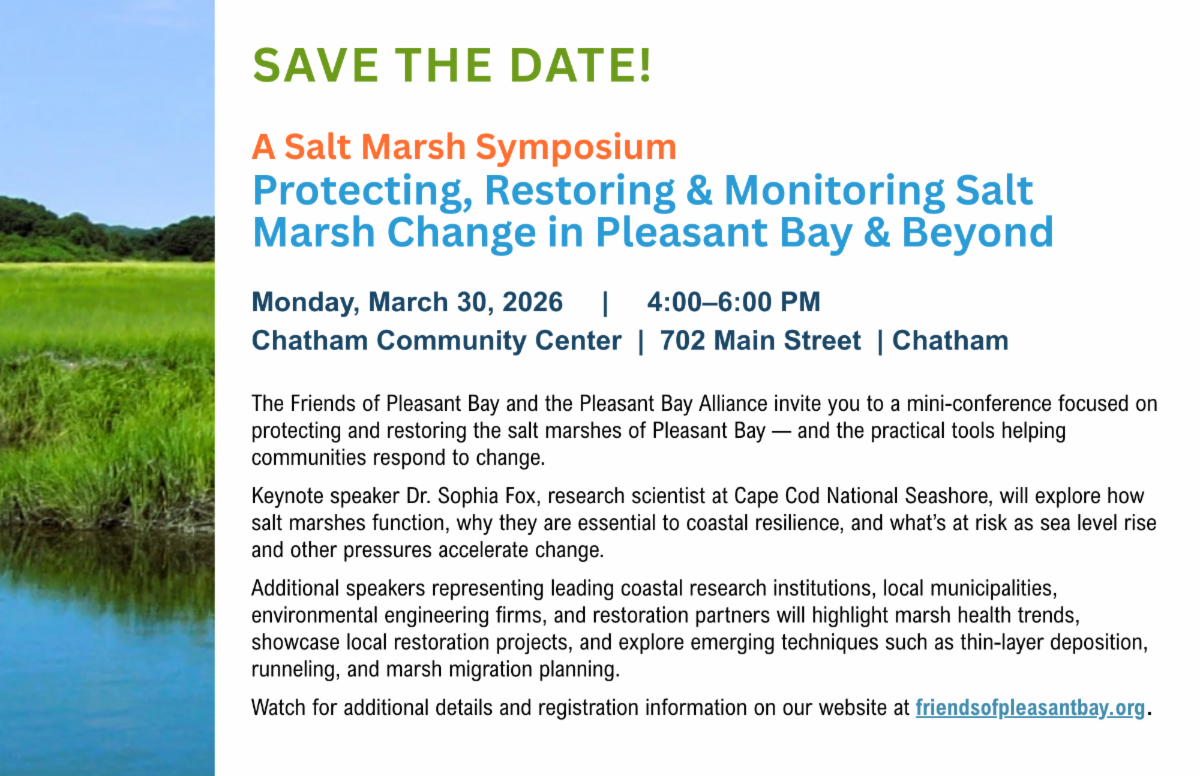
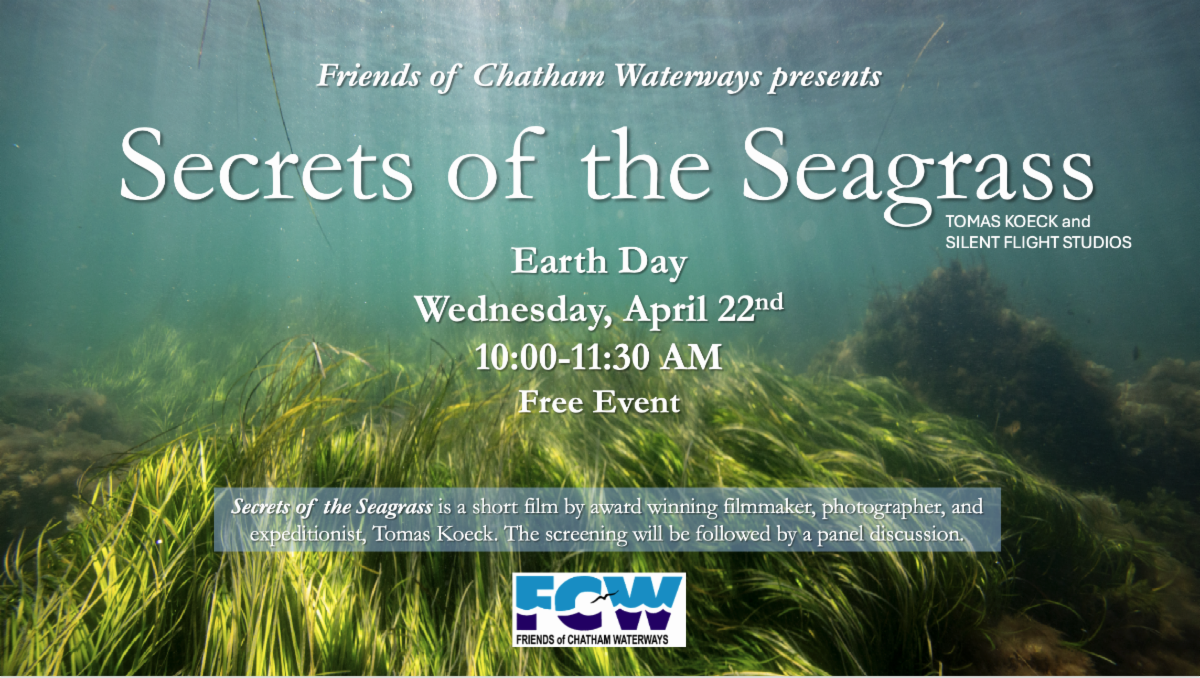
Celebrate Earth Day at the Chatham Orpheum theater where Friends of Chatham Waterwasy is hosting the showing of “Secrets of the Seagrass.” A discussion will follow with a notable panel, including the filmmaker, Tomas Koeck, Chatham’s director of natural resources, Greg Berman, and the director of both Seagrass Net and the Center for Coastal Studies’ Benthic Ecology Program, Dr. Agnes Mittermayr. |
|
|
A Cape-wide Conservation Event Calendar |
The Compact of Cape Cod Conservation Trusts (“the Compact”) and its nonprofit members launched a new regional calendar of events. The Conservation Calendar includes programs across Cape Cod hosted by these groups. The goal of the calendar is to encourage visitors and residents to take part in nature and environmental events. You can always find the link to the calendar on APCC's website under News & Events.
|
A Cape Cod Native Plant-selector ~ to help you choose the perfect native plants for your garden. |
|
|
Email kandres@apcc.org and we'll send you a CapeCodNativePlants.org decal. |
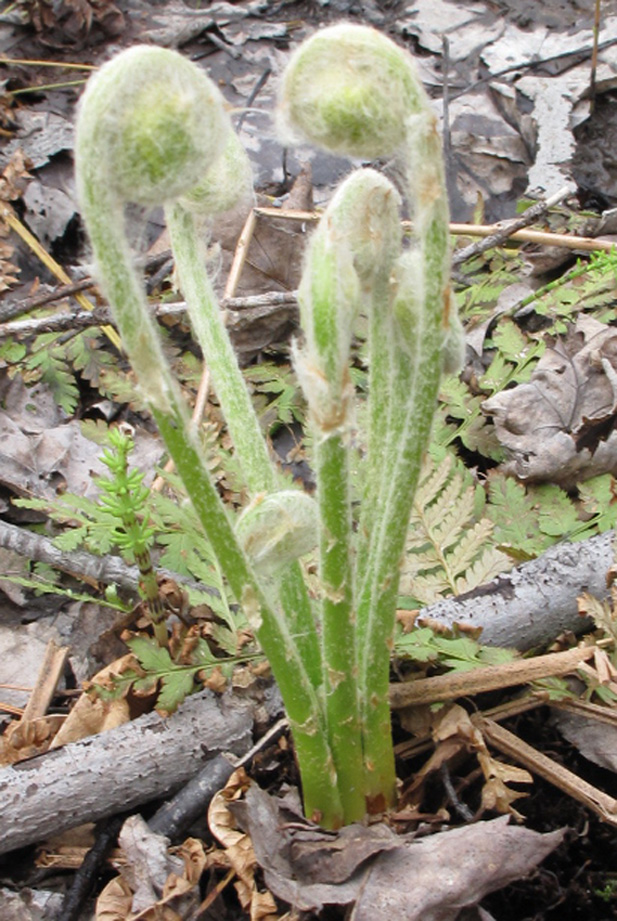
| Photo credit: Laval University, CC BY-SA 4.0, via Wikimedia Commons |
Cinnamon Fern Osmundastrum cinnamomeum |
|
|
The purpose of this site, CapeCodNativePlants.org is to help native plant enthusiasts select the right plant for the right place. While not all native plants presented here are indigenous to Cape Cod, they are suitable native species for Cape gardens and managed landscapes.
Why Native Plants? Many native plants are drought tolerant, salt tolerant, and thrive in the “thin” soils found on Cape Cod. Native plants are as attractive as any plant, and are reflective of the Cape’s natural beauty. By planting native species appropriate for Cape Cod, you can conserve water, avoid pesticide and fertilizer use, and support pollinators and birds.
|
|
|
|
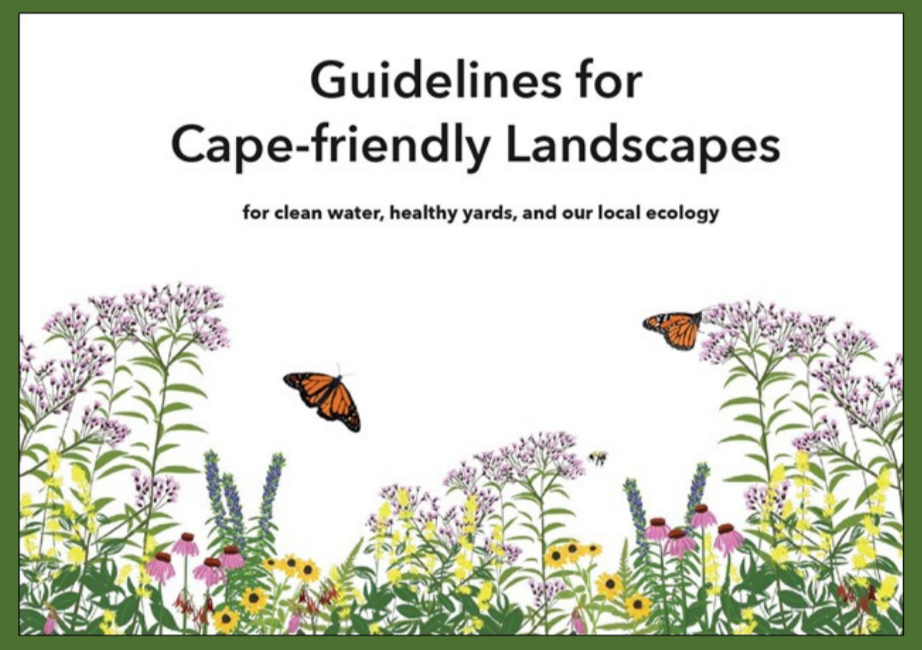
The Guidelines gives homeowners steps they can take in the design and maintenance of their properties that will support pollinators and birds, manage stormwater, conserve water, and protect the Cape's water quality. This 40-page booklet is beautifully illustrated by Marcy Ford with content that is easily digestible and supported by numerous resources for additional learning.
|
|
|
We are grateful for the several retail shops that are partnering with us to make this publication more widely available: Brewster Book Store, Birdwatchers General Store, Crocker Nurseries, Wellfleet Audubon Wildlife Sanctuary, Cape Abilities Farm, Cape Cod Museum of Natural History, the Cape Cod Lavender Farm, Heritage Museums and Gardens, Titcomb's Bookshop, Sea Howl Bookshop, Soares Flower Garden Nursery, and Eight Cousins Bookshop.
If you are a retailer and would like to sell this publication at your store, please contact us. |
|
|
APCC caps $25 -includes USPS deliver in the U.S. |
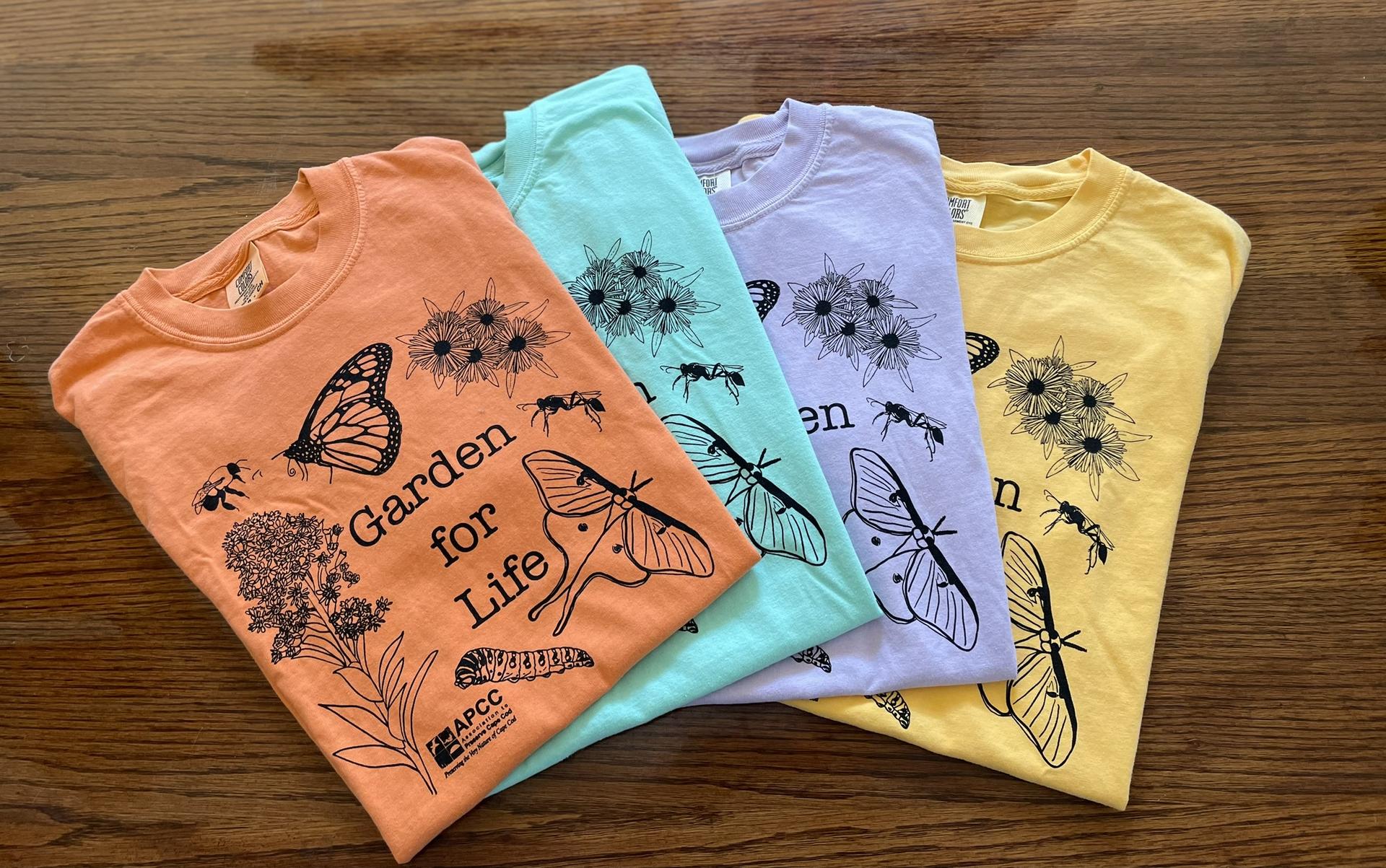
Garden for Life T's $30 -includes USPS delivery in U.S. |
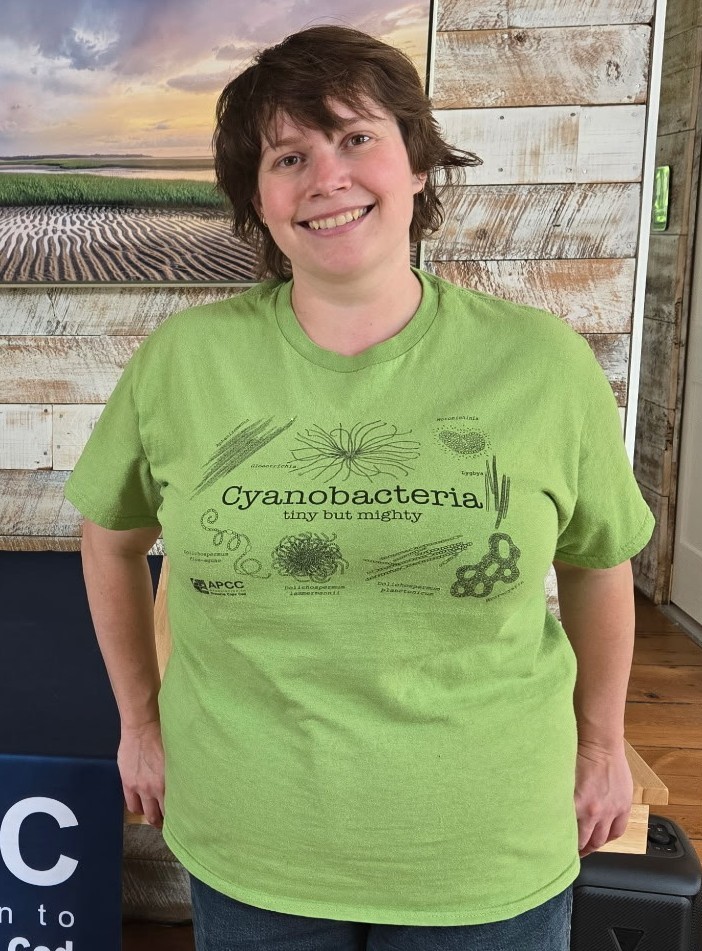
| Cyanobacteria ~ tiny but mighty color kiwi $30
-includes USPS delivery in the U.S. |
|
|
|
APCC eNewsletters. Our weekly newsletters are archived on our website and easily shared.
You can find past newsletters and share with your friends. Encourage others to sign up for future enewsletters HERE.
|
|
|
Are you thinking of going solar? We hope so!
In partnership with E2 SOLAR in Dennis, APCC receives $500 for every solar installation when APCC is named as referral. |
|
|
|
Thank you to the homeowners who just contracted to install solar panels through E2 Solar. May the sun always shine for you! |
|
|
Expressions Gallery, 578 Main Street, Chatham
CLICK HERE |
Expressions Gallery donates 20 percent of its profits to APCC's work. |
|
|
Thank you to our business sponsors! |
|
|
APCC is rated four stars by Charity Navigator, 2025 Platinum by Candid (formerly Guidestar), and 2024 Top-Rated by GreatNonprofits. |
|
|
Our Contact Information
*{{Organization Name}}*
*{{Organization Address}}*
*{{Organization Phone}}*
*{{Organization Website}}*
*{{Unsubscribe}}* |
| |
|
|