Association to Preserve Cape Cod |
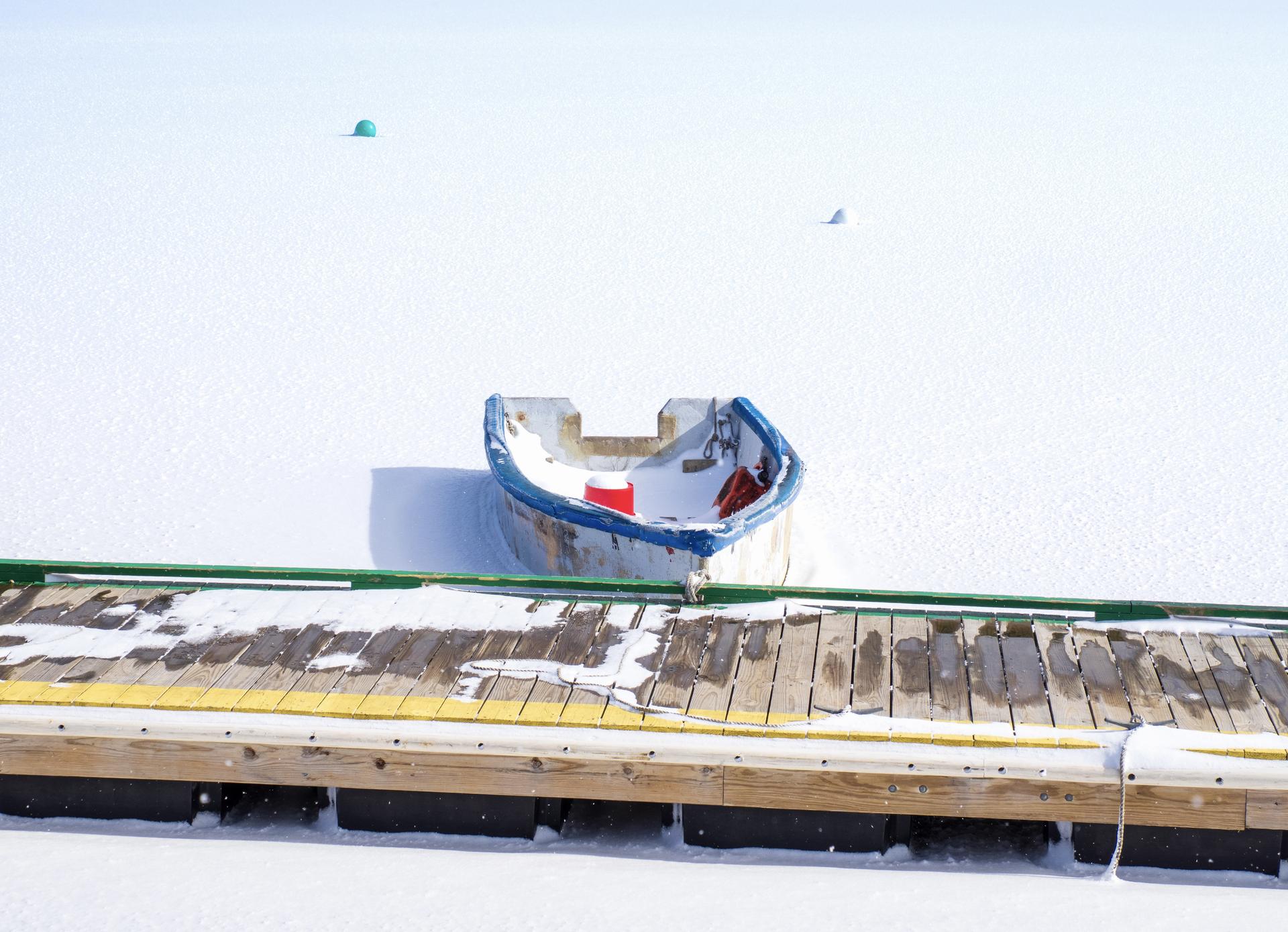
Above: Photo by Sue Machie |
|
|
|
Not Ready by Andrew Gottlieb, Executive Director |
The Blizzard of 2026, with all the disruption and personal pain it imposed, was a stress test of the Cape’s infrastructure and overall readiness for a major storm response. |
|
|
Despite tireless work by plow drivers, line crews, volunteers and first responders, the Cape’s power and communications systems failed. Our power grid was crippled by tree limbs that led to days long outages for a large majority of us. Internet access failed as the power went down and cell service was heavily degraded by the loss of power to cell towers and volume spikes in the absence of wired internet service.
In addition to the outages human toll, especially to the elderly and people with medical needs, the cost of the outage was significant for businesses who could not open and workers who missed shifts. The substantial but yet unknown overall cost of the response needed to restore power will ultimately be borne by ratepayers who are already paying high utility rates. The great irony here is that all the money spent restoring the system this past week will leave it no less vulnerable to damage in the inevitable next storm.
One thing we know for sure is that there will be more major storms, and eventually a hurricane, in our future. It is an open question if we going to wait for the next storm, no better prepared to prevent widespread communication and power outages. Some had warned about the hazards of reliance on overhead wires in a landscape filled with trees and the reliance of communications systems on those vulnerable power lines. Those warnings were largely ignored as we were told tree trimming would do the trick. I don’t know how anyone can look back at the impact of last week’s storm and not realize that we have a lot of work to do to harden our critical systems.
The time to have a broad public conversation on how to better protect ourselves from future large storms is now, while the memory of the cold and disruption of last week remains fresh. Our power and communications infrastructure will not improve unless we demand it. |
|
|
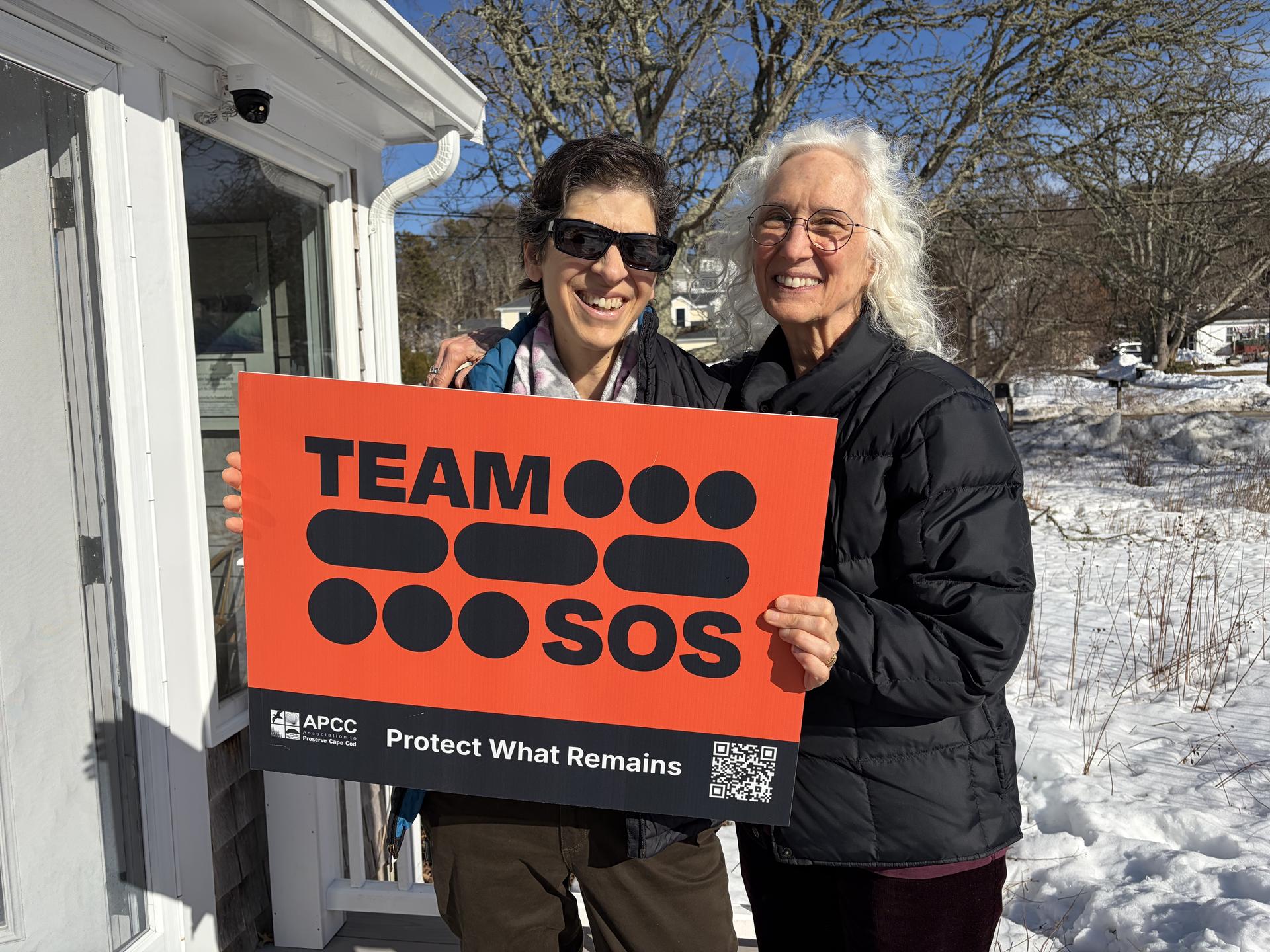
Above: Diane DiGioia and Melody Masi pick up their Team SOS campaign sign at APCC's office in Dennis. |
We are energized by the enthusiastic response to the launch of The Cape We Shape campaign! This effort aims to preserve the last acres of Cape Cod that have been identified as priority natural resource areas that are needed for the protection of our drinking water, critical habitats, and coastal resilience. SAVE THE DATE: Tuesday, March 24th at 5:30 p.m.
For those of you have already signed up, look for an email later this week that will provide a registration link and lots more information. If you haven't signed up, go to The Cape We Shape the background and to get involved.
Email us at TeamSOS@apcc.org to arrange to pick up your flag and/or yard sign. |
|
|
Ecosystem Restoration Program |
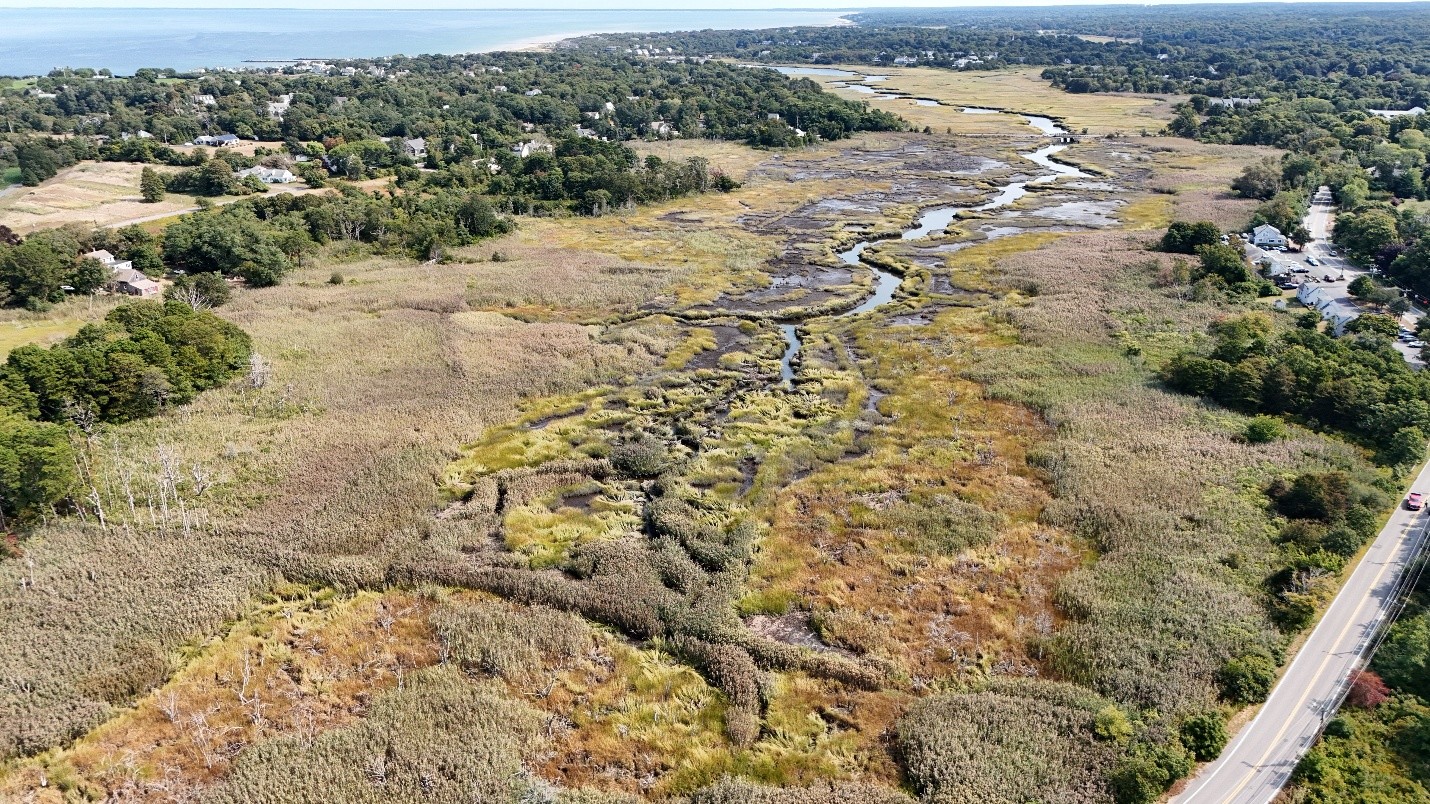
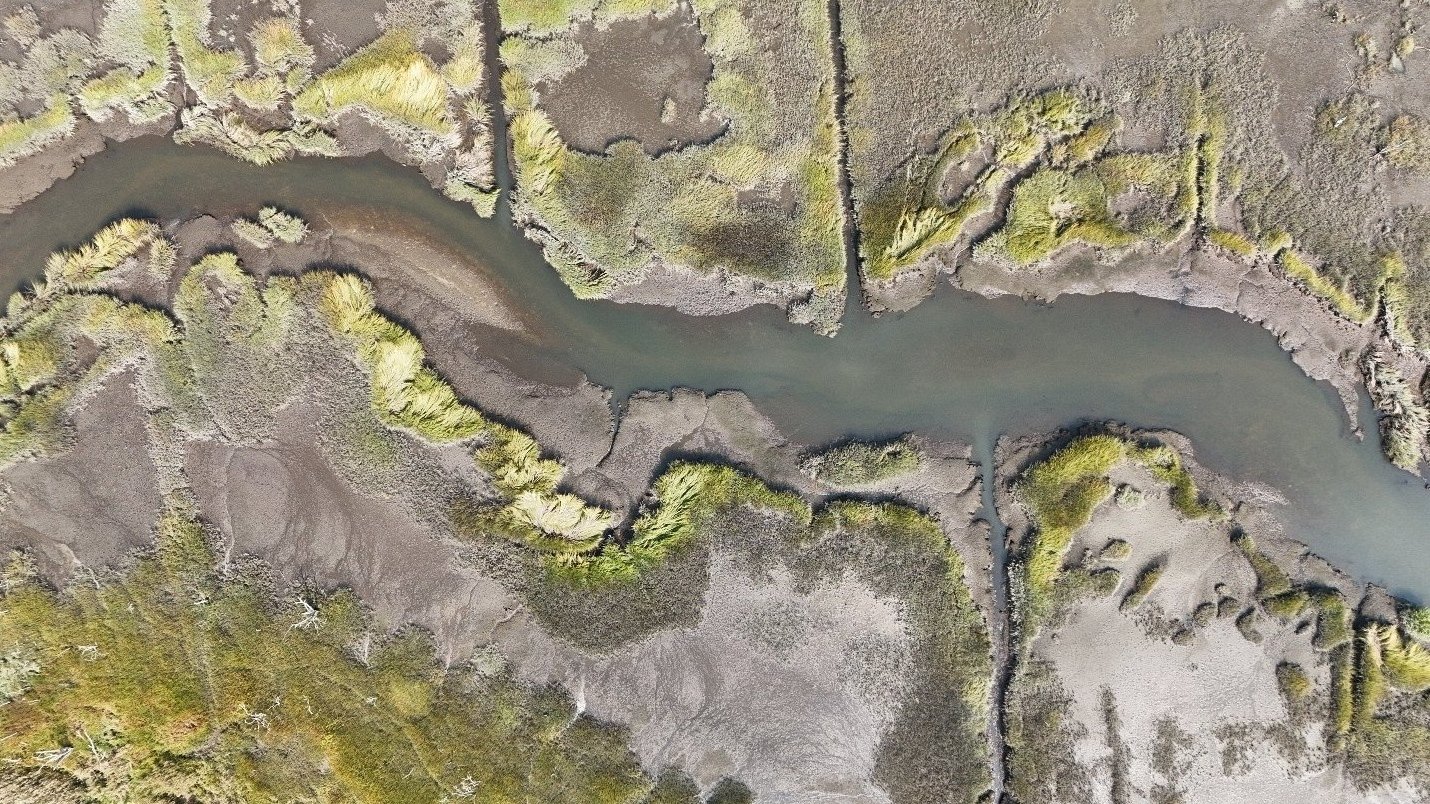
Above: Sesuit Creek restoration site located in Dennis, MA, looking west from the upstream marsh towards Bridge Street. |
APCC Leads Major Salt Marsh Planting Project at Sesuit Creek APCC is excited to share an update on the Sesuit Creek adaptive management project, which aims to accelerate salt marsh recovery upstream of Bridge Street in Dennis.
This area underwent tidal restoration in 2008, when the town of Dennis and partners replaced an undersized pipe culvert with two large box culverts. The restoration successfully reduced the spread of the invasive reed Phragmites australis. However, native salt marsh plants have been slow to return, largely because the upstream marsh surface sits at a relatively low elevation. Work planned for spring 2026 will help the marsh build elevation more quickly through sediment accretion, improving resilience to future sea level rise.
The project will plant nearly 80,000 plugs of the native salt marsh species Spartina alterniflora (smooth cordgrass) in existing bare areas of the upstream marsh. APCC partnered with Woods Hole Group to develop the planting plan and prepare permit applications. In January, APCC received an approved order of conditions from the Dennis conservation commission, clearing the way for implementation. SumCo Eco-Contracting, LLC has since been retained to carry out the design, with planting anticipated from late May through mid-June 2026.
This work is supported by the Massachusetts Department of Fish and Game’s Division of Ecological Restoration, the MassBays National Estuary Partnership, and private foundation funding. |
Above: Example bare areas to be planted with plugs of native salt marsh plants, Spartina alterniflora, to boost the revegetation of the marsh surface and improve long-term stability. |
|
|
Winter’s Forgotten Industry
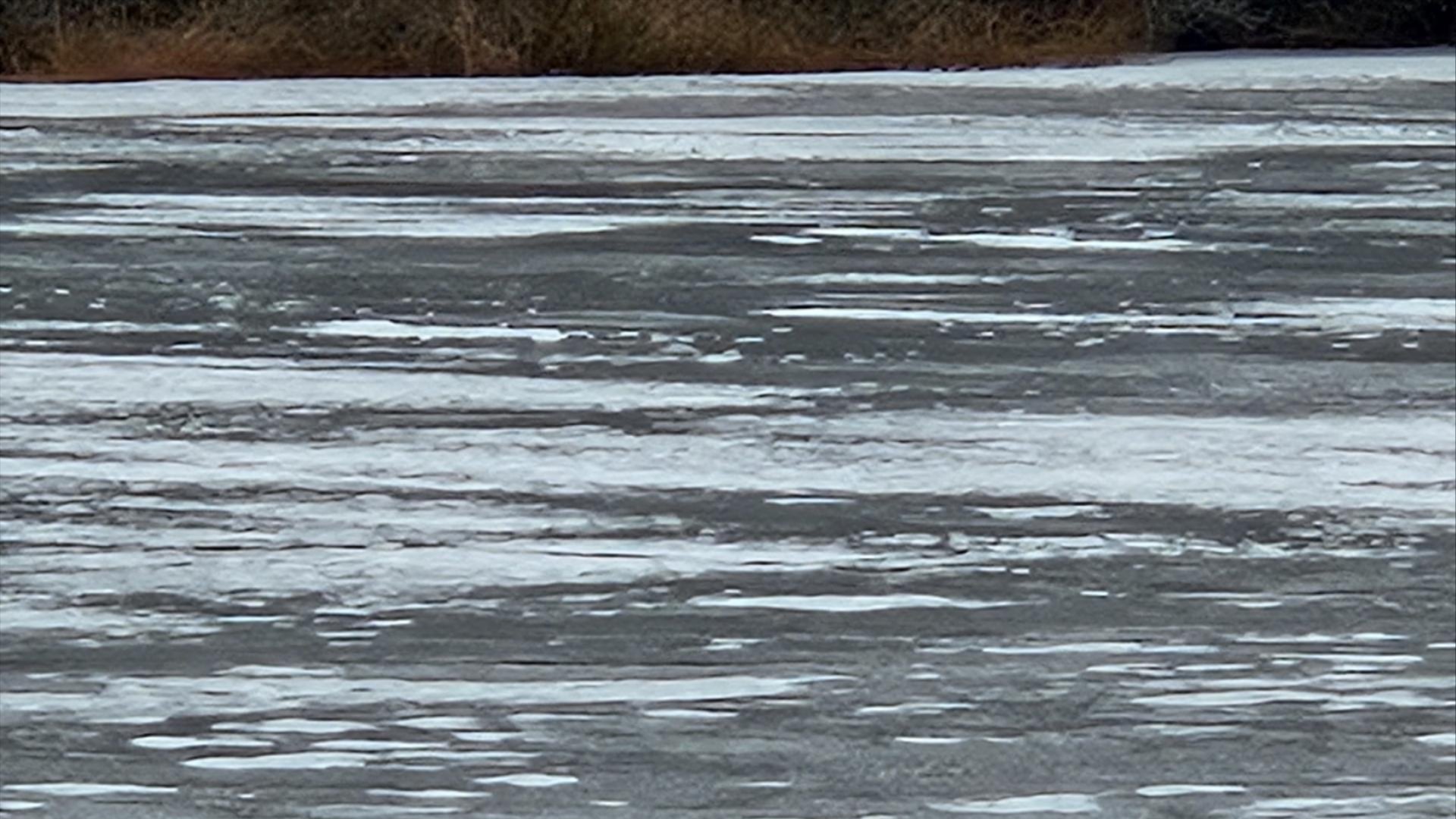
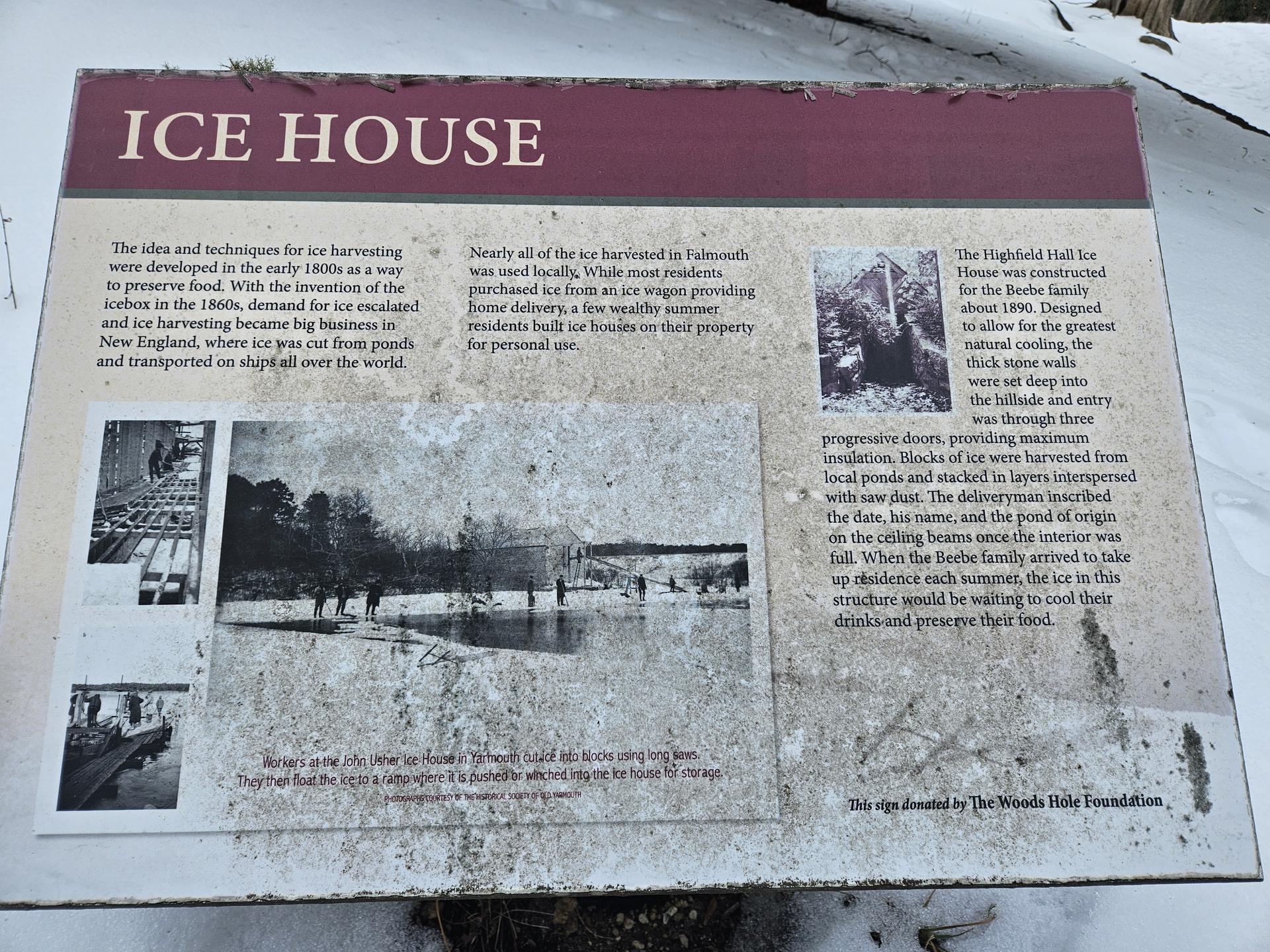
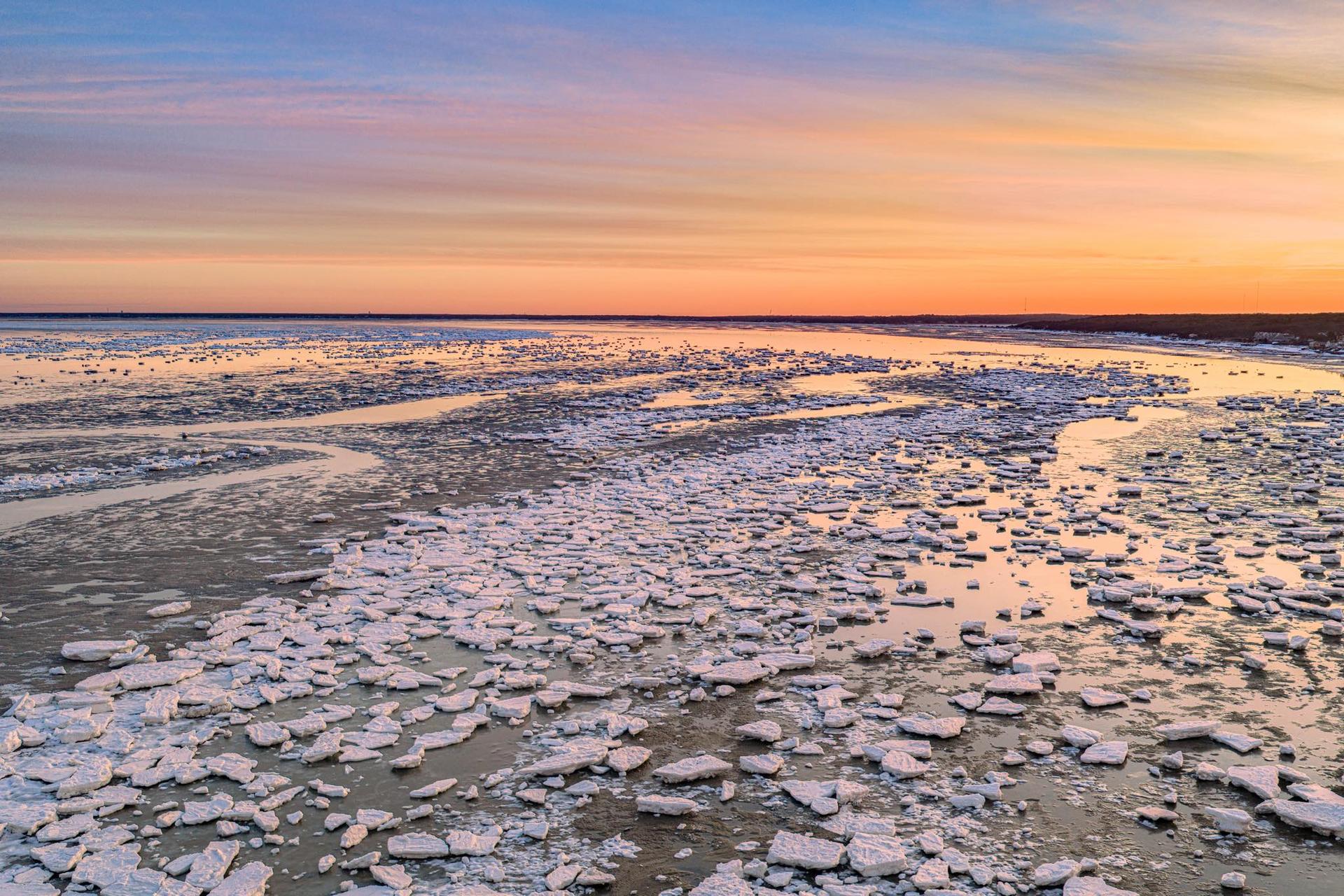
Although we may not often think about the usefulness of ice beyond keeping a drink cold on a hot summer day, it was once a major commodity in the 19th-century economy. Before the invention of electric refrigeration, ice was harvested from freshwater ponds and lakes during the winter months, and then carefully stockpiled to preserve food throughout the summer in ice houses.
Ice blocks, also called cakes, were collected by floating the blocks down an open channel to the pond’s edge or sliding them across the ice. They were then snugly fit together and insulated with saltmarsh hay. Drain holes were installed along the icehouse floor for runoff from melting ice. Although simple in structure, these ice houses could last up to two years if built well (the denser the better).
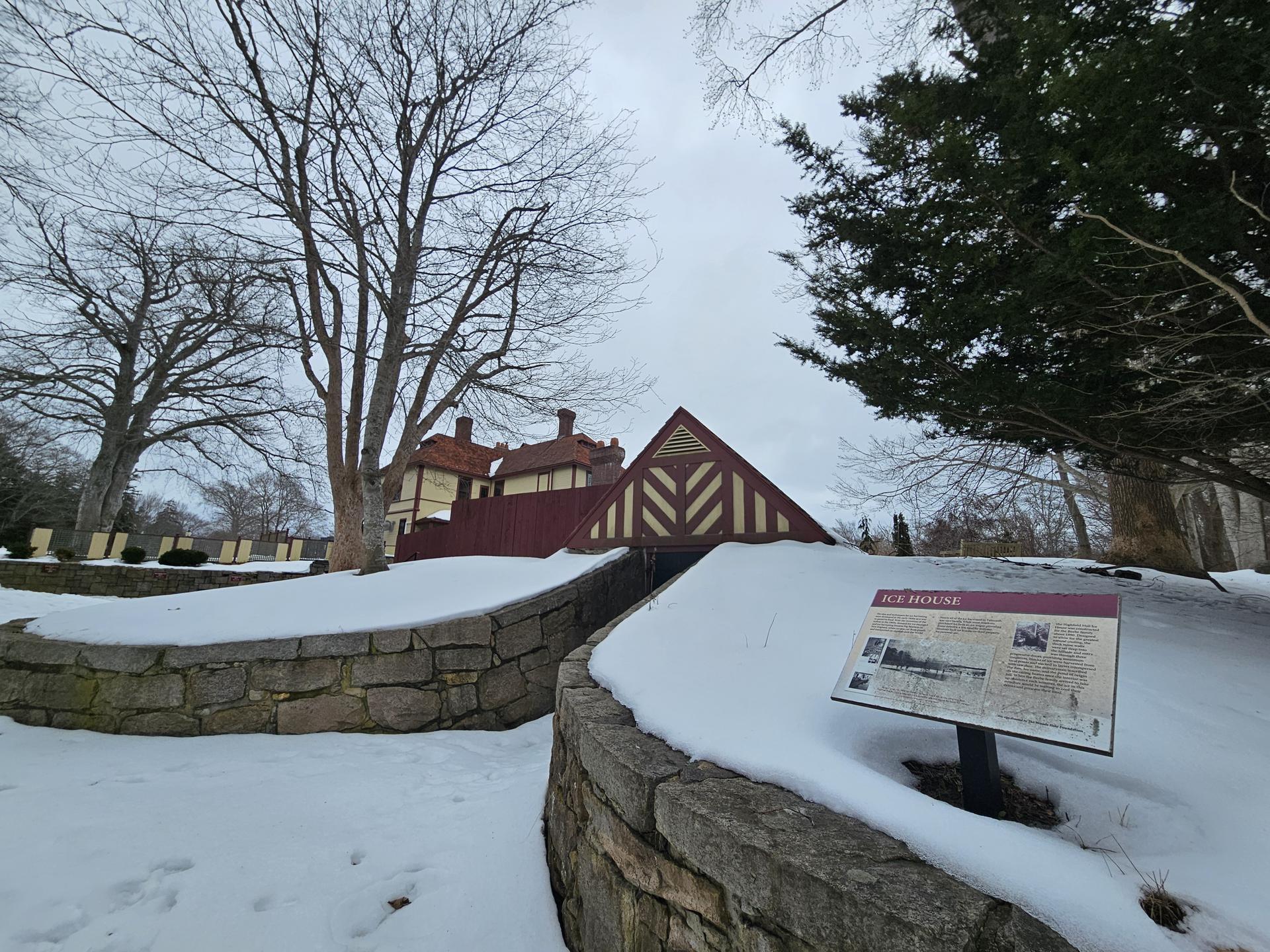
Miles Pond in Falmouth, also known as “Ice House Pond,” served as an important source for community ice harvesting and inspired the construction of local icehouses.
Provincetown was a major leader in the ice-cutting industry, supplying fishing businesses, restaurants, and households with ice boxes for about sixty years. Local ice entrepreneurs popped up. Stephen Bennett founded the Bennett Ice Plant—likely the first in Provincetown. On Shank Painter Pond, two famous ice entrepreneurs included Frank A. Crawley, owner of the Crawley Ice Company, and Walter Welsh, owner of the Walter Welsh Ice Company. Joseph Gonsalves DeRiggs founded his ice business on Pilgrim Lake in the late 1890s. Crawley and DeRiggs were the last of the ice farmers on Cape Cod. (Source: Provincetown Independent)
In the 1930s, a popular fish market in Woods Hole installed ice-making machinery. And it was the ice industry that helped change the food industry, paving the way for mechanical refrigeration.
The historical and cultural significance of ice harvesting is even referenced in popular culture. The opening scene of Disney’s Frozen depicts men rhythmically cutting and hauling blocks of ice from a frozen lake. While Disney adds a theatrical flair, the scene is rooted in a once-prominent industry that supported communities like those on Cape Cod. |
Above: Highfield Hall, Falmouth, the ice house |
APCC Networking with Others at NOFA Conference |
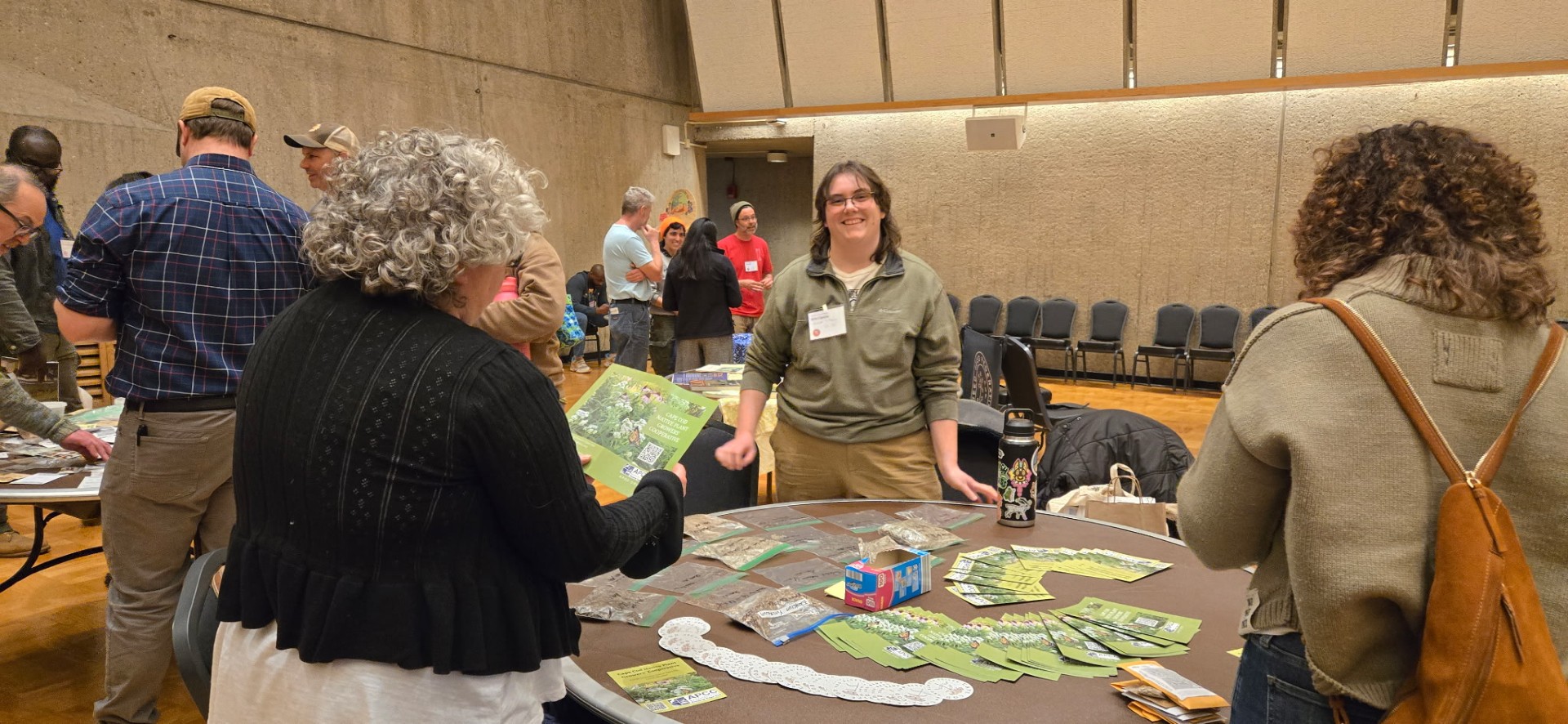
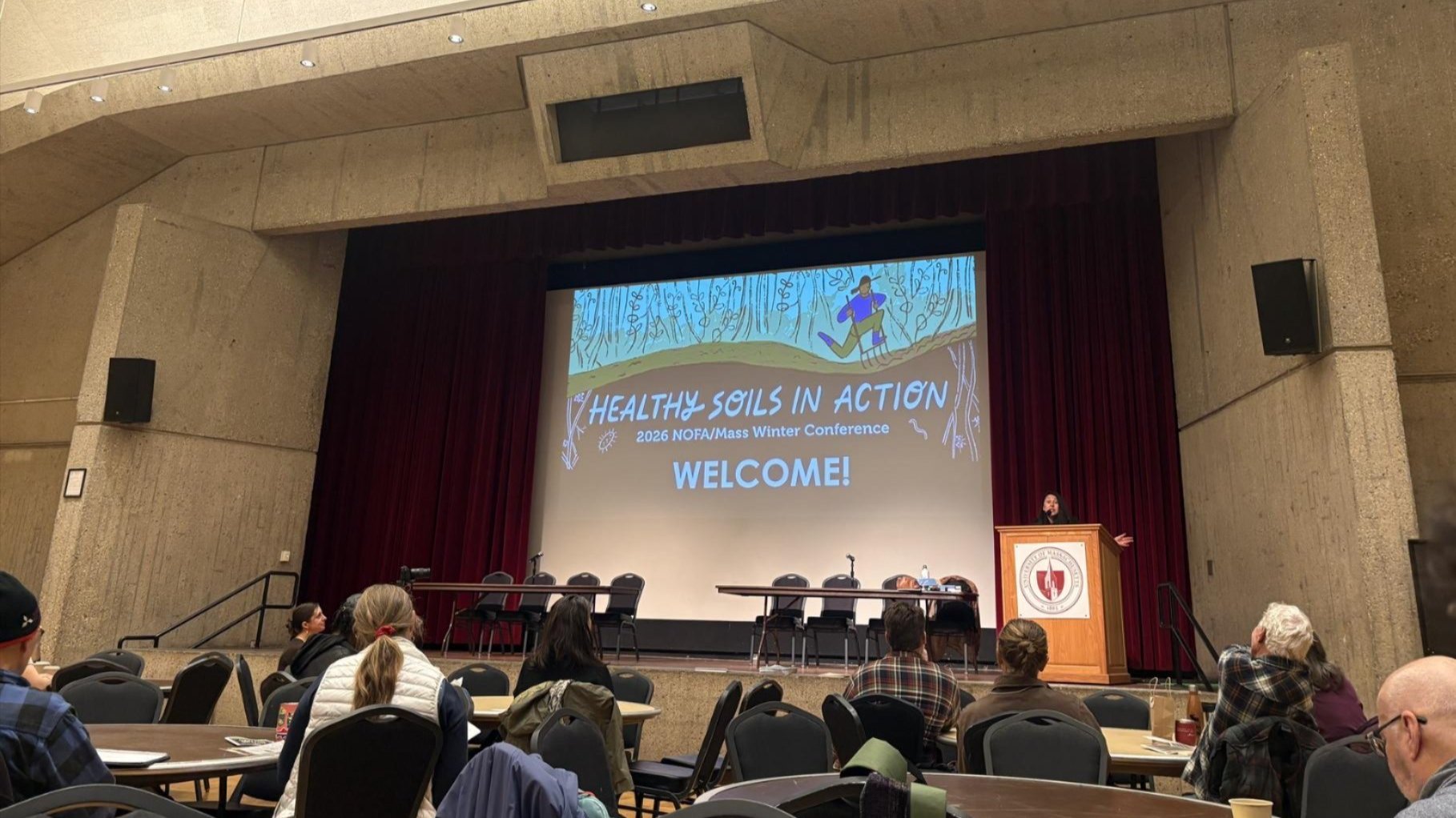
This past weekend, APCC Ecolandscape Program Coordinator Erin Camire attended the winter conference of the Massachusetts chapter of the Northeast Organic Farming Association, hosted at UMass Amherst.
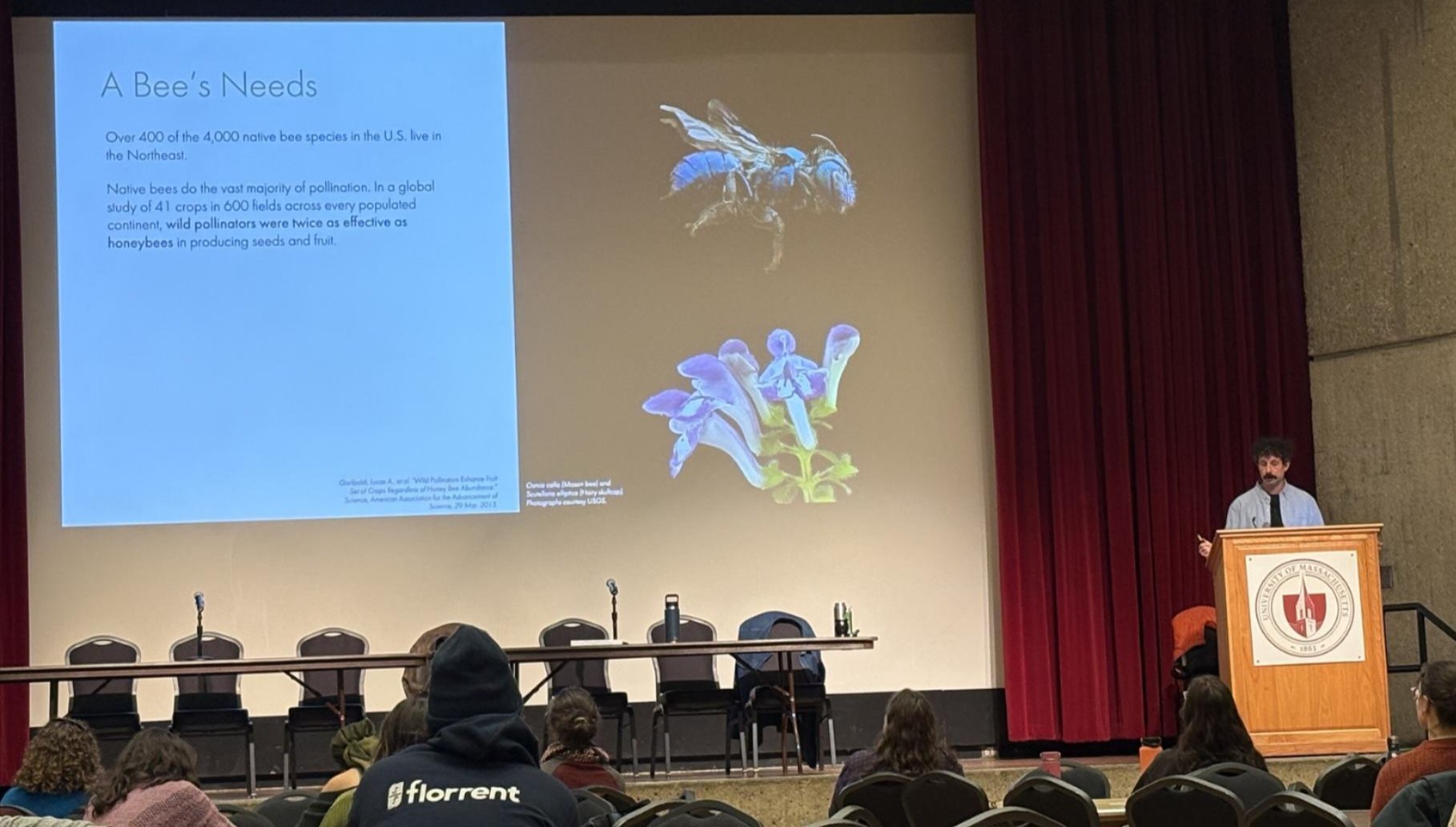
The conference was entitled “Healthy Soils in Action” and focused on soil health and how sustainable farming practices, such as the inclusion of native plants on farmland, can bring numerous benefits. These include, but are not limited to, increased activity in soil microbial communities, increased presence of endangered or threatened pollinator species, more habitat for important migratory bird species, and an increased ability for farmland to sequester and store carbon.
At the event’s “Seed Hub”—a space where attendees and vendors could exchange seeds—Erin set up shop to talk about APCC’s Growers’ Cooperative program, which sets out to educate and empower local farmers to grow native plants for sale. The table was well-received by many attendees who are interested in adding native plants, not only to their own landscapes, but to also to add to their business model.
|
|
| JOIN US! APCC VOLUNTEER KICKOFF SESSIONS
New and returning volunteers are invited to join us in person or on zoom to learn about our 2026 volunteer program.
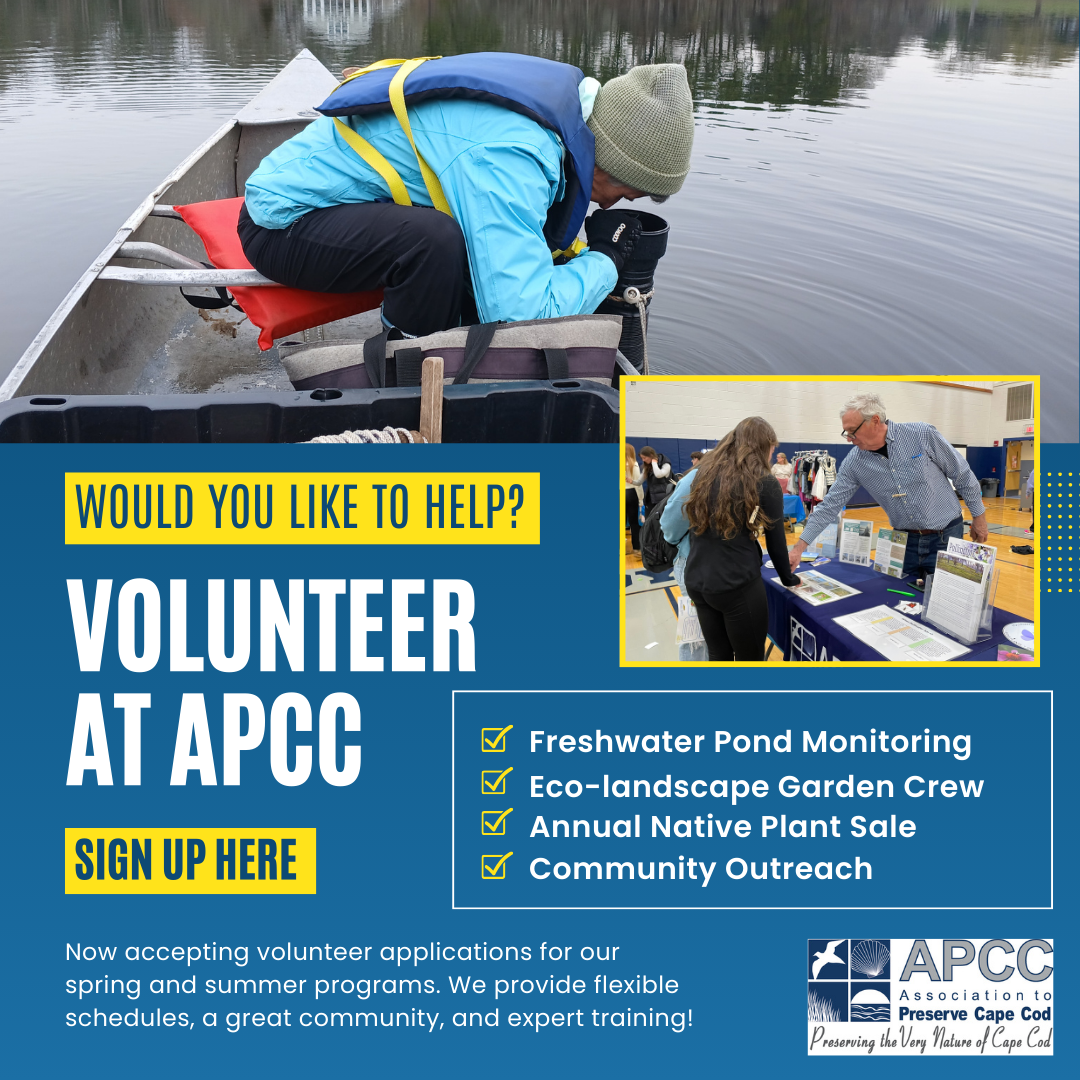
Opportunities for volunteers include our annual native plant sale, pond and river herring monitoring, eco-landscape garden crew work days, ecosystem restoration, outreach event support, and The Cape We Shape campaign support!
SIGN UP TO VOLUNTEER & SAVE THESE DATES
March 5 at 12:00 p.m. - IN-PERSON Volunteer Orientation. Register here. Space is limited!
March 18 at 5:30 p.m. - ZOOM Volunteer Orientation. Save the date! Zoom link will be sent prior to event.
March 31 at 1:00 p.m. - IN-PERSON Volunteer Orientation. Register here. Space is limited! |
If you are a farmer or someone who wants to grow native plants to sell, or you just want to be updated on the program's development, please submit the interest form that appears on our webpage. We will be sending periodic email notices of workshops and meetings.
Funding for the project is provided by Barnstable County and its Economic Development Council License Plate Grant Program through the Cape Cod Commission, the Kelley Foundation and private donors. |
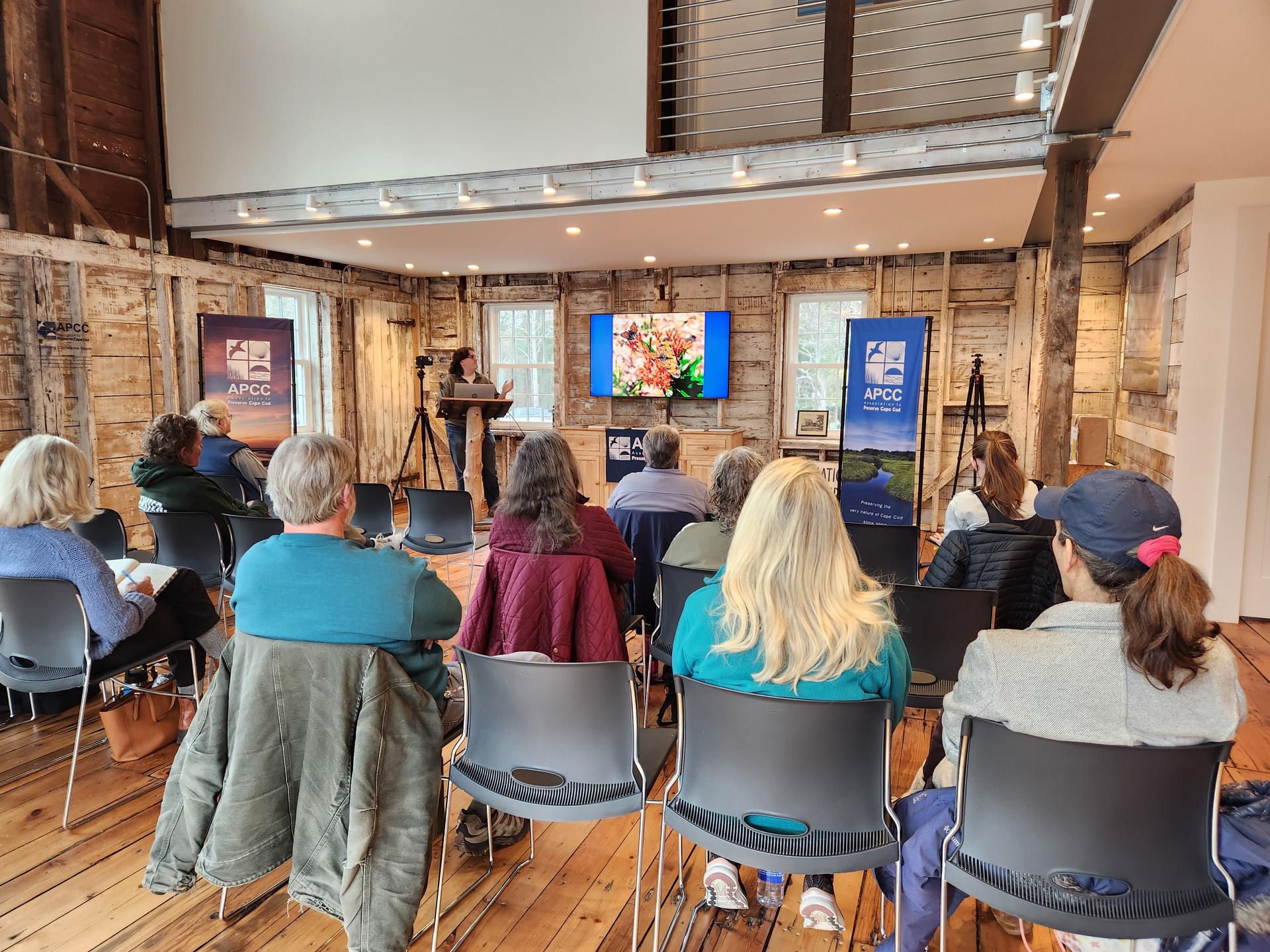
Nine talks for prospective growers as part of the Cape Cod Native Plant Growers' Cooperative program have been presented thus far, with more scheduled in the upcoming weeks. These past workshops can be viewed here:
Registration for upcoming talks can be found on our events page.
|
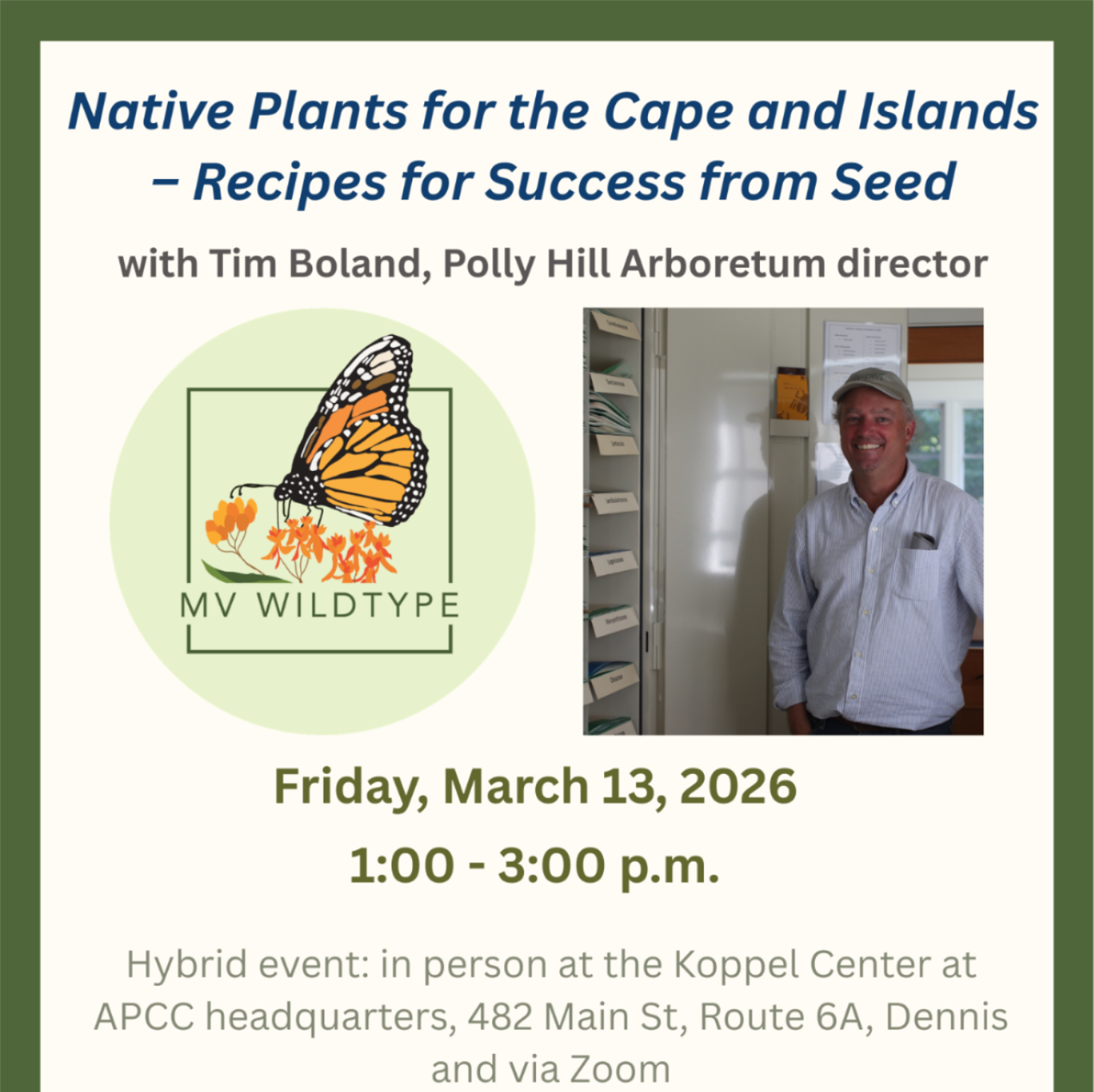
Join APCC as we welcome Polly Hill Arboretum (PHA) Director Tim Boland as he shares cultivation tips and protocols for raising twenty of the most popular native plants from seed. |
The above talk is offered as part of the Cape Cod Native Plant Growers’ Cooperative Program to provide information to prospective growers. The program is made possible by funding from the Cape Cod and Islands License Plate Grant program, the Kelley Foundation, and other funders. |
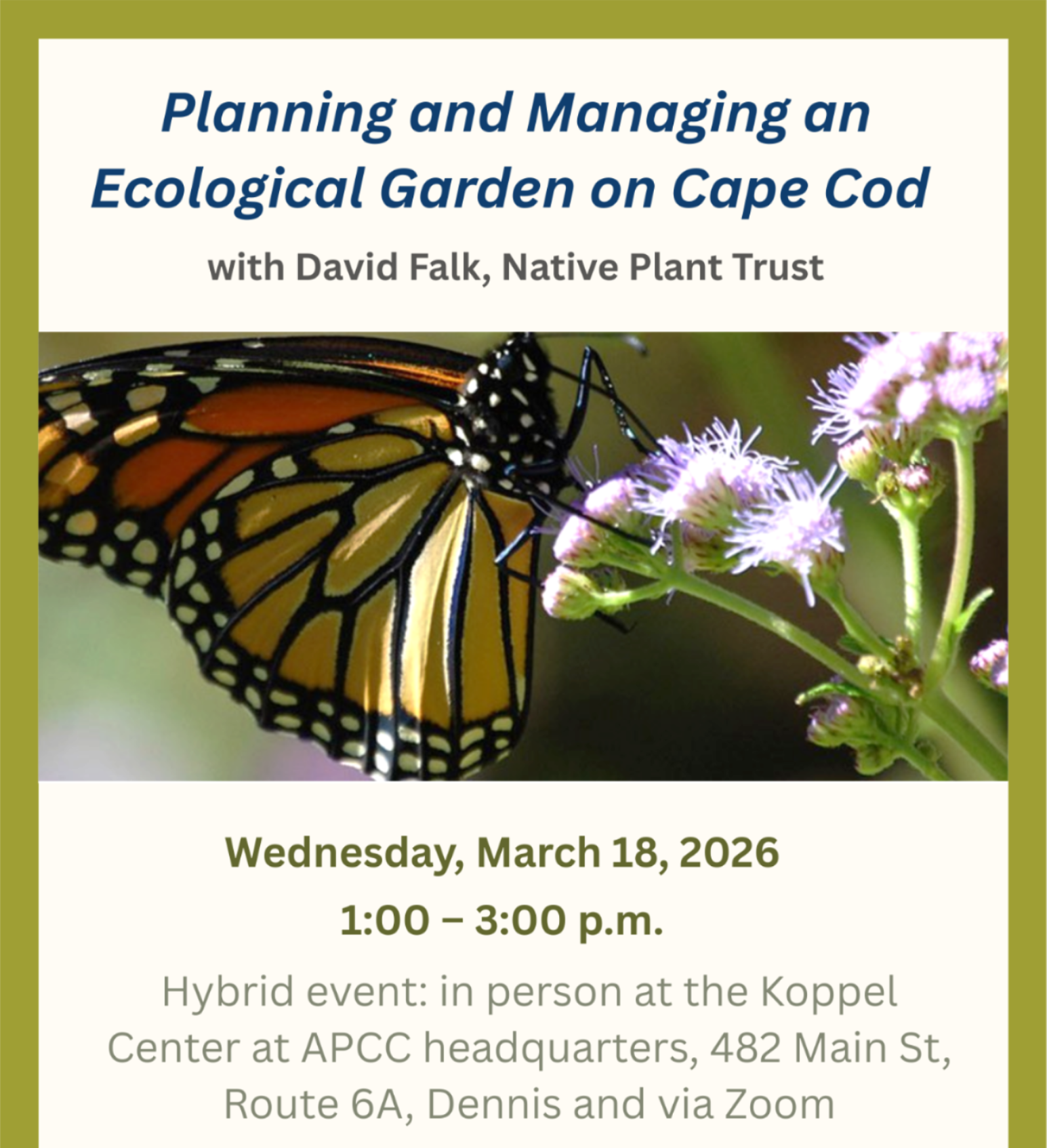
If you want to transform your backyard into a wildlife paradise, but don’t know how to get started, then this talk is for you. Join APCC in welcoming David Falk, senior horticulturalist at Native Plant Trust’s Garden in the Woods, for a discussion on creating an ecologically minded landscape, specifically catered to the conditions of Cape Cod, and how to steward your landscape into the future. |
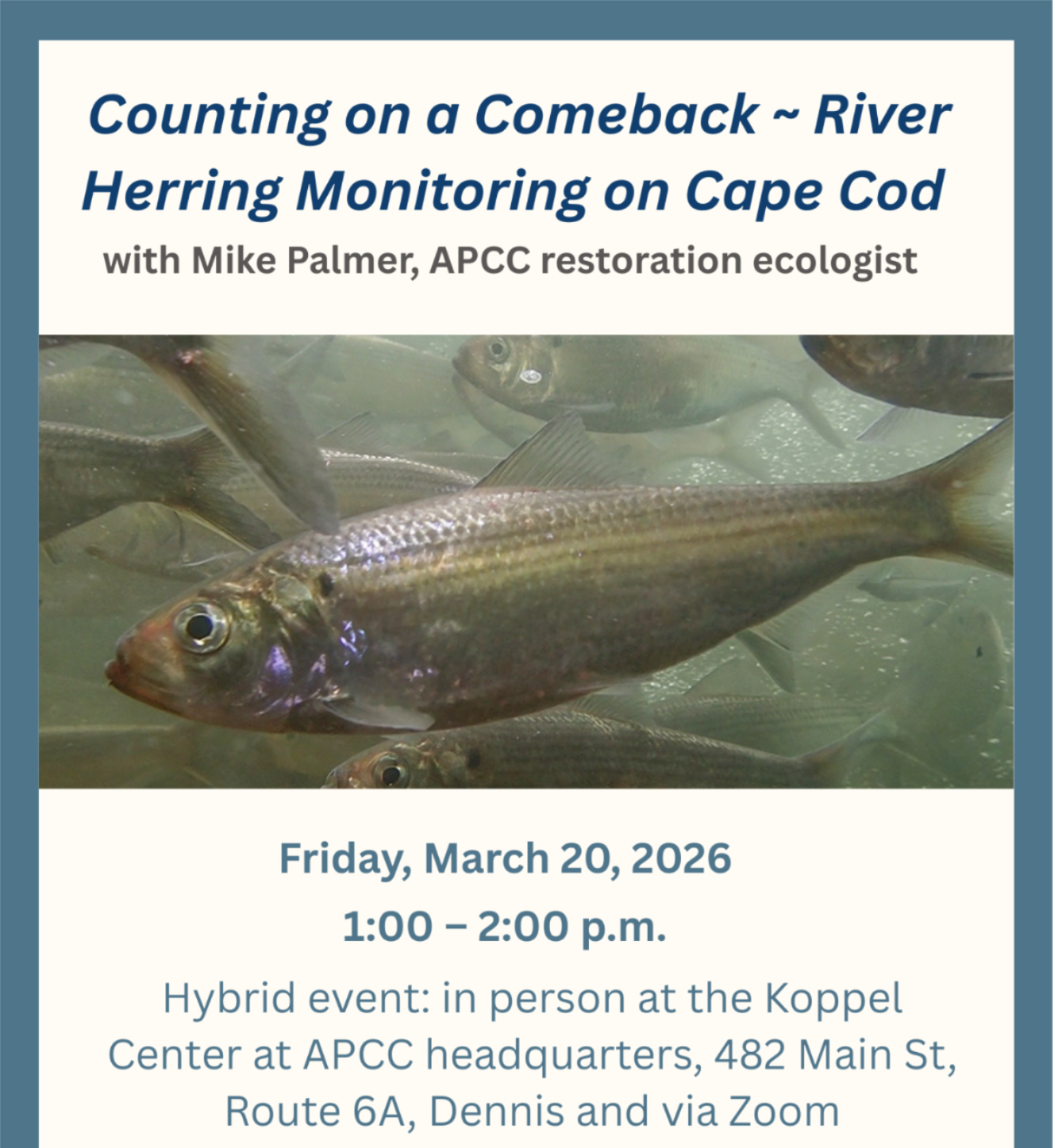
Be part of Cape Cod’s spring comeback. In this talk, Mike Palmer, APCC restoration ecologist, offers an up-to-date look at river herring science—what we’re learning about population trends, habitat needs, and the role of pond and stream conditions in recovery. |
|
|
|
SAVE THE DATE Special Event: March 7, 2026
8:30 am-3:30 pm Tilden Arts Center, Cape Cod Community College
2240 Iyannough Rd, West Barnstable |
|
|
A Cape-wide Conservation Event Calendar |
The Compact of Cape Cod Conservation Trusts (“the Compact”) and its nonprofit members launched a new regional calendar of events. The Conservation Calendar includes programs across Cape Cod hosted by these groups. The goal of the calendar is to encourage visitors and residents to take part in nature and environmental events. You can always find the link to the calendar on APCC's website under News & Events.
|
A Cape Cod Native Plant-selector ~ to help you choose the perfect native plants for your garden. |
|
|
Email kandres@apcc.org and we'll send you a CapeCodNativePlants.org decal. |
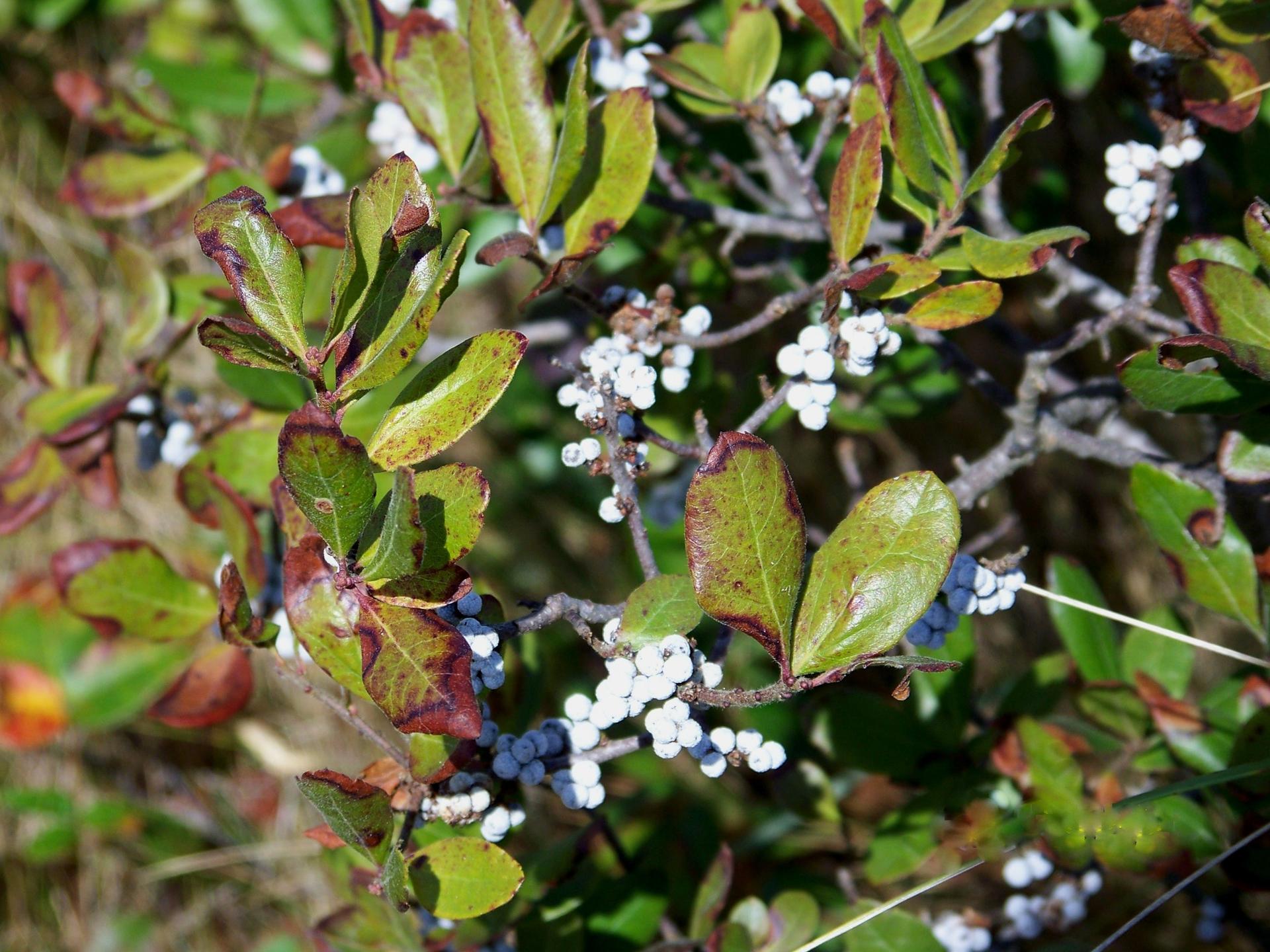
| Bayberry Morella caroliniensis |
|
|
The purpose of this site, CapeCodNativePlants.org is to help native plant enthusiasts select the right plant for the right place. While not all native plants presented here are indigenous to Cape Cod, they are suitable native species for Cape gardens and managed landscapes.
Why Native Plants? Many native plants are drought tolerant, salt tolerant, and thrive in the “thin” soils found on Cape Cod. Native plants are as attractive as any plant, and are reflective of the Cape’s natural beauty. By planting native species appropriate for Cape Cod, you can conserve water, avoid pesticide and fertilizer use, and support pollinators and birds.
|
|
|
|
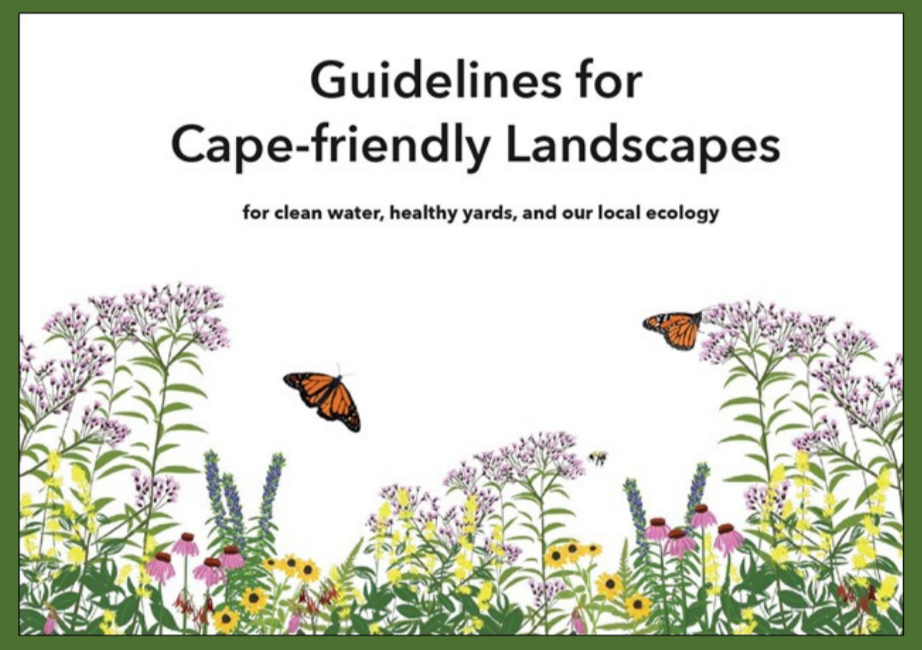
The Guidelines gives homeowners steps they can take in the design and maintenance of their properties that will support pollinators and birds, manage stormwater, conserve water, and protect the Cape's water quality. This 40-page booklet is beautifully illustrated by Marcy Ford with content that is easily digestible and supported by numerous resources for additional learning.
|
|
|
We are grateful for the several retail shops that are partnering with us to make this publication more widely available: Brewster Book Store, Birdwatchers General Store, Crocker Nurseries, Wellfleet Audubon Wildlife Sanctuary, Cape Abilities Farm, Cape Cod Museum of Natural History, the Cape Cod Lavender Farm, Heritage Museums and Gardens, Titcomb's Bookshop, Sea Howl Bookshop, Soares Flower Garden Nursery, and Eight Cousins Bookshop.
If you are a retailer and would like to sell this publication at your store, please contact us. |
|
|
APCC caps $25 -includes USPS deliver in the U.S. |
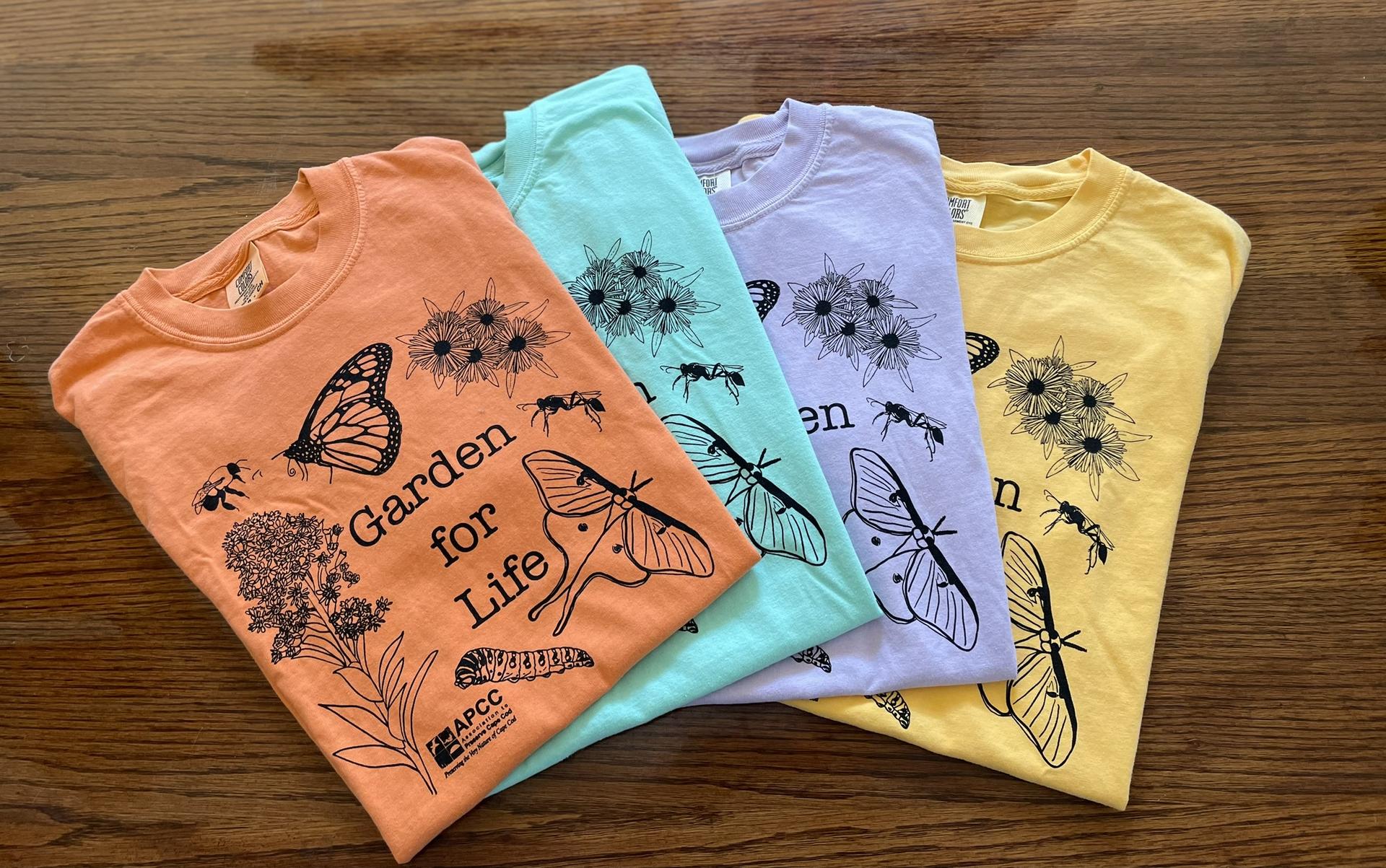
Garden for Life T's $30 -includes USPS delivery in U.S. |
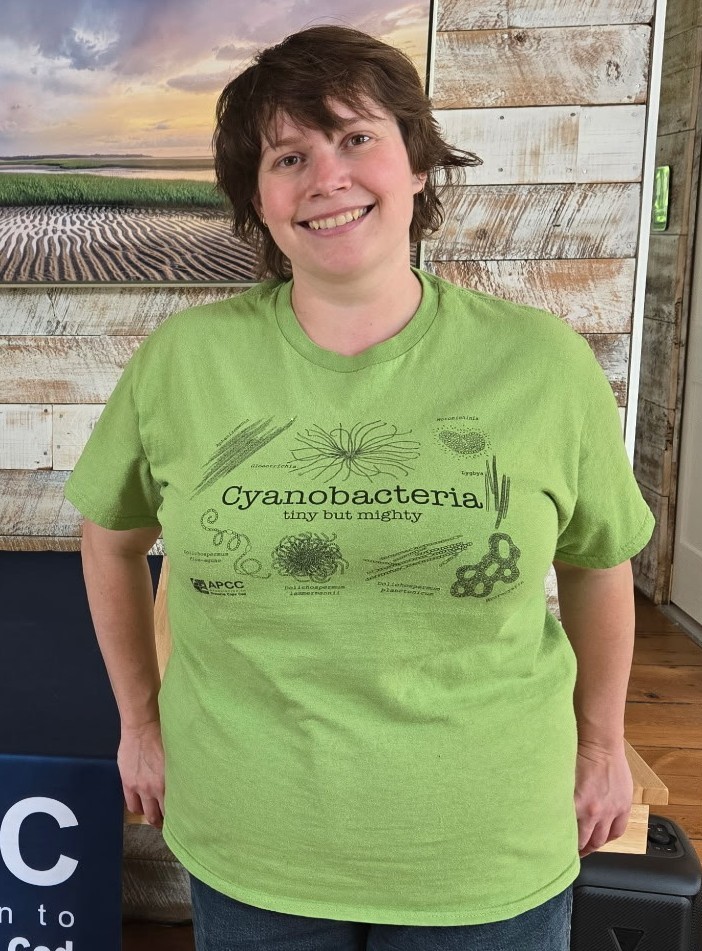
| Cyanobacteria ~ tiny but mighty color kiwi $30
-includes USPS delivery in the U.S. |
|
|
|
APCC eNewsletters. Our weekly newsletters are archived on our website and easily shared.
You can find past newsletters and share with your friends. Encourage others to sign up for future enewsletters HERE.
|
|
|
Are you thinking of going solar? We hope so!
In partnership with E2 SOLAR in Dennis, APCC receives $500 for every solar installation when APCC is named as referral. |
|
|
|
Thank you to the homeowners who just contracted to install solar panels through E2 Solar. May the sun always shine for you! |
|
|
Expressions Gallery, 578 Main Street, Chatham
CLICK HERE |
Expressions Gallery donates 20 percent of its profits to APCC's work. |
|
|
Thank you to our business sponsors! |
|
|
APCC is rated four stars by Charity Navigator, 2025 Platinum by Candid (formerly Guidestar), and 2024 Top-Rated by GreatNonprofits. |
|
|
Our Contact Information
*{{Organization Name}}*
*{{Organization Address}}*
*{{Organization Phone}}*
*{{Organization Website}}*
*{{Unsubscribe}}* |
| |
|
|