Association to Preserve Cape Cod |
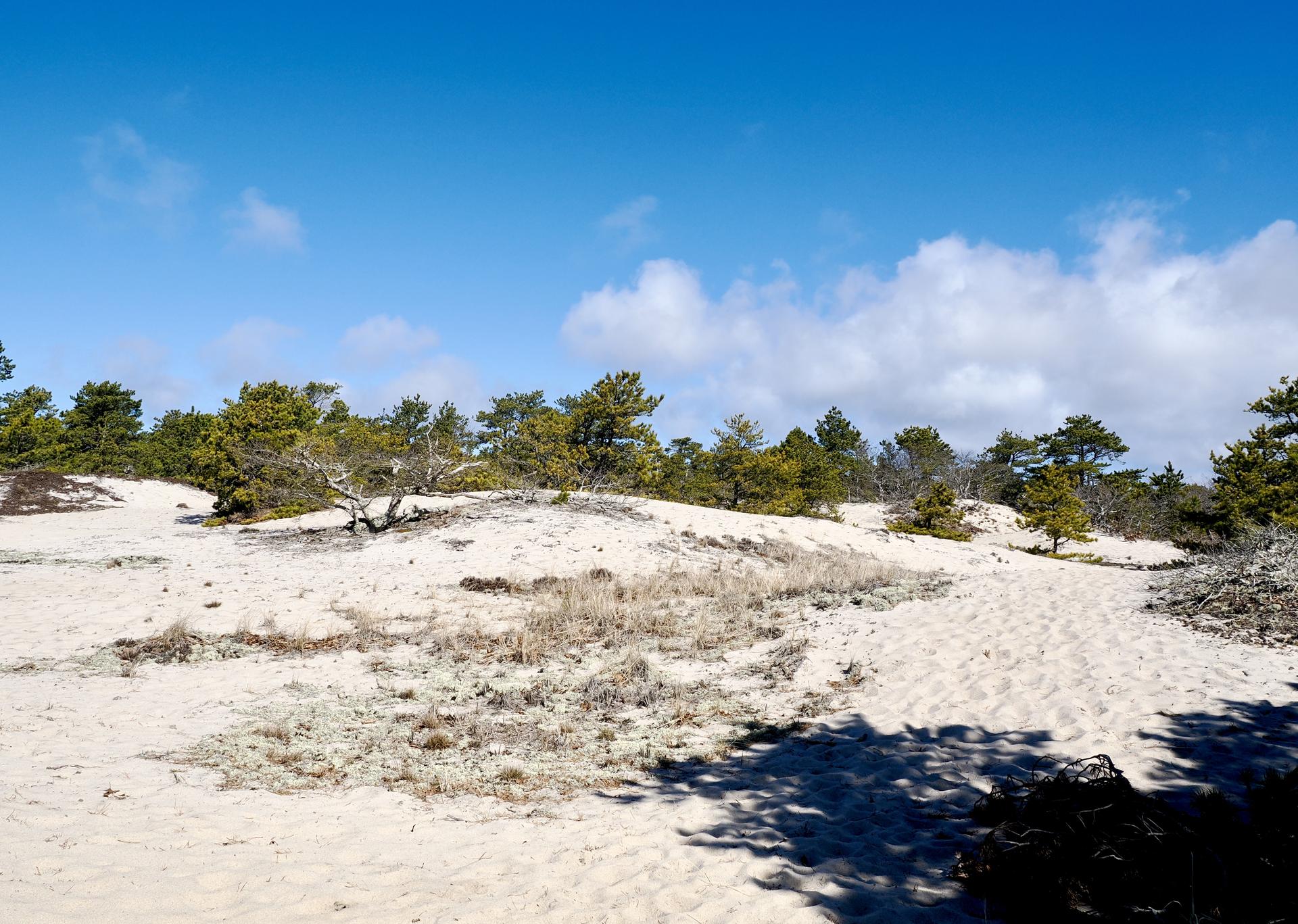
Above: photo by Sue Machie |
|
|
|
It Does Matter
by Andrew Gottlieb, Executive Director |
What you do, or don’t do, has political ramifications. The odds are that if you are reading this column you are invested in the quality of our environment and support good environmental practices. Now as much as ever, actions speak louder than words. Feeling strongly about something and talking it up with your friends and family is great, but unless the talk is backed up by action the environment will suffer. |
|
|
Decisions are made by those who show up. Voters at town meetings decide what gets funded and what projects advance or die. Voters at town elections decide who their elected officials are, and by extension, what perspectives drive the priorities of their town. The same dynamic is in place at regional, state and federal elections, although nowhere is the impact of your vote greater than at the local level.
The hard truth is that support for the environment, especially for projects that require large capital investment, is facing national and international headwinds beyond our immediate control. As financial pressures and other macro political forces eat away at environment protections, your decision to participate in the governance process assumes greater importance. Simply put, unless you show up and vote for the environment you are amplifying the impact of the voices calling for slower and lower investment in clean water, further development of critical open spaces, and rollbacks of environmental protections once assumed reliable but now being gutted daily.
Staying home and not voting cedes your voice to outcomes you may not support. Sitting out this next election, at whatever level, has consequences. Sidelining yourself is a non-action with profound negative implications for the environment as well as for society as a whole. Now is the time to recommit, not to pull back. Watch our newsletters in the coming weeks for important information on upcoming town elections. APCC is here to help you get involved, but we can’t do it for you. What you do it up to you. |
|
|
SAVE THE DATE:
Tuesday, March 24th at 5:30 p.m.
If you've signed up, you'll receive an email with the Zoom link at noontime the day before and a reminder on the day of.
If you haven't yet signed up, go to The Cape We Shape to learn the campaign's background and to get involved. |
| |
|
A New Game Reveals the Science of River Herring Runs
Each spring across Cape Cod, thousands of river herring migrate from the ocean into freshwater streams and ponds to spawn. Tracking these migrations helps scientists and managers understand how fish populations are responding to restoration efforts and changing environmental conditions. But counting fish runs presents a challenge: no monitoring program can observe every fish moving through a river.
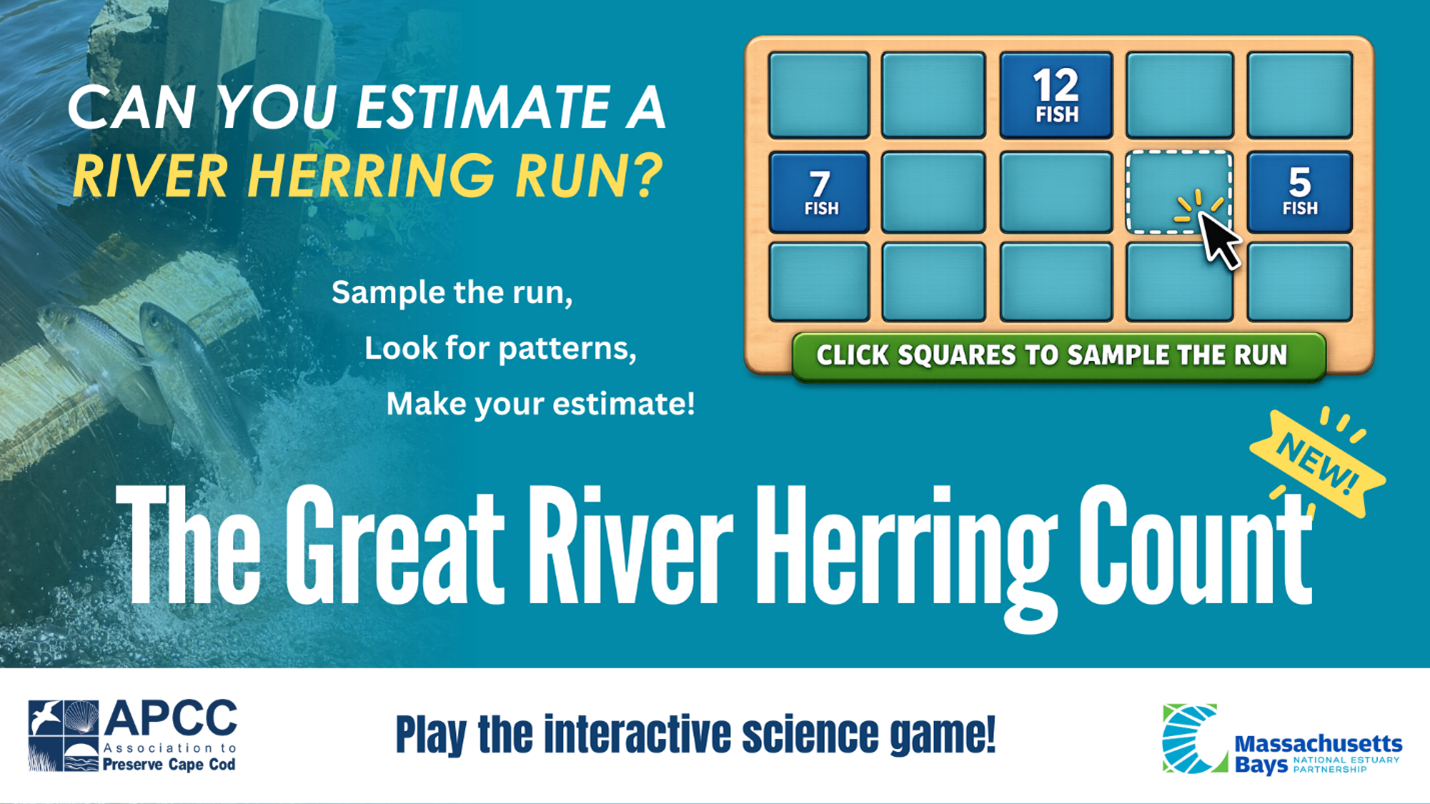
To help illustrate how scientists estimate run sizes from limited observations, the Association to Preserve Cape Cod (APCC) has developed a new interactive educational application called The Great River Herring Count.
The application simulates a river herring migration across a series of days and times of day. Each square on the game board represents a small window of the migration. Users “sample” the run by clicking squares to reveal fish counts, just as volunteer monitors might sample a migration by conducting short observation periods at a counting site. Using only those sampled observations, players then estimate the total number of fish that migrated upstream before revealing the true run size.
The experience mirrors a real challenge faced by fisheries scientists and volunteer monitors alike: only a portion of a fish migration can be directly observed, yet managers still need reliable estimates of the total run.
The game also highlights several key scientific concepts used in fisheries monitoring. Players quickly discover that sampling only during the busiest time of day—or focusing on a single “hot spot”—can lead to misleading estimates. Spreading observations across early, peak, and late portions of the run, and across different times of day, produces much stronger results. This approach reflects the real-world monitoring strategy known as random stratified sampling, where observations are distributed across different parts of a migration to better capture natural variability.
Users can also adjust how “patchy” fish movement is during the day. When fish move through the river more evenly, estimates tend to stabilize quickly. When movement is highly patchy—meaning fish pass in bursts during certain periods—sampling becomes more difficult and estimates become more variable. These dynamics reflect patterns commonly observed in real river herring runs.
For educators, the application provides an engaging way to introduce students to sampling design, ecological monitoring, and the challenges of estimating wildlife populations. For volunteers and community members, it offers a window into the scientific thinking behind the Cape Cod River Herring Monitoring Program.
The Cape Cod River Herring Monitoring Program is coordinated by APCC and supported by the Massachusetts Bays National Estuary Partnership (MassBays). The program relies on a network of dedicated volunteer monitors who help track river herring runs at streams across Cape Cod each spring.
While the game is designed to be fun and accessible, it reflects a deeper message: good science depends on thoughtful sampling. Just like in the game, understanding how fish populations are changing in the real world requires careful observation, collaboration, and community involvement. The Great River Herring Count application is now available online here.
It can be used in classrooms, community presentations, or by anyone curious about the surprisingly difficult task of counting fish that swim out of sight beneath the water’s surface. |
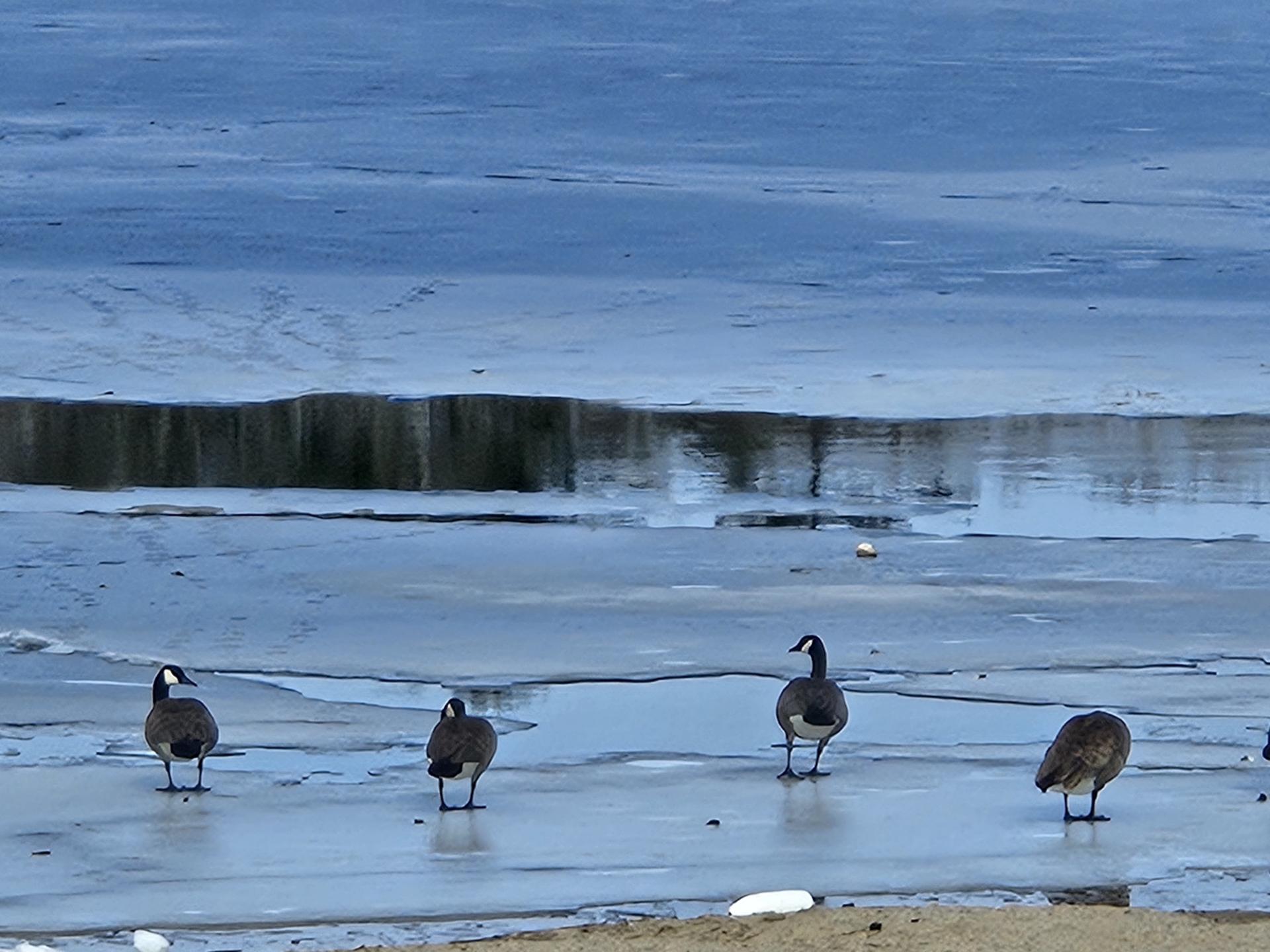
Above: Canada geese on Grews Pond, Falmouth |
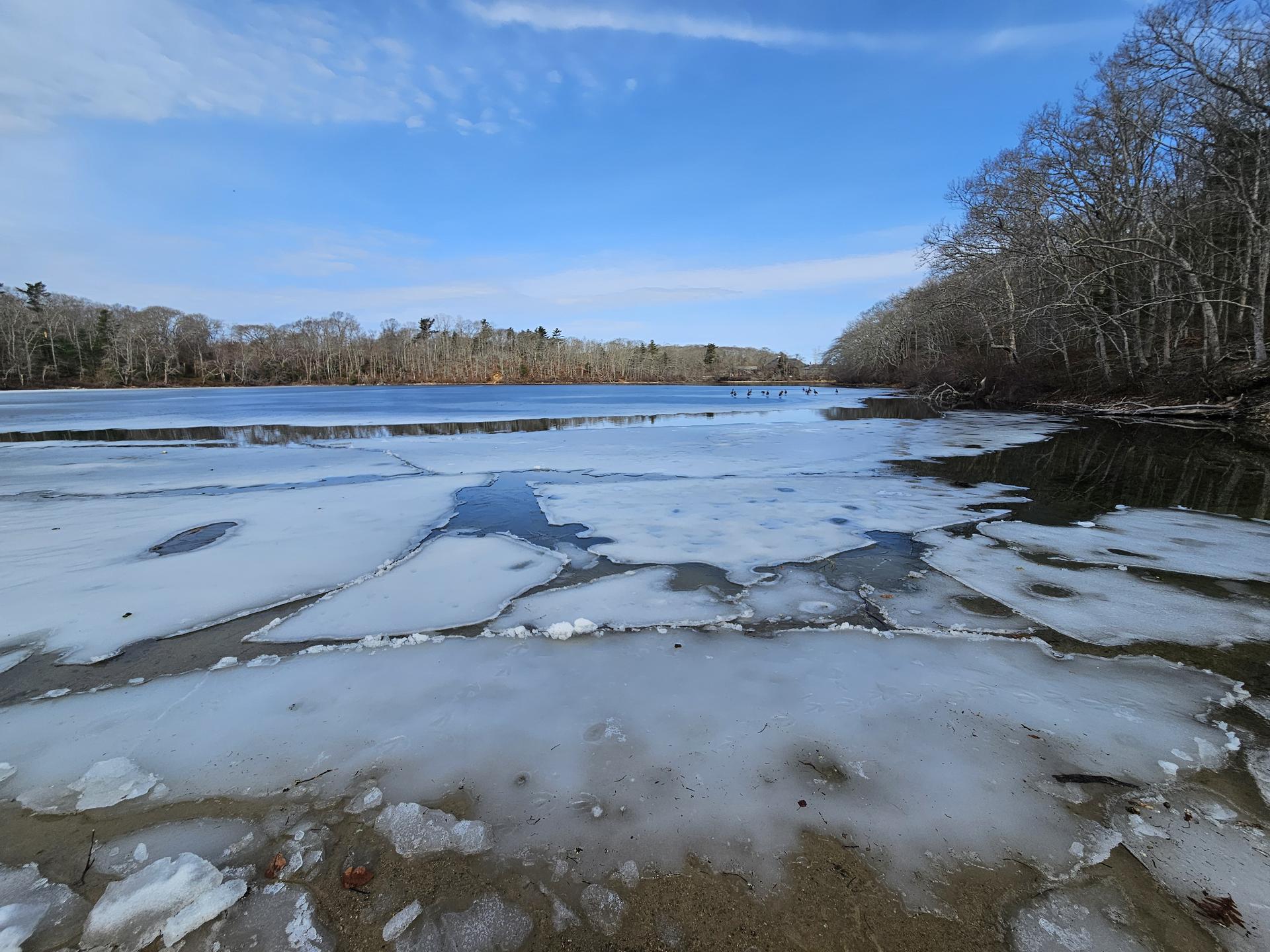
Transitioning from walking on the ice cap to life awaking below As pond ice melts, the aquatic ecosystem transitions from a dormant state to active life. Fish, having rested in deep water, become active, while amphibians and invertebrates emerge from the mud and dormant eggs hatch. This melting allows vital oxygen to re-enter the water and sunlight to fuel photosynthesis, boosting plant growth. Stay tuned and keep an eye out for life in your favorite pond. | Above: Grews Pond, Falmouth |
Ice Out? A term most often used in places farther north, staff is seeing ice break up and open water returning. Ice out means it is looking hopeful to get canoes out on the 75 ponds being monitored this year for water quality data as part of the Cape Cod Regional Pond Monitoring Program.
|
APCC Welcomes New Seasonal Pond Monitoring Technician |
|
|
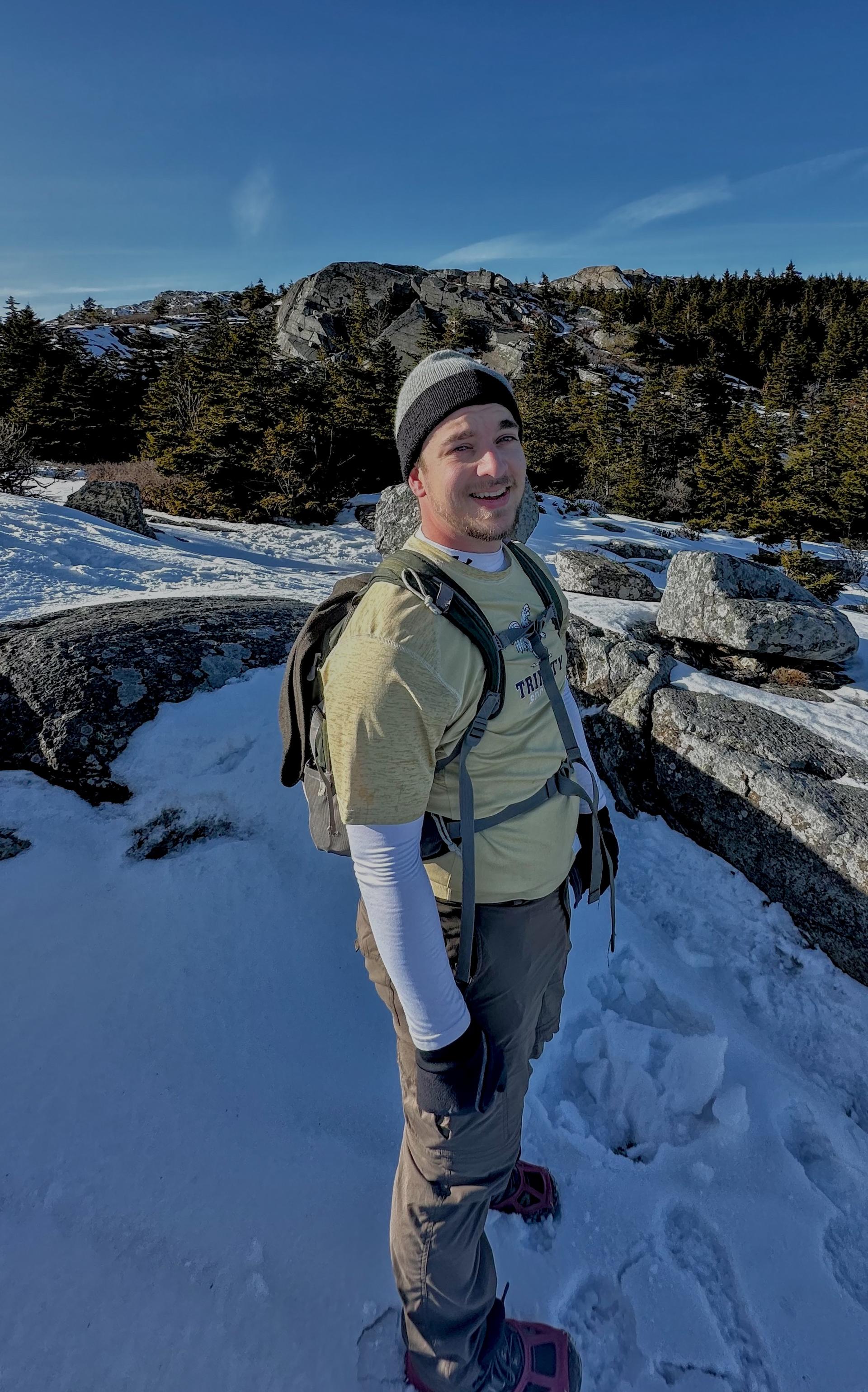
| James Michielli
Hi everyone, my name is James! I graduated from Trinity College with a degree in environmental science and am currently living in Falmouth. I’m so excited to work alongside experienced scientists and dedicated professionals at APCC helping to protect our precious natural resources here on the Cape for the upcoming monitoring season. The opportunity to serve my community while also furthering our understanding of ecosystem functions made me eager to get started with the Pond Monitoring program!
|
|
|
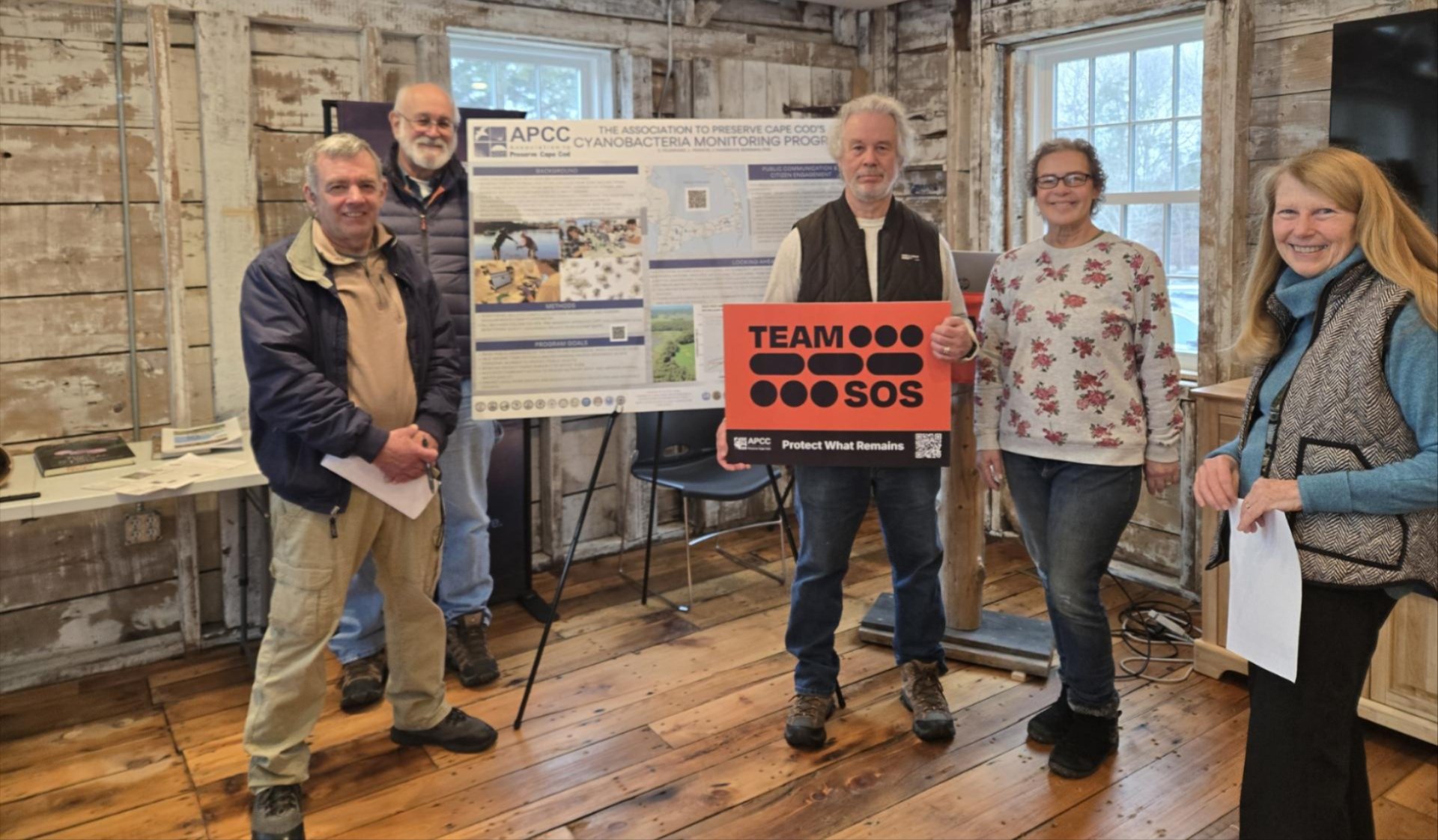
Plymouth Ponds Network—Sustainable Plymouth makes a visit to APCC! |
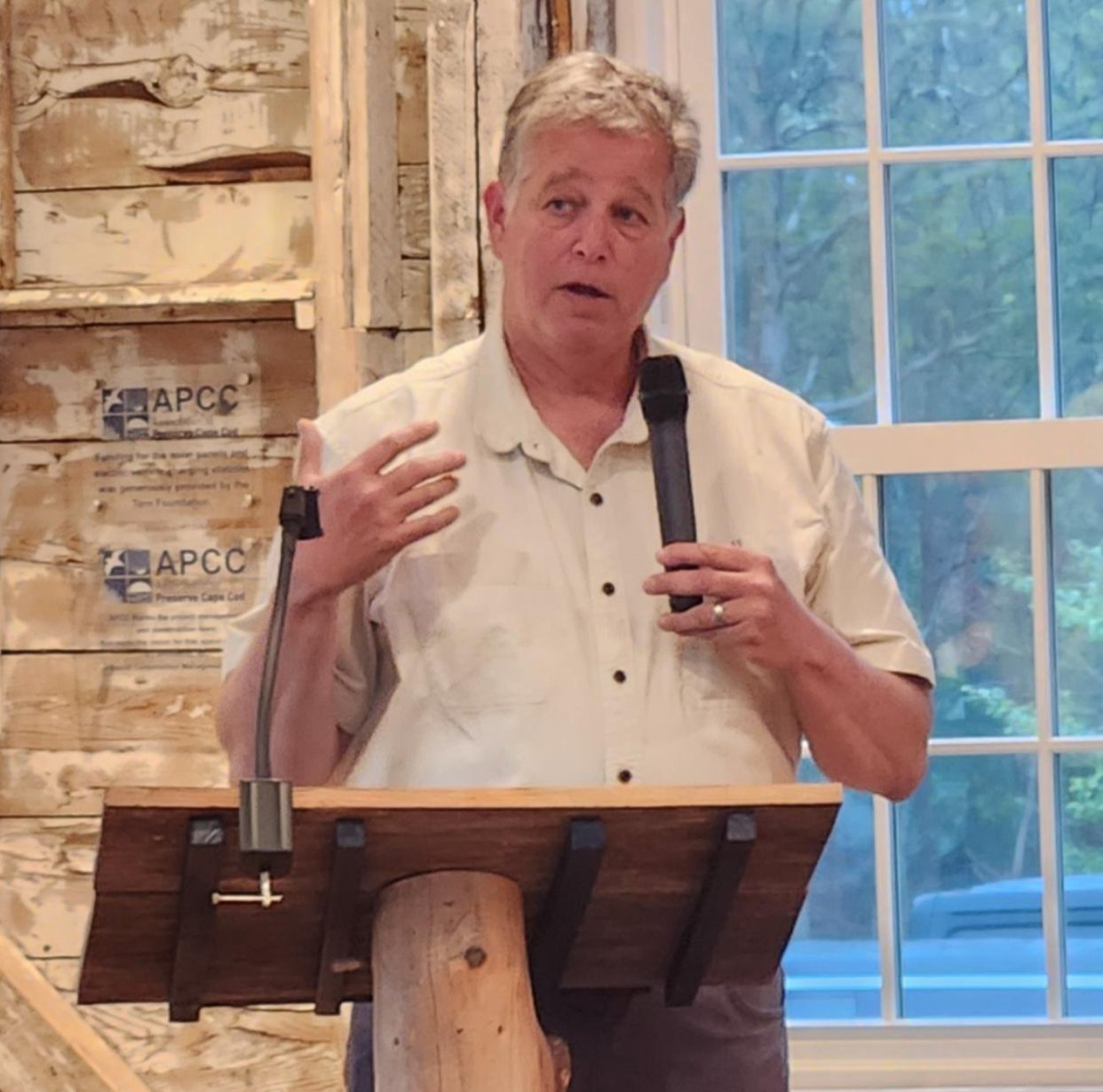
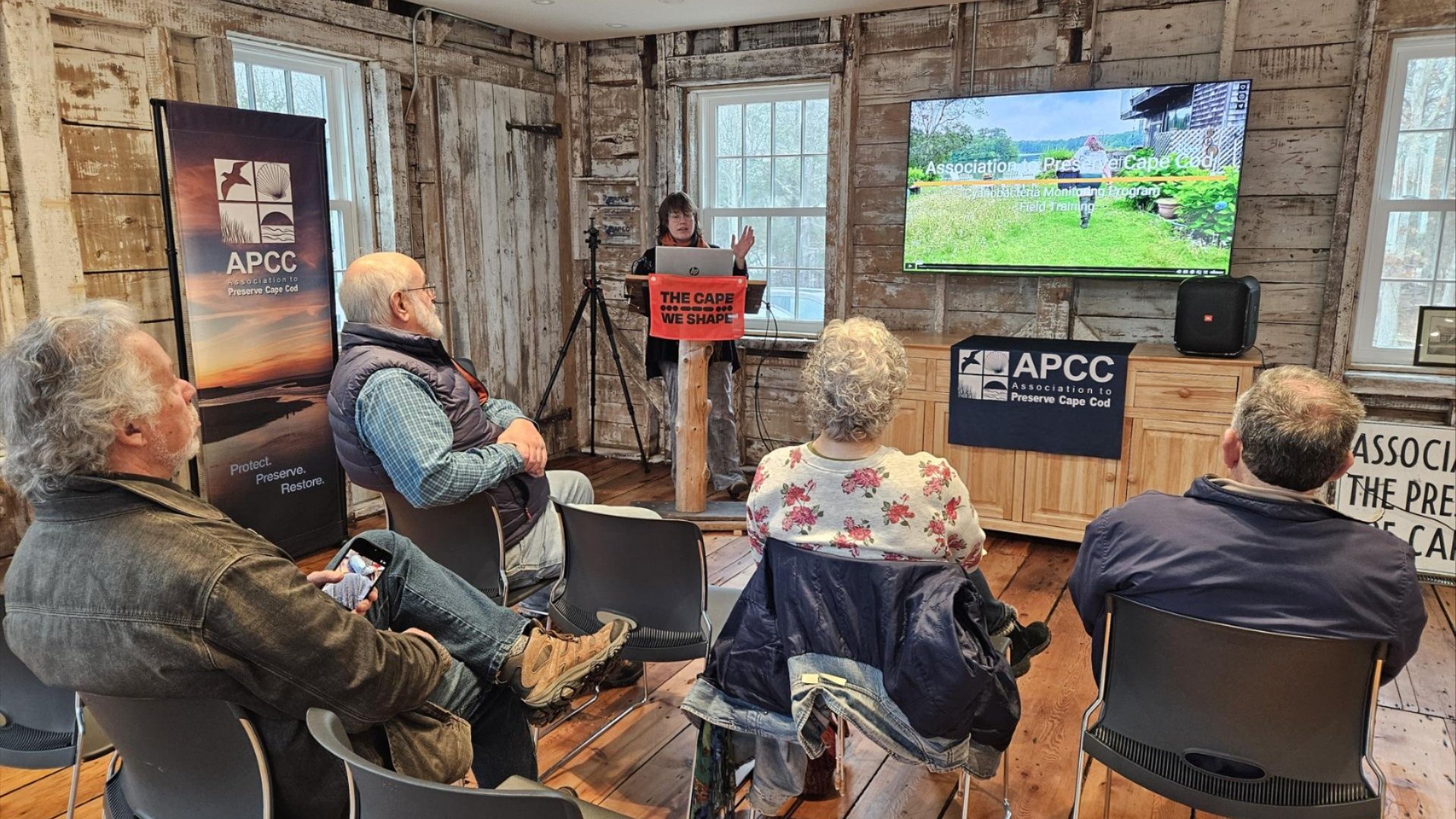
Above speaker: Lynn Francis, APCC pond and cyanobacteria operations manager |
The Plymouth Ponds Network—Sustainable Plymouth visited APCC’s cyanobacteria monitoring team to have an in-depth look at the cyanobacteria program. The organization is looking to start their own program, and they want to understand logistics and operations. The APCC team was happy to provide a behind the scenes view as well as to showcase all the new additions, like the Abaxis toxin strip tests and accounting for the cyanotoxin, anatoxin-a.
Plymouth is known to have 40 great kettle ponds with a biodiversity that mirrors Cape Cod. The town is not only facing similar challenges with cyanobacteria blooms, but also an uphill battle in stirring up interest. Even with the same tranquil beauty of Cape Cod, with identical rare wildlife, Plymouth doesn’t have the reputation of a paradise like Cape Cod. It’s groups like Plymouth Ponds Network—Sustainable Plymouth, with their grassroots efforts and their passion for preservation of these critical areas that will make a difference in the long run.
|
Above: Left to right - Hugo DeAscentis, Jampton Watkins, Frank Maud, Love Albrecht Howard, and Dr. Julie Hambrook Berman, APCC pond and cyanobacteria program manager |
|
|
APCC Seeks Campaign Manager
The Campaign Manager will oversee all aspects of implementing The Cape We Shape campaign. Cape Cod’s natural systems are under historic pressure and almost 80 percent of the areas yet to be developed or protected are priority natural resource lands—critical for drinking water, habitat, and resilience. The Cape We Shape campaign highlights the urgency of action to permanently protect these lands and empowers people and organizations to advocate for conservation. The Campaign Manager will play a central role in bringing this vision to life. Learn more here...
|
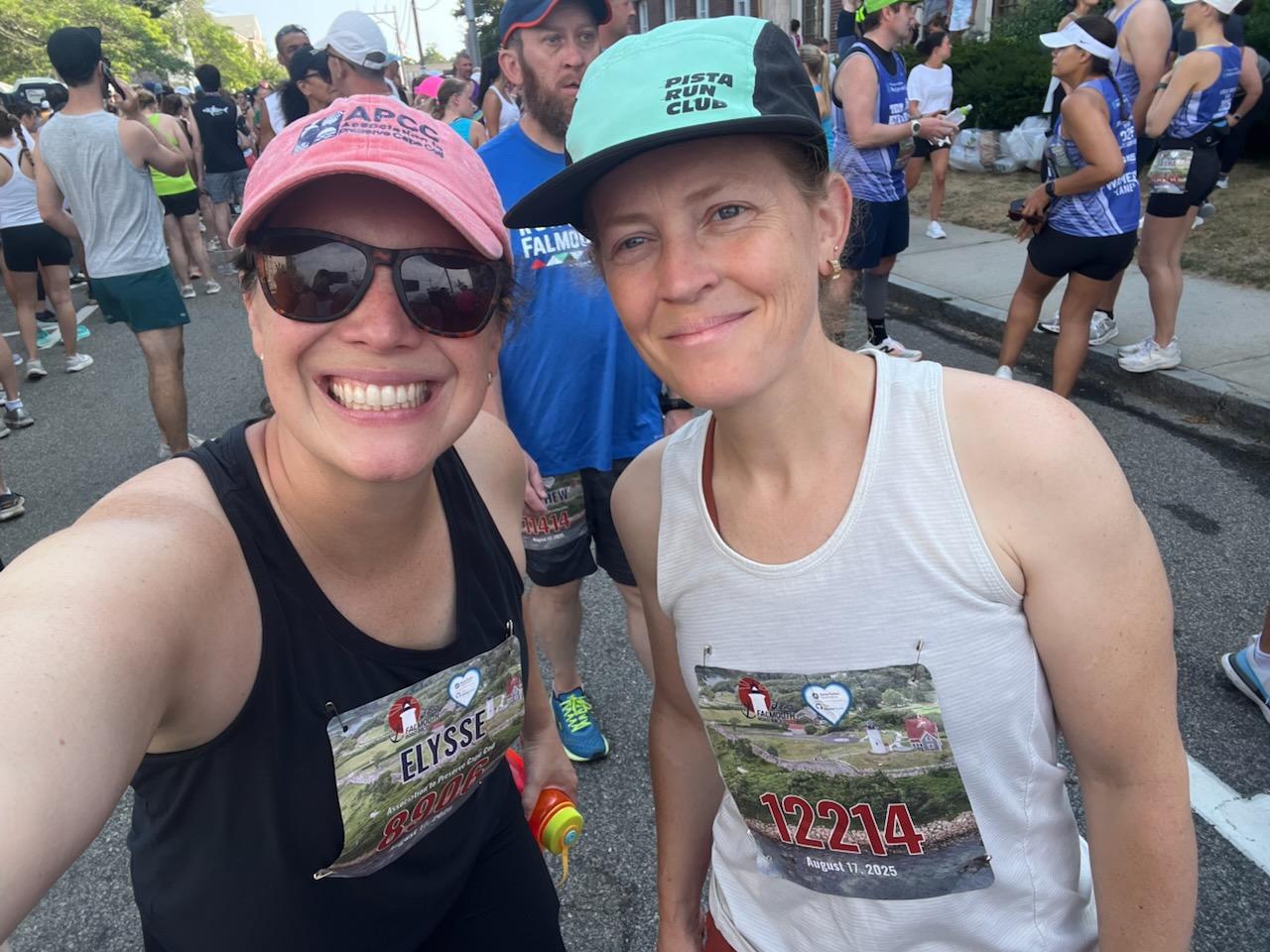
Attention Runners: Run the 2026 Falmouth Road Race for APCC |
|
|
Above: Elysse Magnotto-Cleary, APCC president, and her friend Mary ran for APCC in 2025. |
|
APCC is thrilled to be a part of the "Numbers for Nonprofits" program for the 2026 Asics Falmouth Road Race, and we are currently accepting applications for this year's team. Team members will receive a guaranteed race entry, fundraising tips and tools, a fundraising web page, and support throughout the process. If you're interested in amplifying APCC's work in a fun and unique way,
please apply here.
Questions? Please reach out to runforapcc@gmail.com |
|
|
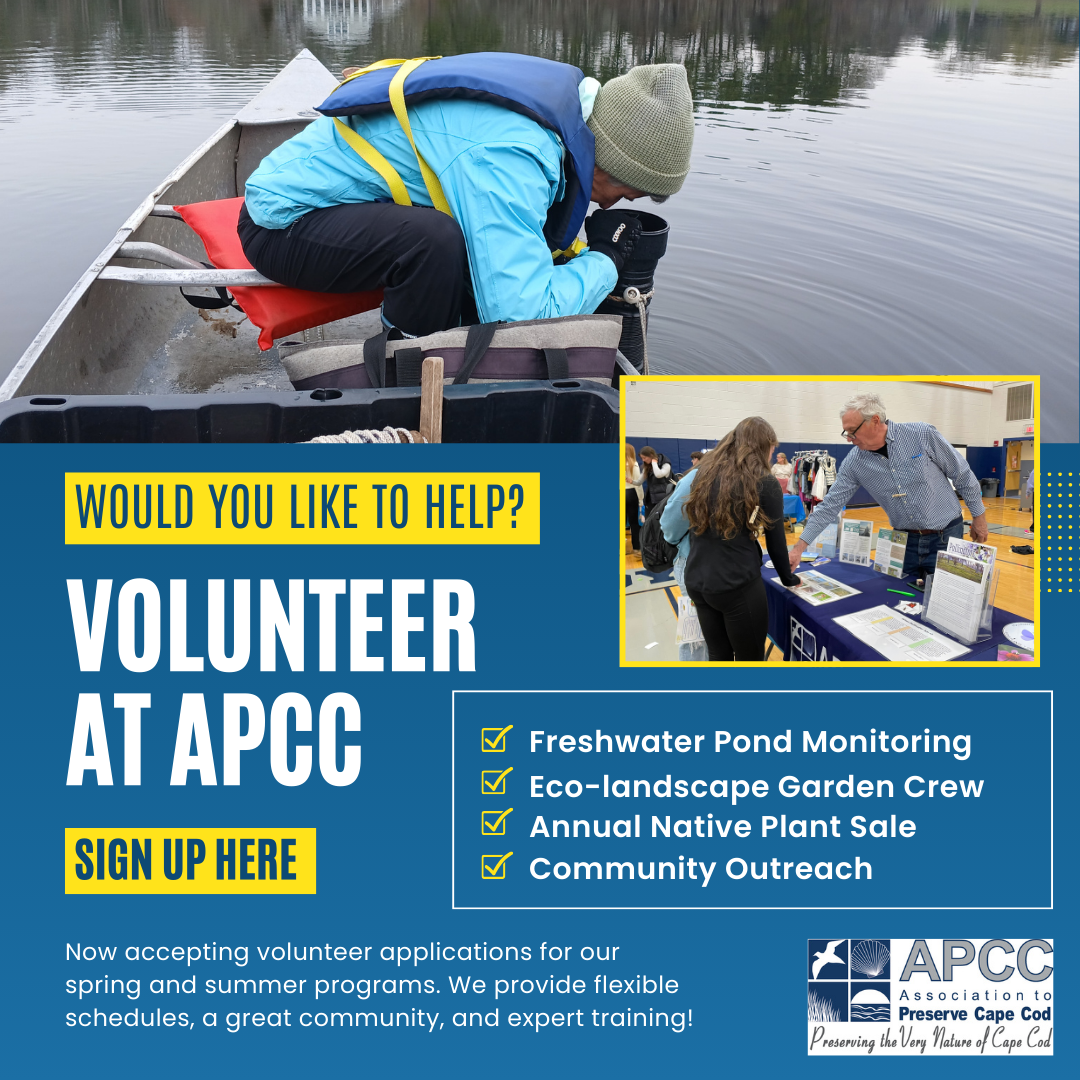
JOIN US! APCC VOLUNTEER KICKOFF SESSIONS
New and returning volunteers are invited to join us in person or on zoom to learn about our 2026 volunteer program.
Opportunities for volunteers include our annual native plant sale, pond and river herring monitoring, eco-landscape garden crew work days, ecosystem restoration, outreach event support, and The Cape We Shape campaign support!
SIGN UP TO VOLUNTEER & SAVE THESE DATES
March 18 at 5:30 p.m. - ZOOM Volunteer Orientation. Save the date! Zoom link will be sent prior to event.
March 31 at 1:00 p.m. - IN-PERSON Volunteer Orientation. Register here. Space is limited! |
If you are a farmer or someone who wants to grow native plants to sell, or you just want to be updated on the program's development, please submit the interest form that appears on our webpage. We will be sending periodic email notices of workshops and meetings.
Funding for the project is provided by Barnstable County and its Economic Development Council License Plate Grant Program through the Cape Cod Commission, the Kelley Foundation and private donors. |
Nine talks for prospective growers as part of the Cape Cod Native Plant Growers' Cooperative program have been presented thus far, with more scheduled in the upcoming weeks. These past workshops can be viewed here:
Registration for upcoming talks can be found on our events page.
|
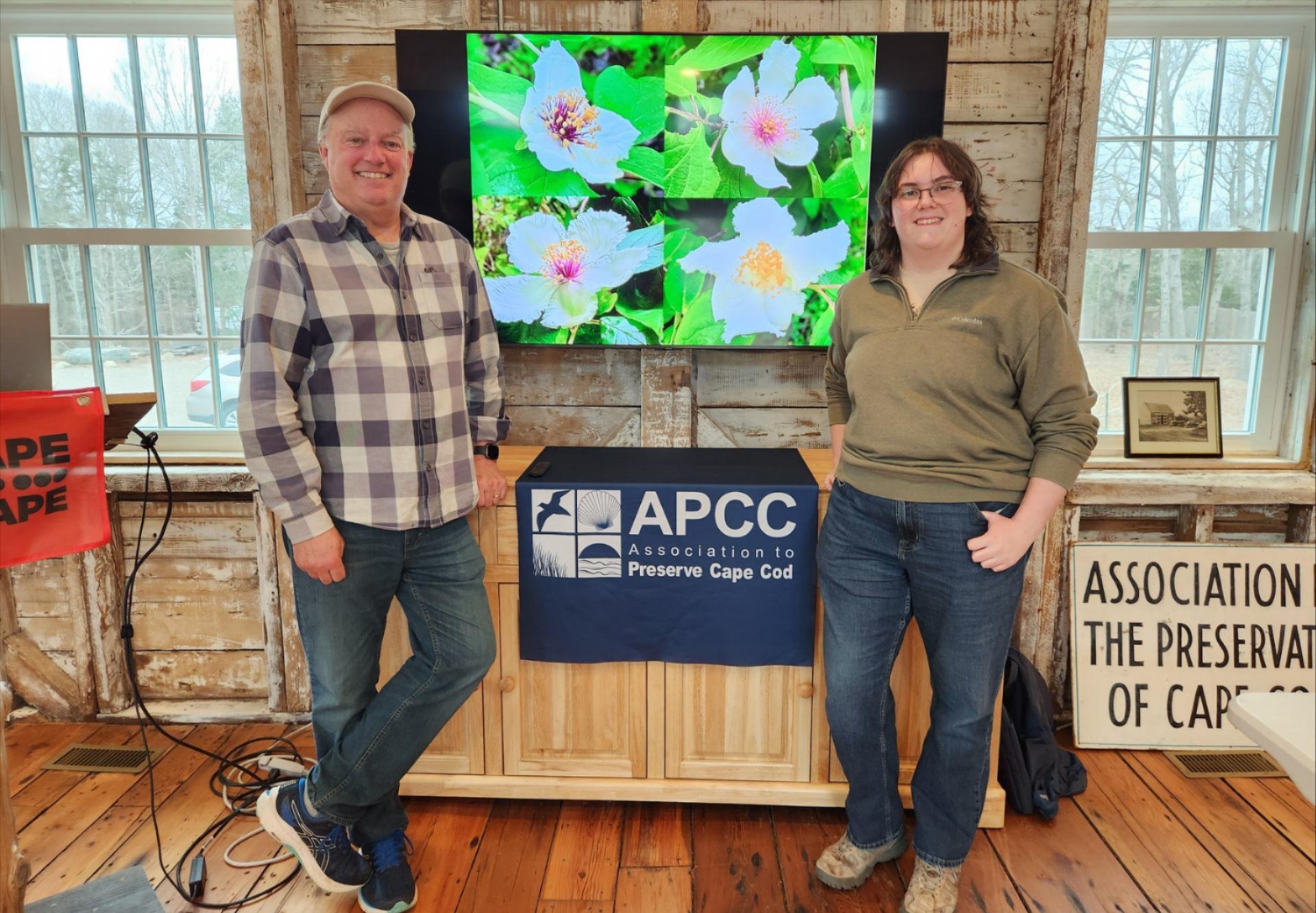
Above: Tim Boland, Polly Hill Arboretum executive director and Erin Camire, APCC ecolandscape program coordinator |
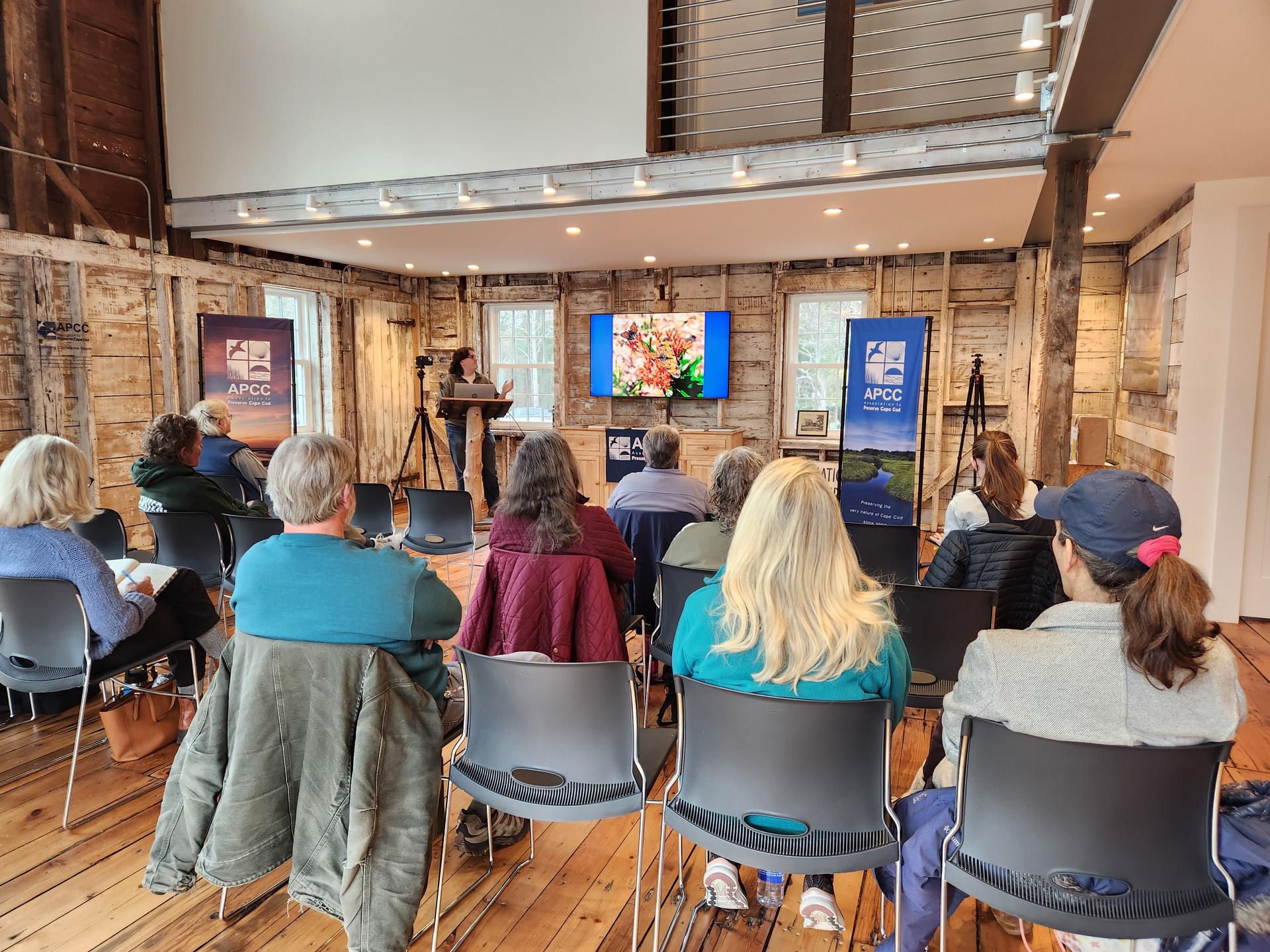
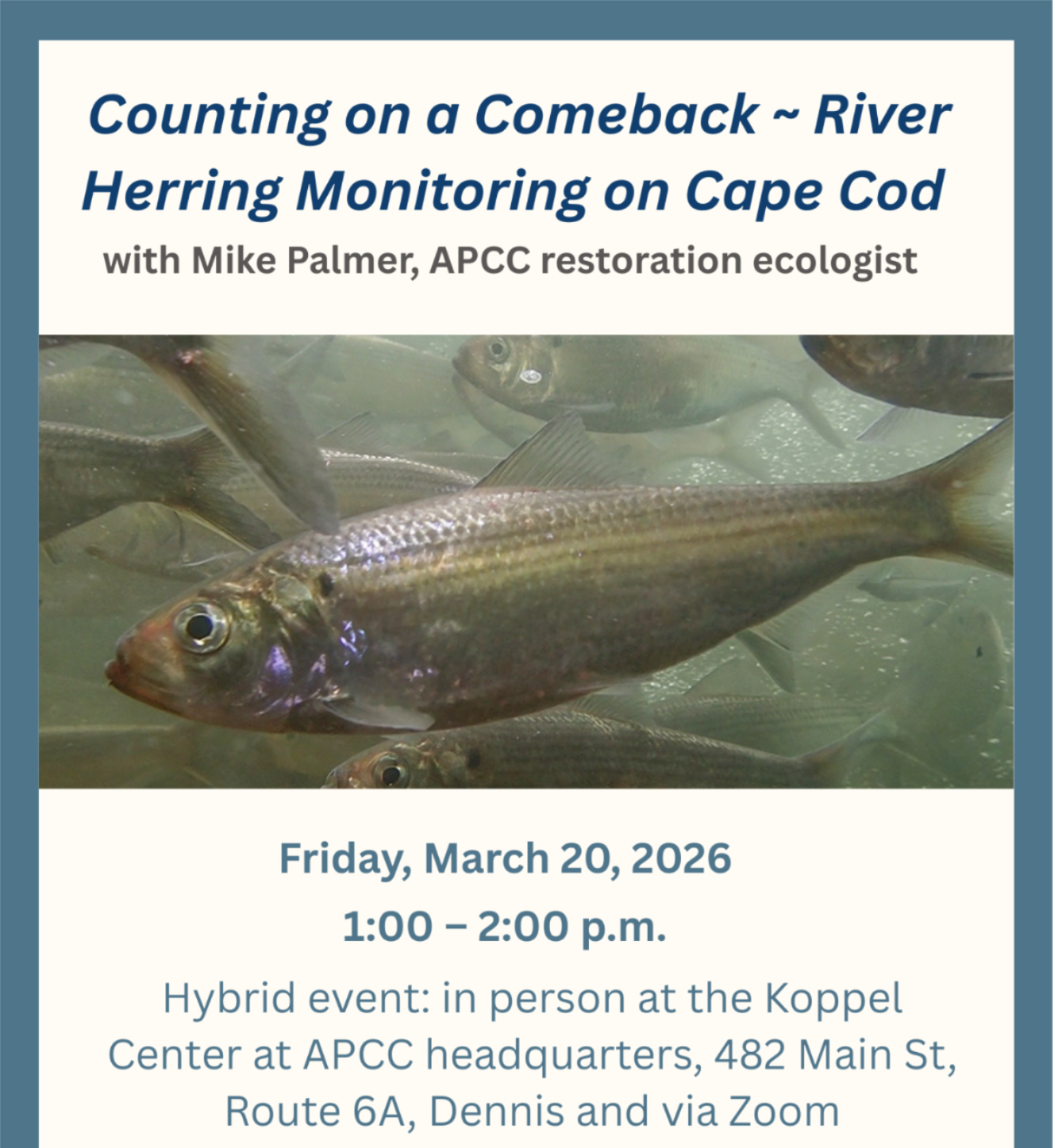
Be part of Cape Cod’s spring comeback. In this talk, Mike Palmer, APCC restoration ecologist, offers an up-to-date look at river herring science—what we’re learning about population trends, habitat needs, and the role of pond and stream conditions in recovery. |
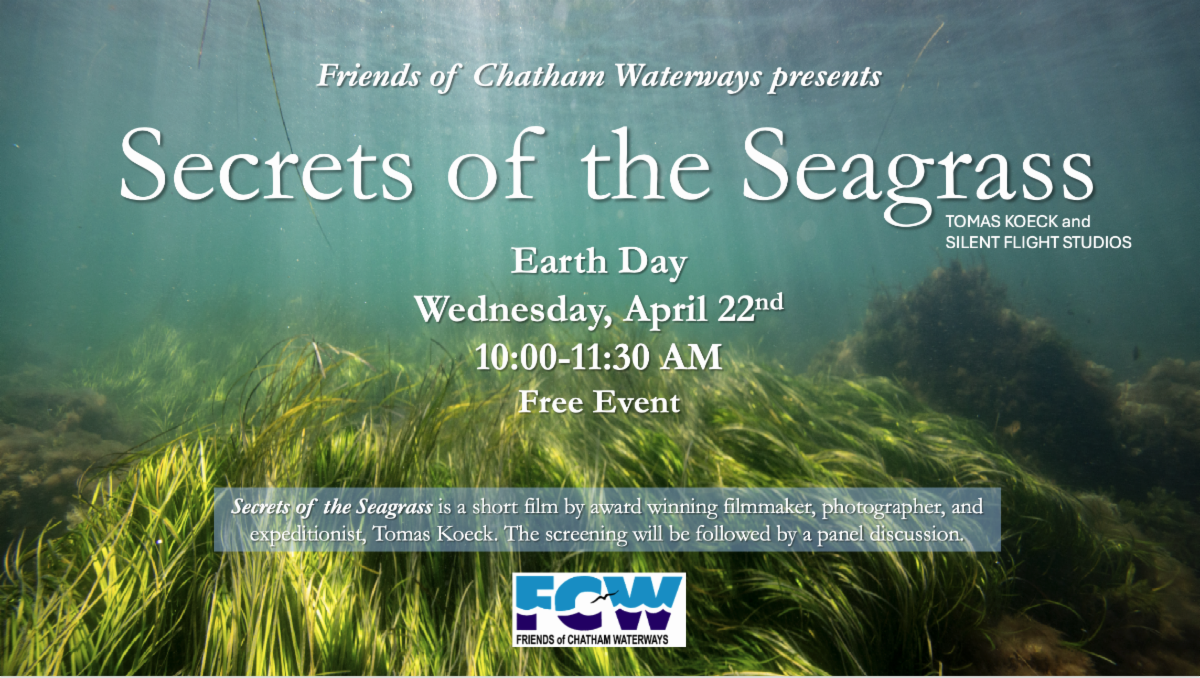
Celebrate Earth Day at the Chatham Orpheum theater where Friends of Chatham Waterwasy is hosting the showing of “Secrets of the Seagrass.” A discussion will follow with a notable panel, including the filmmaker, Tomas Koeck, Chatham’s director of natural resources, Greg Berman, and the director of both Seagrass Net and the Center for Coastal Studies’ Benthic Ecology Program, Dr. Agnes Mittermayr. |
|
|
A Cape-wide Conservation Event Calendar |
The Compact of Cape Cod Conservation Trusts (“the Compact”) and its nonprofit members launched a new regional calendar of events. The Conservation Calendar includes programs across Cape Cod hosted by these groups. The goal of the calendar is to encourage visitors and residents to take part in nature and environmental events. You can always find the link to the calendar on APCC's website under News & Events.
|
A Cape Cod Native Plant-selector ~ to help you choose the perfect native plants for your garden. |
|
|
Email kandres@apcc.org and we'll send you a CapeCodNativePlants.org decal. |
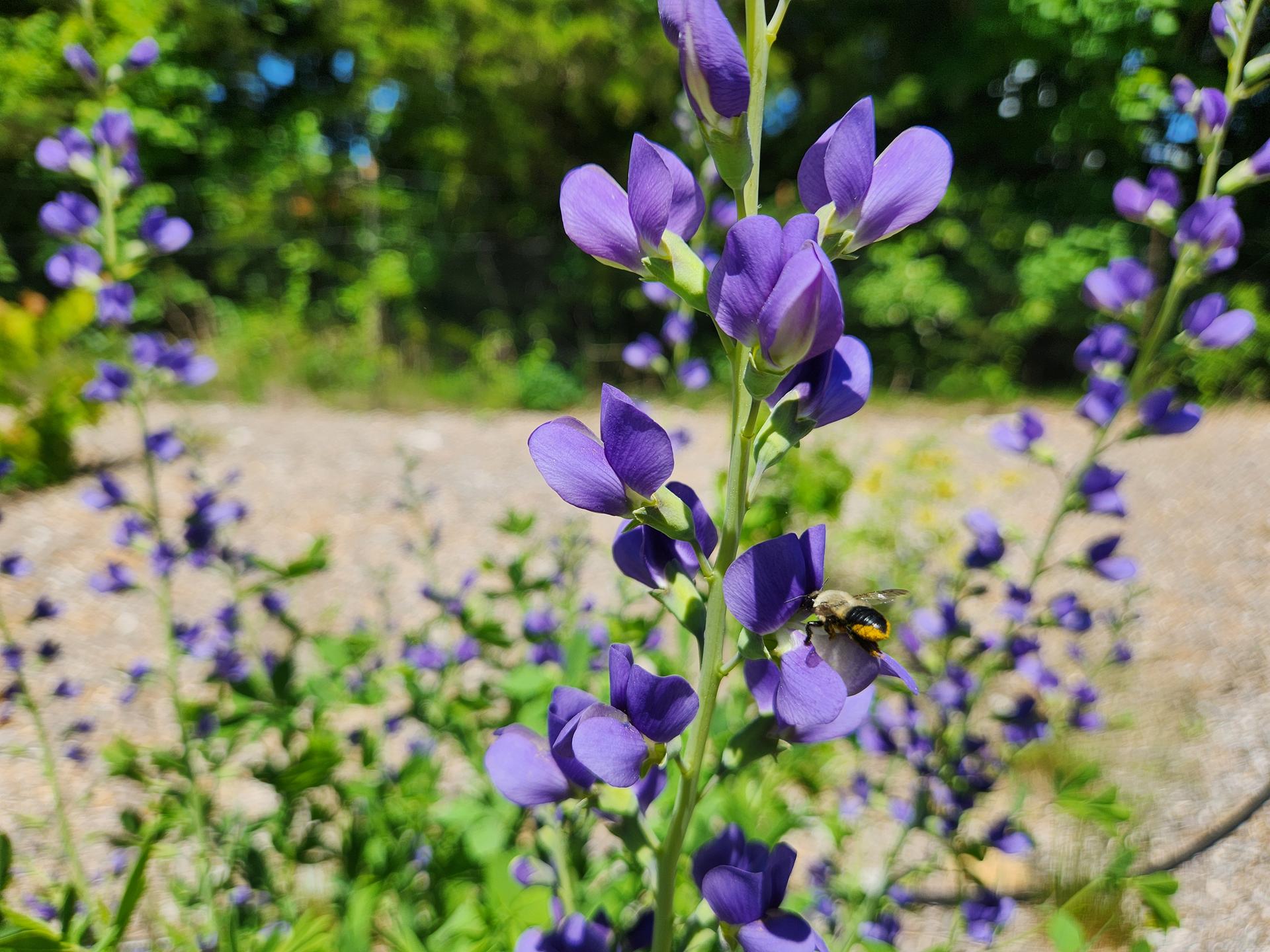
| Baptisia Baptisia australis |
|
|
The purpose of this site, CapeCodNativePlants.org is to help native plant enthusiasts select the right plant for the right place. While not all native plants presented here are indigenous to Cape Cod, they are suitable native species for Cape gardens and managed landscapes.
Why Native Plants? Many native plants are drought tolerant, salt tolerant, and thrive in the “thin” soils found on Cape Cod. Native plants are as attractive as any plant, and are reflective of the Cape’s natural beauty. By planting native species appropriate for Cape Cod, you can conserve water, avoid pesticide and fertilizer use, and support pollinators and birds.
|
|
|
|
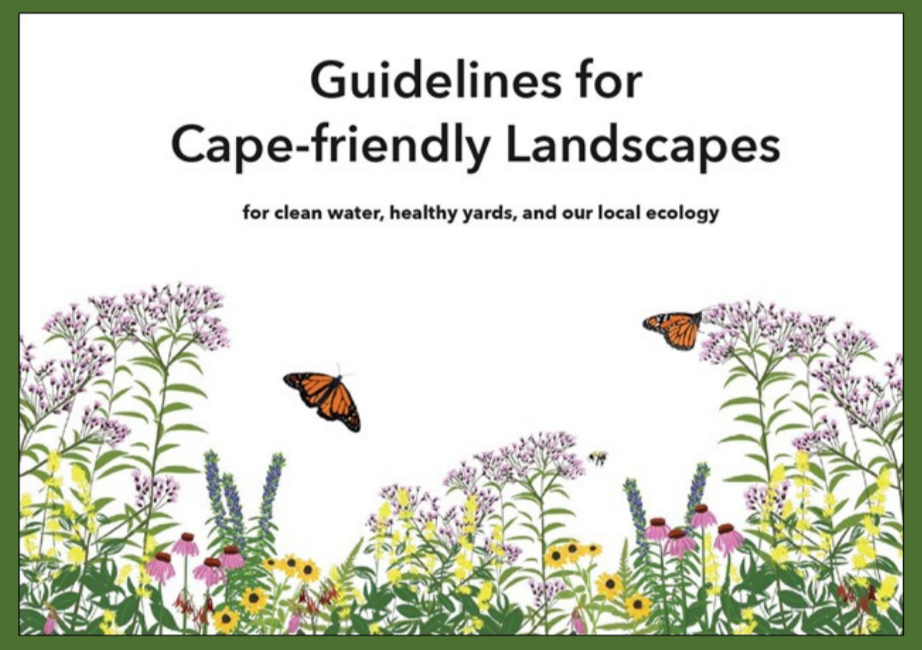
The Guidelines gives homeowners steps they can take in the design and maintenance of their properties that will support pollinators and birds, manage stormwater, conserve water, and protect the Cape's water quality. This 40-page booklet is beautifully illustrated by Marcy Ford with content that is easily digestible and supported by numerous resources for additional learning.
|
|
|
We are grateful for the several retail shops that are partnering with us to make this publication more widely available: Brewster Book Store, Birdwatchers General Store, Crocker Nurseries, Wellfleet Audubon Wildlife Sanctuary, Cape Abilities Farm, Cape Cod Museum of Natural History, the Cape Cod Lavender Farm, Heritage Museums and Gardens, Titcomb's Bookshop, Sea Howl Bookshop, Soares Flower Garden Nursery, and Eight Cousins Bookshop.
If you are a retailer and would like to sell this publication at your store, please contact us. |
|
|
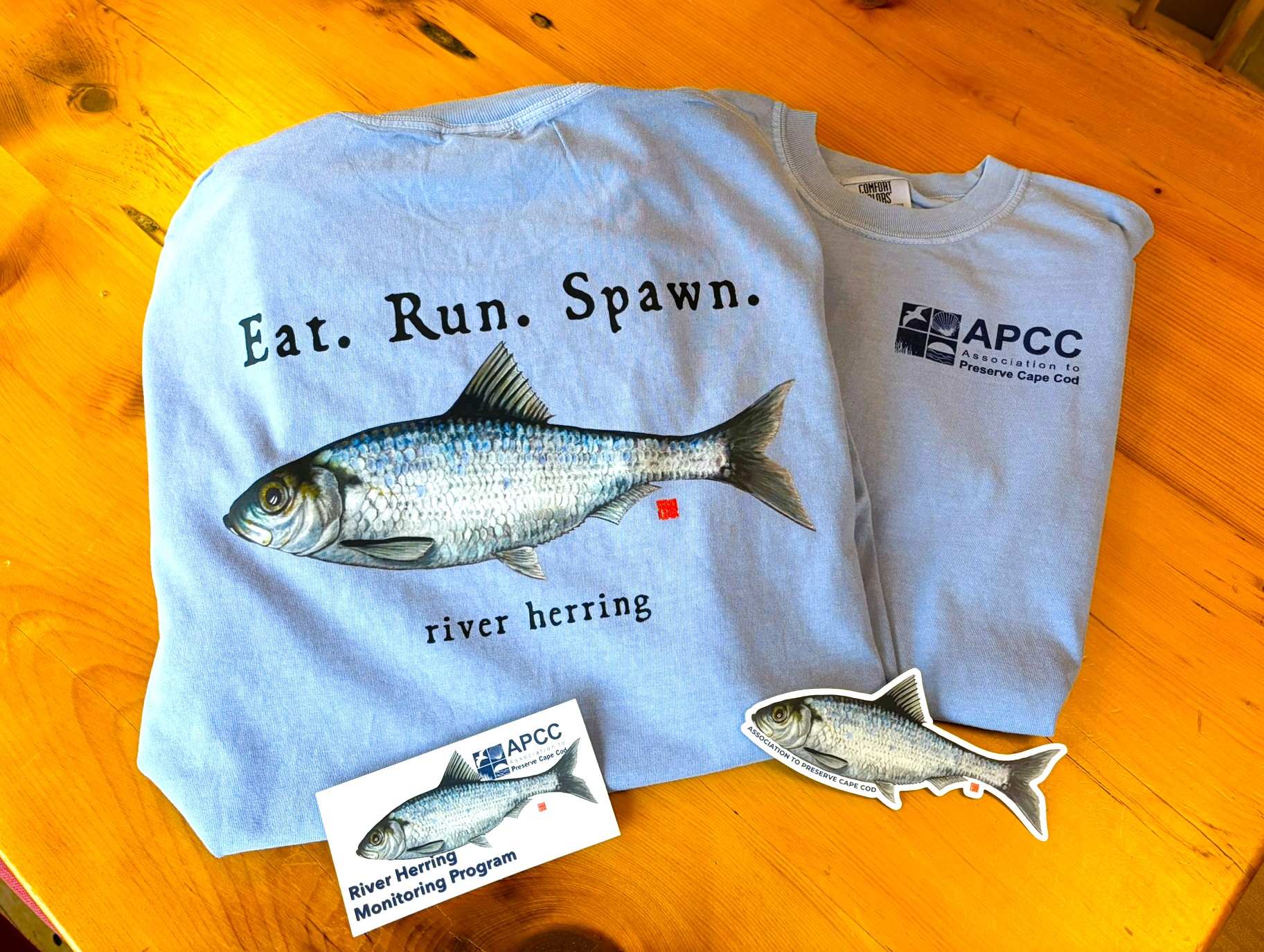
New Offering - Celebrate the Run! Herring T's color denim blue $30 - includes USPS delivery in the U.S. |
|
|
APCC caps $25
-includes USPS deliver in the U.S. |
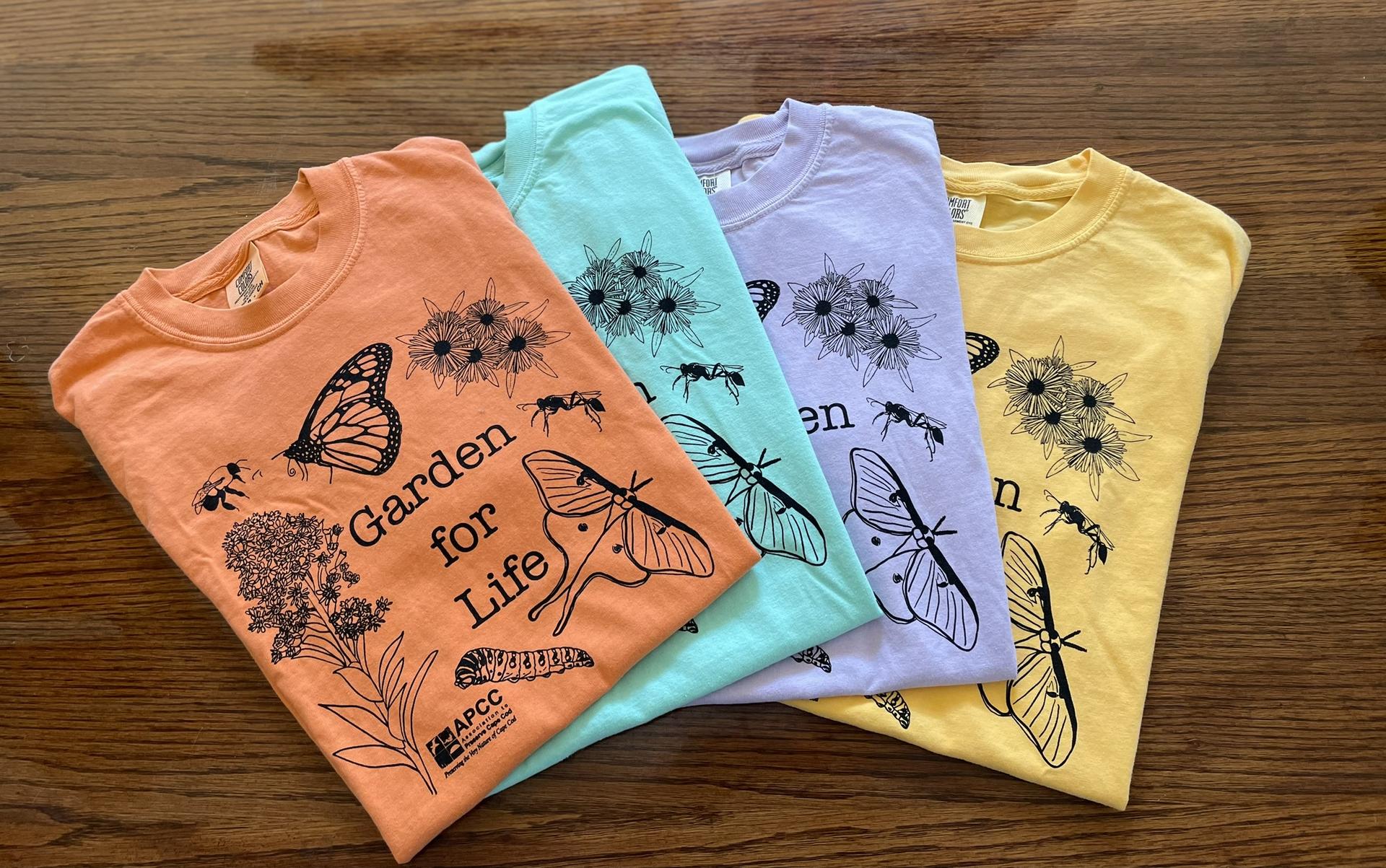
Garden for Life T's $30 -includes USPS delivery in U.S. |
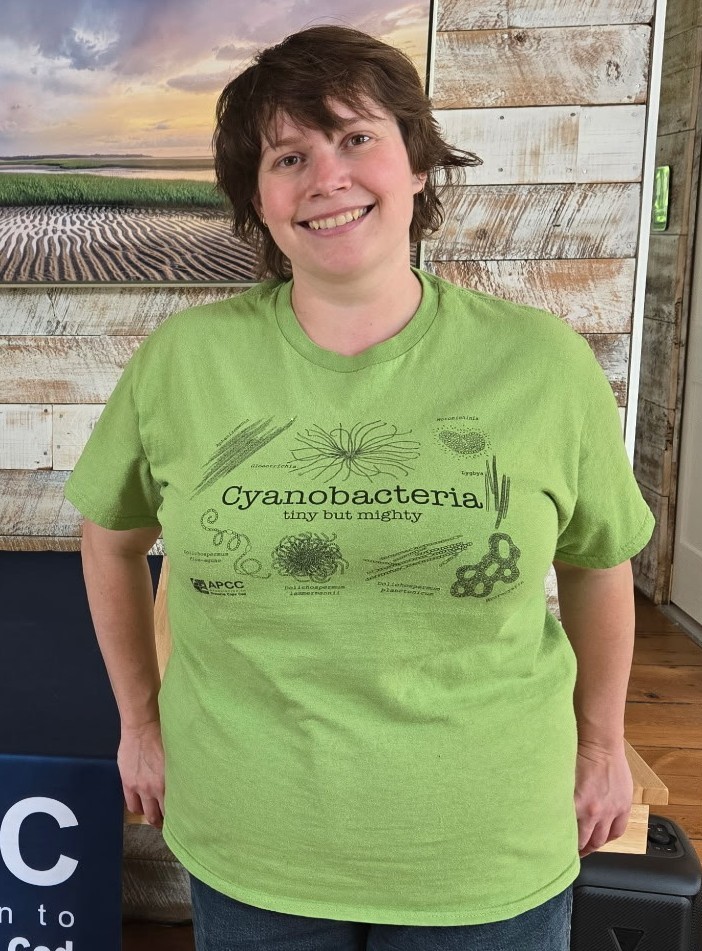
| Cyanobacteria ~ tiny but mighty color kiwi $30
-includes USPS delivery in the U.S. |
|
|
|
APCC eNewsletters. Our weekly newsletters are archived on our website and easily shared.
You can find past newsletters and share with your friends. Encourage others to sign up for future enewsletters HERE.
|
|
|
Are you thinking of going solar? We hope so!
In partnership with E2 SOLAR in Dennis, APCC receives $500 for every solar installation when APCC is named as referral. |
|
|
|
Thank you to the homeowners who just contracted to install solar panels through E2 Solar. May the sun always shine for you! |
|
|
Expressions Gallery, 578 Main Street, Chatham
CLICK HERE |
Expressions Gallery donates 20 percent of its profits to APCC's work. |
|
|
Thank you to our business sponsors! |
|
|
APCC is rated four stars by Charity Navigator, 2025 Platinum by Candid (formerly Guidestar), and 2024 Top-Rated by GreatNonprofits. |
|
|
Our Contact Information
*{{Organization Name}}*
*{{Organization Address}}*
*{{Organization Phone}}*
*{{Organization Website}}*
*{{Unsubscribe}}* |
| |
|
|