Association to Preserve Cape Cod |
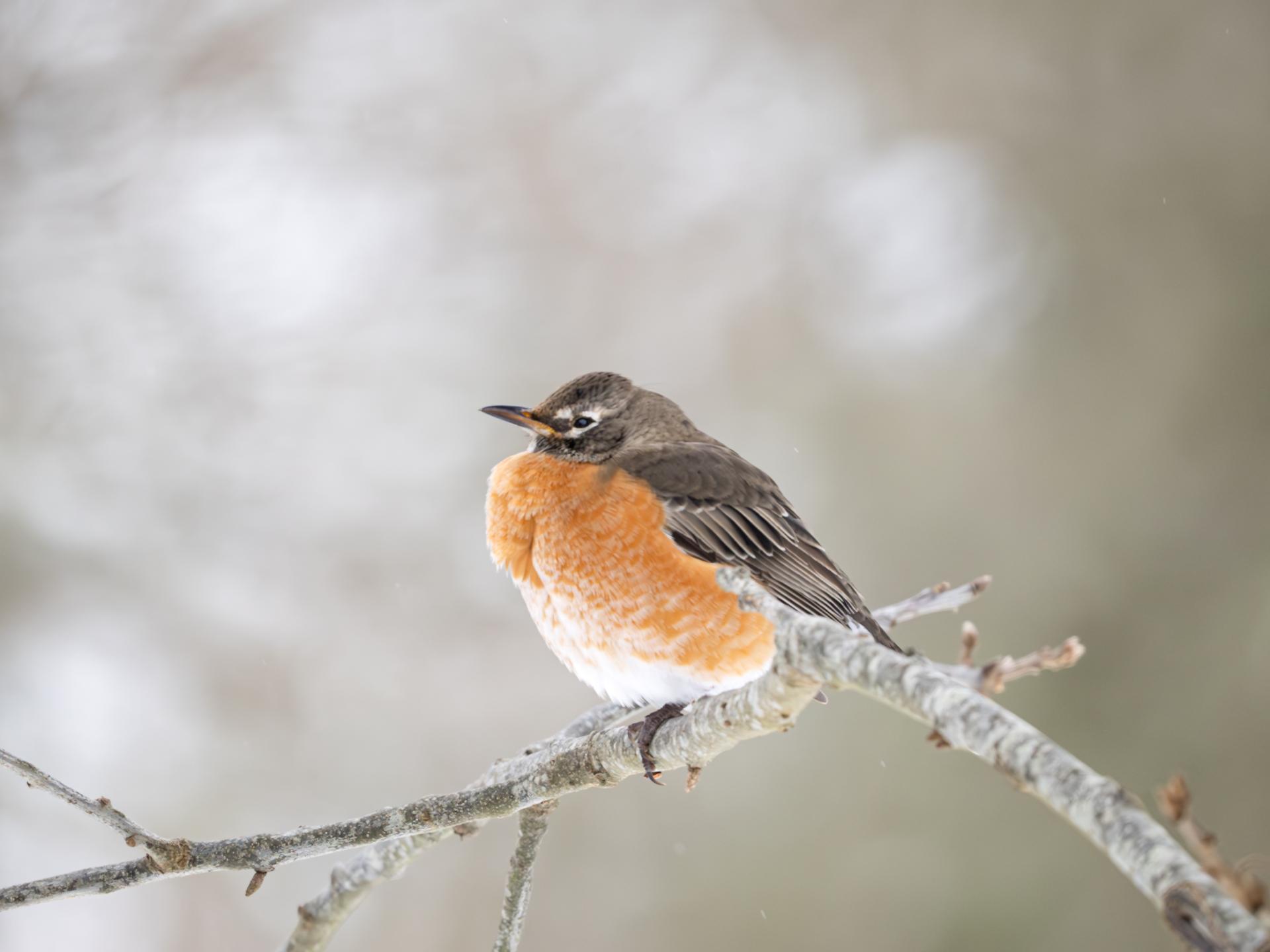
Above: Robin. Photo by Sue Machie |
|
|
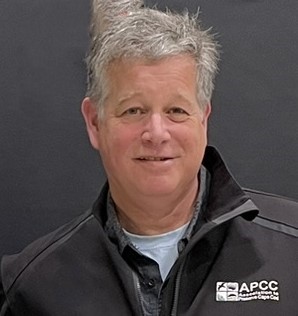
| Turn the Wheel by Andrew Gottlieb, Executive Director |
I had a dream recently that reflects my view of the choice Cape Cod has before it. In my dream I was driving a car that was headed toward a bend in the road. My passenger reached over and held my arms to prevent me from changing direction. We missed the turn and went off the road. |
|
|
Only about 14 percent of Cape Cod is not yet developed—or protected. Just 50,000 acres is up for grabs, and 80 percent of that is identified as priority natural resource areas. What happens to that land determines our future.
To understand what is at stake, understand this: priority natural resources areas are the land that provides the fresh drinking water we rely on; the land around ponds, rivers, and bays that determines if they are clean or dirty; the freshwater wetlands and marshes that provide a place for flood waters to be other than in your basement, yard or roads; and the forests and fields that provide habitat for the animals and plants that bring life to Cape Cod.
Back to my dream. Think of the road as the development pattern we have experienced over time. We have developed 46 percent of the Cape, and that development has created a place for many of us to live, raise families, vacation, and do business. The type of development that characterizes Cape Cod has also brought with it traffic, a high cost of living, poor water quality, and a fragmented landscape. The bend in the road is the choice we have today: Will we treat the remaining 14 percent of our land differently? Making the turn and protecting the priority natural resource areas that remain offers Cape Cod a better and more sustainable long-term economy and environment.
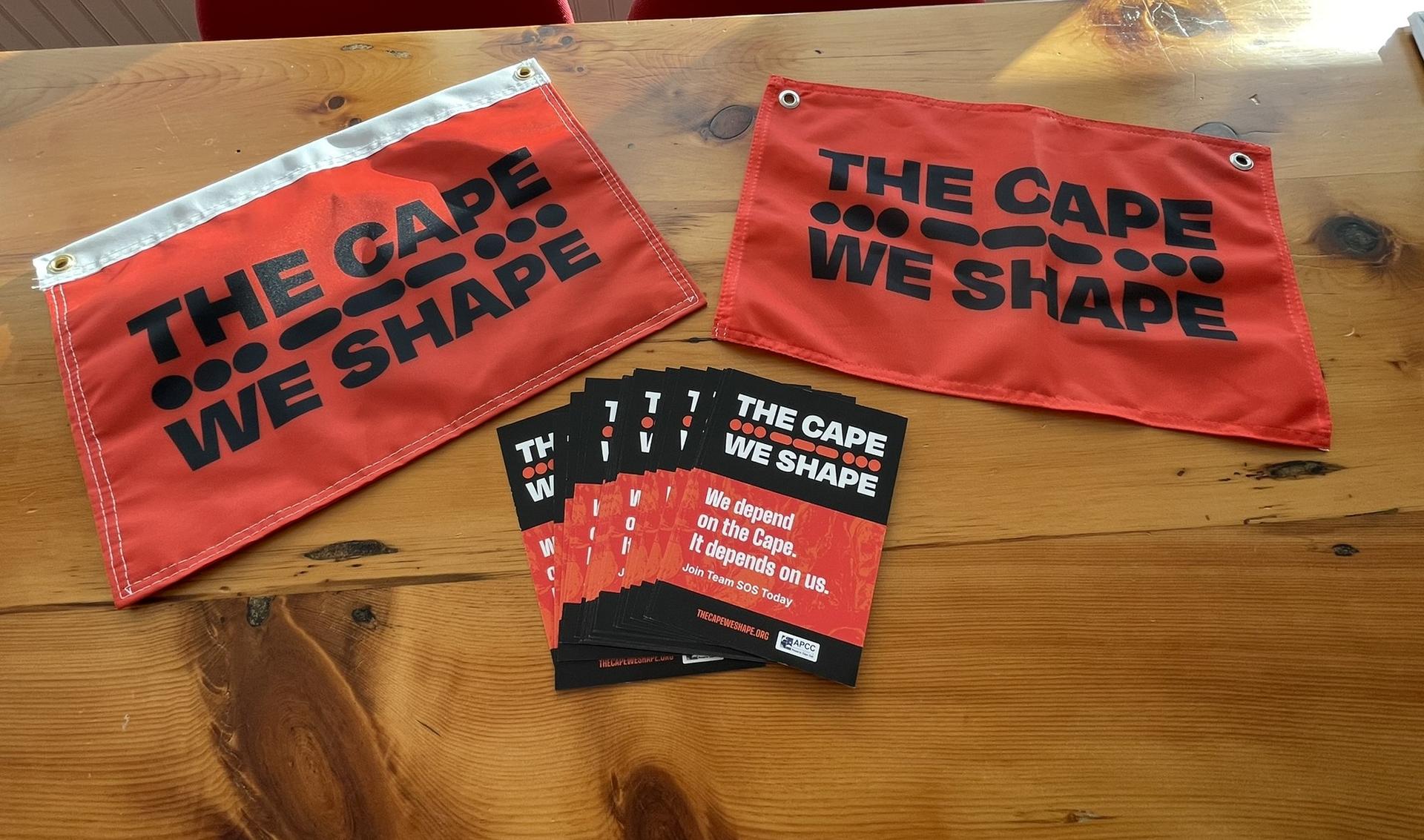
APCC has launched The Cape We Shape campaign to educate and empower citizens to help navigate the bend in the road so that we permanently protect the priority natural land that remains. I urge you to visit The Cape We Shape website to learn more and to see how you can get involved.
This first installment is just the why. Stay tuned, sign up, and get involved to learn about the how. |
|
|
Ecosystem Restoration Program |
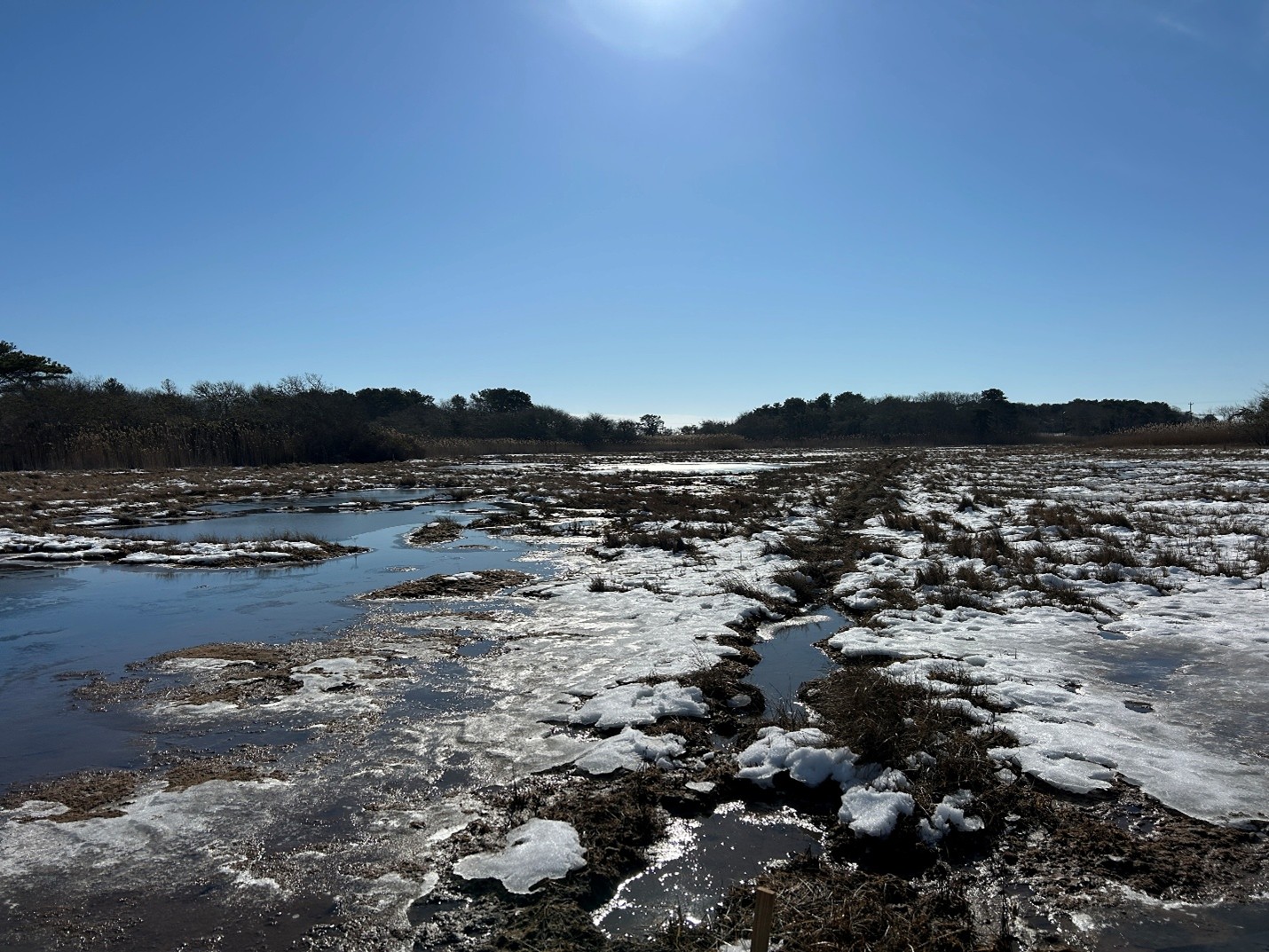
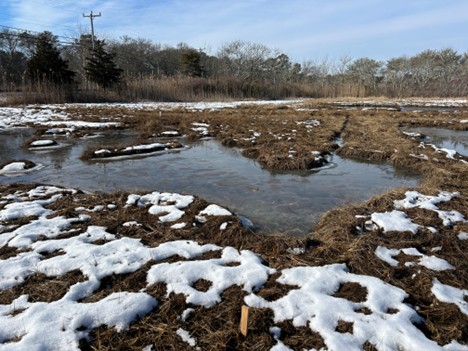
Above: Several shallow pools on the marsh surface at Weir Creek salt marsh in Dennis. |
Winter Work in the Salt Marsh Brrrrr! Cape Cod has been hit with cold, snowy weather lately—exactly the kind that turns a salt marsh into an icy, wintry wonderland. The creeks skim over, shallow pools freeze at the edges, and the whole landscape takes on a stillness that feels worlds away from the buzz of summer. But if you look closely, winter isn’t a pause button for the marsh—it’s part of the cycle that keeps it functioning.
You’ve probably noticed how much our marshes change through the year. In summer, vegetation growth peaks and the marsh becomes a sea of green—thick stalks of Spartina alterniflora (cordgrass) and Spartina patens (salt marsh hay) waving across the platform. In winter, that growth stops. Last summer’s plants wilt, fall over, and begin to break down, resting until spring returns. That “brown” season is more than a change in scenery. As the plants decay, they release nutrients that fuel the marsh food web and help build a fresh layer of organic soil. It’s slow, steady work—nature’s way of recycling, rebuilding, and maintaining the foundation of the marsh. |
Above: Weir Creek salt marsh and Lower County Road (western culvert) in West Dennis. |
At APCC, most of our salt marsh monitoring happens in summer, when conditions are best for many field surveys. But fall and winter offer something equally valuable: a different view of the marsh in changing conditions. With vegetation down and water moving differently, it can be easier to see patterns—where water pools, how channels connect, and how the marsh surface is holding up. And when the sun is shining and temperatures cooperate, we’re still out there.
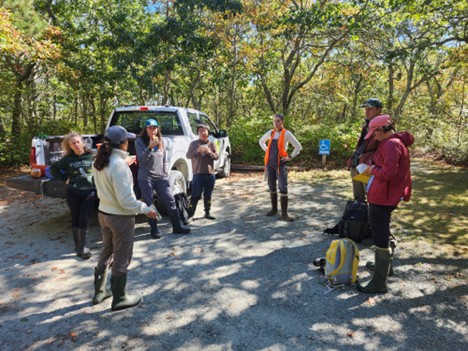
In January, staff from Tighe & Bond joined us at Weir Creek salt marsh to measure elevation along several transects—through shallow pools and across the marsh surface. Elevation may sound like a small detail, but in a salt marsh, a few inches can make a big difference. It helps determine how often areas flood, how long water lingers, and where marsh plants can thrive. Tracking these subtle shifts over time is one of the best ways to understand how marshes are changing—and how to protect them. Because even when the marsh looks frozen and quiet, it’s still working hard for Cape Cod.
Salt marshes provide critical ecosystem services that benefit our local communities every day: They help buffer shorelines from high-energy storms, absorb and store floodwaters, and support habitat for countless fish, birds, and invertebrates. Winter may change the view—but it doesn’t change the value. As the season rolls on, we’ll keep monitoring, measuring, and learning—so we can better protect these living landscapes that protect us. |
Above: A pool adjacent to the culvert on Lower County Road at Weir Creek salt marsh, West Dennis. |
|
|
Above: APCC's Lead Ecologist and Science Advisor Jordan Mora joins a field trip to Martha’s Vineyard with the CIRATs team. |
Behind the Work: The Collaborations Making Marsh Restoration Possible |
Preserving Cape Cod’s salt marshes takes more than good intentions. It requires sustained time in the field, careful planning and design, long-term monitoring, and the resources to adapt when conditions change. That kind of work only succeeds when it’s backed by strong partnerships, which is why APCC collaborates closely with a wide network of nonprofit, state, and federal agencies working toward shared restoration goals.
Here on Cape Cod, we partner with the Cape Cod Conservation District and the Massachusetts Department of Ecological Restoration through the Cape Cod Water Resources Restoration Project—an ambitious, watershed-wide effort supported by the United States Natural Resources Conservation Service. Together, we’re working to restore fish passage, reduce stormwater impacts, and bring degraded salt marsh habitat back into healthier balance.
We’re also part of a broader community of marsh scientists and restoration practitioners who regularly share lessons, questions, and on-the-ground experience. Mass Audubon leads the Cape and Islands Restoration Action Team (CIRATs), which helps connect people actively working in Cape Cod marshes so we can learn from one another and coordinate where it makes sense.
At the regional level, APCC participates in the Salt Marsh Working Group (SMWG), a network of more than 140 state, federal, tribal, nonprofit, and university partners co-led by the Massachusetts Office of Coastal Zone Management and the University of Massachusetts Amherst, with support from the Gloucester Marine Station. This group helps ensure that restoration in Massachusetts and across the Northeast is informed by the best available science and the real-world challenges of implementation.
More recently, APCC staff have also joined the MassMarsh Program, established in 2024 by the Massachusetts Department of Environmental Protection and supported through a University of Massachusetts Amherst-led effort to strengthen salt marsh research and monitoring statewide. The goal is simple but powerful: build shared technical capacity so we can better track how marshes are changing, compare data across projects, and make smarter restoration decisions over time.
These collaborations don’t just support our work on Cape Cod—they help advance marsh restoration throughout Massachusetts and the Northeast by sharing what we’re learning along the way. We’re grateful to be part of such a committed and talented community, and we’re excited about what this collective effort makes possible for the marshes we all depend on. |
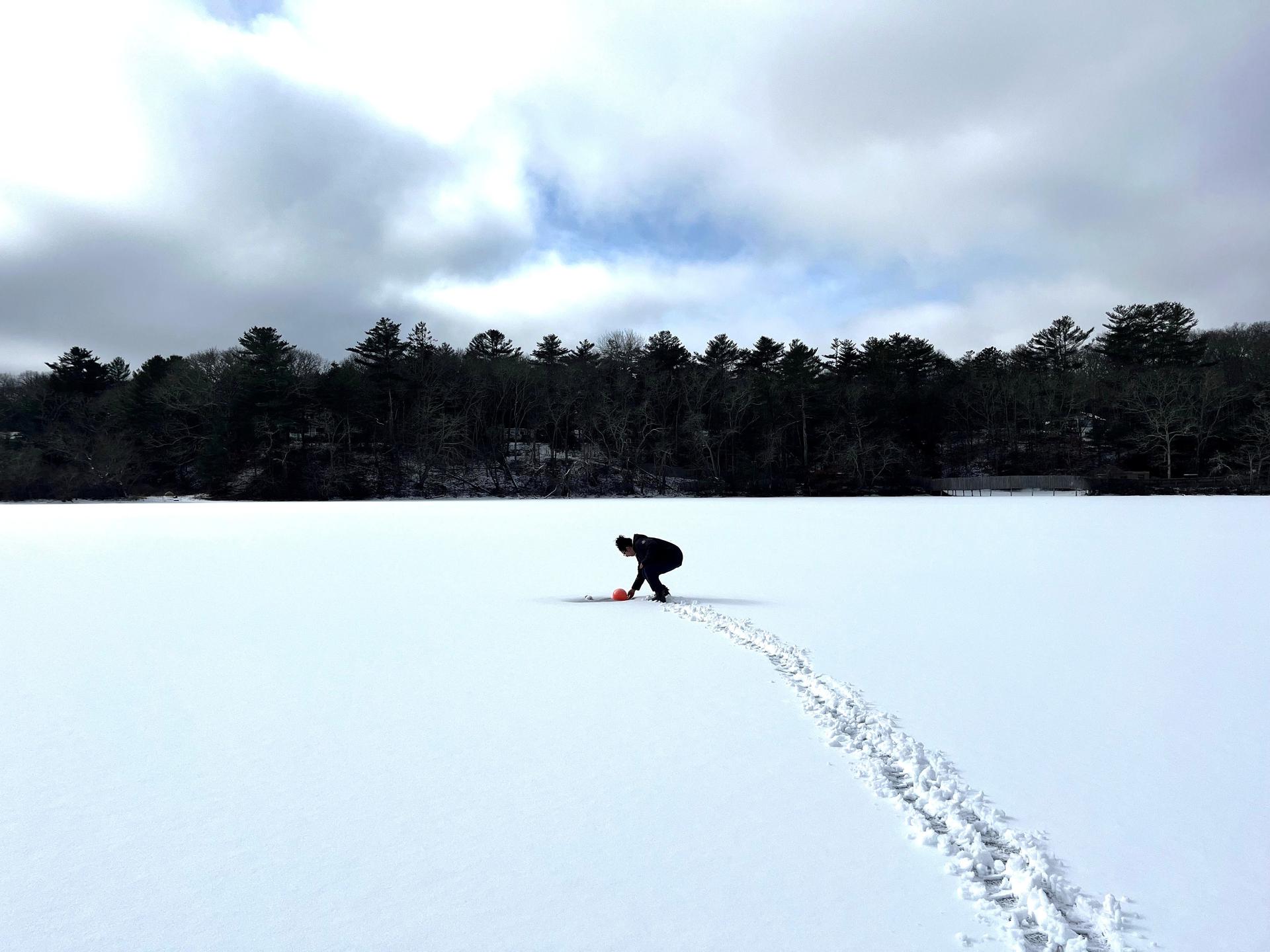
Above: Elizabeth Loaiza, Long Pond, Marstons Mills, February 2025 |
Under a Blanket of Ice and Snow
Pond algae can persist under ice by surviving in water as cold as 45 degrees Fahrenheit (7 degrees Celsius) and continuing to photosynthesize if light penetrates the ice. While often harmless, these algae can consume oxygen at night or die off and cause winterkill, particularly if the ice is thick, snowy, and prevents gas exchange. When ice caps a pond, the oxygen available from the air is cut off, leaving all life in the pond to rely on the aquatic plants to produce oxygen.
Unlike most plants, algae do not have flowers, stems, roots, leaves or vascular tissue—but they do have chlorophyll, which allows them to absorb light for photosynthesis. Sunlight provides energy for microscopic algae to grow. Algae are eaten by zooplankton, which in turn are eaten by fish, and birds.
Right now on Cape Cod, most of our ponds are frozen with a thick layer of snow on top that is restricting the amount of light for the tiny plants (phytoplankton and cyanobacteria). The larger deeper ponds have a greater reservoir of oxygenated water to sustain pond life, but with little light the balance of oxygen produced and the amount used by consumers respiring is thrown off. Perhaps the holes created in the ice by cold hardy fishermen to drop a line may actually provide a breath of fresh air to a shallow pond with otherwise oxygen-depleted water. APCC looks forward to getting out on the ponds in canoes to document the oxygen conditions as soon as we can in March, as part of the Cape Cod Regional Pond Monitoring Program with the Cape Cod Commission. |
|
|
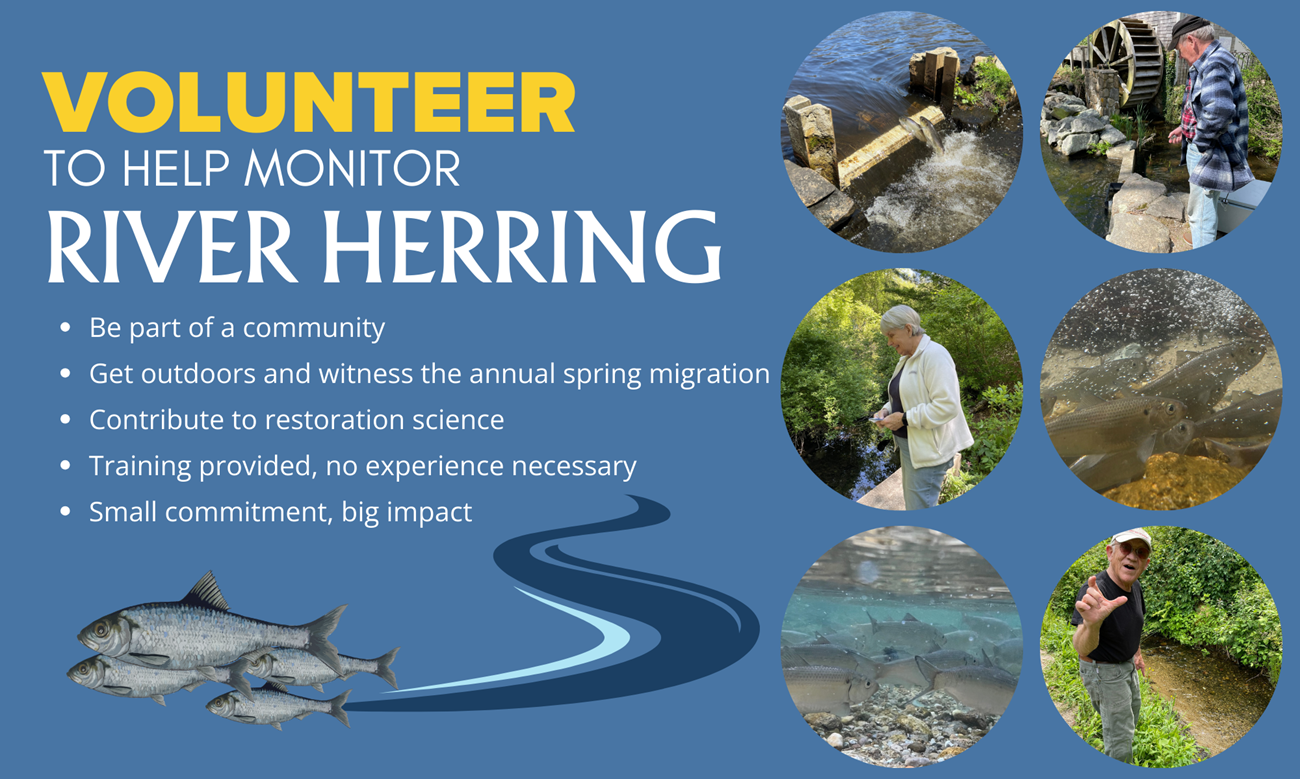
Cape Cod River Herring Runs Need You (Spring 2026 Volunteers) Spring is just around the corner and we’re once again seeking volunteers to count river herring. River herring include alewife (Alosa pseudoharengus) and blueback herring (A. aestivalis) and are considered keystone species in the Atlantic coastal ecosystem.
These forage fish sustain a rich food web, nourishing predators like striped bass, ospreys, seals, and dolphins. Their annual spawning migrations transport vital nutrients from the ocean into freshwater systems, enriching these ecosystems and supporting aquatic life. Beyond their ecological importance, river herring have deep cultural and economic significance for coastal communities here on Cape Cod. Volunteer counts of river herring provide valuable scientific data on herring abundance and are used by fisheries managers to manage and protect herring stocks. Herring counts also help to document the need for restoration or improvement of fish runs and the success of restoration projects.
Where you can volunteer (2026) We’re seeking volunteers at runs across Cape Cod, including: - Stony Brook (Brewster)
- Trunk River (Falmouth)
- Mashpee River (Mashpee)
- Pilgrim Lake (Orleans)
-
Mill Creek (Sandwich)
- Red Lily Pond (Centerville)
- Long Pond (Yarmouth)
- Baxter Grist Mill (Yarmouth)
A complete list of the Cape Cod runs monitored by volunteers is listed on our River Herring Hub website.
What counting involves - When: Typically April 1 – June 15 (timing varies with the run)
-
Time commitment: A few counts per week, whenever you’re available
- How it works: 10-minute visual counts at a designated site
- Requirements: Your own transportation, comfort on uneven terrain, and the ability to visually spot fish in moving water
- Reporting: Counts are submitted through APCC’s web-based data entry system
Ready to sign up? If you’d like to count herring at one or more runs: |
Once you sign up, we’ll follow up and/or connect you with the local count coordinator for your run(s) of interest. Trainings will be held in March, and we’ll post dates on the River Herring Hub website as they’re finalized—so please sign up soon.
To learn more about APCC’s river herring monitoring program, instructions for counting, and estimates of past run sizes, please visit APCC’s River Herring Webpage. Funding for the program comes from the Massachusetts Bays National Estuarine Partnership. This program is run in collaboration with the Massachusetts Division of Marine Fisheries and local conservation programs. |
|
|
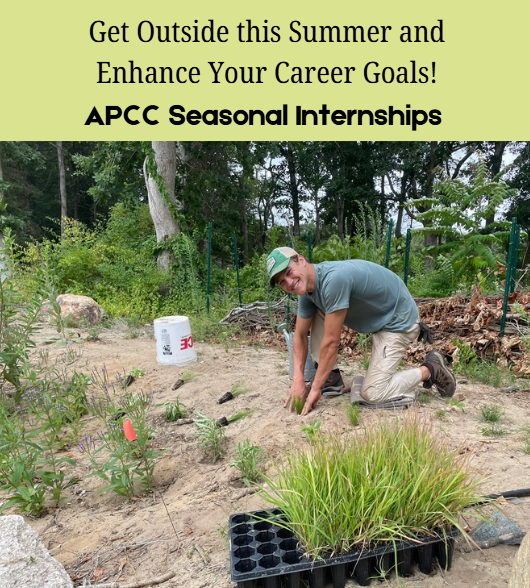
Announcing APCC Seasonal Internships |
|
|
If you are a farmer or someone who wants to grow native plants to sell, or you just want to be updated on the program's development, please submit the interest form that appears on our webpage. We will be sending periodic email notices of workshops and meetings.
Funding for the project is provided by Barnstable County and its Economic Development Council License Plate Grant Program through the Cape Cod Commission, the Kelley Foundation and private donors. |
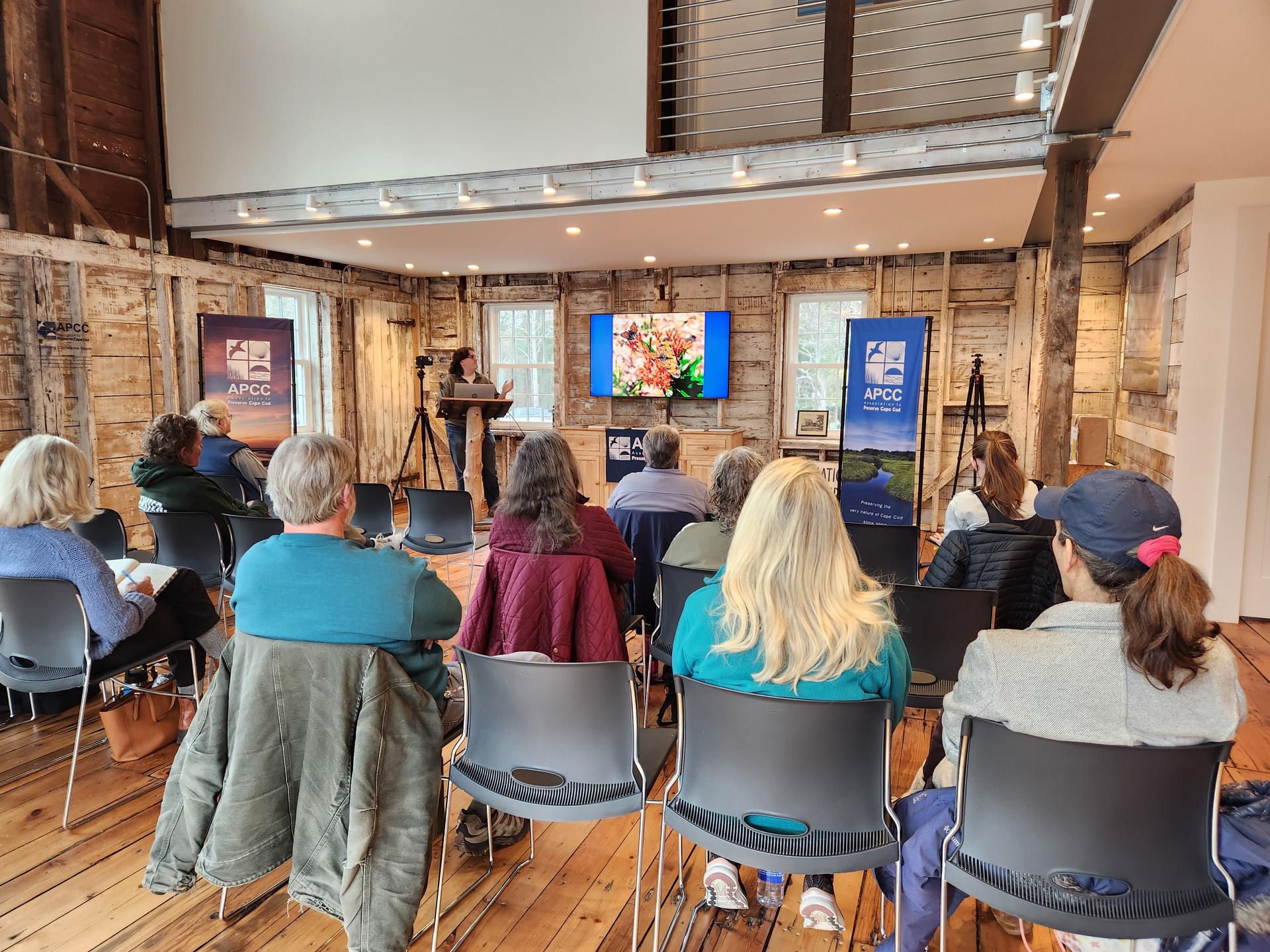
Nine talks for prospective growers as part of the Cape Cod Native Plant Growers' Cooperative program have been presented thus far, with more scheduled in the upcoming weeks. These past workshops can be viewed here:
Registration for upcoming talks can be found on our events page.
|
A Cape-wide Conservation Event Calendar |
The Compact of Cape Cod Conservation Trusts (“the Compact”) and its nonprofit members launched a new regional calendar of events. The Conservation Calendar includes programs across Cape Cod hosted by these groups. The goal of the calendar is to encourage visitors and residents to take part in nature and environmental events. You can always find the link to the calendar on APCC's website under News & Events.
|
|
|
A Cape Cod Native Plant-selector
~ to help you choose the perfect native plants for your garden. |
|
|
Email kandres@apcc.org and we'll send you a CapeCodNativePlants.org decal. |
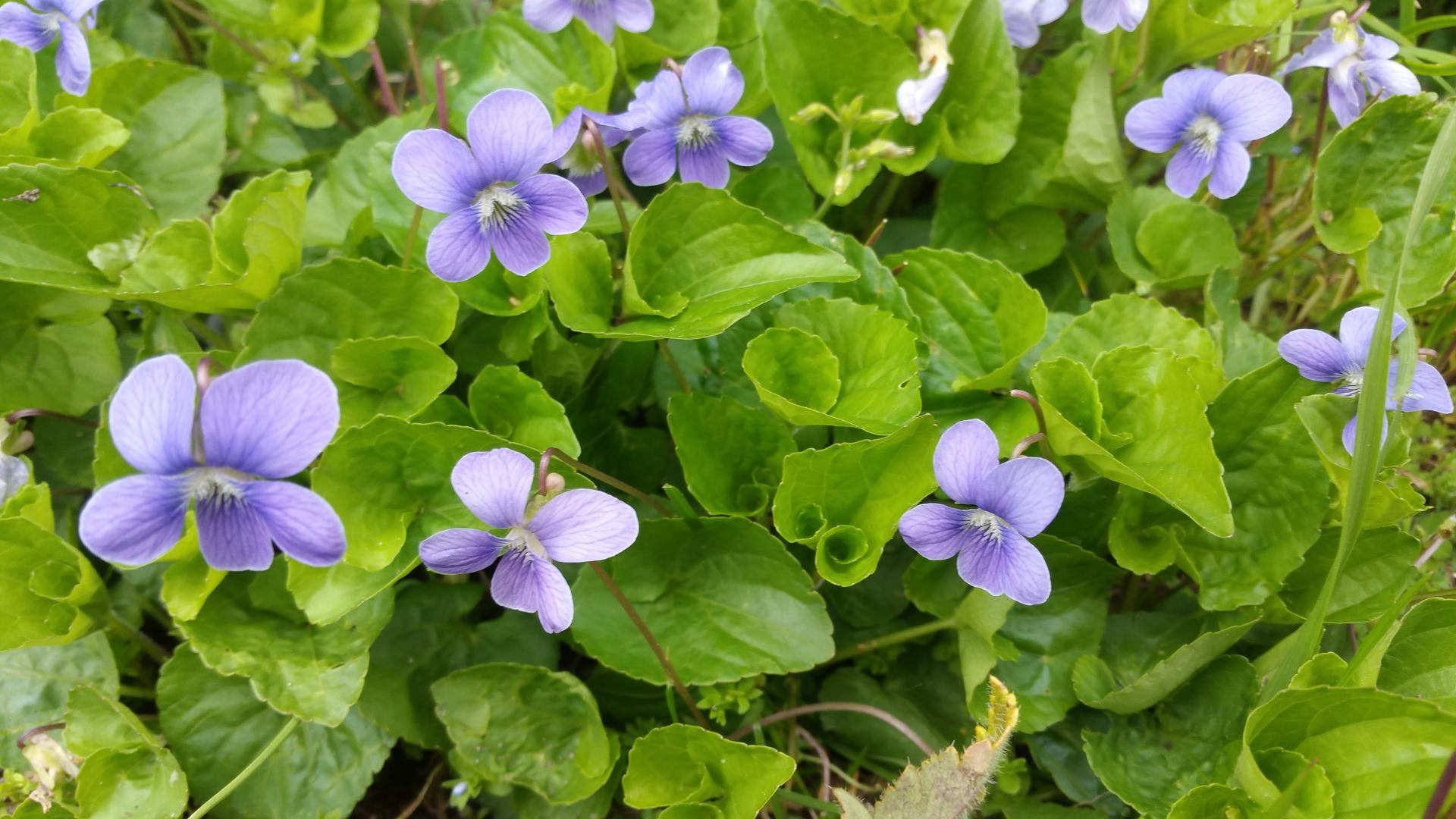
| Common Blue Violet Viola sororia |
|
|
The purpose of this site, CapeCodNativePlants.org is to help native plant enthusiasts select the right plant for the right place. While not all native plants presented here are indigenous to Cape Cod, they are suitable native species for Cape gardens and managed landscapes.
Why Native Plants? Many native plants are drought tolerant, salt tolerant, and thrive in the “thin” soils found on Cape Cod. Native plants are as attractive as any plant, and are reflective of the Cape’s natural beauty. By planting native species appropriate for Cape Cod, you can conserve water, avoid pesticide and fertilizer use, and support pollinators and birds.
|
|
|
|
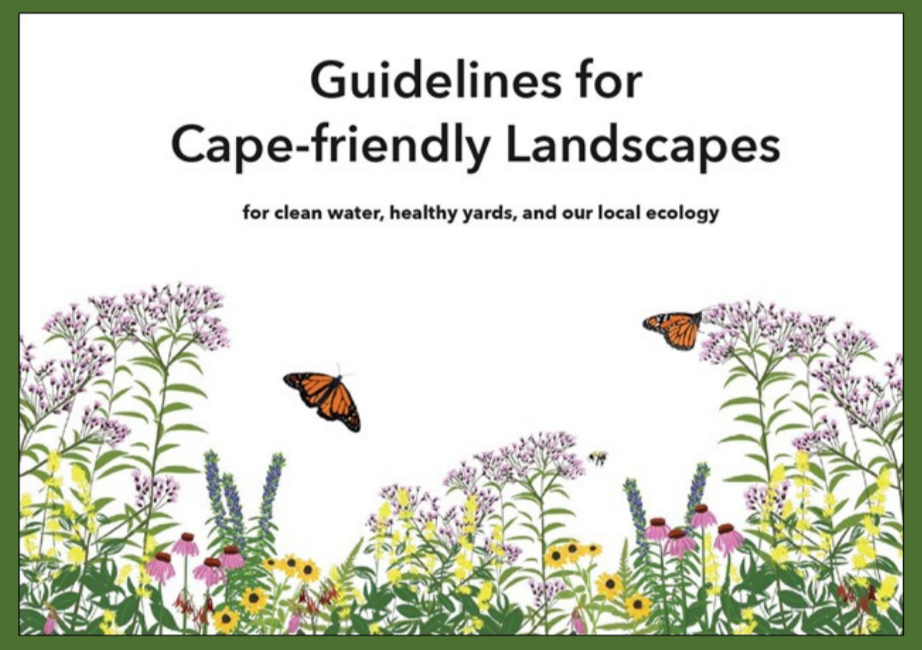
The Guidelines gives homeowners steps they can take in the design and maintenance of their properties that will support pollinators and birds, manage stormwater, conserve water, and protect the Cape's water quality. This 40-page booklet is beautifully illustrated by Marcy Ford with content that is easily digestible and supported by numerous resources for additional learning.
|
|
|
We are grateful for the several retail shops that are partnering with us to make this publication more widely available: Brewster Book Store, Birdwatchers General Store, Crocker Nurseries, Wellfleet Audubon Wildlife Sanctuary, Cape Abilities Farm, Cape Cod Museum of Natural History, the Cape Cod Lavender Farm, Heritage Museums and Gardens, Titcomb's Bookshop, Sea Howl Bookshop, Soares Flower Garden Nursery, and Eight Cousins Bookshop.
If you are a retailer and would like to sell this publication at your store, please contact us. |
|
|
APCC caps $25 -includes USPS deliver in the U.S. |
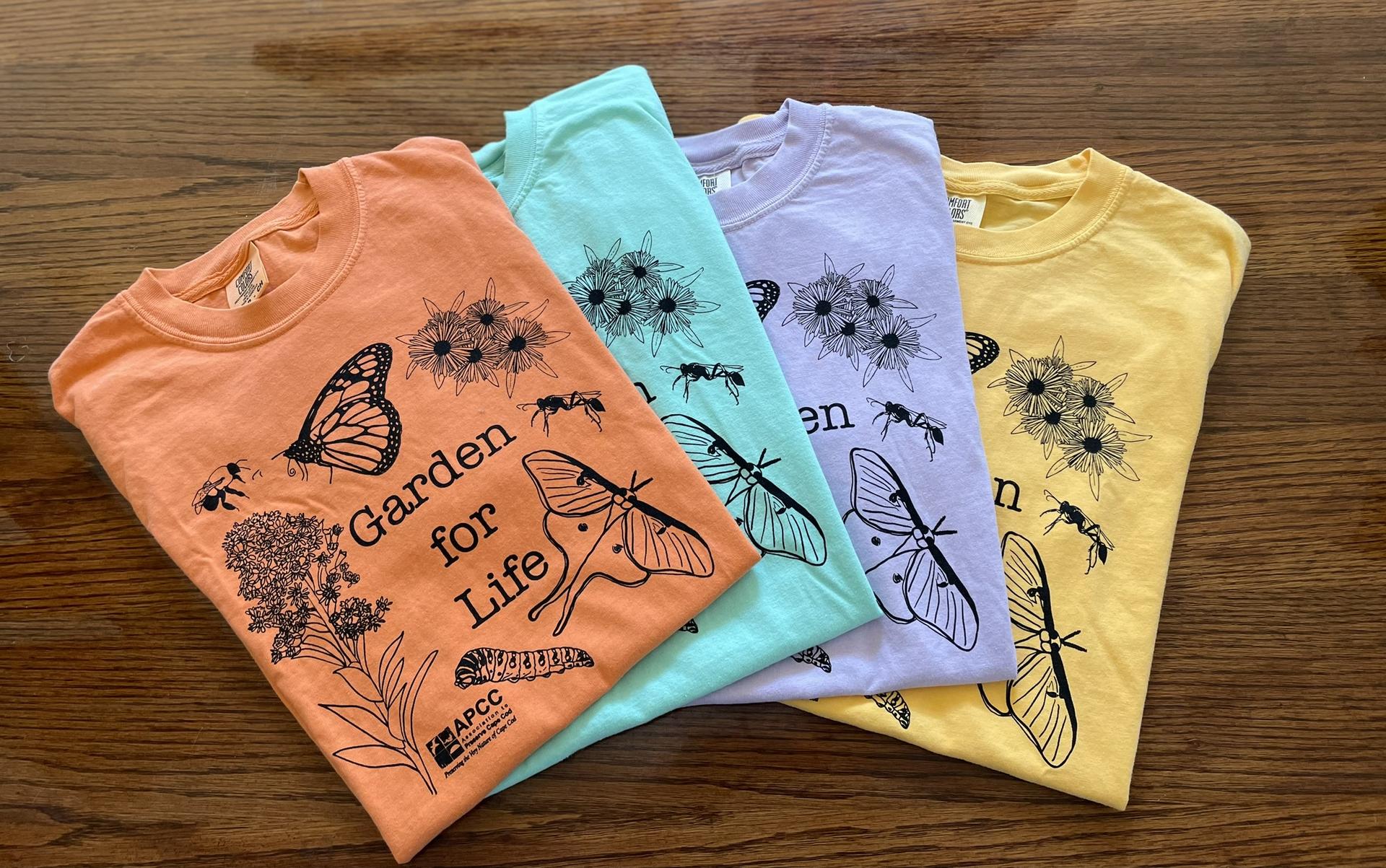
Garden for Life T's $30 -includes USPS delivery in U.S. |
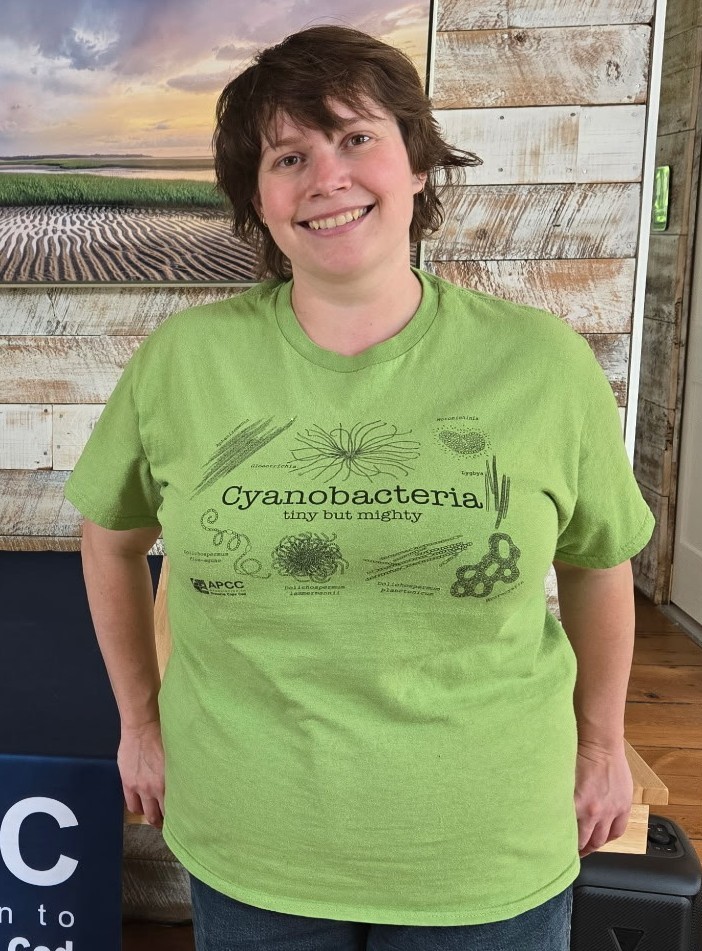
| Cyanobacteria ~ tiny but mighty color kiwi $30
-includes USPS delivery in the U.S. |
|
|
|
APCC eNewsletters. Our weekly newsletters are archived on our website and easily shared.
You can find past newsletters and share with your friends. Encourage others to sign up for future enewsletters HERE.
|
|
|
Are you thinking of going solar? We hope so!
In partnership with E2 SOLAR in Dennis, APCC receives $500 for every solar installation when APCC is named as referral. |
|
|
|
Thank you to the homeowners who just contracted to install solar panels through E2 Solar. May the sun always shine for you! |
|
|
Expressions Gallery, 578 Main Street, Chatham
CLICK HERE |
Expressions Gallery donates 20 percent of its profits to APCC's work. |
|
|
Thank you to our business sponsors! |
|
|
APCC is rated four stars by Charity Navigator,
2025 Platinum by Candid (formerly Guidestar), and 2024 Top-Rated by GreatNonprofits. |
|
|
Our Contact Information
*{{Organization Name}}*
*{{Organization Address}}*
*{{Organization Phone}}*
*{{Organization Website}}*
*{{Unsubscribe}}* |
| |
|
|