Association to Preserve Cape Cod |
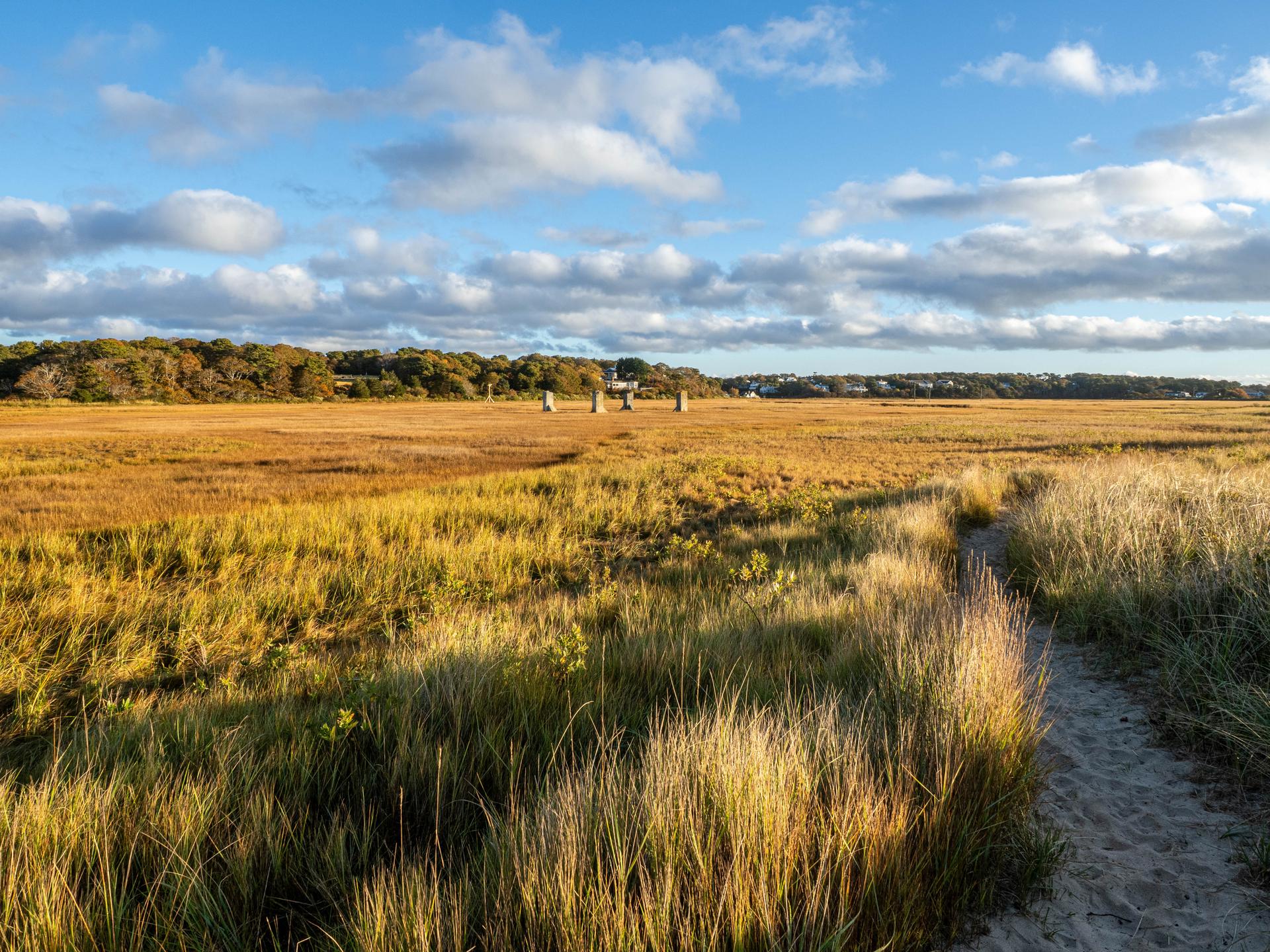
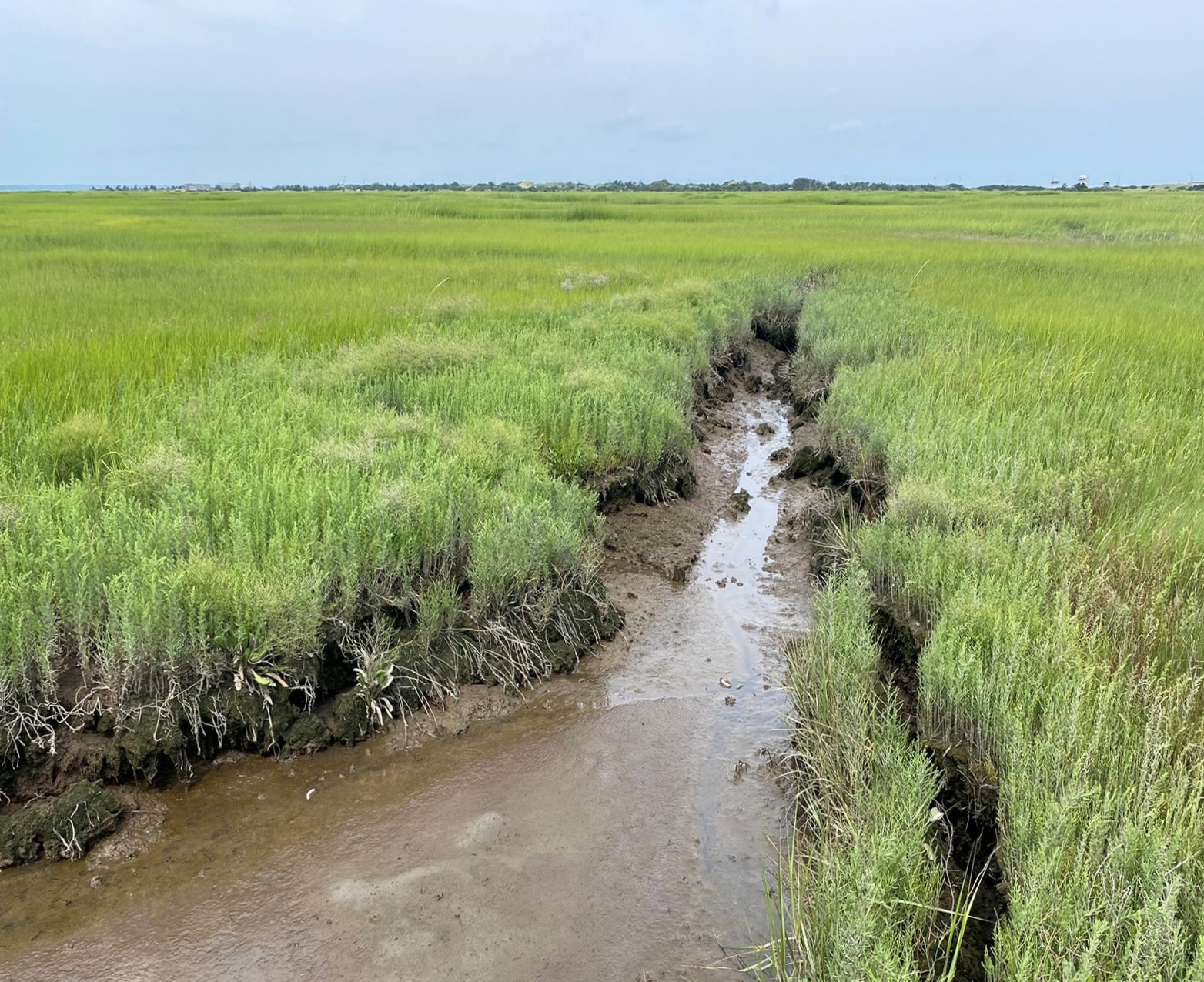
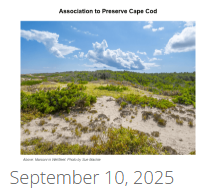
Above: Forest Beach salt marsh, South Chatham. Photo by Sue Machie |
|
|
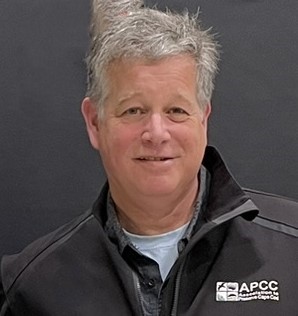
| Good Enough By Andrew Gottlieb, APCC Executive Director |
"I have hope, because I believe in the truth of what the great American writer James Baldwin said. He said, ‘In this world, there isn’t as much humanity as one would like, but there’s enough.’" - Bruce Springsteen |
|
|
In this week of Thanksgiving, despite the challenges everyone confronts, we have much to feel good about. Anyone reading this has some connection to Cape Cod that enhances their life and that is worth acknowledging and celebrating. While every era comes with its own challenges, recency bias has left a lot of us feeling weighed down more than usual by current events. Hence, the hopeful reminder above is perhaps especially resonant in this week of thanks—that collectively, we just might have enough in the tank to pull us through the challenges of the day.
It is important and good for the soul to pause and appreciate the accomplishments and good things we have. It is also equally important to think about if "good enough" is actually good enough. One measure of our humanity is how we treat those around us, especially those less fortunate or facing hard times. Another measure is how we treat the world we inhabit and what our collective stewardship leaves for those that follow. In this regard, I would suggest that just enough is in fact not good enough. How we treat our land, air, and water both reflects and is a measure of our underlying humanity.
Cape residents have made great progress toward improving water quality, restoring degraded natural resources, and living in greater harmony with the natural world. That said, we all know we can—no, must—strive for better. This week at APCC, we will reflect on and appreciate the positive impact that we, with your support and encouragement, have achieved this past year. I encourage you all to do the same. But next week, let us all continue to turn hope into action and a renewed commitment to do more for the world around us.
Happy Thanksgiving to you all. |
APCC Ecosystem Restoration Program |
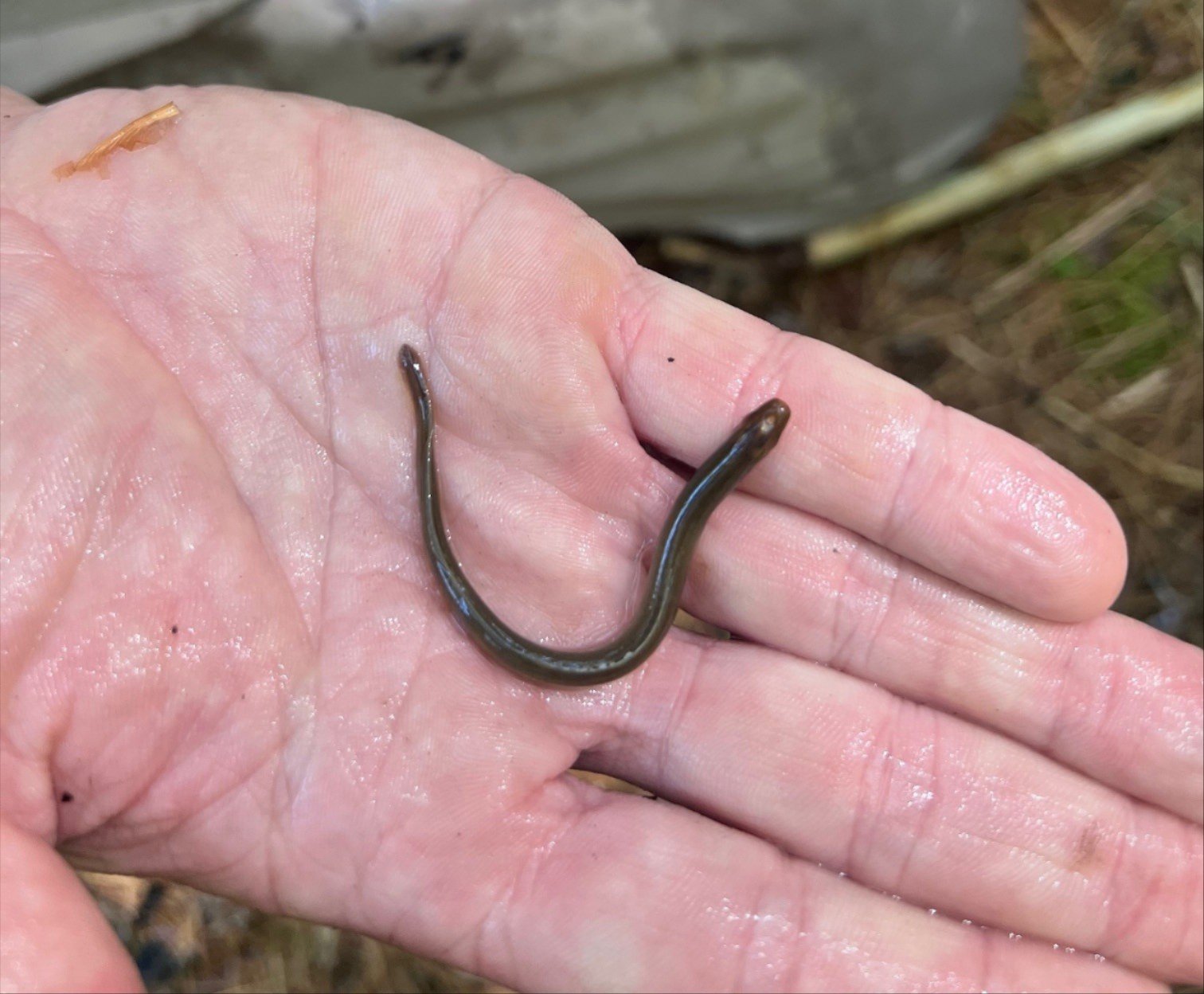
Above: An American brook lamprey ammocoete, or larva, recently caught in the Mashpee River. |
Small, Secret, and State-Threatened: American Brook Lamprey
in the Mashpee River
If you’ve ever peered into a shallow riffle on the Mashpee River and seen something that looked like a tiny, jawless eel wriggling over the stones, you may have met one of the river’s most secretive residents: the American brook lamprey. As adults, these fish are only about five to eight inches long—easy to overlook unless you know what you’re seeing.
Brook lamprey don’t leap like herring or rise like trout. For most of their lives they’re hidden in the streambed, quietly filtering the water. But for Massachusetts—and for the Mashpee River in particular—they are a very big deal. The American brook lamprey is listed as a state-threatened species and is known from only a small number of streams. That makes the Mashpee River one of the core strongholds for this species in the state.
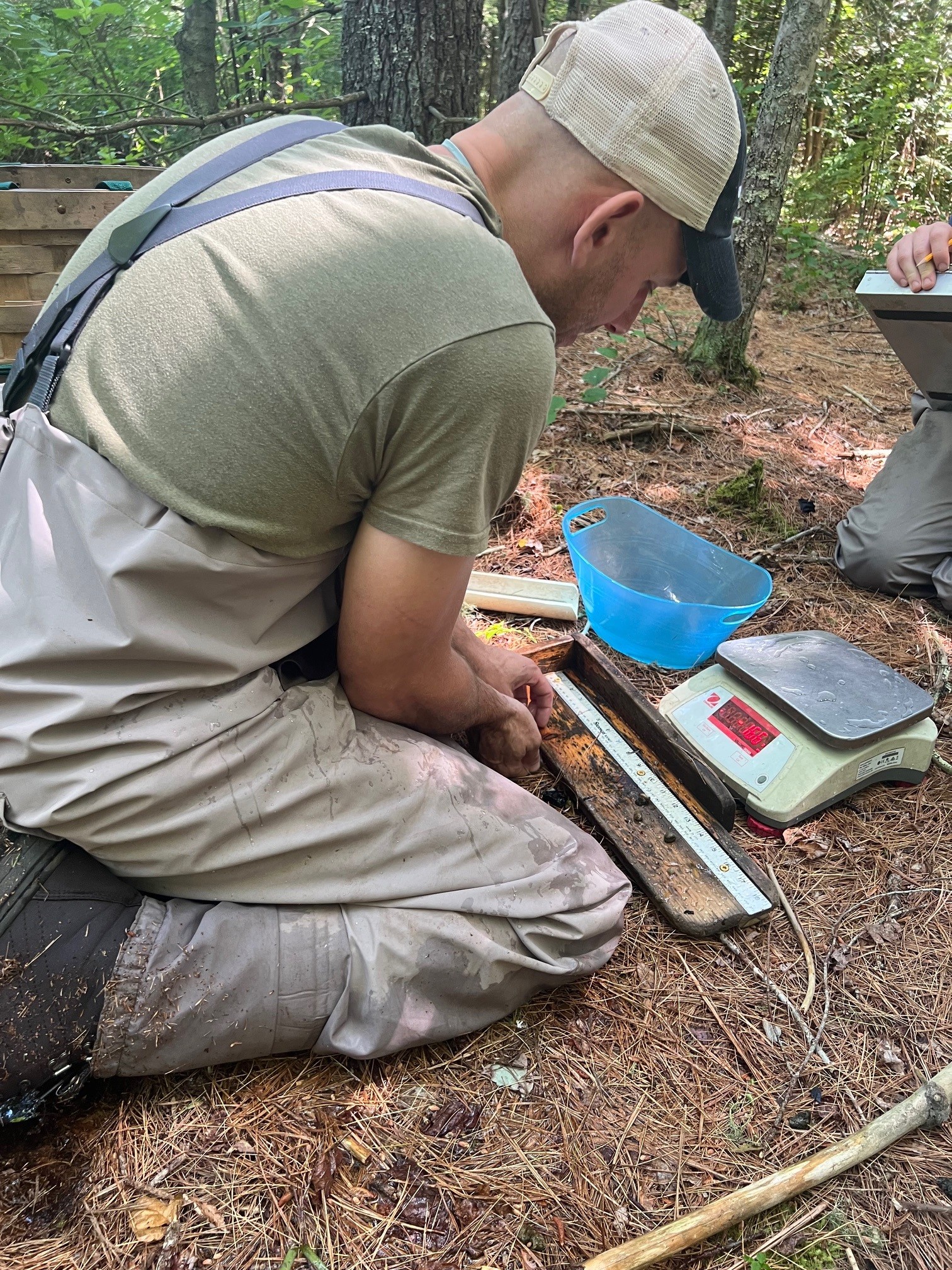
This past summer, APCC staff and partners with MassWildlife waded this river with electrofishing backpacks, nets, and data sheets, documenting a remarkably intact native fish community. Alongside brook trout, juvenile river herring, white sucker, and American eel, field surveys have confirmed the presence of American brook lamprey in the Mashpee. Seeing lamprey in the catch buckets is a powerful reminder that this river still supports species that have disappeared from many other places.
Lamprey have a life history that feels almost mythical. Most of their existence is spent as larvae, called ammocoetes—blind, worm-like juveniles that live buried in soft sand and silt, filter-feeding on tiny algae and organic matter drifting by. They can remain in this stage for several years, which means they depend on cool, clean, well-oxygenated water and stable streamflow year after year.
When they finally metamorphose into adults, brook lamprey take a very different path than their better-known relatives, the sea lamprey. Sea lamprey are anadromous and parasitic—they head to larger waters, attach to other fish with a toothed, suction-cup mouth, and feed on their hosts. American brook lamprey, by contrast, are non-parasitic and stay in freshwater. Once they transform into adults, they largely stop feeding and live off stored energy just long enough to spawn. They don’t harm other fish.
In spring, adults move onto clean gravel riffles, use those suction-cup mouths to rearrange stones and build small nests, spawn in groups, and then die. Their bodies become food for insects, fish, birds, and mammals, returning nutrients to the stream and its floodplain. It’s a quiet but important pulse of energy that helps keep the river’s food web humming.
Because brook lamprey are so closely tied to cold, clean, flowing water, they’re considered excellent indicators of stream health. Where you find them, you typically find good habitat: intact forested banks, natural flows, and a streambed that hasn’t been smothered in fine sediment. In that sense, lamprey are telling us that, despite decades of pressure, areas along the lower Mashpee River still retain much of their natural character.
As APCC and our partners continue working with the town of Mashpee, the Mashpee Wampanoag Tribe, the Cape Cod Conservation District, and the Waquoit Bay National Estuarine Research Reserve on Mashpee River restoration planning—with funding support from the NOAA Restoration Center, the USDA NRCS, and a private foundation—we’re keeping species like brook lamprey firmly in mind. Restoring a river for trout and herring also means rebuilding the hidden habitats that lamprey need: the shallow riffles, soft-sediment pockets, and cool, shaded runs that make this river a living system from the bottom up.
The next time you walk along the Mashpee River, remember that some of its most important residents are the ones you almost never see. |
Above: MassWildlife Biologist Joe Facendola prepares to take a length measurement on an American brook lamprey caught in the Mashpee River. |
Progress Towards Restoration at Chase Garden Creek Salt Marsh |
Above: A channel at Chase Garden Creek salt marsh in Yarmouth/Dennis.
|
APCC is moving into an exciting new phase of work at the Chase Garden Creek salt marsh, where we’re focused on restoring a marsh that both protects nearby communities and supports a rich web of coastal life. This multi-year effort is aimed at strengthening the resilience of the Chase Garden Creek system by assessing marsh condition, tracking environmental changes, and designing and implementing a comprehensive restoration plan. This work is made possible through generous support provided from the Lavori Sterling Foundation, the Massachusetts Bays National Estuary Partnership, and private foundation funding.
The Chase Garden Creek salt marsh system stretches across the towns of Dennis and Yarmouth on Cape Cod Bay. Over the years, community members who work and live around the marsh have noted alarming signs of degradation. Spurred by the Lavori family’s concerns about erosion, APCC set out to understand what’s driving change at Chase Garden Creek by pairing geospatial analysis with on-the-ground field data.
After three years of study, APCC is now ready to move into the design phase of restoration. This stage involves mapping out where and how to act—matching project goals and desired outcomes with the most effective restoration methods, identifying priority areas within the marsh, and establishing how success will be measured over time. It also includes working through local and state permitting to ensure the work meets all regulatory requirements.
Throughout this process, APCC has been collaborating with local, state, and federal partners and stakeholders of the Chase Garden Creek project. At our most recent meeting, APCC gathered input on where and how to prioritize design, including focusing first on the locations identified as most degraded. APCC values a collaborative approach to restoration and is grateful for the insights provided by those working to improve salt marsh health throughout Massachusetts.
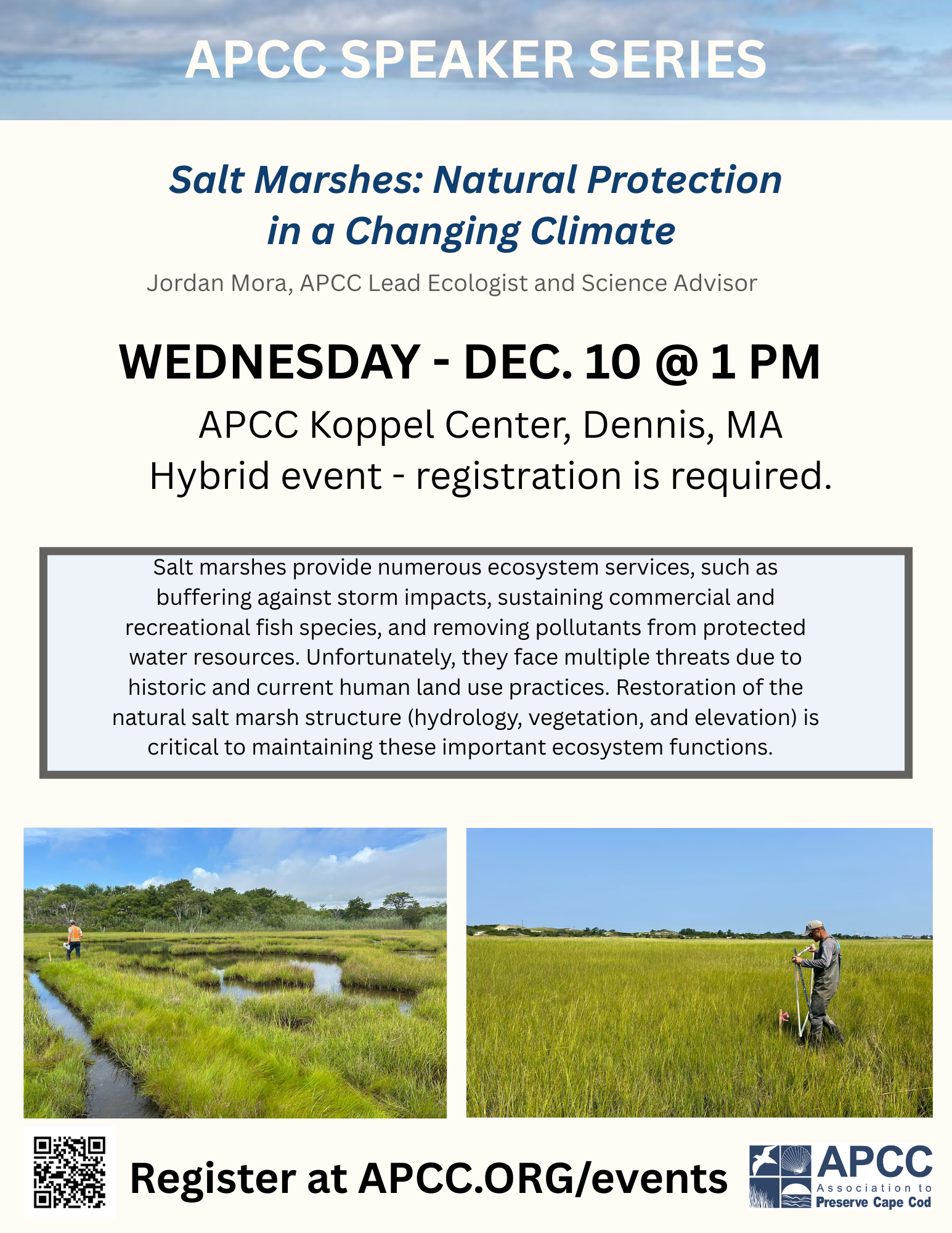
APCC will host a hybrid public presentation about the Chase Garden Creek restoration project on Wednesday, January 14th, 2026, at 1:00 p.m. More information about this presentation can be found on APCC's website on our events page. |
|
|
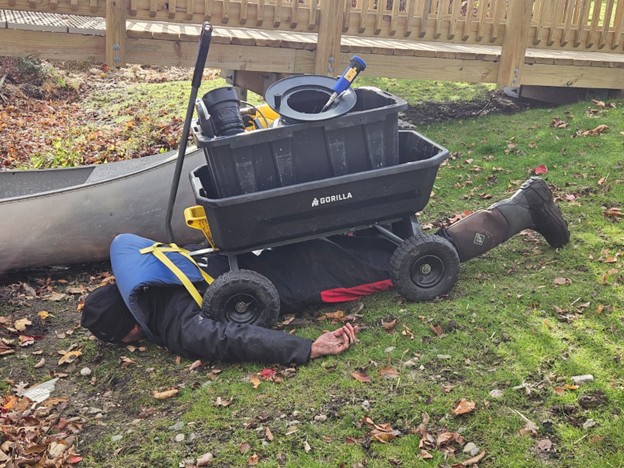
Above: Joking around...JT Percy, APCC Senior Pond Monitoring Technician, on the last day of the monitoring season; photographed—and eventually saved—by APCC volunteer, Diane Weisman. |
Thank You to Our Incredible Pond Monitoring Technicians and Volunteers
As we wrap up another successful season of the Cape Cod Regional Pond Monitoring Program, we want to take a moment to appreciate our outstanding pond monitoring technicians, JT Percy and May Lopopolo. All season long, they paddled out by canoe to the deepest point of each of the 50 ponds monitored by the program to collect essential baseline water-profile data, which you can find in the Cape Cod Commission’s Freshwater Portal. Their dedication is truly remarkable, and we are so thankful for all their hard work.
We are equally grateful for the amazing volunteers who joined them on every sampling trip. This program simply wouldn’t be possible without the time, commitment, and curiosity they all bring to the work. As we shift into data and inventory mode for the winter, we’d also like to remind everyone to continue exercising caution around local ponds, especially those walking dogs who love a quick dip. Just last week, the Cape Cod National Seashore issued a cyanobacteria advisory for Duck Pond in Wellfleet after a bloom was detected during our final sampling event of the season.
This time of year, ponds that were stratified all summer begin to turn over as cooler temperatures promote thermal mixing. When this happens, nutrients that were concentrated at the bottom of the pond can circulate through the entire water column—sometimes creating conditions that trigger cyanobacteria blooms. Please stay observant, and if you see anything concerning, send photos to cyano@apcc.org.
Wishing you all a beautiful holiday season from the Freshwater Team! |
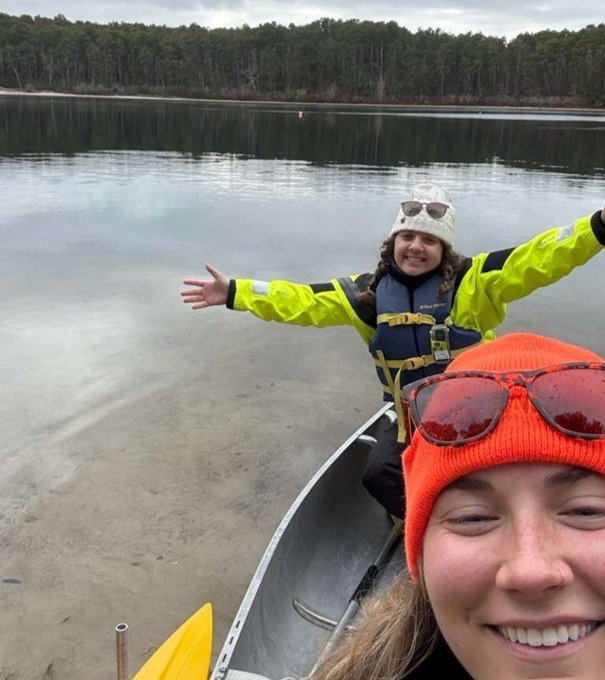
Above: APCC pond technicians, May Lopopolo and Sage Hellberg, after the last sampling event of the 2025 season. |
|
|
Cape Cod Pond Watchers Bio-survey Program
~ a training video on how to use the Survey123 app to log your observations in pondside! |
| |
|
A 2022 TEDx Talk: We're Saving the Wrong Bees! - Nick Dorian, Ecologist |
|
|
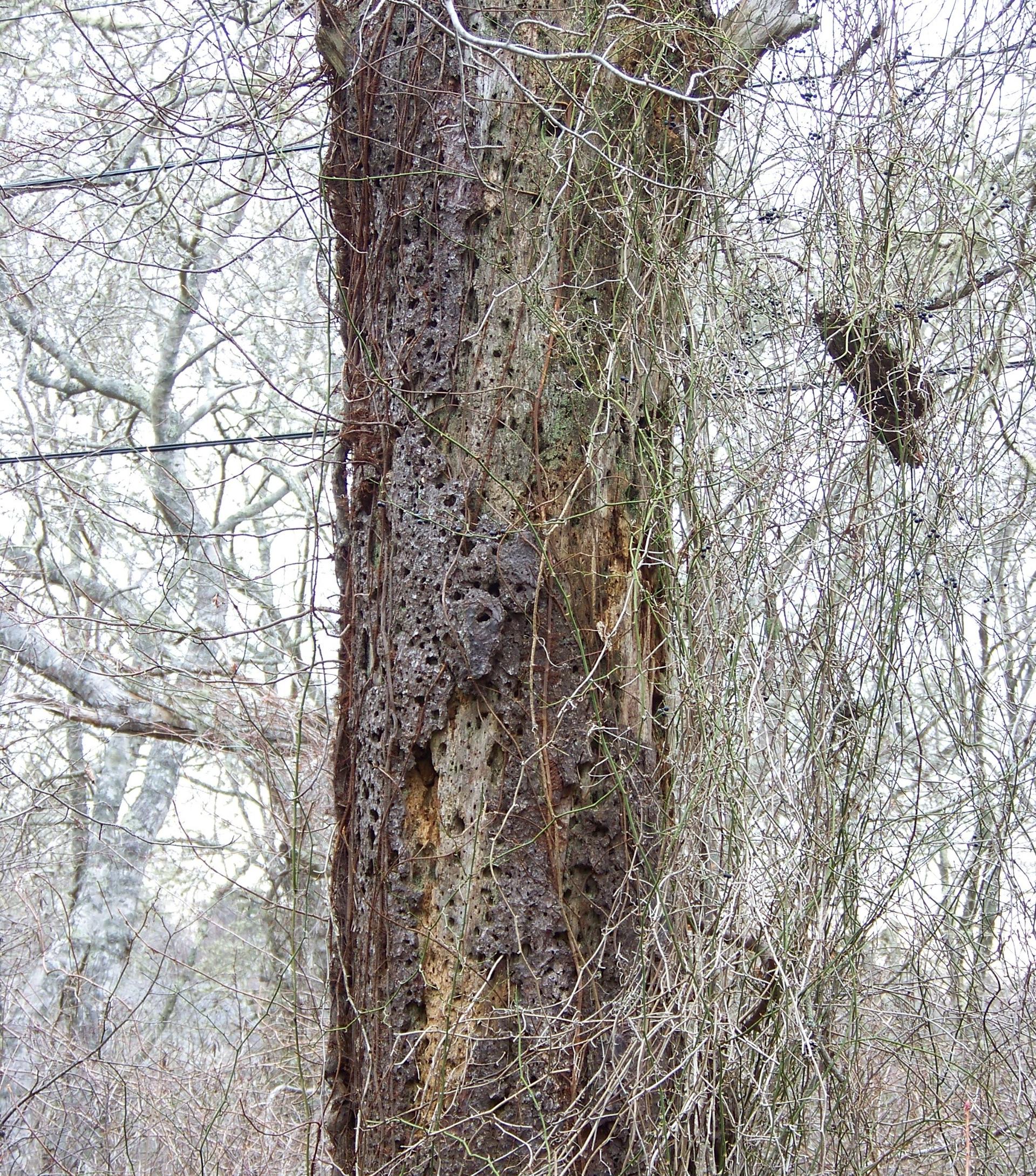
What Do You See? So much of the world around us, we may not see with full comprehension—take dead wood for starters. Most people see dead wood as something that needs to be cleaned up. Did you know that different forms of dead wood provide different wildlife services?
Standing dead trees are not an eye-sore, they are called snags, and they offer important wildlife habitat. In fact, they are also referred to as “wildlife trees” because birds, small mammals, and other wildlife use them for nesting sites, nurseries, storage areas, foraging, roosting, and perching. Woodpeckers, such as the downy woodpecker, the red-bellied woodpecker, and the yellow-shafted flicker, depend on dead trees for the insects they find there, and for shelter. Dead trees provide housing for other cavity nesters: tufted titmice, chickadees, screech owls, and wood ducks, to name a few. Hawks will assume the vantage point of a tall standing snag from which to hunt.
What we may casually see as some bare dead branches (and thinking we’d like to tidy up a bit and remove them) are really ideal perches for songbirds. Unobstructed by leaves, the dead arms of the tree provide an optimum spot for birds to sing out their territory declaration or send out a message for a mate. Hollow deadwood offers a woodpecker an acoustical advantage to announce his presence has he drums away with a rat-a-tat-tat, not only getting the attention of other woodpeckers, but perhaps you, too.
If you can leave a dead tree standing safely, do it for the wildlife. If you have a tree that needs to be cut down, consider just having it cut to the highest height that is safe—coat-rack it. Allow the trunk to remain. It’s an opportunity for native Virginia creeper to scale, which itself provides berries for birds and is a host plant for hawk moths. If it’s an oak or cherry or catalpa or willow, it may re-sprout with a flush of leaves in the spring that will support insects that are essential baby food for nesting birds.
The standing trunk, however tall you allow it to remain, may begin to decay and that means it’s providing habitat for many species of beetles, ants, and other decomposers that rely on dead wood for their life cycles, referred to as saproxylic organisms. They provide valuable biodiversity in a forest, and much like the absence of milkweed (the host plant for monarch butterflies) means there will be no new monarch butterflies, if dead wood is depleted in the landscape, saproxylic organisms cease to exist. And we need to retain these waste recyclers for nature to function.
|
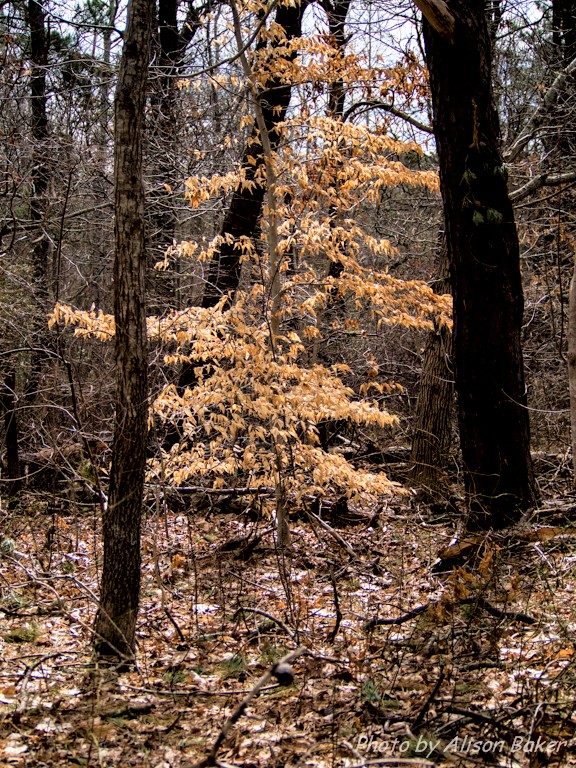
About now, all the leaves are gone from the deciduous trees. Well, almost. Some still persist. In the pine-oak forest, you may spy a ten-foot tree, seemingly all by itself, still in full leaf garb, albeit brown leaves. This is an American beech. Others still have brown leaves, too—the oaks, particularly the younger oaks and the lower branches. Have you ever noticed? When plants hold onto their dead brown leaves through the winter, it’s a phenomenon known as marcescence (pronounced mar-SES-sense).
This is certainly not without a purpose, although we don’t fully know what the reason is! Scientists have some ideas: It may be a way to deter deer from browsing (the leaves get in the way). Another theory is that by dropping leaves in the spring, the leaves provide nature’s mulch to hold in soil moisture and a new layer of leaf decomposition and returning nutrients to the soil. Have any theories of your own? We may not know why this occurs, but for certain, there’s a strategy.
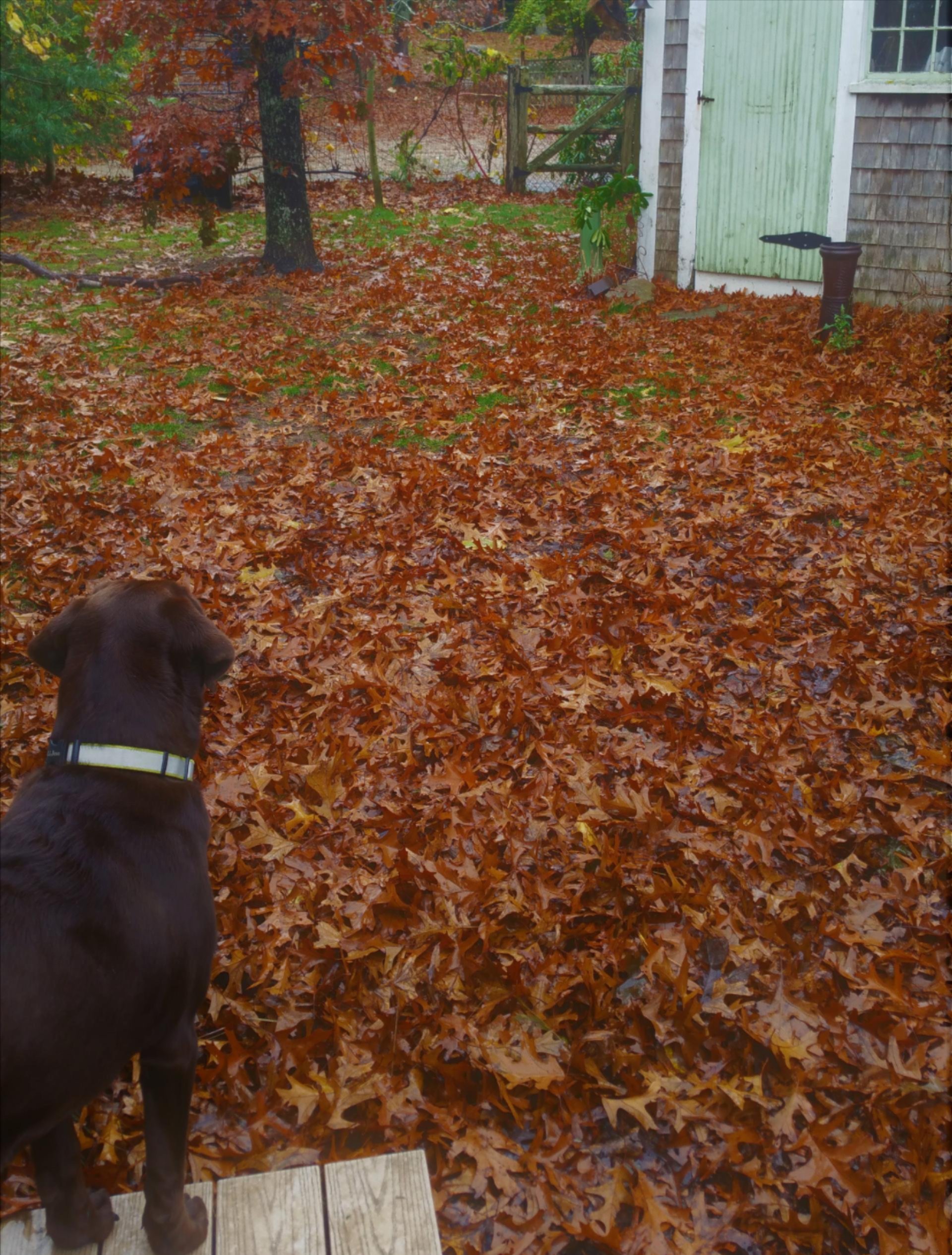
And what about those leaves that have fallen? They should not be viewed as a nuisance in our landscapes; they are nature’s winter blanket—meant to protect the soil and its organisms, plant roots, wintering bumble bees, mourning cloak butterflies, the pupa of luna moths, box turtles, salamanders, and so, so many more creatures against harsh cold temperatures. |
While the life has gone out of the photosynthesizing solar panels that are leaves, the lignin in them feeds soil organisms that help nutrients return to the soil and feed plants in the next growing season. Fallen leaves are nature’s mulch that help rainwater soak slowly into the ground and help moderate the soil’s moisture content. Leaves provide nesting material for squirrels and ground nesting birds. Leaves are not refuse—they are an important part of nature’s well-designed cycle of life.
Therefore, leave the leaves where you can—don’t dispose of them. Rake them into your garden beds, under the trees. Compost those you want to keep off your lawn area in a simple corral made of chicken wire and a few stakes. Leaf compost is sought-after garden gold! In less than a year they can be turned back onto the garden beds. And leave the pine needles; they are leaves, too.
In the forest, fallen trees are a haven for carpenter bees, different beetles, the larvae of craneflies and hover flies, tiny springtails, and others. When a tree is blown over, called a windthrow, its uptilted root ball can be the perfect new shelter for skunk or fox. As it decays, being broken down by fungi and bacteria, nutrients are returned to the forest ecosystem. Mosses and young tree seedlings find nutrients in the rich humus that the dead tree provides, earning it the name “nurse log.”
While we don't always see with an all-knowing eye, without doubt, we should acknowledge and be mindful that there are fine-tuned cycles of death and life that drive the natural world we live in. |
The above article by Kristin Andres, APCC education director, appeared in the Cape Cod Chronicle. |
|
|
A Cape-wide Conservation Event Calendar |
The Compact of Cape Cod Conservation Trusts (“the Compact”) and its nonprofit members launched a new regional calendar of events. The Conservation Calendar includes programs across Cape Cod hosted by these groups. The goal of the calendar is to encourage visitors and residents to take part in nature and environmental events. You can always find the link to the calendar on APCC's website under News & Events.
|
If you are a farmer or someone who wants to grow native plants to sell, or just want to be updated on the program's development, please submit an interest form that appears on our webpage. We will be sending periodic email notices of workshops and meetings.
Funding for the project is provided by Barnstable County and its Economic Development Council License Plate Grant Program through the Cape Cod Commission and the Kelley Foundation. |
Two talks for prospective growers as part of the Cape Cod Native Plant Growers' Cooperative program have been presented thus far, with several scheduled in the upcoming weeks. Past workshops can be viewed here:
Registration for upcoming talks can be found on our events page. |
|
|
A Cape Cod Native Plant-selector
~ to help you choose the perfect native plants for your garden. |
|
|
Email kandres@apcc.org and we'll send you a CapeCodNativePlants.org decal. |
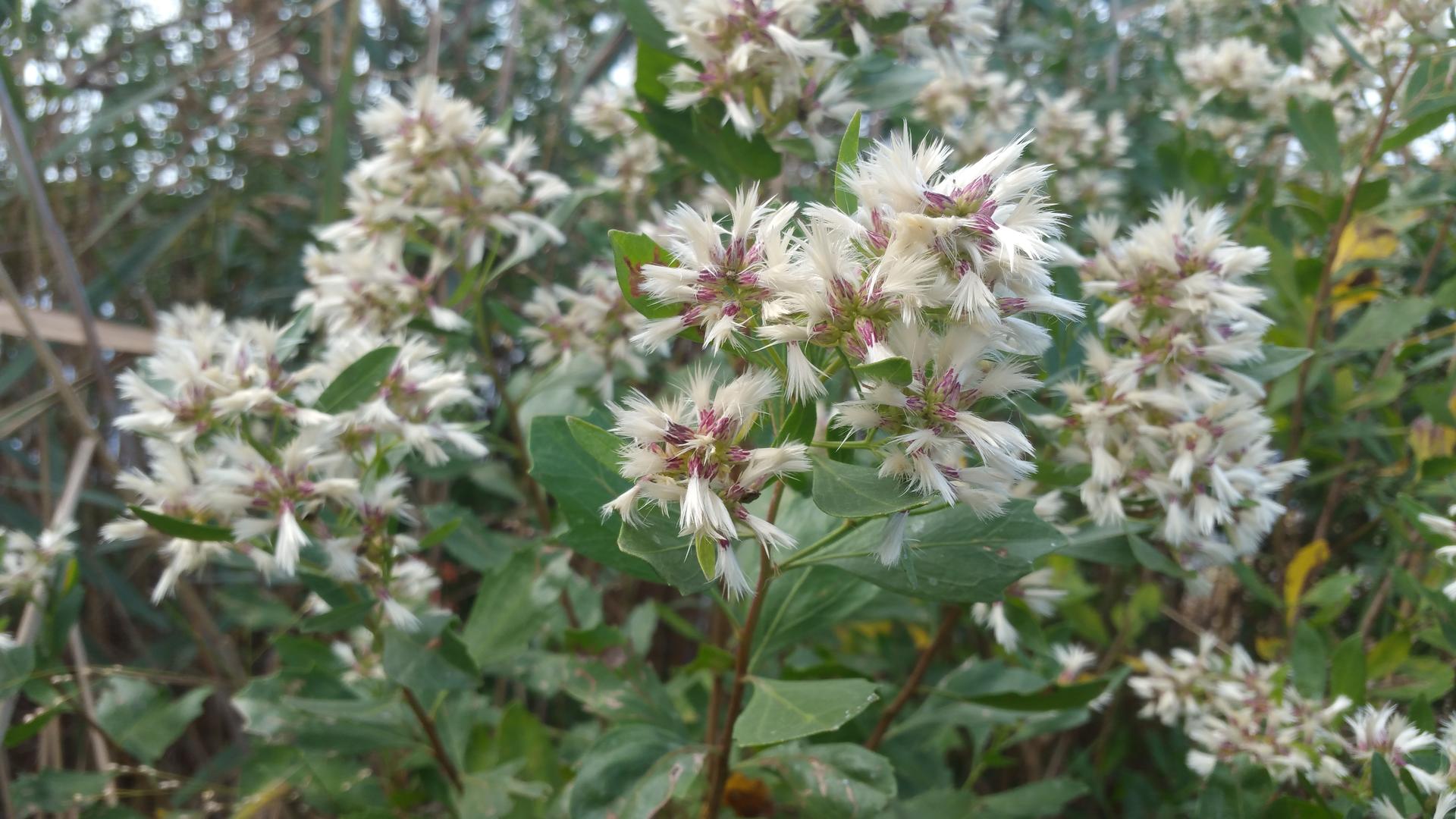
| Groundsel Bush Baccharis halimifolia |
|
|
|
The Guidelines gives homeowners steps they can take in the design and maintenance of their properties that will support pollinators and birds, manage stormwater, conserve water, and protect the Cape's water quality. This 40-page booklet is beautifully illustrated by Marcy Ford with content that is easily digestible and supported by numerous resources for additional learning.
| |
|
We are grateful for the several retail shops that are partnering with us to make this publication more widely available: Brewster Book Store, Birdwatchers General Store, Crocker Nurseries, Wellfleet Audubon Wildlife Sanctuary, Cape Abilities Farm, Cape Cod Museum of Natural History, the Cape Cod Lavender Farm, Heritage Museums and Gardens, Titcomb's Bookshop, Sea Howl Bookshop, Soares Flower Garden Nursery, and Eight Cousins Bookshop.
If you are a retailer and would like to sell this publication at your store, please contact us. |
|
|
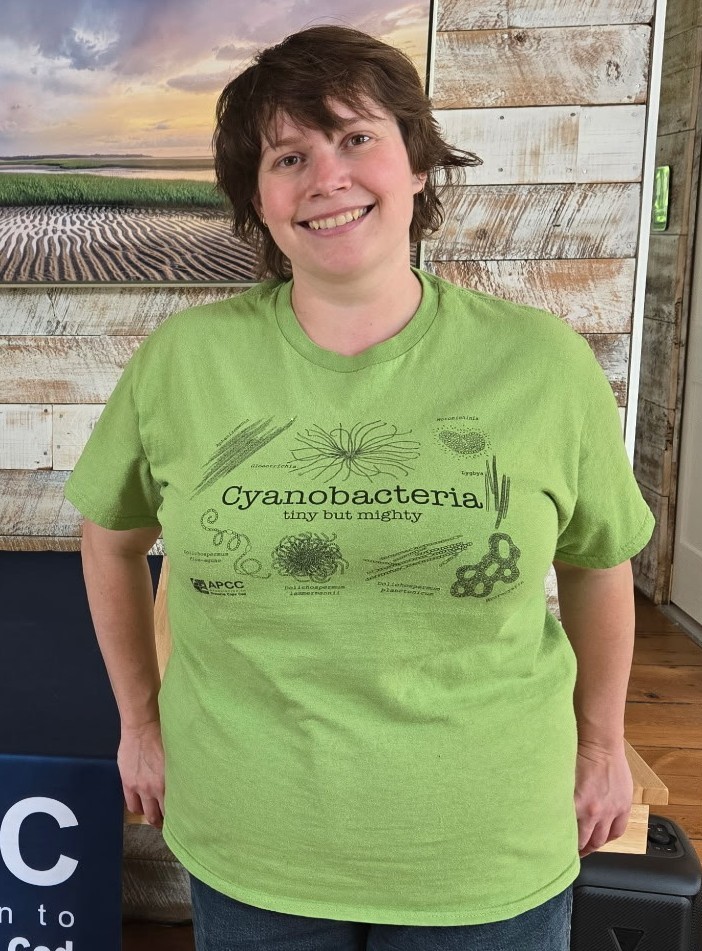
| Cyanobacteria ~ tiny but mighty
color kiwi $30 includes USPS shipping |
|
|
APCC caps
$25 -includes USPS deliver in the U.S. |
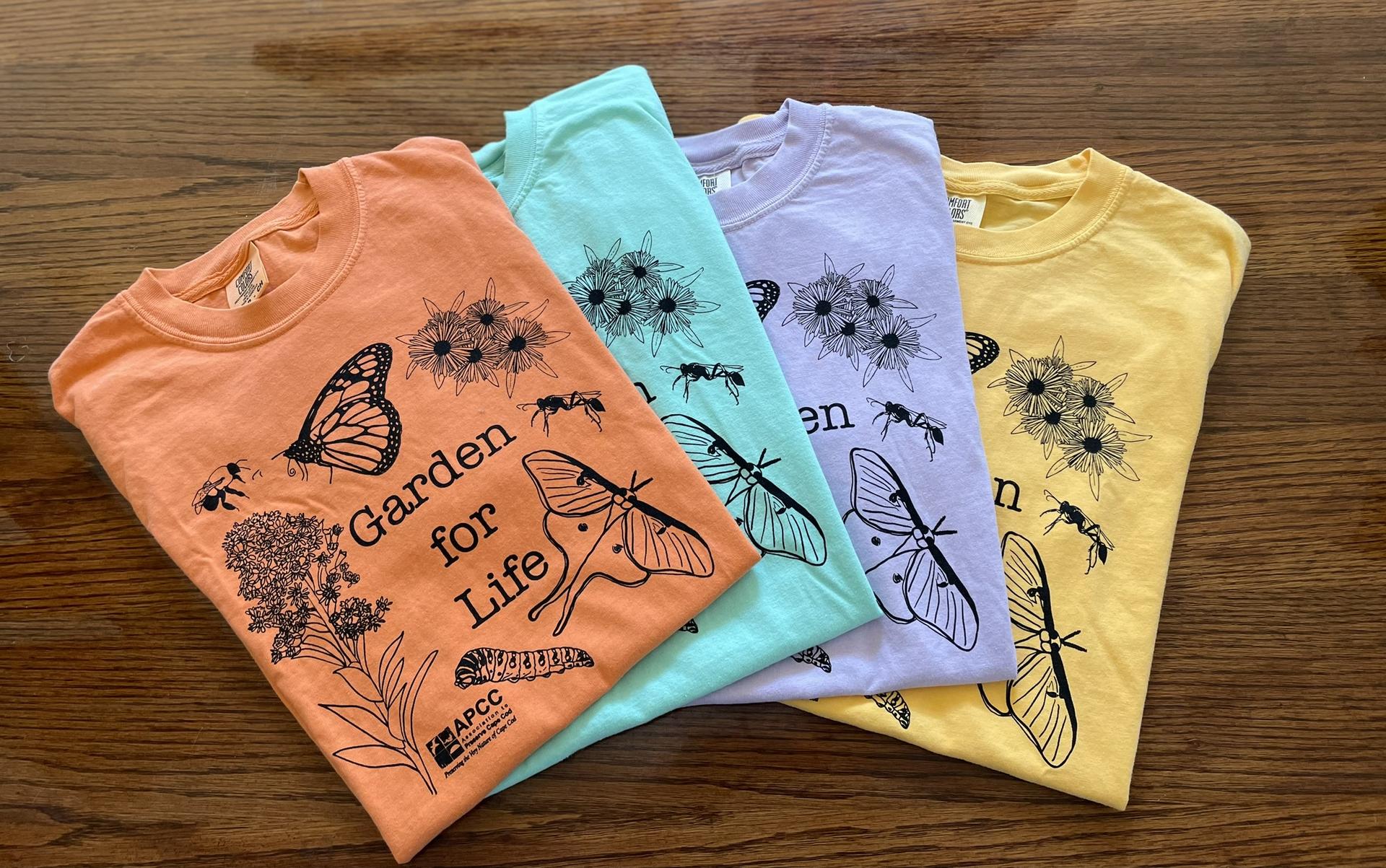
| Garden for Life T's $30 -includes USPS delivery in U.S. |
|
|
|
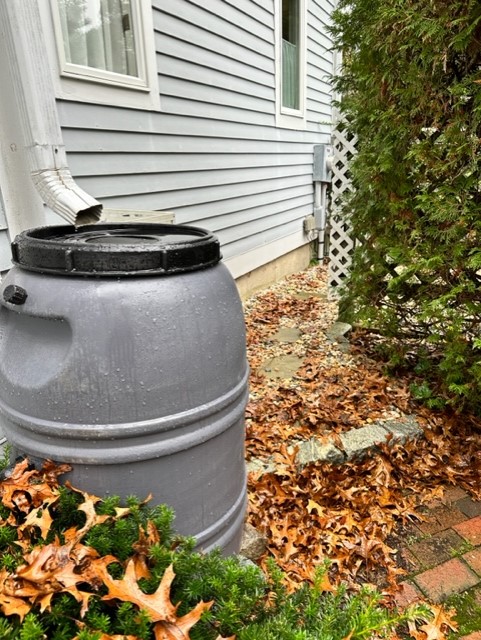
Rain Barrels for Cape Cod
Order online from Upcycle Products $122 each includes shipping to your door APCC receives a portion of the proceeds.
These are 55 gallon, repurposed food barrels. For more information, click here. |
|
|
| APCC eNewsletters.
Our weekly newsletters are archived on our website and easily shared.
You can find past newsletters and share with your friends. Encourage others to sign up for future enewsletters HERE.
|
|
|
Are you thinking of going solar? We hope so!
In partnership with E2 SOLAR in Dennis, APCC receives $500 for every solar installation when APCC is named as referral. |
|
|
|
Thank you to the homeowners who just contracted to install solar panels through E2 Solar. May the sun always shine for you! |
|
|
Expressions Gallery, 578 Main Street, Chatham
CLICK HERE |
Expressions Gallery donates 20 percent of its profits to APCC's work. |
|
|
Thank you to our business sponsors! |
|
|
APCC is rated four stars by Charity Navigator,
2025 Platinum by Candid (formerly Guidestar), and 2024 Top-Rated by GreatNonprofits. |
|
|
Our Contact Information
*{{Organization Name}}*
*{{Organization Address}}*
*{{Organization Phone}}*
*{{Organization Website}}*
*{{Unsubscribe}}* |
| |
|
|