Association to Preserve Cape Cod |
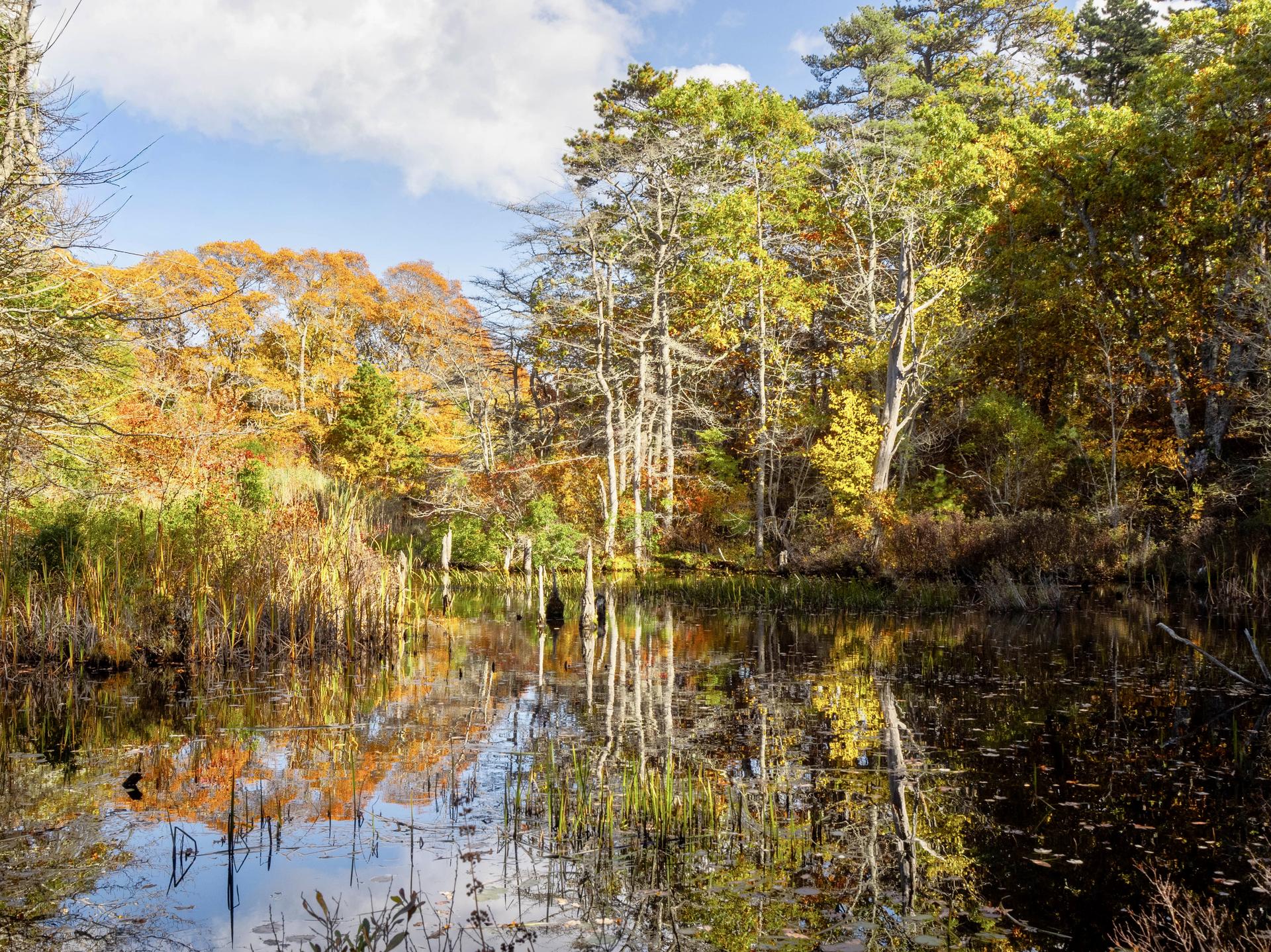
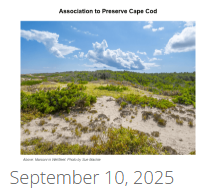
Above: Fresh Brook, Wellfleet. Photo by Sue Machie |
|
|
APCC Ecosystem Restoration Program |
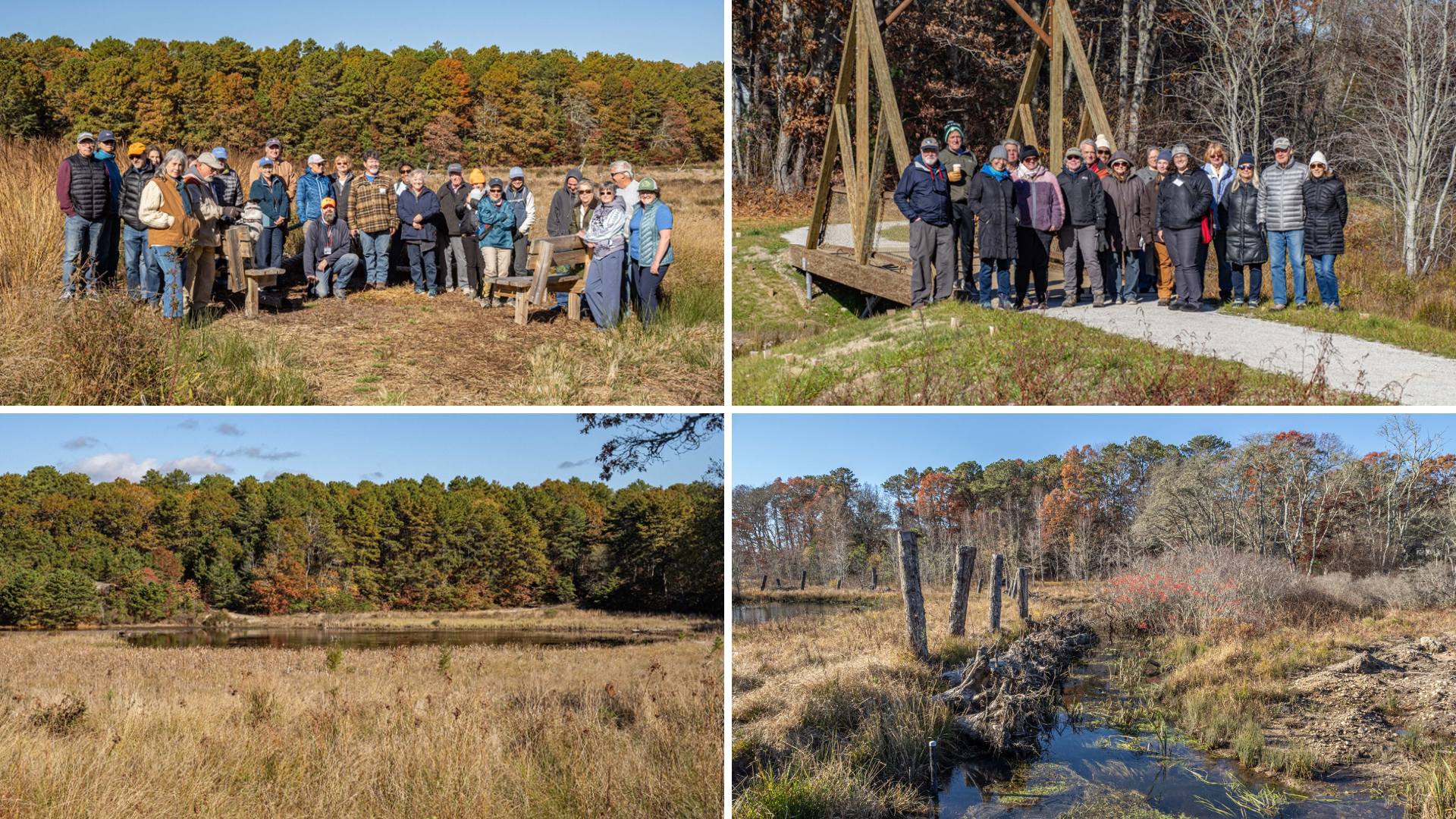
Above: Tour participants pause for group photos at the Childs River (top left) and Upper Coonamessett (top right). At the former Farley Bog along the Childs River, what was once a fallow cranberry bog is now an open-water wetland supporting a broad diversity of native vegetation and wildlife (bottom left). Newly restored channel on the Upper Coonamessett River, where anchored root wads and stabilizing stumps are built into the banks to protect against erosion and create shelter for fish and other aquatic life (bottom right). Photo credit: Gerald Beetham
|
From Bogs to Rivers: Source to Sea Fall Restoration Walks
On two chilly, sunlit mornings this fall, community members joined guided walks through the Childs River and Upper Coonamessett River restoration projects. The tours were organized and led by APCC staff as part of our Source to Sea community outreach, supported by NOAA Restoration Center awards. Community engagement is being coordinated in partnership with the Waquoit Bay National Estuarine Research Reserve. Together, these walks offered a close-up look at how retired cranberry bogs are being reshaped into living rivers.
The first tour, led by A.D. Colburn of the Falmouth Rod and Gun Club, followed the restored Childs River corridor. With frost in the shade and bright sun on the sand roads, the group walked from the old impoundment to one of the former bogs, stopping where a straight, engineered channel has been replaced by a sinuous cold-water stream. Leaders described how decades of cranberry farming flattened the floodplain, simplified habitat, and warmed the water—and how excavation, re-grading, and re-planting are helping to reverse those impacts.
At several stops, the group compared “before and after” conditions: boxy ditches versus today’s meandering channel; straight berms versus a low floodplain where the river can now spread during high flows. Participants heard about the river’s growing importance for native fish and wildlife, including brook trout, and how improving habitat in this reach benefits the broader watershed and coastal waters downstream. New open-water wetlands now support waterfowl and other aquatic life.
A second tour along the Upper Coonamessett River, led by Betsy Gladfelter from the town of Falmouth, offered a complementary view. On another crisp morning, participants walked the new ADA accessible trail system and bridges, seeing newly created ponds, reconnected side channels connecting to cold groundwater springs, and broad wetland areas designed to store floodwaters and support a diversity of plants and animals. While the Coonamessett restoration shares many design principles with the Childs, the walk highlighted how each site responds differently based on its geology, land-use history, and connection to surrounding neighborhoods.
Tour leaders explained how removing old agricultural infrastructure and undersized crossings has allowed the river’s natural hydrology to return—water can now spread into the floodplain, reconnect with wetlands, and move more freely through the former bogs. These changes help reduce flooding risks, improve water quality, and create more resilient conditions in the face of heavier rains and warming temperatures. Questions from participants focused on project funding, how quickly vegetation establishes, and the monitoring underway to track changes in fish use and water quality.
Both tours underscored a common theme: Once a bog is retired, there is an opportunity to give it new life and new purpose. The Childs and Coonamessett projects show that we can move beyond simply abandoning old infrastructure and abandoned cranberry bogs, and instead actively rebuild river systems—re-creating meanders, reconnecting floodplains, and restoring wetlands that filter runoff, store carbon, and provide habitat. That message came through not just in the words of the guides, but in the sights and sounds around the group: clear moving water, textured banks, and a landscape shifting back toward something wilder and more resilient.
The hikes also highlighted the partnerships that make this work possible, including the leadership and long-term commitment needed to plan, design, and implement restoration projects of this scale—and to provide ongoing stewardship once construction is complete.
Thank you to everyone who joined us on these walks, and to our partners at the Falmouth Rod and Gun Club, the town of Falmouth, and WBNERR for leading tours and answering questions. For those who couldn’t make it, both sites remain open to the public—good destinations for a walk to see how retired cranberry bogs are being transformed, one bend and one wetland at a time. |
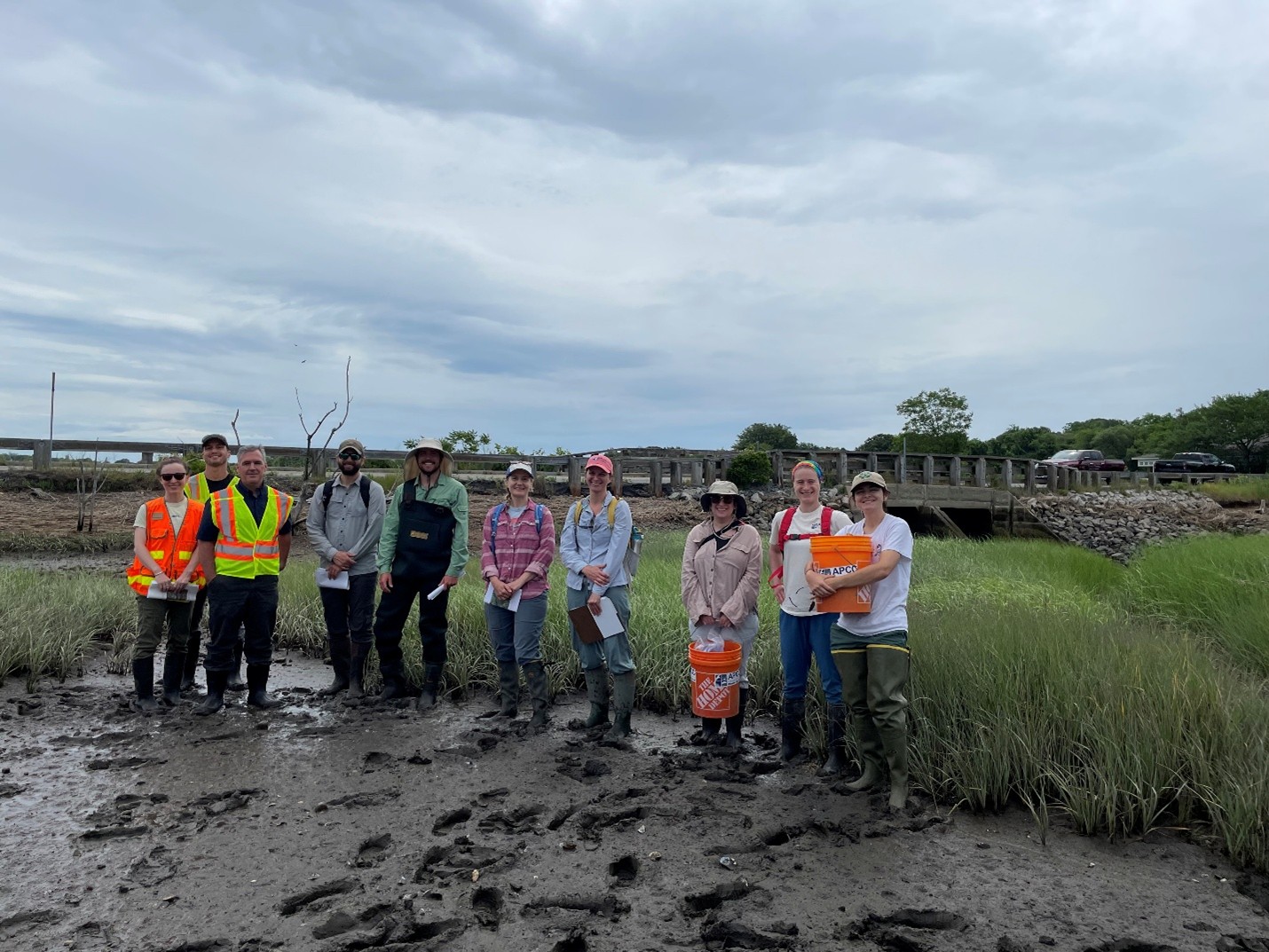
Above: From left to right: Mary Schoell (Woods Hole Group, Inc.), Alex Carbone (WHG), Tom Andrade (town of Dennis), Adam Finkle (WHG), Patrick Temple (Cape Cod Conservation District), Cristina Kennedy (MA Department of Ecological Restoration), Jordan Mora (APCC lead ecologist and science advisor), Julia L’Esperance (APCC volunteer), Molly Autery (APCC salt marsh specialist), and Nora Bowie (APCC intern) in the Sesuit Creek salt marsh. |
Progress Towards Restoration Planting at Sesuit Creek Salt Marsh
APCC, consultants at Woods Hole Group, and project partners, including the Cape Cod Conservation District, town of Dennis, and the Massachusetts Department of Ecological Restoration, continue to work towards additional restoration plantings at Sesuit Creek salt marsh. This work builds on the experimental planting plots established by APCC in 2018 to support marsh platform recovery and spur vegetation growth following culvert replacement in 2008.
Using several years of monitoring data collected by APCC and partners—along with recent elevation and topographic assessments—Woods Hole Group, Inc. has developed a comprehensive planting plan for the marsh. The plan calls for strategically planting plugs of Spartina alterniflora in select bare patches to encourage vegetation growth. As vegetation becomes established, it will help stabilize marsh peat with an extensive root network, trap sediment carried in by the tides, and strengthen this important habitat for fish, birds, and other wildlife.
With a design now in place, the project team is preparing to enter the permitting phase. This next step includes coordinating with nearby landowners and preparing detailed documents describing how and where planting will occur at Sesuit Creek.
APCC is pleased to be working closely with Woods Hole Group, the town of Dennis, and other partners to enhance salt marsh resiliency at Sesuit Creek. This project is funded by a private foundation, the MassBays National Estuary Partnership, and the Massachusetts Division of Ecological Restoration. |
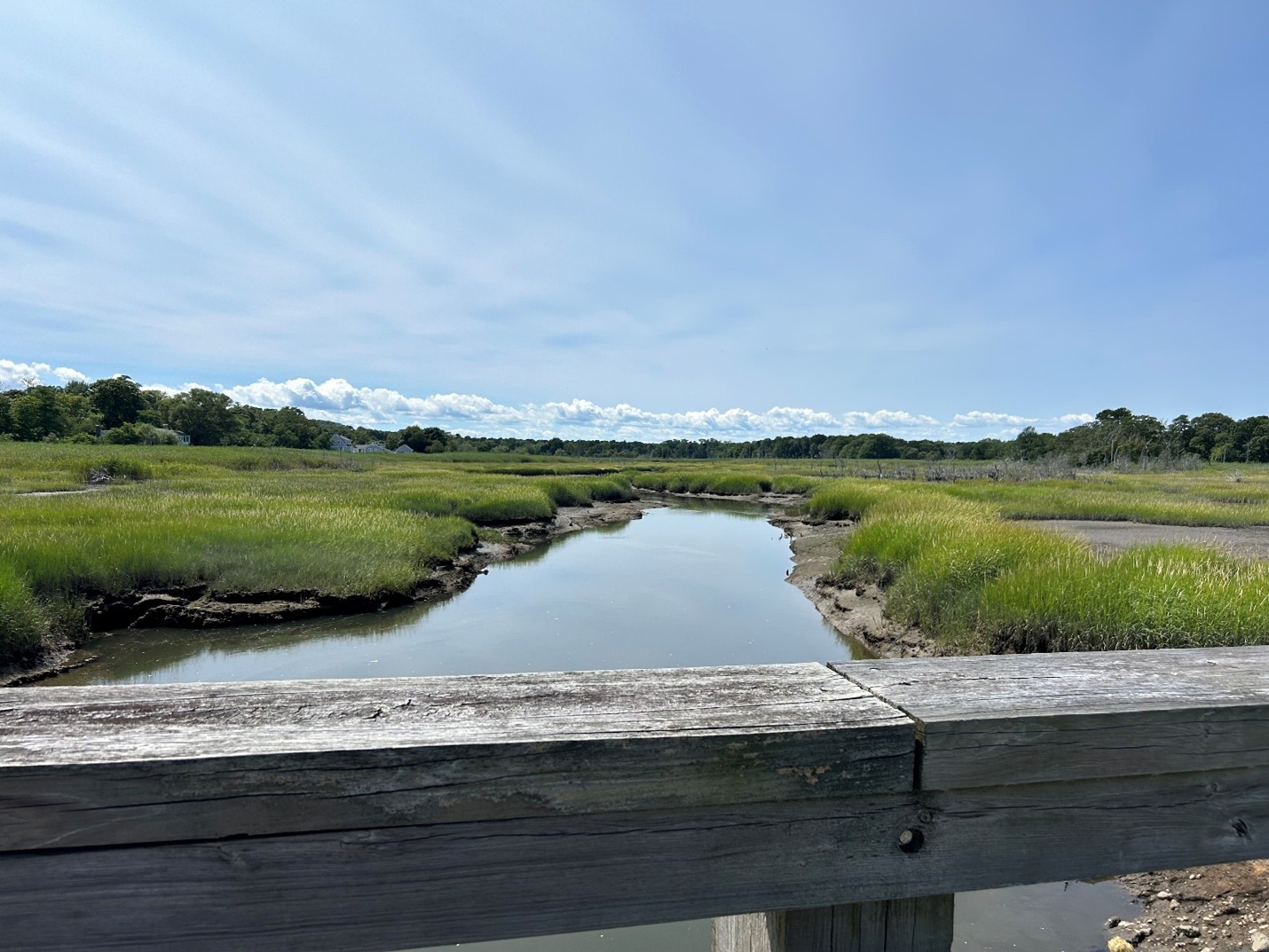
Above: Looking at the upstream section of Sesuit Creek salt marsh from Bridge Street in Dennis. While bare areas remain at Sesuit Creek, APCC staff have observed significant revegetation since 2018 and are hopeful that this next round of restoration planting will support further vegetation growth. |
|
|
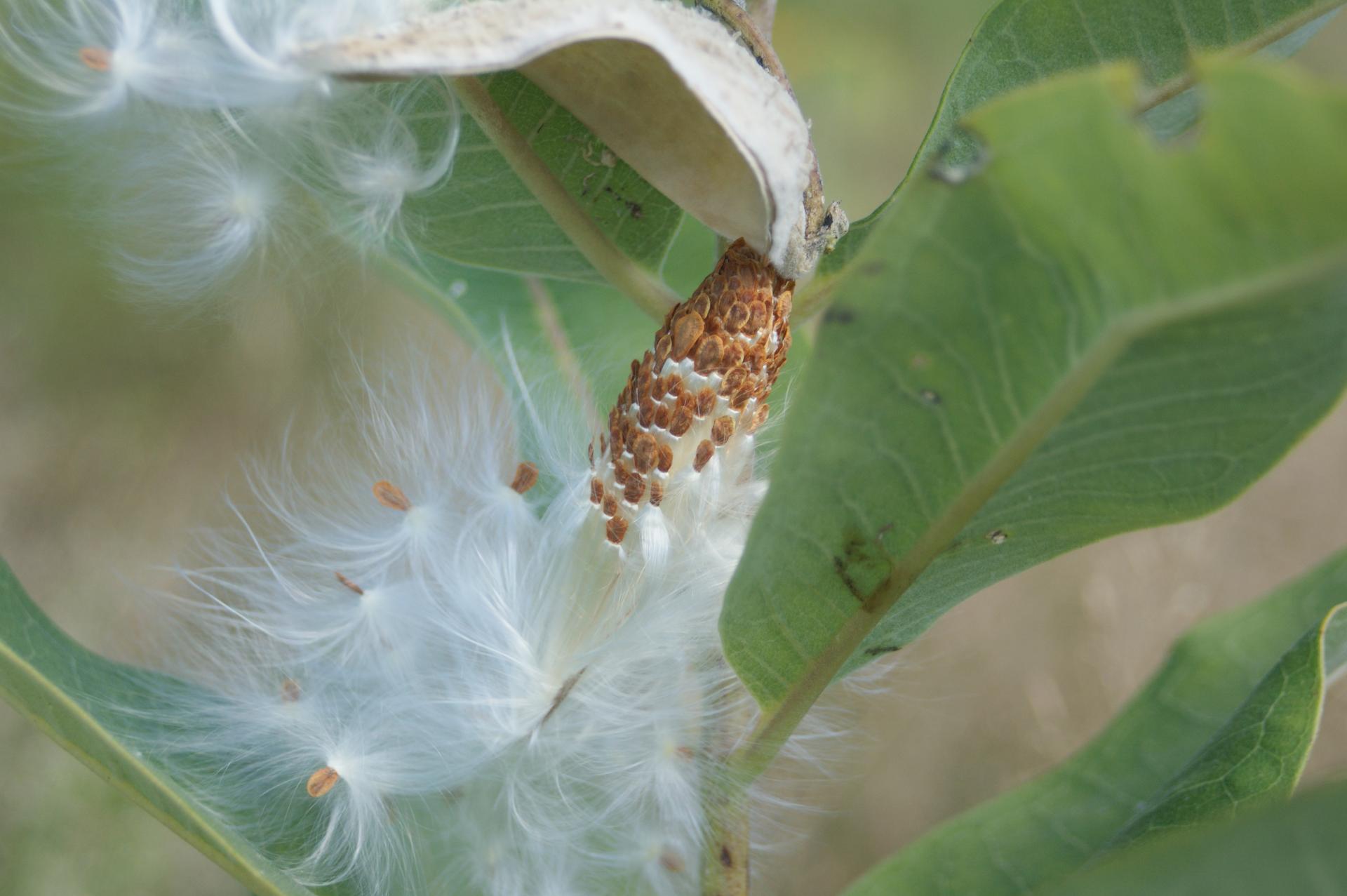
Above: Common milkweed, Asclepias syriaca |
|
|
Almost all plants reproduce by seed. Plants employ various methods of dispersing their seeds. Moving the seeds to another location is necessary to give the new seedlings a good start where they will not compete with the parent plant. A seed must find adequate site conditions specific to the species, such as soil type, moisture regime and sunlight to ensure success of the next generation. The dispersal strategy may include wind or water. A seed may travel on the fur of an animal or may be eaten and moved to a new location before it is passed out of the gut of the bird or other wildlife. As one delves into the world of plants, there’s a seemingly elaborate calculation of factors and conditions that went into the evolutionary design and dispersal of seeds.
Seeds carried by the wind are lightweight and in the case of milkweed and dandelions, are outfitted with parachute-like attachments often called silk, coma, or floss. Female cottonwood poplars disperse their seed with a fluff called cotton that helps the seeds get carried away from the mother tree. In open landscapes like our coastal dunes, some seeds are easily blown and tumble freely to their germination destination.
For some plants that live along the water’s edge or within the water, it is the water that is responsible for moving their seeds. The buoyant rose hips of rugosa rose, whose native origin is China, have become naturalized thanks to water carrying them to another place along the coastal shoreline. The fluff of cattails imbedded with seeds float along the water’s surface until they reach a distant shoreline where they eventually sink into the wet substrate that they need to sprout. The seeds of pickerel weed, the emergent purple flowering spike on a pond edge, will gently flutter to the bottom of its watery habitat. The seeds of button bush, a shrub commonly found at a pond edge, float across the water to where, with luck, will end up in a suitable place to grow and alternatively might get picked up and transported in the feathers of a duck!
There are many terrestrial plant seeds with hooks, barbs, spines, or stiff hairs designed to stick to an animal’s fur and even our clothing to hitch a ride to distant places. George de Mestral was inspired by nature’s ingenious engineering when looking closely at burrs that stuck to his dog’s fur. The hook and loop design led him to invent Velcro. Seed dispersal can be explosive! When ripe and when pods dry, the capsules become unhinged and snap open and twist out of shape, projecting the seeds away from the mother plant. This is true of the native partridge pea, touch-me-nots or jewelweed, lupines, and witch hazel. Can you think of others? Seeds within fruit are meant to be eaten and deposited elsewhere after passing through the digestive system of animals. The stomach juices help soften the seeds protective coating and when expelled in the scat, are supplied with a dose of immediate fertilizer. Seeds dispersed by this means are taken to otherwise inaccessible areas of some distance. |
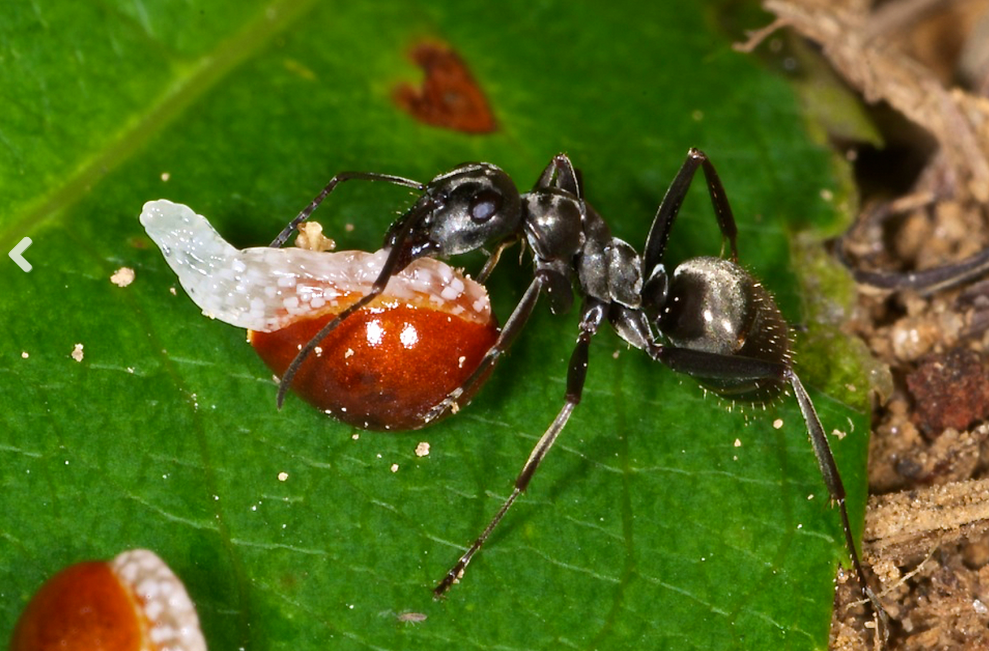
Above: Ant, bloodroot seed with eliaosome. Photo by Claudia Thompson, founder of Grow Native Massachusetts |
Other seeds offer incentives. Ants are attracted to the seeds of violets, bloodroot, and celandine poppy because of a tasty piece of fatty substance called an elaiosome that is attached to the seed. Ants carry off the seeds to their nests where the fatty treat is fed to the young and then the seed is disposed of in the ants’ garbage heap, below the soil surface and full of nutrients. A perfect place for germination.
Seeds can sleep for years. Our soils are amazing seed banks–years of seeds from plants long gone by, just waiting for an opportunity to grow. This was demonstrated in a project restoring the Coonamessett River in Falmouth. The river had been altered for cranberry bogs more than a century ago and had received annual applications of sand to keep the weeds down. Restoration included heavy equipment and the removal of the sand and excavation to reform the river channel to bring back the river’s natural flow. One would intuitively think that 39 plus acre ecosystem would require massive amounts of restorative planting. But Mother Nature brought her own contribution to the restoration project—an abundance of native plant species that came to life on their own when given back the habitat that favored them decades before.
You can visit the Coonamessett River; it has public spaces with trails and informative signage. In Harwich, you can visit the Hinckleys Pond–Herring River Headwaters Preserve—a similar restoration project recently completed.
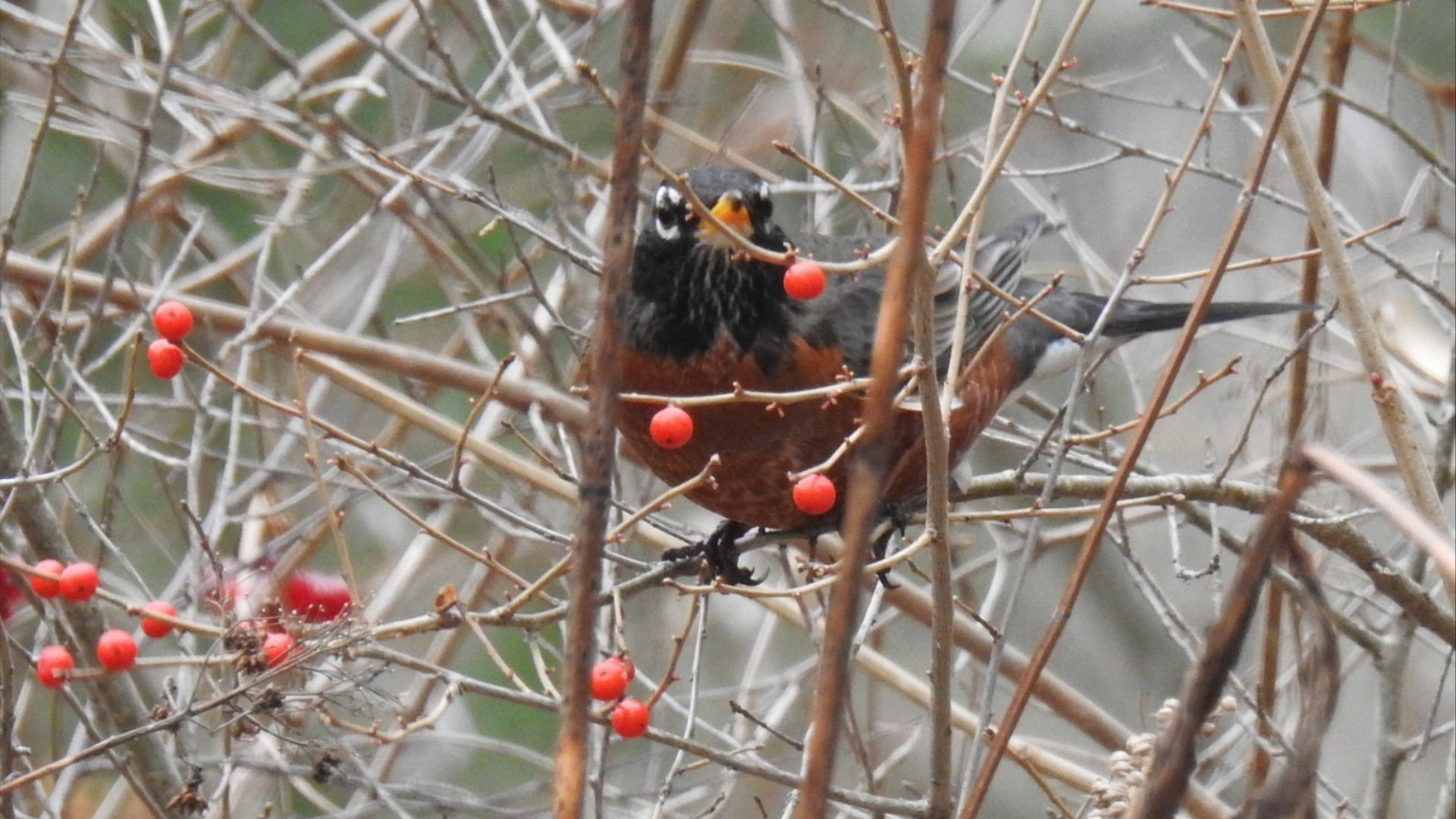
The seeds of native plants are an important food source for birds. Goldfinches gorge themselves on seeds of evening primrose and seeds still held in dead blossoms of black-eyed Susan. Robins will be cleaning off the red berries of the native winterberry holly later this winter. Juniper berries (cones) will feed flocks of cedar waxwings and bluebirds. Birds are nourished by the seeds and the fruit. The seeds contained within the fruit will be distributed to ensure there will be more of these plants somewhere, that will continue to sustain bird generations to come.
What seeds do you have in your yard? If they are native species, don’t deadhead and toss. Instead, leave them to self-sow, leave them for hungry birds, and for winter garden interest. There’s life in those seeds. ©This article by Kristin Andres, APCC's education director, appeared in The Cape Cod Chronicle |
Above: Robin in winterberry. Photo by Anca Vlasopolos
|
|
|
Species Spotlight: Zooplankton |
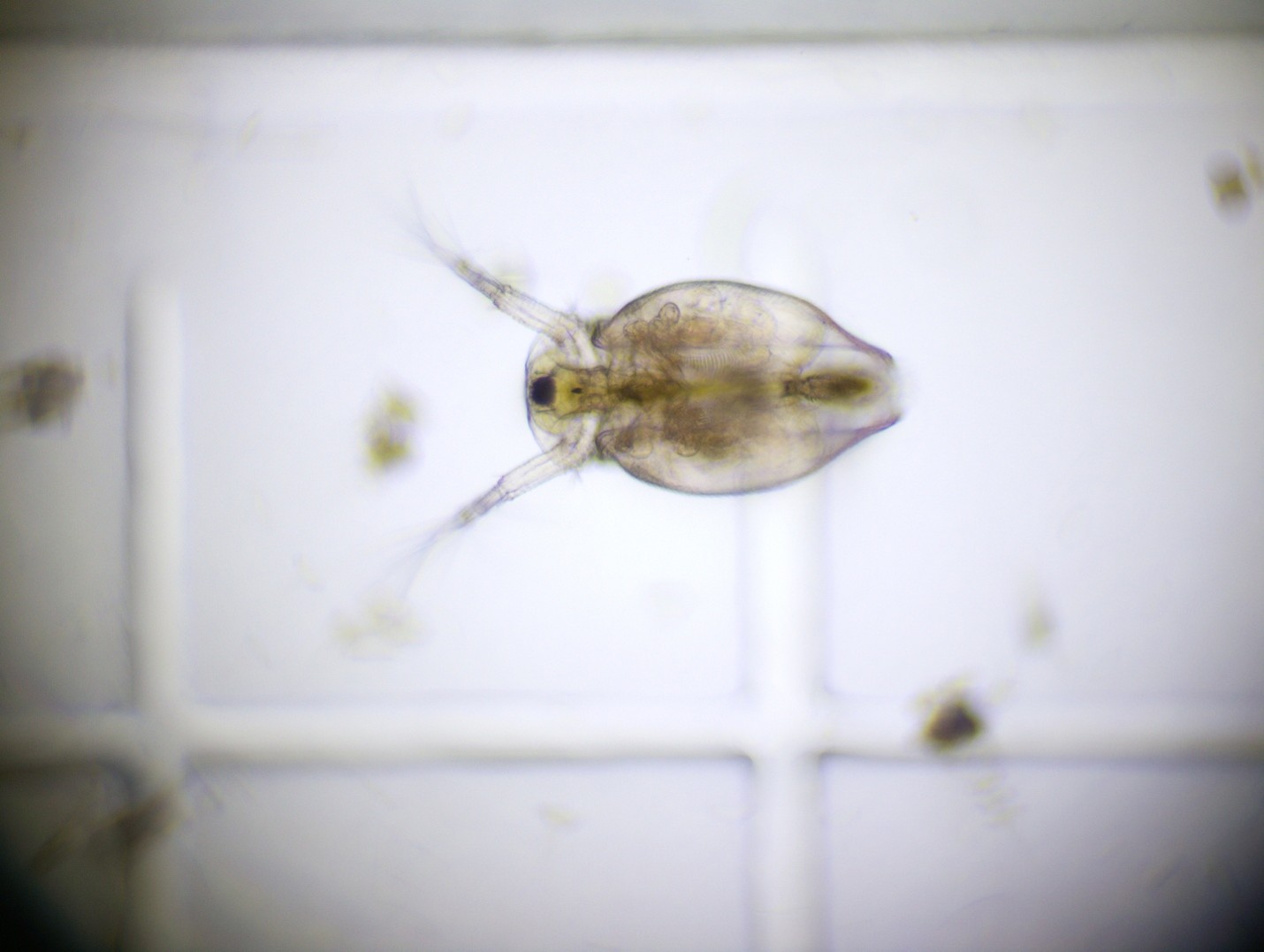
Above: Daphnia observed in water sample collected at Shankpainter Pond, Provincetown, 6.26.25 |
As we transition into winter on Cape Cod, cooling water temperatures trigger notable changes in the zooplankton communities that inhabit our freshwater ponds. Common groups, such as copepods, cladocerans like Daphnia, and various rotifers, slow their growth and reproduction as daylight decreases. Many species prepare for the colder months by producing hardy resting eggs that settle into pond sediments, while others move into deeper, more stable water layers and enter a low-activity state. With reduced sunlight and lower phytoplankton levels, overall zooplankton abundance typically continues to decline through late fall. During winter, the zooplankton that remain active play a quieter but still important role in pond ecology. Their activity levels stay low, but they help maintain nutrient balance by grazing on small algae, bacteria, and organic particles that persist under the ice or in cold, clear water.
These survival strategies allow populations to endure the harshest months and position them for a rapid rebound in early spring, when increasing light and rising temperatures support phytoplankton growth and trigger the hatching of resting eggs. Even at reduced numbers, zooplankton support the stability and resilience of Cape Cod’s freshwater ponds throughout the winter season. |
Blue-green Algae (Cyanobacteria) from Pond to Lab - Pondlife |
This is one video is from a series produced by the American Museum of Natural History that we thought was especially informative about cyanobacteria. |
|
|
Cape Cod Pond Watchers Bio-survey Program
~ a training video on how to use the Survey123 app to log your observations in pondside! |
| |
|
A Cape-wide Conservation Event Calendar |
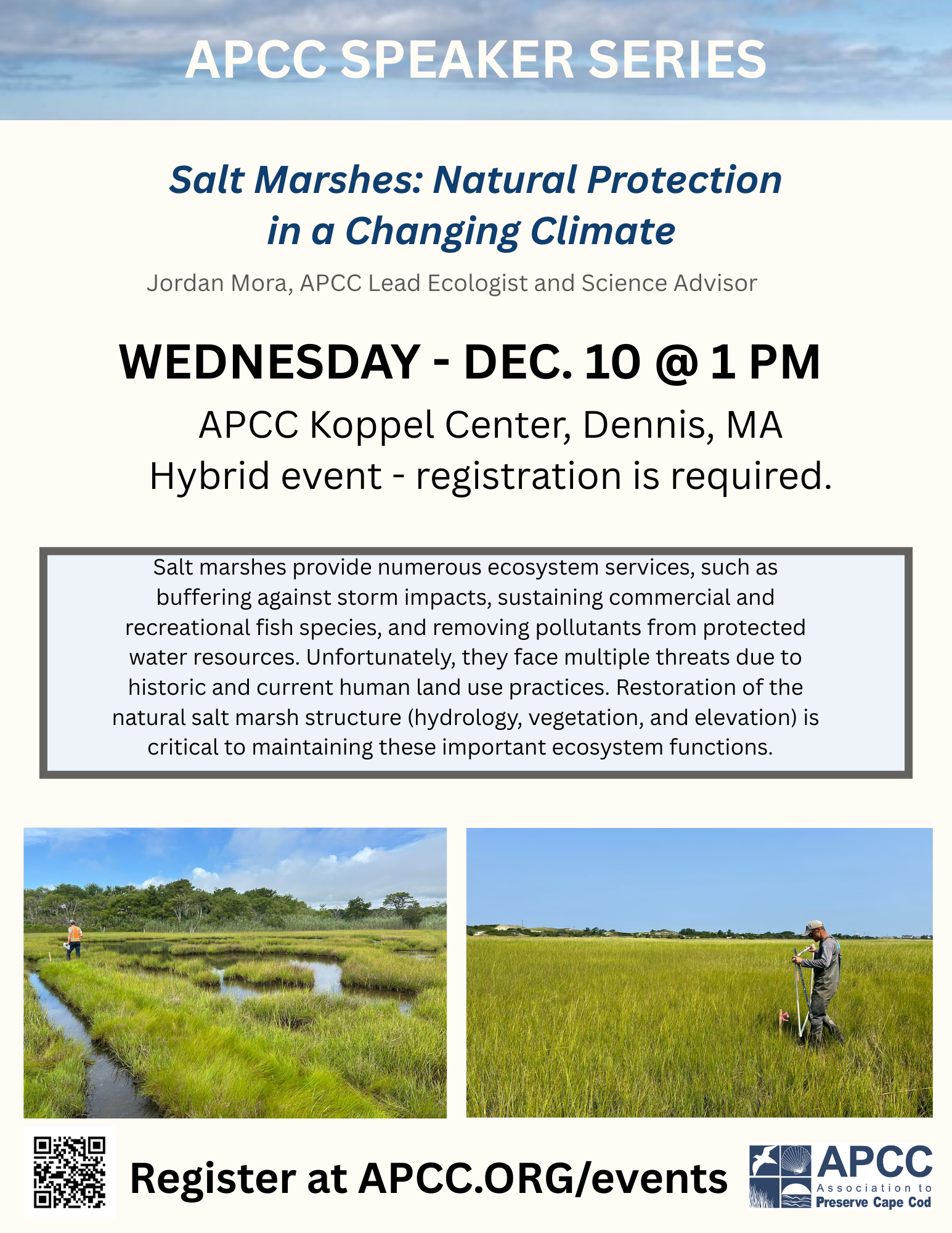
The Compact of Cape Cod Conservation Trusts (“the Compact”) and its nonprofit members launched a new regional calendar of events. The Conservation Calendar includes programs across Cape Cod hosted by these groups. The goal of the calendar is to encourage visitors and residents to take part in nature and environmental events. You can always find the link to the calendar on APCC's website under News & Events.
|
If you are a farmer or someone who wants to grow native plants to sell, or just want to be updated on the program's development, please submit an interest form that appears on our webpage. We will be sending periodic email notices of workshops and meetings.
Funding for the project is provided by Barnstable County and its Economic Development Council License Plate Grant Program through the Cape Cod Commission. |
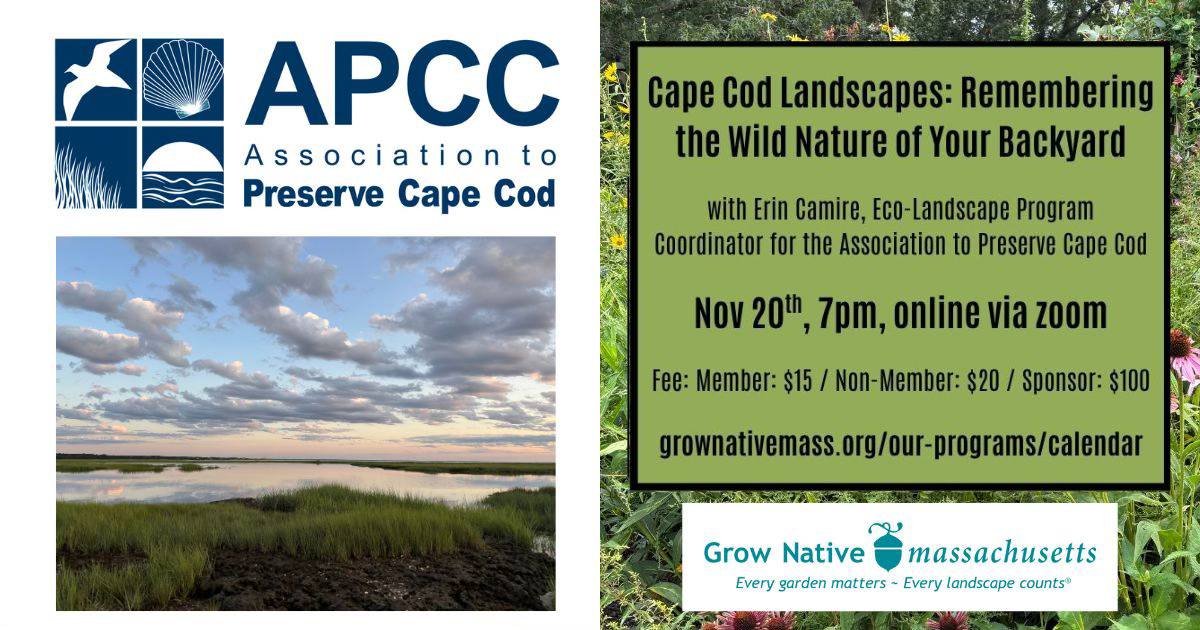
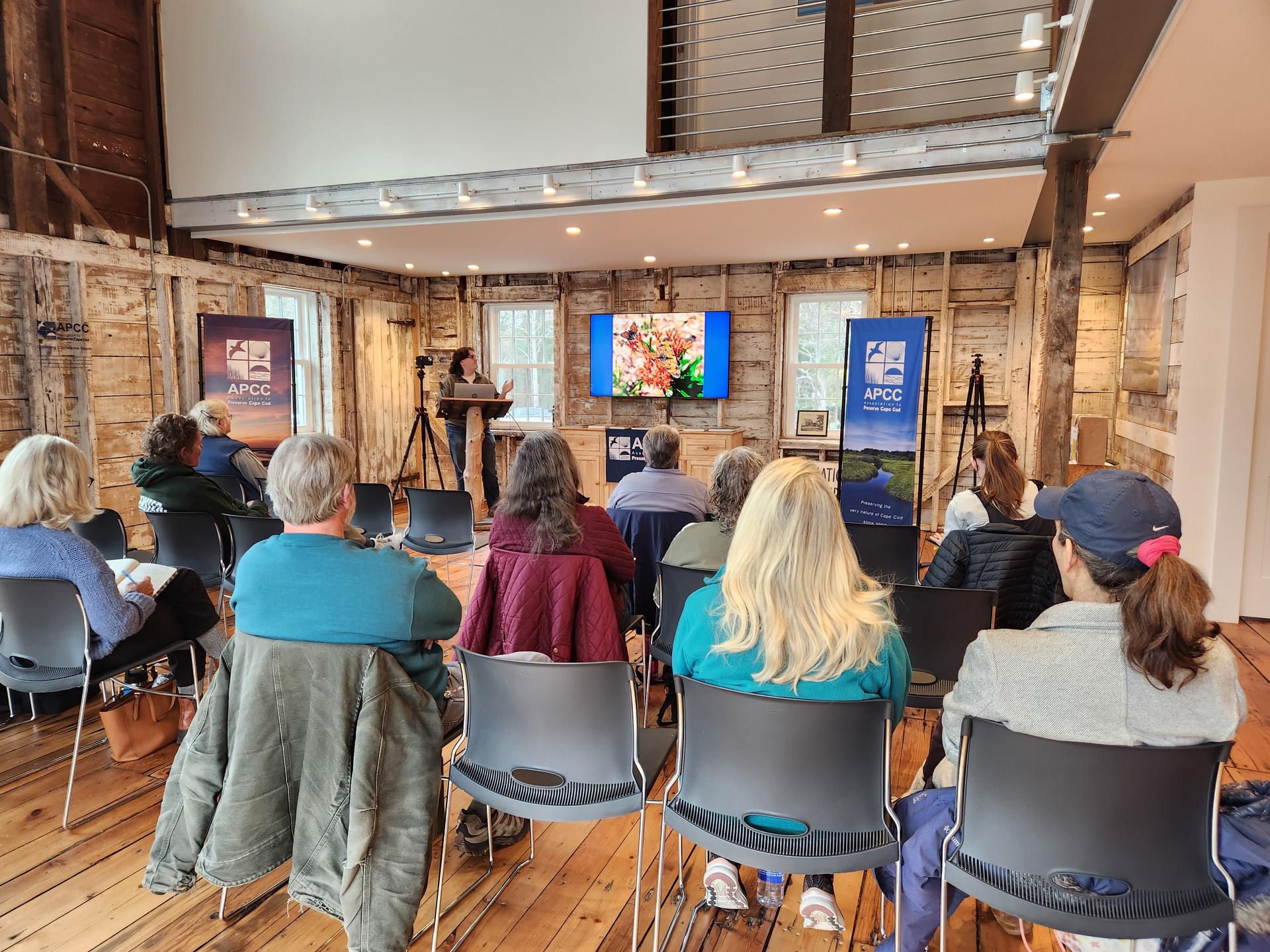
Last week, APCC's Ecolandscape Program Coordinator Erin Camire delivered a presentation to prospective growers as part of the Cape Cod Native Plant Growers' Cooperative program, explaining the basis for our program promoting the growing of native plants by seed. It was a hybrid event and can be viewed here: |
|
|
A Cape Cod Native Plant-selector
~ to help you choose the perfect native plants for your garden. |
|
|
Email kandres@apcc.org and we'll send you a CapeCodNativePlants.org decal. |
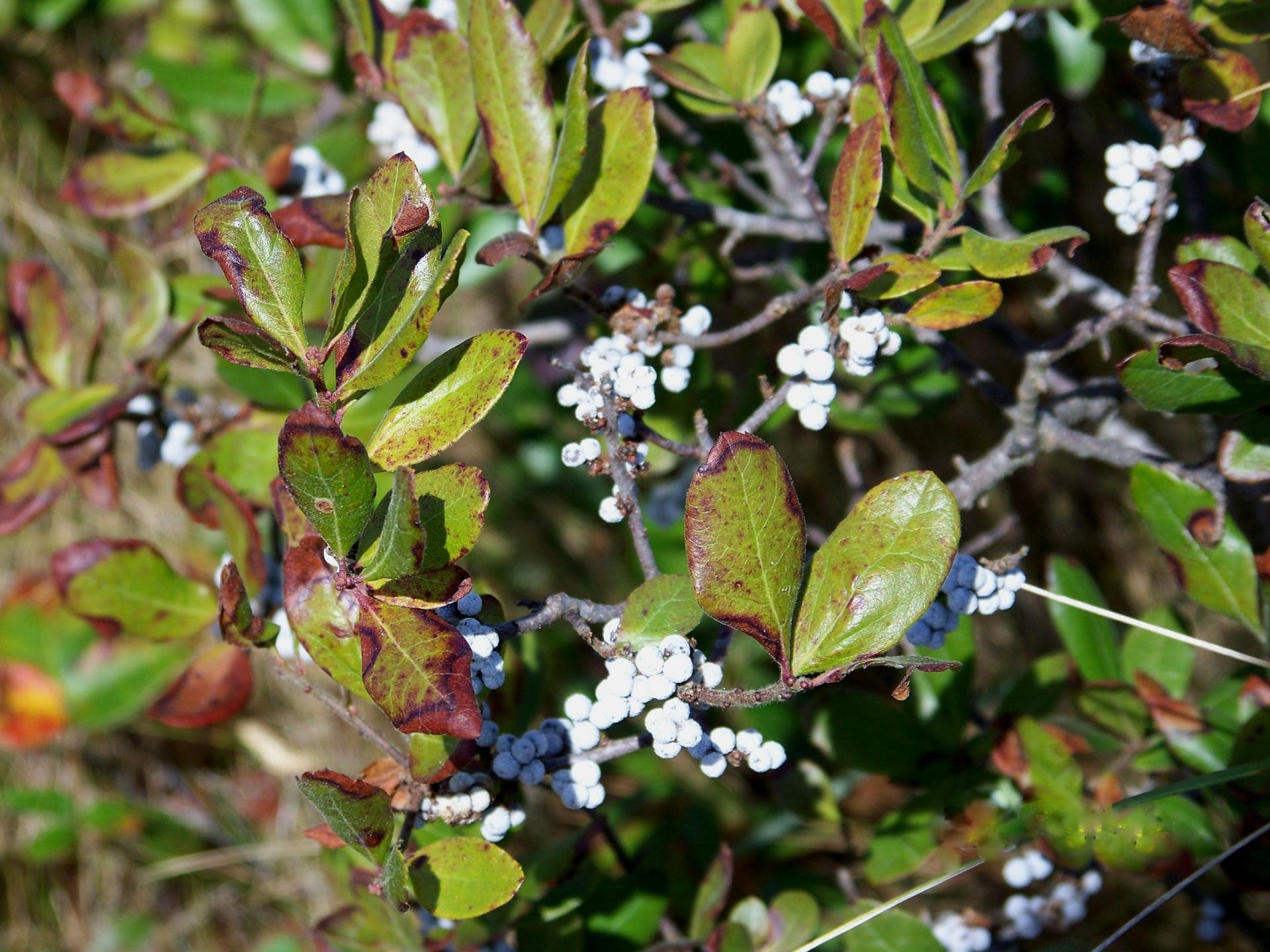
| Bayberry Morella caroliniensis |
|
|
|
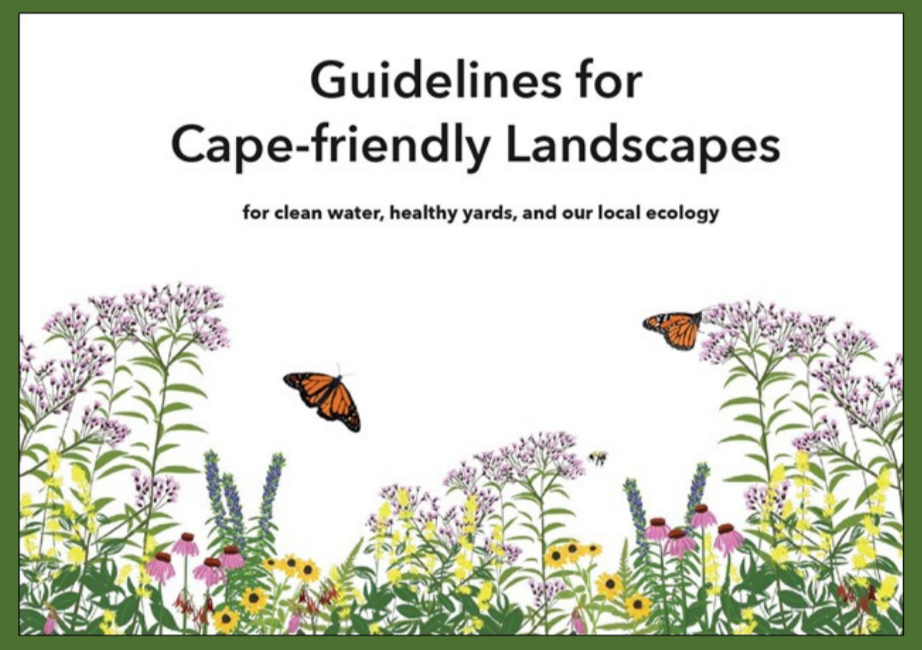
The Guidelines gives homeowners steps they can take in the design and maintenance of their properties that will support pollinators and birds, manage stormwater, conserve water, and protect the Cape's water quality. This 40-page booklet is beautifully illustrated by Marcy Ford with content that is easily digestible and supported by numerous resources for additional learning.
| |
|
We are grateful for the several retail shops that are partnering with us to make this publication more widely available: Brewster Book Store, Birdwatchers General Store, Crocker Nurseries, Wellfleet Audubon Wildlife Sanctuary, Cape Abilities Farm, Cape Cod Museum of Natural History, the Cape Cod Lavender Farm, Heritage Museums and Gardens, Titcomb's Bookshop, Sea Howl Bookshop, Soares Flower Garden Nursery, and Eight Cousins Bookshop.
If you are a retailer and would like to sell this publication at your store, please contact us. |
|
|
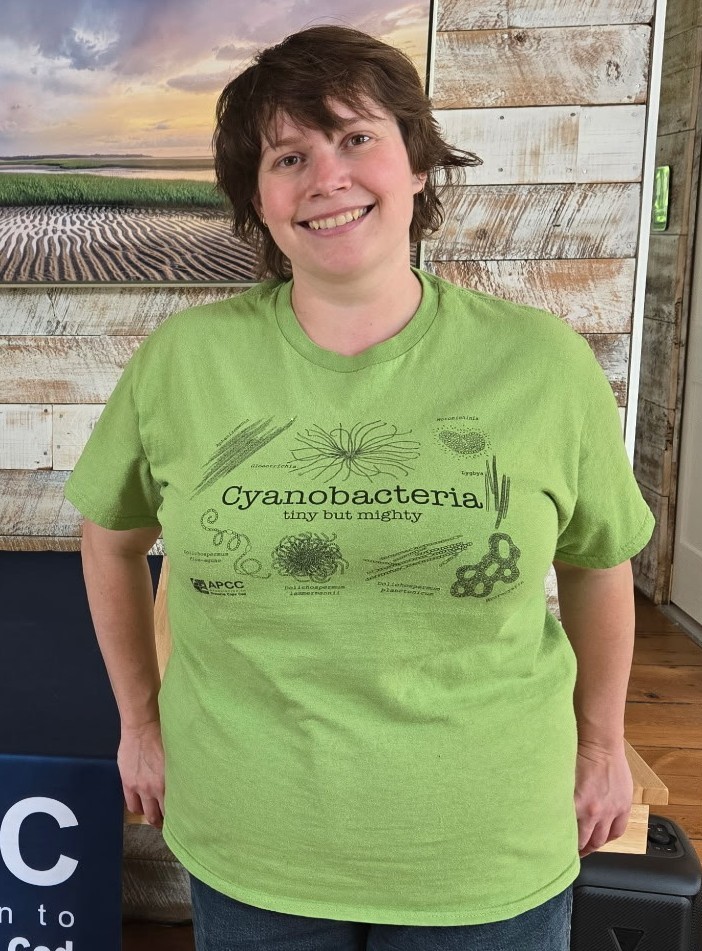
| Cyanobacteria ~ tiny but mighty
color kiwi $30 includes USPS shipping |
|
|
APCC caps
$25 -includes USPS deliver in the U.S. |
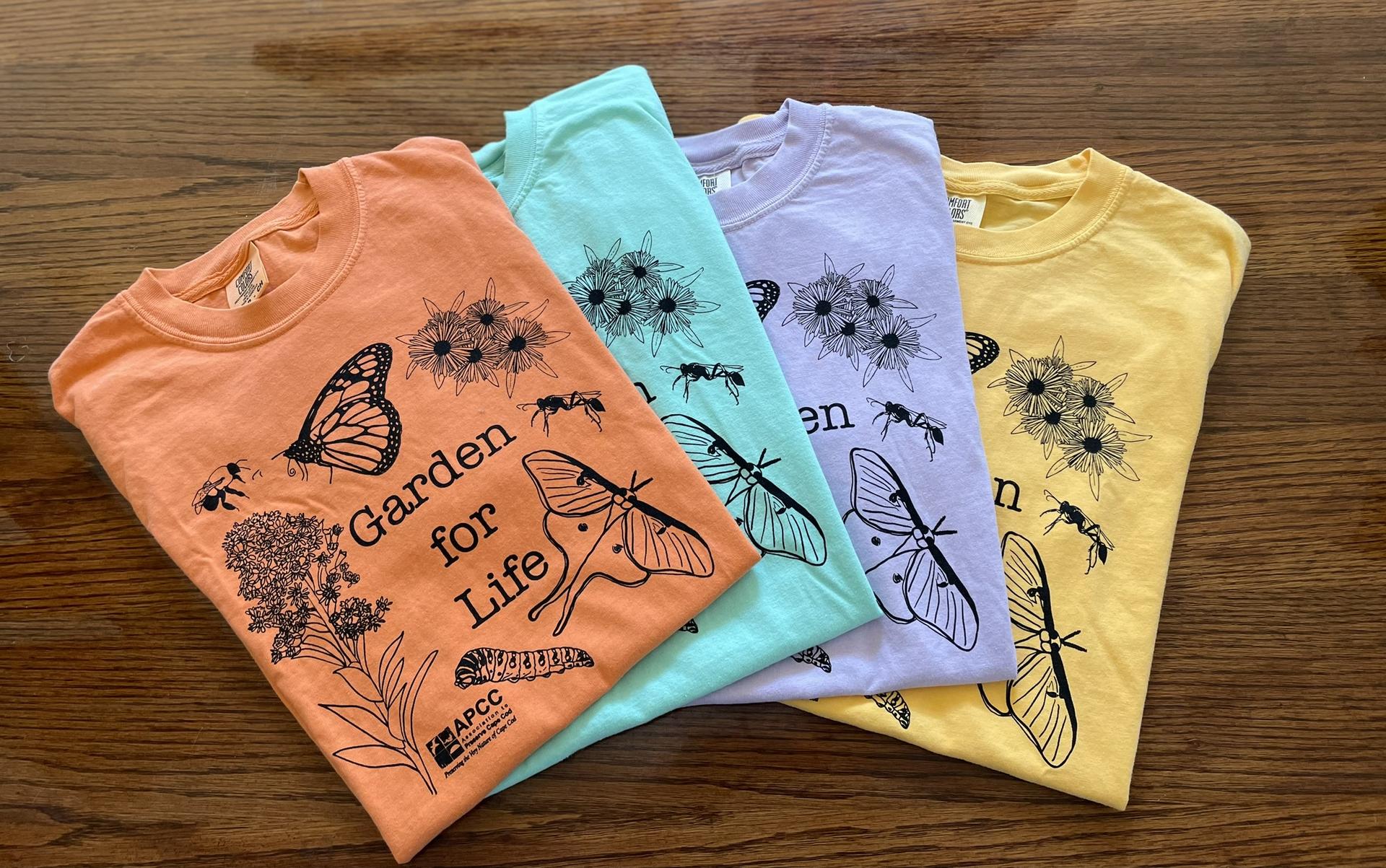
| Garden for Life T's $30 -includes USPS delivery in U.S. |
|
|
|
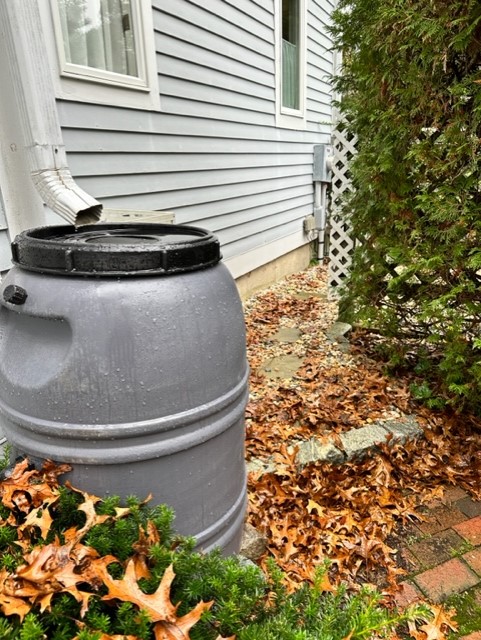
Rain Barrels for Cape Cod
Order online from Upcycle Products $122 each includes shipping to your door APCC receives a portion of the proceeds.
These are 55 gallon, repurposed food barrels. For more information, click here. |
|
|
| APCC eNewsletters.
Our weekly newsletters are archived on our website and easily shared.
You can find past newsletters and share with your friends. Encourage others to sign up for future enewsletters HERE.
|
|
|
Are you thinking of going solar? We hope so!
In partnership with E2 SOLAR in Dennis, APCC receives $500 for every solar installation when APCC is named as referral. |
|
|
|
Thank you to the homeowners who just contracted to install solar panels through E2 Solar. May the sun always shine for you! |
|
|
Expressions Gallery, 578 Main Street, Chatham
CLICK HERE |
Expressions Gallery donates 20 percent of its profits to APCC's work. |
|
|
Thank you to our business sponsors! |
|
|
APCC is rated four stars by Charity Navigator,
2025 Platinum by Candid (formerly Guidestar), and 2024 Top-Rated by GreatNonprofits. |
|
|
Our Contact Information
*{{Organization Name}}*
*{{Organization Address}}*
*{{Organization Phone}}*
*{{Organization Website}}*
*{{Unsubscribe}}* |
| |
|
|