Association to Preserve Cape Cod |
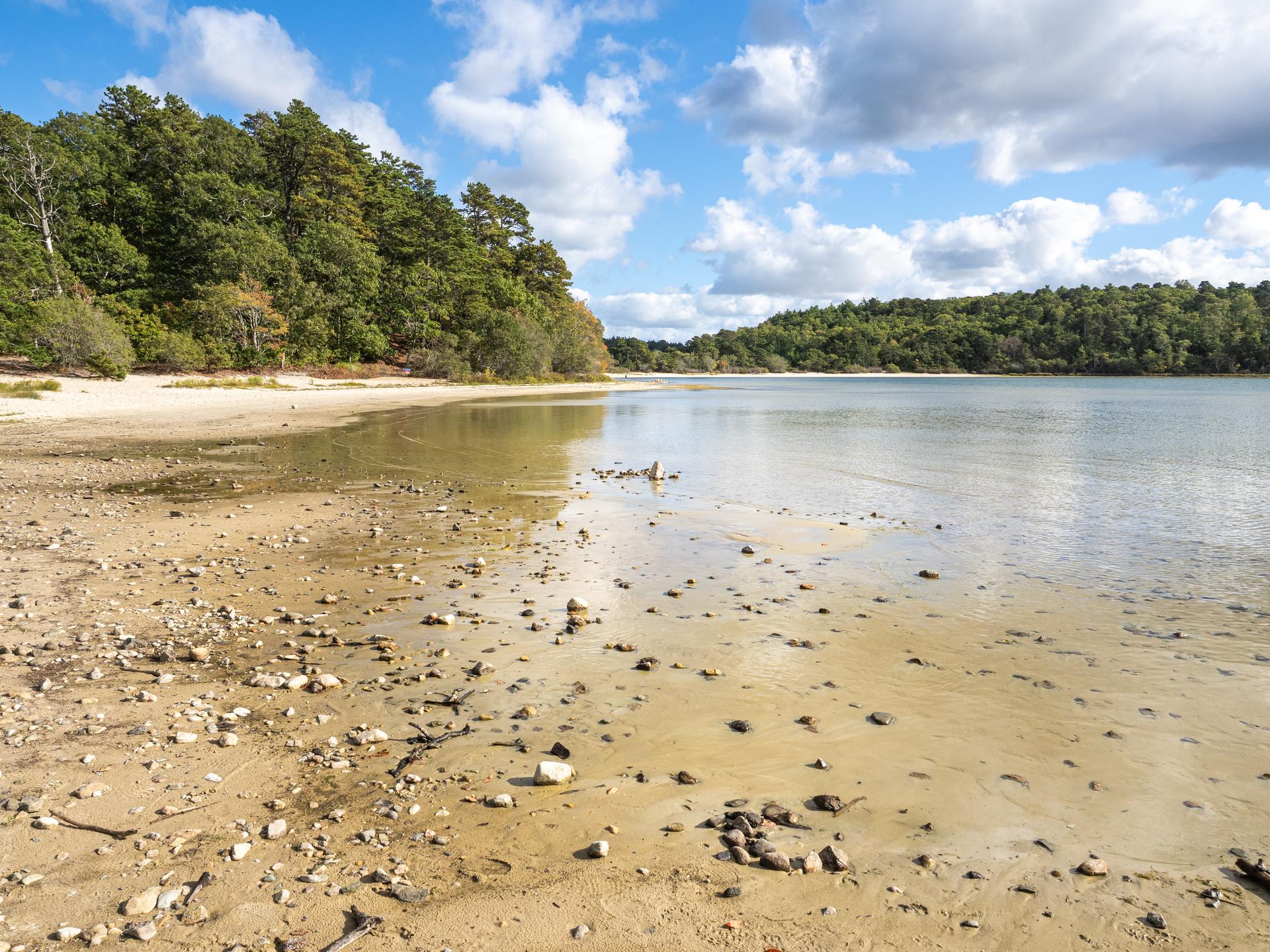
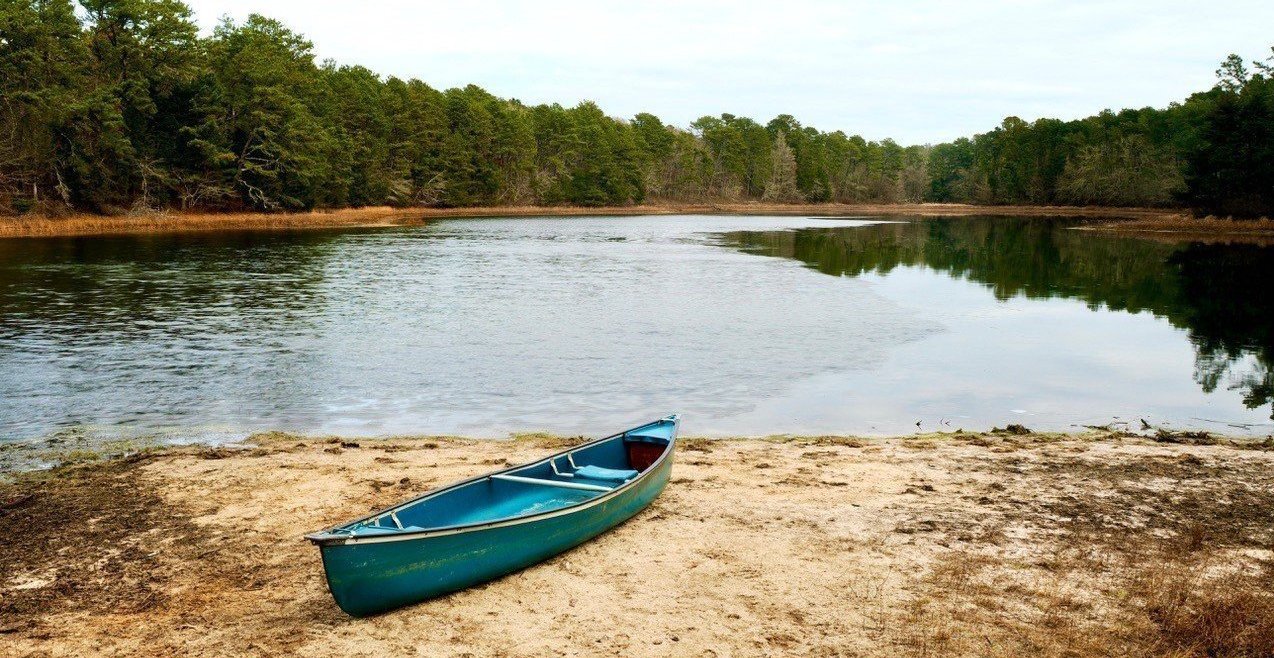
Above: Drought impacts on Cliff Pond, Nickerson Park, Brewster. Photo by Sue Machie |
|
|
| Faith Restored by Andrew Gottlieb, Executive Director |
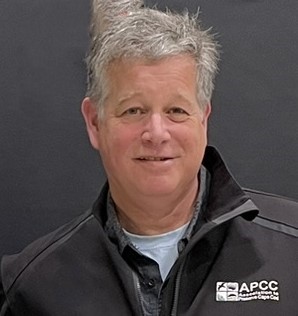
Almost 500 people gathered at Mashpee Town Meeting Monday night to resoundingly vote yes on a wastewater treatment system for Mashpee Wakeby Pond. Both the outcome of the vote and the turnout restored a little of my faith in our ability to come together and self-govern. Local government and town meetings, with all their warts and flaws, remain an example of how governance can, should, and still does work. |
|
|
My take-home from this one meeting, but I think it has universal resonance, is that people matter. The advocates that were invested on both sides were clearly motivated to attend, but most of the attendees came to listen, make judgements on what they heard and then acted collectively and resoundingly to do something positive for their community and the environment. The irrefutable fact that people with widely disparate macro political views came together to act for clean water shows that there is hope to bridge locally what seem to be chasms that separate us nationally.
There are many lessons here. The people of Cape Cod are committed to improving our environment and want better water quality. Local government officials should be commended and appreciated for developing and presenting projects to their voters. And perhaps most encouragingly, community consensus remains achievable, and we don’t have to resolve everything before we do anything. Let’s build on success, one environmental improvement project at a time. Nothing breeds success like success. Keep ‘em coming. |
|
|
APCC Ecosystem Restoration Program |
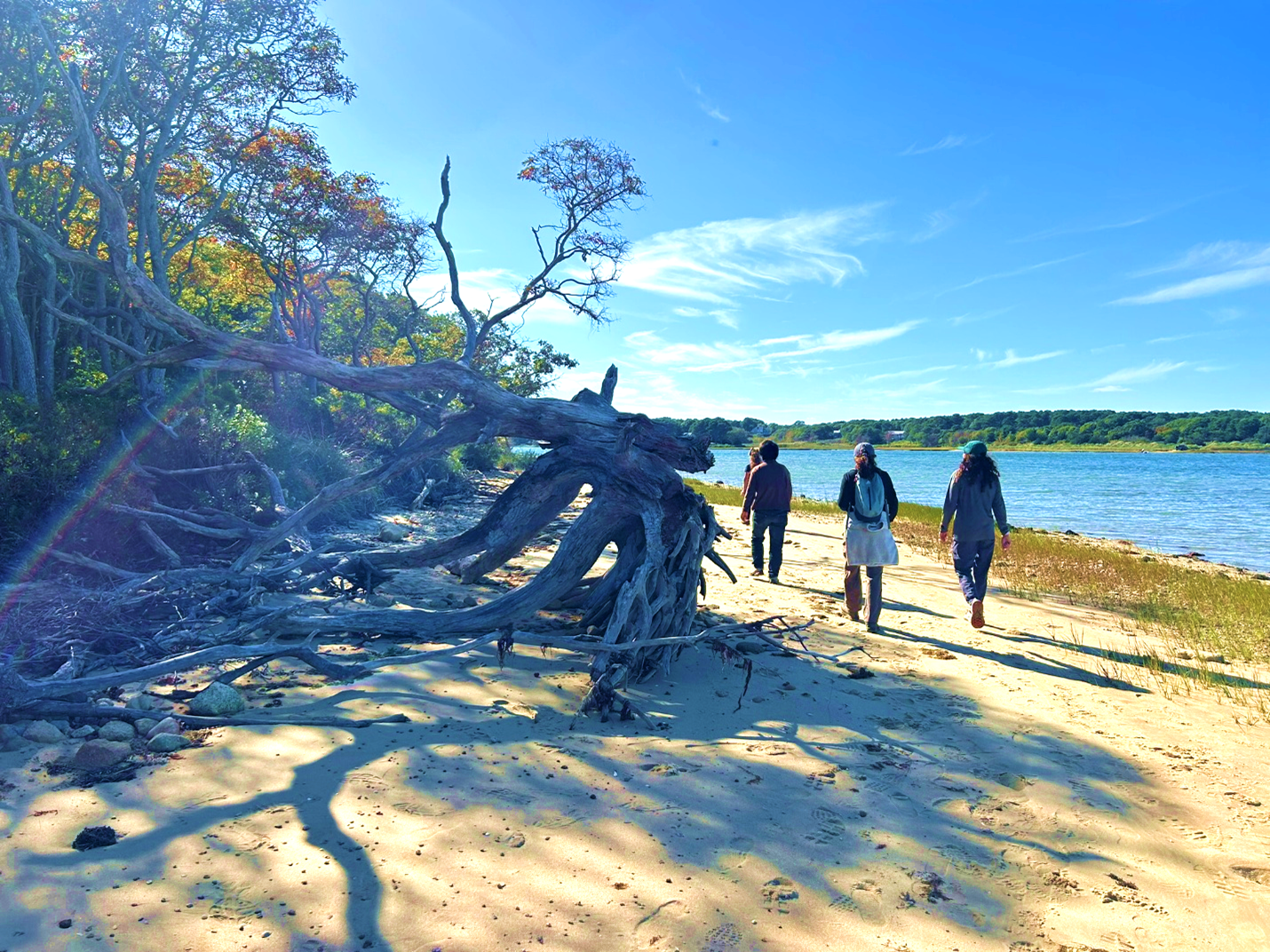
Above: Members of the Cape and Islands Restoration Action Teams (CIRATs) pass a fallen tree along the shoreline of Felix Neck Wildlife Sanctuary on Martha’s Vineyard where salt marsh used to exist just a few decades ago – proof that powerful forces of erosion are at work and change is happening at an alarming rate. |
Racing the Tide: Meeting the Challenge of Salt Marsh Restoration
Salt marsh restoration practitioners face daunting odds. Across New England, salt marshes bear the marks of centuries of human manipulation and degradation. Beneath the regrowth and layers of ecological succession lies a shared history: Nearly every marsh was once farmland, drained and re-engineered for agriculture. That legacy, combined with accelerating sea level rise, now threatens their very survival.
In the face of these challenges, restoration practitioners are racing against time—and the only way to succeed is through collaboration and shared learning. The Cape and Islands Restoration Action Team (CIRATs), founded by Sara Grady, senior coastal ecologist at Mass Audubon, was created for exactly that purpose: to connect local partners and exchange knowledge across the region.
APCC has been an active member of CIRATs, participating in regular meetings, applying strategies and techniques learned through the group, and sharing insights from our own projects. In early October, APCC joined a field trip to Martha’s Vineyard to compare restoration challenges there with those faced on Cape Cod.
The key takeaway from the day was clear: Progress remains too slow. To meet the scale of the problem, the restoration workforce—including consultants, engineers, and ecological contractors—must grow rapidly. Encouragingly, APCC’s Ecosystem Restoration Program has nearly doubled in size since spring 2024, a sign of our commitment to meeting this urgent need and accelerating the pace of restoration. |
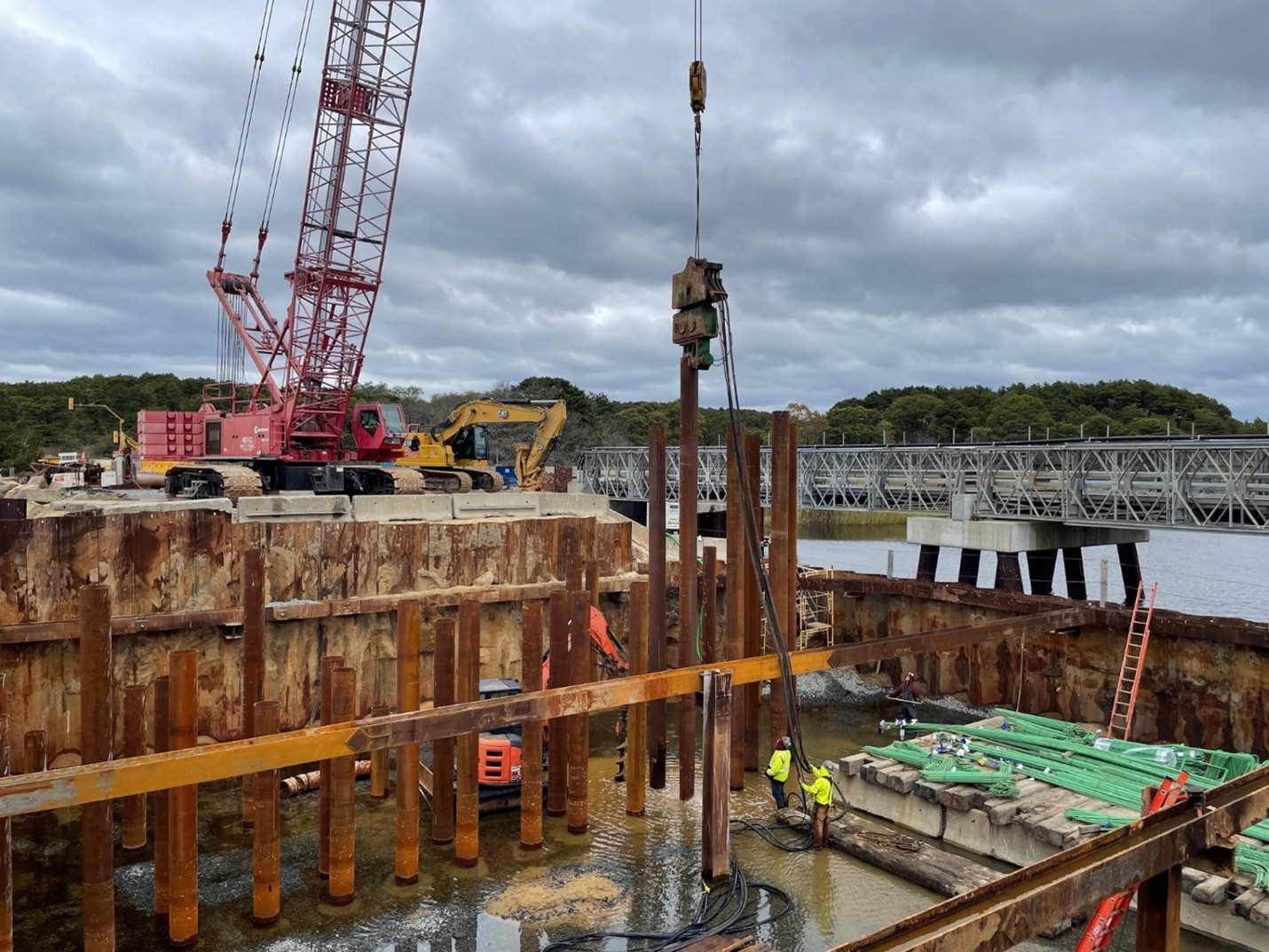
Above: Ongoing construction at Chequessett Neck Bridge and water control structure. |
On Site with the Friends of Herring River
Across Cape Cod, organizations are working together to protect, restore, and preserve the Cape’s natural resources and habitats. Nonprofits, community groups, scientists, and engineers frequently join forces to identify and implement critical restoration projects—sharing knowledge, strategies, and lessons learned along the way.
In that same collaborative spirit, APCC staff recently joined a site visit to the Herring River Restoration Project (HRRP) in Wellfleet. Situated within the Cape Cod National Seashore, the Herring River flows into Wellfleet Harbor on Cape Cod Bay. For over a century, a dike at the river’s mouth has restricted tidal flow, dramatically altering the upstream ecosystem. The HRRP seeks to reverse that legacy by restoring tidal exchange to nearly 1,000 acres of salt marsh and coastal habitat—improving ecological function, resilience, and public access.
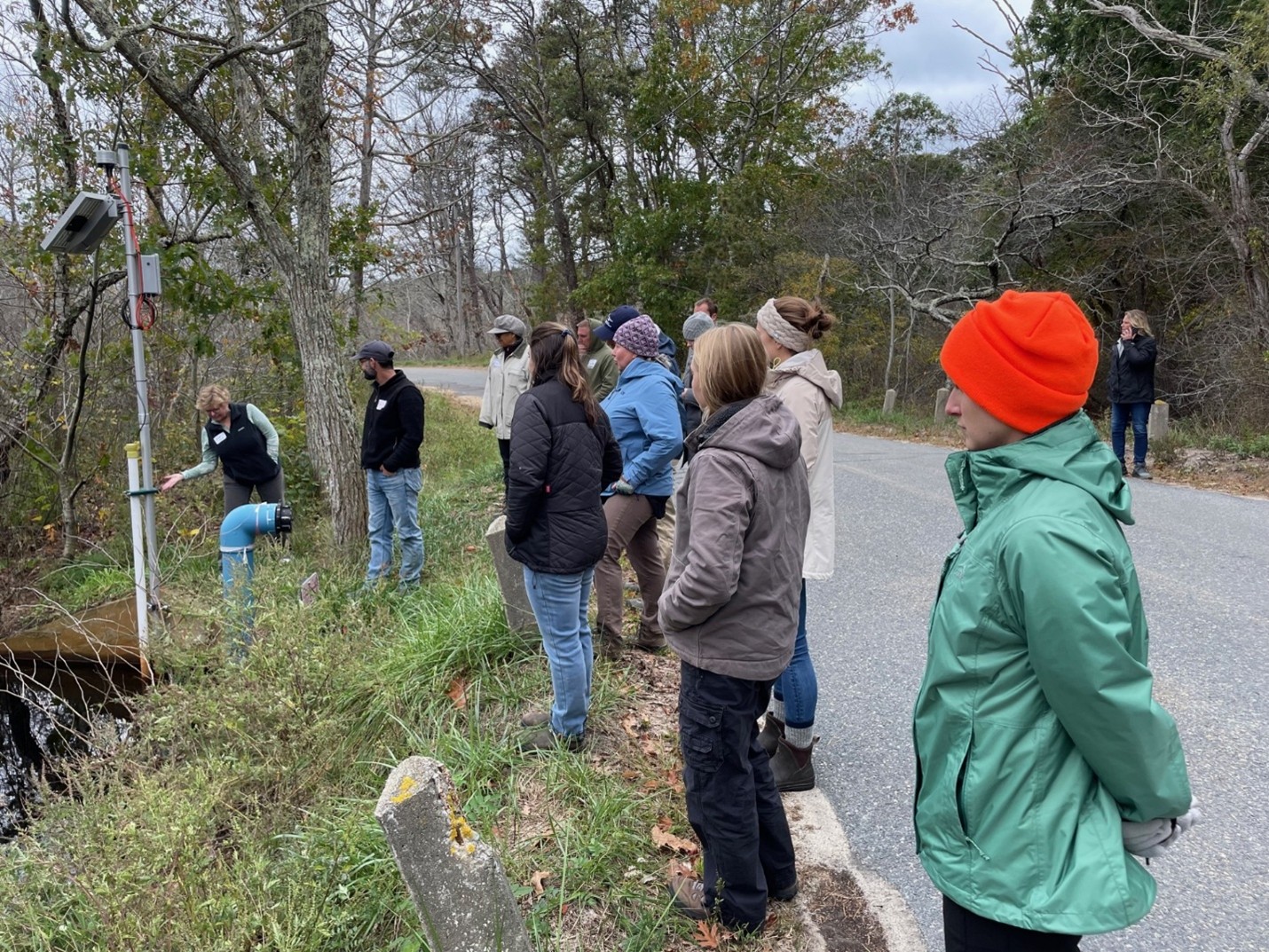
The visit, led by the Friends of Herring River , a nonprofit organization formed to help launch and sustain the HRRP, included an overview of the project’s origins, challenges, and recent milestones. Participants toured several key sites, including the active construction at the Chequessett Neck Bridge and water control structure, Duck Harbor, and a monitoring station used to track water quality improvements.
Every restoration project is unique, but visiting project sites and meeting with organizations like the Friends of Herring River provides opportunity to learn about new methods, compare restoration approaches, and foster new partnerships across Cape Cod. APCC was an early advocate for the HRRP; our former directors and board members have led and worked for FOHR over the decades of planning for this regionally important project, and our staff currently serves as a member of the Herring River Restoration Stakeholders Group. |
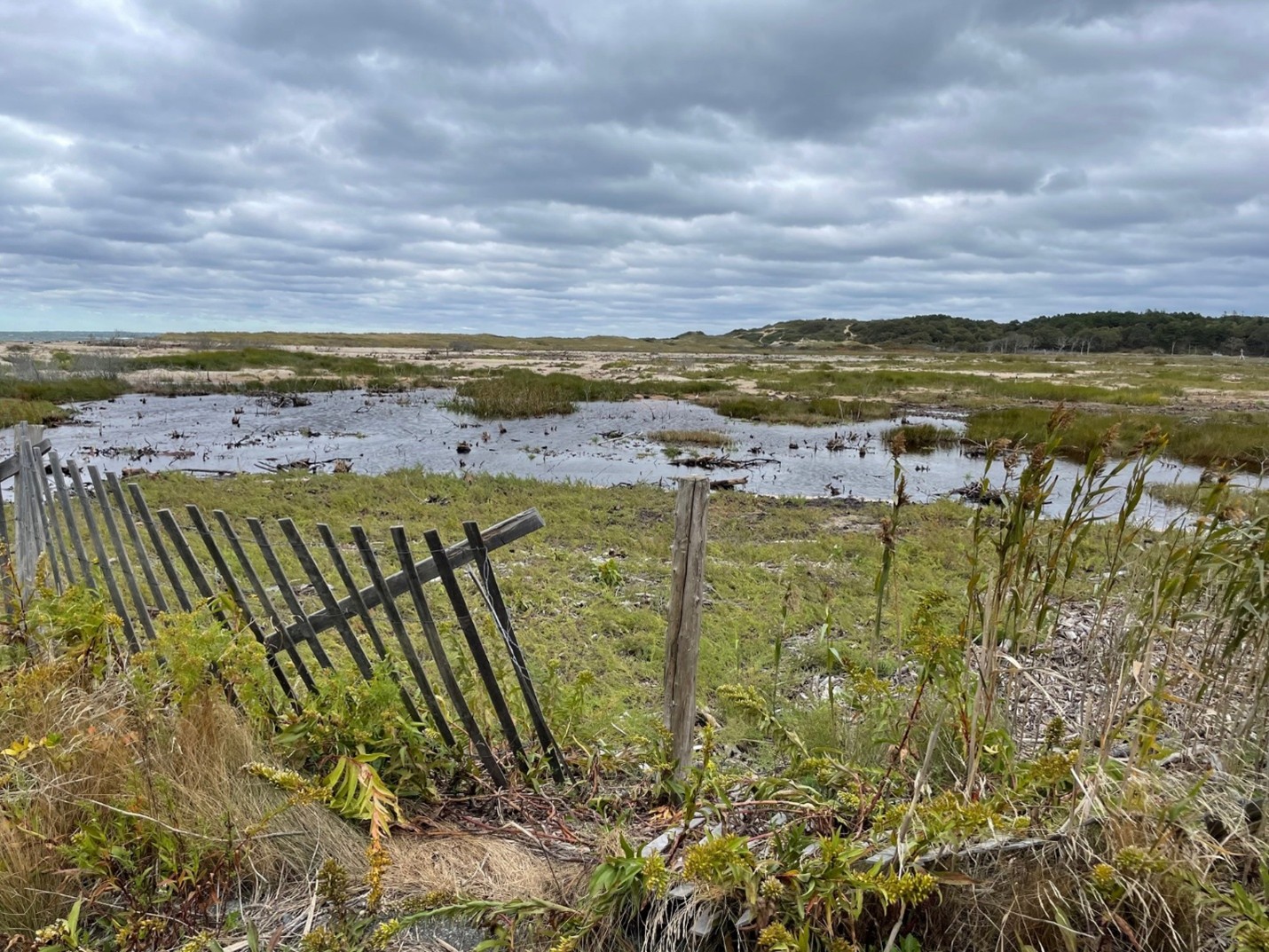
Above: A view looking across Duck Harbor. After construction of the dike that restricted flow between the Herring River and Wellfleet Harbor, the Duck Harbor basin became a freshwater wetland. More recently, seawater has overwashed the dunes during very high tides and storm events, flooding the Duck Harbor basin and killing off the freshwater vegetation. |
Above: Site visit participants, including Herring River Restoration Project team members and APCC staff, visit one of several environmental monitoring stations. |
|
|
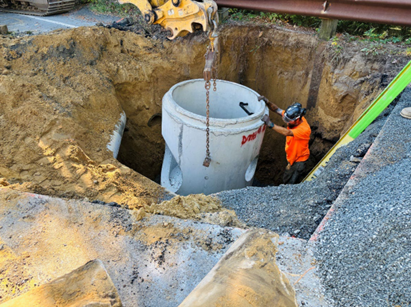
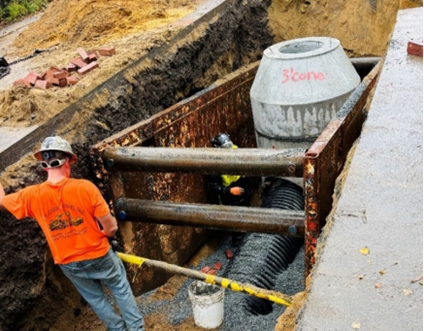
Above: Installation of a drainage manhole on Great Western Rd. Photo credit: Chelsea Yuan, Horsley Witten Group |
|
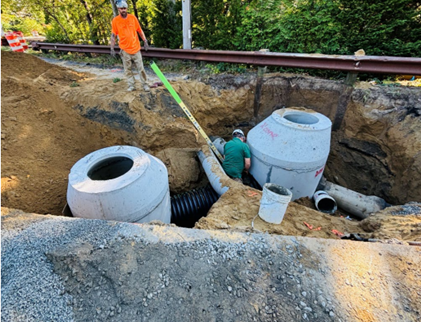
Above: Crews connecting newly installed drainage manhole to two existing pipes. Photo credit: Chelsea Yuan, Horsley Witten Group |
|
|
Above: Installation of drainage manhole and connecting pipe.
Photo credit: Chelsea Yuan, Horsley Witten Group |
Drainage Improvements Underway at Great Western Road
Construction began in early October on drainage improvements along Great Western Road in Yarmouth, a complementary piece to the recently completed constructed wetland at Curve Hill Road. The project is scheduled to wrap up by the end of the month.
The improvements will enhance how stormwater is directed into the constructed wetland system, helping to slow, filter, and treat roadway runoff before it enters nearby waterways. Work includes modifying existing drain manholes, installing new drainage structures and pipes along Great Western and Curve Hill Road, and connecting the new system to an existing water quality unit. Crews from the contracted construction team are also removing an older pipe that previously discharged directly into the wetland and replacing it with updated infrastructure designed to better manage stormwater flow.
The project was designed by the Horsley Witten Group and funded through a grant from the Massachusetts Office of Coastal Zone Management (CZM), in partnership with the town of Yarmouth and APCC. These upgrades build on the town’s ongoing efforts to upgrade its stormwater systems and improve water quality in local watersheds. |
|
|
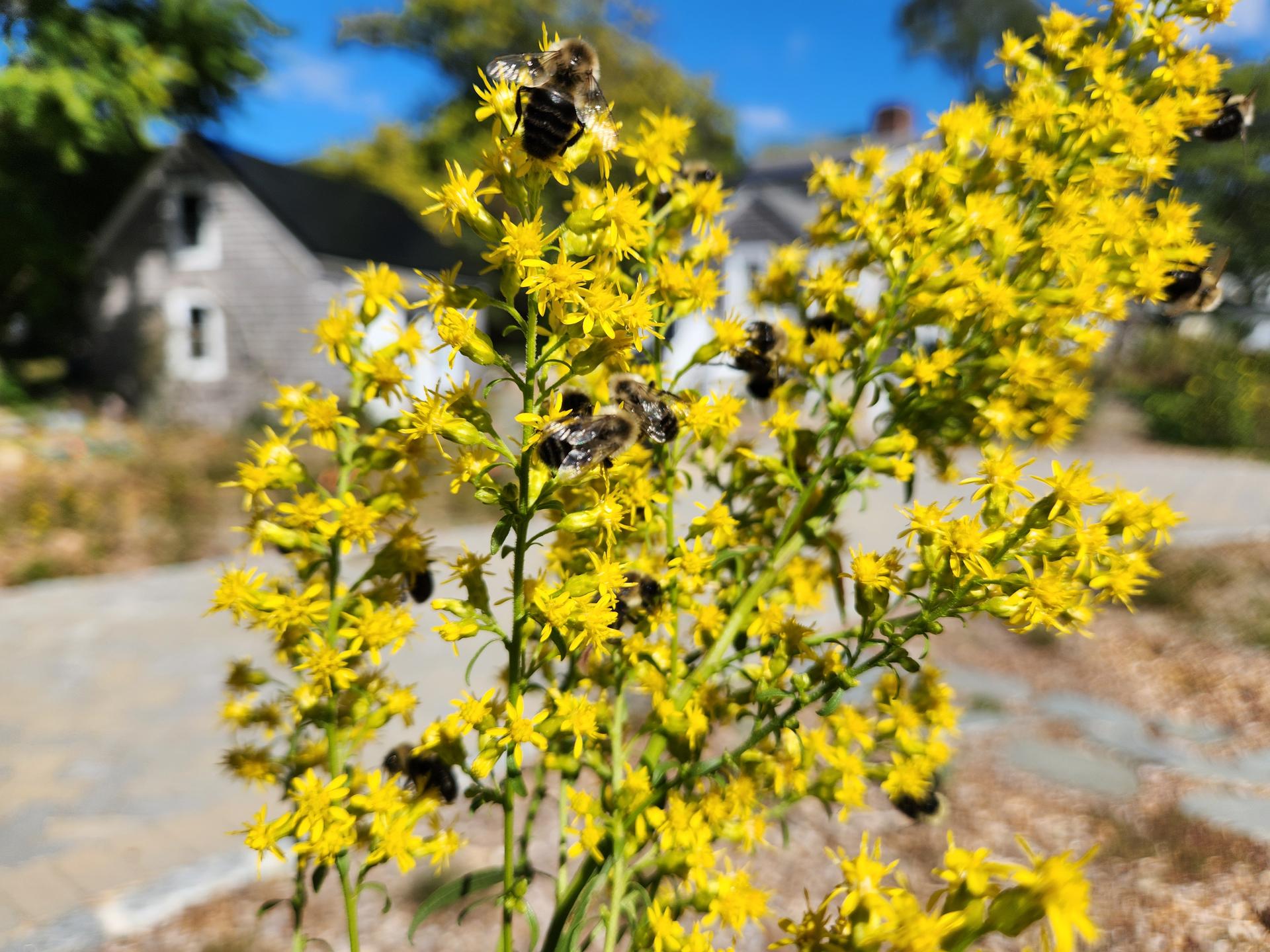
Early October in APCC's living landscape, a newly planted addition: Solidago speciosa, or showy goldenrod. Not indigenous to Cape Cod, but it is found throughout the rest of Massachusetts, Connecticut, and Rhode Island. This tall goldenrod proved to be a bee magnet as the growing season waned. Goldenrods, in general, are an important group of plants that support a plethora of pollinators and other insects. Click here to see the action.
|
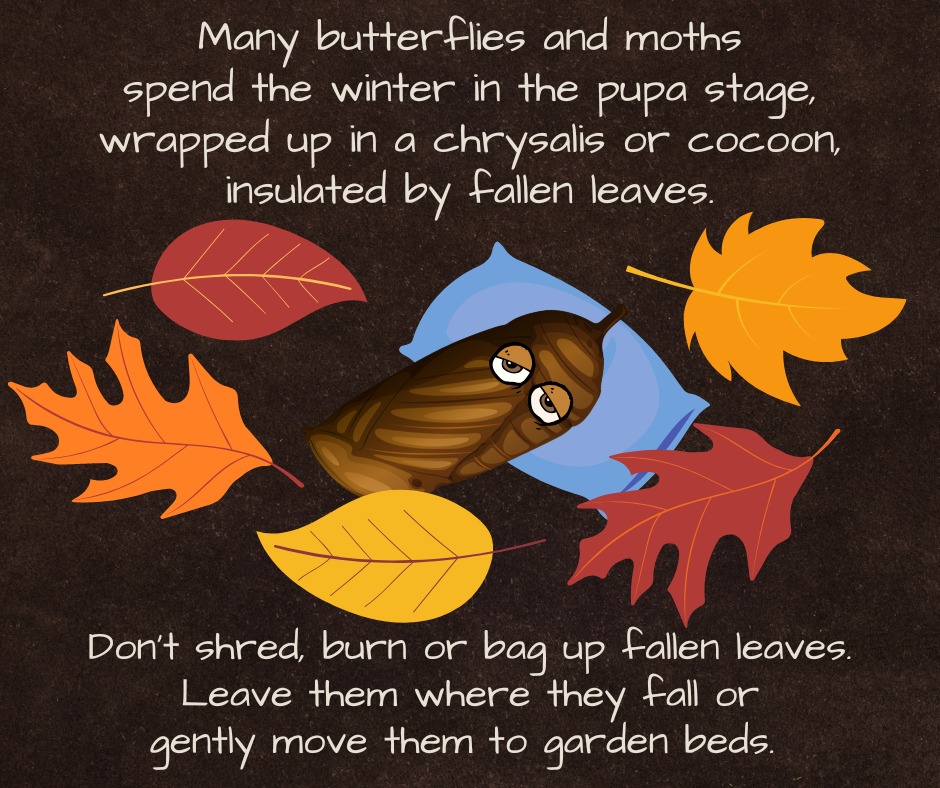
Remember, Leave the Leaves |
According to a recent study, the removal of leaves results in 45 percent reduction of moths and butterflies, 56 percent of spiders, and 23 percent of beetles. Lack of leaves resulted in reduction in species richness by 44 percent in moths and butterflies—the composition changed and there was a loss of leaf miners, overwintering species, and similar to their prey, also a decline in predatory insects.
Don't shred the leaves. Don't bag the leaves and dispose of them. Leave the leaves where you can, so these organisms can complete their life cycles. If you can't leave the leaves where they fall, move them to areas where they can remain (e.g.) your pollinator garden or under an oak tree. Insects use the leaves year-round, so leaving them means just that—leave them for the sake of keeping a balanced and ecologically sound landscape.
|
|
|
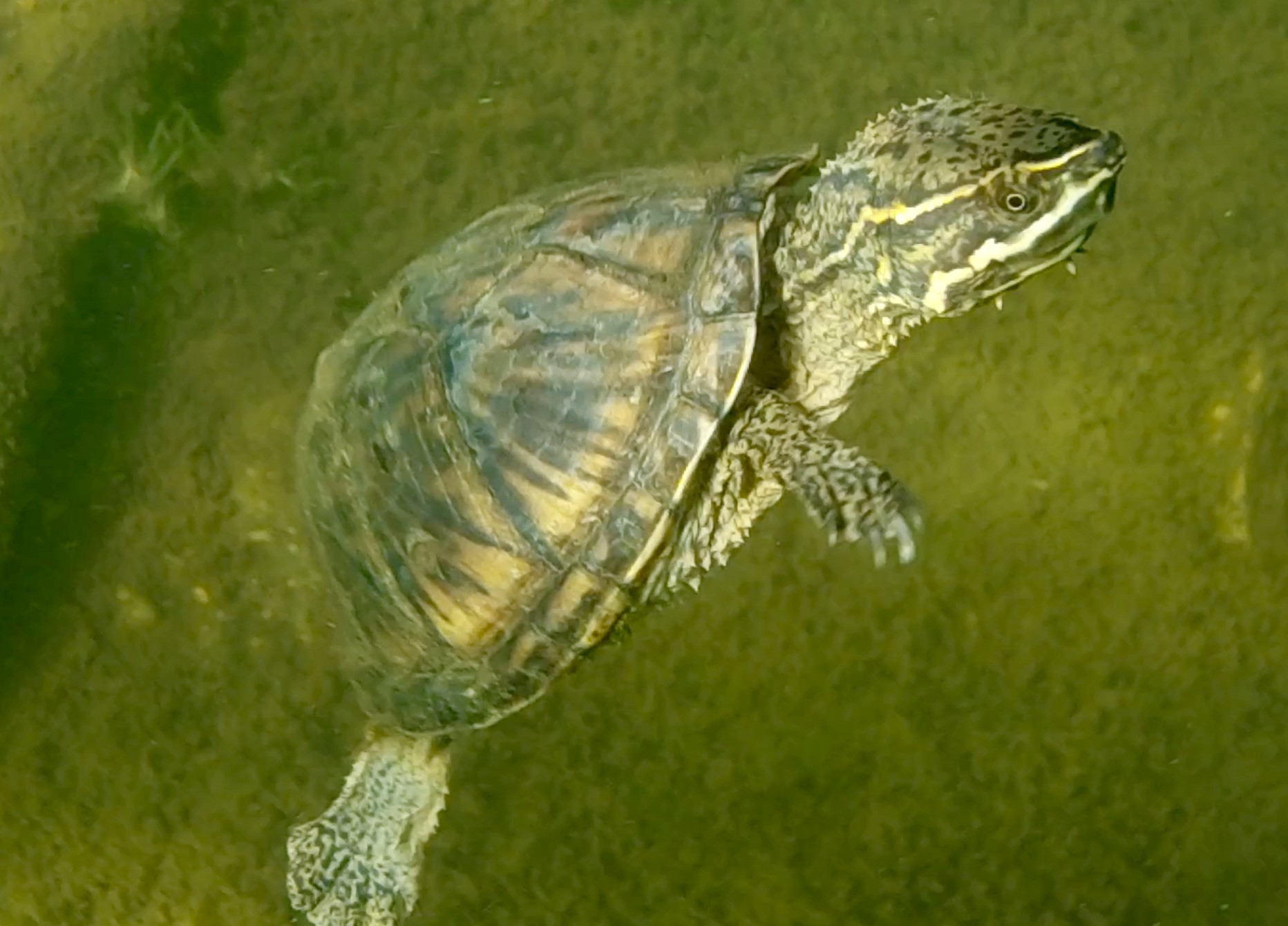
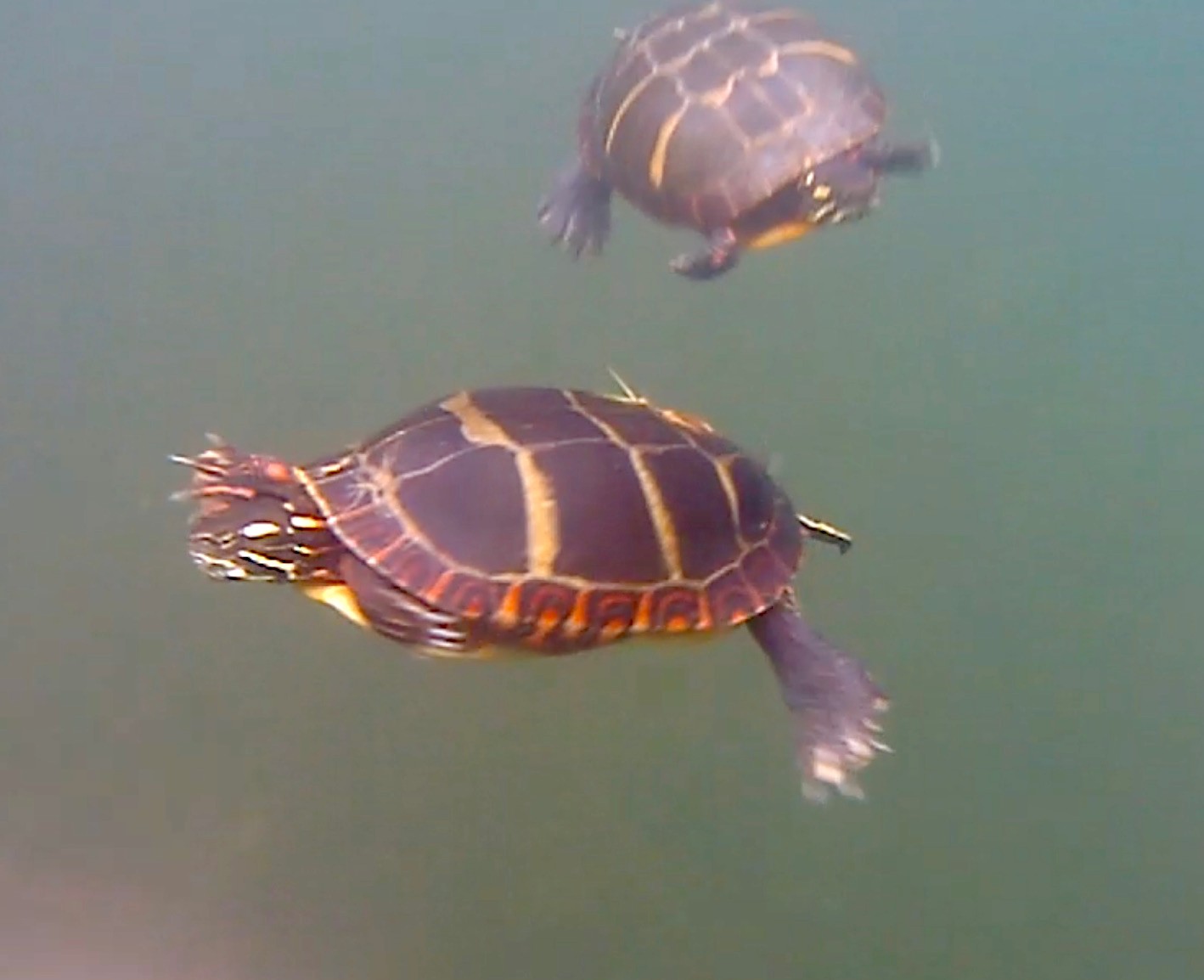
Above: Stinkpot, aka musk turtle, Sternotherus odoratus, "a turtle thinking about brumation." Photo by Susan Baur |
Autumn Adjustments
As the temperature cools and wind gusts across our Cape Cod ponds, there are many changes for the critters living in the water. For the fish, the mixing that comes with fall turnover causes them to scatter and become less active as they adjust to changes in oxygen and temperature. During this time, fish may become less focused on feeding, and the water can become murky with debris.
For turtles, it's time to find a safe place to winter over and they have a special adaptation called brumation. Brumation is a state of dormancy that reptiles and other cold-blooded animals enter, particularly during winter, similar to hibernation in mammals. During this period, their metabolism, activity, and bodily functions slow down significantly to conserve energy in response to cooler temperatures and shorter days. Unlike true hibernation, animals in brumation are not in a deep sleep and may occasionally wake to drink water and become temporarily active if weather warms. Turtles can brumate for several months, typically ranging from a few weeks up to about five months, though this varies by species and climate. For example, painted turtles can brumate for up to 147 days, while box turtles may brumate for up to five months.
Our aquatic turtles, snapping turtles, painted turtles, and musk turtles (aka stinkpots), choose a brumation site by sinking into the bottom of ponds and burrowing into the mud and leaves. |
|
|
Cape Cod Pond Watchers Bio-survey Program ~ a training video on how to use the Survey123 app to log your observations in pondside! |
| |
|
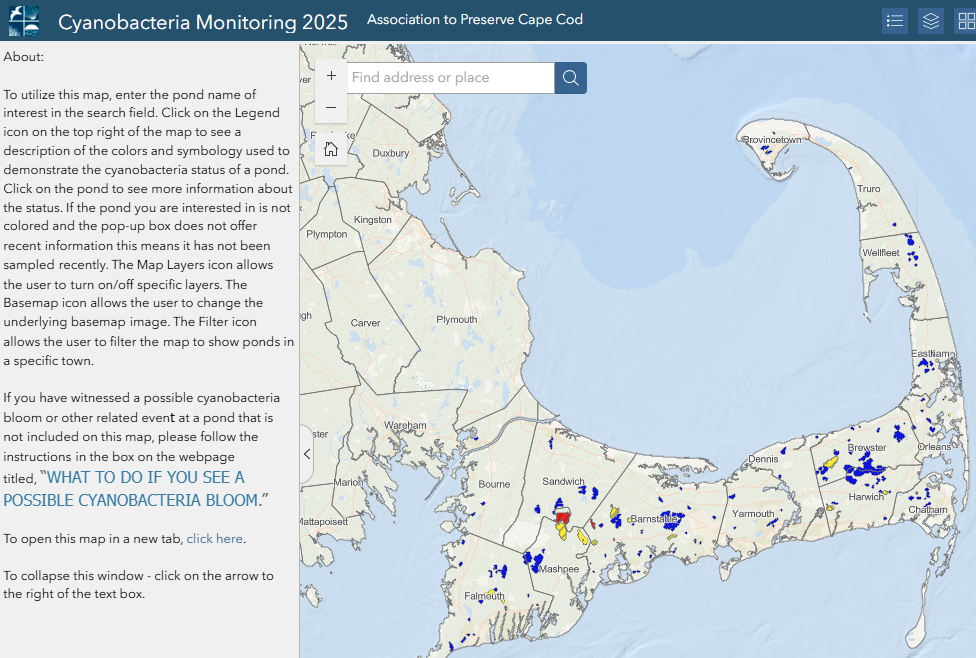
APCC's Cyanobacteria Monitoring Program |
|
|
|
Check on the status of your favorite pond on our interactive map. If you see what appears to be a bloom, take a picture, note the day, location, and time and notify the local health department, and email to cyano@apcc.org.
Sign up for cyanobacteria email alerts.
Please note: The cyanobacteria alert is only sent out when a concern is first identified at a pond. All updates following this initial notice are shared on APCC’s interactive map. |
|
|
Please Help Us Put Protection of Nature on the Ballot! APCC and a coalition of over 50 organizations (Nature for Massachusetts Coalition) are pursuing a "Protect Water and Nature Initiative" as a question on the November 2026 ballot. The effort would set aside revenue from the existing state sales tax on sporting goods to dedicate $100 million every year for protecting and conserving water and nature—without raising taxes. We need to collect over 100,000 signatures between September and this November to get the initiative on next year's ballot.
If you would like to help us get the needed signatures, CLICK HERE for more information and to volunteer.
It’s time to invest in our future. Clean water, healthy forests, more trails and parks,
and access to the outdoors and nature for everyone. ~~~~~~~~~~~~~~~~~~~~~~~~~
At the same time we are collecting signatures, there is also a legislative effort: An Act Providing Nature for All. Here is the link to Bill S.2571.
|
|
|
A Cape-wide Conservation Event Calendar |
The Compact of Cape Cod Conservation Trusts (“the Compact”) and its nonprofit members launched a new regional calendar of events. The Conservation Calendar includes programs across Cape Cod hosted by these groups. The goal of the calendar is to encourage visitors and residents to take part in nature and environmental events. You can always find the link to the calendar on APCC's website under News & Events.
|
If you are a farmer or someone who wants to grow native plants to sell, or just want to be updated on the program's development, please submit an interest form that appears on our webpage. We will be sending periodic email notices of workshops and meetings.
Funding for the project is provided by Barnstable County and its Economic Development Council License Plate Grant Program through the Cape Cod Commission. |
|
|
A Cape Cod Native Plant-selector
~ to help you choose the perfect native plants for your garden. |
|
|
Email kandres@apcc.org and we'll send you a CapeCodNativePlants.org decal. |
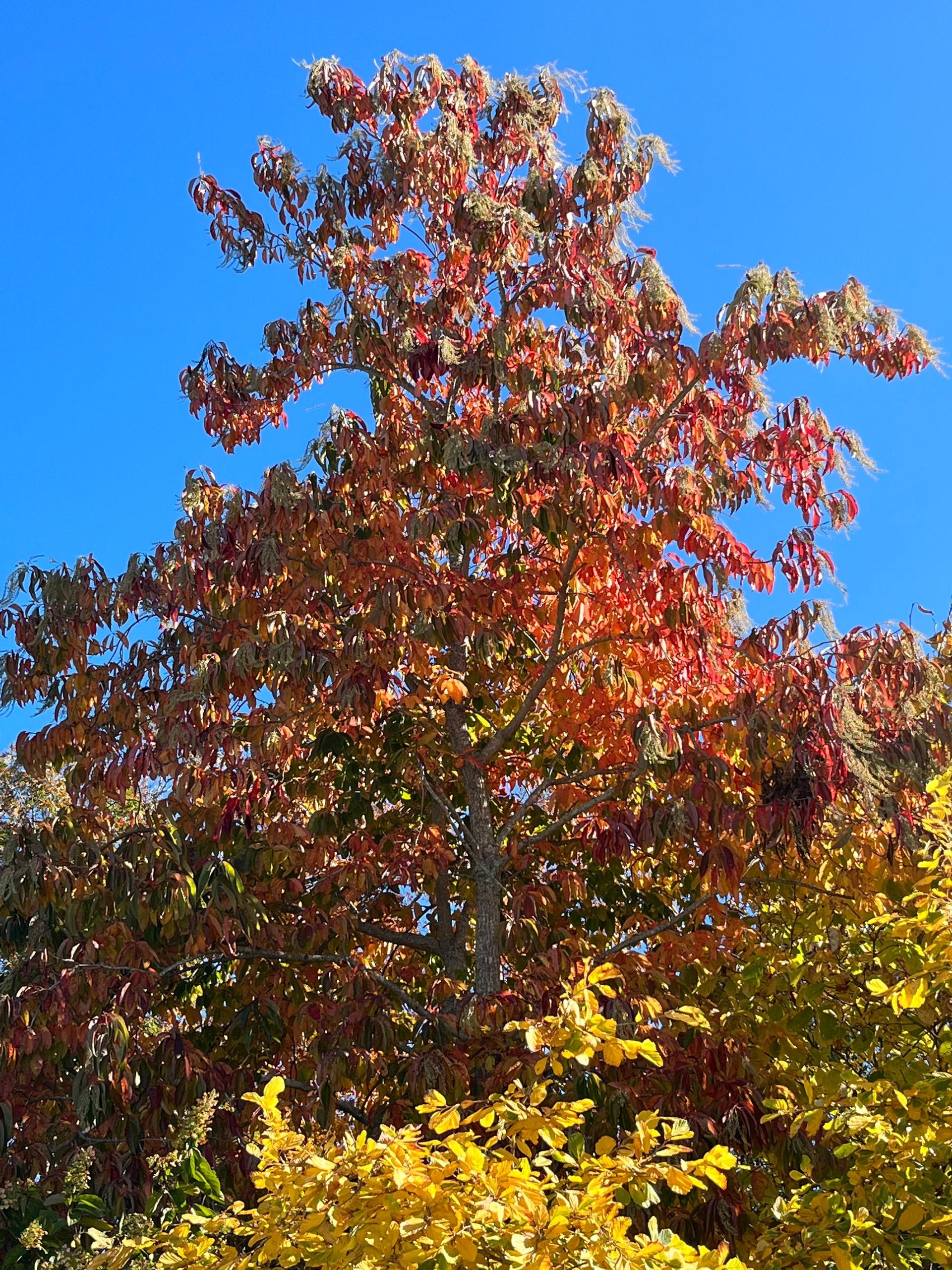
| Photo credit: Richard Johnson |
Sourwood Oxydendrum arboreum |
|
|
|
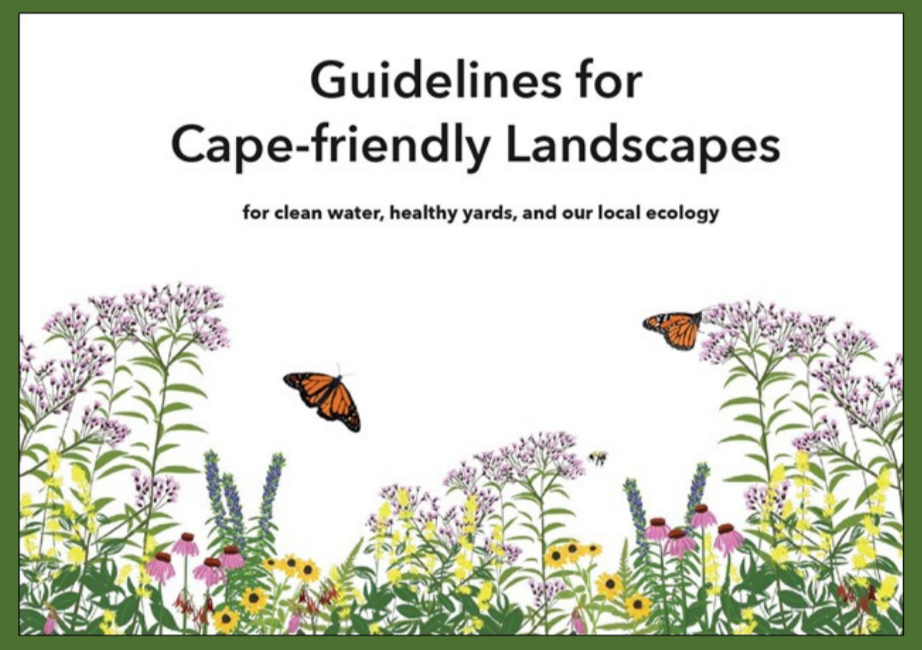
The Guidelines gives homeowners steps they can take in the design and maintenance of their properties that will support pollinators and birds, manage stormwater, conserve water, and protect the Cape's water quality. This 40-page booklet is beautifully illustrated by Marcy Ford with content that is easily digestible and supported by numerous resources for additional learning.
| |
|
We are grateful for the several retail shops that are partnering with us to make this publication more widely available: Brewster Book Store, Birdwatchers General Store, Crocker Nurseries, Wellfleet Audubon Wildlife Sanctuary, Cape Abilities Farm, Cape Cod Museum of Natural History, the Cape Cod Lavender Farm, Heritage Museums and Gardens, Titcomb's Bookshop, Sea Howl Bookshop, Soares Flower Garden Nursery, and Eight Cousins Bookshop.
If you are a retailer and would like to sell this publication at your store, please contact us. |
|
|
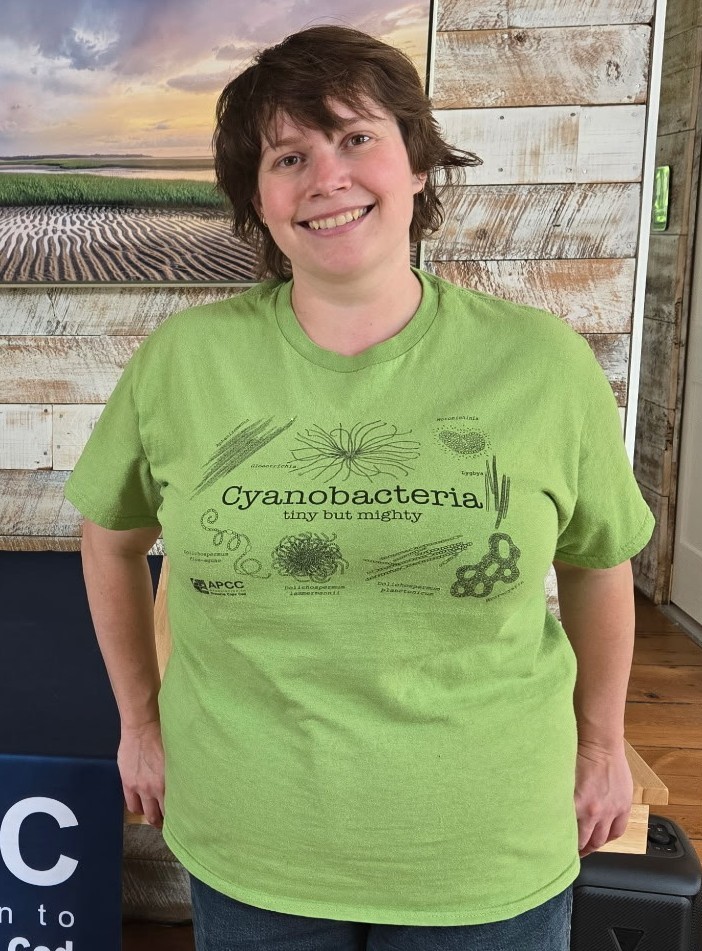
| Cyanobacteria ~ tiny but mighty
color kiwi $30 includes USPS shipping |
|
|
APCC caps
$25 -includes USPS deliver in the U.S. |
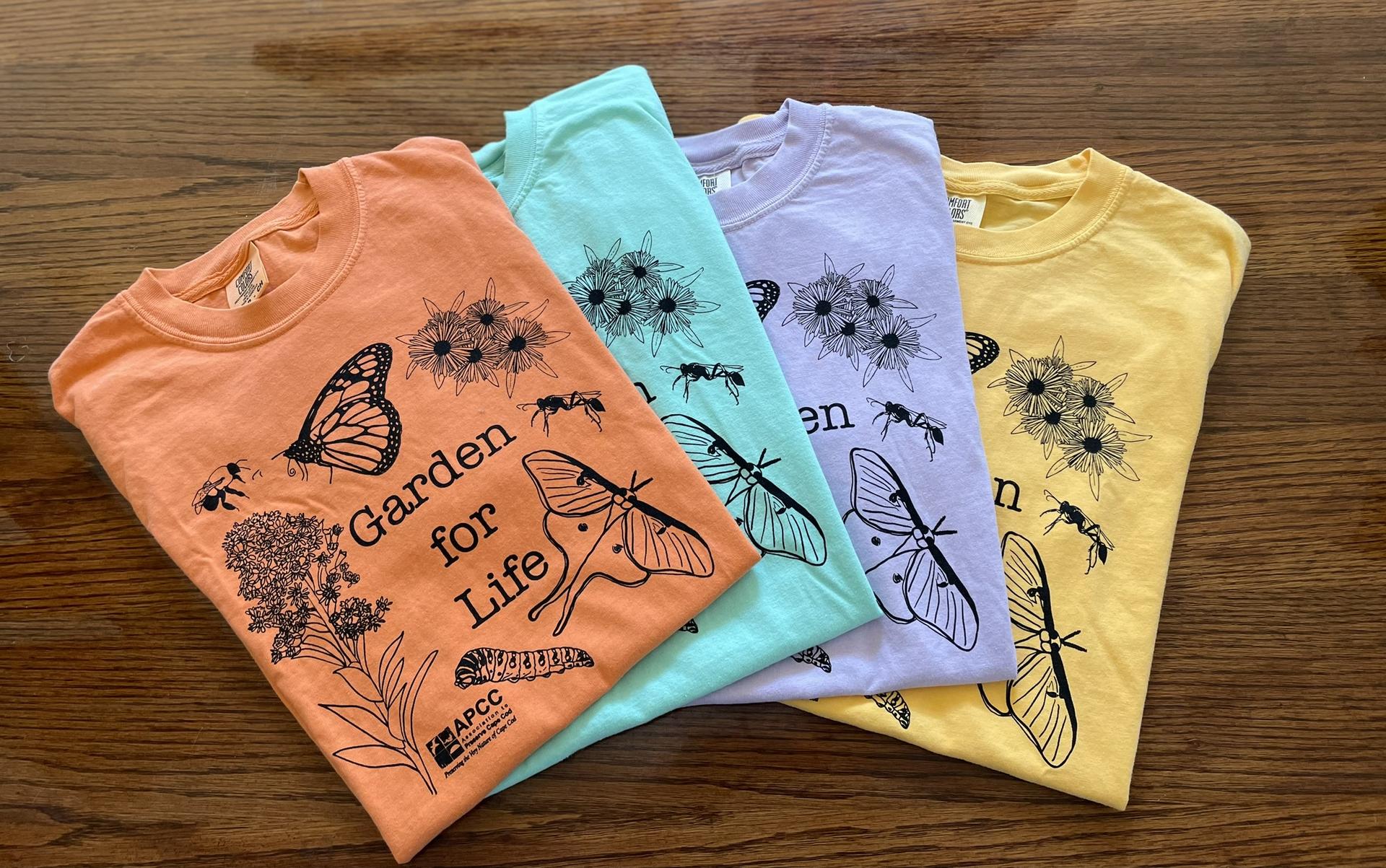
| Garden for Life T's $30 -includes USPS delivery in U.S. |
|
|
|
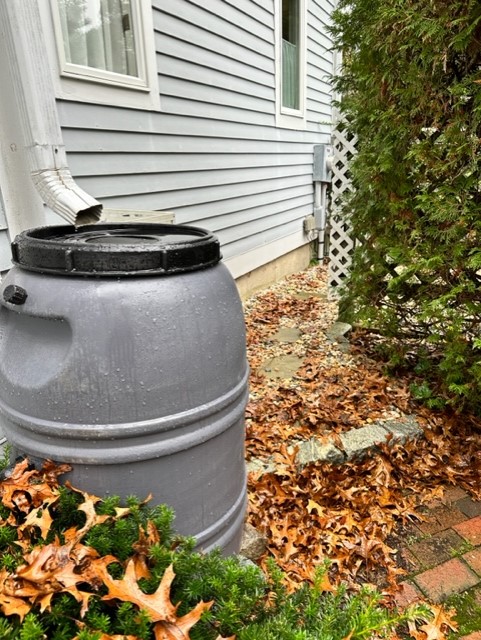
Rain Barrels for Cape Cod
Order online from Upcycle Products $122 each includes shipping to your door APCC receives a portion of the proceeds.
These are 55 gallon, repurposed food barrels. For more information, click here. |
|
|
| APCC eNewsletters.
Our weekly newsletters are archived on our website and easily shared.
You can find past newsletters and share with your friends. Encourage others to sign up for future enewsletters HERE.
|
|
|
Are you thinking of going solar? We hope so!
In partnership with E2 SOLAR in Dennis, APCC receives $500 for every solar installation when APCC is named as referral. |
|
|
|
Thank you to the homeowners who just contracted to install solar panels through E2 Solar. May the sun always shine for you! |
|
|
Expressions Gallery, 578 Main Street, Chatham
CLICK HERE |
Expressions Gallery donates 20 percent of its profits to APCC's work. |
|
|
Thank you to our business sponsors! |
|
|
APCC is rated four stars by Charity Navigator,
2025 Platinum by Candid (formerly Guidestar), and 2024 Top-Rated by GreatNonprofits. |
|
|
Our Contact Information
*{{Organization Name}}*
*{{Organization Address}}*
*{{Organization Phone}}*
*{{Organization Website}}*
*{{Unsubscribe}}* |
| |
|
|