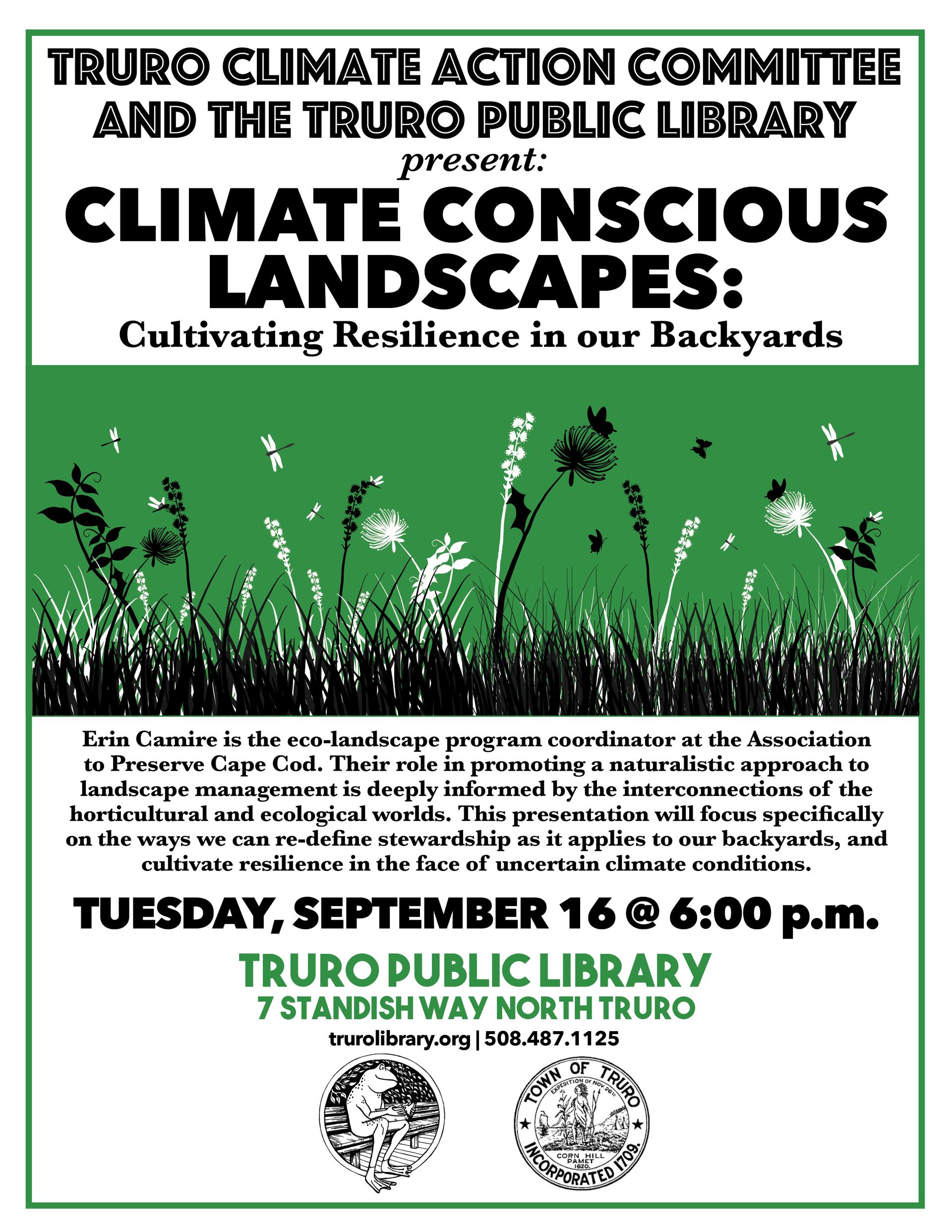
Association to Preserve Cape Cod |
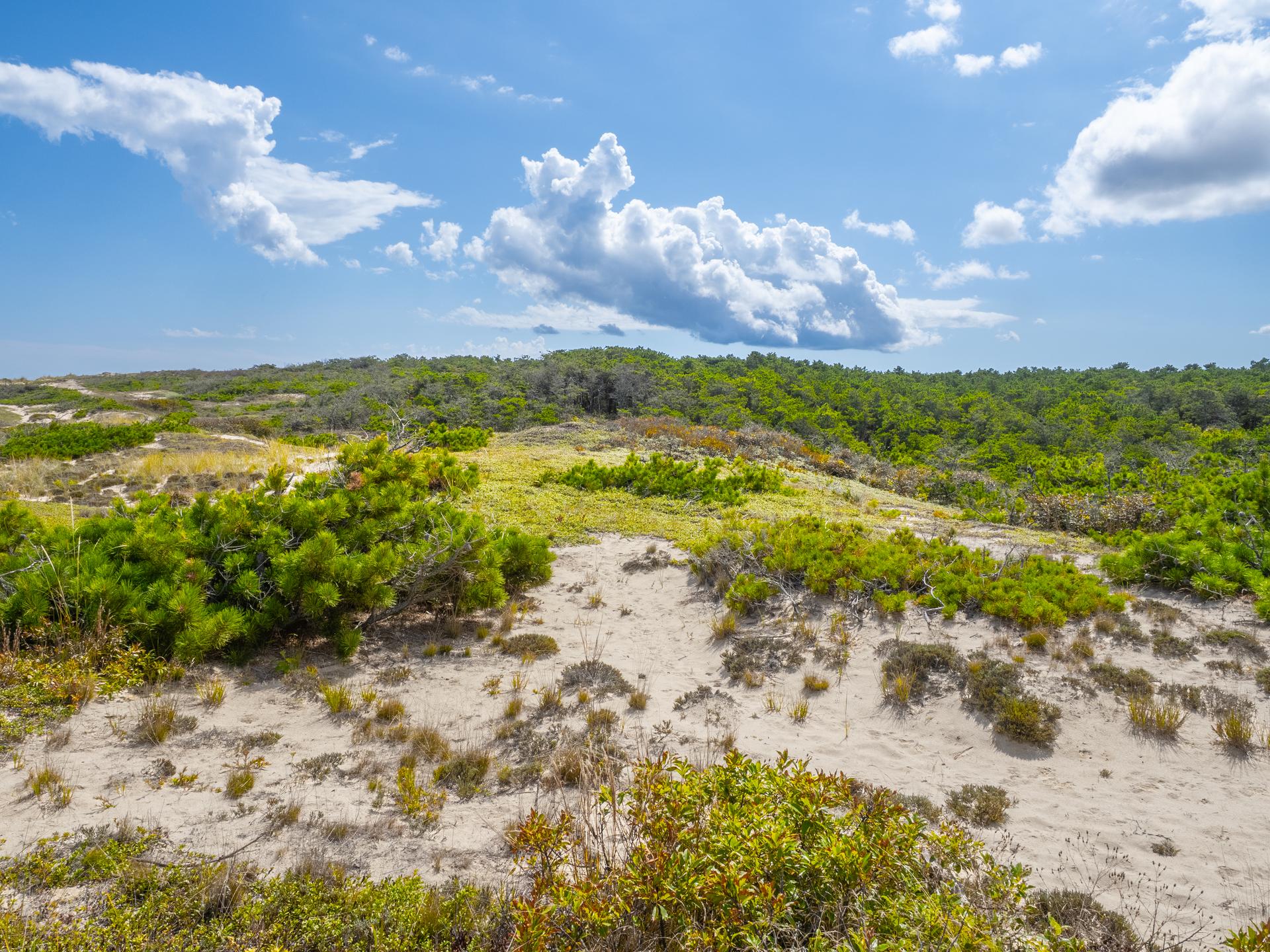
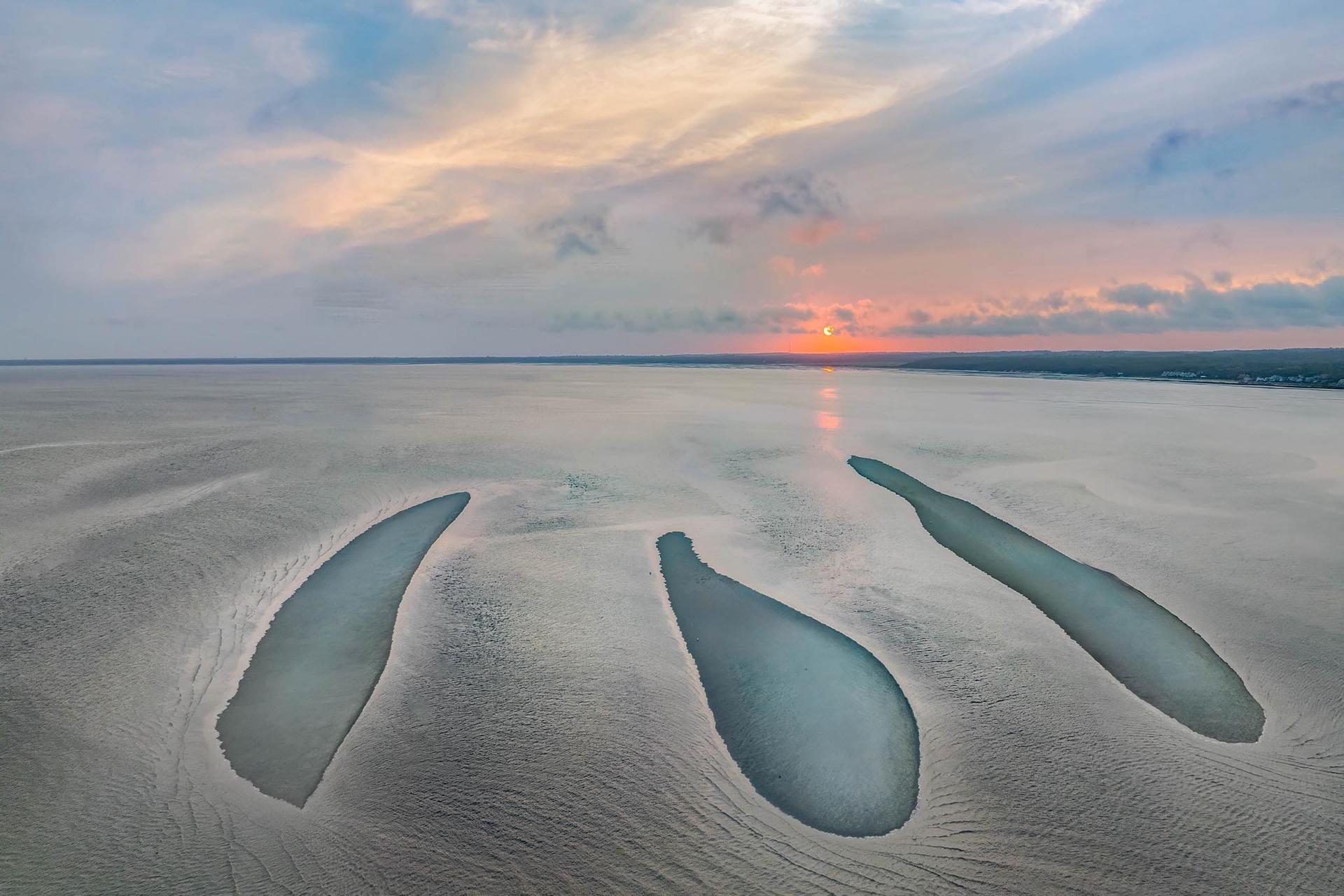
Above: Marconi in Wellfleet. Photo by Sue Machie |
|
|
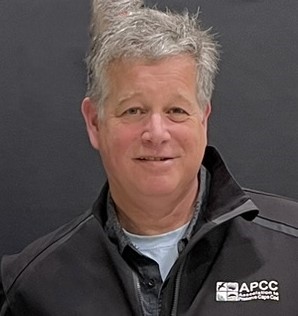
| Fight Back by Andrew Gottlieb, APCC Executive Director |
Despair is a word I hear a lot these days. There is a daily flood of bad environmental news about federal resource protection rules that once protected our land, waters and atmosphere being ignored, hollowed out, or repealed. The initial response of outrage has been eroded by fatigue and a sense of hopelessness that can lead a rational person to despair. And that is part of the point. |
|
|
Despair leads to a form of giving up, and giving up facilitates and eases the path leading to the destruction of the entire environmental protection framework. What then is a good environmentalist to do in response to a situation in which we are clearly disadvantaged?
Most importantly, we cannot compromise our commitment to good environmental stewardship.
The goal of taking actions that result in better air and water quality, improved and increased protections for land and sea, and a commitment to leaving things better than we found them must remain at the core of our movement. From there, the environmental community must become more strategic and targeted in our identification of opportunities to make positive change and to leverage these to the hilt.
Here at APCC, we see opportunity to continue progress at the state and local levels. We will continue to speak out against bad policy choices at the federal level, but if that is all we—and you do—we will not have much to show for it these next few years. What we can do is work with the state to implement the recently announced Biodiversity Goals for the Commonwealth. We can continue to pursue local actions that improve water quality by advancing wastewater management and expanded infrastructure. We can push for and promote increased protections for the 60,000 acres of Cape Cod priority natural resource areas not yet developed but not protected (more on that to come from APCC soon). We can each commit ourselves to better stewardship practices in and around our own homes. In short, there is a lot we can do, and not all of it is listed here.
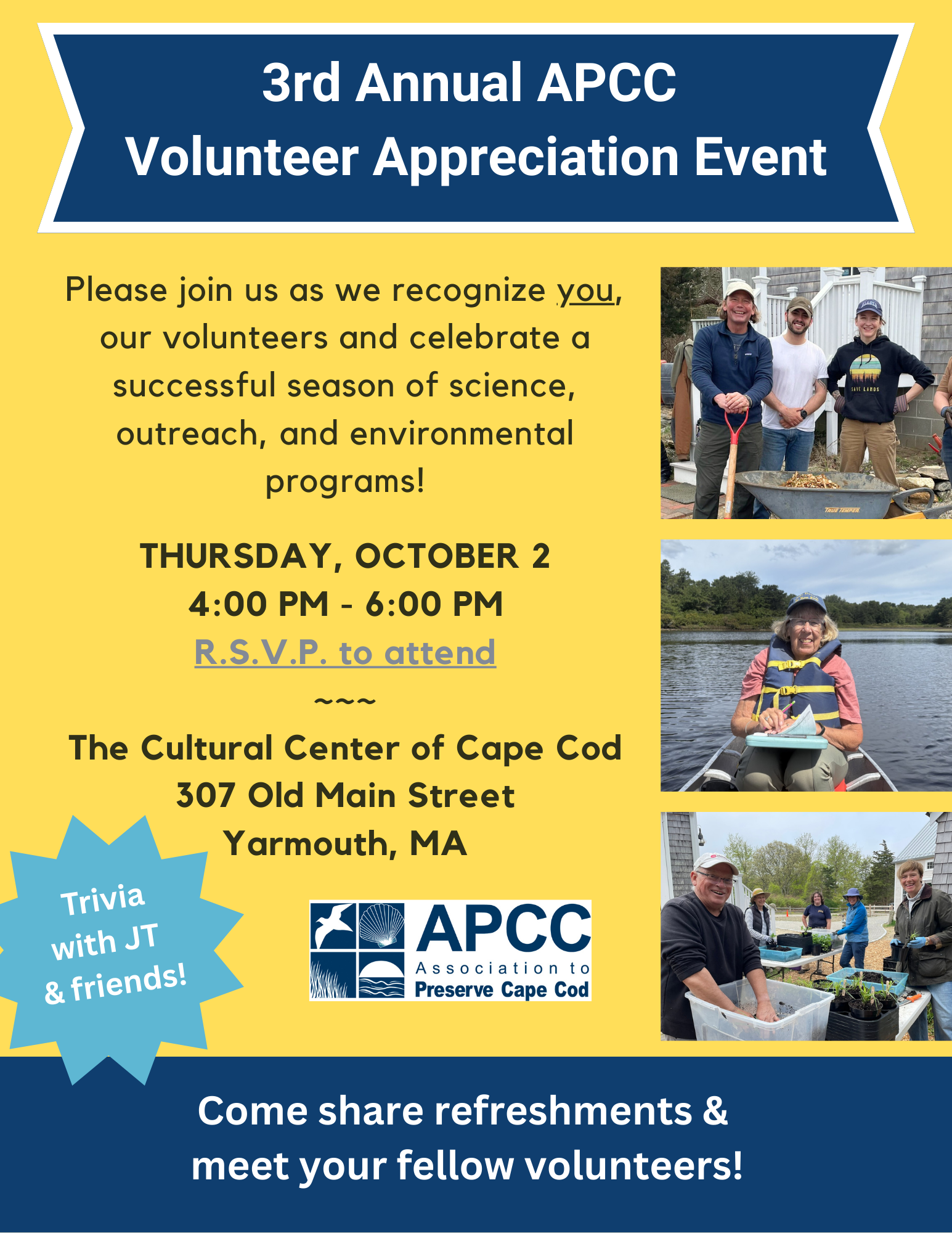
One way, and perhaps the only option we have right now, to fight back is to take advantage of the local opportunities to make things better. Federal policies that degrade the broader environment are bad, but they don’t justify doing nothing at the levels we can still influence. Giving in is a form of complicity, and as a community we cannot participate in that. If you need a little support and encouragement as well as evidence of what some dedicated environmentalists can achieve, please join us at APCC’s annual meeting this Sunday at the Dennis Inn.
Do not despair, the stakes are too high. |
APCC Ecosystem Restoration Program |
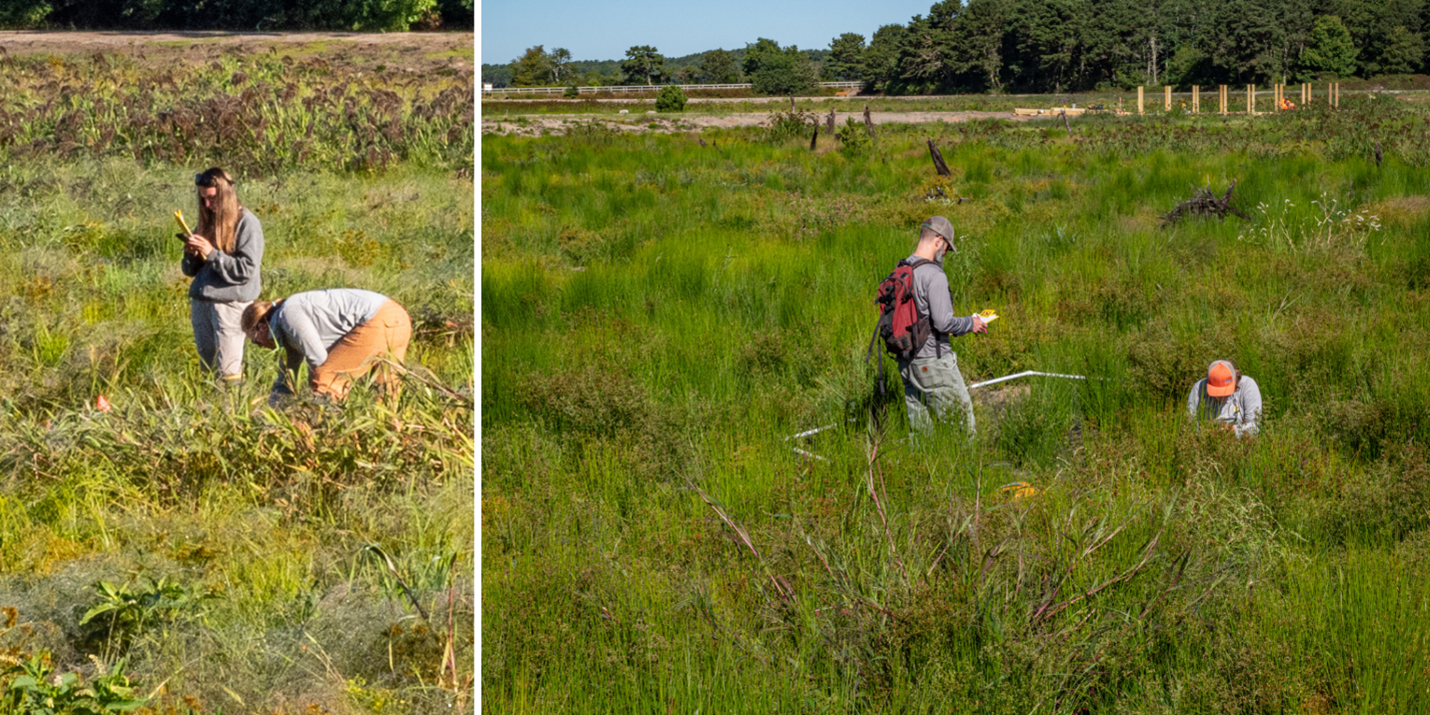
Above: APCC and Inter-Fluve staff survey the vegetation at Harwich Conservation Trust’s Hinckleys Pond — Herring River Headwaters Eco-Restoration Project. Photo by Gerry Beetham |
Hinckleys Pond Transformation Takes Root!
What was once a bare, sandy expanse at Hinckleys Pond is now alive with new growth. Just months after the large-scale restoration effort began, the landscape is greening up quickly. Seeds long hidden in the soil have sprouted, while newly planted native species are taking hold. Together, they’re transforming the former cranberry bog into a vibrant habitat that’s only beginning to reveal its potential.
To understand how this recovery is unfolding, ecologists recently completed the project’s first post-restoration plant survey. Using fixed plots across the site, they recorded a variety of species—from rushes and sedges to shrubs and vines—providing an early snapshot of how the ecosystem is re-establishing itself. These findings will be compared to pre-restoration surveys and help track changes over time and connect this project to a broader regional picture of bog restoration.
The results show that the new green scene is just the start of a long, dynamic process of ecological renewal. Read more at the Harwich Conservation Trust. |
Red Brook Restoration Project Update |
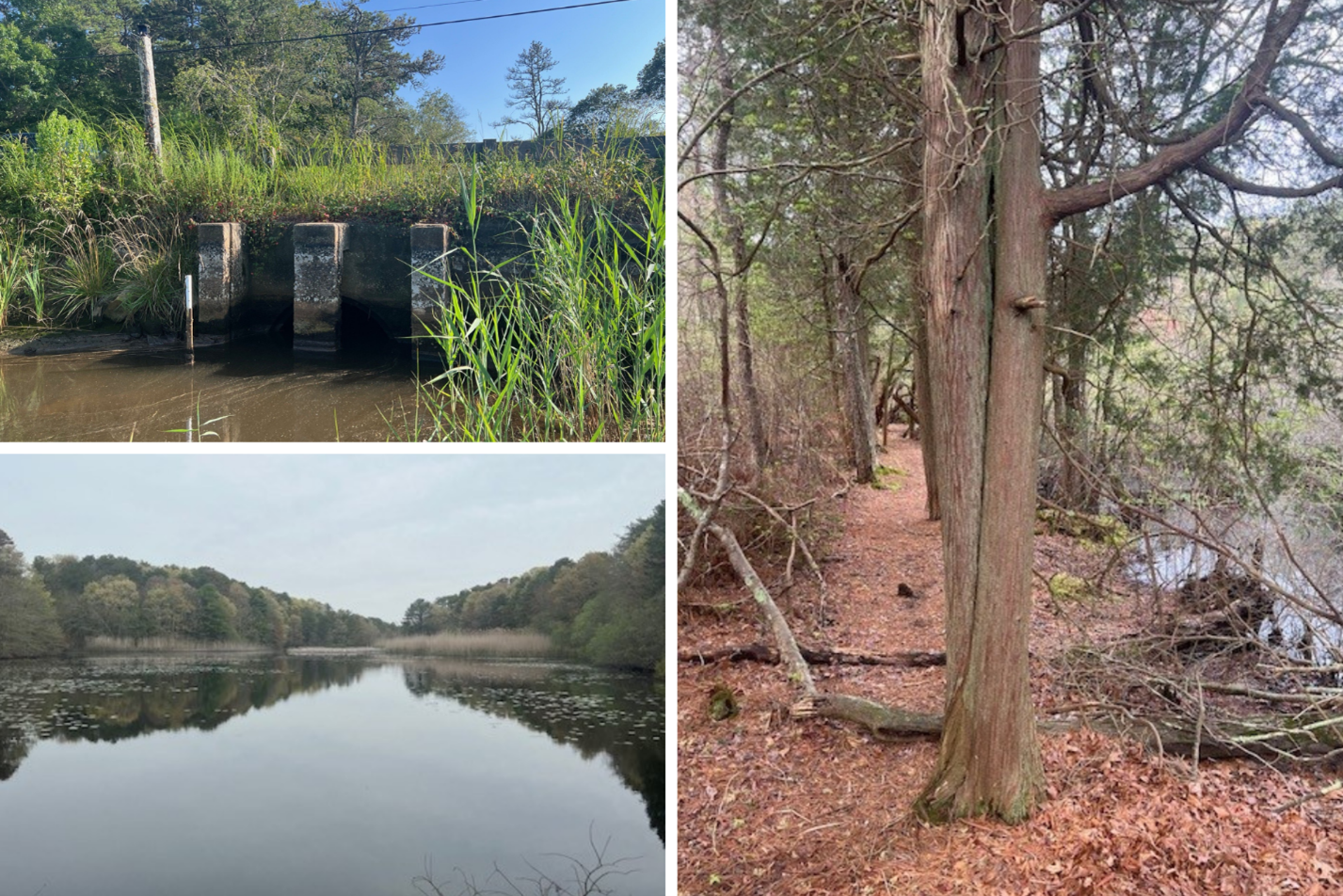
Above: Scenes from the Red Brook restoration site. Top left: The existing culvert, a key barrier to fish passage. Right: Atlantic white cedar swamps at the northern reaches of the project site, providing important wetland habitat. Bottom left: Existing warm-water impoundments, remnants of historic cranberry farming in the area. |
This summer, APCC and our partners took an important step forward in the Red Brook restoration project by gathering with landowners and community members at the Waquoit Bay Reserve Boat House. The project located, on the border of Falmouth and Mashpee, focuses on replacing an aging culvert along Red Brook Road, restoring natural river flow, and reconnecting and restoring wetlands that have been altered by nearly a century of cranberry farming.
The goal of the Red Brook restoration project is to restore fish passage for brook trout and other native species, improve water quality, and strengthen climate resilience for both people and wildlife. Drawing on lessons from nearby successes like the Childs and Coonamessett River restorations, the Red Brook team is building on a proven track record of river revitalization to bring lasting ecological and community benefits.
At the meeting, landowners shared what Red Brook means to them—its quiet beauty, open water, and the wildlife it supports—while also voicing concerns about mosquitoes, invasive plants, declining water quality, and the loss of familiar species. These conversations highlighted the importance of continued dialogue around what restoration will look like, how construction might affect daily life, and what the long-term vision will be.
Looking ahead, the project team will continue refining design plans, addressing land acquisition needs, and keeping the community closely involved. Later this fall, APCC and our partners will reconnect with landowners and community liaisons to share updates and gather additional input. This work is part of APCC’s larger Ecosystem Restoration Program, supported by a recent $15 million NOAA award that is advancing restoration at Red Brook alongside several other high-priority sites across Cape Cod. Together, these efforts are helping to shape a more resilient and thriving future for our region’s rivers and wetlands.
|
APCC's Pond Programs <º/,}}}}}}}=<{ <º/,}}}}}}}=<{ |
|
|
| Photo credit: Gerald Beetham |
|
|
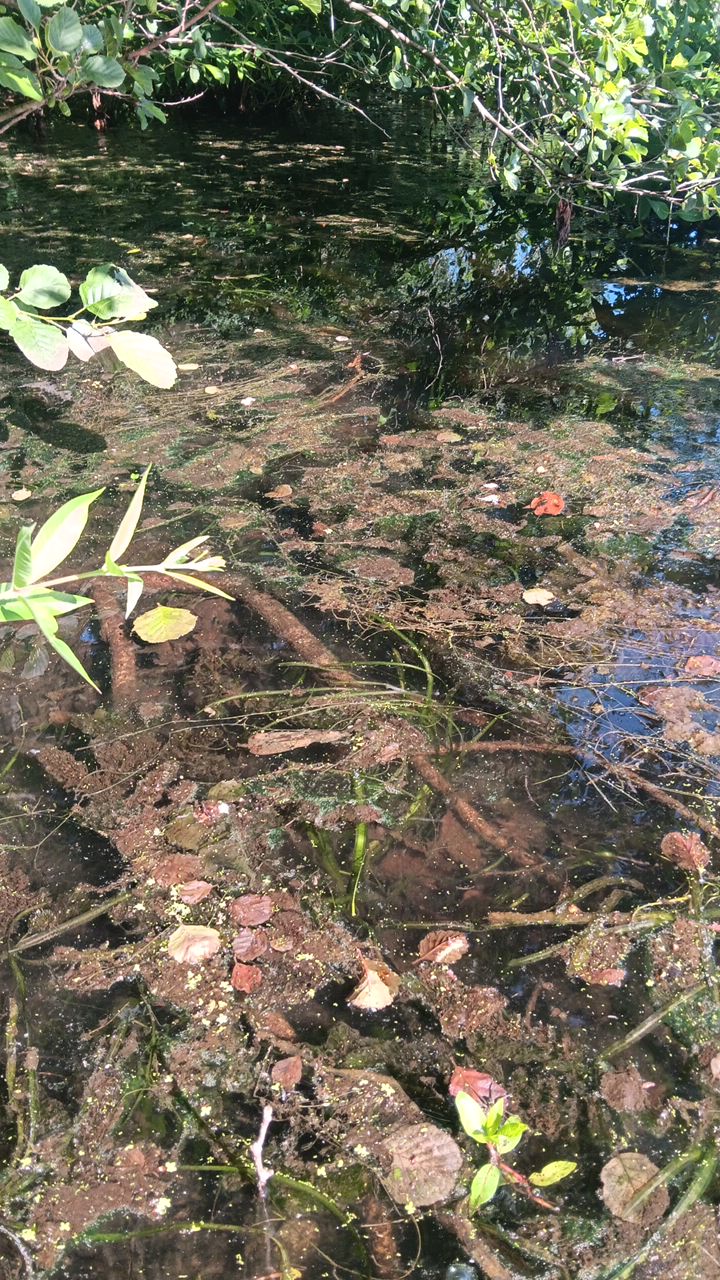
Benthic Cyanobacteria
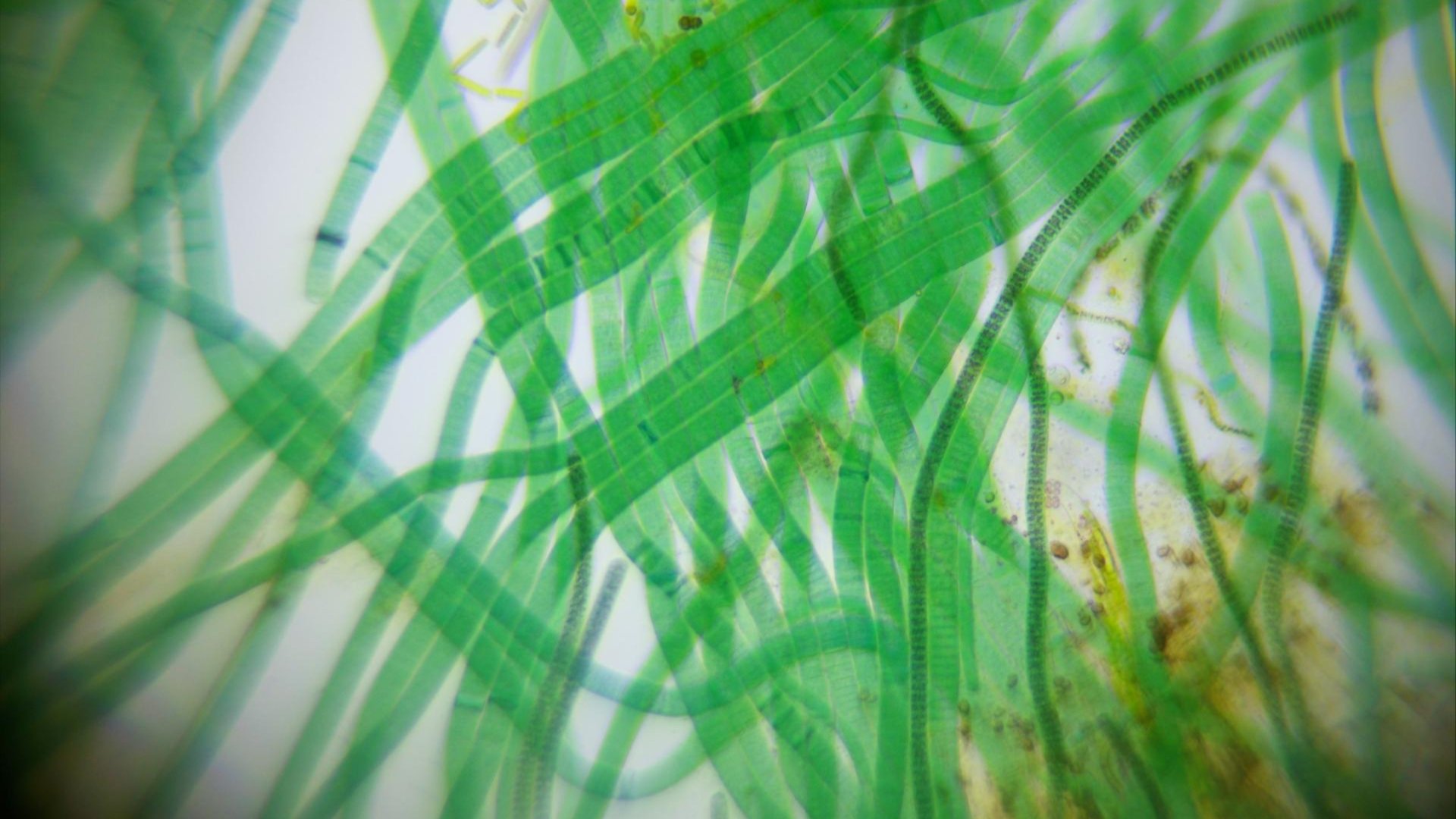
When most people picture cyanobacteria, they picture large green blooms on the surface. These blooms are planktonic, meaning that they occur on the surface of a freshwater body of water, and usually accumulate on shorelines. While they are the most recognizable, these planktonic blooms are not the only potentially dangerous cyanobacteria formation.
Benthic (the area at the bottom of a body of water) cyanobacteria mats form while attached to hard surfaces in the water. These surfaces include many varying substrates such as sand, submerged vegetation, rocks, and more. Because they are mostly connected to the bottom in the water, they usually do not have a major effect on water clarity like planktonic cyanobacteria blooms do.
While usually found at the bottom of a pond or lake, these mats can sometimes break off from the hard substrate they are connected to and float up to the surface, forming cyanobacteria clumps. This happens when cyanobacteria mats use sunlight to photosynthesize and release oxygen. The oxygen bubbles that form cause the cyanobacteria mats to detach and float to the surface. Their non-uniform spread throughout the water surface and column can make it tricky to sample and monitor these mats as well.
Despite the difference in appearance between benthic and planktonic cyanobacteria, both can be toxic and are both usually exacerbated by an overloading of nutrients and warmer temperatures. The clumps that benthic mats form usually have a very high biomass of cyanobacteria because they are so concentrated, which can cause issues if animals or people ingest these clumps. Some side effects of ingesting these toxins can include vomiting, salivating uncontrollably, a loss of motor function, and even death.
This is why it is important to be cautious in freshwater bodies and look out for benthic mats even if there is no cyanobacteria scum present. |
Above: Microscopy photo of Oscillatoria
|
|
| Cape Cod Pond Watchers Bio-survey Program ~ a training video on how to use the Survey123 app to log your observations in pondside! |
| |
|
APCC's Cyanobacteria Monitoring Program |
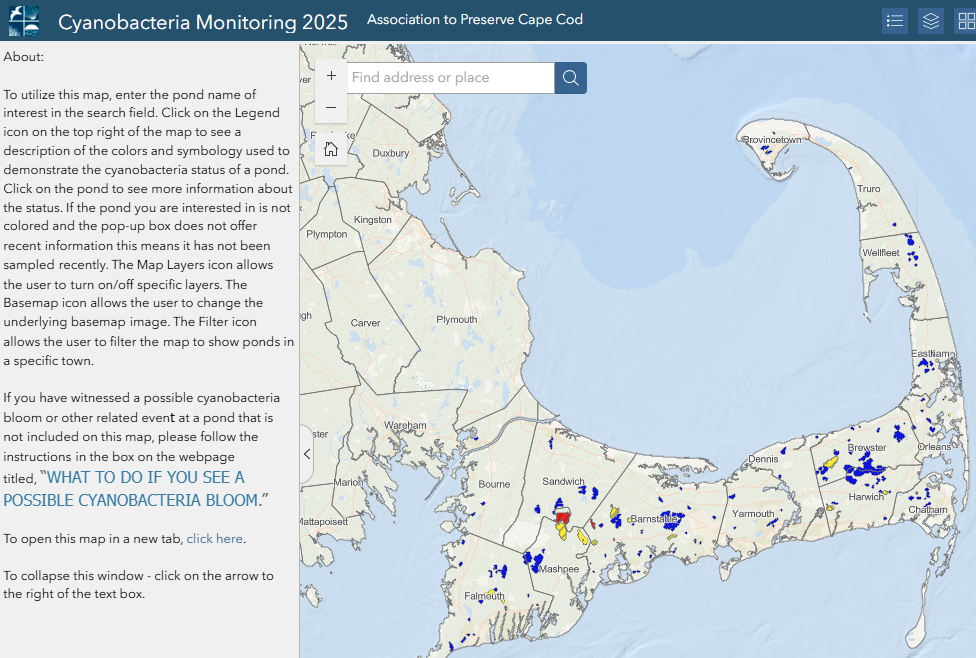
"When in doubt, stay out." High concentrations of potentially toxic cyanobacteria were detected in several ponds last week, at levels that are of concern for pets and children who are more susceptible due to ingestion. |
|
|
|
Check on the status of your favorite pond on our interactive map. If you see what appears to be a bloom, take a picture, note the day, location, and time and notify the local health department, and email to cyano@apcc.org.
Sign up for cyanobacteria email alerts.
Please note: The cyanobacteria alert is only sent out when a concern is first identified at a pond. All updates following this initial notice are shared on APCC’s interactive map. |
|
|
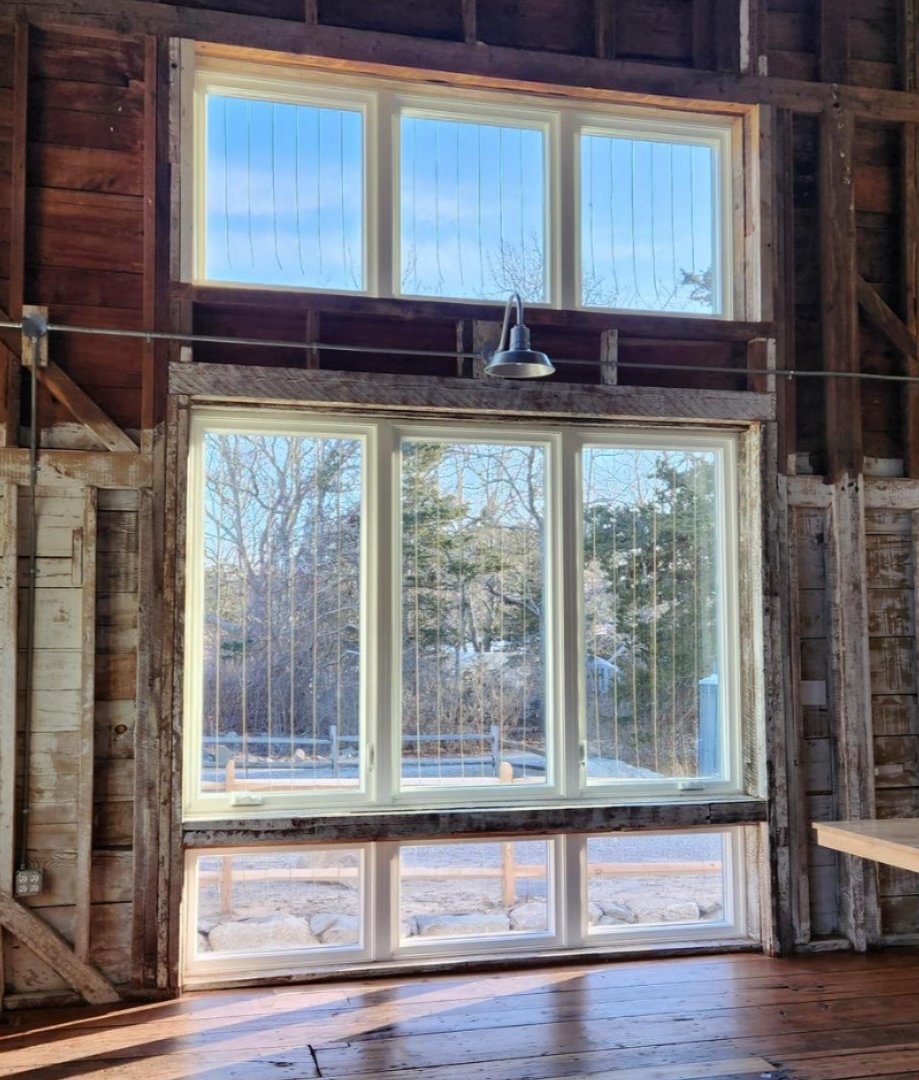
What is that hanging outside the windows at the Koppel Center? |
They are Acopian bird savers! These cords dangle four inches apart, signaling to birds that they cannot fly through. They hang on the outside of the Koppel Center's grand windows to save birds from collision. Follow the link and you can learn how to make them yourself or purchase. Learn more here: What birds see.
|
This week in APCC's Living Landscape |
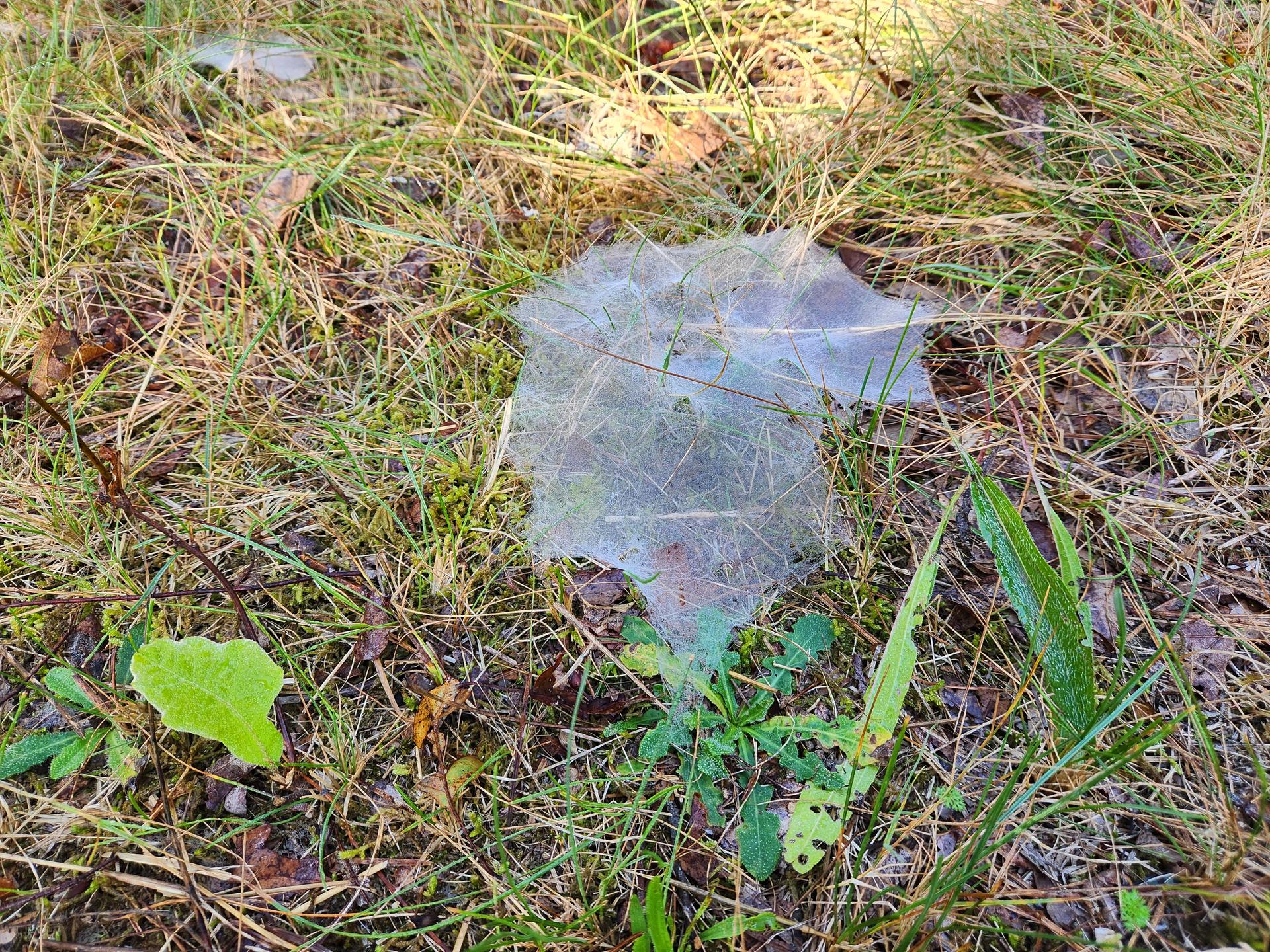
Above: Grass spider web. Below: An informational video about grass spiders. |
|
|
"For this genus of spiders, the web is a horizontal, sheet-like web, with a small funnel-like tube off to a side (or for some species, the middle of the web) and a 3-dimensional barrier web over the top. When a flying insect hits the barrier, it falls into the sheet below. The funnel (or tube) is what the family (Agelenidae) is named for, and is used by the spider for hunting.
"The spider will lie in wait in the funnel, and when an insect hits the barrier and falls on the web, the spider will rush out, very quickly check to see if it is prey, and if it is prey, bite it. The venom is fast-acting on the prey, so once the prey is subdued (less than a second or two), the spider will drag the prey back into the funnel (for safety while eating, and to prevent other insects from recognizing the danger that lurks below on the web...)
"For Agelenopsis spp. spiders, the web is not sticky. If the insect lands/falls on the web, the web will actually become tangled around the prey's feet, temporarily ensnaring it in the web.
"The funnel web for Agelenopsis is a distinctive web, and often is noticed in bushes and grass, especially in the early fall mornings, where the dew has collected on the web. The webs can be expansive, covering several square feet, or just small webs in the grass.
"These spiders are very common throughout the United States and Canada. Their webs will "litter" the low-hanging shrubs and grass in summer to early fall, and are really noticeable after a nice early morning dew. They are fairly easily identified: a "small" brown spider with longitudinal striping, the arrangement of their eight eyes into two rows. (The top curved row has four eyes and the bottom curved row has four eyes).
"They also have two prominent hind spinnerets. A spinneret is a spider's silk spinning organ. They are usually on the underside of a spider's abdomen, to the rear. On many spiders, the spinnerets cannot be seen easily without flipping the spider over; however, with Agelenopsis, the spinnerets are readily seen without having to flip the spider over. Agelenopsis spp. also have somewhat indistinct bands on their legs." (Source & credit.)
CLICK HERE for an informational short video on grass spiders. |
|
|
| Brewster Ponds Coalition hosts
Old Ladies Against Underwater Garbage Brewster Ladies Library, 1822 Main St
Wednesday, September 10th 2:00 - 3:30 p.m.
Susan Baur will captivate attendees with the efforts of this energetic group of ladies who swim in Cape Cod's freshwater ponds collecting trash. This free event is open to the public; please register HERE.
This summer has been a busy one for the group, aka OLAUG, with more than 20 dives scheduled throughout the Cape. Although some planned dives have been complicated by cases of cyanobacteria, it's been a banner year for trash. As Susan says, "Every dive is an adventure and gives us another story to tell." You will be captivated by OLAUG's adventures! |
|
|
A Cape-wide Conservation Event Calendar |
The Compact of Cape Cod Conservation Trusts (“the Compact”) and its nonprofit members launched a new regional calendar of events. The Conservation Calendar includes programs across Cape Cod hosted by these groups. The goal of the calendar is to encourage visitors and residents to take part in nature and environmental events. You can always find the link to the calendar on APCC's website under News & Events.
|
If you are a farmer or someone who wants to grow native plants to sell, or just want to be updated on the program's development, please submit an interest form that appears on our webpage. We will be sending periodic email notices of workshops and meetings.
Funding for the project is provided by Barnstable County and its Economic Development Council License Plate Grant Program through the Cape Cod Commission. |
|
|
A Cape Cod Native Plant-selector
~ to help you choose the perfect native plants for your garden. |
|
|
Email kandres@apcc.org and we'll send you a CapeCodNativePlants.org decal. |
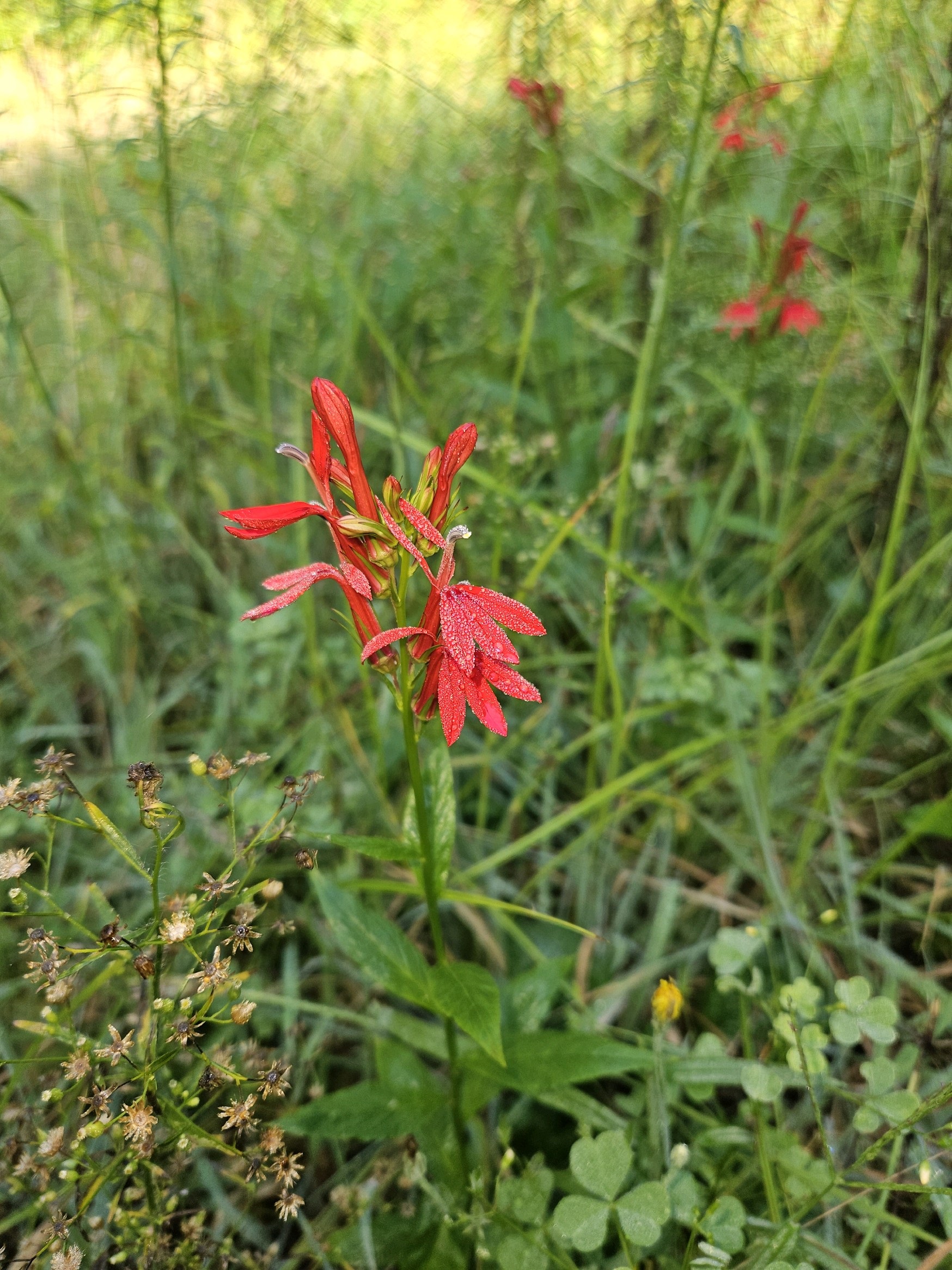
| Cardinal Flower
Lobelia cardinalis |
|
|
|
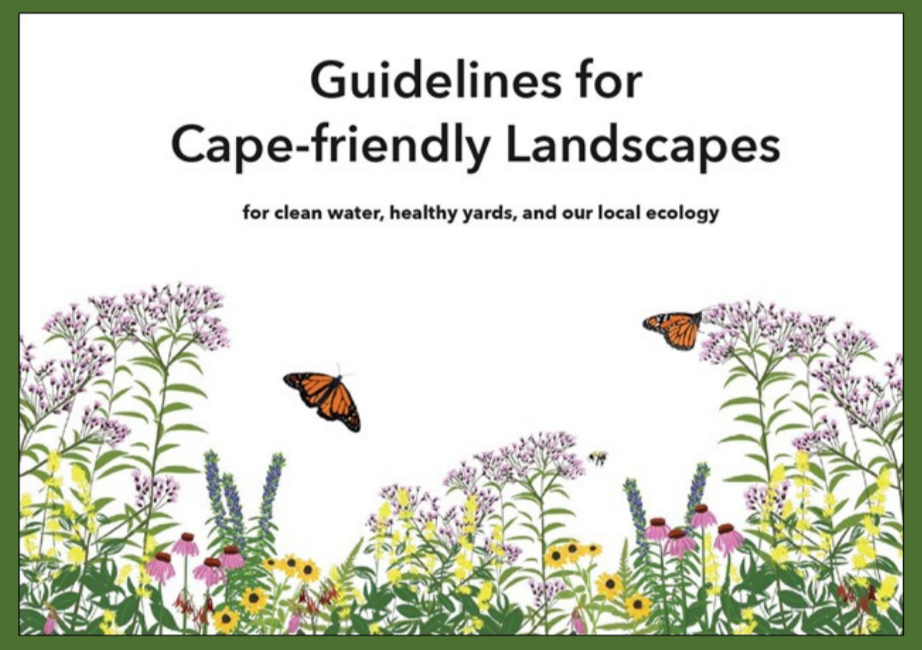
The Guidelines gives homeowners steps they can take in the design and maintenance of their properties that will support pollinators and birds, manage stormwater, conserve water, and protect the Cape's water quality. This 40-page booklet is beautifully illustrated by Marcy Ford with content that is easily digestible and supported by numerous resources for additional learning.
|
|
|
We are grateful for the several retail shops that are partnering with us to make this publication more widely available: Brewster Book Store, Birdwatchers General Store, Crocker Nurseries, Wellfleet Audubon Wildlife Sanctuary, Cape Abilities Farm, Cape Cod Museum of Natural History, the Cape Cod Lavender Farm, Heritage Museums and Gardens, Titcomb's Bookshop, Sea Howl Bookshop, Soares Flower Garden Nursery, and Eight Cousins Bookshop.
If you are a retailer and would like to sell this publication at your store, please contact us. |
|
|
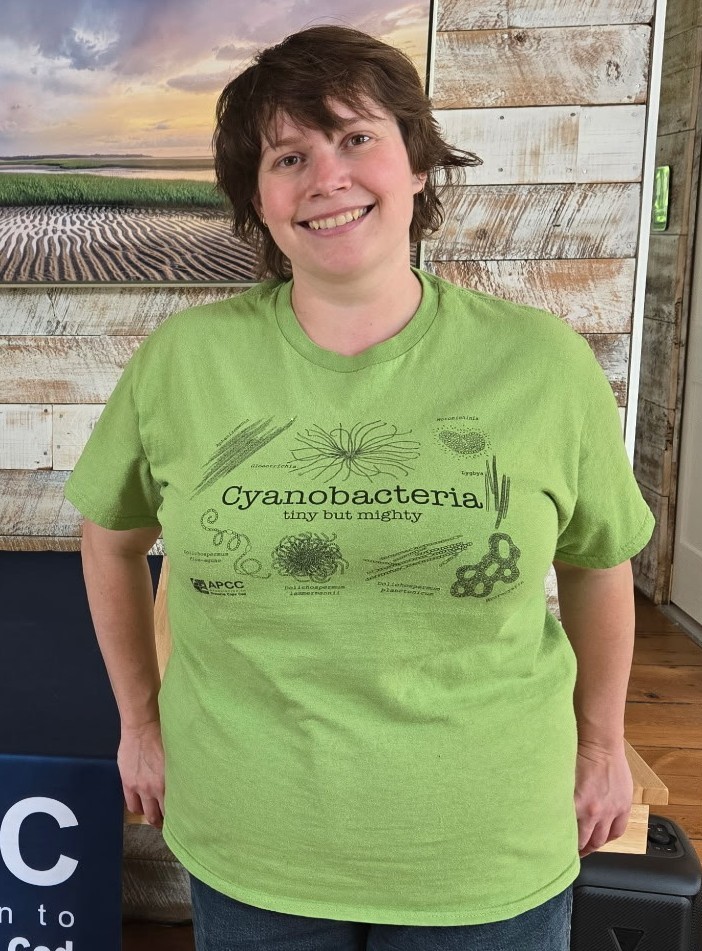
| Cyanobacteria ~ tiny but mighty
color kiwi $30 includes USPS shipping |
|
|
APCC caps
$25 -includes USPS deliver in the U.S. |
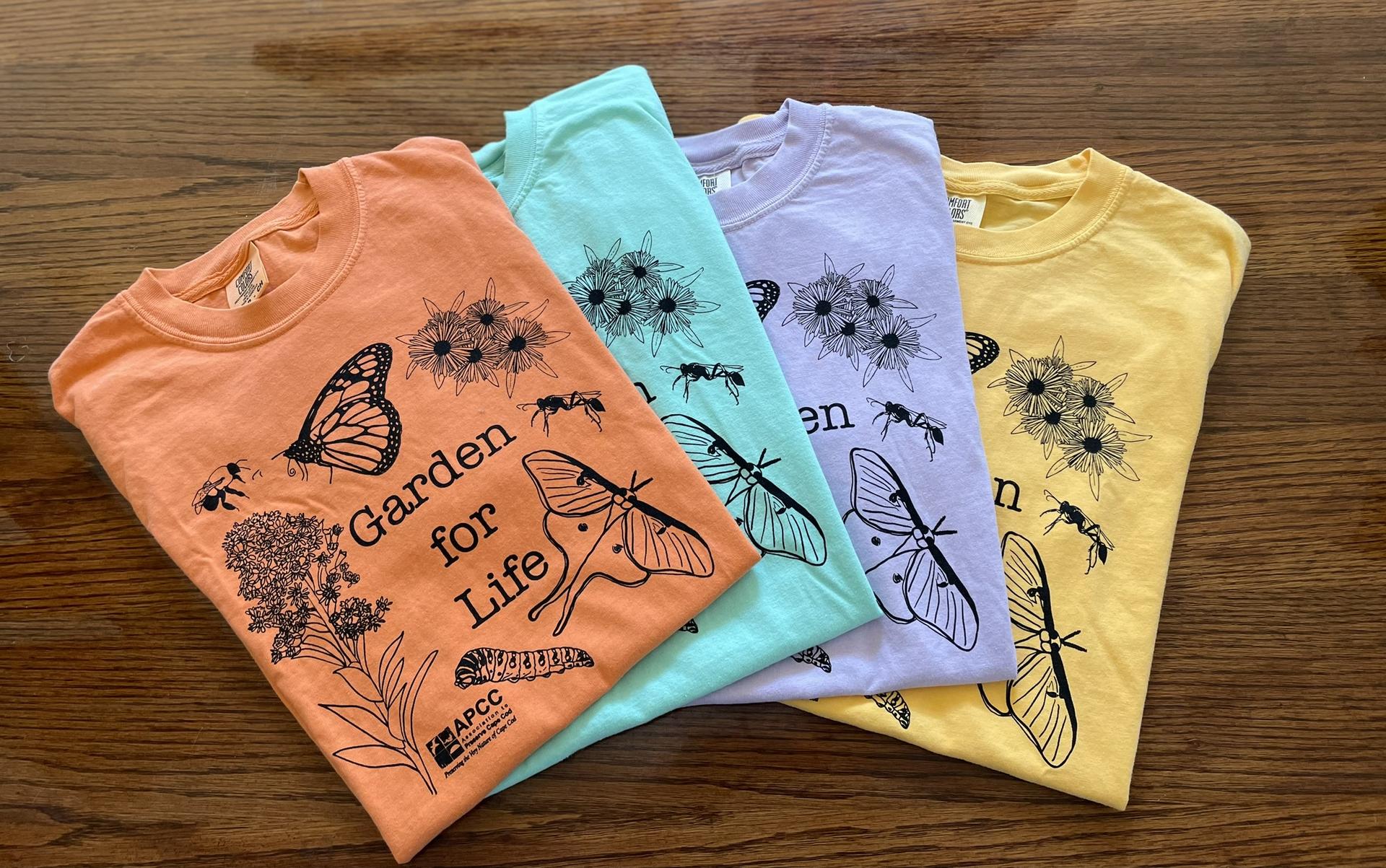
| Garden for Life T's $30 -includes USPS delivery in U.S. |
|
|
|
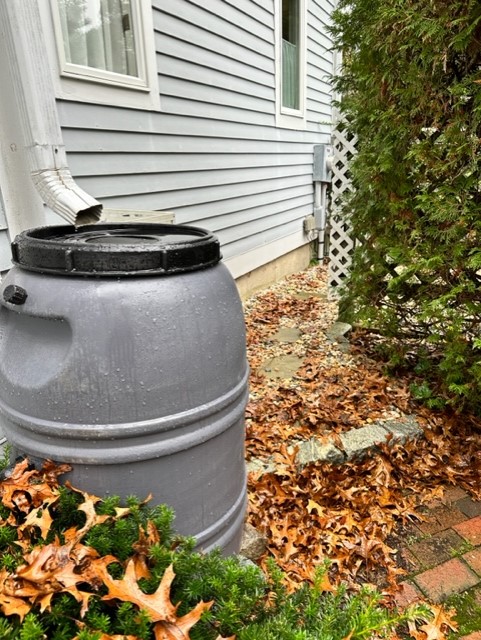
Rain Barrels for Cape Cod
Order online from Upcycle Products $122 each includes shipping to your door APCC receives a portion of the proceeds.
These are 55 gallon, repurposed food barrels. For more information, click here. |
|
|
| APCC eNewsletters.
Our weekly newsletters are archived on our website and easily shared.
You can find past newsletters and share with your friends. Encourage others to sign up for future enewsletters HERE.
|
|
|
Are you thinking of going solar? We hope so!
In partnership with E2 SOLAR in Dennis, APCC receives $500 for every solar installation when APCC is named as referral. |
|
|
|
Thank you to the homeowners who just contracted to install solar panels through E2 Solar. May the sun always shine for you! |
|
|
Expressions Gallery, 578 Main Street, Chatham
CLICK HERE |
Expressions Gallery donates 20 percent of its profits to APCC's work. |
|
|
Thank you to our business sponsors! |
|
|
APCC is rated four stars by Charity Navigator,
2024 Platinum by Candid (formerly Guidestar), and 2024 Top-Rated by GreatNonprofits. |
|
|
Our Contact Information
*{{Organization Name}}*
*{{Organization Address}}*
*{{Organization Phone}}*
*{{Organization Website}}*
*{{Unsubscribe}}* |
| |
|
|