Association to Preserve Cape Cod |
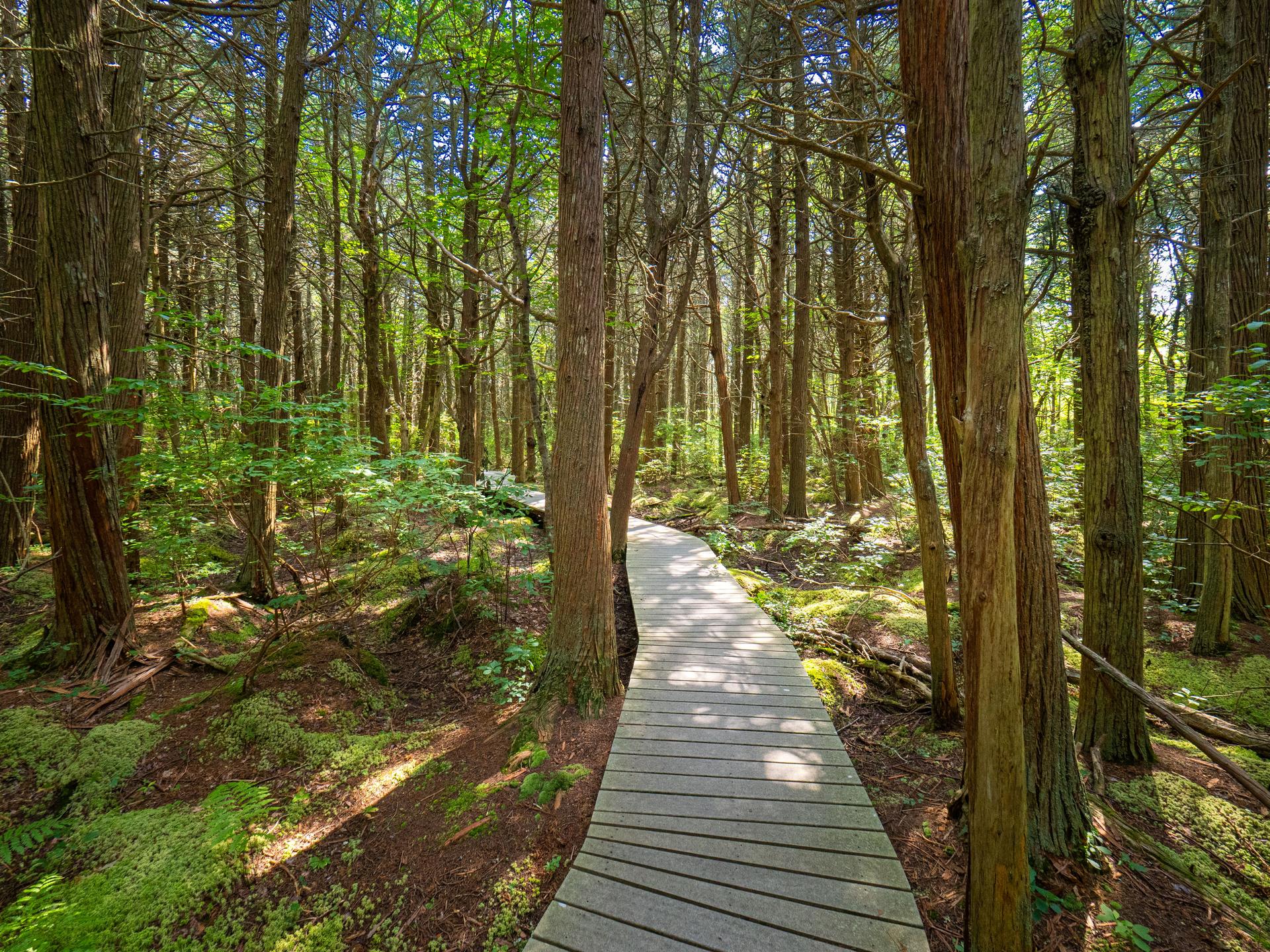
Above: White Cedar Swamp, Eastham. Photo by Sue Machie |
|
|
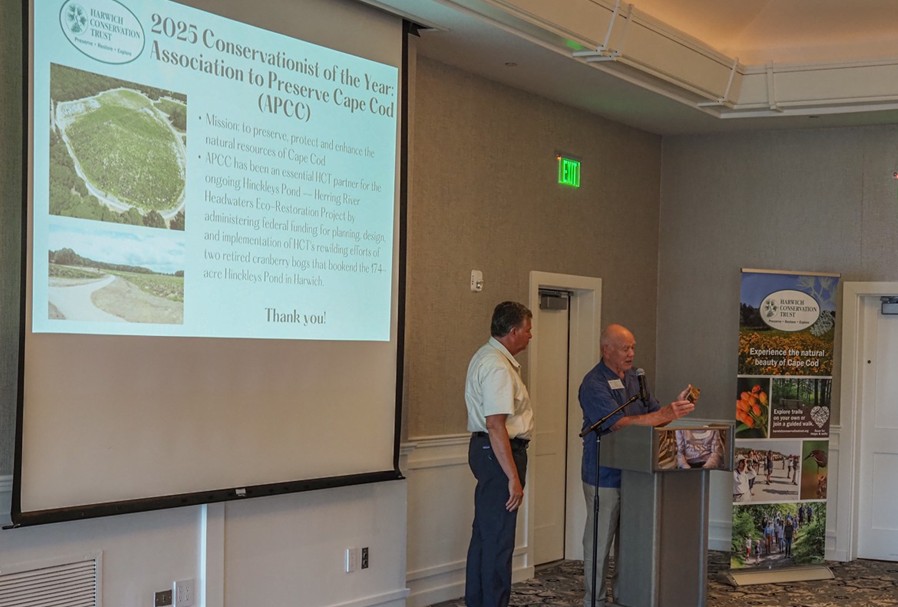
Above: APCC Executive Director Andrew Gottlieb accepts the Conservationist of the Year award from Tom Evans, Harwich Conservation Trust. |
APCC Awarded Conservationist of the Year by Harwich Conservation Trust
APCC was honored to be named Conservationist of the Year at the Harwich Conservation Trust (HCT) annual meeting last month. The award recognizes APCC’s leadership and collaborative work to protect, preserve, and restore the natural resources that make Cape Cod unique.
Accepting the award on behalf of APCC, Executive Director Andrew Gottlieb emphasized the strong partnership between the two organizations. He noted HCT’s leadership in restoration on the Cape, including the Cold Brook Preserve project, and its close collaboration with APCC on the recently completed Hinckleys Pond Herring River Headwaters Ecological Restoration Project. APCC’s accomplishments are made possible by the steadfast support of our members, donors, and conservation partners like the Harwich Conservation Trust. Together, we are building a future where Cape Cod’s lands and waters remain healthy, resilient, and thriving for generations to come. |
APCC Ecosystem Restoration Program |
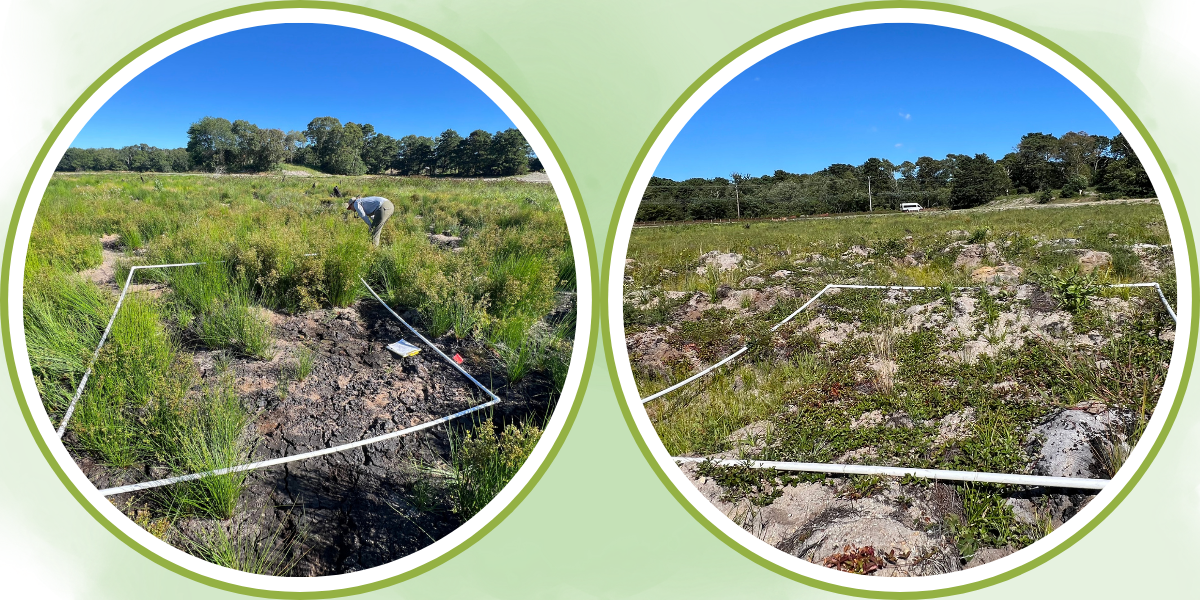
Above: Examples of the two restoration approaches used at Hinckleys Pond. The plot on the left shows a site where sand was removed, exposing layers of peat, while the plot on the right shows a site where no sand removal was conducted. |
|
|
Two Paths, One Project: Restoring Former Cranberry Bogs at Hinckleys Pond
On the shores of Hinckleys Pond in Harwich, an innovative restoration project is showing how different approaches can bring wetlands back to life. For more than a century, the bogs around the pond were farmed for cranberries, leaving behind layers of sand and altered hydrology. Today, those bogs are being reimagined as healthy wetlands—critical habitats for plants, wildlife, and clean water. At Hinckleys Pond, two distinct restoration methods were used side-by-side: In some areas, sand was removed to reveal the original peat soils; in others, sand was left in place.
At both sites, crews employed a technique called microtopography, sculpting the land into small hummocks, swales, and channels. This isn’t just cosmetic landscaping—it plays a crucial role in rewetting the bog, creating diverse habitats, and unlocking the hidden potential of the soil itself. Beneath the surface lies a dormant seed bank, the long-buried legacy of native wetland plants. By exposing peat and creating moist depressions, microtopography gives these seeds the right conditions to germinate, often allowing the wetland to begin revegetating on its own.
In areas where sand was excavated, restoration teams peeled back the farming layer to uncover the peat that lay beneath. Combined with microtopographic features, this approach quickly brought groundwater to the surface and created conditions more like natural wetlands. The exposed peat provides a rich substrate where the dormant seed bank can awaken, and water-filled hollows support aquatic plants and invertebrates. These sites tend to look “wetter” right from the start, with clear signs of wetland vegetation returning.
Elsewhere, the sand layer was left in place, but microtopography still played a pivotal role. Excavators carved out basins and low spots, cutting down through the sand to reveal pockets of peat. In these depressions, the seed bank had a chance to reemerge, while sandy hummocks provided a different set of niches for plants and animals. This approach is often less costly and disruptive, and while vegetation recovery can be slower, it still taps into the natural resilience of the site and supports development of a diversity of habitats.
Recently, APCC joined colleagues from Inter-Fluve for post-restoration monitoring at Hinckleys Pond. Walking the site, it was striking to see how both sand removal and no-sand-removal areas were responding. In some places, lush patches of wetland plants have already taken hold, sprouting from seeds that may have lain dormant for decades. In others, early signs of colonization are just beginning to appear, hinting at the slow but steady unfolding of wetland succession. By comparing the two approaches side by side, we can learn not just which method works “better,” but how each shapes habitat, hydrology, and plant communities over time.
The Hinckleys Pond—Herring River Headwaters Eco-Restoration Project is made possible through strong collaboration and funding. Project coordination is led by the Harwich Conservation Trust, ensuring that restoration aligns with local conservation goals. Financial support comes from the NOAA Restoration Center, private foundations, and other partners, helping cover planning, construction, and monitoring. This combination of expertise and resources allows the project to be both ambitious and carefully managed.
|
APCC's Pond Programs <º/,}}}}}}}=<{ <º/,}}}}}}}=<{ |
Intern Spotlight in APCC's Cyanobacteria Program - Caroline Berney |
|
|
Cape Cod Pond Watchers Bio-survey Program ~ a training video on how to use the Survey123 app to log your observations in pondside! |
| |
|
APCC's Cyanobacteria Monitoring Program |
"When in doubt, stay out." High concentrations of potentially toxic cyanobacteria were detected in several ponds last week, at levels that are of concern for pets and children who are more susceptible due to ingestion. |
|
|
|
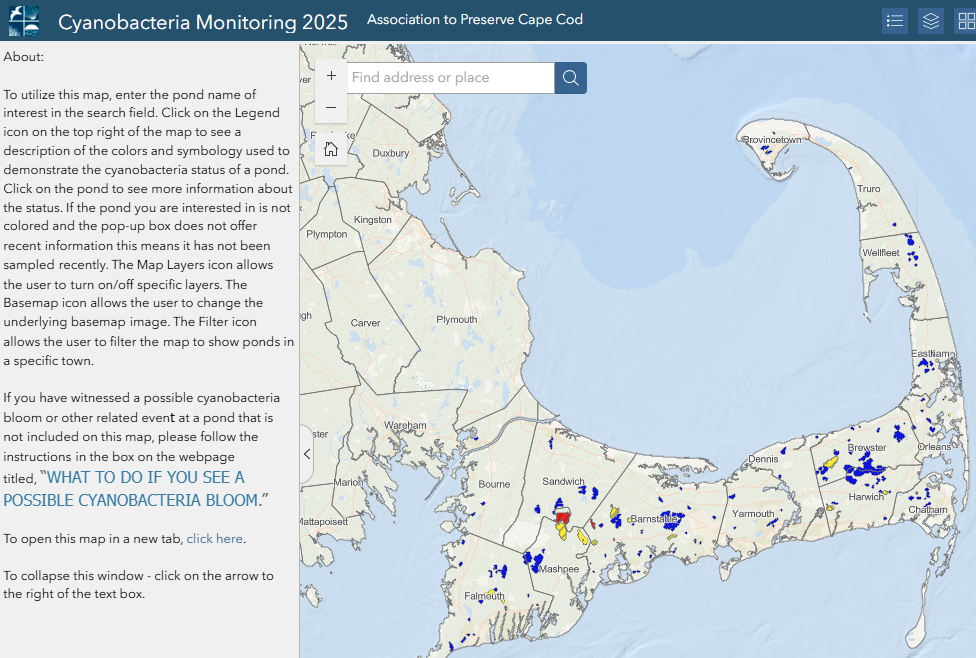
Check on the status of your favorite pond on our interactive map. If you see what appears to be a bloom, take a picture, note the day, location, and time and notify the local health department, and email to cyano@apcc.org.
Sign up for cyanobacteria email alerts.
Please note: The cyanobacteria alert is only sent out when a concern is first identified at a pond. All updates following this initial notice are shared on APCC’s interactive map. |
|
|
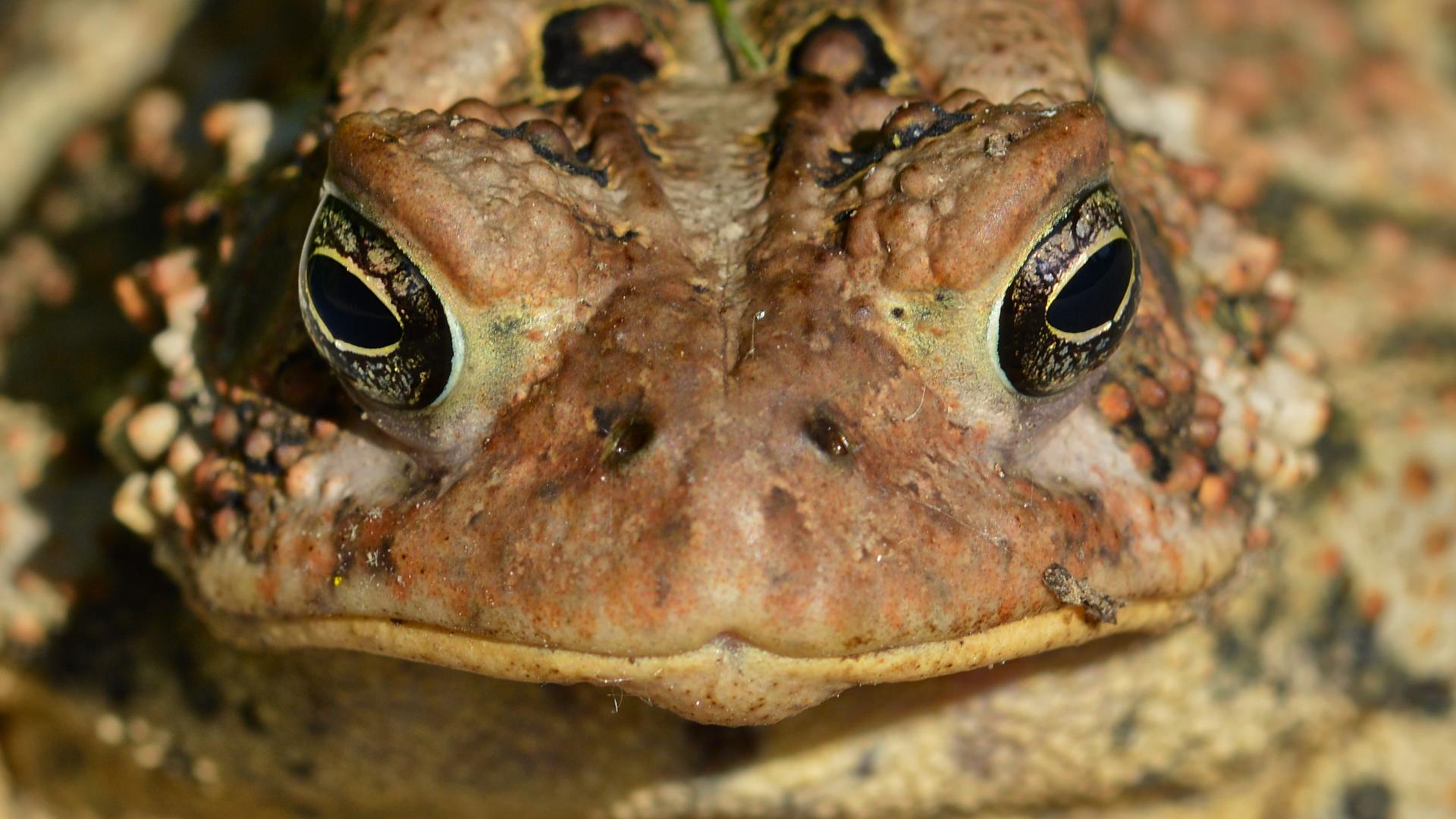
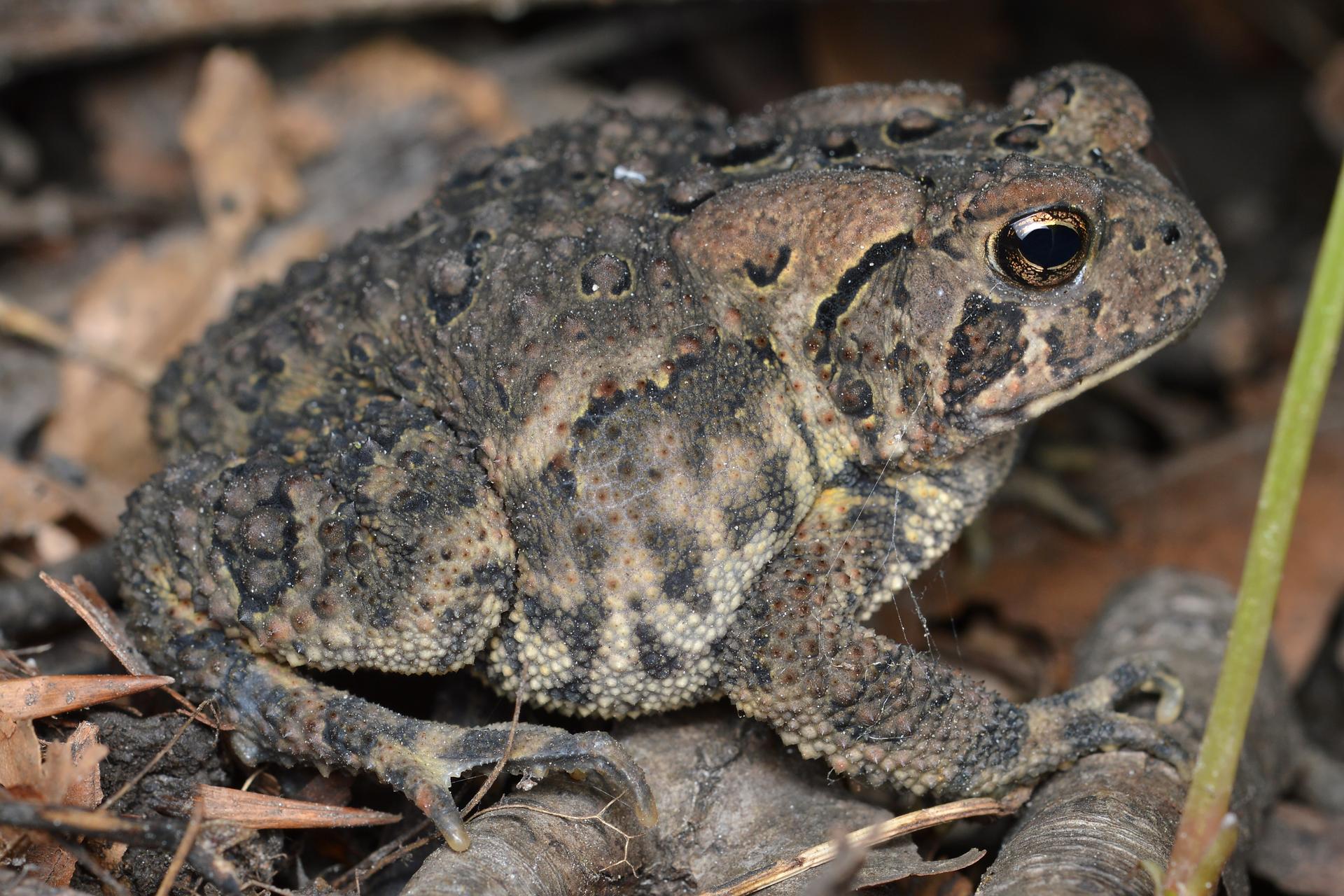
Above photo: American toad by Ryan Hodnett, CC BY-SA 4.0 <https://creativecommons.org/licenses/by-sa/4.0>, via Wikimedia Commons |
Kiss a Toad When’s the last time you saw an American toad (Bufo americanus, now Anaxyrus americanus)?
Like other amphibians, the American toad requires wet areas. The adult toads will meet up in early spring in a shallow wetland—a vernal pool is preferred. The female, while in the embrace of her male partner, extrudes her eggs, which are simultaneously fertilized by the male. The toad’s eggs are encased in long spiral gelatinous tubes in two strings. This differentiates them from the globby egg masses of the wood frog or spotted salamanders. The egg strands, like strings of delicate black pearls, are placed on vegetation below the water’s surface, each containing thousands of eggs.
Tadpoles hatch in about a week and within six weeks become toadlets—well, some of them do. Tadpoles are known meals for diving beetles, newts, dragonfly larva, and crayfish. Metamorphosis is completed in June on the Cape and the little toadlets will emerge from the pond in mass to begin their lives as terrestrial amphibians, looking for insects and a place to hide until they are two years old, when they will return to a wetland to reproduce. Just think how important the upland area around a wetland is to these vulnerable little hop toads.
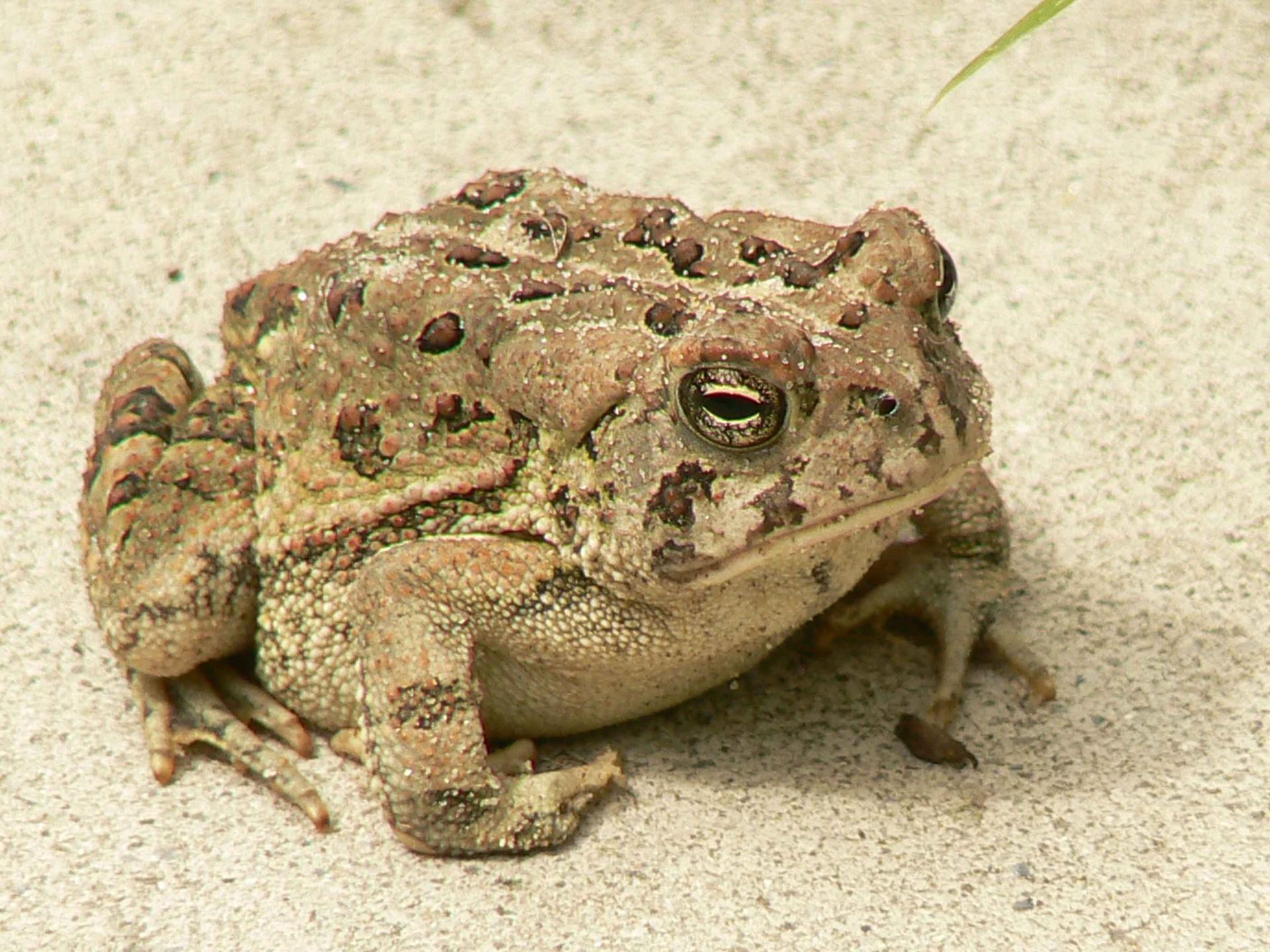
On the Cape, there are two species of toads in the genus Anaxyrus: Fowler’s toad and the American toad. They look similar, but the Fowler's toad is slightly smaller and has clusters of small warts, a mostly spotless belly, and poison glands that meet at the back of the eyes. The American toad is distinguishable by the presence of several dark spots on their backs, which contain three warts each. We’ve all heard of the thing about getting warts from toads—a fake fact, but the skin secretions are distasteful to many animals to ward off predators. And while you’re in no danger of getting warts, if you handle a toad, it’s always a good idea to wash your hands.
American toads on Cape Cod occur in wet deciduous woodlands and uplands. Fowler’s toads prefer dry scrub shrub areas, sand dunes, and open wildlands. An interesting characteristic to differentiate Fowler's toads from American toads is their scent. Miller and Chapin in 1910 described a sniff of a Fowler toad as being reminiscent of unroasted peanuts or the tree of heaven (an invasive tree also called stinky sumac, which, if you’ve ever cut and handled this plant, you are well aware of its disagreeable aroma). You must agree that it’s a tickling thought to think how these scientists determined this means of identification!
|
|
|
Above: American toad. Photo by Ryan Hodnett, CC BY-SA 4.0 <https://creativecommons.org/licenses/by-sa/4.0>, via Wikimedia Commons |
| Above: Fowlers toad. Photo by Perlick Laura, U.S. Fish and Wildlife Service, Public domain, via Wikimedia Commons |
|
|
An adult toad will move around into the landscape upwards of some 300 yards, but keeps to an area of a small residential lot, hiding beneath a log, stone, or leaf pile. Come the colder months, the toads will dig backwards into their summer homes, getting deeper to hibernate for the winter. They need to keep safe from freezing as they don’t have the anti-freeze chemical makeup that many frogs do.
Hop toads are crepuscular, feeding at twilight and through the night. They eat flies, crickets, locusts, grasshoppers, bees, wasps, beetles, spiders, caterpillars, earthworms, slugs, and snails. Toads are very beneficial to the farmer and the home gardener. It’s reported that one toad will consume almost 10,000 insects over a three-month growing season. What great pest control!
Toads are in turn predated upon by snakes, raccoons, skunks, ducks, crows, opossums, herons and even screech owls. As a means to protect itself, a toad will puff itself up to make it more difficult for a snake to swallow it. A toad will also play dead, which by remaining motionless, together with its coloration, assists in camouflaging it to its surroundings.
Habitat fragmentation is detrimental to animal populations. Tadpoles and adult toads are especially susceptible to chemical contaminants and pesticides in the environment, such as methoxychlor, toxaphene and endrin found in insecticides, ammonium nitrate as fertilizer, and lead. Pesticides have been linked to deformed toad legs. So, while the American toad used to be quite common, their populations have declined due to pollution, loss of wetlands, and the impacts of pesticides.
Like so many creatures, they are the proverbial canary in the coal mine. If you are not seeing them, or are finding them deformed, be concerned. Please everyone, skip those lawn treatments. Keep some wild areas in your yard. If you find toads in your landscape, shout hurray! It’s a good sign of a healthy environment and you should rejoice. May we all see some toads this year, and if you do, blow them a kiss. |
The above article by Kristin Andres, APCC's education director, was published in an edition of the Cape Cod Chronicle. |
This week in APCC's Living Landscape |
|
|
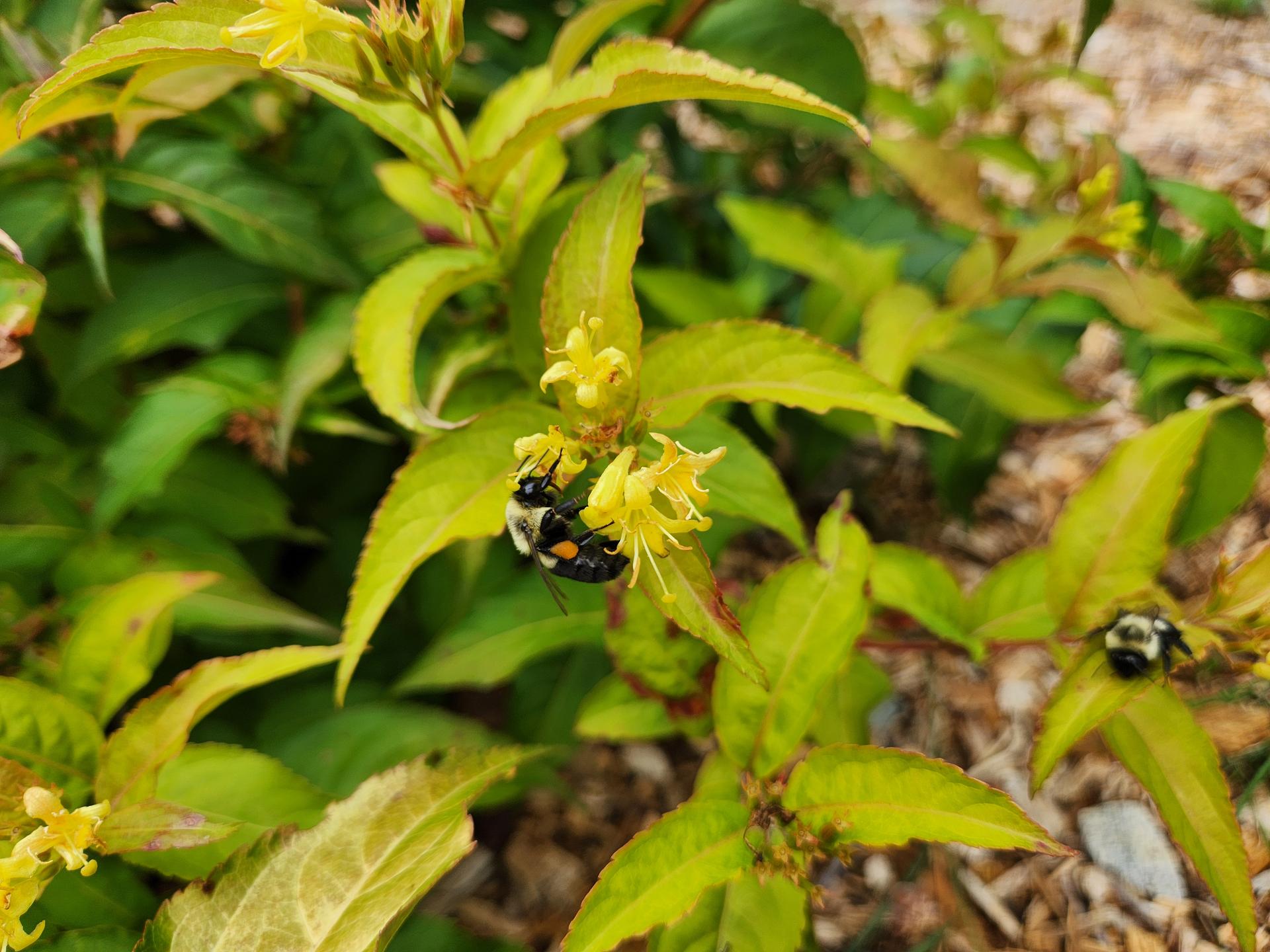
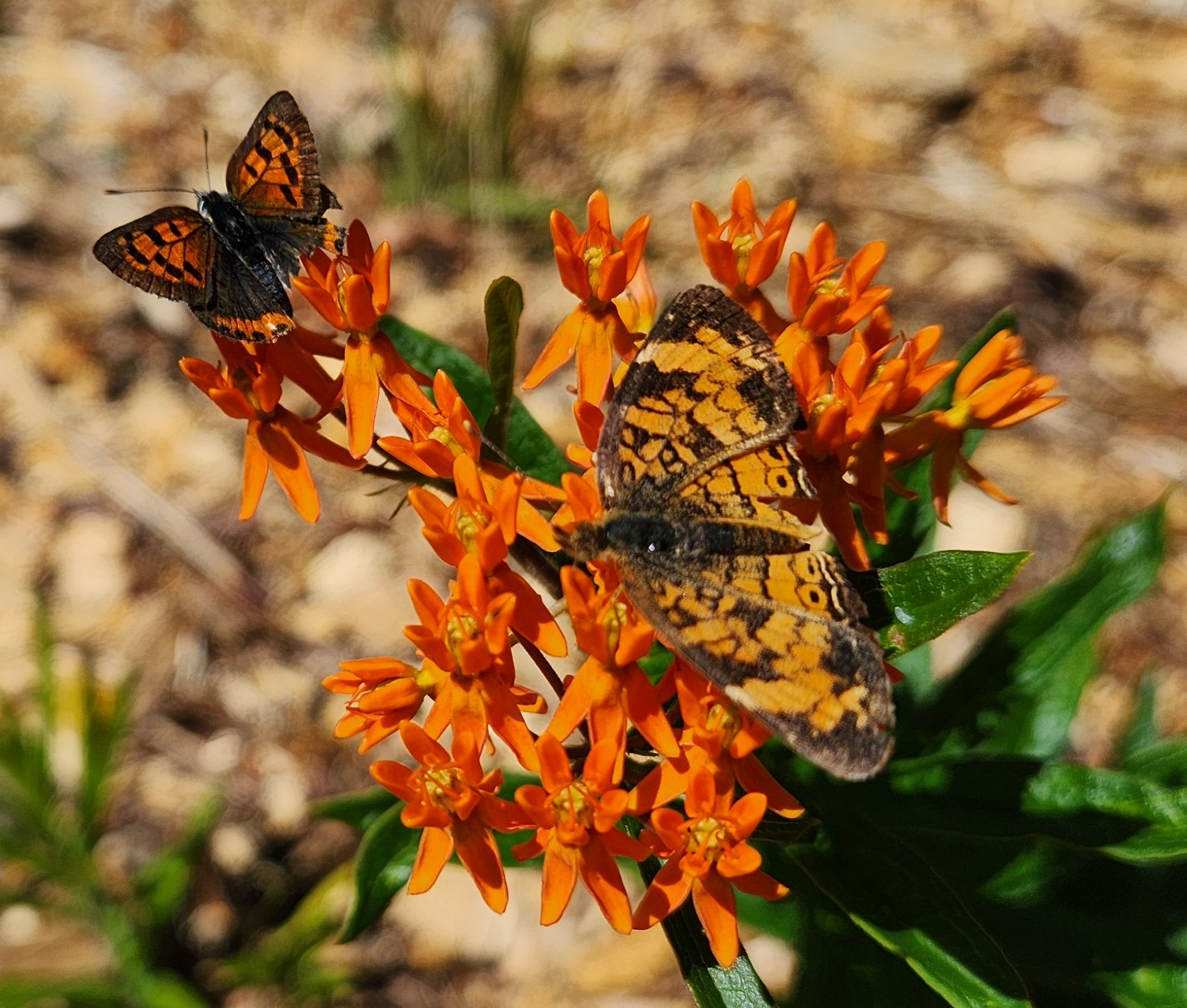
Our butterfly milkweed, Asclepias tuberosa, was planted earlier this summer and it was a pollinator hub last week. Common bumble bees and pearl crescent butterflies were loving the flowers. |
|
|
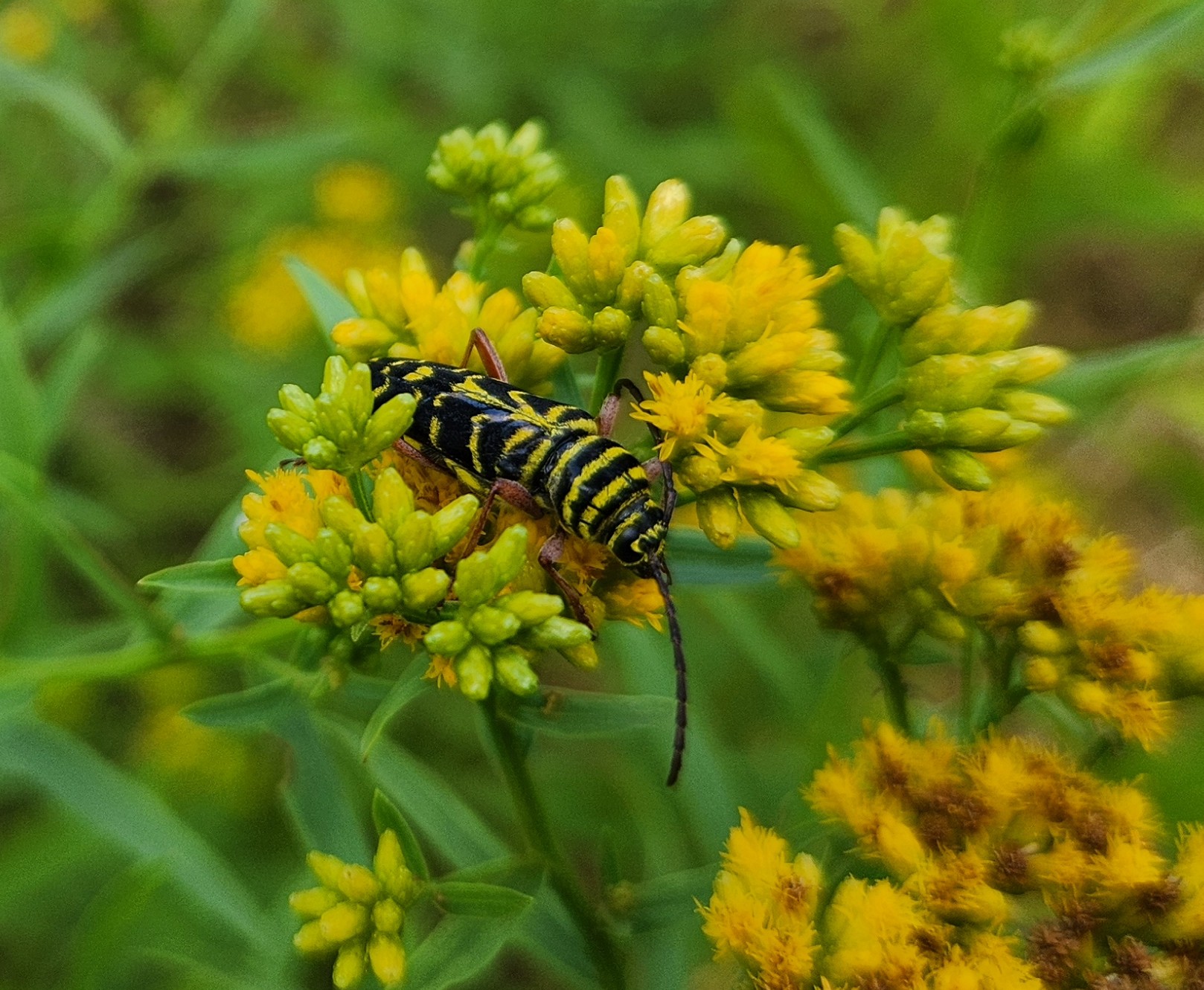
Above: Locust borer beetle, Megacyllene robiniae, a species of longhorn beetle endemic to eastern North America |
Above: American copper (left) and pearl crescent (right) butterflies on butterfly milkweed |
|
|
|
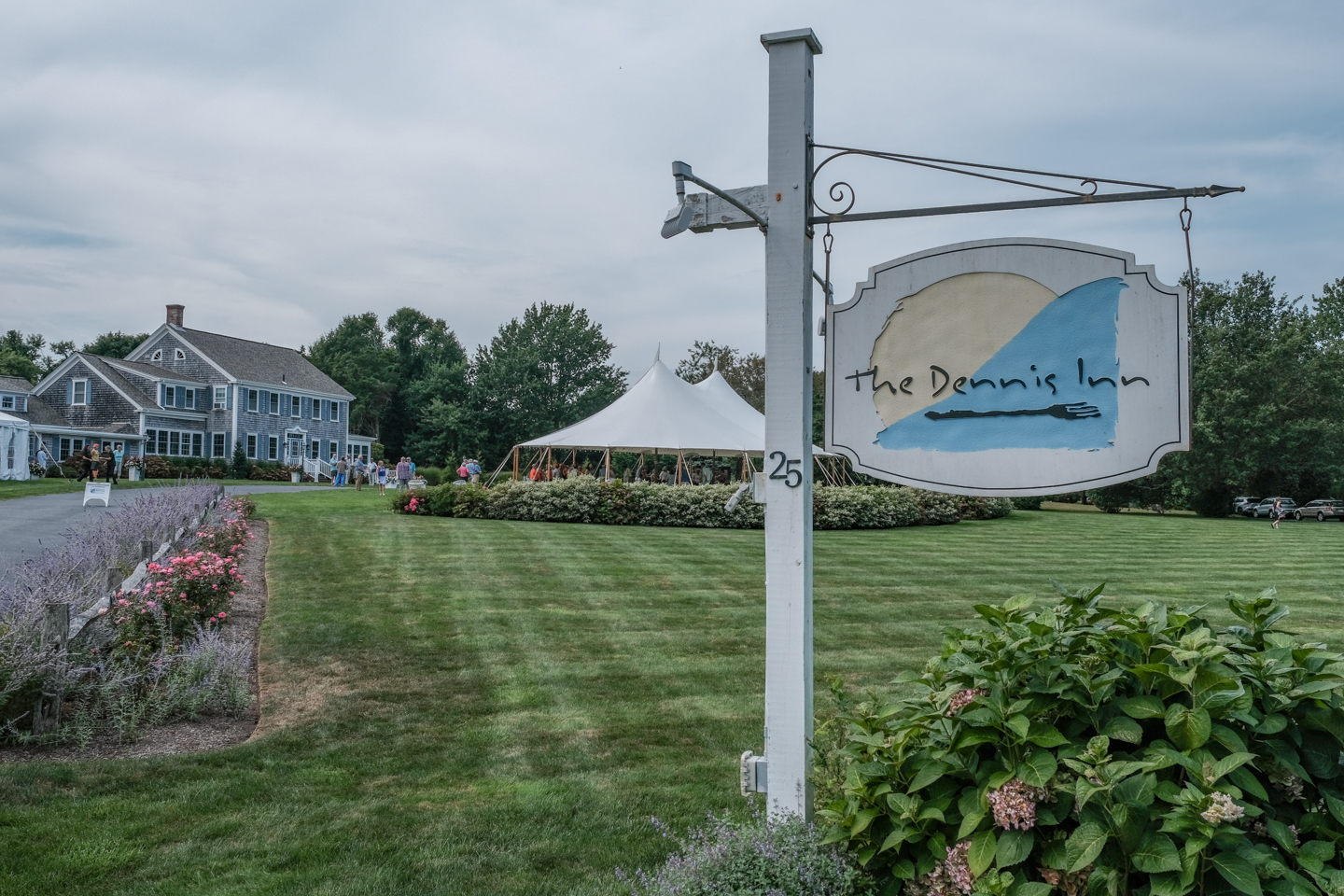
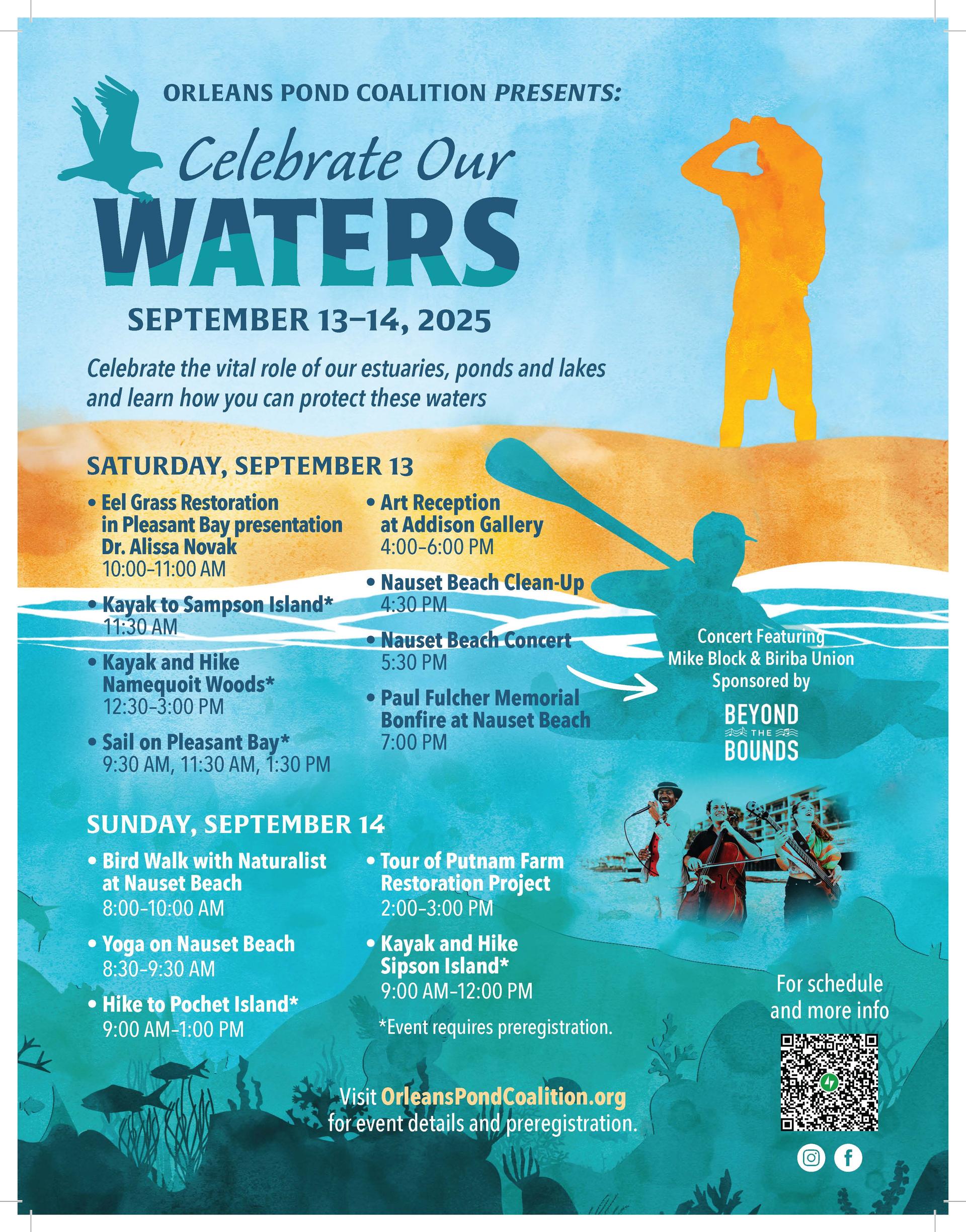
APCC's Annual Meeting ~ Sunday, September 14th at 12:00 p.m. at the Dennis Inn |
|
|
| Brewster Ponds Coalition hosts
Old Ladies Against Underwater Garbage Brewster Ladies Library, 1822 Main St
Wednesday, September 10th 2:00 - 3:30 p.m.
Susan Baur will captivate attendees with the efforts of this energetic group of ladies who swim in Cape Cod's freshwater ponds collecting trash. This free event is open to the public; please register HERE.
This summer has been a busy one for the group, aka OLAUG, with more than 20 dives scheduled throughout the Cape. Although some planned dives have been complicated by cases of cyanobacteria, it's been a banner year for trash. As Susan says, "Every dive is an adventure and gives us another story to tell." You will be captivated by OLAUG's adventures! |
|
|
A Cape-wide Conservation Event Calendar |
The Compact of Cape Cod Conservation Trusts (“the Compact”) and its nonprofit members launched a new regional calendar of events. The Conservation Calendar includes programs across Cape Cod hosted by these groups. The goal of the calendar is to encourage visitors and residents to take part in nature and environmental events. You can always find the link to the calendar on APCC's website under News & Events.
|
If you are a farmer or someone who wants to grow native plants to sell, or just want to be updated on the program's development, please submit an interest form that appears on our webpage. We will be sending periodic email notices of workshops and meetings.
Funding for the project is provided by Barnstable County and its Economic Development Council License Plate Grant Program through the Cape Cod Commission. |
|
|
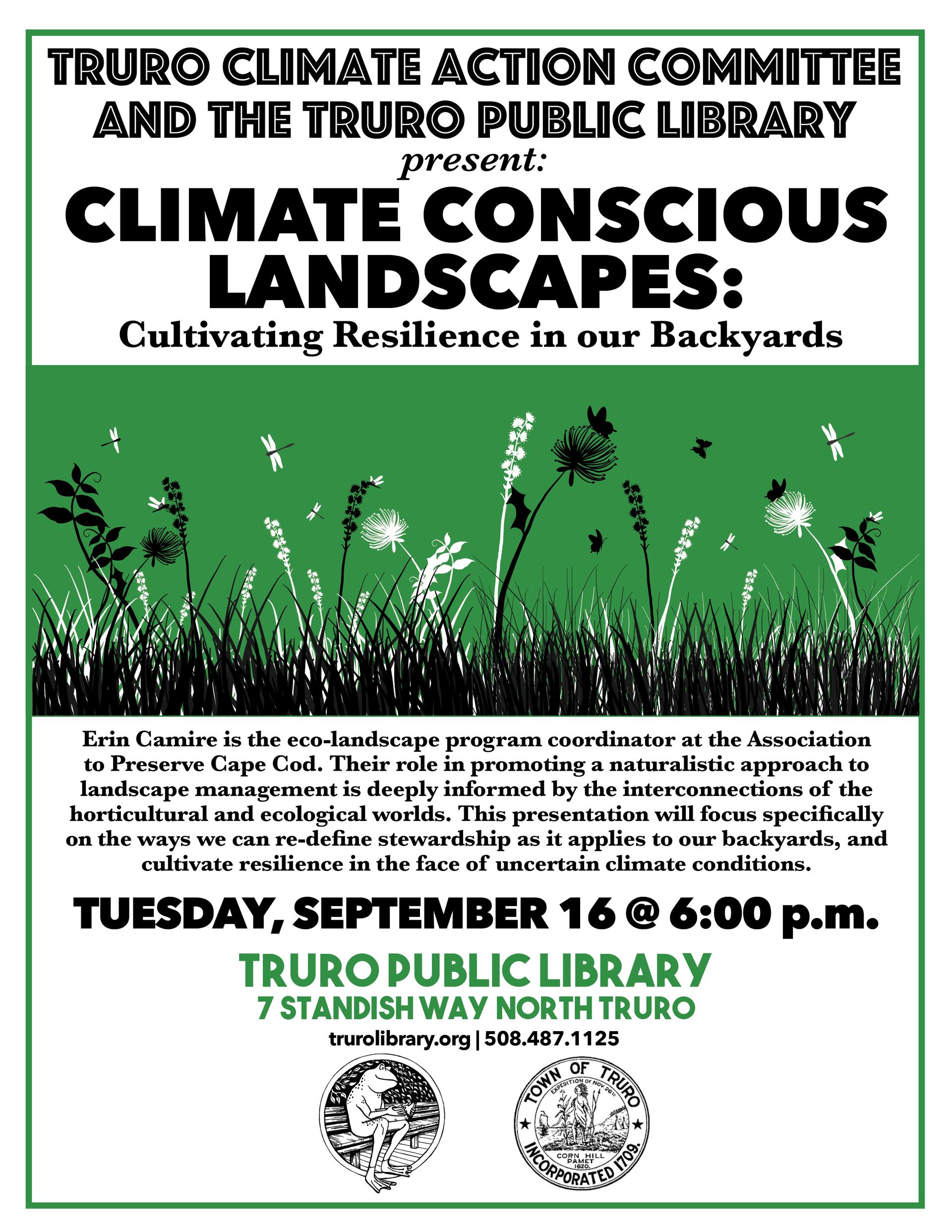
A Cape Cod Native Plant-selector
~ to help you choose the perfect native plants for your garden. |
|
|
Email kandres@apcc.org and we'll send you a CapeCodNativePlants.org decal. |
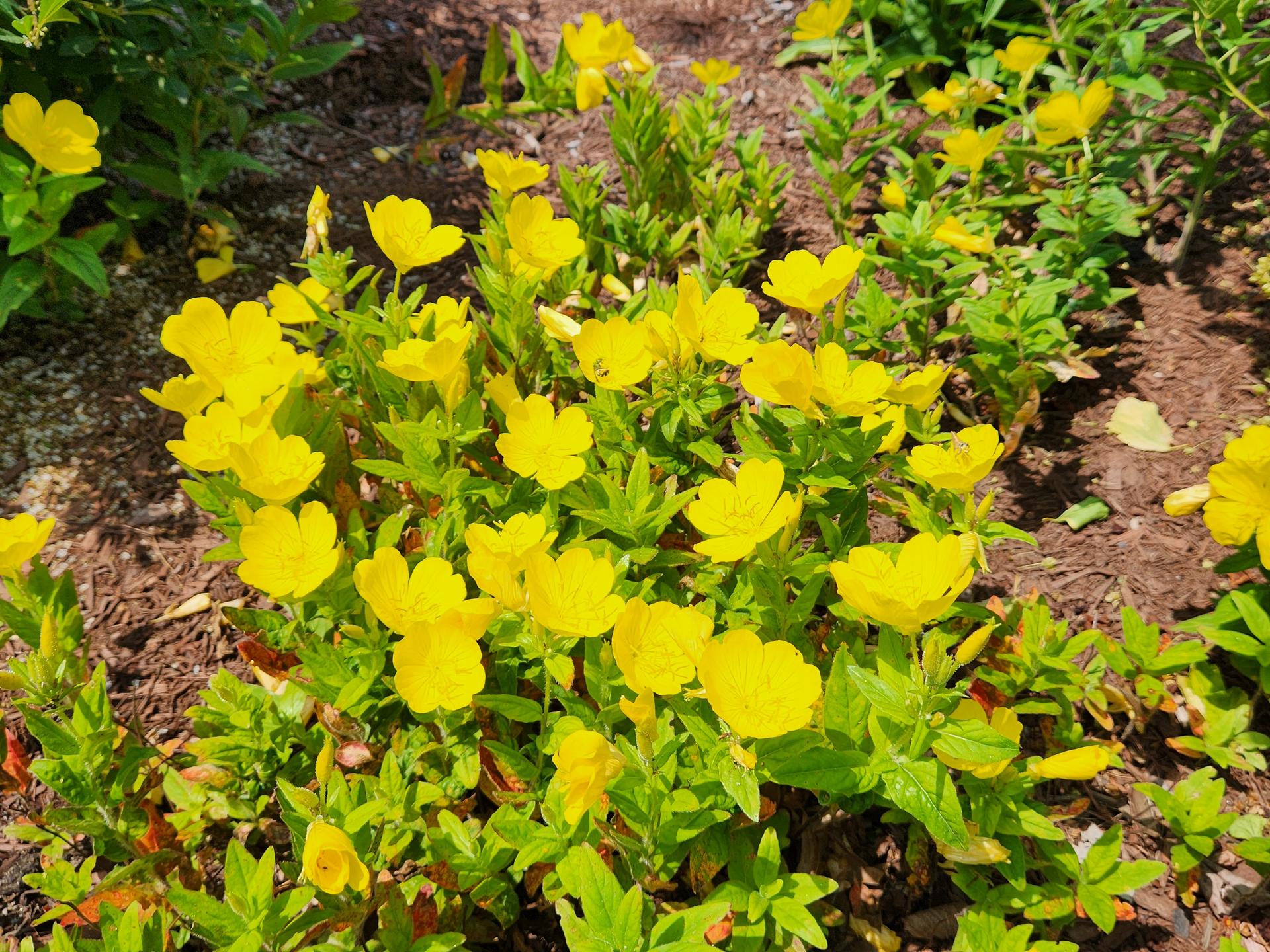
| Sundrops
Oenothera fruticosa |
|
|
|
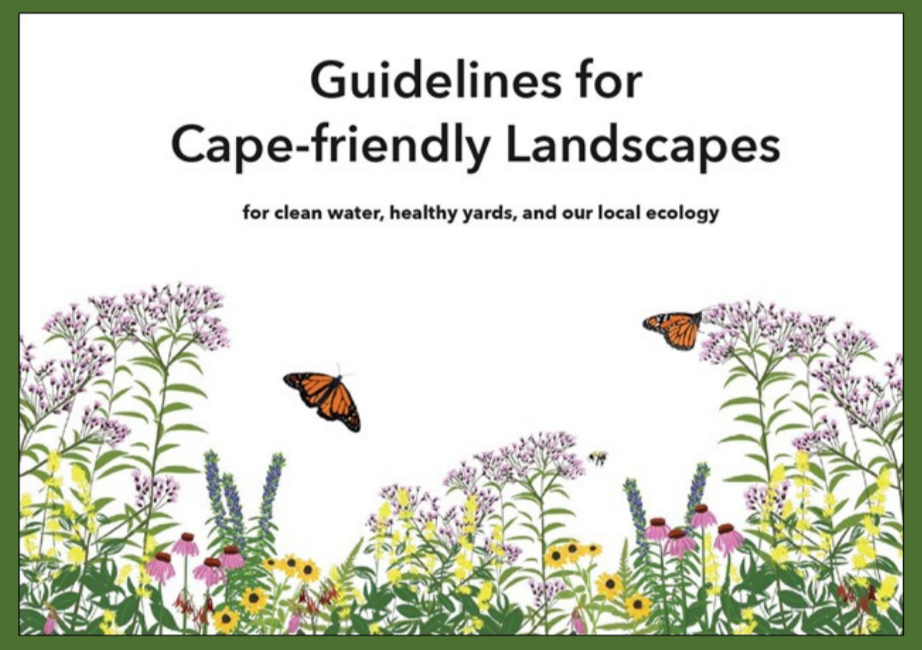
The Guidelines gives homeowners steps they can take in the design and maintenance of their properties that will support pollinators and birds, manage stormwater, conserve water, and protect the Cape's water quality. This 40-page booklet is beautifully illustrated by Marcy Ford with content that is easily digestible and supported by numerous resources for additional learning.
|
|
|
We are grateful for the several retail shops that are partnering with us to make this publication more widely available: Brewster Book Store, Birdwatchers General Store, Crocker Nurseries, Wellfleet Audubon Wildlife Sanctuary, Cape Abilities Farm, Cape Cod Museum of Natural History, the Cape Cod Lavender Farm, Heritage Museums and Gardens, Titcomb's Bookshop, Sea Howl Bookshop, Soares Flower Garden Nursery, and Eight Cousins Bookshop.
If you are a retailer and would like to sell this publication at your store, please contact us. |
|
|
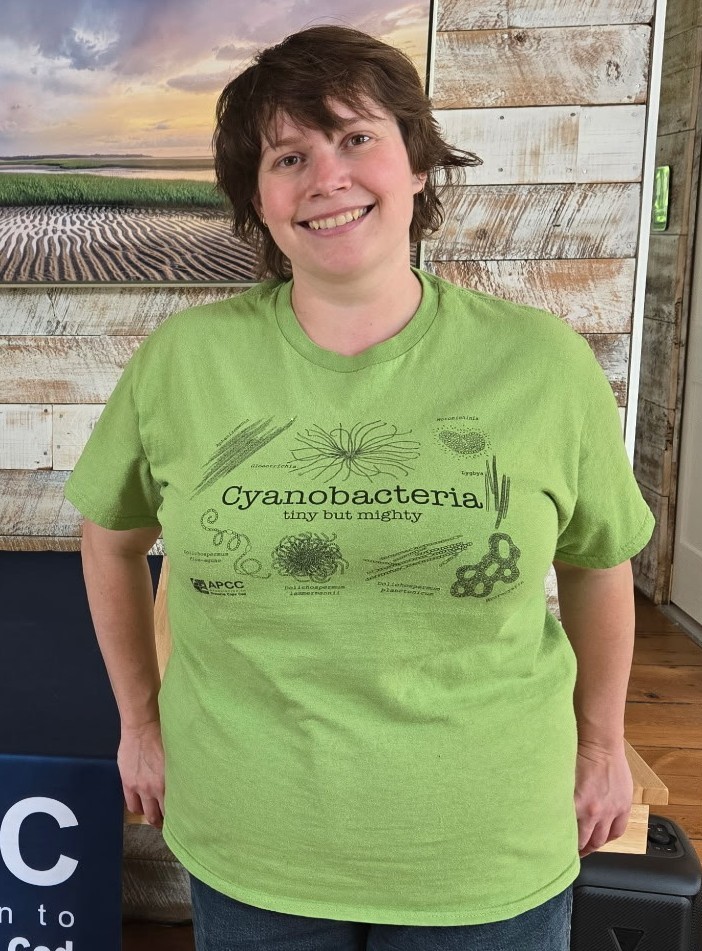
| Cyanobacteria ~ tiny but mighty
color kiwi $30 includes USPS shipping |
|
|
APCC caps
$25 -includes USPS deliver in the U.S. |
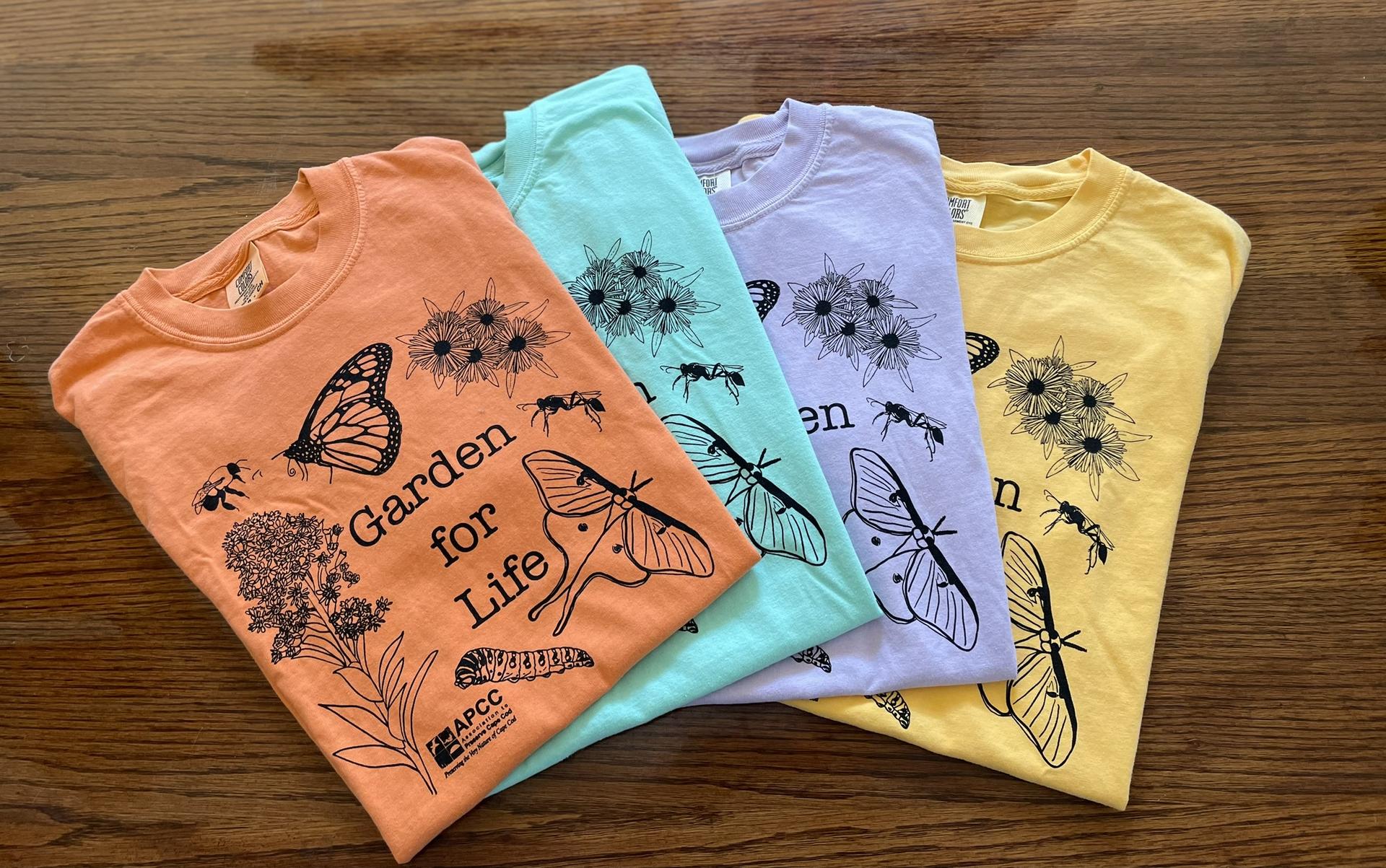
| Garden for Life T's $30 -includes USPS delivery in U.S. |
|
|
|
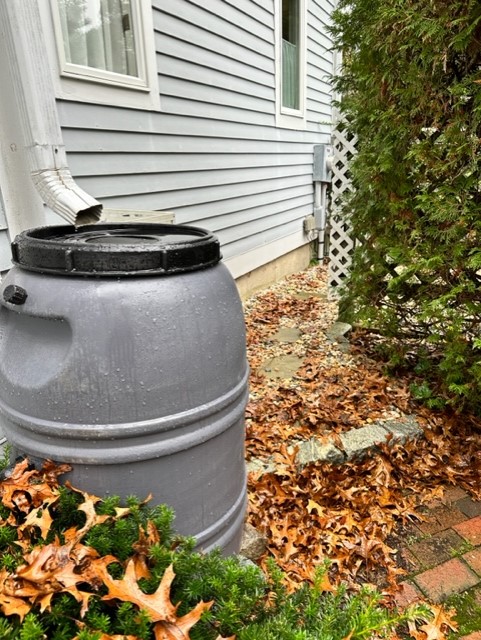
Rain Barrels for Cape Cod
Order online from Upcycle Products $122 each includes shipping to your door APCC receives a portion of the proceeds.
These are 55 gallon, repurposed food barrels. For more information, click here. |
|
|
| APCC eNewsletters.
Our weekly newsletters are archived on our website and easily shared.
You can find past newsletters and share with your friends. Encourage others to sign up for future enewsletters HERE.
|
|
|
Are you thinking of going solar? We hope so!
In partnership with E2 SOLAR in Dennis, APCC receives $500 for every solar installation when APCC is named as referral. |
|
|
|
Thank you to the homeowners who just contracted to install solar panels through E2 Solar. May the sun always shine for you! |
|
|
Expressions Gallery, 578 Main Street, Chatham
CLICK HERE |
Expressions Gallery donates 20 percent of its profits to APCC's work. |
|
|
Thank you to our business sponsors! |
|
|
APCC is rated four stars by Charity Navigator,
2024 Platinum by Candid (formerly Guidestar), and 2024 Top-Rated by GreatNonprofits. |
|
|
Our Contact Information
*{{Organization Name}}*
*{{Organization Address}}*
*{{Organization Phone}}*
*{{Organization Website}}*
*{{Unsubscribe}}* |
| |
|
|