Association to Preserve Cape Cod |
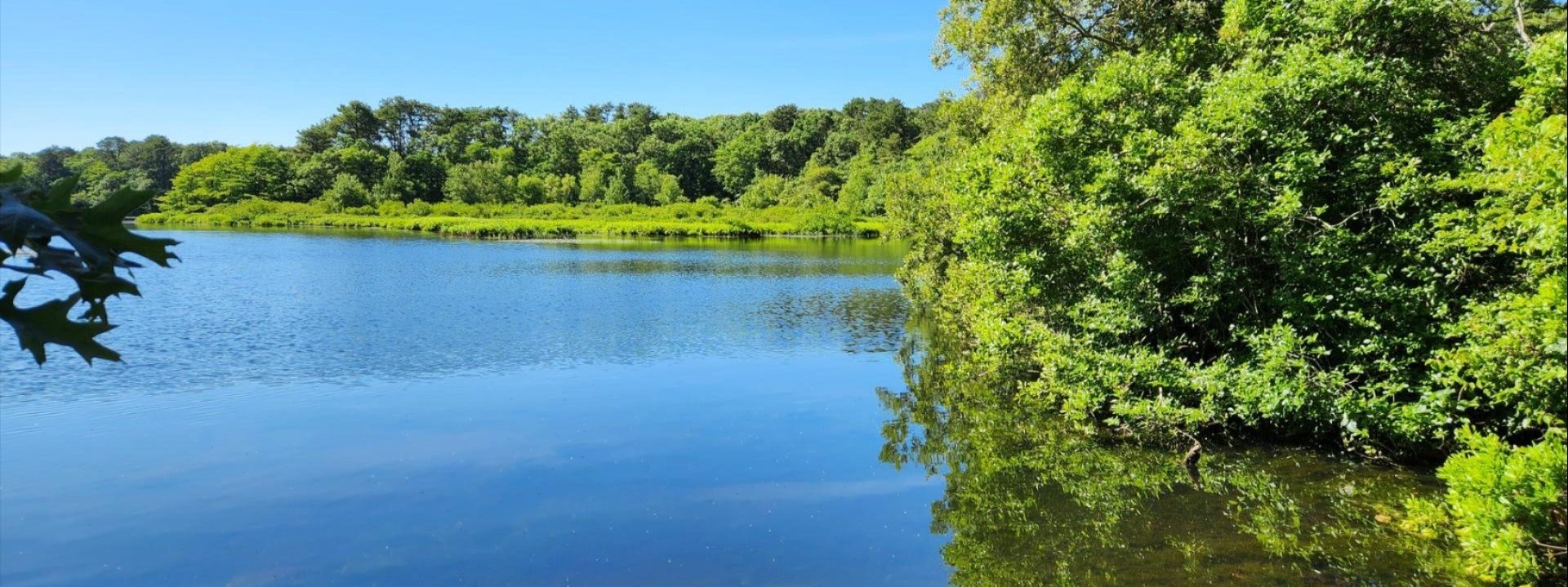
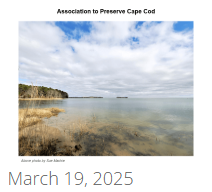
Above: Truro. Photo by Sue Machie |
|
|
|
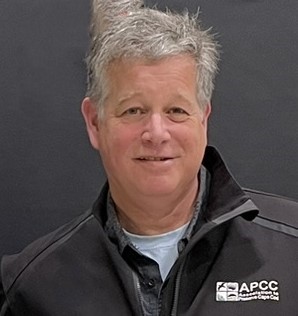
Look in the Mirror by Andrew Gottlieb, Executive Director
No one is going to do it for you.
Decide for yourself what the “it” is here, but the simple truth is taking care of what is important to you requires your direct action. This has always been true, perhaps never more so than now, no matter your interest. The need for local engagement is especially pressing when it comes to the environment. Federal cutbacks to environmental agencies and policies are profound and real environmental harms will result. |
|
|
States and municipalities can plug important holes but lack the resources to pick up all the slack. That means it falls to us, each of us, to take actions locally to protect our land, air and water. APCC will alert you when we see something that requires action, but a lot happens beneath our radar that you can see locally, so pay attention. Pay attention and roll up your sleeves, there is work to be done. |
APCC Hosts Pond Weed Watchers Training in the Koppel Center |
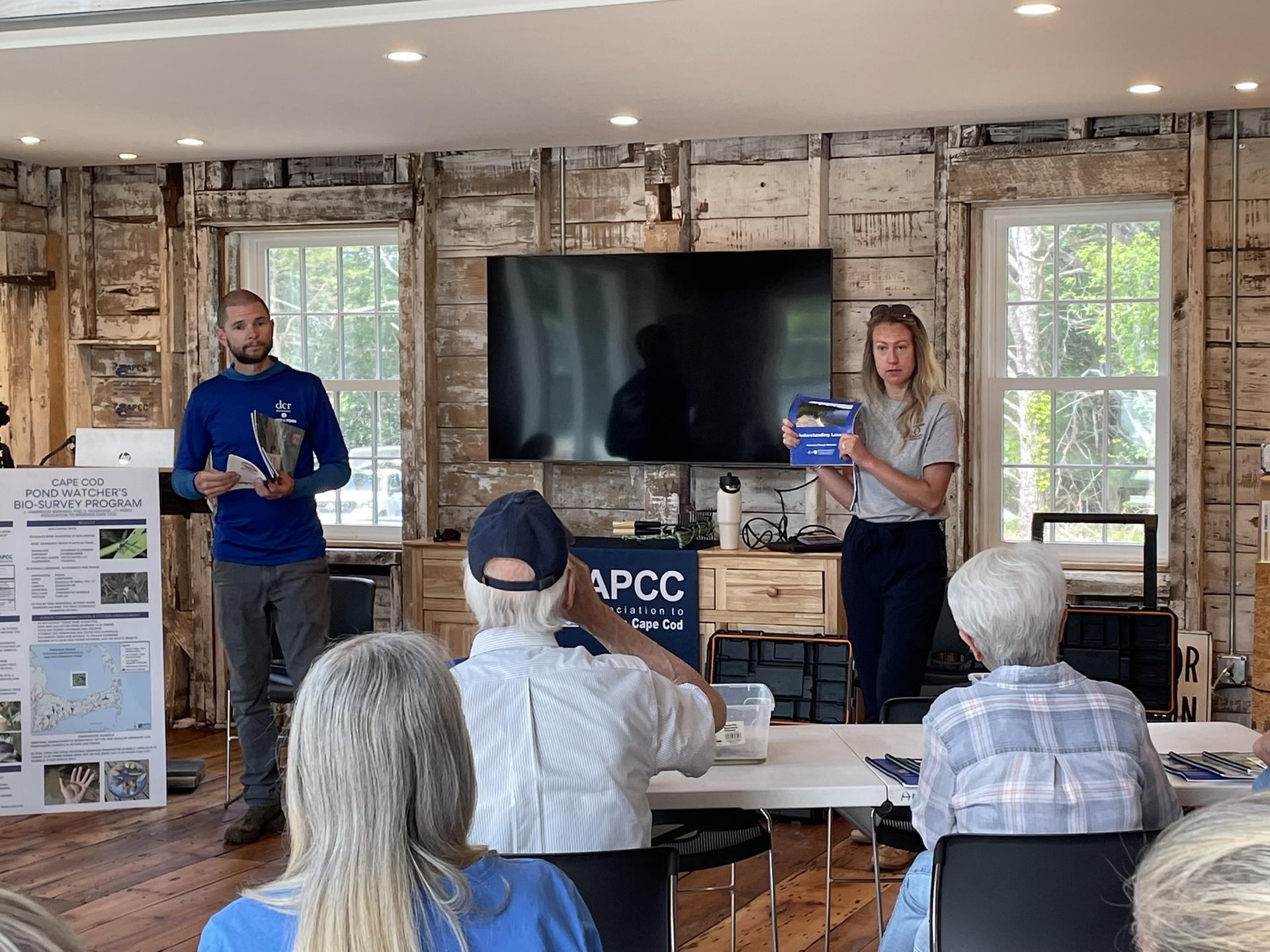
Above: Tom Flannery and Kari Sliwoski, Department of Conservation & Recreation (DCR) staff, led the freshwater aquatic plant identification workshop. |
Last week, APCC hosted a Pond Weed Watcher Program workshop led by the Department of Conservation & Recreation (DCR) staff with the state's Lake & Pond Program. Attendees learned about the significant risk invasive plant species pose to our freshwater ponds, how to avoid their introduction, and, importantly, how to identify them and other native aquatic plant species that belong in our ponds for healthy ecosystems. APCC will host another of these trainings on Friday, July 18th—a few seats are still available. |
APCC's Herring Monitoring Program |
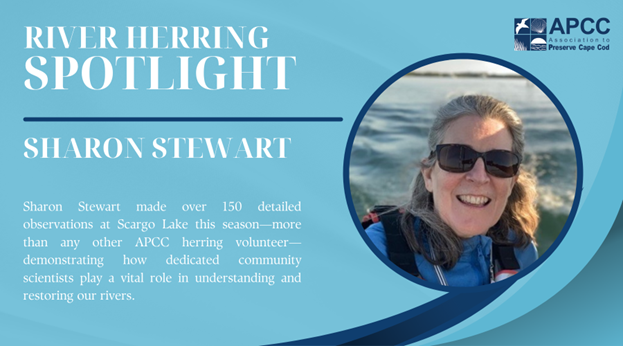
River Herring Spotlight: Volunteer Sharon Stewart Every spring, as river herring make their way upstream to spawn, dedicated volunteers fan out across Cape Cod’s waterways to document their migration. Among them is Sharon Stewart, a longtime participant in the APCC River Herring Monitoring Program whose commitment and keen observations have made an extraordinary impact.
This past season, Sharon monitored the run at Scargo Lake in Dennis, logging well over 150 individual observations—more than any other volunteer in the program. Even more impressive than the number was the quality. Sharon’s notes were consistently thoughtful, richly detailed, and often included observations that helped paint a fuller picture of what was happening at the run. “One of the things I love about counting herring,” Sharon wrote, “is that even when my count is zero, there is always something interesting to see.”
Her humble attitude belies the value of her work. “Since I think of herring counters as the ‘eyes’ of the run for the managers, I try to guess at what might be useful,” she shared. That philosophy has served the program well—her notes have become a model of the kind of community science that enriches our understanding and helps inform river restoration efforts.
When asked if she’d be open to being featured in our newsletter, Sharon was gracious but hesitant to be singled out. “The whole team works very hard, so it makes me a little uncomfortable to be singled out,” she said. “But if it helps the program, then sure.” She suggested we could simply run a picture of a herring instead of one of herself! Sharon’s passion for nature, attention to detail, and generosity of spirit shine through in every aspect of her involvement. “Thank you for allowing us non-scientists to take part in the process,” she wrote. “I’ve learned so much.”
We’re so lucky to have volunteers like Sharon, who embody the heart and soul of the herring monitoring effort. Thank you, Sharon, for your dedication, curiosity, and for being such a vital part of the APCC community. |
APCC's Ecosystem Restoration Program |
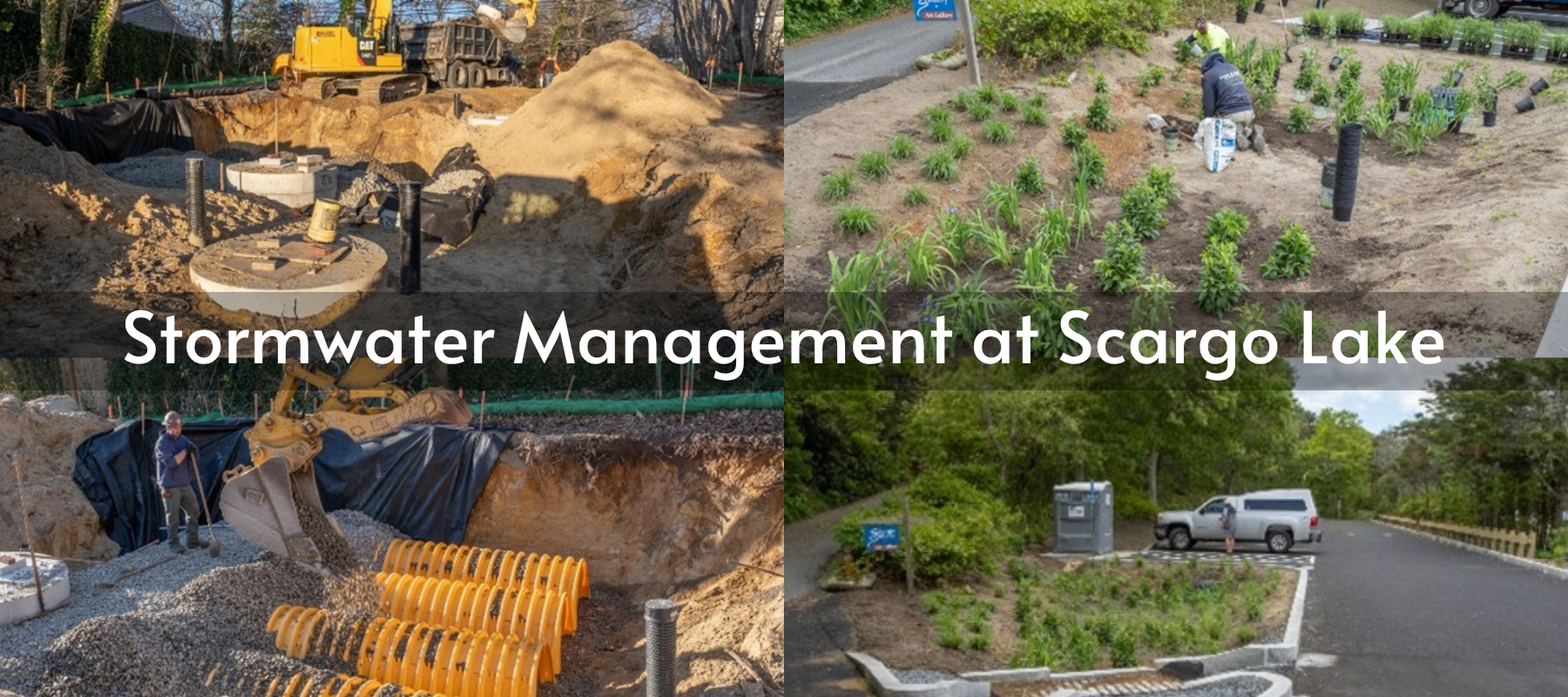
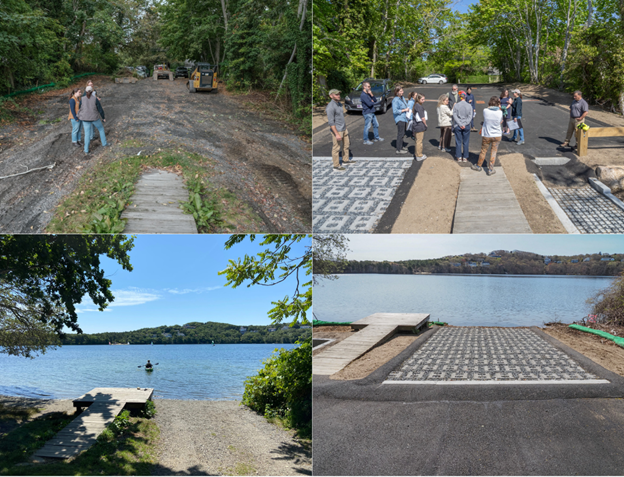
Above: Installation of underground infiltration chambers and water quality unit at 6A Landing (left) and native plantings at Dr. Lords Road Scargo Beach bioretention area (right). Photo by Gerald Beetham.
|
New and Improved Stormwater Management at Scargo Lake in Dennis
Construction is now complete at two key sites around Scargo Lake, delivering major stormwater upgrades at Dr. Lord’s Road (Scargo Beach) and the Rt. 6A Scargo Landing boat ramp. These long-awaited improvements will help protect water quality in the lake and enhance habitat for river herring and other aquatic species.
At Scargo Beach, a new porous pavement parking lot and a bioretention system (a vegetated area that captures and treats stormwater) have been installed to filter runoff before it reaches the lake. At Scargo Landing, newly constructed trench drains direct stormwater into underground infiltration chambers, with an additional bioretention area located next to the boat dock. Articulated concrete mats were also installed at the boat ramp to provide a stable launching surface while preventing shoreline erosion.
These green infrastructure features are designed to slow, capture, and filter stormwater through soil, gravel, and native vegetation—reducing the amount of phosphorus, nitrogen, sediment, and bacteria entering the lake.
Before these improvements, untreated stormwater from both sites flowed directly into Scargo Lake, carrying pollutants that degraded water quality and threatened the spawning habitat of river herring. The town of Dennis identified these sites as high priorities due to long-standing water quality concerns, including elevated phosphorus levels and a rising trend of nitrogen concentrations since 2001. APCC’s cyanobacteria monitoring also documented a significant bloom in July 2019, with smaller blooms in 2021 and 2022.
In recent weeks, native vegetation has been planted throughout the bioretention areas and around the new porous pavement. A mix of grasses, shrubs, and trees—all native to Barnstable County—was selected to thrive in the local environment. These plants will help stabilize soil, support pollinators, and boost the system’s ability to filter pollutants. In total, the upgrades now capture and treat stormwater from more than five acres of land—delivering lasting benefits for water quality, habitat health, and community use.
Construction at this site was completed by J.W. Dubis & Sons with planting by subcontractor, O’Leary Landscaping & Irrigation. The town of Dennis and Horsley Witten Group engineers provided oversight and their technical expertise while APCC’s restoration team provided project and grant management. This project has been funded by the Massachusetts Office of Coastal Zone Management Coastal Habitat and Water Quality Grants, a private foundation grant, the town of Dennis, and the MassBays National Estuary Partnership.
|
Above: Scargo Lake 6A Landing before (left) and after (right) construction. Photo by Gerald Beetham. |
From Bogs to Bloom:
Hinckleys Pond-Herring River Eco-Restoration Project update |
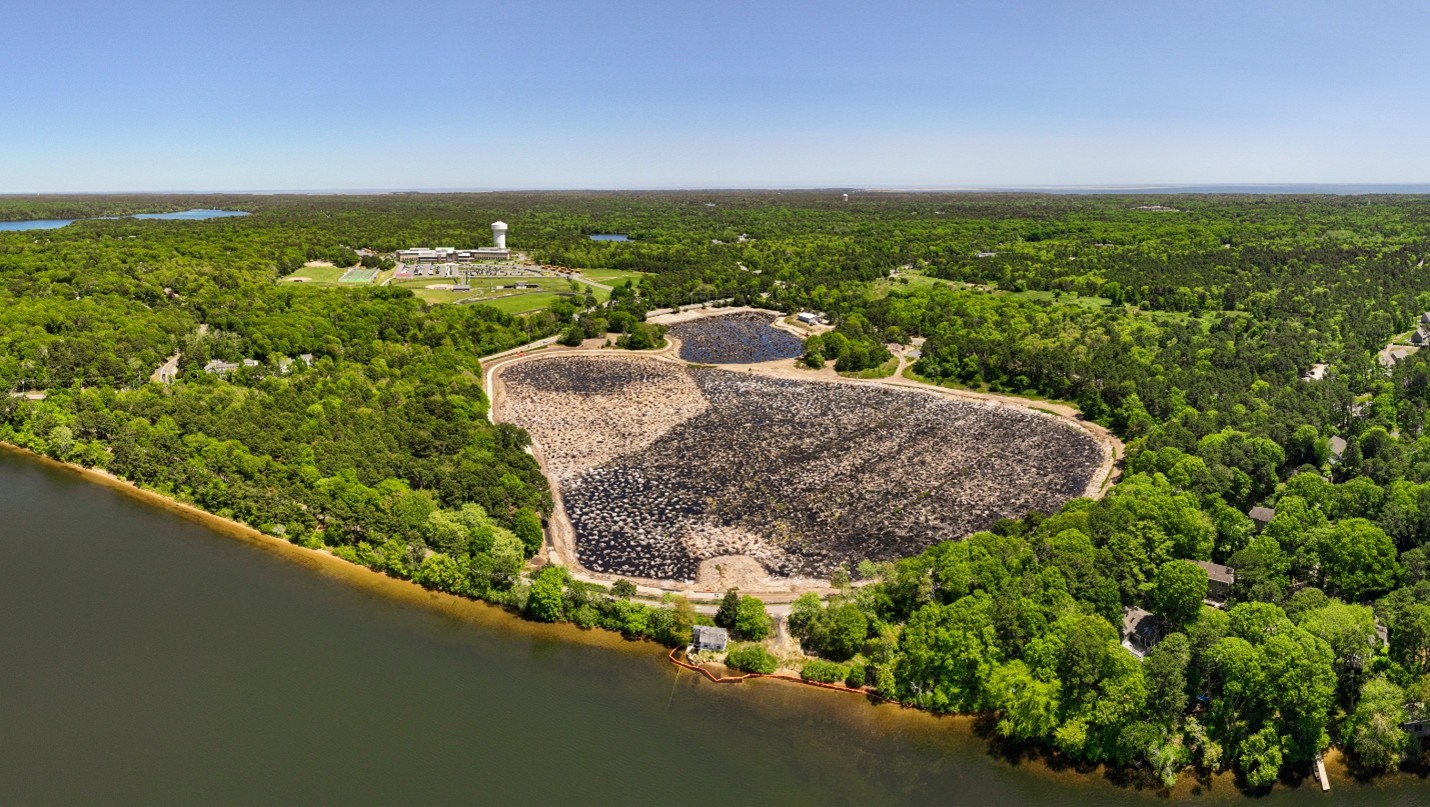
Above: Drone image of Hinckleys Pond (foreground) and the restored former cranberry bog, where small ridges and dips—known as microtopography—are visible across the surface. These features help hold water and support a range of wetland plants. As the surface is re-shaped and exposed to sunlight and moisture, long-dormant seeds from the natural seed bank begin to sprout, jumpstarting the return of native wetland vegetation. Photo credit: Steve and Eileen Furlong for Harwich Conservation Trust
|
Restoration is advancing swiftly at both former cranberry bogs, where construction is giving way to a powerful seasonal transformation. With major earthwork complete and trail work underway, attention is turning to the final touches—railing installation, pump house removal, and wetland plantings scheduled in the weeks ahead.
A key feature of this restoration is the creation of microtopography: subtle ridges and depressions sculpted into the landscape to capture water, encourage plant diversity, and mimic the natural structure of healthy wetlands. These process also help expose the long-dormant native seed bank, buried for decades beneath layers of cranberry-era sand. As seen in earlier projects like Cold Brook, once these seeds are exposed to sunlight and moisture, the landscape can green up dramatically in just one growing season.
Thanks to the leadership of Harwich Conservation Trust (HCT) and its partners, this phase of the project signals the return of vital habitat, ecological richness, and new trail access for the public by midsummer. APCC looks forward to continuing our support of this project, including vegetation monitoring planned for later this summer to track the impact of this restoration and new growth of wetland plants. |
APCC's Annual Native Plant Sale a HUGE Success! |
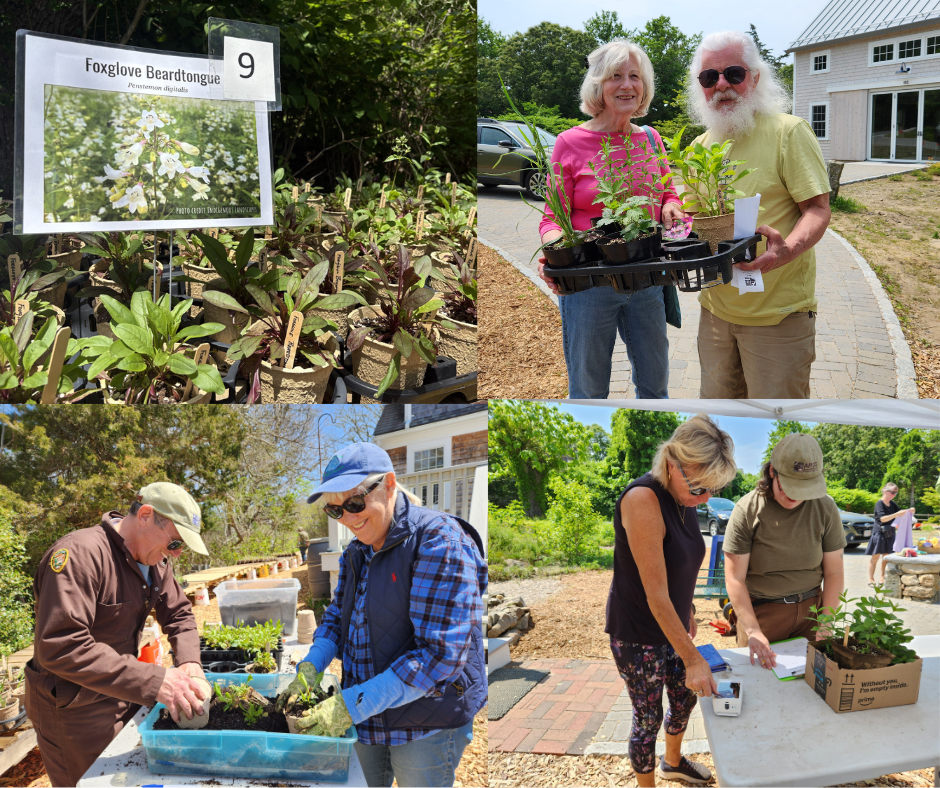
Thank you to the many volunteers who made our annual plant sale possible! Our volunteers helped by creating plant labels, repotting and caring for the plants, and helping to assemble orders and greet buyers. We couldn't have had such a wonderful plant sale without you, our volunteers!
We sold over 1,300 plants, so thank you to those of you who supported the plant sale and purchased plants to plant in your landscape to improve plant diversity and support pollinators.
And of course an ENORMOUS thank you to BlueFlax Design for sponsoring the sale.
We have a few plants left! If you are interested in any of these listed below, please shoot us an email (Kristin or Dorria) and we will set up a day and time for you to purchase. **Selfheal, Prunus vulgaris
**Prairie Dropseed, Sporobolus heterolepis
**Tall Anemone, Anemone virginiana |
Light pollution—yes, it's a real thing. Light pollution is caused by human-made outdoor light levels that are greater than naturally occurring light. When we over-light our buildings and landscapes, fail to use timers and sensors, or use the wrong color of light, we negatively affect the natural world, including us! Here are the problems with light pollution:
Artificial light destroys critical wildlife habitat. Plants and animals depend on Earth’s daily light and dark cycle to govern life-sustaining behaviors. Research shows that artificial light at night has adverse and even deadly effects on many many species. Wastes energy and money. Most outdoor lighting is wasted. This energy waste often increases greenhouse gas emissions contributing to climate change and wastes billions of dollars each year.
Decreases safety and security. There is no clear scientific evidence that increased outdoor lighting deters crime. In fact, glare from unshielded streetlights can actually decrease personal safety, contributing to both crime and accidents.
Robs us of our night sky heritage. Our ancestors experienced a night sky that inspired science, religion, philosophy, art, and literature. Let's ensure that children across the globe will know the wonder of seeing the Milky Way!
Harms human health. Studies indicate that artificial light at night negatively affects human health by increasing our risks for obesity, sleep disorders, depression, diabetes, breast cancer, and more.
Inhibits scientific research. Satellites in low Earth orbit create visible trails in the night sky, inhibiting astronomical research and jeopardizing NASA’s early warning system for asteroid collisions.
What you can do: - All light should have a clear purpose. Only use lights when and where they are needed.
- Shield and aim your lighting downward, so that it only falls where it is useful.
-
Brighter is not better. To reduce glare, lights should be no brighter than necessary (and pointed downward).
- Use timers and motions sensors to minimize unnecessary lighting.
- Warm-colored light causes less skyglow. Use amber-toned lights whenever possible.
-
Avoid up-lighting trees and perpetual light in the landscape—for the benefit of wildlife and your neighbors!
Source of content and for more information, go to DarkSky.org. |
Ecolandscape Consultation Program |
|
|
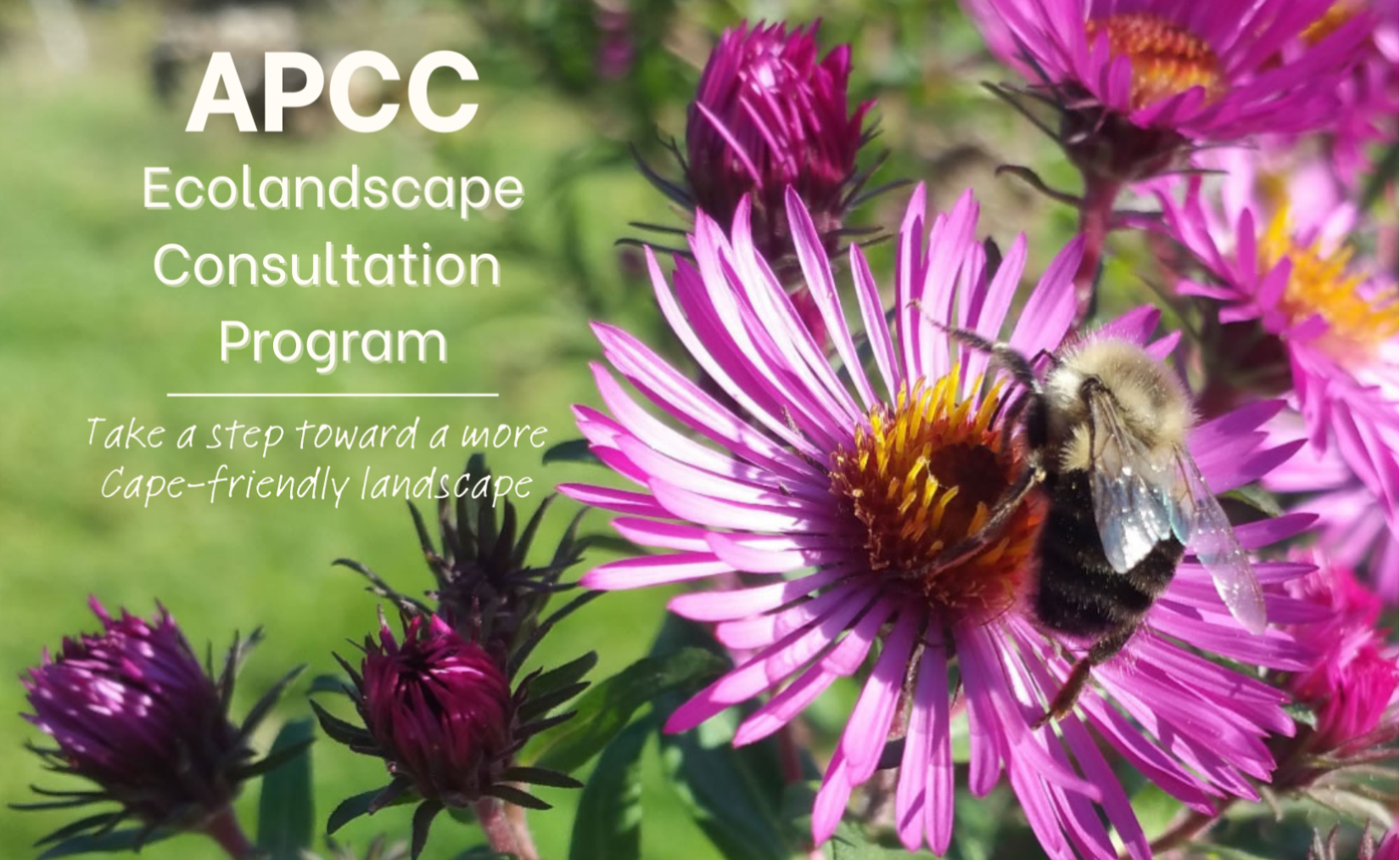
If you desire to make your yard friendlier to pollinators and wildlife, learn more about native plants and controlling invasive species, and hear of ways to conserve water and protect the Cape’s water quality, we can help.
APCC’s Ecolandscape Consultation program is aimed at helping homeowners make their landscapes more ecologically friendly by providing site-specific assessments and oodles of information for the DIYers or those that want to be more informed to hire the right landscape contractor. While we are not landscape designers or engineers, we do have the passion, experience, knowledge, and loads of resources to offer guidance to help you achieve your goals for a Cape-friendly yard.
|
APCC's Cyanobacteria Monitoring Program |
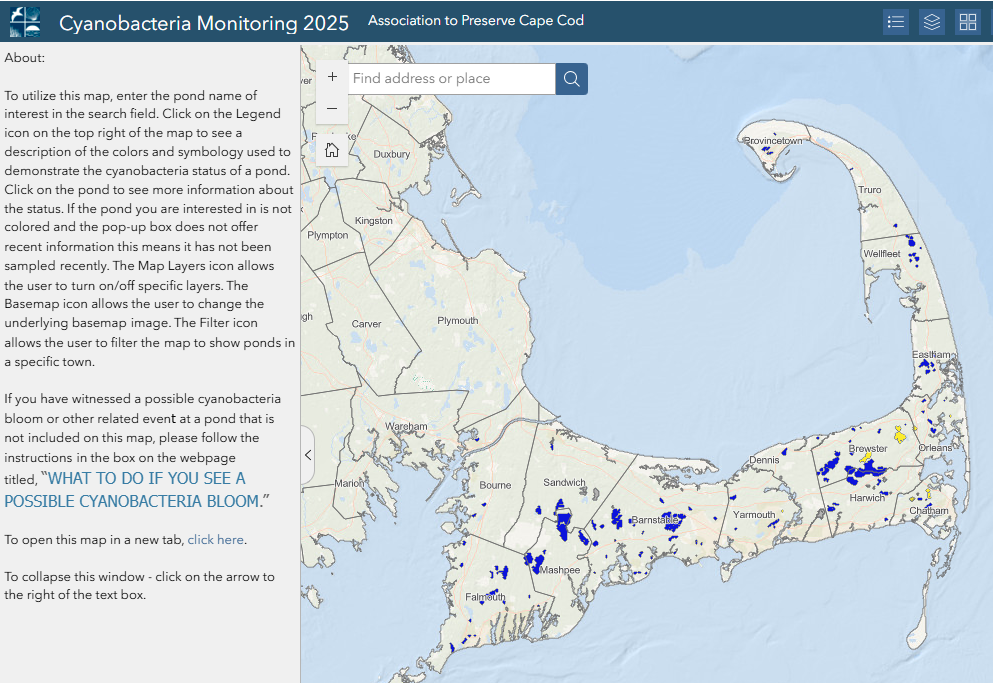
We’re now entering the fourth week of APCC’s Cyanobacteria Monitoring Program, and it’s been a busy but productive start to the season! Thanks to our five fantastic interns and volunteers, sampling has gone smoothly across the Cape.
Last week, we monitored a total of 73 sites—most of them located at different ponds—and of those, nine were categorized as Potential for Concern (PFC) due to elevated cyanobacteria levels. If you haven’t yet, we encourage you to check out APCC’s 2025 Risk Tier Table on our website to learn more about how we evaluate pond conditions.
The most frequently observed dominant genus in these elevated samples was Dolichospermum, a type of cyanobacteria known for forming harmful blooms and producing toxins that can affect both ecological and human health. Continued monitoring is critical to track these developments and inform public safety measures. Next week, we’re excited to welcome a sixth intern who will focus on outreach to veterinary offices across Cape Cod, helping to raise awareness about the risks cyanobacteria pose to pets. Stay tuned for more updates as the season unfolds! |
"When in doubt, stay out." High concentrations of potentially toxic cyanobacteria were detected in several ponds last week, at levels that are of concern for pets and children who are more susceptible due to ingestion.
This week as of June 10, we identified potentially toxic cyanobacteria blooms in Cliff and Flax Ponds in Brewster. |
The monitoring program for many ponds has begun. Check on the status of your favorite pond on our interactive map.
If you see what appears to be a bloom, take a picture, note the day, location, and time and notify the local health department, and email to cyano@apcc.org.
Sign up for cyanobacteria email alerts. |
|
|
Pond Weed Watchers Workshop |
Learn how you can help prevent the spread of invasive weeds
in Cape Cod’s freshwater ponds.
To support our pond groups, APCC is hosting another freshwater aquatic plant identification workshop that will be conducted by a representative of the Massachusetts Department of Conservation & Recreation (DCR) Lakes and Ponds Program. The session is limited to 20 people.
Where: The Koppel Center at APCC's headquarters 482 Main Street (Route 6A), Dennis 02638 When: Friday, July 18th, 10:00 a.m. - 12:00 p.m.
This workshop is designed to assist and encourage local pond groups to monitor their ponds for the presence of invasive plants and to develop a removal plan if an infestation is found. Early identification and intervention of invasive plant species is key before it becomes established in a lake or pond. Seating is limited. Parking is limited, please carpool. In person only. Registration required. |
Another Pond-related Workshop, Hosted by APCC |
|
|
|
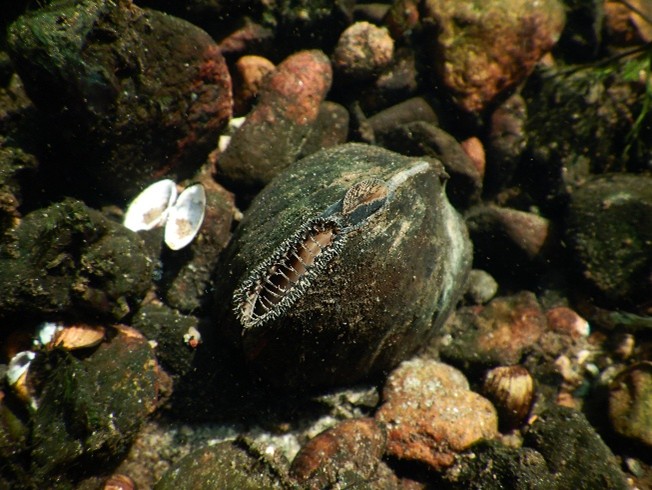
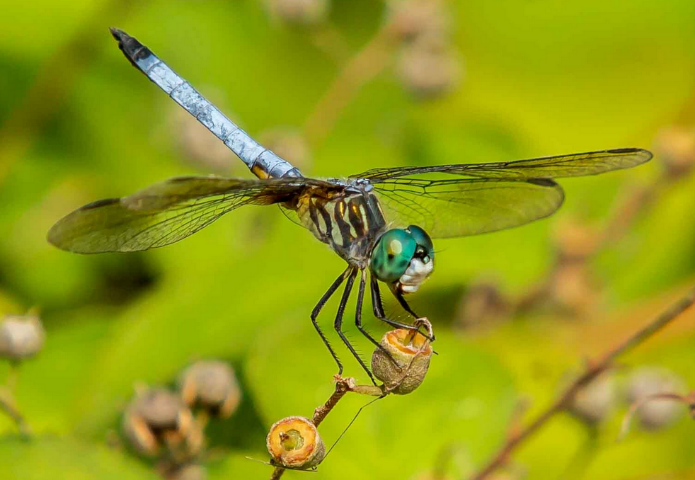
Mussels, Dragonflies, and Damselflies
with Jason Carmignani, Ph.D., aquatic ecologist, Natural Heritage & Endangered Species Program, Mass Division of Fisheries & Wildlife Friday, June 27th 10:00 – 11:30 a.m. This is a hybrid event at APCC’s headquarters at the Koppel Center 482 Main St (Rte 6A), Dennis 02638 Seating is limited, but our virtual attendance is unlimited.
Registration required. |
|
|
What do mussels, dragonflies and damselflies have in common? They all are inhabitants of freshwater ponds and are bioindicators of pond health. They also all have wild and crazy life cycles! Join us for this expert’s presentation where he will reveal the watery world of these creatures. And get answers to questions, such as: How many different kinds of freshwater mussels can be found on Cape Cod? What’s a dragon versus a damsel and which ones are common and threatened on Cape Cod?
This event is brought to you as part of APCC’s Cape Cod Pond Watcher’s Bio-survey Program, that encourages you to visit a pond near you and take some time to observe and report your findings. As a citizen scientist, the data will serve to provide greater knowledge of the biology of the Cape’s some 890 freshwater ponds. |
|
|
If you are a farmer or someone who wants to grow native plants to sell, or just want to be updated on the program's development, please submit an interest form that appears on our webpage. We will be sending periodic email notices of workshops and meetings.
Funding for the project is provided by Barnstable County and its Economic Development Council License Plate Grant Program through the Cape Cod Commission. |
|
|
A Cape-wide Conservation Event Calendar
|
|
|
The Compact of Cape Cod Conservation Trusts (“the Compact”) and its nonprofit members launched a new regional calendar of events. The Conservation Calendar includes programs across Cape Cod hosted by these groups. The goal of the calendar is to encourage visitors and residents to take part in nature and environmental events. You can always find the link to the calendar on APCC's website under News & Events.
|
|
|
A Cape Cod Native Plant-selector
~ to help you choose the perfect native plants for your garden. |
|
|
Email kandres@apcc.org and we'll send you a CapeCodNativePlants.org decal. |
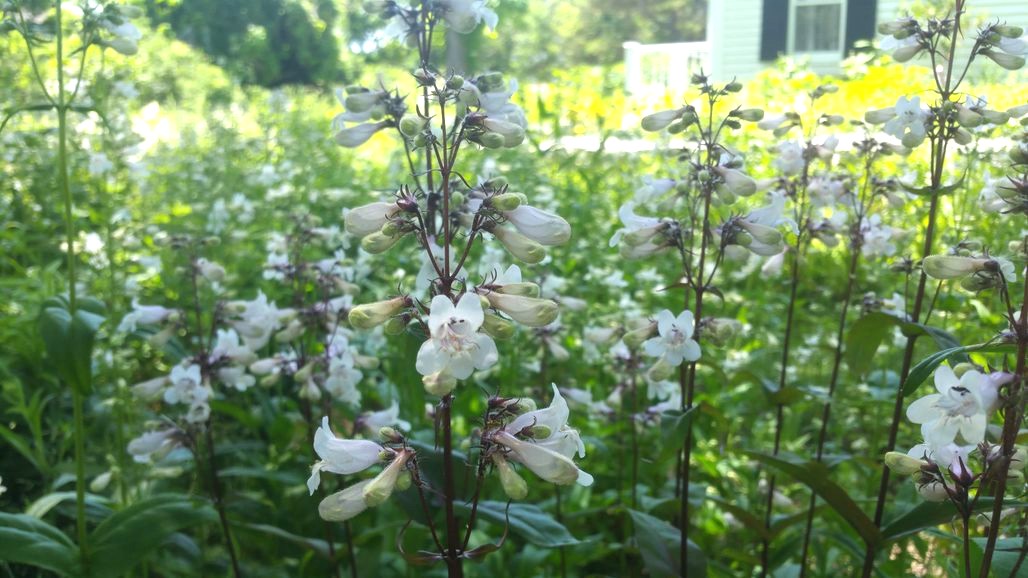
| Foxglove Beardtongue Penstemon digitalis |
|
|
The Guidelines gives homeowners steps they can take in the design and maintenance of their properties that will support pollinators and birds, manage stormwater, conserve water, and protect the Cape's water quality. This 40-page booklet is beautifully illustrated by Marcy Ford with content that is easily digestible and supported by numerous resources for additional learning.
|
We are grateful for the several retail shops that are partnering with us to make this publication more widely available: Brewster Book Store, Birdwatchers General Store, Crocker Nurseries, Wellfleet Audubon Wildlife Sanctuary, Cape Abilities Farm, Cape Cod Museum of Natural History, the Cape Cod Lavender Farm, Heritage Museums and Gardens, Titcomb's Bookshop, Sea Howl Bookshop, Soares Flower Garden Nursery, and Eight Cousins Bookshop.
If you are a retailer and would like to sell this publication at your store, please contact us. |
|
|
APCC caps
$25 -includes USPS deliver in the U.S. |
|
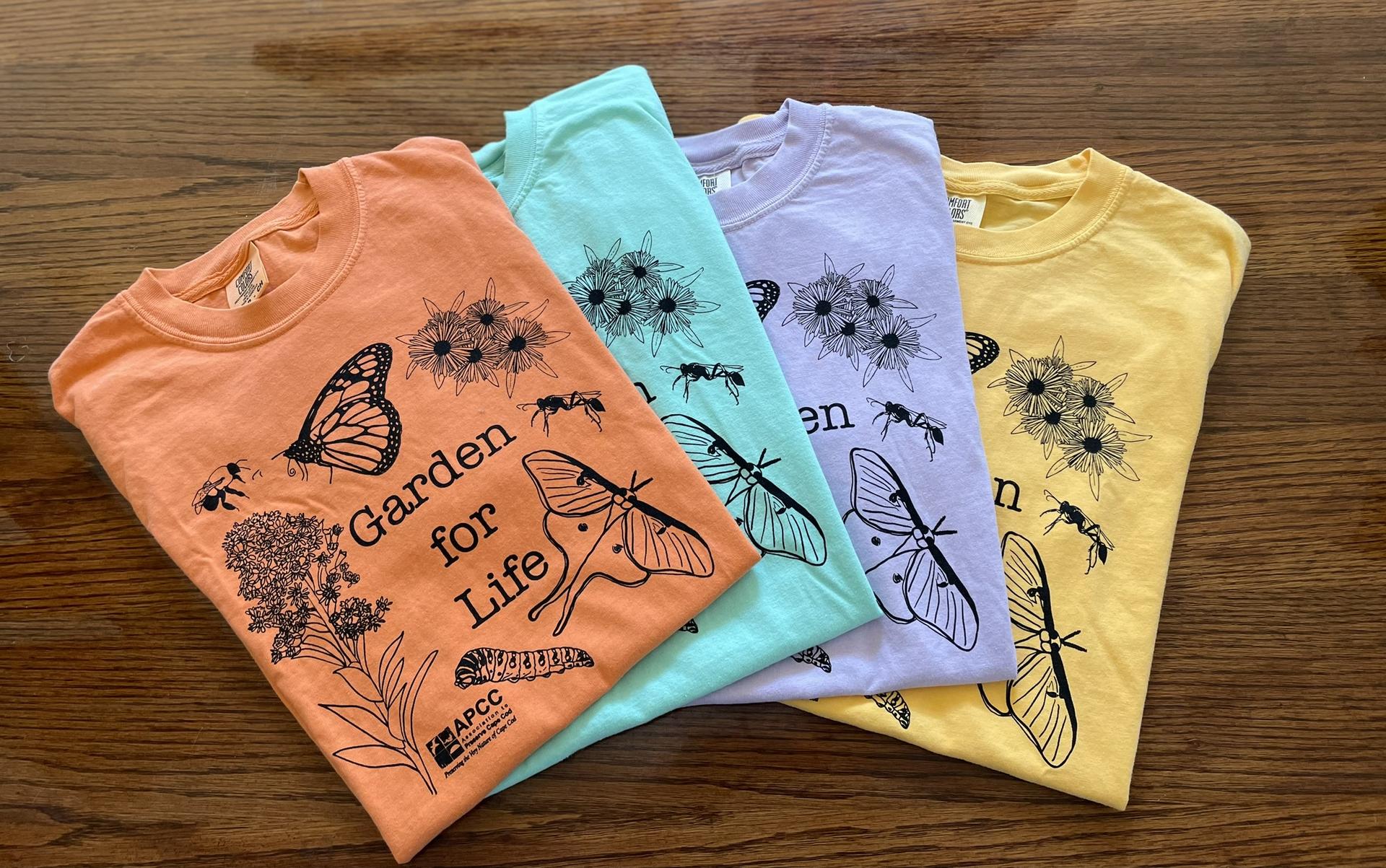
Garden for Life T's
$30 -includes USPS delivery in U.S. |
|
|
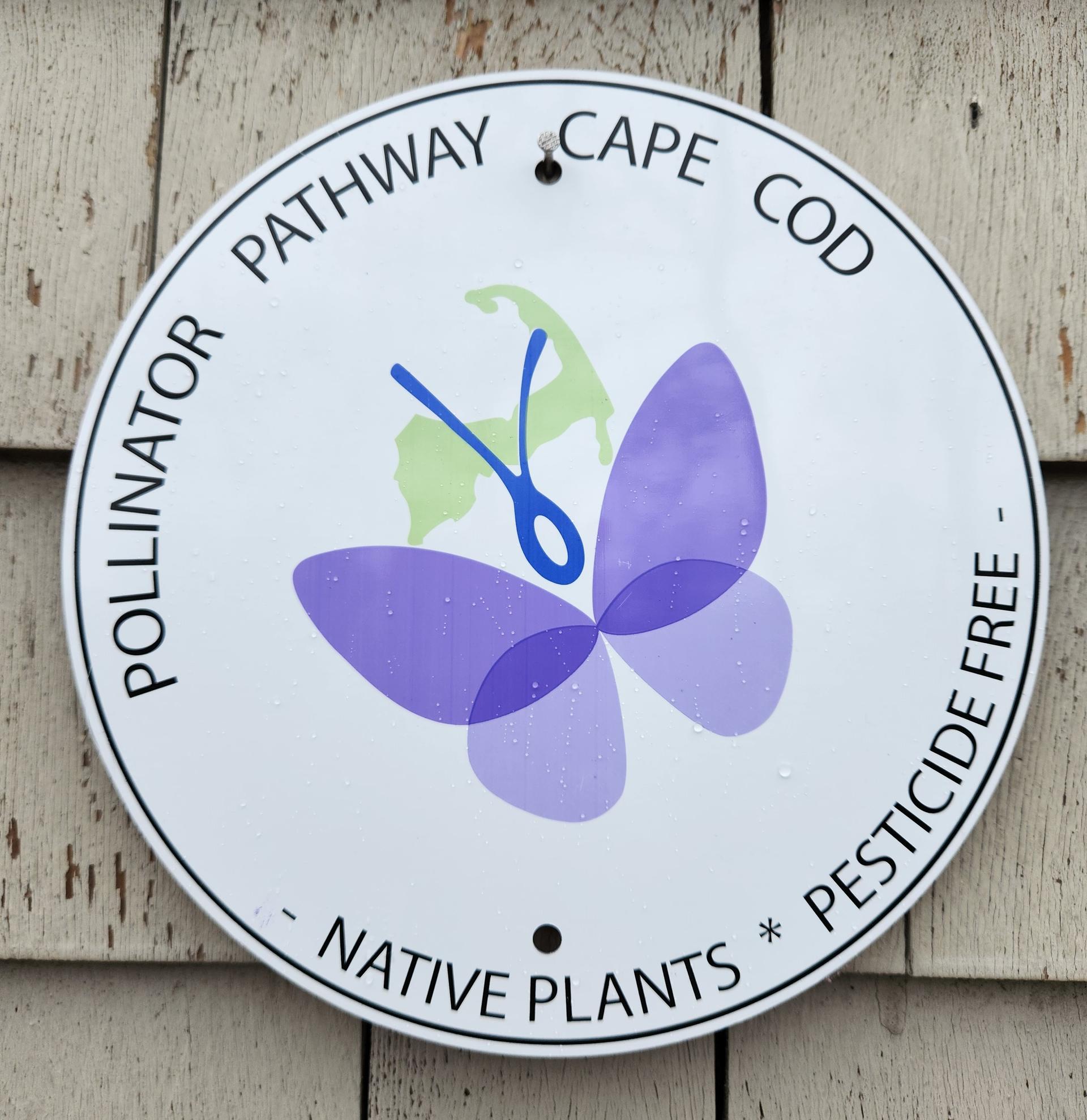
The Pollinator Pathway Cape Cod is a group of organizations promoting native plants and pollinator-friendly land care practices to create a boat load of safe oases for our native bees, butterflies and a whole host of other pollinators that are crucial to the health of our ecosystems.
Join us! It's easy. There are no fees. You just need to pledge to ADD native plants, SUBTRACT a little lawn, AVOID yard chemicals, especially pesticides, and LEAVE the leaves. And, help us spread the word. Please get on the map to show your support of pollinators on Cape Cod!
You can purchase the 9-inch aluminum Pollinator Pathway Cape Cod sign at Hyannis Country Garden, Crocker Nurseries, Brewster Book Store, Orleans Conservation Trust, and Cape Abilities Farm.
If you are a retailer, and you would like to sell the signs, you can order online here, or email pollinators@apcc.org. |
| |
| Rain Barrels for Cape Cod
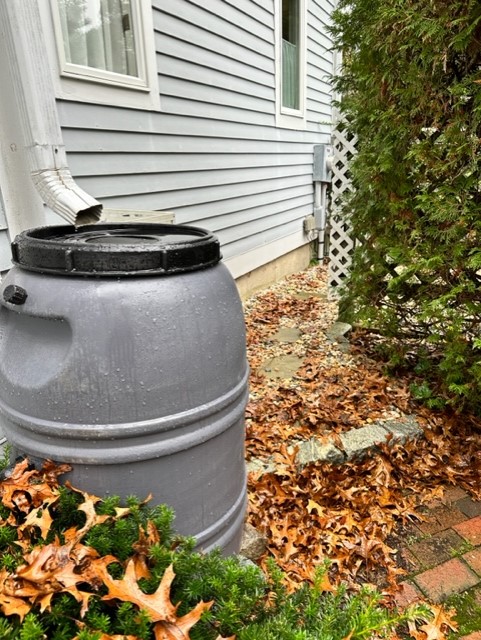
Order online from Upcycle Products $122 each includes shipping to your door 55 gallon, repurposed food barrels Keep a barrel out of a landfill, and capture some free rainwater. APCC receives a portion of the proceeds. For more information, click here. |
|
|
|
APCC eNewsletters.
Our weekly newsletters are archived on our website and easily shared.
You can find past newsletters and share with your friends. Encourage others to sign up for future enewsletters HERE.
|
|
|
Are you thinking of going solar? We hope so!
In partnership with E2 SOLAR in Dennis, APCC receives $500 for every solar installation when APCC is named as referral. |
|
|
| Thank you to the homeowners who just contracted to install solar panels through E2 Solar.
May the sun always shine for you! |
|
|
Expressions Gallery, 578 Main Street, Chatham CLICK HERE |
Expressions Gallery donates 20 percent of its profits to APCC's work. |
|
|
Thank you to our business sponsors! |
|
|
APCC is rated four stars by Charity Navigator, 2024 Platinum by Candid (formerly Guidestar), and 2024 Top-Rated by GreatNonprofits. |
|
|
Our Contact Information
*{{Organization Name}}*
*{{Organization Address}}*
*{{Organization Phone}}*
*{{Organization Website}}*
*{{Unsubscribe}}* |
| |
|
|