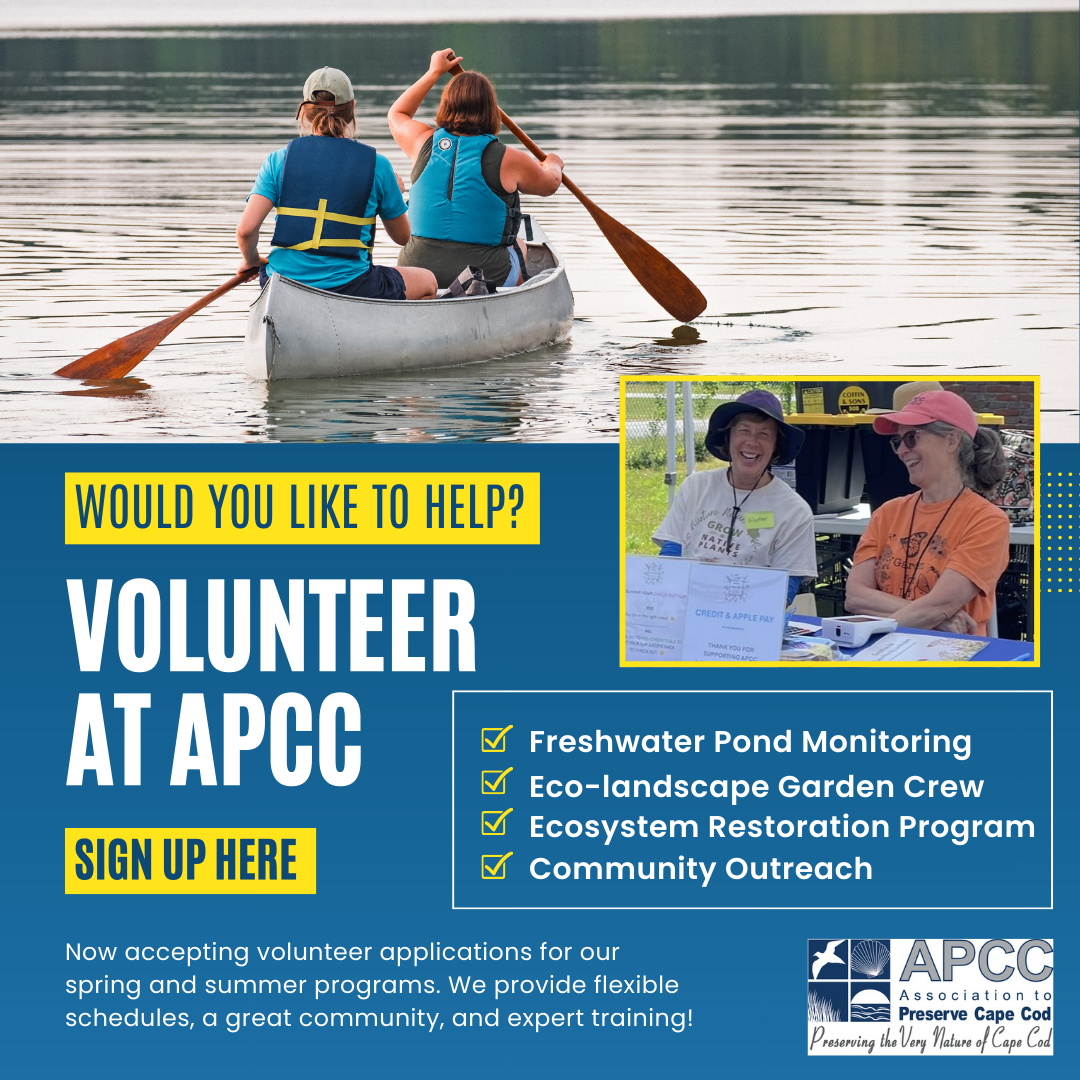
Association to Preserve Cape Cod |
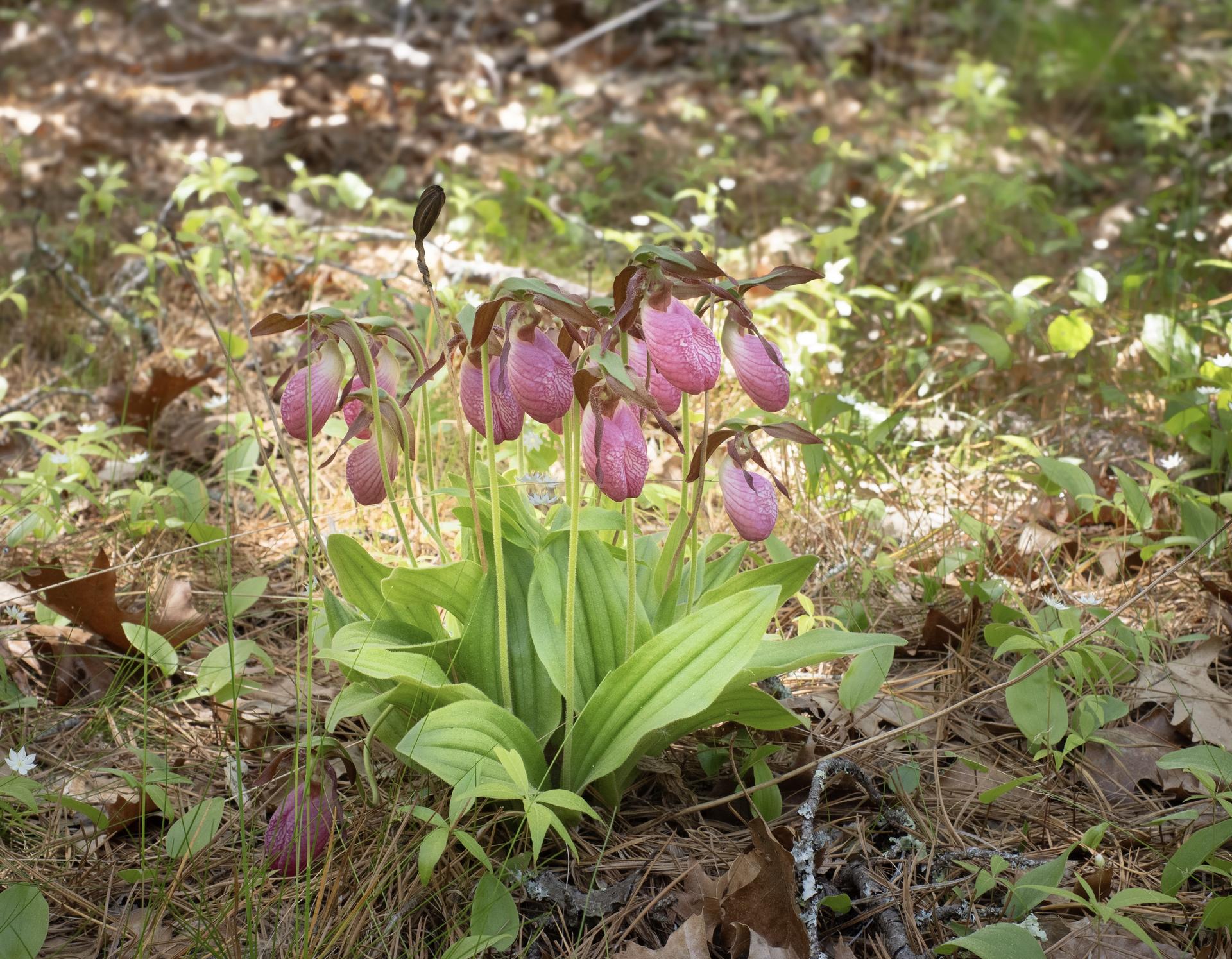
Above: Lady slippers. Photo by Sue Machie |
|
|
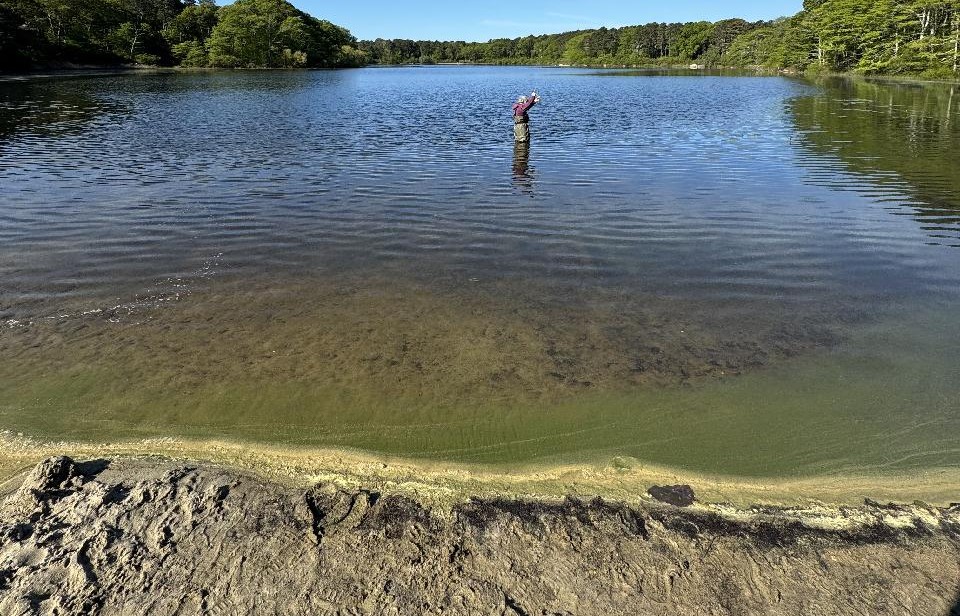
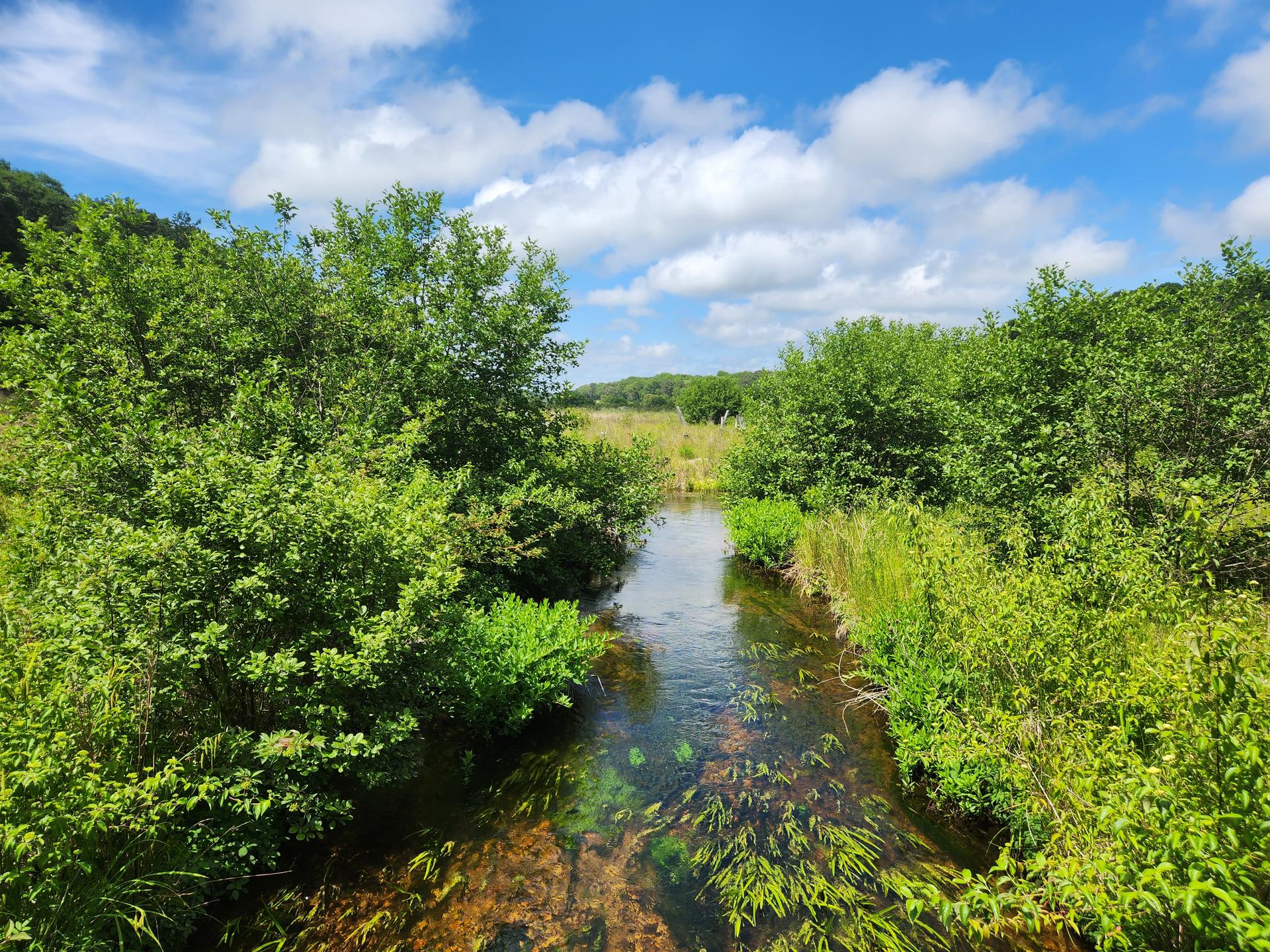
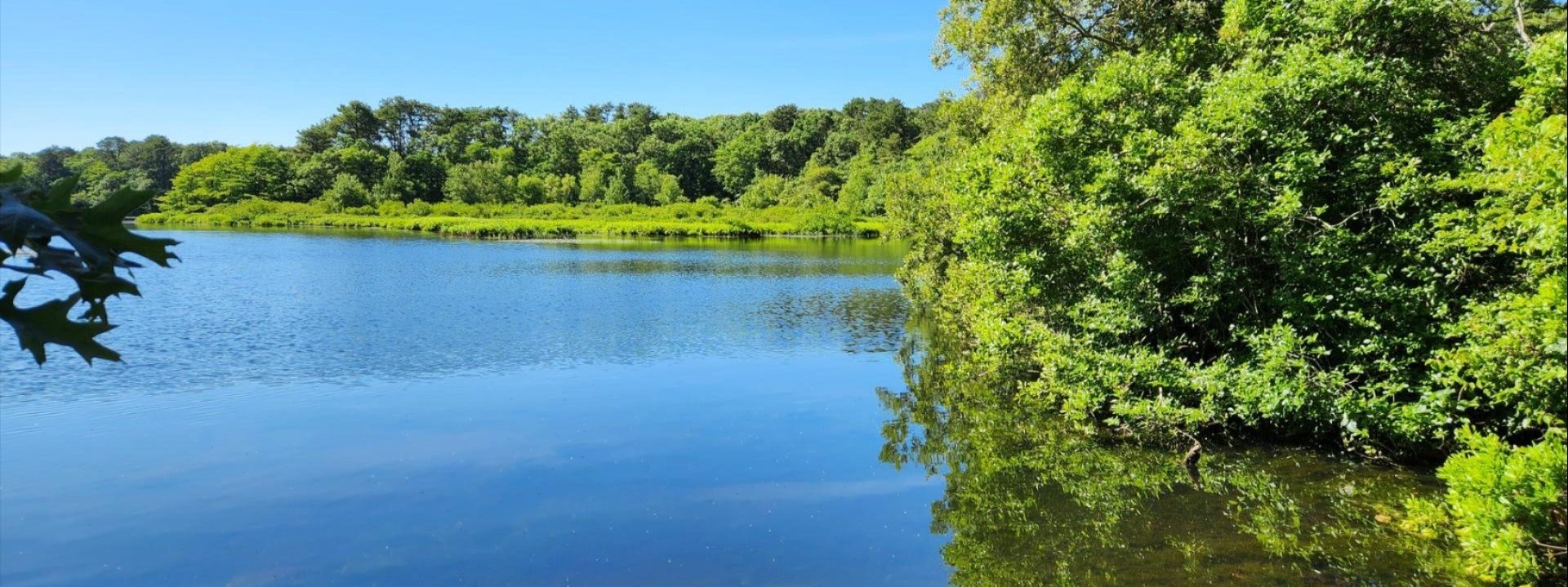
Above: Blueberry Pond, Brewster, May 27, 2025 |
Cyanobacteria Monitoring Program |
Along with the pollen on the Cape's pond shores this spring, cyanobacteria grew, triggering seven cyano alert warnings. These early blooms were identified in May in these ponds: Bearse and Hamblin Ponds in Barnstable; Schoolhouse, Blueberry, and Seymore Ponds in Brewster; and Bakers Pond and Pilgrim Lake in Orleans.
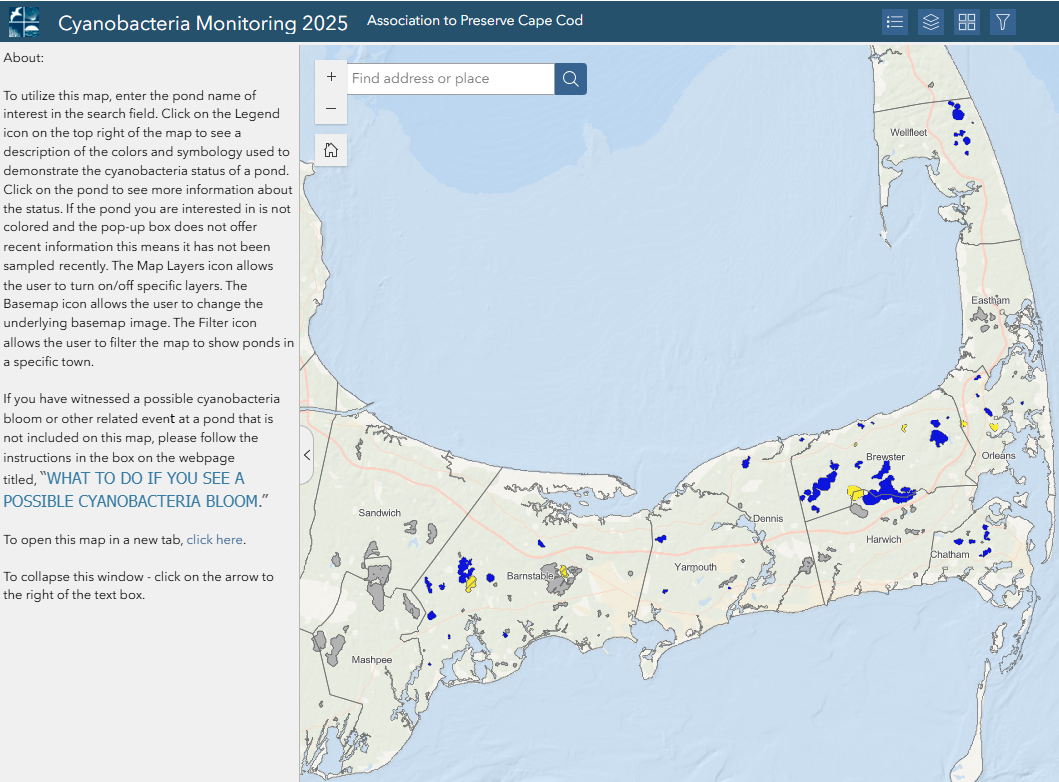
Due to the raised levels of cyanobacteria, these particular ponds will be monitored weekly to determine when conditions return to acceptable levels. Schoolhouse Pond was Microcystis dominant and the town of Brewster issued a cyanobacteria advisory. All of these ponds appear yellow on APCC’s cyano map.
The monitored ponds on the cyano map appear colored as blue, yellow, or red. If you click on the pond, a popup box appears, which will provide you with relevant information about the most recent sampling results.
Of the some 890 ponds across Cape Cod, we monitor 130-150 during the season—in large thanks to the invaluable assistance of volunteers coordinated by many pond associations, and to our summer internship program. The current list of ponds being monitored for cyanobacteria in 2025 will be posted on the cyano webpage in the coming days.
Stay tuned as we get out to all the ponds we are monitoring this season in the next couple weeks! |
"When in doubt, stay out." High concentrations of potentially toxic cyanobacteria were detected in several ponds last week, at levels that are of concern for pets and children who are more susceptible due to ingestion. |
The monitoring program for many ponds has begun. Check on the status of your favorite pond on our interactive map.
If you see what appears to be a bloom, take a picture, note the day, location, and time and notify the local health department, and email to cyano@apcc.org.
Sign up for cyanobacteria email alerts. |
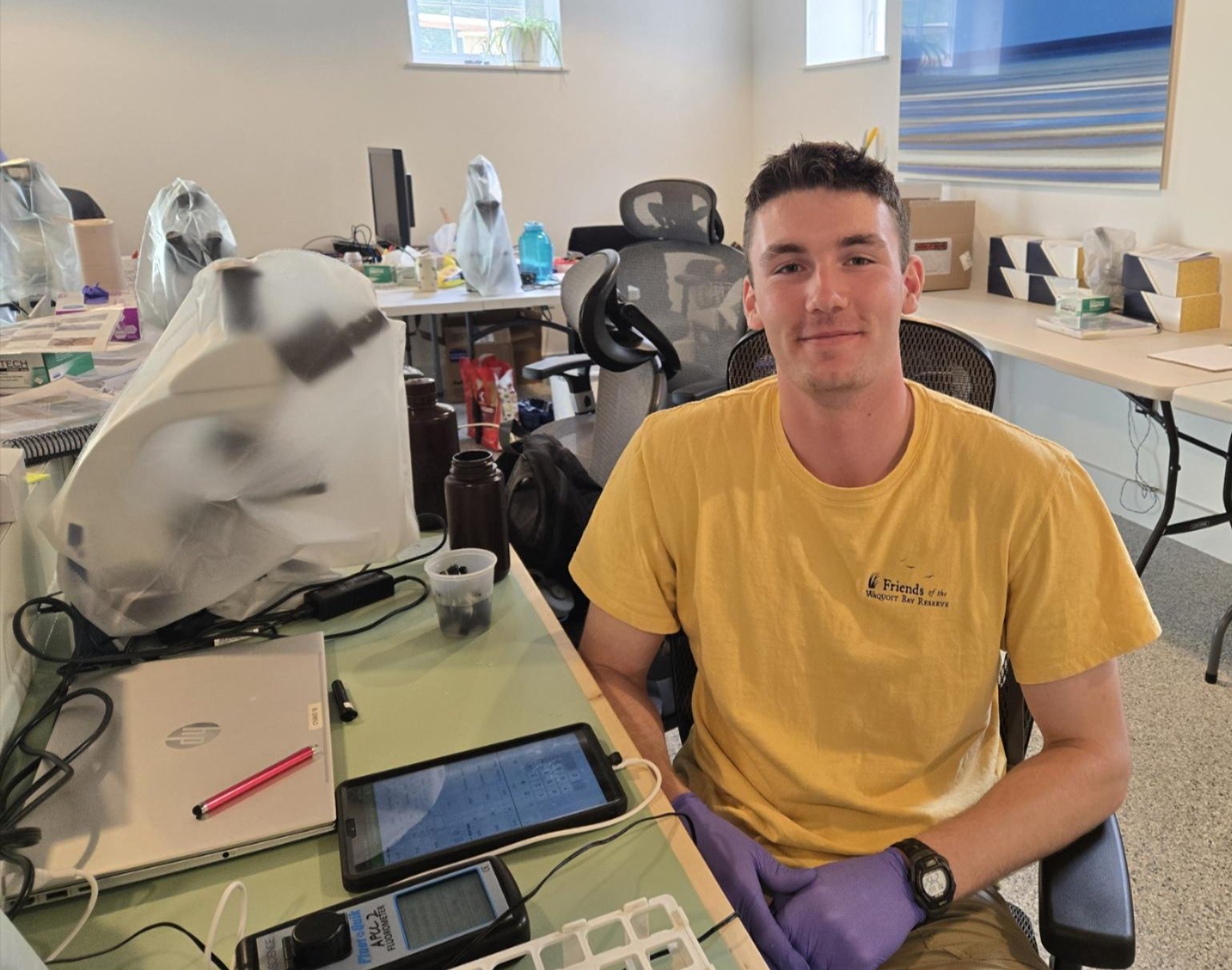
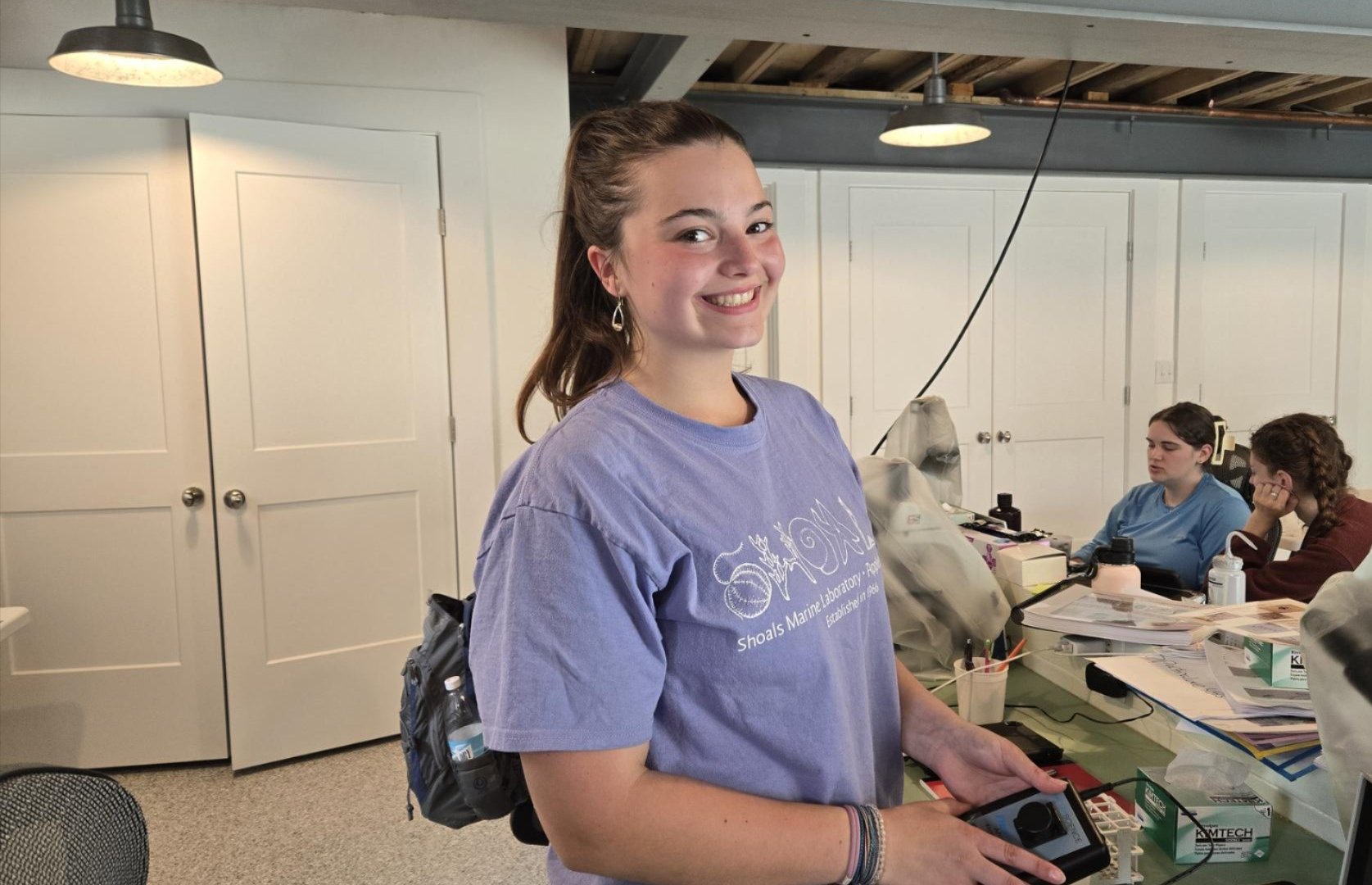
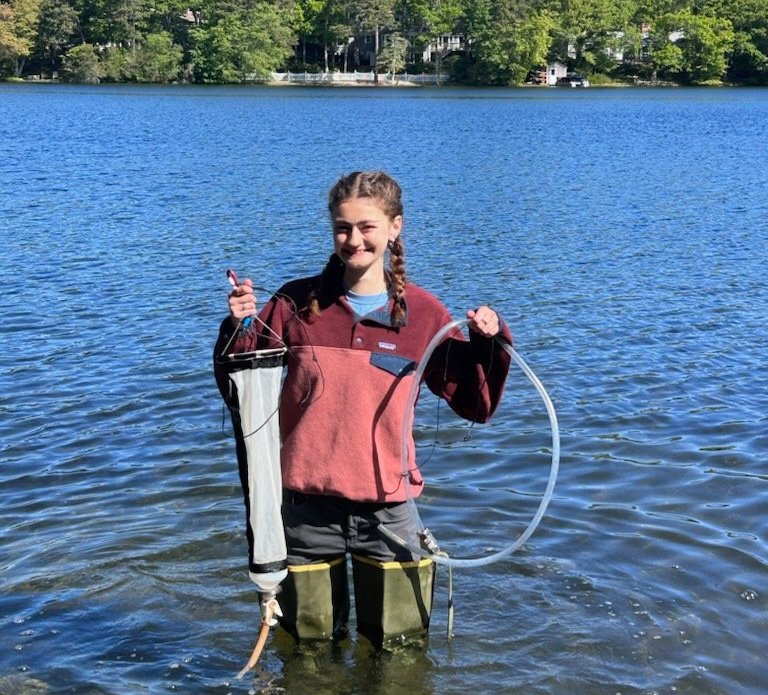
APCC gives a big welcome to the next wave of summer interns in the Cyanobacteria Monitoring Program! |
|
|
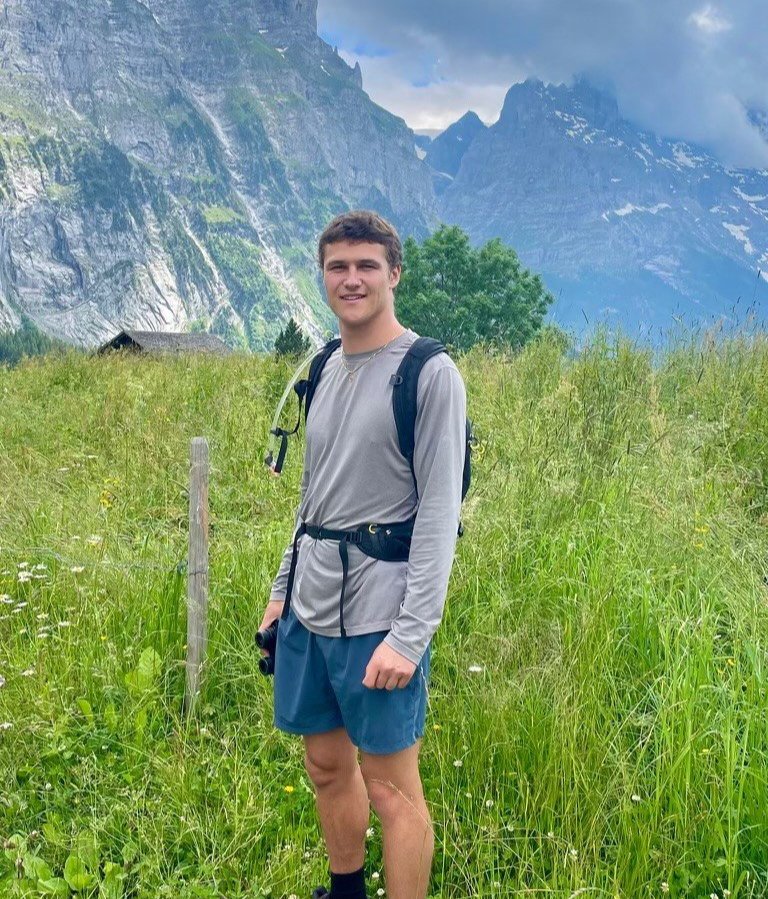
| Sullivan Gaffney
Hi all, my name is Sullivan Gaffney! I am a rising sophomore at Hamilton College and have lived in Sandwich all my life! I am pursuing a dual degree in computer science and biology. I am very excited to sample out in the field this summer and experience all of the wonderful nature here on Cape Cod! |
|
|
| Emma Acri
Hi, my name is Emma Acri. I am pretty sure that I was born with sand between my toes–and if I wasn’t, it certainly has been there ever since. I grew up on the beaches of Long Island Sound in my hometown of Milford, Connecticut, and on the kettle ponds and beaches of Cape Cod, where my grandparents have a home in Dennisport. This, however, is the first year I will be spending my whole summer on the Cape and I couldn’t be more excited. I just finished my sophomore year at Cornell, where I am pursuing majors in environmental science and communication. I hope to gain valuable experience in both these areas with an internship this summer with APCC. I am also very much looking forward to rowing with Cape Cod Community Rowing on Long Pond this summer.
|
|
|
| Sophie Cosaro
I recently graduated from the University of Wisconsin–Madison with majors in conservation biology and zoology. I am originally from right outside of Minneapolis, but I am currently living in Harwich. I am looking forward to exploring the many ponds and lakes throughout Cape Cod. I am excited for this position to increase my knowledge of cyanobacteria and help others learn more about the beautiful freshwater on Cape Cod. |
|
|
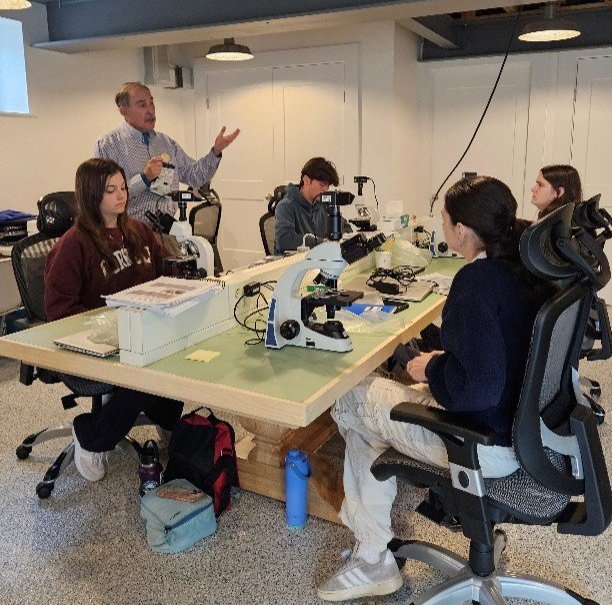
Cyanobacteria Monitoring Program interns receive special training to kick off the 2025 program |
Prof. Barry H. Rosen worked in the lab with APPC’s 2025 cyano interns to help them become familiar with using their microscopes, what to look for to identify the genera, and how to improve what they can see and photograph. He provided an overview of cyanobacteria taxonomy, which included over 100 detailed images of the cyanobacteria species and their characteristics.
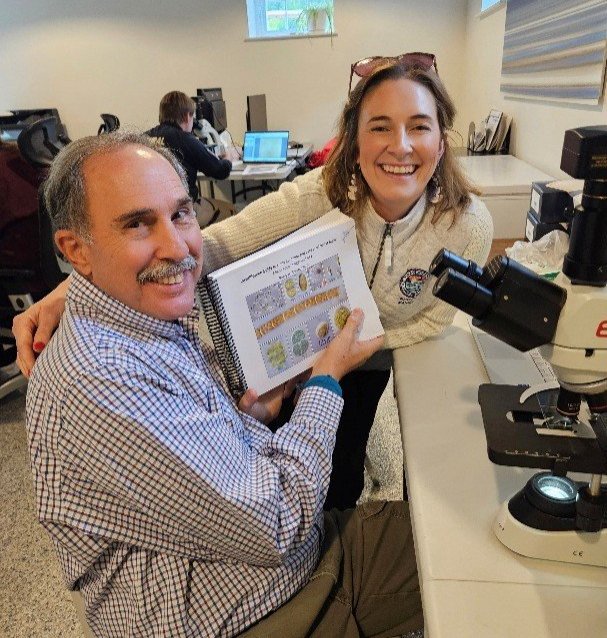
Prof. Rosen provided us pre-publication copies of his book, currently in press by Springer Nature, entitled: Color Atlas of Freshwater Algae - Comprehensive Identification Guide, Including Harmful Algal Blooms. |
Above: Prof. Barry H. Rosen and Ashley Fisher, Mashpee water quality coordinator. |
APCC Ecosystem Restoration Program |
Community Voices Help Shape the Future of the Mashpee River |
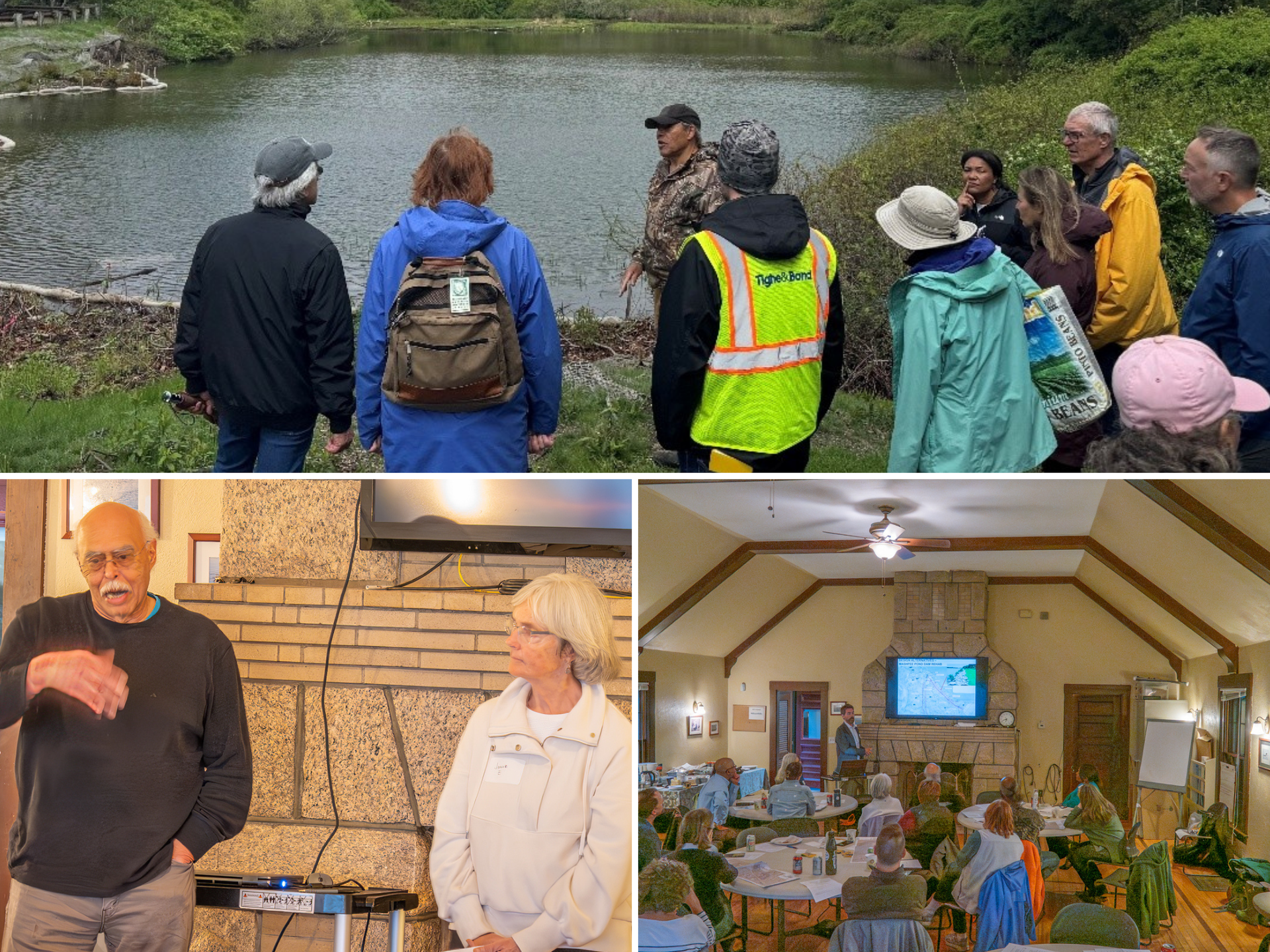
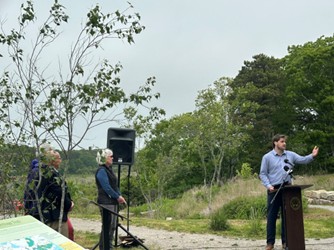
Above: During the recent site walk and community meeting, community partners and project team members came together to identify restoration priorities and discuss areas of cultural and ecological significance (photo credits: Ashley Fisher - top, Gerald Beetham - bottom). |
This past month, local residents, members of the Mashpee Wampanoag Tribe, and project partners gathered for a guided walking tour of the upper Mashpee River. The event was part of the Source to Sea initiative, which aims to restore both the ecological health and cultural significance of our river systems. Despite cold and misty weather, participants remained engaged as they visited key sites along the river and explored its future.
The tour began near the Route 130 fish ladder, next to the Mashpee Wampanoag Museum, and continued upstream toward the headwaters at Mashpee-Wakeby Pond. Along the way, the group reflected on aging infrastructure like the Mill Pond dam and discussed the river’s importance to wildlife, such as river herring, brook trout, and American eel. The Mashpee River holds particular significance for members of the tribe, who continue to harvest river herring from its waters. Conversations throughout the walk touched on ecological challenges, cultural values, ties to the land, and restoration opportunities. A consistent theme emerged: the need to balance environmental conservation with community needs.
This tour is part of broader planning efforts for restoration of the Mashpee River, including the future of the Route 130/Mill Pond dam. A recent state inspection identified the dam as a safety hazard, prompting the town to evaluate long-term options with support from the USDA Natural Resources Conservation Service (NRCS) and the Cape Cod Conservation District. Two main alternatives are under consideration: repairing the dam and fish ladder, or removing the dam entirely and replacing it with a larger culvert and more natural stream channel.
Following the walking tour, the Waquoit Bay National Estuarine Research Reserve (WBNERR) hosted a community meeting as part of the Source to Sea initiative. This effort is funded by the NOAA Restoration Center through a grant secured by APCC, in partnership with WBNERR, the Mashpee Wampanoag Tribe, and the town of Mashpee. During the meeting, community members shared their perspectives, highlighting a wide range of priorities. Many emphasized the need for designs that include open water features, protect opportunities for traditional herring harvests, and ensure safe pedestrian access across Route 130.
Both the tour and the community meeting underscored a shared desire for solutions that honor Mashpee’s unique blend of natural beauty, cultural heritage, and local knowledge. While the final plan is still taking shape, there is growing momentum for a restoration effort that restores the river’s natural flow, supports native species, and strengthens the community’s enduring connection to this vital landscape. |
River Herring Spotlight:
Connecting Community and River at Marstons Mills
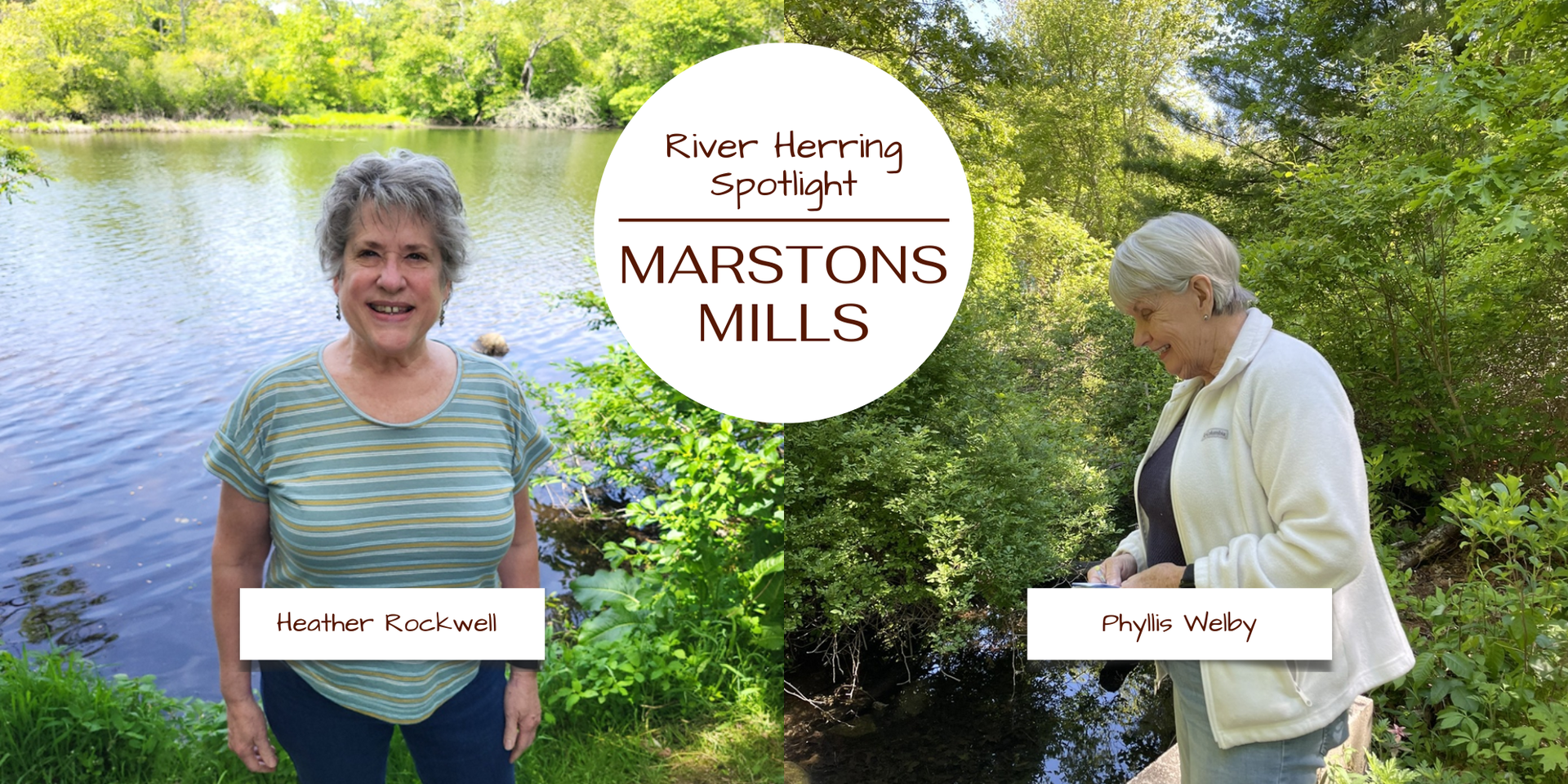
Just a few years ago, Heather Rockwell didn’t know the Marstons Mills River existed. As a lifelong Cape Codder who grew up in Hyannis, she remembers heading to Stony Brook in Brewster each spring to watch the herring make their legendary run upstream—but Marstons Mills remained off her radar. That all changed in 2017, when Heather was hired by Three Bays Preservation to improve their volunteer management program. When the organization transitioned into the Barnstable Clean Water Coalition (BCWC) later that year, she stepped into the role of herring count coordinator—and into a deeper connection with a river she'd never really known.
“So much of my daily workload at BCWC now revolves around the river,” Heather says. “Between herring count season and our cranberry bog restoration project at the river’s headwaters, I feel responsible for it.”
For Heather, the river herring program isn’t just about data collection—it’s about cultivating a culture of stewardship. “Herring count programs are important for building awareness about river herring, fostering community stewardship for the river and associated watershed, along with educating and engaging the public in citizen science,” she explains. The numbers gathered each season feed into broader efforts to manage and protect the species, but they also build a deeper bond between residents and the river that runs through their town.
That bond is most visible in the volunteers who rise early, rain or shine, to stand by the river and count fish. People like Phyllis Welby, who’s been volunteering for over a decade. Her love for the outdoors began at age seven, during a Girl Scout campout. While others were begging to go home, Phyllis wanted to stay the whole summer. That spirit stayed with her, eventually bringing her to the Cape Cod Museum of Natural History as a volunteer field guide—and then to the herring count program.
At first, she joined a crew monitoring the run at Stony Brook in Brewster. She remembers the stillness of some shifts—the quiet gurgle of the river, the anticipation of spotting that first silvery flash—and the thrilling chaos of others, when the water boiled with hundreds of migrating fish. “You can go from peace and quiet to counting 20, 50, even 100 herring in just a few minutes,” she says.
Now a regular at the Marstons Mills run site, Phyllis prefers the earliest shift of the day. At 7:00 a.m., it’s just her, the river, and occasionally a few curious gulls—one of which she recently watched snatch a herring right from the water. “Another part of the river herring’s life cycle,” she says with a smile. Phyllis has noticed a decline in fish numbers over the years, but that only strengthens her resolve. “If more people knew about the cycle of the river herring,” she says, “it would help to increase the protection and population of these critical fish.” She hopes her efforts—and those of her fellow volunteers—help inspire a stronger sense of care for local waterways.
Heather agrees. “Interacting with the herring count volunteers every spring is one of the best parts of my job,” she says. “They come from all walks of life, with amazing skills and experiences. Their dedication keeps this program alive.” Coordinating the counts isn’t always easy—bad weather, holidays, and days with zero fish can test anyone’s patience—but Heather has learned that good communication and a strong sense of purpose can carry the team through.
From the coordinator organizing logistics, to the volunteers counting fish in the early morning, the Marstons Mills herring monitoring reflects a shared commitment to protecting the river and the species that depend on it.
The APCC River Herring Monitoring Program is supported through the Massachusetts Bays National Estuary Partnership, which helps connect Cape Cod communities to the protection and restoration of their local estuaries. This partnership between regional agencies, local organizations, and dedicated volunteers ensures that Cape Cod’s rivers—and the wildlife that depend on them—have passionate advocates working to safeguard their future.
|
|
|
River Herring Migration Slowing, but Activity Continues
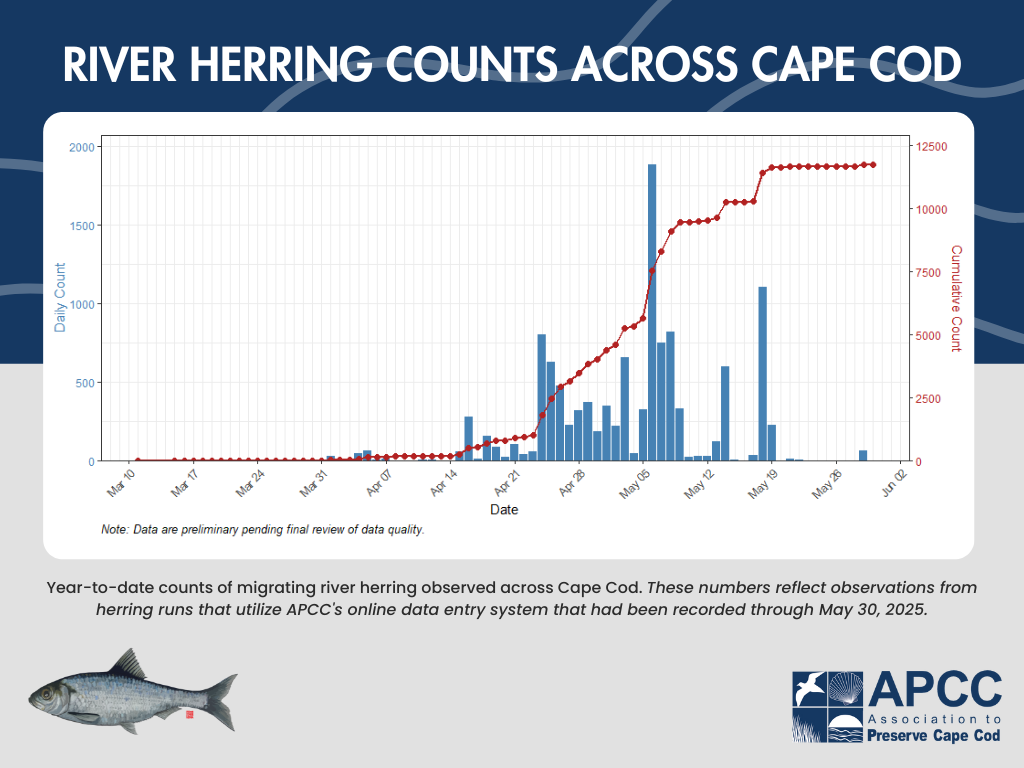
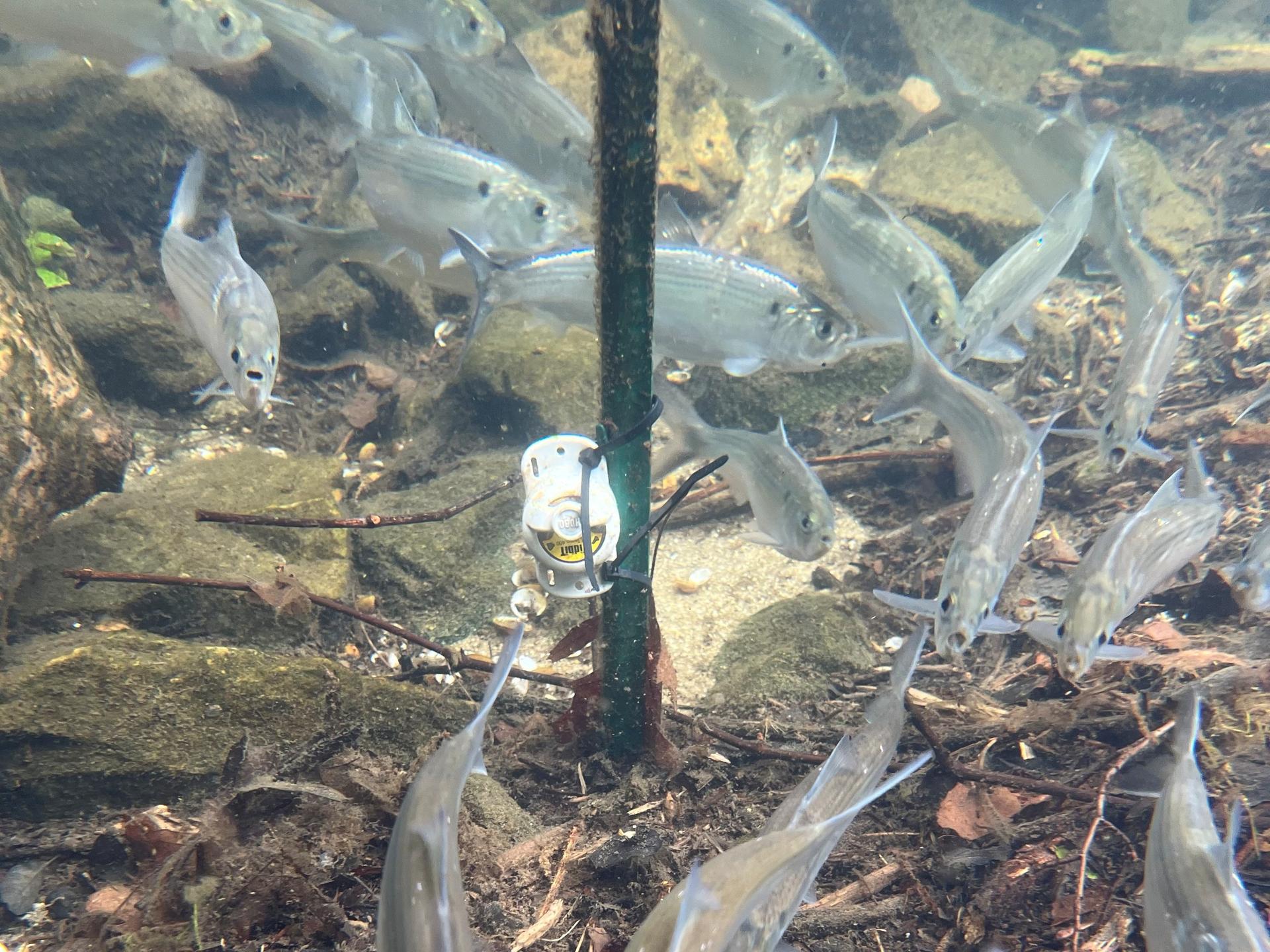
While the river herring migration is clearly winding down, we’re still seeing returns in several Cape Cod rivers. Most runs peaked in early May, and activity has tapered off since. However, herring were still on the move this week in the Mashpee River, where APCC staff, while out servicing temperature loggers, found themselves knee-deep and surrounded by schools of up-migrating fish. It was a vivid reminder of the importance of continuing to monitor runs into June and staying alert for those late-season herring!
As the season enters its final stretch, we kindly remind all volunteers and run coordinators to ensure their data are current. For runs using the online system, please enter your observations in a timely manner. For runs not using the online platform, we encourage coordinators to begin reviewing and finalizing their datasets. Doing so will help us stay on schedule for data quality checks and submission to the Massachusetts Division of Marine Fisheries for this year’s run index estimates.
| Above: River herring swim past one of APCC’s temperature loggers located on the Mashpee River. |
Honoring a Visionary:
Celebrating Betsy Gladfelter’s Legacy in River Restoration |
|
|
Last week, APCC was delighted to attend the dedication ceremony for the Dr. Elizabeth (Betsy) Gladfelter Overlook at the Coonamessett River Gateway to the Greenway Trail.
Nearly a decade ago, as APCC’s Ecosystem Restoration Program was just getting off the ground, the lower Coonamessett River restoration project was entering its final planning stages. This project opened the door for APCC to collaborate with experienced professionals, such as Betsy and a strong network of local and regional partners.
It was the first river and cranberry bog restoration on Cape Cod—a groundbreaking effort that has since served as a model for projects like the Childs River restoration (completed in 2021). It has also laid the foundation for other local restoration projects including the Red Brook restoration. And, as anyone who knows her would expect, Betsy continues to be a key member of the team, valued partner, and close friend leading these important restoration efforts.
|
Below: Video produced by APCC at the early start of the Coonamessett River restoration project. |
APCC welcomes Alan Ives as 2025's ecological land care intern |
|
|
|
Alan is a recent grad with a bachelor of science in wildlife fisheries biology from the University of Vermont.
He is a proud Cape Codder and nature enthusiast, with an immense love for our local ecosystems and their unique organisms. He says his appreciation for native flora and fauna, and willingness to learn, made joining APCC an easy decision for him.
He is excited to dive deeper into eco-friendly landscape practices and contribute to the APCC mission to protect and preserve Cape Cods natural resources!
Alan will be on APCC's eco-landscape consultation program team. |
|
|
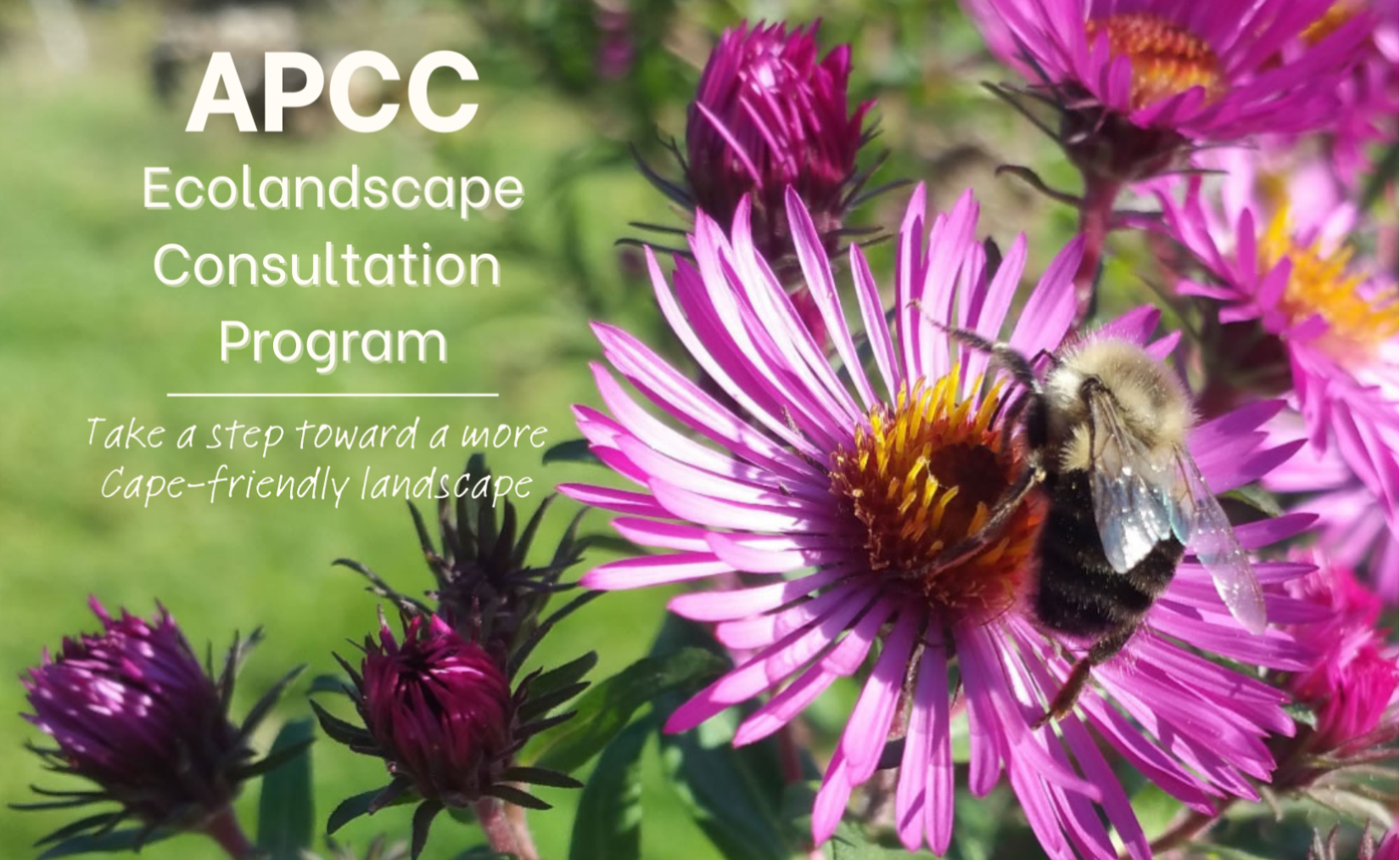
Ecolandscape Consultation Program |
APCC's Annual Native Perennial Sale |
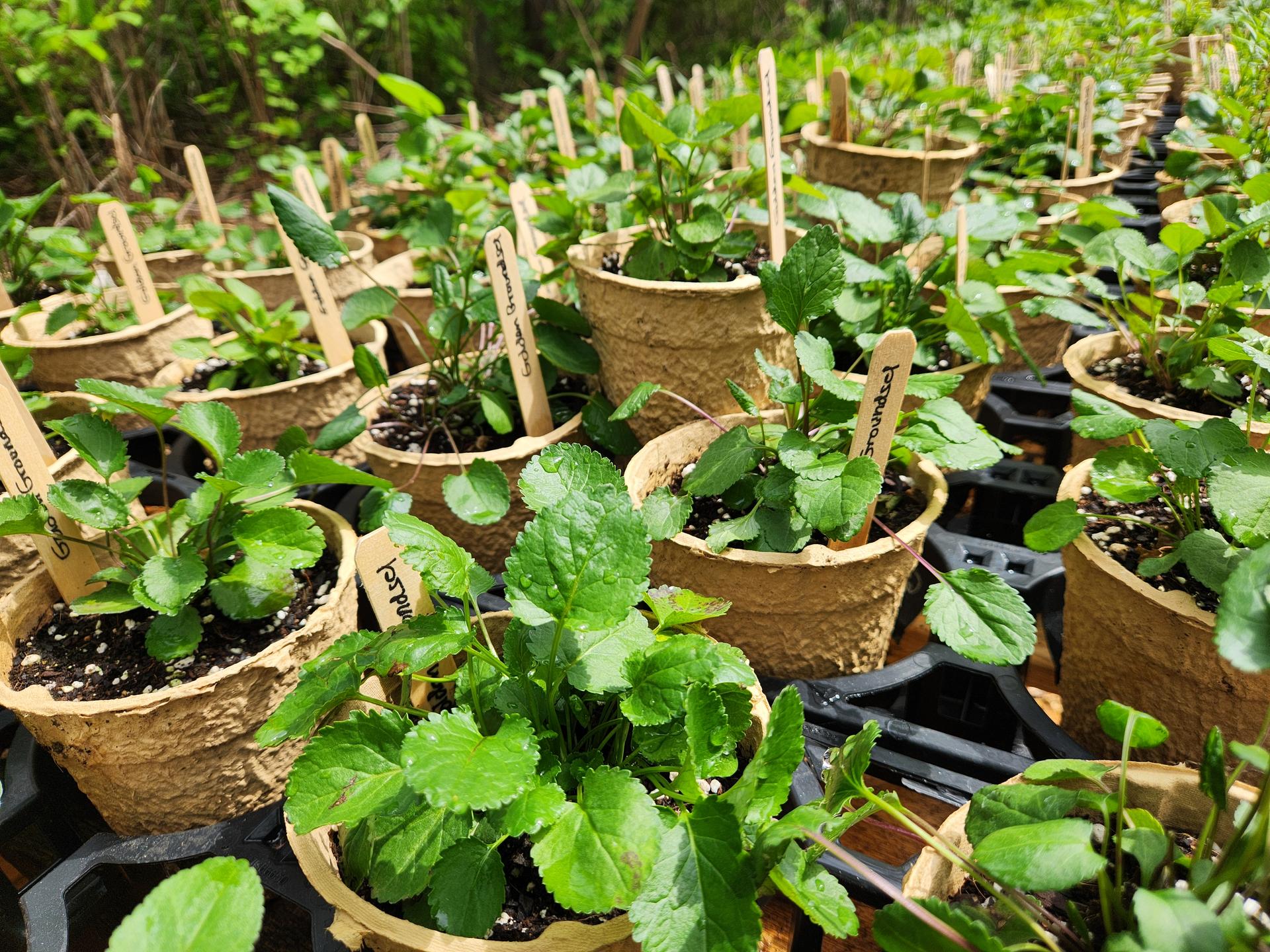
Our plant sale webpage is still live, and it means we still have some native perennials for sale! Yes, the plants look especially spectacular this year. Order online, and come pick up this week. Proceeds support APCC's work, AND make pollinators happy.
|
Pond Weed Watchers Workshops Scheduled |
Learn how you can help prevent the spread of invasive weeds in Cape Cod’s freshwater ponds.
To support our pond groups, APCC is hosting two freshwater aquatic plant identification workshops that will be conducted by a representative of the Massachusetts Department of Conservation & Recreation (DCR) Lakes and Ponds Program. The first is in June; the same workshop will be repeated in July. Each session is limited to 20 people. Where: The Koppel Center at APCC's headquarters 482 Main Street (Route 6A), Dennis 02638
When: Friday, June 13th, 10:00 a.m. - 12:00 p.m.
OR Friday, July 18th, 10:00 a.m. - 12:00 p.m. This workshop is designed to assist and encourage local pond groups to monitor their ponds for the presence of invasive plants and to develop a removal plan if an infestation is found. Early identification and intervention of invasive plant species is key before it becomes established in a lake or pond.
Seating is limited. Registration required. |
Another Pond-related Workshop, Hosted by APCC |
|
|
|
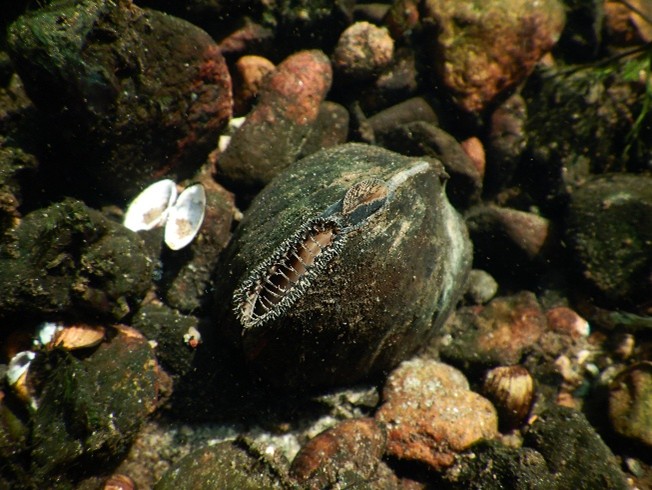
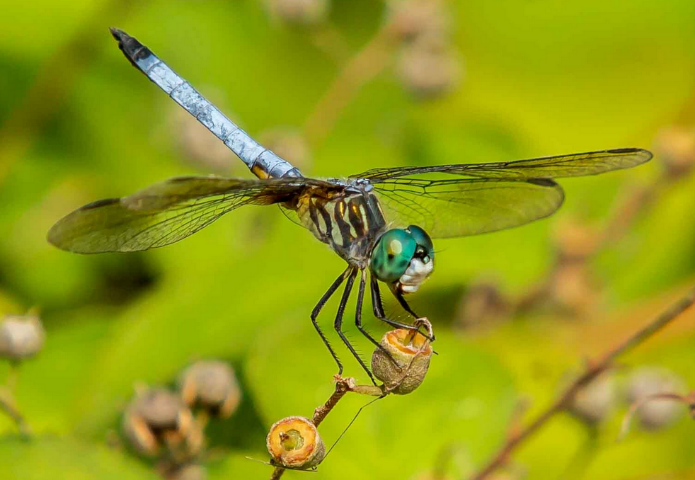
Mussels, Dragonflies, and Damselflies
with Jason Carmignani, Ph.D., aquatic ecologist, Natural Heritage & Endangered Species Program, Mass Division of Fisheries & Wildlife Friday, June 27th 10:00 – 11:30 a.m. This is a hybrid event at APCC’s headquarters at the Koppel Center 482 Main St (Rte 6A), Dennis 02638 Seating is limited, but our virtual attendance is unlimited.
Registration required. |
|
|
What do mussels, dragonflies and damselflies have in common? They all are inhabitants of freshwater ponds and are bioindicators of pond health. They also all have wild and crazy life cycles! Join us for this expert’s presentation where he will reveal the watery world of these creatures. And get answers to questions, such as: How many different kinds of freshwater mussels can be found on Cape Cod? What’s a dragon versus a damsel and which ones are common and threatened on Cape Cod?
This event is brought to you as part of APCC’s Cape Cod Pond Watcher’s Bio-survey Program, that encourages you to visit a pond near you and take some time to observe and report your findings. As a citizen scientist, the data will serve to provide greater knowledge of the biology of the Cape’s some 890 freshwater ponds. |
|
|
If you are a farmer or someone who wants to grow native plants to sell, or just want to be updated on the program's development, please submit an interest form that appears on our webpage. We will be sending periodic email notices of workshops and meetings.
Funding for the project is provided by Barnstable County and its Economic Development Council License Plate Grant Program through the Cape Cod Commission. |
|
|
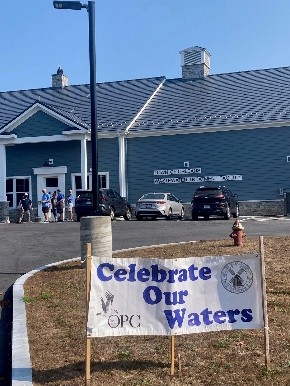
Friday, June 6, 3:15 – 5:00 p.m. - 30-minute tours of the Orleans’ new state of the art wastewater treatment facility. Space is limited and pre-registration is required. This is a great opportunity to learn more about how our town is working to protect our waters.
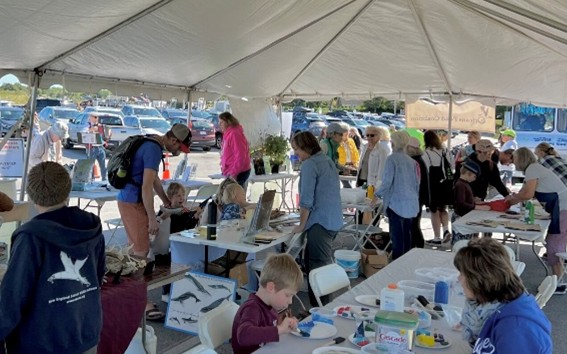
Saturday, June 7, 9:30 a.m. to 12:30 p.m. - ‘Under the tent’ in Depot Square at the corner of Old Colony Way and Main St., across from the Hot Chocolate Sparrow. The theme is water quality and testing. Learn more about our waters. Come see the scope of testing programs performed by many dedicated organizations and hands-on demonstrations of testing tools and devices.
Partners under the tent include: the Friends of Pleasant Bay, the Marine and Fresh Water Quality Committee, the Shellfish/Waterways Committee, the Association to Preserve Cape Cod, the Center for Coastal Studies, Silent Spring/STEEP, the Mass Oyster Project, the Orleans Open Space Committee, Pollinator Pathway Cape Cod, Old Ladies Against Underwater Garbage, and the Nauset Regional High School Green Club. We are also pleased to welcome Orleans Eco-Art, which will offer fun, creative and eco-friendly activities for families.
|
|
|
|
Native Plants and Pollinators |
Saturday, June 7th, 9:00 a.m. - 11:00 a.m.
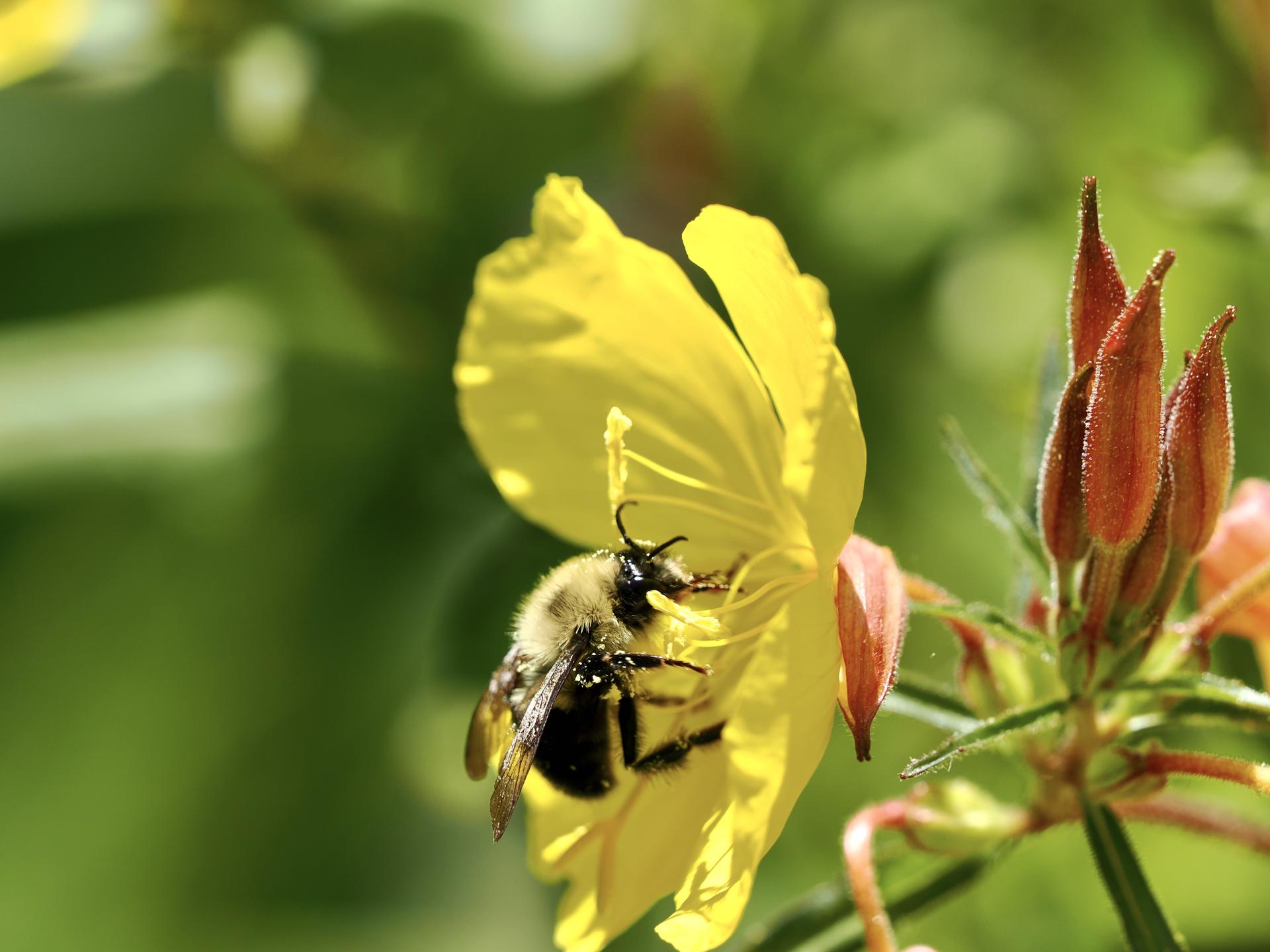
Kristin Andres, APCC's associate director for education, will take us on a journey through the natural world, uncovering the hidden lives of insects that you didn’t know existed, but that drive our ecosystem. The insect world includes specialists and generalists that together form the foundation of our food web; by ensuring that we provide the native plants they need, we gain better food production as well as more beauty in the garden. Hosted by Resilient Roots at Fuller Farm.
|
|
|
| Harwich Ponds Coalition
~ Protecting and advocating for Harwich ponds and freshwater resources Annual Kickoff Meeting Saturday, June 14, 10:00 a.m. at the Harwich Community Center |
|
|
Guest speakers on our expert panel represent the following organizations: -
APCC
- Harwich Conservation Trust
- Town of Harwich
- Conservation Department
- Board of Health
- Dept. of Natural Resources
Come join us and learn more about how you can make a positive impact on our ponds—starting with our Pond Pledge! |
|
|
A Cape-wide Conservation Event Calendar | |
|
The Compact of Cape Cod Conservation Trusts (“the Compact”) and its nonprofit members launched a new regional calendar of events. The Conservation Calendar includes programs across Cape Cod hosted by these groups. The goal of the calendar is to encourage visitors and residents to take part in nature and environmental events. You can always find the link to the calendar on APCC's website under News & Events.
|
|
|
A Cape Cod Native Plant-selector
~ to help you choose the perfect native plants for your garden. |
|
|
Email kandres@apcc.org and we'll send you a CapeCodNativePlants.org decal. |
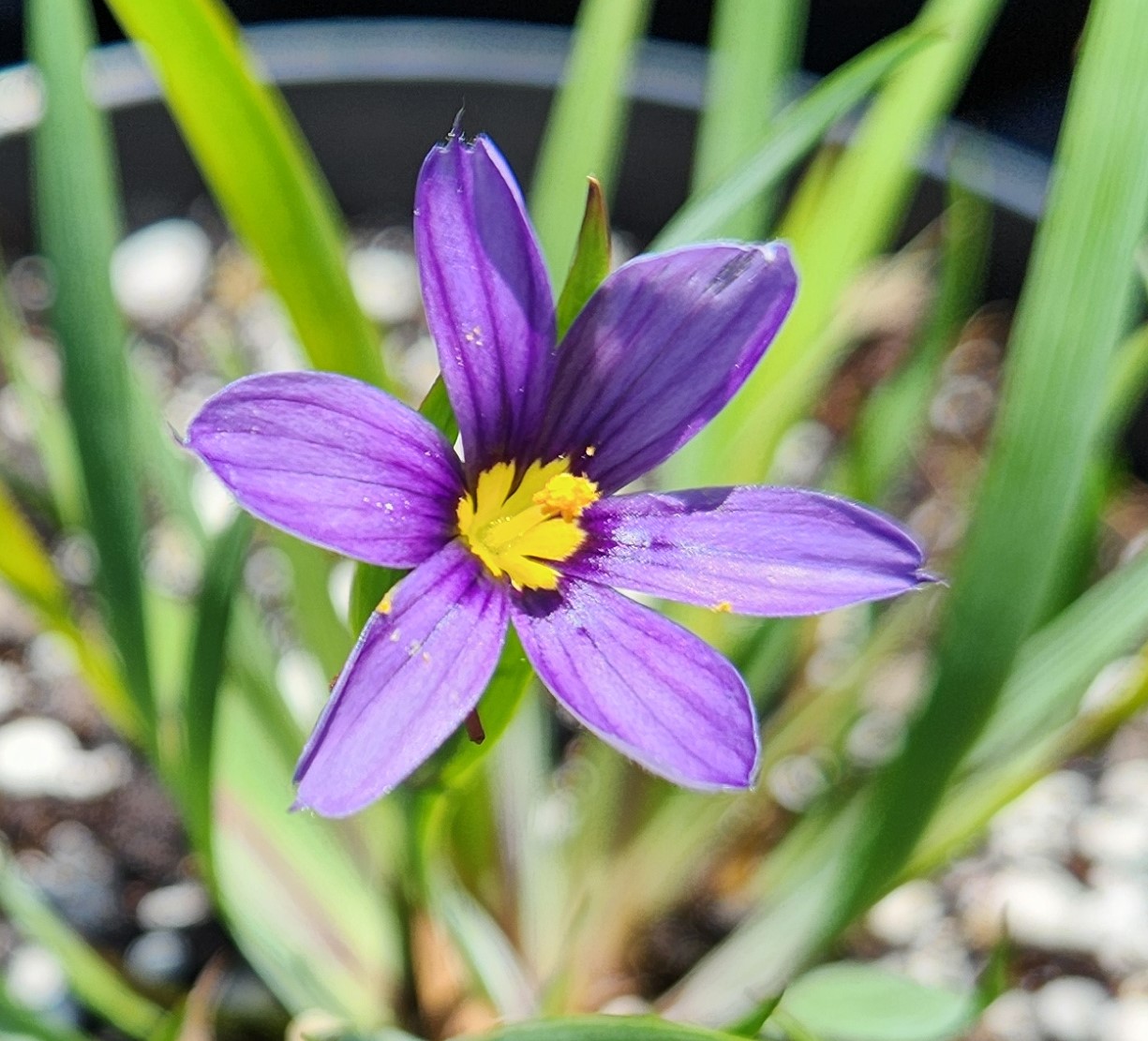
| Blue-eyed Grass Sisyrinchium angustifolium |
|
|
The Guidelines gives homeowners steps they can take in the design and maintenance of their properties that will support pollinators and birds, manage stormwater, conserve water, and protect the Cape's water quality. This 40-page booklet is beautifully illustrated by Marcy Ford with content that is easily digestible and supported by numerous resources for additional learning.
|
We are grateful for the several retail shops that are partnering with us to make this publication more widely available: Brewster Book Store, Birdwatchers General Store, Crocker Nurseries, Wellfleet Audubon Wildlife Sanctuary, Cape Abilities Farm, Cape Cod Museum of Natural History, the Cape Cod Lavender Farm, Heritage Museums and Gardens, Titcomb's Bookshop, Sea Howl Bookshop, Soares Flower Garden Nursery, and Eight Cousins Bookshop.
If you are a retailer and would like to sell this publication at your store, please contact us. |
|
|
APCC caps
$25 -includes USPS deliver in the U.S. |
|
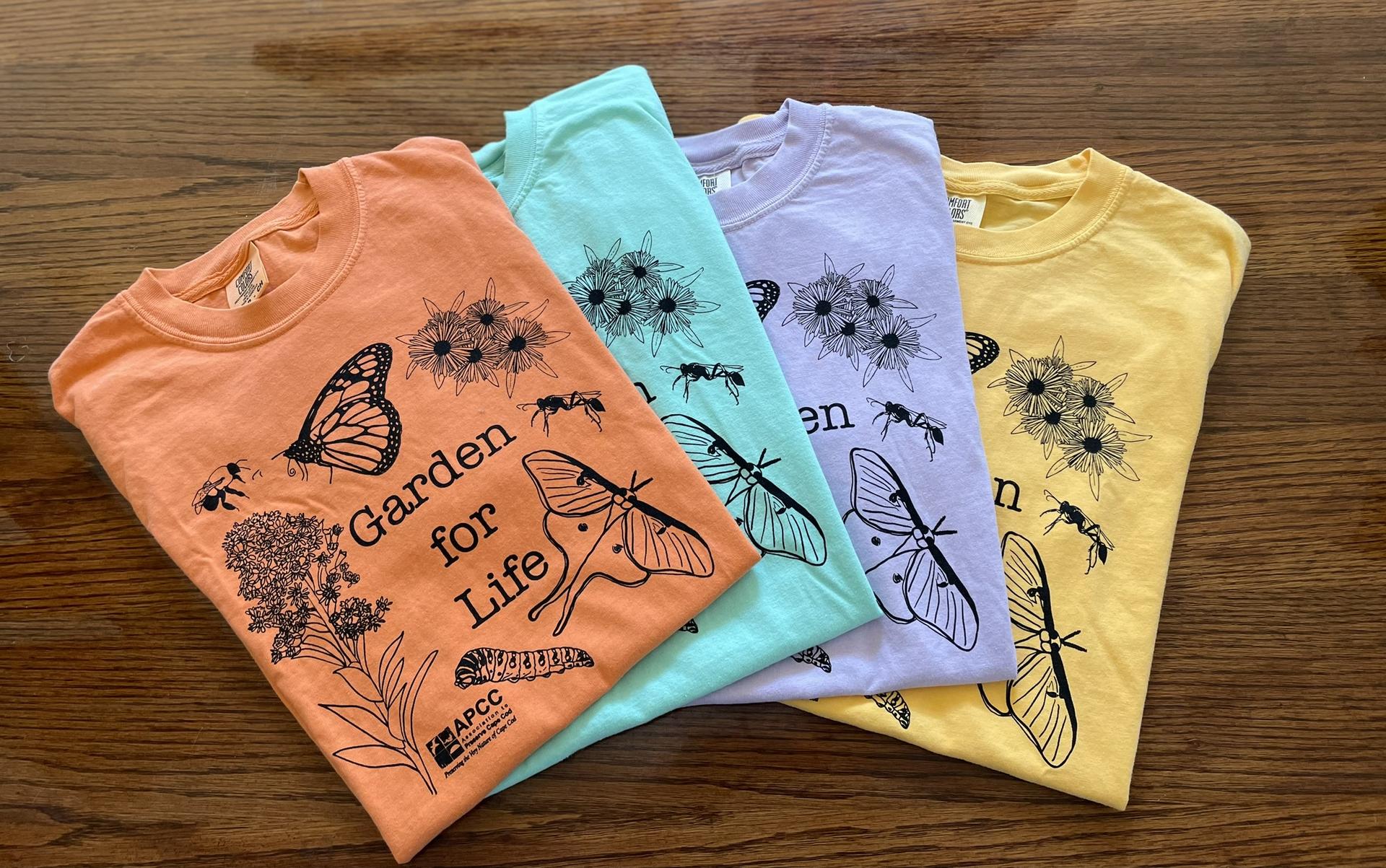
Garden for Life T's
$30 -includes USPS delivery in U.S. |
|
|
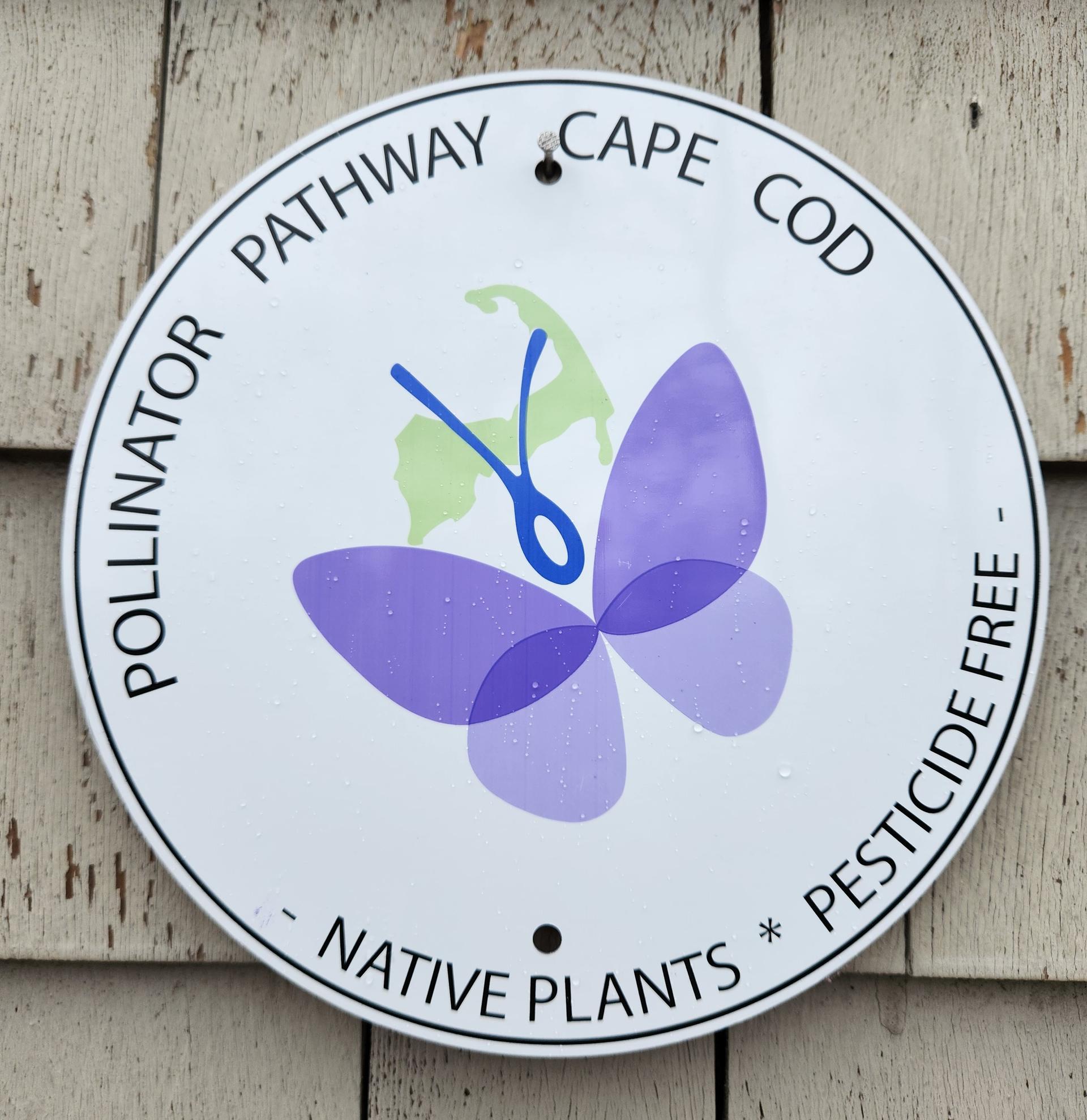
The Pollinator Pathway Cape Cod is a group of organizations promoting native plants and pollinator-friendly land care practices to create a boat load of safe oases for our native bees, butterflies and a whole host of other pollinators that are crucial to the health of our ecosystems.
Join us! It's easy. There are no fees. You just need to pledge to ADD native plants, SUBTRACT a little lawn, AVOID yard chemicals, especially pesticides, and LEAVE the leaves. And, help us spread the word. Please get on the map to show your support of pollinators on Cape Cod!
You can purchase the 9-inch aluminum Pollinator Pathway Cape Cod sign at Hyannis Country Garden, Crocker Nurseries, Brewster Book Store, Orleans Conservation Trust, and Cape Abilities Farm.
If you are a retailer, and you would like to sell the signs, you can order online here, or email pollinators@apcc.org. |
| |
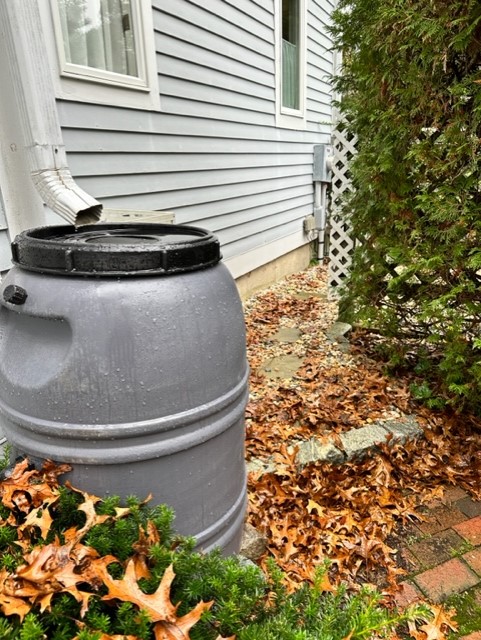
| Rain Barrels for Cape Cod
Order online from Upcycle Products $122 each includes shipping to your door 55 gallon, repurposed food barrels Keep a barrel out of a landfill, and capture some free rainwater. APCC receives a portion of the proceeds. For more information, click here. |
|
|
|
APCC eNewsletters.
Our weekly newsletters are archived on our website and easily shared.
You can find past newsletters and share with your friends. Encourage others to sign up for future enewsletters HERE.
|
|
|
Are you thinking of going solar? We hope so!
In partnership with E2 SOLAR in Dennis, APCC receives $500 for every solar installation when APCC is named as referral. |
|
|
| Thank you to the homeowners who just contracted to install solar panels through E2 Solar.
May the sun always shine for you! |
|
|
Expressions Gallery, 578 Main Street, Chatham CLICK HERE |
Expressions Gallery donates 20 percent of its profits to APCC's work. |
|
|
Thank you to our business sponsors! |
|
|
APCC is rated four stars by Charity Navigator, 2023 Platinum by Candid (formerly Guidestar), and 2024 Top-Rated by GreatNonprofits. |
|
|
Our Contact Information
*{{Organization Name}}*
*{{Organization Address}}*
*{{Organization Phone}}*
*{{Organization Website}}*
*{{Unsubscribe}}* |
| |
|
|