Association to Preserve Cape Cod |
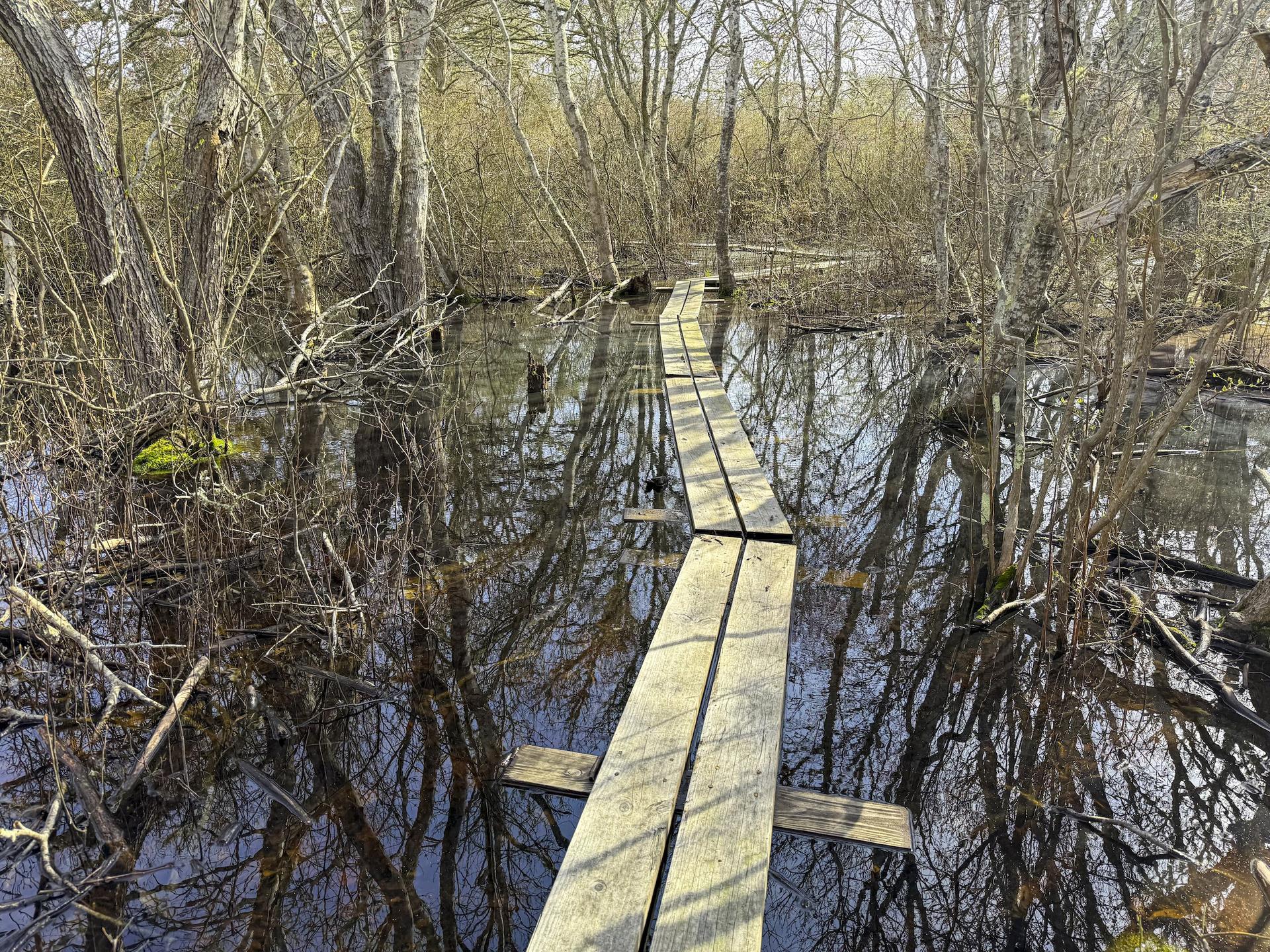
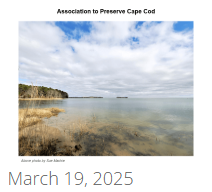
Above: Coles Bog, Dennis Photo by Sue Machie. |
|
|
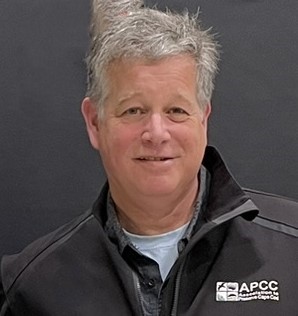
| Vote by Andrew Gottlieb, APCC Executive Director |
Town meetings and local elections are underway now. This message is short and direct: vote. Find out which candidates are committed to environmental improvement, protection and investments and vote for them. Read your town meeting warrants and identify the articles important to environmental investment, go to town meeting with a friend or loved one and vote. Speak if needed to help an article along. Now is when the decisions are being made and locally, more than anywhere else, your voice and vote matter.
Just vote like our future relies on it. |
|
|
APCC Ecosystem Restoration Program |
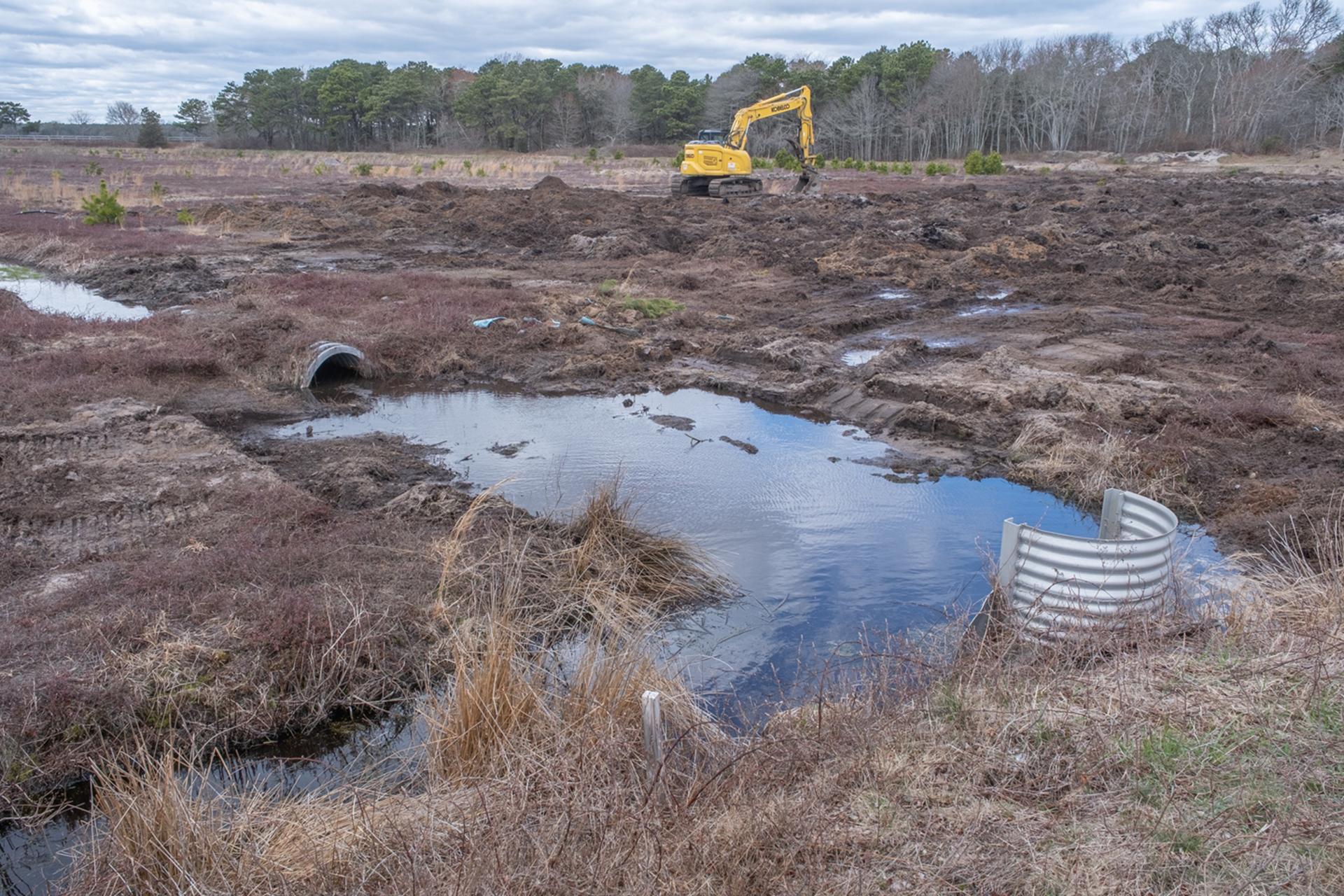
Above: An excavator shapes the land at the Hinckleys Pond–Herring River Headwaters Eco-Restoration Project, a former cranberry bog. Old water control structures from the bog system can be seen in the foreground. The machine is creating small bumps and dips in the ground—a technique called microtopography—to mimic the natural surface of wetlands. These subtle changes in elevation help hold water, support a variety of plants, and create better habitat for wildlife. By breaking up the flat, compacted bog, the restoration team is speeding up the return of a healthy, self-sustaining wetland.
|
Work continues at the Harwich Conservation Trust’s (HCT) Hinckleys Pond—Herring River Headwaters Eco-Restoration Project. APCC is excited to help support this project through final permitting, construction and monitoring with funding from the NOAA Restoration Center.
A majority of work on the former cranberry bogs adjacent to Route 124 is complete with microtopography—roughing the surface to mirror a more natural wetland with small depressions and slightly higher points to create varying depths and moisture levels for new plant growth.
For more updates on the project see Harwich Conservation Trust Week Four summary. |
|
|
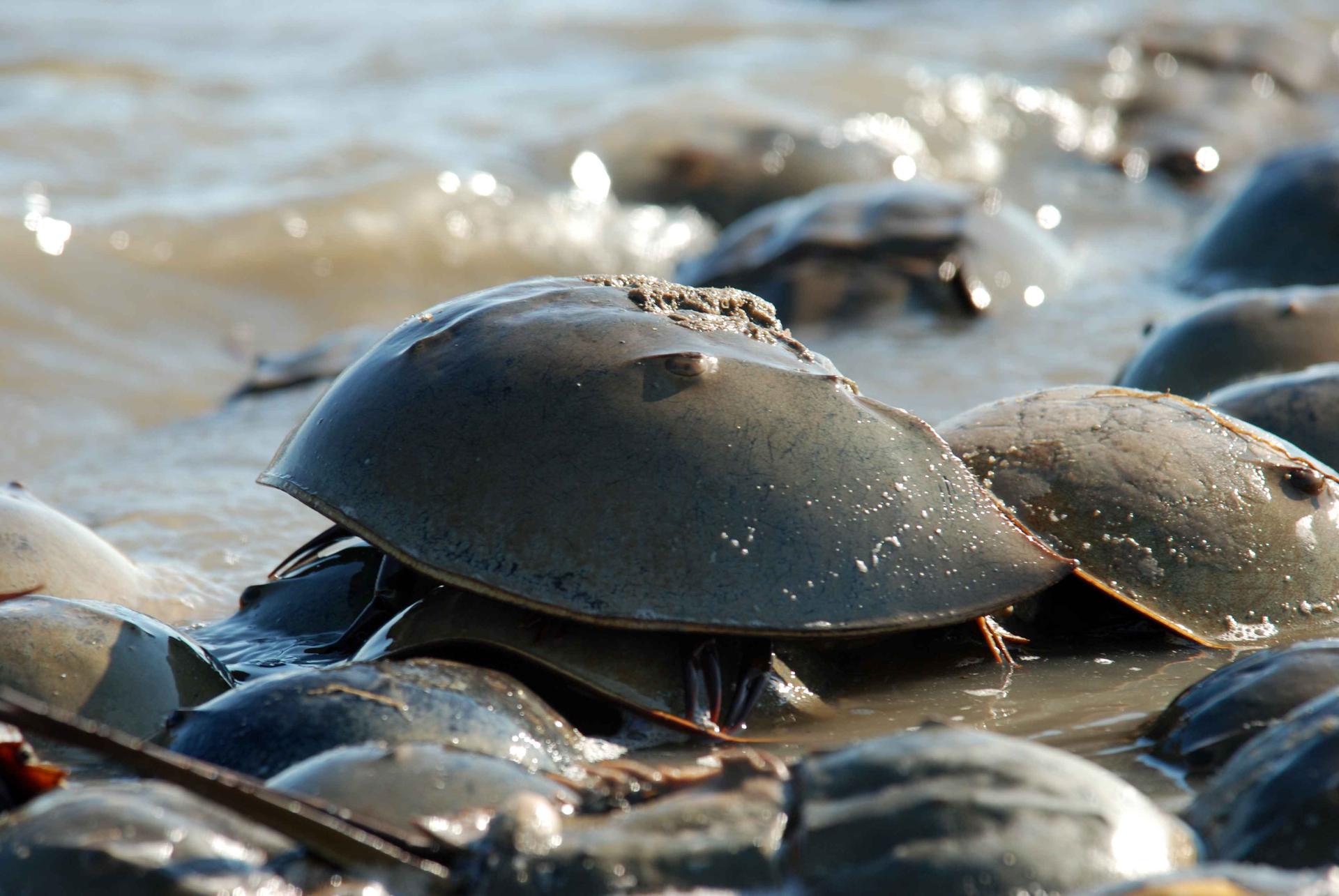
| APCC sends letter to the Joint Committee on Environment and Natural Resources voicing support for Bill H.898, An Act to End the Taking of Horseshoe Crabs for Bait. Read here. |
|
|
Help protect a 450-million-year-old species that underpins both
ecological and human health. Horseshoe crabs play a vital role in both coastal ecosystems and public health: -
Their eggs are a critical food source for migratory shorebirds, including the threatened red knot.
- They are slow to mature, taking 11 years to reach reproductive size, making them highly vulnerable to over-harvesting.
- Horseshoe crabs are taken just when they come ashore to spawn.
As we await the full transition of the pharmaceutic industry to synthetics, it is imperative to reduce preventable mortality. Bait harvest killed over 140,000 crabs last year in Massachusetts.
A personal letter will carry the most weight. Please write to your legislators and/or the Joint Committee on Environment and Natural Resources right now. Ask them to help move Bill H.898 out of committee. Legislator Letter Template (a Word doc. that you can personalize)
Fact Sheet for Legislators; One-pager Information Sheet; Joint Committee on Environment and Natural Resources; Find My Legislator
For more information, visit horseshoecrabs.org.
Thanks to the Southeastern Massachusetts Pine Barrens Alliance for providing the above content. |
|
|
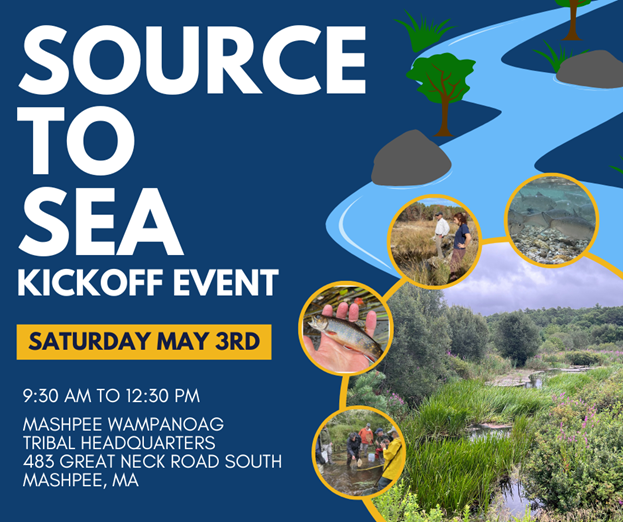
Source to Sea Community Engagement Kickoff Event |
The Source to Sea Community Engagement kickoff event will be held Saturday, May 3rd, from 9:30 a.m. to 12:30 p.m. at the Mashpee Wampanoag Tribal Headquarters.
This public event will bring together community members and technical project teams to discuss how community input can help shape the future of Red Brook, Upper Quashnet River, and Mashpee River as part of the Source to Sea initiative. Attendees will learn about the ecological significance of these waterways and how restoration efforts can improve water quality, habitat for native species, and climate resilience. The event will include informal project overview presentations and interactive project stations for one-on-one discussions with project teams. Light refreshments will be provided, and childcare is available with advance registration.
How to Get Involved
The Source to Sea initiative welcomes participation from all community members, organizations, businesses, and schools. Whether you attend the kickoff event, join future meetings, or serve as a community liaison, your voice is essential in shaping this restoration effort.
This initiative is made possible through the support of the National Oceanic and Atmospheric Administration (NOAA) Restoration Center, along with partners, including APCC, WBNERR, the Mashpee Wampanoag Tribe, the towns of Falmouth and Mashpee, the Cape Cod Conservation District, and USDA Natural Resources Conservation Service.
We kindly ask for your help in spreading the word about this new date by sharing this announcement within your networks. For updates, visit the Source to Sea website. If you have any questions, contact Tonna-Marie Rogers at tonna-marie.surgeon-rogers@mass.gov or April Wobst at awobst@apcc.org, 508-619-3185 ext. 315.
Join us as we work together to restore and protect the rivers that sustain our communities! |
|
|
APCC Staff Attend the New England Estuarine Research
Spring 2025 Meeting |
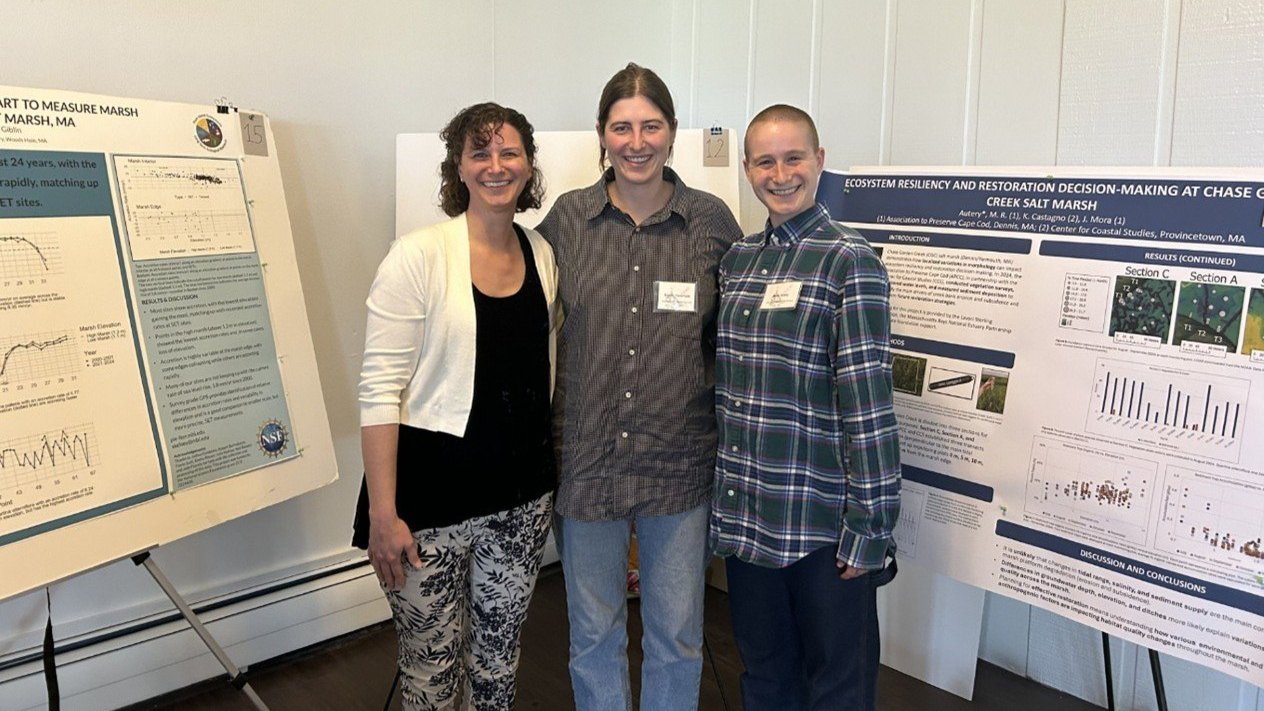
Above, left to right: APCC staff - Jordan Mora, lead ecologist and science advisor, Sophia Feuerhake, freshwater science coordinator and NEERS program chair, and Molly Autery, salt marsh specialist posing next to Molly's presentation poster about APCC's work related to Chase Garden Creek. |
APCC staff participated in the New England Estuarine Research Society (NEERS) Spring 2025 meeting, hosted by the Center for Coastal Studies in Provincetown. NEERS is a nonprofit organization that brings together people engaged in estuarine and coastal research and management, with membership from academic institutions, state, federal, and municipal agencies, and other nonprofit organizations.
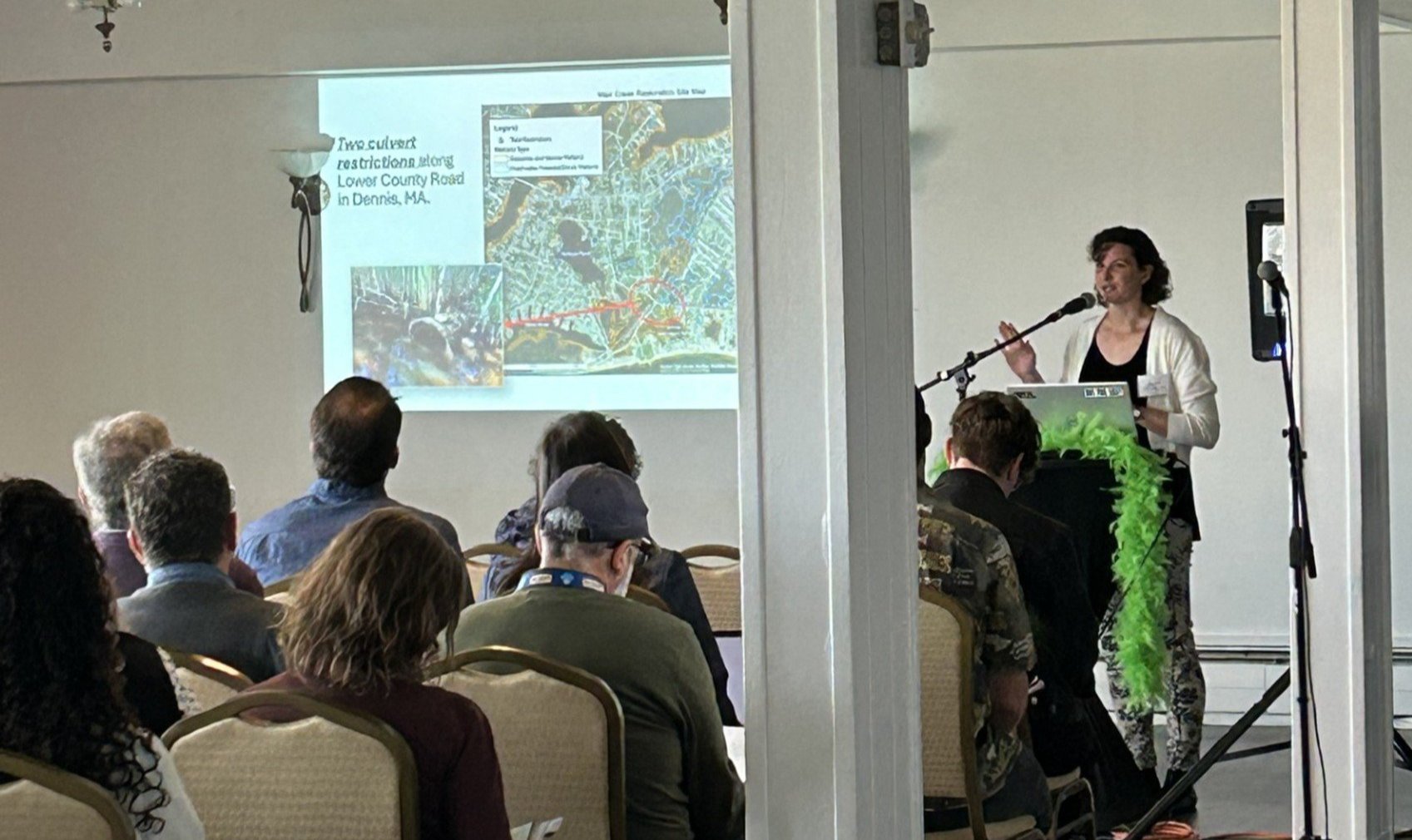
Jordan Mora, APCC lead ecologist and science advisor, presented a talk on the Weir Creek restoration project entitled, Hurdles, Hoops, and a Bit of Hopscotch: Navigating Adaptive Management Considerations for Tidal Restoration Projects on Cape Cod, highlighting APCC's Ecosystem Restoration Program’s monitoring progress and lessons learned at Weir Creek. Molly Autery, APCC salt marsh specialist, presented a poster on the Chase Garden Creek restoration project titled Ecosystem Resiliency and Restoration Decision-Making at Chase Garden Creek Salt Marsh, displaying APCC’s fieldwork methods and preliminary data analyses.
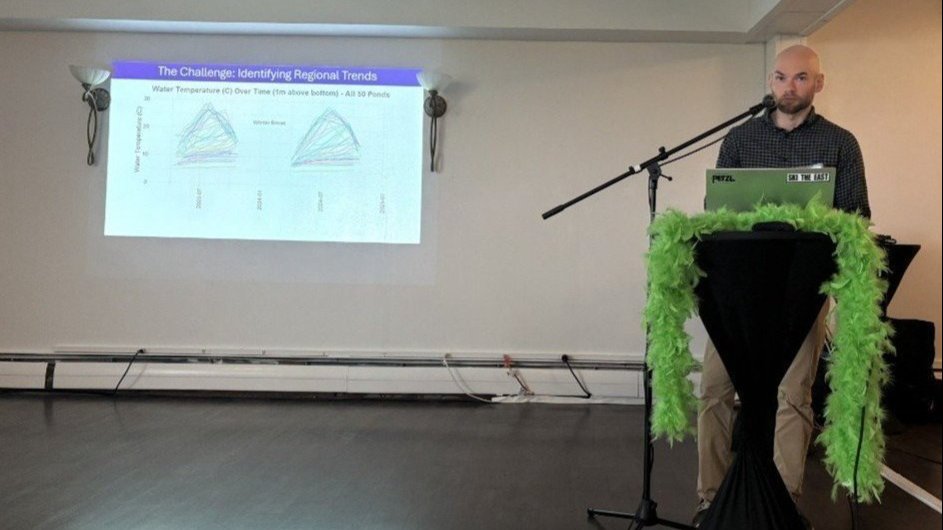
Sophia Feuerhake, APCC freshwater science coordinator and NEERS program chair, hosted an oral presentation session about water quality, which included several talks about environmental monitoring and research in salty, brackish, and freshwater environments. JT Percy, senior pond monitoring technician, presented a talk on APCC’s pond monitoring program, entitled Cape Cod Regional Pond Monitoring Program: A Tale of Two Ponds, sharing APCC’s role in coordinating regional freshwater pond monitoring.
In addition to the many excellent and informative presentations given by NEERS members, social events and field trips provided the opportunity to network with peers and explore the outer Cape. Conferences and events, such as the NEERS Spring 2025 meeting, represent a coming together of many collaborators working towards the common goal of understanding and protecting New England’s coastline and natural resources, and APCC is honored to be among those participants, presenters, and organizers.
|
|
|
Above: Jordan Mora, APCC lead ecologist and science advisor, presenting a talk on the Weir Creek restoration project. |
| Above: JT Percy, APCC senior pond monitoring technician, presenting a talk on the Cape Cod Regional Pond Monitoring Program. |
|
|
APCC Staff in Chatham for Earth Week |
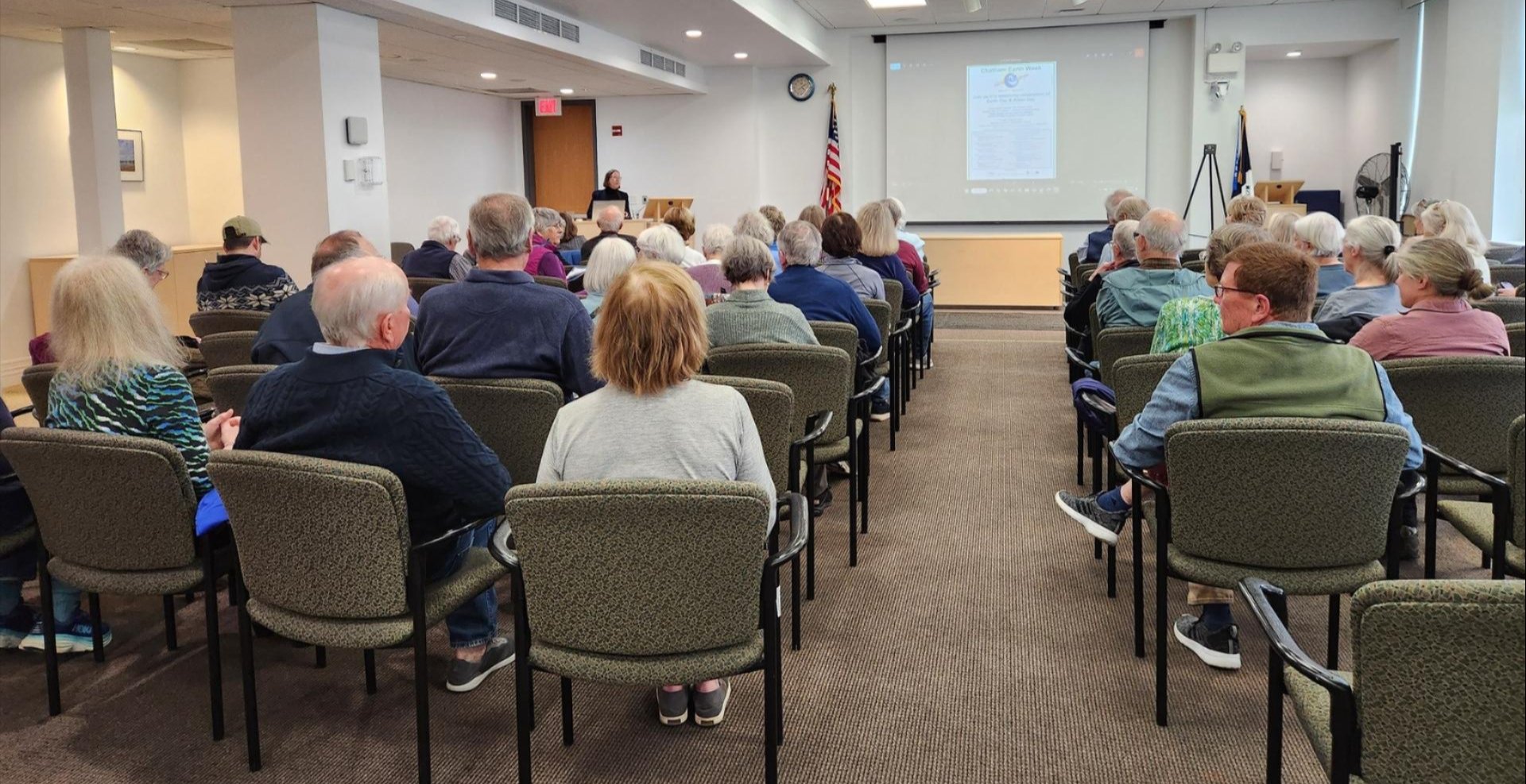
The kickoff event of Earth Week in Chatham with the theme of water, was hosted by the Chatham Conservation Foundation, Inc. at the Chatham Community Center, and Andrew Gottlieb, APCC executive director (not shown), was keynote speaker. |
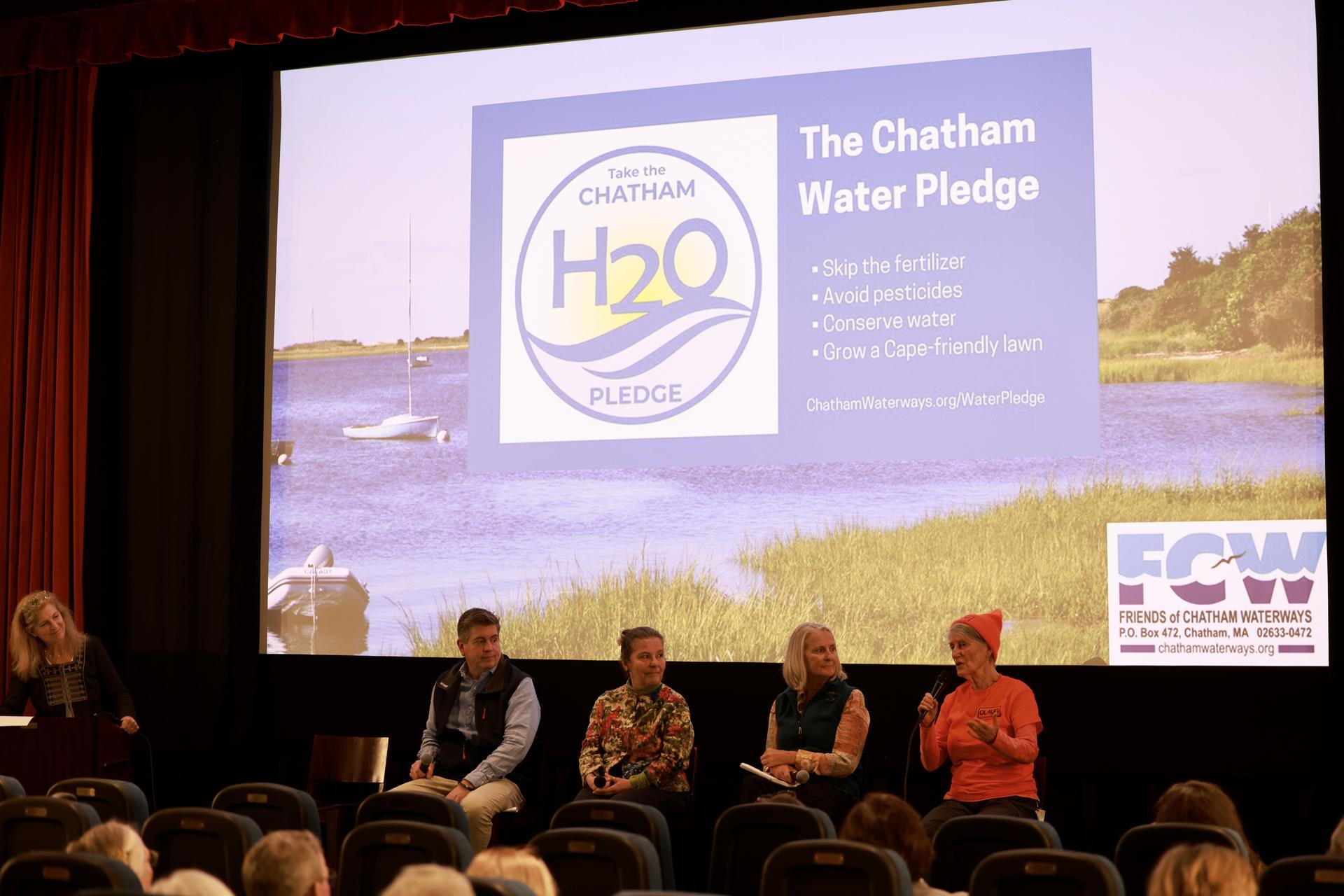
Kristin Andres, APCC associate director for education, was a panelist for Saving Chatham's Waters, along with Rob Faley, Chatham DPW director, Renee Gagne, Chatham shellfish constable, Susan Baur, founder of Old Ladies Against Underwater Garbage. The event was held at the Chatham Orpheum and hosted by Friends of Chatham Waterways. |
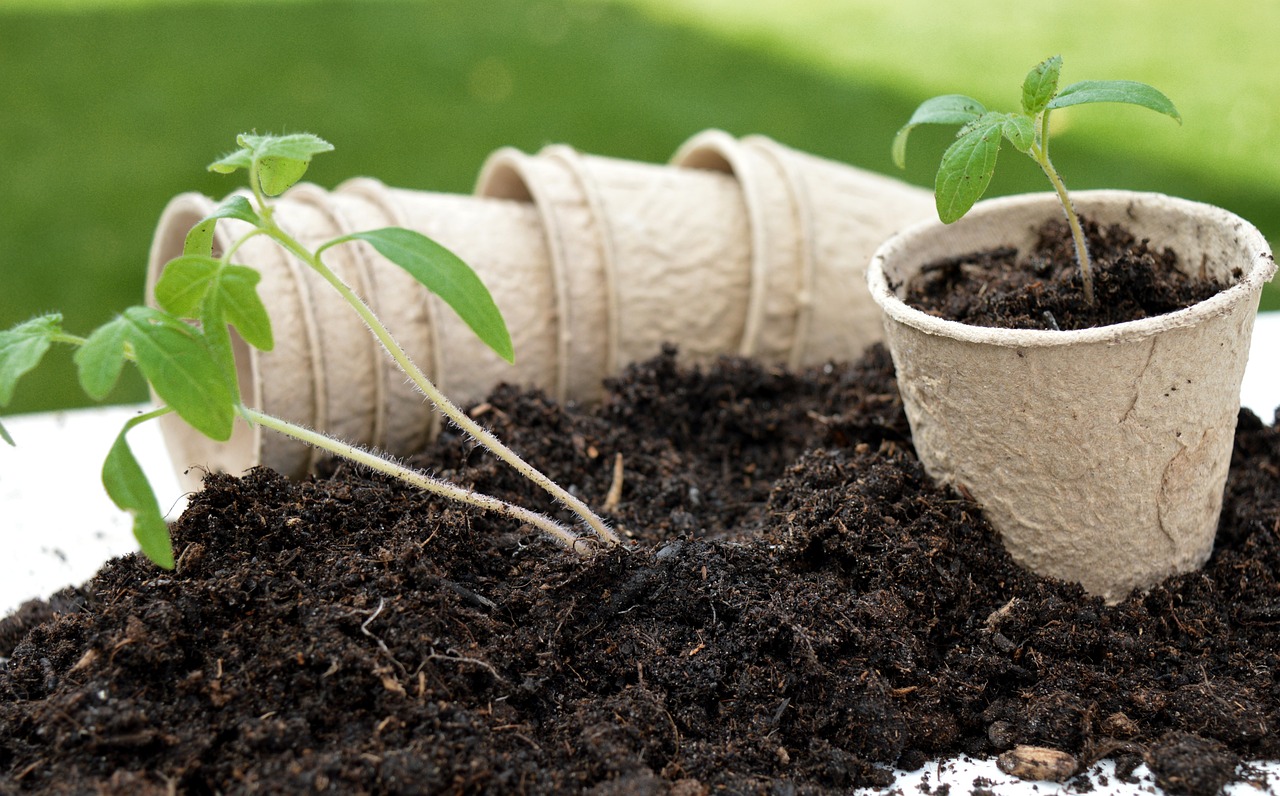
Peat? Who or what is peat? As a gardener, either directly or indirectly, you probably have encountered peat. You might have purchased a bale of peat moss to provide organics and moisture retention and drainage in your soils—a common practice for decades. Peat is also found in most potting soils. It is used to make the little peat pots for germinating vegetable plants, allowing you to directly plant, pot and all, into your garden. The advantage of this medium is that it’s free of weed seed, insects, and diseases, and can hold up to 20 times its weight in water. Magic stuff. But what is peat and where does it come from?
Peat is accumulated plant material, predominantly made up of a variety of species of sphagnum moss. Peat is found in rare wetland ecosystems that have a unique community of plants and critters that thrive in these habitats. These ecosystems are found in 180 countries worldwide, including peatlands in Europe (Scotland in particular), tropical peat swamp forests in Southeast Asia, high mountain peatlands in the Andes and Himalayas, and the permafrost areas of Russia and Canada. “Harvesting” of peat is predominantly done for the horticulture industry and for biofuel.
The mixture of plant and animal species living in these peatlands aid in, and are essential for, the process of peat formation. These unique lowlands are home to a great variety of life, including many rare plants and lichens. Species of concern that depend on them include caribou, wolverines, polar bears, red knots and Hudsonian godwits. The loss of biodiversity associated with peatlands is attacked on many fronts: the clear loss of habitat, introduced species, draining and alteration for agriculture, nutrient pollution, climate change, and peat extraction. These special wetlands are destroyed when the peat is extracted, and globally, we’ve lost 25 percent of the plant’s natural peatlands.
As wetlands, peatlands hold carbon—thousands of years of carbon—stored in the dead plant material. The wet conditions keep the moss from decomposing and the carbon remains sequestered. While peatlands cover just three percent of the Earth’s surface, they hold about 30 percent of the soil carbon. One square meter of peatland in northern Canada has about five times the amount of carbon found in the same square footage of tropical rainforest. Disturbance of these bogs means not only loss of biodiversity, but the release of carbon dioxide into the atmosphere that contributes to climate disturbance—an activity that is not something to be ignored.
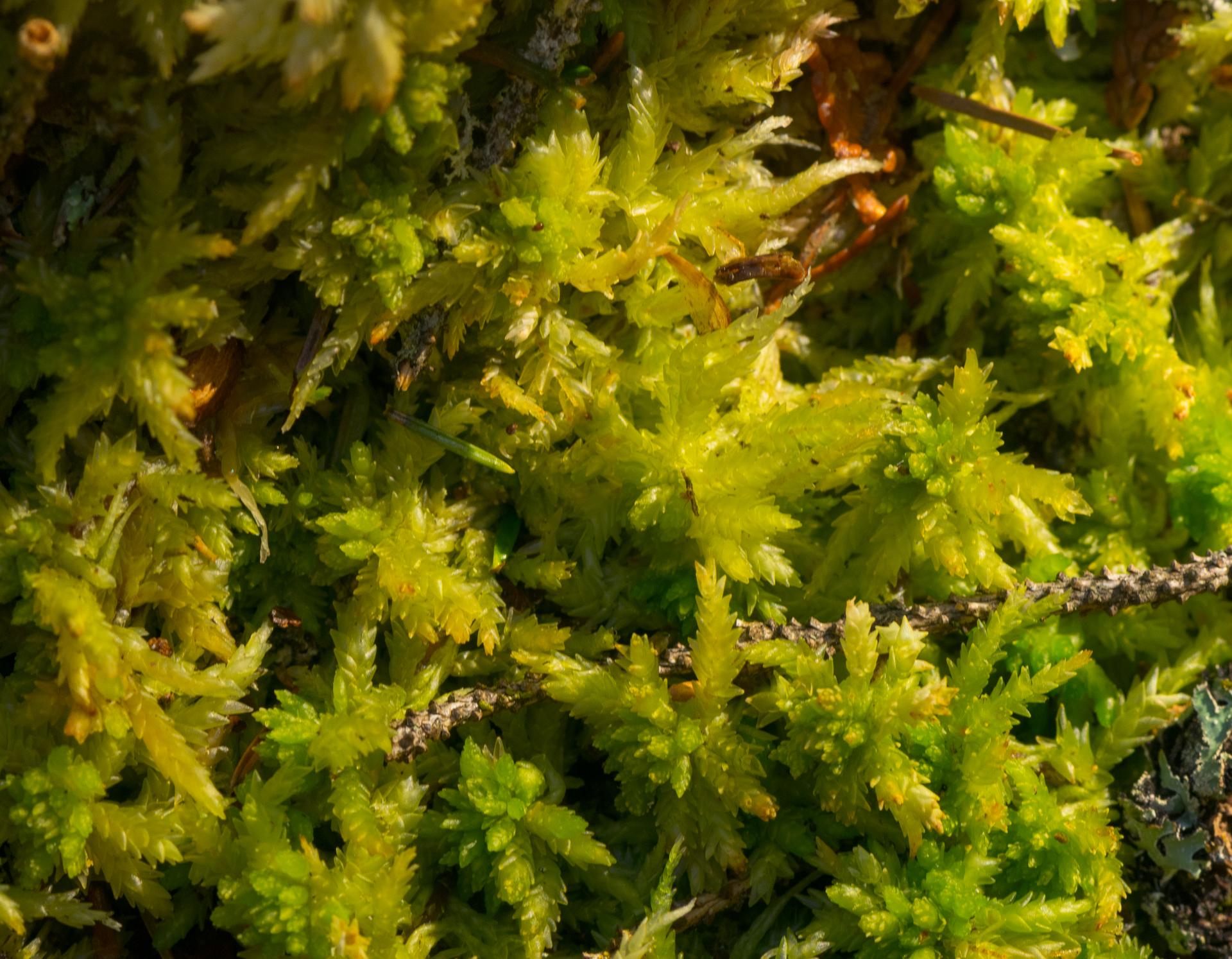
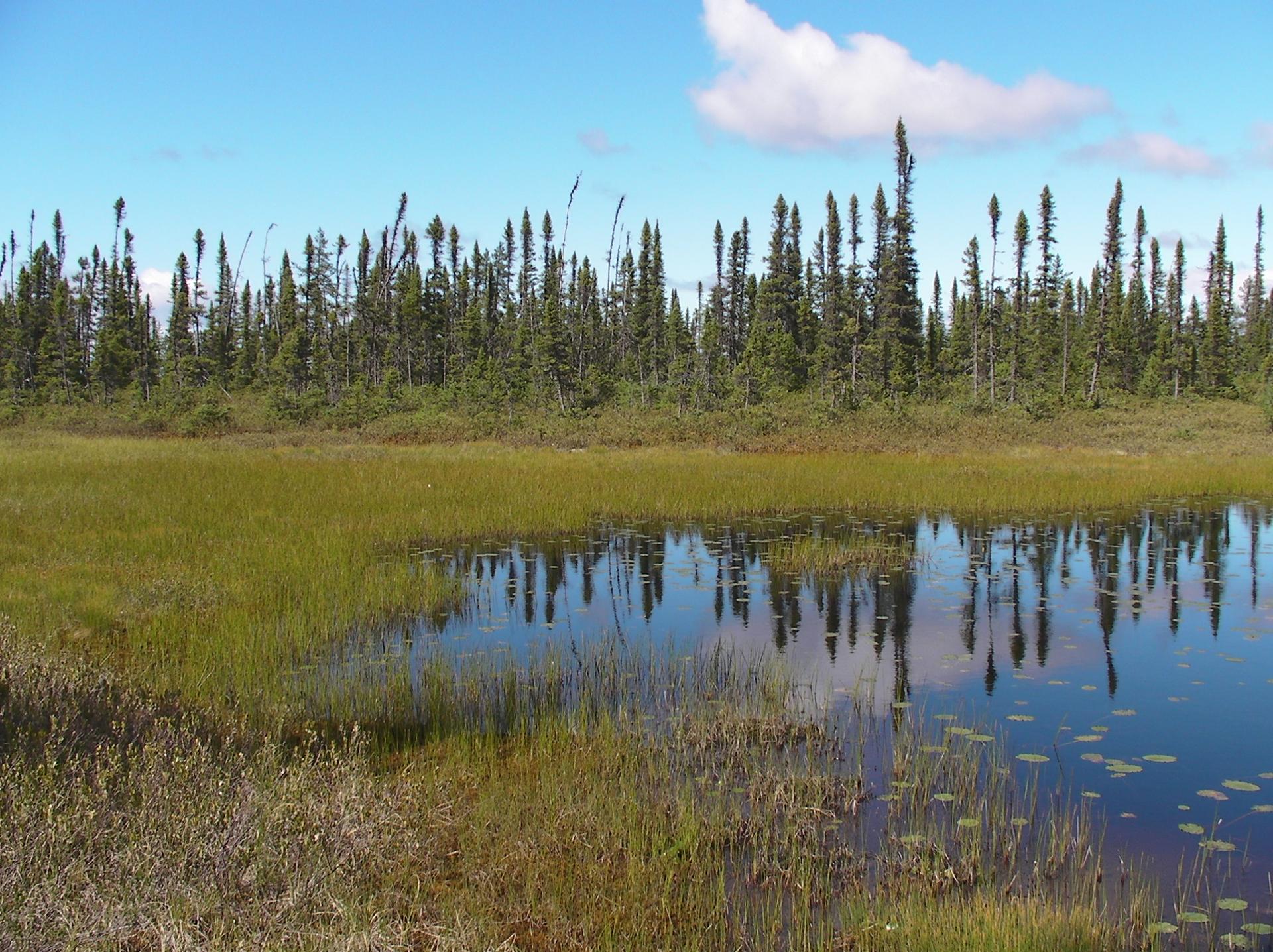
Canadian peatlands formed over 10,000 years ago in what were old riverbeds, lakes, and ponds, and where the glaciers created shallow depressions. Bog peatlands lack nutrients because their source of water is precipitation alone. Sphagnum mosses dominate this wetland and contribute to the acidic conditions that may be as low as 3.0 pH and most plants cannot grow here. This is why sphagnum peat is considered essentially free of weeds and weed seeds.
|
Above: Sphagnum moss. Photo credit Joshua Mayer from Madison, WI, CC BY-SA 2.0, via Wikimedia Commons |
Sphagnum moss grows slowly—no more than a few inches per year. As parts of the moss die, this is what creates the peat. In one year’s time, one millimeter of peat forms. It takes 10 years to create less than half an inch, and 100 years to create about four inches. Needless to say, the creation of peat is a very slow process. The deepest peat is the darkest and of the finest texture. Some of the peat bogs can be as deep as 40 feet, which means that the lowest deposit is from the end of the last ice age, approximately 12,000 years ago. And in relative terms it’s extracted in the blink of an eye to be absorbed into the horticulture industry.
There’s a move afoot within the nursery trade to be more environmentally sustainable and embrace regenerative gardening practices by developing alternative potting soils, peat-free, so that these valuable wetland ecosystems can be preserved. If you want to make better choices, there are peat-free alternatives. For soil amendments, you can simply use compost. In engineered potting soils, some include coconut coir—fibers from coconut husks. Some use rice husks. Some use upcycled paper fibers. You’ll find these products at your local nursery, but read the bag ingredients to make certain. Some brand names include Dr. Bush Coco Loco, Organic Mechanics Soil, and PittMoss. Instead of peat pots, use “cow pots”—made of—you guessed it, cow manure.
Of course, you can make your own potting soil. A combo of compost and coarse sand will provide what plants need—the compost will feed the soil organisms, necessary for plant growth, and the sand will ensure aeration and adequate drainage. An organic vegetable gardener swears by equal parts loam, compost, and sand with a dash of worm castings for an added nutrient boost.
If you google "peat," several sites pop up that will tell you peat is a renewable resource. However, be aware that these are industry sites that tell you 'there’s nothing to see here' as they claim they restore the wetlands they've mined. But you’ve already read how long it takes for peat to develop. And what about the loss of the plants and animals that make up these ecosystems? Forests are also said to be renewable, but the reality is that when an old-growth forest is gone, we will never live to see the replanted forest return in the same way, nor will hundreds of our generations to come.
One would think we’d have more respect for that which has taken hundreds of thousands of years to create. Hope you’ll rethink peat this growing season. This article by Kristin Andres, APCC associate director for education, was previously published in the Cape Cod Chronicle. |
Above: Peat Bog, Canada. Photo credit peupleloup, CC BY-SA 2.0 via Wikimedia Commons |
Get ready...
APCC's ANNUAL PLANT SALE goes live on Tuesday, June 3rd at 8:30 a.m. | |
|
|
Online orders only. Pickup by appointment at APCC’s headquarters, 482 Main St, Dennis 02638
CLICK HERE for the list of species
Perennials are 1-quart size pots $10 each plus MA sales tax.
Payment accepted at time of pickup: Credit Card, Apple Pay, Cash, Check accepted.
Pickups will be scheduled for Wednesday, Thursday, and Friday (June 4 – 6) during our office hours: 8:30 a.m.– 4:30 p.m. only. |
|
|
If you are a farmer or someone who wants to grow native plants to sell, or just want to be updated on the program's development, please submit an interest form that appears on our webpage. We will be sending periodic email notices of workshops and meetings.
Funding for the project is provided by Barnstable County and its Economic Development Council License Plate Grant Program through the Cape Cod Commission. |
|
|
South Yarmouth Library, 312 Old Main Street South Yarmouth 02664 |
| South Yarmouth Library, Wednesday, May 14, 2025 |
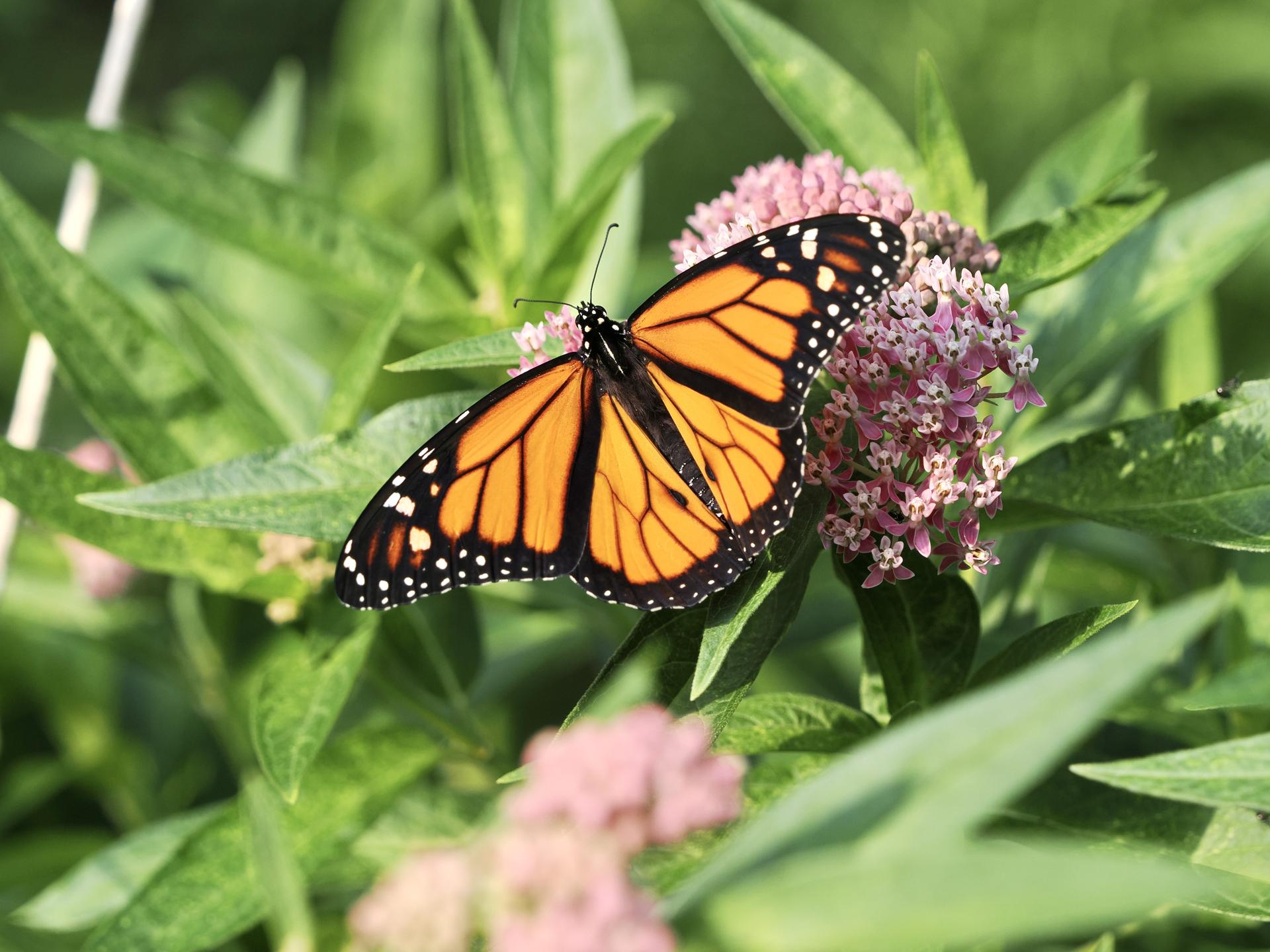
Pollinator Pathway Cape Cod ~ meet the pollinators and learn how to support them.
|
Learn about choices you can make in your garden that will support pollinators, birds, and butterflies and that will also make your garden a beautiful, enjoyable space. Kristin Andres is APCC's associate director for education. |
|
|
| Native Plants and Pollinators |
Saturday, June 7th, 9:00 a.m. - 11:00 a.m.
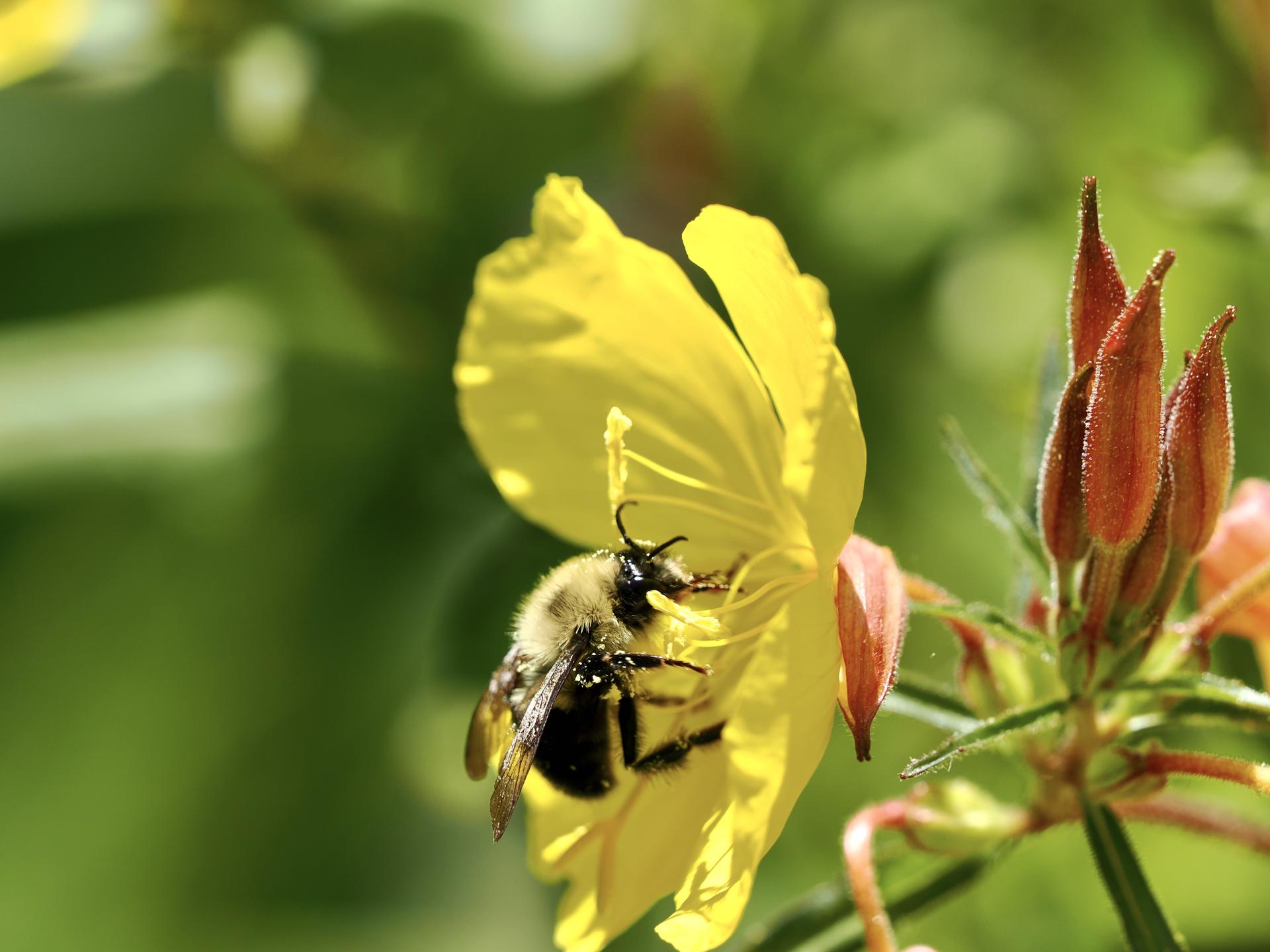
Kristin Andres, APCC's associate director for education will take us on a journey through the natural world, uncovering a hidden life of insects that you didn’t know existed but that drives our ecosystem. The insect world includes specialists and generalists that together form the foundation of our food web; by ensuring that we provide the native plants they need, we gain better food production as well as more beauty in the garden.
Hosted by Resilient Roots at Fuller Farm |
|
|
A Cape-wide Conservation Event Calendar |
|
|
The Compact of Cape Cod Conservation Trusts (“the Compact”) and its nonprofit members launched a new regional calendar of events. The Conservation Calendar includes programs across Cape Cod hosted by these groups. The goal of the calendar is to encourage visitors and residents to take part in nature and environmental events. You can always find the link to the calendar on APCC's website under News & Events.
|
|
|
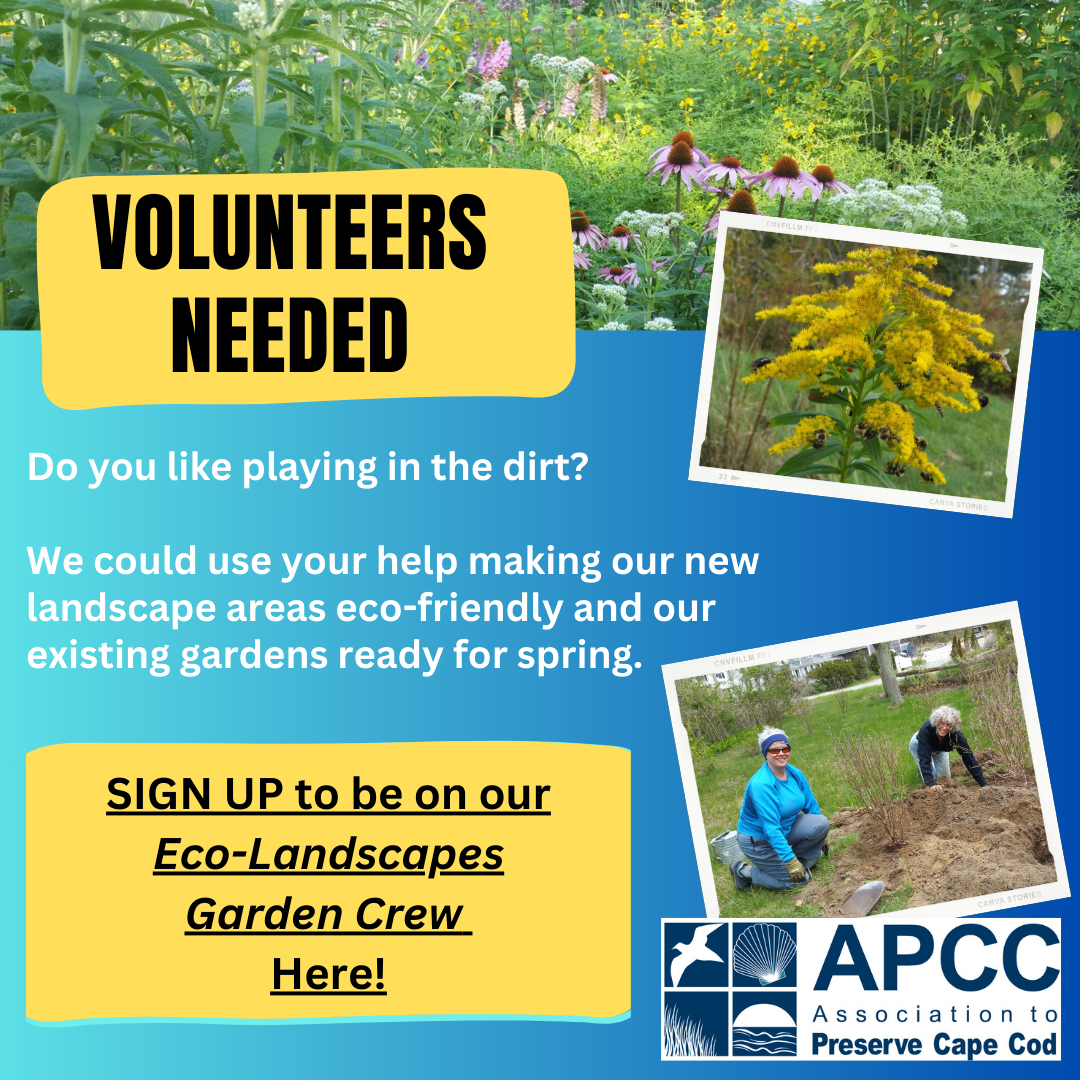
A Cape Cod Native Plant-selector
~ to help you choose the perfect native plants for your garden. |
|
|
Email kandres@apcc.org and we'll send you a CapeCodNativePlants.org decal. |
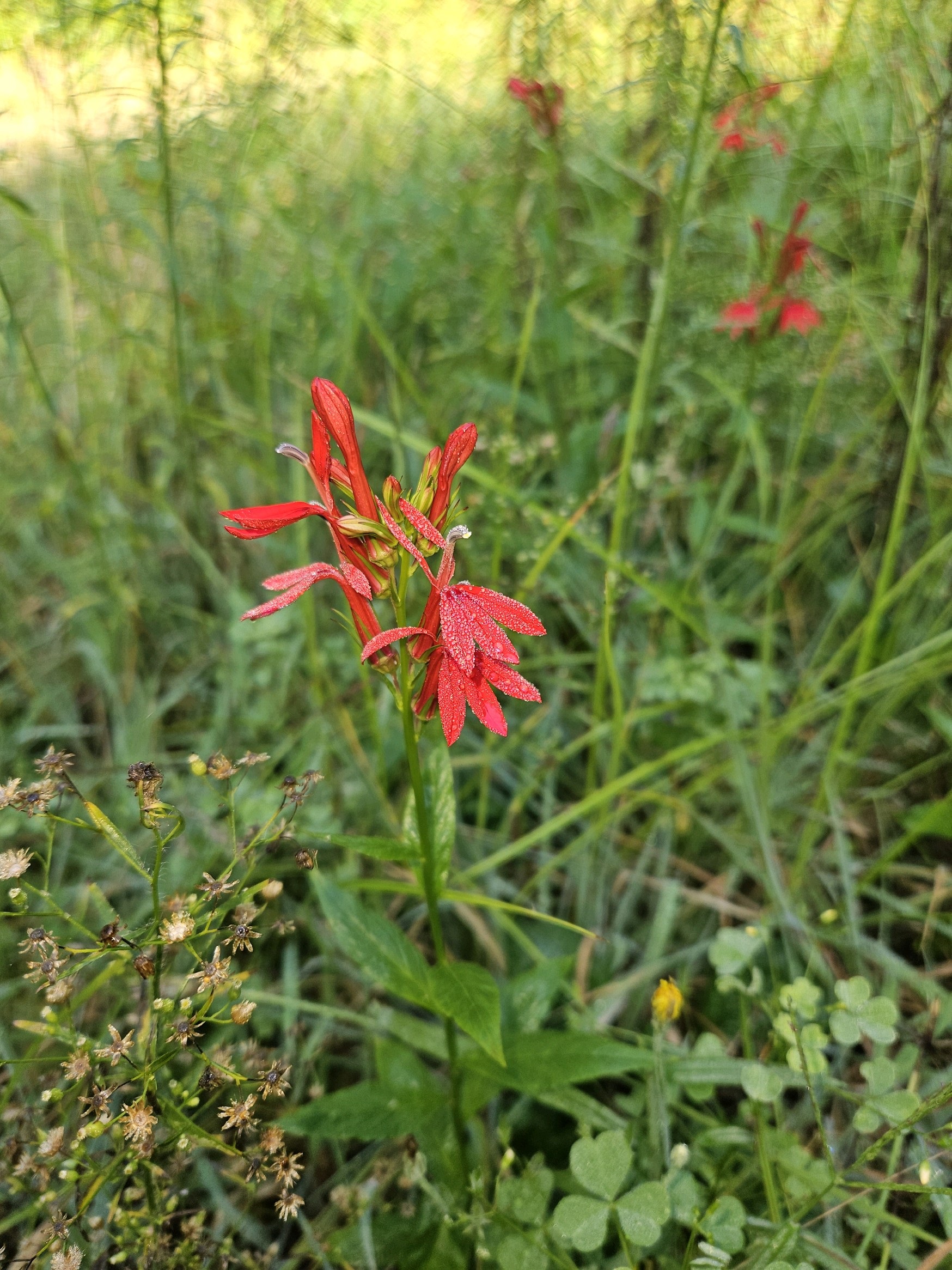
| Cardinal Flower Lobelia cardinalis |
|
|
The Guidelines gives homeowners steps they can take in the design and maintenance of their properties that will support pollinators and birds, manage stormwater, conserve water, and protect the Cape's water quality. This 40-page booklet is beautifully illustrated by Marcy Ford with content that is easily digestible and supported by numerous resources for additional learning.
|
We are grateful for the several retail shops that are partnering with us to make this publication more widely available: Brewster Book Store, Birdwatchers General Store, Crocker Nurseries, Wellfleet Audubon Wildlife Sanctuary, Cape Abilities Farm, Cape Cod Museum of Natural History, the Cape Cod Lavender Farm, Heritage Museums and Gardens, Titcomb's Bookshop, Sea Howl Bookshop, Soares Flower Garden Nursery, and Eight Cousins Bookshop.
If you are a retailer and would like to sell this publication at your store, please contact us. |
|
|
APCC caps
$25 -includes USPS deliver in the U.S. |
|
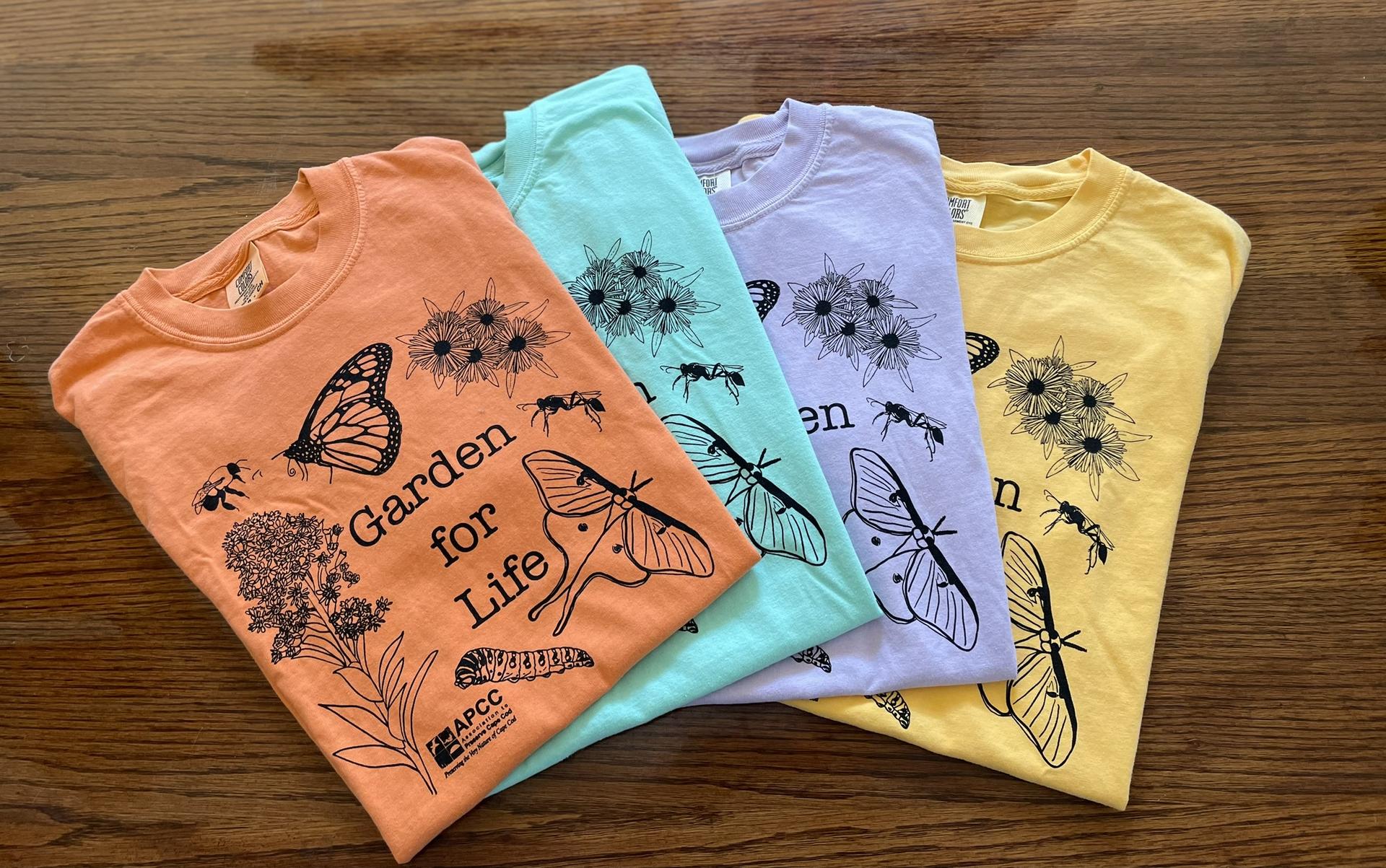
Garden for Life T's
$30 -includes USPS delivery in U.S. |
|
|
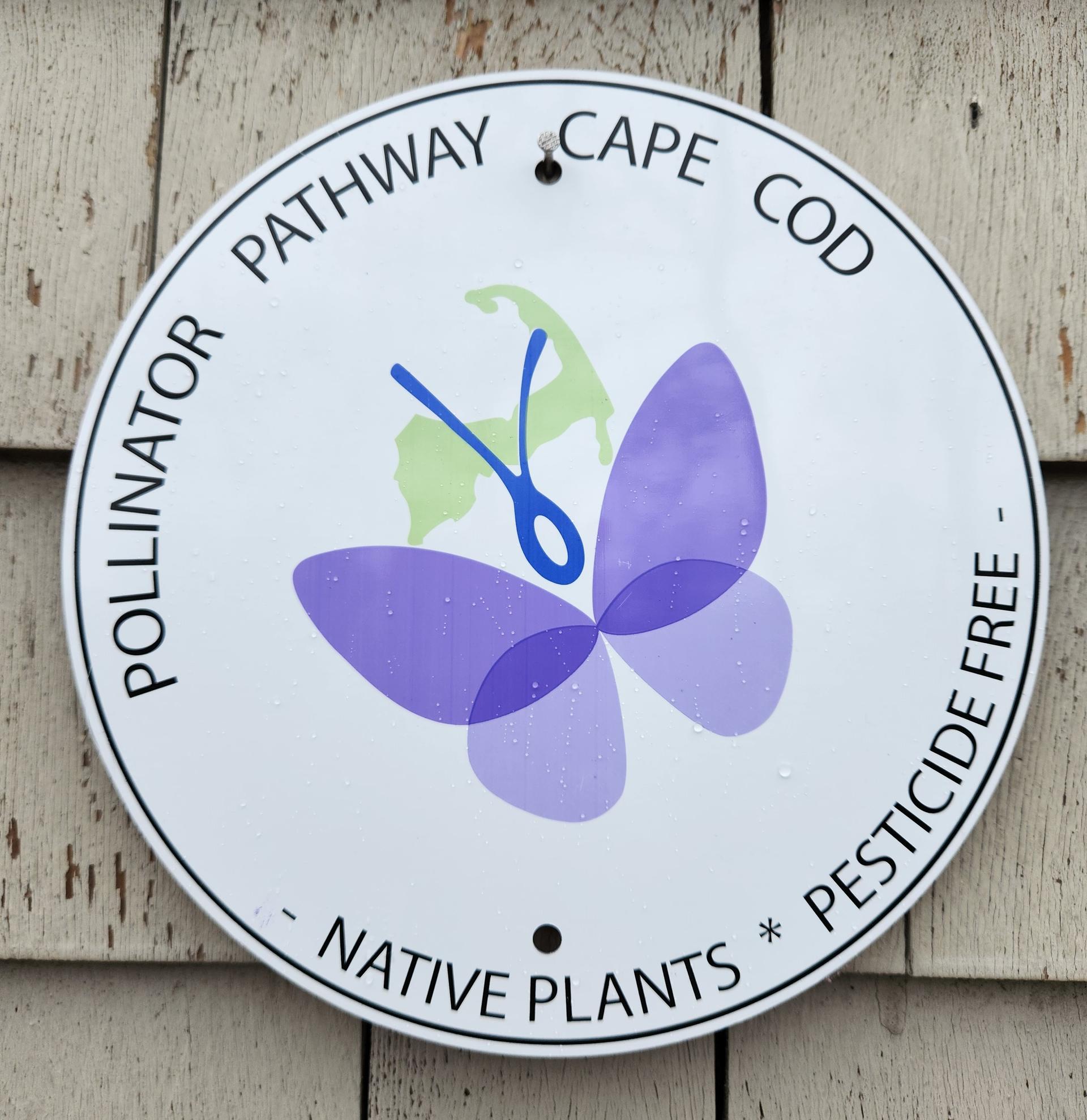
The Pollinator Pathway Cape Cod is a group of organizations promoting native plants and pollinator-friendly land care practices to create a boat load of safe oases for our native bees, butterflies and a whole host of other pollinators that are crucial to the health of our ecosystems.
Join us! It's easy. There are no fees. You just need to pledge to ADD native plants, SUBTRACT a little lawn, AVOID yard chemicals, especially pesticides, and LEAVE the leaves. And, help us spread the word. Please get on the map to show your support of pollinators on Cape Cod!
You can purchase the 9-inch aluminum Pollinator Pathway Cape Cod sign at Hyannis Country Garden, Crocker Nurseries, Brewster Book Store, Orleans Conservation Trust, and Cape Abilities Farm.
If you are a retailer, and you would like to sell the signs, you can order online here, or email pollinators@apcc.org. |
| |
| Rain Barrels for Cape Cod
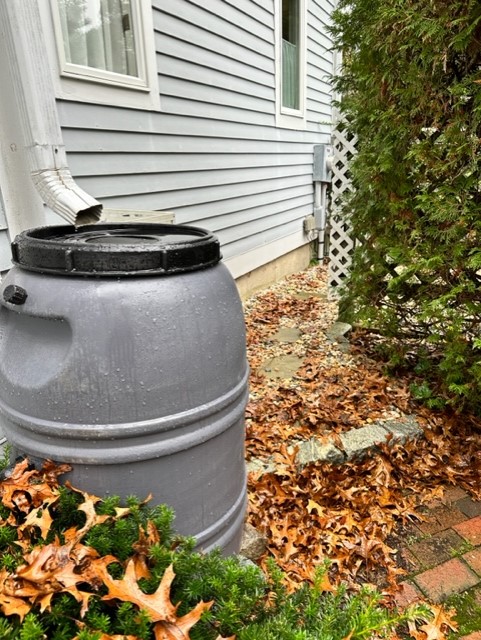
Order online from Upcycle Products $122 each includes shipping to your door 55 gallon, repurposed food barrels Keep a barrel out of a landfill, and capture some free rainwater. APCC receives a portion of the proceeds. For more information, click here. |
|
|
|
APCC eNewsletters.
Our weekly newsletters are archived on our website and easily shared.
You can find past newsletters and share with your friends. Encourage others to sign up for future enewsletters HERE.
|
|
|
Are you thinking of going solar? We hope so!
In partnership with E2 SOLAR in Dennis, APCC receives $500 for every solar installation when APCC is named as referral. |
|
|
| Thank you to the homeowners who just contracted to install solar panels through E2 Solar.
May the sun always shine for you! |
|
|
Expressions Gallery, 578 Main Street, Chatham CLICK HERE |
Expressions Gallery donates 20 percent of its profits to APCC's work. |
|
|
Thank you to our business sponsors! |
|
|
APCC is rated four stars by Charity Navigator, 2023 Platinum by Candid (formerly Guidestar), and 2024 Top-Rated by GreatNonprofits. |
|
|
Our Contact Information
*{{Organization Name}}*
*{{Organization Address}}*
*{{Organization Phone}}*
*{{Organization Website}}*
*{{Unsubscribe}}* |
| |
|
|