Association to Preserve Cape Cod |
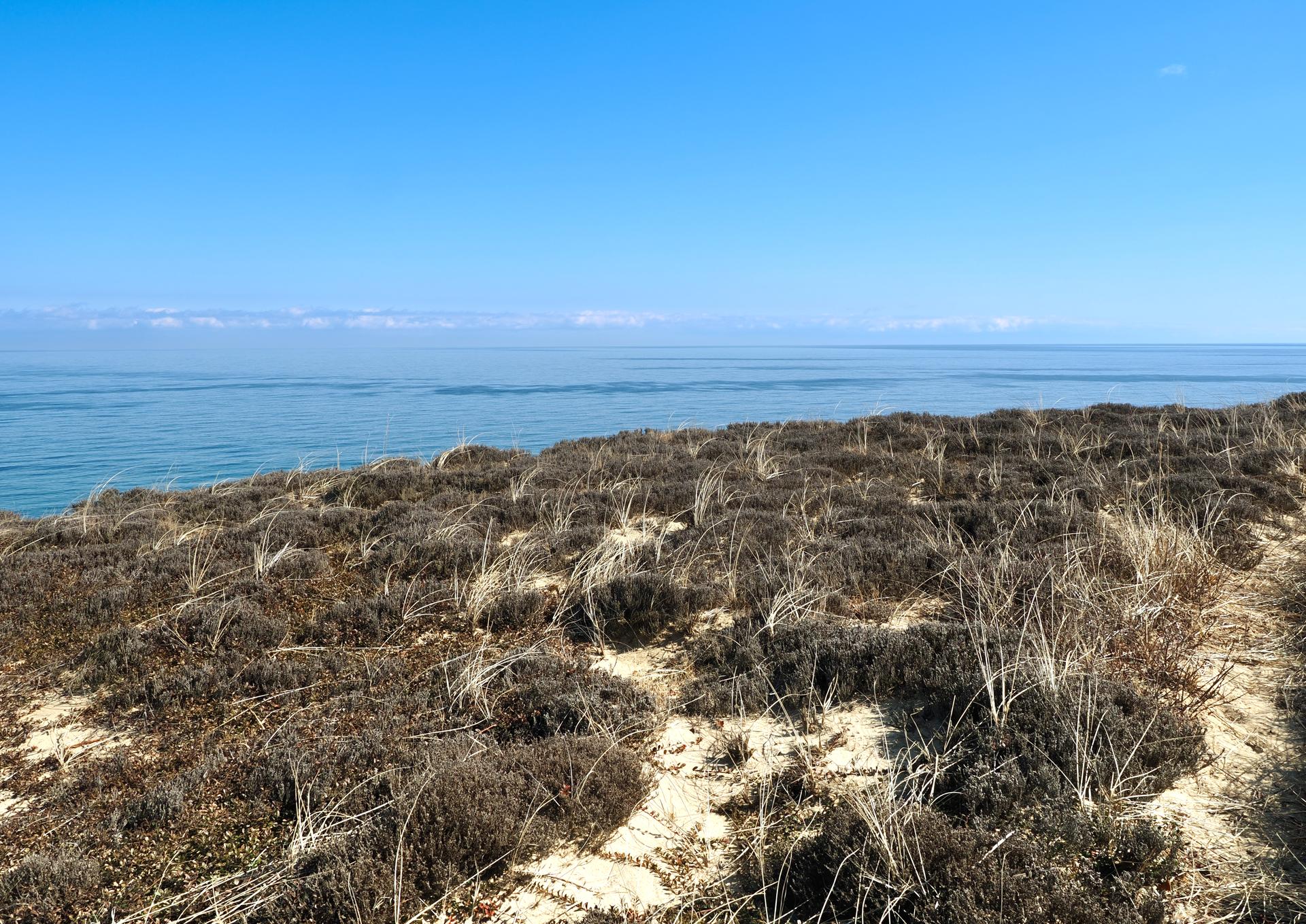
Above: Truro. Photo by Sue Machie |
|
|
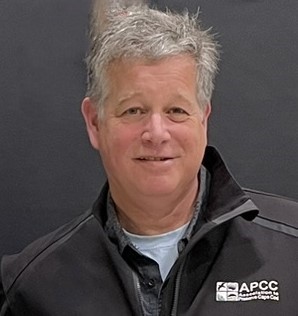
| Funding Solution by Andrew Gottlieb, Executive Director |
Last week, we told you about changes to the state system for financing wastewater management projects. This week, APCC proposed a solution directly to Governor Healey. APCC requested that the governor’s proposed Environmental Bond include $500 million to further capitalize the Clean Water State Revolving Fund.
|
|
|
The Healey-Driscoll administration has made significant contributions to advancing clean water, not just on Cape Cod, but statewide. Supplementing the SRF with bond funds is the option most consistent with the objectives of the clean water agenda, which has been widely accepted and is moving forward with great momentum. Given that the Massachusetts SRF program leverages capital funds on the bond market up to 3:1, this level of bond funding will increase annual funding capacity by up to $300 million annually. This infusion of capacity will go a long way toward allowing Cape towns to proceed as required by the watershed permits called for by the state.
The Cape projects are big because the problems we are solving are big. Now is not the time for state funding assistance to dry up. APCC looks forward to working with the Healey-Driscoll administration and the Legislature on this long-term solution to SRF capacity as the Environmental Bond moves forward. We will keep you all posted. |
EMC Vacancies
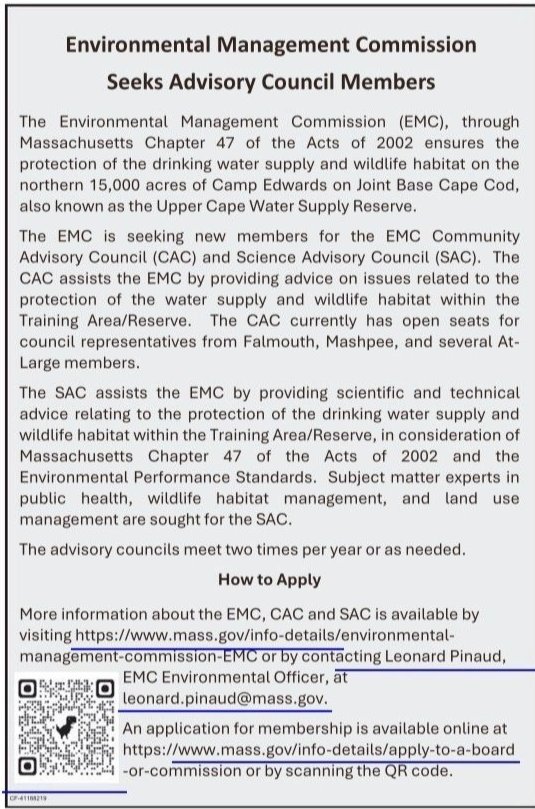
The Environmental Management Commission (EMC) ensures that the training at Joint Base Cape Cod is compatible with the protection of the Upper Cape Water Supply Reserve. The EMC, by law, is advised by a citizens advisory council and a science advisory council. Both bodies have numerous vacancies, and the EMC is seeking the names of people for appointment by the governor.
The notice seeking volunteers may have been easily missed as it appeared in the Cape Cod Times one day last week, so as a public service we are circulating it here in the sincere hope that some of you will put your names forward. By broadening the scope of the search, APCC hopes to ensure that these advisory bodies are populated by a broad base of people who represent the community as a whole and respect the sole responsibility of the EMC; the protection of Cape Cod’s water supply.
|
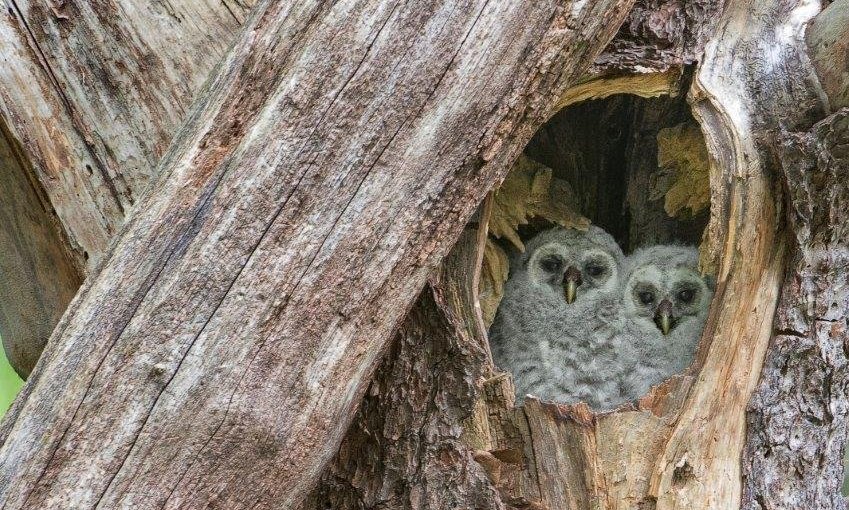
Above: Barred owlets. Photo © Cynthia Rand |
You speak up and your elected officials respond! To date, a big thank you to the following legislators from our region that have signed on to cosponsor the state bill, An Act Restricting the Use of Rodenticides in the Environment. - Sen. Fernandes
-
Rep. Vieira
- Rep. Xiarhos
- Rep. Luddy
- Rep. Flanagan
Who represents you in the state legislature that has not signed on yet? Maybe they are waiting to hear from you!
The bill has been filed in the House by Rep. James Hawkins (HD.1721) and Senate by Sen. Michael Moore (SD.1447). These bills would phase out the use of second generation anticoagulant rodenticides (SGARs) in Massachusetts, and need support from as many legislators as possible to gain some momentum.
Ask your legislator to cosponsor the bills. |
Above: photo by Gerald Beetham |
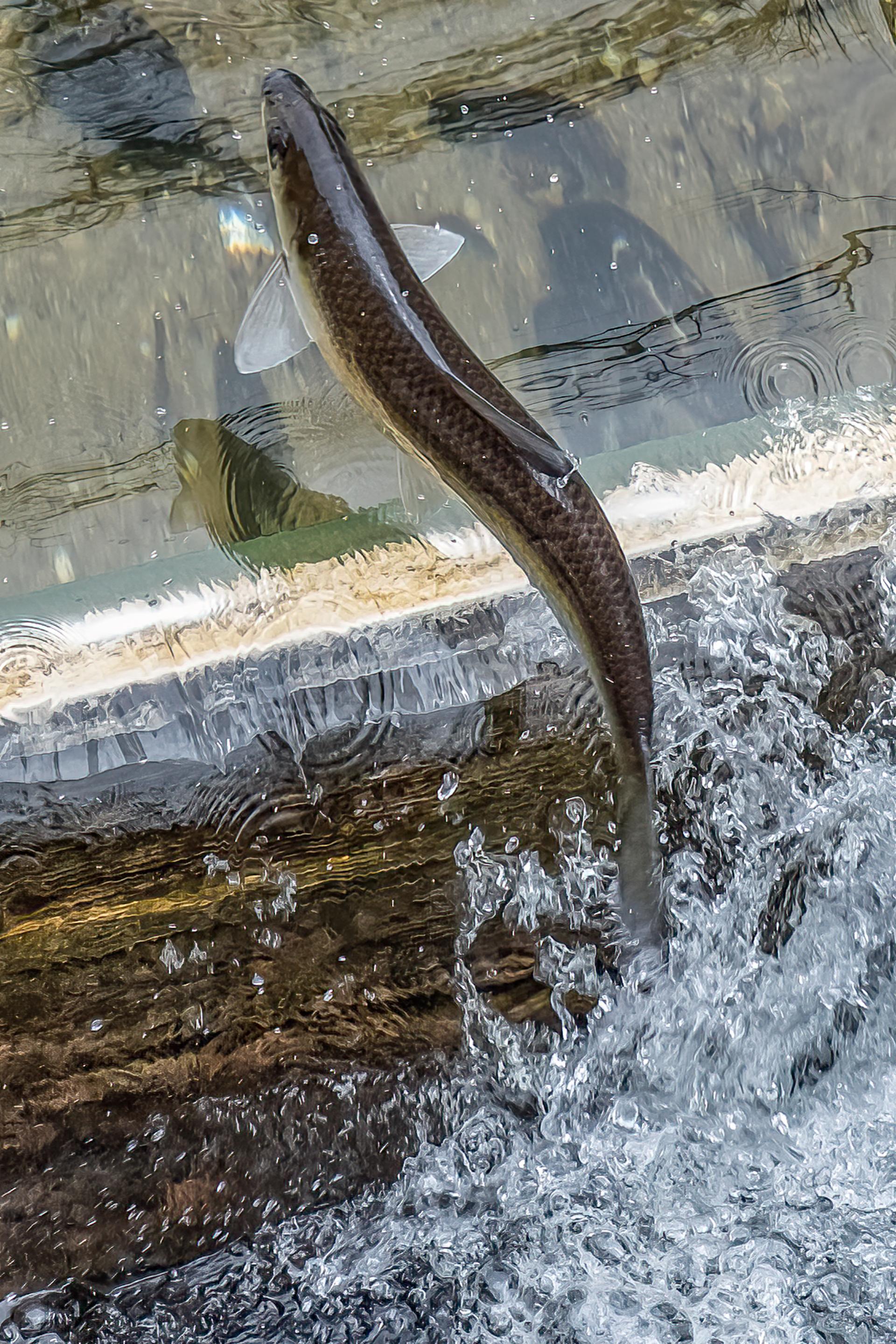
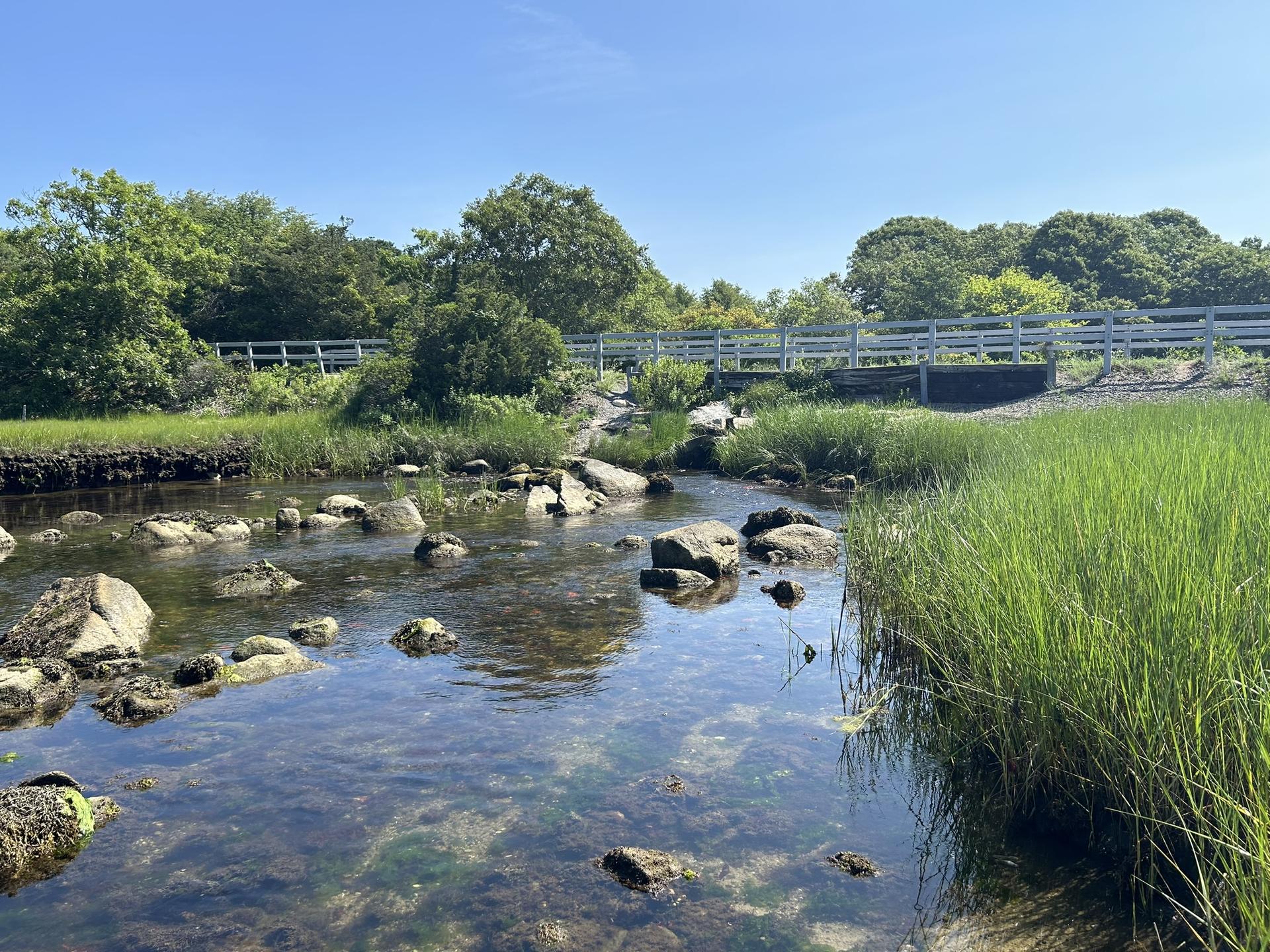
Volunteers Needed for 2025 River Herring Count Across Cape Cod A reminder that volunteers are urgently needed for the 2025 river herring count at multiple runs across Cape Cod. Locations include Brewster, Barnstable, Dennis, Falmouth, Mashpee, Orleans, Sandwich, and Yarmouth. These counts provide critical data to help protect keystone fish species and assess habitat restoration needs.
Volunteers must be able to travel to their assigned site, navigate uneven terrain, and visually identify fish. Each count takes just 10 minutes and occurs several times a week from April 1 to June 15. This is a great opportunity to support local conservation efforts with a minimal time commitment! -
Herring Count Locations:
- Red Lily Pond – Barnstable
- Stony Brook – Brewster
- Bound Brook – Dennis
-
Trunk River – Falmouth
- Mashpee River – Mashpee
- Quashnet River – Mashpee
- Santuit River – Mashpee
-
Pilgrim Lake – Orleans
- Mill Creek – Sandwich
- Long Pond – Yarmouth
- Baxter Grist Mill – Yarmouth
Those interested can sign up now through APCC’s River Herring Volunteer Signup and attend a training sessions in March. More details are available on the Herring Hub website.
This is a community effort, and we need as many volunteers as possible.
Join us in protecting Cape Cod’s herring runs! |
It’s been rewarding to see the interest in native plants grow over the last 20 plus years. This is thanks to the many ecological voices that have amplified the value of native plant species in our managed landscapes with the goal of being more sustainable, supporting birds and pollinators, and ethically being better stewards of the land.
For those who understand the connection of their landscapes and gardens to the local ecology and want to create a haven for pollinating insects and birds, and all the other critters that make up the web of life, a commonly asked question is, “Where can I purchase native plants?” The good-news answer is that most any retail nursery carries some natives. The bad news is, you’ll likely find a limited diversity of species and maybe not what you are looking for, such as mountain mint, spotted bee balm, milkweed or anise-scented goldenrod.
Another shortcoming is that the horticultural trade insists on catering to buyers and not the butterflies, bees and other insects or birds that need them as part of their life cycle. But that’s not a surprise, is it? As consumers, we are accustomed to expecting perfection and to be “wowed” in exchange for our dollars.
Many native cultivars developed for market, sometimes referred to as “nativars,” are selected for characteristics that are extra showy, such as double blooms that a bee can’t penetrate for nectar or pollen (that is, if the plant still has any nectar or pollen to give). Some cultivars are grown to exhibit fantastical colors, which perhaps the bees will not recognize or cannot physically see. Some have red or purple foliage, which means the leaves are full of anthocyanins that make them unpalatable and impossible for the insects to eat, insects that would otherwise use that species as a host plant essential to their life cycle. No host plant, no insect.
And then there is the simple fact that to grow quickly and efficiently, and to produce a “sure thing” that will sell, the typical growers produce their plants through cuttings or tissue culture. This means they are all the same, they are clones, and there is no genetic variability in those three beach plum shrubs or five wild bergamot perennials you just purchased. They are carbon copies. Without genetic diversity, the species are more vulnerable to disease and less likely to be able to adapt to changing environmental conditions posed by a disrupted climate. And in the case of beach plums, the plants will not be inclined to set fruit.
From an ecological perspective, we want to ensure we maintain biodiversity in our landscapes. Therefore, ideally, native species in the marketplace should be grown by seed and be of a local eco-type—and credibly labeled as such. Polly Hill Arboretum on Martha’s Vineyard, under the direction of executive director Tim Boland, established the MV eco-type—a plant propagation program that grows plants for sale at the arboretum’s little marketplace: Native plants are grown from local seed. The local genotype helps preserve the ecological benefits of what nature intended in our ecoregion. But this is an ideal—and complicated to achieve on a large scale.
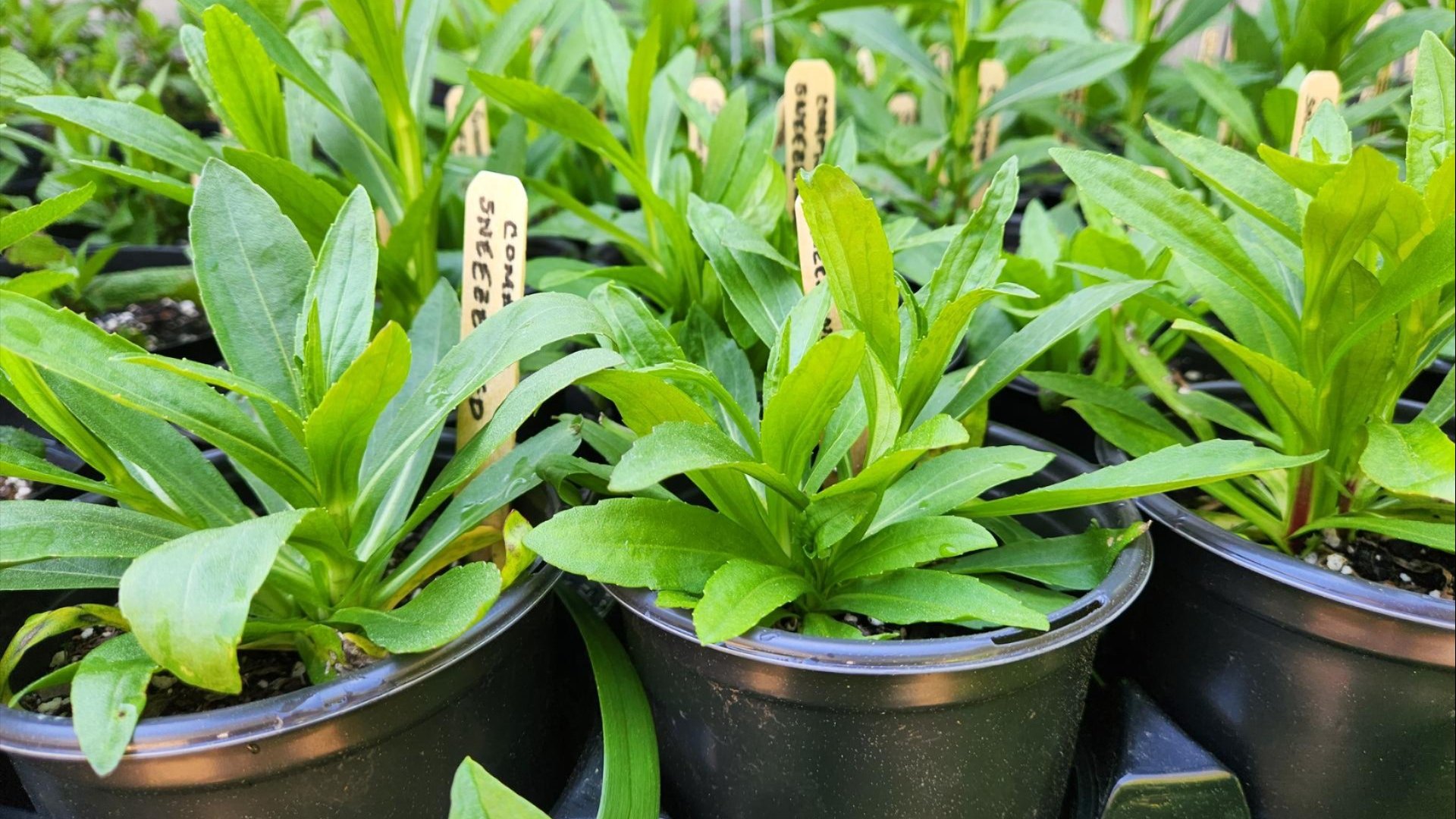
APCC recently received a $70,000 grant from the Cape Cod and Islands License Plate Grant program, awarded by the Barnstable County Board of Regional Commissioners at the recommendation of the Barnstable County Economic Development Council, to launch the development of a native plant growers’ cooperative with the goal of bringing locally grown native plants to market.
Grow local, buy local—what’s good for food production seems applicable to native plant production. By establishing and facilitating the Cape Cod Native Plant Growers’ Cooperative program, APCC will engage and support interested members of the agricultural community and other entrepreneurs interested in growing native plants. APCC will provide technical advice, branding and marketing to grow local and help to fill the demand for native plants for home gardeners and restoration ecologists.
This is no small undertaking, but APCC has received lots of support and technical assistance from plant conservationists, land conservationists, native plant growers from other regions, restoration ecologists, horticulturists, and representatives from the Cape’s farming community. And as a regional environmental organization, APCC sees this as a worthy effort to give support to our local farmers that fill our farmers’ markets and restaurants with locally grown produce and contribute to the quality of life on Cape Cod.
With this program, we hope some farmers will find growing native plants to be a welcome beneficial adjunct to their business, and we also hope to inspire others to become growers for themselves or maybe start a small business. The goals are to keep dollars local and support the local economy, bolster the local ecology, and help meet the demand for native plants in an ethical and ecologically-based manner.
The above article by APCC education director, Kristin Andres, appeared in a recent edition of the Cape Cod Chronicle. |
If you are a farmer or someone who wants to grow native plants to sell, or just want to be updated on the program's development, please submit an interest form that appears on our webpage. We will be sending periodic email notices of workshops and meetings.
|
|
|
Attention Runners:
Run this year’s Falmouth Road Race for APCC! |
|
|
APCC is thrilled to be a part of the "Numbers for Nonprofits" program for the 2025 Asics Falmouth Road Race. We are currently accepting applications for our 2025 team. Team members will receive a guaranteed race entry, fundraising tips and tools, a fundraising web page, and support throughout the process.
If you're interested in amplifying APCC's work in a fun and unique way, please apply here. Questions? Please reach out to runforapcc@gmail.com. |
|
|
APCC Seeks Seasonal Interns |
American Holly
Ilex opaca by Erin Camire, Ecolandscape Program Coordinator
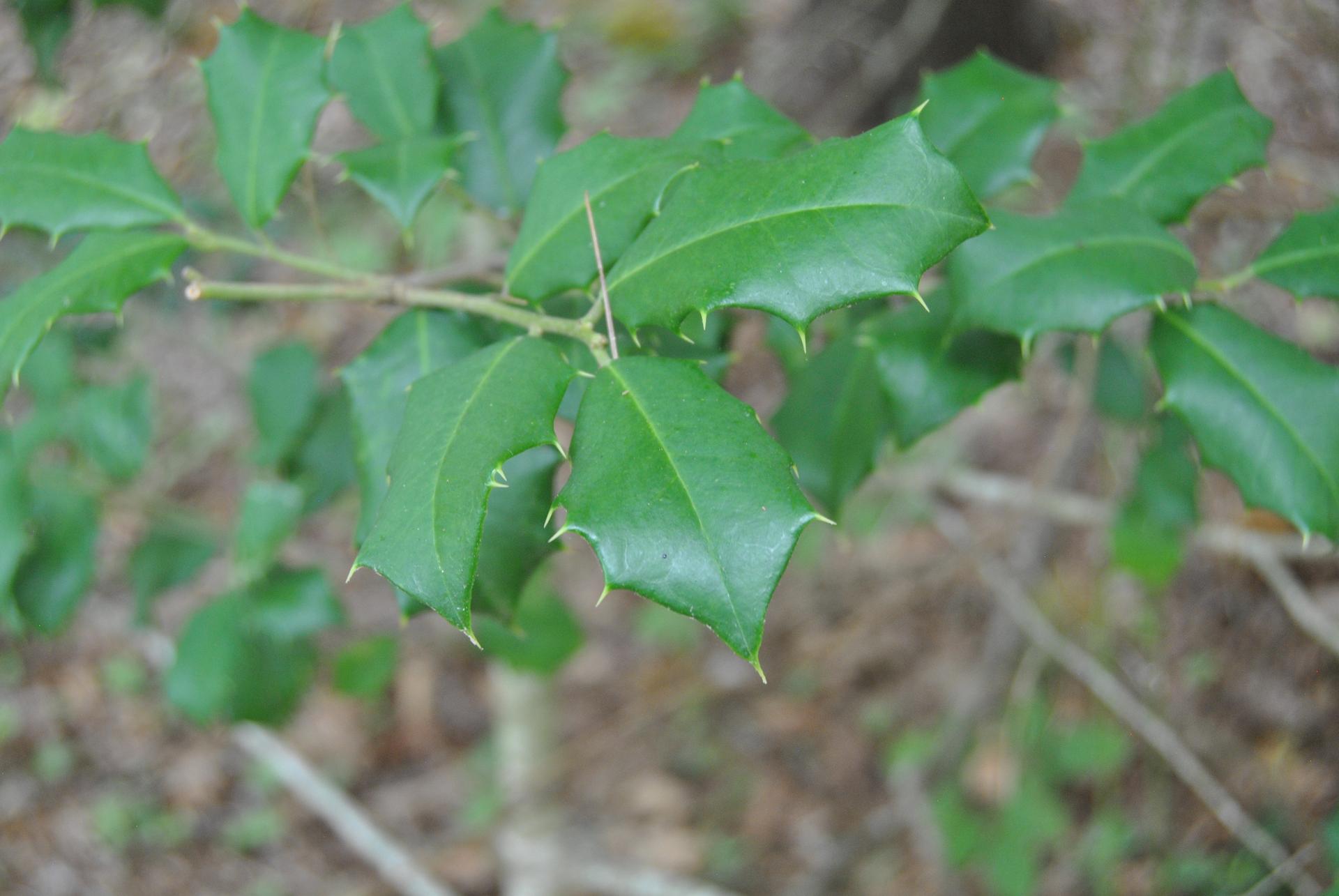
American holly is a broadleaved evergreen, meaning it’s green foliage persists through winter just like pines. This feature, along with it’s bright red fruit, makes holly an instantly recognizable winter decoration. While many wreaths choose to feature English holly (Ilex aquifolium), the American holly (Ilex opaca) is what you will find in the Cape’s woodlands.
The prominence and success of American holly on Cape Cod is actually something very special and is entirely unique to coastal ecosystems throughout this plant’s range. As American holly has popped up in the nursery trade, it has been planted throughout the Northeast as a native replacement for English holly, with varying degrees of success. My time in Vermont taught me that American holly was nothing more than a small, scrubby plant. A shrub that struggled to survive, let alone grow. So, you can imagine my surprise the first time I bumped into one of the many holly trees that populate the Cape!
These trees, sometimes reaching up to 100 feet tall, defy the notion that American holly is purely an ornamental shrub. These trees demonstrate the true nature of this plant, thriving in its natural environment and supporting the rest of the ecosystem on its branches. Let’s begin with branches and foliage as we discuss the benefits of this species. The persistent leaves offer much needed cover to birds and small mammals. Additionally, the easily recognizable winter berries offer a much need fall through winter food source to a variety of birds, such as cedar waxwings, American goldfinches, robins, and wild turkeys. If you’d like to support birds by planting an American holly in your landscape, remember to plant both a male and female plant, as this species is dioecious. This means fruit will only forms on the female plant when a nearby male plant produces pollen.
One last important benefit of American holly is its role as a host plant to the Henry’s Elfin butterfly. This woodland butterfly relies on the presence of our native holly, as well as our native viburnums and blueberries, to raise its larvae. When we commit our landscapes to supporting native plants, the benefits cascade through the rest of our local food webs and offer far more support to our ecosystems than we realize. |
Cape Cod Natural History Conference, Saturday, March 8, 2025
APCC has been accepted to present and have a poster at the annual Cape Cod Natural History Conference, hosted by Mass Audubon. It's another great lineup and the event is an important networking opportunity! Registration required. Don't miss it. |
|
|
| Falmouth fishermen's Association is inviting you to a scheduled Zoom meeting.
Topic: FFA March Speaker, Jordan Mora, Lead Ecologist & Science Advisor, Association to Preserve Cape Cod. She has spent over fifteen years studying the impacts of climate change and nutrient loading on coastal wetlands, rivers, and estuaries.
Time: Mar 4, 2025 07:00 PM Eastern Time (US and Canada)
Join Zoom Meeting
https://us02web.zoom.us/j/81661665291?pwd=IVO8UBC4ODhpPlXa5yqVTaYfveAaTR.1
Meeting ID: 816 6166 5291
Passcode: 537450 |
|
|
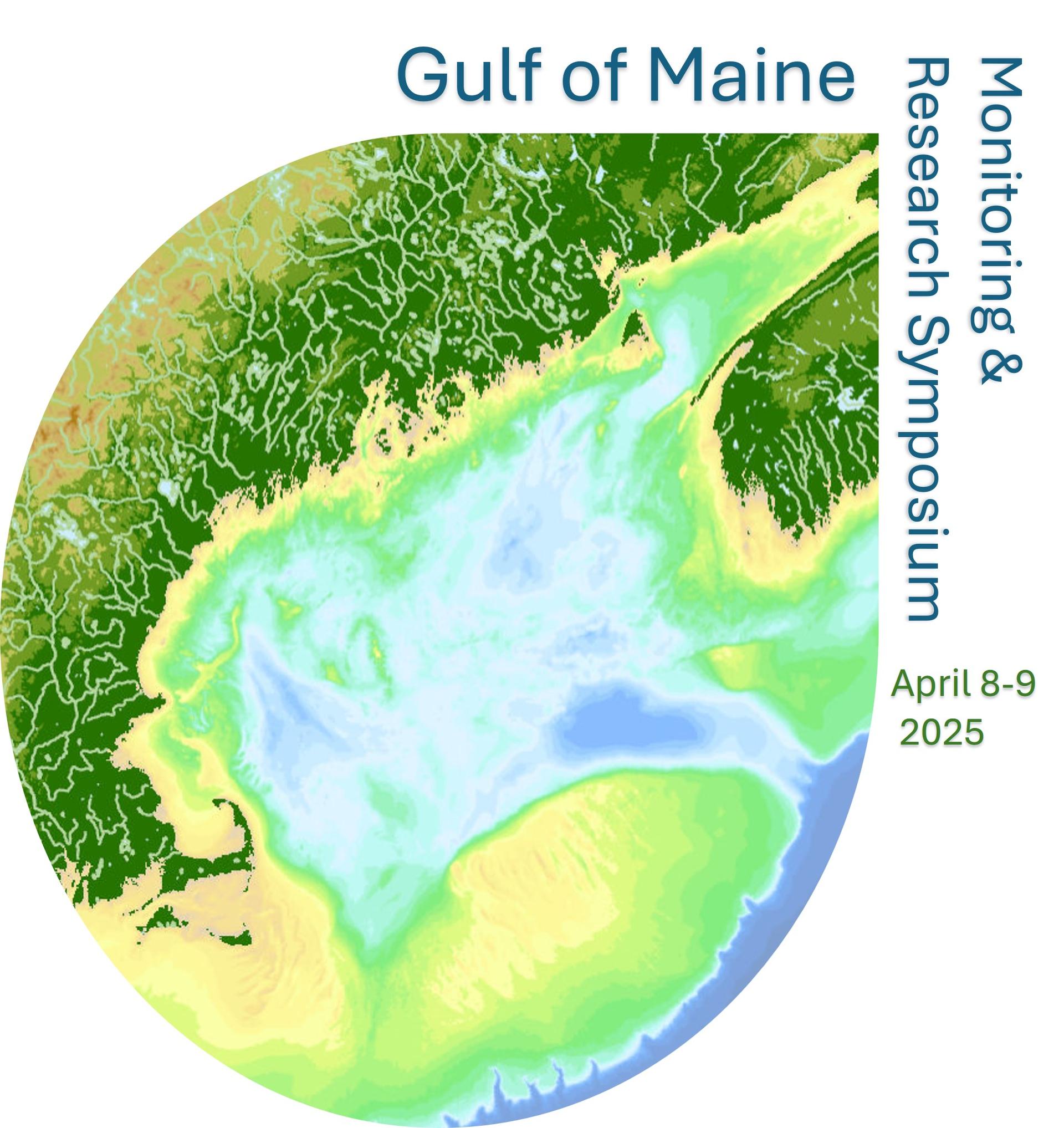
| Early Registration is open for the Gulf of Maine Monitoring & Research Symposium.
The Gulf of Maine Monitoring and Research Symposium 2025 will be held on April 8-9, 2025, in Haverhill, MA. The symposium is hosted by the MassBays National Estuaries Partnership, MIT Sea Grant, the Massachusetts Water Resources Authority, and the Northeastern Regional Association of Coastal Ocean Observing Systems.
The symposium will convene monitoring program coordinators and researchers, data-users, and policymakers. Keynote speakers, Janet Duffy-Anderson Ph.D. and Damian Brady Ph.D., will talk about drivers of change in the Gulf of Maine and current efforts to highlight the need for action. Through a series of presentations, attendees will learn about ongoing water quality and habitat monitoring programs and discover ongoing research efforts that characterize the changing physical and ecological conditions in the Gulf of Maine.
|
|
|
Early registration for the symposium is open through March 6th, and registration for the symposium closes April 1st. A special registration fee is available for students. A limited number of scholarships are available to those who might otherwise not have the resources to participate in the symposium.
For more information including general registration and scholarship applications go to the Symposium home page here. |
April Wobst, APCC restoration program manager and MassBays’ Cape Cod regional coordinator said that she “looks forward to attending the symposium and the opportunity to meet with MassBays and Gulf of Maine partners to learn about and discuss monitoring and research across our region.” |
|
|
A Cape-wide Conservation Event Calendar |
|
|
The Compact of Cape Cod Conservation Trusts (“the Compact”) and its nonprofit members launched a new regional calendar of events. The Conservation Calendar includes programs across Cape Cod hosted by these groups. The goal of the calendar is to encourage visitors and residents to take part in nature and environmental events. You can always find the link to the calendar on APCC's website under News & Events.
|
|
|
A Cape Cod Native Plant-selector
~ to help you choose the perfect native plants for your garden. |
|
|
Email kandres@apcc.org and we'll send you a CapeCodNativePlants.org decal. |
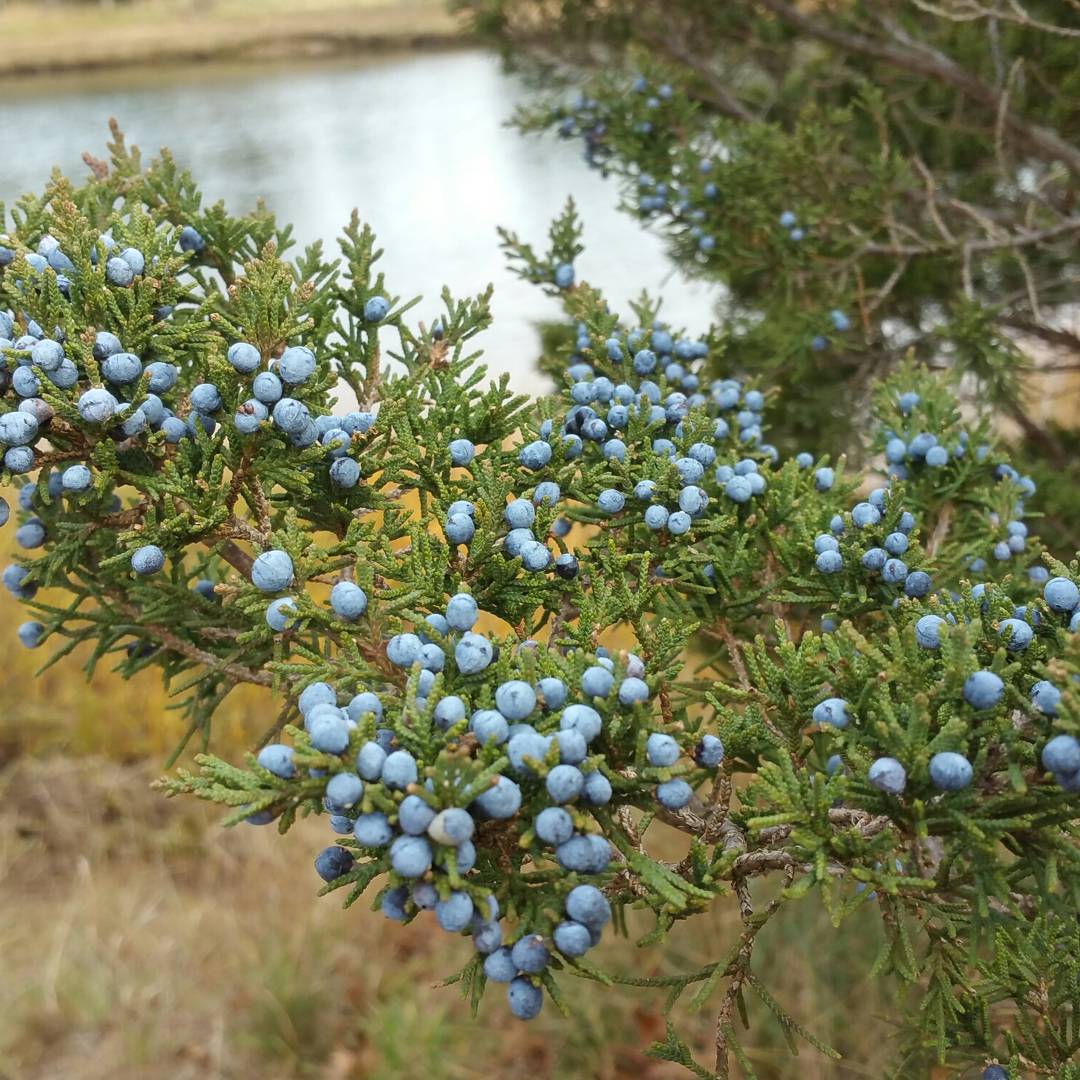
| Eastern Red Cedar Juniperis virginiana |
|
|
The Guidelines gives homeowners steps they can take in the design and maintenance of their properties that will support pollinators and birds, manage stormwater, conserve water, and protect the Cape's water quality. This 40-page booklet is beautifully illustrated by Marcy Ford with content that is easily digestible and supported by numerous resources for additional learning.
|
We are grateful for the several retail shops that are partnering with us to make this publication more widely available: Brewster Book Store, Birdwatchers General Store, Crocker Nurseries, Wellfleet Audubon Wildlife Sanctuary, Cape Abilities Farm, Cape Cod Museum of Natural History, the Cape Cod Lavender Farm, Heritage Museums and Gardens, Titcomb's Bookshop, Sea Howl Bookshop, Soares Flower Garden Nursery, and Eight Cousins Bookshop.
If you are a retailer and would like to sell this publication at your store, please contact us. |
|
|
|
Available for online purchase and shipping in the U.S. is free:
APCC caps $25 +++++++++++++++++
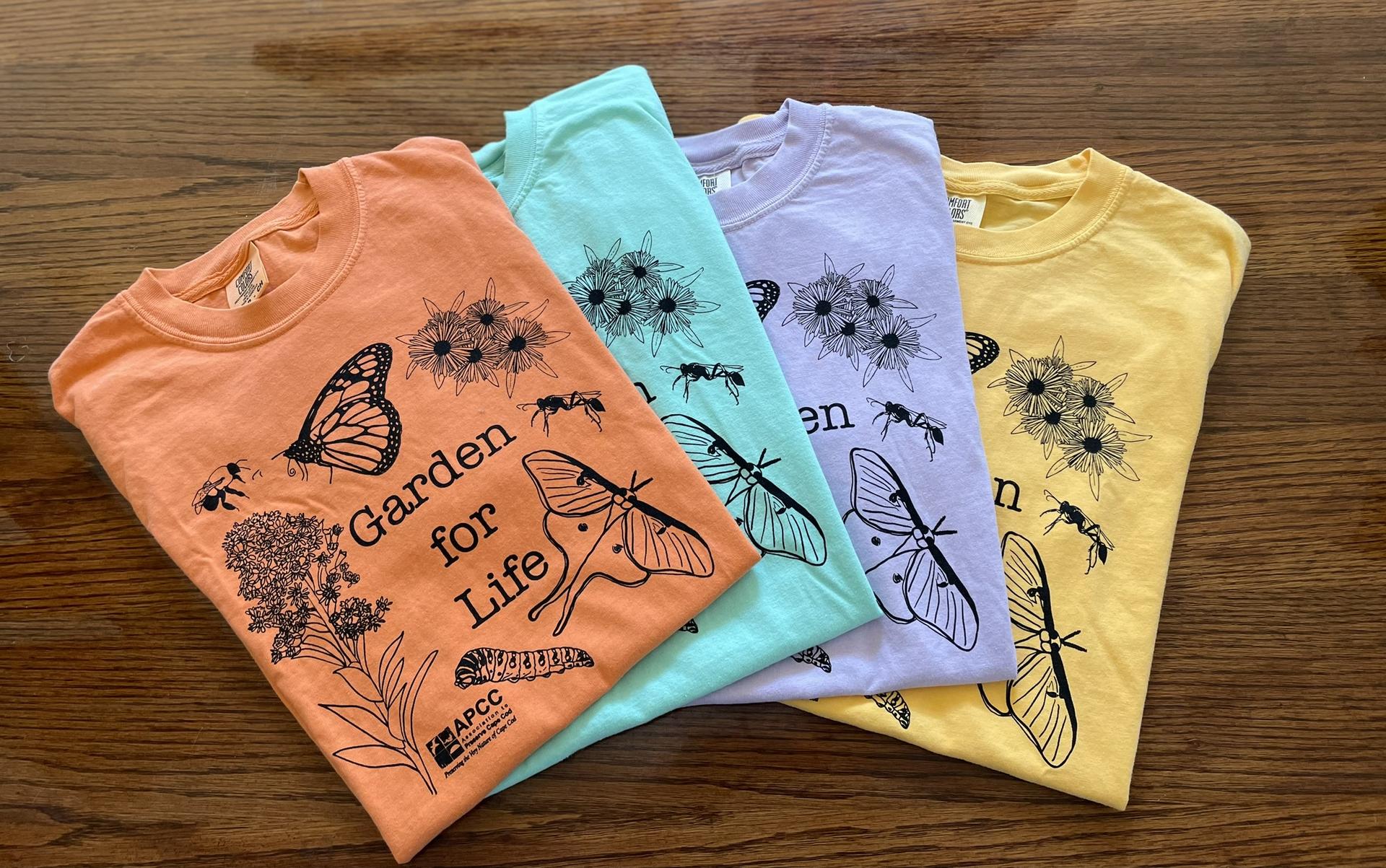
Garden for Life T's $30 Click here
for more information and to order. |
|
|
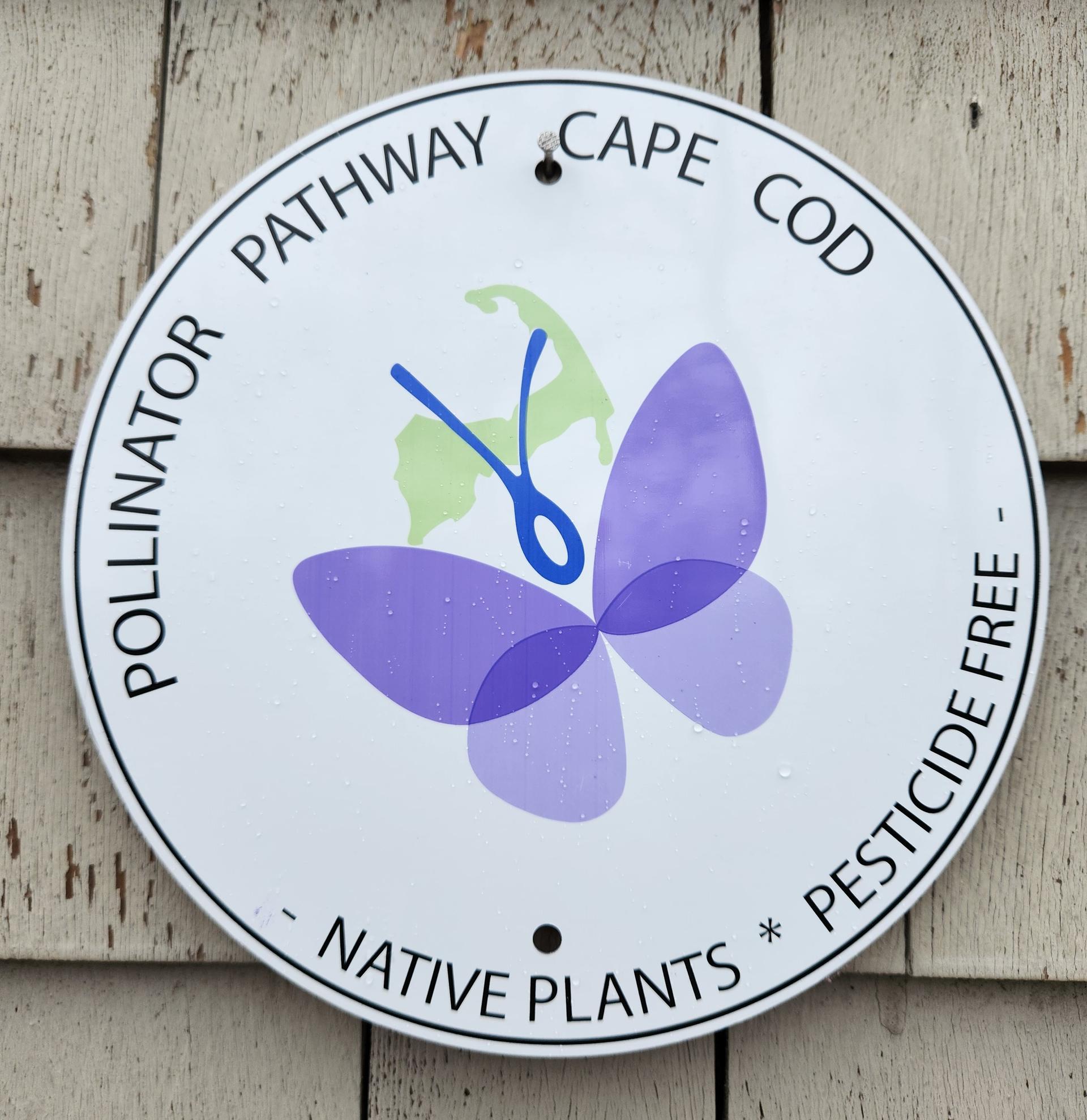
The Pollinator Pathway Cape Cod is a group of organizations promoting native plants and pollinator-friendly land care practices to create a boat load of safe oases for our native bees, butterflies and a whole host of other pollinators that are crucial to the health of our ecosystems.
Join us! It's easy. There are no fees. You just need to pledge to ADD native plants, SUBTRACT a little lawn, AVOID yard chemicals, especially pesticides, and LEAVE the leaves. And, help us spread the word. Please get on the map to show your support of pollinators on Cape Cod!
You can purchase the 9-inch aluminum Pollinator Pathway Cape Cod sign at Hyannis Country Garden, Crocker Nurseries, Brewster Book Store, Orleans Conservation Trust, and Cape Abilities Farm.
If you are a retailer, and you would like to sell the signs, you can order online here, or email pollinators@apcc.org. |
|
|
| Rain Barrels for Cape Cod
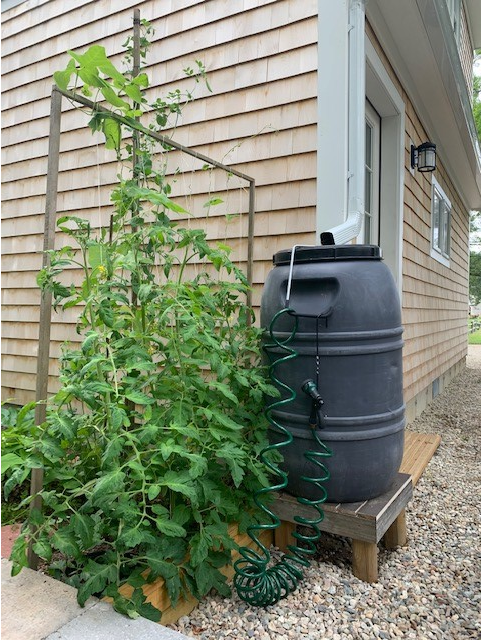
Order online from Upcycle Products $122 each includes FedEx shipping to your door 55 gallon, repurposed food barrels Keep a barrel out of a landfill, and capture some free rainwater. APCC receives a portion of the proceeds. For more information, click here. |
|
|
|
APCC eNewsletters.
Our weekly newsletters are archived on our website and easily shared.
You can find past newsletters and share with your friends. Encourage others to sign up for future enewsletters HERE.
|
|
|
Are you thinking of going solar? We hope so!
In partnership with E2 SOLAR in Dennis, APCC receives $500 for every solar installation when APCC is named as referral. |
|
|
| Thank you to the homeowners who just contracted to install solar panels through E2 Solar.
May the sun always shine for you! |
|
|
Expressions Gallery, 578 Main Street, Chatham CLICK HERE |
Expressions Gallery donates 20 percent of its profits to APCC's work. |
|
|
Thank you to our business sponsors! |
|
|
APCC is rated four stars by Charity Navigator,
2023 Platinum by Candid (formerly Guidestar), and 2024 Top-Rated by GreatNonprofits. |
|
|
Our Contact Information
*{{Organization Name}}*
*{{Organization Address}}*
*{{Organization Phone}}*
*{{Organization Website}}*
*{{Unsubscribe}}* |
| |
|
|