Association to Preserve Cape Cod |
|
|
APCC Comments on Cape Cod Airport Final
Environmental Impact Report |
APCC recently submitted written comments to the state’s environmental secretary, Rebecca Tepper, on the Final Environmental Impact Report for the proposed Cape Cod Gateway Airport Master Plan Project. APCC expressed concern about a number of potential environmental impacts related to the project. Read the comments here.
|
APCC Ecosystem Restoration Program |
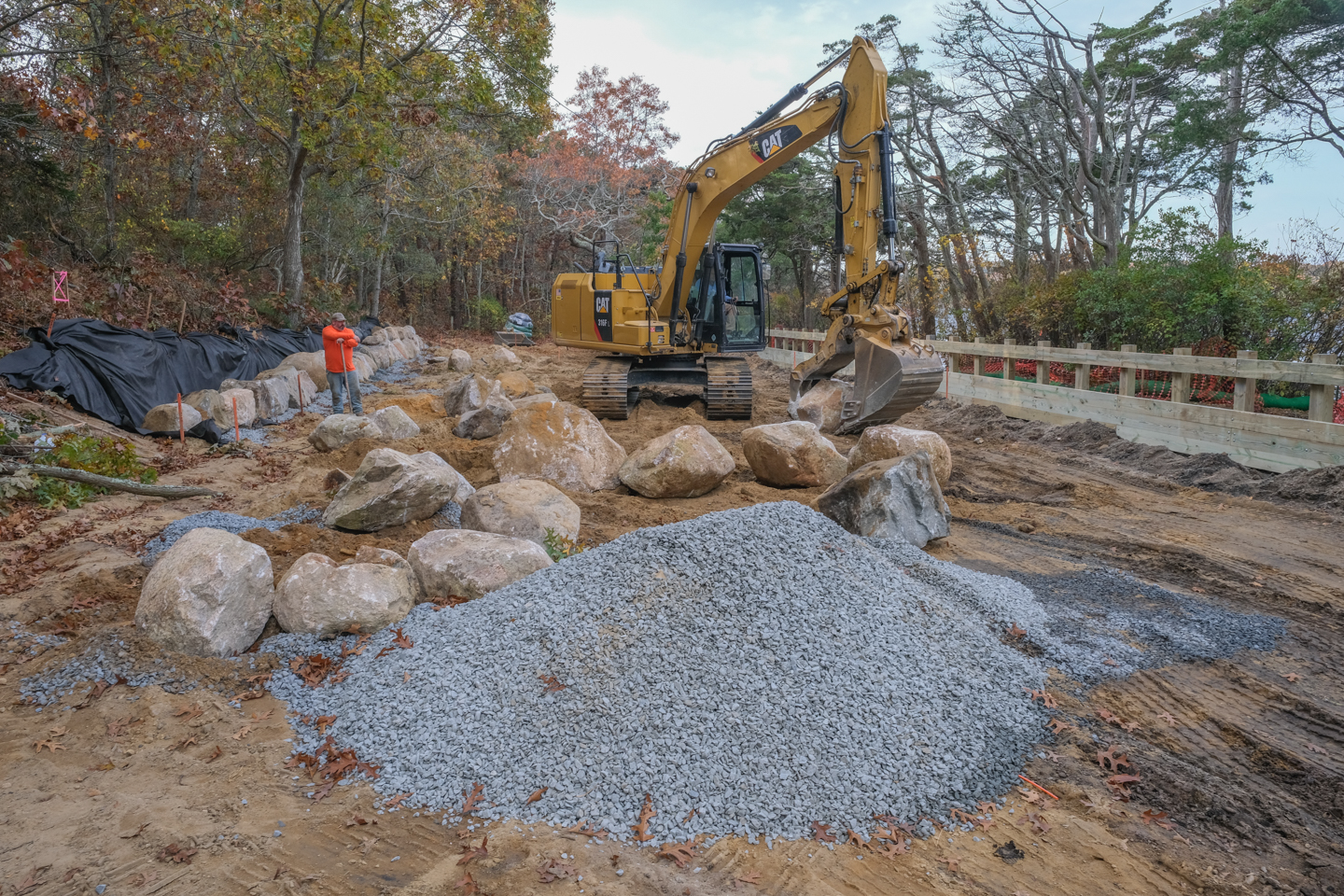
Above: The retaining wall along the back of the parking lot was constructed last week using large boulders. |
Transforming Stormwater Management at Scargo Lake
With assistance from APCC and the engineers at Horsley Witten Group, the town of Dennis is implementing innovative stormwater management practices at two sites around Scargo Lake. Improvements at Dr. Lords Road and Route 6A boat landings will help reduce pollution and protect the lake's delicate ecosystem.
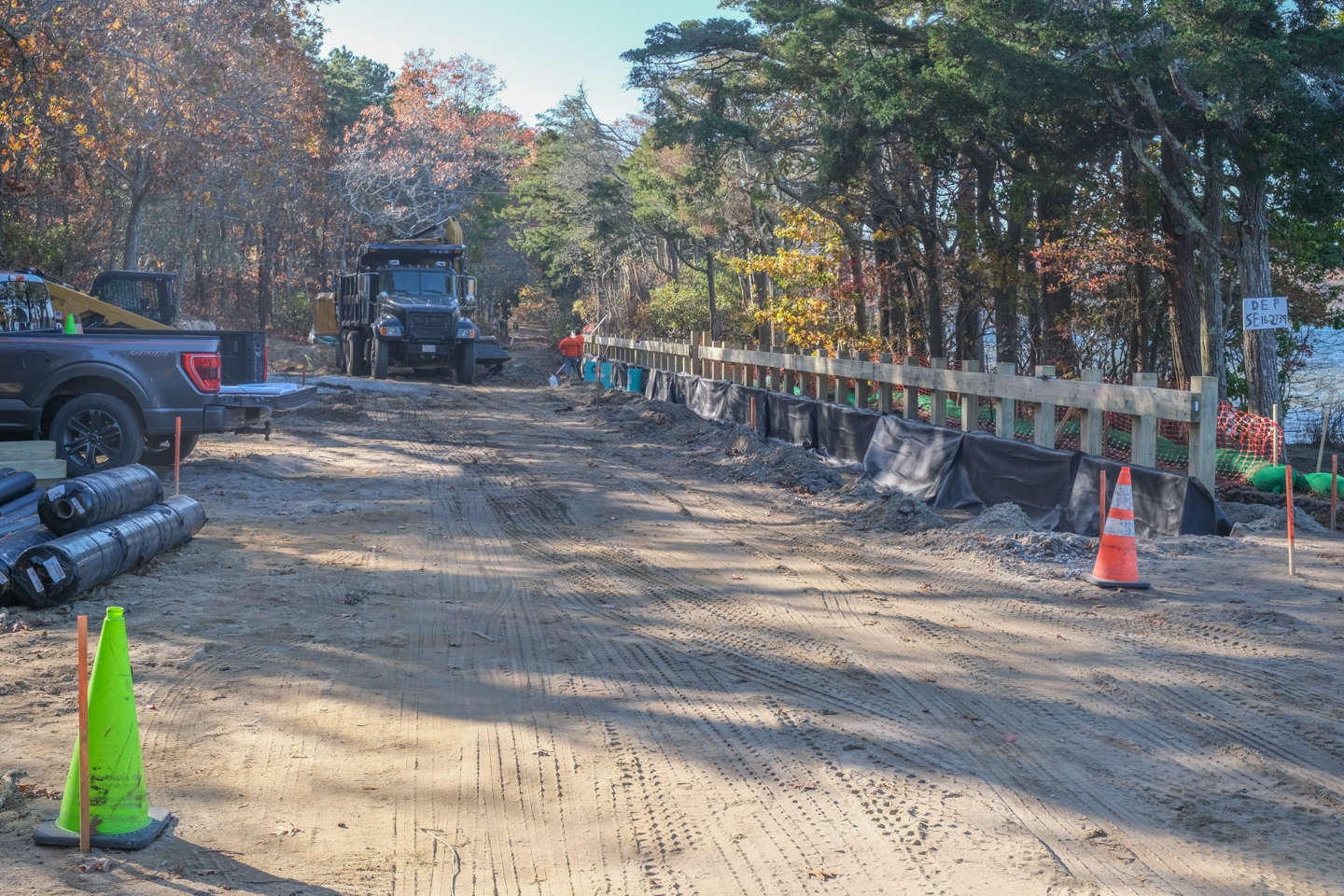
At the Dr. Lords Road landing, crews have begun transforming the parking lot. The existing pavement has been removed to make way for a new, porous surface that will absorb rainwater. A large retaining wall, constructed with boulders, will help prevent erosion and maintain parking space. Beyond the surface, a network of underground drainage pipes, a gravel infiltration trench, and a bioretention area will work together to filter and absorb stormwater runoff. The bioretention area, planted with native species, will further purify the water before it reaches Scargo Lake.
The 6A landing, a steep boat ramp and parking lot, will undergo a similar transformation. While it was not previously paved, it will now benefit from underground infiltration chambers and a bioretention area to capture and treat runoff.
Funded by the Massachusetts Office of Coastal Zone Management as part of the Cape Cod Boat Ramp Stormwater Project, this initiative is being carried out by J.W. Dubis & Sons, Inc. Construction is currently underway at the Dr. Lords Road landing, with the goal of completing the curbing and porous pavement installation by the end of the month. Work at the Scargo Landing site will commence after the completion of the Dr. Lords Road project.
|
Above: The pavement has been excavated and the guardrail has been constructed. J.W. Dubis & Sons has begun installing the gravel infiltration trench and drainage structures. |
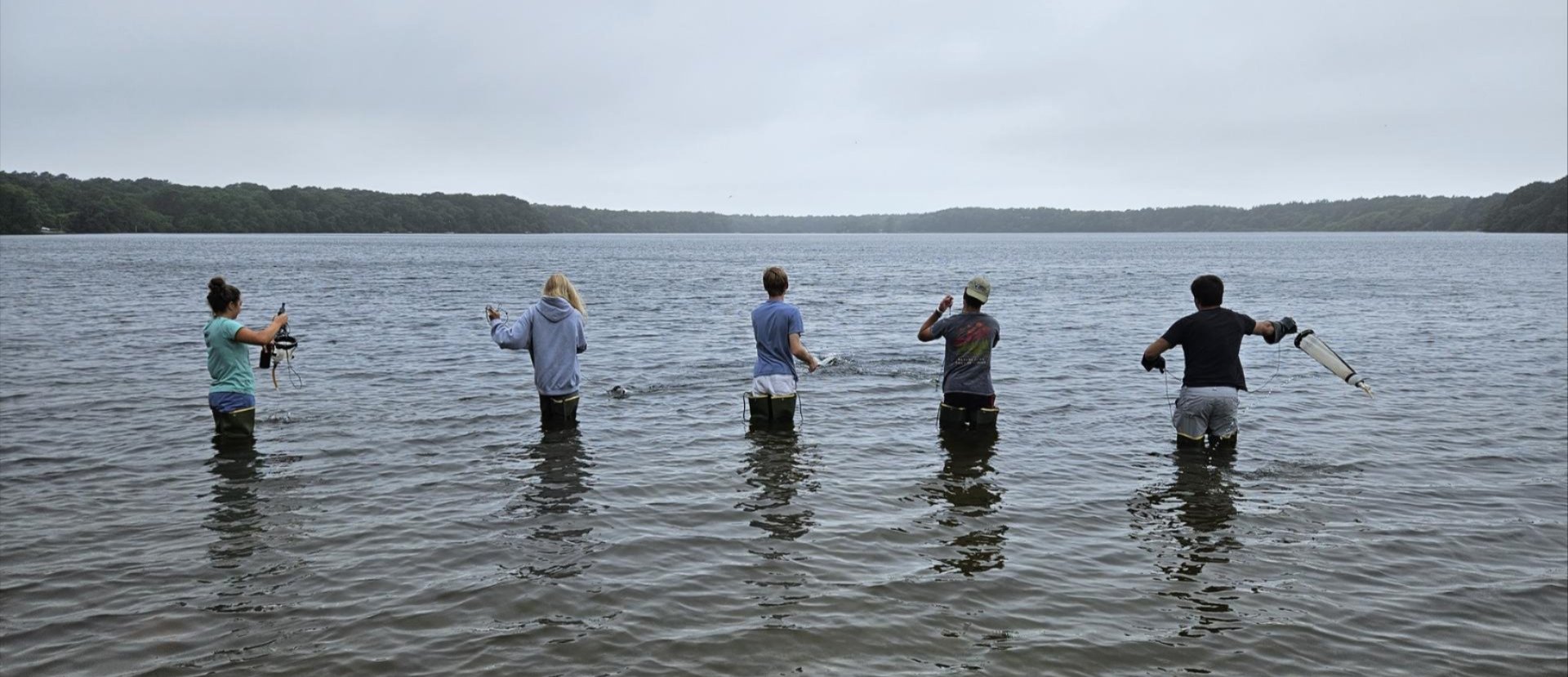
Above: 2024 summer cyanobacteria interns practicing their plankton net throwing. |
APCC Cyanobacteria Monitoring Program |
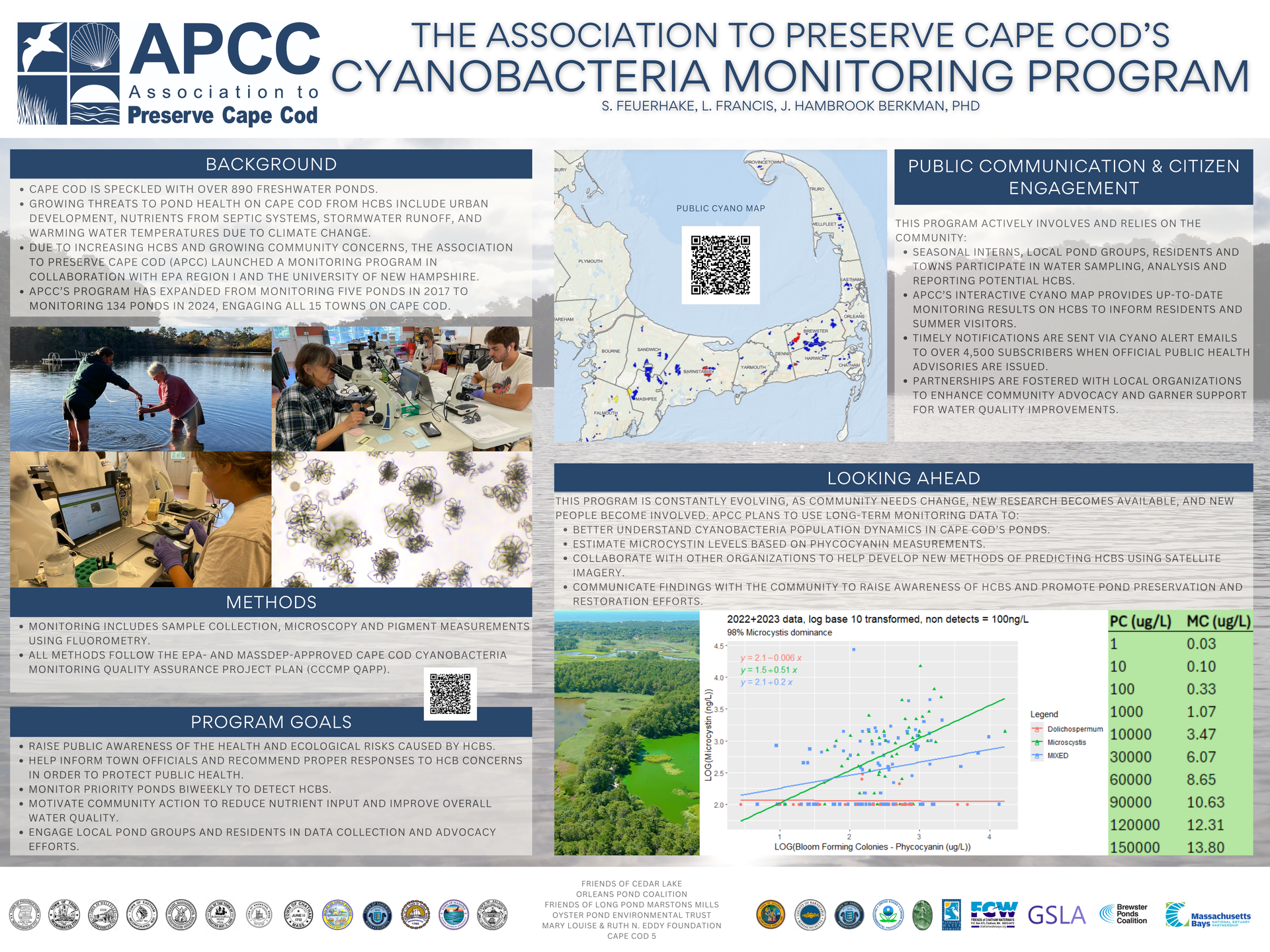
APCC's Cyanobacteria Monitoring Program has officially finished for the 2024 season. We were able to monitor in all 15 towns on Cape Cod and monitor consistently at 134 freshwater ponds. Through the Southeast New England Program (SNEP), APCC was able to expand cyanobacteria monitoring to an additional 18 Cape Cod freshwater ponds that are being monitored under the Freshwater Initiative. As a complement to APCC’s established monitoring program, the Barnstable County Lab provided cyanobacteria toxin testing to provide local officials with measurements of microcystin toxin from ponds pre-screened by APCC as potentially containing cyanobacteria toxin levels of concern based on monitoring results.
APCC wishes to thank the following individuals and organizations for their support of this program: Barry H. Rosen, Ph.D., of Florida Gulf Coast University, for providing a taxonomic workshop and keys for identification of freshwater cyanobacteria and green algae; Mindy L. Richlen, Ph.D., of Woods Hole Oceanographic Institution, for producing Save Our Ponds and supporting the cyanobacteria workshop; and Haley Miller, U.S. Environmental Protection Agency, and Jasper Sha, of Massachusetts Department of Environmental Protection, for their review and approval of our Cape Cod Cyanobacteria Monitoring Program (CCCMP) Quality Assurance Project Plan (QAPP) 2024-2029.
APCC wishes to thank the Cape Cod town health and conservation departments for their collaboration, and the following pond organizations that were instrumental in sampling half of the monitored ponds for the 2024 season: Brewster Ponds Coalition, Friends of Chatham Waterways, Falmouth Water Stewards, Friends of Peters Pond, Gull Pond Area Conservation Association, and Orleans Pond Coalition. APCC also thanks our 2024 cyanobacteria interns, including Dara Estes, James Marino, May Lopopolo, Casey Proto, Meribeth Ratzel, and Jacob Scola.
APCC's Cyanobacteria Monitoring Program will start back up after Memorial Day 2025. |
APCC Staff Attend National Cyanobacteria Symposium in Portland, ME |
|
|
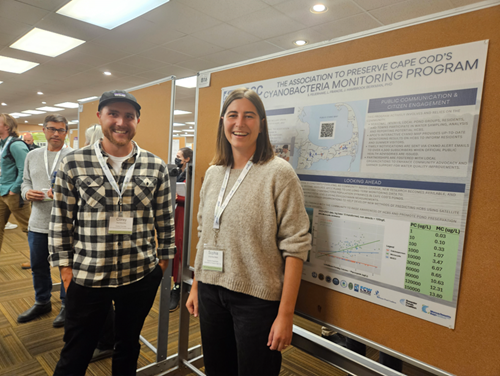
| Above: Corey Conville of U.S. Environmental Protection Agency with APCC's freshwater science coordinator, Sophia Feuerhake, during the poster session |
|
|
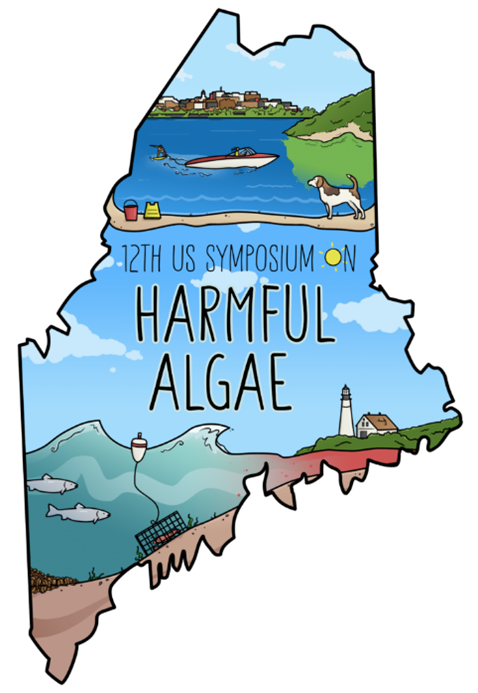
The 12th U.S. Symposium on Harmful Algae was held the week of October 27th in Portland Maine. Attendees included over 500 national representatives and researchers from academia; state, federal, tribal, and municipal governments; the private sector; and watershed organizations. APCC's freshwater science coordinator, Sophia Feuerhake, and pond and cyanobacteria program manager, Dr. Julie Hambrook, attended and presented a poster that provided a summary of our cyanobacteria monitoring program.
The symposium proved to be an important platform to learn from other groups, mainly state organizations that have the role of communicating to the public about the blooms.
It was also helpful to gain a national perspective on cyanotoxins and to learn from the experience of others: what they are doing to measure and inform the public about toxins and management approaches.
We look forward to applying what we learned in the 2025 cyanobacteria monitoring season and sharing with those who will be training and working with us. |
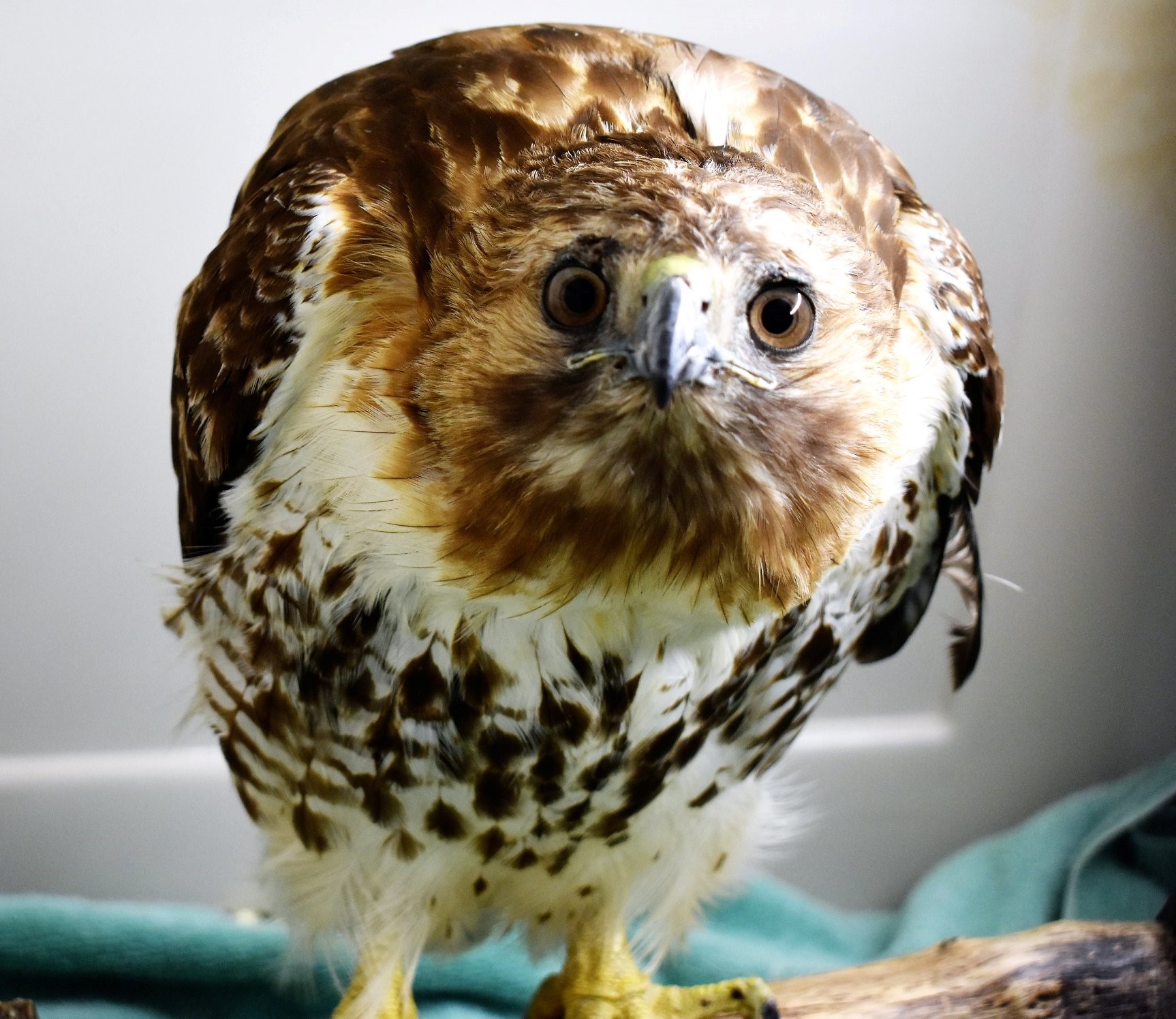
Above: Red-tailed Hawk. This bird was rescued from Chatham after two separate rescue attempts by Wild Care. On the second attempt, it was sitting in the rain, soaking wet, thin and weak, with a wound over its right eye. The bird was also showing symptoms of probable anticoagulant rodenticide poisoning. We began treatment and the birds responded positively. It was released after over a month in our care. Photo courtesy of Wild Care Cape Cod.
|
Poison is Not the Answer by Stephanie Ells, Executive Director, Wild Care, Inc., a wildlife rehabilitation center located in Eastham.
Wild Care and our staff of licensed wildlife rehabilitators treat over 1,700 animals per year including wild birds, small mammals, reptiles and amphibians. We are on the frontlines of recognizing the impacts wildlife face in the natural world. We use this knowledge and use our voice within the community to reduce impacts on wildlife, and to help inform systemic positive change. Our wild birds are bellwethers for environmental health, and they are sounding an alarm that is loud and clear: Poison is not the answer.
The battle to eradicate rodents with poison, like rodenticides, may seem like only a “big city” concern. However, it is a prominent issue everywhere—including less densely populated communities like Cape Cod. Over 80 percent of the birds of prey (raptors) that Wild Care receives into care, such as red-tailed hawks and great horned owls, show symptoms of probable secondary rodenticide exposure. Secondary poisoning occurs when a predator eats a rat or mouse that has been poisoned. I am specifically referring to first and second-generation anticoagulant rodenticides in this article.
Anticoagulant Rodenticides:
First-generation (FGARS) anticoagulant rodenticides typically require multiple feedings by a rodent to cause death. Second-generation (SGARS) rodenticides are substantially more potent and only require a single feeding to cause death by internal bleeding. In 2015, the EPA banned over-the-counter sales of SGARS because of their risk to children, livestock and pets. However, pest control companies are still registered to distribute SGARS, and commonly implement these poisons in black box bait feeding stations as a “quick fix” for homeowners and business owners facing rodent overpopulation dilemmas. FGARS can still be purchased in local hardware stores. Buyers beware of pest control products containing these ingredients: Warfarin, Cholorophacinone and Diphacinone.
As humans in a fast-paced society, we are always seeking a quick fix. However, these short-sighted solutions often do not have long-lasting results. |
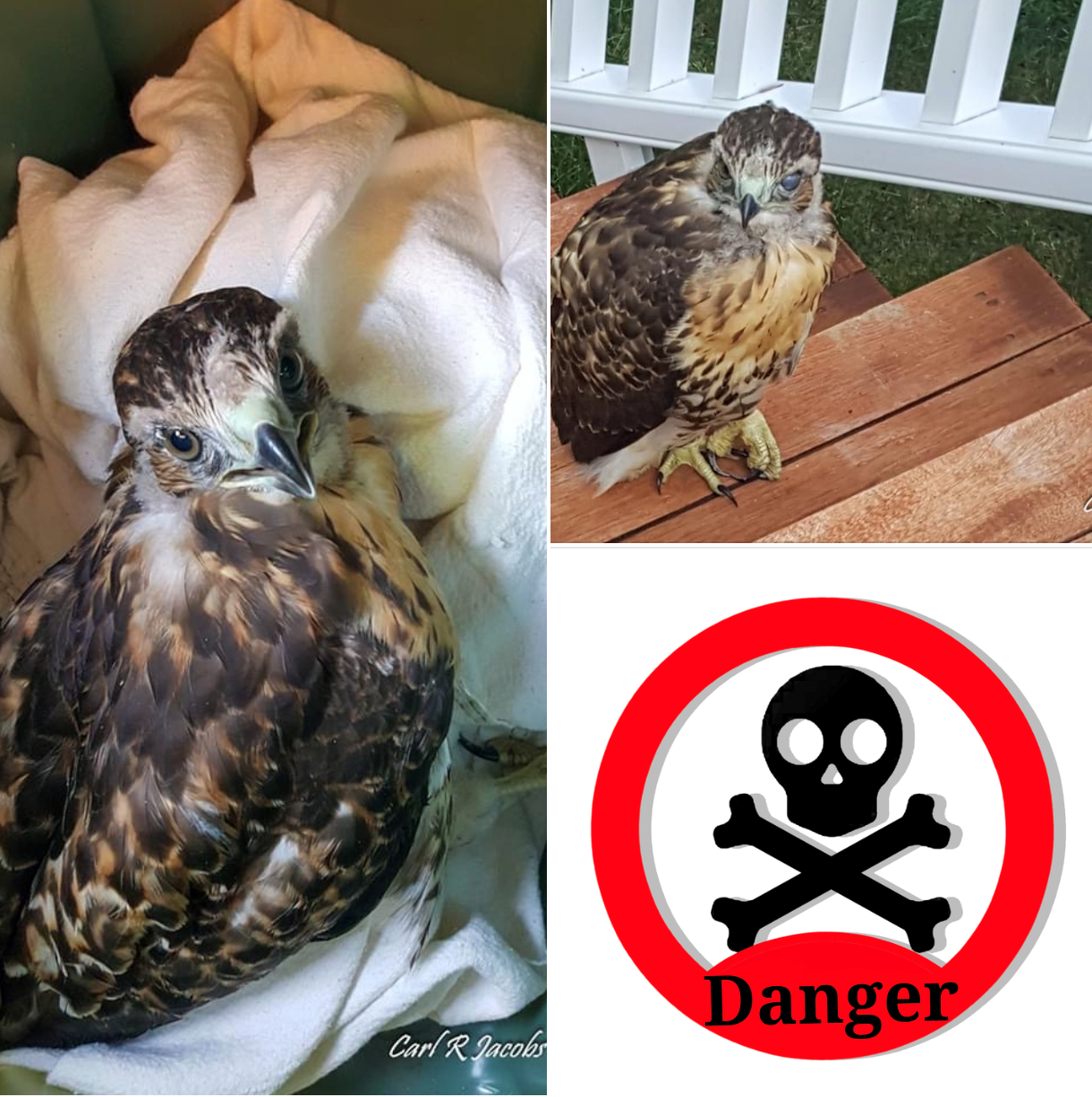
Above: This is a young red-tailed hawk that was found slumped on a deck in Dennis. Contractors nearby noticed the bird was not doing well, and that there were no adult birds around. The hawk was rescued and brought to Wild Care. Upon admission, it was weak, severely anemic, and was hemorrhaging from anticoagulant rodenticide exposure. We began treatment immediately, but this bird did not survive. Photos courtesy Wild Care Cape Cod.
|
Long-Term Solutions:
Controlling and deterring rodents long-term requires a commitment. Poisoning is never a good solution because of the potential secondary effects on children, pets and wildlife, as well as the hazards they pose in our watersheds and environment. Furthermore, the use of poison bait can be considered an attractant for rodents, which often cache food in other locations and will keep coming back for more!
The key to reducing rodent populations long-term requires Integrated Pest Management (IPM). This involves utilizing deterrents, implementing rodent birth control or humane lethal control when necessary, practicing exclusion to prevent rodents from entering dwellings, and eliminating rodent attraction sources. See more here: Wild Care: Humane Rodent Control Solutions.
Our Best Form of Rodent Control:
The irony in all of this is that our birds of prey are some of our best sources of natural rodent control, yet we are killing them with rodent poisons. A family of great horned owls for example can consume over 3,000 mice during a nesting season. A red-tailed hawk can consume more than 1,000 rodents per year. With most bird populations in decline due to loss of habitat, climate change, vehicle strikes and other anthropogenic causes, they do not need further setbacks. Reducing and eliminating the use of anticoagulant rodenticides will alleviate pressure on birds of prey populations and allow them to do their job.
Less poison, more raptors! |
|
|
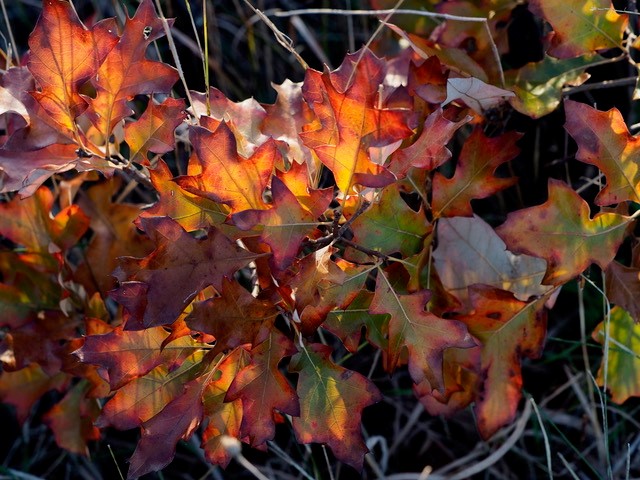
Leave the Leaves! by Justin Wheeler, Scott Hoffman Black, Deborah Seiler, The Xerces Society Leaves are habitat, not trash. One of the most valuable things you can do to support pollinators and other invertebrates is to provide them with the shelter they need to survive the winter. Thankfully, that’s pretty easy; all you need to do is do less yard work.
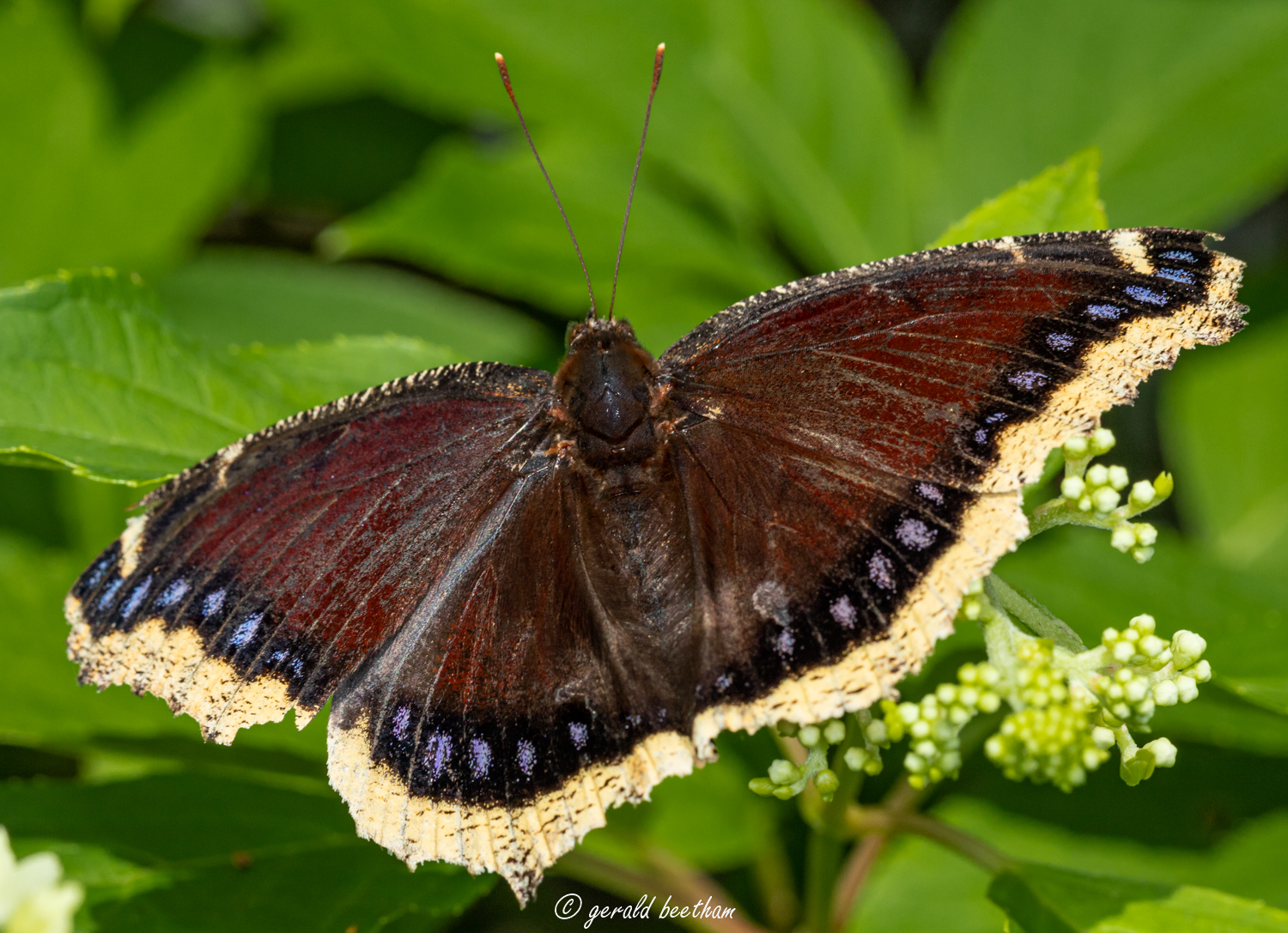
Leaves, brush piles, fallen logs, plant stems, and flower heads might not be growing anymore, but they aren’t trash—they are natural homes for wildlife! A layer of leaves is vital insulation from the cold for the many animals that hide within (or in the soil beneath), like quite a few butterflies. Others, like many native bees, nest within stems, flower heads, or pieces of wood. Throwing out all of your leaves and other plant material isn’t just taking away options for shelter; there’s a good chance you’re tossing out many animals that have already settled in!
That’s why this year and every year, we are making the case for leaving the leaves. That’s not to say you can’t do any tidying up. We have tips for thoughtful autumn cleanup that still leaves space for nature. You’ll also meet just a few of the many animals you’ll be saving. Read on!
|
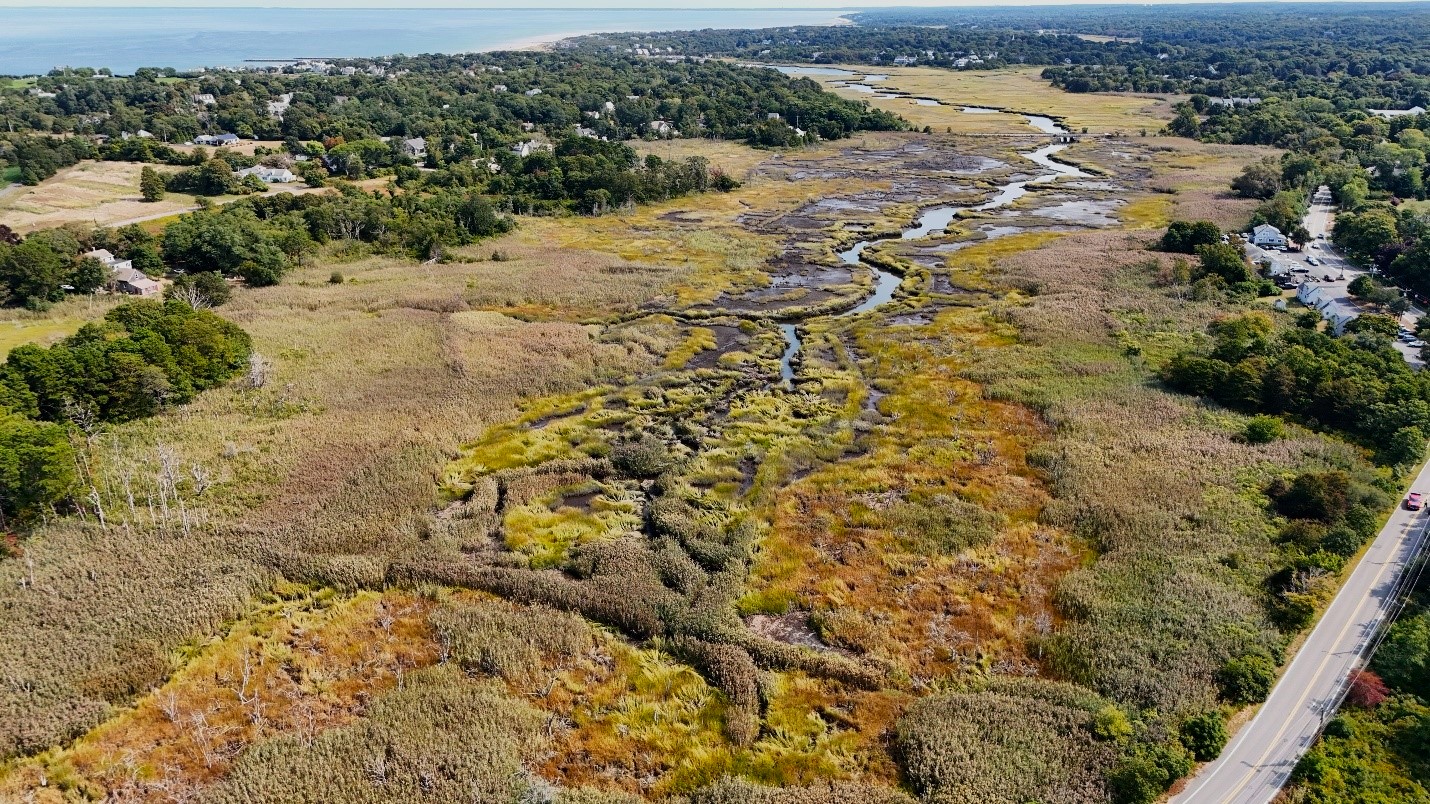
APCC Request for Proposals for Sesuit Creek Marsh Planting Project APCC is seeking experienced and qualified consultant(s) and/or engineering firm(s) to plant marsh vegetation at Sesuit Creek Marsh in Dennis, MA. The purpose of this project is to support ongoing restoration efforts at Sesuit Creek and improve vegetation recovery throughout the marsh.
The Sesuit Creek salt marsh restoration project is located at the Bridge Street crossing of Sesuit Creek in Dennis, MA. Between the 1950s and 2008, Bridge Street blocked tidal flow to the upstream parts of the marsh, leading to the spread of the invasive Phragmites reeds. In 2008, the undersized culvert at Bridge Street was replaced with two, larger box culverts. This project was completed by the town of Dennis and many partners and funders, including the Association to Preserve Cape Cod.
Vegetation monitoring from before and after restoration showed the site was on a positive trajectory for recovery, however, the site has been slow to fill in with salt marsh vegetation with some persistent bare areas in the restored marsh. With funding from the Massachusetts Division of Ecological Restoration and the Cape Cod Conservation District, APCC has been monitoring the site to support plans and measures to improve the condition of this restored marsh.
In 2016 and 2017, APCC partnered with scientists from the University of New Hampshire to further study the marsh condition and make recommendations to continue to improve recovery. Based on the recommendations from this study, APCC completed a pilot planting of salt marsh vegetation in the upstream restored marsh in 2018, and monitoring of these plantings from 2018-2024 has shown positive results and potential for even more successful recovery with additional plantings.
APCC is excited to continue this important work at Sesuit Creek!
The proposed next phase of work to complete this additional planting is from December of 2024 through November of 2025. Proposals from qualified consultants are due no later than 4:00 p.m. on Tuesday, November 26, 2024. Bidders can submit questions regarding this proposal to APCC up to 4:00 p.m. on Thursday, November 14, 2024; APCC will respond to questions from bidders by 4:00 p.m. on Monday, November 18, 2024. Questions should be directed to procurement@apcc.org.
Visit the APCC website at https://apcc.org/employment/ for Request for Proposals and supplemental materials.
|
|
|
A Cape-wide Conservation Event Calendar |
The first-of-its-kind calendar highlights regional nature programs |
|
|
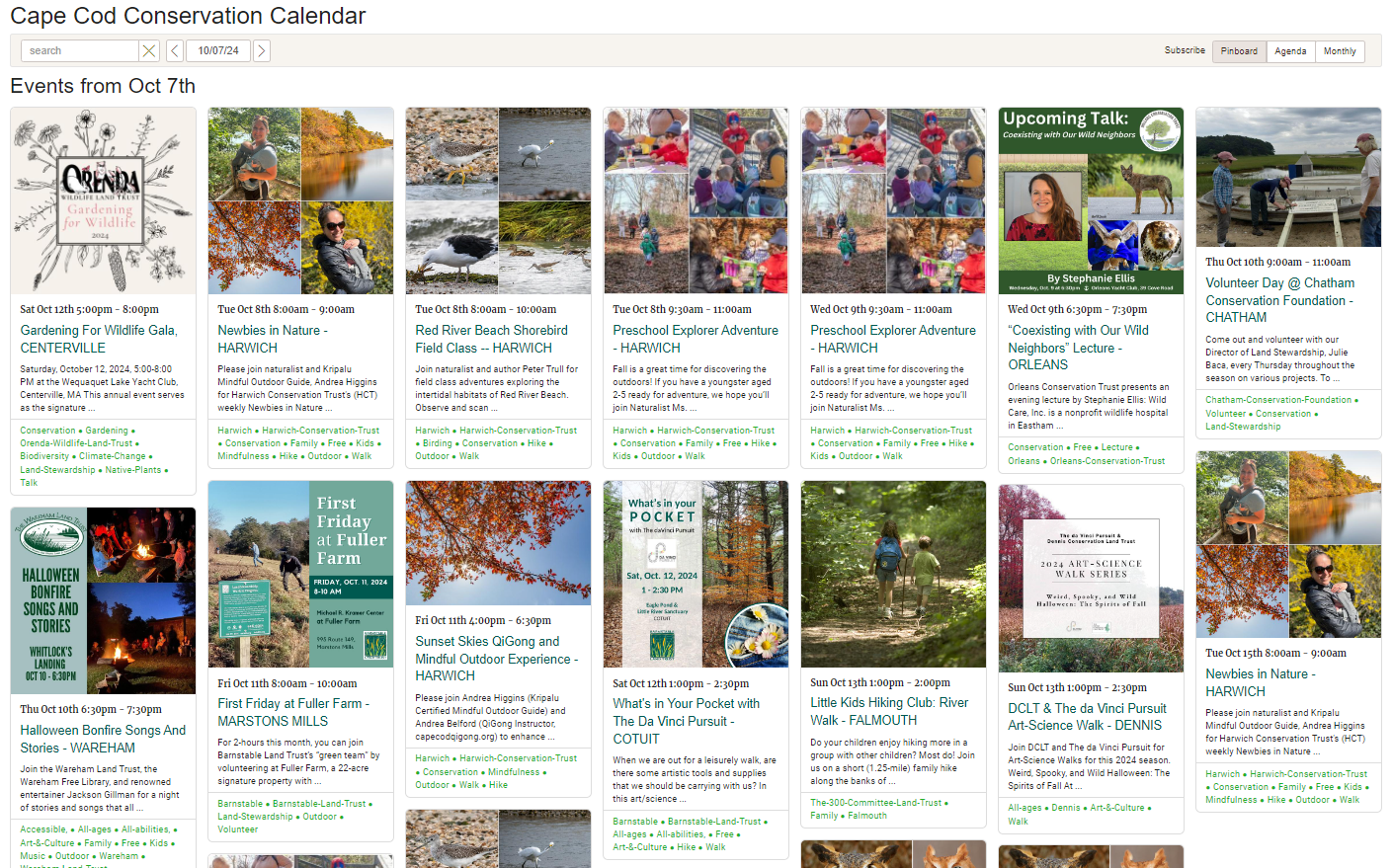
The Compact of Cape Cod Conservation Trusts (“the Compact”) and its nonprofit members are excited to launch a new regional calendar of events. The Conservation Calendar includes programs across Cape Cod hosted by these groups. The goal of the calendar is to encourage visitors and residents to take part in nature and environmental events.
Powered by the “Communications Cohort,” an informal group of dedicated community outreach volunteers and professional staff co-led by the Barnstable Land Trust and APCC, this initiative illustrates the powerful impact of nonprofit collaborations. Events can be sorted by date, town, organization, and type and is constantly being updated. |
A Cape Cod Native Plant-selector
~ to help you choose the perfect native plants for your garden. |
|
|
Email membership@apcc.org and we'll send you a CapeCodNativePlants.org decal. |
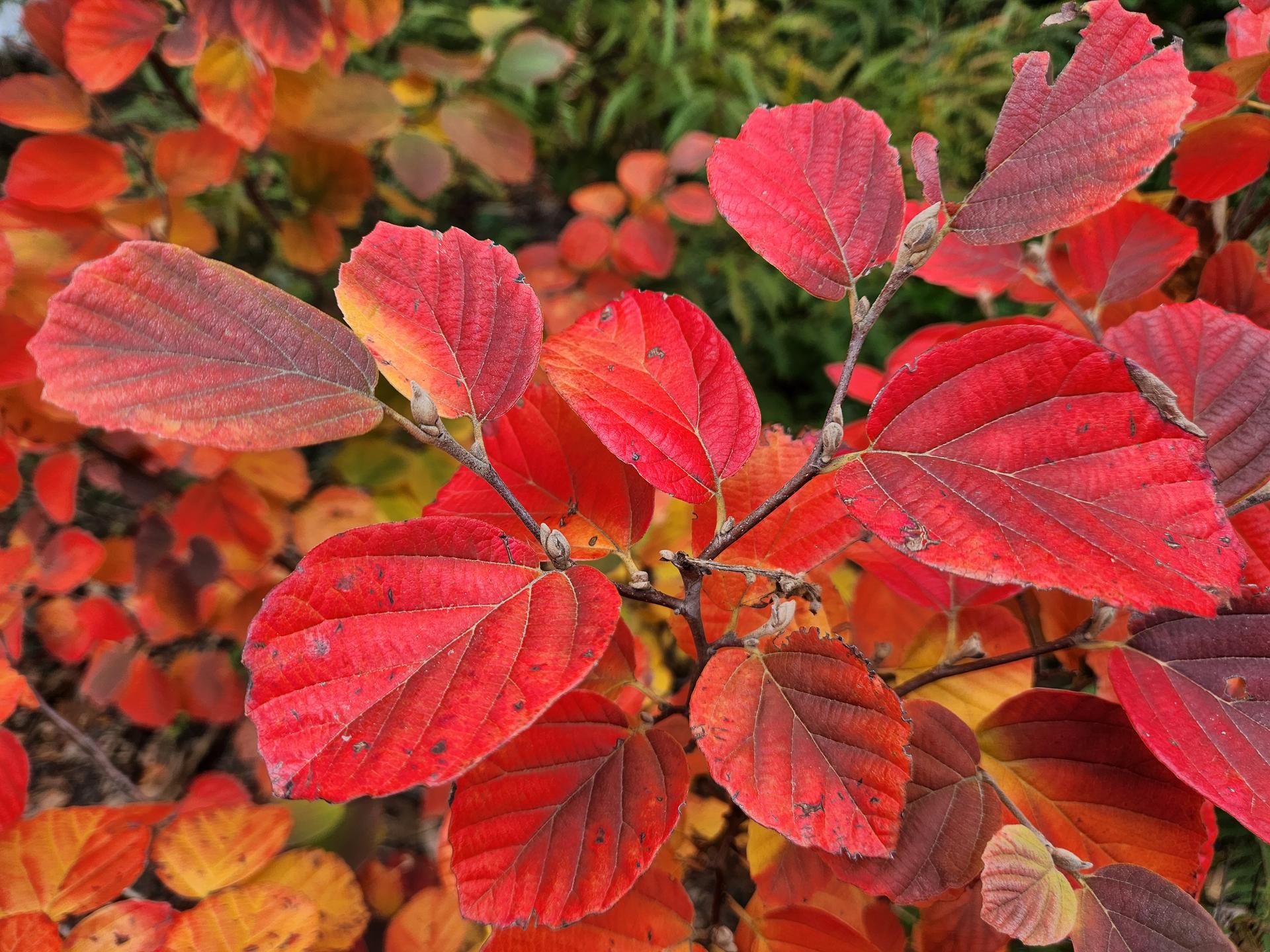
| Dwarf Witch Alder Fothergilla gardenii
|
|
|
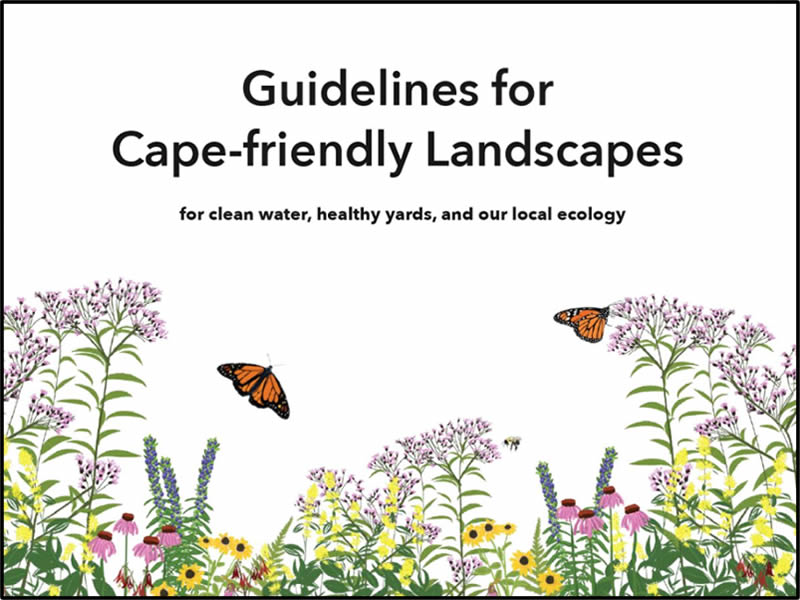
Guidelines for Cape-friendly Landscapes - an APCC publication |
The Guidelines gives homeowners steps they can take in the design and maintenance of their properties that will support pollinators and birds, manage stormwater, conserve water, and protect the Cape's water quality. This 40-page booklet is beautifully illustrated by Marcy Ford with content that is easily digestible and supported by numerous resources for additional learning.
|
Thank you for this important book! Hopefully everyone of us with a yard will read it and put it to use! - Vicky Titcomb of Titcomb Bookshop |
We've enjoyed creating it and hope it will help you with ideas to help you steward your piece of Cape Cod and maybe foster an environmental ethic in the decisions we all make in our own managed landscapes. Get your copy here—and maybe one for a friend?
|
We are grateful for the several retail shops that are partnering with us to make this publication more widely available: Brewster Book Store, Birdwatchers General Store, Crocker Nurseries, Wellfleet Audubon Wildlife Sanctuary, Cape Abilities Farm, Cape Cod Museum of Natural History, the Cape Cod Lavender Farm, Heritage Museums and Gardens, Titcomb's Bookshop, Sea Howl Bookshop, Soares Flower Garden Nursery, and Eight Cousins Bookshop.
If you are a retailer and would like to sell this publication at your store, please contact us. |
|
|
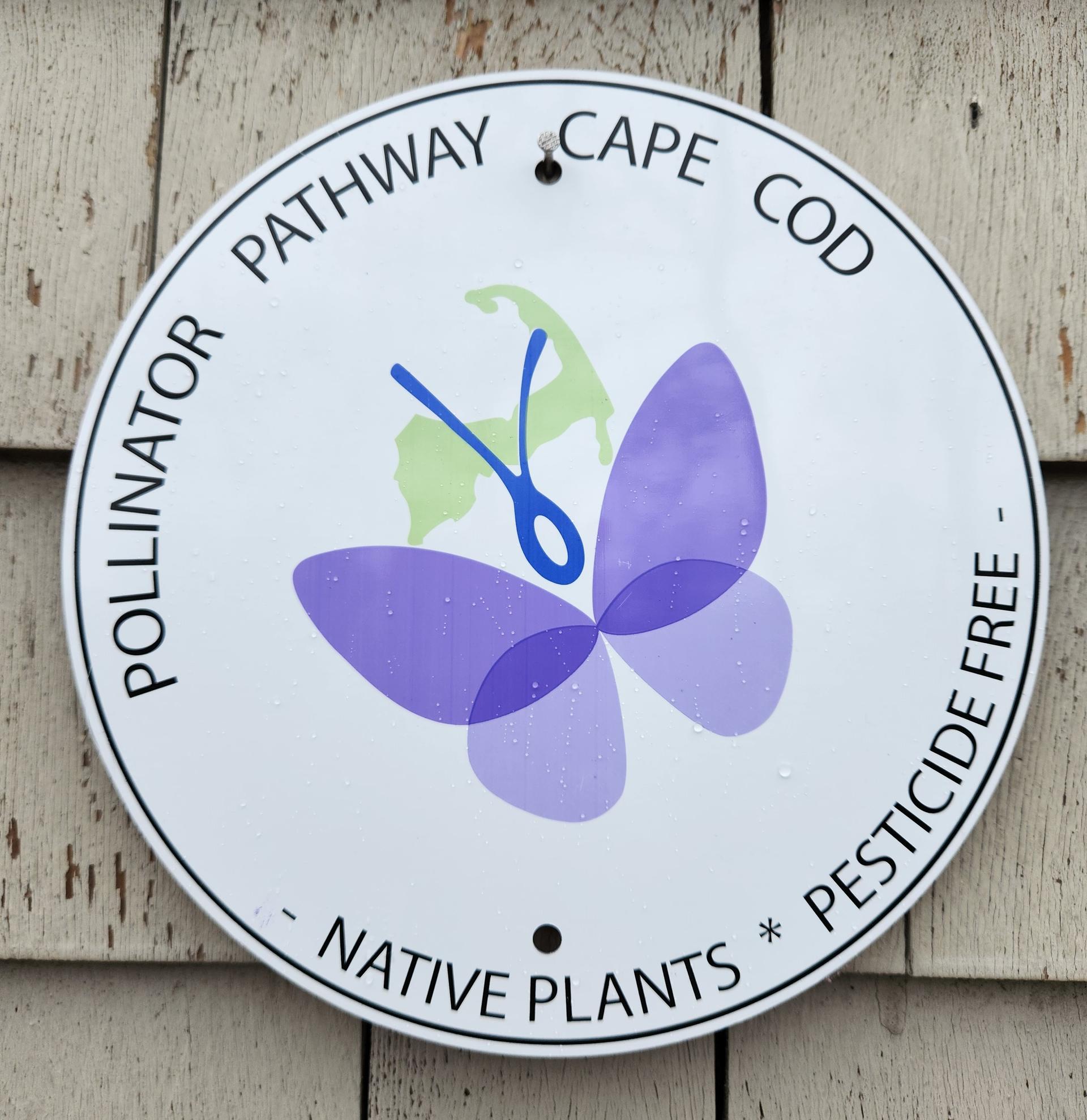
The Pollinator Pathway Cape Cod is a group of organizations promoting native plants and pollinator-friendly land care practices to create a boat load of safe oases for our native bees, butterflies and a whole host of other pollinators that are crucial to the health of our ecosystems.
Join us! It's easy. There are no fees. You just need to pledge to ADD native plants, SUBTRACT a little lawn, AVOID yard chemicals, especially pesticides, and LEAVE the leaves. And, help us spread the word. Please get on the map to show your support of pollinators on Cape Cod!
You can purchase the 9-inch aluminum Pollinator Pathway Cape Cod sign at Hyannis Country Garden, Crocker Nurseries, Brewster Book Store, Orleans Conservation Trust, and
Cape Abilities Farm. If you are a retailer, and you would like to sell the signs, you can order online here, or email pollinators@apcc.org. |
|
|
|
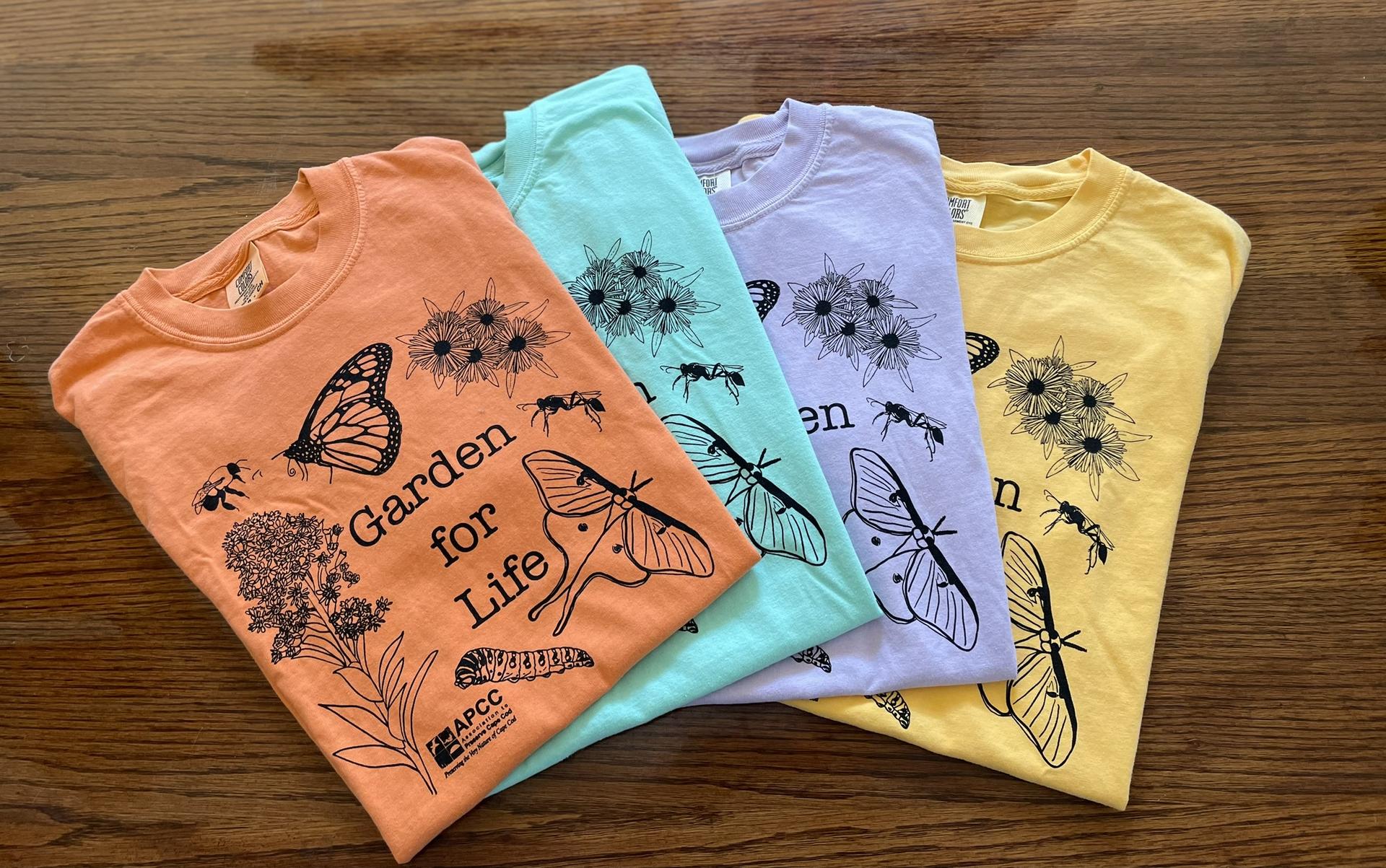
Available for online purchase: APCC caps $25 includes shipping & handling +++++++++++++++++ Garden for Life T's $30 including shipping & handling Click here
for more information and to order. This is just one great way to show your support for APCC's work. |
|
|
|
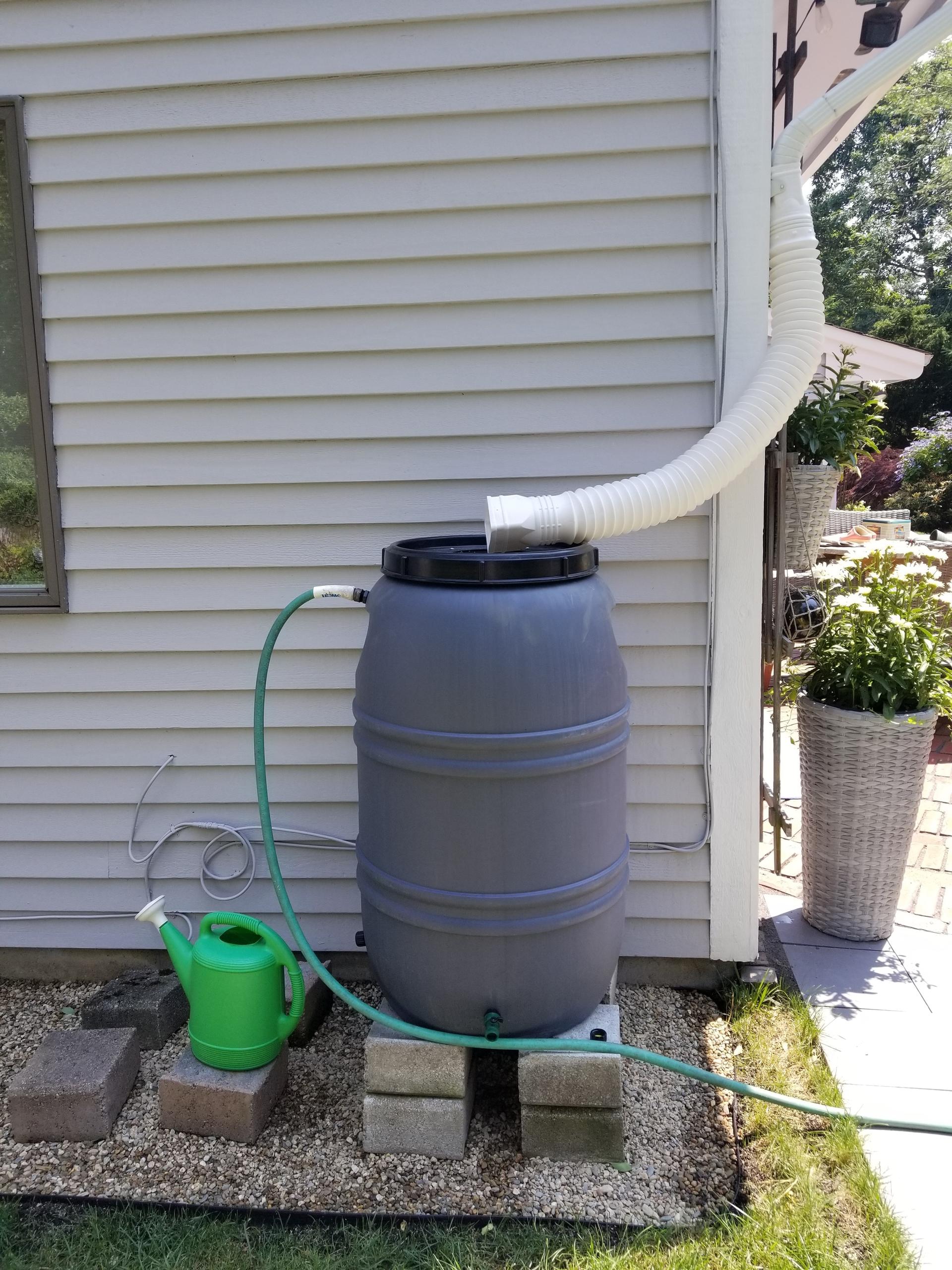
Rain Barrels for Cape Cod Order online from Upcycle Products
$122 each includes FedEx shipping to your door
55 gallon, repurposed food barrels Keep a barrel out of a landfill, and capture some free rainwater.
APCC receives a portion of the proceeds. For more information, click here. |
|
|
| APCC eNewsletters.
Our weekly newsletters are archived on our website and easily shared.
You can find past newsletters and share with your friends. Encourage others to sign up for future enewsletters HERE.
|
|
|
Are you thinking of going solar? We hope so!
In partnership with E2 SOLAR in Dennis, APCC receives $500 for every solar installation when APCC is named as referral. |
|
|
|
Thank you to the homeowners who just contracted to install solar panels through E2 Solar. May the sun always shine for you! |
|
|
Expressions Gallery, 578 Main Street, Chatham
CLICK HERE |
Expressions Gallery donates 20 percent of its profits to APCC's work. |
|
|
Thank you to our business sponsors! |
|
|
APCC is rated four stars by Charity Navigator and 2023 Platinum by Candid (formerly Guidestar). |
|
|
Our Contact Information
*{{Organization Name}}*
*{{Organization Address}}*
*{{Organization Phone}}*
*{{Organization Website}}*
*{{Unsubscribe}}* |
| |
|
|