Association to Preserve Cape Cod |
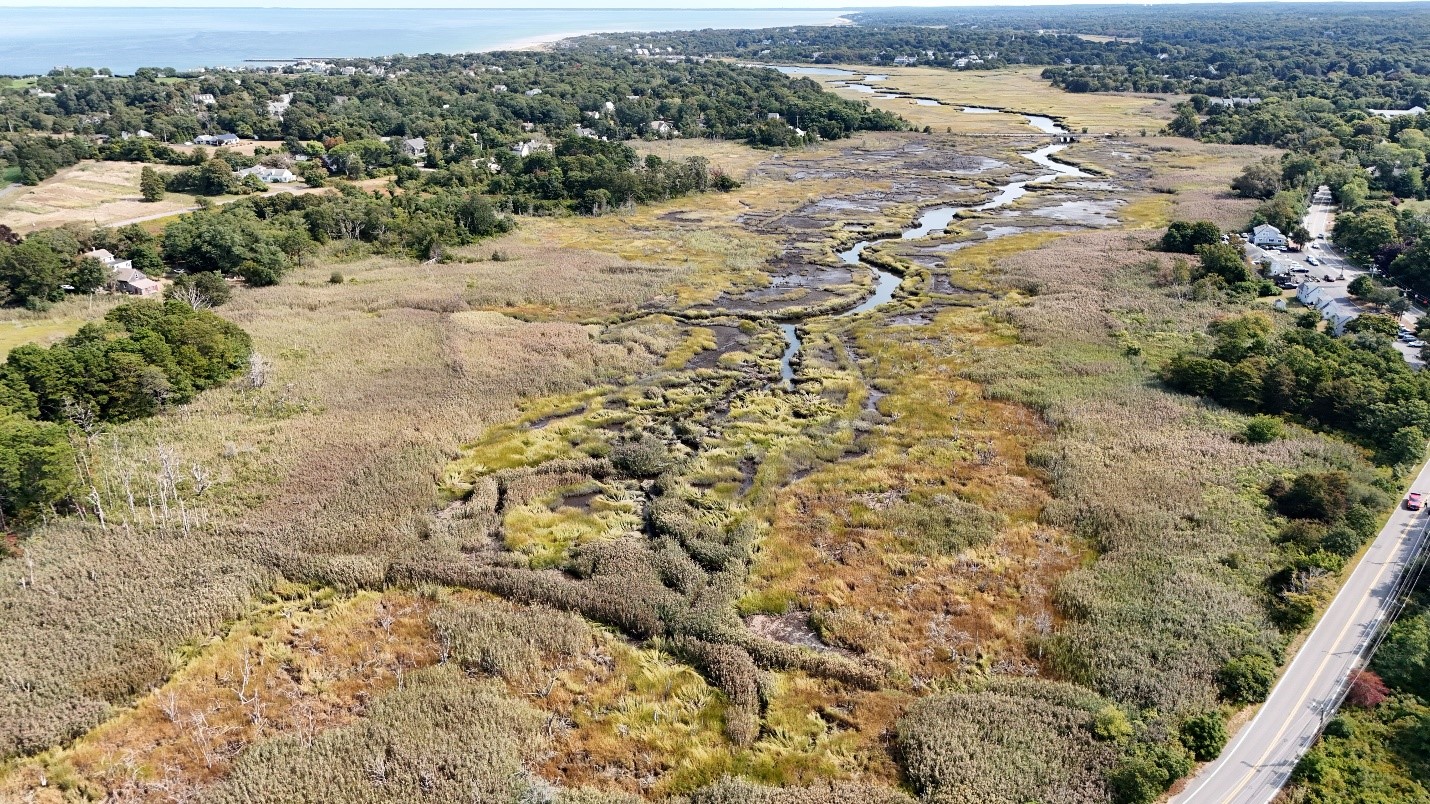
Hatches Harbor. Photo by Sue Machie |
|
|
| Our Promise by Andrew Gottlieb, APCC Executive Director |
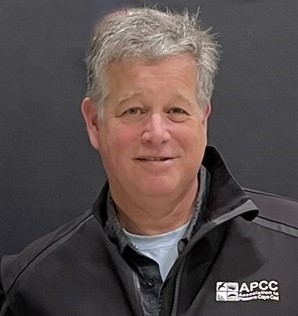
The sun came up this morning. That was about the only thing I was certain would happen this Wednesday morning when I sat down to write this piece on Monday. We are all waking up to a country profoundly, and perhaps forever, changed. What does it all mean? Frankly I have no idea. |
|
|
Faced with palpable uncertainty and anxiety, I think it's commonplace to look for something stable to hold onto. In the hope that APCC can give you one such thing as you navigate your post-election emotions, this is our promise to our members. No matter what the election results, APCC is more ready than ever to stand up for the Cape’s environment. We are stronger than ever, but most importantly, we represent and reflect the sentiment of our members who understand how environmental protection is essential to the way of life of Cape Cod.
Regardless of the state of national affairs, certain things are immutable. APCC is unwavering on our need to protect the Cape’s drinking water, to restore and protect our ponds and bays, to maintain natural open spaces, to heal impaired wetland resources, and equip people to live here more harmoniously with our environment. APCC is committed to preventing the abuse of our remaining natural resources as a dumping ground for waste. APCC is prepared to fight for smarter development rules and land use polices to prevent a repetition of the housing development mistakes that have caused both our ecological and housing affordability problems.
We can only control what we do. APCC will work for Cape Cod. I hope that makes you feel a little better. |
APCC Ecosystem Restoration Program |
Above: Aerial of Sesuit Creek |
APCC Request for Proposals for Sesuit Creek Marsh Planting Project APCC is seeking experienced and qualified consultant(s) and/or engineering firm(s) to plant marsh vegetation at Sesuit Creek Marsh in Dennis, MA. The purpose of this project is to support ongoing marsh restoration by enhancing vegetation recovery following tidal restoration in 2008. This project includes the development of a comprehensive planting plan, permitting with the local Conservation Commission, implementation of the planting plan, and post-planting site assessment and monitoring.
The project period is December of 2024 through November of 2025. Proposals are due no later than 4:00 p.m. on Tuesday, November 26, 2024. Bidders will be able to submit questions regarding this proposal to APCC by 4:00 p.m. on Thursday, November 14, 2024; APCC will respond to questions from bidders by 4:00 p.m. on Monday, November 18, 2024. Questions should be directed to procurement@apcc.org.
The full RFP can be downloaded here. Supplemental information regarding past planting work at Sesuit Creek can be found here: Addendum A and Addendum B.
|
Above: Sesuit Creek, photo by Gerald Beetham |
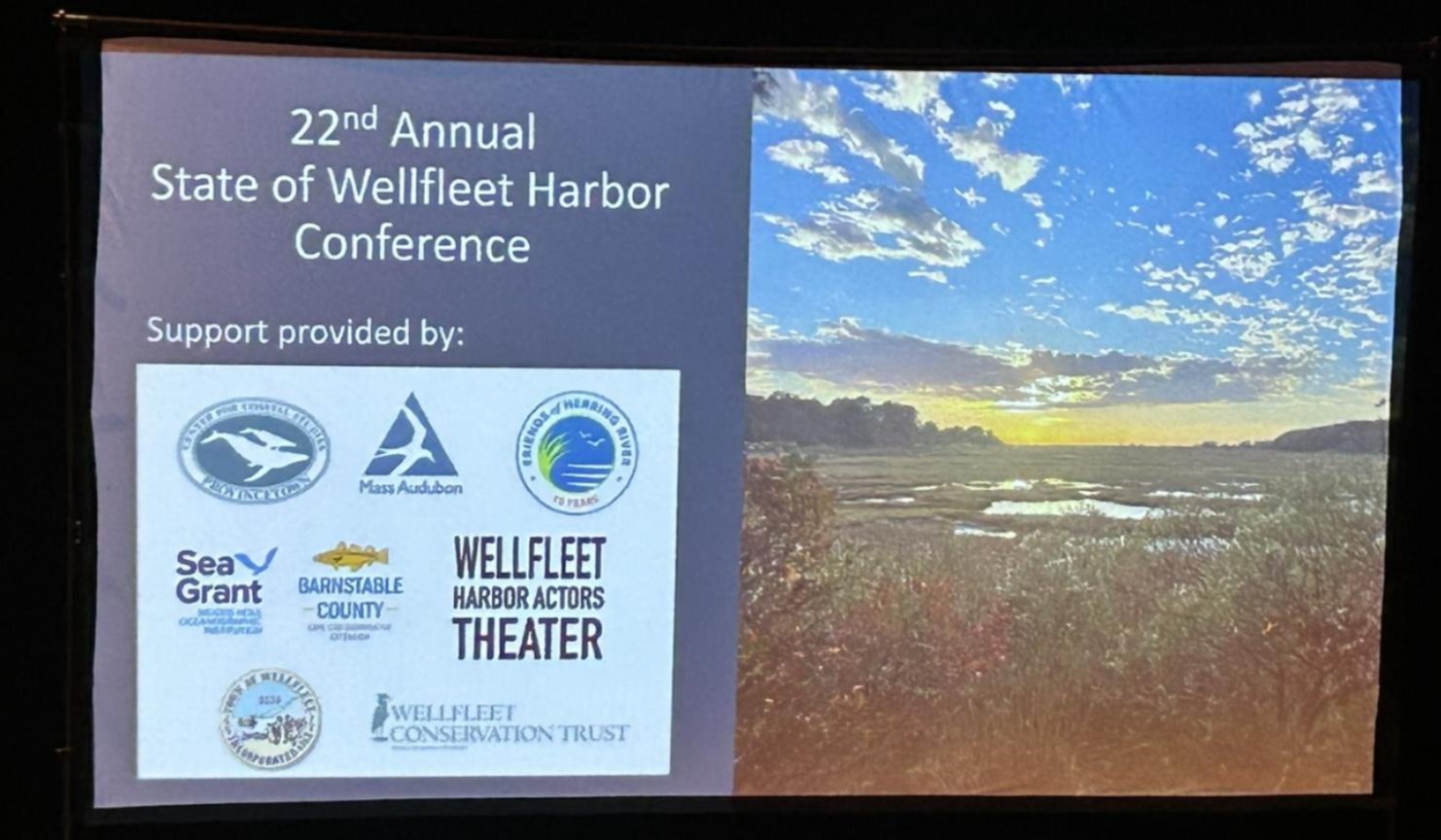
APCC staff attended the 22nd Annual State of Wellfleet Harbor Conference held at the Wellfleet Harbor Actors Theater (WHAT) on November 2, 2024. Presenters were affiliated with a wide range of organizations conducting scientific research in Wellfleet Harbor, including Mass Audubon, Center for Coastal Studies, Cape Cod National Seashore, Friends of Herring River, New England Coastal Wildlife Alliance (NECWA), the International Fund for Animal Welfare (IFAW), and the Tufts University School of Veterinary Medicine.
The conference series was touted as a unique opportunity for the public to hear about scientific work and findings—straight from the researchers, with presentations of critical stories about the coastal habitats—and without getting bogged down in unfamiliar jargon! APCC offers a “job well done” to the conference planning committee. |
|
|
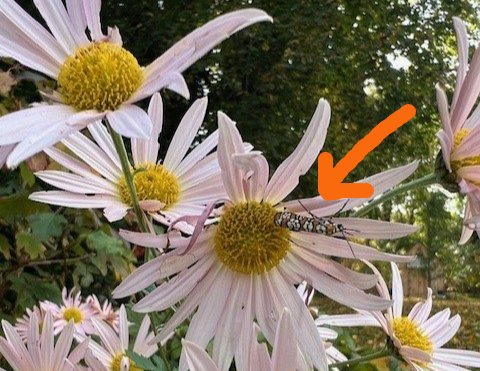
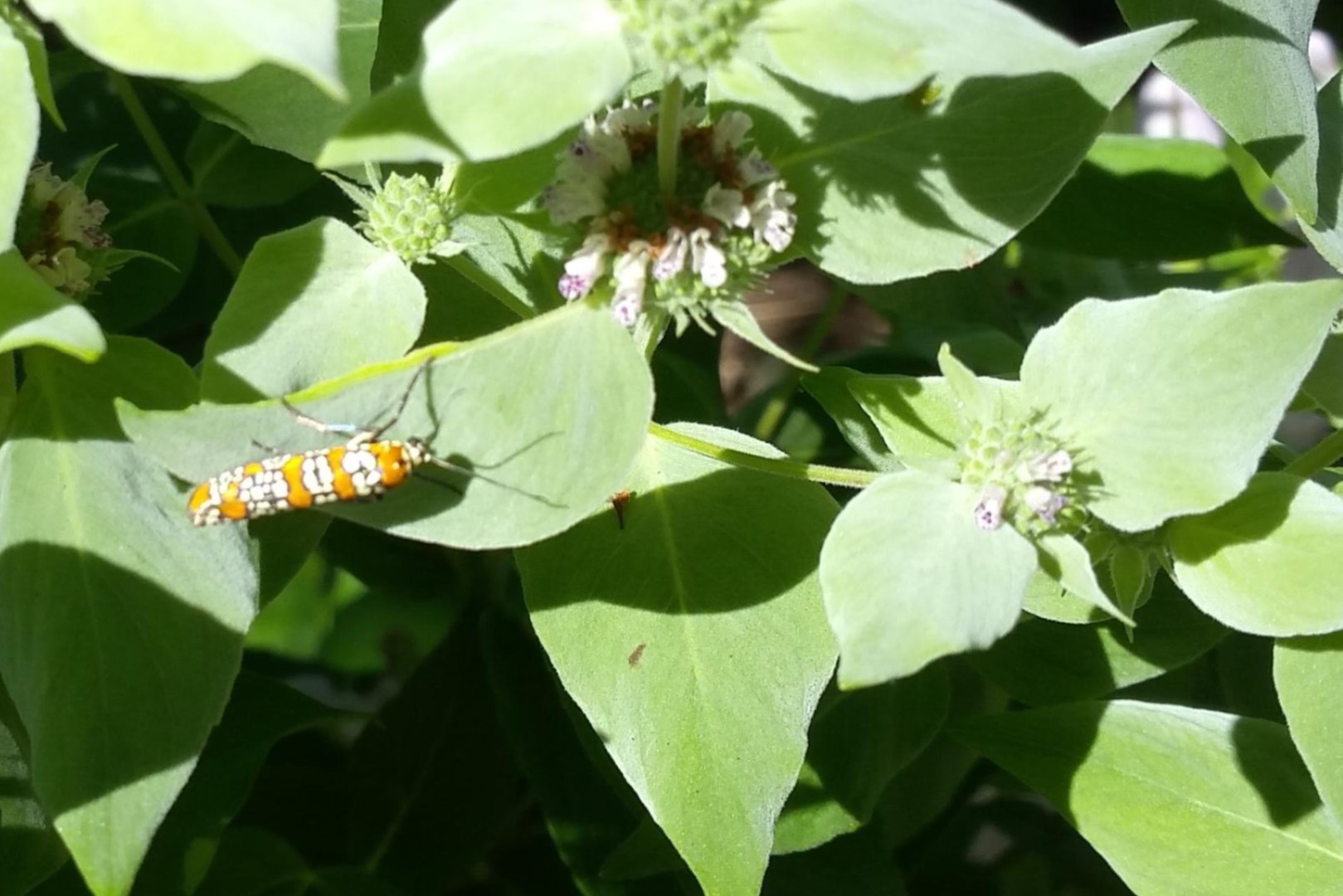
| What is this cool looking insect? It looks like...well, how would you describe its coloration? Maybe a stained glass design? Or maybe it reminds you of your 1970s bellbottoms? :D And what kind of insect is it: a beetle, or something else? It's a moth. Specifically, this is an ailanthus webworm (Atteva aurea). |
|
|
The ailanthus webworm moth is here because its host plant is the tree of heaven (Ailanthus altissima)—a tree that is anything BUT heavenly. Both came from China and the tree is considered an exotic harmful invasive plant as it heavily seeds, has aggressive roots, and resprouts. While this webworm feeds on the tree of heaven, it's not enough of a biological control to keep this tree's populations in check and it can run rampant where established.
We at APCC speak from experience as this tree is along the property line of our headquarters and we continually have to weed out the seedlings. There is an enormous seed bank that has accumulated over the years where the seeds fall onto our landscape. Besides being a heavy seeder, it is allelopathic, which means it exudes a growth inhibitor into the soil to minimize competition by other plants. With both of these attributes, tree of heaven (TOH) can squeeze out native plants in natural communities, and be a significant nuisance in your landscape.
Tree of heaven has the nickname "stinky sumac" because it resembles our native sumac and has a disagreeable odor when handled. If you are unable to identify our native sumac from a TOH, one touch and sniff of the leaves of a TOH and its identity will be revealed to you. |
|
|
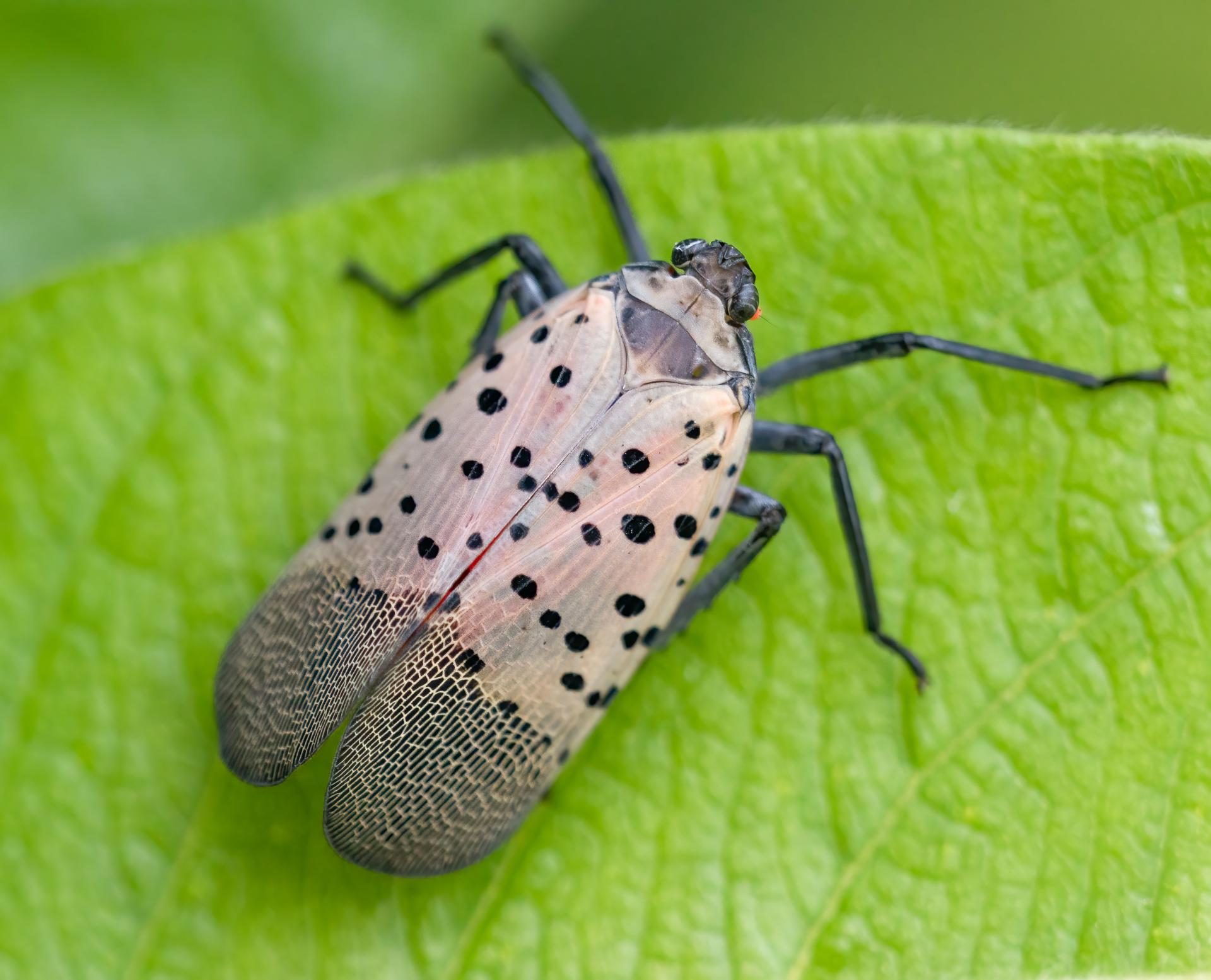
| Spotted lanternfly. Photo credit: Rhododendrites, CC BY-SA 4.0 <https://creativecommons.org/licenses/by-sa/4.0>, via Wikimedia Commons |
|
|
Another insect that came from China is the spotted lanternfly (SLF). TOH is its preferred host plant and therefore the tree has helped to advance the spread of this ravenous insect throughout the mid-Atlantic states and north through Pennsylvania. Besides its fellow invasive host, it readily feeds on and damages many species of native and fruit-bearing trees.
If you have tree of heaven, pull it out and/or cut it down. But first, make certain you properly identify it. Remember, it has a distinct disagreeable odor when handled. (Our native sumacs are an important genus to keep in our landscapes.) |
Spotlight on a Cyanobacteria Monitoring Program Partner ~ Friends of Chatham Waterways |
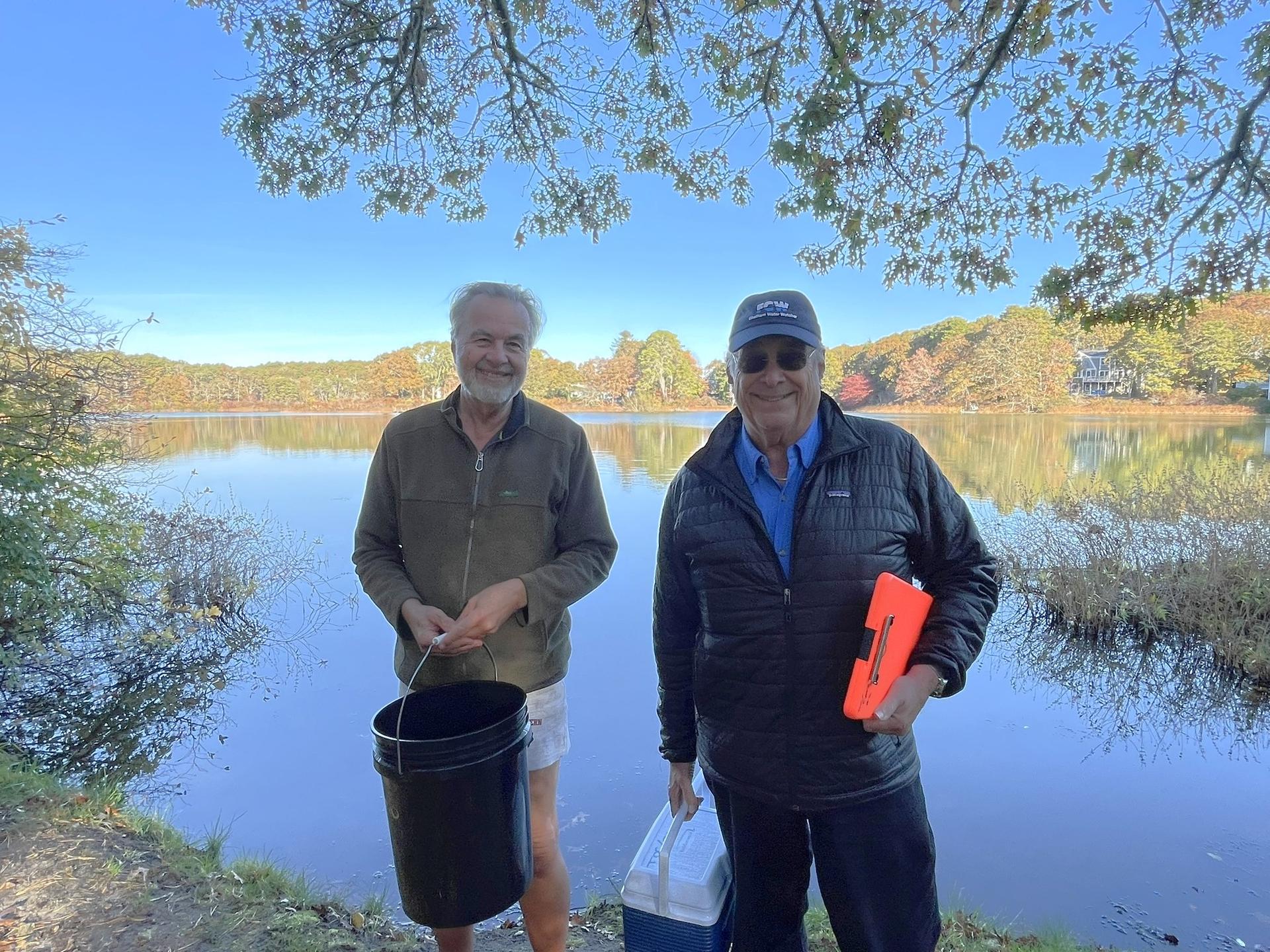
Above left to right: Charlie Worrick and Sarge Slicer |
Friends of Chatham Waterways (FCW) was established as a nonprofit in 1983, committed to the protection, wise use and enjoyment of Chatham's fresh and salt waterways and adjoining lands. Our purpose is to serve as an informational resource regarding the condition, development, preservation and enhancement of our waterways and adjoining lands, and to take action on these issues.
We are stewards of Chatham's water resources, including both freshwater ponds, our tidal estuaries, wetlands, harbors, and groundwater aquifer. We believe these natural resources are fundamental to the town's heritage, providing recreational and commercial opportunities, while adding to its environmental and economic health. The primary interest of FCW is ensuring that the management of Chatham waterways is accomplished in ways that are compatible with the conservation of the community's natural resources and the character of the area. Our freshwater pond program is one of our initiatives.
This was our seventh year collaborating with the town of Chatham and APCC on a cyanobacteria monitoring program. To date, we engage and train 14 volunteers each year for this program to monitor five ponds: Goose, White, Stillwater, Schoolhouse, and Lovers Lake. We recognize that our freshwater ponds are valuable ecosystems and we endeavor to bring the public's greater appreciation and protection of them.
FCW engages in the cyanobacteria monitoring program to bring public awareness to cyanobacteria blooms that may be a health threat to dogs and people who recreate in the ponds. Our program with APCC ensures town officials are informed of these potentially toxic blooms. The program also is a way to engage residents as volunteers and encourage their advocacy for caring for our many ponds. For more information: ChathamWaterways.org |
|
|
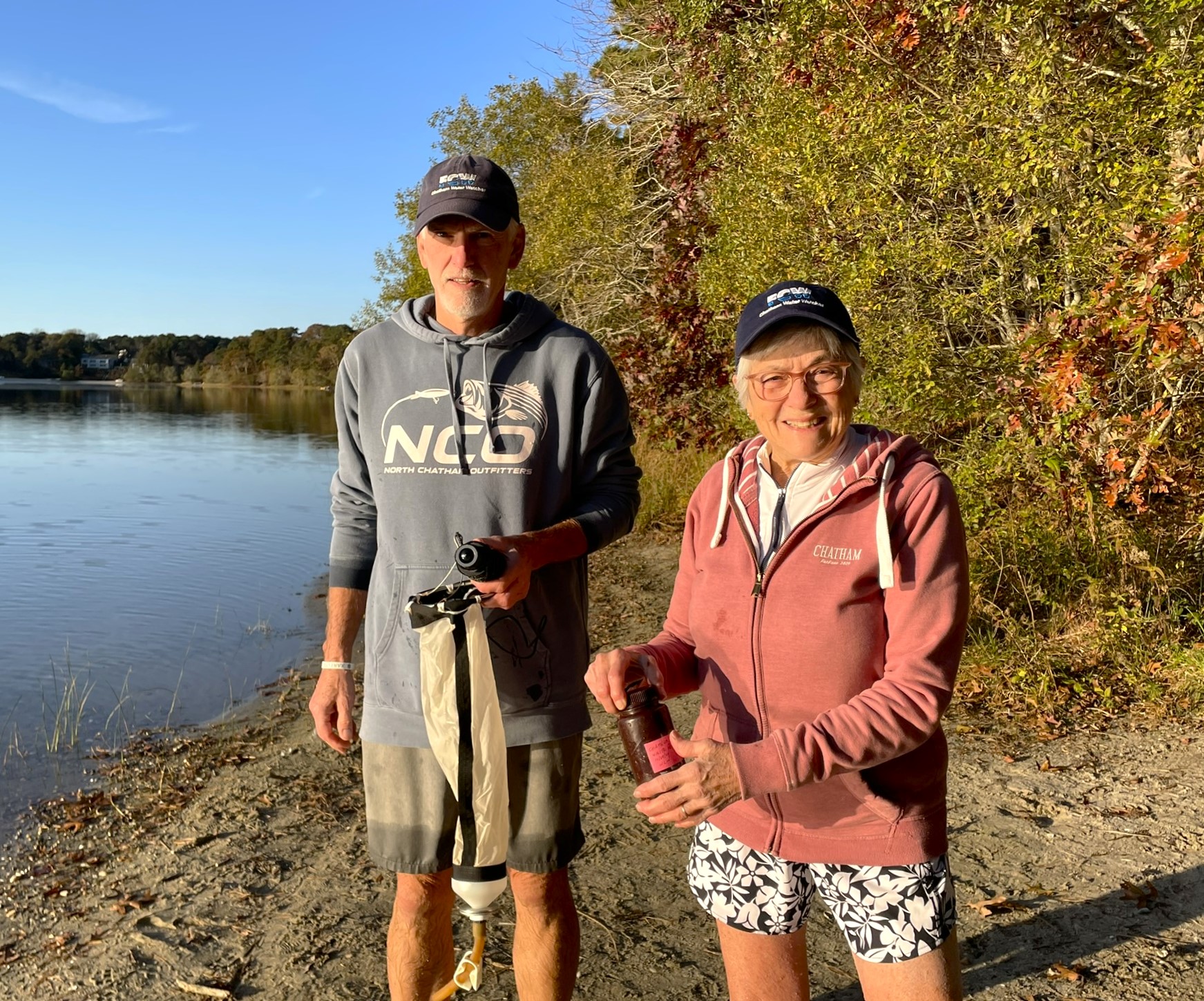
Above: Dave Potts (left) and Arlene Wyman Petri (right) |
APCC's 2024 Cyanobacteria Monitoring Program season wraps up this week. Results are displayed on the interactive map. For any information on Brewster ponds, email info@brewsterponds.org.
|
|
|
A Cape-wide Conservation Event Calendar |
The first-of-its-kind calendar highlights regional nature programs |
|
|
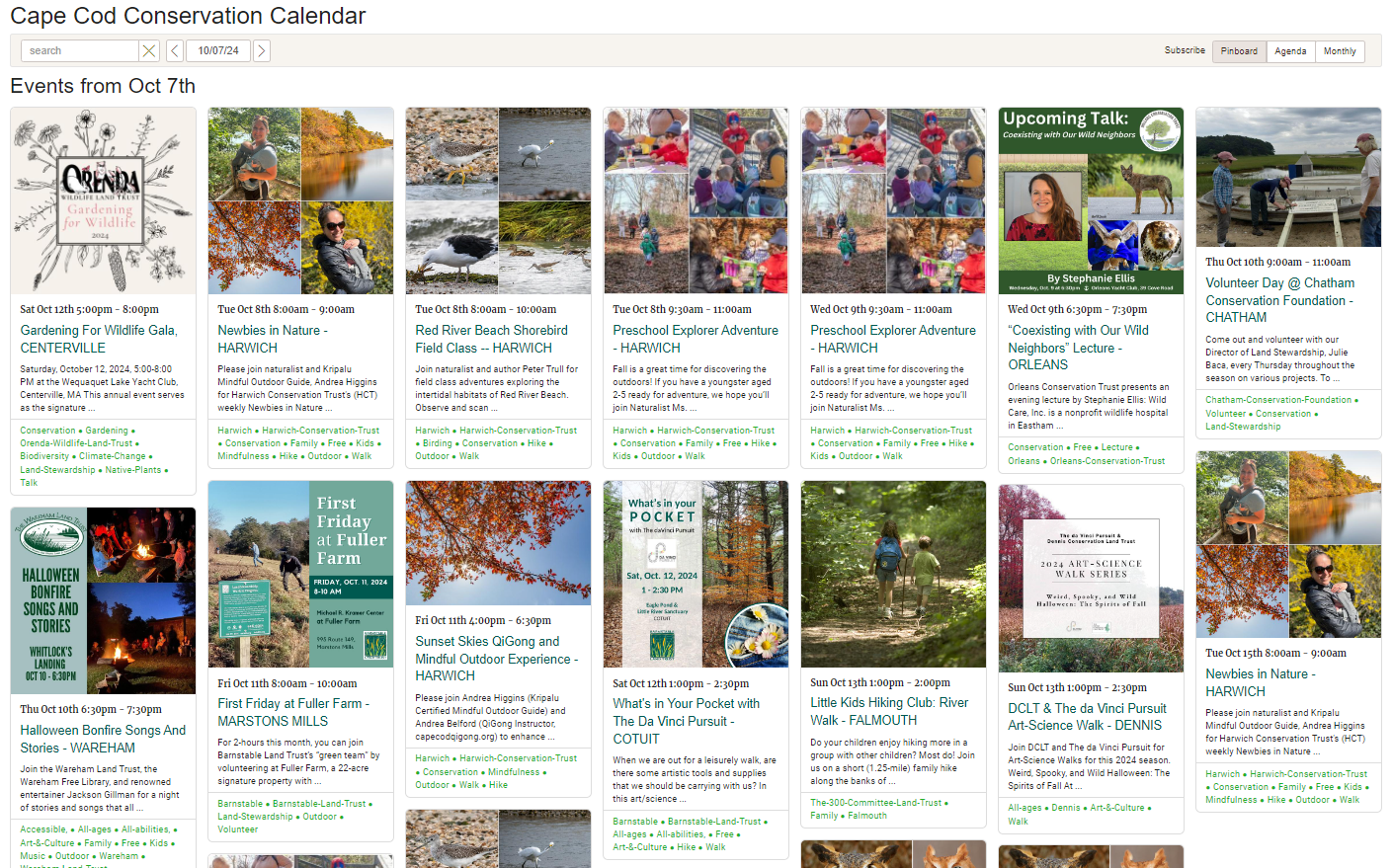
The Compact of Cape Cod Conservation Trusts (“the Compact”) and its nonprofit members are excited to launch a new regional calendar of events. The Conservation Calendar includes programs across Cape Cod hosted by these groups. The goal of the calendar is to encourage visitors and residents to take part in nature and environmental events.
Powered by the “Communications Cohort,” an informal group of dedicated community outreach volunteers and professional staff co-led by the Barnstable Land Trust and APCC, this initiative illustrates the powerful impact of nonprofit collaborations. Events can be sorted by date, town, organization, and type and is constantly being updated. |
A Cape Cod Native Plant-selector
~ to help you choose the perfect native plants for your garden. |
|
|
Email membership@apcc.org and we'll send you a CapeCodNativePlants.org decal. |
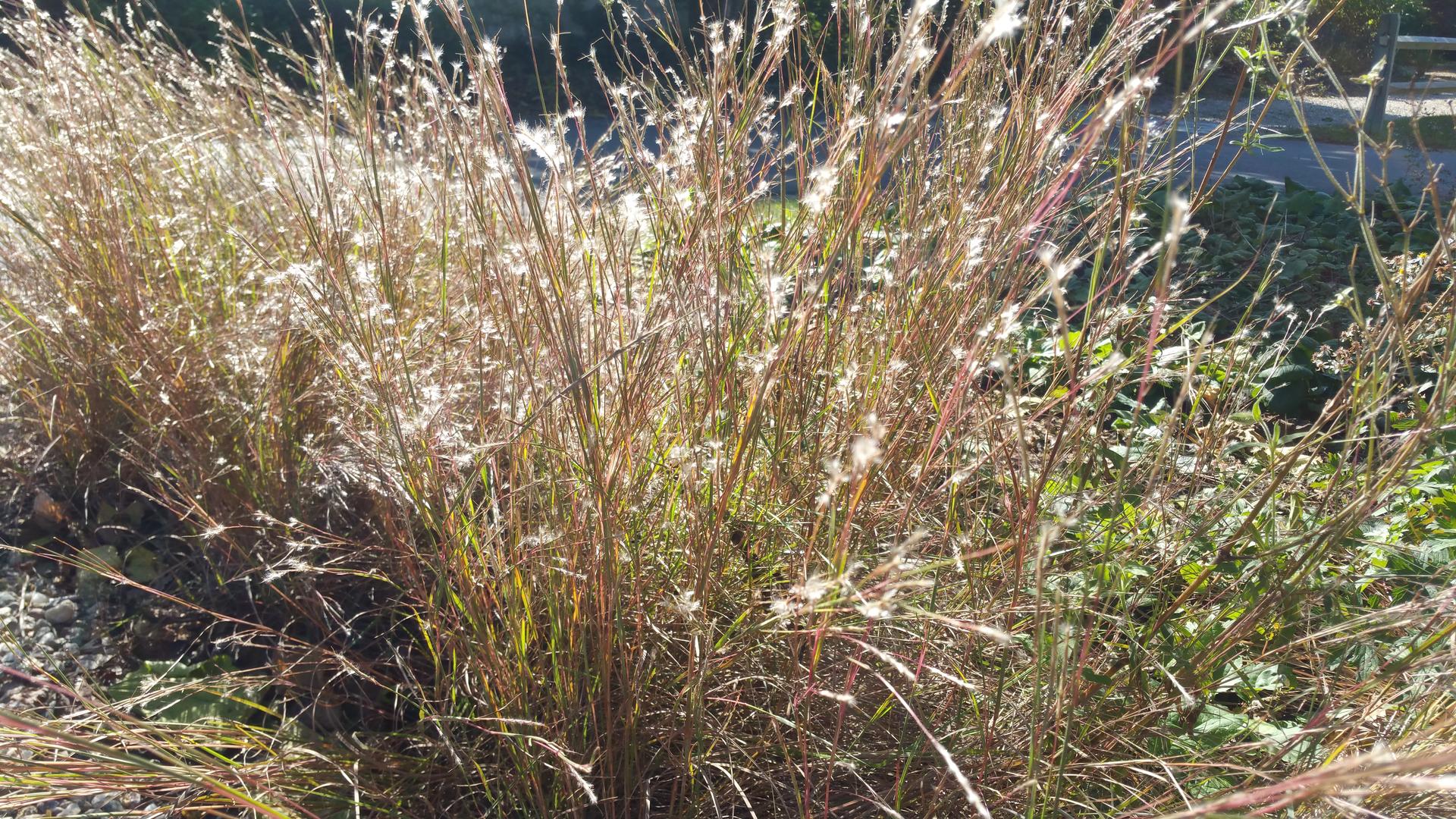
| Little Bluestem
Schizachyrium scoparium |
|
|
Guidelines for Cape-friendly Landscapes - an APCC publication |
The Guidelines gives homeowners steps they can take in the design and maintenance of their properties that will support pollinators and birds, manage stormwater, conserve water, and protect the Cape's water quality. This 40-page booklet is beautifully illustrated by Marcy Ford with content that is easily digestible and supported by numerous resources for additional learning.
|
Thank you for this important book! Hopefully everyone of us with a yard will read it and put it to use! - Vicky Titcomb of Titcomb Bookshop |
We've enjoyed creating it and hope it will help you with ideas to help you steward your piece of Cape Cod and maybe foster an environmental ethic in the decisions we all make in our own managed landscapes. Get your copy here—and maybe one for a friend?
|
We are grateful for the several retail shops that are partnering with us to make this publication more widely available: Brewster Book Store, Birdwatchers General Store, Crocker Nurseries, Wellfleet Audubon Wildlife Sanctuary, Cape Abilities Farm, Cape Cod Museum of Natural History, the Cape Cod Lavender Farm, Heritage Museums and Gardens, Titcomb's Bookshop, Sea Howl Bookshop, Soares Flower Garden Nursery, and Eight Cousins Bookshop.
If you are a retailer and would like to sell this publication at your store, contact Kristin at kandres@apcc.org. |
|
|
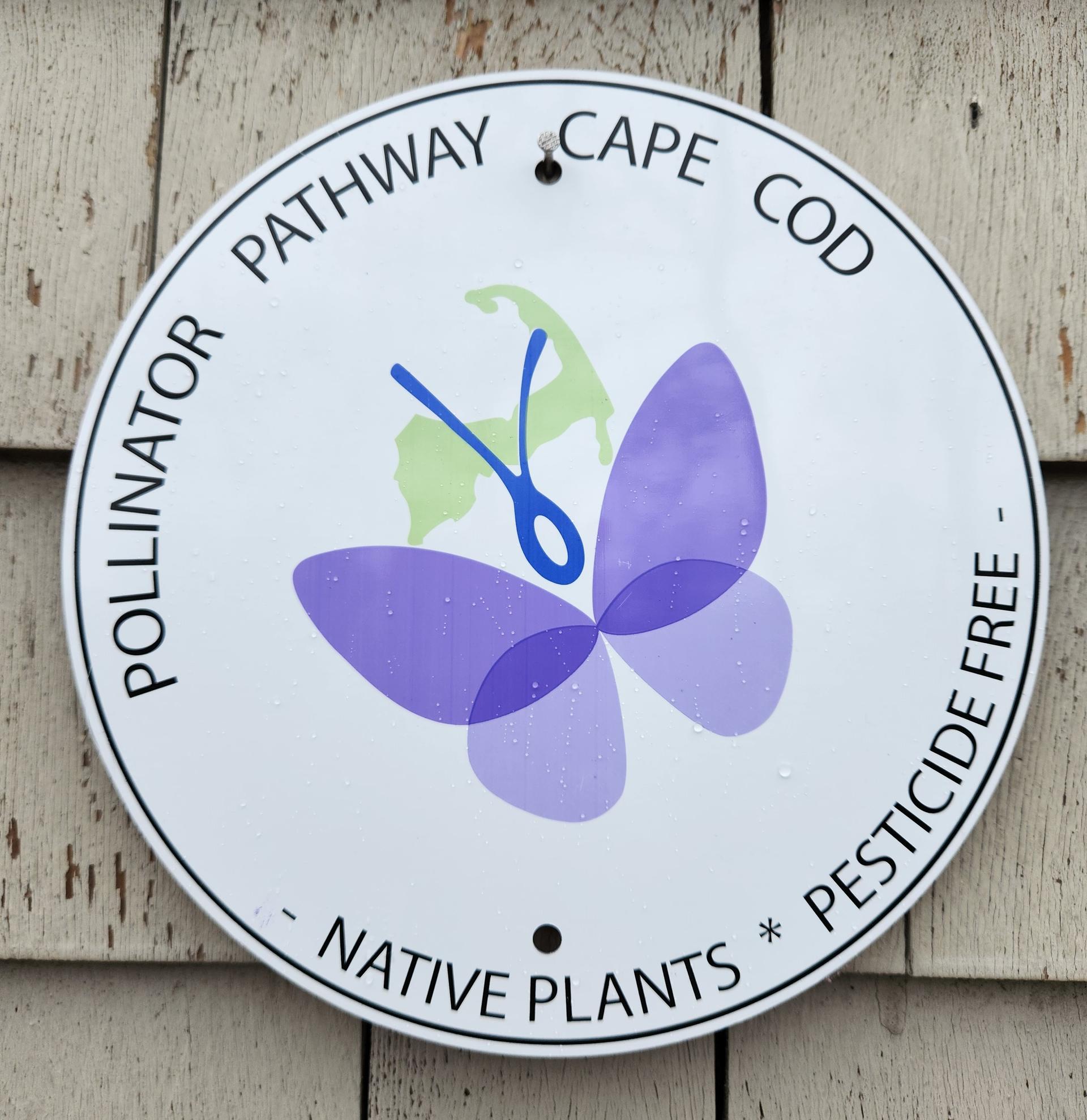
The Pollinator Pathway Cape Cod is a group of organizations promoting native plants and pollinator-friendly land care practices to create a boat load of safe oases for our native bees, butterflies and a whole host of other pollinators that are crucial to the health of our ecosystems.
Join us! It's easy. There are no fees. You just need to pledge to ADD native plants, SUBTRACT a little lawn, AVOID yard chemicals, especially pesticides, and LEAVE the leaves. And, help us spread the word. Please get on the map to show your support of pollinators on Cape Cod!
You can purchase the 9-inch aluminum Pollinator Pathway Cape Cod sign at Hyannis Country Garden, Crocker Nurseries, Brewster Book Store, Orleans Conservation Trust, and
Cape Abilities Farm. If you are a retailer, and you would like to sell the signs, you can order online here, or email pollinators@apcc.org. |
|
|
|
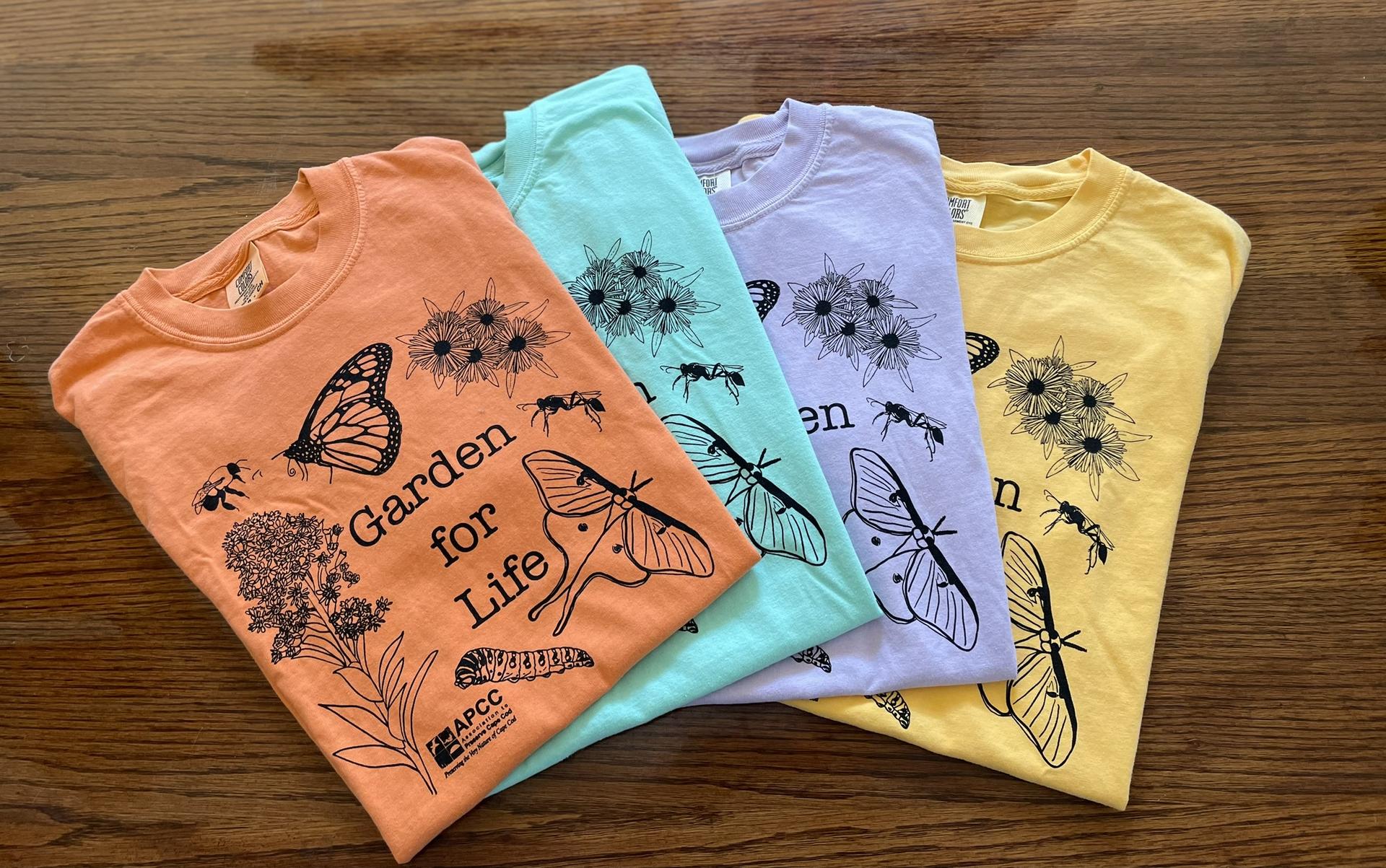
Available for online purchase: APCC caps $25 includes shipping & handling +++++++++++++++++ Garden for Life T's $30 including shipping & handling Click here
for more information and to order. This is just one great way to show your support for APCC's work. |
|
|
|
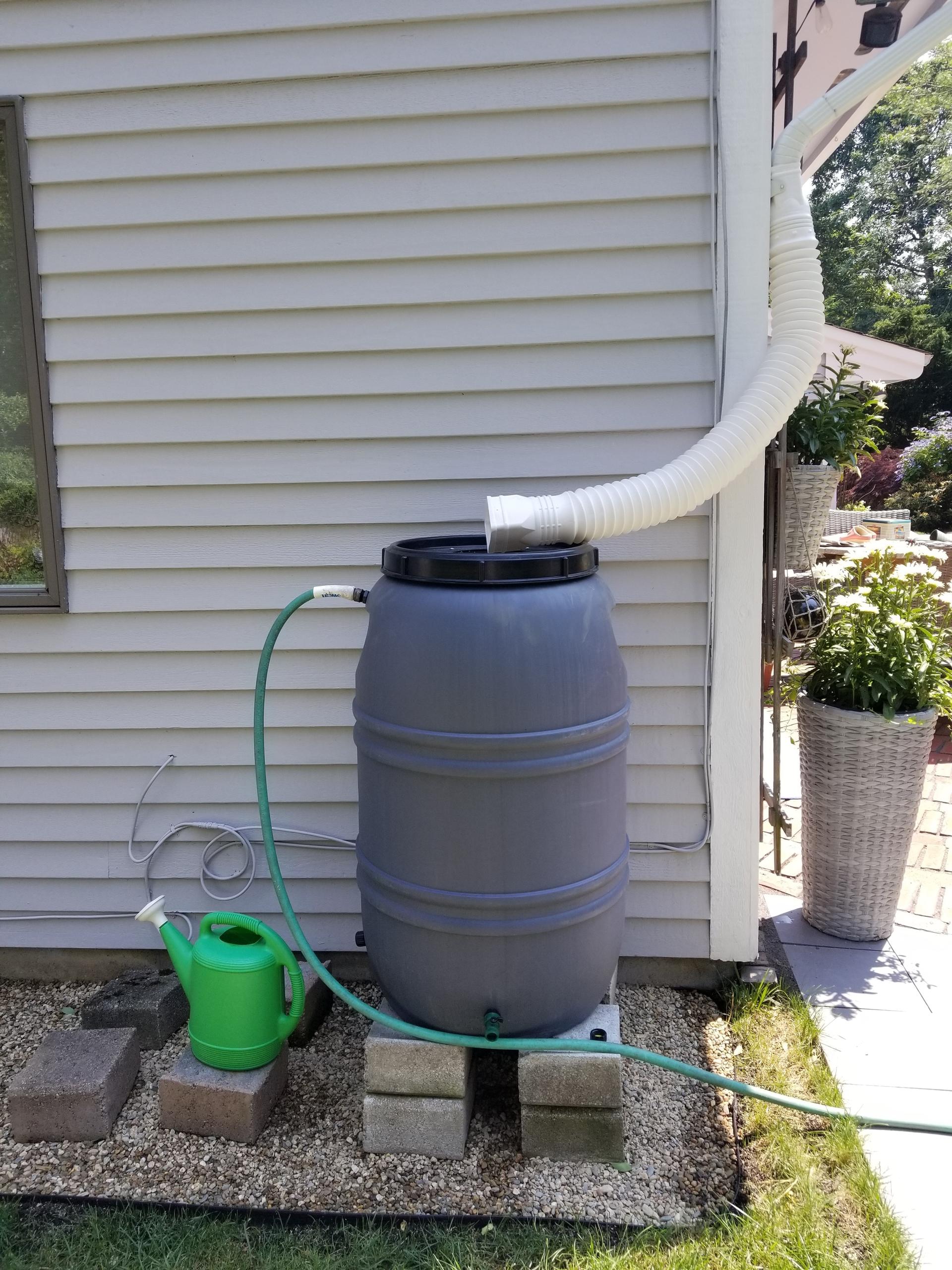
Rain Barrels for Cape Cod Order online from Upcycle Products
$122 each includes FedEx shipping to your door
55 gallon, repurposed food barrels Keep a barrel out of a landfill, and capture some free rainwater.
APCC receives a portion of the proceeds. For more information, click here. |
|
|
| APCC eNewsletters.
Our weekly newsletters are archived on our website and easily shared.
You can find past newsletters and share with your friends. Encourage others to sign up for future enewsletters HERE.
|
|
|
Are you thinking of going solar? We hope so!
In partnership with E2 SOLAR in Dennis, APCC receives $500 for every solar installation when APCC is named as referral. |
|
|
|
Thank you to the homeowners who just contracted to install solar panels through E2 Solar. May the sun always shine for you! |
|
|
Expressions Gallery, 578 Main Street, Chatham
CLICK HERE |
Expressions Gallery donates 20 percent of its profits to APCC's work. |
|
|
Thank you to our business sponsors! |
|
|
APCC is rated four stars by Charity Navigator and 2023 Platinum by Candid (formerly Guidestar). |
|
|
Our Contact Information
*{{Organization Name}}*
*{{Organization Address}}*
*{{Organization Phone}}*
*{{Organization Website}}*
*{{Unsubscribe}}* |
| |
|
|