Association to Preserve Cape Cod |
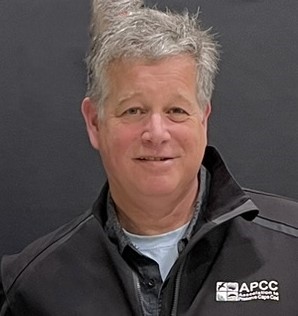
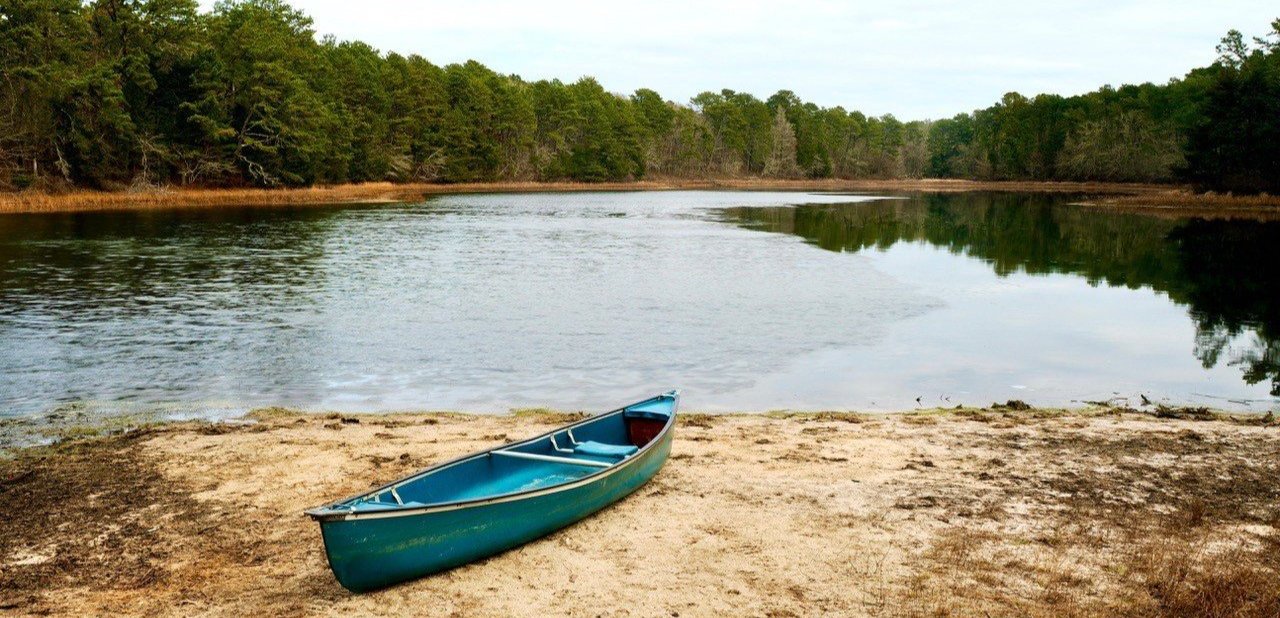
Yarmouth Port, photo by Sue Machie |
|
|
| Take Note by Andrew Gottlieb, APCC Executive Director
Spring is a funny time here on Cape Cod. In many respects, it is a long tease. The days get longer, the peepers begin to sound, migratory birds are on the wing, the sun becomes more intense, but the cool ocean winds keep the season from taking full effect until much later than inland. Once it arrives, full blown spring can be brief before summer takes over. I am writing today to give notice, at least in my little corner of the world, that spring has sprung. Just in these past few days, my yard (unfertilized and pesticide free just as yours can be) has come alive, the trees are filled with songbirds, and I had my first striped bass encounter of the season.
|
|
|
The last few weeks have been challenging times for the Cape’s environment, with great diligence required to protect the Upper Cape Water Supply Reserve from contamination, and to push back on continued efforts by Holtec to disperse radiation into the air and water that surround us, just to name a few. These battles make even more important the need to seek mental, physical, and emotional respite in and from the outdoor world.
Our springs are not without limit. Each precious spring is a season of hope and potential. No matter how you enjoy spring, remember to take the time to take note of the beauty and abundance that marks spring on Cape Cod. Doing so is both rejuvenating and energizing and will help keep you focused on why we all need to do our share to tend to this place. |
Information is not free: APCC has been notified by the Massachusetts National Guard that it will be charged a fee for access to federal Freedom of Information Act public records related to the Guard's pursuit of the multipurpose machine gun range (MPMGR).
Charging the public for access to public records is strategy agencies use to discourage the forced release of public records that they prefer never to see the light of day. By setting a fee for the public to access documents that the public records law requires be public, the Guard is employing one of the most commonly used techniques to shield their activities on the MPMGR from public view.
Much of what APCC has obtained from previous records requests has been revealing about the aggressive and behind the scenes efforts employed by the Guard to force this range on the region despite the threat it posed to the water supply. The Guard's decision to charge for the release of additional records makes us all the more certain that the Guard does not want to reveal the latest documents APCC has requested.
The value of the information we are seeking exceeds the cost they will impose, so APCC will pay the fee and share with you what we find. The question remains if the Guard will respond to the public records request within the required time period (they usually don't), or if APCC will have to seek redress under the law to compel compliance (we will). |
Advocacy News on Rodenticides |
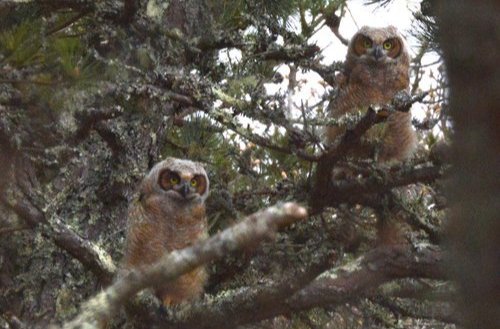
Above: young great horned owls. Photo by Fred Atwood |
On behalf of several wildlife rehabilitators, a petition has been filed with the MA Department of Agricultural Resources (MDAR) by the Animal & Law Policy Program at Harvard to "immediately suspend the registrations of anticoagulant rodenticide products that are killing eagles, owls, and other wild animals throughout the Commonwealth." This article from the Animal Law & Policy Program at Harvard Law School, Rodenticides Are Killing Massachusetts Wildlife; Will Authorities Step Up? explains.
Anticoagulant rodenticides are regulated under the Federal Insecticide, Fungicide, and Rodenticide Act. The Massachusetts Pesticide Control Act allows for registration of pesticides that will not cause unreasonable adverse effects on the environment. It has been the experience of wildlife rehabilitators that non-target species, most notably eagles, hawks and owls, are dying from eating rodents that have been poisoned by rodenticides.
"In 2022, Massachusetts commercial pesticide applicators reported using over 559,000 lbs. of rodenticides, 96 percent of which (over 540,000 lbs.) were anticoagulant rodenticide products: Bromadiolone, brodifacoum, and difethialone were the most applied anticoagulant rodenticides. Notably, these statistics provided by the state do not include the volume of anticoagulant rodenticides applied by private individuals."
"A recent study by the Tufts Wildlife Clinic reported that 100 percent of the 43 red-tailed hawks admitted over a two-year period tested positive for anticoagulant rodenticides." The coalition is also calling for the Executive Office of Energy and Environmental Affairs to investigate the impacts of rodenticides on species protected by the Massachusetts Endangered Species Act (MESA) and ensure that MDAR is using all practicable means to avoid damaging protected species.
MA Audubon has initiated A Campaign to Rescue Raptors, specific to bringing awareness to the threat rodenticides pose to our glorious birds of prey. Join here.
EarthWise Awareness, a non-profit group, has a citizen scientist program, initially based in the Greater Boston area, called Anticoagulant Rodenticide Brigade. They train volunteers to gather observational data on bait boxes and poisoned animals to build an online database and bring awareness to the detrimental effects of SGARs. Sign up here.
|
Cyanobacteria Program - Getting ready for another season |
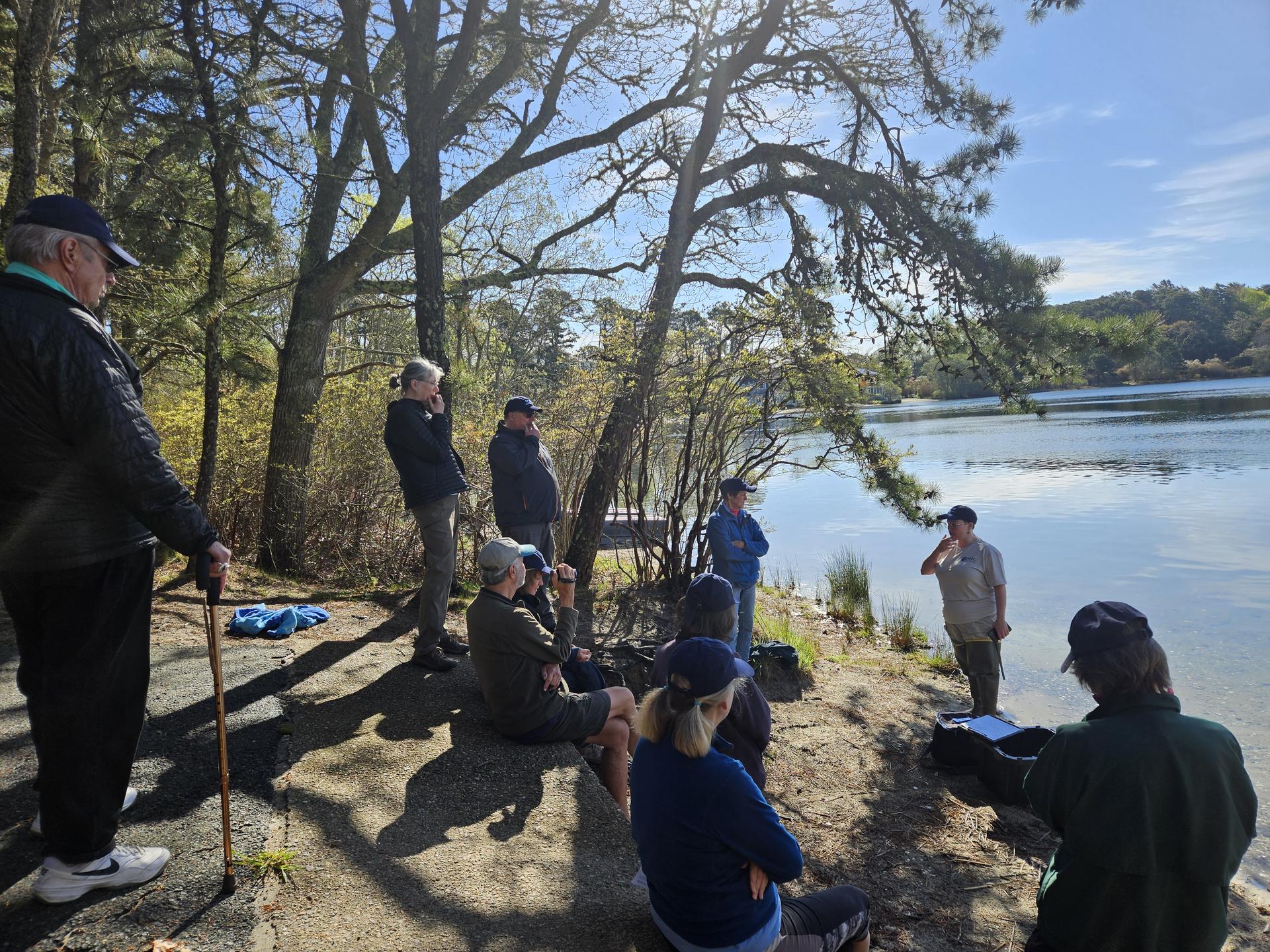
Above: training in Chatham with volunteers from Friends of Chatham Waterways. |
Last week, APCC pond staff held four training sessions for volunteers of various pond groups. These volunteers will collect samples every two weeks for analysis by APCC staff for cyanobacteria blooms. Six pond groups collect about half of all the samples that APCC processes. The purpose of our cyanobacteria program is to provide awareness of cyanobacteria in Cape Cod ponds. |
Staff in the Spotlight - Jordan Mora, APCC's Restoration Ecologist |
|
|
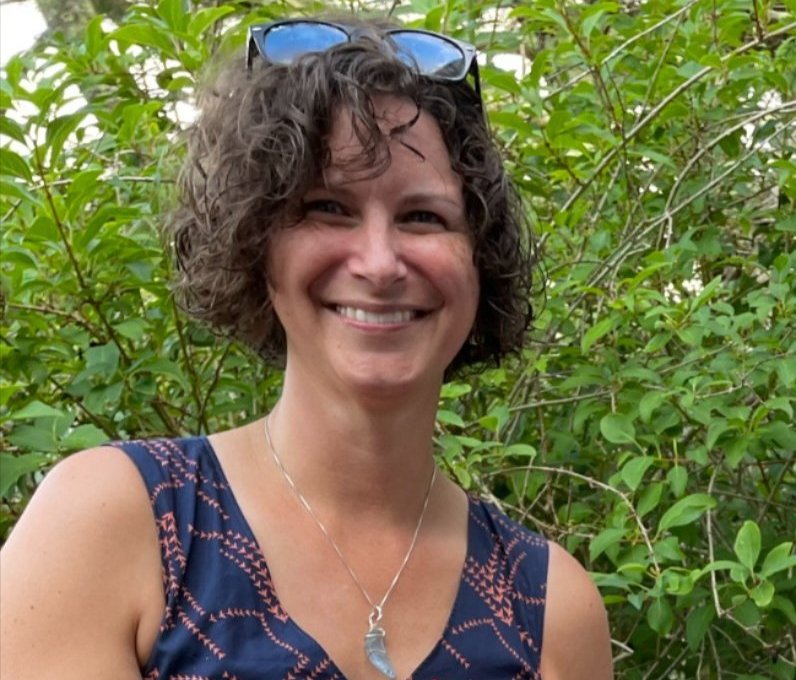
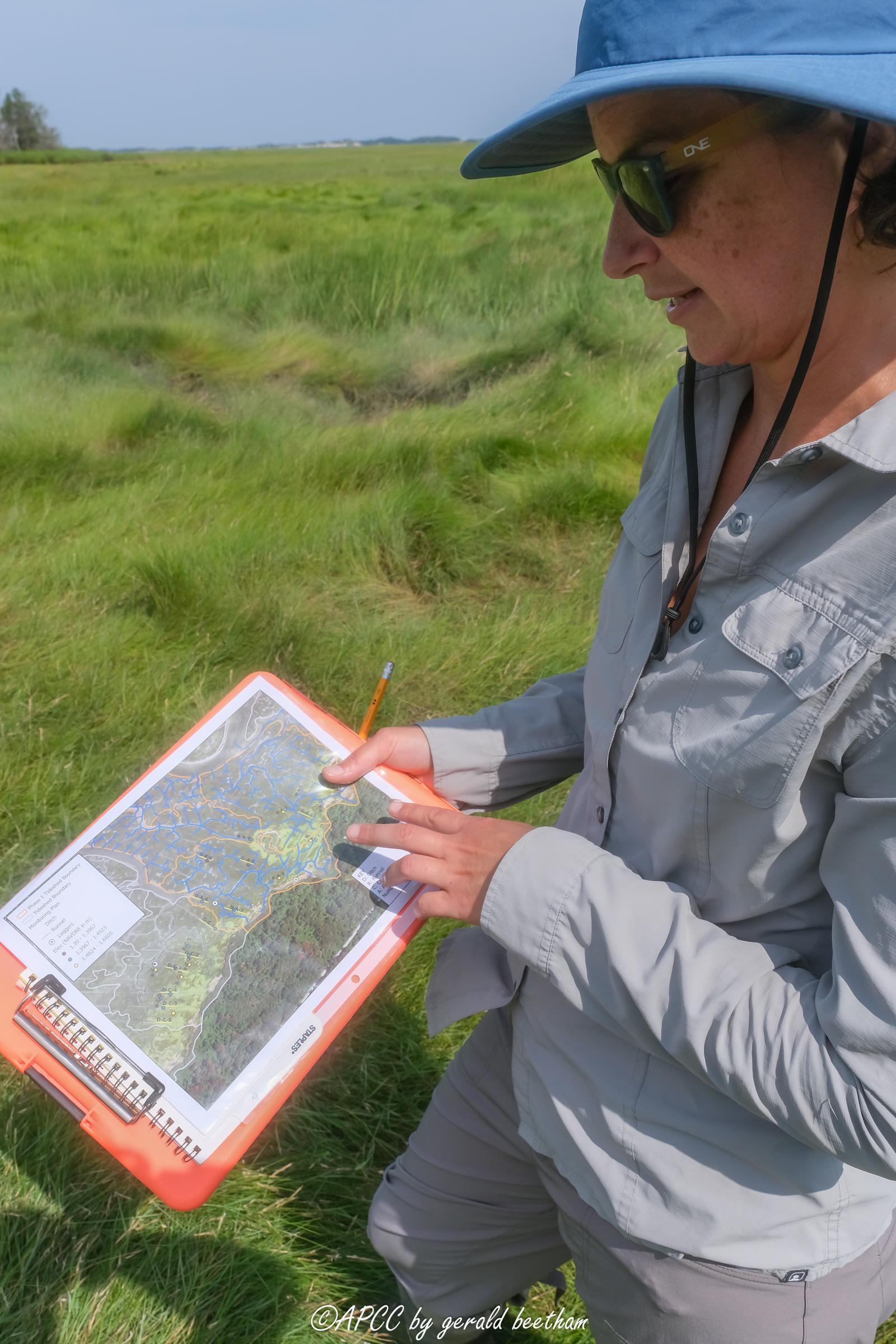
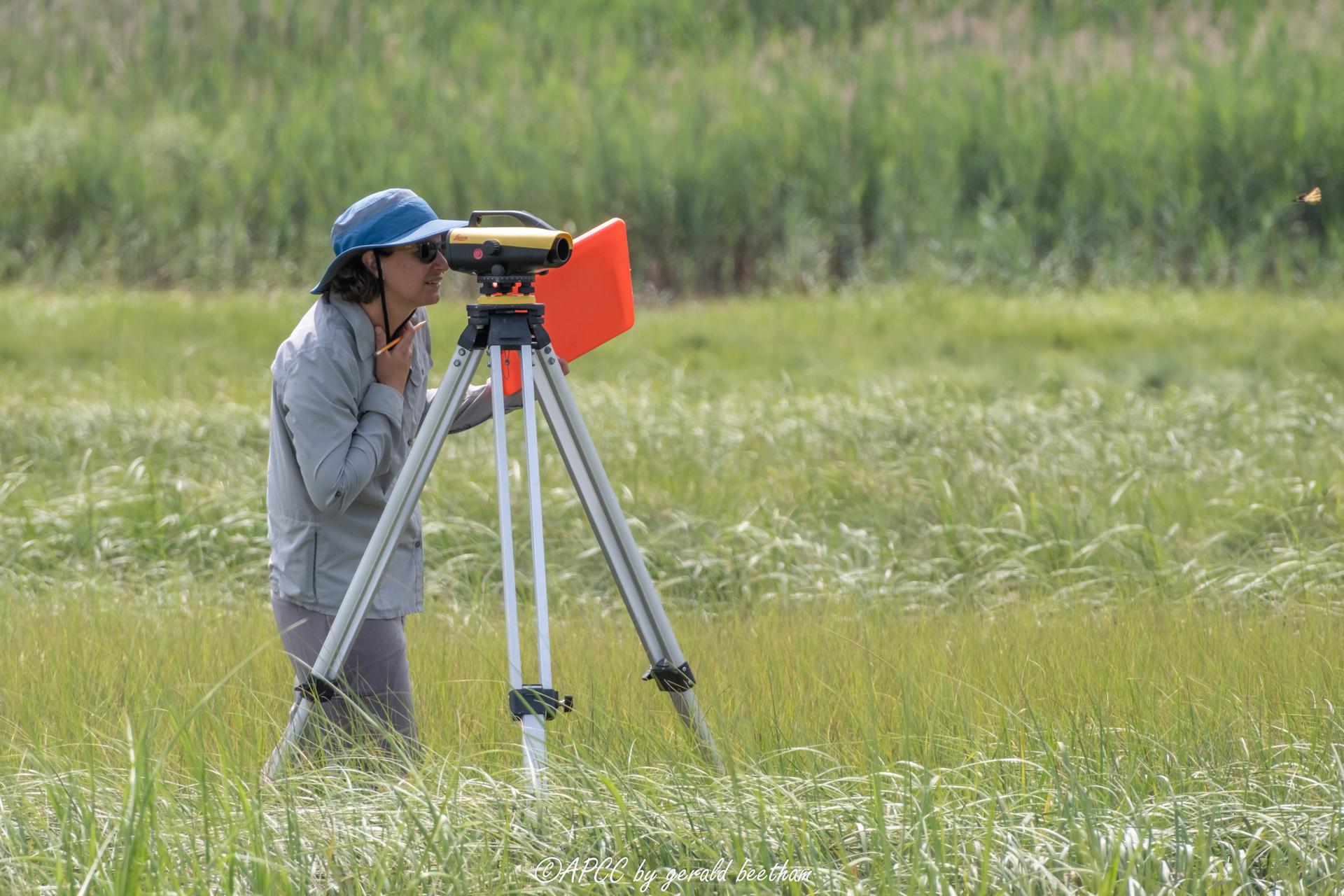
Jordan Mora is a restoration ecologist in the APCC Ecosystem Restoration Program. Jordan has been with APCC since 2021 after working with Waquoit Bay National Estuarine Research Reserve for 10 years. She is APCC’s resident salt marsh expert, conducting surveys of vegetation, elevation, hydrology, and water quality at APCC’s restoration sites across the Cape. Jordan has also been pursuing innovative monitoring and restoration techniques through collaborations with researchers and practitioners to better understand and reverse the adverse effects of tidal restrictions and relic agricultural features in the marsh.
Recently, Jordan has begun to investigate the Chase Garden Creek salt marsh, where erosion and shoaling has been noticed by the local community. Before recommending an effective restoration plan, Jordan has implemented a system of assessments and monitoring efforts to evaluate the various rates of deterioration throughout the marsh. In the face of rising sea levels and long-term effects of human development in these fragile areas, Jordan believes it is important to understand the range of vulnerability, (e.g.) which areas are more at risk than others, and the impaired processes that are contributing to the ecosystems’ demise. By building this base knowledge of the system, the goal is to more efficiently and effectively restore our salt marshes to achieve resilience and long-term stability.
When Jordan is not in the salt marsh or providing her expertise on the ERP’s many projects, she enjoys spending time with her family and her two dogs. She can sometimes be caught playing the fiddle in a duo with her husband at a local bar in Falmouth. |
|
|
Jordan completes an elevation survey at Barnstable Great Marsh, work funded by the Department of Fish and Game In-Lieu Fee Program. |
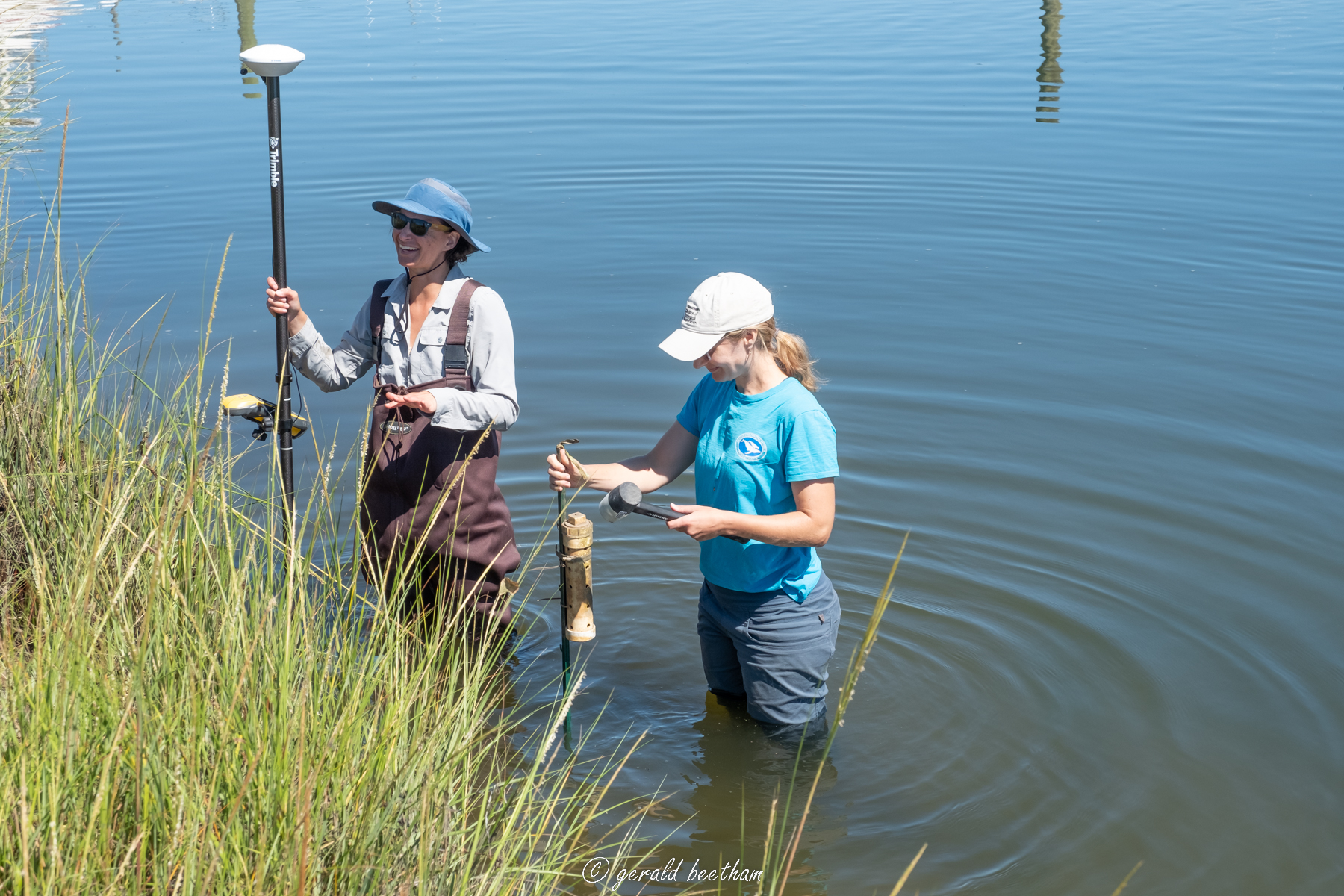
| Jordan and Division of Ecological Restoration’s Cristina Kennedy deploying loggers and taking elevation measurements at Parkers River in Yarmouth. |
|
|
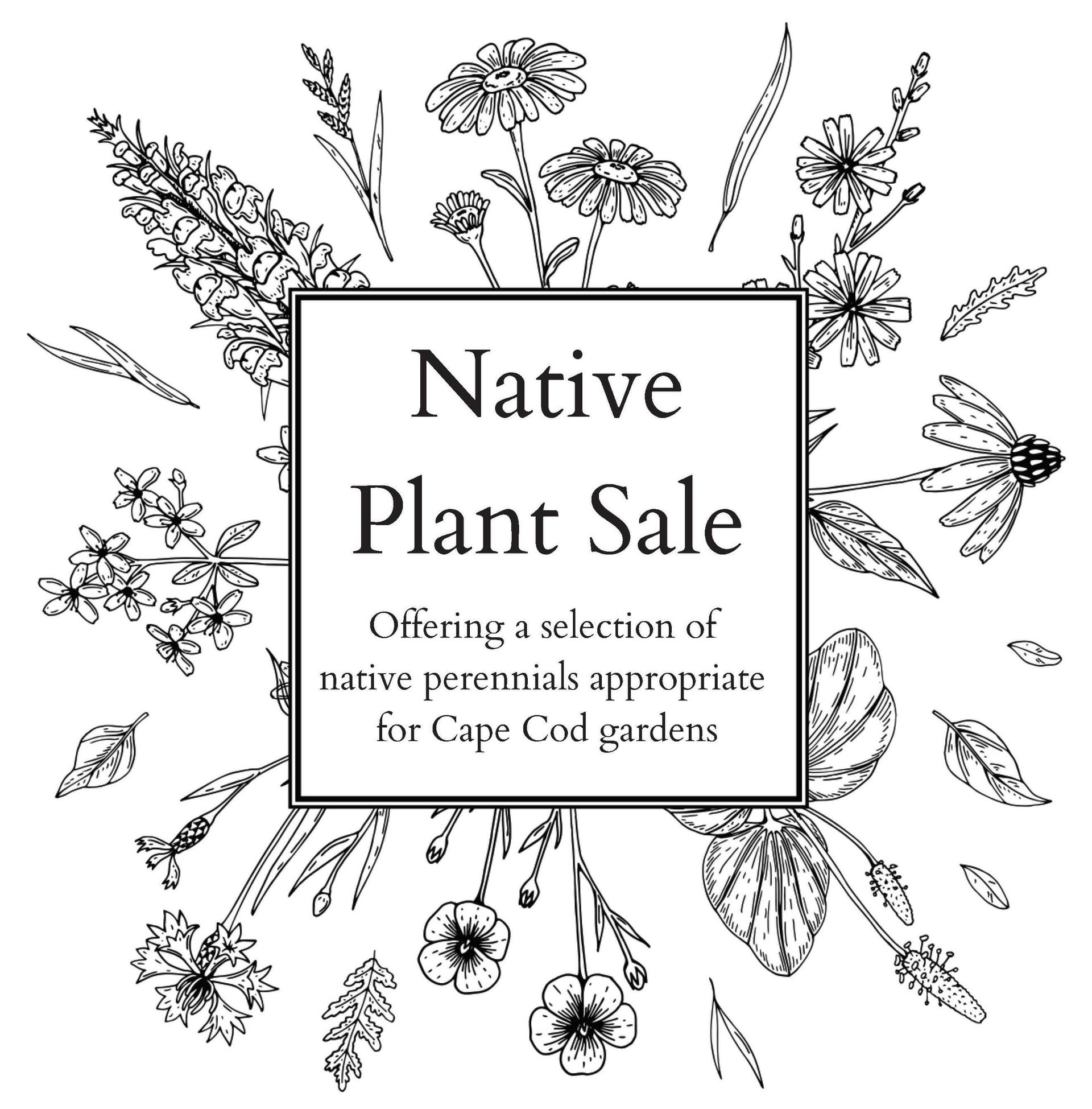
Due to construction at APCC's headquarters, this year's annual plant sale will be a one day in person sale - no advance orders. Friday, June 7th 9:00 a.m. until 3:00 p.m. We'll be in the parking lot of the go-carts on Sisson Rd (Rte 124) and Rte 28, Harwich Port We will have oodles of quart size perennials for purchase, representing 19 species. See the list here.
Plenty of time to do your research and make your list! You have 23 days until APCC's plant sale... |
The Jewels of Cape Cod - Our Freshwater Ponds |
Cape Cod Ponds Network Save the Date! Next meeting of the CCPN will be in person at the Cape Cod Museum of Natural History, Brewster on Thursday, August 8th at 6 p.m.
If you are not already on our email list and would like to attend quarterly Zoom meetings, sign up here. Any questions can be directed to Kristin Andres at kandres@apcc.org or Dr. Julie Hambrook at jhambrook@apcc.org. |
|
|
Resilient Roots hosts APCC's education director, Kristin Andres |
|
|
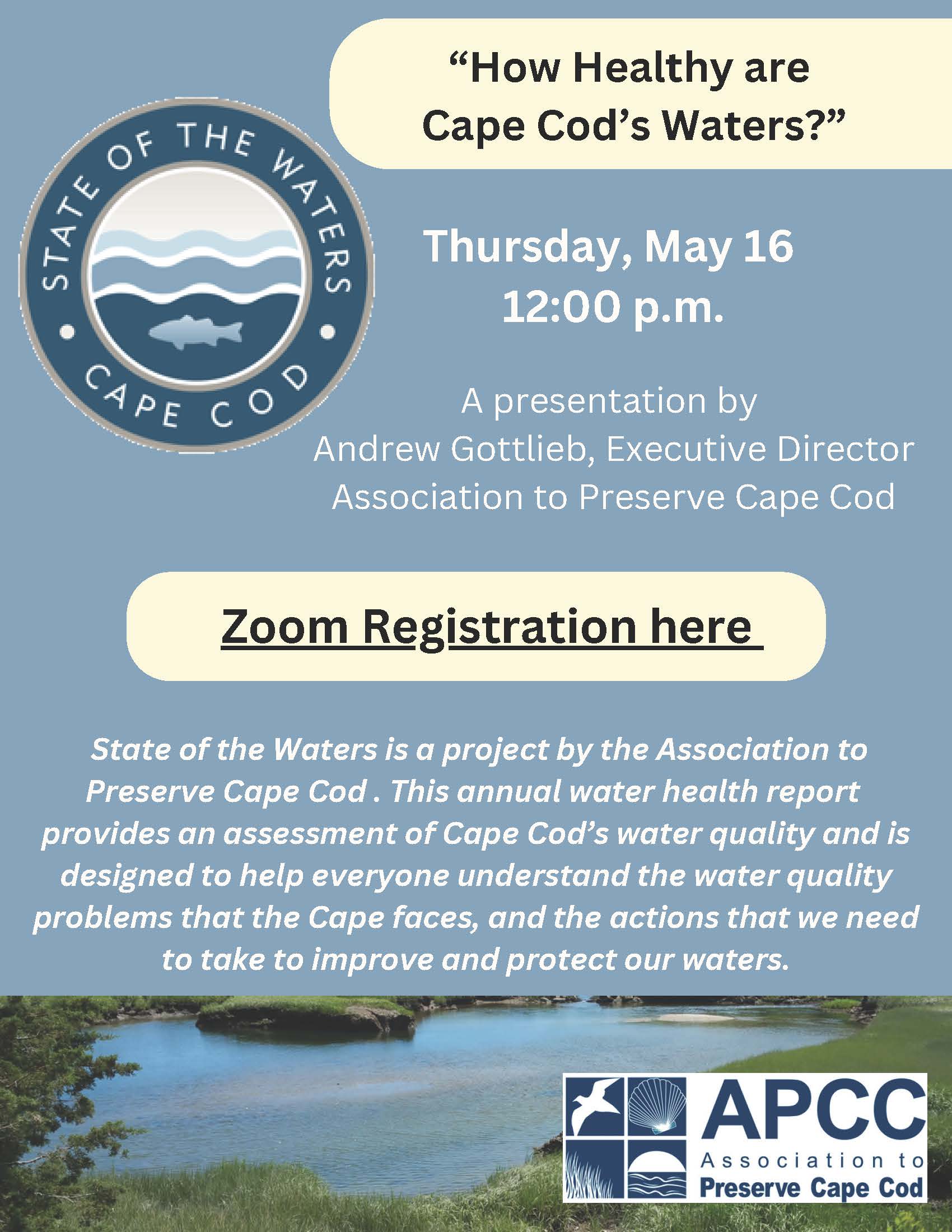
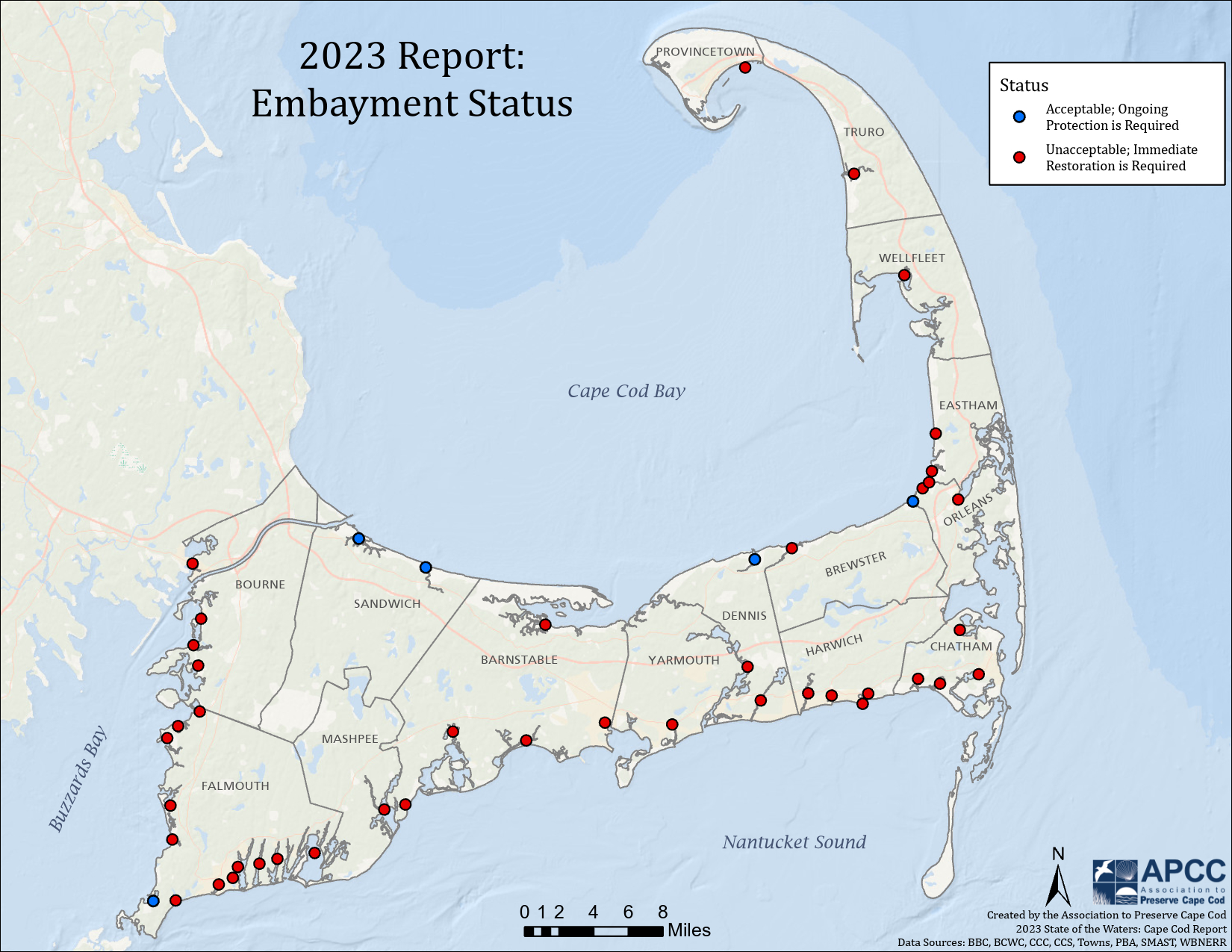
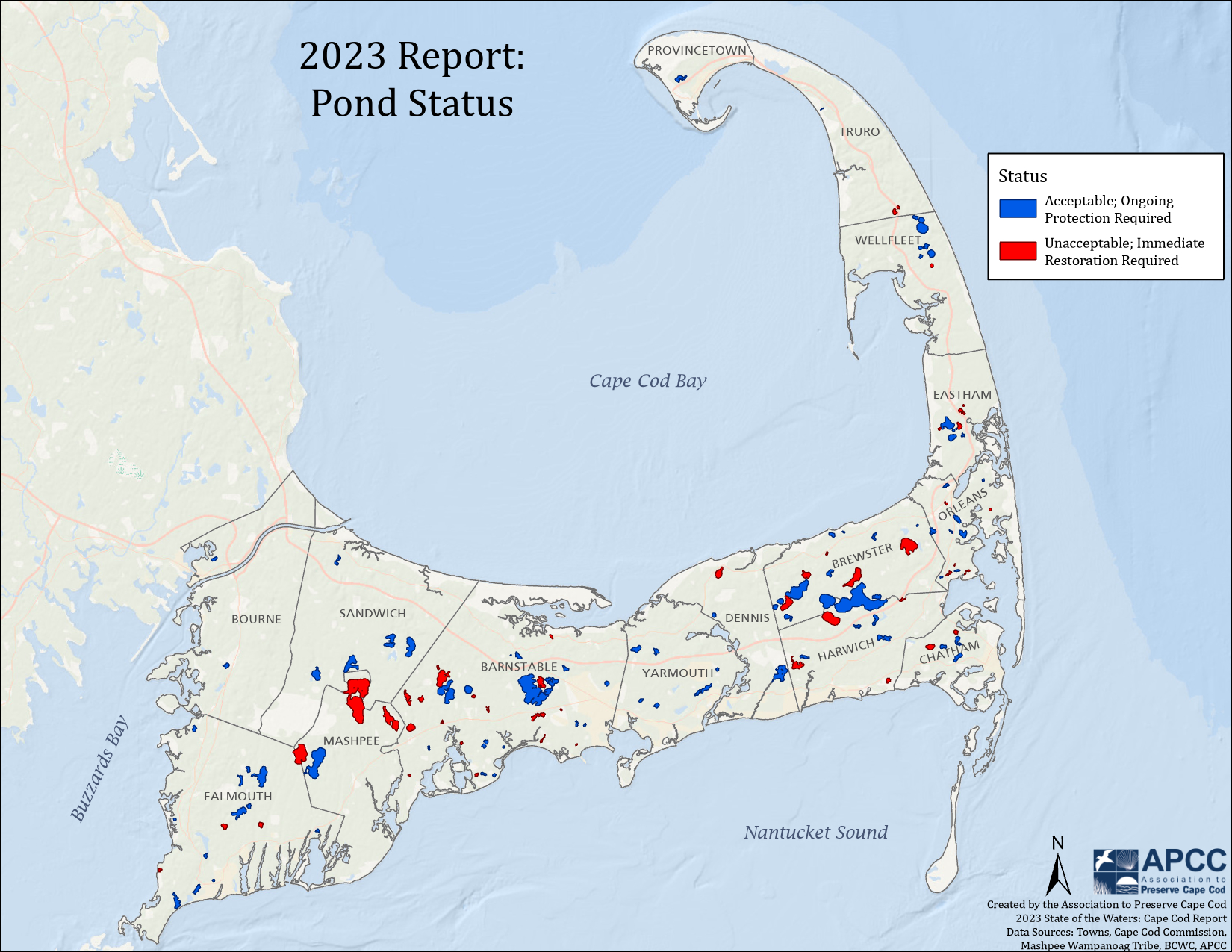
The 2023 State of the Waters: Cape Cod report content can be viewed on this dedicated website: CapeCodWaters.org |
|
|
Guidelines for Cape-friendly Landscapes - an APCC publication |
|
|
The Guidelines gives homeowners steps they can take in the design and maintenance of their properties that will support pollinators and birds, manage stormwater, conserve water, and protect the Cape's water quality. This 40-page booklet is beautifully illustrated by Marcy Ford with content that is easily digestible and supported by numerous resources for additional learning.
|
Thank you for this important book! Hopefully everyone of us with a yard will read it and put it to use! - Vicky Titcomb of Titcomb Bookshop |
We've enjoyed creating it and hope it will help you with ideas to help you steward your piece of Cape Cod and maybe foster an environmental ethic in the decisions we all make in our own managed landscapes. Get your copy here—and maybe one for a friend?
|
We are grateful for the several retail shops that are partnering with us to make this publication more widely available: Brewster Book Store, Birdwatchers General Store, Crocker Nurseries, Wellfleet Audubon Wildlife Sanctuary, Cape Abilities Farm, Cape Cod Museum of Natural History, the Cape Cod Lavender Farm, Heritage Museums and Gardens, Titcomb's Bookshop, Sea Howl Bookshop, Soares Flower Garden Nursery, and Eight Cousins Bookshop.
If you are a retailer and would like to sell this publication at your store, contact Kristin at kandres@apcc.org. |
|
|
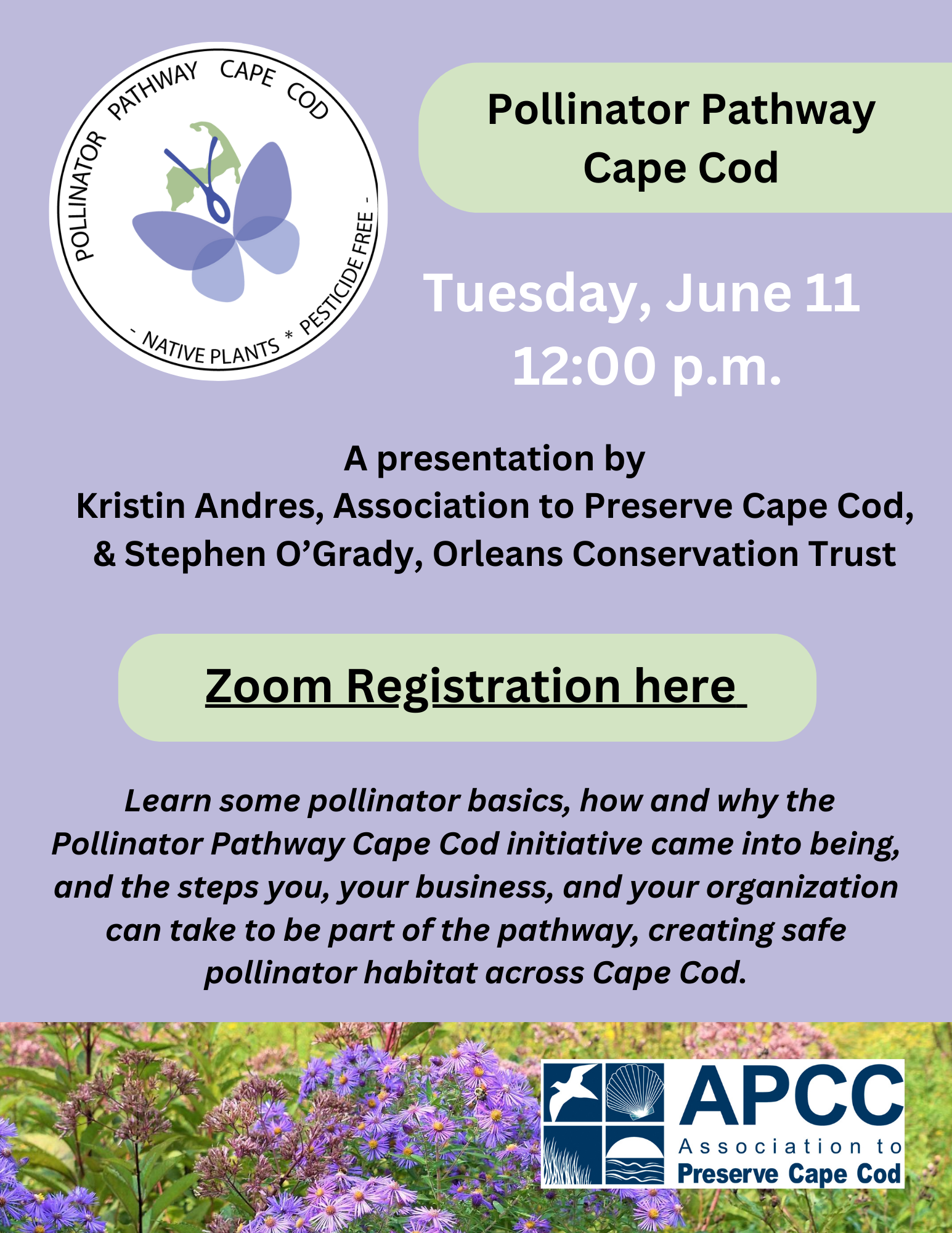
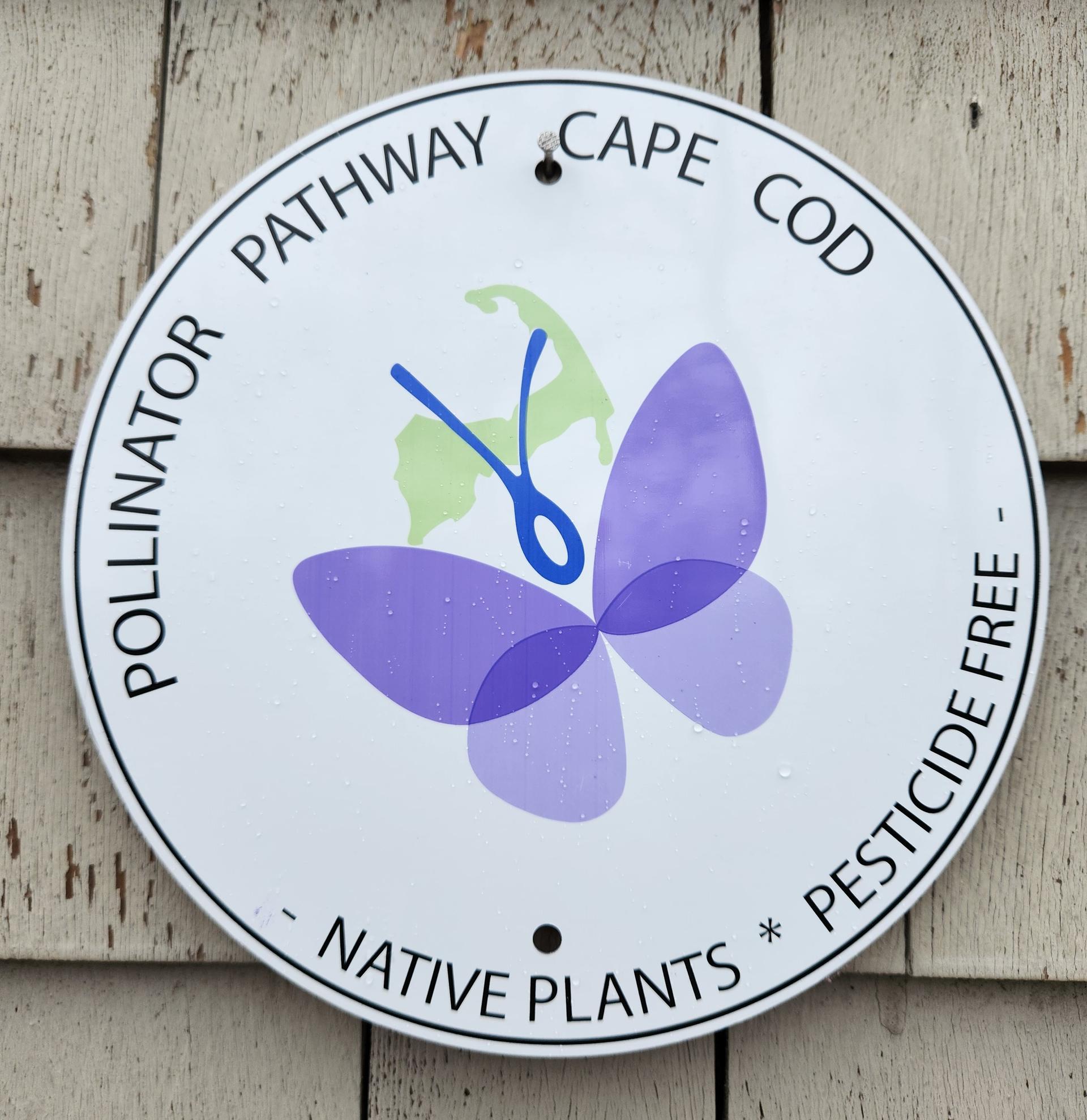
The Pollinator Pathway Cape Cod is a group of organizations promoting native plants and pollinator-friendly land care practices to create a boat load of safe oases for our native bees, butterflies and a whole host of other pollinators that are crucial to the health of our ecosystems.
Join us! It's easy. There are no fees. You just need to pledge to ADD native plants, SUBTRACT a little lawn, AVOID yard chemicals, especially pesticides, and LEAVE the leaves. And, help us spread the word. Please get on the map to show your support of pollinators on Cape Cod!
You can purchase now your 9-inch aluminum Pollinator Pathway Cape Cod sign at Hyannis Country Garden, Crocker Nurseries, Brewster Book Store, and Cape Abilities Farm.
If you are a retailer, and you would like to sell the signs, you can order online here, or email pollinators@apcc.org. |
|
|
| APCC Caps are available for purchase! $25 includes shipping & handling
Click here for more information and to order.
This is one great way to show your support for APCC's work. |
|
|
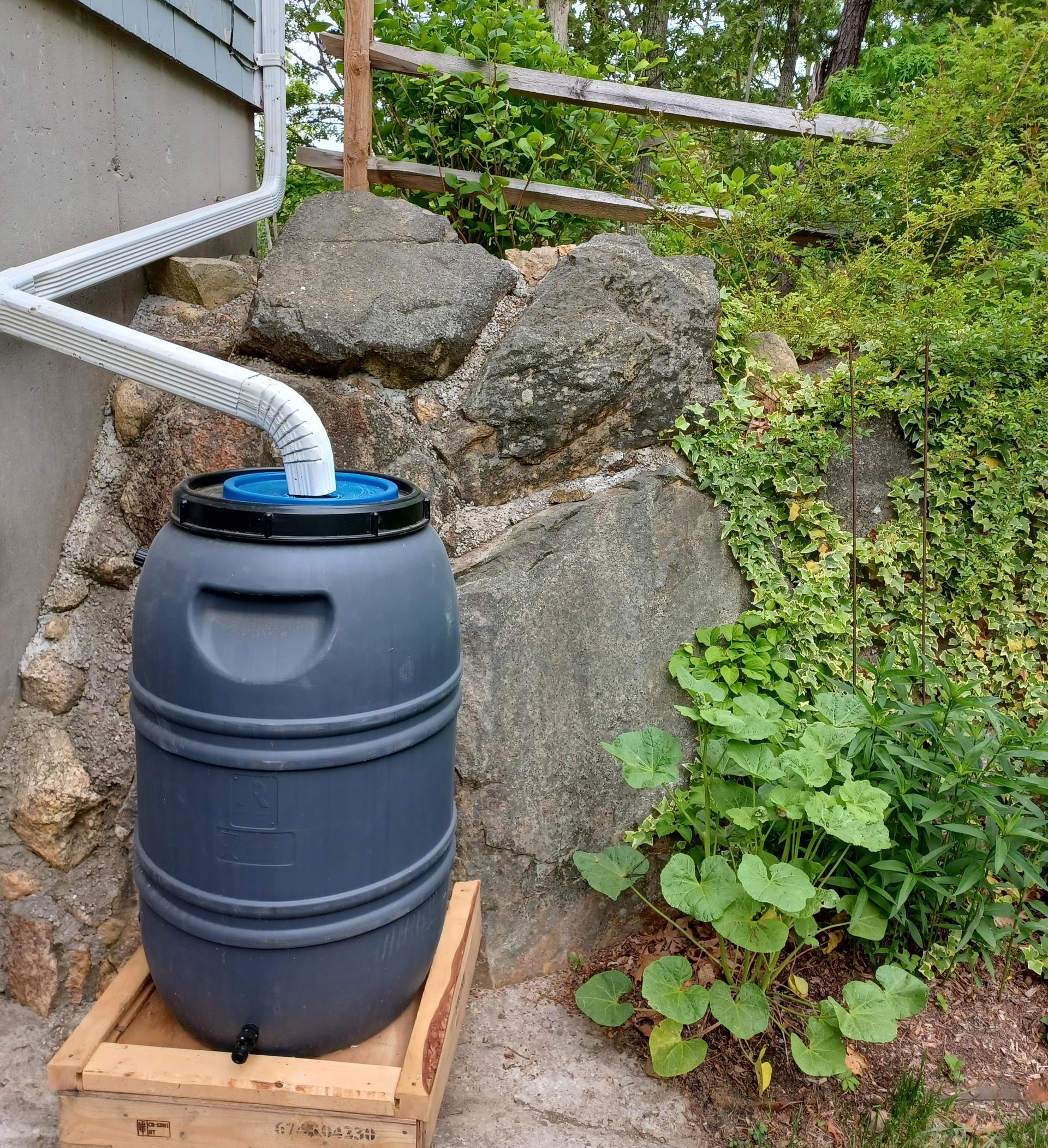
| Rain Barrels for Cape Cod
Order online from Upcycle Products $122 each
includes FedEx shipping to your door APCC receives a portion of the proceeds. For more information, click here. |
|
|
A Cape Cod Native Plant-selector ~ to help you choose the perfect native plants for your garden. |
|
|
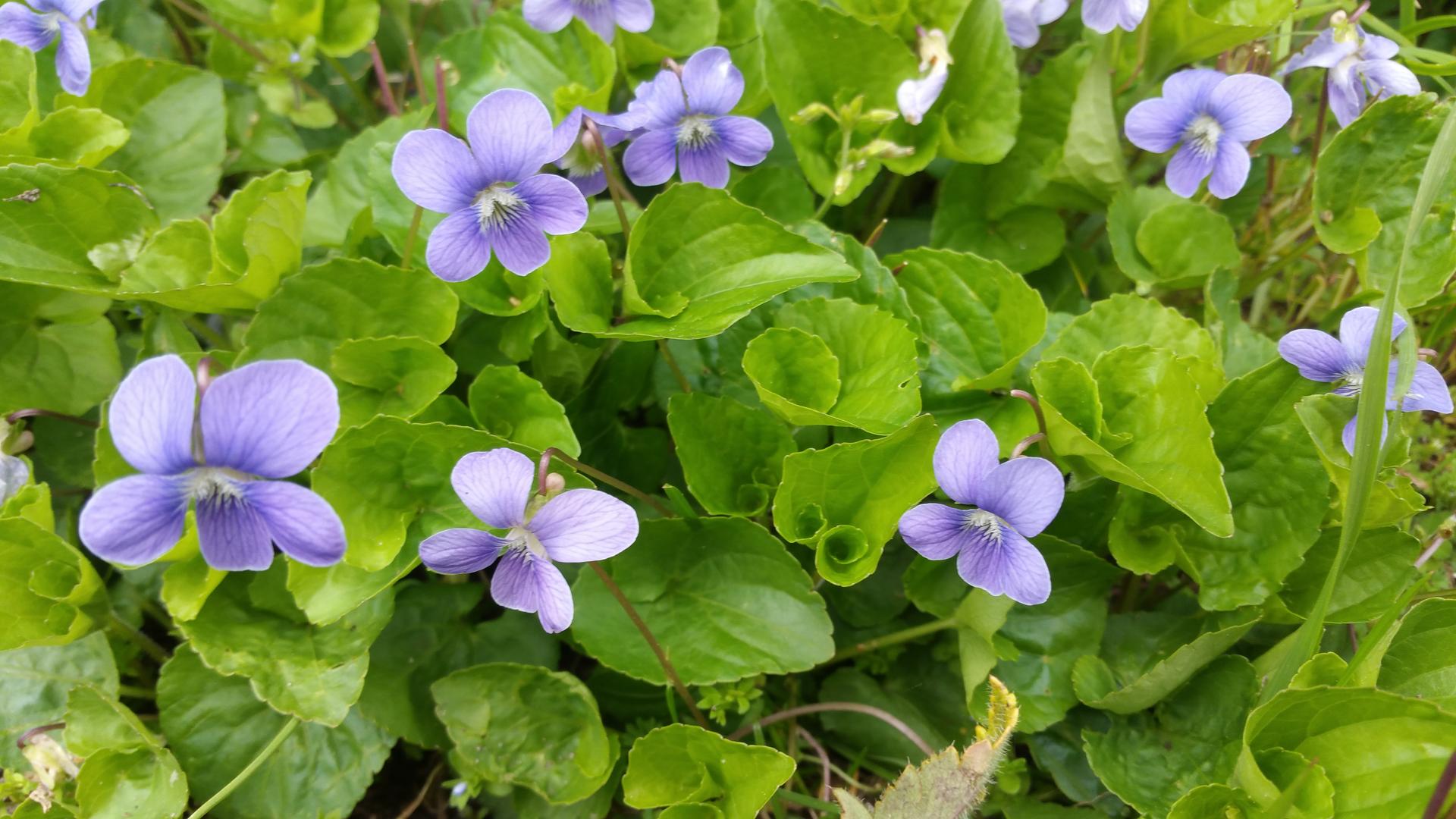
| Common Violet
Viola sororia |
|
|
Email membership@apcc.org and we'll send you a CapeCodNativePlants.org decal. |
| |
| APCC eNewsletters. Our weekly newsletters are archived on our website and easily shared.
You can find past newsletters and share with your friends to sign up for future enewsletters HERE. |
|
|
Are you thinking of going solar? We hope so!
In partnership with E2 SOLAR in Dennis, APCC receives $500 for every solar installation when APCC is named as referral. |
|
|
| Thank you to the homeowners who just contracted to install solar panels through E2 Solar. May the sun always shine for you! |
|
|
Expressions Gallery, 578 Main Street, Chatham
CLICK HERE |
Expressions Gallery donates 20 percent of its profits to APCC's work.
|
|
|
Thank you to our business sponsors |
|
|
APCC is rated four stars by Charity Navigator and 2023 Platinum by Candid (formerly Guidestar). |
|
|
Our Contact Information
*{{Organization Name}}*
*{{Organization Address}}*
*{{Organization Phone}}*
*{{Organization Website}}*
*{{Unsubscribe}}* |
| |
|
|