Association to Preserve Cape Cod |
|
|
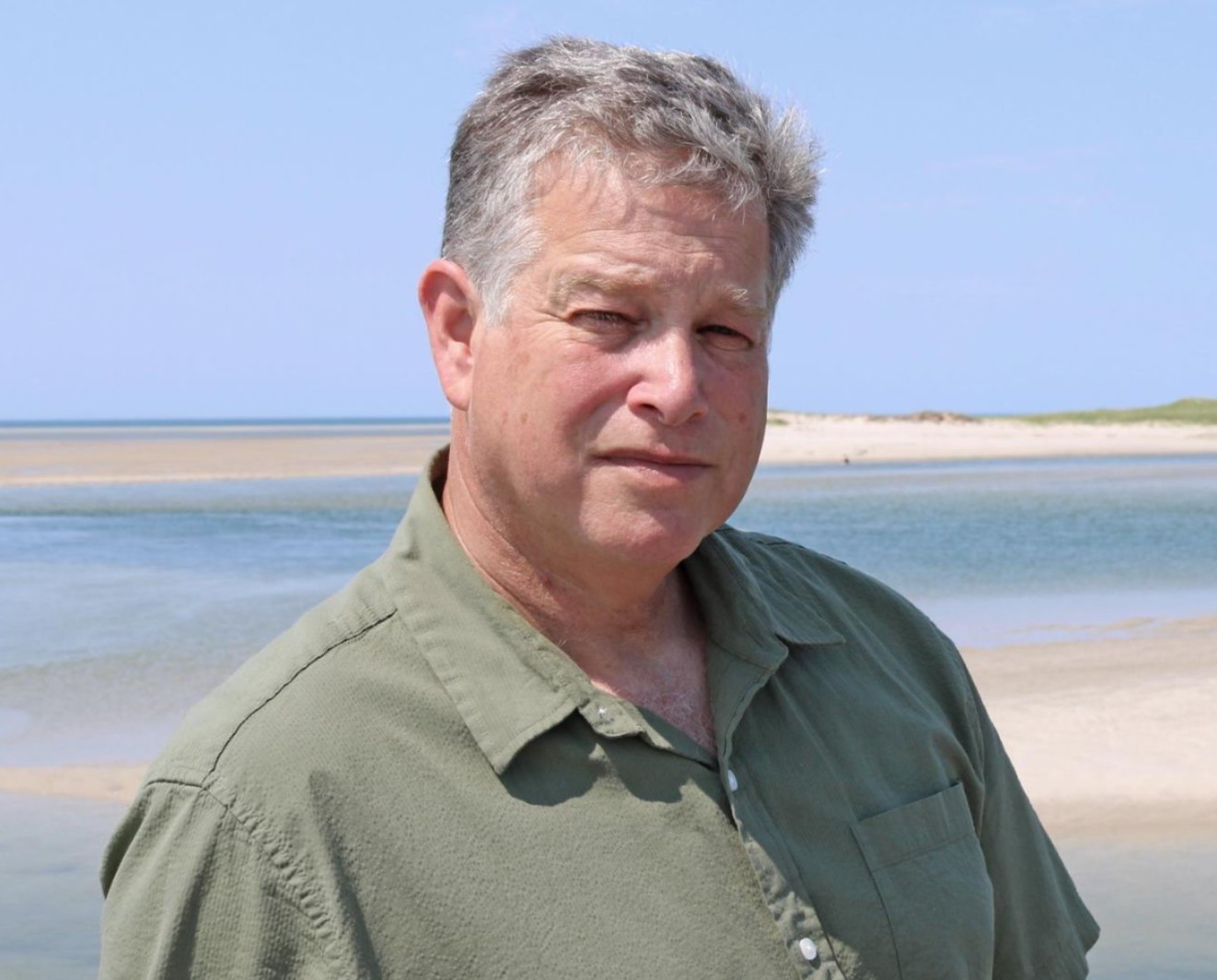
| The Fear is Real by Andrew Gottlieb, APCC Executive Director There is a very real possibility that the multipurpose machine gun range (MPMGR) will proceed, regardless of the EPA finding that it will contaminate the Upper Cape Water Supply Reserve. |
|
|
That is the inescapable conclusion that we have come to after reviewing documents turned over to APCC, after much delay, by the Massachusetts National Guard. (See the documents here.) The records, which were not turned over to APCC until the Secretary of State ordered the Guard to comply with state law, contained several major revelations:
- The Guard rejects the authority of the EPA to conduct its review under the Safe Drinking Water Act. This is different than their previous stance that the EPA’s findings were incorrect. The Guard has changed how the project is being contracted to take advantage of a nuance in federal law that would exempt the project from EPA review.
-
The Guard has aggressively, as we expected, pursued approval from the congressional appropriations committees, to add more money to the project budget so that they can cover the inflated cost overruns without a publicly recorded act of Congress.
-
The Guard has selected a contractor to build the MPMGR using 2018 specifications that fail to take into account any of the groundwater contamination concerns, despite leading the public to think that it was open to mitigations.
- The Guard has great urgency to sign a contract to build the MPMGR on or before September 30, 2024 when their money disappears.
Taken together, the revelations clearly show that any public reliance that the federal government would rely on the EPA findings to prevent further contamination of the groundwater were misplaced. It is further worth worrying about the Guard’s commitment to comply with state law requirements that the Environmental Management Commission’s (EMC) must first make a determination that training not be incompatible with protection of the water supply. Real questions have to be asked if the EMC will intervene and exercise its statutory obligation to protect the water supply of the Upper Cape from even more contamination than already exists at JBCC.
The last time we raised this issue many of you asked what you can do. This time we encourage you to contact the three EMC commissioners and demand that they intervene and initiate a full public review and determination of the impact of the MPMGR on the drinking water supply, that they just not rely on the Guard’s self-serving internal environmental assessment, but that they give full weight to the EPA findings and the concerns of the public. APCC has already reached out to the EMC, but we need you to amplify the message. |
Dear Members of the Environmental Management Commission:
Your swift and decisive action is urgently needed to avoid irreparable harm to the environment and public health resulting from the Massachusetts Army National Guard’s ill-conceived multipurpose machine gun range proposed for the Upper Cape Water Supply Reserve. I am greatly concerned that the Guard is pursuing contract arrangements for construction of the project, which could render the MPMGR a “done deal” before the EMC has fulfilled its responsibility to evaluate the project’s anticipated impacts on this critical natural resource.
Please move quickly in conducting an evaluation, with opportunity for public comment, of the MPMGR’s anticipated environmental impacts on the Upper Cape Water Supply Reserve’s drinking water supply and other natural resources, including consideration of the June 2023 U.S. EPA Region 1 Sole Source Aquifer report that provisionally determined “the proposed MPMGR has the potential to contaminate the aquifer so as to create a significant public health hazard.” Based on your evaluation, please issue a written determination about the MPMGR’s compatibility with the purpose of the Upper Cape Water Supply Reserve to protect water supplies and wildlife habitat and to develop and construct water supply systems.
At the same time, I also urge the EMC to immediately notify and order the Massachusetts National Guard to refrain from any actions to commence construction of the MPMGR unless and until the EMC has completed a comprehensive evaluation of the project.
Thank you. Sincerely, [Your Name and Address] |
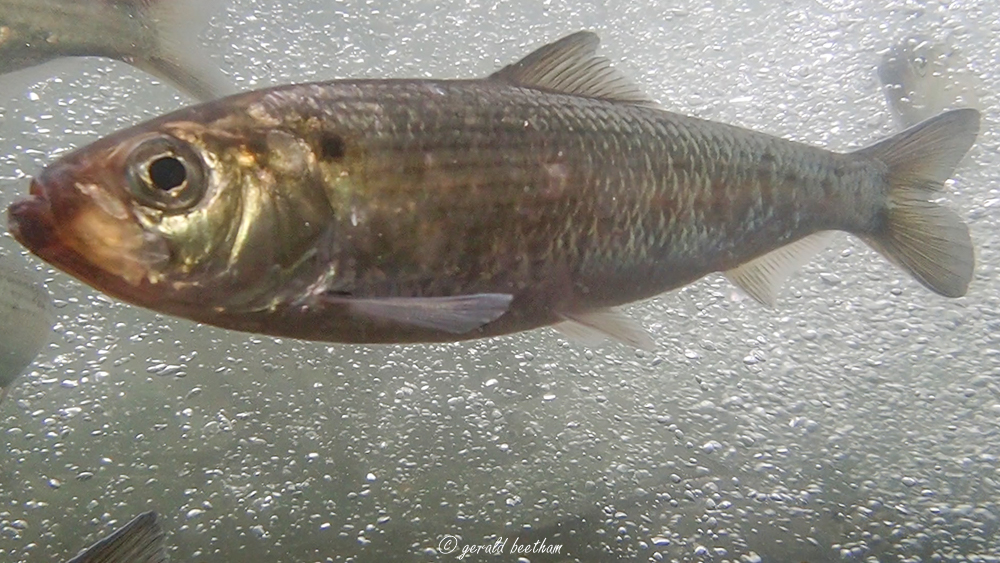
Herring Continue to Run—Herring Monitors, please continue counting! As of May 4, 2024, volunteer herring counters reported counting herring in the following herring runs: |
|
|
Barnstable Centerville River
No. of herring reported: 553 No. of counts reported: 109 Red Lily Pond No. of herring reported: 0 No. of counts reported: 71 Brewster
Stony Brook No. of herring reported: 2,368 No. of counts reported: 158
Dennis Bound Brook No. of herring reported:40 No. of counts reported: 157
Scargo Lake No. of herring reported: 70 No. of counts reported: 215 Eastham Bridge Pond No. of herring reported: 217 No. of counts reported: 207 Herring Pond No. of herring reported: 39 No. of counts reported: 206 |
| Mashpee Mashpee River No. of herring reported: 6,479 No. of counts reported: 139 Quashnet River No. of herring reported: 183 No. of counts reported: 66 Santuit Pond No. of herring reported: 875 No. of counts reported: 72 Sandwich Mill Creek No. of herring reported: 1 No. of counts reported: 19 Wellfleet Herring River No. of herring reported: 1,556 No. of counts reported: 149
Total reported to date: No. of herring reported: 12,381
No. of counts reported: 1,568 |
|
|
Species in the Spotlight: Spartina alterniflora, the "Salt Marsh Engineer" |
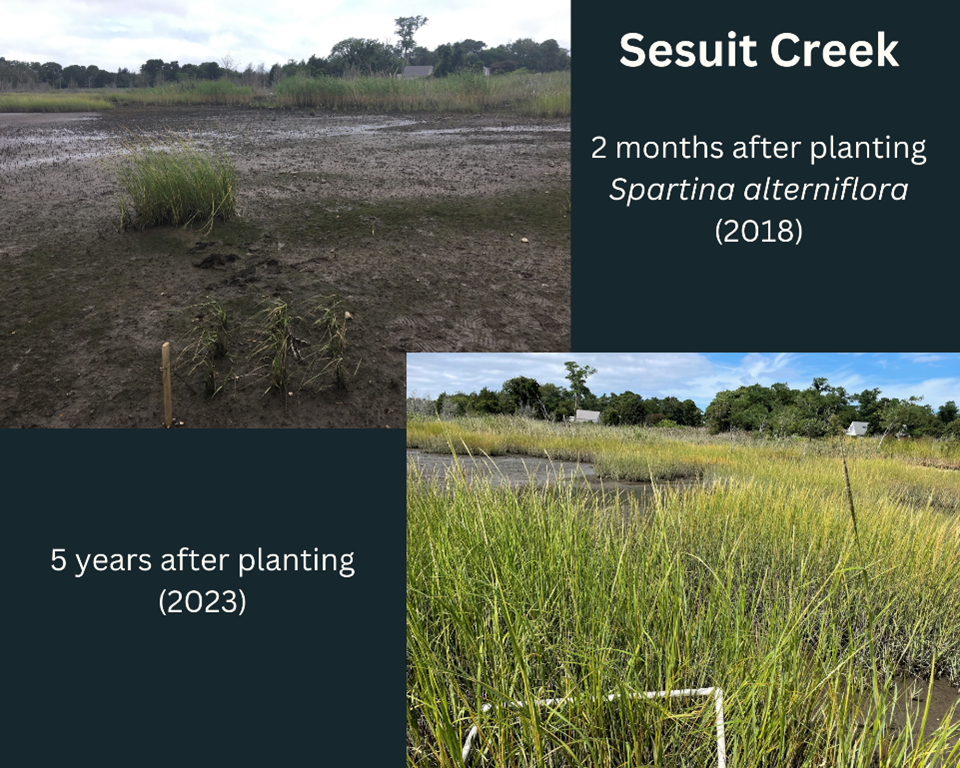
Above: Before and after photos of the pilot planting at Sesuit Creek marsh. |
Spartina alterniflora, commonly known as cord grass, is a native species of perennial grass considered the most abundant in salt marshes across the Atlantic coast. It grows 1–1.5 meters (3–4.9 feet) tall. It has smooth, hollow stems with leaves up to 20–60 centimeters (7.9–23.6 inches) long. Its flowers are yellowish-green, turning brown in winter.
Not only does this species provide food and habitat for a variety of salt marsh species, but this grass also stabilizes shorelines and marsh surfaces. As sediment from our bays and oceans moves across the marsh during high tides and storms, it becomes trapped by the sturdy stems of S. alterniflora. As this salt marsh specialist grows up through the sediment, resulting vertical accumulation on the marsh helps to provides resiliency in the face of large storms and rising sea levels.
APCC’s Ecosystem Restoration Program works to monitor the growth and distribution of this low marsh species in many locations across the Cape. In 2018, APCC completed a pilot planting of S. alterniflora in unvegetated areas of Sesuit Creek salt marsh in Dennis. After returning in 2023, S. alterniflora had proliferated across many previously bare areas, and elevations in vegetated areas had increased. The success of this species is crucial to preserving marsh integrity and encouraging marsh habitat restoration. Check out more ecosystem restoration projects here.
|
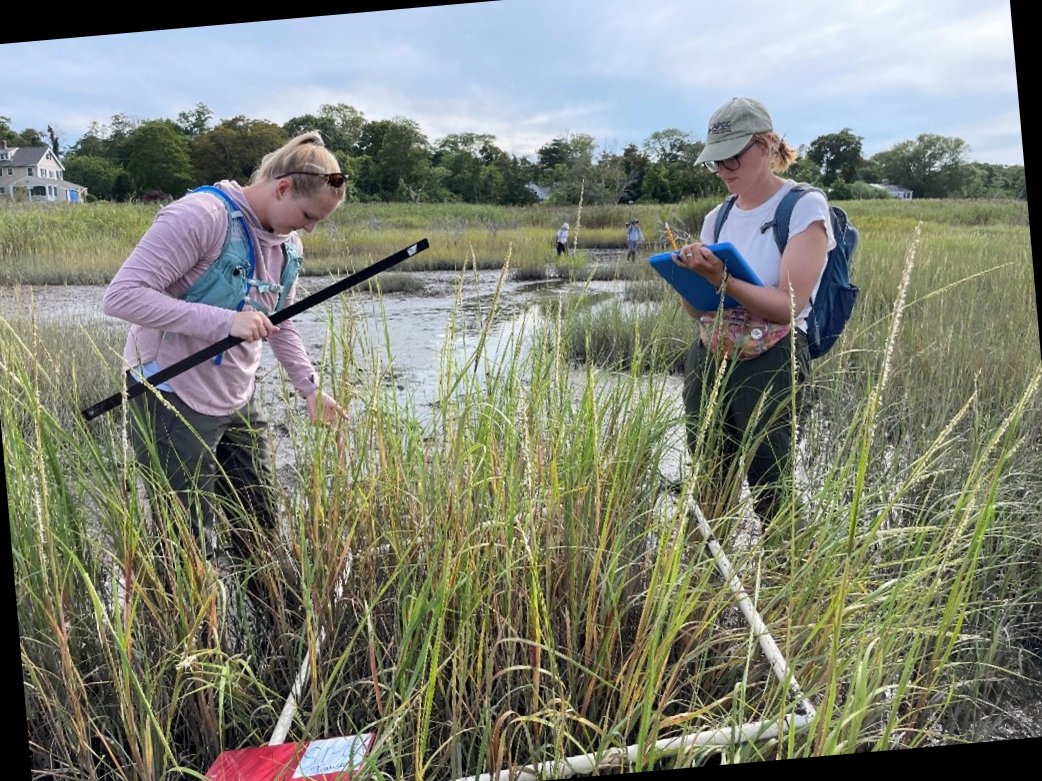
Below: APCC’s Eliza Fitzgerald (right) along with Liz Gorrill of MA Division of Ecological Restoration (left) surveying planted plots of Spartina alterniflora, pictured here flowering. |
APCC board member, Meredith Harris, represented APCC at the Cape Cod Chorale's program, What a Wonderful World: Songs of Earth, Sea, and Sky. Meredith is pictured here (left) with chorale director, Danica Buckley (right). |
Due to construction at APCC's headquarters, this year's annual plant sale will be a one day in-person sale.
We are still working on the details, but save the date: Friday, June 7th |
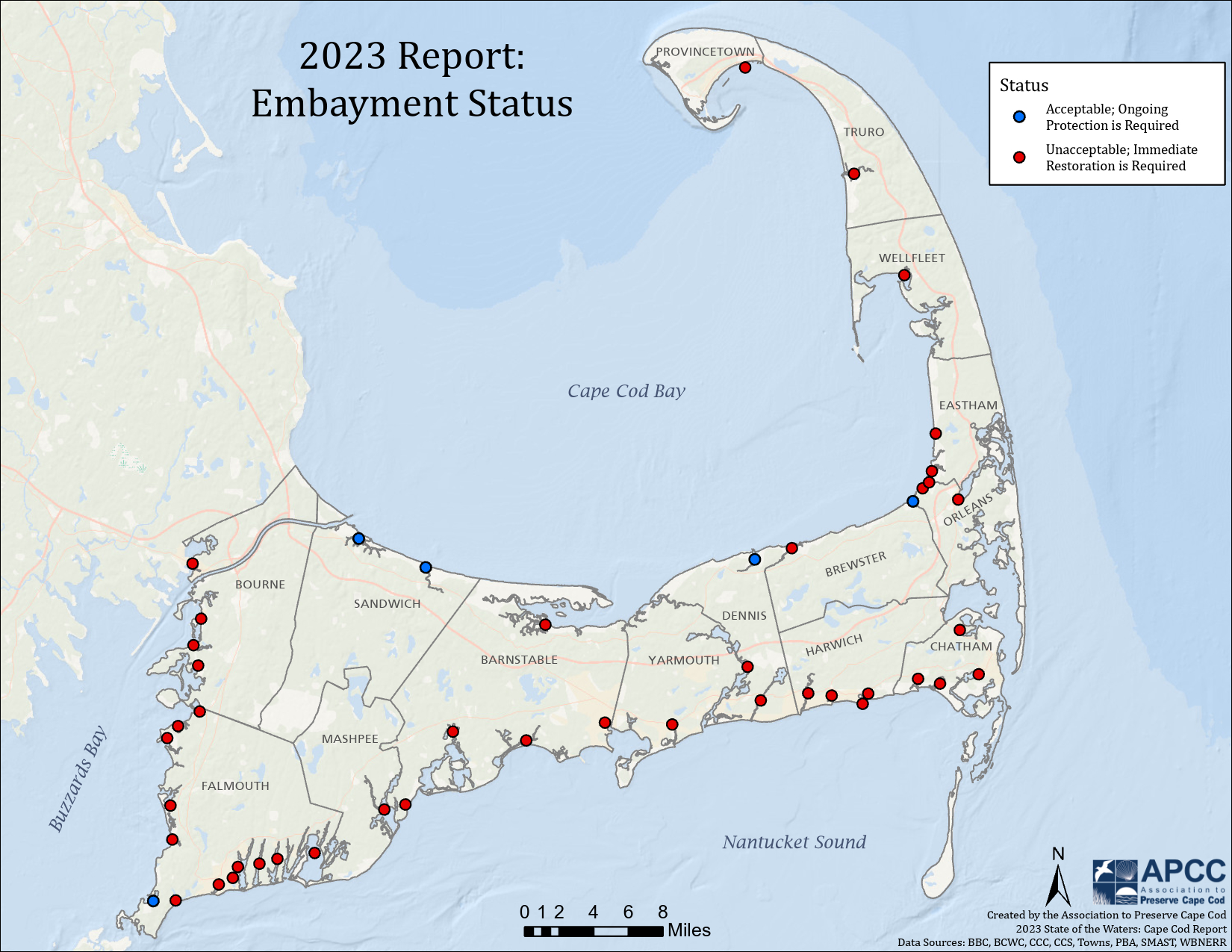
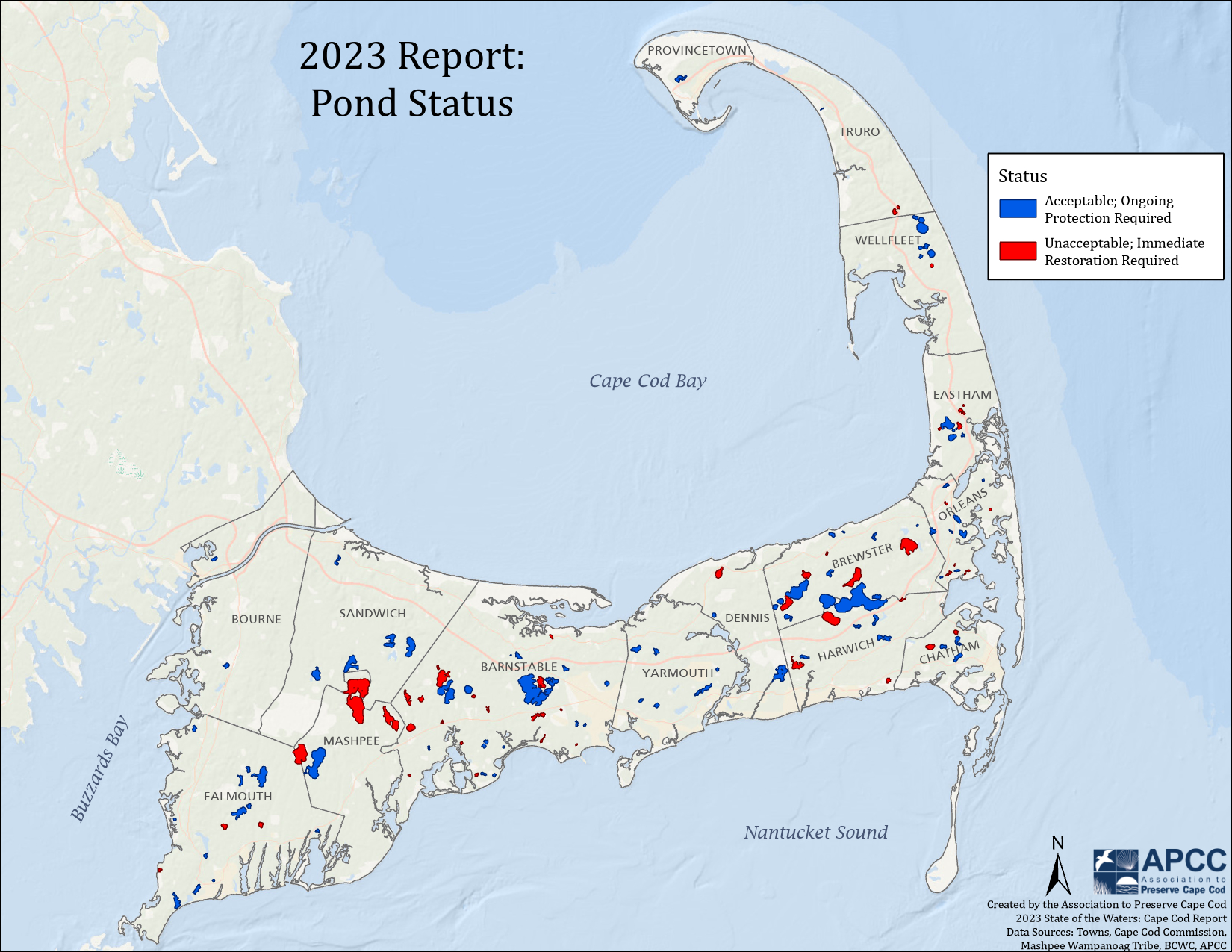
The Jewels of Cape Cod - Our Freshwater Ponds |
Cape Cod Ponds Network
If you are not already on our email list and would like to attend quarterly Zoom meetings, sign up here.
Any questions can be directed to Kristin Andres at kandres@apcc.org or Dr. Julie Hambrook at jhambrook@apcc.org. |
|
|
Resilient Roots hosts APCC's education director, Kristin Andres |
|
|
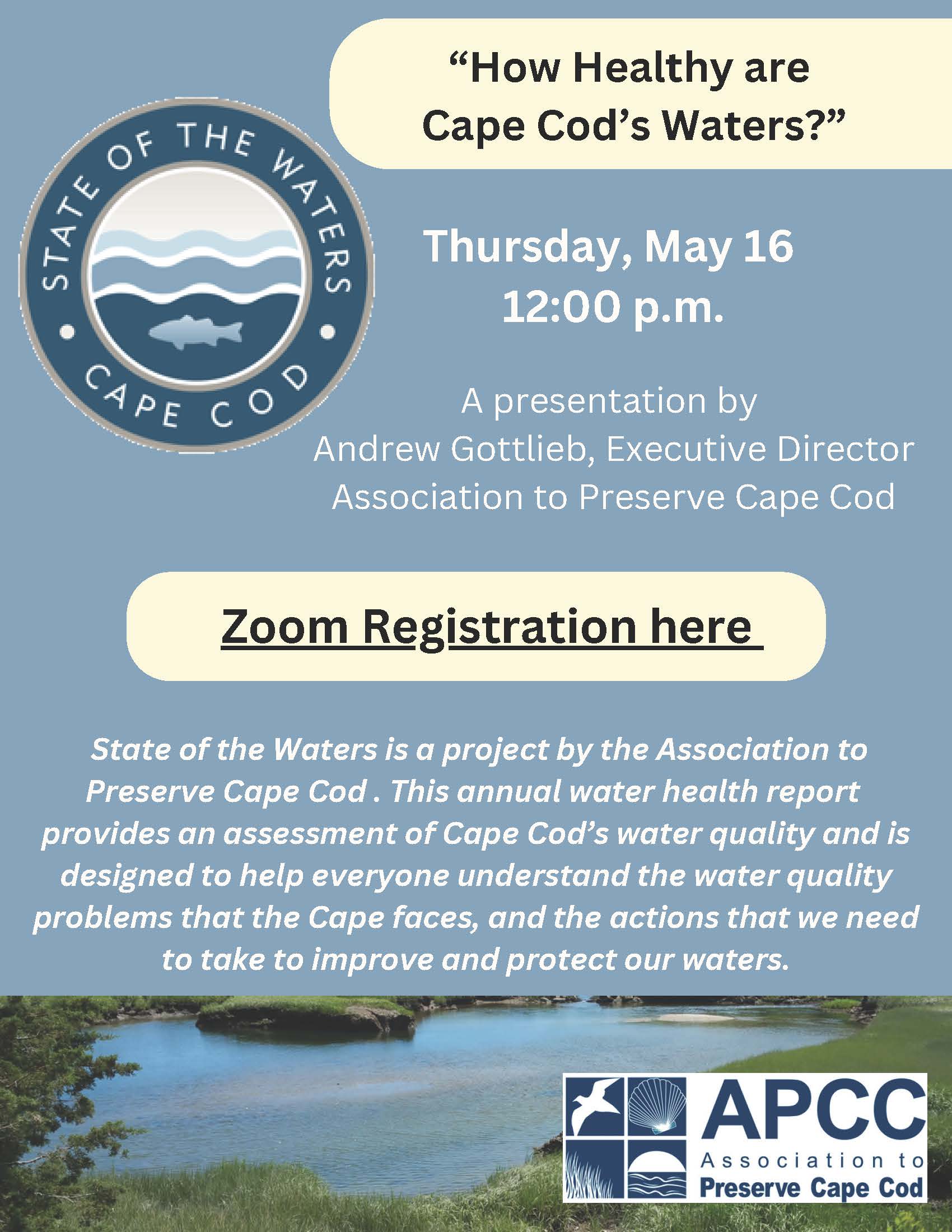
The 2023 State of the Waters: Cape Cod report content can be viewed on this dedicated website: CapeCodWaters.org |
|
|
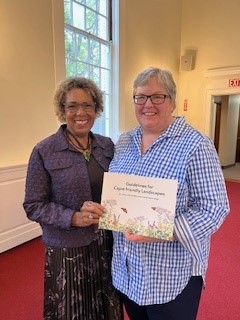
Guidelines for Cape-friendly Landscapes - an APCC publication |
|
|
The Guidelines gives homeowners steps they can take in the design and maintenance of their properties that will support pollinators and birds, manage stormwater, conserve water, and protect the Cape's water quality. This 40-page booklet is beautifully illustrated by Marcy Ford with content that is easily digestible and supported by numerous resources for additional learning.
|
Thank you for this important book! Hopefully everyone of us with a yard will read it and put it to use! - Vicky Titcomb of Titcomb Bookshop |
We've enjoyed creating it and hope it will help you with ideas to help you steward your piece of Cape Cod and maybe foster an environmental ethic in the decisions we all make in our own managed landscapes. Get your copy here—and maybe one for a friend?
|
We are grateful for the several retail shops that are partnering with us to make this publication more widely available: Brewster Book Store, Birdwatchers General Store, Crocker Nurseries, Wellfleet Audubon Wildlife Sanctuary, Cape Abilities Farm, Cape Cod Museum of Natural History, the Cape Cod Lavender Farm, Heritage Museums and Gardens, Titcomb's Bookshop, Sea Howl Bookshop, Soares Flower Garden Nursery, and Eight Cousins Bookshop.
If you are a retailer and would like to sell this publication at your store, contact Kristin at kandres@apcc.org. |
|
|
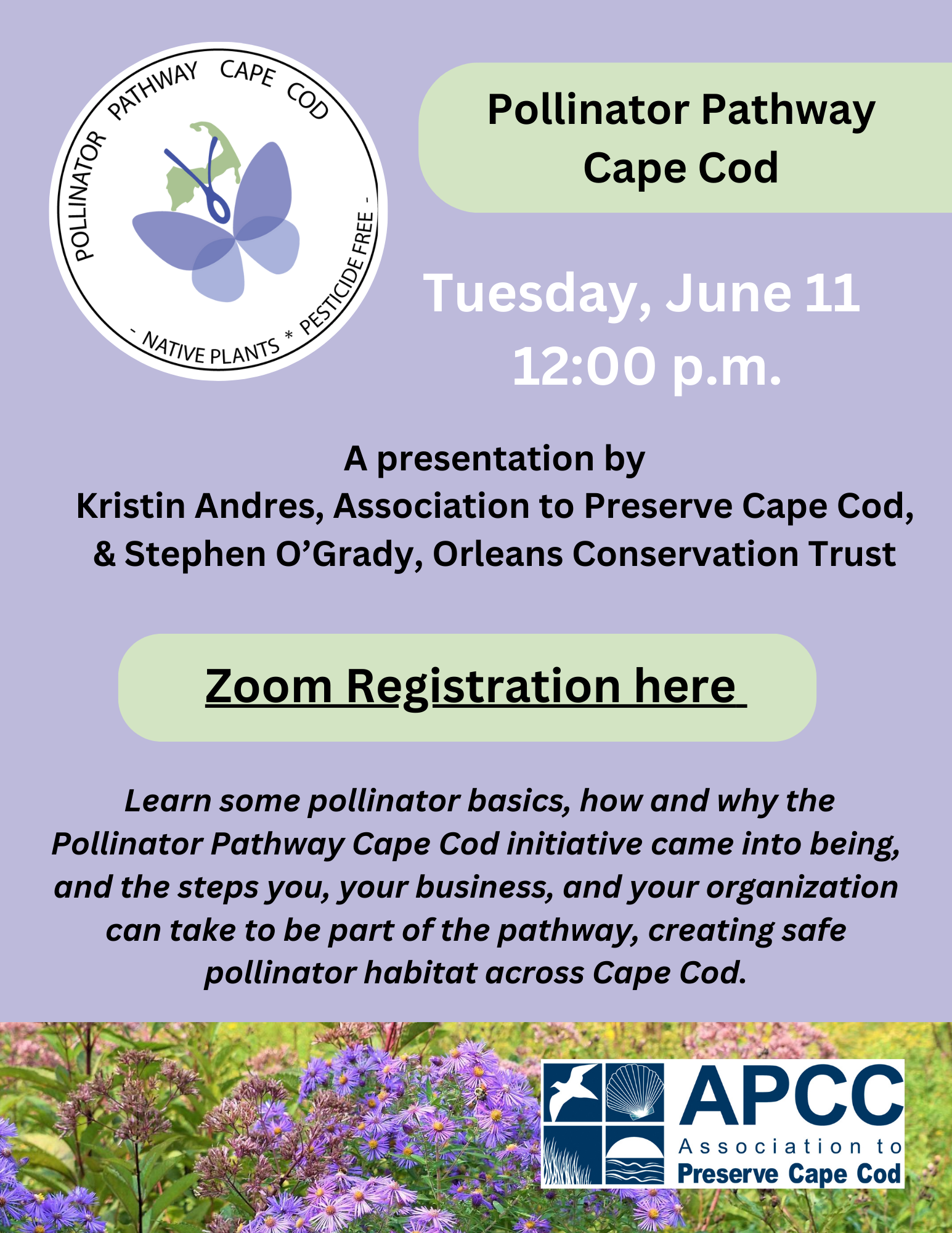
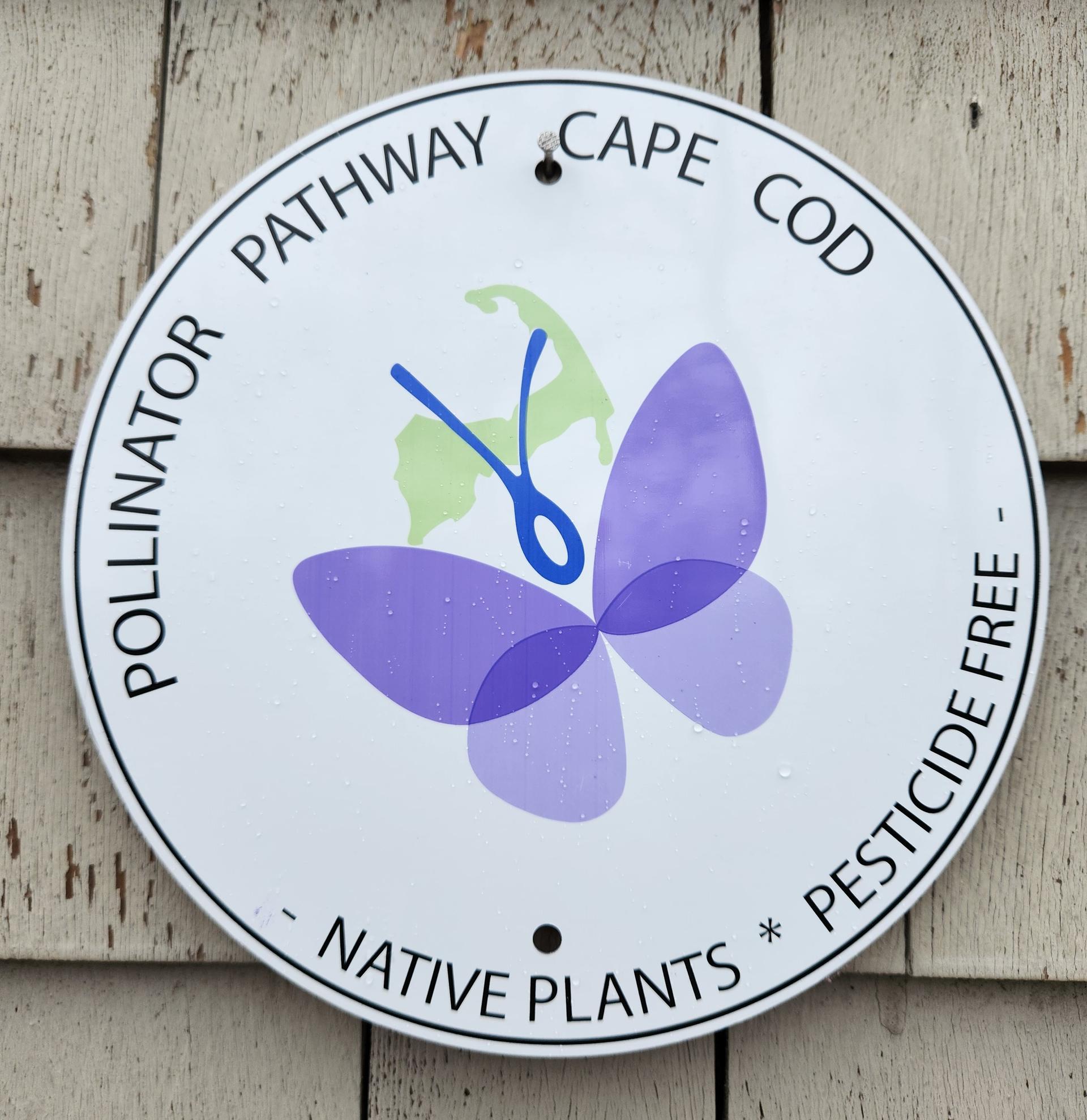
The Pollinator Pathway Cape Cod is a group of organizations promoting native plants and pollinator-friendly land care practices to create a boat load of safe oases for our native bees, butterflies and a whole host of other pollinators that are crucial to the health of our ecosystems.
Join us! It's easy. There are no fees. You just need to pledge to ADD native plants, SUBTRACT a little lawn, AVOID yard chemicals, especially pesticides, and LEAVE the leaves. And, help us spread the word. Please get on the map to show your support of pollinators on Cape Cod!
You can purchase now your 9-inch aluminum Pollinator Pathway Cape Cod sign at Hyannis Country Garden, Crocker Nurseries, Brewster Book Store, and Cape Abilities Farm.
If you are a retailer, and you would like to sell the signs, you can order online here, or email pollinators@apcc.org. |
|
|
| APCC Caps are available for purchase! $25 includes shipping & handling
Click here for more information and to order.
This is one great way to show your support for APCC's work. |
|
|
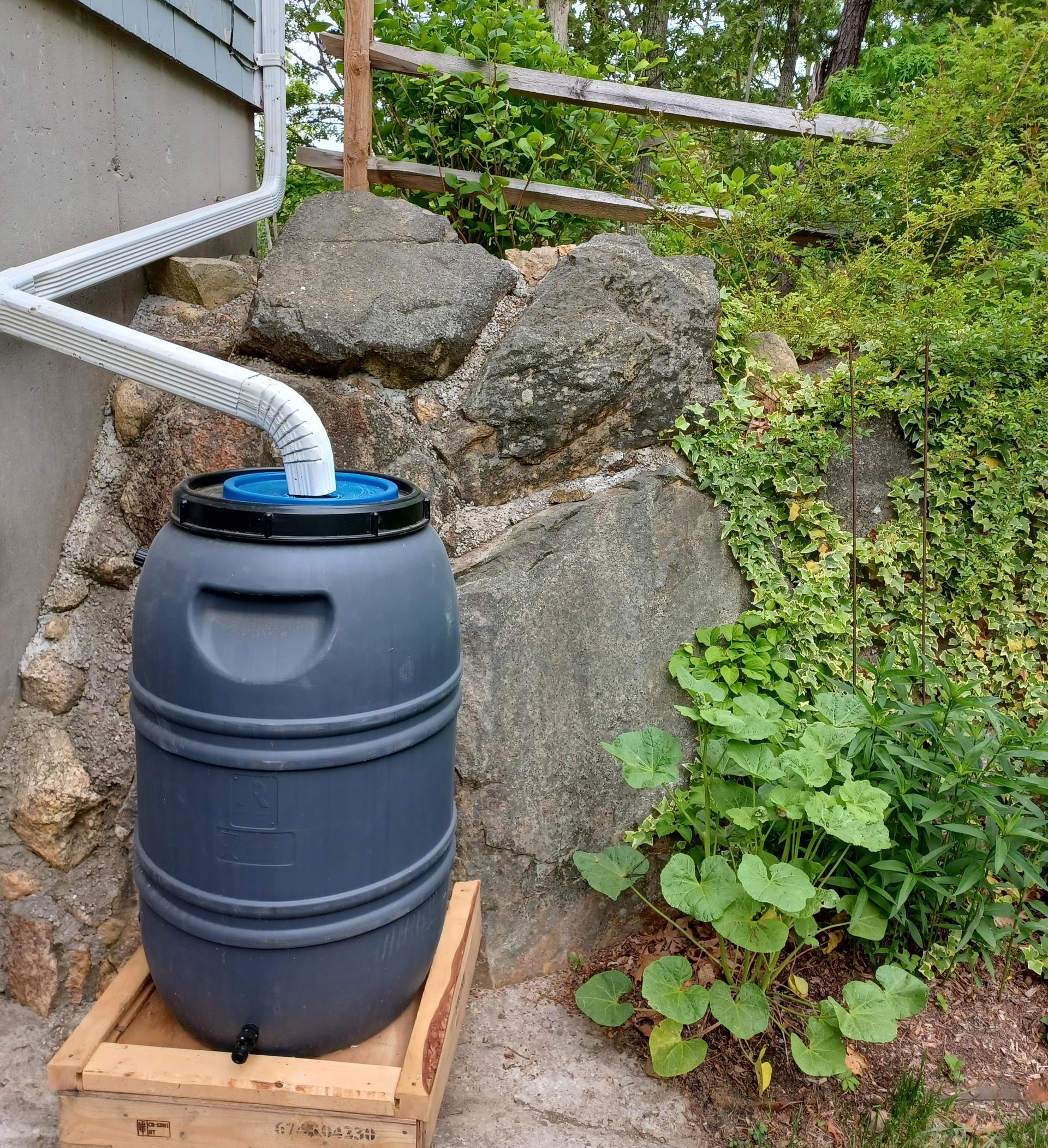
| Rain Barrels for Cape Cod
Order online from Upcycle Products $122 each
includes FedEx shipping to your door APCC receives a portion of the proceeds. For more information, click here. |
|
|
A Cape Cod Native Plant-selector ~ to help you choose the perfect native plants for your garden. |
|
|
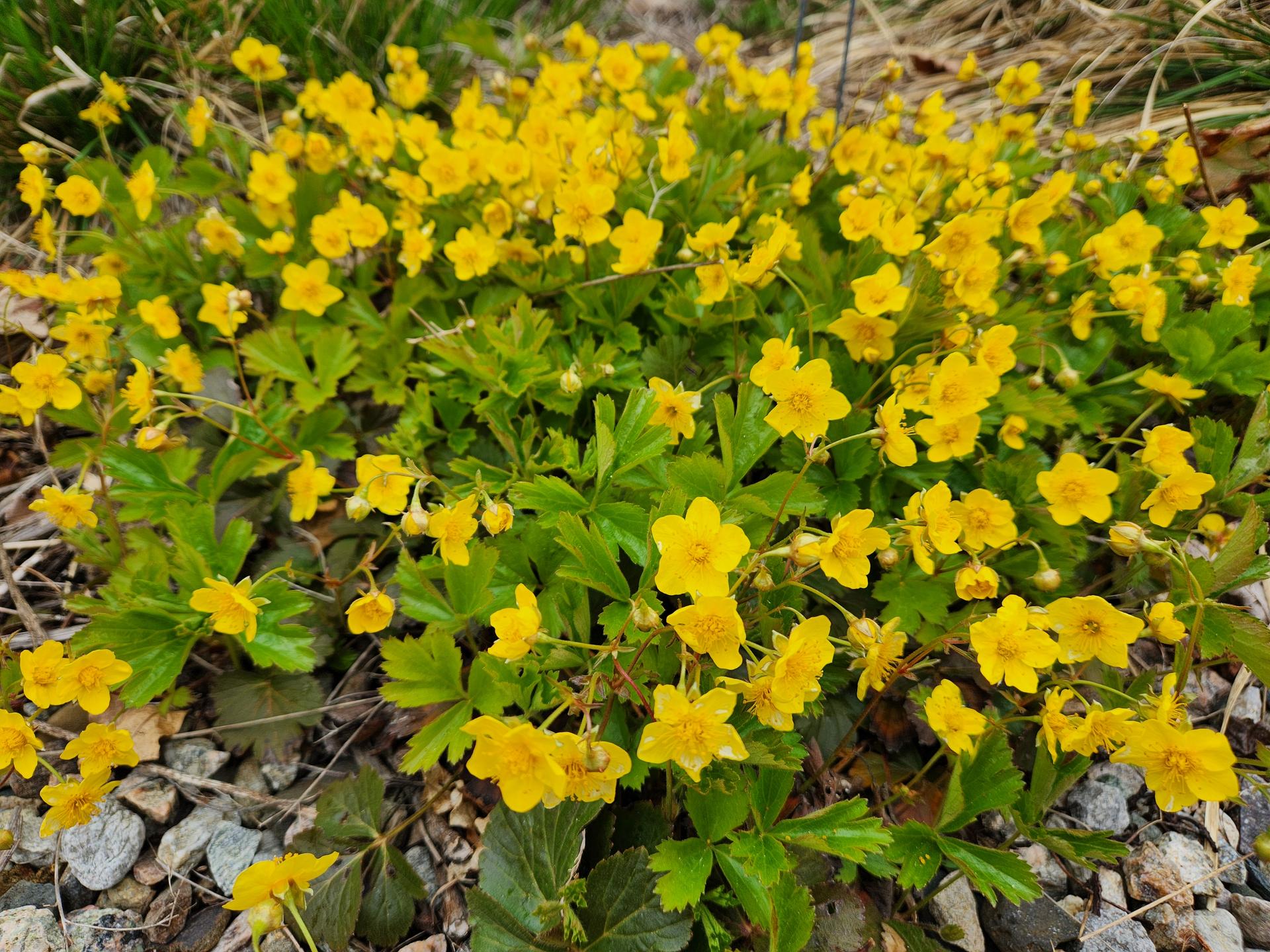
| Barren Strawberry Waldsteinia fragarioides |
|
|
Email membership@apcc.org and we'll send you a CapeCodNativePlants.org decal. |
|
|
| APCC eNewsletters. Our weekly newsletters are archived on our website and easily shared.
You can find past newsletters and share with your friends to sign up for future enewsletters HERE. |
|
|
Are you thinking of going solar? We hope so!
In partnership with E2 SOLAR in Dennis, APCC receives $500 for every solar installation when APCC is named as referral. |
|
|
| Thank you to the homeowners who just contracted to install solar panels through E2 Solar. May the sun always shine for you! |
|
|
Expressions Gallery, 578 Main Street, Chatham
CLICK HERE |
Expressions Gallery donates 20 percent of its profits to APCC's work.
|
|
|
Thank you to our business sponsors |
|
|
APCC is rated four stars by Charity Navigator and 2023 Platinum by Candid (formerly Guidestar). |
|
|
Our Contact Information
*{{Organization Name}}*
*{{Organization Address}}*
*{{Organization Phone}}*
*{{Organization Website}}*
*{{Unsubscribe}}* |
| |
|
|